




Abstract
Objectives:
In this study, it was aimed to evaluate the landscape plants used in the design of hospital gardens in terms of toxicity.
Background:
Although plants have positive effects on humans, some plants can be toxic due to the compounds found in their bodies. The toxicity of plants is an issue that needs to be addressed in design, and it is important to investigate the toxic properties of plants in designs to be made in hospital gardens, which have a large user population and especially where people come to heal.
Methods:
Observation technique and document analysis were used in the study. Species were identified by taking samples from landscape plants in the gardens of state hospitals in Bursa. The distribution of the identified plant taxa according to toxic groups and their relations with each other were analyzed.
Results:
Taxa used in hospital gardens were mostly nontoxic (54.43%). It has been determined that there is a linear relationship between the number of taxa and toxic groups, and the increase in the number of taxa also increases the number of toxic taxa.
Conclusion:
It is seen that toxic plants are used in the design of hospital gardens, but they are included in toxic taxa. It will be an important approach to raise awareness by placing labels showing the toxicity status of taxa together with the collection of toxic taxa at points far from users.
Introduction
Hospital gardens, which are located in urban open green spaces and added meaning to their environment as the image of the city, should be designed to support the well-being of their users (Aksu & Demirel, 2012; Kaplan & Kaplan, 1989; Karakaya & Kiper, 2011; Marcus & Barnes, 1999). If a hospital has a well-designed garden along with the health care, it enables people to relax by emphasizing the colors of life and directing people’s thoughts to a different side (Aksu & Demirel, 2012; Karakaya & Kiper, 2011). Plants are one of the most important elements that constitute the support system of natural life in the design of urban open-green spaces and create indispensable living spaces for people (Çelik, 2020; Dirik et al., 2014; Sarı & Karaşah, 2018).
The plants that make up the main frame of the design are woody plants, and at the same time, woody plants play an active role in the sustainability of the design (Çelik, 2020; Dirik et al., 2014).
Woody plants are divided into two groups as trees and briers (Zencirkıran, 2013), and taxa in both groups are typically used in design works. Woody plants have a special importance in the design of hospital gardens. Studies reveal high alpha waves, which are the signs of relaxation and comfort of the people who are shown tree and natural landscape photos, and emphasize that the use of large grass areas and large trees makes people feel a sense of silence, peace, and security (Ulrich, 2002). It is known that the shadows of the trees and the movement of their leaves with the breeze provide a meditative effect (Yücel, 2013), the plants with scent properties stimulate people’s reactions, and the color change and leaf fall of the trees in autumn help people to realize the seasons (Marcus & Barnes, 1999; Sakıcı & Var, 2013; Yücel, 2013).
In addition to all the positive properties of plants, it is possible to observe that some of them contain substances such as alkaloids, glycosides, tannins, phytotoxins, and oxalates and most of these substances have toxic properties.
It is known that these toxic substances are mostly in the parts of plants such as leaves, stems, fruits, and seeds (Atasoy, 2012; Çelik, 2020; Nithaniyal et al., 2021; Serrano, 2018; H. Yılmaz et al., 2006). The degree of impact and toxicity of toxic substances in various parts of plants differ from plant to plant, and this situation changes according to many factors such as the ecological conditions and physiological structure of the plant (Muca et al., 2012; Serrano, 2018). In cases such as contact with toxic plants in any way or swallowing leaves and stem parts, the effects of toxic substances may emerge and cause serious damage to human health (Zencirkıran et al., 2018). Although these damages vary from person to person, low-level effects such as nausea, diarrhea, vomiting, irritation, swelling, burning, dermatitis, and so on in the mouth, tongue, and throat or high-level effects such as central nervous system damage and heart failure may be influential. At the same time, these substances can only be toxic to animals. Some plants may even cause fatal effects for both humans and animals (Filmer, 2012; Knight, 2007; Serrano, 2018; Zencirkıran et al., 2018).
Considering that woody landscape plants contain toxic substances, the importance of the selection of plants in the design of urban living and service areas is obvious. Although there are studies on the potential harm of plants in terms of toxicity, there is a research gap regarding the evaluation of woody plants in terms of toxicity in the design of hospital gardens, which have a large user population, especially healthcare workers, patients, patient relatives, and children. From this point of view, in this study, public hospitals located in the Central Districts of the city of Bursa, Turkey, with the capacity to provide health services to the entire population of the city were addressed and woody landscape plants present in the hospital gardens were determined and evaluated by dividing them into different groups in terms of toxicity.
Material and Method
Research Area
Within the scope of the study, all public hospitals located in the central districts of the city of Bursa (Osmangazi, Yıldırım, and Nilüfer) in the Marmara Region of Turkey, and where the public receives health services free of charge under social security were discussed. Private hospitals that appeal to different segments of the society according to their income level and generally do not have garden areas were not evaluated within the scope of the study.
The hospitals included in the study are given below. H1: Bursa High Specialization Training and Research Hospital (Yıldırım) H2: Bursa Prof. Dr. Türkan Akyol Chest Diseases Hospital (Yıldırım) H3: Çekirge State Hospital (Osmangazi) H4: Dörtçelik Children’s Hospital (Nilüfer) H5: Ali Osman Sönmez Oncology Hospital (Osmangazi) H6: Dr. Ayten Bozkaya Spastic Children’s Hospital (Osmangazi) H7: Bursa High Specialization Şevket Yılmaz Hospital (Yıldırım) H8: Bursa Uludag University Training and Research Hospital (Nilüfer)
The selected hospitals serve all the people living in the city of Bursa, and their gardens are used intensely. The gardens of the hospitals were designed by the relevant state institutions during the construction of the hospitals. These gardens are used to meet the passive recreation needs of hospital staff, patients, and their relatives (gardens are accessible to users).
Study Design
In this study, observation technique and document analysis from qualitative research methods were used. Observation technique is the observation and recording of the phenomena observed by the researcher, which provides first-hand access to the data and approaches the subject impartially, without changing them (Baltacı, 2018; Kıral, 2020; Özdemir, 2010).
The field studies were planned from the beginning of the vegetation period in Spring (March) to Winter (December), visiting period were once every 2 weeks in totally 40 times. Initially, each plant was photographed using the Nikon D5200 camera during each visit to the gardens. The parts such as flowers, shoots, fruits, and so on were photographed, then the identifications were assessed from the photos of the samples.
Taxon identifications were carried out using the document analysis method (Kıral, 2020; Özdemir, 2010), which used to examine, analyze systematically, and evaluate all documents, including printed and electronic materials. Plant samples taken from the gardens were placed between newsprint and printing papers, and then pressed. The wooden or metal presses can be used for the pressing process. While the plants were pressed, drying cardboards were placed on the top and bottom parts and tightly tied. After pressing, the plants were dried with the “Natural Drying” method. The Natural Drying is a drying method in an environment with the air is active and without direct sunlight and also within provided to change the papers placed between the plants daily. When the plants dried, they were taken on white cardboard and identified (Uma & Düzenli, 2012). The identifications of plant samples were made according to literatures by different researchers (Davis, 1965–1988; Dirr, 1992; Kayacık, 1980, 1981, 1982; Mataracı, 2002; Pamay, 1992, 1993; Yaltırık, 1991, 1993; Zencirkıran, 2009, 2013) and (The Herbarium of the Faculty of Arts & Science of Bursa Uludag University).
Plants are classified into six groups that belong to their toxicity according to Baytop (1963), Filmer (2012), Atasoy (2012), Knight (2007), Zencirkıran et al. (2018), and Friday (2019). In the recent study, the toxicity values of the plants were determined according to these existing six groups. The groups and their degrees: Group, high toxicity: Plants in this group can cause serious diseases, even death. Group, low toxicity: Ingestion of plants in this group may cause minor discomforts such as vomiting and diarrhea. Group, those containing oxalate crystals: The sap of the plants in this group contains oxalate crystals, and these needle-shaped crystals irritate the mouth, tongue, and throat and may cause discomfort. Group, those that cause dermatitis: The sap or thorns of the plants in this group may cause redness or irritation on the skin. Group, those that cause animal toxicity: Plants in this group are plants that can cause harm to animals such as cats and dogs. Group, nontoxic: The plants in this group do not have any harm.
In addition, according to these existing groups, the taxa to be included in which group was revealed by examining the relevant studies including Baytop (1963), O. Yılmaz (1990), Altıntaş (1995), H. Yılmaz et al. (2006), Knight (2007), Lewis (1995), Wagstaff (2008), Aydın (2010), Yener and Seyidoglu (2010), Filmer (2012), Di Tomaso (2019), Konyar et al. (2017), and Çelik and Zencirkıran (2021).
Data Evaluation
SPSS Version 28 (IBM, 2022) program was used in the statistical analysis of the data obtained from the study. A two-way analysis of variance was performed to evaluate the interaction between hospitals and toxic groups. The statistical grouping of the obtained values was carried out using Duncan’s multiple range test (Duncan, 1955) at the significance level of p ≤ .01 and p ≤ .05. On the other hand, Pearson correlation analysis was used to determine the relations between toxic groups and taxa.
Results
Taxa and Toxicity Groups Used in Hospital Gardens
As a result of the examinations, a total of 79 woody landscape plant taxa were identified in the hospital gardens examined. The woody landscape taxa in the hospital gardens and the toxicity groups of the taxa were given in Table 1. As a result of the examination, the greatest number of woody landscape plant taxa was determined in H7 with 49, and the lowest number of woody landscape plant taxa was determined in H5 with seven (Table 1).
Plant Taxa Detected in Public Hospitals.
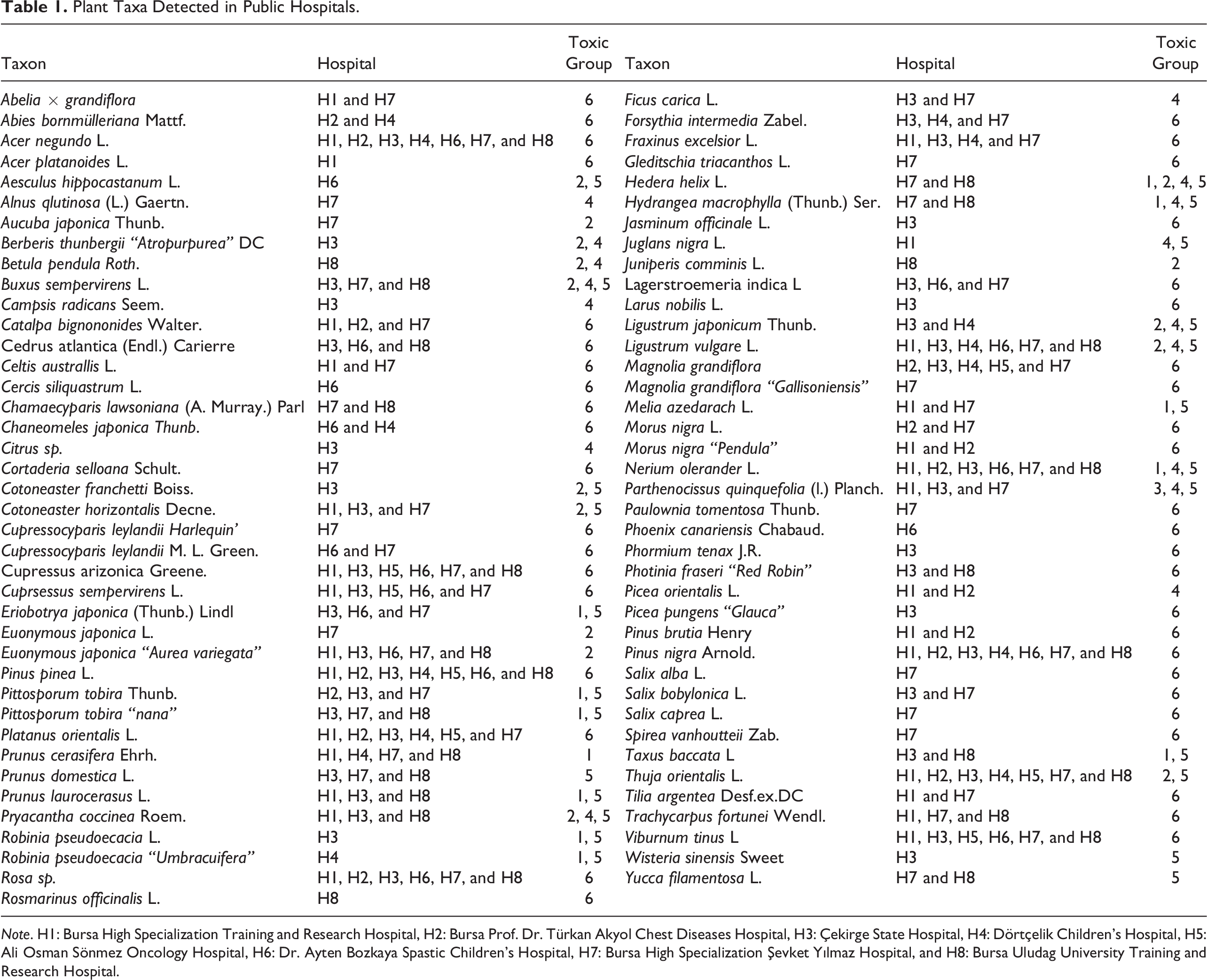
Note. H1: Bursa High Specialization Training and Research Hospital, H2: Bursa Prof. Dr. Türkan Akyol Chest Diseases Hospital, H3: Çekirge State Hospital, H4: Dörtçelik Children’s Hospital, H5: Ali Osman Sönmez Oncology Hospital, H6: Dr. Ayten Bozkaya Spastic Children’s Hospital, H7: Bursa High Specialization Şevket Yılmaz Hospital, and H8: Bursa Uludag University Training and Research Hospital.
Evaluation of Taxa Used in Hospital Gardens in Terms of Toxicity
The evaluations reveal that 36 of the 79 taxa detected in all hospitals were toxic and 43 were nontoxic. The highest number of toxic taxa was found in the garden of H3 and that of H7 with 23 and 20, respectively. On the other hand, many nontoxic taxa were found in the garden of H7 with a maximum of 29 (Figure 1).
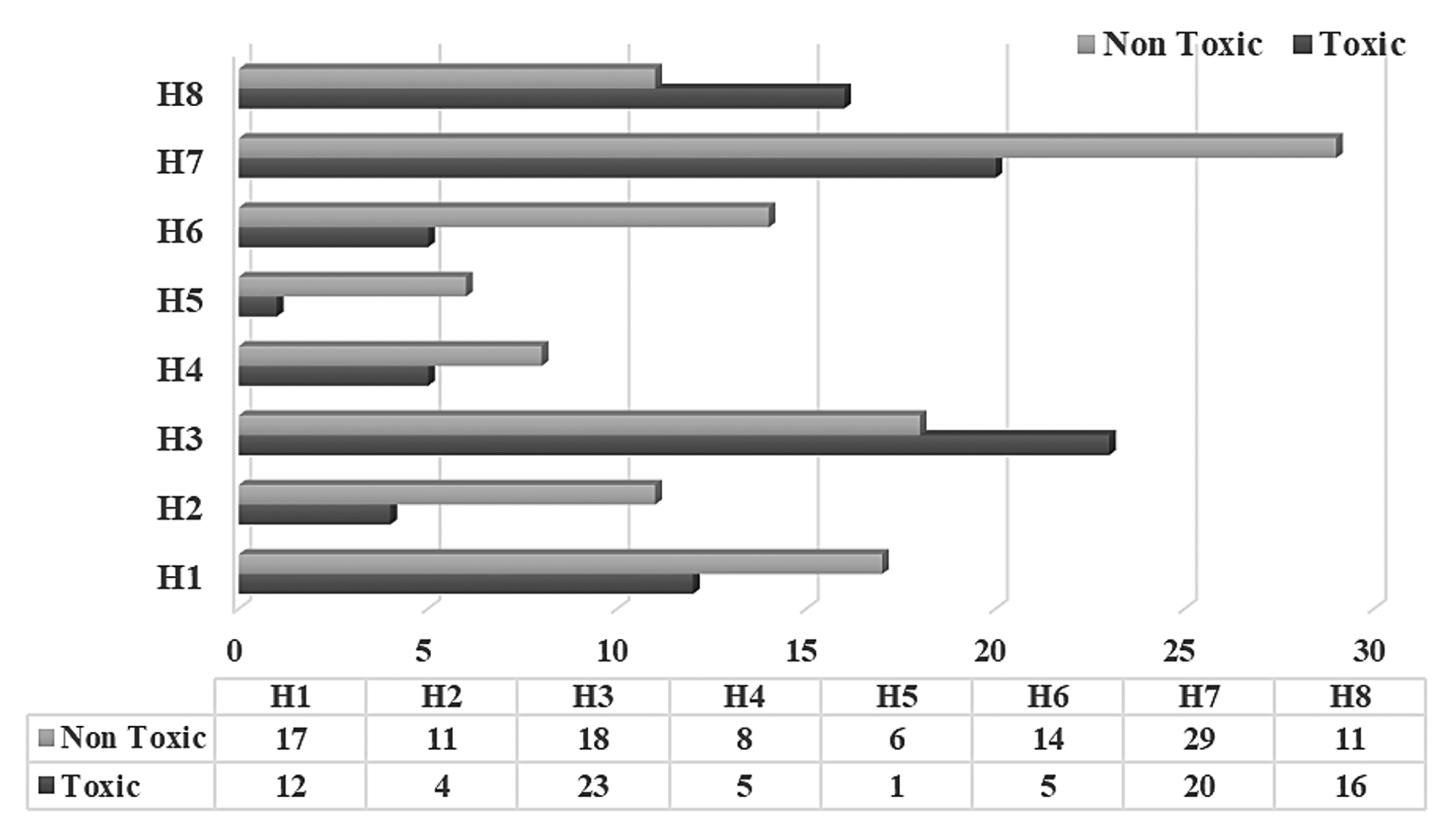
Toxicity status of taxa used in hospital gardens (H1: Bursa High Specialization Training and Research Hospital, H2: Bursa Prof. Dr. Türkan Akyol Chest Diseases Hospital, H3: Çekirge State Hospital, H4: Dörtçelik Children’s Hospital, H5: Ali Osman Sönmez Oncology Hospital, H6: Dr. Ayten Bozkaya Spastic Children’s Hospital, H7: Bursa High Specialization Şevket Yılmaz Hospital, and H8: Bursa Uludag University Training and Research Hospital).
The distribution of taxa in the examined hospital gardens according to toxic groups is given in Table 2. The study determined that the taxa in the high-toxicity and low-toxicity groups were more numerous in the gardens of H7 and H3. On the other hand, observations exhibit that the toxic group containing the least number of taxon was the group containing oxalate crystals.
Distribution of Taxa in Hospitals According to Toxic Groups.
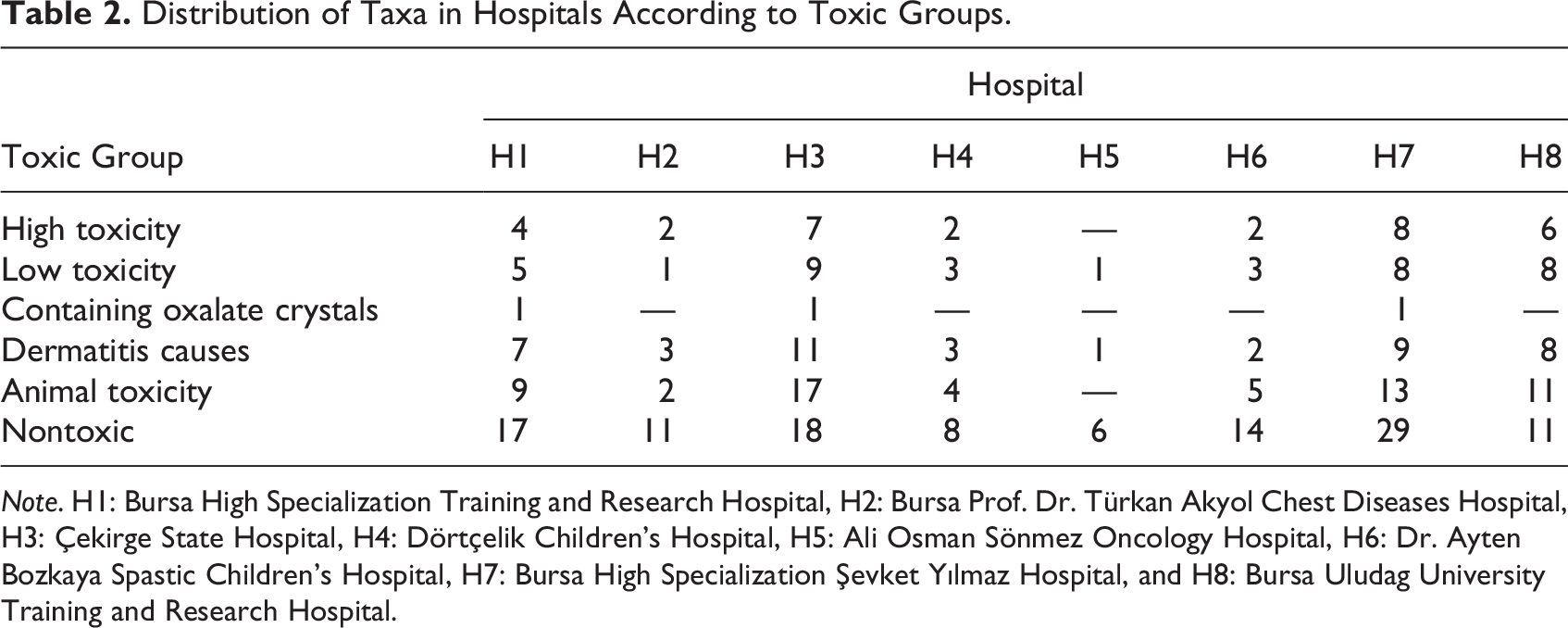
Note. H1: Bursa High Specialization Training and Research Hospital, H2: Bursa Prof. Dr. Türkan Akyol Chest Diseases Hospital, H3: Çekirge State Hospital, H4: Dörtçelik Children’s Hospital, H5: Ali Osman Sönmez Oncology Hospital, H6: Dr. Ayten Bozkaya Spastic Children’s Hospital, H7: Bursa High Specialization Şevket Yılmaz Hospital, and H8: Bursa Uludag University Training and Research Hospital.
Relationships Between Taxa and Toxicity Groups in Hospital Gardens
Correlation analysis was performed to determine the relationship between the total number of taxa and toxic taxa in all the hospital gardens. The correlation coefficient was found to be r = .928** and a linear relationship was found at the level of p ≤ .01. With the increase in the total number of taxa, the number of taxa included in the toxicity groups also increased (Figure 2).

The correlation analysis between total taxa in toxic groups and toxic taxa. *Significant at the .05 level (two-tailed).
The relationships between the toxicity groups were found to be significant at the p ≤ .01 and p ≤ .05 levels and are given in Table 3. Observations reveal that the high-toxicity group was associated with other toxic groups. No correlation was found between the low-toxicity group and the nontoxic group containing oxalate crystals and between the dermatitis-forming and nontoxic groups.
Correlation Analysis Between Toxicity Groups.
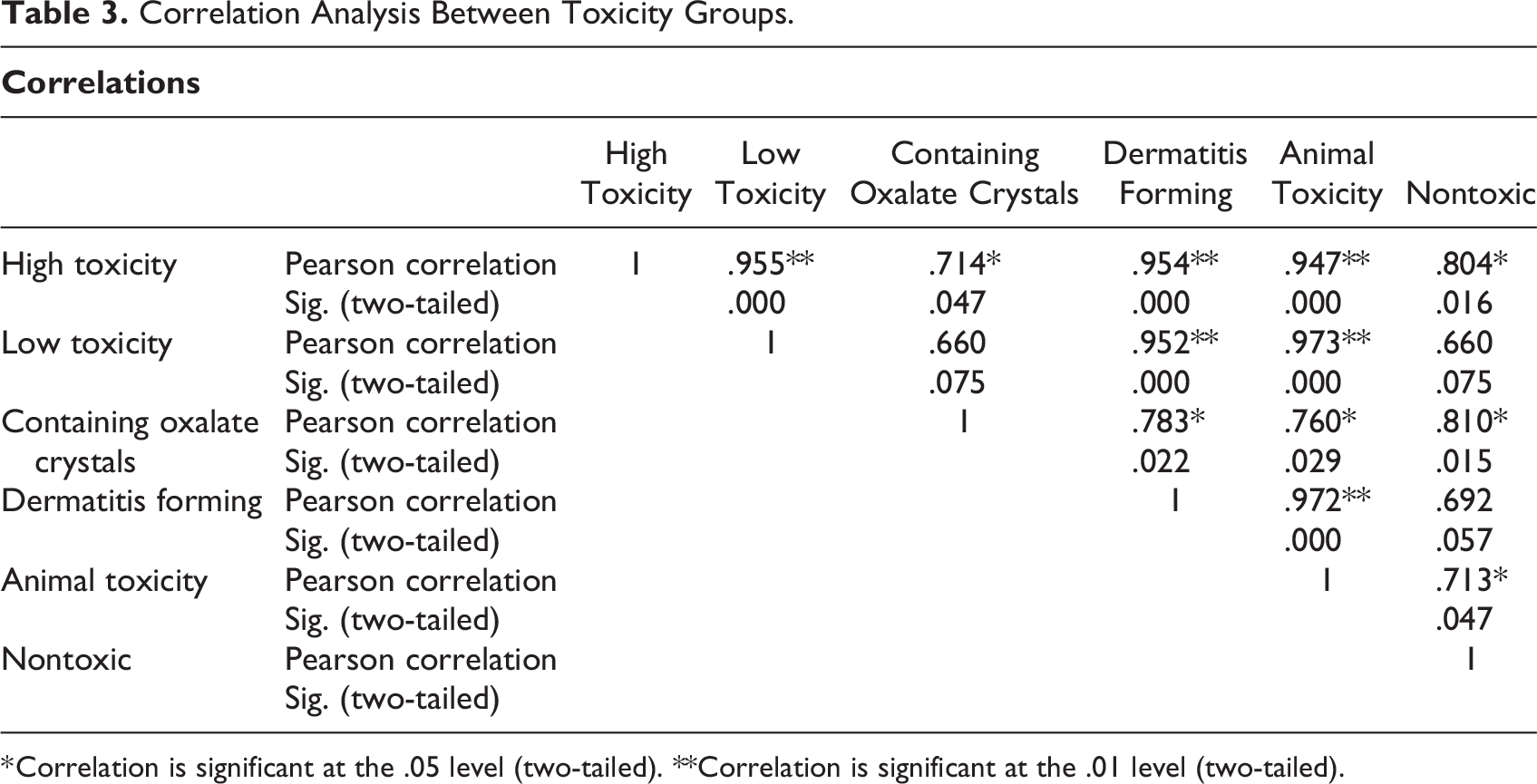
* Correlation is significant at the .05 level (two-tailed). **Correlation is significant at the .01 level (two-tailed).
As a result of the two-way analysis of variance for the evaluation of hospital gardens and toxic groups, the interaction of Hospitals × Toxic Groups was found to be significant at the p ≤ .05 level (Table 4).
Two-Way Analysis of Variance.
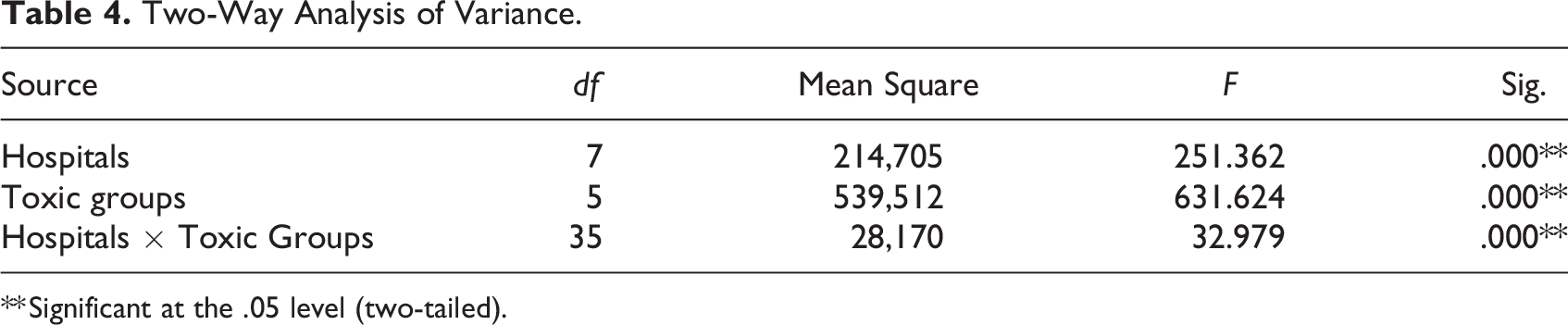
** Significant at the .05 level (two-tailed).
The average number of taxa in different toxic groups were found to be the highest with 11.33 in the garden of H7, followed by the garden of H3 with an average of 9.50 units (Table 5).
The Average Number of Toxic Taxa by Hospitals.
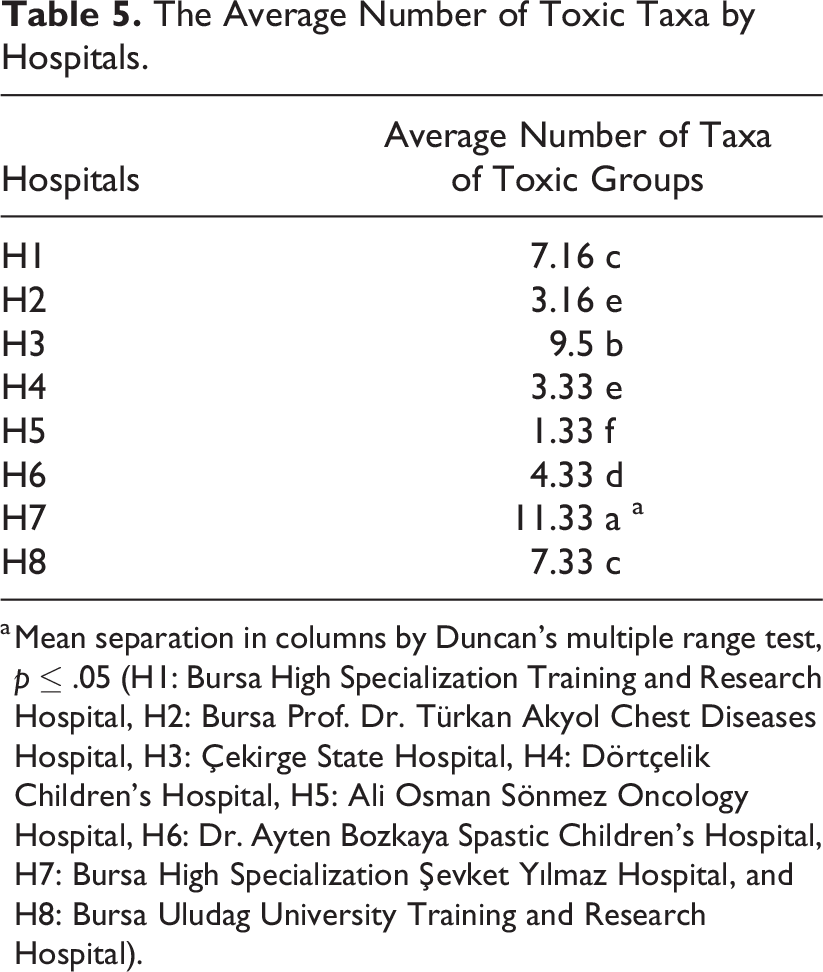
a Mean separation in columns by Duncan’s multiple range test, p ≤ .05 (H1: Bursa High Specialization Training and Research Hospital, H2: Bursa Prof. Dr. Türkan Akyol Chest Diseases Hospital, H3: Çekirge State Hospital, H4: Dörtçelik Children’s Hospital, H5: Ali Osman Sönmez Oncology Hospital, H6: Dr. Ayten Bozkaya Spastic Children’s Hospital, H7: Bursa High Specialization Şevket Yılmaz Hospital, and H8: Bursa Uludag University Training and Research Hospital).
An evaluation of the toxic groups reveals the nontoxic group ranked first with an average of 14.25 taxa, followed by the animal toxicity group with an average of 7.62 taxa (Figure 3).
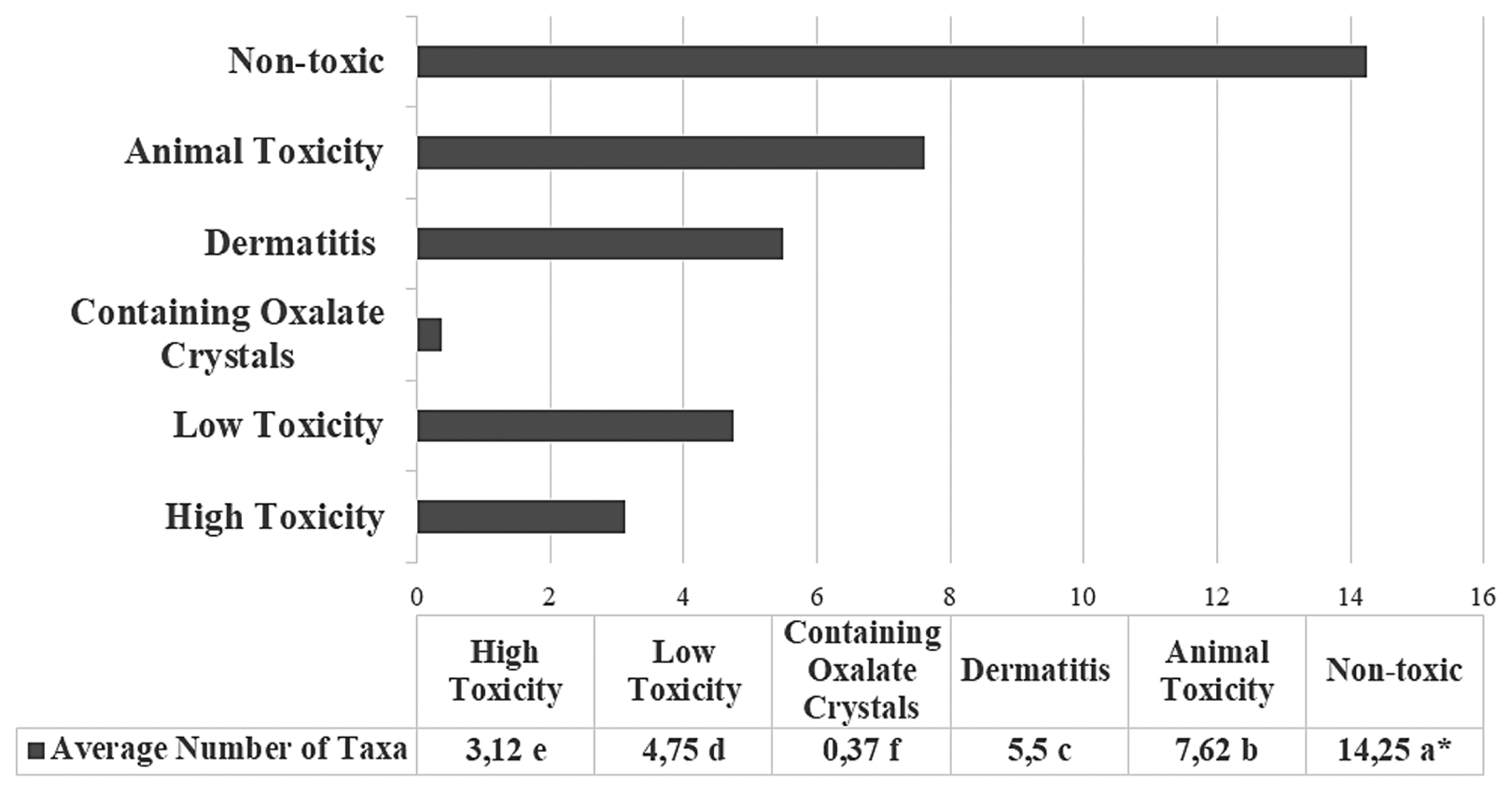
The average number of toxic taxa in toxic groups. *Mean separation in columns by Duncan’s multiple range test, p ≤ .05.
An examination of the interaction of Hospitals × Toxic Groups exhibits that the highest number of taxa were included in the H7 × Nontoxic Group, followed by the H3 × Nontoxic and H3 × Animal Groups (Table 6).
Hospital × Toxic Groups Interaction.
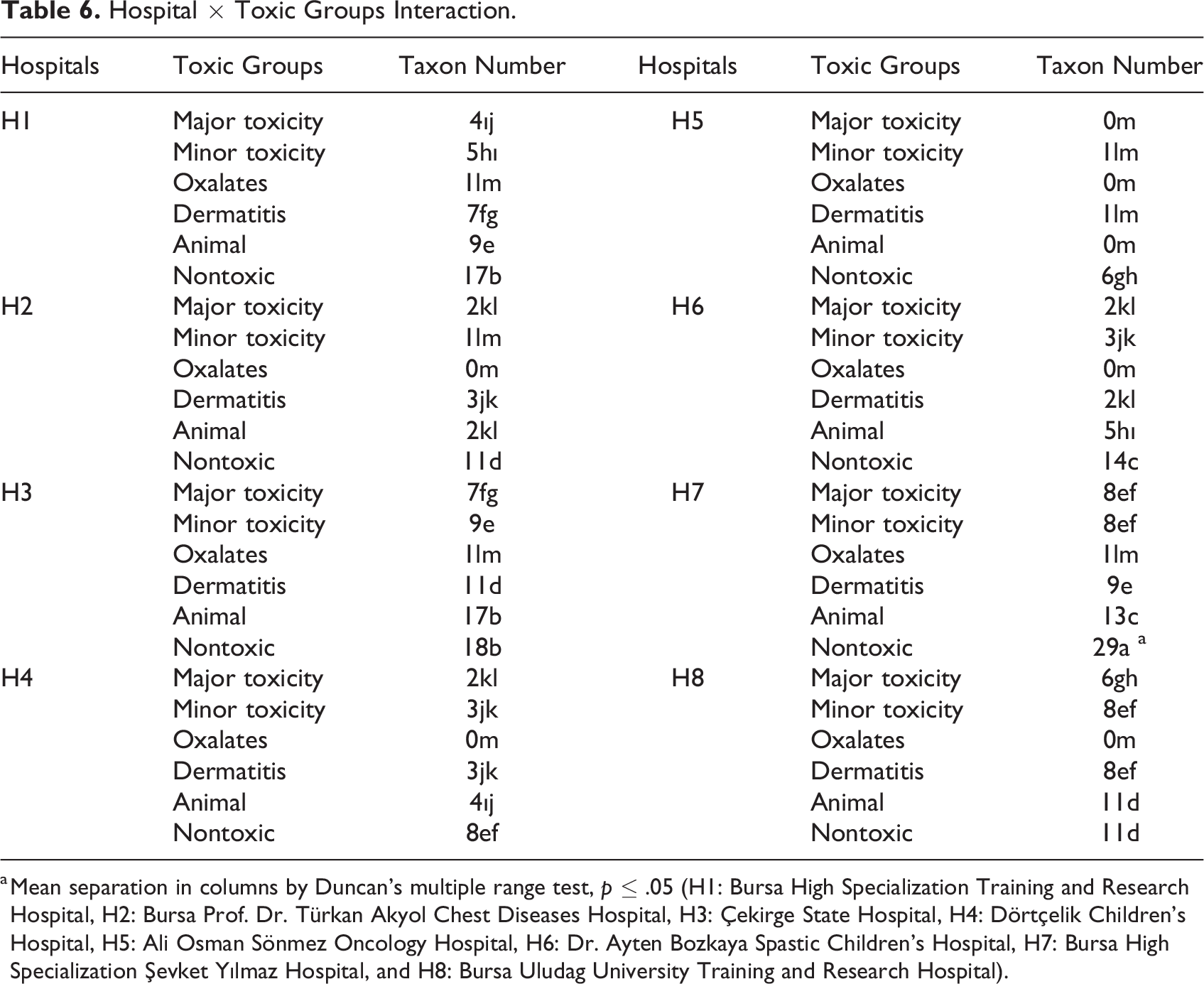
a Mean separation in columns by Duncan’s multiple range test, p ≤ .05 (H1: Bursa High Specialization Training and Research Hospital, H2: Bursa Prof. Dr. Türkan Akyol Chest Diseases Hospital, H3: Çekirge State Hospital, H4: Dörtçelik Children’s Hospital, H5: Ali Osman Sönmez Oncology Hospital, H6: Dr. Ayten Bozkaya Spastic Children’s Hospital, H7: Bursa High Specialization Şevket Yılmaz Hospital, and H8: Bursa Uludag University Training and Research Hospital).
Discussion
It is known that, from the past to present, some of the plants that have been used for different purposes (medicine production, afforestation, landscaping, etc.) have toxic properties (Al-Qura’n, 2005; Gülgün & Öztürk, 2020). However, it is of great importance for safe use that the landscape plants to be preferred for designs do not pose a health threat. For this reason, it is necessary to evaluate the toxic properties of landscape plants used in all recreational areas open to the use of the community, especially in hospital gardens.
Observations show that the taxa used in the examined hospital gardens were mostly nontoxic (54.43%).
On the other hand, it was also determined that taxa, which were in the groups that cause high toxicity, low toxicity, animal toxicity, dermatitis, and oxalate, were used in almost all hospital gardens. The results reveal that there was a linear relationship between the number of taxa and toxic groups, and the increase in the number of taxa also increases the number of toxic taxa. At the same time, factors such as the popularity of native species and the use of native species may increase the number of toxic plants. This situation is in line with the study of Çelik and Zencirkıran (2021) on landscape plants in Bursa city parks, and they reported that an increase in the number of taxa increases the number of toxic taxa.
Human–plant relationships must be taken into account while selecting landscape plants for designs made by considering aesthetic and functional properties.
Many of the plants such as Melia azederach L., Prunus laurocerasus Mill., Picea orientalis L., Prunus domestica L., Taxus baccata L., Lantana camara L., Robinia pseudoacacia L., and Sambucus nigra, which attracts the attention of users especially with their showy flowers and fruits in different seasons, may show toxic properties (Gül & Topcu, 2017; King, 1997; Muca et al., 2012). Thus, studies reported that there were worldwide emergency cases originating from taxa such as Datura stramonium, Euphorbia sp., Nerium oleander, and Ricinus communis (Nithaniyal et al., 2021).
In the recent study, it was observed that taxa in the highly toxic group such as Nerium oleander, Taxus baccata, Pittosporum tobira, and Melia azedarach were used in the hospital gardens. On the other hand, taxa such as Berberis thunbergii “Atropurpurea”, Parthenocissus quinqufolia, and Hydrangea macrophylla, which have attractive flower and fruit characteristics but are in the dermatitis-forming group, were also used. Such landscape plants, which have attractive flower and fruit characteristics, should not be used in other hospitals, especially in children’s hospitals. Indeed, this was also emphasized by D’Amato et al. (2007) and Kušen et al. (2022). They stated that, especially in school gardens and parks, the intensive use of toxic plants in open areas should be avoided, and toxic plants with flower and fruit characteristics which are attractive for children’s attention should not be used in areas due to sensitivity of children.
Conclusion
The toxic properties of the plants should be considered in the selection of woody landscape plants designed in both hospital gardens and other public spaces. In the recent study, the gardens are selected from the public hospitals in Bursa which are the public spaces with open access to all users (patients, their relatives, hospital staff, etc.). It was observed that using nontoxic taxa in these hospital gardens were taken carefully. However, some toxic taxa were found in some of gardens. In this context, it is necessary to be more careful in plant selection in hospital garden landscaping. Also, in order to prevent the toxicity, the information signs can be placed on plants to attract the people’s attention and inform them about these toxic plants. Furthermore, it can be recommended that changing the places of the toxic taxa in the hospital gardens to another area that the people do not frequently used. The recent study can be an important approach in terms of guiding future studies. It is thought that investigating the toxic properties of plants used in different parts of cities, especially in hospitals, as well as determining which parts of the plants (foliage, flowers, root, etc.) are toxic are important and necessary.
Implications for Practice
It is necessary to know the aesthetic and toxic properties of the plants to be used in landscape design, and studies on this subject should be increased in different fields. Toxic woody landscape plants should not be included in the design of hospital gardens, and existing plants should be moved to distant places. It is important to pay attention to the toxicity situation in the use of woody plants, especially in children’s hospitals. Awareness should be created by placing labels with expressions such as the toxic part, group, and degree of effect of toxic plants.
Footnotes
Declaration of Conflicting Interests
The authors declared no potential conflicts of interest with respect to the research, authorship, and/or publication of this article.
Funding
The authors received no financial support for the research, authorship, and/or publication of this article.