




Abstract
Aim:
The aim of this study was to assess whether the outcomes of immersive virtual nature (IVN) varies between seasons.
Background:
IVN has received increased interest in recent years due to its potential applications within health and design. However, factors influencing people’s responses to IVN are largely unknown. Seasons affect a variety of human processes and behaviors including levels of affect and blood pressure, also in the context of human–nature interactions. These seasonal variations might influence how people interact and respond to IVN, especially since IVN allow for representations of nature that are not representative of the current real-life season.
Methods:
A secondary analysis of data retrieved from two previous studies, which included three IVN conditions, was conducted. All IVNs represented late spring conditions. Measures included perceived environmental restorativeness, affect, enjoyment, heart rate, and blood pressure. A meta-analytic approach was used to assess whether there were consistent differences between participants who were exposed to the IVN in spring/summer (early June to mid-September) and autumn/winter (mid-September to December) across the three different conditions.
Results:
There was a consistent effect of season only for one component of affect (fatigue), with larger reductions in fatigue when exposed to IVN during autumn/winter compared to spring/summer. No other significant effects of season were observed.
Conclusion:
IVNs are feasible to use across all seasons but might be more effective in reducing the feeling of fatigue during autumn and winter compared to other seasons.
Keywords
Introduction
Immersive Virtual Nature (IVN)
Seasons have influenced how humans respond and interact with their natural surroundings for millennia. Some of these seasonal variations may extend to virtual representations of nature as well, including IVN. IVN is a concept that utilizes virtual reality (VR) technology to provide the illusionary perception of being enclosed within a natural environment (Calogiuri et al., 2019). Based on the general assumption that IVN can provide psychological and physiological responses similar to those experienced in real nature, IVN is seen as a valuable tool in health, design, and environmental research (Joseph et al., 2020; Litleskare et al., 2020; Mollazadeh & Zhu, 2021; Smith, 2015). In past decades, an increasing number of researchers have shown interest in understanding how natural environments affect humans’ emotions, cognition, behaviors, and health. Such understanding may inform important areas of application, including the design of outdoor or indoor environments to elicit stress recovery, and plans and regulations related to renaturing of public spaces (MacIntyre et al., 2019). However, examining how people respond to different natural environments is a difficult task. In situ experiments can be time-consuming and resource consuming, and such studies are also subjected to several challenges and barriers, such as weather conditions and availability of appropriate nature settings to address the research questions. These issues may partly explain why a review of experimental studies in natural settings highlight that the studies are characterized by a high risk of bias and potential contamination in control conditions (Lahart et al., 2019). IVN may be a tool to overcome these limitations and improve experimental rigor in research of natural environments. However, to be useful, IVN must be able to replicate the positive effects experienced after exposure to real nature. Interestingly, there is accumulating evidence demonstrating that IVN can indeed provide some of the health benefits associated with exposure to real nature. Previous research has shown that IVNs can increase positive affect and vigor and reduce negative affect, stress, and anxiety, when compared with virtual scenarios representing other types of environments such as urban settings (Hedblom et al., 2019; Liszio et al., 2018; Mostajeran et al., 2021; Schebella et al., 2020; Valtchanov et al., 2010; Yu et al., 2018). However, preliminary results suggest that the potential of IVN may be somewhat limited (Browning et al., 2019; Chirico & Gaggioli, 2019; Litleskare et al., 2022.), partly due to limited understanding of factors influencing the effectiveness of IVN (Litleskare et al., 2020). Some of the influential factors that has been identified are related to hardware (Yildirim, 2020), content (Yeo et al., 2020), and characteristics of the participants (Mittelstaedt, 2020) and have been summarized in general guidelines (Litleskare et al., 2020). However, there is a general lack of knowledge regarding possible influential external factors, such as seasonal variations.
Seasonal Variations of Psychophysiological Responses to Nature
Seasons affect a variety of human behaviors and processes, in particular, intrinsic variations in the expression of psychophysiological functions known as circannual rythms (Gwinner, 1986). For example, daytime blood pressure and resting heart rate is known to be higher during winter compared to summer (Narita et al., 2021; Quer et al., 2020). Mood and affect states are also known to vary across seasons, with more positive mood and affect during spring (Winthorst et al., 2020). Feldthusen et al. (2016) have also highlighted seasonal variations in fatigue, specifically, which is consistently rated higher during winter even when assessed with different instruments, although such findings have been disputed (see, e.g., Mancuso et al., 2006). This may be explained by the fact that baseline levels of fatigue are highly susceptible to factors such as illness and workload, making it difficult to detect seasonal variations in this indicator (Arellano et al., 2015; Grech et al., 2009; Repping-Wuts et al., 2007). Based on the assumption that a ceiling effect exist, these findings suggest that the potential of IVN for reducing stress and fatigue is largest during winter, while the potential for improvements in general affect is largest during other seasons than spring.
To the best of the authors’ knowledge, only a few studies have examined human responses to natural environments in different seasons. In an experimental study, Johnsen et al. (2022) tested the effects of lunch-break outdoor walking in a group of employees during winter and summer on well-being indicators (subjective vitality and psychological detachment from work). The outdoor walks were effective in eliciting greater levels of well-being, with no significant differences between the seasons. In a large cross-sectional study across 18 countries, White et al. (2021) report that greenspace nearby people’s homes are significantly associated with higher levels of well-being in spring but not in any other season. Active nature exposure was found to improve well-being similarly across all seasons for green space visits, while visits to blue spaces displayed more favorable results in spring and summer (White et al., 2021). These results indicate that, despite the seasonal fluctuations of different psychophysiological indicators suggesting higher potential for improvement during winter, people respond equally or more favorably to nature exposure during spring or summer compared to winter months. This may be explained by the fact that natural environments display more favorable characteristics during spring and summer. In support of this assumption, a study of virtual nature by Akers et al. (2012) showed more positive effects on mood when people exercised while viewing images of nature rich in green foliage compared to images where the color was manipulated (i.e., gray- or red-filtered).
Exposure to Virtual Green Nature During Autumn and Winter
Due to the generally more negative baseline levels of different psychophysiological indicators during autumn/winter (e.g., higher blood pressure, poorer mood, and greater fatigue) and the specific benefits of viewing spring/summer scenery, it is likely that viewing an IVN that portrays spring/summer sceneries during autumn/winter may result in more positive responses compared to viewing the same IVN during spring/summer. In support of this assumption, Evensen et al. (2013) found that adding indoor green design (plants and daylight-simulated lighting) throughout the year in an office setting showed greater reductions in health-related complaints during winter. Although there is a general lack of research concerning this issue, theories explaining the restorative effects of nature exposure can provide further support for such assumptions. In this regard, Ulrich’s (1983) stress reduction theory postulate that views of natural environments exhibiting traits that are evolutionary advantageous trigger positive psychophysiological responses (e.g., stress relief or enhanced positive affect). For example, viewing scenes with lush vegetation may be considered a source of food and shelter, thus triggering a positive response. Accordingly, views of nature during autumn or winter months when lush vegetation is scarcer may be less effective in eliciting desirable psychophysiological responses. The attention restoration theory (S. Kaplan, 1995) also provides some support to the assumption that viewing “green” nature may be more effective in eliciting restorative processes. The theory proposes that natural environments that are fascinating, coherently organized, compatible with the persons inclinations, and triggers a feeling of being away from everyday concerns have the potential to elicit restoration of depleted cognitive resources and improved affective states. These factors may be influenced by season, as environments lacking green vegetation may be less restorative and less in line with people’s personal inclinations. Other theoretical perspectives have emphasized the importance of conditioned responses in explaining the positive psychophysiological responses associated with sensory exposure to nature (Egner et al., 2020). In this respect, because people tend to associate more positive emotions with outdoor leisure during spring and summer, these sceneries may elicit more positive psychophysiological responses compared with autumn/winter scenarios.
The Present Study
Understanding whether and how seasonality influence psychophysiological responses to IVN exposure has important implications for both validity of experimental testing and effectiveness of health interventions, environmental design, and the application of IVN to enhance patients’ healthcare environment. Unfortunately, to the authors’ knowledge, no study exists with respect to seasonality and IVN exposure. Hence, the aim of this study was to assess whether the outcomes of virtual nature and virtual green exercise are influenced by season (i.e., the time of the year when the IVN exposure occurs). Specifically, this study assessed potential differences in perceived environmental restorativeness, affect, enjoyment, heart rate, and blood pressure between participants when exposed to a summerly IVN during either spring/summer or autumn/winter. It was hypothesized that seasonal variations of IVN outcomes does exist.
Materials and Methods
Study Design
This study was designed as a secondary analysis, using a meta-analytic approach, based on data retrieved from two previous studies (Litleskare et al., 2022.; Litleskare & Calogiuri, 2019) conducted in 2018 (June–October) and 2020 (August–December). Specifically, one experimental condition (IVN 1) from Litleskare and Calogiuri (2019) and two (IVNs 2 and 3) from Litleskare et al. (2022) were included in the analysis. The study by Litleskare and Calogiuri (2019) comprised one additional condition that was excluded for the present study because it elicited high levels of cybersickness. In order to assess possible consistent effects of season on set of psychophysiological outcomes, the primary data from the individual studies were categorized as either “spring/summer” (from June 9 to September 22) or “autumn/winter” (September 22 to December 4) based on the day of collection. September 22 was chosen as cutoff as it is considered to be the last day of summer in the northern hemisphere (Williams, 2010). Moreover, this cutoff was consistent with typical weather conditions in the region (inland Norway, latitude 60.88°N), especially with respect to the amount of light and greenery to which participants were exposed at the time of the IVN exposure. Characteristics of the study sample is provided in Table 1.
Brief Description of Primary Data
The participants (overall n = 64) were healthy adult volunteers and took part in only one of the studies. Characteristics of the study sample is provided in Table 1.
Participants’ Characteristics (Gender, Age, Body Mass Index, and Levels of Physical Activity) Across the Two Seasonal Categories.
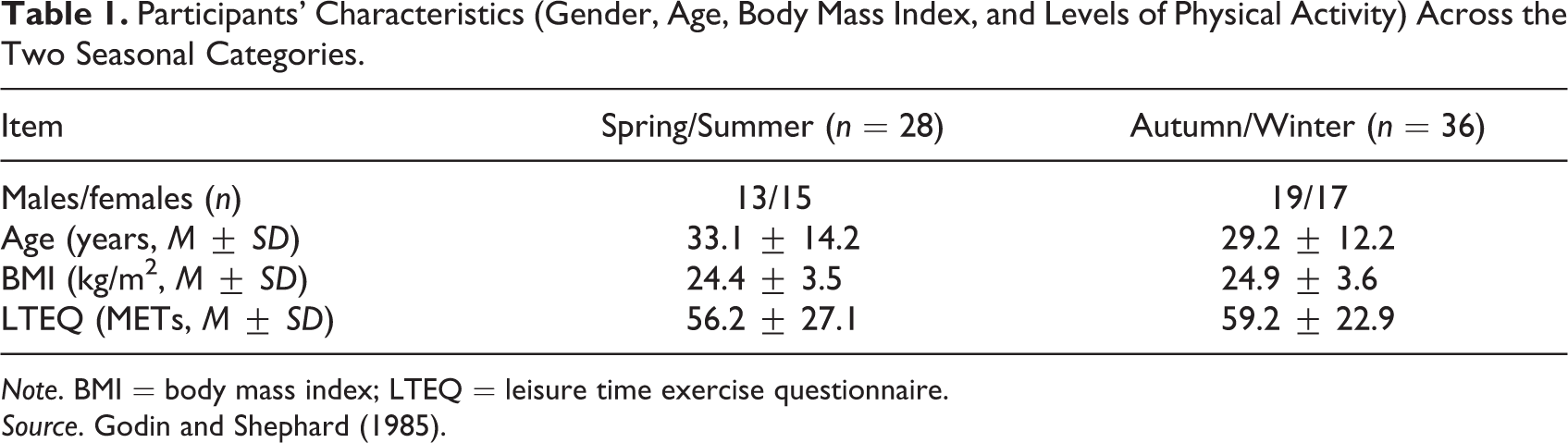
Note. BMI = body mass index; LTEQ = leisure time exercise questionnaire.
Source. Godin and Shephard (1985).
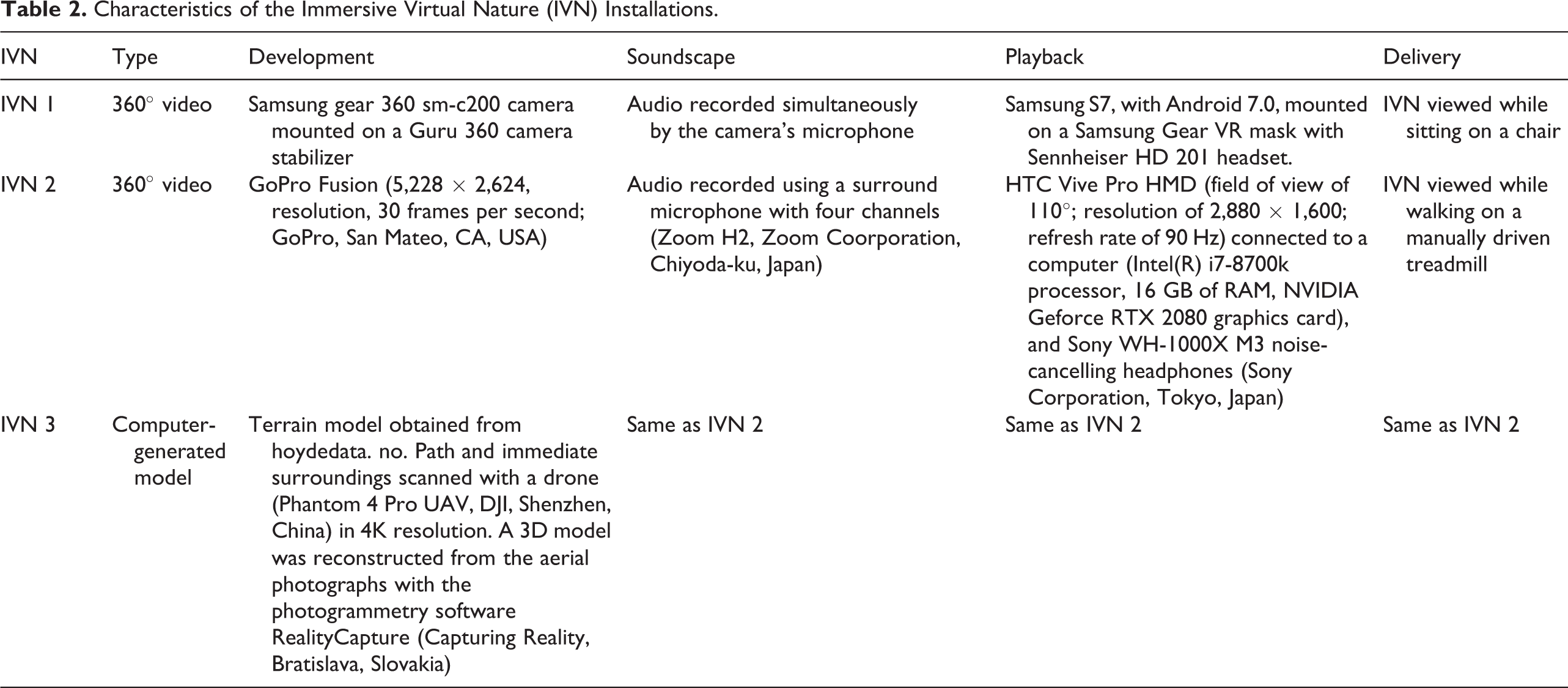
All IVNs simulated a virtual walk in the same natural environment. This environment consisted of a fairly straight walking trail along a river mainly surrounded by natural elements, but also included some built elements as shown in Figure 1. The three IVNs included two 360° videos (IVN 1 and 2), developed with different 360° cameras, and a computer-generated scenario (i.e., a 3D model; IVN 3). The different techniques employed resulted in the IVNs being characterized by different levels of resolution and realism. IVN 1 was presented to participants in a seated position, while in IVN 2 and IVN 3, the participants walked on a manually driven treadmill (Woodway curve, Woodway Inc., USA) connected to a computer through a USB output. This allowed the participants to move forward in the virtual space simply by operating the treadmill with their feet. An overview of the three IVNs is provided in Table 2, and a more detailed description is available in the primary publications. Links to videos showing the contents of virtual environments can be found here:
Please note that the experimental setups in these videos are not identical to the ones used in the primary publications.
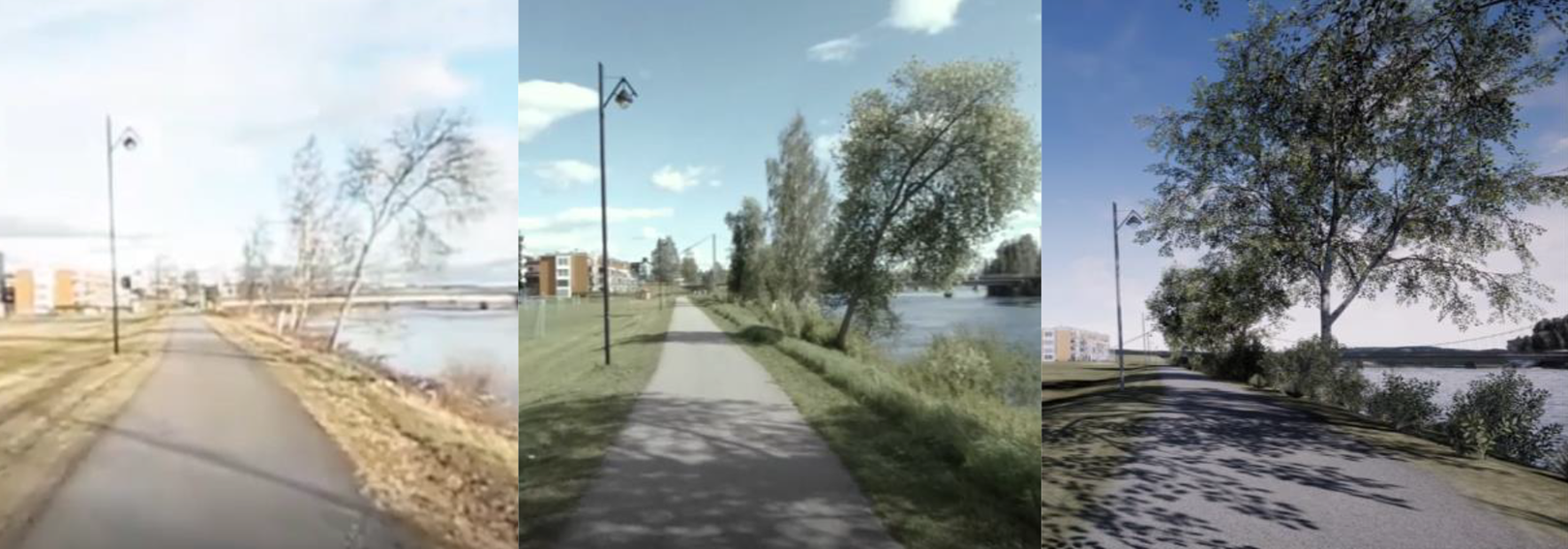
Snapshot from immersive virtual nature (IVN) 1 (left), IVN 2 (middle), and IVN 3 (right).
Characteristics of the Immersive Virtual Nature (IVN) Installations.
Psychophysiological Assessments
In the primary studies, a number of psychophysiological assessments were performed using the same instruments, and the instruments included in the meta-analysis are described in the below subsections.
Perceived environmental restorativeness
Perceived environmental restorativeness was assessed after the exposure to the IVNs using the Perceived Restorativeness Scale (Hartig et al., 1997, 2003). This instrument is often used as an indicator of an environment’s potential of eliciting cognitive restoration in accordance with the attention-restoration theory (R. Kaplan, 1989; S. Kaplan, 1995). In both studies, this scale included 16 items, rated on an 11-point Likert-type scale, that were formulated in past tense and specifically referring to the virtual environment. The 16 items correspond to the subjective perception of the four environmental qualities of the attention restoration theory—Fascination (six items, e.g., “My attention was drawn to many interesting things”), being away (two items, e.g., “Spending time there gave me a good break from my day-to-day routine”), coherence (four items, e.g., “It was chaotic there”), and compatibility (five items, e.g., “I could find ways to enjoy myself in a place like that”).
Affective responses
Affect is a commonly used measure in studies investigating the psychophysiological health benefits of nature exposure (Browning et al., 2020; Calogiuri & Chroni, 2014; Lahart et al., 2019), as it provides indication of emotional changes that may induce more stable mental health benefits in the long term. Participants’ affective responses were assessed by administering the Physical Activity Affect Scale (Lox et al., 2000) before and after (pre and post, respectively) exposure to the IVNs. The scale consists of 12 items that are grouped in four components in accordance with Russell’s circumplex model of affect (Russell, 1980): positive affect (three items, e.g., “Enthusiastic”), Tranquillity (three items, e.g., “Calm”), negative affect (three items, e.g., “Miserable”), and fatigue (three items, e.g., “Worn-out”). For each component, delta values (post–pre) were calculated and used in the analyses.
Enjoyment
The level of enjoyment during physical activity is considered a strong motive for future exercise participation (Dishman et al., 1985)—also in the context of nature-based physical activity (Calogiuri & Chroni, 2014)—making it an important element to consider for promotion of physical activity and health. The participants’ level of enjoyment was assessed after the experimental conditions by the following single-item: “On a scale from 1 to 10, how enjoyable was the activity you engaged in?” which was developed by Calogiuri et al. (2015).
Mean heart rate
Heart rate has been used as an indicator of general physiological distress (Allen et al., 2014) as well as physical exertion during physical activity (Garber et al., 2011). In this study, the participants’ heart rate was recorded continuously during conditions using a heart rate monitor (Garmin Forerunner 310XT, Garmin International Inc., Olathe, KA, USA) and extracted as the mean of the beats per minute during IVN exposure. The mean heart rate was automatically recorded by the heart rate monitor and used for further analyses.
Blood pressure
Systolic and diastolic blood pressure was measured using a Watch BP Office Target semi-automatic blood pressure kit (Microlife, Taipei, Taiwan). Delta values for the change in blood pressure from pre-IVN exposure to 15 min after IVN exposure was used for further analysis. Previous studies have shown significant reductions in blood pressure 15 min after IVN exposure (Duncan et al., 2014). Measurements of blood pressure was not taken for IVN 1.
Analyses
As the data were collected in different trials, a meta-analytic approach was used to assess whether there were consistent differences between seasons for each of the psychophysiological outcomes described above. The meta-analytical approach also offers improved statistical power and is more likely to detect small effects in the outcomes included (Goh et al., 2016; McShane & Böckenholt, 2017). This technique is believed to provide stronger evidence and higher precision of estimates compared to other methods of analyzing multistudy outcomes in single papers (Goh et al., 2016; McShane & Böckenholt, 2017). Among others, this approach allowed us to account for possible influences due to the different technology (software and hardware) used in the different studies, which resulted in different quality levels of the IVN scenarios. The means and standard deviations for psychophysiological outcomes from the original studies were used to calculate effects sizes (Cohen’s d) with the corresponding 95% confidence interval (CI). The comprehensive meta-analysis Version 3 (Biostat Inc., Englewood, CO, USA) was used to apply weights according to the inverse-variance method to calculate an overall effect of season across studies. Spring/summer was set as “control”, thus the results for autumn/winter were compared against the results of spring/summer. A random-effects model was applied, as the conditions were considered similar but not identical. The level of significance was set at p < .05. Summary statistics for the participants’ background characteristics were calculated in SPSS Version 27 (IBM Corp., NY, USA) and reported as means (M) ± standard deviations (SD).
Results
Spring/summer was set as “control,” thus, positive effect sizes indicate higher values in autumn/winter compared to spring/summer and negative effect sizes indicate lower values in autumn/winter.
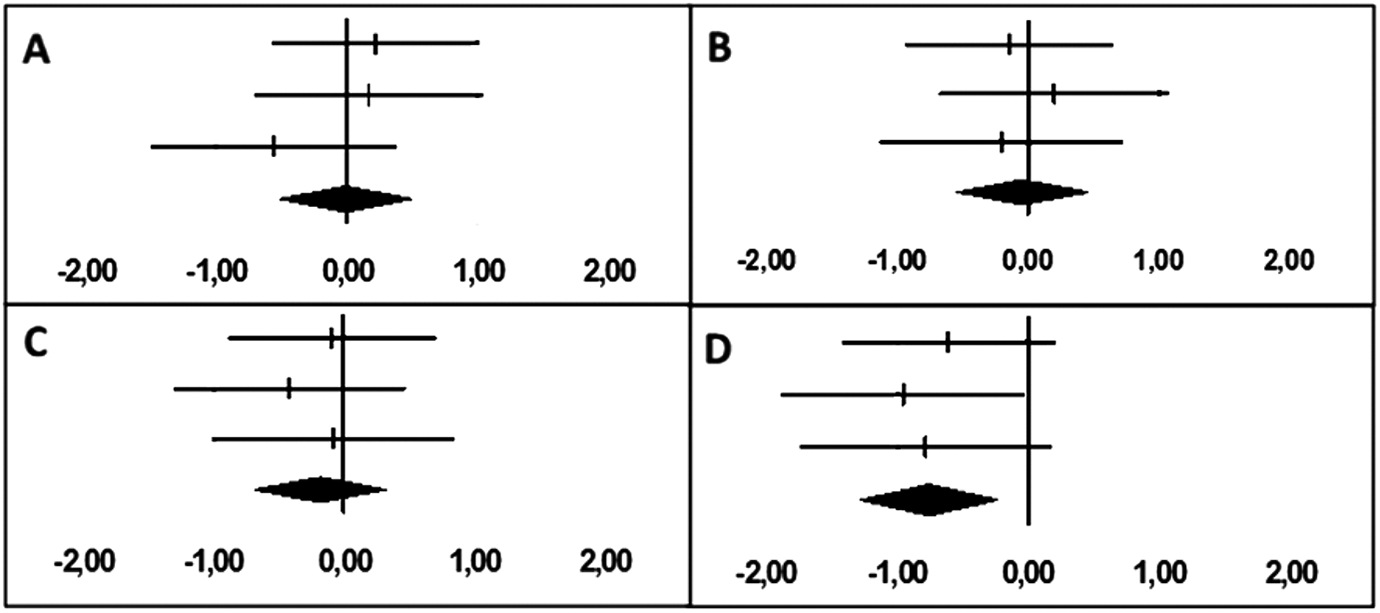
The meta-analysis revealed no significant effect of season for the four components of perceived environmental restorativeness (Figure 2). The overall effect size was d = .17 (95% CI [−0.34, 0.67], p = .519) for being away, d = −.01 (95% CI [−0.51, 0.49], p = .980) for fascination, d = .21 (95% CI [−0.29, 0.71], p = .416) for coherence, and d = −.38 (95% CI [−0.89, 0.13], p = .139) for compatibility.
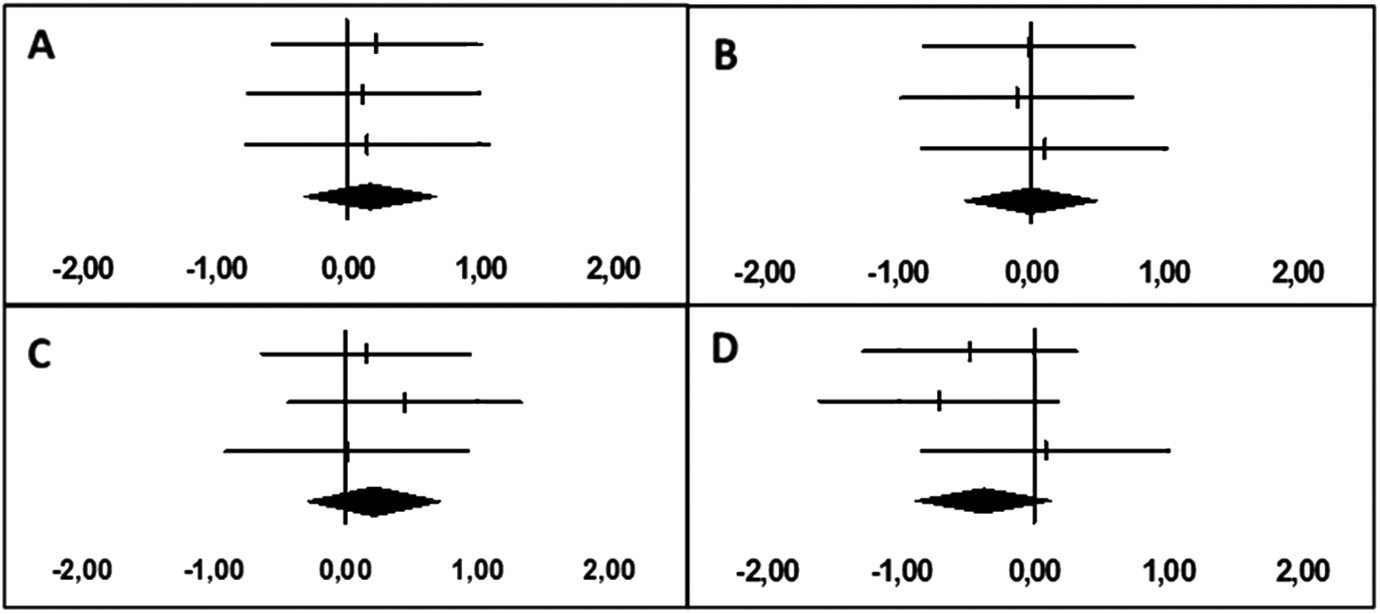
Forest plot showing Cohen’s d and 95% CI for immersive virtual nature (IVN) 1 (top line), IVN 2 (middle line), IVN 3 (bottom line), and the overall effect (diamond) for A = being away, B = fascination, C = coherence, and D = compatibility.
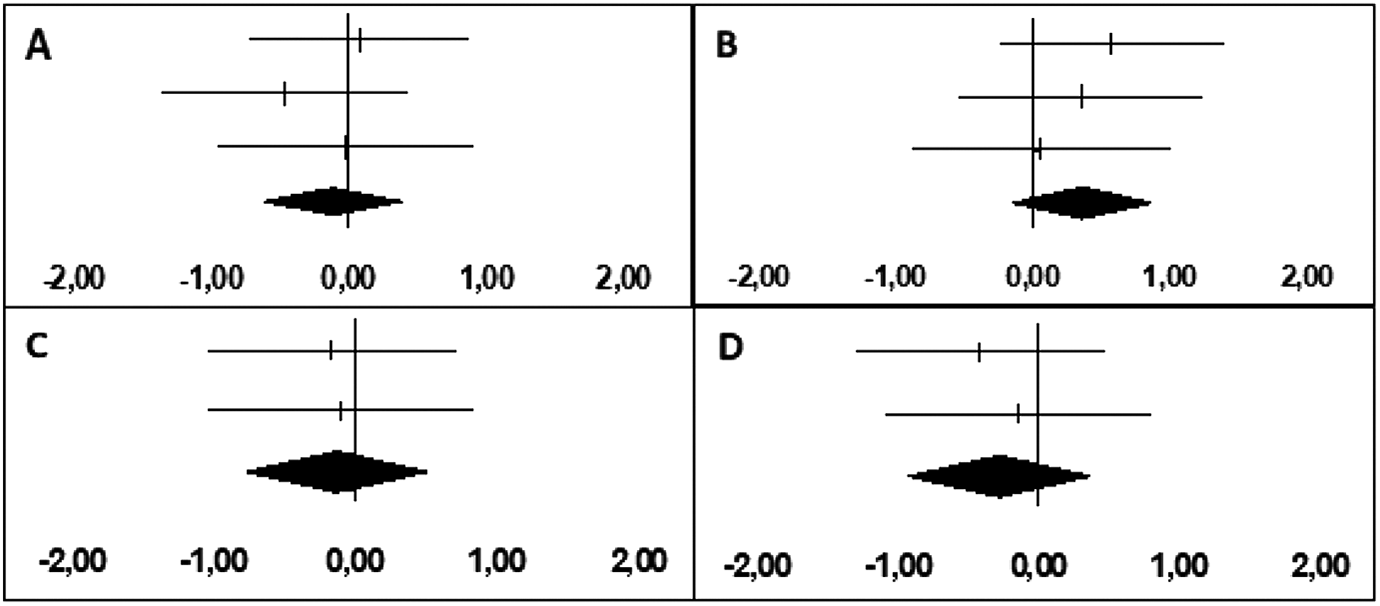
A significant effect of season was found for fatigue, displaying larger reductions in fatigue during autumn/winter compared to spring/summer (d = −.77; 95% CI [−1.23, −0.23], p = .004). The meta-analysis revealed no significant effect of season for the other three components of affect (Figure 3), that is, positive affect (d = −.02; 95% CI [−0.52, 0.49], p = .946), tranquillity (d = −.05; 95% CI [−0.55, 0.45], p = .846), and negative affect (d = −.19; 95% CI [−0.69, 0.31], p = .463).
Forest plot showing Cohen’s d and 95% CI for immersive virtual nature (IVN) 1 (top line), IVN 2 (middle line), IVN 3 (bottom line), and the overall effect (diamond) for A = positive affect, B = tranquillity, C = negative affect, and D = fatigue.
The meta-analysis revealed no significant effect of season for enjoyment, mean heart rate or blood pressure (Figure 4). The overall effect size was d = −.12 (95% CI [−0.62, 0.38], p = .645) for enjoyment, d = .36 (95% CI [−0.15, 0.86], p = .165) for mean heart rate, d = −.17 (95% CI [−0.78, 0.51], p = .677) for systolic blood pressure, and d = −.284 (95% CI [−0.93, 0.36], p = .387) for diastolic blood pressure.
Forest plot showing effect size and 95% CI for immersive virtual nature (IVN) 1 (top line), IVN 2 (middle line), IVN 3 (bottom line), and the overall effect (diamond) for A = enjoyment, B = mean heart rate, C = systolic blood pressure, and D = diastolic blood pressure.
Discussion
The purpose of this study was to investigate possible effects of season on psychophysiological responses to IVN exposure in spring/summer versus autumn/winter. The findings of a meta-analysis of three different IVN conditions indicate stable assessments across seasons for most of the included psychophysiological measurements (i.e., perceived environmental restorativeness, positive affect, negative affect, tranquillity, enjoyment, heart rate, and blood pressure). However, a consistent effect of season was found for fatigue, with greater reductions of fatigue when the IVN exposure occurred during autumn/winter compared to spring/summer.
The fact that all but one of the measured psychophysiological indicators displayed no seasonal effects is in contrast with studies indicating more favorable responses to actual nature exposure during spring and summer months (White et al., 2021). These findings suggest that IVNs of spring/summer sceneries are generally as effective during autumn/winter as in spring/summer. The less favorable responses to actual nature exposure during winter months may, therefore, be indicative of the fact that views of autumn/winter nature (possibly alongside other environmental conditions, such as light and temperature) are less effective than views of spring/summer nature. Several environmental psychology theories provide support for this assumption, such as Ulrich’s stress-reduction theory (Ulrich, 1983), the attention restoration theory (S. Kaplan, 1995), and the more recent conditioned restoration theory (Egner et al., 2020). According to these theoretical perspectives, it may be expected that views of spring/summer nature may produce more positive psychological responses, either because of psychoevolutionary adaptation, perceptions of environmental qualities, or because of conditioned associations, respectively. However, as the present study only included IVN reproducing spring nature views, and not sceneries representative of other seasons, these inferences cannot be confirmed.
The greater reduction in fatigue after IVN exposure during autumn/winter compared to spring/summer should be considered meaningful since the effect size indicted a medium to large effect. The differences across seasons for fatigue may be explained by intrinsically higher baseline levels of this parameter in this period of the year (Feldthusen et al., 2016; Gwinner, 1986), which allowed for greater restoration to occur. A question remains, however, why similar effects were not observed in the other three components of affect. Affect is closely linked to the enjoyment experienced during an activity (Raedeke, 2007) and the restorative qualities of the natural environment according to the attention restoration theory (S. Kaplan, 1995). Neither enjoyment nor perceived environmental restorativeness changed across seasons, suggesting that the IVNs should be equally effective in improving affect in both spring/summer and autumn/winter despite showing an environment that may not be representative of the current season. This was not the case for fatigue, which may be explained by intrinsically lower levels of fatigue during the latter seasons, leaving more room for improvement of fatigue during autumn/winter.
Limitations
This study was based on a secondary analysis of data collected within previous experimental trials, which may have resulted in some confounding variables being overlooked—a common limitation with secondary analysis (Cheng & Phillips, 2014). In particular, the original studies were not designed specifically to study seasonal variations in responses to IVN which lead to some limitations. A cross-over design, where participants acts as their own control, may be preferable for this type of research question, as participants who volunteered during spring/summer may exhibit different characteristics compared to those who volunteered during autumn/winter. Furthermore, lack of control of weather conditions on the day of testing for each participant was not controlled for. Differences in day-to-day weather conditions may have impacted measures included in this study, although affective states may be unaffected by such day-to-day variations (Venz & Pundt, 2021). As the participants in all studies were relatively young and healthy adults, the findings of this study may not be generalized to other age groups or people with health challenges. Lastly, the experiments were performed in a region heavily influenced by seasons and the results may not be generalizable to other regions.
Implications and Recommendations for Future Research
This is the first study to examine seasonal variation in participants’ responses to IVN, addressing a standing gap in the literature. The knowledge generated by this study has implications with respect to both methodological considerations for IVN research and IVN-based health interventions, as well as practitioners looking to administer IVN to enhance patients’ healthcare environment. With respect to the former, it is important that researchers and developers are aware of potential differences in the way people respond to IVN across different seasons. The present study demonstrate that many psychophysiological measurements assessed in relation to IVN exposure remain fairly stable across seasons, these findings suggest that the outcomes of IVN studies performed in different seasons are comparable and that data from different studies can be synthesized to make general conclusions regarding the effectiveness of IVNs. However, some specific seasonal effects may occur. In particular, the impact of IVN on fatigue varied across seasons. In the context of environmental and health research, this indicates that researchers should be aware of possible confounding effects in data collections concerned with this specific variable when collecting data over longer periods. Moreover, caution is required when comparing different studies assessing the effects of IVN exposure on people’s levels of fatigue, if the data collection of these studies was performed in different seasons. The results further suggest that research on the effectiveness of IVN should include environments representing spring or summer to optimize performance, since such environments are generally considered more favorable and the present study showed that peoples’ enjoyment and perceptions of an IVN were not affected by viewing an environment that is not representative of the current season. With respect to implication for IVN-based health interventions, the findings presented in this paper suggest that IVN may be especially effective in reducing fatigue during autumn and winter periods, particularly if the environment display spring or summer conditions. This may be of relevance for specific groups of patients, such as patients suffering from season-related fatigue disorders. More research is needed in this field in order to provide a larger evidence base for the effects of season on the psychophysiological responses to IVN exposure as well as its possible applications.
Implications for Practice
Although people’s psychophysiological responses to (actual) nature exposure may vary across seasons, exposure to virtual nature sceneries generally display similar psychophysiological responses independently of season and may, hence, be used in both clinical and other settings across all seasons.
Nature sceneries in VR may be more effective in reducing feelings of fatigue during autumn and winter, suggesting a greater effect of this tool for people struggling with fatigue during these seasons.
People’s enjoyment and perceptions of a virtual natural environment is not influenced by viewing an environment that is not representative of the current season, suggesting that environments depicting spring or summer conditions can be recommended in all seasons as they may be more effective than their autumn and winter counterparts.
VR-mediated nature-based interventions can provide a valuable tool for delivering highly immersive and realistic nature-experiences in clinical settings, especially among bedridden patients and other stationary subjects who would otherwise meet major barriers to view and visit actual nature.
Although VR may allow for more immersive (and, potentially, more effective) experiences compared to other digital solutions, such as virtual images on display or virtual windows, the use of VR-based interventions in clinical practice may present some practical challenges. In particular, the use of VR headsets may not be advisable for all patients (e.g., extremely frail individuals or patients easily prone to cybersickness), so preliminary case-by-case evaluations are recommended to determine whether less-immersive solutions may be more appropriate.
Footnotes
Declaration of Conflicting Interests
The author(s) declared no potential conflicts of interest with respect to the research, authorship, and/or publication of this article.
Funding
The author(s) disclosed receipt of the following financial support for the research, authorship, and/or publication of this article: The project received funding from the Regional Research Fond, Innlandet, Norway (grant no. 292761).
