



Abstract
All inorganic nanomaterials such as gold, silica, and cobalt oxide nanoparticles are transforming tissue engineering by providing enantioselective properties with unique characteristics that are mimicking the chirality of biological systems, allowing the precise modulation of cellular behaviors like differentiation and alignment. It is essential for the regeneration of complex tissues such as bone, cartilage, and neural networks, but their clinical application is being obstructed by considerable challenges such as the inability to sustain consistent chirality during synthesis. There are limited means to characterize their molecular structure, the high cost of their production, which constrains their scalability, and the long-term biocompatibility. There are different concerns of these materials in physiological environments, which call for novel solutions such as machine learning-aided synthesis, bioinspired mineralization, and interfacing with cutting-edge technologies such as 3D and 4D bioprinting to design biomimetic scaffolds that facilitate enhanced tissue regeneration. The personalized strategies that are modifying nanomaterial properties to match the distinct requirements of individual patients have the promise of enhancing therapeutic outcomes, and collaborations among materials science, bioengineering, and clinical expertise are needed to standardize protocols, overcome regulatory barriers, and tap the full potential of these nanomaterials. This review is hence a critical appraisal of their revolutionary potential, present limitations, and future promise in enhancing regenerative medicines.
Impact Statement
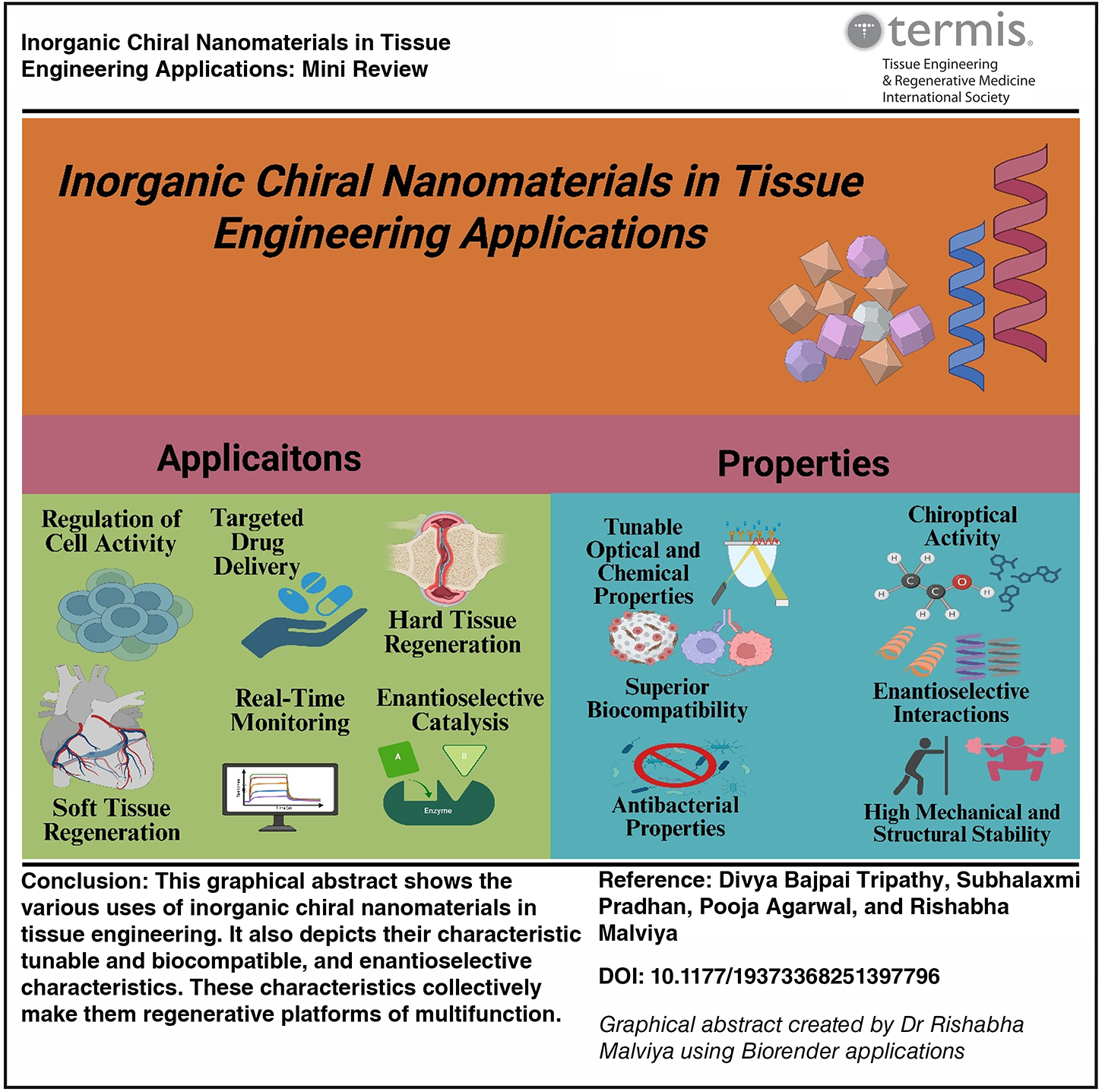
The research on inorganic chiral nanomaterials in tissue engineering, as presented in the mini review, highlights their unique ability to mimic biological chirality, enhancing cell-scaffold interactions and tissue regeneration. These nanomaterials offer precise control over cellular behavior, improving biocompatibility and functionality in applications such as bone, cartilage, and neural tissue engineering. Their potential to revolutionize the field lies in tailoring chirality for specific tissue responses, advancing personalized medicine and regenerative therapies. This work underscores the need for further exploration into scalable synthesis and clinical translation, paving the way for innovative solutions in tissue engineering and regenerative medicine.
Keywords
Get full access to this article
View all access options for this article.