




Abstract
Participants (n = 520) in a study of two on-campus peer-led sexual assault prevention programs focused on bystander intervention and risk reduction were assessed. This study focused on myth reduction, as well as self-defense self-efficacy. Demographics allowed for within-group comparisons along gender and race. Among men who attended Bro Code, Black men had significantly lower sexual assault myth adherence on many rape myths than the control group, not true of white men. Those women who attended Girls Night Out (GNO) had significantly lower sexual assault myth adherence than the control group. While greater reductions in myth adherence were seen in white women than among Black women, Black women had significantly lower overall sexual assault myth adherence (in both control and sample). As a side note, we found that women who attended GNO had lower general intimate partner violence myth acceptance in addition to lower sexual assault myth acceptance, with some variation on individual myths. Finally, those women who attended self-defense training were significantly more likely to endorse self-defense self-efficacy. Results were then explored through the lens of cultural, gender, intersectional, and community-based contexts. Future research needs and implications are discussed.
Keywords
Sexual assault (SA) and intimate partner violence (IPV) are insidious social problems, once recorded in historical documents as “damage to property” (D’Cruze 2012:26), that remain prevalent (see Basile et al. 2022 for incidence). Among female survivors of rape, 80 percent report their first rape before the age of 25 years, and 49 percent report their first rape as a minor; (Basile et al. 2022) underscoring the need for programs that seek to address this important issue (Holtzman 2019; Marganski, Melander, and DeKeseredy 2022; McMahon, Burnham, and Banyard 2020). In fact, Title IX regulations require university campuses to provide such programs (Richards and Rennison 2022). All but the second author planned and facilitated two such programs, in conjunction with other campus and community leaders, which we evaluate here to determine its impact on participants. Recognizing that the influence of such a program may not be consistent across all participants, we theorized that two demographic variables may impact the way that people perceive or experience the program: race and gender. While gender, with a particular focus on the experiences of cisgender women, has been the focus of a great deal of research relating to SA, work exploring the influence of race has been more recent. The growing literature on race and SA is warranted based on studies, as discussed in the following section, which demonstrates that these identity characteristics are associated with different experiences.
Race and Sexual Assault
Women of color, especially multiracial women, as well as individuals who identify as LGBTQIA+, individuals with disabilities, and others who are marginalized are often targeted by perpetrators, who hope to evade punishment (Basile, Breiding, and Smith 2016; Basile et al. 2022; Coulter and Rankin 2020). In fact, perpetrators of SA are rarely held accountable (Neeley 2021). Work in multiple jurisdictions suggest that approximately 25 percent of SA cases lead to an arrest, and approximately 10 percent of SA cases result in a conviction (Morabito, Williams, and Pattavina 2019). Shaw and Lee (2019) systematically reviewed studies that assess the impact of race, finding that police were more likely to identify a suspect and to submit a rape kit for cases involving Black victims. However, their review indicated that Black victims were more likely to be “deemed uncooperative” (p. 272), stymieing further progression of the case (Shaw and Lee 2019). Race was also a factor in how cases were prosecuted. Black defendants convicted of assaulting a white woman, a stranger, or for capital cases were more likely to receive a harsher sentence, including the death penalty. This picture shows race as a factor in each step of the criminal justice process (Shaw and Lee 2019).
Just as CJ response to SA (historically to the present day) is relevant, so too are cultural factors that influence survivors. Historically, SA has been used as a form of control over Black women, such as the role of rape in forced reproduction for the financial benefit of slave owners (Zounlome et al. 2019). Menakem (2020, 6:14) refers to the longstanding impacts of “the brutalization of Black women’s bodies for four hundred years of rape—legal rape.” Slatton and Richard (2020) contend that Black women had to contend with rape not only without a means of legal protection for “most of their existence in this country” but also “as a form of racial terrorization and domination” (p. 3). Furthermore, studies point out the importance of noting racist stereotypes of Black sexuality, of women and men. In a small study of female undergraduates’ perceptions of victim’s responsibility following an SA, Lewis and colleagues (2019) found that race of the hypothetical victim influenced participants’ judgments. Specifically, Black and Latina victims of SA were blamed more for their assaults than were white victims. The stereotype of Jezebel paints Black women as sexualized and promiscuous, while the stereotype of the Matriarch paints Black women as independent and aggressive (Slatton and Richard 2020; Wooten 2017). Scholars describe how historically, stereotypes of Black men as sexual predators of white women were used to “control Black men and white women” (Donovan 2007:724) and to justify brutal racist violence against Black men, such as lynching (Zounlome, Wong, and David 2021). Black men have been stereotyped as sexually aggressive and “hypermasculine,” and these stereotypes inflict mental and emotional harm upon Black men, particularly on predominately white institution (PWI) campuses (Zounlome et al. 2021:10812).
Barriers to Seeking Care
A review of literature on the experiences of Black women assaulted by Black men suggests that some victims may choose silence, rather than possibly be seen as supporting stereotypes of Black men and potentially being ostracized (Slatton and Richard 2020). For Black women assaulted by white men, there may be substantial fear of racist reactions and dismissal (Slatton and Richard 2020; Wooten 2017).Other factors that may lead to silencing include internalization of the strong Black female archetype, fear of victim blaming, fear of racism in reporting or seeking care following SA, particularly from white providers, and a society that does not openly discuss sexuality or how to address SA (Wooten 2017).
Aftercare for survivors is important, due to elevated risk of revictimization (Decker and Littleton 2018), but victim blaming interferes with support (Dyar, Feinstein, and Anderson 2021). The sexual script in heterosexual interactions is gendered, although complicated. For example, some studies have found gender differences in how sexual consent is communicated and interpreted (Willis et al. 2019). Women face stigma regarding sexual behavior, leading to justification of further violence, especially if labeled promiscuous (Jensen and Hunt 2020).
Prevention programs should ideally address the cultural and gender issues highlighted earlier, as well as rape myth acceptance (RMA), associated with “rape culture” (Kessel 2022:131) that supports violence. Widely held RMA leads to victim blaming, protecting abusers, and minimizing the impact of violence (Hudspith et al. 2023). In samples of men, RMA has been found to be associated with a proclivity to commit rape (for a review, see Bohner et al. 2010). RMA in survivors of assault and in criminal justice practitioners influences whether an assault is reported, leads to an arrest, or is prosecuted (Hudspith et al. 2023).
Other oppressive beliefs such as racism and heterosexism are positively associated with RMA as well (Suarez and Gadalla 2010). Thus, Kessel (2022) argues that Rape Myth Acceptance Scale (RMAS) must be considered in an intersectional way, with attention to multiple power structures within society. Kelley (2023) highlights the rape myth of the hypothetical Black male rapist who preys upon white women, tying the emergence of this belief with economic and political gains during reconstruction to continue to subjugate Black people for labor.
Carmody and Washington (2001) found no substantial difference in RMA between research participants based on race, but this has been understudied in the literature in the two decades since their work. Awareness of potential race differences in RMA can help providers to plan educational efforts, leading to less tolerance for these forms of violence and more support for SA survivors. One study suggests that “SA may result in greater health deterioration for African American survivors as compared with Caucasian survivors because of the greater overall chronic stress burden” (Pegram and Abbey 2019:4022). Moreover, SA and IPV may be experienced on top of racism, homophobia, and other forms of oppression (Slatton and Richard 2020). For an overview of these impacts for Black women, see the study by Kelley (2023). Thus, programming that is provided by multiculturally competent providers, focused on empowerment, and points to supportive services is essential (Pegram and Abbey 2019). Given significant historical differences in experiences and in the content of rape myths surrounding SA, it is reasonable to expect that prevention programming is received differently by different participants.
The threefold purpose of this study was (1) to describe a comprehensive SA prevention program; (2) to test effectiveness in terms of violence myth perceptions (RMA and IPV myth acceptance) and self-defense (SD) efficacy; and (3) to explore possible differences in the impact of the program on violence myth perceptions and SD efficacy by race and gender.
Development of Girls Night Out and Bro Code
In this study, we overview two programs offered at a Southern U.S. public university, Girls Night Out (GNO) and Bro Code (BC). Facilitated by campus and community providers and faculty, including Title IX providers, mental health providers, and both campus and community rape crisis advocates, these programs were developed in 2011 and became a regular offering on the campus, once per year in the fall semester. Similar to programming described by Potter et al. (2020), we “fostered partnerships” between our campus partners and the “local crisis center, encouraging collaboration with the development and implementation of prevention and awareness programming” (p. 12S). Participants in GNO and BC were made aware of the availability of advocates, counselors, and Title IX officers, including off-campus resources, periodically through the programming. Participants were then put into small groups, led by racially diverse, intensely trained peer leaders. Training, provided by the local Rape Crisis Center, focused on group leadership, dynamics of consent, recognizing and intervening in at-risk situations, decreasing victim blaming, and promoting support for survivors. GNO was advertised for those who identify as female, while BC was advertised for those who identify as male. Studies have found that single-gender, multi-session, peer-led programs that are interactive are effective in changing beliefs (Hudspith et al. 2023; Mujal et al. 2021). We acknowledge that single-gender groups may exclude individuals who are gender expansive, a group at high risk of SA victimization (Mackler et al., 2023), but these students were targeted in other SA prevention programs on the campus.
Implementation of GNO and BC
Multi-session formats (meeting weekly for several weeks in a row—ranging between four and six weeks) were initially offered for both GNO and BC, utilizing free t-shirts and food to incentivize attendance. However, attendance at BC was very low (one session, even though heavily incentivized and advertised, had only three attendees). Eventually, we found that a fraternity sponsorship program was effective in increasing attendance for BC, as it created a positive peer pressure to attend. Even with this sponsorship, attendance could not be maintained for multiple sessions. Therefore, we condensed BC into one night, focused primarily on bystander intervention. Bystander intervention was chosen because of robust data on effectiveness in challenging attitudes, increasing pro-social behaviors to minimize incidents of violence, and decreasing risk for potential victims of violence (Kettrey and Marx 2019). McMahon et al. (2020) go on to assert that “research has yet to specifically explore what factors facilitate or inhibit pro-social bystander intervention from the perspective of minoritized students” (p. 795). Thus, research along this line of inquiry has been called for. Orchowski et al. (2020) call for “risk reduction and resistance” for women (p. 812), as well as “empathy,” “skills,” and “social norms based” training for men, “implemented together as part of ongoing education, skill building, and campus prevention efforts” (p. 817), which these programs provide.
Girls Night Out
GNO modified the Safe Dates program (Foshee et al. 2005) for emerging adults. Facilitators, advocates, and/or faculty with expertise in SA led small group discussions on incidence, self-care after SA, healthy and unhealthy relationships, setting boundaries, supporting others, coercion, and personal experiences. Peer group leaders also led discussions on risk reduction. In some years, an optional SD class was offered with GNO, in which students were introduced to stances, evasive footwork, and the use of blocks/parrying. Vulnerable areas of the human body were identified, as well as the use of hands, knees, elbows, and feet in targeting these areas. These techniques were demonstrated to students who then practiced them repetitively against the air and then padded targets. As Orchowski et al. (2020) call for, within and throughout GNO, extensive focus is on awareness of acquaintance coercion and assaults and on “placing blame squarely on perpetrators, not victims” (p. 814).
Bro Code
Similar to other programs seeking to lower RMA, “participants were approached as potential helpers, rather than as potential perpetrators . . . avoiding defensiveness” (Hudspith et al. 2023:993). BC is a peer-led approach focused on awareness of risk, increasing empathy to help, and creating positive peer pressure to intervene (all methods recommended by Orchowski et al. 2020:815). At BC, incidence, dynamics of SA, as well as common risk scenarios were topics discussed in peer-led small groups, with a goal of breaking societal tolerance of SA. Common SA scenarios for college students were discussed in order to increase awareness of risk situations, reduce RMA and victim blaming, and increase empathy for potential victims of SA. A video clip was also shown to encourage bystander intervention following peer group engagement. This video was of a college-aged woman drinking in various settings and interacting with different individuals who noticed as the inebriated woman was pursued by a male. At the point of the video where it appeared that the SA was about to occur, the video rewound as different individuals intervened to prevent SA of the inebriated woman. In the present study, we sought to assess the impact of GNO and BC in terms of lowered RMA.
The Present Research
Informed consent was obtained, and subjects completed a survey packet. We anticipated that we would see lower levels of RMA among program participants than in the general student body. We also were interested in possible differences in RMA and whether the impact of these programs differed by gender and race. Research participants completed a packet of self-report instruments, including a demographic questionnaire, the 22-item Modified Illinois RMAS (McMahon and Farmer 2011), a modified version of the 18-item Domestic Violence Myth Acceptance Scale (DVMAS; Peters 2008), the Sexual Experiences Survey (Koss and Gidycz 1985), the Barriers to Sexual Assault Intervention Scale (Burn 2009), the Permissiveness Scale of the Sexual Attitudes Scale (Hendrick and Hendrick 1987), and the Self Defense Efficacy Scale (SDES; Weitlauf et al. 2001). Specific instruments analyzed in this study are discussed in the following sections.
Measures
Rape Myth Acceptance Scale
The Modified version of the RMAS (McMahon and Farmer 2011), based off of the Illinois Rape Myth Acceptance Scale (IRMAS), (Payne, Lonsway, and Fitzgerald 1999) measures “subtle” rape myths, which are less obvious because they fit into the context of accepted socialized behavior (McMahon and Farmer 2011). The RMAS, a 23-item instrument, assesses RMA on a five-point Likert scale (1 = strongly disagree to 5 = strongly agree). Higher scores indicate greater RMA. Four original subcategories by Payne et al. (1999) were used: “She asked for it,” “It wasn’t really rape,” “He didn’t mean to,” and “She lied” (McMahon and Farmer 2011).
Domestic Violence Myth Acceptance Scale
The DVMAS (Peters 2008) is an 18-item instrument that assesses individuals’ IPV myth acceptance on a five-point Likert scale (1 = strongly disagree to 5 = strongly agree). The scale consists of four subscales: two subscales that blame the victim, “Character blame” and “Behavior blame” (p. 8), one subscale that absolves responsibility of the abuser, “Exoneration,” and one subscale that minimizes the seriousness of the abuse, “Minimization” (p. 8). Higher scores reflect greater myth adherence. The full scale has demonstrated good internal validity with Cronbach’s alpha of .88 (Peters 2008). The scale also demonstrated convergent validity (Giger, Goncalves, and Almeids 2017; Peters 2008). Because the instrument did not contain adequate questions to address same-sex IPV, eight questions were added focused on these (Pacific Lutheran University, Center for Gender Equity 2023).
Self Defense Efficacy Scale
The modified SDES (Weitlauf et al. 2001) includes 16 items measured on a 10-point Likert scale (1 = not competent at all to 10 = very competent) on SD efficacy. The six items that relate to confidence to utilize skills if attacked were used for this study, similar to its use by Hollander (2014). The assessment measures self-competence to recognize situations in which SD may be needed, to utilize skills, and to obtain support if attacked. Reliability measures indicate acceptable internal consistency; “Cronbach’s alpha at Time 1 was .94 and .98 at Time 2” (Weitlauf et al. 2001).
Methods
Data for these analyses were collected between fall of 2013 and spring of 2016. Over this time period, data were collected from participants in four offerings of the GNO Program, two offerings of BC, students in a women’s SD class, and various other courses (three introductory general courses and a computer science course) to provide a comparison group. Subjects were invited to complete the survey either using pencil-and-paper (which most participants chose) or online in Survey Monkey (chosen by fewer than 20 percent of the sample).
A total of 576 surveys were collected. Thirty-nine survey ID numbers did not have any data associated with them and were deleted from the sample, reducing the sample size by 6.8 percent. A key question informing our analyses was which, if any, of the programs the survey respondent attended. Sixteen surveys were removed from analysis because of either marking discrepant responses (i.e., marking both “none,” as well as GNO, BC, and/or SD) or because this key question was blank. The final analytic sample thus included 520 participants across four groups, including students who attended GNO (n = 187), attended BC (n = 151), participated in a SD course (n = 28), and a comparison group who had not attended any of these (n = 158). Three students reported attending both GNO and SD class, and one student reported attending both BC and a SD class; thus, they are represented in both groups.
The final analytic sample was racially diverse and somewhat more likely to be female than male (see Table 1). There was a significant racial difference in GNO attendance such that Black women were significantly more likely to attend (69.4 percent) than white women (30.6 percent), χ2 (1, N = 234) = 11.785, p = .001. There was also a significant racial difference in SD participation such that white women were significantly more likely to participate in a SD class (60.9 percent) than Black women (39.1 percent), χ2 (1, N = 234) = 5.644, p = .018. There was no significant difference among BC attendees based on race.
Descriptive Statistics of Sample.
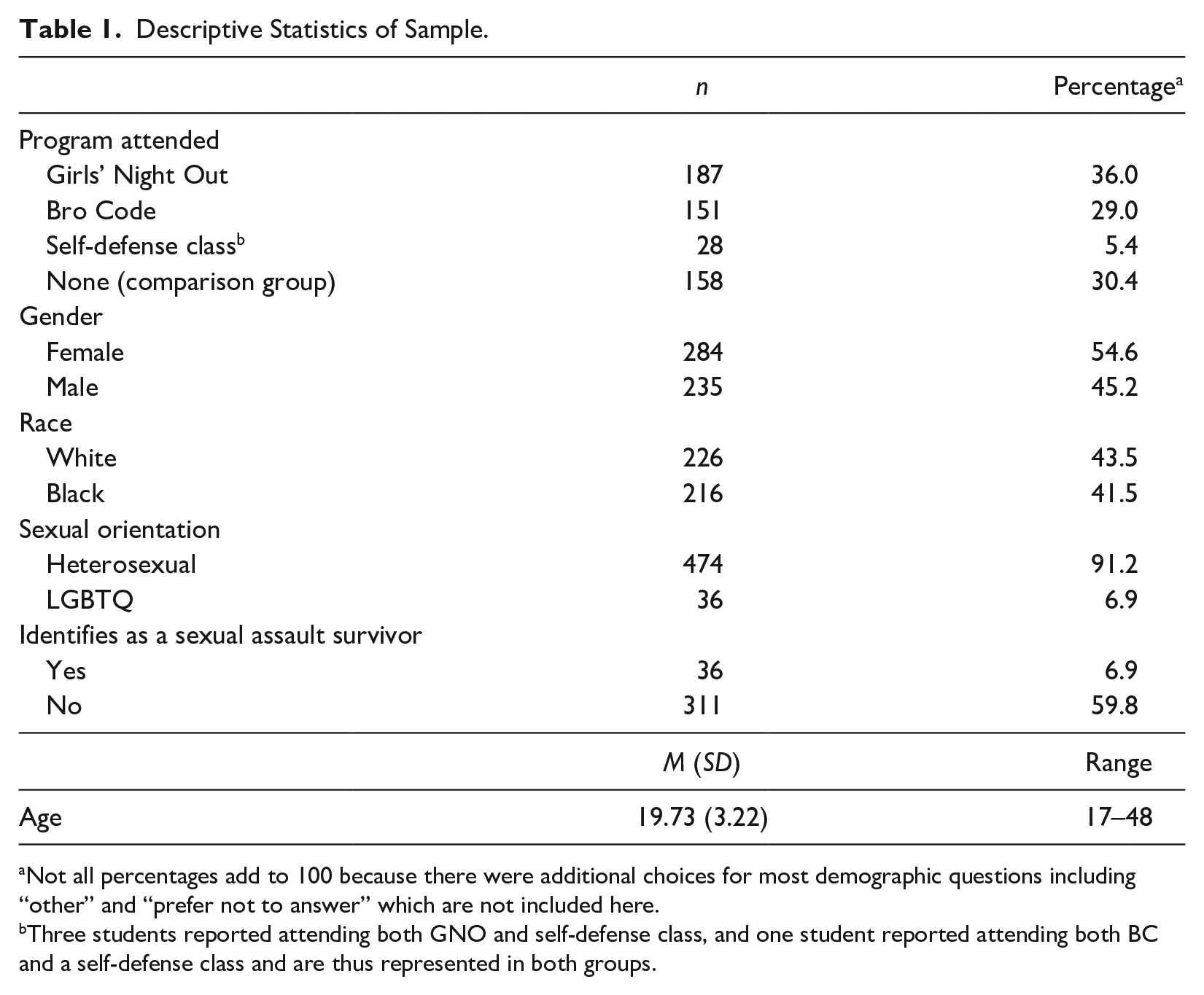
Not all percentages add to 100 because there were additional choices for most demographic questions including “other” and “prefer not to answer” which are not included here.
Three students reported attending both GNO and self-defense class, and one student reported attending both BC and a self-defense class and are thus represented in both groups.
Results
To gauge the impact of the GNO and BC programs on participants’ attitudes, we ran t-tests for mean differences of the following instruments: RMAS, DVMAS, and SDES. For each, we divided the sample by sex and compared the mean ratings provided by women who attended GNO to those of women who did not, as well as compared the mean ratings provided by men who attended BC to those of men who did not. Full sample means and means within each of these groups are presented in Tables 2 to 4. We further divided the GNO and BC subsamples by race and looked for significant differences between Black women who attended GNO and Black women who did not, white women who attended GNO and white women who did not, Black men who attended BC and Black men who did not, and white men who attended BC and white men who did not. The university where these programs were planned and facilitated, while a PWI, has the second highest racial category students who are Black. While other racial groups were present in smaller numbers, this was not at levels substantial enough to be able to add meaningfully to knowledge about these specific groups without grouping, which, as Wooten (2017) highlights, “serves to undermine their particular histories, needs, and concerns” (p. 415). It is for this reason that we limited the analysis to those students who are Black and white. Means are not reported (available from authors upon request), but items with significant differences are noted in the tables.
Rape Myth Adherence Among Respondents in Full Sample, by Program Attendance Within Gender and by Program Attendance Within Race and Gender.
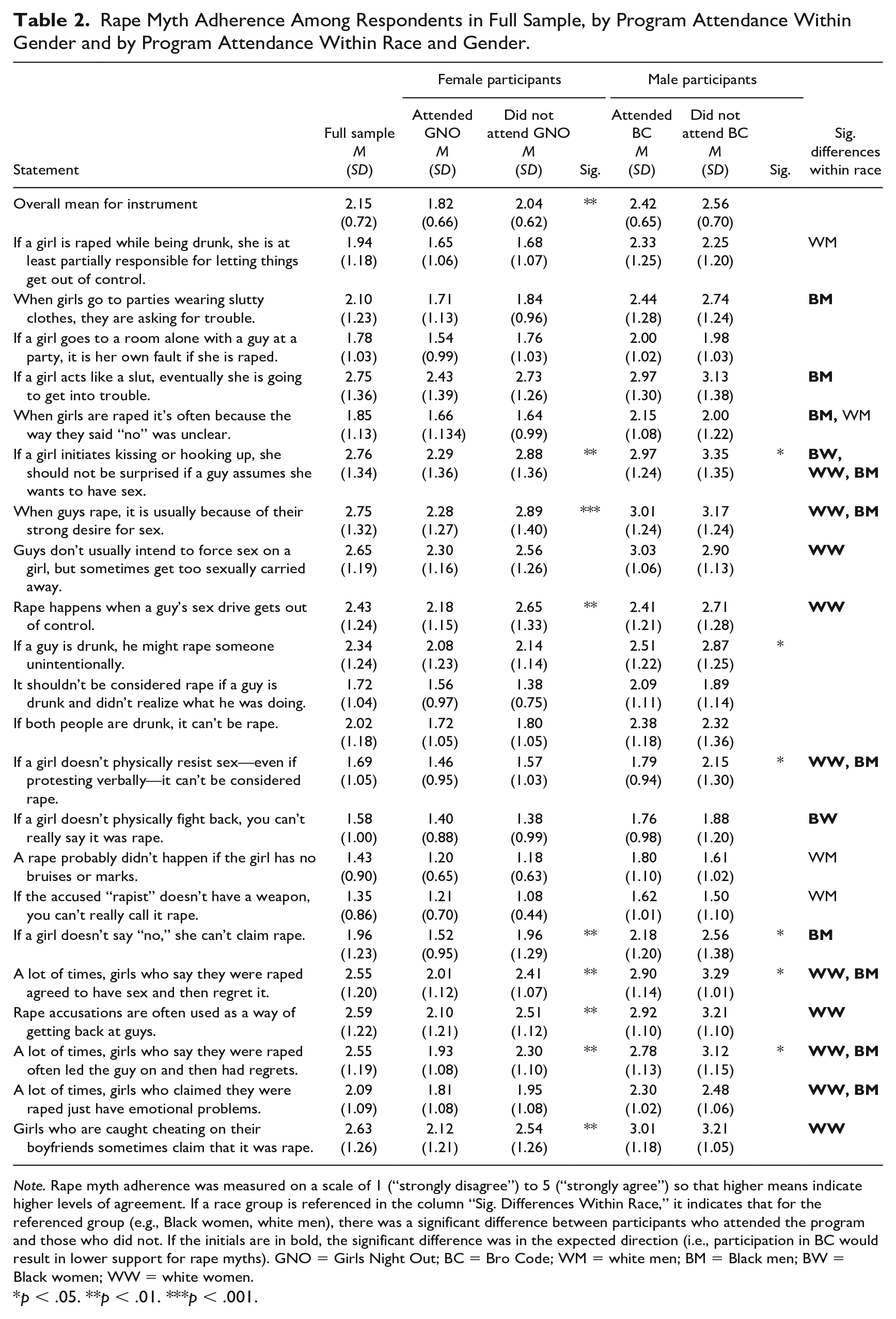
Note. Rape myth adherence was measured on a scale of 1 (“strongly disagree”) to 5 (“strongly agree”) so that higher means indicate higher levels of agreement. If a race group is referenced in the column “Sig. Differences Within Race,” it indicates that for the referenced group (e.g., Black women, white men), there was a significant difference between participants who attended the program and those who did not. If the initials are in bold, the significant difference was in the expected direction (i.e., participation in BC would result in lower support for rape myths). GNO = Girls Night Out; BC = Bro Code; WM = white men; BM = Black men; BW = Black women; WW = white women.
p < .05. **p < .01. ***p < .001.
IPVMA Among Respondents in Full Sample, by Program Attendance within Gender and by Program Attendance within Race and Gender.
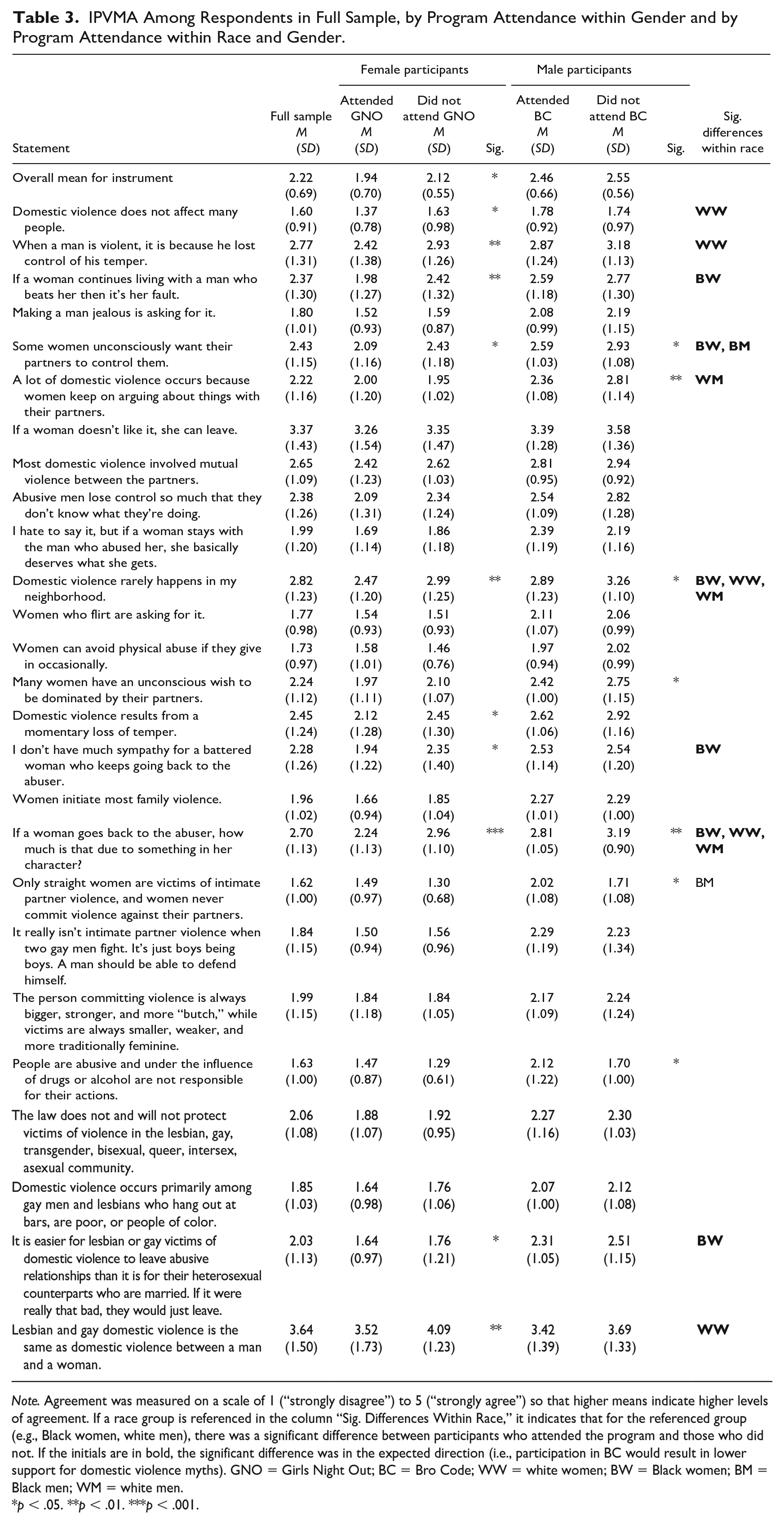
Note. Agreement was measured on a scale of 1 (“strongly disagree”) to 5 (“strongly agree”) so that higher means indicate higher levels of agreement. If a race group is referenced in the column “Sig. Differences Within Race,” it indicates that for the referenced group (e.g., Black women, white men), there was a significant difference between participants who attended the program and those who did not. If the initials are in bold, the significant difference was in the expected direction (i.e., participation in BC would result in lower support for domestic violence myths). GNO = Girls Night Out; BC = Bro Code; WW = white women; BW = Black women; BM = Black men; WM = white men.
p < .05. **p < .01. ***p < .001.
Agreement with Self-Defense Efficacy Scale among Women Who Attended Self-Defense Training and Women Who Did Not Attend Self-Defense Training.
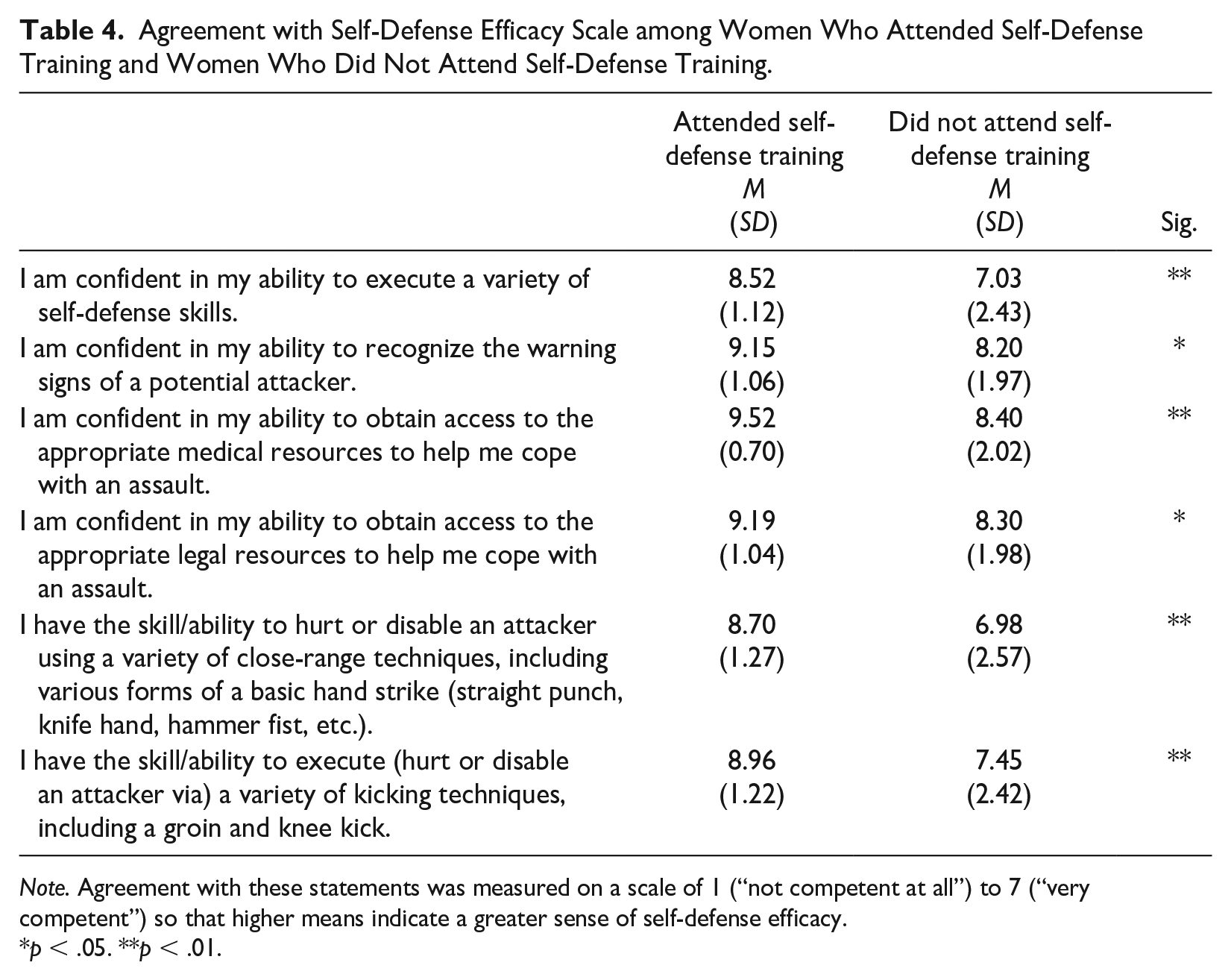
Note. Agreement with these statements was measured on a scale of 1 (“not competent at all”) to 7 (“very competent”) so that higher means indicate a greater sense of self-defense efficacy.
p < .05. **p < .01.
Rape Myth Acceptance
Men who attended BC (compared to men who did not) and women who attended GNO (compared to women who did not) were significantly less likely to support the following SA myths: “If a girl initiates kissing or hooking up, she should not be surprised if a guy assumes she wants to have sex,” “If a girl doesn’t say ‘no’ she can’t claim rape,” “A lot of times, girls who say they were raped agreed to have sex and then regret it,” and “A lot of times, girls who say they were raped often led the guy on and then had regrets.”
Women who attended GNO (compared to women who did not) had significantly less RMA, as indicated by a lower overall mean for the instrument. They had significantly lower RMA on the following myths: “When guys rape, it is usually because of their strong desire for sex,” “Rape happens when a guy’s sex drive gets out of control,” “Rape accusations are often used as a way of getting back at guys,” and “Girls who are caught cheating on their boyfriends sometimes claim that it was rape.” To determine whether these findings were consistent across race groups, we separated the sample by race and ran further analyses. Disaggregating the sample by race showed that the significant differences on the IRMAS were largely driven by white women respondents. Ratings on 10 IRMAS items differed significantly between white women who attended GNO and white women who did not and always in the expected direction such that those who participated in GNO had lower RMA (see Table 2 for specific statements). However, there were only two items that differed significantly between Black women who attended GNO and Black women who did not. In both cases, GNO participants reported lower levels of RMA (see Table 2 for specific statements). Notably, the overall level of RMA was significantly lower among Black women than among white women in the full sample and among those who attended GNO, which may explain these results as lower RMA at the start would mean that less reduction in RMA could be seen.
Men who attended BC (compared to men who did not) were less likely to believe that, “If a guy is drunk, he might rape someone unintentionally” and that, “If a girl initiates kissing or hooking up, she should not be surprised if a guy assumes she wants to have sex.” Again, we disaggregated our sample by race for further analyses. Ten items differed significantly between Black men who had attended BC and Black men who had not attended BC (see Table 2 for specific statements). For each of these 10 statements, the Black men who had attended BC had lower RMA. However, the same was not true of white men. Four items differed significantly between white men who had attended BC and white men who had not attended BC (see Table 2 for specific statements), and for each of the four items, men who had attended BC had higher RMA. In short, looking at the impact of this program on men in general masks a significant result, as the non-significant or contrary findings reported by white men hide the significant findings reported by Black men respondents.
Two items on the RMAS differed significantly based on participation in a SD class. The women who had taken SD (M = 1.37) were significantly less likely to agree with the statement “If both people are drunk, it can’t be rape” than women who had not taken a SD class (M = 1.79), t(277) = −1.989, p = .048. Women who had taken SD class (M = 1.26) were also significantly less likely to agree that “If the girl doesn’t say “no,” she can’t claim rape” than women who had not taken SD (M = 1.72), t(280) = −2.081; p = .038.
Intimate Partner Violence Myth Acceptance
Men who attended BC (compared to men who did not) and women who attended GNO (compared to women who did not) were significantly less likely to endorse the following myths: “Some women unconsciously want their partners to control them,” “DV rarely happens in my neighborhood,” and “If a woman goes back to the abuser, how much is that due to something in her character?”
Women who attended GNO (compared to women who did not) generally had lower IPV myth adherence, indicated by a significantly lower overall mean. They were also significantly less likely to support the following statements: “DV does not affect many people,” “When a man is violent it is because he lost control of his temper,” “If a woman continues living with a man who beats her then it’s her fault,” “DV results from a momentary loss of temper,” “I don’t have much sympathy for a battered woman who keeps going back to the abuser,” “Lesbian and gay DV is the same as DV between a man and a woman,” and “It is easier for lesbian or gay victims of DV to leave abusive relationships than it is for their heterosexual counterparts who are married. If it were really that bad, they would just leave.” After separating the sample by race, we found that the mean ratings of three statements were significantly different between white women who attended GNO and white women who did not attend GNO, four statements were significantly different between Black women who attended GNO and Black women who did not, and two statements were significantly different between program participants within each race group (see Table 3 for specific items). In all cases, the findings were in the expected direction, such that program participants were significantly less likely than non-participants to support IPV myth acceptance.
Men who attended BC (compared to men who did not) were less likely to believe that “A lot of DV occurs because women keep on arguing about things with their partners” and that “Many women have an unconscious wish to be dominated by their partners.” However, men who attended BC (compared to men who did not) were more likely to believe that “Only straight women are victims of IPV, and women never commit violence against their partners” and that “People who are abusive and under the influence of drugs or alcohol are not responsible for their actions.” After disaggregating by race, two statements differed significantly between white men who attended BC and white men who did not, and two statements differed significantly between Black men who attended BC and Black men who did not (see Table 3 for specific items). In one instance (“Only straight women are victims of IPV. Men are not victims of IPV, and women never commit violence against their partners.”), Black men who attended BC reported higher agreement with this statement than Black men who had not. In the other three instances, findings were in the expected direction such that BC participants reported less support for IPV myth acceptance.
One item differed significantly based on participation in a SD class. Women who had attended SD class (M = 3.30) were significantly more likely to agree with the statement “DV rarely happens in my neighborhood” than women who did not attend a SD class (M = 2.58).
SD Efficacy
Women who attended SD training were significantly more likely to report all six measures of SD efficacy than women who did not attend such training. That is, they were confident in their abilities to execute a variety of SD skills, recognize warning signs of a potential attacker, obtain access to the appropriate medical and legal resources to help cope with an assault, and disable their attacker using both close-range and kicking techniques.
Discussion
Overall, the results presented here suggest that GNO and BC had some impact on participants, and these impacts differed by gender and race. We found that Black women held RMA to a significantly lower degree than white women. This aligns with a study by Diamond-Welch, Hetzel-Riggin, and Hemingway (2016) who found that traditional-age, non-white college females (subjects were pooled, due to low sample sizes) had the lowest endorsed RMA compared to other groups. The present study expands these results and provides useful information about Black men and women, which can help to inform future prevention efforts. Black women experience multiple layers of “gendered racism” (Zounlome et al. 2019:876), including sexualized and racist stereotypes, historically a lack of protection and recourse, and resulting silencing and hesitation when seeking support and/or reporting (Kelley 2023). It may be that, due to these experiences with marginalization, Black women more clearly identify bias inherent in SA myths. Evidence for this hypothesis may be found in a study by Katz et al. (2018), which found that an individual’s level of internalized sexism and racism impacted their blame for a hypothetical victim (women with lower levels of internalized sexism and racism had less blame for a Black woman at risk of alcohol-related SA). Katz et al.’s (2018) study only included white women, but if Black women as a group hold less internalized racist beliefs, then we may also expect low levels of blame among this group. In addition, it is well documented that women are less prone to RMA than men (Hudspith et al. 2023).
Individuals with low RMA are more likely to intervene to prevent SA (Hudspith et al. 2023). There have been a small number of studies that measure intent and missed opportunities to intervene to prevent SA by gender and race. For example, Brown, Banyard, and Maynihan (2014) found that Black women were more likely (compared to white women, white men, and Black men) to engage in bystander intervention, but these findings were contradicted by Hoxmeier, Acock, and Flay (2020), who found that individuals who are Black (subjects were not divided by gender) missed more opportunities to intervene to prevent SA. Hoxmeier et al. (2020) note that these differences may be due to the smaller sample size of Black participants in their study and campus racial compositions. As the impact of SA for Black women survivors is exacerbated by historical trauma relating to both race and gender, as well as present-day experiences with institutional racism, discrimination, bias, and microaggressions (Slatton and Richard 2020), programming that is responsive to the unique experiences of Black female survivors and that seeks to break down barriers to care is essential.
Because GNO was provided by culturally competent and diverse providers in the local community, this programming may have led to greater support for Black women in the community in which it was held, which addresses barriers to disclosure and hesitancy to seek out supportive services by Black women survivors (Wooten 2017). In fact, following these programs, there were numerous requests for the authors who facilitated the program (1, 3, and 4) to speak to students at various meetings for Black student organizations on various topics relating to SA. Thus, the community-based approach of GNO and BC appeared to “catch on” and was introduced to other students in this fashion. Coulter and Rankin (2020) highlight that inclusive, supportive environments may make perpetrators less likely to “target” traditionally marginalized populations (p. 1359), bystanders may be more likely to intervene to protect individuals at risk, and that students in these environments may be more likely to engage in personal risk reduction behaviors as well. In Coulter and Rankin’s (2020) study, they found that more inclusive environments for sexual and gender expansive students were associated with lower rates of sexual perpetration. Perhaps the inclusive environment created by GNO and BC helped to influence lowered RMA levels among Black participants through similar mechanisms.
In addition, Black men who attended BC had significant reduction in RMA on certain myths. The findings of lowered RMA driven by Black men may be influenced by the peer-led groups that characterize BC. A recent systematic review of SA prevention programs found that 27 percent of all programs offered were peer led (Mujal et al. 2021). A meta-analysis of RMA programming found eight articles reporting peer education, and of these, all but two were effective in lowering RMA among participants (Hudspith et al. 2023). Mujal et al. (2021) recommended teaching methods found in evaluated rape programs with “the most consistent reliable and valid positive outcomes,” (p. 391) including “peer facilitation” (p. 392). This also aligns with the research by Brown et al. (2014), who found that Black men endorsed intervening to prevent rape when they “believed their peers supported” this (p. 357). Zounlome et al. (2021) state that because of pervasive stereotypes of Black men as sexually aggressive, as well as because of racial injustices in the CJ system (Shaw and Lee 2019), Black men are more likely to be aware of issues relating to SA. In particular, Zounlome et al. (2021) highlight that Black males at primarily white institutions are more likely to be perceived as aggressive (particularly by white females) or to fear being perceived as such. Perhaps the communal nature of BC helped to create a supportive environment for Black men to cope with these pressures, influencing lower RMA in this group.
GNO and BC had significant impacts on participants’ attitudes, such as in lowering RMA. When the blame is placed on the survivor, this allows perpetrators to retain social and legal standing after SA (Hayes, Lorenz, and Bell 2013). In fact, recent research (Kelley 2023; Slatton and Richard 2020; Tillman et al. 2010) discusses a potential barrier to disclosure among Black women is the internalized dilemma of reporting Black perpetrators, due to historical and present-day societal inequities of Black men interacting with the CJ system. When SA perpetration is phrased as a betrayal of trust for the survivor and the community at large, Tillman et al. (2010) suggest that survivors are shown support, and effective peer pressure against SA may help to inhibit further incidents. In both GNO and BC, emphasis was placed on addressing victim blaming. In addition, both GNO and BC involved small groups and diverse peer leadership, and an atmosphere of community support was created, which helps to break down barriers for disclosure, highlighted by Slatton and Richard (2020). Social support has been stated to “mitigate hazards and respond to survivors in appropriate, supportive ways,” (Marganski et al. 2022:3029).
In addition, sharing these results in context of the communities in which they occurred is important, as experiences of Black female survivors at a PWI in Southeastern United States may vary considerably from a white male survivor in a non-campus setting (Brown et al. 2014). The present study was conducted on a campus in which Black students make up more than 20 percent of the student body, which may have influenced the results. For example, subjects in one qualitative study focused on racial differences in bystander intervention highlight that, at times, “intervening may present additional risks” (McMahon et al. 2020:801), such as safety risks or the risk of microaggressions (DeCuir-Gunby, McCoy, and Gibson 2023). This may be especially true on campuses with a small population of Black students. Building up a body of literature that is focused on the unique cultural context of the students that would participate in prevention programming, as well as the campus climate that surrounds these students, is important to plan relevant programming. In fact, there have been studies showing differences in SA and related violence in urban versus rural communities (Rennison and DeKeseredy 2017). Potter et al. (2020) have also looked at the unique impacts of SA prevention needs on a community college campus.
College campuses can be seen as a microcosm of society. Aspects of GNO and BC that are communal (dual programming of BC and GNO, small groups, peer group leadership, availability of diverse providers on site) may be a step toward creating communities of support for survivors of SA (Johnson and Carter 2020). A possible area for further research would be to assess the impact of race (or gender, sexual orientation, age, and so on) of the person presenting the information along with the race of the person receiving the information, which we did not measure here.
These findings may also highlight areas of growth relating to planning effective programming for male participants. For example, Orchowski et al. (2020) overview recommended elements of comprehensive SA prevention programming for both men and women. While BC contained many of the elements recommended (focus on consent, risk awareness, and intervening), perhaps holding student focus groups would yield helpful information to increase participation past one night and increase receptivity among white men. In a meta-analysis of prevention programming for boys and men, Graham et al. (2021) state that, of the programs evaluated, the most effective ones offered more than one session, “suggesting that single-session programs might be less likely to change complex behaviors such as SV/DV/IPV perpetration” (p. 458).
There is a lack of research on SA and IPV prevention programming that compares the experiences of different racial groups, perhaps due to low sample sizes, making comparisons difficult (Brown et al. 2014). More research is needed to tailor culturally relevant programming, providing demographic information about the institution racial makeup, to place results in context. In addition, as Brown et al. (2014) recommend, qualitative studies that gather information from subjects about gender, race, and cultural aspects of prevention programming would start to build up this body of literature, which presently is very small.
With GNO, there was a focus on IPV, such as on healthy boundaries and how to support a friend experiencing abuse. Reframing abuse as something that could happen to a friend may help to break through myths and help individuals at risk to consider who is really to blame for relationship violence—the perpetrator. IPV was not a key area of focus for BC, as this program ran for only one night. Certain myths were endorsed by men who attended BC, such as that IPV is only experienced by straight women and that women are not perpetrators of IPV. The theory of compulsory heterosexuality is a lens through which to understand these perceptions, which center white heterosexual sexuality and relationship status. Within this framework, survivors of same-sex relationship and/or sexual violence and male survivors are ignored and silenced, and women perpetrators are not held accountable (Chmielewski 2017; Orchowski 2019). Orchowski (2019) goes on to stress that “when we perceive gender as the primary marker of identity, we run the risk of ignoring race, ethnicity, class, sexual orientation, and other cultural differences that influence the experience and context of violence” (p. 1678), which also silences Black male survivors (Zounlome et al. 2021), as well as the unique experiences of Black female survivors (Wooten 2017). Still, men who attended BC had lower IPV myth adherence on certain myths. Thus, prevention programs that pair SA and IPV together may see lower myth adherence for both.
With regard to SD, recent research indicates it may prevent some SA and lead to better outcomes following completed SA (Ullman 2022). According to Ullman (2022), “rape resistance and SD training is a necessary piece of prevention efforts” (p. 2). Differential participation in SD was a factor, as most participants of SD were white. Overall, those who participated in SD in GNO had greater confidence in their ability and other women’s ability to protect themselves. Empowerment-based approaches can be helpful to avoid further incidents of both relationship and sexual violence (Orchowski et al. 2020), and participation in SD was associated with generally lower myth adherence.
Limitations
The cross-sectional data gathered for this study do not give an indication of changes over time within individuals. The sample of the study is a convenience sample, limiting generalizability. Myths on same-sex IPV included here (Pacific Lutheran University, Center for Gender Equity 2023) have not been tested for reliability/validity. Self-selection bias, bias of social desirability, and inflated shared variance could be potential factors. Causation cannot be inferred, and another variable cannot be eliminated as an explanation of the results with the study design. The Black/white binary has been criticized for excluding other identities (Gonzalez-Sobrino and Goss 2019); thus, there is a need for studies of SA/IPV programs with multiple identities and in different settings (i.e., region of the country, rural and urban locations), as discussed previously. Finally, as with any paper-and-pencil survey, there is the possibility of human error in data entry. We took appropriate steps to minimize such risk. However, if error did occur, it would likely be random, so there is no reason to believe that such mistakes would systematically change the results presented here.
Conclusion
Overall, findings indicate that two campus programs (GNO and BC) had some impact on each of the three dimensions analyzed here—RMA, IPV myth adherence, and SD efficacy. The impact of participation in GNO and BC differed by gender (which was expected, given prior literature and the use of two distinct programs) and race (in line with existing literature). Future research should explore the impact of race on the experience of prevention programming and should recognize that individual experiences differ based on intersectionality and lived experience.
Footnotes
Declaration of Conflicting Interests
The author(s) declared no potential conflicts of interest with respect to the research, authorship, and/or publication of this article.
Funding
The author(s) received no financial support for the research, authorship, and/or publication of this article.