



Abstract
Objectives
To identify new active compounds with mosquito larvicidal properties from natural products, the larvicidal activity of several traditional Chinese medicinal herbs extracts against Aedes albopictus (Diptera: Culicidae) was screened.
Methods
The ultrasonic-assisted extraction method was employed to process seven Chinese medicinal herbs. Subsequently, the extractums were fractionated using solvents with varying polarities and identify the extract phase exhibiting potent larvicidal activity. The active extract phase was further purified via silica gel column chromatography, followed by the identification of active components using gas chromatography-mass spectrometry (GC-MS). Additionally, the larvicidal activity of the identified components, as well as their inhibitory effects on acetylcholinesterase (AChE) and alkaline phosphatase (ALP), were evaluated.
Results
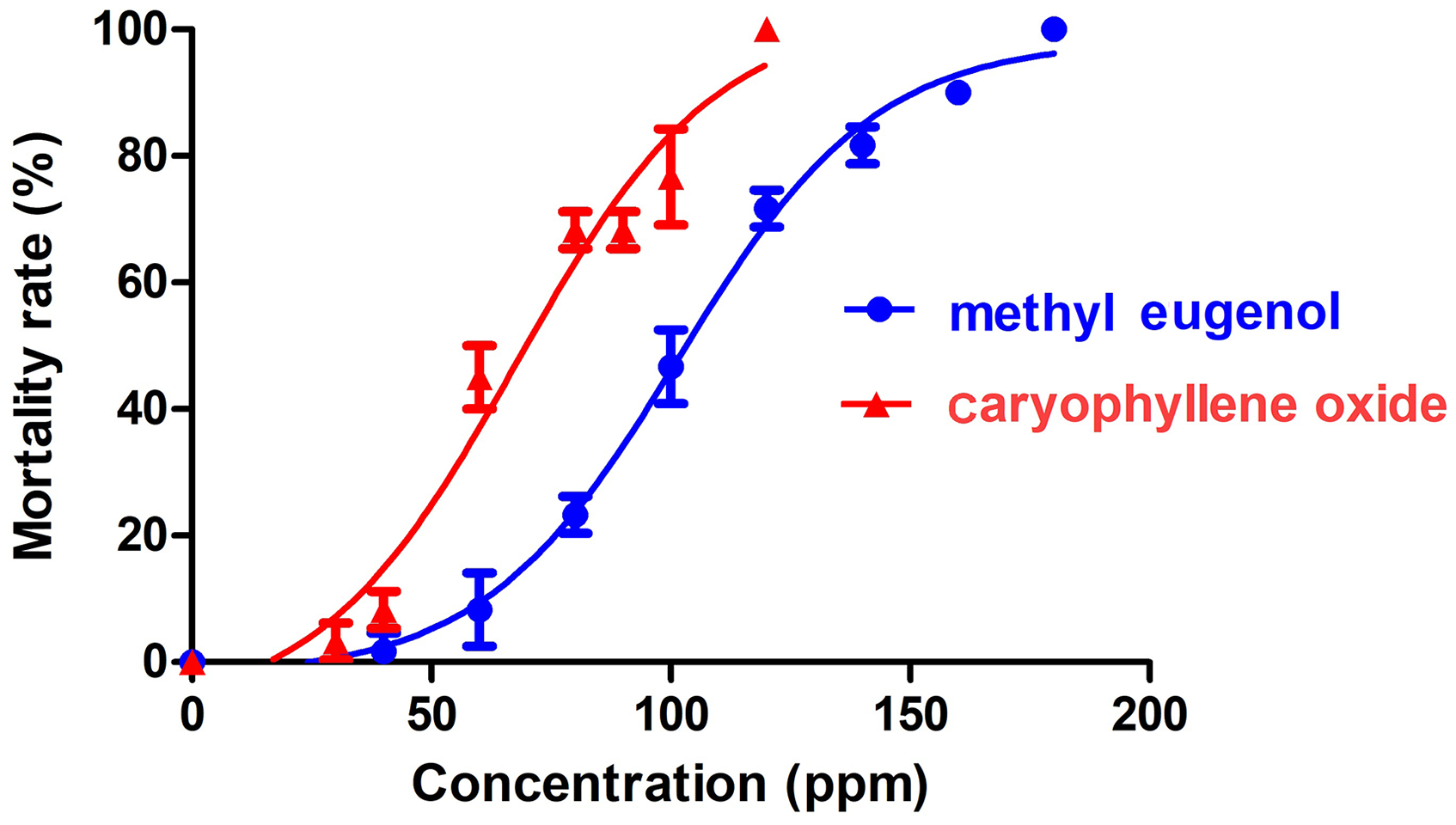
The Q1 fraction of the petroleum ether phase extract of Artemisia scoparia exhibited a 100% mortality rate against mosquito larvae at 100 ppm. GC-MS analysis results showed that capillene, methyl eugenol, capillin, and caryophyllene oxide are the most representative constituents. The following larvicidal activity results showed that caryophyllene oxide and methyl eugenol had potent larvicidal activity with 50% lethal concentration (LC50) values of 67.6 ppm and 101.6 ppm, respectively. These two monomer compounds had potent inhibitory activity against ALP with inhibition rates of 47% and 37% respectively.
Conclusion
In this study, the Q1 fraction of A. scoparia PE extract demonstrated potent larvicidal activity against Aedes albopictus. Notably, methyl eugenol and caryophyllene oxide were found to exhibit significant larvicidal activity. Enzyme inhibition assays further revealed that these two compounds may induce larval mortality by inhibiting ALP activity. These findings suggest that A. scoparia extract, as well as its active constituents, holds promise as an effective larvicide for mosquito control.
Introduction
Aedes albopictus (Diptera: Culicidae), also known as Asian tiger mosquito, is an invasive species that can be found on all continents. Ae. albopictus is a dominant vector of many diseases such as Dengue, Zika, and Chikungunya, which pose great threat to human health. 1 The prevention and control of mosquito-borne diseases largely dependent on effective mosquito control. 2 The widespread application of various synthetic insecticides, including organochlorine, organophosphorus, carbamate, and pyrethroids, have become predominant pest control methods due to their rapid and substantial efficacy. However, prolonged reliance on these conventional insecticides, has resulted in several critical issues, including the development of insecticide resistance in mosquito populations. 3 With the increasing resistance of mosquitoes to existing insecticides and growing concern for environmental sustainability, there has been heightened interest in discovering active compounds from natural products and developing more eco-friendly insecticides.4-6
The life cycle of mosquitoes includes egg, larva, pupa and adult. The first three stages occur in water. Compared with the egg and pupa stages, larva stage is longer, and mosquito needs to ingest more food from the outside world. Therefore, larvicides are very useful tools to control mosquitoes. Current larvicides can be classified into three types: 1) microbial insecticides such as Bacillus thuringiensis; 2) insect growth inhibitors such as S-hydroprene; 3) organophosphates such as temephos. 7 However, these larvicides have their limitations or drawbacks. For example, the environmental stability of microbial insecticides needs improvement. 8 Insect growth inhibitors also have several limitations such as slow mode of action, stage specificity, and difficulty in monitoring their efficacy. 9 While organophosphate insecticides are highly effective, their detrimental impact on the environment and non-target organisms cannot be overlooked. 4 Moreover, temephos exhibits genotoxic effects and adverse effects on mammalian male reproduction and fertility, as well as causing liver damage, even at low doses. 10 Therefore, the discovery and development of new chemical larvicides remain an important area of focus.
In order to discover novel plant-derived insecticides, the larvicidal activity of several traditional Chinese medicinal herbs against Ae. albopictus was screened in our lab. The results indicated that the crude extract of Artemisia scoparia exhibited more significant larvicidal activity against mosquitoes compared to the crude extracts of other traditional Chinese medicinal materials. A. scoparia is an annual, herbaceous, aromatic medicinal plant of the Asteraceae family. It is mentioned in traditional Chinese medicine as a cure for different diseases like fever, inflammation, jaundice, and infection. 11 Modern pharmacological studies have shown that A. scoparia possesses diverse bioactivities such as antioxidant, anti-inflammatory, antimicrobial, liver protection, etc.11,12 While the larvicidal activity of A. scoparia extract has been reported in previous studies, the identification of active constituents and their mechanisms of action often remained unexplored. Therefore, the active ingredients and action mode of A. scoparia as a mosquito larvicide were further investigated in this study.
In insects, esterases are integral to critical physiological processes including reproduction, digestion, metabolism of juvenile hormone, and molting. They significantly contribute to the detoxification of synthetic chemical insecticides by converting them into less toxic metabolites. Phosphatases, on the other hand, play pivotal roles in numerous physiological functions and are considered reliable marker enzymes for evaluating the detrimental effects of various toxins on the physiological state of target pest. 13 Consequently, both esterases and phosphatases have been extensively utilized as accurate and sensitive biomarkers in the toxicity assessment of chemical and botanical insecticides. This study performed enzyme inhibition assays on acetylcholinesterase and alkaline phosphatase, two key target enzymes, to elucidate the mechanism of action of A. scoparia extract. This investigation aims to provide a foundational reference for the subsequent development of single-target or multi-target drugs.
Materials and Methods
Materials and Reagents
Tripterygium wilfordii, Senecio scandens, Euchresta japonica, Melia azedarach, Sophora flavescens, Areca catechu and Aerial parts of Artemisia scoparia were collected from Anhui Province of China, and provided by Anhui Fuyang Xinte Pharmaceutical Co., Ltd The longitude and latitude are 115°50′47.515″E and 32°53′9.362″N respectively.
All organic solvents including methanol, petroleum ether (PE), ethyl acetate (EA), n-butanol, and acetone were of analytical reagent (AR) grade (purity > 98%), and purchased from Shanghai Titan Technology Co., Ltd Bovine serum albumin (Sigma-aldrich, GR), Coomassie brilliant blue (G-250) (ALFA, GR), sodium phosphate dibasic (Greagent, AR), monosodium phosphate (Adamas, AR), phosphoric acid (Adamas, AR), sodium hydroxide (Greagent, AR), 5,5’-dithiobis (2-nitrobenzoic acid) (DTNB) (ALFA, AR), acetylthiocholine iodide (ATCI) (Titan, AR), methyl eugenol (Macklin, AR), caryophyllene oxide (Macklin, AR) were used without additional purification steps.
Mosquitoes
The Ae. albopictus larvae used in this study were collected from Huangpu District of Guangzhou of China in March 2013, and maintained continuously in the insectary of Liverpool-Jiangmen Public Health Research Centre of the International Healthcare Innovation Institute (Jiangmen), China. Mosquitoes were maintained at 26 ± 2 °C, with a relative humidity of 70 ± 5% and a photoperiod of 14 h light:10 h dark. Larvae were fed daily with fish food, and adults were fed with 5% glucose solution. Fourth instar larvae were selected for use in the bioassays.
Extraction and Crude Separation of Chinese Medicinal Herbs
Taking Artemisia scoparia as an example, first of all, 100 g of dry A. scoparia was added into a pulverizer, and grinded to 20 mesh size. Second, the ground A. scoparia powder was placed into a conical flask, and then methanol was added (liquid-solid ratio of 3 mL: 1 g). Ultrasonic extraction was performed with temperature maintained at 40 °C or less to avoid damaging the active ingredient. The extraction was lasted for 1–2 h, until the color of the extract no longer changed. Then, the extraction solution was filtered under reduced pressure. The residue was mixed with methanol (liquid-solid ratio of 3 mL: 1 g) for a second ultrasonic extraction, followed by a second suction filtration. Finally, the filtrates of twice were combined and evaporated to yield the extractum, which was stored in the refrigerator under 4 °C.
The extractum was dispersed in distilled water of three times its mass, and then sequentially extracted with PE, EA and n-butanol. The solvent was removed by rotary evaporation to obtain four-phase extracts (PE phase, EA phase, n-butanol phase, and aqueous phase), which was weighed and recorded respectively to prepare for the larvicidal activity test.
Screening of Four-Phase Extracts of Chinese Medicinal Herbs for Larvicidal Activity
The efficacies of four-phase extracts of Chinese medicinal herbs against fourth stage larvae of susceptible Ae. albopictus was tested using the WHO recommended larval immersion method.
14
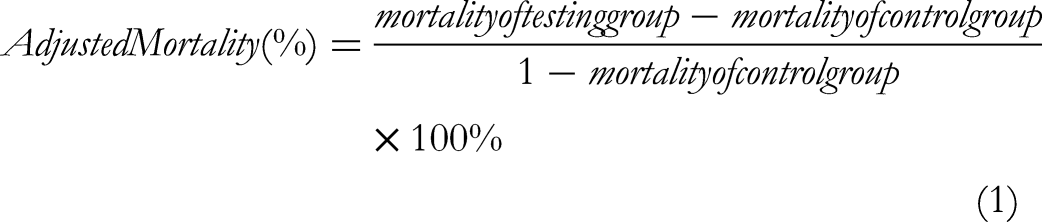
Taking Artemisia scoparia as an example, firstly, 30 mg/mL of A. scoparia extracts in acetone were prepared. Secondly, 20 healthy Ae. albopictus larvae of the same size were placed in a disposable plastic cup with 99 mL distilled water, and then 1 mL sample solution with a concentration of 30 mg/mL was added, giving the testing solution with a final concentration of 300 ppm. A blank control group consisting of 1% (v/v) acetone in distilled water was used. Three replicates were conducted for each sample at each concentration. No feeding during the test. The mortality was recorded after 24 h exposure. In cases that there was 3%–10% mortality in the blank control groups, it was necessary to calculate adjusted mortality using Eq. (1).
15
Compositional Analysis of PE Extract of A. scoparia
Crude Separation of PE Extract of A. scoparia
PE extract was preliminary purified by silica gel column chromatography (200-300 mesh), with the mixture of PE and EA as the mobile phase and the elution gradient changing from 100/0 to 2/1. The fractions were analysed by thin layer chromatography (TLC). The fractions with the similar R f values were combined, giving five fractions: Q1, Q2, Q3, Q4, and Q5.
GC-MS Analysis
The Q1 fraction obtained from the separation and purification of the PE phase was analysed on a Thermo Trace 1300 ISQ GC-MS instrument. The analysis conditions are as follows: inlet temperature 280°C, no shunt mode, the oven temperature was set to 60 °C and held for 2 min, then raised to 160 °C at 5 °C/minute, held for 2 min, and then raised to 260 °C at 20 °C/minute, and held for 3 min. Helium was used as the carrier gas at a rate of 1.0 mL/min, with an injection volume of 0.2 μL, transmission line temperature of 220°C, and ion source temperature maintained at 250°C. The electron ionization mass spectra were recorded in the range of 35–500 m/z at an electron energy of 70 eV in full scan mode. Identification of the monomers was based on the search results of National Institute of Standards and Technology (NIST) mass spectral library, together with comparisons of Kovats retention indices (RI) with the reported data, and commercially available standards. The calculated method of RI value has been reported by our team. 16
Larvicidal Bioassay of Monomers from PE Extract
First, 20 mg/mL solutions of the monomers in acetone were prepared as the stock solutions. Second, the stock solutions were added to distilled water to give a series of final concentrations of the test solutions ranging from 0–180 ppm. Then, the procedures were the same as that described in 2.4 section.
Crude Enzyme Extraction and Quantitative Analysis
Plotting of Protein Standard Curves
First, 0 μL, 20 μL, 40 μL, 60 μL, 80 μL, and 100 μL of bovine serum albumin (0.05 μg/μL) were accurately pipetted into a 96-well plate respectively. Second, distilled water was added and made up to 150 μL. After that, 150 μL of Coomassie brilliant blue (G-250) was added. The plate was placed on a microplate reader (Thermo Fisher Scientific Multiskan GO, Finland), shook for 10 s at 25 °C, incubated for 5 min, and measured the absorbance at 595 nm. Finally, a standard curve was plotted with protein concentration (μg/μL) as the X-axis and absorbance as the Y-axis.
Preparation of Enzyme Solution
First, 30 mosquito larvae were transferred into a beaker using a dropper, and the beaker was placed in an ice bath until larvae showed no signs of activity. Second, the larvae were transferred into a 1.5 mL centrifuge tube using a forceps, and then 0.6 mL ice-cold sodium phosphate buffer (0.1 M, pH 8.0) was added. The larvae were ground in ice bath for about 30 s until all tissues were broken. Finally, the sample was ultrasonic extracted for 2 min, and centrifugated at 17000 G and 4 °C for 15 min. The supernatant was collected to be quantified the protein concentration and used in the next AChE and ALP inhibition assays.
AChE Inhibitory Activity Bioassay
The AChE inhibition assay was performed according to the standard procedures recommended by the WHO,
17
with slight modifications. First, 10 mg/mL methyl eugenol solution and 7 mg/mL caryophyllene oxide solution in acetone were prepared as the sample solutions respectively. Second, the crude enzyme was diluted in sodium phosphate buffer (0.1 M, pH 8.0) to be 0.05 μg/μL.
7
Third, 1 μL of the test solution and 79 μL of the enzyme solution were added to a 96-well plate and incubated at 28 °C for 10 min after shaking for 10 s in a microplate reader (Thermo Fisher Scientific Multiskan GO, Finland). Fourth, 10 μL of 4 mM DTNB and 10 μL of 10 mM ATCI were added to the plate, shook for 10 s, and then the absorbance was measured at 412 nm to obtain A1 value. Fifth, the plate was incubated at 25 °C for more 30 min, and the absorbance was measured at 412 nm to obtain A2 value. Subtracting A1 from A2 yielded ΔA value. In the blank group, 1 μL of acetone were used instead of the test solution, and other procedures were the same. The AChE inhibition rate was calculated using Eq. (2).

ALP Inhibitory Activity Bioassay
The activity of ALP was tested using an ALP assay kit (BC2145, Beijing Solarbio Technology Co. LTD). According to the instructions of the reagent kit, 10 μmol/mL phenol standard solution was diluted to 2.5 μmol/mL using distilled water firstly and kept as a stocking solution. Then, 10 mg/mL methyl eugenol solution and 7 mg/mL caryophyllene oxide solution in acetone were prepared as the sample solutions respectively. After that, five groups were set up as shown in Table 1, and the corresponding 96-well plates were prepared.
Five Groups in ALP Activity Bioassay.

Finally, the absorbance value of each group was determined at 510 nm, giving the values of Atest, Ablank, Astandard, and Acontrol. The ALP enzyme activities of test group 1 and 2 were calculated using Eq. (3), respectively. Cprotein was the concentration of the enzyme solution, and the unit was μg/μL. Then, the inhibition rate was calculated using Eq. (4).

Statistical Analysis
The Mortality rates were expressed as mean ± standard deviation (M ± SD) of three replicates. The larvicidal bioassay data of two monomer compounds were processed by nonlinear regression to a four-parameter logistical equation of GraphPad Prism 6 (GraphPad software, San Diego, CA) to obtain LC50 values and dose-response curves. Multiple T-test was used for comparison of the enzyme activities between the sample group and the control group. Differences were considered significant when P < 0.05.
For ARRIVE: The reporting of this study conforms to ARRIVE 2.0 guidelines. 18
Results
Extraction and Crude Separation of Chinese Medicinal Herbs
After grinded and ultrasonic extracted, 100 g of dry A. scoparia yielded 11.03 g extractum, which was a green paste. Then, 1.04 g PE phase extract, 0.28 g EA phase extract, 0.66 g n-butanol phase extract, and 0.97 g aqueous phase extract were obtained after solvent extraction and evaporation (Figure 1). The masses of the extracts obtained from the other six Chinese medicinal materials, namely Tripterygium wilfordii, Senecio scandens, Euchresta japonica, Melia azedarach, Sophora flavescens and Areca catechu, are respectively: 18.52 g, 12.96 g, 15.38 g, 27.13 g, 19.23 g and 33.94 g.

Schematic Showing Fractioning of Extract of A. scoparia.
Larvicidal Activity of Four-Phase Extracts of Chinese Medicinal Herbs
The larvicidal activity of four-phase extracts of Chinese medicinal herbs at 300 ppm against Ae. Albopictus were evaluated. As shown in Table 2, The mortality rate induced by PE phase extract of A. scoparia was 100%, whereas the larvicidal activities of extracts from other Chinese medicines herbs were inferior to that of the PE phase extract of A. scoparia and some extracts even showed no activity. Therefore, PE phase of A. scoparia extract was selected for further studied.
Larvicidal Activity of Four-Phase Extracts at 300 ppm Against Ae. albopictus.

Identification of Active Ingredients of PE Phase Extract of A. Scoparia
Crude Separation of PE Phase Extract
The PE phase extract was subjected to column chromatography. The column was eluted with PE: EA in the ratio of 100:0, 90:1, 80:1, 50:1, 20:1, 5:1, and 2:1. In this way a total of 5 fractions were obtained from the crude PE extract (Figure 1).
Larvicidal Activity of Q1-Q5 Fractions
The larvicidal activity of Q1-Q5 fractions of PE phase extract at 100 ppm against Ae. Albopictus were evaluated. As shown in Table 3, Q1 fraction showed potent larvicidal activity with 100% mortality. Therefore, Q1 fraction was selected for further studies.
Larvicidal Activity of Q1-Q5 Fractions at 100 ppm Against Ae. albopictus.

Composition Analysis of Q1 Fraction of PE Phase
According to GC-MS analysis (Figure 2), more than 10 compositions were detected in Q1 fraction. Based on the predicting results of mass spectrum database of GC-MS and comparing RI values with the reported data, 8 main compositions were identified (Table 4). There were four main compositions with the retention times (RTs) of 18.97 min, 21.36 min, 23.62 min, and 25.00 min, whose relative area (RA) percentage were 36.14%, 18.12%, 10.45%, and 5.82% respectively. They are capillene, methyl eugenol, capillin, and caryophyllene oxide, respectively. Among them, two monomer compounds including methyl eugenol and caryophyllene oxide were commercially available, thus selected for further mechanical studies.

Gas Chromatogram of Q1 Fraction of PE Phase.
Chemical Composition of Q1 Fraction of PE Phase.

Components are listed in the order of RI value. Only major components (RA > 1%) are listed in the table.
Linear retention index on TG-5MS column, experimentally determined using homologous series of C8-C30 alkanes.
Unless marked, otherwise linear retention index taken from https://webbook.nist.gov/chemistry/
Larvicidal Activity of two Monomer Compounds
As shown in Figure 3, methyl eugenol and caryophyllene oxide displayed potent larvicidal activity in a concentration-dependent manner. Their LC50 values were 101.6 ppm and 67.6 ppm respectively.
Dose-Response Curve of two Monomer Compounds Against Ae. albopictus larvae.
AChE and ALP Inhibitory Activities of Two Monomer Compounds
Quantitative Determination of Crude Enzymes
The standard curve of bovine serum albumin analysed by Bradford method was as follows: Y = 31.881X + 0.5315 (R2= 0.9988). The concentrations of the crude enzyme solutions extracted from 30 mosquito larvae were around 0.17 μg/μL. The exact concentration of each batch of crude protein was determined before being used in the enzyme inhibition assays.
AChE and ALP Inhibitory Activities
The inhibitory activities of the two monomer compounds against AChE and ALP were tested at the final concentrations of 100 ppm (methyl eugenol) and 70 ppm (caryophyllene oxide), which were close to the corresponding LC50 values. The results were shown in Figure 4. Compared with the blank control group, both two monomer compounds showed low inhibition against AChE, while had potent inhibitory activity against ALP with inhibition rates of 37% and 47% respectively.

AChE and ALP Inhibitory Activities of Two Monomer Compounds.
Discussion
Deadly diseases, including dengue, chikungunya, and yellow fever, are transmitted by Aedes albopictus. 1 Chemical pesticides have been employed for mosquito control for decades; however, the growing ability of mosquitoes to develop resistance to synthetic insecticides has emerged as a significant concern. 3 Furthermore, most commercially available pesticides pose hazards to the environment, human health, and non-target organisms. Therefore, scientists have increasingly focused on developing biological insecticides as alternative solutions,20,21 aiming to design safer and more effective bio-based tools for vector control, such as bacteria and plants, etc The utilization of insect pathogenic bacteria to mitigate vector-borne diseases represents an environmentally sustainable approach. This method exhibits minimal environmental impact, high specificity toward mosquitoes without harming non-target organisms, and the potential to mitigate insecticide resistance. 22 Bacillus thuringiensis stands out due to its high efficiency and specificity. 23 However, it is sensitive to environmental conditions and exhibits limited stability. Plants are considered promising resources for mosquito control, offering an eco-friendly strategy for the prevention and management of mosquito-borne diseases. Natural plant compounds have historically been employed for pest control, and plant-based biopesticides demonstrate greater safety and reduced toxicity compared to synthetic alternatives. 20
In this study, the insecticidal efficacy of four-phase extracts from seven traditional Chinese medicinal herbs was evaluated against fourth stage larvae of susceptible Ae. albopictus. The results demonstrated that PE phase extract of A. scoparia exhibited the highest larvicidal activity. While the pharmacological activities of A. scoparia have been widely reported, to our knowledge, only two studies have explored its mosquito larvicidal activity. Gul et al 24 investigated the larvicidal activity of n-hexane extract isolated fractions from A. scoparia against third instar larvae of Culex quinquefasciatus mosquitoes. They found that fractions F3 and F4 exhibited potent larvicidal activity with LC50 values of 28.66 and 22.37 ppm, respectively. However, the active ingredients responsible for this effect were not identified. More recently, Parveen et al 25 reported on the mosquito repellent and larvicidal activities of essential oils (EOs) extracted from A. scoparia grown at different altitudes. Their study primarily focused on comparing the chemical compositions and bioactivities among samples from various locations, rather than identifying specific active compounds or mechanisms of action.
The increasing resistance of mosquitoes to conventional insecticides, coupled with a growing demand for environmentally friendly alternatives, has led to wide interest in discovering active constituents or lead compounds from plant extracts within the insecticide field.6,26 Biodegradable pesticides of plant-based origin which are accurate in their mode of action with lesser persistence in environment with minimal hazardous effects on human health and environment. These exert lesser development of resistance among treated pests. 27 Pavela 4 reviewed the current development of plant EOs as potential larvicides, and concluded that EOs with LC50 ≤ 100 ppm could be considered efficient larvicides. In our study, the Q1 fraction of PE phase extract led 100% larval mortality at 100 ppm, indicating the potential of this extract as an efficient larvicide.
GC-MS analysis results revealed that capillene, methyl eugenol, capillin, and caryophyllene oxide were the most representative constituents in our extract, with the relative abundances (RAs) of 36.14%, 18.12%, 10.45%, and 5.82%, respectively. Sharopov et al 28 reported on the chemical composition of EO of A. scoparia from Tajikistan, noting significant contributions from methyl eugenol (5.5%) and capillene (4.9%). However, in their study, caryophyllene oxide had only a minor presence (0.4% RA), and capillin was not detected. Nikitin et al 29 analyzed the chemical compositions of ethanol extracts from five different Artemisia L. species. They found capillene was the chief component with 44.61% RA in non-polar extract of A. scoparia while capillin was also one of the main components with 7.46% RA. But methyl eugenol and caryophyllene oxide were not identified in the analysis. It is reported that different climatic conditions and altitudes have significant effects on the chemical compositions of A. scoparia. 25 Moreover, the extraction and separation methods can greatly influence the chemical compositions. These factors likely account for the differences observed between our findings and those reported in previous studies.
The larvicidal assay results showed that methyl eugenol and caryophyllene oxide were two of the main active components of A. scoparia. Methyl eugenol belongs to the phenylpropanoids class of natural products, which are very common in many spices and medicinal plants especially in the control of tephritid fruit flies.30,31 Perumalsamy et al 32 previously reported on the potent larvicidal activity of methyl eugenol against various mosquito species. They found LC50 values of 53.30 ppm and 67.02 ppm against the KS-CP and DJ-CP strains of Culex pipiens pallens, respectively, and 57.65 ppm against Aedes aegypti. Our study extends these findings by demonstrating the larvicidal activity of methyl eugenol against Ae. albopictus, thus broadening the spectrum of mosquito species known to be susceptible to this compound.
Caryophyllene oxide is a natural bicyclic sesquiterpene known for its diverse biological properties, including anti-inflammatory and anti-tumor activities.33,34 Zhu et al 35 reported that chemical composition and larvicidal activity of A. gilvescens EO against Anopheles anthropophagus. Caryophyllene oxide was one of the main constituents, displaying strong larvicidal activity with LC50 of 49.46 ppm. Cheng et al 36 reported that caryophyllene oxide exhibited high larvicidal activity against Ae. albopictus larvae with a 24 h LC50 value of 65.6 ppm, which are very close to our result, supporting the potential of caryophyllene oxide as an effective natural larvicide.
To further investigate the mechanism of action of methyl eugenol and caryophyllene oxide, the activities of AChE and ALP in the larvae, which were exposed for 24 h to a solution of the test compounds at the concentrations near LC50 values, were evaluated. AChE is an important enzyme in the nervous system, hydrolysing acetylcholine neurotransmitters and terminating nerve impulses. It is an important target of current larvicides such as temephos. 37 However, the two monomer compounds failed to display significant AChE inhibitory activity compared with the control group (Figure 4). It is indicated that AChE is not the target of methyl eugenol and caryophyllene oxide as mosquito larvicides.
Phosphatases are enzymes that hydrolyze phosphoric acid monoesters into a phosphate ion and an alcohol. According to the optimum pH, phosphatases include two types: acid phosphatases (ACP) and alkaline phosphatases (ALP). 38 ALP is widely distributed in several tissues of insects, such as digestive tract, storage tissue, nervous tissue, and certain muscles. 39 It is reported that the midgut of insect exhibits higher ALP activity, 40 playing an important role in insect's digestion and nutrient supplying. 13 ALP activity is essential for normal physiological processes such as metabolism and cell signaling. 38 Due to its importance in insect physiology, ALP activity is frequently used as an accurate and sensitive biomarker for evaluating insecticide efficacy.38,41 The ALP assay results demonstrated that both of methyl eugenol and caryophyllene oxide significantly inhibited the ALP activity of mosquitoes compared to the control group, which indicates that the larvicidal activity of the two compounds may be related to the inhibition of ALP activity in mosquito larvae.
Conclusion
While the larvicidal activity of A. scoparia extract has been reported in previous studies, the identification of active constituents and their mechanisms of action often remained unexplored. In this study, the Q1 fraction of A. scoparia PE extract led to 100% mortality at 100 ppm, which suggested strong larvicidal activity against Ae. albopictus. Eight main components (RA > 1%) were identified by GC-MS. Among them, methyl eugenol and caryophyllene oxide performed potent larvicidal activity with LC50 values of 101.6 ppm and 67.6 ppm respectively, suggesting their significant contribution to the larvicidal effect of A. scoparia extract. Enzyme inhibition assays indicated that the two compounds resulted in the death of mosquito larvae perhaps via inhibiting the ALP activity. These results suggest that A. scoparia PE extract and two active constituents have potential as effective larvicides for mosquito vector control.
Footnotes
Acknowledgments
The authors would like to thank the editor and anonymous reviewers for their thoughtful comments and efforts toward improving our manuscript. At the same time, the authors also extend their heartfelt thanks to Dr Min Wu for her assistance in correcting the English of this article.

Funding
The authors disclosed receipt of the following financial support for the research, authorship, and/or publication of this article: This work was supported by the Wuyi University-Hong Kong and Macao Joint Research Fund, Project of Innovative and Entrepreneurship for College Students in Wuyi University, Guangdong Provincial Science and Technology Innovation Strategic Funding (‘Climbing Plan Program’), Wuyi University-Shenzhen Visson Joint Research Project, (grant number 2021WGALH10, Nos. 2022CX17, 202311349335 and 202311349189, pdjh2024b382, HX23140).
Declaration of Conflicting Interests
The authors declared no potential conflicts of interest with respect to the research, authorship, and/or publication of this article.