



Abstract
Objectives
The study aimed to develop a protocol for producing a beverage from Codonopsis javanica (C. javanica) (red ginseng) root extract, incorporating additives to enhance its overall sensory appeal. Key parameters, including triterpenoid saponin content, °Brix, pH, suspended solids, and moisture, were analyzed. Sensory evaluations were conducted to optimize the formulation, and the microbial safety of the final product was assessed.
Methods
Dried C. javanica roots were ground into powder and extracted using enzyme-assisted extraction with viscozyme® L. The extract was analyzed for triterpenoid saponin content, °Brix and pH, and the powder was measured for moisture content. Optimal heating conditions for suspended solid content were determined at three heating temperatures (70 °C, 75 °C and 80 °C) for 8 and 12 min, respectively. Different ratios of red ginseng extract to water (7:3, 8:2, 9:1 and 10:0), as well as varying concentrations of citric acid (0.0% and 0.1%), sucrose (8%, 10%, 12% and 14%), and honey (1% and 1.5%), were surveyed for sensory evaluation by a panel of testers. Product pasteurization (at 100 °C for 15 min) was performed to ensure microbial safety and microbiological standards were assessed after 28 days of storage.
Results
The optimal extraction method yielded a high °Brix (9.20), low pH (3.62), and a triterpenoid saponin content of 53.66 mg/100 g. Heating red ginseng extract at 80 °C for 8 min resulted in optimal suspended solid content. The most favourable sensory results were achieved with a dilution ratio of 8:2 (ginseng extract:water). The addition of 12% sucrose alone or 12% sucrose combined with 1.5% honey provided the best taste scores. Pasteurization ensured the absence of microorganisms, meeting national standards for non-alcoholic beverages.
Conclusion
The study successfully developed a red ginseng beverage with optimal sensory qualities and ensured microbial safety. The findings provide a foundation for further commercialization of red ginseng beverages, highlighting the importance of balanced formulations and proper processing techniques.
Introduction
Red ginseng (Codonopsis javanica) is a plant from the Campanulaceae family. In Vietnamese, it is also known as “Sam day” or “Dui ga”. This species is typically harvested throughout the winter. The soil is washed off, the roots and rootlets are cut off, and then the plant material is dried in the sun or at low temperatures until slightly dry. After this initial drying, the plant is rolled until soft, and then gently dried again. 1
This plant species has been traditionally used in medicine in China, Vietnam, and the other Asian countries. Red ginseng root has the same effect as some other ginseng varieties and is used as a medicine to nourish the body, treat weak spleen, anaemia due to illness, stomach pain, cough, nephritis, and albuminuria. 2 Modern medical research has confirmed that red ginseng has the effect of increasing red blood cells, reducing cholesterol, increasing immunity, preventing memory loss in the elderly (Alzheimer's disease), and fighting cancer. 3 Concurrently, this plant is popularly used to promote good health, prevent fatigue, and improve nutrition for those who are weak. Likewise, it can help slow down the ageing process and prevent various illnesses. 4 Ginsenoside, the primary active component of ginseng, primarily has anti-ageing and skin-whitening properties. In order to increase the suppleness and water content of skin, ginseng extract modulates the amounts of matrix metalloproteinases in human fibroblast type I collagen. Furthermore, ginseng has a skin-whitening effect by blocking the transcription factors or signalling pathways that cause melanin to develop. 5 In addition to this, in vitro experiments on the methanolic crude extract of C. javanica roots were carried out by Do et al, 6 and these authors proposed that the sequence of total saponin content and oleanolic acid content in this extract was the same as for the ferric-reducing antioxidant power assay and anti-enzymatic activity. The root extracts of C. javanica have also shown the potential in reducing the impact of fructose-induced hyperinsulinemia and the resulting oxidative stress. 7 A study conducted by Chen et al 8 showed that rats, which were fed fructose, had much less hyperinsulinemia after receiving root extracts from C. javanica, and their glucose tolerance improved as a result. In addition, C. javanica root extracts considerably reduced the increased hepatic lipid peroxidation caused by insulin resistance, as shown by raised malondialdehyde levels. Flavonoids, saponins, tannins, and other organic compounds were also found in red ginseng roots, including free-reducing sugars, organic acids, starch, fats, etc. 4
In Vietnam, red ginseng is widely distributed in mountainous regions, including the Northern mountainous provinces and the highland areas in the South.9,10 Currently, red ginseng has been included in the dictionary of Vietnamese medicinal plants. 9 Nevertheless, consumers mainly rely on traditional experience to use this medicinal herb, and producing red ginseng drinks is not yet widespread. In studies conducted by Thuong et al 11 and Nguyen et al, 7 C. javanica roots were utilised to make instant tea with great outcomes. This study concentrated on developing a protocol for producing a beverage from red ginseng by adding certain additives (citric acid, sucrose and honey) to enhance the beverage's appeal due to the distinct properties of these additives and contributions to sensory quality. Citric acid was included for its ability to balance acidity and improve taste, as excessive sweetness or bitterness can detract from consumer appeal.12,13 Sucrose acts as a primary sweetener, effectively masking the inherent bitterness of ginseng while providing a rounded sweetness that aligns with consumer preferences. 14 Honey is known for its natural sweetness and complex flavour profile, it contains aromatic compounds and organic acids, which synergistically enhance the overall sensory experience. 13 The combination of these additives optimized through sensory evaluations, achieved a well-rounded flavour, effectively masking undesirable tastes while promoting a pleasant mouthfeel in the red ginseng juice.12,13,15
Materials and Methods
Initial Materials
Dried C. javanica roots free from diseases and mould were provided by an agricultural cooperative in Kontum province, Vietnam. These roots were thereafter sliced into tiny pieces and dried again in a convection oven (Made-in-China.com, Jiangsu, China) at 60 °C to minimize moisture at 15% and to facilitate grinding. The root moisture was regularly examined during drying using an A&D MX-50 moisture analyser (Data Support Company, USA). Root pieces were then ground into powder using a hammer crusher (Baichy Heavy Industrial Machinery Co., Ltd, Wulong industrial Park, Zhengzhou, China) with a capacity of 3500 watts and a sieve with the size of grid at 0.3 mm was used to collect homogeneous grains (Figure 1).

Dried red ginseng roots and red ginseng powder.
Juice Extraction
The dried powder was added with once-distilled water [1:7 (w/v) ratio of powder:water] and the enzyme viscozyme® L 0.4% (v/v) (provided by Novozymes, Novozymes Singapore Pte. Ltd, Singapore) was afterwards supplemented. The resulting solution was contained in a dark glass bottle (Sigma-Aldrich® Brand, Germany) and incubated for an hour at room temperature (30-31 °C). After the incubation period, the solution was coarsely filtered using a clean white cloth to remove impurities and centrifuged at 5000 rpm for 5 min using an EBA-200 centrifuge (Andreas Hettich GmbH & Co. KG, Germany); after centrifugation, the supernatant was collected. The triterpenoid saponin content of the juice was determined using a spectrometer (Thermo Fisher Scientific Inc., USA), oBrix was measured using a refractometer (Made-in-China.com, Jiangsu, China) and pH was examined using a pH meter (Made-in-China.com, Jiangsu, China).
Analysis of Triterpenoid Saponin Content
Establishing the Standard Linear Line of Oleanolic Acid
Oleanolic acid solution was prepared with final concentrations of 40, 80, 120, 160 and 200 ppm in 10 mL test tubes. Specifically, every tube was added with 0.2 mL oleanolic acid; then respectively added with 0.2 mL acetic acid – vanillin 5%, 0.8 mL perchloric acid (slowly) and 5 mL acetic acid (chemicals in this section were provided by Sigma-Aldrich® Brand, Germany). The solution was heated at 60 °C for 15 min (until its colour was changed into lilac purple) and measured with a spectrometer at a wavelength of 548 nm. The data obtained from the spectrophotometric measurements was used to establish a standard linear line of oleanolic acid was established. Based on this standard line, the saponin content was calculated.
Analysis of Triterpenoid Saponin Content in Juice Samples
From the above extracted and centrifuged samples, an amount of distilled water was added to gain a final volume of 10 mL. A sample volume of 1 mL from each 10 mL tube was transferred to 2 mL tubes respectively. Small sample containing tubes were then put in a water bath, immediately added 0.2 mL of acetic acid – vanillin 5% + 0.8 mL of perchloric acid and covered with lids. Samples were incubated at 60 °C for 15 min until the solution colour was changed into lilac purple. Absorbance 548 nm was measured with a spectrometer. Triterpenoid saponin was determined using the following formula:

Determination of Moisture Content of
C. javanica
Powder
The high moisture impacts adversely on product quality as well as juice preservation.
16
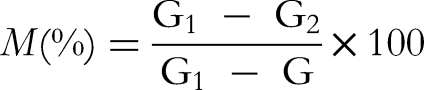
The heat has the ability to separate water vapour and volatile substances from juice samples.17,18 Three ginseng powder samples (2-10 g) from section 2.1 were put into three ceramic cups and heated in an oven at 105–110 °C. After every 2 h, samples were examined the weight until they reached a constant weight. The last data was used for calculation. The formula for determining the sample moisture (%) was as follows:
Investigating the Effects of Temperature and Heating Time on the Suspended Solid Content
The heating step was implemented after centrifugation in the juice extraction step to remove sediment. Heating temperatures were set at 70 °C, 75 °C and 80 °C. The heating periods for each temperature level were 8 and 12 min.
The suspended solid content of samples was determined using the following procedure: samples were filtered using Whatman filter paper (Sigma-Aldrich® Brand, Germany) that was placed in a funnel. After filtering, the cylinder was rinsed with 20 mL of distilled water and the inside of the funnel was rinsed with another 20 mL of distilled water. Filter papers were drained at room temperature, dried in an oven at 105 °C for 1–2 h and determined the weight. Suspended solid content was calculated using the following formula:

After heating, samples were finely filtered to remove coagulated components, the fine filtration method was similar to the coarse filtration one in section 2.2. Thenceforth, as described in the following studies, additives were added to the juice to improve the appeal of the final product.
Surveying the Mixing Ratio of red ginseng Extract to Additives
Dilution of red ginseng Extract with Water
From the results of the section 2.5, the treatment with heating temperature and time at 80 °C for 8 min (the most appropriate conditions) was chosen for this experiment. The proportions of red ginseng extract:water were 7:3, 8:2, 9:1 and 10:0. The beverage's colour, scent and overall appearance were rated on a scale of 1 to 5 (1 = very low to 5 = very high).
Red ginseng Extract Supplemented with Citric Acid and Sucrose
From the results of section 2.6.1, the 8:2 (v/v) ratio of red ginseng extract to water (the best ratio) was selected for this experiment. After ginseng extract was diluted with water at the above ratio, citric acid was supplied at rates of 0.0 and 0.1%, and sucrose was added at concentrations of 10, 12, and 14% for each citric acid rate [citric acid and sucrose were provided by Vietchem company, Vietnam – https://vietchem.com.vn/#googtrans(en|en)]. The taste of the product was rated on a scale of 0 to 5 (0 = no taste, 1 = the taste is very light, difficult to feel, 2 = light taste, can be felt, 3 = moderate, pleasant taste, 4 = rich, delicious taste and 5 = great taste).
Red ginseng Extract Supplemented with Honey and Sucrose
Similar to the experiment of section 2.6.2, the 8:2 (v/v) ratio of ginseng extract to water was also designated for this experiment. Following the above-mentioned dilution of ginseng extract with water, honey was added at the rates of 1.0 and 1.5%, and sucrose was added at the rates of 8, 10% and 12% for each honey rate (honey was provided by Nana Farm Limited Company, Vietnam -https://www.nanafarm.vn/). The product's taste was assessed as described in section 2.6.2.
* In the above three experiments (sections 2.6.1, 2.6.2 and 2.6.3), the colour, scent, taste and overall appearance of juice were assessed by 30 testers per group with four groups as replicates. The rating scales were in accordance with TCVN 3215:1979 19 and TCVN 3218:1993 20 (Vietnam standards). The assessment results were converted into scores for statistical analysis.
Investigating the Effect of Pasteurisation on the Presence of Microorganisms in Final Products
Pasteurisation was carried out after mixing red ginseng extract with additives and deaeration to halt the enzyme activity and wipe microorganisms out. For this study, two treatments were chosen: 12% sucrose alone (0.0% citric acid, the best treatment from section 2.6.2) and 12% sucrose plus 1.5% honey (the best ratio from section 2.6.3). The pasteurisation was conducted at 100 °C for 15 min. After 28 days, microorganism species in beverage were also examined in accordance with QCVN 6-2: 2010/BYT (national technical regulations for non-alcoholic beverage products, issued by the Ministry of Health of Vietnam) 21 to ensure product safety.
Statistical Analysis
Three replicates were used in each experiment, and Microsoft Excel 2013 was used to handle the raw data. Statgraphics Centurion XIX Statgraphics (Technologies, Inc., The Plains, Virginia, United States) software was used to statistically analyze the data from sensory evaluation and the effects of temperature and heating time on the suspended solid content. The probability value of P ≤0.05 indicated the statistically significant difference. For triplicate determinations, all data were displayed as mean values±standard deviation (SD).
Results and Discussion
Moisture Content of
C. javanica
Powder, Triterpenoid Saponin Content, OBrix and pH of the Extracted Juice
An emerging “green” extraction method that is safe for the environment is the effective extraction of biomolecules with the use of enzymes. For this reason, the enzyme viscozyme® L was used for C. javanica root extraction in this study.
The product after extraction showed a relatively high Brix level (9.20) (Table 1), which aligns with consumer preferences for sweet-tasting beverages. 12 This finding underscores the suitability of C. javanica extract as a base for beverages targeted at a wide range of consumers. Compared to similar studies on C. javanica extract, 22 this °Brix level positions the product competitively in terms of taste appeal, which is a critical factor for market acceptance. The low pH value (3.62) highlights the acidic nature of the extract, which could contribute to the product's overall stability by inhibiting microbial growth. Acidity is a desirable trait in many functional beverages as it enhances flavor and acts as a natural preservative. The triterpenoid saponin content (53.66 mg/100 g) falls within an acceptable range for functional beverages but is relatively modest when compared to other studies on ginseng-based products. For instance, Thuong et al 11 reported saponin levels significantly higher when utilizing alternative extraction techniques. Saponins are well-known for their health benefits, including anti-inflammatory, anticancer, and antioxidant properties, making their concentration a pivotal parameter for product development.23,24
The saponin content, pH and oBrix of juice immediately after extractionn.

Saponins, also known as saponosides, are a large group of glycosides that are commonly found in various plants, including both wild and cultivated ones. There are two types of saponins: acid saponins (triterpenoid saponins) and neutral saponins (steroid saponins). Acid saponins are mainly present in cultivated plants, while neutral saponins are primarily found in wild plants, especially in herbs.25-27 The above discussions explain the rationale for the analysis of saponin content in this study.
In the process of making drinks from red ginseng roots, filtration is a crucial step. The study's findings unmistakably demonstrated that fine filtration greatly enhanced the juice's purification, giving the finished product a more transparent colour (Figure 2). This suggests that it is preferable to filter the solution several times prior to adding additives to achieve a more appealing appearance.

Reg ginseng extract before and after filtration.
In the present study, the moisture of C. javanica powder was 9.18% and this moisture is acceptable as it is lower than 15% that is prescribed in Vietnam Pharmacopoeia IV. 28 This result is similar to that of the study by Thuong et al 11 (moisture of C. javanica powder reaches from 8.38% to 9.83%), but higher than that of the study by Nguyen et al 7 (1.36% - 2.86%). However, with this moisture content, the degradation of the product is avoidable during preservation.
Influences of Temperature and Heating Time on the Suspended Solid Content
Temperature and heating time in the experiment had a considerable influence on the suspended solids content and there were statistically significant differences between temperature levels and heating times (P<0.05) (Figure 3). At the same heating time, the higher the heating temperature, the more suspended solids content was obtained. Concurrently, with the same heat regime, the longer the heat retention time (12 min), the suspended solids content obtained was reduced compared to that at the shorter heat retention time (8 min). This indicates that the long heating time is not beneficial for the future pasteurisation process as it contributes an unpleasant taste to ginseng drinks. 29 As a result, to ensure the highest suspended solids content, heating temperature at 80 °C for 8 min was the most optimal choice for the experiment.

Influences of heating temperature and time on the suspended solid content – the letters after the numbers of suspended solid content indicate statistical differences (P<0.05) in the suspended solid content between heating time. There was also a statistically significant difference in the suspended solid content between heating temperatures (70 °C, 75 °C and 80 °C) (P<0.05).
Sensory Assessment of red ginseng Extract Diluted with Water
Dilution of red ginseng extract with water also noticeably impacted on the sensory values of the product, and there were statistical differences in colour, scent as well as overall appearance among ginseng extract:water ratios (P<0.05) (Table 2).
Influence of red ginseng Extract Diluted with Water on Sensory Assessment.

In the same column, values without statistical differences between ratios of red ginseng extract to water are indicated by the same letters. The higher sensory scores indicate a higher level of predilection.
An 8:2 ratio (ginseng extract:water) scored the highest for colour (5.88) as it was described as “eye-catching” by testers. This suggests that this ratio achieves an optimal balance between the natural colour intensity of the red ginseng extract and the dilution's ability to make it visually appealing. Meanwhile, at a 10:0 ratio, the colour was deemed too dark and not ‘eye-catching“ with a lower score of 4.25. This highlights that undiluted ginseng extract may not provide an aesthetically pleasing colour for a beverage product. Lower ratios such as 7:3 and 9:1 also had relatively low scores (5.38 and 4.00, respectively), indicating that both over-dilution and under-dilution negatively impact the visual appeal.
The scent of the beverage also varied significantly with dilution ratios. The 8:2 ratio again had a high score for scent (5.63), described as having a pleasant aroma. This ratio likely allows the aromatic compounds in the ginseng extract to be effectively released while minimizing any overpowering intensity. Interestingly, the 10:0 ratio (undiluted extract) also received a high scent score (5.88), suggesting that the concentrated extract retains strong aromatic properties. However, the darker colour of this ratio may have detracted from the overall appeal, despite the good scent. Lower ratios, such as 7:3 and 9:1, scored 4.50 and 4.00, respectively. These results imply that excessive dilution dilutes not only the colour but also the aroma, leading to a less appealing sensory experience.
The overall appearance score reflects a combination of factors, including colour, scent, and likely taste (even though taste was not specifically discussed in this experiment). The 8:2 ratio received the highest overall appearance score (5.75), indicating that this ratio is optimal in terms of balancing visual and olfactory qualities. The 10:0 ratio scored moderately high (5.06) but was not as well-received as the 8:2 ratio, likely due to its overly dark colour despite its strong scent. Ratios of 7:3 and 9:1 scored lower (4.94 and 4.00, respectively), confirming that both excessive dilution and insufficient dilution negatively impact the overall sensory appeal of the beverage.
The findings consistently highlight the 8:2 ratio (ginseng extract:water) as the most optimal for sensory appeal. This ratio achieves a visually appealing, “eye-catching“ colour, a pleasant and balanced aroma and the highest overall appearance score, indicating a well-rounded sensory experience. The experimental results also demonstrate that the sensory qualities of red ginseng (C. javanica) beverages are highly influenced by the dilution ratio. These findings offer valuable guidance for product formulation to enhance the sensory and commercial appeal of red ginseng beverages.
Sensory Assessment of red ginseng Extract Supplemented with Citric Acid and Sucrose
When supplementing red ginseng extract with citric acid and sucrose, the sensory value of the product's taste changed accordingly, and the differences in the product's taste among ratios of citric acid to sucrose were statistically significant with 95% confidence (Table 3). As felt by testers, the product with 10% sucrose only (without citric acid) was less sour while that with the ratio of 0.1% citric acid to 10% sucrose was too sour, causing an unpleasant feeling for the testers due to the high concentration of citric acid. Similarly, the product with the ratio of 0.1% citric acid to 12% sucrose was also quite sour. The product with 14% sucrose only (without citric acid) gave a strong sweet taste, causing the product to feel difficult to drink. For the product with a ratio of 0.1% citric acid to 14% sucrose, the taste did not have any special characteristics due to the high ratio of both citric acid and sucrose. In the end, the product with 12% sucrose only (without citric acid) gave the highest sensory evaluation score.
Influence of the Mixture of red ginseng Extract, Citric Acid and Sucrose on Taste Assessment.

Values within a column followed by the same letters are not statistically different between ratios of red ginseng extract to sucrose and citric acid. The higher taste scores show higher levels of predilection.
Sensory Assessment of red ginseng Extract Supplemented with Honey and Sucrose
The sensory evaluation of red ginseng extract supplemented with varying ratios of honey and sucrose revealed significant differences with 95% confidence in taste perception (Table 4), reinforcing the importance of balancing sweetness and flavour harmonization in beverage formulation. The results demonstrate that the combination of honey and sucrose significantly influences the sensory quality of the beverage, with optimal ratios yielding higher taste scores.
Influence of the Mixture of red ginseng Extract, Honey and Sucrose on Taste Assessment.

Within a column, values that are significantly different (P<0.05) between ratios of red ginseng extract to sucrose and citric acid are indicated by different letters. The higher levels of predilection are indicated by the higher taste scores.
Experimental results showed that increasing the sucrose content from 8% to 12% led to a consistent improvement in taste scores across both honey concentrations (1.0% and 1.5%). This trend highlights the critical role of sucrose in enhancing the sweetness and overall flavour profile of the product. Sucrose likely provides a more rounded sweetness that complements the natural bitterness of red ginseng and the floral notes of honey, creating a more balanced and appealing flavor. Notably, for the 1.0% honey concentration, the taste scores increased from 4.25 (8% sucrose) to 5.25 (12% sucrose), while for the 1.5% honey concentration, the scores rose from 4.38 to 6.63 over the same sucrose range. These findings suggest that sucrose not only masks the inherent bitterness of red ginseng but also enhances the sweetness perception without overwhelming the beverage's natural flavors. The statistically significant differences (P<0.05) between sucrose levels further confirm that sucrose concentration is a key determinant of sensory acceptance.
Honey concentration also played a pivotal role in shaping the sensory attributes of the beverage. At both 8% and 12% sucrose levels, increasing the honey content from 1.0% to 1.5% resulted in higher taste scores. This suggests that honey may provide a more natural and pleasant sweetness compared to sucrose alone. For instance, at 12% sucrose, the taste score for 1.5% honey (6.63) was significantly higher than that for 1.0% honey (5.25). This difference underscores honey's role in improving the sensory quality of the beverage. Furthermore, the ability of honey to influence taste perception may also be attributed to its complex composition, which includes various aromatic compounds, organic acids, and other flavour-enhancing substances.30,31 These components likely interact synergistically with sucrose and red ginseng extract to produce a more harmonious and appealing product.
Among the tested formulations, the mixture containing 1.5% honey and 12% sucrose achieved the highest sensory score (6.63). According to the sensory panel, this combination offered a pleasant aroma and a well-balanced taste that was neither too sour nor too sweet. This suggests that the synergy between honey and sucrose at these concentrations creates an optimal flavour profile for the red ginseng beverage. The harmonious balance achieved in this formulation may also reduce the perception of bitterness from the ginseng extract while enhancing the overall sweetness and aroma.
From a product development perspective, these findings provide valuable guidance for optimising the appeal of red ginseng beverages. The combination of 1.5% honey and 12% sucrose represents an ideal starting point for further product development and consumer testing. This formulation not only maximises sensory acceptance but also leverages the functional benefits of honey and red ginseng.
Existence of Microorganism species in the Final Product
At 28 days after pasteurisation, examination results showed no existence of microorganisms in both products (added sucrose only and added sucrose in combination with honey) (Table 5). These results meet the microbiological standards of the Ministry of Health (according to QCVN 6-2:2010/BYT) as “National technical regulations for non-alcoholic beverage products”.
Existence of Microorganism species in the Product at 28 Days After Pasteurisation at 100 °C for 15 min (Examined in Accordance with QCVN 6-2: 2010/BYT*). 21
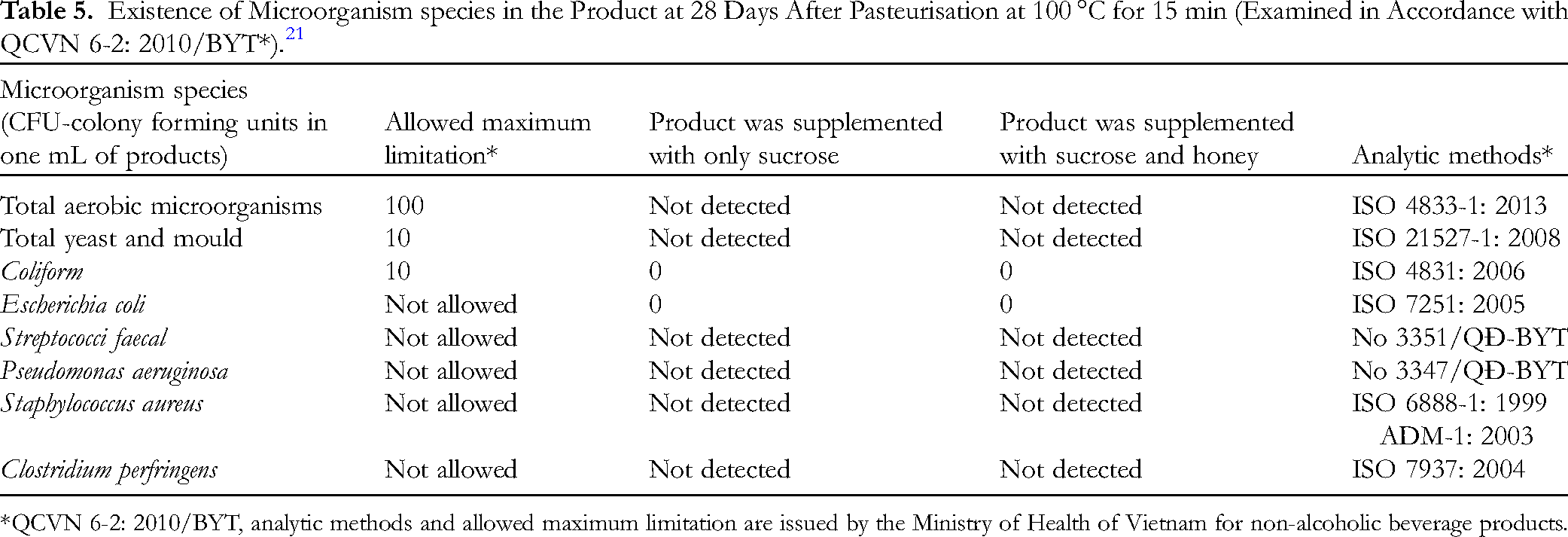
*QCVN 6-2: 2010/BYT, analytic methods and allowed maximum limitation are issued by the Ministry of Health of Vietnam for non-alcoholic beverage products.
Limitations of the Study
Roots were exclusively sourced from Kontum province, Vietnam, limiting the generalizability of findings, as phytochemical content may vary due to environmental factors.
The study examined sucrose, honey, and citric acid for sensory enhancement but did not test alternatives; for example, stevia, erythritol, or ascorbic acid.
Microbial safety was only assessed after 28 days of storage. Longer-term stability under diverse conditions (eg, different temperatures and humidity levels) was not evaluated.
Conclusion
This study successfully developed a red ginseng beverage from C. javanica, with optimized sensory attributes and ensured microbial safety. The process achieved high °Brix levels, acceptable pH and triterpenoid saponin content. Then, the optimal heating condition for suspended solids was determined to be 80 °C for 8 min, striking a balance between sediment removal and appeal retention. The study successfully developed a red ginseng beverage from C. javanica with optimal sensory qualities and ensured microbial safety through enzyme-assisted extraction, fine filtration, and pasteurization. The 8:2 dilution ratio of extract to water achieved the best sensory appeal, while 12% sucrose combined with 1.5% honey provided the highest taste scores. Pasteurization at 100 °C for 15 min ensured the absence of microorganisms, meeting national standards after 28 days of storage. These findings establish a solid foundation for the commercialization of red ginseng beverages, emphasizing balanced formulations and proper processing techniques.
Footnotes
Acknowledgements
The authors would like to thank Van Lang University, Vietnam for funding this work.
Declaration of Conflicting Interests
The authors declared no potential conflicts of interest with respect to the research, authorship, and/or publication of this article.
Ethical Approval
Ethical approval is not applicable for this article.
Funding
The authors have not received any financial support prior to the publication of this article.
Statement of Human and Animal Rights
This article does not contain any studies with human or animal subjects.
Statement of Informed Consent
There are no human subjects in this article and informed consent is not applicable.
