



Abstract
Ethnopharmacological relevance
Pelargonium zonale (L.) L'Hér. ex Aiton (P.zonale) is used against various cardiovascular, gastrointestinal and respiratory diseases involving smooth muscles relaxation. It is traditionally used for the treatment of diarrhea, gastropathy, and toothache.
Aim of study
The current study was designed to validate its conventional applications, we conducted the investigational studies to evaluate the potential mode of operation in the management of disorders pertaining to the cardiovascular system, respiratory tract, and gastrointestinal tract via in-vitro, in-vivo and in-silico studies.
Material and methods
The bioactive compounds were identified via HPLC done by using a binary-gradient solvent system containing of C-18 column (250 × 4.6 mm, 5 µm), flow rate of 0.8 ml/min, and run time of 36 min was used for the illumination of P.zonale crude extract chromatogram. These compounds were predicted spasmolytic and bronchodilation potential in molecular docking. Invitro methods confirmed the spasmolytic and bronchodilator effects. Analgesic, anti-inflammatory and antidiarrheal experiments were conducted in in-vivo studies.
Results
Experimental investigations have disclosed that it possesses antidiarrheal, anti-inflammatory, and analgesic attributes. In vitro examinations of this botanical specimen demonstrated its spasmolytic, vasorelaxant, ionotropic, and bronchodilator activities, which involve adrenergic, muscarinic, and potassium ion channels by alleviating sustained contractions induced by phenylephrine (1 µM), carbamylcholine (1 µM), and KCl (25 mM L−1) respectively. The properties associated with the opening of potassium channels were validated by conducting repeat experiments in the presence of tetraethylammonium (TEA) and glibenclamide (GB), which confirmed the activation of voltage-activated and ATP-sensitive potassium channels. Both in vitro and in vivo investigations reveal the existence of significant smooth muscle relaxant activity, further corroborated by in silico studies.
Conclusion
In vitro and in vivo studies reveal substantial capacities for smooth muscle relaxation, which encompass bronchodilation, spasmolytic activity, and vasodilation, with these observations being corroborated by molecular docking analyses. However, further studies are needed to define the clinical significance and safety treatment with P.zonale.
Keywords
Introduction
Dating back to ancient times till the present therapeutic plants have played a vital role in human health, owing to the presence of a diverse array of chemical constituents that execute specific biological roles within the human body. 1 WHO states that nearly 1/third of the global human population uses customary treatments for their health maintenance Indeed, plants and herbs are the ancient helpers of mankind, for nourishment and housing facilities as well as for the treatment of various diseases. Over the years different civilizations and cultures used herbal traditional medicines in numerous ways, while some communities started to use them after scientific confirmation. Hence, the publication of research articles on the biological characteristics of plants is increasing.2,3
Pelargonium zonale (L.) L'Hér. ex Aiton is commonly recognized as a horseshoe plant due to its brown shaded line in the form of horseshoe intention on its leaves. 4 It is cultivated in Pakistan and many other areas of the world as a decorative plant but is native to South Africa. It is usually cultivated in extremely hot states or glass houses. 5 Phytochemical studies on Pelargonium species revealed that they are rich in essential oils as well as phenolic constituents including flavonoids, tannins, phenolic acids, coumarins, 6 and delphinidin-3-o rutinoside, caffeic acid, 7 cinnamic derivatives, quercitol, luteolin, cyanidol, epicatechin, catechin, kaempferol, and quercetin-3-arabinoside. 8 Their aqueous extracts have a high quantity of tannins, 9 α-humulene and β-caryophyllene are the major components of the essential oil of Pelargonium zonale. 6 Geranium oil was obtained from leaves, flowers and stalks of this plant by steam distillation.10,11
It is traditionally used for the treatment of constipation,8,12 diarrhea, gastropathy, and toothache. 13 It also possesses anti-inflammatory, anti-septic, diuretic and astringent properties. 14 The fresh leaves paste is placed on wounds to stop bleeding, and to help suppuration. 15 This plant is used in the treatment of respiratory tract infections (RTI), tuberculosis, coughs, liver problems, fever and gastrointestinal disorders by African people. 16 It exhibits antimicrobial activities against a wide range of bacterial and fungal infections. 17
Asthma represents a heterogeneous chronic respiratory disorder that affects nearly 10% of the global population. 18 It ranks as the second most prevalent chronic respiratory ailment worldwide. 19 This condition is characterized by multifactorial origins and is categorized into various phenotypes, with allergic asthma being the most common form. 20 Immunoglobulin E (IgE) constitutes a class of antibodies synthesized by the immune system typically in response to exposure to allergens. Beyond its role in providing immune defense, IgE serves as a pivotal mediator in the pathogenesis of allergic conditions, particularly asthma. 21 Childhood asthma, along with atopic diseases, represents early and widespread immune disorders with intricate etiological factors. 22 Idiopathic pulmonary fibrosis (IPF) is an exceedingly heterogeneous, unpredictable, and ultimately fatal chronic pulmonary disease. 23 As many as fifty percent of individuals suffering from Chronic Obstructive Pulmonary Disease (COPD) and asthma fail to comply with their prescribed maintenance therapies, notwithstanding the critical importance of such medications in managing their conditions. 24 While the conventional application of Pelargonium zonale for addressing respiratory ailments and digestive disorders is recognized, the precise mechanisms through which P.zonale extracts induce relaxation of smooth muscle remain unclear. To ascertain whether pelargonium extract can proficiently diminish bronchospasm, thereby potentially offering a Phyto therapeutic approach for respiratory ailments, as well as evaluating the extract's capability to restore normal intestinal motility and mitigate excessive smooth muscle contraction, with respect to the management of diarrhea symptoms. The specific bioactive constituents in P.zonale that are accountable for its effects on asthma and diarrhea have not been thoroughly delineated. The identification of these compounds, along with an understanding of their pharmacokinetics and an assessment of their interactions with human biological systems, constitutes pivotal objectives of research.
By addressing these deficiencies, the investigation into Pelargonium zonale extract aspires to unveil novel therapeutic alternatives for individuals afflicted by asthma and diarrhea, potentially providing more natural, efficacious, and safer treatment modalities.
Materials and Methods
Collection, Identification, and Fractionation of Plant Material
Pelargonium zonale (L.) L'Hér. ex Aiton, family Geraniaceae (whole plant) was gathered from Faiz nursery Multan, Pakistan. It was collected by Rabia Naz & identified from Dr Zafar Ullah Zafar (botanist) with voucher number www.theplantlist.org/tpl1.1/ record/kew-2533854. The plant was dried under shade and ground by the domestic electric grinder. Then approximately 300 g of powder was macerated in hydro-methanol (70%) in an Amber-colored vessel for 10 days at room temperature with regular shaking. First, muslin cloth was used to filter the macerated solution, and then filter paper was used. Under reduced pressure (generated by vacuum pump) solvent was removed by using Rota- evaporator (Rotavapor, BUCHI Labrotechnik AG, Model 9230, Switzerland), until dark brown semisolid gummy crude extract, P.zonale crude extract was obtained with the yield of 15.84%. The extract was kept in a wide-mouthed amber-colored jar. 25 P.zonale crude extract was fractionated with dichloromethane (DCM) and water to get organic and aqueous extracts respectively. The aqueous layer was lyophilized while the organic layer was evaporated on a Rota evaporator under low pressure with a yield of 19% and 0.7% respectively. 26
HPLC Analysis of P.zonale
HPLC was done by using a binary-gradient solvent system containing of C-18 column (250 × 4.6 mm, 5 µm), flow rate of 0.8 ml/min, and run time of 36 min was used for the illumination of P.zonale extract (prepared with grad methanol). In order to make samples for chromatographical analysis, 1.0 mL of 100% methanol was combined with P. zonale extract. The resulting mixture was subjected to centrifugation for a period of 12 min at a rotational speed of 14,000 rpm, followed by the filtration of the supernatant utilizing a 0.22 μm syringe filter, and filled in HPLC vials. P-coumaric acid, gallic acid, ferulic acid, Catechin, hydroxybenzoic acid, caffeic acid, sinapic acid, BHT and chlorogenic acid were used as reference samples, obtained from Merck (Darmstadt, Germany) having purity > 99%. Sample dilutions with methanol were prepared to attain 50 µg/mL as the final concentration 19 the movable phase consists of two (A & B) solvents. Solvent A = acetonitrile and methanol (70:30) and solvent B = 0.5% glacial acetic acid in double distilled water. At 275 nm UV wavelength spectra were recorded. Sample peaks were recognized by comparison with the retaining time and absorbance spectrum of reference compounds. For data analysis, Chromera HPLC system (Perkin Elmer, USA) connected with Flexer Binary LC pump and UV/Vis LC Detector (Shelton CT, 06484 USA) controlled by software V. 4.2. 6410 was used. stock solutions of chlorogenic acid, gallic acid, sinapic acids, p-coumaric acid, caffeic acid, ferulic acid, butylated hydroxytoluene, catechin, hydroxybenzoic acid and quercetin together were prepared as reference standards having purity >99%, obtained from Merck (Germany) and their dilutions were prepared with methanol to achieve 50ugmL−1 as final concentration.
In Vitro Experiments
In-vitro experiments were done for evaluation of spasmogenic/spasmolytic, bronchodilator and vasoconstrictive/vasodilator effect by using isolated rabbit smooth muscles. Tissues were prepared according to the procedures described previously but with slight modifications.26,27 Tissue responses were recorded on a PC on lab-chart version seven (7), by isometric transducers connected with power lab (data acquisition system).
P.zonale Effect on Jejunal Tissue
In order to assess the spasmogenic or spasmolytic effects, isolated jejunal tissues were meticulously prepared. A rabbit was humanely euthanized, dissected, and the jejunum was isolated through the removal of mesenteric attachments. The contents of the jejunum were extracted and preserved in Tyrode's solution with a pH range of 7.2 to 7.4. Subsequently, a segment measuring approximately 1.5 to 2.0 cm in length was excised, secured with thread as previously delineated, and suspended in an organ bath (20 ml) containing Tyrode's solution maintained at a temperature of 37 °C with a continuous supply of carbogen. Prior to the commencement of any experimental procedures, the normal contractions of the tissue were allowed to stabilize for a duration of 50 min. P.zonale extracts doses 0.001 to 10.0 mgmL−1 were administered in a cumulative way to explore its spasmolytic/spasmogenic effect. Extracts were examined against contractions induced by KCl solution (25 mML−1 and 80 mML−1) to reveal its relaxation mechanism, which are useful for the determination of K-Channel opener and/ or calcium channel blocking (CCB) activity.26,27 Each experiment was replicated with n = 3 to ensure reliable results.
P.zonale Effect on Tracheal Tissue
The tracheal tube of the rabbit was excised, excess adipose tissue was eliminated, and the preparation was placed in Krebs’ solution. The tissue was prepared by cutting a strip 2–3 mm in width that contained 2–3 cartilaginous structures. The cartilages were sectioned such that the smooth muscle layer was sandwiched between them, secured with thread, and suspended in a 15 ml organ bath containing Krebs’ solution with a pH of 7.4, maintained at a temperature of 37 °C, with a continuous influx of carbogen. A pre-load tension of 1 g was applied to the tissue. P.zonale extracts were evaluated against stabilized Low-K+ and carbamylcholine (1 µML−1) induced contractions to find their potential bronchodilator activity.26,27 Each experiment was repeated with n = 3 for satisfactory results.
P.zonale Effect on Aortic Tissue
The vasodilatory and/or vasoconstrictor effects were assessed on isolated aortic rings. The aorta was excised from the thoracic region, excess adipose tissue was removed, and a 2–3 mm ring was sectioned and placed in a 15 ml organ bath containing Krebs’ solution (pH 7.4, 37 °C) with a continuous supply of carbogen. The tissue was preloaded with a standard weight of 2 g, and the natural contractions were permitted to stabilize for 60 min prior to the introduction of P.zonale extracts. The sigmoidal dose-response curves were generated against phenylephrine (PE) at 1 µM and Low-K + induced contractions. Each experiment was repeated with n = 3 for satisfactory results.
P.zonale Effect on Paired Atria
Immediately after slaughter, contracting heart muscle was removed. Atria was separated carefully and hanged in a bath having Kreb's solution with left atrium downward. Temperature was maintained at 32 °C with the provision of carbogen continuously. The plant extract was added after the tissue had been left to equilibrate for forty-five minutes. The effect of P.zonale extract as a cumulative addition to the organ bath was examined for its cardio-relaxant and/or cardio-tonic properties. 26 Each experiment was repeated with n = 3 for satisfactory results.
In-Vivo Experiments
Antidiarrheal Activity in Rats’ Model
Antidiarrheal activity was performed using a rat model as previously described.27,28 Twenty Sprague-Dawley albino rats (85 to 100 grams) divided into four groups I to IV each containing 5 animals. Group 1 treated as vehicle-treated group which received normal saline, group II & III were treated with P.zonale crude extract 0.20 & 0.40 gKg−1 and group IV treated with the standard drug loperamide 0.003 gKg−1 orally. Castor oil 1 ml was administered after 1 h. Every animal was kept separately in a box creased with filter paper, for the next 4–5 h and observed for watery fecal drops. Fc = avg. wt. of feces in control group Ft = avg. wt. of feces in test group

Analgesic Activity in Mice’ Model
Analgesic activity was performed in albino-mice by checking their acetic acid provoked writhing reflex as previously described. 29 Twenty mice (20 to 30 grams) divided randomly into four groups I to IV each containing number of animals 5 (n = 5). Group I was designated as the vehicle-treated group which was administered only normal saline 10 mLKg−1, Group II received the standard pharmacological agent, diclofenac sodium, at a dosage of 0.05 gKg−1 orally. Experimental groups III & IV were administered with P.zonale crude extract with 0.20 & 0.40 gKg−1 respectively via oral route. After 60 min all the individual were injected with 0.7% vol/vol acetic-acid (0.1 mLkg−1) interperitoneally. The writhing reflexes were meticulously monitored over the subsequent 10 min.
Anti-Inflammatory Activity in Rats’ Model
Anti-inflammatory activity was done against carrageenan induced inflammation by the procedure described previously with minor changes.
30
Twenty Sprague-Dawley rats (135 to 150 grams) divided into four groups I to IV each contain number of animals 5 (n = 5). Group 1 treated as vehicle-treated group which received only normal saline 10 mLKg−1, group II treated with the standard drug disprin 0.01 gKg−1 orally. Experimental groups III & IV were treated with P.zonale crude extract with 0.20 & 0.40 gKg−1 doses orally. After a duration of 40 min, an injection of 0.1% carrageenan was administered in the sub-plantar region of the right hind paw. The measurement of paw volume was conducted utilizing a plethysmometer over the subsequent three hours. Es = Edema in standard Et = Edema in test

Animals and Housing Conditions
All the animals (white albino rabbits and Sprague Dawley rats of either gender) used for in-vivo and in-vitro activities were kept in animal department of BZU in separate boxes, under controlled conditions, with the provision of water and food. Temperature was maintained at 25o ± 1° C grade. Before starting of any experiments, required animals were deprived of food except water for 24 h. Ethical authorization was obtained from the Ethical Committee of Bahauddin Zakariya University, Multan (EC /24PhL-S/2018) on the 26th of March, 2019.
Sample size: Twenty Sprague-Dawley albino rats and white albino mice were used for in vivo activities, divided into four groups I to IV, (each n = 5). All the animals were kept under control conditions, with the provision of water and food, temperature was maintained at 25o ± 1° C grade. Before starting of any experiments, required animals were deprived of food except water for 24 h. Animal weight ranges from 85 to 135 gram depending on availability.
Statistical Analysis
All statistically analysis, graphs and calculations were completed by using graph-pad prism 8. Each experiment was repeated at least three times and Mean ± SEM, with EC50 (median effective conc.) at confidence of interval 95% were calculated. For statistical significance Dunnett's t-test and (one-way) ANOVA were used.
Molecular Docking and 3D, 2D-Interaction Diagrams: For molecular docking a free software Auto dock-Vina, 31 as the docking engine was used with exhaustiveness = 16. The x-ray resolved structure of alpha-adrenergic receptor 6KUW, muscarinic receptors 5CXV, cyclooxygenase enzyme 4COX, and lipoxygenase enzyme 6N2W was downloaded from the Research Collaboratory for Structural Bioinformatics Protein Data Bank (www.rcsb.org), due to their good resolutions. Then, protein preparation was carried out using Auto Dock tools, followed by the selection of appropriate chain, deletion of water molecules, repairing of missing amino acid residues, addition of hydrogen bonds, evenly distribution of kollaman charges and generation of grid box for binding of desired constituents extracted in HPLC results. The grid center coordinates and grid sizes of selected proteins along the X, Y, and Z axis with their respective grid spacing are mentioned in Tables 1 & 2. After that virtual screening was accomplished by using Docking App. The docking poses with the highest docking score and protein in the pdbqt format were imported in Bio via Discovery Studio 2020 for visual inspection of binding poses, followed by the export of the protein−ligand complex. The 2D and 3D interactions between different ligands and receptors has been generated using Bio via Discovery Studio 2020.
Catechin (PubChem ID: 9064) with Molecular Formula C15H14O6 Having Molecular Weight (290.27) from https://pubchem.ncbi.nlm.nih.gov/ interactions with Cyclooxygenase-2 (PDB ID:4COX), alpha adrenergic (PDB ID: 6KUW), lipoxygenase 5 (PDB ID: 6N2W) and M1 muscarinic acetylcholine (PDB ID: 4CXV) receptors.
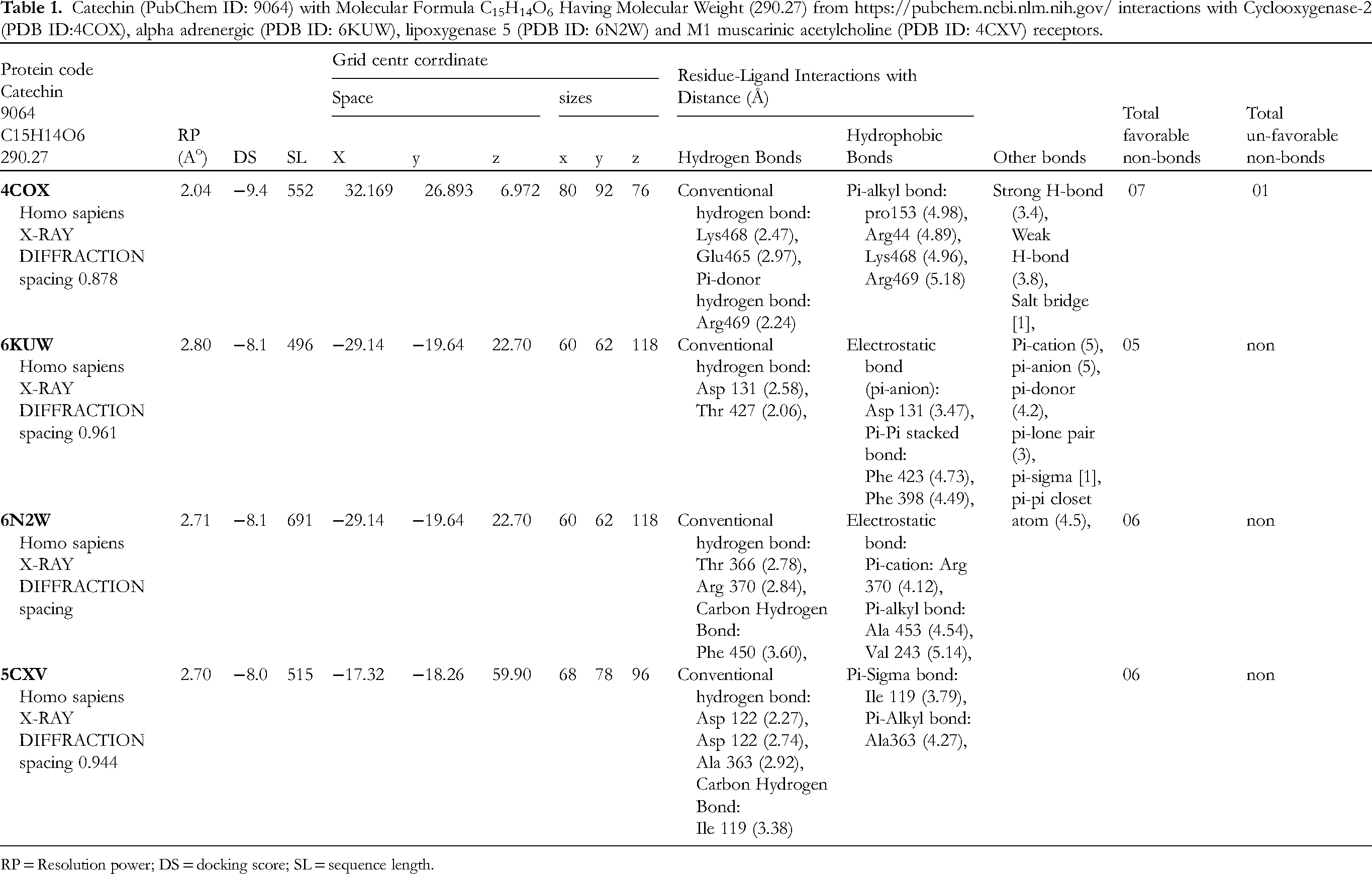
RP = Resolution power; DS = docking score; SL = sequence length.
Hydroxybenzoic Acid (PubChem ID: 135) with Molecular Formula C7H6O3 Having Molecular Weight (138.12) from https://pubchem.ncbi.nlm.nih.gov/ interactions with Cyclooxygenase-2 (PDB ID:4COX), alpha adrenergic (PDB ID: 6KUW), lipoxygenase 5 (PDB ID: 6N2W) and M1 muscarinic acetylcholine (PDB ID: 4CXV) receptors.

RP = Resolution power; DS = docking score; SL = sequence length.
Results
Analysis by HPLC
HPLC chromatogram of P.zonale (grade methanolic) extract confirmed the presence of hydroxy benzoic acid (4.191 µg g−1) and catechin (48.41 µg g−1) on the basis of retention time and concentration range against gallic acid, P-coumaric acid, caffeic acid, ferulic acid, catechin, hydroxy-benzoic acid, BHT, chlorogenic acid and sinapic acid as reference samples. The results are shown in Table 3 with its chromatogram in Figure 1.
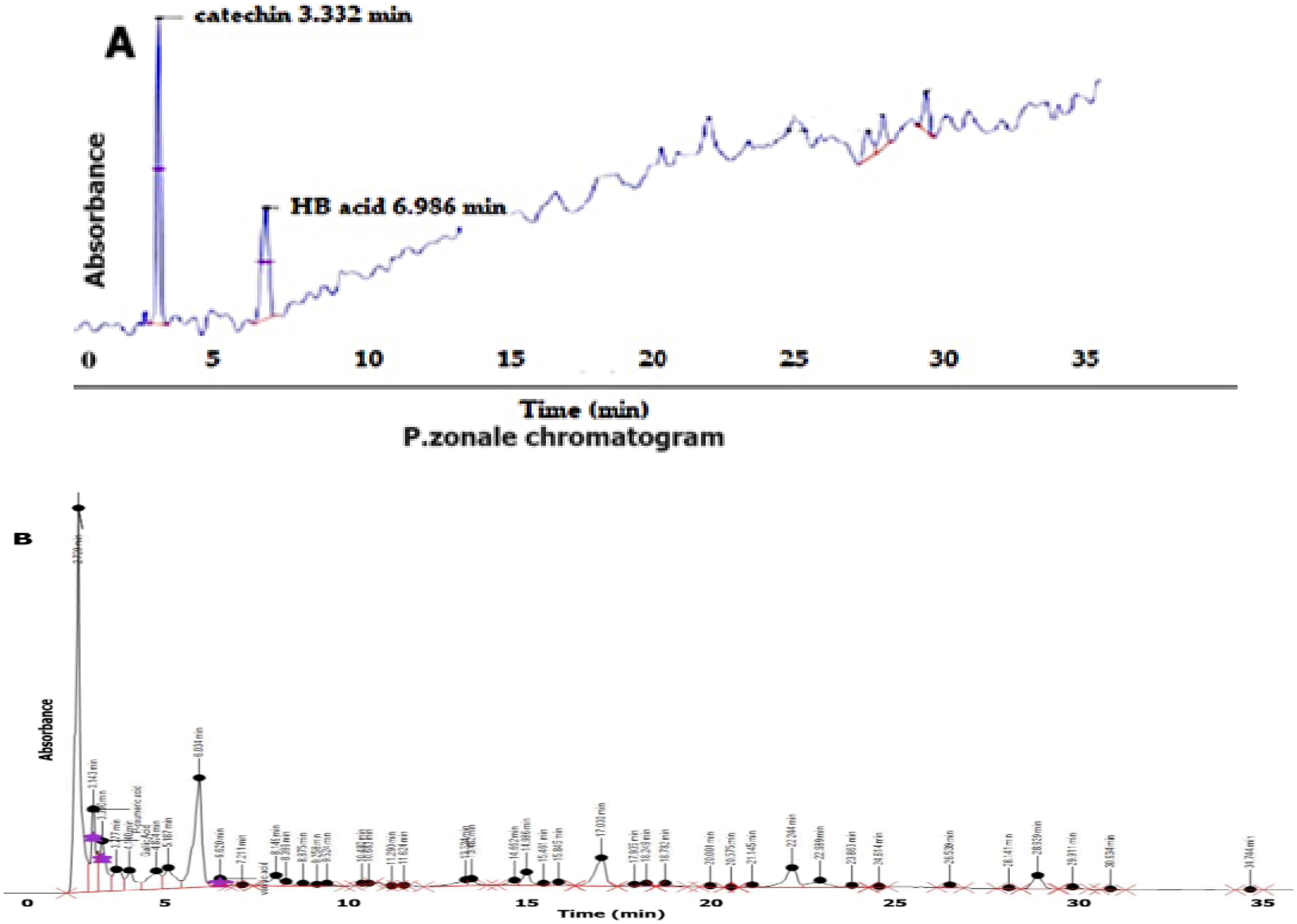
HPLC chromatogram of (A) P.zonale, (B) standards.
HPLC Results of P.zonale.

Rt = Retation time; Conc. range = concentration range.
In-Vitro Experiments
Spasmolytic Effect of P.zonale on Jejunal Tissue
P.zonale crude extract exhibited contractile response in a cumulative manner which completely relaxed the natural contractions of jejunal tissue, up to 3.00 mgmL−1, having EC50 = 2.265 mgmL−1; C.I. 95% (1.184-9.243) n = 3 (Figure 2A). When administered against sustained contractions, pre-contracted with Low-K+, the extract caused complete relaxation at 0.001–3.00 mgmL−1 with EC50 = 3.784; C.I. 95% (2.670-5.871 mgmL−1) (Figure 2B), while partially relaxed KCl (80 mML−1) induced contractions at 0.001–10.00 with EC50 = 14.59; C.I. 95% (10.01-23.40) n = 5. P.zonale crude extract relaxation effect was partially inhibited, against Low-K+ induced contractions pre-treated with 3 µML−1 glibenclamide EC50 = 0.5122; C.I 95% (0.2140-1.255) (Figure 2C) and completely inhibited against Low-K+ induced contractions pre-treated with TEA (3 µML−1) with EC50 = 0.2362 (Figure 2D).

Furthermore, organic fraction caused relaxation of both natural (spontaneous) and Low-K+ induced sustained contractions at up to 0.300 mgmL−1 with EC50 = 0.1160; C.I. 95% (0.04185-0.3537) n = 3 and EC50 = 0.07579 mgmL−1; C.I 95% (0.04664-0.1289) respectively (Figure 2E, F). Aqeuous fraction relaxed natural (spontaneous) contractions at 0.001–3.000 mgmL−1, with EC50 = 3.377; C.I. 95% (1.712-10.430) n = 3 (Figure 2I) and caused inhibitory effect on pre-contracted tissue with KCl (25 mML−1) at 0.001–0.300 mgmL−1 with EC50 = 0.01556 mgmL−1; C.I. 95% (0.004268-0.05609) n = 3 (Figure 2j). Both fractions relaxed the natural as well as Low-K+ induced contractions but organic fraction was more potent.
These findings suggest that the antispasmodic properties of P. zonale on jejunal tissues may be attributed to the activation of potassium channels. As previously elucidated, low concentrations of potassium (K+) result in the closure of potassium channels, whereas the extracts of P. zonale diminish the excitability of smooth muscle cells, thereby inhibiting contraction and alleviating spasms. Consequently, any agent that specifically and effectively obstructs the excitations induced by diminished levels of potassium is classified as a potassium channel activator. 32
Bronchodilator Effect of P.zonale on Tracheal Tissue
P.zonale crude extract was evaluated for its bronchodilator effect, by administering doses in cumulative manner to tissues (trachea) pre-contracted with CCh 1 µML−1, and Low-K+ which revealed its relaxation effect at 0.001–1.00 mgmL-1, EC50 = 0.02280; C.I. 95% (0.007257-0.07270) and 0.001–3.00 mgmL−1, EC50 = 1.336; C.I. 95% (0.9918-1.843) n = 3 respectively (Figure 3A, B),. Pretreated tissues with 3 µML−1 glibenclamide partially inhibited its relaxation against contractions produced by Low-K+ while when tissue was pretreated with TEA (3 µML−1) it completely inhibited its relaxation against Low-K+ (Figure 3C, D).

P.zonale crude extract effect on

P.zonale crude extract effect on
Furthermore, the organic fraction expressed its relaxation on Low-K+ produced contractions at doses 0.001–1.00 mgmL-1, EC50 = 0.1245; C.I.95% (0.09541-0.1632) n = 3, whereas contractions induced by CCh (1 µML−1) relaxed at 0.001–3.00 mgmL-1, EC50 = 1.593; C.I. 95% (0.8772-3.310) n = 3 (Figure 3E, F). Aqueous fraction revealed its relaxation on tissues contracted with KCl (25 mML−1) and CCh (1 µML−1) at doses 0.003–3.00 mgmL-1, EC50 = 1.525; C.I. 95% (0.8423-3.188) n = 3, and EC50 = 1.305; C.I. 95% (0.8434-2.133) n = 3 respectively (Figure 3I, J). The extracts derived from P. zonale attenuate the excitability of smooth muscle cells triggered by CCh and low potassium levels in tracheal tissues, indicating their potential anticholinergic properties alongside activities related to potassium channel opening. It has been observed that concentration-dependent anticholinergic effects may manifest in CCh activation of cholinergic receptors present in airway smooth muscle cells. 33 Moreover, diminished concentrations of potassium (K+) culminate in the closure of potassium channels. 32
Potassium channels hold significant importance for the tone of airway smooth muscle, as they facilitate the regulation of membrane voltage and frequently function as pivotal mediators in the physiological modulation of smooth muscle contractility. 34
Vasodilator Effect of P.zonale on Isolated Aortic Ring
P.zonale crude extract was tested on contractions induced by KCl (25 mML−1 and 80 mML−1) and PE (1 µML−1) for evaluation of its vasodilator effect. It was devoid of any vasoconstriction response on baseline but completely relaxed tissues pre-contracted with Low-K+ (upto 5.00 mgmL−1, EC50 = 3.416; C.I. 95% (2.700-4.423) n = 3) (Figure 4A) and 1 µML−1 PE (0.003-1.00 mgmL−1, EC50 = 0.2284; C.I.95% (0.1471-0.3627) n = 3) (Figure 4B), though its relaxation effect was partial against KCl 80 mML−1 (upto 10.00 mgmL−1, EC50 = 1.515; C.I. 95% (1.099-2.145) n = 5) induced contractions. Relaxation of contractions produced by Low-K+ in tissues pre-treated with TEA (3 µML−1) was inhibited completely while partially relaxed in presence of glibenclamide (3 µML−1) (Figure 4C, D).

Effect of P.zonale crude extract on atria (paired).
Organic fraction relaxed low-K and PE (25 mML−1 and 1 µML−1) induced contractions at 0.001–3.00 with EC50 = 0.8849; C.I. 95% (0.5372-1.522) n = 3 and EC50 = 0.3654; C.I.95% (0.1491-0.9176) n = 3 respectively (Figure 4E, F) and aqueous fraction explored its vasodilatory effect causing relaxation of 25 mML−1 KCl (0.003-5.00 mgmL−1, EC50 = 1.381; C.I. 95% (0.5818-4.484) n = 3) and 1 µML−1 PE (0.003-3.00 mgmL-1, EC50 = 0.789; C.I. 95% (0.4898-1.329) n = 3) induced contractions (Figure 4I, J).
P.zonale Effect on Isolated Paired Atria
P.zonale crude extract when applied on isolated paired atria (rabbit), it produced cardio-tonic response at lower doses while cardio relaxant at higher doses (Figure 5).
In-Vivo Activities
Antidiarrheal Activity in Rats
Anti-diarrheal activity of P.zonale crude extract was observed by using a rat model. Number of diarrheal feces decreased, after oral administration at dose 0.20 gkg−1 significantly 81.25% with **P < 0.001 and 0.40 gKg−1 produced significant reduction 93.75% with ***P < 0.0004 as statistical comparisons to vehicle-treated group. The inhibition rate was 96.87% (highest) in standard drug containing group ***p < 0.0003 (Table 4; Figure 6).
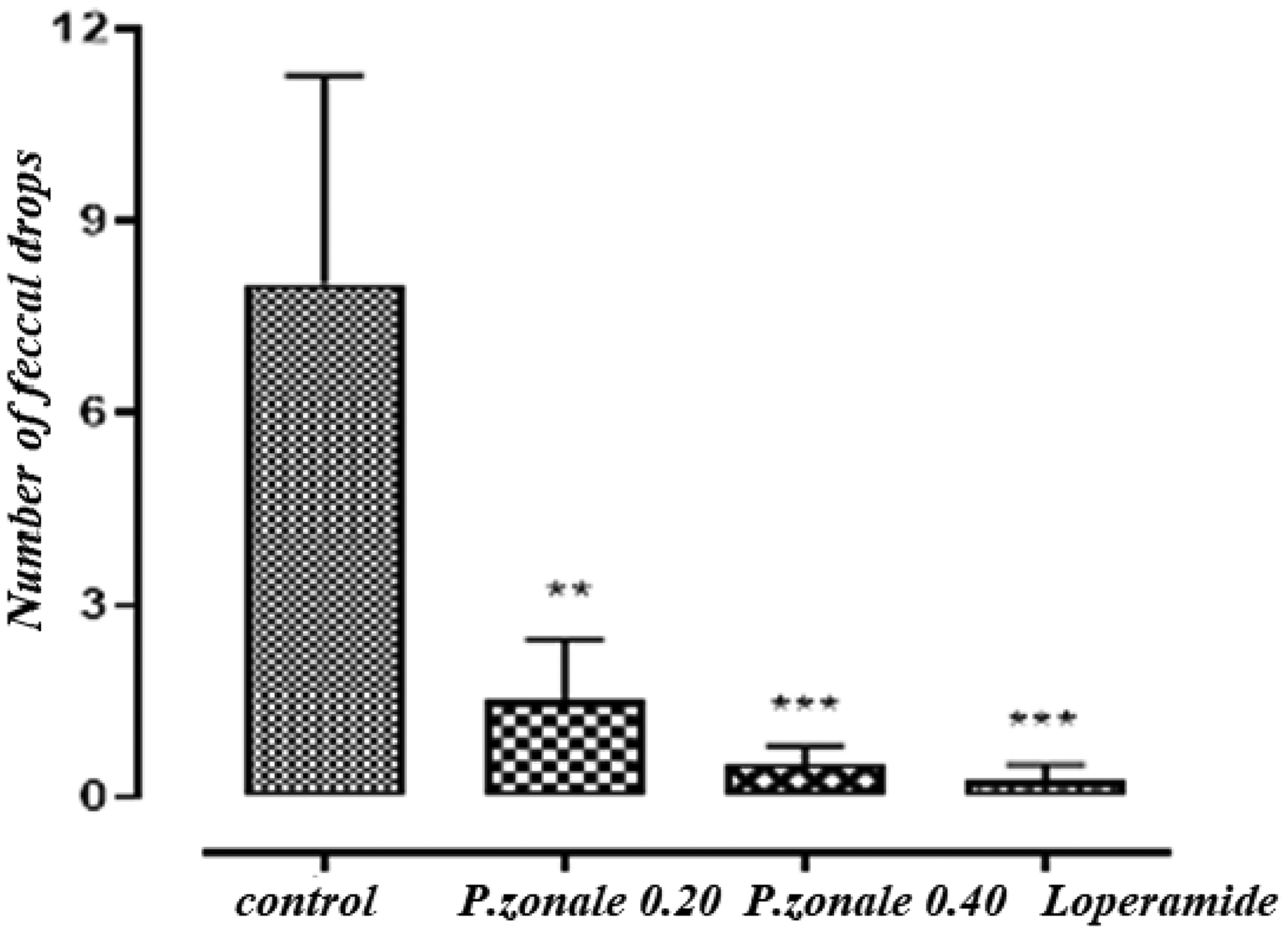
Bar graph representing the P.zonale crude extract and Loperamide antidiarrheal effect against castor oil provoked diarrhea in rats, while *p < 0.05, **p < 0.01,***p < 00.005 (ANOVA (one-way) and multiple comparison test.
P.zonale Antidiarrheal Effect in Castor oil Provoked Diarrhea in Rats.

SEM = standard error mean.
Anti-Inflammatory Activity
P.zonale crude extract exposed substantial anti-inflammatory response at doses 0.20 and 0.40 gkg−I orally by reducing paw volume as compared to the vehicle treated group with **P < 0.05 and ***P < 0.005 respectively. One-Way ANOVA and Dunnett's test were applied for multiple comparison, in statistical analysis, which presented in Figure 7, Table 5.

Bar graph representing the P.zonale crude extract anti-inflammatory activity in carrageenan provoked edema. Bars express Mean ± SEM n = 4, for data examination multiple comparison test plus ordinary One-Way ANOVA tests were applied, *p < 0.05, **p < 0.05, ***p < 00.005 were used in comparison with control group.
P.zonale Effect in Carrageenan Provoked Edema in Rat's paw.
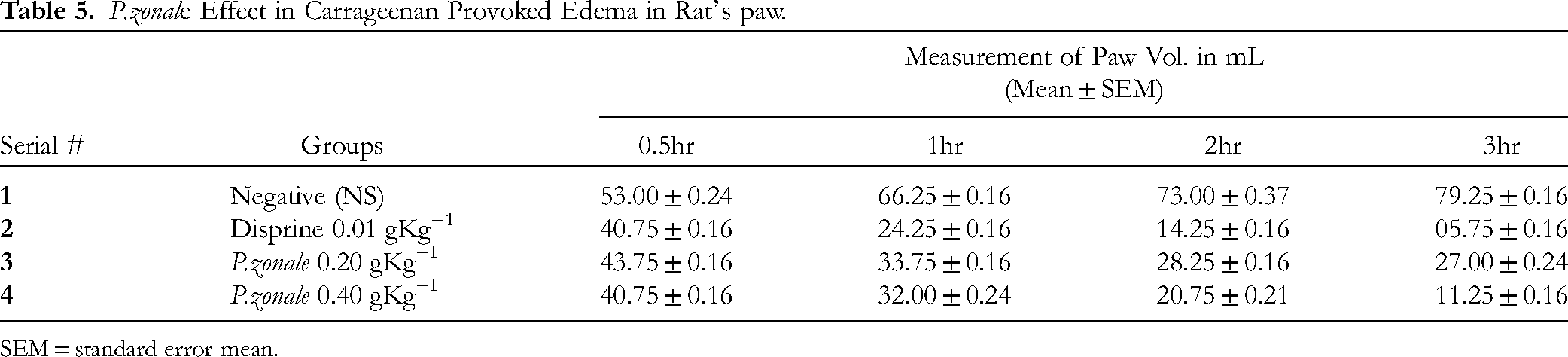
SEM = standard error mean.
Analgesic Activity in Mice Model
Acetic acid produced abdominal constrictions were reduced by P.zonale crude extract. which revealed its analgesic effect significantly at doses 0.200 gKg−I and 0.400 gKg−1 with 61.11% (***P < 0.0001) and 86.11% (***P < 0.0001) respectively while Diclofenac sodium was used as standard drug producing 64.81% (***P < 0.0006) analgesic effect as related to control group (Table 6; Figure 8).

Graphical representation of P.zonale crude extract analgesic activity in mice, for data examination multiple comparison test plus ordinary One-Way ANOVA tests were applied, *p < 0.01,**p < 0.001,***p < 0.0001 were used in comparison with control group.
Results of P.zonale Analgesic Activity Against Acetic Acid Induced Wrething Refluxes.

SEM = Standard Error Mean.
In-Silico Studies
The computations regarding docking provide valuable insights for the accurate anticipation of the positioning of a ligand within the specific location where it binds to the target protein.
Molecular Docking for Muscarinic M1 and Alpha-Adrenergic Receptors:
The chosen compounds underwent thorough examination against muscarinic M1 (PDB ID: 5CXV) for their potential antispasmodic effect and human alpha-adrenergic G protein-coupled receptor (PDB ID: 6KUW) for vasodilatory properties. It was anticipated that catechin would play a significant role in determining the energy associated with ligand binding. It formed the three Conventional hydrogen interaction with residue Asp 122 (2.27Ao), Asp 122 (2.74 Ao), Ala 363 (2.92 Ao) and two hydrophobic interactions (pi- sigma Bond: Ile 119 (3.79 Ao); pi-alkyl Bond: Aala 363 (4.27 Ao)) and carbon hydrogen bond with Ile 119 (3.38 Ao) within the pocket of MM1. (Table 1; Figure 9) While it build the two Conventional hydrogen interaction with residue Asp 131 (2.58 Ao), Thr 427 (2.06 Ao), and two pi-pi stacked Bond: Phe 423 (4.73 Ao); and Phe 398 (4.49 Ao), and electrostatic pi-anion bond with Asp 131 (3.47 Ao) within the pocket of 6KUW. Besides these, it also formed the Strong H-bond (3.4 Ao), Salt bridge (4 Ao), Weak H-bond (3.8 Ao), Salt bridge (4 Ao), Pi-cation (5 Ao), pi-anion (5 Ao), pi-donor (4.2 Ao), pi-lone pair (3 Ao), pi-sigma (4 Ao), pi-pi closet atom (4.5 Ao). The placing orders of ligands with COX-2 is certain as: catechin > hydroxy benzoic acid. Catechin was predicted with the lowest docking score
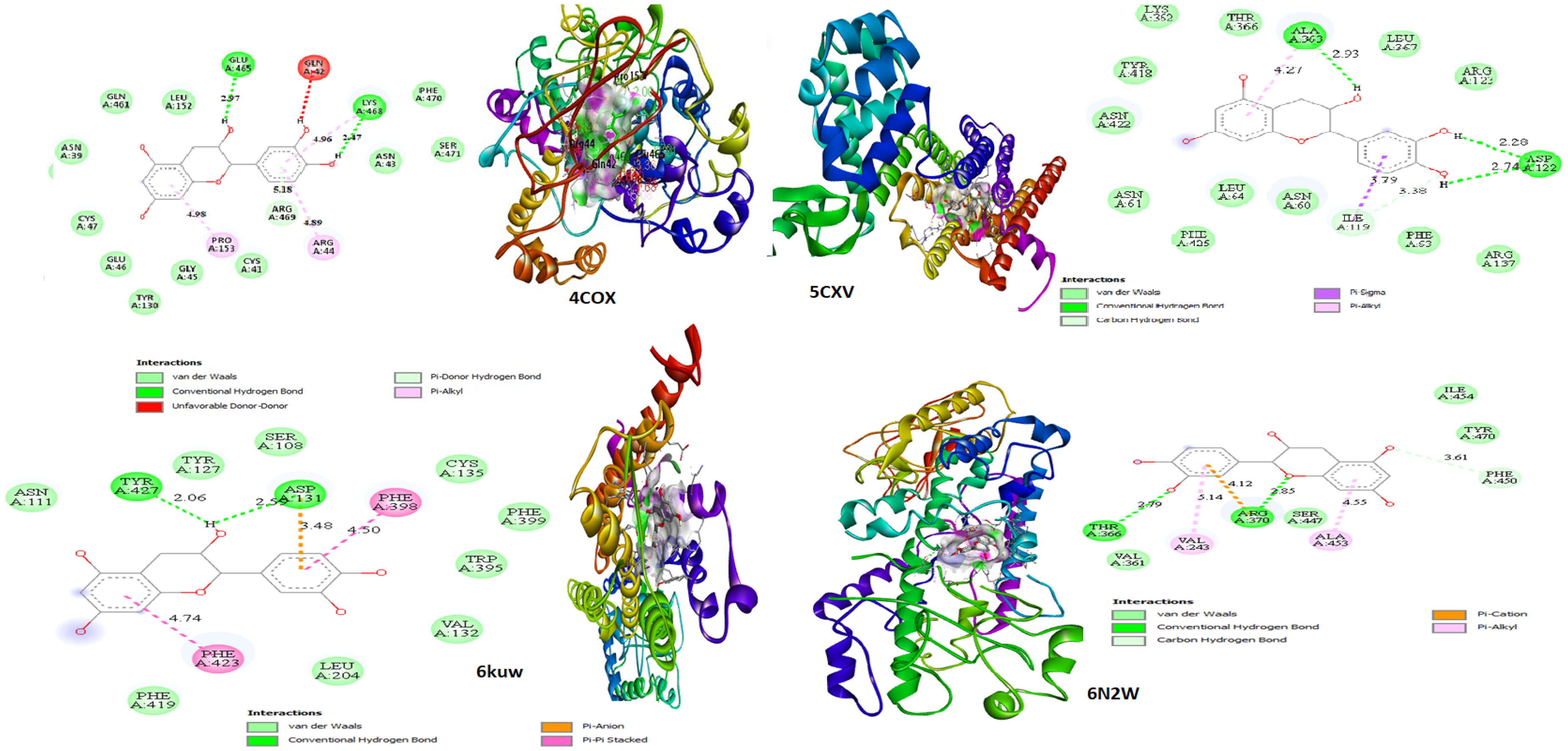
Molecular docking of catechin against alpha adrenergic, muscarinic receptor, cyclooxygenase-2, and lipoxygenase 5 receptor.
Hydroxy benzoic acid also found potent forming Conventional Hydrogen Bonds with Ala 196 (2.25 Ao), Trp 157 (2.63 Ao), and hydrophobic bonds Pi-Pi T shaped bond: Trp 378 (4.68 Ao), Pi-Alkyl bond: Ala 196 (4.83 Ao) within the 4cxv protein cleft. It also formed Conventional Hydrogen Bonds with Asp 131 (2.72 Ao); Ser 218 (2.23 Ao) and Pi-Pi T shaped hydrophobic bond: Phe 399 (4.84 Ao); Pi-Alkyl bond Cys 135 (4.70 Ao) and pi-sigma Val 132 (3.55 Ao) within the protein cleft (Table 2; Figure 10). Hydroxy benzoic acid docking score was
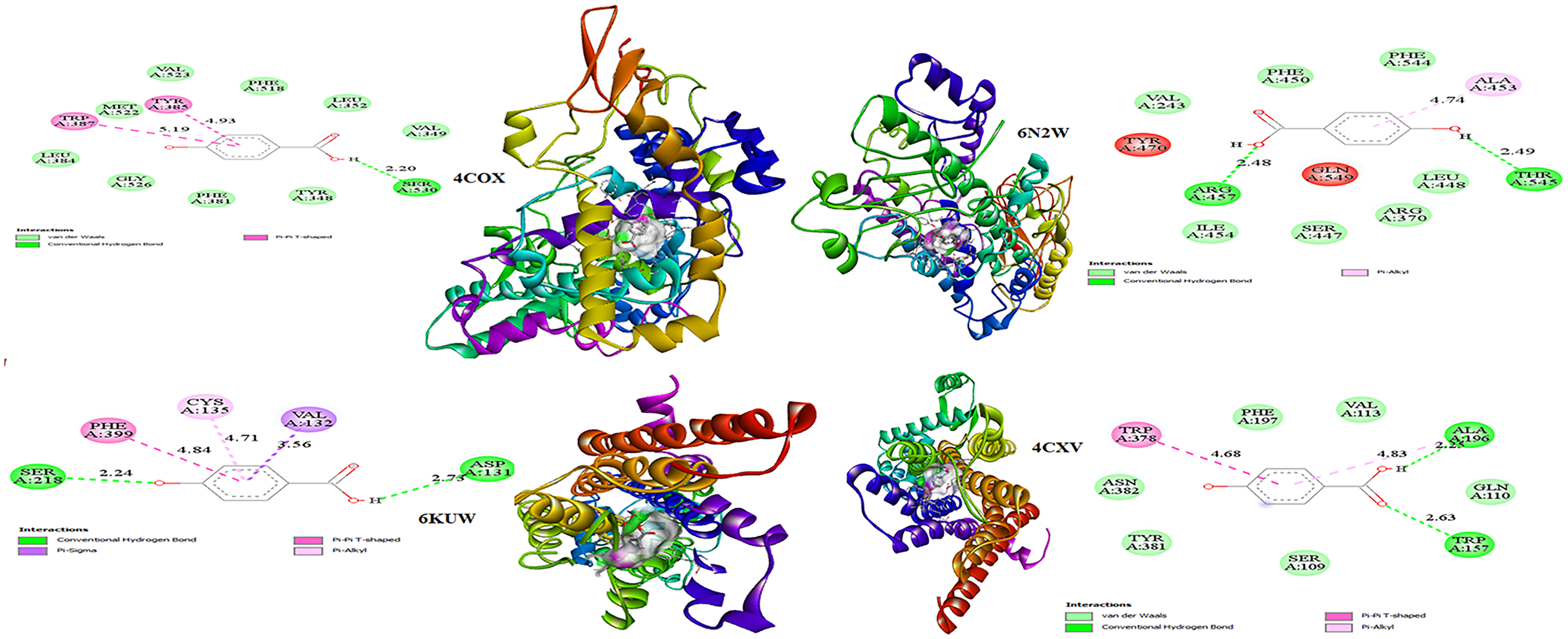
Molecular docking of Hydroxybenzoic acid against alpha adrenergic, muscarinic receptor, cyclooxygenase-2, and lipoxygenase 5 receptors.
Molecular Docking for Lipoxygenase-5 Enzyme
The selected compounds were subjected to analysis concerning their impact on the lipoxygenase-2 enzyme (LOX-5, PDB ID: 6N2W) with a focus on anti-inflammatory properties. Within pockets of LOX-5 catechin formed hydrogen interactions with Thr 366 (2.78Ao), Arg 370 (2.84 Ao), Carbon Hydrogen Bond (Phe 450 (3.60 Ao)), Electrostatic (Pi-cation) interaction with Arg 370 (4.12 Ao); and hydrophobic (Pi-alkyl) interaction with Ala 453 (4.54 Ao), Val 243 (5.14 Ao) within lox-5 pocket and the docking score was −8.1 (Table 1, Figure 9). HBA has lower docking score −6.3. it interacts with Asp 131 (2.72 Ao), Ser 218 (2.23 Ao) via conventional hydrogen bonds and Pi-sigma: Val 132 (3.55 Ao), Pi-pi T-shaped: Phe 399 (4.84) Pi-Alkyl: Cys 135 (4.70) within protein cleft (Table 2, Figure 10).
Discussion
These experiments were intended to probe the pharmacological action of P.zonale to scientifically demonstrate its traditional uses including anti-diarrheal, 13 anti-inflammatory, 14 respiratory tract infections (RTI) and gastrointestinal disorders. 16 Phytochemical studies were prepared by a preliminary assessment of HPLC and literature survey on P.zonale. Catechin and Hydroxybenzoic acid were computed in a crude extract of P.zonale by HPLC. Catechin utilized in various disorders like asthma, cough, 35 hypertension, diarrhea and anti-ulcer activity. 36 Hydroxy benzoic acid has antioxidant, anti-hyperglycemic and anti-microbial properties. 37 Hydroxybenzoic acid, a type of polyphenolic compound, is utilized for the treatment of gastrointestinal, respiratory, and cardiovascular disorders due to its spasmolytic effects on isolated tissues of the jejunum, trachea, and aorta. 35 It can be presumed from the previous results that P.zonale cardioprotective, anti-hypertensive and antispasmodic effects might be due to presence of catechin and HB acid.
In order to substantiate the traditional anti-diarrheal efficacy, P.zonale crude extract was assessed in a rat model exhibiting diarrhea induced by castor oil. 26 P.zonale crude extract significantly controlled the diarrhea 81.25% & 93.75% at dose 0.2 gKg−1 & 0.4 gKg−1 respectively with ***P < 0.004. It is commonly known that castor oil produces its diarrheal effect via the formation of ricinoleic acid (active component) in duodenum, releasing autocoids and prostaglandins which enhance motility and secretions as a result of irritation and inflammation of intestinal mucosa, 38 which disturbs the passage of electrolytes and water. 39 and increased colon motility results in diarrhea. 40 Hence, it is plausible to posit an antisecretory and/or antimotility mechanism as the basis for the anti-diarrheal effectiveness of this plant. Previous research has reported the existence of diverse chemical constituents including flavonoids, sterols, saponins, terpenoids, and/or tannins in medicinal flora exhibiting promising anti-diarrheal characteristics. 25 Flavonoids, as stated before, are involved in the inhibition of the intestinal secretory response induced by prostaglandin E2, thus producing an antidiarrheal impact. 41 Flavonoids also exhibited antioxidant properties by inhibiting certain enzymes involved in arachidonic acid metabolism. Consequently, it is conceivable that the antidiarrheal effect of crude extract could be attributed to the antioxidant, antisecretory, and anti-inflammatory properties of flavonoids. Tannins impede peristaltic movements and create tannates by altering proteins, thereby reducing intestinal mucosa permeability and contributing to the antidiarrheal effect. 42 P.zonale demonstrated the presence of flavonoids and tannins that could potentially result in synergistic antidiarrheal effects in a rat model.
In order to delve deeper into the mechanism responsible for its antidiarrheal properties, P.zonale extracts underwent additional investigation through in-vitro experiments utilizing isolated jejunal tissues. P.zonale crude extract evoked spasmolytic effect on natural jejunal contractile response in a concentration dependent fashion up to 0.3 gKg−1, this relaxing response suggested the existence of constituent(s) in plant extract having relaxation property e.g Catechin. Catechin produce inhibitory effect on the natural beating jejunal preparation, either by its calcium channel blocker or potassium channel opener mechanism. 43 The gastrointestinal (GI) tract is encompassed by smooth muscle tissue, which plays a crucial role in the proper mixing, processing, and propulsion of food along the digestive system. The intensity of contractions produced by these muscle layers is primarily influenced by factors such as the amplitude, duration, and frequency of action potentials, which facilitate the rapid influx of Ca2+ into smooth muscle cells, thereby triggering the contractile process. The interaction of intracellular Ca2+ ions with calmodulin, a protein, leads to the activation of both actin and myosin, the proteins responsible for contraction, through the phosphorylation of the myosin light chain by mLC-kinase and subsequent binding with actin. 25 Potassium (K+) channels play an active role in modulating the electrical activity of smooth muscle by leveraging the significant transmembrane gradient in K + concentration to generate outward currents, facilitating the outward flow of positively charged ions. It causes relaxation on sustained contractions induced by Low-K+ contractions in doses up to 0.3 gKg−1, while partial relaxation on contractions provoked by KCl (80 mML−1) at the highest doses. Selectively inhibition of Low-K+ provoked contractions are represented for activation of potassium channels. The activation of K+ channels is associated with the restoration of the resting potential and the inhibition of contractile activity. 44 The relaxation of smooth muscle occurs either due to the removal of the stimulus for contraction or the inhibition of the mechanisms accountable for inducing contraction. 25
Within the human body, various types of potassium channels exist, including KATP channels, KCa channels, inward rectifier potassium channels, and delayed rectifier K-channels. 44 To explore types of potassium channels involved in its mechanism, P.zonale extracts were administered in cumulative method to jejunal tissues pre-contracted Low-K + in presence of 3 µML−1 glibenclamide (ATP dependent K-channel blocker) and 3 µML−1 tetraethylammonium (non-specific K- Channel blocker). 25 The relaxing effect of P.zonale crude extract was completely abolished on contraction induced by Low-K + pretreated with tetraethylammonium while partially inhibited in presence of glibenclamide. Thus, the participation of non-specific pot. channels activation was confirmed as a primary spasmolytic response of P.zonale crude extract.
Asthma is the most common chronic respiratory disease characterized by a narrow and edematous airway blocked with excessive mucus. 45 Considering the traditional use of this plant in treating respiratory conditions and the medicinal application of potassium channel openers in addressing numerous respiratory disorders such as cough and asthma, a crude methanolic extract of P.zonale crude extract was evaluated on isolated tracheal rings containing smooth muscles to assess its bronchodilator properties. It provoked inhibitory effect on Low-K+ and CCh pre-contracted tracheal tissues, being more effective against CCh (1 µML−1) as compared to Low-K + induced contractions. The experimental results proposed the anti-muscarinic and opening of potassium channel involvement mediated through non-specific as well as KATP-dependent potassium channels which might be due to the existence of flavonoids i.e catechin, as well as, activation of potassium channels. 25
P.zonale effect on aortic muscle contractile response was inspected for any possible influence on the cardiovascular system. Plant extract was devoid of any vasoconstrictive response on aortic baseline. Application of P.zonale crude extract on Low K+ and PE (1 µML−1) aggravated contractions (on aortic rings) explored its vasodilator action. Potassium channel activation is associated membrane hyperpolarization which closes voltage-dependent Ca2+ channels and leads to a reduction in intracellular Ca2+ and vasodilation. 46
The relaxation was inhibited against Low-K + induced contractions pretreated with glibenclamide 3 µML−1 and TEA 3 µML−1 which indicates the involvement of K channel opener mechanism in vasodilation, thus can be used for the treatment of hypertension.
Both the organic and aqueous fractions exhibited relaxation of smooth muscles through the activation of potassium channels. Notably, the organic fraction displayed a higher potency compared to the aqeuous fraction.
P.zonale crude extract was also applied to paired atria to reveal its medicinal uses in diseases related to the CVS, there it showed cardio-tonic response at lower doses while cardio relaxant at higher doses by effecting the rate and force of contraction. This effect might be due to the existence of Catechin. 36 Furthermore, diverse isoforms of KATP channels are present in cardiac and smooth muscles, which aids in understanding their relatively lower inhibitory effect on cardiac muscles. 25
P.zonale methanolic extract anti-inflammatory response indirectly were evaluated in vitro by spectrophotometric method, 47 and in vivo in TPA-induced oedema. 48 We evaluated P.zonale crude extract anti-inflammatory outcomes in carrageenan provoked inflammation. carrageenan-produced paw edema is a distinct model of acute inflammation involving variety of inflammatory mediators in its development. In carrageenan produced hind paw inflammation, PMN leucocytes infiltration also plays a vital role. 49 Inflammation induced by carrageenan is associated by a biphasic curve. 49 First phase may be due to injection prick or trauma and release of serotonin & histamine during first hour 50 In second phase PGs in inflammatory exudates are involved in inducing inflammation. 51 Its anti-inflammatory effect may be due to interference with PMN cell migration. As previously reported, it also contains Catechin a flavonoid which have ability to inhibit neutrophil degranulation and diminish the release of arachidonic acid by neutrophils and other immune cells, Cyclooxygenase and lipoxygenase play an important role as inflammatory mediators. They are involved in the release of arachidonic acid, which is a starting point for a general inflammatory response. 52 NSAIDs are known to reduce the PGs synthesis by inhibiting the enzyme cyclooxygenase-II. As arachidonic acid is released from phospholipids (tissue) via COX by acetic acid which involved in production of PGs (specifically PGE2 & PGE2α) and lipoxygenase product in peritoneal fluids. 53 Which induce pain and swelling by increasing permeability of capillaries and endogenous substances which arouse pain nerve endings. Non-steroidal anti-inflammatory drugs affect the afferent nociceptors transduction mechanism by inhibiting the COX enzymes. 54 Based on these reports it can be considered that its anti-inflammatory and analgesic potential may be due to the COX inhibition which might be due to the presence of flavonoids and tannins present in the extract.
Molecular docking serves as a valuable instrument for forecasting the potential mechanisms of action of chosen compounds in diverse pharmacological investigations. Frequently, binding energy is used to characterize the degree of affinity between a receptor and ligand. The lower the binding energy, the greater the affinity and the more stable the conformation. Generally, binding energies less than −5.0 kcal/mol or −7.0 kcal/ mol indicate good or strong binding activity between ligand and receptor, respectively. The results indicated that the binding free energies of catechin was −9.4, −8.1, −8.1, −8.0 with 4COX, 6KUW, 2N2W & 5CXV respectively while the hydroxybenzoic acid calculated free energies were −6.3, −6.3, −6.2 & −6.1 with 6KUW, 2N2W, 5CXV & 4COX respectively. The above molecules’ docking binding free energies were all ≤ −5; hence, aloin appears to have a high affinity for the primary targets. 55 The current investigation established correlations and elucidated the vasodilator, antispasmodic, and anti-inflammatory properties of P.zonale. The Catechin and HB acid determined via HPLC were studied for alpha adrenergic receptor, muscarinic M1, cyclooxygenase 2, and lipoxygenase 5 receptor. The computational docking assessments of these compounds reveal the existence of vasodilatory, antispasmodic, and anti-inflammatory effects, which had been previously validated in experimental research. Catechin was more potent compound for these activities than HB acid. The results of the inquiry demonstrate that the mentioned compounds interact with muscarinic M1, alpha adrenergic, cyclooxygenase 2, and lipoxygenase 5 receptors to demonstrate their effects. The study carried out confirms the important discoveries of catechin in computational assessments focusing on particular receptors. Although further clinical investigations are required, for progress in the realm of pharmaceutical discovery. Clinical trials are needed to further investigate the clinical outcomes of P.zonale. It shows potential as an agent in diarrhea reduction and smooth muscle relaxation. This study's limitation is that it did not examine the impact of plant extracts on histology and related biomarkers for inflammation, asthma, and diarrhea. Moreover, neither the isolation nor identification of the active phytochemicals of P.zonale responsible for inhibition of diarrhea, asthma, and inflammation was done in this study.
Conclusions
This study accomplishes the bronchodilator, spasmolytic, vasodilatory, antidiarrheal and ionotropic activities of a hydro-methanolic crude extract of Pelargonium zonale and its organic and aqueous fractions that are mediated by multiple mechanisms, including receptor-operated (antimuscarinic), voltage-gated Ca++ channel blockade, and K + -channel opening Mechanisms. In vitro and in vivo examinations demonstrate significant smooth muscle relaxation capabilities. The spasmolytic impact was more pronounced in organic fraction, inducing complete relaxation in isolated jejunum, trachea, and aorta, findings supported by computational studies. P.zonale exhibited various activities relevant to disease management. Based on the results of the present investigation, which give a platform to future mechanistic studies, P.zonale extract may be a beneficial therapeutic approach in diarrhea, asthma and hypertension. There exists an opportunity for prospective chemists to extract the active components and conduct additional research on these.
Footnotes
Abbreviations
Acknowledgments
In order to conduct this study, the author (or authors) are extremely grateful to the folk healers of the province of Punjab, who have kindly shared their knowledge regarding the use of folklore remedies with the authors. In particular, we would like to express our deepest gratitude to Dr Imran, Chairman of the Department of Pharmacology for providing housing for the research animals as well as the necessary laboratory equipment for the study.
CRediT Authorship Contribution Statement
R.N, F.S.and M.F.L: Conceptualization, Rabia Naz: Methodology, S.I.T, C.M, Software, R.N, F.S.and M.F.L original draft. B.H.S,P.C.P,O.A: Writing – review & editing.
Declaration of Conflicting Interests
The authors declared no potential conflicts of interest with respect to the research, authorship, and/or publication of this article.
Ethical Approval
This study was approved by the Laboratory Animal Ethics Committee of Bahauddin Zakariya University, Multan (approval ID: EC /24PhL-S/2018).
Funding
The authors received no financial support for the research, authorship, and/or publication of this article.

Statement of Human and Animal Rights
All of the experimental procedures involving animals were conducted in accordance with the Institutional Animals Care guidelines of Bahauddin Zakariya University, Multan.
Statement of Informed Consent
There are no human subjects in this article and informed consent is not applicable.