



Abstract
Chrysin, a flavonoid, has played a great role in the fields of anticancer, antibacterial, and antiviral drug discovery. A large number of chrysin derivatives have been synthesized recently. The fluorine atom represents an important substituent group for a great number of natural products and pharmaceuticals. Taking into account the importance of both chrysin and the fluorine atom in medicinal chemistry, the synthesis of fluorine-containing chrysin derivatives has gained great interest. Chemically, the synthetic methods for these new chrysin derivatives have also been developed rapidly. In recent years, research on their synthesis has been focused on speeding up the reaction process by changing the catalyst. Biologically, the purpose of introducing fluorine into chrysin was to improve its lipophilicity, but today it is mainly focused on the enhancement and improvement of either its anticancer or antimicrobial activities by incorporating the special properties of fluorine atoms. In this review, synthetic methods for the introduction of fluorine atoms into chrysin are summarized, and their anticancer, antibacterial, antiviral, and hypoglycemic effects are discussed.
Flavonoids have attracted much attention because of their wide distribution in nature and their various pharmacological effects. 1 Flavonoids can be further divided into flavonols, flavones, flavanones, flavanols, isoflavonoids, flavonoid glycosides, and flavonolignans. Flavone is an important scaffold for medicinal chemistry. Chrysin (5,7-dihydroxyflavone) (Figure 1), a flavone, has been shown to have various biological properties, such as anticancer, 2 antimutagenic, 3 antibacterial, 4 antioxidant, 5 anti-inflammatory, 6 and neuroprotective activities. 7 However, chrysin has low water solubility, poor absorption, and rapid metabolism after glycosylation, 8 which deems it to be difficult to pass through the intestinal/hepatic barrier. 9 Various attempts have been made to synthesize chrysin derivatives, such as introduction of functional groups such as halogens, 10 methoxide, 11 amino acids, and metal ions, 12 aiming to increase its pharmacological properties. 13 For instance, Mannich base derivatives of chrysin showed moderate inhibitory effects against Hela (cervical), A549 (lung), SGC-7901 (gastric), HCT-116 (colon), and K562 (leukemia) cell lines. 10 Bromochrysins are other synthesized derivatives of chrysin that presented activity against HL-60 and HT-29 cells, 11 and the iodol-chrysin derivatives are active against SW-579 tumor cells. 12

Molecular structure of chrysin.
Incorporation of the fluorine atom into compounds can impact their solubility and lipophilicity, and affect their biological potency. However, many marketed drugs contain fluorine atoms, and many of the newly synthesized compounds have introduced fluorine atoms to improve their properties. In the field of pharmaceutical chemistry, 80% of fluorine atoms in fluorinated compounds exist in the form of fluorine aryl, simple fluoroalkyl, and aromatic trifluoromethyl. 14 Fluorine is a strongly electronegative element located at the distal end of the first line of the periodic table with small volume and small atomic mass. These properties make the fluorocarbon bond highly polarized and also make the fluorocarbon bond very strong, which can prevent drug metabolism. The introduction of fluorine atoms into the compounds has the following effects: (1) Affecting the liposolubility of compounds. 15 A large number of statistical analyses based on the effects of fluorine substituents on lipophilic properties show that a single fluorine substituent increases lipophilicity by an average of 0.17 units. 16 However, some studies have shown that this is not the case with aromatically substituted fluorine. Like aryl cyclofluorination, the lipophilicity of the CF3 group was slightly increased by using fluorinated hydrogen in a methyl substituted group, and the substituent group was transformed into a strong electron absorbent group. Some studies have also shown that fluorination of simple alkyl chains can lead to reductions in lipophilicity; however, the examples were limited. (2) Influencing compound pKa. 17 Trifluoromethanesulfonamide is much more potent than methanesulfonamide in inhibiting carbonic anhydrase. (3) Affecting drug metabolism. 18 Fluorine can prevent oxidative metabolism of aromatic and aliphatic sites, which is not only used to reduce the metabolic oxidation rate but also successfully prevents the production of active metabolites related to specific toxicity, aromatics, and reactivity. (4) Affecting the binding of molecules to proteins. 16 (5) Molecular conformation change. 19
In consideration of the importance of both fluorine atoms and chrysin in medicinal chemistry, the synthesis of chrysin derivatives containing fluorine has gained attention. With this goal, the Baker-Venkataraman rearrangement reaction 20 and Claisen-Schmidt methodology 21 have become the most widespread approach. In a number of publications, synthetic ways have focused on changing the catalysts and conditions 22 to make the reaction faster, safer, and more efficient. In this paper, recent observations on chrysin derivatives are reviewed. The effects of fluorine-substituted chrysin and the biological activity of these compounds are discussed.
Synthesis of Fluorinated Chrysin
Introducing the Fluorine Atom in the A Ring of the Chrysin Bicyclic System
The Baker-Venkataraman reaction is the most common methodology used to incorporate fluorine atoms into chrysin and is a classical method for the synthesis of chrysin derivatives by introducing either fluorine atoms or trifluoromethyl groups into the chrysin derivatives (Scheme 1). The Baker-Venkataraman rearrangement reaction converts 2-hydroxyacetophenone to benzoyl ester
23
and then rearranges to form 1,3-diphenylpropane 1,3-diketone. Cyclization gives flavonoids under acidic conditions. 3-Choro-4-fluorophenol (

Baker-Venkataraman methodology.

Synthesis of 7-choro-6-fluorinated chrysin derivative 8.

Synthesis of monofluorinated 3′,5′-dimethyl-4′-hydroxychrysin derivative 12.
ICl-induced cyclization provides a simple, highly efficient approach to obtain chrysin derivatives in good yields through just 2 procedures. This process is run under mild conditions and tolerates various functional groups. Syntheses of fluorinated chrysin derivatives based on ICl-induced cyclization are convenient (Scheme 4). First, the 2-methoxyaryl-containing alkynones are prepared. There are 2 ways to achieve this. First is the palladium/copper-catalyzed Sonogashira coupling of an acid chloride with a terminal acetylene at either room temperature or 50°C. Second is the addition of lithium acetylide to an aldehyde, followed by oxidation of the resulting secondary alcohol by activated MnO2. Generally, the requisite alkynones are obtained in 66% to 98% yields by these straightforward approaches. 26

ICl-induced synthesis of chrysin analogs.
The direct fluorination method is modified by using chrysin as the raw material. Compound

Synthesis of 5,7-dimethoxy-8-trifluoromethylchrysin 16.
The above method is to obtain the target product by using fluorinated raw material to synthesize chrysin.
Introducing a Fluorine Atom Into the B Ring of the Chrysin Bicyclic System
A great number of chrysin derivatives bearing fluorine atoms in the B ring have been synthesized by Baker-Venkataraman and Claisen-Schmidt methodologies. Many new reactions on prepared fluorinated chrysin have been developed.
The Baker-Venkataraman method is the most commonly used one for the synthesis of chrysin derivatives by introducing fluorine atoms into acetophenone to synthesize chrysin fluorinated on its B ring. Baker-Venkataraman methodology has been improved by Chee et al to obtain flavones in excellent yield in a single step.
28
2-Hydroxy-acetophenone (
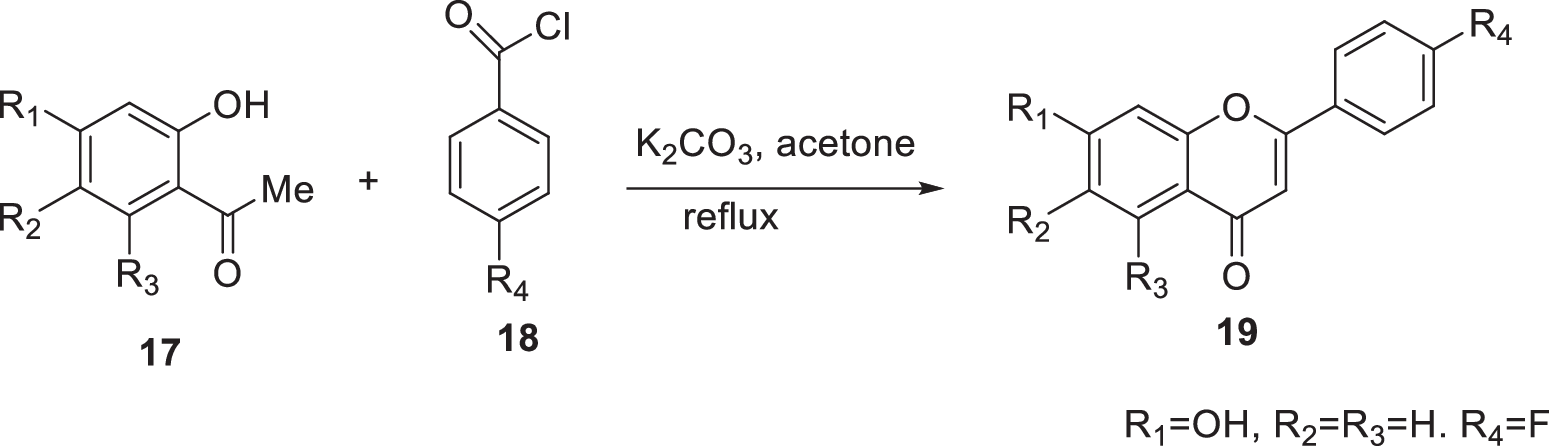
K2CO3 catalyzed synthesis of fluorinated chrysin 19.
The well-known Claisen-Schmidt methodology to synthesize fluorinated chrysin appears to be an important approach. 2′-Hydroxy-acetophenone and benzaldehyde are used as raw materials to produce chalcone under alkaline conditions and then under basic conditions, followed by their oxidative cyclization to flavone
21
(Scheme 7). Fluorine atoms were introduced into flavonoids by changing the substituents of benzaldehyde (Scheme 8). Various Lewis acid/base catalysts have been utilized for this oxidative cyclization and ZnCl2 is one of them.
27
Phloroglucinol with chloroacetonitrile followed by hydrolysis with HCl gas provided ketone

Claisen-Schmidt methodology.

Synthesis of 4′-trifluoromethoxylchrysin.
Limited by the long reaction time of the Claisen-Schmidt method, many scholars obtained substituted chrysin derivatives by optimizing the synthetic method of chrysin, for example, compound

Flavones from salicylaldehyde and acetophenone derivatives.
In addition, there are many methods for the synthesis of chrysin, especially by changing the catalyst to achieve the purpose of selective substitution and to increase the yield and reduce the reaction time. Another synthesis of 4′-fluorinated chrysin catalyzed by Pd/C is typical 30 (Scheme 10). The reaction was carried out in toluene at 110°C under positive CO (20 Bar) pressure employing different bases. In addition, there are still many similar reactions to obtain 4′-fluorinated chrysin. Yang et al 31 reported a highly efficient and selective palladium catalyzed ligand-free cyclocarbonylation reaction of o-iodophenols with terminal acetylenes under CO pressure in an ionic liquid medium. A phosphonium salt ionic liquid as the reaction medium enhances the efficiency of the cyclo-carbonylation reaction (Scheme 11).

Synthesis of 4′-fluorinated chrysin derivative.

Palladium-catalyzed cyclocarbonylation of o-iodophenol with phenyl acetylene.
Huang et al reported a special and interesting methodology to obtain chrysin in good yields, which is a resin supported solid-phase synthesis catalyzed by ZnCl2 32 (Scheme 12). The reaction first occurs by Lewis acid-mediated polystyrene-supported selenium-induced intramolecular cyclization of chalcones and followed by oxidative cleavage of the selenium resins. The reaction has several advantages such as mild reaction conditions, being odorlessness, good yields, and easy purification techniques.

Synthesis of 4′-fluorinated chrysin derivative.
Biological Activity of Fluorine-Containing Chrysin
Anticancer Activity
As already mentioned, chrysin has been shown to inhibit proliferation and induce apoptosis, and is more potent than the other tested flavonoids against leukemia cells. 33 The mechanism includes antitumor cell proliferation, 34 tumor cell apoptosis, 35 and reversing multidrug resistance of the tumor cell and antigene mutation. 36 Activation of apoptosis is the key molecular mechanism responsible for the anticancer activities of chrysin. Zhang et al showed that chrysin effectively inhibited the growth of HeLa cells by apoptosis induction and downregulated the proliferating cell nuclear antigen. 37 However, chrysin sensitized tumor necrosis factor (TNF)α-induced apoptosis in tumor cells and such sensitization is probably associated with the inhibitory effect on nuclear factor kappa-B (NF-κB) activation. 38 Woo et al showed that chrysin induced apoptosis in association with the activation of caspase-3, involving the inactivation of either protein kinase B (Akt) or protein kinases B signaling in human leukemia cells. 39
To improve the potency and physico-chemical properties of chrysin, fluorinated derivatives of it have been obtained. Wang et al
40
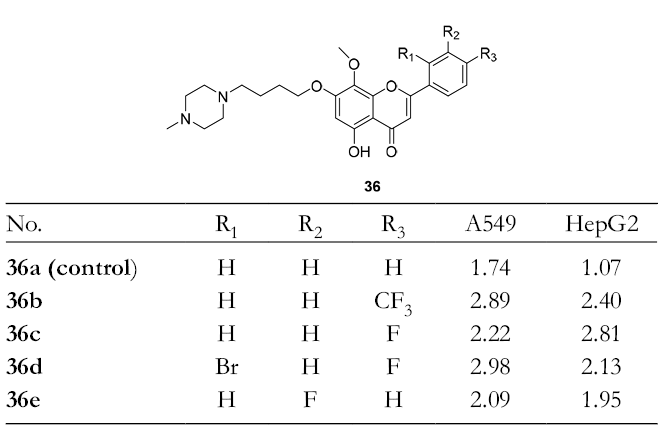
have synthesized a series of such derivatives fluorinated on the B ring and evaluated their proliferation activity against HepG2 cells (Table 1). Compound
Inhibitory Activities of Chrysin Derivatives (IC50, μM).


Chrysin was further modified by Bian et al,
41
and on the basis of the study of Wang et al,
40
the B ring modification of compound
Inhibitory Activities of Piperazine-Chrysin Derivatives (IC50, μM).

Zheng et al enhanced the liposolubility and anticancer ability of chrysin by introducing trifluoromethyl into the A and B rings of chrysin (Table 3).
42
They synthesized the following fluorine compounds by the Baker-Venkataraman method and studied their antigastric cancer effects. It was shown that the trifluoromethyl substituents of 5,7-dipropoxy-4′-trifluoromethylchrysin (compound
In Vitro Cytotoxicity of Chrysin Derivatives Against SGC-7901 (IC50, μM).

The kinesin spindle protein (KSP) has recently gained significant attention as a novel biological target for anticancer therapy. Kinesin spindle protein plays a critical role in centrosome separation and the formation and maintenance of the bipolar spindle.
43
Inhibition of KSP in proliferating tumor cells leads to the failure of centrosome separation and consequently irregular formation of a monopolar spindle, ultimately resulting in cell death. Dong et al used compounds with trifluoromethylphenyl groups in the A and B rings of chrysin, and their inhibitory effects on KSP and the antiproliferation effects were evaluated (Table 4).
44
They evaluated the antiproliferative activities of compounds
Inhibitory Activities of Chrysin Derivatives (IC50, μM).

Among the tested compounds, chrysin derivatives showed remarkable anticancer activities, and compound
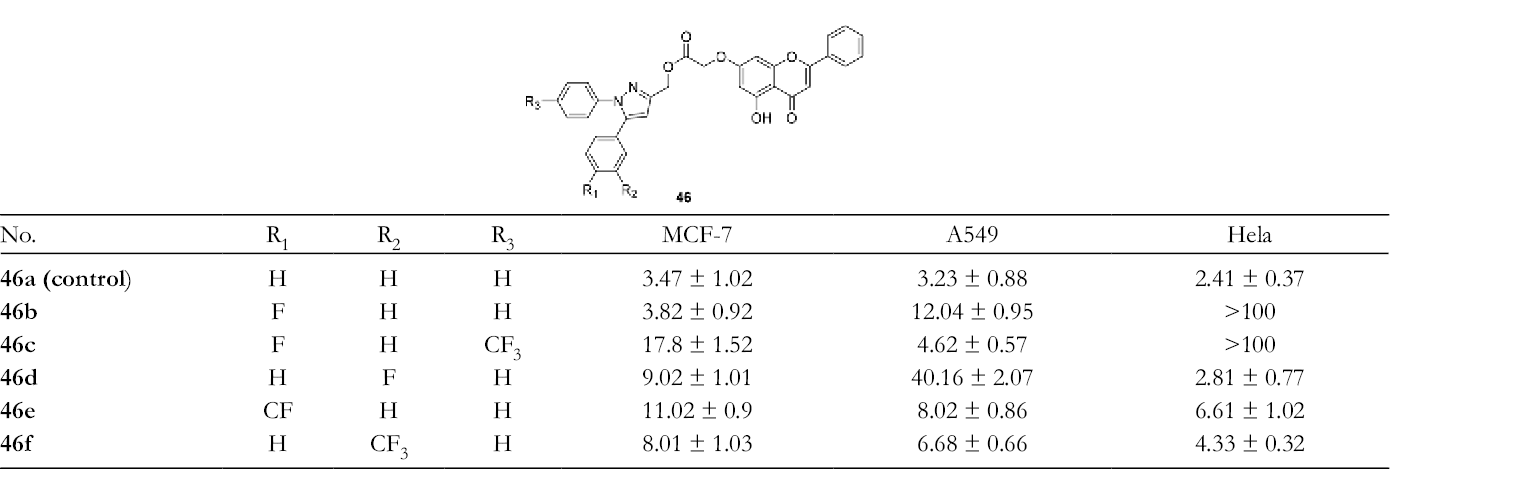
In addition, Shen-Zhen Ren et al designed and synthesized a series of 1, 5-diarylpyrazole and chrysin derivatives, and evaluated their inhibitory activity against Cyclo-xygen-ase (COX)-1 and COX-2
45
(Table 5). However, the effect of fluorine substitution on the compounds on 5-diarylpyrazole was not obvious. Compound
Inhibitory Activities of Chrysin Derivatives (IC50, μM).

Selenium compounds due to their chemical properties are being used in selective reactions
46
and asymmetric catalysis.
47
Besides, the number of biological activities associated with the lack of toxicity is also an attractive feature of this class of compound.
48
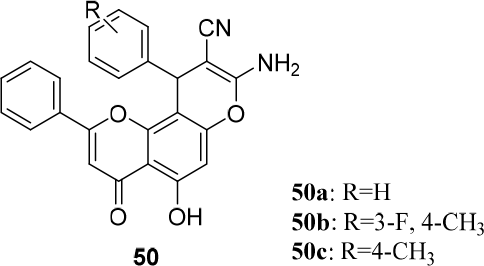
Sergio et al found that the use of ultrasonic (US) irradiation in the synthesis of new chrysin derivatives by a simple and effective methodology utilizing CuI as catalyst gave good to excellent yields (60%-89%).
49
Fluorinated Se-chrysin exhibited better anti-A549 cell activity than its unsubstituted compounds (Table 6). Using an in vitro assay, compound
Inhibitory Activities of Se-Chrysin Derivatives (IC50, μM).


Antibacterial and Antiviral Activity
FabH, proteins from both Gram-positive and Gram-negative bacteria, are highly conserved at the sequence and structural level,
50
and can regulate the fatty acid biosynthesis rate by an initiation pathway. It is reported that chrysin exhibited antibacterial activities as FabH inhibitors.
51
Xin et al synthesized a series of chrysin derivatives
52
that displayed excellent activities greater than the natural parent chrysin, while some were even more potent than the positive drug penicillin (Table 7). Compound
In Vitro Antibacterial Activities of the Target Compounds (minimum inhibitory concentration [MIC]: μg/mL).


Inhibition Zone Diameters (mm) and MIC (mg/mL) of Chrysin Derivatives.

Human cytomegalovirus (HCMV) is present in a majority of the population worldwide and is a ubiquitous viral pathogen.
54
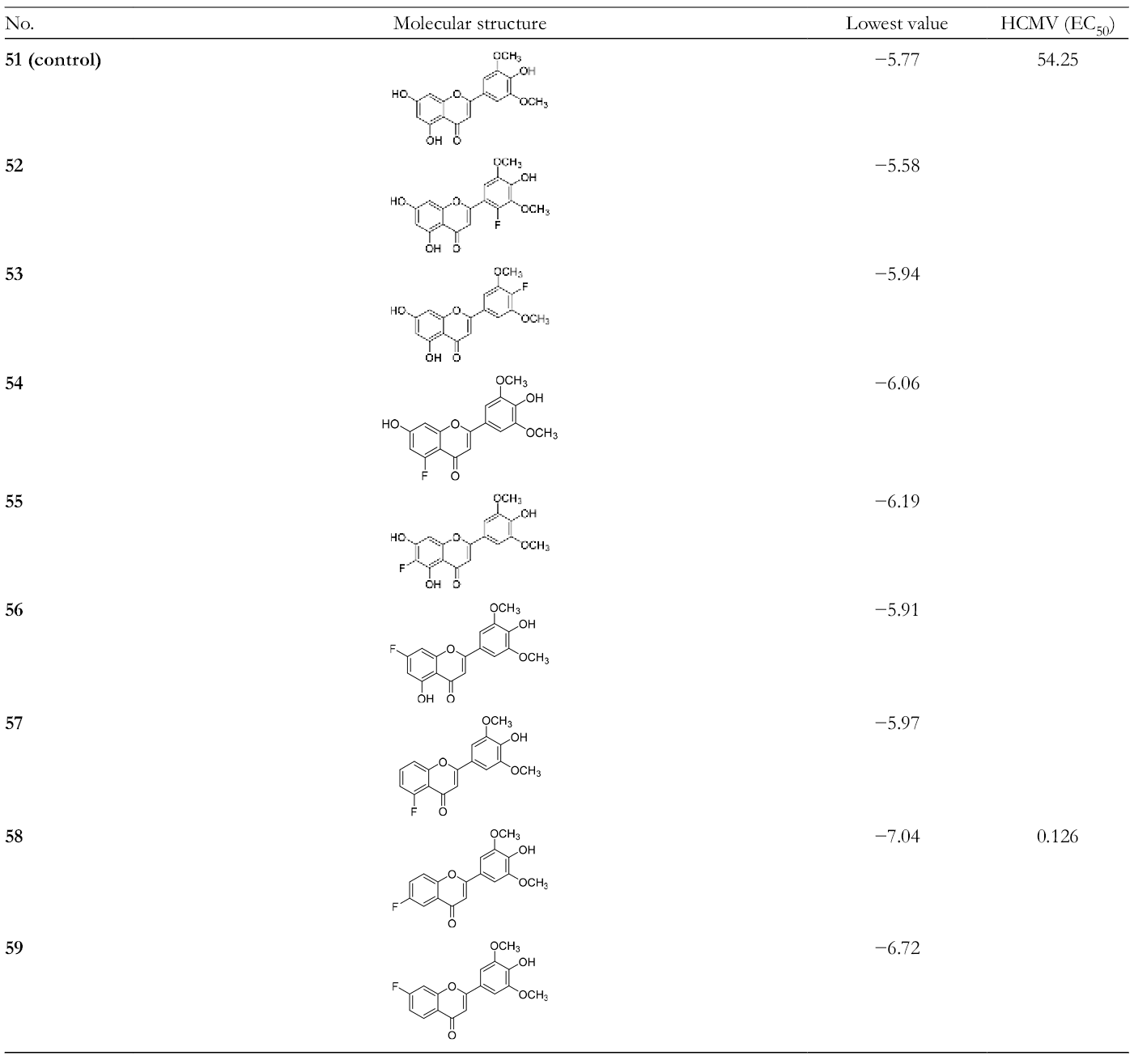
Chrysin was modified by Kazuhiro et al and the binding energy of the modified compound to cyclin-dependent kinase (CDK) 9 was measured
23
(Table 9). By analyzing the binding energy of the compounds to the target proteins, the binding ability of the compounds can be roughly obtained and the ability of the compounds for promoting cancer cells can be inferred and verified by the measurement of EC50 values. The study illustrated that the compounds with fluorine atoms at the 6 and 7 positions of the chrysin derivative A ring had the best effect (compounds
Cyclin-Dependent Kinase 9 Ligand Binding Energies (kcal/mol) and Anti-Human Cytomegalovirus Effect (EC50, nM).
Hypoglycemic Activity
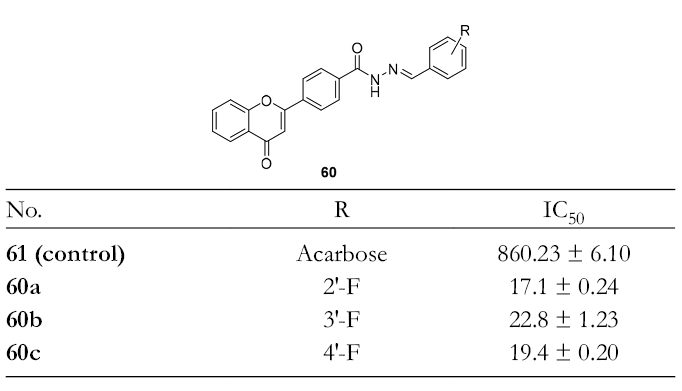
Chrysin hydrazone derivatives were synthesized by Syahrul et al
55
(Table 10). The introduction of fluorine atoms in the flavonoid hydrazone was shown to result in good inhibition of α-glucosidase. An α-glucosidase inhibitor can delay the release of glucose into the blood and regulate blood glucose. Compounds
α-Glucosidase Inhibition Activity of Flavone Hydrazone Derivatives (IC50, μM).

Other Activity
Lv et al synthesized a series of novel chrysin derivatives (Figure 2) and evaluated their immunosuppressive activity in the search for potential immunosuppressive agents.
56
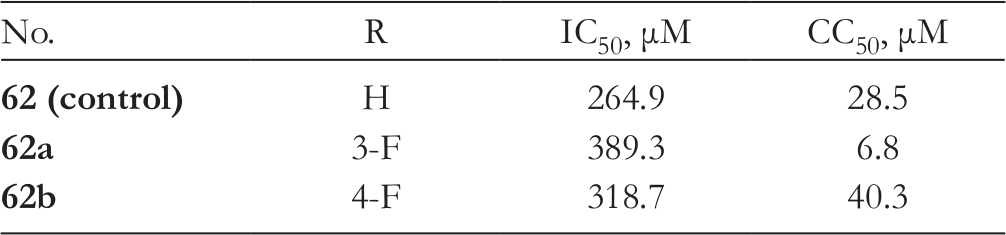
Synthesized compounds with halogen substitutions in the R3-position on the phenyl ring of the salicylic acid derivatives showed higher activity than others, with IC50s ranging from 0.78 to 6.82 μM (Table 11). Specifically, compound
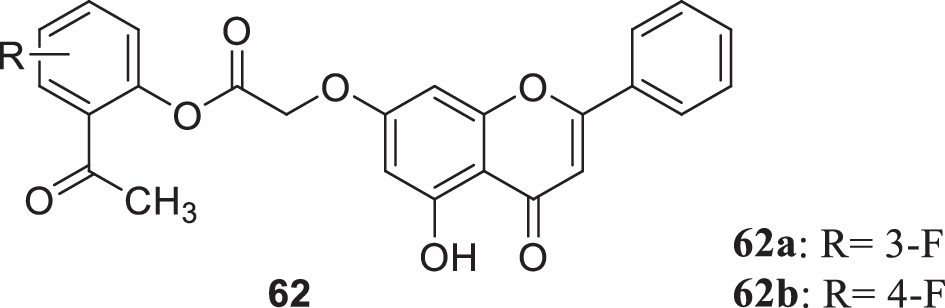
Structure of chrysin derivatives as potential immunosuppressive agents.
In Vitro Cytotoxicity to Lymph Node Cells and Inhibitory Effects of the Synthetic Compounds on Lymph Node Cells Costimulated by CD3/CD28.
Discussion
Among the above compounds,
Conclusion
Fluorinated chrysin showed many pharmacological activities, including anti-A549, HepG2, HCMV, and SGC-7901, which indicated that fluorine-containing compounds had multiple pharmacological properties, thus warranting further study of fluorine modification of chrysin. This review aims to enhance our understanding of the synthesis and pharmacological effects of chrysin fluoride substitution, in addition to the Baker-Venkataraman methodology for the synthesis of chrysin. The known synthetic method for chrysin is focused on increasing the reaction rate and yield by changing the catalyst, while improving the safety and environmental friendliness of the reaction. Most of these studies are focused on Pd/C and metal catalysis. At the same time, it is a common method to accelerate the reaction by US, ultraviolet, and other physical methods. The pharmacological activity and the antitumor and antiproliferative activity of chrysin were improved by the fluorine substitution of its skeleton and branched chain. In particular, branched fluorine substituents and CF3 substitutions on the maternal ring were used, such as for compound
Footnotes
Acknowledgment
Declaration of Conflicting Interests
The author(s) declared no potential conflicts of interest with respect to the research, authorship, and/or publication of this article.
Funding
The author(s) disclosed receipt of the following financial support for the research, authorship, and/or publication of this article: This work was supported by the National Natural Science Foundation (81273537), Hunan Provincial Hengyang Joint Fund (2017JJ4050), Hunan graduate science and technology innovation projects (CX2018B585), the Natural Science Foundation of Hunan Province (2018JJ3426); the young and middle-aged innovative personnel training project of the Hunan Province Cooperative Innovation Center for Molecular Target New Drug Study (0223-0002-0002000-52); the undergraduate research learning and innovative experiment project (2018XJXZ199, 2018XJXZ349); the guiding project of Hengyang Science and Technology Department (S2018F9031015299), Program for Innovative talent team of Hengyang (2017-1), the Key Project of Hengyang Science and Technology Department (2017KJ166).