



Abstract
Background:
Safe and effective self-management of glucose levels requires immediate access to accurate data. We assessed the point accuracy of the Dexcom G7 Continuous Glucose Monitoring System (Dexcom, Inc., San Diego, CA, USA) and FreeStyle Libre 3 (Abbott Diabetes Care, Alameda, CA, USA) sensors in a head-to-head comparison.
Method:
Multicenter, single-arm, prospective, nonsignificant risk evaluation enrolled adults (≥ 18 years) with diagnosed type 1 diabetes (T1D) or type 2 diabetes (T2D). Accuracy was assessed by comparing sensor data to laboratory reference values Yellow Springs Instrument [YSI] and capillary blood glucose values. Outcome measures were differences in mean absolute relative difference (MARD), number and percentage of matched glucose pairs within ±20 mg/dL/±20 of reference values within glucose ranges: < 54, 54 to 69, 70 to 180, 181 to 250, > 250 mg/dL, and combined.
Results:
Data from 55 adults were included in the analysis. Analysis showed significantly lower MARD with the FreeStyle Libre 3 sensor vs the Dexcom G7 sensor (8.9% vs 13.6%, respectively, P < .0001) with a higher percentage of glucose values within ±20 mg/dL/±20 of reference (91.4% vs 78.6%). The MARD values for both continuous glucose monitoring (CGM) sensors were similar during the first 12 hours; however, the FreeStyle Libre 3 MARD was notably lower than the Dexcom G7 MARD during the next 12 hours (10.0% vs 15.1%, respectively, P < .0001) and throughout the study period.
Conclusions:
The FreeStyle Libre 3 sensor was more accurate than the Dexcom G7 sensor in all metrics evaluated throughout the study period. This is the first head-to-head study to our knowledge that compares the flagship products currently in widespread use of the two largest CGM manufacturers.
Introduction
Over the past five years, we have seen an increase in the number of people with diabetes who have adopted continuous glucose monitoring (CGM) as an integral component of their daily self-management regimens.1,2 Among the newest CGM devices are the Dexcom G7 (Dexcom, Inc., San Diego, CA, USA) and FreeStyle Libre 3 (Abbott Diabetes Care, Alameda, CA, USA) CGM systems. Both CGM systems are intended to replace blood glucose (BG) testing for diabetes treatment decisions and provide real-time information about current interstitial glucose levels, detect glucose trends, track glucose patterns, and aid in the detection of episodes of hyperglycemia and hypoglycemia.
Use of CGM metrics has been shown to be superior to glycated hemoglobin (HbA1c) for assessment of therapeutic efficacy. 3 However, because many individuals using CGM are often making critical decisions for insulin adjustments and detection of immediate or impending risk for acute glycemic events, it is important that they know they can rely on the accuracy of their glucose data. 4 Continuous glucose monitoring data have been used to also identify glucotypes to make diagnoses of atypical forms of diabetes. 5 Although both Dexcom and Abbott Diabetes Care have provided accuracy data for their sensors, reported as the mean absolute relative difference (MARD, %),6,7 comparisons between the accuracy of these sensors can be difficult because of differences in the metrics and methodologies used in their evaluations.
We reported findings from a direct, head-to-head comparison of the Dexcom G7 and FreeStyle Libre 3 sensors in a cohort of adults with type 1 diabetes (T1D) and type 2 diabetes (T2D).
Methods
Study Design and Population
This multicenter, single-arm, prospective, nonsignificant risk evaluation investigated the point accuracy of the Dexcom G7 Continuous Glucose Monitoring System (Dexcom, Inc., San Diego, CA, USA) and FreeStyle Libre 3 Continuous Glucose Monitoring System (Abbott Diabetes Care, Alameda, CA, USA). The primary objective was to assess the point accuracy of interstitial glucose obtained by the CGM systems compared with venous BG levels as measured using the Yellow Springs Instrument (YSI 2300 Stat Plus glucose analyzer, YSI, Inc., Yellow Springs, OH, USA) 8 as the laboratory reference in adults with T1D and T2D. Comparisons between interstitial glucose and capillary BG measurements were also conducted, using the FreeStyle Libre 14 Day Flash Glucose Monitoring System Reader with FreeStyle Neo test strips (Abbott Diabetes Care, Alameda, CA, USA), which provides a test strip port for capillary BGs monitoring. All participants were asked to perform a minimum of eight BG per day (fasting, pre-meals and post-meals, and bedtime). The study (Pro00071381) was conducted at three clinical sites and was approved by Advarra institutional review board on May 10, 2023. All participants provided written informed consent.
Inclusion criteria were ≥ 18 years of age; diagnosed with T1D or T2D; currently treated with insulin therapy; willing to allow insertion of an intravenous (IV) catheter to obtain venous blood samples; and able to follow instructions and perform all study tasks. Exclusion criteria were pregnant (confirmed with urine pregnancy test), attempting to conceive, or not able to use birth control; donated blood within 60 days of initiating study tasks; allergic to medical grade adhesive, isopropyl alcohol and/or ethyl alcohol; extensive skin changes or diseases at specified sensor insertion site; concomitant medical condition that could interfere with the study; X-ray, magnetic resonance imaging (MRI), computed tomography (CT), or diathermy appointment scheduled during the study period; or participation in another clinical trial.
Study Devices
The Dexcom G7 Continuous Glucose Monitoring System (Dexcom Inc., San Diego, CA, USA) is a factory-calibrated real-time CGM device indicated for continuously measuring glucose in the interstitial fluid in persons ≥ 2 years of age. The system comprises two main components: the ten-day Dexcom G7 sensor with integrated transmitter and a receiver (either handheld reader or the Dexcom G7 smartphone app). Glucose results are presented to the user via a receiver or a smartphone application. During this study, study participants used the smartphone application to start the sensor and collect sensor glucose data. Two lots of sensors from commercial distribution were used in the study. 9
The FreeStyle Libre 3 Continuous Glucose Monitoring System (Abbott Diabetes Care, Alameda, CA, USA) is a factory-calibrated real-time CGM device indicated for continuously measuring glucose in the interstitial fluid in persons ≥ 4 years of age. The system comprises two main components: the 14-day FreeStyle Libre 3 sensor with integrated transmitter and receiver (either handheld reader or the FreeStyle Libre 3 smartphone app). Glucose results are presented to the user via a receiver or a smartphone application. During this study, participants used the smartphone application to start the sensor and collect sensor glucose data. 10 Two lots of sensors from commercial distribution were used in the study.
The Reader for FreeStyle Libre 14-Day Flash Glucose Monitoring System (Abbott Diabetes Care, Alameda, CA, USA) provides a strip port to allow for capillary BG testing using the FreeStyle Neo test strips. When assessed according to ISO 15197:2013 criteria, all three tested lots showed 97% to 99.5% of results within ±15 mg/dL and ±15% of the comparison measurement results at BG concentrations < 100 and ≥ 100 mg/dL, and 100% of results within the Consensus Error Grid zones A and B. 11
Study Procedures
Overview
The study comprised six clinic visits, including a screening/enrollment visit (V1), sensor application visit (V2), up to three in-clinic visits for YSI analysis of venous BG levels (V3, V4, and V5), and sensor removal/completions visit (V6). All participants wore one FreeStyle Libre 3 sensor and one Dexcom G7 Sensor on the back of the upper arm, following the instructions for use. Sensors were placed on opposite arms whenever possible. Each sensor had a corresponding app on a smartphone that was given to the participant. The Dexcom G7 Continuous Glucose Monitoring System sensor was removed after day 10, while the FreeStyle Libre 3 sensor was removed during visit 6 on day 15. Study participants were asked to perform at least eight capillary BG tests per day (preferably upon waking, before and after each meal, and at bedtime). Participants were instructed to perform BG tests on the fingertips; alternate site testing (AST) was not allowed during this study. The site staff or participant confirmed that each sensor was working properly. Participants were allowed to continue in the study as long as at least one sensor was functioning. Sensors that became dislodged or stopped functioning during home use were not replaced.
V1 (Scheduling Visit): At V1, all participants signed informed consent forms, eligibility was assessed, and staff documented their diabetes history, general medical history, demographic information, and medications. Site staff also discussed participants’ dietary requirements. Staff performed a urine pregnancy test on all women of childbearing potential and documented the test results. The results must be known prior to the first sensor being applied on the participant. Study staff calculated and documented the maximum amount of blood that could be drawn from each participant was expected to be 246 mL. Site staff discussed participant’s normal dietary requirements for meal planning and participants were advised to contact the site immediately if they received prescription treatment for any device-related and/or study-related adverse events. Two thirds of participants were scheduled to attend their V2 on day 1 (group 1), and the remaining one third of participants were scheduled to attend their V2 on (day 1) in the afternoon. Follow-up visits were scheduled (Table 1).
Visit Schedule.
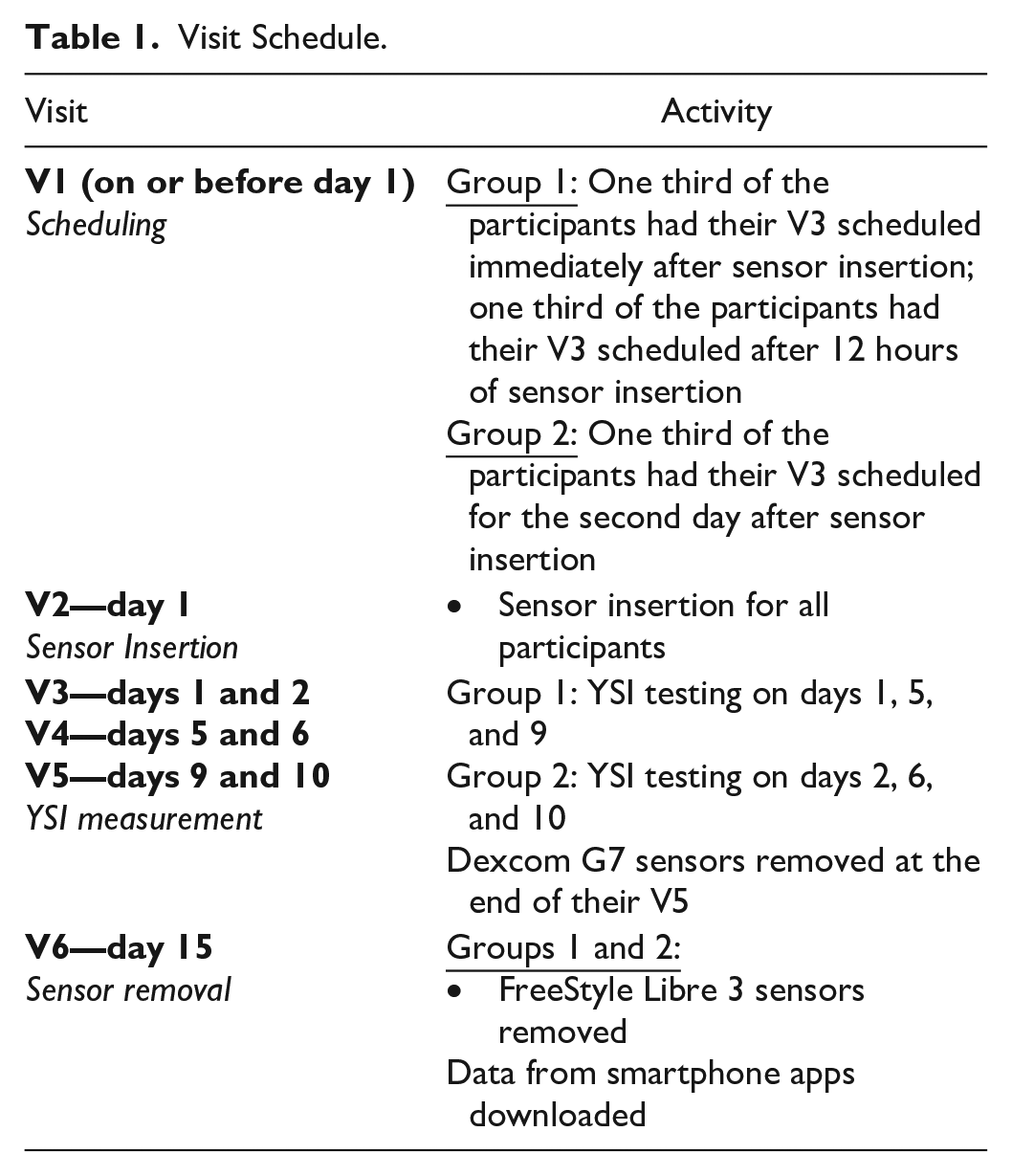
V2 (Day 1): At the sensor insertion visit (V2), all participants were provided a smartphone containing the FreeStyle Libre 3 app and Dexcom G7 app. Participants applied and activated their sensors using the corresponding app. Both sensors were factory-calibrated, and manual calibration of the Dexcom G7 sensor was not allowed. Site staff provided training in using all study devices and in CGM device alert management. Participants received instructions on how to prepare for the V3, V4, and V5 (eg, hydration, wearing comfortable clothing, etc).
Participants were released from clinic once both sensors were confirmed to be working properly.
V3, V4, V5 (days 1-10): All YSI sessions (up to eight hours per session) were scheduled for the first ten days of sensor wear. After confirming that both sensors were functioning properly, staff performed IV blood draws to obtain blood plasma samples for YSI testing. Blood samples (0.5 mL per sample) were collected every 15 minutes and centrifuged for plasma glucose analysis on YSI. The YSI devices were calibrated according to manufacturer’s instructions at the beginning of each day during which in-clinic testing was performed with four YSI Standards (50, 100, 180, and 400 mg/dL). YSI values were paired with sensor values by choosing the sensor value that was closest in time to the YSI blood draw, but no more than five minutes before or after the YSI blood draw. Each blood draw sample was assayed on the YSI in duplicate and the average of the readings used. Capillary BG values were paired with sensor values by choosing the sensor value that was closest in time to the BG test, but no more than five minutes before or after the BG test. Sampling was discontinued if/when the maximum amount of blood allowed for each participant was reached as calculated during V2. Blood samples were not manipulated to achieve minimum glucose data points within the hyperglycemic and hypoglycemic levels to evaluate the performance under free-living conditions. Participants were offered at least two meals during each visit according to their current dietary requirements. Participants were also provided drinks and snacks throughout each visit. Participants were treated for low glucose any time a glucose concentration fell below 55 mg/dL or when the participant had been < 70 mg/dL for more than one hour according to standard site procedures. Participants were treated for high glucose any time glucose had been > 400 mg/dL for more than 30 minutes according to standard site procedures. After the sampling was completed, staff removed the IV line and uploaded the CGM data from the apps to a study computer. At the completion of the V5 visit, staff removed the Dexcom G7 sensor and participants were released from clinic. Participants were instructed to continue with the capillary BG testing until V6, if there was an active FreeStyle Libre 3 sensor.
V6 (day 15): At the follow-up visit (V6), staff assessed any application site signs or symptoms, medication changes, problems with the devices, or adverse events that occurred since the participant’s last visit. Staff removed the FreeStyle Libre 3 sensor, uploaded the CGM data from the smartphones, self-monitoring of blood glucose monitoring (SMBG) data from the reader, performed an application site exam, and collected all additional device components.
Outcome Measures
Assessment of point accuracy was performed using results obtained from the Dexcom G7 sensor and FreeStyle Libre 3 sensor and compared with laboratory reference values (YSI) and capillary BG reference. Outcome measures were: (1) the number and percentage of sensor glucose values within ±20 mg/dL of reference glucose values < 70 mg/dL and ±20% of reference glucose values ≥ 70 mg/dL and (2) the MARD between sensor glucose values and laboratory reference values within the following glucose ranges: < 54, 54 to 69, 70 to 180, 181 to 250, > 250 mg/dL, and combined.
Statistical Analysis
Sample size was calculated based on the following assumptions: the primary endpoint for the study was to evaluate the proportion of paired values within 20 mg/dL of glucose reference (YSI) for values < 70 mg/dL and within 20% of glucose reference for values ≥ 70 mg/dL; and the parameter of interest was the mean of the sensor based percentage of paired values within 20 mg/dL of glucose reference for values < 70 mg/dL and within 20% of glucose reference for values ≥ 70 mg/dL. Based on the known standard deviation of FreeStyle Libre 3 performance from previous studies, it was determined that a 4% difference would be statistically different with an overall power of 80%. A two-sided t test was performed to obtain a 95% confidence interval for the mean percentage of paired points within 20 mg/dL of glucose reference for values < 70 mg/dL and within 20% of glucose reference for values ≥ 70 mg/dL. It was determined that a minimum sample size of 42 participants was required to detect a 4.0% difference in the mean percentage of paired points within ±20 mg/dL of glucose reference (venous YSI) for values < 70 mg/dL and within 20% of glucose reference for values ≥ 70 mg/dL, with a significance level of 5.0% (one-sided test) and a power of 80%. The number and percent of sensor glucose readings within the intervals ±15, ±20, and ±40 mg/dL of glucose reference for glucose values < 70 mg/dL and within ±15, ±20, and ±40% of glucose reference for glucose values ≥ 70 mg/dL were calculated. The percentage of paired values (CGM vs YSI and YSI vs CGM) in each glucose reference range was calculated and presented for each glucose range. For each matched pair of readings, the MARD was computed. The participants enrolled in the study were statistically characterized for baseline demographic and clinical characteristics using descriptive statistics (mean, standard deviation, etc) for continuous factors, such as age and duration of diabetes, and by frequency and percentage distributions for categorical factors, such as sex. The statistical description of background characteristics include: type of diabetes, insulin therapy, age, gender, weight, height, body mass index, ethnicity, HbA1c, and duration of diabetes. All analyses were conducted using SAS® version 9.2 or later and all data are presented in tabular formats. The surveillance error grid (SEG) analysis 12 and continuous glucose deviation interval and variability analysis (CG-DIVA) 13 were conducted as a post hoc analysis. The statistical analysis procedures used in this study adhered to Good Clinical Practices/International Conference on Harmonization Guidelines. 14
Results
Fifty-six adults with T1D (n = 33) and T2D (n = 23) met the study inclusion criteria and were included in the analysis. The demographic characteristics of the participants are presented in Table 2.
Demographic Characteristics.
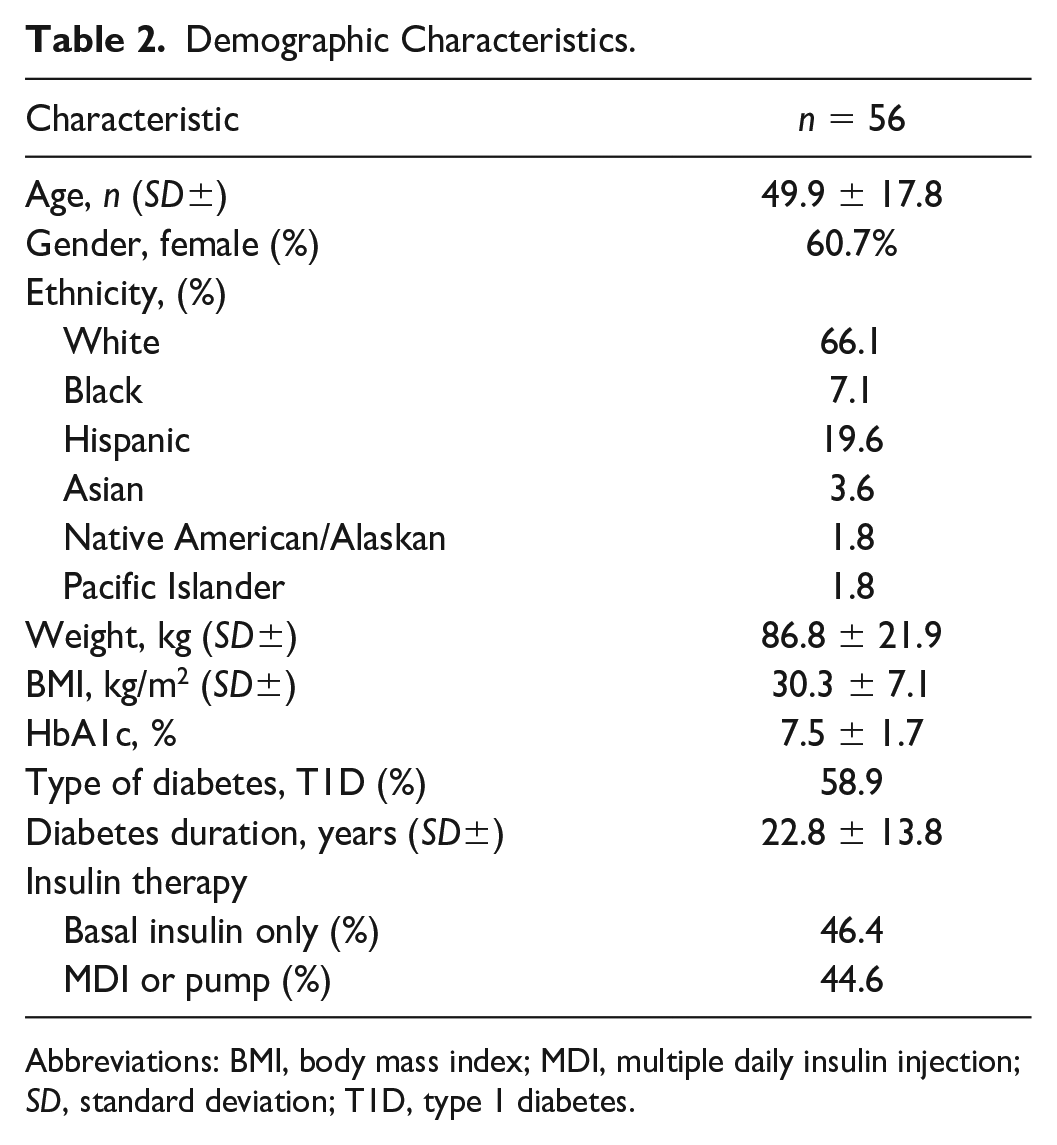
Abbreviations: BMI, body mass index; MDI, multiple daily insulin injection; SD, standard deviation; T1D, type 1 diabetes.
From 56 study participants, data were available for 55 participants for analysis of accuracy compared with YSI reference and for 39 participants for analysis of accuracy compared with BG reference data. One of the study participants had a device failure before the first in-clinic visit, and therefore, did not generate any paired sensor-YSI reference results. No participant was discontinued because of reaching the limit of amount of blood can be drawn from them. The device failures observed during the study are reported in Table 3.
Device Failures That Resulted in Loss of Data for the Two Systems.
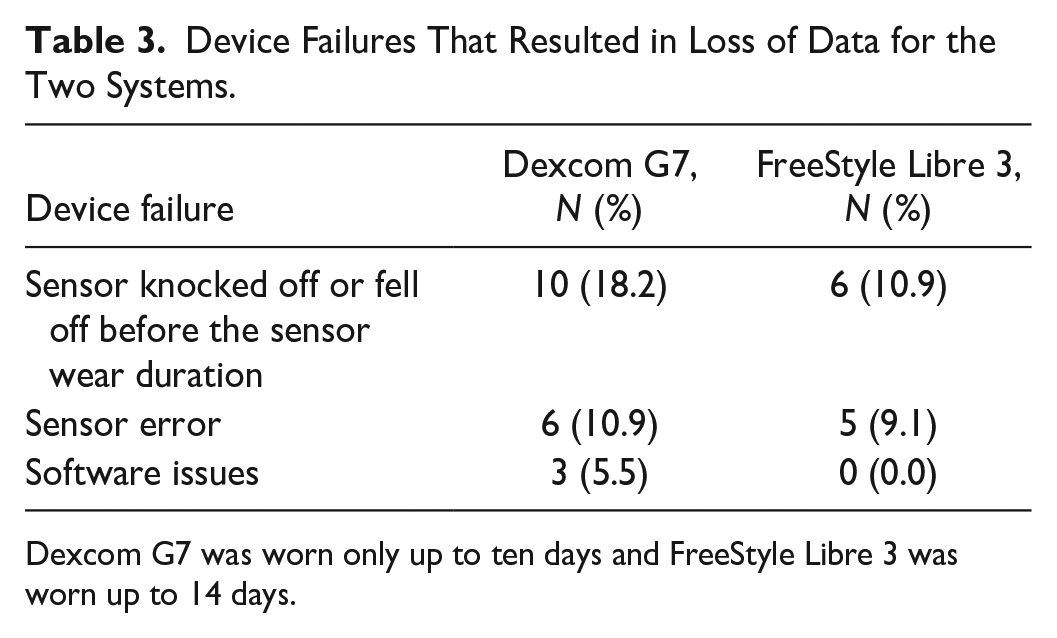
Dexcom G7 was worn only up to ten days and FreeStyle Libre 3 was worn up to 14 days.
We had four subjects with IV failures—one subject missed one full visit and the other three missed three to eight samples. During the in-clinic days, we had four participants with IV failures, three participants missed three to eight samples and one participant missed one full visit. This resulted in 3640 paired sensor and YSI data for Dexcom G7 and 4020 paired sensor and YSI data for FreeStyle Libre 3. Capillary measurements were performed up to 14 days study participation, resulting in 1738 (Dexcom G7) and 3102 (FreeStyle Libre 3) paired Sensor and BG data points. There were a higher number of paired capillary BG values for the FreeStyle Libre 3 because of the longer senor wear duration. Some differences in paired data points were also due to availability of pairable sensor data from the device uploads.
Analysis showed notably lower agreement with reference glucose values with the Dexcom G7 sensor readings compared with the FreeStyle Libre 3 sensor readings at the specified ranges (Table 4).
Overall Agreement Against YSI reference.

Abbreviations: G7, Dexcom G7; FSL3, FreeStyle Libre 3.
The average glucose was 160 mg/dL (minimum 50 mg/dL and maximum 417 mg/dL) and the distribution of the reference glucose at different concentration bins indicate that the Dexcom G7 MARD values and sensor agreement with reference glucose values were notably worse at all glucose levels compared with FreeStyle Libre 3 glucose measurements (Table 5).
Accuracy Performance Within YSI Glucose Ranges Compared with YSI Reference.
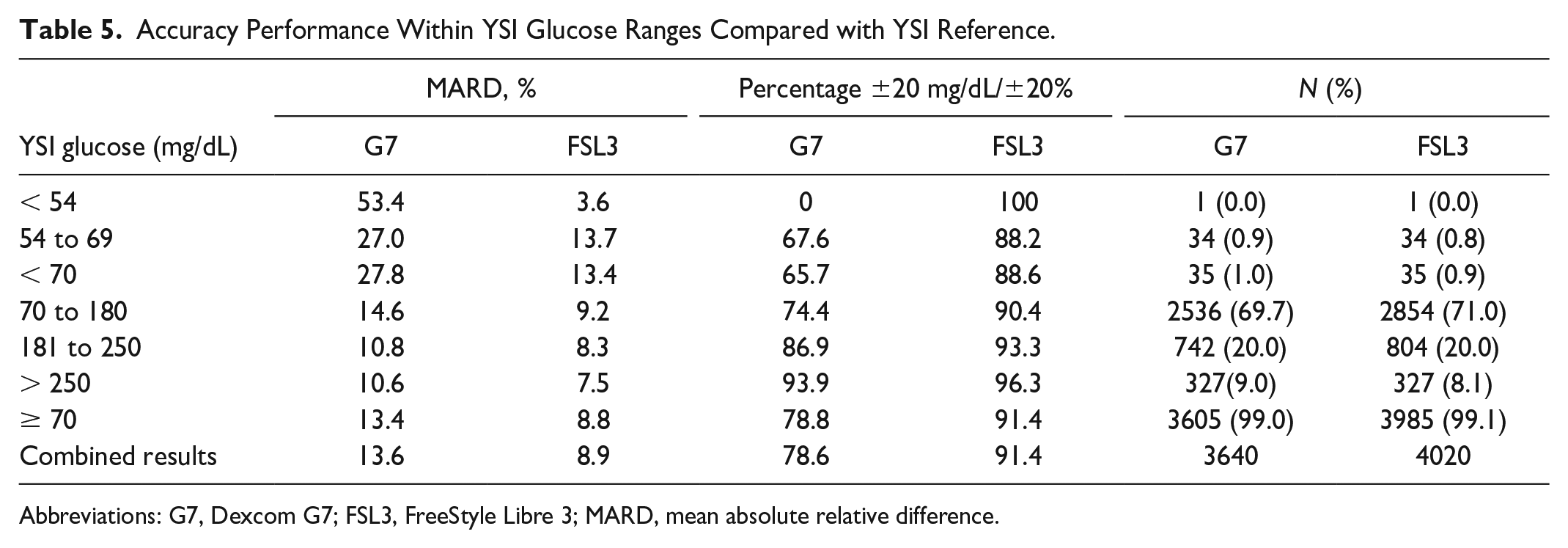
Abbreviations: G7, Dexcom G7; FSL3, FreeStyle Libre 3; MARD, mean absolute relative difference.
Notable differences in mean bias and MARD values were also observed. The mean bias for the Dexcom G7 was consistently higher than the reference (9.4%) compared with FreeStyle Libre 3 (0.6%), consequently, the MARD numbers are 13.6% and 8.9%, respectively, for the two systems (P < .0001 for both metrics).
A histogram of the distribution of MARD for the two systems is presented in Figure 1, where each bin is represented by a vertical bar to indicate the number of data points within that bin. The MARD for FreeStyle Libre 3 has a narrower distribution compared with the Dexcom G7.
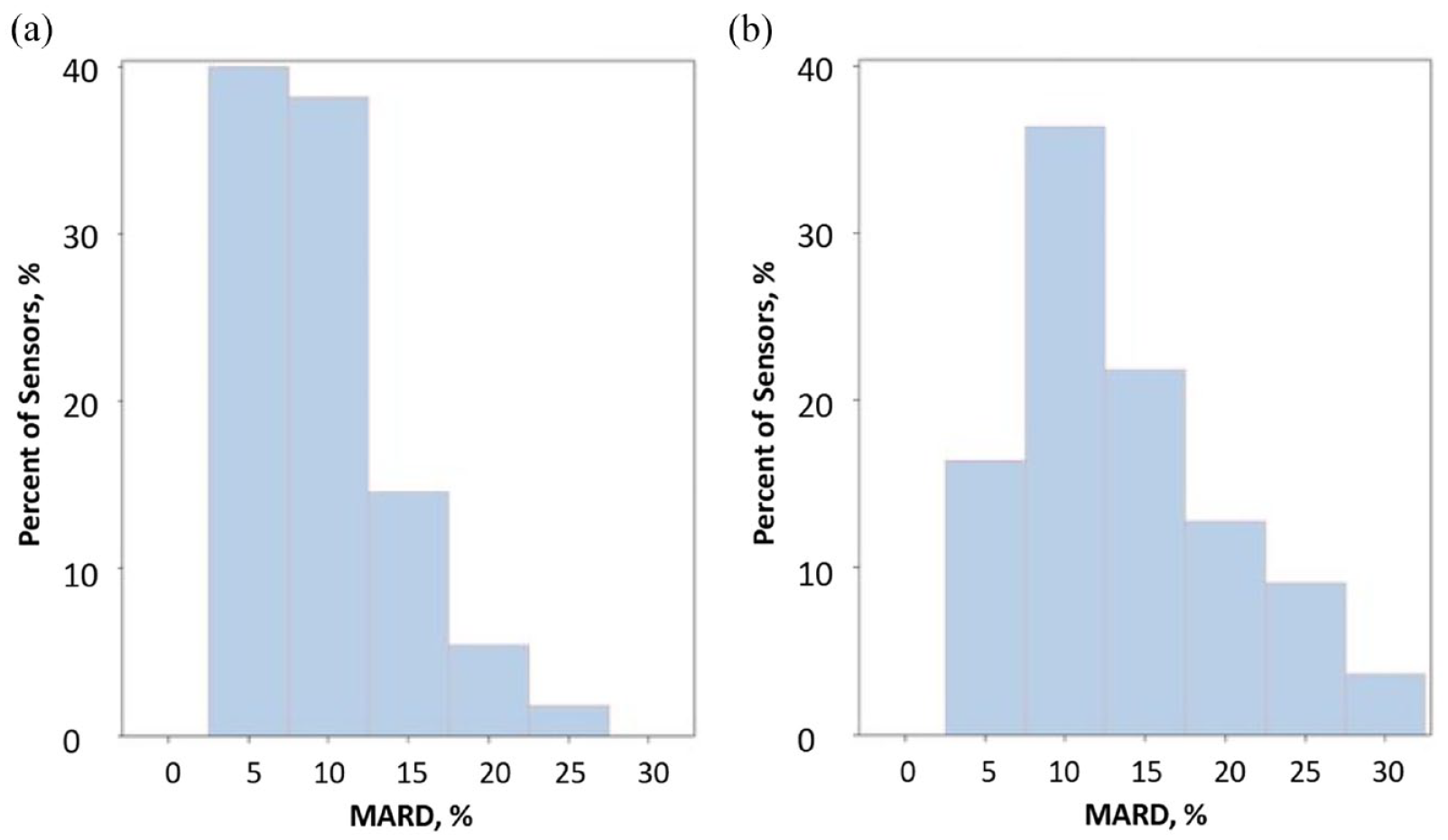
Distribution of the MARD by sensor for (a) FreeStyle Libre 3 and (b) Dexcom G7 systems.
This was further illustrated by CG-DIVA analyses presented in Table 6. 13
Numerical Results of the CG-DIVA for the Two CGM Systems.
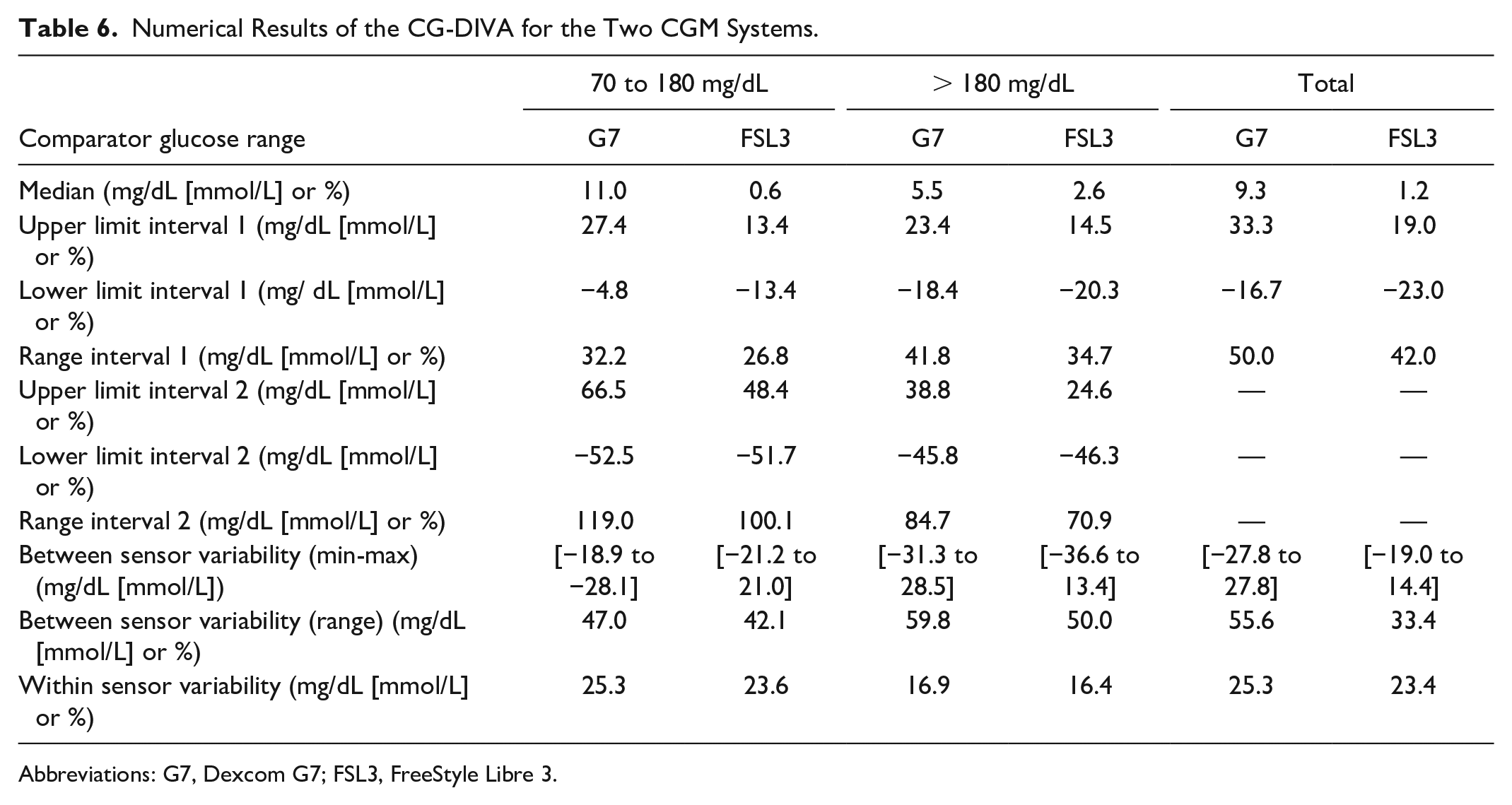
Abbreviations: G7, Dexcom G7; FSL3, FreeStyle Libre 3.
Since the data are limited in the < 70 mg/dL as the study was not powered to evaluate the integrated continuous glucose monitoring (iCGM) special controls, analysis for < 70 mg/dL is not presented. Dexcom G7 results are consistently higher in the 70 to 180 mg/dL range.
Similar results were observed comparing the Dexcom G7 to capillary BG (Table 7). The average glucose was 147 mg/dL (minimum 25 mg/dL and maximum 406 mg/dL) and the distribution of the reference glucose at different concentration bins indicates that the Dexcom G7 MARD values and sensor agreement with reference glucose values were notably worse at all glucose levels compared with FreeStyle Libre 3 glucose measurements.
Accuracy Performance Within Glucose Ranges Compared with Capillary Glucose Reference.
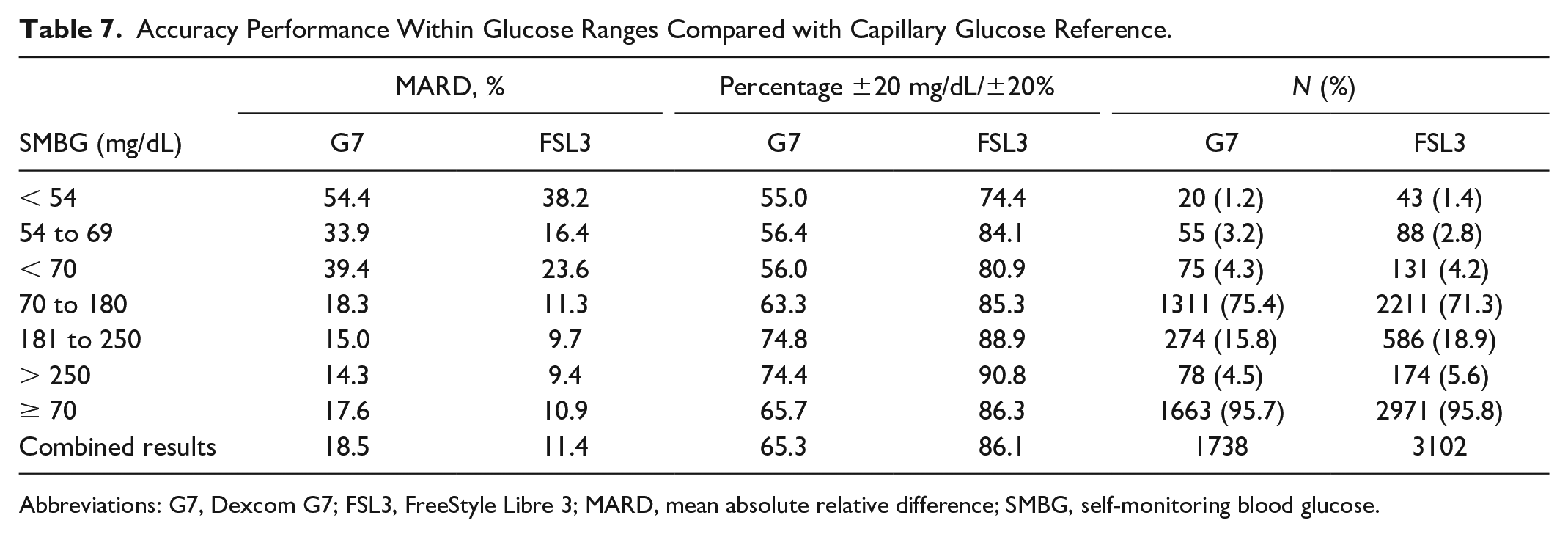
Abbreviations: G7, Dexcom G7; FSL3, FreeStyle Libre 3; MARD, mean absolute relative difference; SMBG, self-monitoring blood glucose.
The mean bias for the Dexcom G7 was significantly higher than the reference compared with FreeStyle Libre 3 (P < .0001), consequently, the MARD numbers are significantly higher for the Dexcom G7 sensor compared with the FreeStyle Libre 3 sensor (P < .0001) (Table 8).
Overall Agreement against Capillary Blood Glucose Reference.

Abbreviations: G7, Dexcom G7; FSL3, FreeStyle Libre 3; MARD, mean absolute relative difference.
The FreeStyle Libre 3 MARD was consistently lower with higher percentages of glucose values within ±20 mg/dL/±20% than the Dexcom G7 values on all days measured (Table 9).
Sensor Accuracy by Wear Day Compared with YSI Reference.
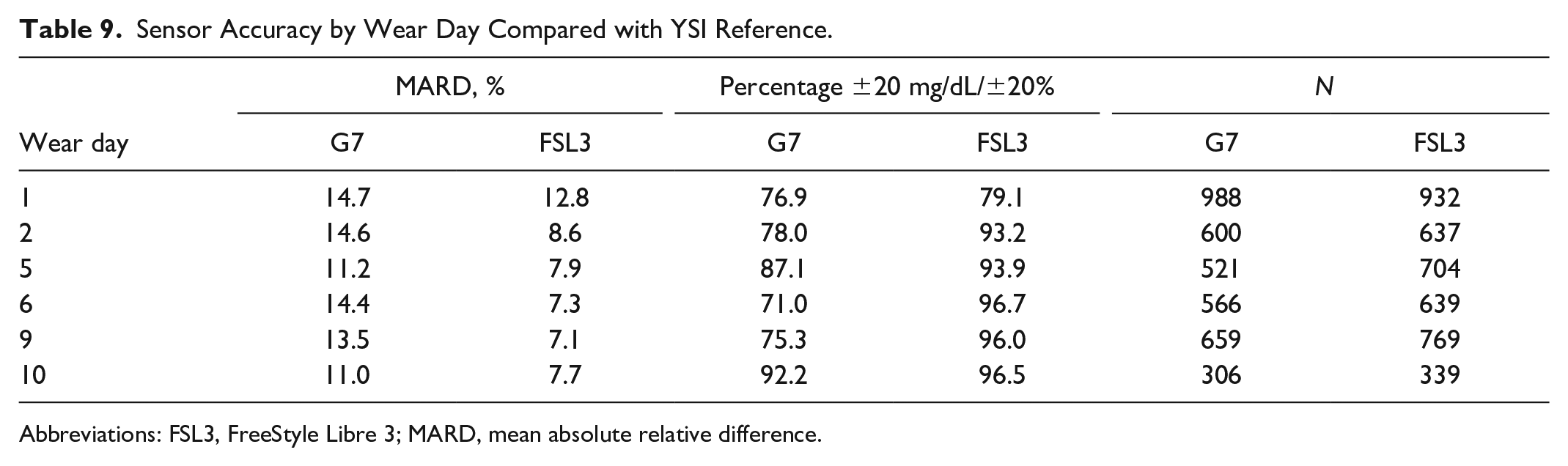
Abbreviations: FSL3, FreeStyle Libre 3; MARD, mean absolute relative difference.
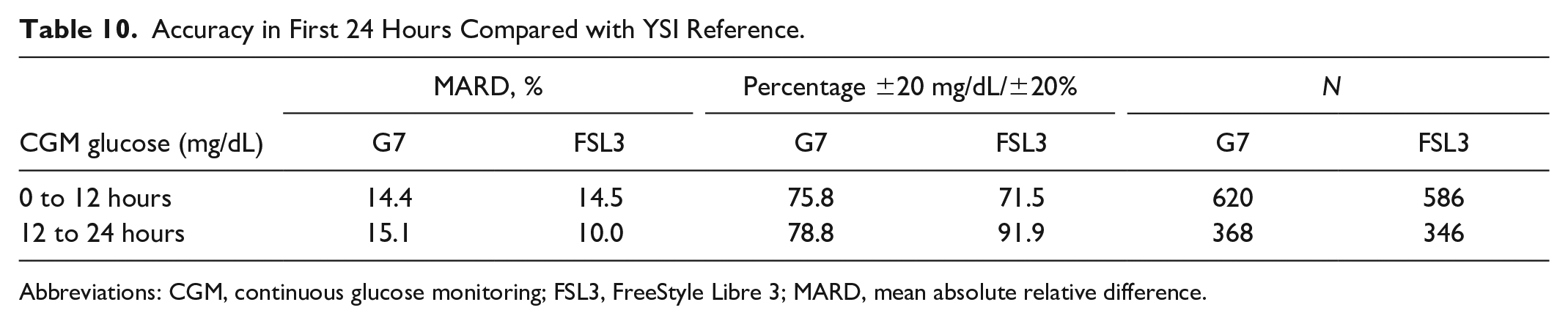
The overall MARD values for both CGM systems were similar during the first 12 hours of sensor wear; however, the Dexcom G7 sensor MARD was significantly higher (P < .0001) than the FreeStyle Libre 3 sensor MARD during the next 12 hours (Table 10).
Accuracy in First 24 Hours Compared with YSI Reference.
Abbreviations: CGM, continuous glucose monitoring; FSL3, FreeStyle Libre 3; MARD, mean absolute relative difference.
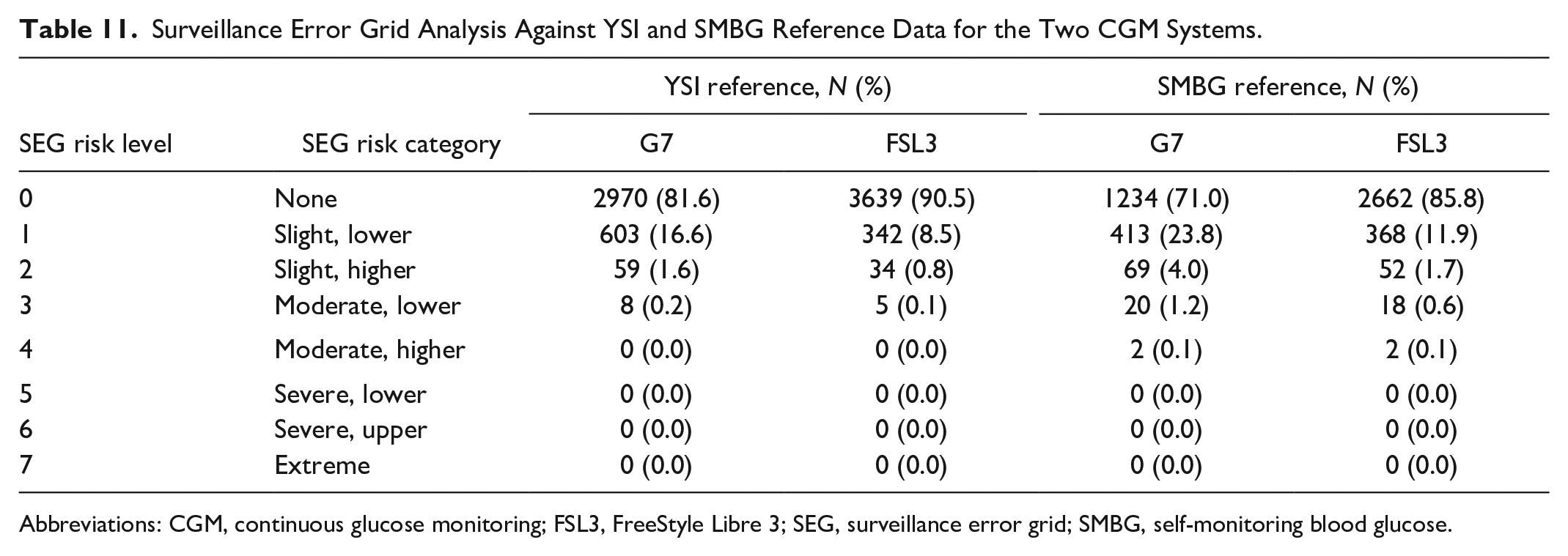
Surveillance error grid analysis of the data for the two systems against YSI and SMBG reference are presented in Table 11. FreeStyle Libre 3 sensor had the higher percentage of results in the no risk level than the Dexcom G7 sensor when compared with YSI reference and the SMBG reference. The proportion of the values in the SEG risk level of 1 or higher for FreeStyle Libre 3 sensor is approximately 50% of that Dexcom G7 sensor with both reference methods.
Surveillance Error Grid Analysis Against YSI and SMBG Reference Data for the Two CGM Systems.
Abbreviations: CGM, continuous glucose monitoring; FSL3, FreeStyle Libre 3; SEG, surveillance error grid; SMBG, self-monitoring blood glucose.
No serious adverse events were noted during the course of the study. Two cases of mild erythema, one case of moderate bleeding, one case of mild bruising, and one case of mild pain were reported with FreeStyle Libre 3 sensor. There was one case of bruising reported that was possibly related to the IV draw.
Discussion
In this multicenter, single arm, prospective evaluation, we investigated the point accuracy of the Dexcom G7 sensor and FreeStyle Libre 3 sensor in the measurement of interstitial glucose levels compared with venous BG values assessed by standard laboratory reference methodology. We observed that measurement of interstitial glucose levels with the Dexcom G7 sensor, compared with the FreeStyle Libre 3 sensor, resulted in notably high bias, higher MARD, and lower agreement with laboratory reference values. These differences were observed on all days of YSI measurement. Although the accuracy of both sensors was similar during the first 12 hours of measurement, the Dexcom G7 MARD was significantly higher than the MARD observed with the FreeStyle Libre 3 sensor during the rest of the wear duration.
We also observed higher bias, higher MARD and lower agreement with Dexcom G7 sensors compared with FreeStyle Libre 3 sensors when compared with capillary BG reference. The capillary BG measurements were done by the participants in the home setting, and therefore, this part of the study represented the real-world situation where the patient compares their CGM glucose to the BG meter results. Because of the variability in the BG meter results compared with the YSI reference, the performance is expected to be worse.
Our findings are consistent with an earlier accuracy evaluation of the FreeStyle Libre 3 sensor in children and adults. 15 Results from this 14-day study showed that 93.2% of sensor results were within ±20% of the YSI reference value for glucose levels ≥ 70 mg/dL and ±20 mg/dL for YSI glucose levels < 70 mg/dL. The overall MARD was 7.9% for sensor results vs laboratory YSI reference. Conversely, the MARD value for the Dexcom G7 sensor observed in our analysis (13.6%) was higher than observed in a recent study by Garg et al, who reported a MARD of 8.2%. 16
However, discrepancies in reported accuracy statistics are to be expected because of the lack of standardized protocols and methodologies for assessing and reporting CGM accuracy and performance. 17 Specific differences between studies include the parameters used to assess accuracy (eg, glucose ranges, varying rates of changing glucose, day of sensor wear), differences in the ages of the populations studied (eg, adult vs pediatric), 18 whether the study participants are exercising, 19 or whether they have underlying diseases that can affect the expected range of glycemia. 20 Moreover, the distribution of glucose concentrations of data points within various ranges affects the MARD of the entire cohort. As reported by Rodbard, large errors in the hypoglycemic ranges can significantly impact MARD estimates because of the strikingly nonlinear relationship with glucose level as well as the limited number of paired values in the hypoglycemic range observed in many evaluations. 21 The study reported here is closely aligned with the recommendations by Freckmann et al, a multicenter study using insulin-using study participants. 22 This study included multiple on-market sensor lots and used a comparator with metrological traceability across multiple sites to evaluate the performance of the two systems under free-living conditions both at home and in-clinic setting, without any glucose manipulations.
A key strength of our study is potential impact on current CGM users. Although other head-to-head comparisons of CGM accuracy have been published previously,22,23 this is the first study to our knowledge that compares the flagship products from the two largest CGM manufacturers that are currently in widespread use worldwide.
Limitations
There are notable limitations to our study. First, the study was not registered with clinicaltrials.gov. Second, our decision not to manipulate samples to achieve the minimum number of paired values in the hypoglycemic and hyperglycemic ranges is a limitation. As reported here, our assessment of accuracy in the hypoglycemic ranges was based on a very small number of paired glucose values; < 1.0% of the glucose values assessed were < 70 mg/dL. This is notably lower than the percentage of paired values in the hypoglycemic range reported in previous studies, which have ranged from 5.8% 24 to 16.8%. 25 Although our protocol specified that participants who experienced low glucose (< 55 or < 70 mg/dL for one hour) were treated for safety reasons, having such small numbers of low glucose values makes it difficult to assess the true accuracy and performance. Third, we did not investigate the accuracy of either sensor during times of rapidly changing glucose, in which interstitial glucose levels may fail to keep pace with rapidly rising or falling BG levels, often referred to as sensor lag. Although the lag between BG and interstitial glucose levels can be confusing for patients and may cause them to distrust their CGM values, this issue can be mitigated through education when CGM is initiated. Finally, our study was industry funded. However, this study evaluated the performance of the two sensors under identical conditions, and therefore, does not pose a bias to study results.
Conclusions
Given the growing number of individuals with diabetes who have adopted CGM to guide their daily diabetes self-management, it is critical that the glucose data they depend on for decision-making accurately reflects their current glucose levels. Our findings showed distinct differences between the sensors, demonstrating greater accuracy with the FreeStyle Libre 3 sensor throughout all days of sensor wear in all glycemic ranges.
Footnotes
Acknowledgements
The authors thank all the patients and study staff for their participation and support in the study. The authors also thank Kristin Deines and Hanqing Liu (Abbott Diabetes Care) for their statistical support and Christopher G Parkin, MS, for technical writing support.
Abbreviations
AE, adverse event; BG, blood glucose; CGM, continuous glucose monitoring; MARD, mean absolute relative difference; SAE, serious adverse event; SMBG, self-monitoring of blood glucose; T1D, type 1 diabetes; T2D, type 2 diabetes; UADER, unanticipated adverse device effect report.
Declaration of Conflicting Interests
The author(s) declared the following potential conflicts of interest with respect to the research, authorship, and/or publication of this article: KH is an employee of Eastside Research Associates. MK is an employee of Diabetes & Glandular Disease Clinic. HT in an employee of Texas Diabetes and Endocrinology.
Funding
The author(s) disclosed receipt of the following financial support for the research, authorship, and/or publication of this article: Abbott Diabetes Care provided funding for the study. The study was designed by Abbott Diabetes Care and performed all statistical analyses and data interpretation. Christopher Parkin, MS, provided editorial support in writing and formatting the manuscript. He received consulting fees from Abbott Diabetes Care for his services. Each investigator was responsible for conducting the study at the sites according to the protocol and data collection. All authors contributed to the development of the manuscript and take responsibility for the accuracy of the data reported.