



Abstract
Background:
Little is little known about how people with diabetes experience advancing digitization and new technologies in diabetes.
Research question:
What are the attitudes of people with diabetes (or, in the case of children with diabetes, their parents) toward digitization and advancing technology in diabetology? What significant advantages and disadvantages do they see, and how do they assess current developments of digitization in diabetology (eg, hybrid closed-loop systems, do-It-Yourself (DIY) closed-loop systems, data protection, and data donation)?
Material and method:
3,427 people with diabetes (47.7% female, 65.6% type 1 diabetes (T1D), 25.5% type 2 diabetes (T2D), 8.1% parents of children with diabetes; 0.8% other type of diabetes, age 49.2 ± 19.3 years) were interviewed with an online survey.
Results:
Overall, survey participants had a very positive attitude toward digitization (82.6%) and considered the potential for optimizing diabetology through digitization to be very high (78.8%). The highest rated advantages of digitization were “greater personal responsibility and self-determination in therapy” (80.0%), “better quality of treatment” (80.0%), and “better communication with the doctor/diabetes team” (77.3%), while the highest rated disadvantages were the “error-proneness of digital applications” (35.9%), the “risk of misuse of patient data” (32.3%) and the “fear that digitization will replace the doctor in many cases” (31.1%). The possibility of evaluating and analyzing glucose data by means of software, and AID systems, and the possibility of improving the interoperability of the various applications are currently rated as the most significant topics.
Conclusions:
The vast majority of people with diabetes are very positive about new technologies in diabetology and expect that it will improve and simplify their diabetes therapy and reduce the burdens associated with diabetes. In particular, people with type 1 diabetes have high expectations for AID systems, viewing them as a kind of “technical cure” for their diabetes.
Introduction
Diabetology is as a very data-focused discipline—often referred to as “DDDD (diabetes-data-driven-disease).” Indeed, an increasing number of digital applications and new technologies are entering the market. To date, however, limited knowledge is available on how people with diabetes experience this technological and digital change in diabetology. In light of that research gap, this study present results from a survey of people with diabetes—or, in the case of children with type 1 diabetes, their parents. With this survey, it was possible to investigate the attitudes, desires and barriers relating digitalization in diabetes among people with diabetes in Germany.
Digitization is increasingly taking hold of the healthcare system. Patients obtain information on the Internet, use wearables and apps to collect and evaluate health data, and are increasingly using new digitally controlled technologies. Studies on patients’ attitudes toward digitization in healthcare show a general positivity and an expectation for new digital applications. For example, software provider samedi recently commissioned an online survey of 1009 German SHI-insured patients???? Definition! between the ages of 18 and more than 70. The survey found that patients are very open to the possibilities of digitization and would be willing to use digital offerings to a high degree: 73% would book appointments online if doing so were possible. Reminders of appointments or checkups by e-mail or text message would be used by 60%, and e-prescriptions by 58%. On the other hand, 65% of respondents were afraid of data misuse and 50% feared becoming a “transparent patient”. 1 Two recent Bitkom surveys from 2020 showed that the majority of the population would like to see faster development in the provision of digital health applications. Sixty percent even think that Germany is lagging behind other countries in the pace of digitization in healthcare. 2 In the recently published report “Digitization of the healthcare market,” the authors also suggest that the disruption of the healthcare system is largely driven by patients, who view their digitally influenced behavior as the norm and thus also demand it in the healthcare system. 3
What Do People With Diabetes Think About Digitalization and New Technologies?
New technologies and progressive digitization are also becoming increasingly important in the treatment of diabetes. In particular, the technology of continuous glucose monitoring (CGM) and possibilities for the digital evaluation of glucose profiles have permanently changed the treatment of diabetes in recent years. Meanwhile, new diabetes technologies and digital applications represent a mainstay of diabetes therapy. 4 However, it is surprising that there is very little evidence to date on the attitudes of people with diabetes toward this new trend in diabetology. After all, patients are the users of these new technologies, so their attitudes, assessments, needs, and desires are of central importance. On the one hand, the rapid spread of CGM suggests that this method meets patients’ needs for painless glucose measurement, continuous feedback of current glucose levels, warning of low or elevated glucose levels, and self-determined analysis of glucose history. On the other hand, numerous studies show that despite the use of new technologies in clinical practice, glycemic control and other therapy outcomes change positively only to a very small extent - mainly because of the patients’ handling of these therapy options.5,6
Numerous articles have considered the psychological factors of diabetes technology,7-9 the so-called “human factors” related to digitization and new technologies,10,11 the experience of patients with regard to concrete digital applications,12,13 and the willingness to engage with new technologies.14,15 However, a literature search for keywords such as “diabetes technology,” “patient attitude” and “patient perceptions” does not yield many articles. The present study therefore addresses this research gap by exploring how patients view digitization in diabetes. 16
Research Question
This study aims to provide answers to the following questions:
– What are the attitudes of people with diabetes toward digitalization and advancing technologization in diabetology?
– What significant advantages and disadvantages do the respondents see regarding digital applications and diabetes technologies?
– Which topics of digitalization and technologization do people with diabetes consider most significant?
– How do patients use digital offers and modern technologies?
– How do the respondents assess the further development of digital and technological applications in the field of diabetes over the next 5 years?
– What is the assessment regarding of current developments in diabetology (eg, AID systems, self-built closed-loop systems (DIY), apps, telemedicine, data protection, and data donation)?
Methodology
This online survey of people with diabetes on the status of digitalization and technologization was conducted from August 15 to October 15, 2019. It consisted of 44 questions and was led by the Research Institute of the Diabetes Academy Bad Mergentheim (FIDAM) using the SurveyMonkey® survey platform. The survey was created in close collaboration with the “zukunftsboard digitalisierung” (Future Board on Digitalization) and targeted adults with type 1 or type 2 diabetes as well as parents of children with diabetes who answered some questions (eg, diabetes duration, HbA1c) in relation to their children. To ensure that all participants had enough knowledge to answer the questions, the specific topics started with short explanations (eg, what are AID-/closed-loop systems?). People with diabetes were invited to participate in the survey via the Diabetes Journal; Kirchheim Verlag’s omnichannel offerings (eg, Blood Sugar Lounge), diabetesDE - Deutsche Diabetes-Hilfe; Deutsche Diabetes-Hilfe - Menschen mit Diabetes (DDH-M); Diabetes Ratgeber; press releases; and social media activities (eg, diabetes blogs, Facebook, Twitter).
The following domains were part of the survey:
Demographic data (eg, diabetes type, usage of new technologies, treatment of diabetes)
Attitude toward digitalization, respectively potential of digitalization for diabetology, on a visual analog scale from 0 to 100 (0 = negative, resp. small potential; 100 = positive, strong potential; categorization cut-offs at 40 and 60)
Perceived advantages and disadvantages of new technologies and digitalization on a 5-point Likert scale (1 = no advantage/no disadvantage; 5 = great advantage/great disadvantage; the proportion of participants rating 4 or 5 was calculated)
The relevance and importance of various topics of digitalization in diabetology: participants ranked 10 key areas according to subjectively perceived importance, rank 1 indicating the most important topic, rank 10 indicating the least important topic.
Perceived current and future (in 5 years) importance of several topics on a 5-point Likert scale (1 = not important; 5 = very important; the proportion of participants rating 4 or 5 was calculated)
Current and future use of these topics (5-point Likert scale (1 = use never; 5 = use very often)
Survey data was collected anonymously and transmitted to and stored on the SurveyMonkey® survey platform server in encrypted form using secure cryptographic transport layer security (TLS) protocols. The IP address of the participants was not collected in order to ensure complete anonymity. The servers of SurveyMonkey® are certified with the TRUSTe seal “Privacy Verified” and therefore fulfill the conditions of the EU-US Privacy Shield and the Swiss-US Privacy Shield. McAfee SECURE certifies and guarantees that SurveyMonkey® is free of malware, malicious links, and phishing, and that the SSL certificate is valid. The statistical analysis of the data primarily includes primarily descriptive statistics and was performed with the statistical program Systat (12.0).
Sample
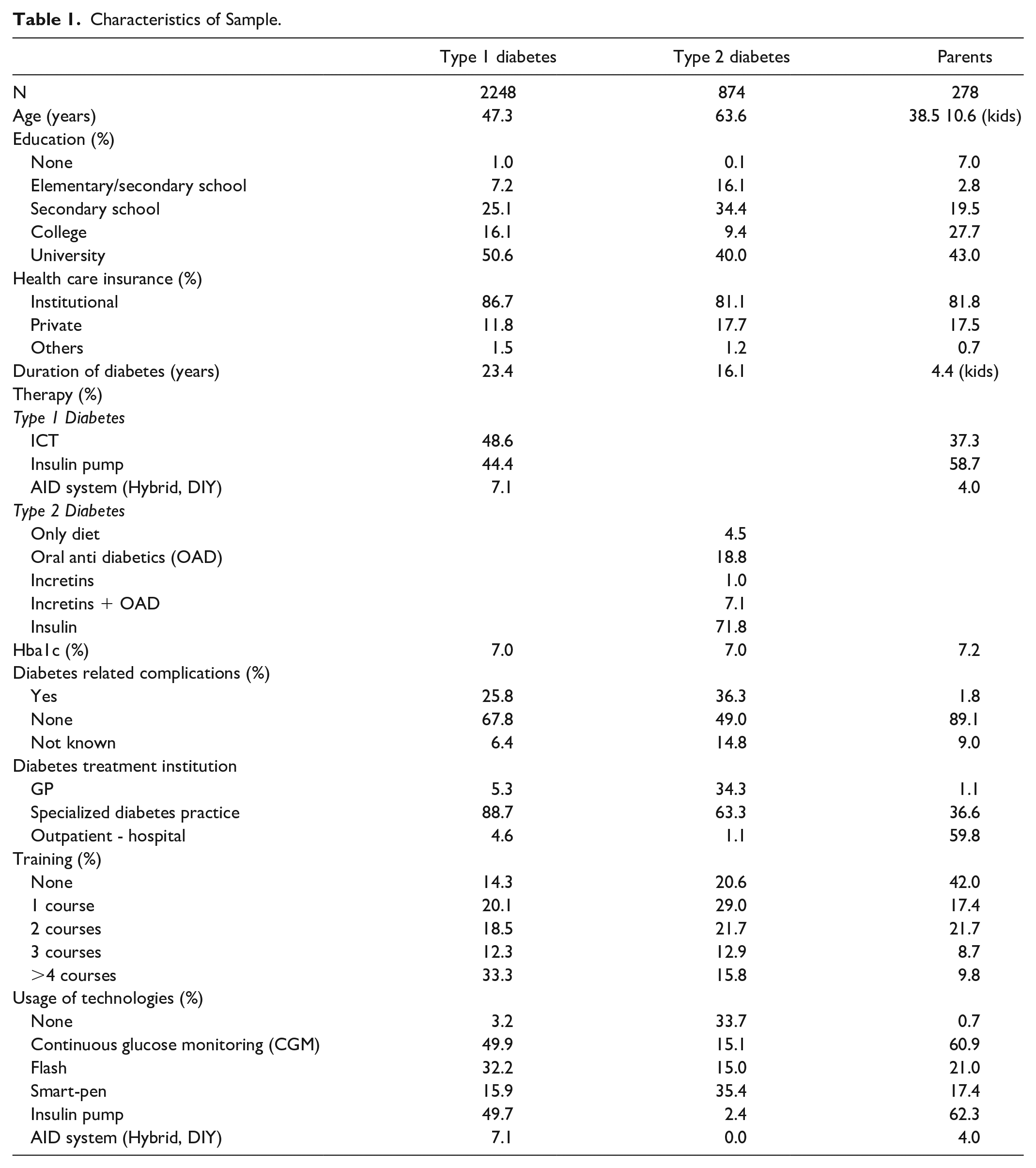
A total of 3,427 people with diabetes or their parents participated in the survey (> 80% response rate), with more adults with type 1 diabetes (n = 2,248) than adults with type 2 diabetes (n = 874). Eight percent of participants were parents of children with diabetes (n = 278), and 0.8% had some other type of diabetes (n = 27). Slightly fewer than half of participants were female (47.7%), 52.1% were male, and 0.2% of participants were gender nonconforming/intersexual. On average, respondents were just under 50 years old at the time of the survey, with most respondents in the 50 to 70 years age category. On average, people with type 1 diabetes had diabetes for an average of 23.4 years; those with type 2 diabetes for 16.8 years; and children with type 1 diabetes for 4.4 years. A high proportion of respondents had graduated from high school or university/technical college. Compared to the general population (2018: 10.5%), it is noticeable that in the present survey, the proportion of privately insured people was slightly higher among people with diabetes - especially for type 2 diabetes (17.7%). Most participants in the survey treated their diabetes with insulin therapy. Nearly two-thirds wore an insulin pump, including about half of respondents with type 1 diabetes did so. Insulin therapy also predominated as a treatment modality for type 2 diabetes, followed by oral antidiabetic drug (OAD) therapy. With an average reported HbA1c value of 7.0%, a high proportion of respondents demonstrated good glycemic control, and 2 out of 3 respondents reported no complications of diabetes.
As many as 42% of parents of children with type 1 diabetes had never attended any group education on diabetes, and most parents of children with diabetes had not attended more than one to 2 education sessions. This lack of attendance may have resulted from the fact that one-on-one education is often offered in pediatrics. In contrast, for type 1 diabetes, approximately one in 3 adults have attended more than 4 group education sessions. Almost every fifth patient with type 2 diabetes had not yet attended a group education session; moreover, few people with type 2 diabetes had already attended multiple education sessions.
Diabetes technologies were widely used, especially among children and adults with type 1 diabetes. Only 1% of the children/adolescents and 3% of the adults with type 1 diabetes surveyed did not use any new technology at all; among adults with type 2 diabetes this lack of use was the case for around one in 3 respondents. Almost two-thirds of children with diabetes and about half of all adults with type 1 diabetes used insulin pump therapy. The distribution of those using CGM and those using flash glucose monitoring - is difficult to interpret because presumably not all respondents were sufficiently aware of the differences in terminology (Table 1).
Characteristics of Sample.
Attitude Toward Digitization
Participants in the survey had a positive attitude toward digitization in diabetology (82.6% - and only 4.7% had a negative attitude toward digitization. In particular, parents of children with diabetes (89.5%) and adults with type 1 diabetes (85.3%) had a positive attitude toward digitization in diabetology. Most of the respondents who had a neutral attitude toward this topic were people with type 2 diabetes (19.7%). At the same time, digitalization was seen as having a high potential for optimizing diabetes therapy (78.8%). Again, parents of children with diabetes (91.4%) and respondents with type 1 diabetes (82.3%) were the most optimistic (Figure 1).
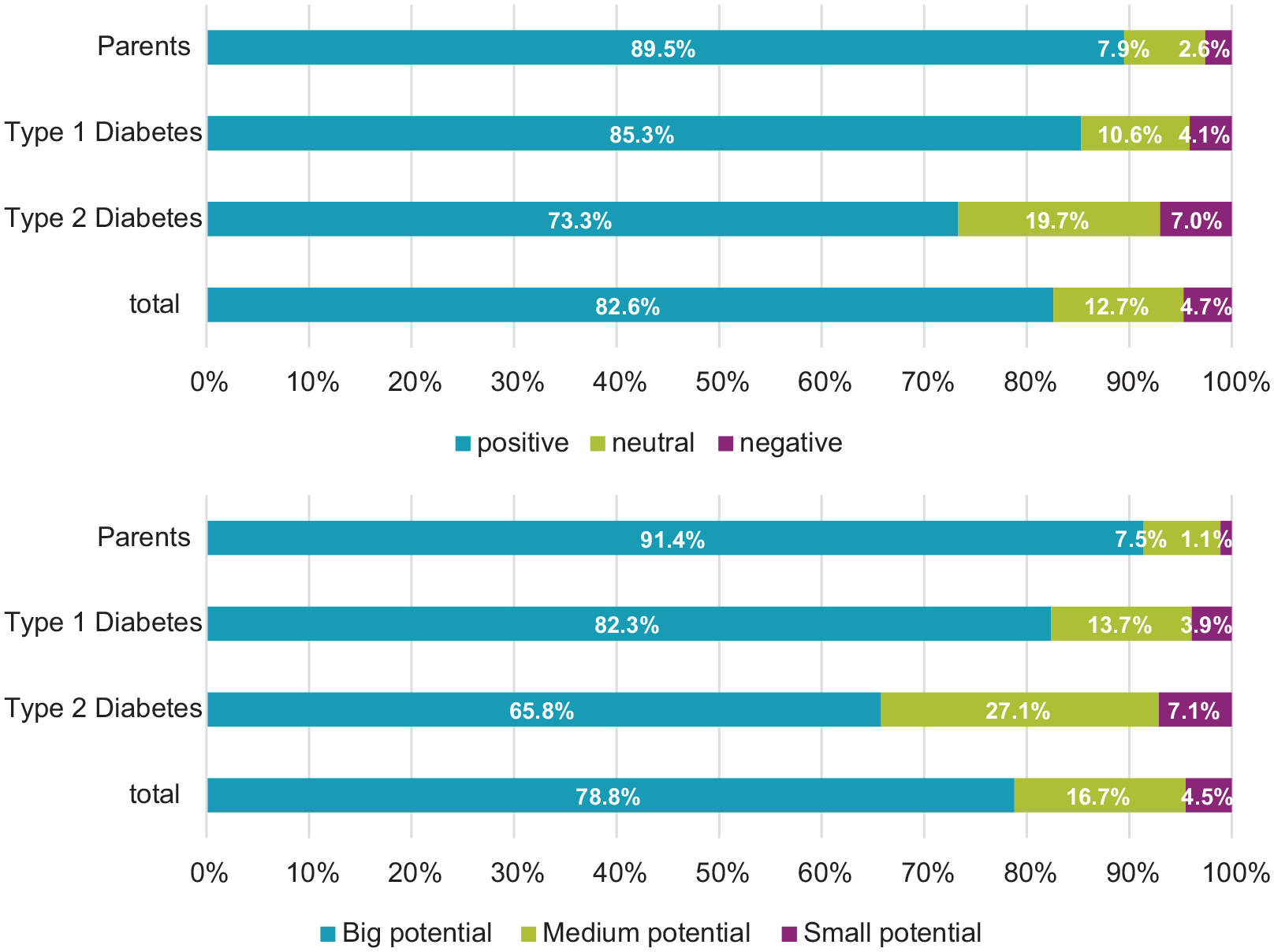
Attitude toward digitization and assessment of its potential to optimize diabetes therapy (100-point response scale from “very negative” to “very positive.” Categorization: below 40 = “negative,” between 40 and 60 = “neutral” and above 60 = “positive”).
Advantages of Digitization
The participants in the survey expected digitalization to bring “better treatment quality” (80.0%), “greater personal responsibility and self-determination in therapy” (80.0%), “more support in therapy decisions” (77.7%) and “better communication with the doctor/diabetes team” (77.3%). Parents of children with diabetes and adults with type 1 diabetes in particular rated digitalization as a “great” or “very great” advantage. These results underline the great expectations and hopes that diabetes patients associate with digitization.
Interestingly, people with type 2 diabetes in particular hoped for “better communication with the doctor/diabetes team” (total: 77.3%) and a “better exchange with other people affected” (63.1%; total: 54.5%) with digital support. Thus, most of the respondents did not fear that digital treatment concepts would make treatment more anonymous.
Disadvantages of Digitization
Overall, the disadvantages of digitization and technologization were rated as much lower than its advantages, also demonstrating the respondents’ positive attitude toward digitization. The main disadvantage of digitization cited was the “error-proneness of digital applications” (35.9%). The “risk of misuse of patient data” (total: 32.3%) was also rated as a major disadvantage - especially by people with type 2 diabetes (37%). After all, 31.1% (total) estimated that digitization would replace the doctor in many cases.
Few respondents were concerned that digitization would have a negative impact on their relationship with their doctor (total: 17.2%), that digitization would cost too much time (total: 14%) or that too much effort would be required for too little benefit (total: 10.5%) (Figures 2 and 3).
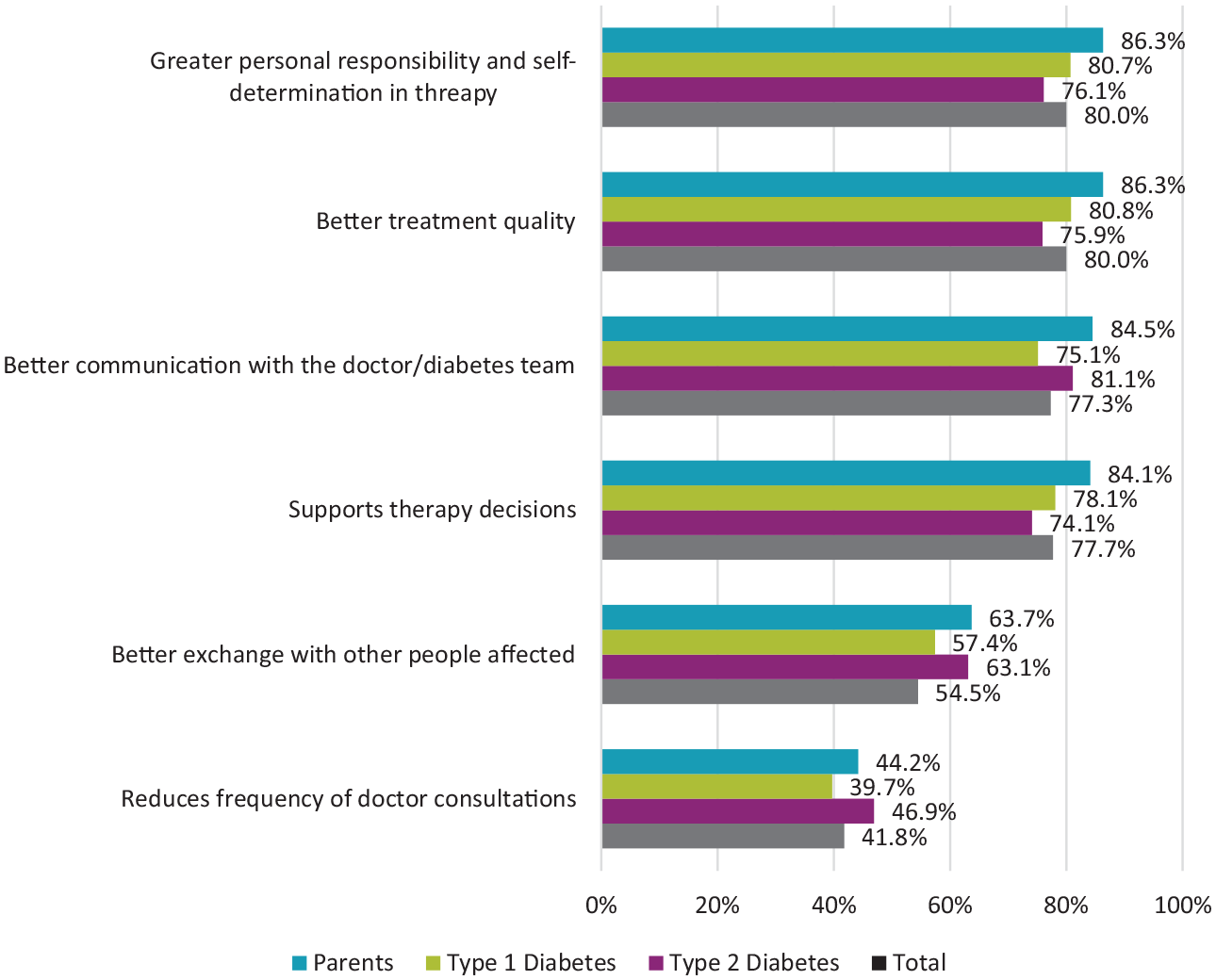
Advantages of digitization in diabetes therapy (5-point response scale: “no advantage,” “minor advantage,” “medium advantage,” “major advantage,” “very major advantage”).
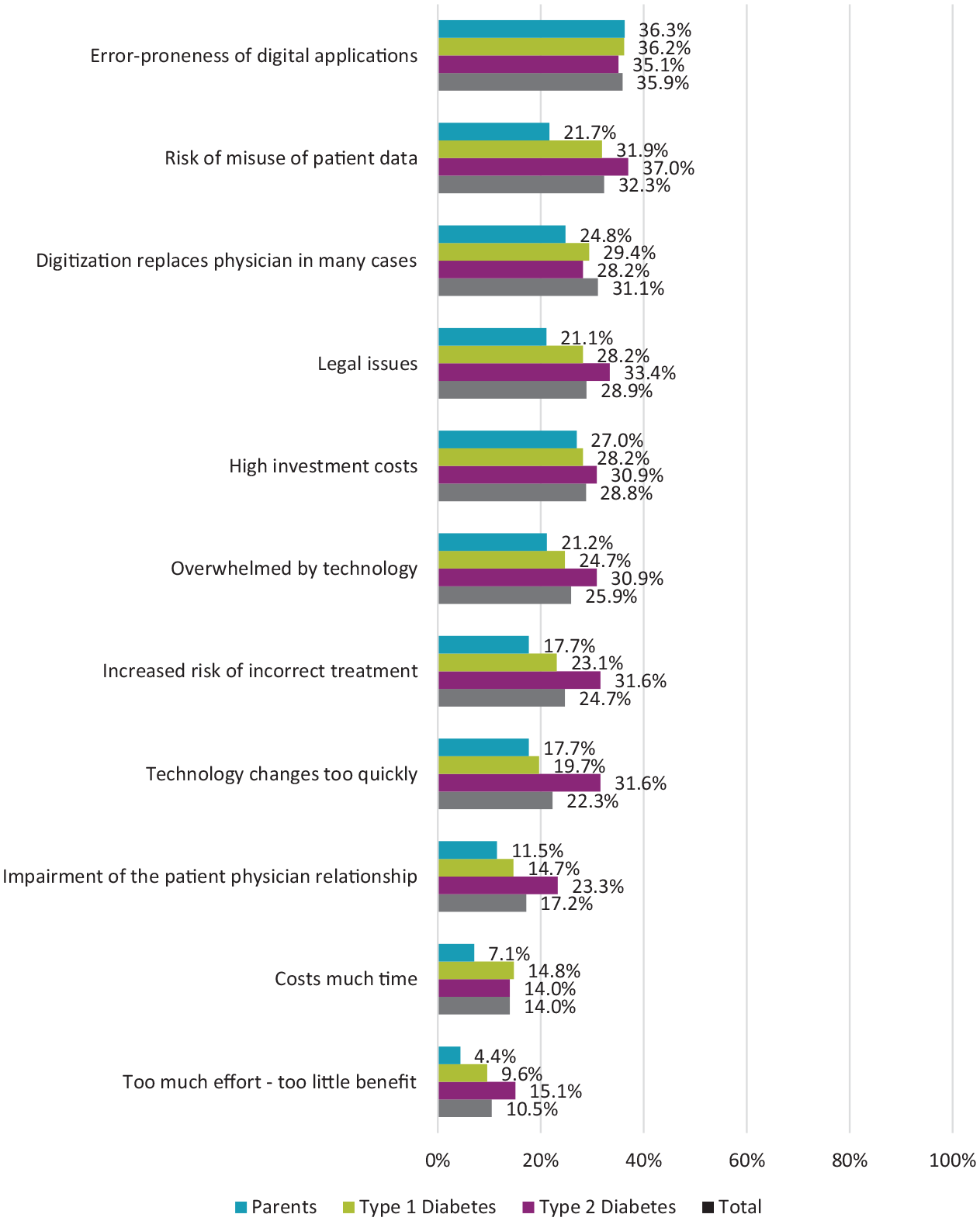
Disadvantages of digitization in diabetes therapy (5-point response scale: “no disadvantage,” “minor disadvantage,” “medium disadvantage,” “major disadvantage,” “very major disadvantage”).
Most Important Areas of Digitization
The most important topics relating to the digitization of diabetology were assessed differently by the 3 groups surveyed, with the topics “automated insulin delivery systems,” “software for glucose data analysis” and “compatibility with other systems” being rated as the most significant overall.
For parents of children with diabetes as well as people with type 1 diabetes, “automated insulin delivery systems” was by far the most important topic. Some hoped for a (semi)-automatic control of glucose - associating such control with a “technical cure for diabetes.” The evaluation of glucose data with appropriate software was also considered important, and improved compatibility and interoperability of the various digital applications was also desired. Parents of children with diabetes (66.5%) and adults with type 1 diabetes (65.8%) already used glucose evaluation software “often” or “very often.” Parents of children with type 1 diabetes in particular expected usage to increase significantly over the next 5 years (further increase of 24.3%).
For people with type 2 diabetes, systems to support therapy decisions were viewed as the top priority for providers of digital applications. These could be, for example, systems to assist patients with dose adjustment or titration, insulin injection, (automatic) pattern recognition, or any necessary lifestyle modification. Similar to individuals with type 1 diabetes, software applications to analyze glucose data were considered important. Overall, respondents considered “online diabetes training” or for “prevention of type 2 diabetes” to be more significant than people with type 1 diabetes (Figure 4).
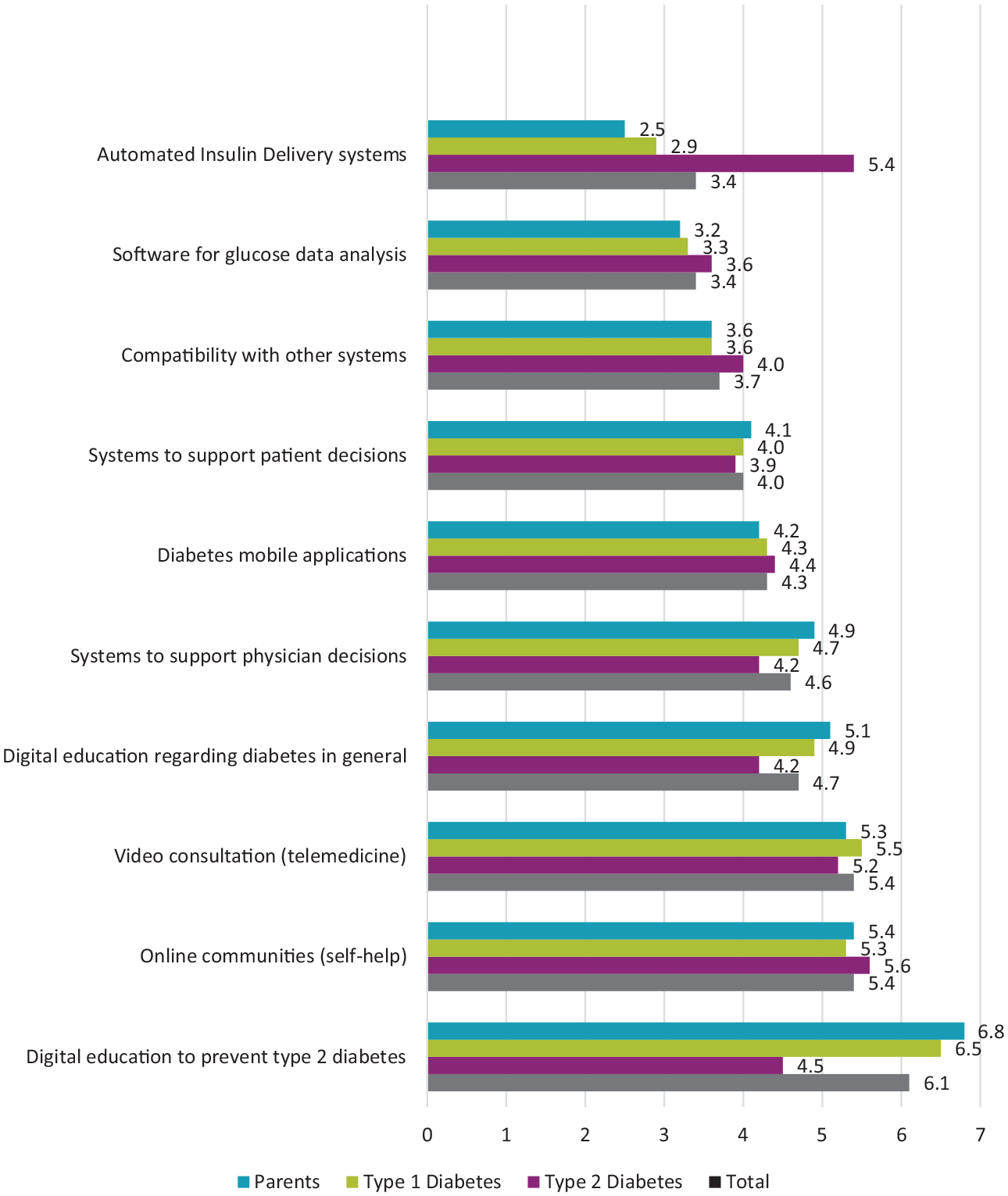
Most important topics of digitization (ranked from 1 to 10; a low value indicates high importance; a high ranking indicates low importance).
AID Systems
Especially for parents of children with diabetes (63.3%) and the adults with type 1 diabetes (55.3%), AID/closed loop systems were viewed already as a very significant innovation. Most of the respondents expected the importance of closed-loop systems to continue to grow within the next 5 years: Parents of children with type 1 diabetes in particular were confident about growth (96.6%) and associated it with high hopes for their children.
Three out of 4 people with diabetes would use an approved and safe closed loop system - demonstrating the high expectations of many people with diabetes for such systems. The proportion was very high among both parents of children with type 1 diabetes (88.5%) and adults with type 1 diabetes (81.9%), showing the hopes associated with these systems for (semi-)automated control of glucose levels.
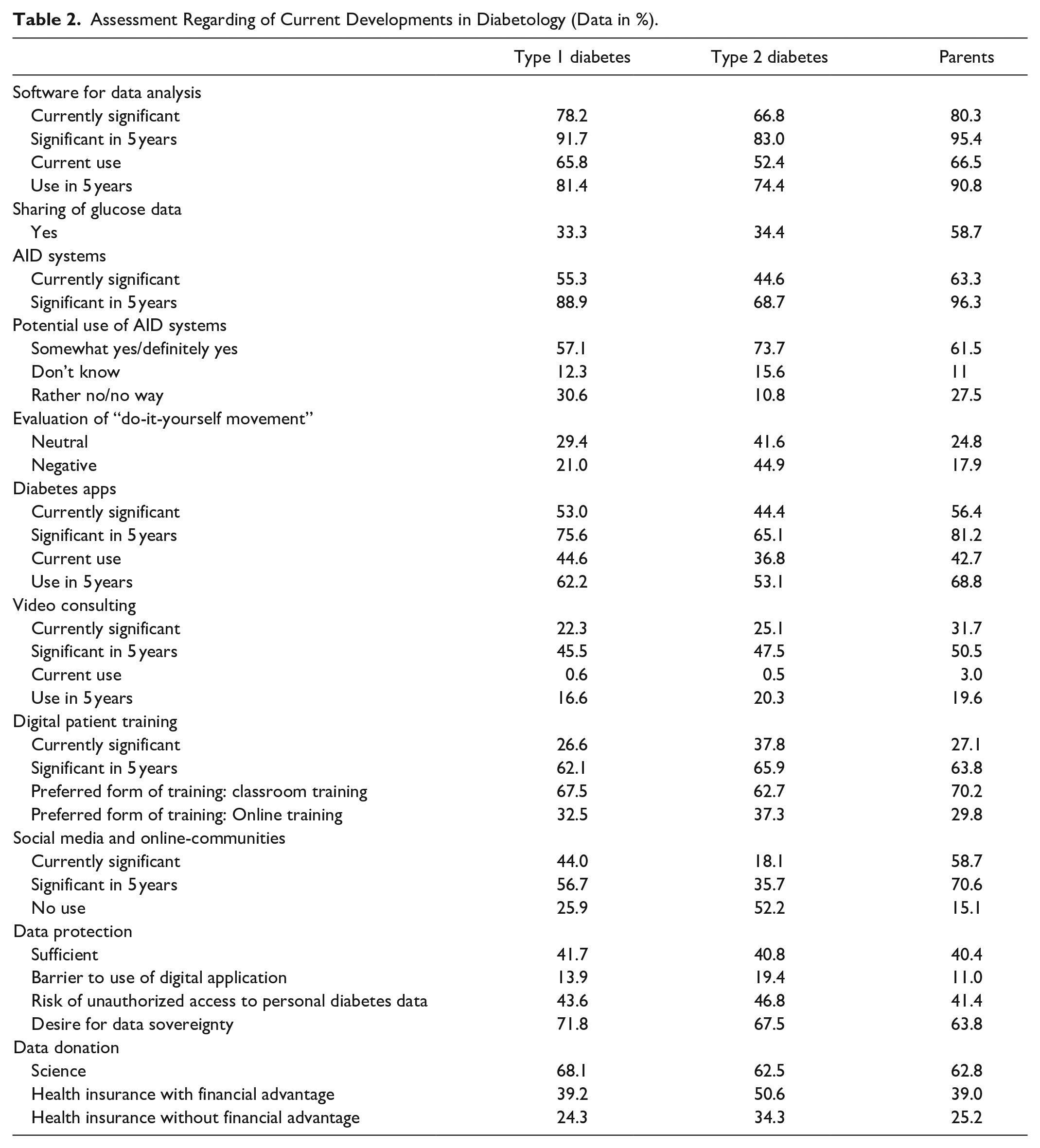
Regarding the “do-it-yourself movement” (DIY), most parents of children with type 1 diabetes had a positive attitude (57.3%) despite a number of unresolved issues (eg, liability issues), and only 17.9% opposed it. People with type 1 diabetes had a similarly positive view, while only 13.5% of respondents with type 2 diabetes approved of this development. Moreover, the number of parents of children with type 1 diabetes (27.5%) and people with type 1 diabetes (30.6%) who could imagine using a self-assembled AID system was surprisingly high (Table 2).
Assessment Regarding of Current Developments in Diabetology (Data in %).
Sharing Glucose Data
The ability to share one’s glucose data with friends, family, or a diabetes team was used by about one-third (35.6%) of respondents. Especially for parents of children with diabetes (58.7%), this was an appealing way to gain insight into their children’s glucose levels and potentially intervene in case of alarms.
Diabetes Apps
One in 2 respondents considered diabetes apps to be a significant issue relative to their care. In particular, parents of children with diabetes (56.4%) and adults with type 1 diabetes (53.0%) were positive about such apps and even expected their importance to increase in the coming years, and 42.7% of respondents used diabetes apps “often” or “very often.”
Video Consultation
In 2019, only 31.7% of parents of children with diabetes, 22.3% of people with type 1 diabetes, and 25.1% of people with type 2 diabetes considered video consultations to be important in the context of diabetes therapy. This cautious assessment was certainly due to almost no patients actually using video consultation - likely because corresponding offers were not widely available.
Video Training
The topic of online training was not assessed as significant topic for the respondents - most likely for people with type 2 diabetes. However, all 3 groups believed that this topic would become more important in the future. Currently, 2 out of 3 respondents (66.6%) would preferred traditional face-to-face training to online training. However, one in 3 patients considered video training a desirable option - interestingly, especially for people with type 2 diabetes (37.3%).
Social Media, Online Communities
More than two-thirds of respondents used social media or online communities relating to diabetes - especially parents of children with diabetes (84.9%) and adults with type 1 diabetes (74.1%). Most popular were Facebook (48.4%), diabetes forums (36.8%), and diabetes blogs (32.5%). Rarely used were Instagram (16.1%), Twitter (3.8%), and Snapchat (0.5%).
Privacy
Across all patient groups almost equally, only about 40% of respondents rated existing privacy protections as adequate. The likelihood of unauthorized individuals gaining access to diabetes-related data was rated high by respondents across all patient groups at 44.2%. Despite these major concerns about inadequate privacy protections, only 14.9% felt prevented from using digital options - parents (11.0%) and patients with type 1 diabetes (13.9%) less so than people with type 2 diabetes (19.4%). To resolve this dilemma, more than 70% of respondents would prefer a medical device that allowed them to make their own decisions about data use.
Data Donation
There was a strong willingness among respondents to donate their diabetes data for scientific purposes; 2 out of 3 would do so. In the case of a data donation to a health insurance company, a decisive factor for the patients was whether there was a financial reward associated with doing so.
Limitations
In view of how the survey participants were recruited—through various groups/journals and online forums, and so on, there is a high risk of a positive bias in the population sampled because technology enthusiasts were more likely willing to participate. In other words, the results cannot be regarded as representative of the general population in Germany. An indication of this limitation is the high number of high school and university graduates who responded. Extrapolation to the general diabetes population (even the wider type 1 diabetes population) of the findings therefore has to be done with care. We also observed a very high proportion of people with type 1 diabetes, compared to the number of participants with type 2 diabetes. This variance reflects the openness and accessibility of digital environments to insulin treated patients. Since attitudes toward modern technologies and digital applications depend not only on personal concerns but also on cultural factors, national health systems and the availability and reimbursement of technologies, the results are certainly not easy to transfer to other countries.
Discussion
Technologies for diabetes are intended to support people with diabetes in their therapy and such technologies must also be accepted and used by them. It is therefore important to know the attitudes, wishes, and needs of patients so that new technologies and digital offerings can be developed to suit them.
The survey provides initial indications of how patients in Germany view these developments. Despite the aforementioned limitations of the survey and the risk that more technically inclined patients participated in the survey, the results show that the vast majority of people with diabetes in Germany have a very positive attitude toward these new technologies. They also hope to see a significant improvement in their diabetes therapy. The most positive attitudes and highest expectations of new technologies are held by parents of children with diabetes, who expect a significant facilitation of their children’s therapy - some certainly also expect a kind of “technical cure” for diabetes in the future. As expected, people with type 2 diabetes are more reserved in their assessment, as they currently have less contact with modern technologies and therefore do not yet experience any immediate benefits. This difference is also reflected in the prioritization of the most important topics relating to digitization, where parents of children and people with type 1 diabetes agree that AID systems, glucose evaluation software’s and improved interoperability are the most important topics. For people with type 2 diabetes, instead of AID systems, practical aids to support decision making represent an important future option.
Regarding the assessment of the advantages and disadvantages of modern technologies and digitization, the respondents see significantly more advantages than disadvantages and that the different groups do not differ greatly on this point. The greatest advantage cited was primarily the direct benefits to people with diabetes, such as better treatment quality, more empowerment and better support in therapy decisions. Confidence in new developments is also apparent in that only one in 4 respondents feared being overwhelmed by new technologies. Moreover, only a few were concerned that such developments would worsen their relationship with their doctor.
Regarding AID systems and software for evaluating glucose values, people with type 1 diabetes in particular are very hopeful about such tools and believe that both will be very important in the future. They are also very open to DY systems, whose pioneering role in the development of AID systems was obviously appreciated by most of the respondents. Interestingly, people with type 2 diabetes were even more convinced about the usefulness of online diabetes education than people with type 1 diabetes. Although online diabetes education was virtually unavailable in Germany at the time of the survey and was not reimbursed by health insurers, this finding is an important indication of some patients’ needs, which are not currently being met. Almost every third person in this study would opt for online diabetes education if it were offered. Both “on-line diabetes education” and “consultation by video” must be considered with the results however that the inquiry before Covid-19 was accomplished, which led only to a clear increase of telemedicine also in Germany. The current use of these services was very low at that time.
Apps were also seen as significant by all respondents. This finding is especially important in that since 2021 apps are reimbursed by health insurers in Germany under certain conditions. More than 40% of survey respondents already use a diabetes app. There was also no difference in online behavior, with the vast majority informing themselves about diabetes and new therapy options. In contrast, the use of social media in connection with diabetes is more common among people with type 1 diabetes or parents - more than half of all people with type 2 diabetes do not use them. Across all patient groups, the likelihood of unauthorized people having access to diabetes data was estimated to be quite high at 40%, and data protection regulations were said to be inadequate. However, this belief prevented only a few from foregoing digital options. Nevertheless, the survey respondents would like to be able to decide for themselves how their data are used and would prefer medical products that ensure this control.
A comparison of this survey data with the results of the physicians, which we previously published,16,17 shows that people with diabetes are significantly more open to the new technologies and advancing digitization than physicians. They associate more advantages with such advancements and experience most applications as already significant today and more significant in the future. This finding suggests that patients, because of their wishes and needs, are more likely to be the drivers of development, as they have a strong desire for modern technologies to simplify their lives and to prevent diabetes complications.
In the future, more patients should be asked about their assessments and needs regarding new technologies and new digital applications. The results from different countries – together with data from representative samples and multiple measurements further increase the focus on the patient in this exciting change process in diabetes therapy.
Footnotes
Acknowledgements
The authors thank the members of the Future Board on Digitalization for the conception of the survey and fruitful discussions, as well as Kirchheim-Verlag, diabetesDE - Deutsche Diabetes-Hilfe, Deutsche Diabetes-Hilfe - Menschen mit Diabetes (DDH-M), and Diabetes Ratgeber for their support in recruiting the sample.
Abbreviations
AID, automated insulin delivery; CGM, continuous glucose monitoring; DDDD, diabetes-data-driven-disease; DDH-M, Diabetes-Hilfe - Menschen mit Diabetes; DIY, do-it-yourself; FIDAM, Research Institute of the Diabetes Academy Bad Mergentheim; OAD, oral antidiabetic drug
Declaration of Conflicting Interests
The author(s) declared the following potential conflicts of interest with respect to the research, authorship, and/or publication of this article: BK heads the Future Board Digitalization, which is financed by the company Berlin-Chemie and which initiated the survey. In this context, the research institute FIDAM received third-party funding from the company Berlin-Chemie for the survey, BK received honoraria for the Future Board and lectures. LH support BK by chairing the Future Board. He also receives honoraria from Berlin-Chemie. TR has no conflict of interest.
Funding
The author(s) received no financial support for the research, authorship, and/or publication of this article.
Patients’ rights
The survey was conducted in accordance with national law as well as the Declaration of Helsinki of 1975 (in the current revised version). Informed consent was obtained from all participating patients.
