




Abstract
Background:
Patients with diabetes have developed innovative do-it-yourself (DIY) methods for adapting existing medical devices to better fit individual needs.
Method:
A multiple method study used Symplur Analytics to analyze aggregated Twitter data of #WeAreNotWaiting and #OpenAPS tweets between 2014 and 2017 to examine DIY patient-led innovation. Conversation sentiment was examined between diabetes stakeholders to determine changes over time. Two hundred of the most shared photos were analyzed to understand visual representations of DIY patient-led innovations. Finally, discourse analysis was used to identify the personas who engage in DIY patient-led diabetes technologies activities and conversations on Twitter.
Results:
A total of 7886 participants who generated 46 578 tweets were included. Sentiment analysis showed that 82%-85% of interactions around DIY patient-led innovation was positive among patient/caregiver and physician groups. Through photo analysis, five content themes emerged: (1) disseminating media and conference coverage, (2) showcasing devices, (3) celebrating connections, (4) providing instructions, and (5) celebrating accomplishments. Six personas emerged across the overlapping userbase: (1) fearless leaders, (2) loopers living it up, (3) parents on a mission, (4) the tech titans, (5) movement supporters, and (6) healthcare provider advocates. Personas had varying goals and behaviors within the community.
Conclusions:
#WeAreNotWaiting and #OpenAPS on Twitter reveal a fast-moving patient-led movement focused on DIY patient innovation that is further mobilized by an expanding and diverse userbase. Further research is indicated to bring technology savvy persons with diabetes into conversation with healthcare providers and researchers alike.
Introduction
Individuals with type 1 diabetes (T1D) have long been experimenters; faced with the reality that the same dose of insulin taken for the exact same meal on two different days can provide different results. Additionally, day-to-day challenges include the fact that insulin does not have instantaneous effect, and the timing differs because of the effect of food. Other factors (such as hormones, sickness, stress, and exercise) can drive blood glucose levels up or down, and these can be difficult or impossible to measure. Therefore, out of necessity, patients experiment with different doses of insulin or bolusing techniques (ie, extended boluses or “super boluses”) to effectively manage their diabetes. Technologies like social media have enhanced patient-driven N of one experimentation into sharing solutions. 1 Online platforms provide an opportunity for people with T1D (PWD) to share their experiences and with peers with the same health condition. 2
In recent years, PWD have experimented with their understanding of commercially available diabetes medical devices, such as insulin pumps and continuous glucose monitors (CGM). 3 Separately, patients were augmenting their current diabetes technology to support their health. When patients came together within diabetes online communities, they were able to share expertise and collaborate on patient-led innovation in order to develop more advanced technologies to support their diabetes management. These technologies are enhanced through crowd-sourced collective experience and wisdom. 4 This patient-led innovation sometimes outpaces commercially available technology, as seen with Nightscout and OpenAPS. Nightscout was developed to provide remote monitoring of CGMs, but has expanded to include a series of real-time monitoring and retrospective data analysis tools that can display data from multiple kinds and brands of diabetes devices. 5 OpenAPS is a movement around facilitating access to basic artificial pancreas (APS) technology, primarily driven by the development of an open source “do-it-yourself” (DIY) version of a hybrid closed loop, using existing pumps, CGM, and off the shelf hardware alongside an open-source community-developed algorithm to automate insulin dosing.6–8
Patients engaging in non–Food and Drug Administration (FDA) regulated activity, such as Nightscout and OpenAPS, is both exciting, due to the potential to improve individuals’ physiologic and psychologic health outcomes, and startling, due to the disruption of traditional norms around research and innovation in healthcare. While there is a dearth of research on patient-driven diabetes innovation, the existing research is promising. A qualitative analysis of OpenAPS users suggests use of OpenAPS was linked to improvements in glycosylated hemoglobin (A1C), diabetes distress, and quality of life.
9
A case series found that adult OpenAPS users experienced a 0.56% reduction in A1C and 6.07% reduction of the time spent with hypoglycemia.
10
A retrospective analysis of a self-crossover comparison of OpenAPS users (N = 20) who were already “well-controlled” experienced improvements in mean blood glucose
Non-FDA regulated DIY diabetes technologies has relied on crowdsourcing, most often, occurring online. Such conversations on Twitter discuss a general movement where patients refuse to wait for industry and the FDA to appropriate what people with diabetes need, but instead, make it themselves (#WeAreNotWaiting), and also the development and use of OpenAPS (#OpenAPS). 9 Participation in social media–driven health movements and diabetes-specific online peer support may promote positive patient engagement and self-management activities.2,12 In the specific case of #WeAreNotMoving and #OpenAPS, influence the use of DIY diabetes technologies.
What is not well understood about social media movements like #OpenAPS and #WeAreNotWaiting on Twitter is how individuals, and their associated personas, shape the conversation. As DIY technologies become more popular among PWD, and perhaps individuals with other health conditions, understanding the conversation, sentiment, and persona types can uncover information about DIY adoption and support across a diabetes online community of patients, caregivers, and healthcare providers. Importantly, personas are a way to model, summarize, and communicate behaviors about people in online spaces. 13 More specifically, personas provide insights into patterns of goals and behaviors for users of a tool, in this case DIY patient-led innovations. These insights often signal unmet needs and desires, which are opportunities that can be acted on.
Therefore, the purpose of this study was threefold. First, examine the #WeAreNotWaiting and #OpenAPS tweets to understand the sentiment (positive and negative) among different stakeholder groups. Second, to examine highly shared photos to understand visual representations of DIY patient-led innovations. Finally, determine the personas who engage in DIY patient-led diabetes technologies activities and conversations on Twitter. This study will provide insight into diabetes-specific DIY patient-led innovations that may influence or inform patient-led efforts in other disease states.
Methods
Research Design
A multiple method qualitative approach was undertaken. This study was exempt by the University of Utah Institutional Review Board.
Data Collection and Analysis
Symplur Signals 14 was used to examine #WeAreNotWaiting and #OpenAPS movements. Symplur Signals is a data analytics platform that is directly linked to the Twitter application program interface. Tweets (including posts and photographs) can be downloaded while special tools allow for demographic extraction (ie, language, geographic mapping, stakeholder designation—such as patient, caregiver, or physician), text-based sentiment analysis, social network analysis, segmentation of stakeholders, and word cloud development. #WeAreNotWating was examined from January 2014 through June 2017 and #OpenAPS from January 2016 through June 2017. Start dates were driven by when each hashtag was registered and subsequently tracked by Symplur Signals. Only tweets written in English were included in this study.
Sentiment analysis
Both #WeAreNotWaiting and #OpenAPS tweets were analyzed for sentiment in 2015, 2016, and 2017. One benefit of studying sentiment over a three-year period is the ability to understand if stakeholders (patients/caregivers and healthcare providers) feelings about DIY patient-led innovations remain static or change over time.15,16 Such understanding can help researchers, healthcare providers, and patients determine knowledge and acceptance of DIY patient-led innovations.
Sentiment was examined using a proprietary natural language processing algorithm numeric score assigned to each word in a tweet. 14 Scores ranging from −6 to −1 are assigned a negative sentiment, with −6 being the most negative. Scores ranging from 1 to 6 are assigned a positive sentiment, with 6 being the most positive. A score of 0 is assigned a neutral sentiment. Initially, Symplur Signals scored each word in every tweet. However, language must be considered in context. In this study, two reviewers (PMG and MLL) reassigned words that were initially deemed negative by Symplur Signals that contextually were neutral. For example, “hack,” “hacked,” “hacking,” and “rig.” Then, the most frequently used negative (N = 10) and positive (N = 10) sentiment words were examined. Scores were again manually reassigned to reflect the intended sentiment after discussion and agreement between two reviewers (PMG and MLL). “Dirty” was listed as a frequently used word with negative sentiment for #WeAreNotWaiting. Upon further examination, tweets with the word “dirty” and #WeAreNotWaiting were identified to be related to solicitations for sexual services and omitted from the final analysis (N = 52). Next, using the final data set, we separately extracted tweets with negative and positive sentiment to extrapolate themes. Data were then coded and analyzed by two researchers (MLL and PG) and the research team reviewed to establish consensus.
Visual document analysis
A visual document analysis is a qualitative method that can be used to describe images. This process was conducted by examining an aggregate of the top 200 most shared photos with #WeAreNotWaiting as assigned by Symplur Signals. Each photo and its associated tweet were analyzed together as one unit of data. Photos were examined for content and meaning 17 and documented in a codebook in a similar way to other text-based qualitative studies. The corpus of codes were then analyzed and thematically categorized by two researchers (HRW and MGH) to underscore intentions and desires of the community as a whole. 18 Themes were then reviewed with the research team reviewed to establish consensus on how photographs were used to visually represent the #WeAreNotWaiting conversation.
Persona development
The identification of personas help to uncover the social aspects of behavior, such as Tweets, which can be complex. We sought to identify personas to understand the “type” of person who engaged, amplified, and drove the #WeAreNotWaiting and #OpenAPS conversation. To accomplish this, we used discourse analysis. Discourse analysis is a qualitative interdisciplinary method for studying health-related topics, allows for an examination of language and ideology within discourses and conversations, like those being studied here. 19 Others have specifically used discourse analysis to examine social positioning, via roles, actions, goals, and behaviors. 20 Through this social positioning, personas emerge.
The same corpus of tweets used in the sentiment analysis were used to identify persona using a three-step process. First, to understand the social patterns of the network, the researchers utilized the Symplur Signals Social Network Analysis tool. This tool shows who is interacting with whom, who engages across stakeholder groups, and who functions as authorities or hubs within the community. This allowed the researchers to identify the most active community participants. Next the Symplur Signals Segmentation tool was applied, which identifies participants with one or multiple stakeholder tags based on the individuals’ Twitter bio. Examples of stakeholder tags include patient, doctor, and caregiver. From these two analyses the researcher was able to identify six distinct types of active participants in the Open APS Twitter community.
The third and final step in developing the personas was to identify the roles, actions, goals, and behaviors of the participants by rigorously examining tweet conversations from four exemplars for each distinct type of active participant. Initially four personas were developed by one researcher (CF). However, after further discussion with the research team, two additional persona types were added. Tweet data were then synthesized to discern the common roles, actions, stated goals, and observable Twitter behaviors across the four exemplar participants for each persona. The common goals and behaviors for each of the six personas are described below.
Results
Characterization of Tweets and Stakeholders
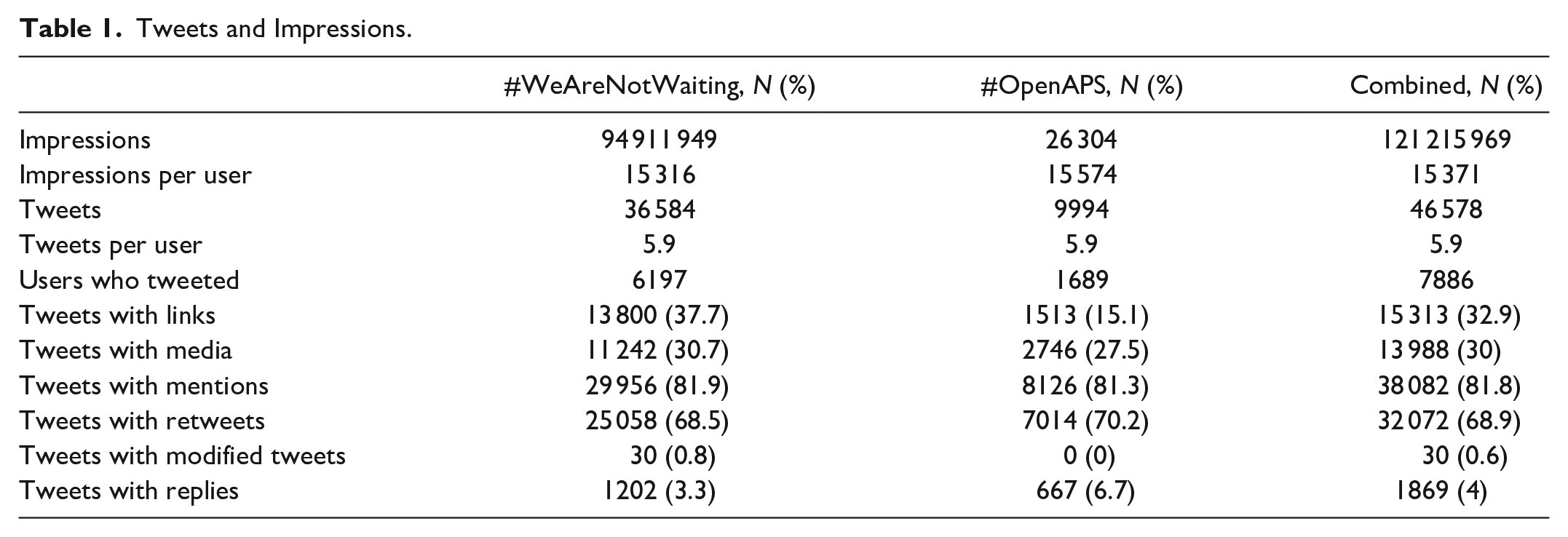
There were 7886 participants posting 46 578 tweets tagged with #WeAreNotWaiting or #OpenAPS. A total of 36 584 #WeAreNotWaiting tweets and 9994 #OpenAPS tweets combined resulted in an impression of 121 205 455 (see Table 1). Visualization of the global and country-specific heatmapping, illustrated in Figures 1 and 2, provides demographic information about where participants engaging in the DIY conversation resided. Conversations occurred across 142 countries (Figure 1) and in 24 different languages. Within the United States, much of the conversation occurred in Alaska, California, New York, and Texas (Figures 1 and 2). Engagement varied and while the majority was comprised of users who made one tweet (67.6%, N = 4776), 32.4% of users had higher levels of engagement (N = 3110). When key leaders spread the movement’s message to healthcare stakeholders who have decision-making power in terms of patient access to diabetes technology, the community responded via Twitter. The DIY conversation increased when diabetes and health technology conferences featured #WeAreNotWaiting or #OpenAPS users or developers. Figure 3 displays the conversation over time while overlaying these important diabetes and health technologies conferences.
Tweets and Impressions.
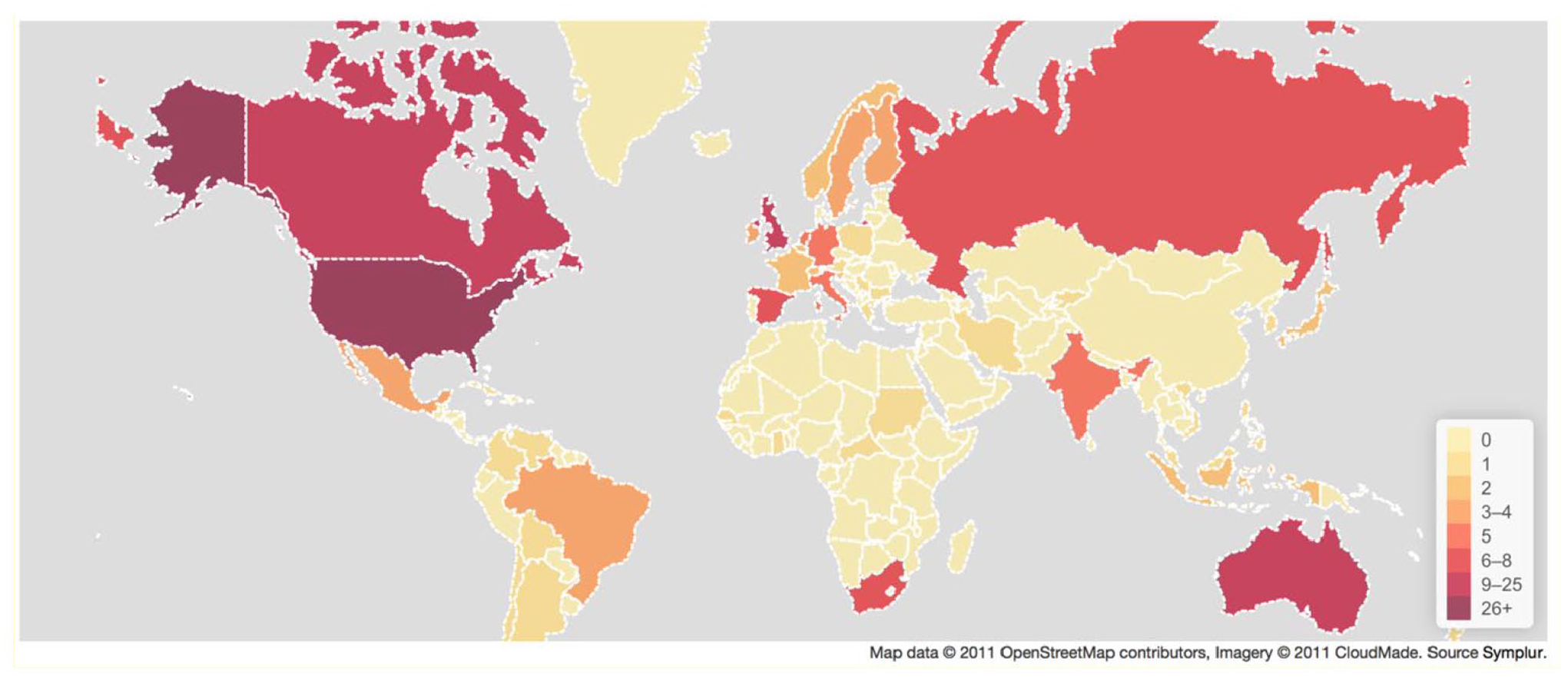
Global map of individual users who tweeted about #WeAreNotWaiting and #OpenAPS.
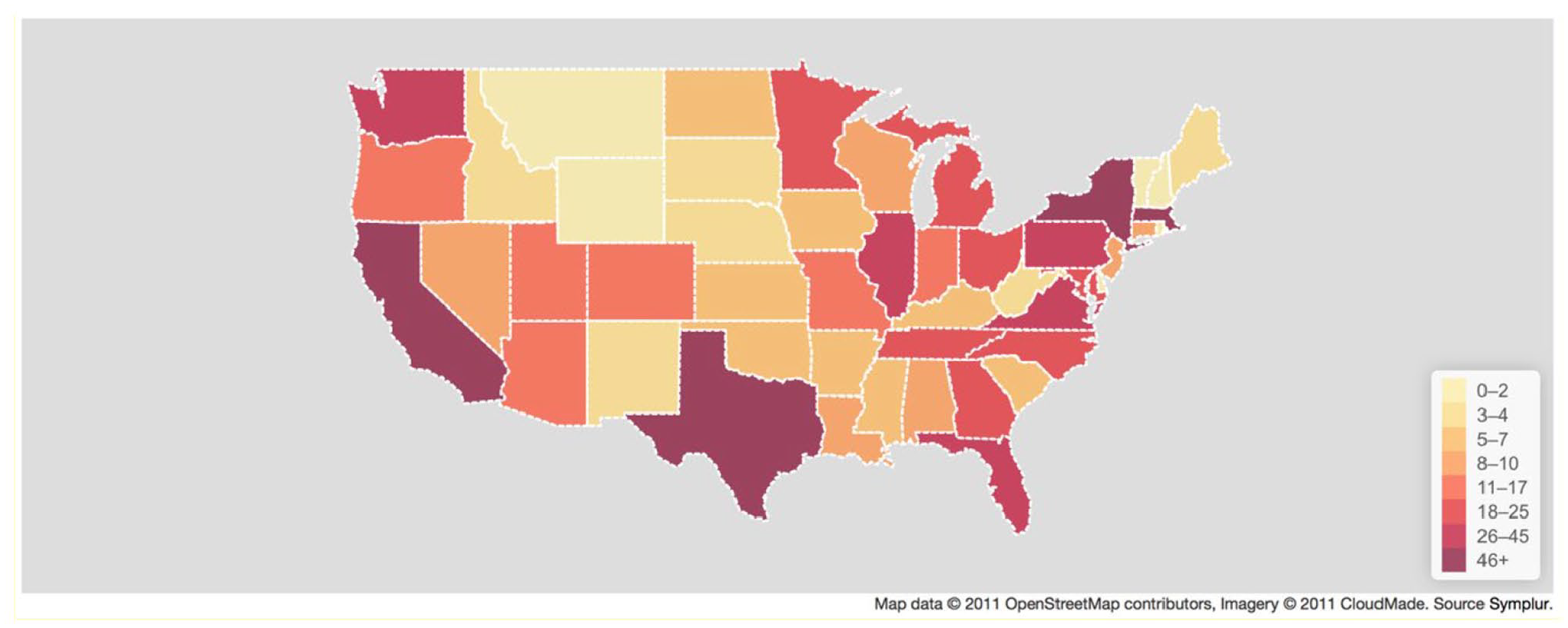
United States of individual users who tweeted about #WeAreNotWaiting and #OpenAPS.
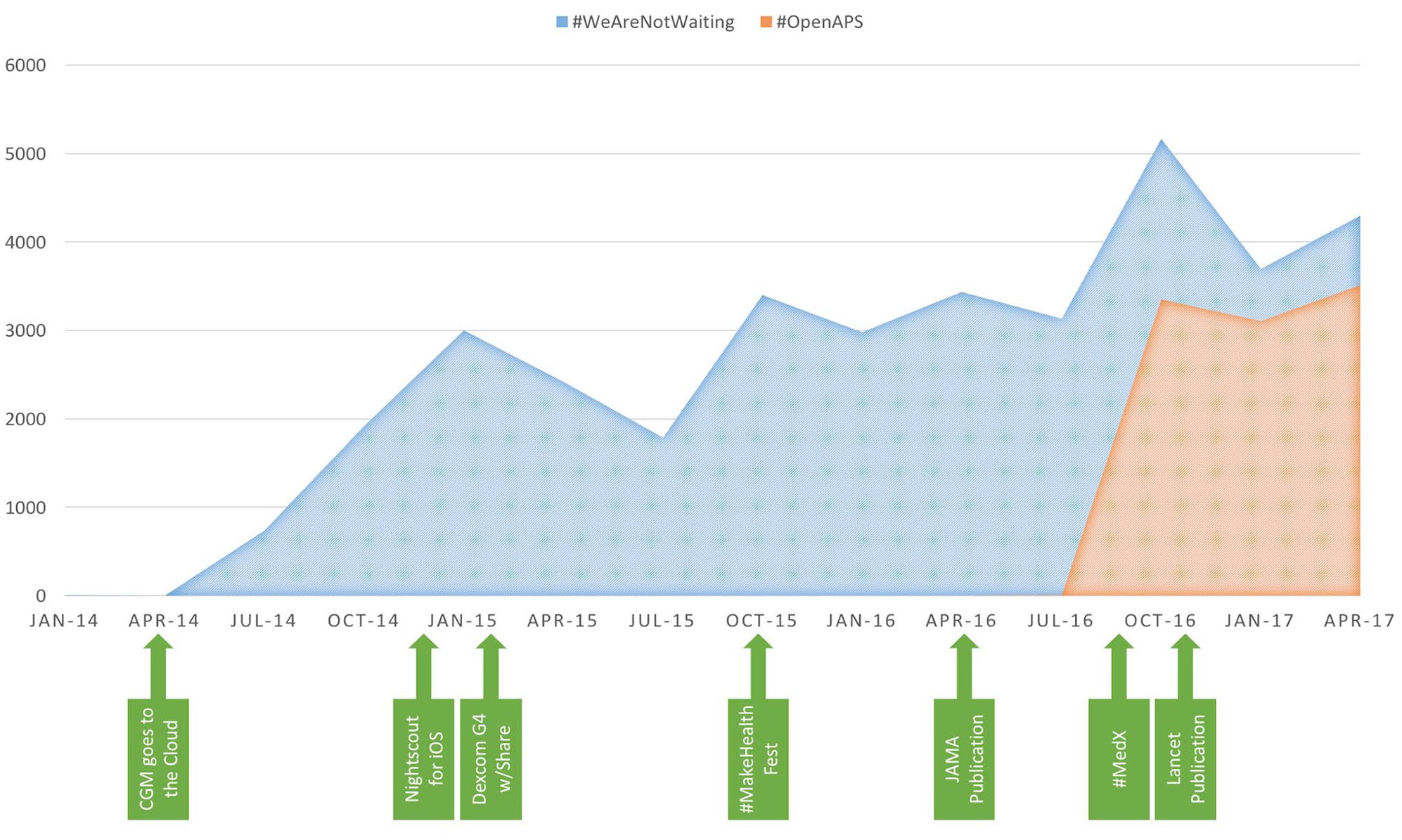
#WeAreNotWaiting and #OpenAPS activity timeline on Twitter.
Sentiment
Sentiment analysis between patients/caregivers and healthcare providers was positive, #WeAreNotWaiting 85%, #OpenAPS 82%, throughout the entire research period. Although, as demonstrated in Figure 4, the topics shared between patients and physicians differed, and changed over time. Using a word cloud tool, our data demonstrate how the topics shifted in the early years from a patient-driven conversation that was mostly general and supportive to patients and providers both talking in greater detail about the self-management aspects of these innovative systems. Positive and negative sentiment findings are described below.
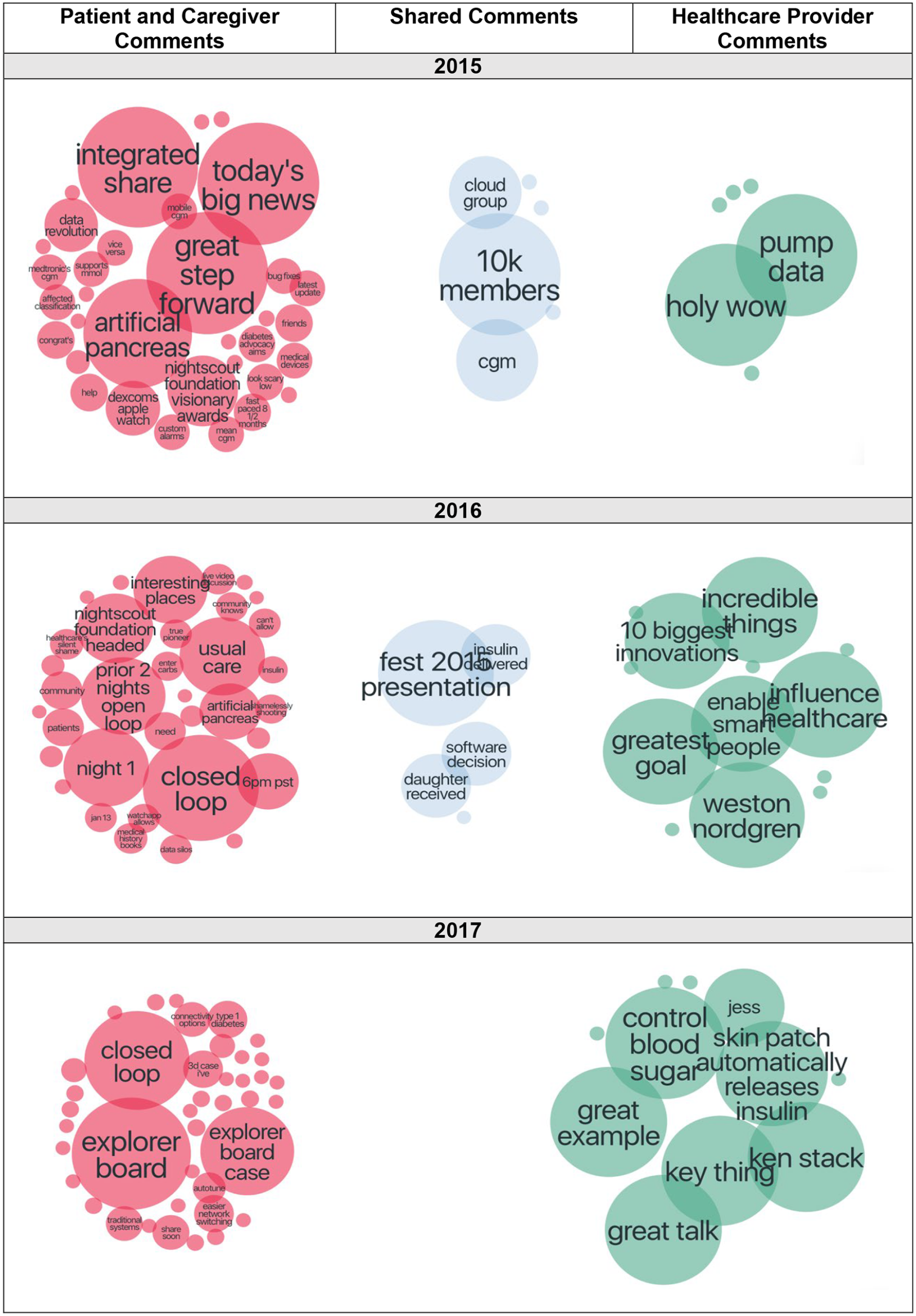
Word cloud of patients and doctors in 2015-2017.
Negative sentiment
Negative sentiment focused on patient frustrations related a healthcare system that failed to meet their needs. Specifically, people tweeted about industry developed technology that did not have patient’s individual needs and preferences in mind. Challenges with access to diabetes technology due to cost and insurance providers was also discussed. Negative sentiment also focused on technical difficulties individuals experienced in initiating OpenAPS, such as locating individual parts required to make the device work, and the technical steps needed to assure OpenAPS would function properly.
Positive sentiment
Positive sentiment related to OpenAPS use focused on enjoying life without modifications or disruptions. For example, some mentioned the ability to not have to think about diabetes constantly, thus decreasing the overall mental load focused on health. Individuals also described hope for a better future through the #WeAreNotWaiting movement. Some in the community felt that #OpenAPS was paving a way for patient-centered tools that would benefit many who are living with diabetes.
Visual Document Analysis
Through visual document analysis, we found that images most frequently shared centered around expanding the movement’s influence and are described in five themes: disseminating media and conference coverage, showcasing devices, celebrating connections, providing instructions, and celebrating accomplishments.
Disseminating media and conference coverage
Photos in this category featured conference proceedings in which key leaders discussed the goals and progress of the movements. Such photos included speakers presenting data about DIY APS and screenshots of publications or media highlights.
Showcasing devices
Individuals posted and shared photos of their biohacked personal devices. Such photos were shared to celebrate that one had initiated DIY APS, to show glucose levels related to OpenAPS use, and activities completed with OpenAPS, a form of celebrating community innovation and adoption.
Celebrating connections
Users posted and shared photos of meet-ups organized by PWD engaged in OpenAPS. These meet-ups allow PWD to obtain in-person support to create and use OpenAPS, gaining tricks and tips to optimize use. These connections allowed individuals to crowdsource the informational and emotional support needed to incorporate these activities into their daily lives.
Providing instructions
Users posted and shared diagrams and flowcharts outlining “how-to” set up and maintain OpenAPS and other DIY APS. These visuals simplified complex information for individuals who may not have technical knowledge.
Celebrating accomplishments
Users posted and shared photos of community benchmarks and individual device-related achievements.
Personas
Six personas were identified, encompassing a variety of healthcare stakeholders. These personas are characterized as (1) fearless leaders, (2) loopers living it up, (3) parents on a mission, (4) the tech titans, (5) movement supporters, and (6) healthcare provider advocates. The goals and Twitter behaviors differed by persona type (Table 2). Given that personas are based on individuals, industry, academic institutions, and media involved in the movement were not captured. A graphic representation of interactions between #WeAreNotWaiting and #OpenAPS users is noted in Figure 5.
Persona Goals and Behaviors.
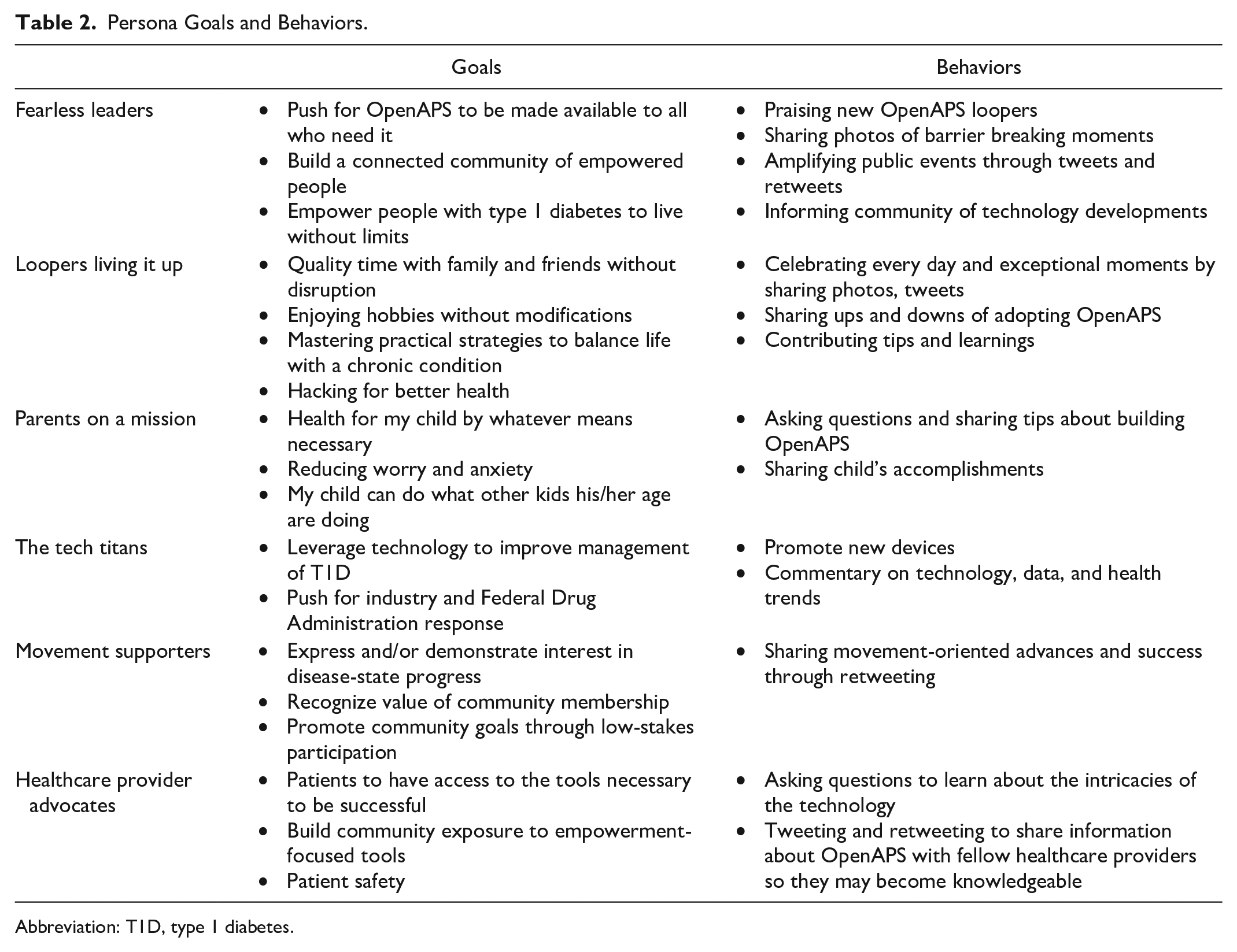
Abbreviation: T1D, type 1 diabetes.
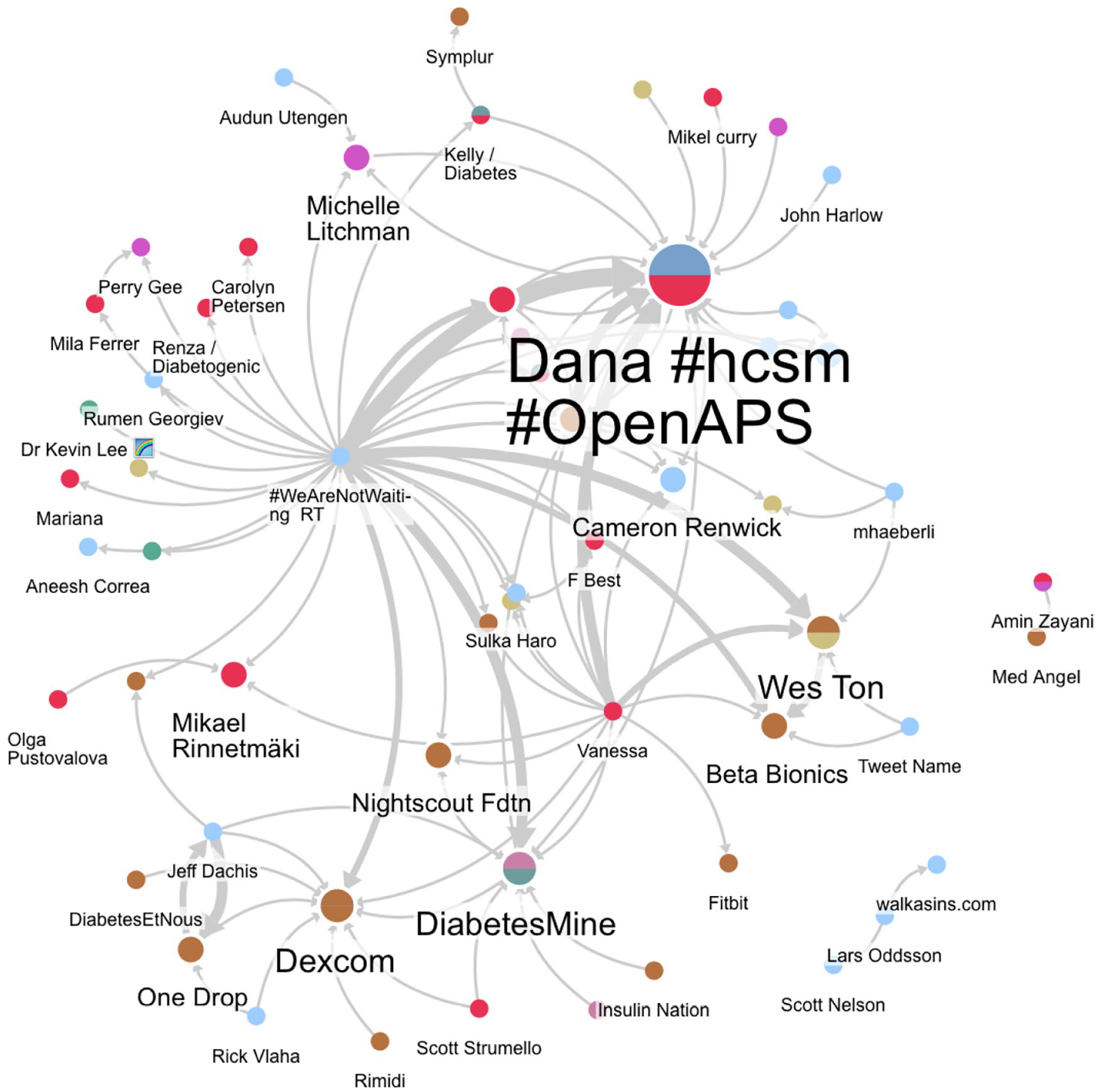
Conversation hubs for #WeAreNotWaiting and #OpenAPS.
Discussion
This research aimed to characterize individual diabetes stakeholders, examine the sentiment and most shared photographs, and identify personas related to the #WeAreNotWaiting and #OpenAPS conversations on Twitter. The research team also studied those who are engaging in conversations related to patient-driven diabetes innovation by examining Tweets. The collective wisdom of patients is resulting in a fast-paced ecosystem of knowledge attainment.
Participation in online communities is a way to harness patient innovation, which ultimately enhances patient-centered care. 21 Indeed, patient-driven innovation may be concerning for some healthcare providers. In our study, the overall sentiment of healthcare providers was similar to patients and caregivers. We recognize that not all healthcare providers are using Twitter, and therefore results must be interpreted with caution. Importantly, healthcare provider sentiment engagement and sentiment changed over time, suggesting that perhaps healthcare providers who were once leery changed their perception of what DIY diabetes technologies has to offer patients.
The #WeAreNotWaiting and #OpenAPS movement appears to be gaining traction because of powerful individuals within the community. Some individuals may belong to more than one community with influence in different areas, virally spreading the #WeAreNotWaiting and #OpenAPS message. We identified six personas discussing patient-driven diabetes innovation. Healthcare stakeholders, online and offline, should be aware of personas related #WeAreNotWaiting and #OpenAPS as they seek information, supportive healthcare provider-patient looping relationships, and a support system of peers. Understanding the personas of individuals involved in online communities may also help clinicians and researchers identify areas where gaps in self-management may occur and target those gaps with focused efforts.
Due to the nature of data collected from Twitter via Symplur Signals, we were not able to gather certain demographic information, such as age, gender, or race. We did not seek to examine efficacy or safety surrounding the diabetes innovations developed from the #WeAreNotWaiting or #OpenAPS movements in this article, though it has been described by others.9–11,22–24 The authors also recognize that the early adopters of DIY technologies may not be representative of the greater T1D population. The patients and providers identified in this article may possess motivations and skills for technology solutions that lead to successful adoption. Future research should focus on non-media-driven conversations around #WeAreNotWaiting and #OpenAPS and further dissect the relationship of conversations and information sharing between persona types. Our research team believes that work related to persona types may also be important in other forms of diabetes and perhaps in online peer support communities in general. Finally, at the time of data collection and analysis, there were two key hashtags that represented the movement related to DIY patient-driven innovation. We do recognize that given the emerging nature of DIY diabetes technologies, there are now additional hashtags for technologies (i.e., Loop, AndroidAPS) that exist that were not included in this study. Also, while OpenAPS was initiated in Febraury 2015, Symplur did not begin tracking it until mid-2016 (see Figure 3), and data from June 2017 to present is also not represented.
Conclusions
The #WeAreNotWaiting and #OpenAPS movements are gaining momentum. Initial evidence of online conversations shows positive support from healthcare providers and patients alike. As the movement grows, more research is increasingly necessary to ensure that providers and the healthcare system can benefit from the collective wisdom of this important community. Patients, family caregivers, and providers can learn together has they navigate the complexities of integrating DIY technologies into round the clock self-management and care.
Footnotes
Acknowledgements
We would like to acknowledge Stanford Medicine X Symplur Challenge committee for providing one-year access to Symplur Signals to complete this project, and the #WeAreNotWaiting and #OpenAPS communities.
Declaration of Conflicting Interests
The author(s) declared the following potential conflicts of interest with respect to the research, authorship, and/or publication of this article: MLL has investigator-initiated research funding from Abbott Diabetes Care unrelated to this research project.
Funding
The author(s) received no financial support for the research, authorship, and/or publication of this article.
