



Abstract
Introduction:
A new insulin pump system was tested under everyday conditions for user evaluation and safety assessment prior to its launch in Europe. This insulin pump is focused on easy handling and uses prefilled cartridges.
Methods:
The pump system was used by 35 adult subjects with type 1 diabetes, experienced in insulin pump therapy, under everyday conditions for approximately one month each. All subjects rated various aspects of the system after home use; technical issues and safety parameters were assessed throughout the study.
Results:
All 35 subjects completed the study as planned and used the system for a total of 1013 days. After home use, 74% of the subjects were very satisfied or quite satisfied with the new pump. The subjects confirmed that the system is easy to use, especially considering general handling, bolus delivery and basal rate settings, infusion set, and cartridge change. Potential for improvements was seen in the touchscreen, warnings and alarms, the blind bolus function, the availability of a bolus calculator (was not available at time of study), and the cartridge size as rated by the study participants. Safety analysis did not raise any concerns for the use of this system.
Conclusion:
The majority of the users testing the system were satisfied with the novel insulin pump system and the system was safe for use under everyday conditions by this study population.
Keywords
Continuous subcutaneous insulin infusion (CSII) is a widespread option among people with diabetes for their insulin therapy. It helps to control blood glucose levels by allowing continuous infusion of a basal rate and additional administration of boluses if required.
Compared to multiple daily injections, patients using CSII are able to lower HbA1c, to reduce the occurrence and severity of hypoglycemic events and to improve quality of life.1,2 However, an increased occurrence of hyperglycemia or diabetic ketoacidosis has been reported for CSII in the past, 3 but was not confirmed by a recent register analysis. 4
Different insulin pumps are currently available, they share the same principle of basal and bolus insulin infusion but vary regarding design, material, handling and additional functions. Many pumps can directly receive blood glucose values from blood glucose meters (BGM) to use them for bolus calculation, and some insulin pumps can be connected to systems for continuous glucose monitoring, allowing a partially automated control of the pump based on interstitial glucose measurements.
Recently, a new insulin pump system was CE-marked. In this study, this new insulin pump system was used for the first time under daily life conditions as part of a controlled market launch in Europe.
Methods
This home use study was an open, mono-center, single-arm study. It was conducted between August and October 2016 at the Institut für Diabetes-Technologie, Forschungs- und Entwicklungsgesellschaft mbH an der Universität Ulm in Germany. All local regulations and requirements of Good Clinical Practice (DIN EN ISO 14155:2012) were followed. Regulatory approval was not required for this study, because CE-marked devices were used according to their intended use. The corresponding ethics committee granted ethical approval prior to study start. The study was registered in the German clinical trial registry Deutsches Register Klinischer Studien, registration number DRKS00011838.
Study Participants
Experienced CSII users from the study site’s volunteer database were contacted and offered to participate in the study. Adult subjects with type 1 diabetes under CSII for at least 12 months were included; the main exclusion criteria were severe late complications of diabetes mellitus, occurrence of self-reported diabetic ketoacidosis or hypoglycemic events requiring third-party intervention within the last 12 months, and known hypoglycemia unawareness. All subjects signed informed consent prior to study procedures.
Investigational Device
The tested insulin pump system comprised the mylife™ YpsoPump® (Ypsomed AG, Burgdorf, Switzerland), mylife™ YpsoPump® Orbit® soft infusion sets (Ypsomed AG), mylife™ YpsoPump® Orbit® Inserter (Ypsomed AG), and prefilled insulin cartridges (NovoRapid® PumpCart®, Novo Nordisk A/S, Bagsværd, Denmark). The insulin pump is designed to be small and lightweight, and easy to use with a prefilled cartridge. The new pump focuses on the main pump functions and has an icon-based, language independent touchscreen for intuitive operation. Advanced functions like a paired BGM, an integrated bolus calculator or threshold suspension were not available at the time of the study. The menu allows setting of two basal rate profiles, temporary basal rates, delivery of different bolus types, infusion set and cartridge changes and data display. The system provides warnings to inform the user and alarms that require immediate action. Corresponding infusion sets allow a 360° rotation around the insertion site to allow more freedom of movement.
Study Procedures
All participants received the insulin pump system and training in the handling of the pump system at the first study visit. Subsequently the subjects exchanged their current with the new insulin pump system and used it for 30 ± 2 days at home during daily life. Subjects continued their usual therapy during the study. They were instructed to perform at least 4 blood glucose measurements per day and to change their infusion set after no more than 3 days. After 30 ± 2 days, subjects returned to the study site where they switched back to their own pump system.
At the first study visit subjects answered the prestudy questionnaire about their currently used insulin pump and at the second study visit after 30 days subjects answered the poststudy questionnaire about the new insulin pump system using a 5-point Likert scale from “I totally agree” to “I don’t agree.” Both questionnaires were not validated but designed for this study to enable pump-specific user evaluation. During the home use phase, subjects documented every infusion set change as well as technical events related to the pump system and medical events. They could contact a study physician in case of medical problems and the manufacturer’s technical support in case of technical problems. All contacts were documented and analyzed. Data from all insulin pumps were downloaded after usage and analyzed. Days of study visits were not used for pump history evaluation to exclude study related actions like pump training.
Data Analysis
Data were analyzed in an exploratory manner. Each question of the questionnaires was evaluated separately; ratings of “I totally agree” and “I agree” were summarized as agreement. The number and nature of infusion set changes, technical and medical events were evaluated. Data are presented as mean ± standard deviation or as total number and percentage of subjects.
Results
Study Participants
For this study, 35 subjects with type 1 diabetes (22 female, 13 male) aged 44.8 ± 12.3 years with experience in CSII for 12.2 ± 6.0 years participated and used the pump system for in total 1013 days (28.9 ± 1.3 days per subject). All participants completed the study.
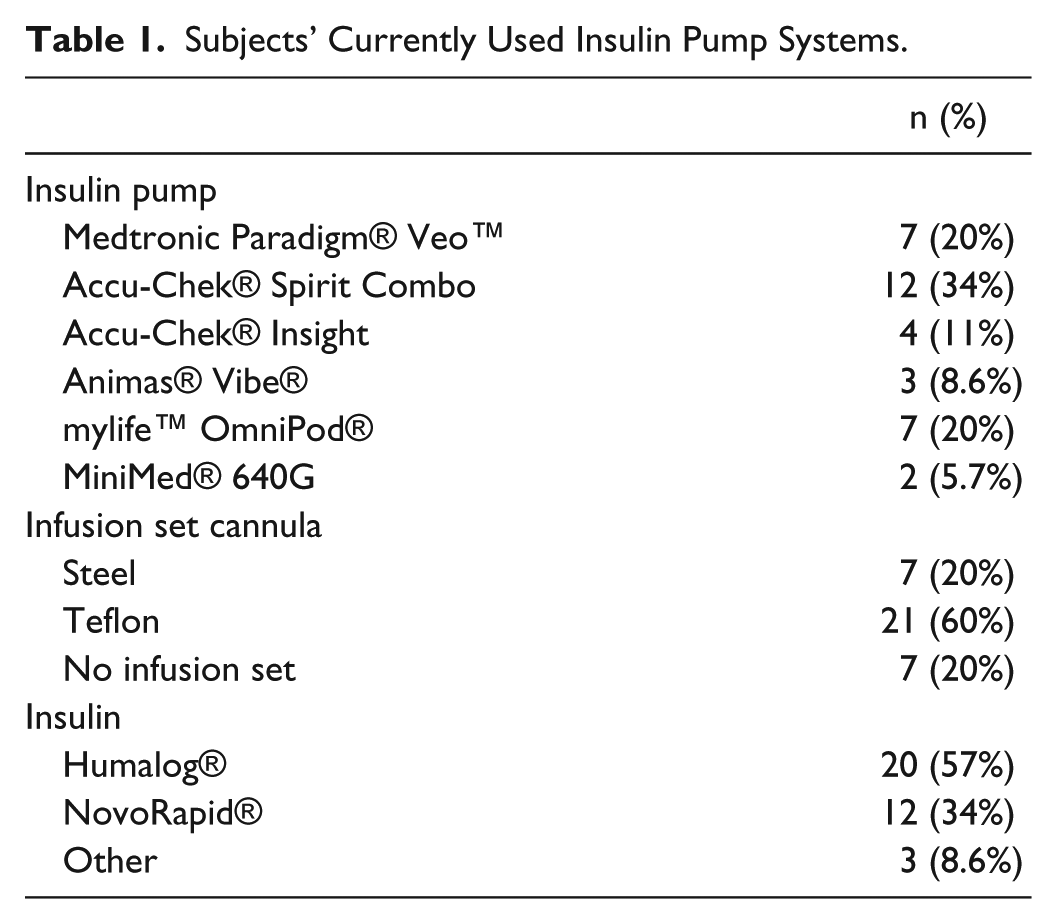
Most of the subjects (34%) used an Accu-Chek® Spirit Combo insulin pump before, followed by Medtronic Paradigm® Veo™ and mylife OmniPod® (20% each) and 60% already used an infusion set with soft cannula (Table 1). Subjects reported to usually change their infusion set every 2.8 ± 3.0 days and to have an insulin demand of 44.5 ± 40.0 U per day. Concerning their currently used insulin pump system, 57% of the subjects were very satisfied, 34% were quite satisfied, and 9% undecided.
Subjects’ Currently Used Insulin Pump Systems.
Insulin Pumps
In total 42 insulin pumps were used in the study; 7 pumps were replaced during the study for the following reasons: permanent electronic alarm (2), transient electronic alarm (1), and unintended rewind (4; pumps were replaced on request of the manufacturer to enable timely investigation but no pump failure was detected). None of the replacements was associated with an adverse event.
General Aspects
In general, 74% of subjects were very satisfied or quite satisfied with the pump system after 30 days of use (Figure 1). Especially the pump design (size, weight, wearing comfort) and the easy handling were appreciated by the subjects. Thus, 37% of subjects could consider switching from their pump to the new system, whereas 63% did not. The main reasons were missing functions like a bolus calculator, integrated connection to a BGM or smartphone or a remote control.

Subjects’ satisfaction with the new pump (after 30 days of use).
For most subjects (94%), the basic handling required little time to learn (Figure 2A) and they felt safe in performing their therapy with the new pump (77%).
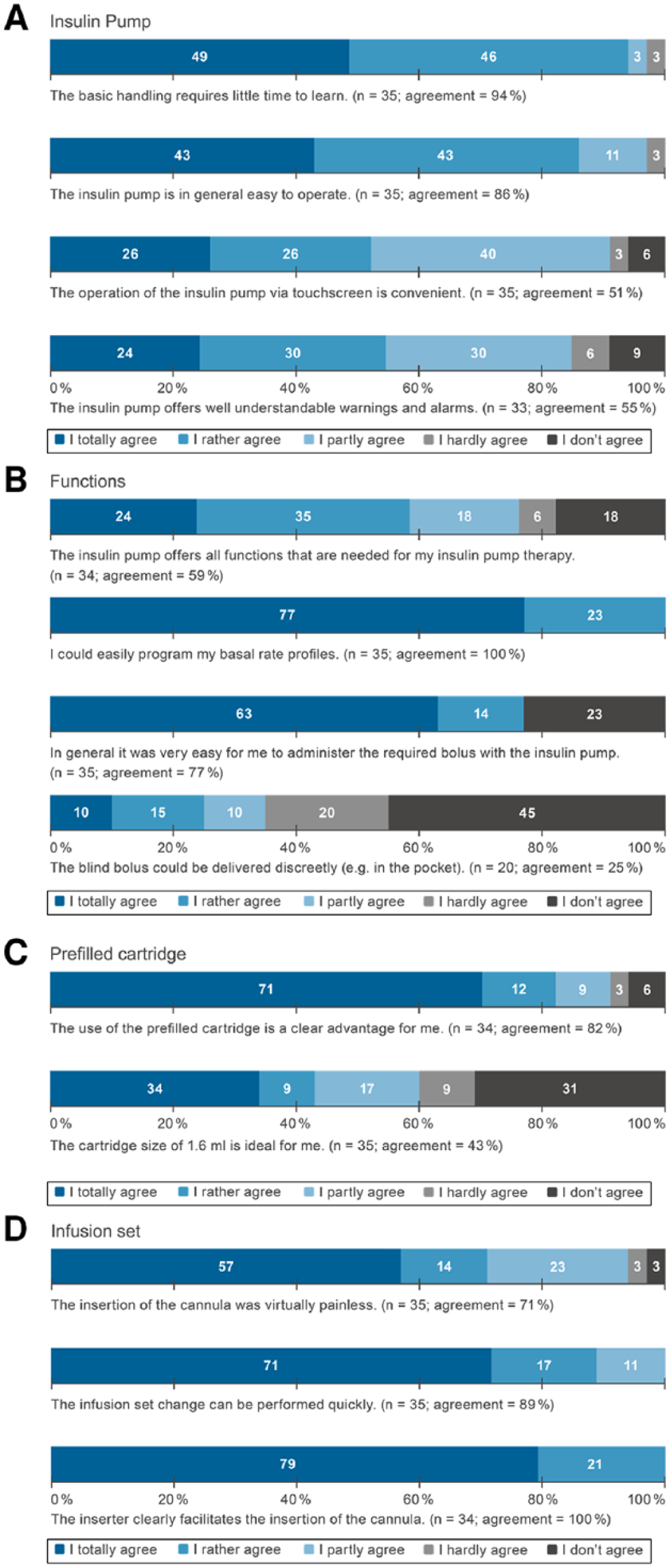
Subjects’ answers to questions about the insulin pump (A), functions (B), infusion set (C), and prefilled cartridge (D) (selected items). Due to rounding, minor differences between individual numbers and sums may occur.
Handling
The majority of subjects (86%) confirmed that, in general, the pump is easy to operate. The icons were easy to understand (74% agreement), whereas the operation via touchscreen was described less convenient (51% agreement upon convenient operation). Some subjects (15%) had difficulties in understanding warnings and alarms (Figure 2A).
Functions
For 59% of subjects, the pump offered all functions that are needed for their pump therapy. Basal rate and bolus administration were easy to handle for most subjects. Programming and changing a basal rate profile as well as switching between two profiles were described as easy by all subjects. The adjustment of a bolus size, the steps to deliver an extended bolus, and the setting of a combo bolus did not cause problems for the most subjects. However, the blind bolus function, that is, delivery of a bolus without having to unlock the touchscreen, was difficult for many subjects. A discreet blind bolus delivery was only possible for 25% (Figure 2B).
Infusion Set and Inserter
In total, subjects performed 406 infusion set changes during the home phase, of which 19% were unplanned. The main reasons for unplanned infusion set changes (Figure 3) were external influences, like pulled out, such as during change of clothes (34% of unplanned replacements), unsticking of the adhesive (22%), discomfort (14%), and occlusion alarms (14%). Overall, the infusion sets with Teflon cannula were used for 2.4 ± 1.0 days.
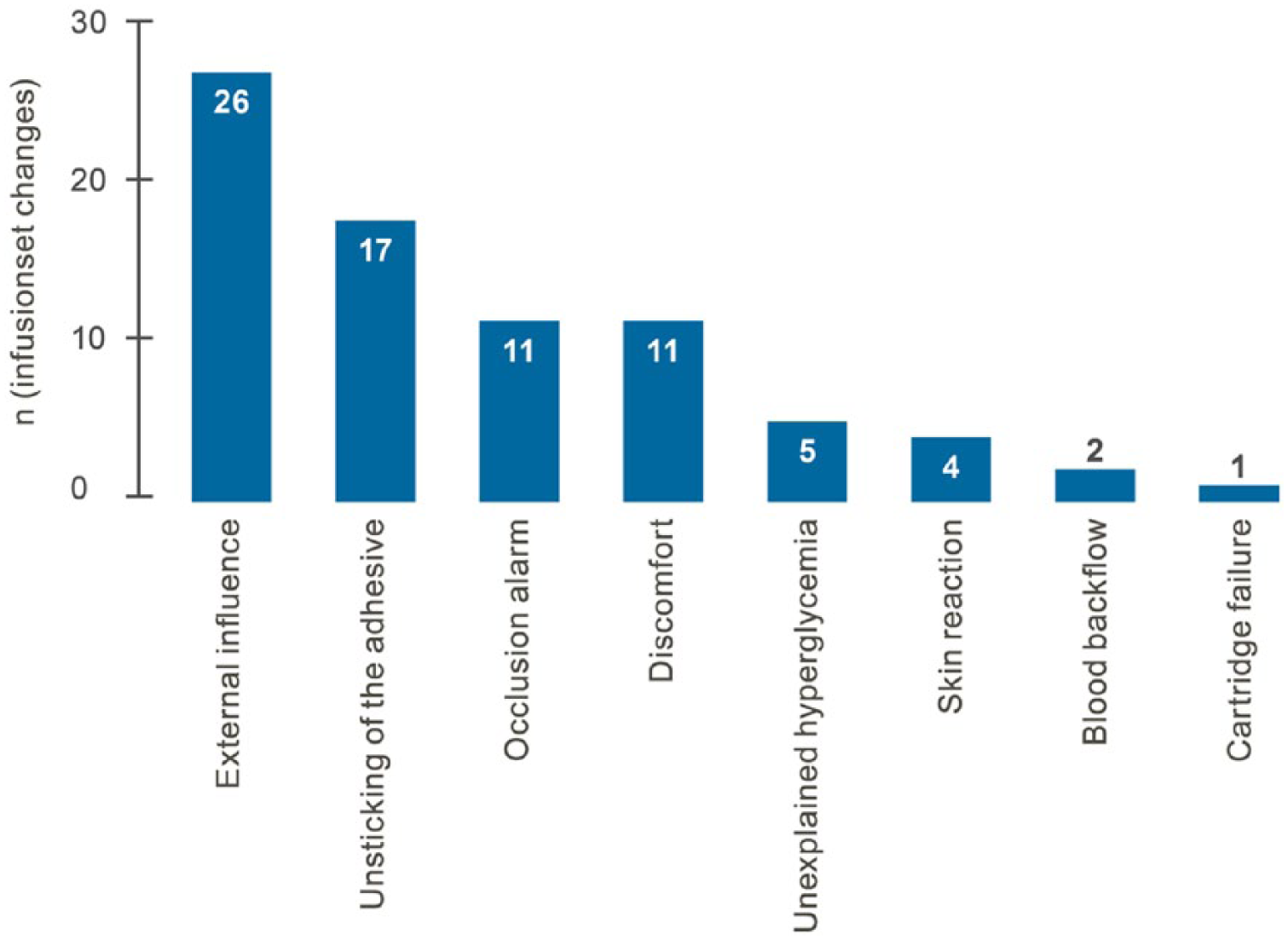
Main reasons for the 77 unplanned infusion set replacements of 406 infusion set changes.
The majority of subjects (88%) agreed that the 360° rotation of the infusion set is an advantage and offers flexibility in the choice of infusion sites. Most subjects (71%) classified the insertion of the cannula as virtually painless and the infusion set change was categorized as easy (94%) and quick (89%) (Figure 2C).
Subjects were free to use the inserting device or to manually insert the infusion set; in total, 98% of all infusion sets were inserted using the insertion device. Almost all subjects (97%) classified the operation with the inserter as easy and for all subjects the inserter clearly facilitated the insertion of the cannula (Figure 2C).
Prefilled Cartridge
All subjects agreed that the cartridge change can be done easily and most subjects favored the possibility of a change independently from the infusion set. Therefore, the use of the prefilled cartridge was a clear advantage for most subjects (82%). However, the cartridge size of 1.6 ml was rated as too small by 40% of the adult subjects (Figure 2D).
Insulin Pump History
Subjects maintained their usual therapy during the home use phase. Data from all pumps except one (exchange immediately after setting up) were analyzed regarding alarms and therapy events, in total 974 days were analyzed for the 35 subjects.
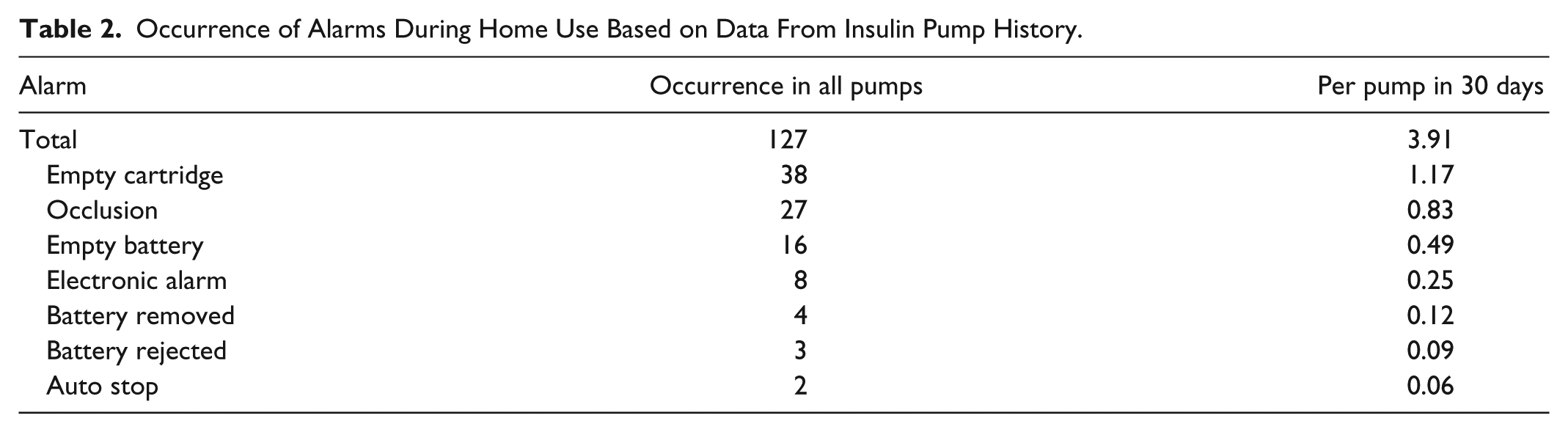
Alarms that occurred in all used pumps during the study are shown in Table 2. With the exception of the electronic alarms, all are expected in the daily use of the pump. Occlusion alarms occurred in 14 subjects, the maximum number of occlusion alarms per subject was 5. Of the 27 recorded occlusion alarms, 11 were the main reason for an infusion set change as described above.
Occurrence of Alarms During Home Use Based on Data From Insulin Pump History.
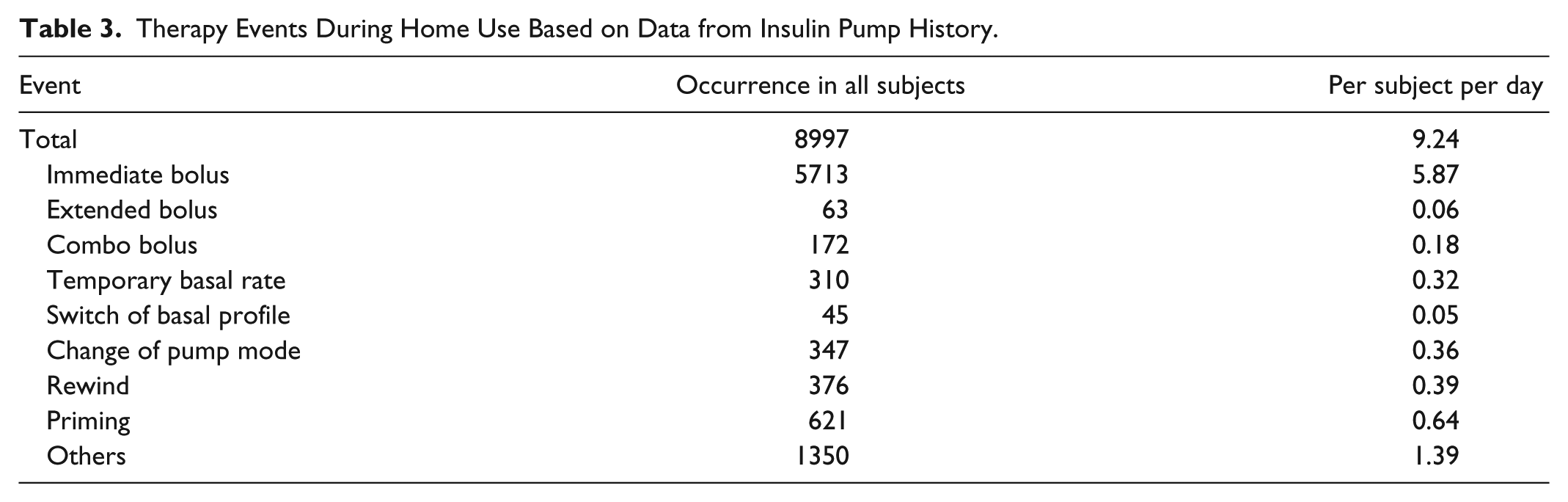
Subjects made in total 8997 registered inputs to their pumps to manage their insulin therapy (Table 3). Most actions were bolus delivery with clearly less use of extended and combo bolus than immediate bolus. The option of two different basal profiles was used by 10 subjects (29%), while the other 71% remained on one profile throughout the study. In addition, 21 subjects (60%) used the temporary basal function at least once during home use.
Therapy Events During Home Use Based on Data from Insulin Pump History.
Safety
During the study, 14 adverse events occurred in 8 subjects, of which one was serious (lower leg fracture, not related to the study devices). Two events were causally related to infusion set use (skin irritation and delayed healing of insertion sites). Both adverse device effects recovered without complications. In three cases of hypoglycemia and one case of hyperglycemia with ketonuria, a causal relationship to the pump system was considered unlikely by the study physician.
Discussion
In this user evaluation, a new insulin pump system was used by 35 subjects with type 1 diabetes experienced in CSII under everyday conditions. After 30 days home phase, no safety concerns were raised and the experiences with the system were documented in the questionnaire.
The majority of subjects was satisfied with the new pump after the home use phase. Nonetheless, only 37% of them could consider switching to the pump system, probably explained by the high satisfaction with their own pump. Furthermore, most participants of this study were used to a connected BGM and used a bolus calculator (24 of 35 participants, respectively 69%) in their current therapy. The study was not designed to compare the participants’ own pump system to the new pump. The distinctive features of the new pump, that is, easy and intuitive handling and appealing design, were largely confirmed and appreciated by the users. Especially for patients naïve to CSII, the new pump might provide an easy and safe way to this kind of therapy without overwhelming them.
The home use revealed two limitations of the pump system: the blind bolus function was perceived as too complicated and the size of the prefilled cartridge was rated as too small by many subjects. However, the prefilled cartridge as such was seen as an advantage.
Although subjects found functions like extended or combo bolus, switch of basal rate profile or temporary basal rate easy to handle, many subjects did not make use of these functions. Other studies about the daily use of insulin pump also demonstrated that the use of advanced functions like temporary basal rate is less common.5-7
Regarding the infusion set, subjects did not report any difficulties or limitations and perceived the insertion as virtually painless. This is important for an effective insulin pump therapy since difficult handling and painful insertions can impair patients’ compliance with CSII.8,9
In addition to the user evaluation of infusion sets, this study also provides insight into their actual use and conditions of changes. In total, 19% of all infusion set changes were unplanned. Comparable results regarding unplanned changes were presented in a study evaluating two other insulin infusion sets used at home for 4 weeks. 10 In the current study the main reasons for early infusion set replacements were external influences and unsticking of the adhesive. In contrast, other studies reported technical or insulin delivery issues, like kinked cannulas, as most common reasons for premature changes.10-13
Occlusion alarms were responsible for 14% of all premature infusion set replacements. Compared to other published studies, the observed occlusion rate of 4.3 in 100 infusion sets was rather low.10,11 An undetected interruption of insulin delivery leads to hyperglycemia and diabetic ketoacidosis may occur upon prolonged insulin retention. 14 In this study one case of hyperglycemia with ketonuria was documented; however, no occlusion could be verified and a causal relationship to the pump system was considered unlikely.
The clinical assessment of adverse events (2 infusion-set-related adverse events in 2.8 pump years) shows that the new pump can be regarded as a safe device under everyday conditions, and none of the technical issues that occurred led to an adverse event. The observed defect rate (3 pump defects in 2.8 pump years) appears larger than the rate reported for a 5-year observational study with different insulin pump models. 15 All insulin pump failures were analyzed and findings were considered by the manufacturer for an updated pump version.
Data about the specific use of insulin pump functions and infusion set problems are scarce. Although the investigated pump does not exemplify other available systems, the obtained data that represent approximately 3 years of pump usage give a valuable impression of interactions between the users and their insulin pumps.
Conclusion
The majority of the users were satisfied with the tested insulin pump system, and the system was safe for the use under everyday conditions by this study population. Insights into the specific usage of insulin pump features and nature of infusion set changes may be helpful for the development of upcoming devices.
Footnotes
Acknowledgements
The authors would like to thank the IDT staff who contributed to the conduct of the study.
Abbreviations
BGM, blood glucose meter; CSII, continuous subcutaneous insulin infusion.
Declaration of Conflicting Interests
The author(s) declared the following potential conflicts of interest with respect to the research, authorship, and/or publication of this article: GF is general manager of the IDT (Institut für Diabetes-Technologie, Forschungs- und Entwicklungsgesellschaft mbH an der Universität Ulm, Ulm, Germany), which carries out clinical studies on the evaluation of BG meters and medical devices for diabetes therapy on its own initiative and on behalf of various companies. GF/IDT have received speakers’ honoraria or consulting fees from Abbott, Ascensia, Bayer, LifeScan, Menarini Diagnostics, Novo Nordisk, Roche, Sanofi, Sensile, and Ypsomed. DW, EZ, SP, and CH are employees of the IDT. LK and AB are employees of Ypsomed AG, Switzerland.
Funding
The author(s) disclosed receipt of the following financial support for the research, authorship, and/or publication of this article: The study and writing of the article were funded by Ypsomed AG Switzerland.
