



Abstract
Disciplinary outcomes and science educational opportunities both shape student outcomes, with research suggesting that non-advanced science placement via academic tracking and exclusionary discipline both have negative associations with student outcomes, especially for marginalized students. Using a Quantitative Critical Race Theory (QuantCrit) approach, we examined the relationship between in-school-suspension (ISS) and advanced science placement, doing a comparative group analysis that analyzes heterogeneity in gender racial/ethnic subgroups. We found that for most student groups, placement in non-advanced coursework was associated with higher levels of ISS attendance. Drawing on our findings, we recommend culturally responsive science education to promote equity for marginalized students who experience systems of discrimination via tracking and exclusionary discipline.
Both inequitable academic tracking policies and exclusionary discipline disadvantage traditionally marginalized students in their path towards science success (Edosomwan & Williams, 2023; Edosomwan et al., 2023; Gregory et al., 2010). Exclusionary discipline is any disciplinary consequence that removes students from the classroom, such as in-school suspension (ISS), out-of-school suspension, or expulsion. It disproportionately impacts marginalized students, who are far more likely to experience exclusionary discipline in the United States (Liu et al., 2022). Marginalized students are those from traditionally disadvantaged groups such as Black students, Latine students, emergent bilingual students, and students from low-income homes (Liu et al., 2022; Nix & Perez-Felkner, 2019). In science fields specifically, marginalized groups may also include female students (Nix & Perez-Felkner, 2019). Tracking is an international practice, with the United States using course-by-course tracking wherein students are tracked into different levels of coursework, such as advanced, honors, or on-level coursework, where students in different tracks take completely different courses within the same schools (Chmielewski et al., 2013).
Tracking in the United States has been linked to racial gaps in science-related fields, and the gaps in high school advanced science courses explain some of the racial gaps in mathematics and science degrees (Sadler et al., 2014; Warne et al., 2019). Marginalized students are more likely to suffer from exclusionary discipline that takes them out of the classroom (Bottiani et al., 2017; Skiba et al., 2018). On the science side, scholars have found that marginalized students who are also more likely to experience exclusionary discipline are also less likely to be placed into advanced science courses that promote their success in gateway college science courses (Fischer et al., 2023).
While some have sought to look at the relationship between discipline, mathematics achievement, and mathematics tracking, such as the work of Jabbari and Johnson (2020, 2022), Ibrahim et al. (2021), Snidal (2021), and Edosomwan and Williams (2023), a substantial gap is found when searching for that research in science education. When it comes to science education and discipline, the research is very sparse, with only Silvey (1995) finding no association between ISS and science achievement. Analyzing that disciplinary data through the lens of science coursework would contribute to the existing literature by placing science into focus.
Considering the efforts closing gaps for marginalized students in science, analyzing the intersection between science course taking and exclusionary discipline is an important step in closing gaps in advanced science participation. Many scholars have called for solutions to promote marginalized students’ science participation through strategies like culturally responsive science education (CRSE). CRSE aims to validate and empower the backgrounds and experiences of marginalized students, which can improve science achievement (Lee & Buxton, 2010; Mensah, 2021). Those gaps are both racial, with Black and Latine students having lower access and enrollment compared to White and Asian students in rigorous science course taking, and gendered, with women having lower levels of science participation when compared to men (Morton & Smith-Mutegi, 2022; Mutegi & Atwater, 2022; Perez-Felkner et al., 2017). This overlap of marginalization by race and gender in these different forms of disadvantage lends itself to an analysis through intersectionality.
Quantitative Critical Race Theory (QuantCrit) approaches consider race, gender, and class in the analysis while advocating for social justice (Fong & Irizarry, 2025; Gillborn et al., 2018; Van Dusen & Nissen, 2021). Therefore, the objective of this research project is to analyze the relationship between disciplinary outcomes and science course-taking trajectories of students from a QuantCrit lens using analysis of National Center of Educational Statistics (NCES) administered High School Longitudinal Survey Data (HSLS:09) and present recommendations to promote equity in schools. We aim to answer the following research questions:
How do the odds of attending ISS vary based on advanced science coursework? How do the odds of attending ISS based on advanced science coursework vary across Asian, Black, Latine, Multiracial, and White racial subgroups? How do the odds of attending ISS based on advanced science coursework vary across Asian, Black, Latine, Multiracial, and White male and female subgroups?
To answer these questions, we will first review the literature concerning tracking and discipline with a focus on science tracking. Then we will explain our QuantCrit theoretical framework before explaining and performing a logistic regression analysis of science track and ISS outcomes. After defining our results, we will interpret them through the QuantCrit lens. We will conclude with recommendations for promoting equity in science and disciplinary outcomes.
Literature Review
Science Tracking Practices
In U.S. science classrooms, students are often sorted into courses (e.g., lower- or higher-track science classes), placing students into several levels such as advanced (e.g., honors, advanced placement [AP]), general, or remedial classes based on their perceived abilities or interests (Oakes, 2005; Thornton, 2025). This practice, known as academic tracking, frequently contributes to disparities in access to educational opportunities (Chmielewski et al., 2013; Hirschl & Smith, 2023; Mickelson & Everett, 2008; Oakes, 2005; Tyson, 2013). Here, we designate high-track science courses as courses that are designated as advanced or honors that teach material that goes beyond the required curriculum, while low-track classes are those that are standard or only go as far as what is required by the state instead of recommended for college preparatory purposes (Perez-Felkner et al., 2017; Schnittka, 2012). That said, while academic tracking in science classes aims to tailor instruction to student needs, it often perpetuates educational inequities. Tracking reflects systemic biases, resulting in students from privileged backgrounds being overrepresented in advanced courses, while those from low-income or marginalized communities are often placed in lower tracks (Batruch et al., 2023; Gamoran, 1992; Hirschl & Smith, 2023). Thus, tracking can limit marginalized students’ access to high-quality instruction, rigorous curricula, and future academic and career opportunities (Oakes, 2005; Wronowski et al., 2022). The consequences of these practices are far-reaching.
Students assigned to lower tracks frequently encounter less challenging curricula, fewer resources, and reduced expectations, all of which can harm their self-perception and diminish their enthusiasm for pursuing careers in science-related fields (Oakes et al., 1990; Warne et al., 2019). In contrast, students placed in advanced tracks are more likely to benefit from enriched educational settings that nurture critical thinking and problem-solving skills, equipping them for higher education and Science, Technology, Engineering, and Mathematics (STEM) careers and to make higher grades in college science courses (Giersch, 2018; Loehr et al., 2012). Multiple studies have found different, higher-level instructional activities used in advanced track courses (Donaldson et al., 2017; Mayer et al., 2018). High track science courses tend to use more inquiry-based learning, which is considered the best practice for science education and leads to higher science grades in college (Gautreau & Binns, 2012; Schnittka, 2012). Low track students also tend to feel more passive instead of seeing themselves as active doers of science (Pimentel & McNeill, 2016).
Individual student characteristics—including race, gender, and social class—significantly influence track placement (i.e., different levels of science classes), even when accounting for other factors (Mickelson & Everett, 2008). Students from minority racial or ethnic backgrounds and students from lower socioeconomic backgrounds are often underrepresented in advanced science courses and therefore deprived of the benefits that come with those courses (Pimentel & McNeill, 2016; Young & Young, 2018). Oakes et al. (1990) highlighted that minority students often have limited access to advanced science courses due to systemic biases in educational tracking, a finding later reinforced by Bottia et al.'s (2021) research synthesis on the college STEM participation of minorized students. Addressing these disparities necessitates a critical examination of tracking practices, particularly in science education, and the implementation of inclusive educational strategies that provide equitable opportunities for all students to succeed in science.
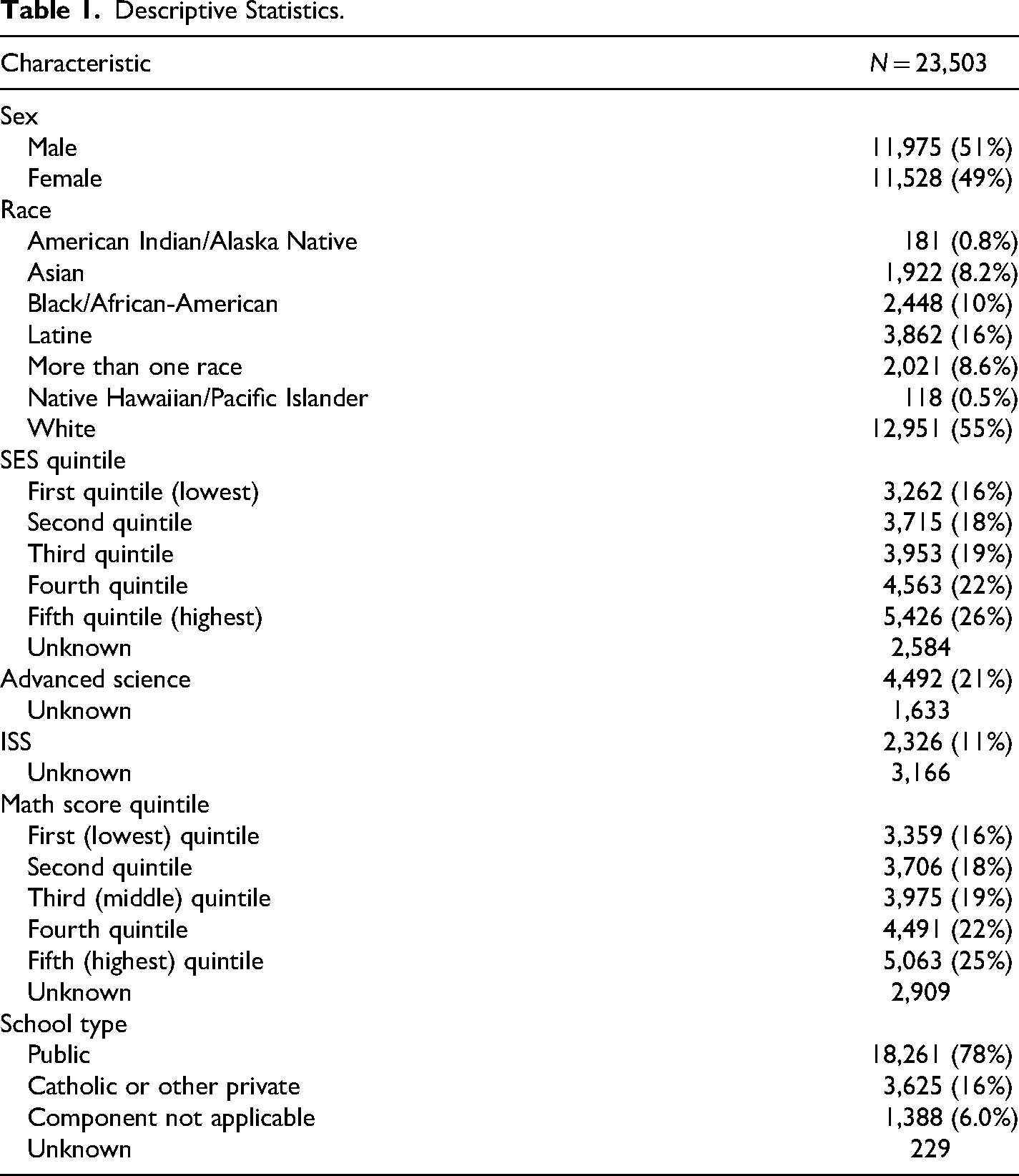
Descriptive Statistics.
Access and Equity in AP High School Science
AP science is one of the options for advanced coursework that high school students can select, and it aims to prepare students for the demands of higher education. AP courses are typically part of the higher track in schools, catering to advanced students who are often expected to handle more rigorous content and a heavier workload compared to their peers, with the ability to gain college credit after passing an exam (Thomas et al., 2013). In addition to AP science, high school students also have the option of the International Baccalaureate (IB) program (Conger et al., 2021). The IB program, which focuses on critical thinking and global perspectives, is generally viewed as a high-track option similar to AP. However, it remains rare in the United States, with less than 5% of high schools offering it (IB Programme, 2016). Of note, there is little research comparing the workload or rigor of AP science courses to those of IB or dual enrollment courses. This gap leaves more questions about how these advanced options compare in preparing students for college (Thomas et al., 2013).
AP science courses, as part of the higher track, demand significantly more effort and homework compared to regular or honors-level science classes, which are often aimed at lower or intermediate tracks. For instance, research has shown that students who participate in AP science courses tend to perform better in their college-level science courses than those who do not participate in AP science courses, suggesting that this early exposure to challenging material provides long-term academic benefits (Conger et al., 2021; Sadler & Tai, 2007). Beyond academics, these courses also develop skills like problem-solving and analytical thinking, which are essential for navigating STEM careers (Crisp et al., 2009).
Despite the benefits of AP courses, access to these opportunities is not equally distributed. Schools in wealthier areas, with predominantly White student populations, often have well-established AP programs with multiple course offerings, while schools in low-income or minority–majority areas frequently lack such options (Perna & Thomas, 2009). There are also differences based on school location, with rural school districts being more likely to lack access to AP courses while suburban districts are more likely to have that access (Gagnon & Mattingly, 2015; Grant, 2022). That said, this disparity creates a systemic barrier that prevents many capable students from taking part in advanced science education, especially those from marginalized backgrounds. Marginalized students are less likely to be enrolled in AP courses and also less likely to have teachers and mentors who encourage them to pursue these opportunities (Young & Young, 2018). These inequities in access have a ripple effect, ultimately reducing the diversity of students pursuing STEM degrees and careers (Wang & Degol, 2013).
The reasons behind these disparities are both structural and systemic. Schools in low-income areas often lack the funding needed to support AP programs, which typically require updated lab equipment, teacher training, and curriculum resources (Iatarola et al., 2011). Teacher shortages in these areas exacerbate the issue, as schools struggle to hire educators with the specialized knowledge required to teach AP science courses (Edwards et al., 2025). Even when advanced courses are available, biases—both implicit and explicit—can affect which students are encouraged to enroll. Teachers and counselors may unintentionally steer minority or low-income students away from AP classes, further widening the gap (Lulla, 2023; Ward, 2020; Xu et al., 2021).
Efforts to Promote Equitable Access to Advanced Science
Efforts to address the inequities associated with tracking include implementing detracking policies and promoting heterogeneous grouping in rigorous, advanced science classes. Mixed-ability advanced classrooms can enhance learning outcomes for all (Thornton, 2025). Here, we refer to detracking where all students are placed in the highest-level course to gain the benefits of advanced coursework (Atteberry et al., 2019; White, 2021). However, successful detracking requires comprehensive support, including professional development for teachers, curriculum adjustments, and ongoing assessment to ensure that all students are challenged and supported appropriately (Rubin, 2006; Watanabe, 2007).
Addressing these inequities requires systemic change and intentional efforts at every level of education. Policymakers and school districts must prioritize equitable resource allocation, ensuring that schools serving underrepresented communities have the funding and support needed to offer robust AP science programs (Lynch et al., 2018). Furthermore, professional development programs for teachers should emphasize equity in course placement, helping educators recognize and challenge the biases that often exclude marginalized students (Lulla, 2023; Xu et al., 2021). Outreach initiatives, such as mentoring programs or partnerships with local universities, can encourage students from underserved communities to pursue AP science courses and build confidence in their ability to succeed (Wilson & Grigorian, 2019). By creating a system where all students have access to high-quality science education, we can begin to address the disparities that limit diversity and opportunity in STEM.
Racial and Gender Disparities in ISS Outcomes
ISS is both disproportionately applied to Black and male students and has negative associations with student outcomes. ISS is usually a punitive form of school discipline where schools take students out of the standard classroom and place them in isolated rooms with restrictive rules as they complete assignments (Morris & Howard, 2003). Wiley et al. (2022) studied the ISS rooms of one urban, diverse middle school, finding that it disproportionately impacted Black and Brown students while limiting their educational opportunities. The wider body of research has found negative associations between ISS and student outcomes, with Cholewa et al. (2018) using nationally representative data to find 4.7 times greater odds of dropping out for students who attended ISS when controlling for student characteristics such as academic achievement. Additionally, in line with the data on disproportionate discipline, the study found Black, low-SES, special education, and male students were more likely to receive ISS than their peers.
The U.S Department of Education, Office of Civil Rights (2023) reports that different racial/ethnic groups and genders faced disproportionate rates of exclusionary discipline. Black boys and girls, White boys, and boys of two or more races were overrepresented in ISS rates. Black boys were 8% of public-school enrollment, but 15% of them received ISSs. Black girls were 7% of the population, while being 8% of the ISS rates. White boys were 24% of enrollment, but 37% of students who experienced ISS, while boys of two or more races were 2% of enrollment but 3% of the ISS population. Meanwhile, Black girls and Black boys are almost two times more likely to receive ISSs compared to White girls and White boys.
Many scholars argue that this disproportionate discipline for marginalized students comes from bias and a lack of effective classroom management. Subjective infractions such as insubordination tend to result in harsher punishments for Black and Brown students compared to white students, which is heightened by racial bias (Cherng, 2017; Skiba et al., 2011). Additionally, teachers without effective classroom management strategies may resort to referrals and suspensions instead of alternative consequences that do not deprive students of learning opportunities (Evertson & Weinstein, 2013). Teachers’ racial bias can also lead to more negative perceptions of students based on their race and gender, which leads to harsher discipline (Erickson & Pearson, 2022; Irizarry, 2015; Pyne & Musto, 2023).
Exclusionary Discipline and Academic Performance and Tracking
Scholars have found that exclusionary discipline in the United States is associated with lowered student achievement. That research mostly looks at general test scores and suspensions. Pearman et al. (2019) discovered a strong positive association between the Black-White discipline gap and the Black–White test score gap, even when controlling for other factors through an analysis of data from the Stanford Education Data Archive and Civil Rights Data Collection. These suspensions also have associations with affective outcomes, such as lowered math efficacy for Black students who experience suspensions at mostly White schools (Johnson & Jabbari, 2022). Meanwhile, Ibrahim and Johnson (2020) found that suspension led to lowered mathematics scores years later, while Annamma et al. (2014) argued that school disciplinary racial disproportionality constrains student achievement.
In addition to leading to lower-level coursework, multiple studies have found that exclusionary discipline disrupts students’ advanced course-taking pipelines, especially in mathematics. Students who self-reported being in college preparatory coursework had lowered rates of both in-school and out-of-school suspension (Edosomwan & Williams, 2023; Edosomwan et al., 2023). Snidal (2021) analyzed HSLS:09 and Civil Rights Data Collection of 2012 to find that suspension cut off students on track to take advanced mathematics, in particular calculus, in high school, while being on the college preparatory track in mathematics led to avoidance of suspension. Similarly, Edosomwan and Williams (2023) as well as Jabbari and Johnson (2022) found similar associations between suspensions and mathematics course-taking trajectories (Edosomwan & Williams, 2023; Ibrahim et al., 2021; Jabbari & Johnson, 2022). Only Silvey (1995) has previously explicitly studied the science and ISS, and they found no difference in a sample of 32 ninth and tenth-grade students, who spent a school week in ISS on achievement. However, that study had a small sample size and was conducted nearly 30 years ago. Therefore, this current study is poised to fill in an important gap in the research literature.
Culturally Responsive Science Education for Marginalized Students
Traditional science education does not incorporate students’ backgrounds or linguistic diversities. CRSE will provide cultural competence for students from marginalized communities, and a significant need exists for CRSE to be included in teacher preparation programs as a way to advance equity in science education (Brown, 2017; Brown et al., 2018). CRSE has its roots firmly in Ladson-Billings’ (1995, 2014) culturally relevant pedagogy (CRP), which advocates for placing students’ experiences at the forefront of how they engage in learning. CRP consists of three components: academic achievement, or the intellectual growth of students based on teacher instruction; cultural competence, where teachers support students in appreciating and celebrating their culture and learn at least one culture besides their own; and sociopolitical consciousness, where school skills are used to solve real-world problems. Essentially, students develop their ability using their prior cultural knowledge. Using prior cultural knowledge is a fundamental principle of culturally relevant pedagogy, and it can be applied to multiple content areas and even schoolwide. Critical scholars have directly linked the lack of CRP with disciplinary disproportionality for Black students, holding it up as a potential solution for the discipline and achievement gap (Dumas & Ross, 2016; Lustick, 2017).
Preparing the next generation of science educators calls for including CRSE in teacher education programs to prepare preservice teachers. A current response to this problem is the Science Teachers Are Responsive to Students (STARTS), a professional development program designed to support teachers in adding culturally competent science teachers. Teachers who participated in STARTS created a culturally responsive science unit where teachers connected student backgrounds and experiences in the curriculum (Brown & Crippen, 2016). STARTS is an exemplar of providing effective CRSE professional development for teachers. Professional development that supports language support or inclusion integration leads educators to create a more culturally responsive classroom environment (Charity Hudley & Mallinson, 2017).
Culturally responsive science education is critical for improving marginalized students’ performance in science education (Thevenot, 2022). By placing student backgrounds and experiences central to their ability to construct new knowledge, students will remain engaged in the content and develop a long-term interest in science and higher levels of science achievement (Mensah, 2021). It may support student engagement and learning, especially for marginalized students who traditionally have been disadvantaged by school structures that work against them with disproportionate discipline and deprivation of rigorous instructional opportunities (Annamma et al., 2014). These disadvantages stem from structural discrimination, as will be made evident in our QuantCrit Framework.
Theoretical Frameworks: QuantCrit
This study uses QuantCrit as its theoretical framework (López et al., 2018; Gillborn et al., 2018). QuantCrit analyzes quantitative data through the tenets of Critical Race Theory (CRT). The CRT analyzes why racial inequities remain in the United States even while the law calls for equal treatment (Delgado & Stefancic, 2017). It posits that racism is permanent and embedded in the U.S. systems and that people of color must share counter-stories that defy negative stereotypes. Ladson-Billings and Tate (1995) articulated the use of CRT in education research, arguing that race is important in determining inequities in the US educational system and that the intersection of race and property allows us to better understand inequities in schools.
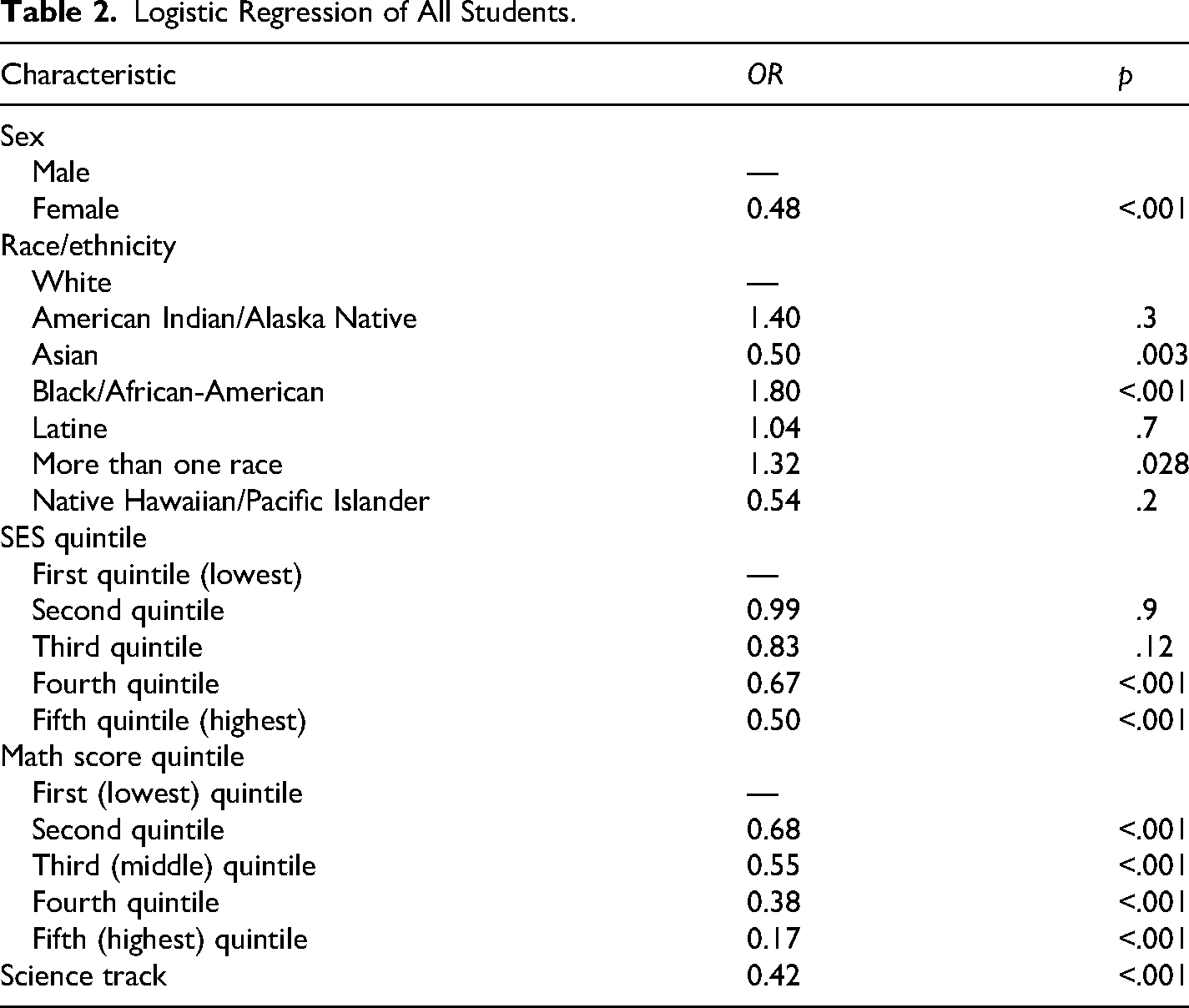
Logistic Regression of All Students.
QuantCrit, as an extension of CRT for quantitative research, argues that numbers are not neutral, do not speak for themselves, and should be used for social justice (Gillborn et al., 2018). It emphasizes that racism is permanent and shapes the way we produce and interpret the data. QuantCrit also acknowledges the racist history of inferential statistics, which were developed by eugenicists to justify white supremacy, and seeks to rectify this history of numerical racism by applying a CRT lens to quantitative methods (López et al., 2018; Zuberi & Bonilla-Silva, 2008). Intersectionality looks at multiple identities to find differential experiences and outcomes for people with different intersectional identities, such as a Black woman who suffers from both racism and sexism in a different way than Black men or White women (Crenshaw, 1991).
In addition to the call for CRT and QuantCrit in general education (Castillo & Strunk, 2024; Young et al., 2025), both gifted and science education researchers have called for more analysis that uses intersectional frameworks that acknowledge racism, classism, and sexism in their interpretation of data (Chen et al., 2024; Priddie & Renbarger, 2023). QuantCrit analyzes quantitative data by considering the context of how people have differential experiences and outcomes based on their intersecting identities, in this case, race, gender, and SES, which are commonly noted with intersectional frameworks (Van Dusen & Nissen, 2019). Advanced and gifted course-taking is often considered a form of property dominated by White students as a form of property when viewed through a CRT lens, making it a suitable avenue for QuantCrit research (Diamond & Lewis, 2022; Priddie & Renbarger, 2023). As this study specifically analyzes different student groups based on intersecting racial/ethnic and gender identities and advanced science course taking, QuantCrit is an appropriate theoretical framework.
Methods
Data
This analysis uses data from the High School Longitudinal Study of 2009 (HSLS:09) administered by the Department of Education's National Center for Education Statistics (National Center for Education Statistics, 2016). The base year data was collected by a random sample of ninth graders with a follow-up in the 11th grade. There were 1,889 eligible schools, of which 944 participated, in addition to 25,206 eligible students, of which 21,444 responded. We specifically looked at the data from the follow-up study administered in 2012 while students were in their junior year of high school. The sample size is n = 23,503. The descriptive statistics of the unweighted original sample are below in Table 1, with unknown to designate missing and non-response data.
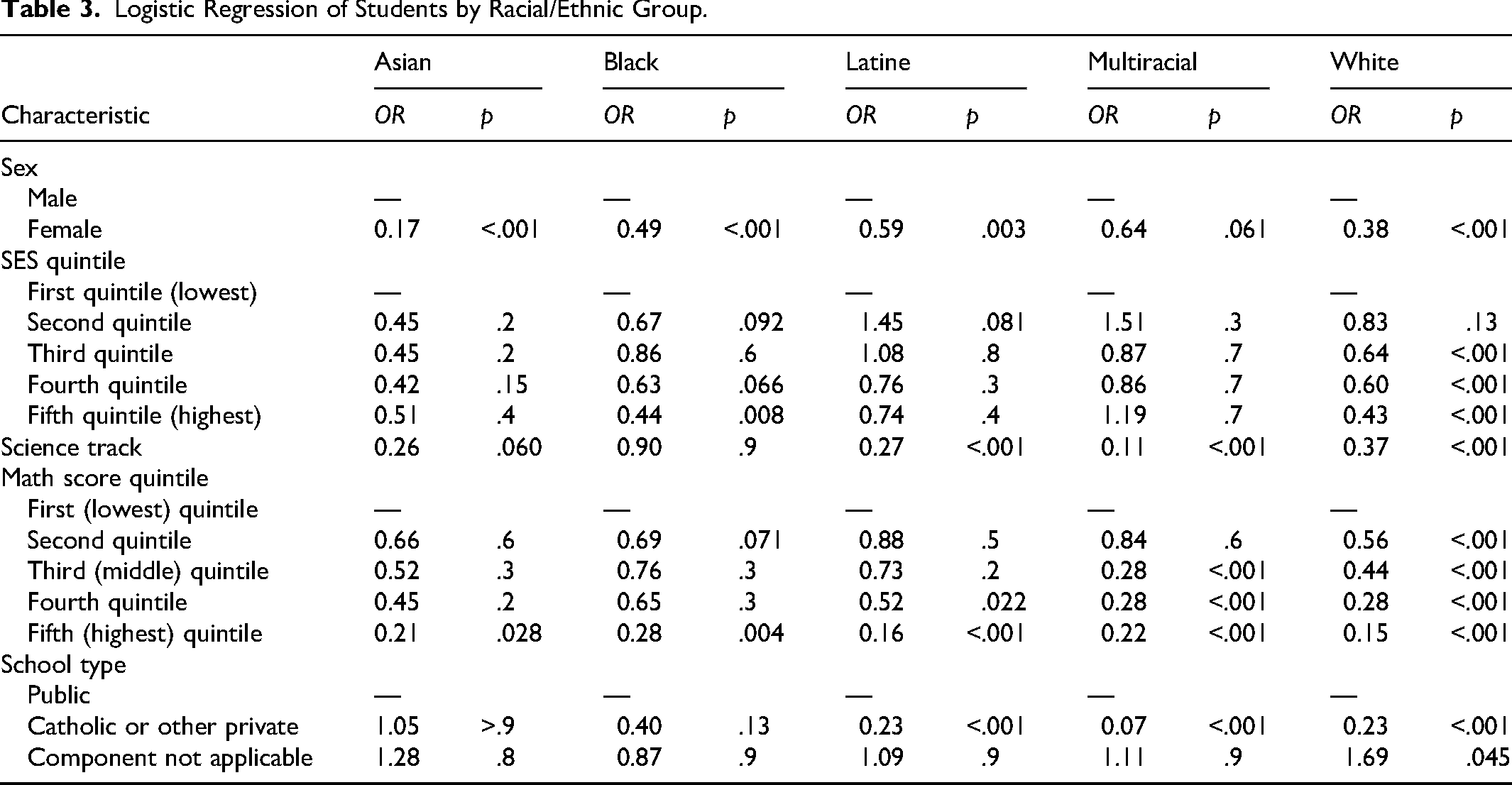
Logistic Regression of Students by Racial/Ethnic Group.
Variables and Analysis
Our dependent variable was the binary variable of whether students had gone to ISS. The control variables were whether the school was public or private (school type) and mathematics test score quintiles from a standardized mathematics exam. No science exam was given, so mathematics scores were used as a marker for achievement. Independent variables of interests were race (American Indian/Alaska Native, Black/African-American, Latine, More than one race (Multiracial), Native Hawaiian/Pacific Islander, White), gender (male, female), and socioeconomic status quintile (created based on parent income, occupational prestige, and education), and science track (advanced science compared to non-advanced science).
For advanced science, we included those who were classified as taking advanced science credit based on the literature for what is considered advanced science (Pimentel & McNeill, 2016; Schnittka, 2012). One example was taking extra science courses beyond the minimum biology, chemistry, and physics course requirements. The other factor for advanced science was taking AP or International Baccalaureate (IB) Science, which are college-level courses taken in high schools. If they took at least one of those courses in high school, we counted them as advanced science students. Information about dual enrollment for science or honors science courses was not indicated in the question regarding the highest science course taken.
While we use the racial categories within the HSLS:09, we acknowledge the issues of using those categories without interrogating their sources, as categories are not neutral or natural (Gillborn et al., 2018; López et al., 2018). Secondary datasets often conflate race and ethnicity in ways that do not account for the differences between different ethnic groups within broader categories, reinforcing the concepts of “Asian” and “Latine” as a monolith instead of being made of multiple different cultures and ethnicities (Garcia & Mayorga, 2018). We set White as the racial reference in our first logistic regression while acknowledging the problematic assumption of White as the norm, simply to indicate that this data matches the usual trends in data about exclusionary discipline. Our analysis uses comparative group analysis, where analyses are performed separately for different subgroups to observe the heterogeneity within groups (Carter & Hurtado, 2007). Using the R survey package, we performed three rounds of logistic regression with survey weights: the first logistic regression with survey weights for all students, the second logistic regression separately for the racial/ethnic subgroups of interest (Asian, Black, Latine, Multiracial), and the third logistic regression of racial gender subgroups. Missing data were handled with multiple imputations with chained equations using the R mice package (Buuren & Groothuis-Oudshoorn, 2011). Here are the equations for the three separate rounds of logistic regression:
Logit(ISS) = β0 + β1Race + β2Gender + β3SES + β4ScienceTrack + β5MathScore + β6Public/Private + ε Logit(ISS) = β0 + β1Gender + β2SES + β3ScienceTrack + β4MathScore + β5Public/Private + ε Logit(ISS) = β0 + β1SES + β2ScienceTrack + β3MathScore + β4Public/Private + ε
We report the results of the logistic regression as odds ratios. Odds ratios greater than one indicate a higher likelihood, equal to one indicates equivalent likelihood, and less than one indicates lower likelihood. Model subsample sizes were reported with Cragg–Uhler Pseudo R2 for model fit.
Results
The first logistic regression had all students in the model (see Table 2). While all students were in the model (n = 23,503, Pseudo R2 = .152), we found that girls were less likely than boys to experience ISS (OR = 0.48, p < .001). For racial groups, Asian students were less likely (OR = 0.5, p = .003), and Black and Multiracial students were more likely (Black: OR = 1.8, p < .001; Multiracial: OR = 1.32, p = .028) to experience ISS when compared to White students. Across different socioeconomic groups, students in the second, third, fourth, and fifth quintiles were compared to those in the first (lowest) quintile. Students in these higher quintiles were significantly less likely than those in the first quintile to experience ISS (Second: OR = 0.68, p < .001, Third: OR = 0.55, p = .014; Fourth: OR = 0.38, p < .001; Fifth (highest): OR = 0.17, p < .001). Students taking advanced science were less likely than those not enrolled in advanced science to go to ISS (OR = 0.42, p < .001).
Racial/Ethnic Subgroup Analysis
The racial groups of interest models had different levels of fit and different patterns across groups (Asian: n = 1,922, Pseudo R2 = .189; Black: n = 2448, Pseudo R2 = .082; Latine: n = 3,862, Pseudo R2 = .103; Multiracial: n = 2,021, Pseudo R2 = .174; White: n = 12,951, Pseudo R2 = .183). Looking at the patterns for the different racial groups, for Black, Asian, and Latine students, gender and socioeconomic status were the only statistically significant factors (see Table 3). Girls were less likely than boys to experience ISS for all racial groups except Multiracial students (Asian: OR = 0.17, p < .001, Black: OR = 0.49, p < .001, Latine: OR = 0.59, p = .003, White: OR = 0.38, p < .001). SES quintile was only significant for the fifth (highest) compared to the first (lowest) quintile for Black students (OR = 0.44, p < .001). For White students, the third (OR = 0.64, p < .001), fourth (OR = 0.60, p < .001), and fifth (highest) quintiles (OR = 0.43, p < .001) were less likely than those in the first (lowest) quintile to experience ISS, while the second quintile did not differ significantly. Latine (OR = 0.27, p < .001), Multiracial (OR = 0.11, p < .001), and White students (OR = 0.37, p < .001) enrolled in advanced science were less likely than peers not in advanced science to experience ISS.
Gender and Racial/Ethnic Subgroup Analysis
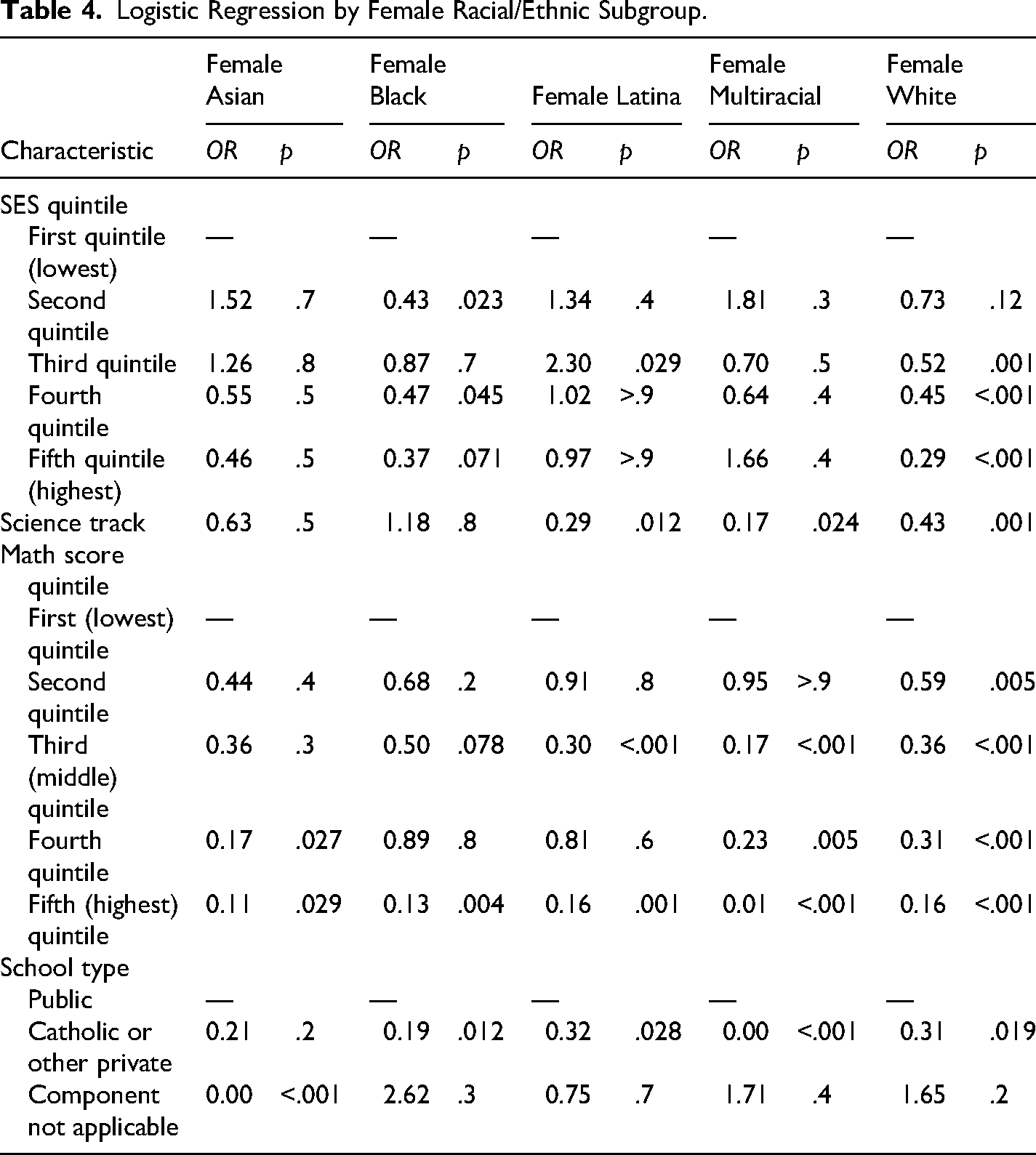
SES and advanced science had differing associations with ISS across different female racial subgroups (see Table 4), which just as in the previous regressions had different levels of fit (Female Asian: n = 952, Pseudo R2 = .133; Female Black: n = 1,172, Pseudo R2 = .082; Female Latina: n = 1,923, Pseudo R2 = .111; Female Multiracial: n = 986, Pseudo R2 = .258; Female White: n = 6,357, Pseudo R2 = .135). Among Black girls, those in the second (OR = 0.43, p = .023) and fourth quintiles (OR = 0.47, p = .045) were less likely than those in the first (lowest) quintile to experience ISS. Among Latina girls, those in the third quintile were more likely than those in the first (lowest) quintile to experience ISS (OR = 2.30, p = .029). Among White girls, those in the third (OR = 0.52, p = .001), fourth (OR = 0.45, p < .001), and fifth (highest) quintiles (OR = 0.42, p = .001) were less likely than those in the first (lowest) quintile to experience ISS. Latina (OR = 0.29, p = .012), Multiracial (OR = 0.17, p = .024), and White girls (OR = 0.43, p < .001) enrolled in advanced science were less likely than those not in advanced science to experience ISS.
Logistic Regression by Female Racial/Ethnic Subgroup.
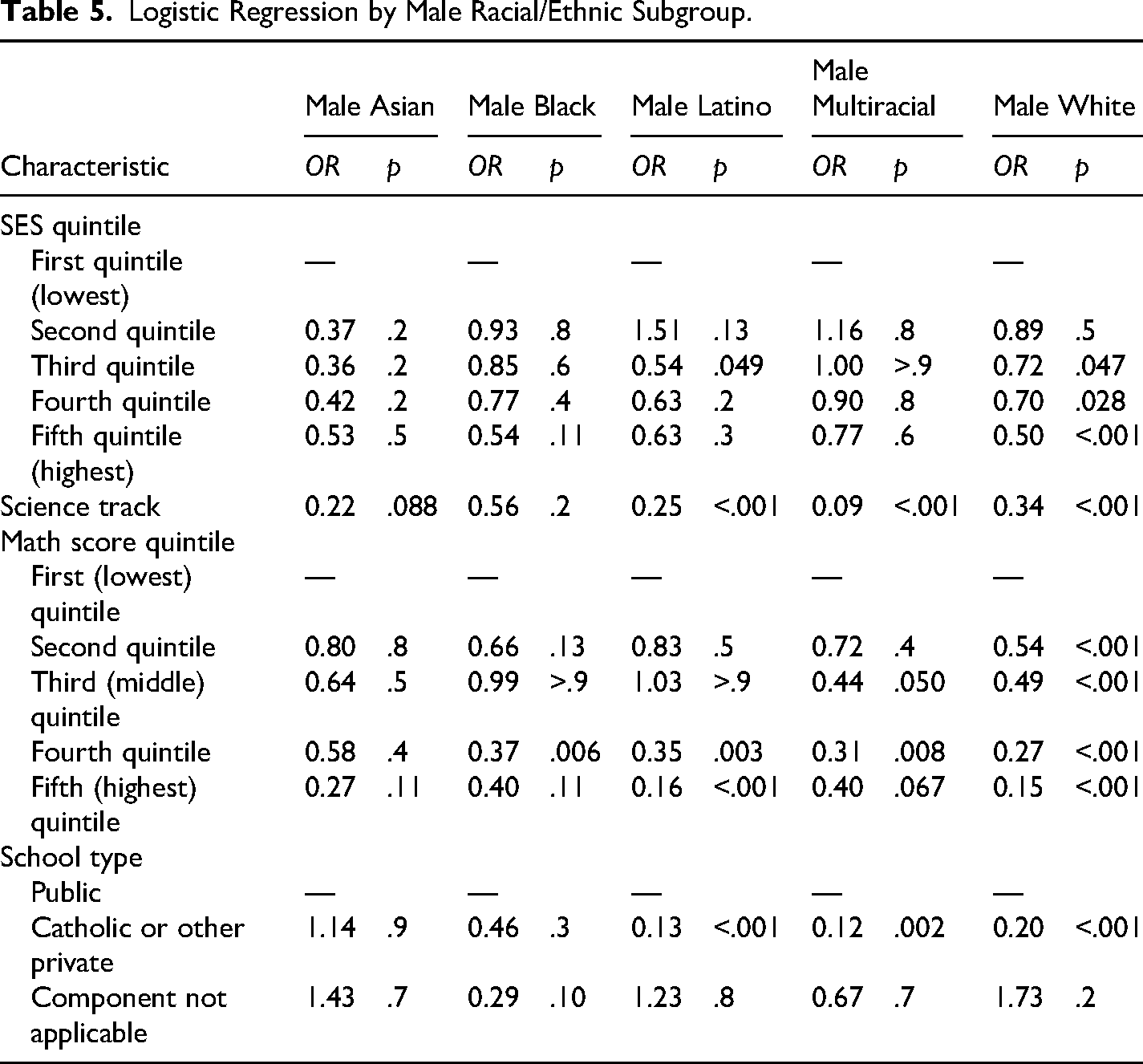
Once again, different gender subgroups had different model fits (Male Asian: n = 970, Pseudo R2 = .139; Male Black: n = 1,276, Pseudo R2 = .070; Male Latino: n = 1,939, Pseudo R2 = .132; Male Multiracial: n = 1,035, Pseudo R2 = .133; Male White: n = 6,594, Pseudo R2 = .169). For male groups, SES had fewer statistically significant patterns (see Table 5). Among Latino boys, those in the third quintile were less likely than those in the first (lowest) quintile to experience ISS (OR = 0.54, p = .049). Among White boys, those in the third (OR = 0.72, p = .047), fourth (OR = 0.70, p = .028), and fifth quintiles (OR = 0.50, p < .001) were less likely than those in the first (lowest) quintile to experience ISS. Latino (OR = 0.25, p < .001), Multiracial (OR = 0.01, p < .001), and White boys (OR = 0.34, p < .001) enrolled in advanced science were less likely than those not enrolled in advanced science to experience ISS.
Discussion
Previous research and United States Department of Education data have found that different racial and gender groups have a higher likelihood of experiencing exclusionary discipline such as ISS (Liu et al., 2022; United States Department of Education, 2023). To answer our research questions, student advanced science coursework was associated with lower rates of ISS in general at a statistically significant level. By looking at the data with a QuantCrit lens, we acknowledge the role of different intersecting student identities in differing outcomes. When looking at Asian, Black, Latine, and White subgroups, that association still showed lower ISS odds, but it was only statistically significant for Latine, Multiracial, and White students. For racial/ethnic gender male subgroups, advanced science was associated with lowered odds for each group but Black males, and once again, only statistically significant for Latine, Multiracial, and White students. Female racial/ethnic subgroups had lowered odds of ISS for advanced science, but it was again only statistically significant for Asian, Black, Latine, and White girls. Intersectionality lets us see these contrasting levels of statistical significance as representing the differing experiences of students based on their race and gender.
The data and analysis of this study had some limitations. There were some variables, such as special education status and school level variables, that were missing from the public use dataset. For example, some might consider dual enrollment courses as advanced science courses, but that information was not available in the survey. The public use dataset also has the strata and primary sampling unit restricted and therefore cannot be used for multilevel analysis by school. This is a limitation that those with access to the restricted data could address in future research. Other variables are also restricted or legitimately skipped in the public use data for the HSLS:09. Furthermore, previous research has found that school-level characteristics such as school socioeconomic status and racial makeup are associated with different levels of exclusionary discipline, which is a weakness in the analysis.
Despite those limitations, our subgroup analysis demonstrates that specific variables are significant for some groups of students while not being significant for other subgroups. QuantCrit forces researchers to acknowledge that students from different subgroups, in our case separated by race and gender, face varying disciplinary outcomes even when controlling for other factors. The course-taking aspect, when combined with literature telling us of the racial disparities in advanced science course taking, adds to the racial and socioeconomic disparities in the educational system, disparities made evident through QuantCrit. This work matches that of previous studies looking at mathematics tracking and disciplinary outcomes (Edosomwan & Williams, 2023; Jabbari & Johnson, 2020, p. 2022) and adds to the limited data regarding science tracking and discipline with more recent data and a larger sample size than Silvey (1995). From a QuantCrit perspective, the disciplinary disparities and their increased odds for those deprived of advanced science taking opportunities directly connect to the disadvantages faced by marginalized students, especially those marginalized based on their racial backgrounds. These results support the concept of the racial discipline gap and the racial course-taking gap reinforcing each other and forming yet another form of racial discrimination as students face unequal access to opportunities to learn (Edosomwan & Williams, 2023; Jabbari & Johnson, 2022; Wronowski et al., 2022).
Recommendations
All students should have equal opportunities to learn and grow, and rigorous instruction supports that growth, but often marginalized students are blocked from those opportunities based on discriminatory systems such as exclusionary discipline and tracking (Edosomwan & Williams, 2023; Tyson, 2013). We argue that CRSE could provide those opportunities for marginalized students. Therefore, in response to our findings that advanced science is associated with lowered odds of ISS, we argue for the need for more rigorous science instruction for all students and research that further analyzes disciplinary outcomes and coursework trajectories.
Rigorous Science Instruction and Culturally Responsive Teaching
The findings from this study emphasize the importance of rigorous science instruction as a potential factor in reducing exclusionary discipline rates, particularly in advanced science tracks. However, to maximize the benefits of such instruction, it is critical to integrate culturally responsive teaching practices (Brown, 2017). Culturally responsive science teaching not only promotes academic rigor but also fosters inclusivity, making advanced coursework accessible and meaningful for students from diverse backgrounds (Brown, 2009; Gay, 2018).
Culturally responsive teaching emphasizes the use of students’ cultural knowledge, experiences, and frames of reference as resources for effective instruction (Gay, 2018). In science classrooms, this approach can include incorporating examples and case studies relevant to students’ cultural contexts, valuing diverse ways of knowing, and recognizing the contributions of non-Western scientists to scientific knowledge (Barton, 2003). For students who have historically been marginalized in education systems, such practices can help mitigate feelings of alienation and disengagement, which are often linked to higher rates of disciplinary infractions (Aronson & Laughter, 2016).
Moreover, culturally responsive teaching addresses implicit biases in classroom management, which disproportionately affect students of color (Skiba et al., 2011). Teachers who adopt this approach are more likely to implement equitable discipline practices, focusing on restorative rather than punitive measures (Milner, 2015). By fostering respectful and inclusive classroom environments with rigorous instruction promoting high expectations, culturally responsive teaching can help reduce the likelihood of exclusionary discipline, such as ISS, among marginalized groups. This aligns with the findings of this study, which suggest that participation in rigorous coursework is associated with lower rates of exclusionary discipline.
The intersection of rigorous science instruction and culturally responsive teaching is particularly significant for promoting equity in science education. Rigorous science curricula often emphasize critical thinking and problem-solving, skills essential for STEM careers (Crisp et al., 2009). However, without cultural responsiveness, these curricula risk being perceived as inaccessible or irrelevant by students from underrepresented backgrounds (Ladson-Billings, 1995, 2014). Research shows that when students see their cultural identities reflected in the curriculum, they are more likely to engage deeply with the material and persist in advanced coursework (Lee, 2003).
Logistic Regression by Male Racial/Ethnic Subgroup.
While rigorous science instruction has clear benefits, its impact is significantly enhanced when coupled with culturally responsive teaching. Scholars have advocated for teachers to implement culturally responsive practices in science (Mensah, 2021). Future researchers and practitioners should examine and replicate successful examples where professional development trained teachers in how to implement culturally responsive science education practices. They should also explore how culturally responsive practices can be systematically integrated into all levels of science instruction. Further research into the training and enactment of CRSE can help ensure that all students, regardless of their cultural or socioeconomic backgrounds, have equitable opportunities to succeed. Such efforts are essential for reducing disparities in disciplinary outcomes and fostering inclusive excellence in STEM education.
Additionally, school leadership makes staffing decisions and chooses who teaches advanced classes versus regular classes. The reasoning behind who gets to teach these classes varies by campus and district, but not enough is done to recruit and train teachers in culturally responsive science education to support all levels of instruction. Underwood and Mensah (2018) discovered that science teachers understand that teaching using culturally relevant tenets will benefit all students and reduce the achievement gap. It is the view of the authors that the placement of teachers in courses, especially those serving marginalized students, should be prioritized by who will provide a culturally responsive science education. Staffing decisions have led many marginalized students to take non-advanced science. Culturally responsive science education will significantly benefit these students and lead to higher levels of engagement as well as improved academic outcomes.
Conclusion
Our comparative group analysis revealed that advanced science course taking was associated with lower odds of ISSs across different racial/ethnic groups. Further research should investigate the reasons behind these differences through qualitative analysis and causal studies. The differential outcomes based on the science track in this study suggest the need for targeted interventions that promote advanced science course taking and decrease exclusionary discipline, while acknowledging the importance of intersecting identities. Science educators and policymakers have more work to do in supporting equity for marginalized students, especially regarding rigorous coursework and maximizing student learning opportunities. We hope this study provides a starting point for this discussion in the field, as we work towards a more equitable future in science education.
Footnotes

Ethical Considerations
Our study did not require ethics approval as it used publicly available public-use data with all identifiable information removed or suppressed.
Funding
Open access was provided by the University of Houston's agreement with SCELC.
Declaration of Conflicting Interests
The authors declared no potential conflicts of interest with respect to the research, authorship, and/or publication of this article.
AI Statement
No generative AI was used in the writing of this manuscript.