



Abstract
The persistent underrepresentation of girls among top performers in STEM has long been a concern in talent development research. Recent studies, however, suggest that this gender gap may be narrowing. This study investigates whether gender and academic achievement shape how students perceive STEM classroom situations, using the DIAMONDS framework, a taxonomy of psychological meaningful situational characteristics (e.g., Duty, Intellect). Data were analyzed from 1,024 German eighth-grade students. In contrast to historical trends, our sample showed equal representation of boys and girls among the top 10% of STEM achievers. While no interaction effects were found between gender and achievement, consistent main effects emerged: girls reported higher levels of Duty and Intellect, but also greater Negativity and Deception; boys perceived STEM lessons more positively overall. High-achieving students, regardless of gender, experienced STEM situations more positively than their lower-achieving peers. These findings in our context suggest that gender disparities in top STEM performance may diminish, but that gender differences in classroom perception persist.
Introduction
A persistent and troubling pattern in talent development research is the underrepresentation of girls and women among the highest achievers in STEM fields (Charlesworth & Banaji, 2019; Wang & Degol, 2017). While gender gaps in average performance have narrowed considerably in recent decades, disparities at the extreme right tail of the ability distribution remain pronounced. Among students performing at the highest levels—often those identified as gifted or showing precocious talent—boys continue to outnumber girls in math-intensive domains (Bahar, 2021). This pattern was first documented in the seminal longitudinal work of Julian Stanley and Camilla Benbow (Benbow & Stanley, 1980, 1983), whose Study of Mathematically Precocious Youth (SMPY) revealed substantial sex differences in mathematical reasoning ability among intellectually talented adolescents. Based on SAT-Math scores at age 12, they found that boys were significantly overrepresented at the highest percentiles, with ratios as high as 13.5:1 in some early cohorts. Crucially, these differences emerged before students’ educational experiences diverged meaningfully, leading the authors to suggest biological explanations, including the controversial “greater male variability hypothesis.”
Subsequent research has consistently confirmed male overrepresentation among top performers in math-related STEM fields (Baye & Monseur, 2016; Makel et al., 2016; Nunez et al., 2023; Wai et al., 2010, 2018), particularly among those exhibiting a pronounced “mathematical ability tilt.” However, the gender gap has narrowed markedly over time—from 13.5:1 in the 1980s, to 3.8:1 in the 1990s, and now closer to 2:1 (Charlesworth & Banaji, 2019; see also Bahar, 2021)—casting doubt on purely biological explanations. Furthermore, findings are increasingly inconsistent across age groups, grade levels, and educational stages. For example, O’Dea et al. (2018, p. 1) concluded that […] the gender differences in both mean and variance of grades are smaller in STEM than non-STEM subjects, suggesting that greater variability is insufficient to explain male over-representation in STEM. Simulations of these differences suggest the top 10% of a class contains equal numbers of girls and boys in STEM, but more girls in non-STEM subjects. (See also Miller & Wai, 2015; Oakley et al., 2024)
It remains unclear whether male overrepresentation at the highest performance levels in math-related STEM fields is a persistent reality or a diminishing artifact of outdated structures.
What is increasingly evident, however, is that environmental and sociocultural factors play a far greater role than initially assumed (Ceci & Williams, 2011; Charlesworth & Banaji, 2019; Cheryan et al., 2017; Keller et al., 2022). From an equity perspective, this is deeply concerning: talent development systems must ensure that girls have the same opportunities as boys to reach their full potential. This implies a need for structural reforms in education and policy (Ceci & Williams, 2011). Without such changes, math-related STEM fields may follow the same trajectory as the creative domains, where meta-analyses show that women perform just as well—or better—on creativity tests (Abdulla Alabbasi et al., 2025), but still lag behind men in creative achievements (Hora et al., 2022). Such findings suggest that women possess at least as much creative potential as men but are either less able or less enabled to translate that potential into recognized accomplishments.
A critical setting for the educational and policy interventions called for by Ceci and Williams (2011) is the classroom. While the causes of girls’ underrepresentation among top STEM performers are undoubtedly multifaceted, ranging from early socialization and stereotype threat to opportunity structures and personal interests, one relatively underexplored factor is how students perceive the learning situations they encounter in school, particularly in STEM contexts (Ketscher et al., 2025). The situational perception approach—the subjective appraisal of a learning environment as demanding, threatening, intellectually challenging, or pleasing—has been made measurable in particular through various taxonomies (e.g., Parrigon et al., 2017; Rauthmann et al., 2014) and correlates with behavior in a multitude of ways. This also encompasses the commitment and motivation of students in STEM contexts. Since both personal factors and contextual cues shape such perceptions, they may differ systematically across gender (e.g., Cheryan et al., 2009, 2011, 2015) and performance level. For instance, Leiner et al. (2018) showed that test situations are perceived differently by boys and girls, which may influence affective and cognitive responses. To investigate these differences in the classroom context, the present study draws on the DIAMONDS framework (Rauthmann et al., 2014) to explore how high-achieving boys and girls perceive STEM lessons and whether these perceptions might help explain persistent gender disparities in advanced STEM achievement. Compared to other situation taxonomies, such as CAPTION (Parrigon et al., 2017) or more domain-specific classroom climate models, the DIAMONDS framework offers a broader and more psychologically grounded set of dimensions that encompass both affective and cognitive aspects of situational appraisal. This makes it particularly suited for analyzing how students experience STEM instruction, where emotional engagement, perceived demands, and social dynamics often interact in complex ways.
Prior studies have successfully applied the DIAMONDS framework in educational and developmental contexts (Ketscher et al., 2025; Konaszewski et al., 2025; Zager Kocjan & Avsec, 2017), including secondary school classrooms, suggesting its suitability for capturing meaningful situational differences across student groups. These studies document variation in dimensions such as Duty and Intellect in STEM instruction, and show that adolescents’ situational perceptions are systematically shaped by personal characteristics, including gender and achievement.
Theoretical Framework
Situational Perception and Proximal Influences in STEM Education
Traditional models in educational psychology have often emphasized distal factors—such as socioeconomic status, cultural norms, and long-term aspirations—in explaining student outcomes. However, recent research underscores the significance of proximal, immediate experiences in shaping students’ engagement and achievement, particularly in STEM education. Situational perception, the subjective interpretation of immediate learning environments, influences students’ motivation, behavior, and academic self-concept (Rauthmann et al., 2014). While situational perception includes affective interpretations of a setting (e.g., perceiving it as pleasant or stressful), it is conceptually distinct from the emotional responses that may follow. In this framework, perception refers to how students cognitively and affectively appraise the features of a situation, not necessarily how they feel during it.
In STEM classrooms, students’ perceptions of tasks as intellectually stimulating, threatening, or socially engaging can directly impact their participation and persistence. These perceptions are not uniform; they vary based on individual differences and contextual factors. For instance, stereotype threat can lead to heightened anxiety and reduced performance among female students in math-intensive settings (Maries et al., 2018). Similarly, the Big-Fish–Little-Pond Effect suggests that students’ academic self-concept is influenced by the achievement levels of their peers, with high-achieving students in high-performing environments potentially experiencing diminished self-confidence (Marsh & Parker, 1984).
Understanding these proximal influences is essential for developing interventions that foster equitable and supportive learning environments in STEM education.
The DIAMONDS Framework
To systematically assess situational perceptions, Rauthmann et al. (2014) introduced the DIAMONDS framework, which categorizes situations based on eight dimensions:
p
This taxonomy allows researchers to quantify and compare individuals’ perceptions of various situations, facilitating a deeper understanding of how these perceptions influence behavior and outcomes. At this juncture, the DIAMONDS framework has been employed to analyze various educational contexts (Abrahams et al., 2021, 2025; Konaszewski et al., 2025; Witte et al., 2024), thereby unveiling the interplay between distinct situational characteristics and their respective outcomes.
Gender, Achievement, and Variations in Situational Perception
Growing evidence suggests that girls’ and boys’ situational experiences in STEM learning contexts are shaped by emotional engagement, perceived classroom climate, and sense of belonging (Cheryan et al., 2017; Fairhurst et al., 2023; Good et al., 2003). For instance, girls are more likely to interpret classroom settings as less supportive or more evaluative, particularly in male-typed domains—perceptions that can contribute to differential motivational outcomes and identity formation (Meece et al., 2006; Wang & Degol, 2017). In addition, gender and achievement levels significantly influence how students perceive and respond to classroom situations. Female students often report lower self-efficacy in STEM subjects, which has been linked to persistent societal stereotypes and underrepresentation in these fields (Chan, 2022; Sebastián-Tirado et al., 2023).
These perceptions can lead to decreased participation and interest in STEM disciplines. Moreover, high-achieving students may experience classroom environments differently than their peers. For example, they might perceive a lack of intellectual challenge or insufficient support, leading to disengagement. Conversely, lower-achieving students might find specific tasks overwhelming, perceiving them as high in Adversity or Negativity (Bouton et al., 2025; Li & Xue, 2023).
These differential perceptions may offer a promising explanatory lens for longstanding gender disparities in advanced STEM achievement. As outlined in the introduction, the historical overrepresentation of males among top-performing STEM students is well-documented, but recent trends show that this gap is narrowing. One plausible contributing factor may be shifts in how girls and boys perceive and engage with STEM learning environments. If female students increasingly experience STEM classrooms as more intellectually engaging, socially supportive, or personally meaningful—dimensions captured by the DIAMONDS framework—this could help explain the growing presence of girls among high achievers. Conversely, if differences in situational perception persist or emerge in new forms, they may continue to shape achievement patterns in subtle but significant ways. By applying the DIAMONDS model to investigate these dynamics, the present study aims to shed light on how gender and achievement intersect in students’ perceptions of STEM lessons—and how such perceptions may contribute to the evolving distribution of talent in STEM education.
Aims of the Study
As outlined in the preceding sections, situational perception is increasingly recognized as a meaningful proximal factor in shaping student engagement and achievement. However, little is known about how high-achieving boys and girls, in particular, interpret STEM learning environments. The findings concerning the distribution of situation perception based on personal factors, such as gender and academic achievement in particular, will enable further trends and predictions to be made regarding relevant variations among students in the STEM field.
To investigate this, we apply the DIAMONDS framework (Rauthmann et al., 2014), a taxonomy of psychologically relevant situation characteristics, to systematically assess how students interpret the classroom environment. Preliminary findings suggest that Duty and Intellect are particularly pronounced in the context of education (Ketscher et al., 2025; Konaszewski et al., 2025; Zager Kocjan & Avsec, 2017) and may vary by both gender and achievement. As a consequence, the following five research questions are formulated: RQ1: How do students perceive STEM lessons with regard to the DIAMONDS dimensions?
RQ1 is descriptive in nature and seeks to establish a baseline profile of situational perception in STEM classrooms. This research question seems instrumental in establishing the foundation for subsequent research endeavors. In accordance with extant research, it is anticipated that students will report elevated levels of Duty and Intellect, a reflection of the structured and cognitively demanding nature of STEM instruction (Ketscher et al., 2025; Konaszewski et al., 2025; Zager Kocjan & Avsec, 2017). RQ2: Does academic achievement affect the situational perception of STEM lessons?
This research question addresses whether high-, average-, and low-achieving students differ in how they perceive the same classroom environments. Drawing on prior research, we hypothesize that achievement level is associated with distinct situational profiles. For instance, high-achieving students may perceive greater intellectual stimulation (Intellect) and more classroom support (pOsitivity), while lower-achieving students may perceive greater Adversity or Negativity. It seems imperative to clarify this research question, as it serves as the foundation for future studies in the domain. RQ3: Does gender affect the situational perception of STEM lessons?
This research question examines gender-based differences in how students interpret STEM classrooms and thereby seems instrumental in establishing the foundation for subsequent gender-based research endeavors in the long term. Based on previous findings of gendered differences in academic self-concept and STEM engagement, we expect male students to report more positive perceptions, such as higher pOsitivity and lower Adversity, Negativity, or Deception. RQ4: Are girls and boys equally represented among high-achieving STEM students?
Previous research has documented a persistent overrepresentation of boys among top STEM achievers (e.g., Benbow & Stanley, 1980, 1983; Wai et al., 2010, 2018). Such an interaction may arise if high-achieving girls experience greater pressure to prove their competence in male-typed domains (cf. stereotype threat; Steele, 1997) or if their situational perception is more sensitive to subtle cues of exclusion or lack of belonging (Cheryan et al., 2009; Good et al., 2003). Conversely, high-achieving boys may benefit from stereotype lift (Walton & Cohen, 2003), reinforcing confidence and positive perceptions in STEM contexts. However, more recent findings suggest that this gender gap may be narrowing (Bahar, 2021). RQ4 investigates whether this pattern is still evident in the current sample by examining whether gender distribution differs significantly across academic achievement levels. RQ5: Do gender and achievement interact in the situational perception of STEM lessons?
This research question builds on the findings of previous research questions and enables an in-depth analysis of the knowledge already gained. It investigates whether gender differences in situational perception vary depending on students’ academic achievement level. Based on previous findings about the persistent underrepresentation of girls among the highest-performing STEM students, we hypothesize that gender differences may be particularly pronounced among high achievers. For example, high-achieving girls may perceive STEM lessons as less supportive, more demanding, or less socially inclusive compared to high-achieving boys, which could contribute to their underrepresentation at the top performance levels.
Method
Procedure
The study was conducted via an online survey distributed to secondary schools across Germany with a strong emphasis on STEM education. Such schools offer their students the opportunity to engage in STEM activities, that go beyond the regular curriculum, such as institutionalized visits to natural science museums and student science laboratories. These activities are supported by active collaboration with external STEM initiatives, which provide the required infrastructure. The selection of schools was based on two criteria. First, schools were included in the sample if they were members of nationwide STEM associations or if there was explicit mention of STEM initiatives.
After obtaining the necessary permissions from relevant educational authorities in the federal states, participating schools were asked to administer the survey in their computer labs to ensure standardized testing conditions. The survey included informed consent procedures, and data were only retained when explicit parental or legal guardian consent could be verified. After a thorough data cleaning process, which included the removal of mostly incomplete or non-consenting cases, the final sample comprised 1,024 students from 26 schools.
Sample
Participants were 1,024 eighth-grade students enrolled in the lower secondary school track of the German secondary school system. The average age was 13.72 years (SD = 0.44). The sample included 442 boys (M = 13.75, SD = 0.42) and 582 girls (M = 13.70, SD = 0.45).
Measures
Demographics
Students self-reported their gender, their age, and their socio-economic status.
Situational Perception
Students’ perceptions of their STEM lessons were measured using an adapted version of the S8-1 DIAMONDS scale developed by Rauthmann & Sherman (2018). The original eight items were tailored to reflect the classroom context of STEM education, e.g., by adding the phrase “in STEM lesson.” For example, the item assessing Negativity was adapted to: “I have negative feelings (e.g., stress, anxiety, guilt) in STEM lessons.” Items were rated on a 7-point Likert scale ranging from 1 (not at all) to 7 (totally). The utilization and adaption of the scales were guided by the theoretical and empirical work of Rauthmann et al. (2014) and Rauthmann & Sherman (2016a, 2016b). Recent validation by Ketscher et al. (2025) confirmed the scale's applicability for STEM settings, demonstrating convergent, criterion-related, and explanatory validity.
Academic Achievement
Students self-reported their most recent grades in six STEM subjects commonly taught in German secondary schools: mathematics, computer science, biology, physics, chemistry, and technology. Grades range from 1 (very good) to 6 (insufficient). Participation in individual STEM classes varies among federal states in Germany, leading to the calculation of the average STEM grade. Students were categorized into three performance groups based on their average STEM grade: high-performing students (top 10% of the sample), average-performing students (middle 80%), and below-average-performing students (bottom 10%). This approach is primarily aimed at ensuring that students with above-average or below-average performance can be systematically compared. A random number was utilized to assign students to academic achievement groups at relevant cut-off values (grades: 1.33 and 3.33).
Data Analysis
Data were analyzed using IBM SPSS Statistics (Version 29.0.2.0) (IBM Corp, 2023) and R Version 4.3.0 (R Core Team, 2023). The five research questions that guided the analytical approach were as follows. The objective is twofold: Initially, a well-founded foundation is laid by means of a comparative analysis of extant research findings (RQ1, RQ2, and RQ3). Second, additional significant insights are obtained regarding high-achieving students and the long-term promotion of talent (RQ4 and RQ5).
RQ1 (descriptive): Mean scores and standard deviations of the DIAMONDS dimensions were reported, and pairwise t-tests were used to compare dimensions. RQ2 (achievement differences): One-way analysis of variance (ANOVA) with post hoc comparisons was conducted to test for differences across achievement groups (low-achiever, average-achiever, high-achiever) in order to gain a preliminary understanding of the DIAMONDS approach for students and their achievement levels. With a focus on the ANOVA calculations performed, no corrections were made in order to avoid reducing potential effects. However, in order to obtain the greatest possible significance and to gain insight into distinct situational profiles, particularly when examining the research question in greater depth and carrying out the pairwise comparison, the decision was made to use Games-Howell post-hoc. RQ3 (gender differences): Due to unequal group sizes and variance heterogeneity, Welch's t-tests were used to compare male and female students. The aim was to gain new insights and compare results with previous research. RQ4 (equal representation among high-achievers): A chi-square test was used to assess whether boys and girls were equally represented in the high-achieving group. The initiation of this process was driven by two primary objectives. Initially, the objective was to facilitate a comparison with the results of previous research. Second, the research question was intended to ensure long-term talent development. RQ5 (gender × achievement interaction): Two-way ANOVAs were conducted to examine interaction effects between gender and achievement level. The present research question is predicated on the findings of a preceding research question, with the objective of facilitating the acquisition of further insights for potential future research.
Although parametric tests were employed, data did not meet strict normality assumptions according to the Kolmogorov–Smirnov and Shapiro–Wilk tests (e.g., Adversity, Mating). However, the decision to proceed with parametric methods was supported by previous research indicating the robustness of these methods under conditions of non-normality (e.g., de Winter & Dodou, 2010; Kubinger et al., 2009; Schmider et al., 2010).
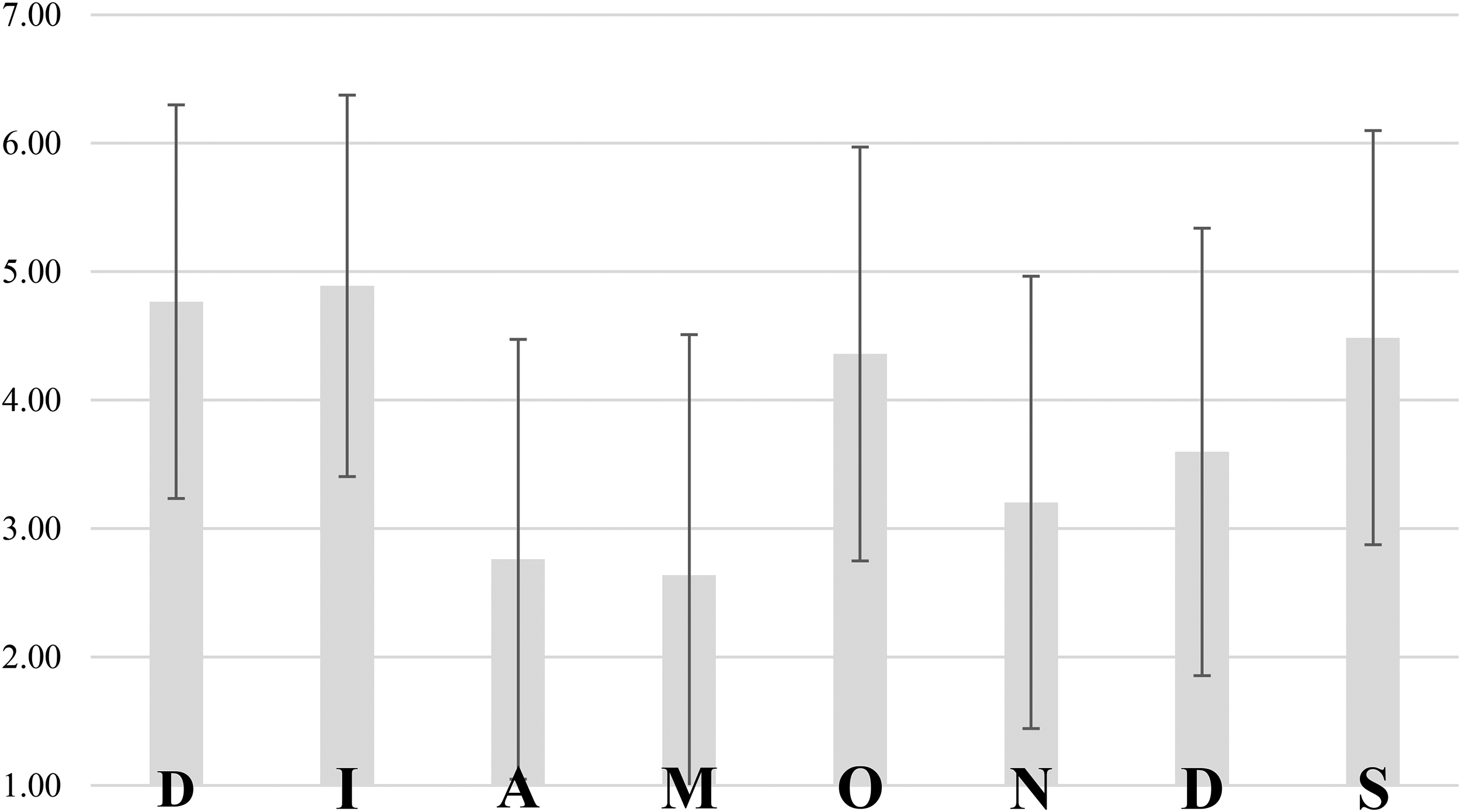
Means and standard deviations of DIAMONDS. Note. Standard deviation ±1.
Results
Descriptive statistics for all eight DIAMONDS dimensions are presented in Table 1. Students reported the highest mean scores for Intellect (M = 4.89, SD = 1.49), followed by Duty (M = 4.77, SD = 1.53) and Sociality (M = 4.49, SD = 1.61). The lowest ratings were observed for Adversity (M = 2.76, SD = 1.71) and Mating (M = 2.64, SD = 1.88). Notably, five of the eight dimensions had mean values exceeding the midpoint of the 7-point Likert scale (i.e., >3.5). (Figure 1)
Means and Standard Deviations of DIAMONDS Dimensions by Gender.
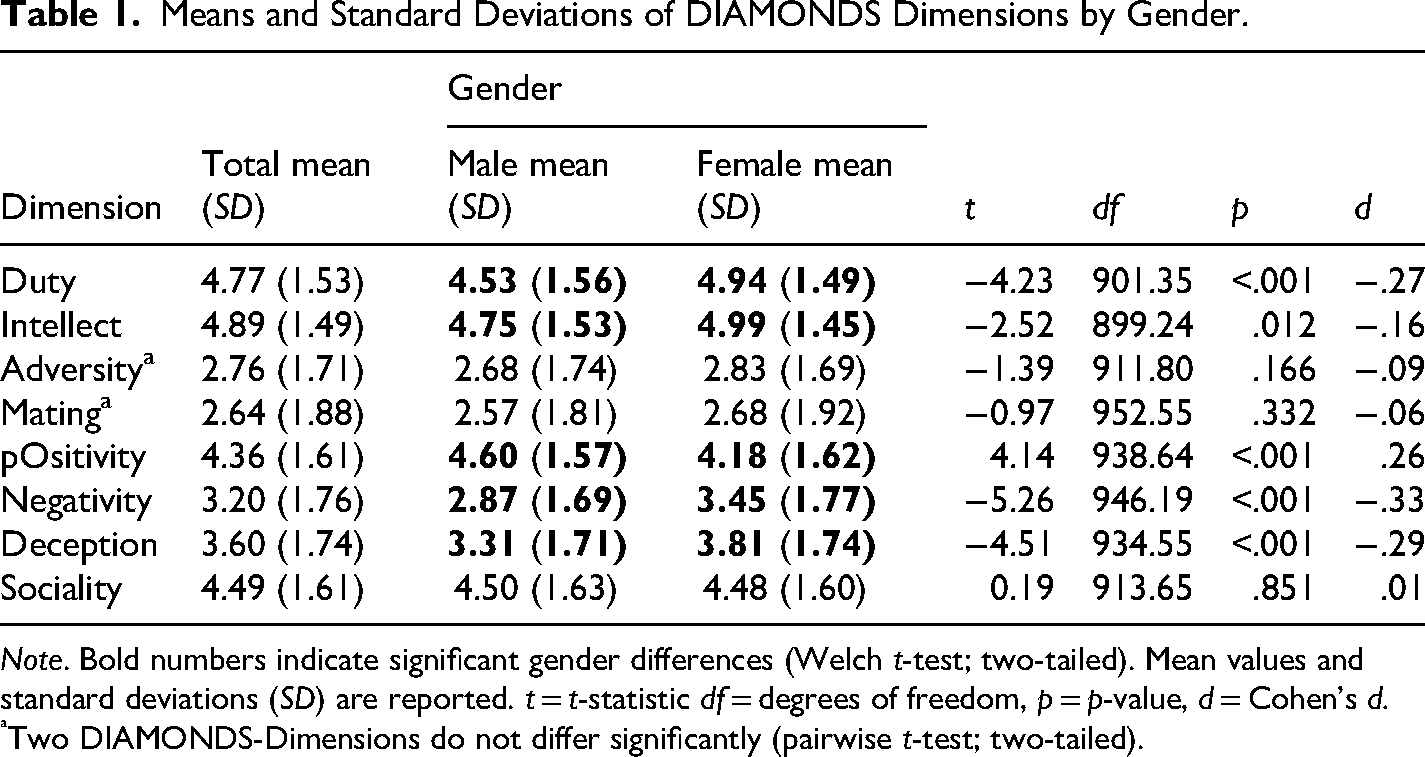
Note. Bold numbers indicate significant gender differences (Welch t-test; two-tailed). Mean values and standard deviations (SD) are reported. t = t-statistic df = degrees of freedom, p = p-value, d = Cohen's d.
Two DIAMONDS-Dimensions do not differ significantly (pairwise t-test; two-tailed).
Standard deviations were consistently high across all dimensions (most exceeding 1.5), indicating substantial variation in students’ situational perceptions. Pairwise t-tests revealed significant differences between most dimensions, except between Adversity and Mating.
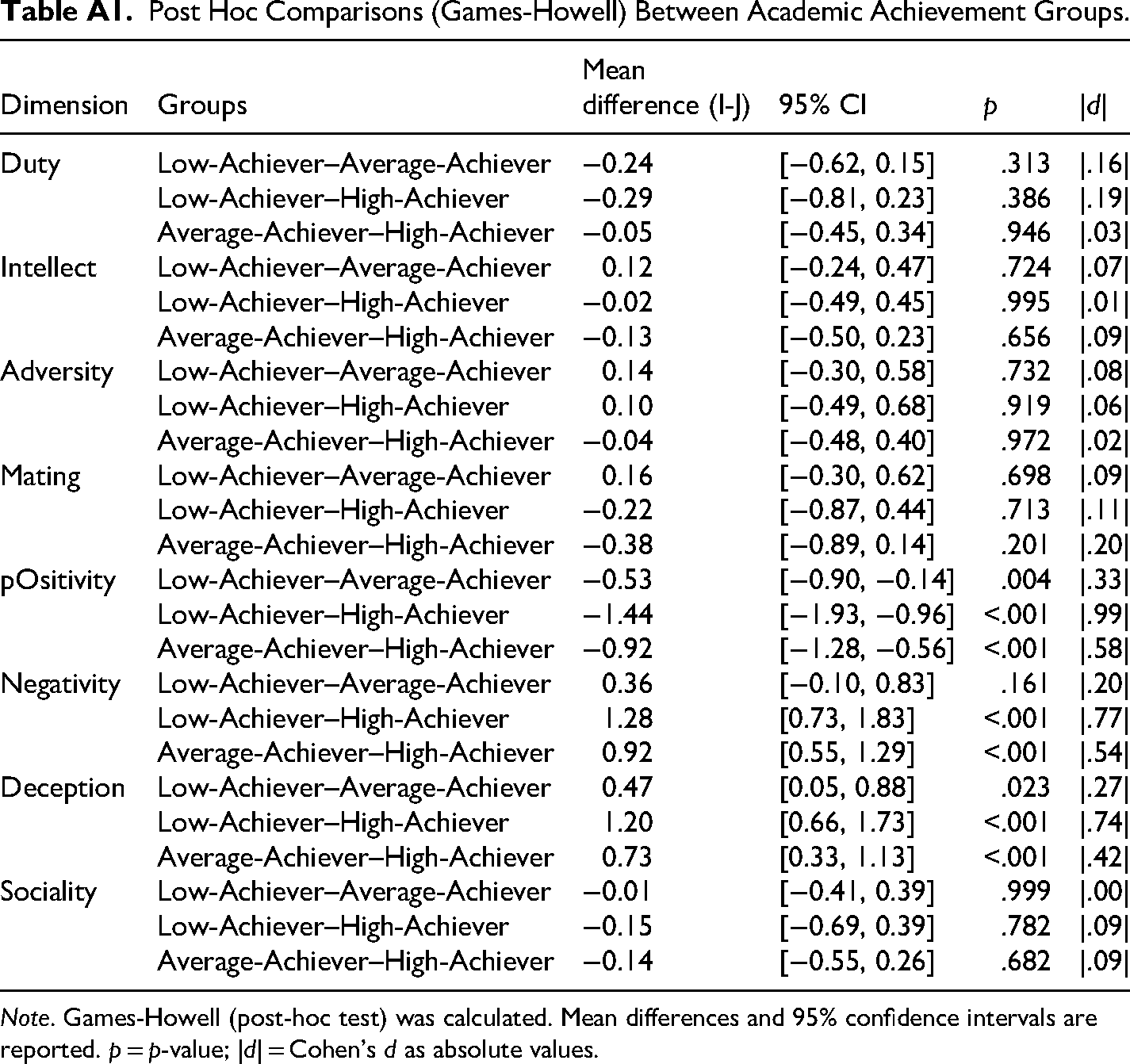
To examine the effect of academic achievement on situational perception (RQ2), a series of one-way ANOVAs were conducted (see Table 2). Significant differences emerged for the three dimensions of pOsitivity (η2 = .043), Negativity (η2 = .031), and Deception (η2 = .025). Their effects are characterized by smaller effect sizes. Post hoc comparisons (Games-Howell tests) showed that high-achieving students reported significantly higher pOsitivity and lower Negativity and Deception than both average- and low-achieving students (see Appendix Table A1). These findings indicate the presence of a distinct achievement-based situational perception profile in STEM education.
Means and Standard Deviations of DIAMONDS Dimensions by Academic Achievement Group and ANOVA Results for Group Differences in DIAMONDS Dimensions.
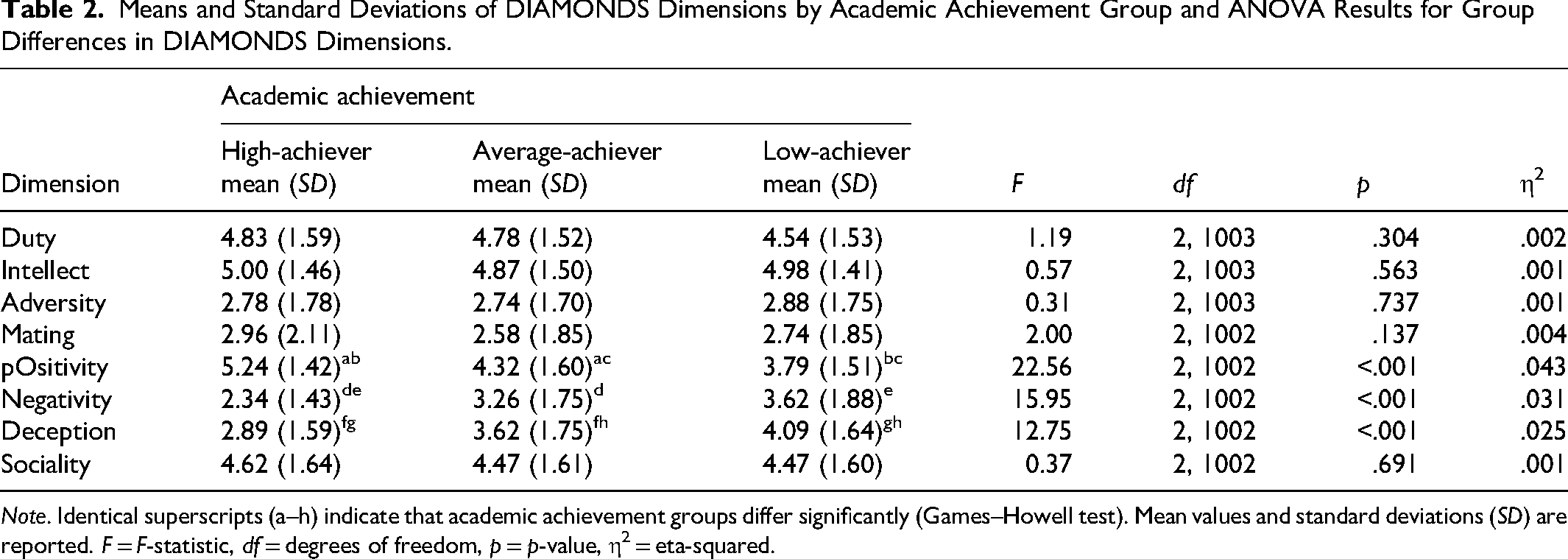
Note. Identical superscripts (a–h) indicate that academic achievement groups differ significantly (Games–Howell test). Mean values and standard deviations (SD) are reported. F = F-statistic, df = degrees of freedom, p = p-value, η2 = eta-squared.
RQ3 was examined using Welch's t-tests (see Table 1). They reveal small, but significant gender differences in five of the eight DIAMONDS dimensions. Female students reported higher levels of Duty (d = −.27), Intellect (d = −.16), Negativity (d = −.33), and Deception (d = −.29), while male students reported higher pOsitivity (d = .26). No significant differences were found for the social dimensions of Adversity (d = −.09), Mating (d = −.06), or Sociality (d = .01). These results mirror earlier findings on gender-based differences in classroom experience and emotional responses in STEM contexts (Ketscher et al., 2025).
A chi-square test was conducted to examine RQ4 (see Table 3), whether boys and girls were equally represented across academic achievement levels in STEM. The test revealed no significant association between gender and achievement group membership, χ2(2) = 0.811, p = .667, Cramér's V = .028. In the high-achieving group, 48 students (47.1%) were male and 54 (52.9%) were female. Similar gender distributions were observed in the average-achieving group (boys: 42.9%; girls: 57.1%) and the low-achieving group (boys: 41.2%; girls: 58.8%). These findings indicate that girls in our sample were not underrepresented among the top STEM performers, in contrast to historical trends (see Table 4).
Pearson Chi-Square Testing.
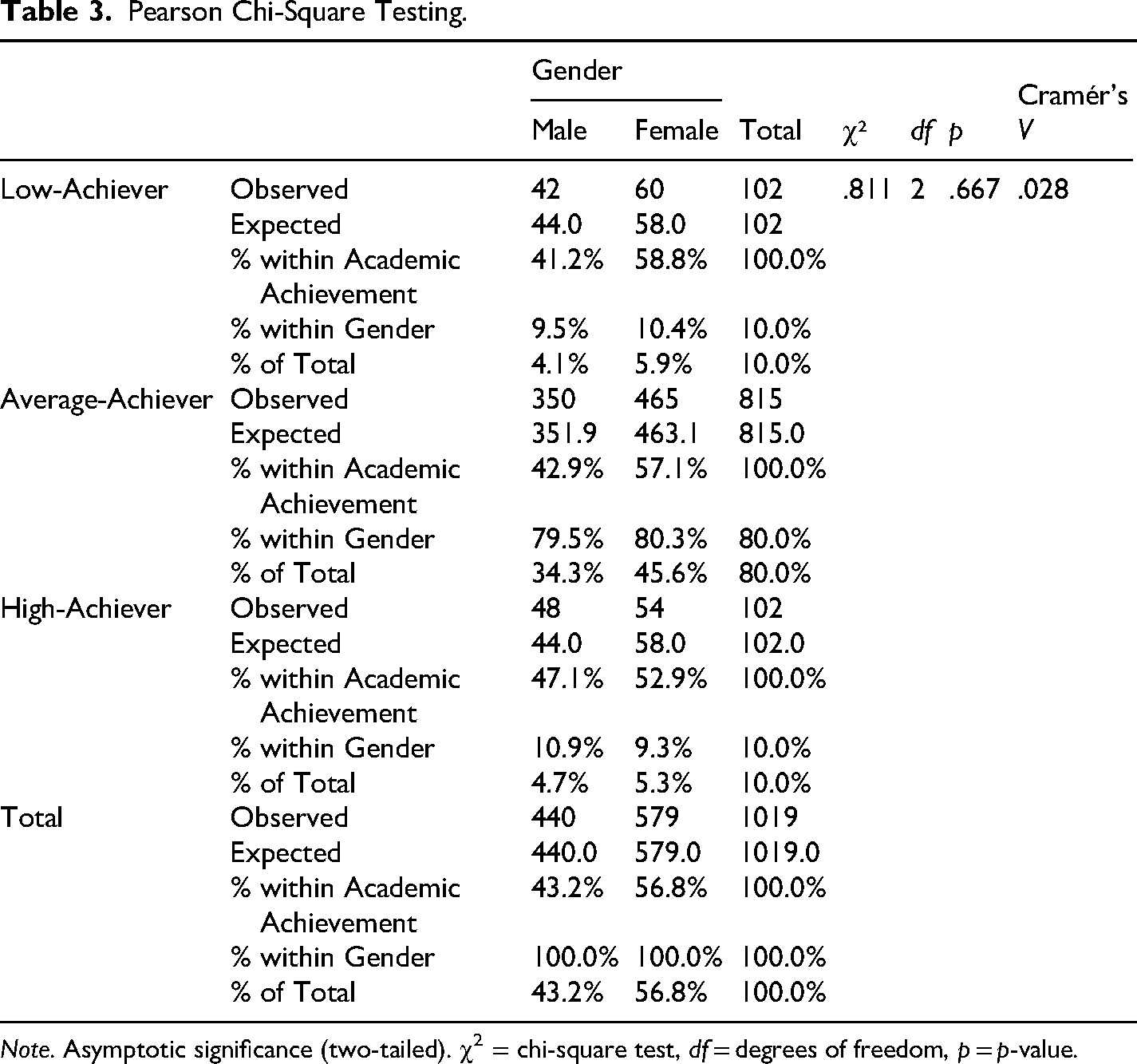
Note. Asymptotic significance (two-tailed). χ2 = chi-square test, df = degrees of freedom, p = p-value.
Descriptive Data: Gender, Academic Achievement, and Their Interaction on DIAMONDS Dimensions.
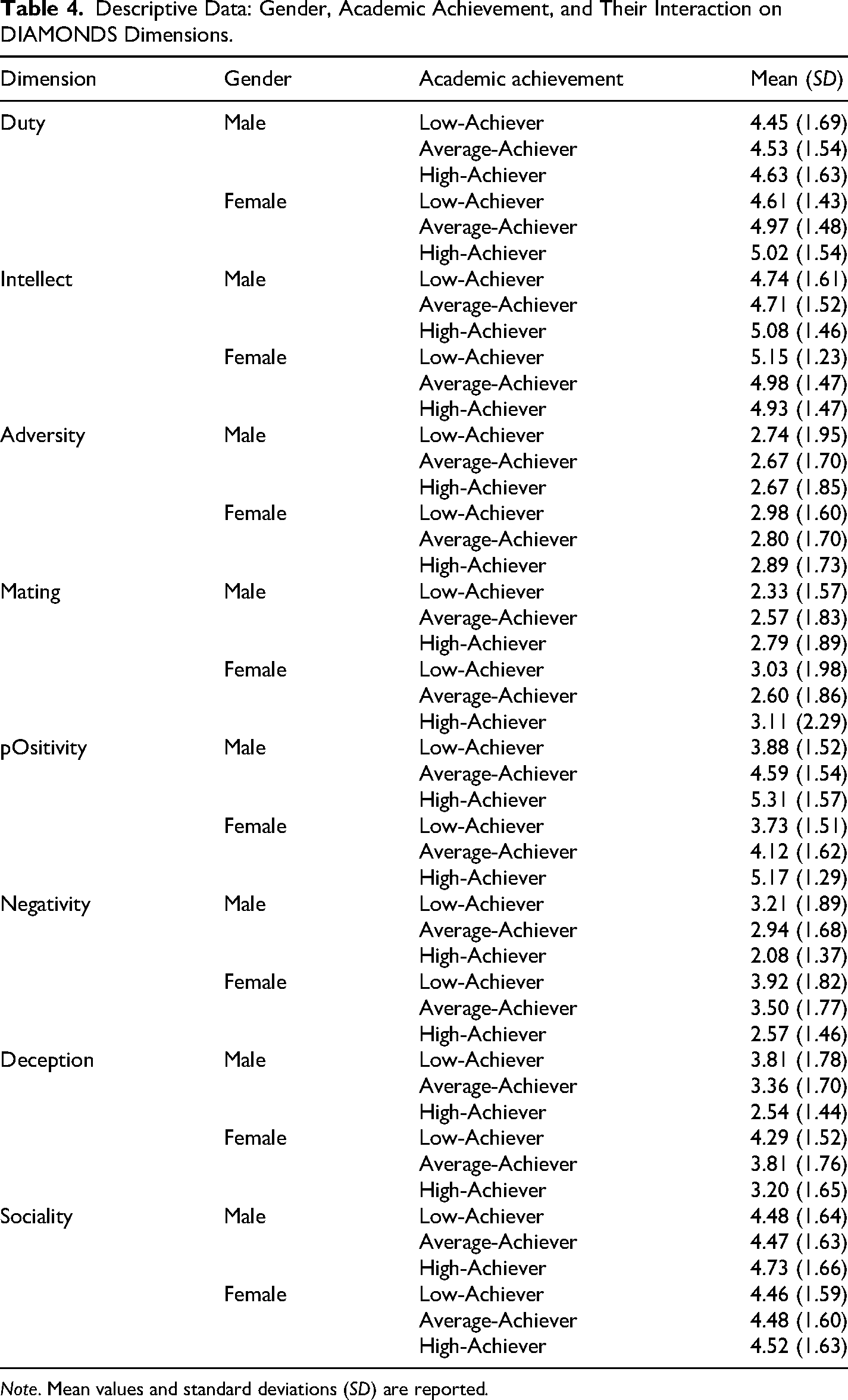
Note. Mean values and standard deviations (SD) are reported.
In order to examine RQ5, two-way ANOVAs were conducted to identify potential interaction effects between gender and academic achievement (see Table 5). No significant gender × achievement interactions were found for any DIAMONDS dimension. While gender and achievement level showed main effects in several dimensions, their interaction did not reach statistical significance (ps > .05). Given the moderate sample size within each subgroup (e.g., high-achieving boys vs. girls), it remains possible that subtle effects went undetected. Future studies with larger or stratified samples may clarify whether interaction effects exist under specific conditions.
Two-Way ANOVA: Gender, Academic Achievement, and Their Interaction on DIAMONDS Dimensions.
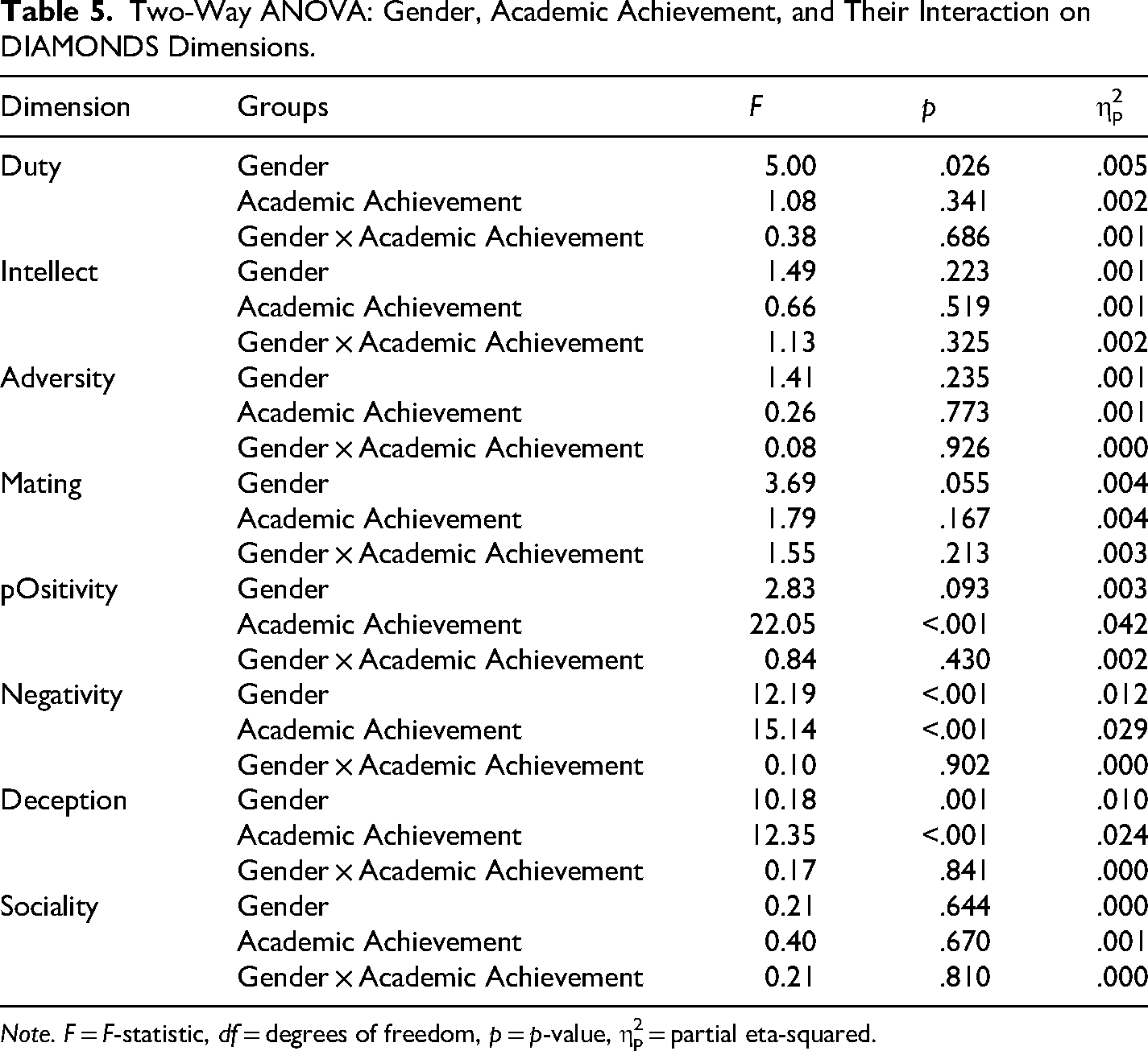
Note. F = F-statistic, df = degrees of freedom, p = p-value, η2p = partial eta-squared.
Discussion
This study investigates how students’ perceptions of STEM classroom situations—measured through the DIAMONDS framework—relate to gender and academic achievement. The overarching motivation was to explore potential psychological and situational mechanisms contributing to the persistent underrepresentation of girls among top STEM achievers, as reported in earlier research (e.g., Benbow & Stanley, 1980, 1983; Wai et al., 2010, 2018). Notably, the present study challenges this narrative: In our German secondary school students’ sample, girls (54 students; 52.9%) were not underrepresented among the top 10% (102 students) of STEM achievers. The distribution was nearly equal. This aligns with recent findings by O’Dea et al. (2018), who showed that while boys and girls are equally represented in the top decile of performance in STEM subjects, girls tend to outperform boys in non-STEM subjects. These findings indicate that gender disparities at the top of the STEM achievement distribution are diminishing—at least within younger cohorts—raising important questions about how current educational systems support or fail to support high-potential students across domains.
Nevertheless, consistent gender and achievement main effects were observed in how students perceived STEM classroom situations. Boys reported significantly higher levels of pOsitivity (d = .26) and lower levels of Negativity (d = −.33) and Deception (d = −.29) than girls. High-achieving students, regardless of gender, perceived lessons more positively and less negatively than their average- or low-achieving peers (see Appendix Table A1). These patterns reflect differentiated emotional and cognitive classroom experiences and align with prior research indicating that classroom perceptions influence students’ sense of belonging and motivation in STEM (e.g., Cheryan et al., 2009, 2011, 2015). Current findings give rise to the question of the extent to which personal factors of students and specific situational cues in STEM lessons influence the perception of lessons as positive or negative, and thus also influence motivational and engagement processes. However, it should be noted that the present effect sizes can essentially be classified as small (d < .50) (Cohen, 2009), and in this context, attention should also be directed toward the elevated standard deviations of individual DIAMONDS dimensions.
The DIAMONDS framework appeared to be a promising initial approach for the purpose of capturing students’, in lower secondary school tracks, situational experiences in STEM classrooms. As anticipated, the dimensions Duty and Intellect emerged as most salient. This finding also aligns with previous observations (Ketscher et al., 2025; Konaszewski et al., 2025; Rauthmann et al., 2014; Zager Kocjan & Avsec, 2017). Aforementioned dimensions may mirror the disciplinary expectations of STEM learning environments and were perceived differently across genders, with female students reporting stronger experiences of these cognitively oriented aspects (Duty: d = −.27; Intellect: d = −.16). In contrast, no significant differences in Duty and Intellect were found with regard to academic achievement. Group differences were more pronounced in the affective dimensions—particularly pOsitivity (η2 = .043), Negativity (η2 = .031), and Deception (η2 = .025)—which appear more closely tied to emotional engagement and perceptions of social-emotional support within the classroom context. These affective differences may help explain gendered patterns of long-term engagement in STEM. Prior research has shown that emotional responses to classroom environments—particularly feelings of belonging or alienation—play a central role in shaping students’ motivation and persistence (Good et al., 2003; Walton & Cohen, 2003). If STEM lessons are consistently perceived as less supportive or more negative by certain groups, this may contribute to later attrition despite equal academic performance.
Importantly, the lack of an interaction effect between gender and academic achievement indicates that gendered perceptions of STEM education are consistent across performance levels. This challenges earlier assumptions that high-achieving girls might experience the STEM classroom differently than high-achieving boys in a way that would deter persistence or success. Instead, our findings suggest that although boys and girls differ in how positively they perceive the learning environment, these differences are not exacerbated (or reduced) by academic achievement status. This has two implications. First, the absence of a gender gap at the top level in this sample may reflect the success of equity interventions, improved representation, or changing cultural norms among younger cohorts. Second, it suggests that gender disparities in STEM pathways may now emerge not primarily from achievement differences, but from differential emotional or motivational experiences in the classroom—an area where targeted interventions could be particularly effective. At this point, however, it should be noted that further analysis of the data set from the perspective of generalizing the results may lead to divergent conclusions.
Limitations
While the study offers novel insights, several limitations must be acknowledged. First, the sample consisted of eighth-grade students from German secondary schools, especially in the lower secondary school track (K-12), which may limit the accuracy and generalizability of the findings to further educational systems or age groups. Cultural and curricular variations can influence achievement patterns and situational perceptions (e.g., Brown & Rauthmann, 2016; Noftle & Gust, 2019; Zager Kocjan et al., 2025), and replication across contexts is needed.
Second, the measurement of academic achievement was based on self-reported grades across several STEM subjects. While this allowed a broad assessment of STEM performance, it may introduce inaccuracies (Kuncel et al., 2005), and students’ perceptions of grades may be shaped by prior situational experiences. Additionally, the composition of STEM subjects (e.g., the inclusion or exclusion of technology) varied across federal states, potentially affecting comparability. Future studies may consider teacher-reported or standardized performance data to enhance objectivity.
Third, while the DIAMONDS framework captures a wide range of situational dimensions, some, such as Adversity and Mating, were less relevant or more ambiguous in the school context. These findings are consistent with prior critiques (Parrigon et al., 2017) and suggest the need to refine or combine situational taxonomies when applying them to educational research. The extant evidence would thus appear to suggest that a revalidation of the adapted scale (S8-1; see Rauthmann & Sherman, 2018) in other age groups or the adaptation of comparable scales (e.g., S8*; see Rauthmann & Sherman, 2016a) in the STEM area is necessary.
Fourth, the possibility of self-selection bias must be considered. Students with higher socio-economic status, greater interest, or confidence in STEM domains may have been more inclined to participate in the survey, potentially influencing the observed perception patterns.
Finally, the choice to use parametric statistics despite non-normal distributions may be questioned. However, this decision was supported by a robust sample size and prior literature demonstrating the robustness of parametric methods under such conditions (e.g., de Winter & Dodou, 2010; Kubinger et al., 2009; Schmider et al., 2010).
Conclusion
The present study provides significant initial descriptive and research question-based results regarding the importance of the perception of STEM instruction in the lower-secondary school track. While no gender gap was found at the top of the performance distribution, a systematic difference in the emotional perceptions of STEM lessons was reported by both boys and girls. High-achieving students—regardless of gender—experienced lessons more positively than their lower-achieving peers. These findings suggest that classroom perception, particularly in relation to affective phenomena such as pOsitivity and Negativity, may play a pivotal role in shaping long-term motivation and enrollment in the STEM domain. The DIAMONDS framework has demonstrated its efficacy in capturing situational nuances. Nevertheless, further refinement is necessary to optimize its accuracy in forthcoming research. As STEM talent education continues to grapple with equity and talent development (Ziegler & Stoeger, 2023), future work should focus not only on performance metrics but for instance, also on how students in various national contexts feel in the learning environment, especially when designing interventions to support high-potential STEM students of all genders. Furthermore, it is important to note that teachers’ perceptions of STEM education, and especially their instructional behavior, can significantly influence students’ perceptions of STEM education. Consequently, this renders it an intriguing field of research with a promising follow-up outlook.
Classroom situations are not only contexts for learning—they are perceived experiences that, when viewed in a positive light, may powerfully shape talented students’ decisions to persist, achieve, and thrive in STEM.
Supplemental Material
sj-docx-1-joa-10.1177_1932202X251396238 - Supplemental material for Classrooms Through the Eyes of High Achievers: Gender Differences in Situational Experiences Based on the DIAMONDS Framework
Supplemental material, sj-docx-1-joa-10.1177_1932202X251396238 for Classrooms Through the Eyes of High Achievers: Gender Differences in Situational Experiences Based on the DIAMONDS Framework by Lukas Ketscher, Heidrun Stoeger, and Albert Ziegler in Journal of Advanced Academics
Footnotes
Acknowledgments
This publication resulted from the joint project “FösaMINT—Förderung schulisch-außerschulischer MINT-Kooperation mit Genderschwerpunkt.” The project is funded by the Federal Ministry of Education and Research (BMBF) under the project grant number 16MF1091. The following institutions are practice partners in the project: CyberMentor, Deutsche Telekom Stiftung, Körber-Stiftung, matrix GmbH, MINT-EC [Nationales Excellence-Netzwerk für Schulen], MINTvernetzt. The responsibility for the content of this publication lies with the authors.
Ethical Approval and Consent to Participate
Our concept for protecting participants’ data was based on national standards. It was approved by the participating institutions (e.g., the ministries of participating German states and the principals of participating schools). The participating students and their legal guardians provided written informed consent to participate in this study. As part of the informed consent, participants were informed that only anonymized data would be published.
Funding
The authors disclosed receipt of the following financial support for the research, authorship, and/or publication of this article: This publication resulted from the joint project “FösaMINT—Förderung schulisch-außerschulischer MINT-Kooperation mit Genderschwerpunkt.” The project is funded by the Federal Ministry of Education and Research under the project grant number 16MF1091.
Declaration of Conflicting Interests
The authors declared no potential conflicts of interest with respect to the research, authorship, and/or publication of this article.
Data Availability Statement
The datasets presented in this article are not readily available, as the project will run until 2027. The data is expected to be made available in anonymized form after the funded project has been finalized.

Supplemental Material
Supplemental material for this article is available online.
Author Biographies
Appendix
Post Hoc Comparisons (Games-Howell) Between Academic Achievement Groups.
| Dimension | Groups | Mean difference (I-J) | 95% CI | p | |d| |
|---|---|---|---|---|---|
| Duty | Low-Achiever–Average-Achiever | −0.24 | [−0.62, 0.15] | .313 | |.16| |
| Low-Achiever–High-Achiever | −0.29 | [−0.81, 0.23] | .386 | |.19| | |
| Average-Achiever–High-Achiever | −0.05 | [−0.45, 0.34] | .946 | |.03| | |
| Intellect | Low-Achiever–Average-Achiever | 0.12 | [−0.24, 0.47] | .724 | |.07| |
| Low-Achiever–High-Achiever | −0.02 | [−0.49, 0.45] | .995 | |.01| | |
| Average-Achiever–High-Achiever | −0.13 | [−0.50, 0.23] | .656 | |.09| | |
| Adversity | Low-Achiever–Average-Achiever | 0.14 | [−0.30, 0.58] | .732 | |.08| |
| Low-Achiever–High-Achiever | 0.10 | [−0.49, 0.68] | .919 | |.06| | |
| Average-Achiever–High-Achiever | −0.04 | [−0.48, 0.40] | .972 | |.02| | |
| Mating | Low-Achiever–Average-Achiever | 0.16 | [−0.30, 0.62] | .698 | |.09| |
| Low-Achiever–High-Achiever | −0.22 | [−0.87, 0.44] | .713 | |.11| | |
| Average-Achiever–High-Achiever | −0.38 | [−0.89, 0.14] | .201 | |.20| | |
| pOsitivity | Low-Achiever–Average-Achiever | −0.53 | [−0.90, −0.14] | .004 | |.33| |
| Low-Achiever–High-Achiever | −1.44 | [−1.93, −0.96] | <.001 | |.99| | |
| Average-Achiever–High-Achiever | −0.92 | [−1.28, −0.56] | <.001 | |.58| | |
| Negativity | Low-Achiever–Average-Achiever | 0.36 | [−0.10, 0.83] | .161 | |.20| |
| Low-Achiever–High-Achiever | 1.28 | [0.73, 1.83] | <.001 | |.77| | |
| Average-Achiever–High-Achiever | 0.92 | [0.55, 1.29] | <.001 | |.54| | |
| Deception | Low-Achiever–Average-Achiever | 0.47 | [0.05, 0.88] | .023 | |.27| |
| Low-Achiever–High-Achiever | 1.20 | [0.66, 1.73] | <.001 | |.74| | |
| Average-Achiever–High-Achiever | 0.73 | [0.33, 1.13] | <.001 | |.42| | |
| Sociality | Low-Achiever–Average-Achiever | −0.01 | [−0.41, 0.39] | .999 | |.00| |
| Low-Achiever–High-Achiever | −0.15 | [−0.69, 0.39] | .782 | |.09| | |
| Average-Achiever–High-Achiever | −0.14 | [−0.55, 0.26] | .682 | |.09| |
Note. Games-Howell (post-hoc test) was calculated. Mean differences and 95% confidence intervals are reported. p = p-value; |d| = Cohen's d as absolute values.
References
Supplementary Material
Please find the following supplemental material available below.
For Open Access articles published under a Creative Commons License, all supplemental material carries the same license as the article it is associated with.
For non-Open Access articles published, all supplemental material carries a non-exclusive license, and permission requests for re-use of supplemental material or any part of supplemental material shall be sent directly to the copyright owner as specified in the copyright notice associated with the article.
