



Abstract
In many general education classrooms across the world, educators struggle to meet the educational needs of twice-exceptional and multi-exceptional neurodivergent learners, with their confluence of exceptional strengths and exceptional challenges. This article reports the process, findings, and implications of research that implemented a series of small-scale experiments conducted by two neurodivergent researchers and one neurotypical researcher in collaboration with generative artificial intelligence (GenAI) large language models (LLM). These experiments explored and developed human-centered, GenAI-informed approaches for teachers to rehearse pedagogy for these students. Using evidence-informed fictional, synthetic learner profiles (synthetic research participants), the researchers explored how GenAI could support educators in rehearsing pedagogy for multi-exceptional students through targeted prompting and design of personalized learning approaches. Findings reveal some potentially promising implications for GenAI application in generating adaptive, personalized educational approaches. The findings demonstrate the possibility for using GenAIs to understand and address the complex needs of these learners, offering potentially innovative solutions for educators. However, the study also identified challenges in ensuring consistent, context-appropriate, and unbiased outputs, underscoring the necessity of human oversight. The study contributes to the discourse on the potential applications of GenAI in the field of gifted education and advanced academics, advocating for a nuanced integration of expert knowledge and GenAI capabilities to meet the unique educational requirements of twice-exceptional and multi-exceptional students.
Keywords
Teachers globally face challenges in supporting twice- or multi-exceptional neurodivergent students, those with a combination of giftedness and disability (e.g., attention deficit hyperactivity disorder (ADHD), dyslexia, autism spectrum disorder (ASD)) (Mirfin-Veitch et al., 2020; Ronksley-Pavia & Hanley, 2022; Ronksley-Pavia, 2015). These unique learners, with their mix of exceptional abilities and challenges (or disabilities), frequently have their requirements unmet in traditional educational environments, often as a result of limited teacher training and professional development opportunities (Assouline et al., 2010; Ronksley-Pavia & Hanley, 2022).
Although professional development opportunities are available, teachers seldom have opportunities to experiment with pedagogical approaches before classroom implementation. When teachers do attempt new strategies without sufficient evidence-based foundations, the approaches can inadvertently disadvantage twice-exceptional learners who require carefully structured support. Given the challenges in implementing and experimenting with new pedagogical approaches, particularly for twice-exceptional learners, educators require innovative solutions that allow for relatively risk-free experimentation and refinement of teaching strategies. The emergence of generative artificial intelligence (GenAI) presents a potential solution to this longstanding educational challenge.
GenAI offers a promising solution to longstanding educational challenges, with significant potential to impact all areas of education (Nazaretsky et al., 2022). Studies emphasize its application in supporting personalized learning and improving instructional practices (Kopp & Stjerne Thomsen, 2023; Mollick & Mollick, 2023; Pollard, 2023; Ronksley-Pavia, 2024b). For example, studies by Kopp and Stjerne Thomsen (2023) and Pollard (2023) indicate that GenAI can offer tailored support to students, potentially strengthening the effectiveness of personalized learning approaches. A substantial challenge lies in supporting and upskilling teachers with the necessary knowledge to effectively use these advancements to support student learning, particularly in the field of gifted education and talent development (Ronksley-Pavia & Bigum, 2024).
GenAI creates opportunities for what we term pedagogical rehearsal—allowing teachers to refine instructional strategies in a low-stakes, simulated environment before classroom implementation. Just as actors rehearse their roles before a performance, teachers could use GenAI to explore and refine pedagogical approaches for supporting twice-exceptional learners. In this way, we conceptualize pedagogical rehearsal as an approach to supporting teachers in testing strategies, receiving real-time feedback, and refining their methods without risking student outcomes.
Our study explored the possibility of rehearsing pedagogy through a series of small-scale experiments using GenAI to generate and work with fictional, evidence-informed, synthetic profiles of twice-exceptional learners (or synthetic research participants). Rather than providing predetermined solutions, this approach encourages active engagement with pedagogical possibilities, enabling teachers to test and refine strategies before implementing them in the classroom for twice-exceptional learners.
In this article, we explore both the possibilities and limitations of this approach, considering how it might complement existing professional development practices. One of the strengths of our experimental work is that it is led and informed by the expertise and lived experiences of neurodivergent and multi-exceptional researchers. This is important because it brings a lens of insight that may not be available if the researchers were solely clinicians or educators and upholds the adage of “nothing about us without us.”
Literature Review
Twice-Exceptional and Multi-Exceptional Students
Teacher preparedness remains a significant challenge in effectively supporting twice- and multi-exceptional students (in this article, we will use the term twice-exceptional to refer to both dual and multi-exceptionality). Despite growing awareness of these individuals, many educators report feeling underprepared to meet their individual, complex educational requirements (Lee & Ritchotte, 2019). The combination of high ability and disabilities (or challenges) often creates unique pedagogical demands that can be difficult to address without specialized knowledge and ongoing support (Baum & Olenchak, 2021). Traditional professional development approaches, while valuable, often struggle to provide teachers with practical, immediately applicable strategies for supporting these learners in diverse classroom contexts (Shore, 2021). The gap between theoretical understanding and practical application creates a need for new approaches to teacher support and teacher professional learning.
Research suggests the importance of considering both strengths and disabilities when supporting twice-exceptional students in schools (Baum et al., 2014; Maddocks, 2018). Appropriate support, intervention, and pedagogical approaches are a necessity to ensure that twice-exceptional students are both academically challenged and supported in developing their talents (Cain et al., 2019). Such approaches include strengths-based, personalized learning approaches rather than deficit-focused practices, which have traditionally dominated education in relation to supporting twice-exceptional students (Maddocks, 2018; Ronksley-Pavia & Hanley, 2022). Strengths-based approaches are needed when working with twice-exceptional students because these involve focusing on students’ strengths (giftedness), while concurrently addressing their area/s of disability (Josephson et al., 2018).
Evidence-informed, strengths-based pedagogical approaches were identified from our literature review of peer-reviewed articles spanning 2001 to 2024 (Table 1) (the full literature scrape results, including GenAI prompts are available in the article's Supplemental material). Our analysis revealed multiple interconnected approaches that, when implemented skillfully, create supportive and effective learning environments for twice-exceptional learners. The literature consistently emphasized that differentiated instruction or curriculum differentiation is crucial for supporting twice-exceptional students (Aqilah et al., 2019; Baum & Olenchak, 2021; Chivers, 2012; Klingner, 2022; LeBeau et al., 2023). Differentiated instruction is a crucial aspect of supporting all students, particularly twice-exceptional learners because it involves adapting teaching methods and content to meet their unique and diverse learning requirements (Johnsen et al., 2004; Tomlinson, 2004; Tomlinson et al., 2003). Our analysis of these articles revealed multiple interconnected dimensions of differentiation and support. We identified that elements of differentiation can work together to create a comprehensive approach to supporting twice-exceptional learners (Baum et al., 2001; Ireland et al., 2020; Kaplan, 2021; Ronksley-Pavia, 2010). Content differentiation ensures that students can access curriculum at their readiness level while being appropriately challenged in their areas of strengths. Process differentiation acknowledges that students learn differently and need various pathways to engage with content. Product differentiation supports students in demonstrating their understanding in ways that align with their strengths, while supporting areas of challenge. Research indicates that thoughtful modifications of physical, social-emotional, and organizational aspects of learning environments can significantly influence student success (Foley-Nicpon & Cindy Kim, 2018; Ronksley-Pavia, 2024a).
Summary of Evidence-Informed, Strengths-Based Approaches from the Literature Review for Supporting Twice-Exceptional Learners.
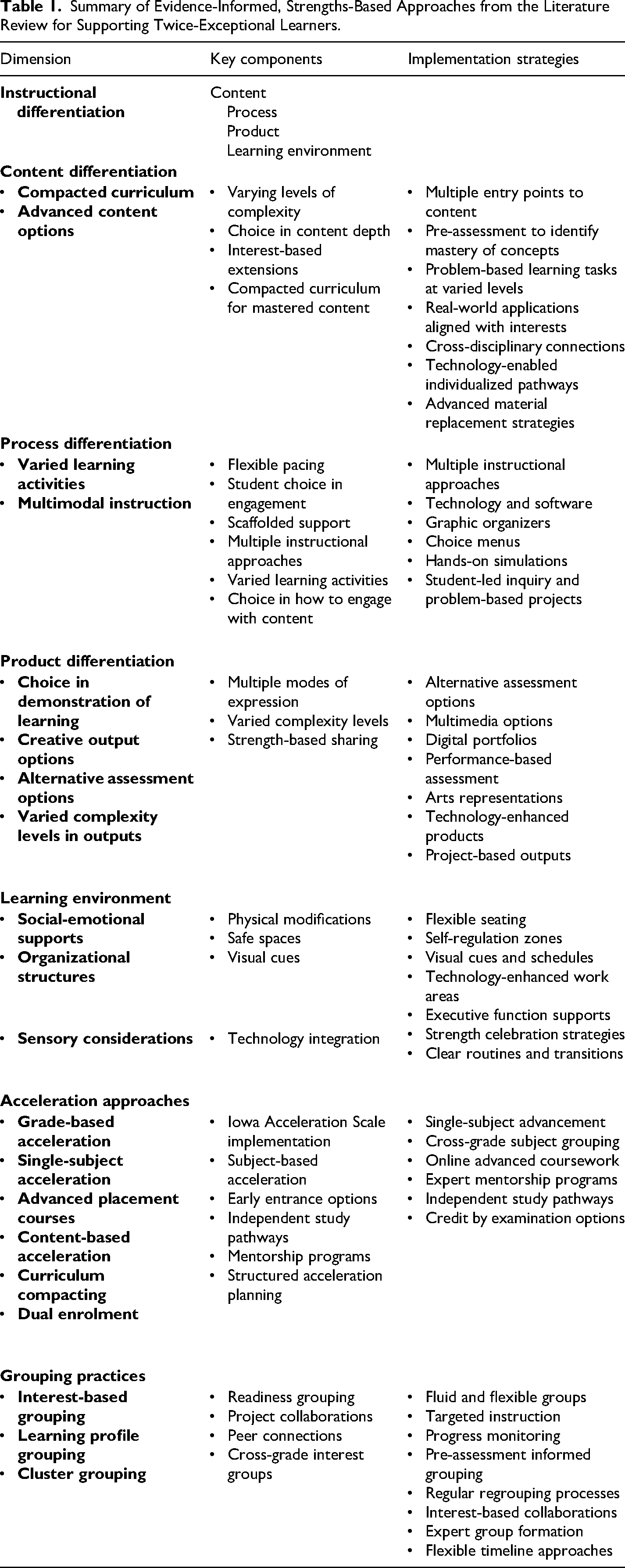
Recognized as part of differentiation practices, or in some instances as stand-alone approaches, grouping practices were espoused as being designed to be dynamic and responsive to student needs (Gentry, 2014). For example, readiness grouping aimed to ensure that instruction matched students’ current level of understanding, while interest-based grouping aimed to capitalize on student motivation and engagement. Conversely, learning profile grouping acknowledged the diverse ways students process and demonstrate their learning, enabling more personalized instructional approaches (Gentry, 2014).
A recurring finding across multiple studies was the effectiveness of acceleration approaches, which can take various forms depending on student requirements (LeBeau et al., 2023). Acceleration provides different pathways for meeting the advanced learning requirements of twice-exceptional students while maintaining appropriate support. For example, grade-based acceleration can provide options for students who demonstrate advanced abilities across multiple areas, and subject-based acceleration may enable students to progress in areas of strength/s while remaining with age peers in other subjects. Whereas, content-based acceleration offers flexibility within the regular classroom context, supports individualized pacing and depth of learning (LeBeau et al., 2023).
Research emphasizes that evidence-based approaches should not be implemented in isolation but rather as part of a comprehensive framework of support (Aqilah et al., 2019; Baum & Olenchak, 2021; Gilman et al., 2013). Studies over the past three decades have consistently demonstrated that twice-exceptional learners require opportunities to develop their talents through activities such as project-based learning and independent study, while simultaneously receiving targeted scaffolding through supports (e.g., assistive technologies, modified instruction, and explicit teaching of executive functioning skills). This integrated approach, supported by research, aims to create learning environments where twice-exceptional students can thrive both academically and social-emotionally (Gilman et al., 2013).
GenAI in Education
The rapid emergence of GenAI in education has sparked both excitement and uncertainty about its potential applications and implications (Nazaretsky et al., 2022). While research specifically examining the use of GenAI with twice-exceptional students remains limited, early studies suggest promising opportunities for personalized learning for gifted students, which may be similar for twice-exceptional learners (Siegle, 2024; Ronksley-Pavia, 2024b, 2024c). The adaptive capabilities of GenAI models have the potential for addressing the complex learning profiles of twice-exceptional students, particularly in generating personalized approaches and scaffolding complex tasks (Ogunleye et al., 2024).
Current applications of GenAI in supporting neurodivergent learners have primarily focused on content adaptation and learning support strategies (Medlicott, 2023). However, a significant gap exists in research examining how GenAI might support teachers in developing and refining their pedagogical approaches for twice-exceptional students. This gap is particularly notable given that teachers consistently report feeling underprepared to meet the diverse learning requirements of these students (Arantes, 2023). As Mollick and Mollick (2024) suggest, GenAI can serve as a tool for teachers to generate and test different pedagogical approaches, which may be particularly valuable when working with learners who have complex educational needs. This potential for what we have termed pedagogical rehearsal—educators trying out different teaching strategies and receiving immediate feedback—could help bridge the gap between theoretical understandings and practical applications in supporting twice-exceptional learners. The intersection of twice-exceptional student requirements, GenAI capabilities, and teacher professional learning creates a unique opportunity to reimagine how to support educators working with these learners. While research has established the importance of strengths-based approaches for twice-exceptional students (Baum et al., 2014), and early studies suggest promising applications for GenAI in education (Mollick & Mollick, 2024; Ronksley-Pavia, 2024c), limited attention has been paid to how these technologies might specifically support teacher professional development and practice. Our research addresses this intersection by exploring how GenAI might serve as a tool for pedagogical rehearsal for twice-exceptional learners. This approach demands cautious theoretical consideration of how humans and non-human actors interact in educational settings, particularly when supporting our most complex learners.
Theoretical Framework
The origins of this research began with an intersection of two sets of interests, the role of student profiles in researching twice-exceptional students (from key research papers by M. Ronksley-Pavia) and the use of composite or synthetic characters in social science research (McCallum & Rose, 2021; Youdell, 2011).
Exploring the role that GenAI might play in the education of twice-exceptional students requires being explicit about how we think about the models and their application. Typically, GenAI is referred to as technology, such characterization implies a distinction between the social and the technical GenAI (i.e., the teacher and twice-exceptional student in the classroom and the GenAI model). Franklin (2004), drawing on Boulding (1969), argues that technology needs to be seen as practice, as the way things are done around here. As Boulding wrote, “There is a technology for praying as well as for plowing, for producing poetry as well as producing potatoes, for controlling fears as well as for controlling floods” (Boulding, 1969, pp. 126–127). This is a holistic view, one that does not separate the various components of what is a complex system, education generally, or the classroom in particular (Jacobson et al., 2019). Taking this position allows us to draw on a framework—actor-network theory (ANT) (Latour, 2005), which offers a useful way to think about GenAI and twice-exceptional students.
Integrating GenAI in educational settings, especially for twice-exceptional students, requires careful consideration of the complex interplay between human and non-human actors, in other words, human expertise, capabilities of GenAI, and the many actors that are found in educational contexts. We drew on ANT insights developed by Akrich (1992) and Latour (1992) to explore how work traditionally performed by humans can be effectively delegated to non-human actors—in our case, GenAI applications.
For a delegation to work, Latour posits that there must be a redistribution of capacities between human and nonhuman actors—the nonhuman must be upskilled, and the human must be re-skilled in a manner that complements the work of the nonhuman (Bigum, 2023). For a teacher using GenAI to support twice-exceptional students, we posit that it is their prompting that upskills the GenAI, in return, the GenAI requires a re-skilling of the teacher, which allows them to judge the accuracy and quality of the GenAI's work. A less obvious but inter-dependent capacity for the human user is a workable understanding of how a GenAI was built and how it operates. It is crucial to note that current research on GenAI applications in education emphasizes the importance of maintaining human expertise and oversight in educational decision-making (Nazaretsky et al., 2022).
Methods
Our research employed a systematic five-phase approach between May and October 2024, documenting our experiments across three GenAI platforms—Claude, ChatGPT, and NotebookLM. Each experimental phase progressively built on previous findings, moving from initial synthetic profile development through to evaluation of specific pedagogical approaches. Our research focused on the following questions:
How does GenAI interpret and respond to fictional, evidence-informed synthetic profiles of twice-exceptional learners to support pedagogical rehearsal? To what extent do the GenAI-generated approaches align with evidence-informed, strengths-based approaches for supporting the unique needs of twice-exceptional learners?
We used a qualitative, exploratory approach focused on small-scale GenAI experiments. These experiments involved creating fictional, evidence-informed learner profiles representing diverse twice-exceptional students (i.e., synthetic research participants). These profiles were based on real-world participants from prior independent studies conducted by our research team. These profiles served as the basis for our small-scale experiments (Schrage, 2014). Once the initial profile development work was completed, we developed and refined prompts designed to elicit educational recommendations from the GenAI using these profiles. The prompts were iteratively improved based on the quality and relevance of GenAI's outputs. Our team critically analyzed the GenAI responses against empirically recognized evidence-based practice in supporting twice-exceptional learners (e.g., differentiation) drawn from our literature review.
Positionality Statement
As researchers embarking on this study, we acknowledge that our personal experiences, identities, and professional backgrounds inherently shaped our approach to the work. We believe in the importance of transparency regarding our positionality and how this may have influenced our research process and interpretations. Our team consists of three individuals, two of whom are neurodivergent, each bringing unique perspectives and experiences to the study.
The first researcher (M. Ronksley-Pavia) is a mid-career academic with over 20 years of experience in gifted education, working with and researching neurodivergent, twice-exceptional, and multi-exceptional students. As a woman who identifies as neurodivergent and lives with disability, she brings extensive lived experience and researcher expertise to the project. Her perspective is further informed by her role as a parent to twice-exceptional offspring. Specializing in working with children and young people with disability and neurodiversity, she embodies the principle of “nothing about us, without us” in disability research.
The second researcher (S. Ronksley-Pavia) is a neurodivergent independent researcher in his early-20s, bringing valuable lived experience as a twice-exceptional individual and young person recently graduated from post-school education. While not employed in an academic setting, his perspective and GenAI experimentation was crucial in grounding the research in real-world experiences of those whom we aim to support.
The third researcher (Bigum), a later career professor with over 50 years of experience in educational technology research, has an extensive background in facilitating the adoption of digital technologies in educational settings. He was able to provide both historical and contemporary perspectives about the integration of new tools in learning environments.
We recognize that our shared positionality may create a bias towards viewing neurodivergence primarily as a strength; however, as this aligns with current research in the field, moving from historical deficit approaches to current strengths-based ones, we see this as beneficial. Further, we remained vigilant to ensure we recognized potential challenges faced by twice-exceptional learners, which was further strengthened by the second author's lived experiences.
Research Design
The exploratory nature of our research design demanded a flexible yet systematic approach, which we structured across five distinct phases (Table 2). These phases progressed from initial profile development through to evaluation of specific pedagogical approaches, allowing us to systematically explore GenAI's potential role in supporting teachers in personalizing learning for twice-exceptional students. This five-phase structure was chosen to systematically explore GenAI's capacity while allowing for iterative refinement based on emerging insights. We selected three different GenAI platforms—Claude (M. Ronksley-Pavia), ChatGPT (S. Ronksley-Pavia), and NotebookLM (Bigum)—to explore potential variations in their capabilities and responses, particularly in understanding and generating appropriate profiles and pedagogical approaches for these twice-exceptional learners. The models were selected due to ease of access, with each team member already familiar with interacting and experimenting with their respective chosen platform. Each platform was selected for both our prior interactions and for their specific capabilities—Claude for its sophisticated comprehension and analytical capabilities applicable to the complex profiles, ChatGPT for its iterative refinement capabilities, and NotebookLM for its ability to analyse supplied source documents (i.e., real-world multi-exceptional learner profiles) without hallucinating (making things up). NotebookLM was also used as an integral part of the literature review to identify and analyse evidence-informed, strengths-based approaches recommended in the literature for supporting the individual requirements of twice-exceptional learners. This multi-platform approach provided opportunities to compare different GenAI capabilities while maintaining our focus on practical profile development and pedagogical applications.
Overview of Research Phases Showing the Systematic Development of GenAI-Supported Pedagogical Rehearsal for Twice-Exceptional Students.
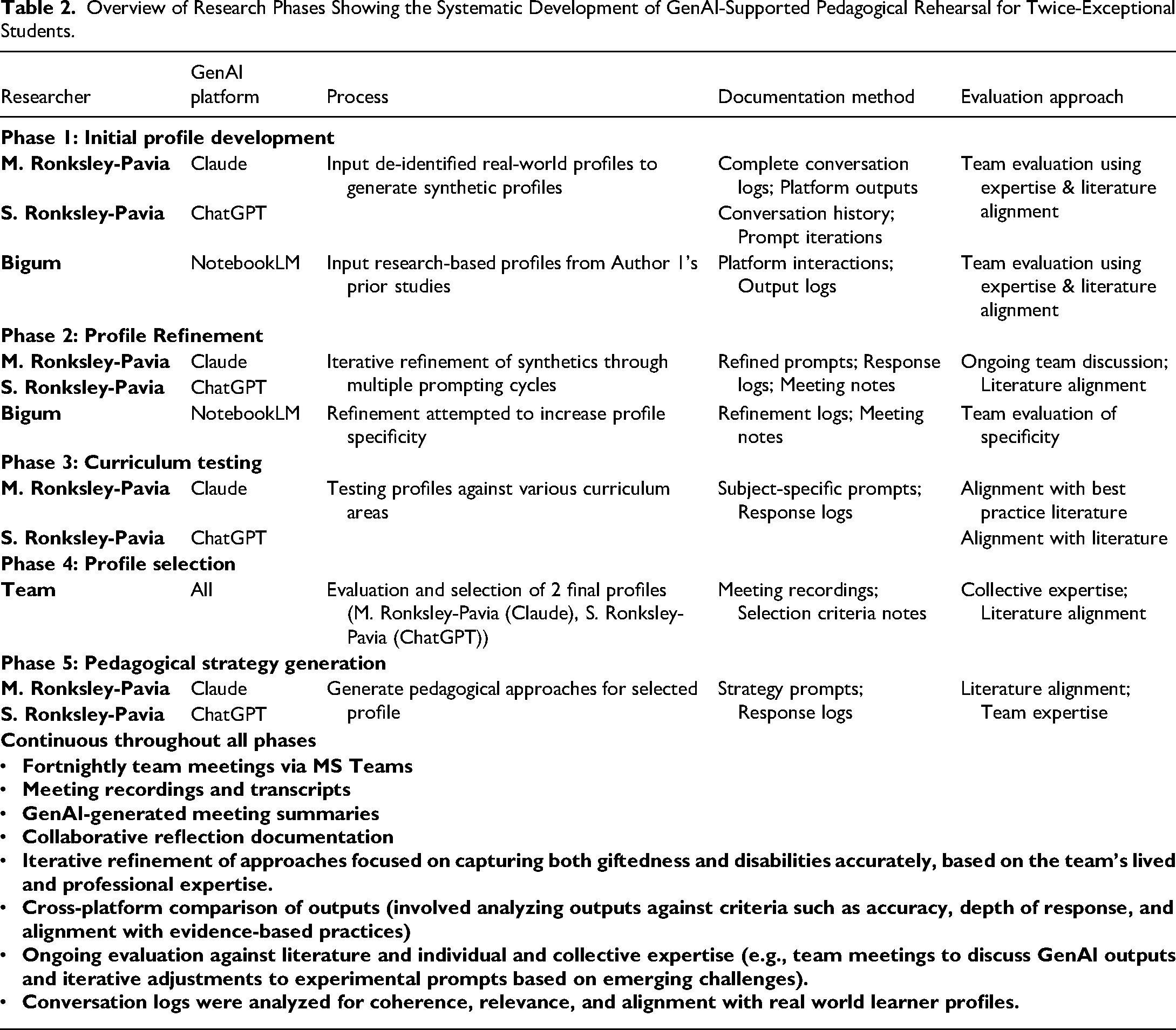
Data Collection
Our data collection process spanned from May to October 2024, encompassing multiple documentation streams across the five experimental phases. We systematically documented all interactions with the three GenAI platforms, collecting specific data such as prompts, GenAI-generated responses, and our reflections on the quality and relevance of outputs. Specific insight gained during one phase informed the next phase. For example, initial profile development in Phase 1 revealed gaps in capturing nuanced learner characteristics, leading to enhanced prompting strategies in Phase 2.
Synthetic Student Profile Development
The student profile development process began with initial GenAI interactions, where we documented our process of developing synthetic profiles through different approaches (Table 2). For Claude, we provided de-identified data from some of our previous research studies, carefully structured to maintain participant anonymity while preserving the authenticity of lived experiences. ChatGPT profile development drew directly from our team's lived experience, with careful documentation of how different prompting strategies affected profile authenticity. NotebookLM's profile generation used the curated collection of research literature, including evidence-based profiles from our previous studies.
Our development of AI prompts followed an iterative refinement process. Initial prompts were broad, asking GenAI platforms to generate basic profiles of twice-exceptional learners. Through systematic documentation of GenAI responses, we refined these prompts to better capture the complexity of twice-exceptionality (i.e., co-morbid conditions). Early prompts that focused on general characteristics evolved into more distinct prompting, incorporating specific learning scenarios and environmental contexts. We maintained detailed logs of prompt variations and their corresponding outputs, enabling analysis of which prompting strategies most effectively elicited pedagogically sound responses.
Our initial question was to see if NotebookLM could generate fictional but plausible synthetic characters of twice-exceptional students by drawing on M. Ronksley-Pavia's evidence-informed student profiles from her previous research in the field. NotebookLM has a large context window allowing up to fifty resources per notebook, each of which can be as large as 500,000 words. Our next step was to see if synthetic profiles could be generated by drawing solely on the key research literature relating to twice-exceptional students. A set of 180 papers curated by M. Ronksley-Pavia was condensed into a set of 40 PDFs, which were loaded into a notebook in NotebookLM. Surprisingly, the synthetics were good, plausible, and detailed. Encouraged by these two outcomes, we tried two different large language models (OpenAI's ChatGPT o1-Preview and Anthropic's Claude 3.5 Sonnet) to see if reasonable synthetic profiles could be generated with no supporting context and simple zero-shot prompting, for example: Would you be able to generate fictional accounts of school age, primary to secondary students who are twice-exceptional. The account would include family background, details of exceptionalities and detailed instances that illustrate what it is like to be a twice-exceptional student in a formal education setting, like a school.
The accounts were short, so a follow up prompt was used: Can you make these stories more detailed and longer please?
The results were impressive, detailed, and judged to be good, plausible instances of twice-exceptional students and some typical experiences that they may have in formal education settings.
Our documentation of the GenAI interactions was comprehensive, incorporating complete conversation logs showing original prompts and all subsequent interactions copied into separate Microsoft Word documents, along with researcher commentary and reflections on the process as the experiments were undertaken. We preserved the context of each interaction, including platform-specific behaviors and limitations, records of both successful and unsuccessful prompting strategies, and detailed notes on our refinement process. This thorough documentation approach helped us track the evolution of our prompting strategies and their effectiveness in generating appropriate pedagogical responses. All documentation was centrally stored in OneDrive, organized to track the evolution of our experimental phases. This systematic approach to data collection enabled us to maintain a clear trail of our research process while facilitating ongoing analysis and refinement of our approaches.
Data Analysis
The data analysis consisted of two key distinct, yet connected stages informed by ANT. The first stage was the development, refinement, and analysis of the six initial, most plausible twice-exceptional learner profiles that were generated; two from each GenAI platform. The second concurrent stage was the extensive analysis of the literature to identify recommended strengths-based, evidence-informed approaches for supporting twice-exceptional learners in schools. Note that the literature had already been reviewed to inform the study; this second stage was a more in-depth analysis of key articles to ascertain what were recommended practices for our target population.
ANT-Informed Analysis Framework
ANT shaped our analytical approach by focusing attention on the interactions between human researchers, GenAI models, and the educational practices they jointly produced. We analyzed how different actors—human and non-human—contributed to the development of the profiles and pedagogical approaches. ANT guided our examination of how teachers might develop workable understandings of GenAI capabilities while maintaining their essential role in pedagogical decision-making. Our analysis specifically tracked how the prompting process continuously redistributed capacities between humans and GenAI. The framework assisted in identifying the potential and limitations of GenAI models in supporting twice-exceptional learners, revealing areas where technology could effectively augment human expertise and areas requiring continued human oversight.
Analysis of Literature to Identify Recommended Practices
Our analysis of the empirical literature employed a seven-phase process to identify evidence-informed, strengths-based approaches for supporting twice-exceptional learners (Table 3). The initial phases involved a narrative literature review, beginning with screening of titles and abstracts to identify relevant literature. This screening focused specifically on strengths-based approaches and assisted in identifying key authors and researchers in the field. During the comprehensive review phase, we conducted detailed readings of selected articles, leading to our final selection of key articles published between 2001 and 2024. These articles were selected based on their focus on evidence-informed strengths-based approaches for supporting twice-exceptional in educational settings. We did not evaluate the quality of, nor the recommended pedagogical approaches made in these articles, as this was beyond the scope of the current study.
Literature Analysis Process for Identifying Strengths-Based Approaches From the Literature.
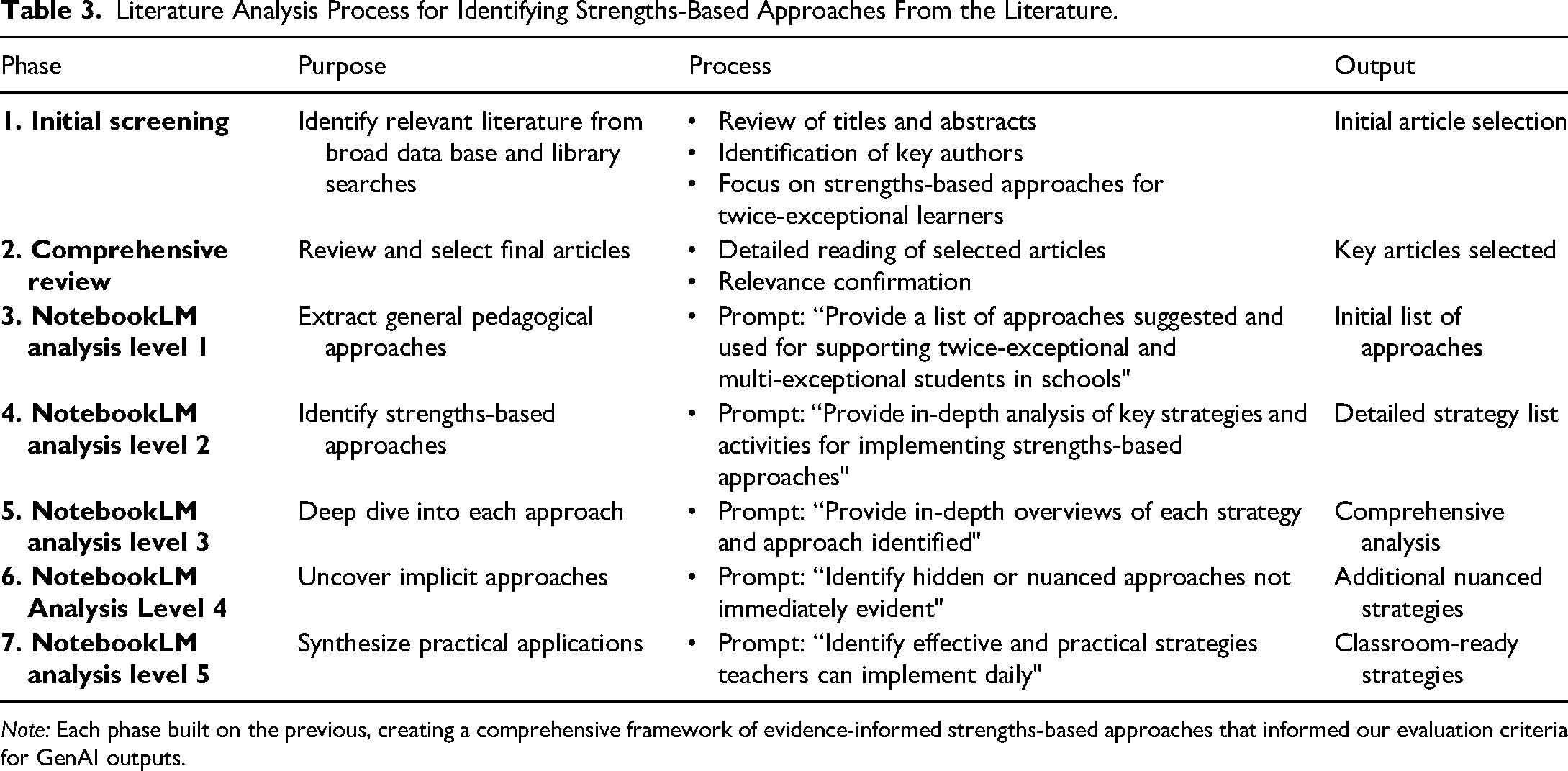
Note: Each phase built on the previous, creating a comprehensive framework of evidence-informed strengths-based approaches that informed our evaluation criteria for GenAI outputs.
Through the iterative process of NotebookLM-assisted analysis, we were able to identify both explicit and implicit strengths-based approaches from the literature. NotebookLM facilitated keyword searches and synthesized key themes from the 40 uploaded PDFs, enhancing our ability to identify nuanced strategies for twice-exceptional learners. The combination of traditional narrative review methods with innovative use of GenAI models enabled us to develop a comprehensive framework that we then used to evaluate GenAI outputs in our subsequent experimental phases.
Evaluation Criteria Derived from Literature
Our literature analysis revealed key evidence-informed, strengths-based approaches for supporting twice-exceptional learners in educational settings (Table 1 and Figure 1). A prominent theme across the literature was the importance of curriculum differentiation (or instructional differentiation), which recognizes students’ varying readiness levels, interests, and life circumstances. Acceleration approaches, which encompassed various strategies including curriculum compacting, subject acceleration, and grade acceleration formed another cornerstone of effective practice. The literature also emphasized the significance of flexible grouping practices in creating supportive learning environments. Talent development programs represented another key approach, with an emphasis on recognizing and nurturing students’ unique strengths while providing appropriate support for areas of challenge.
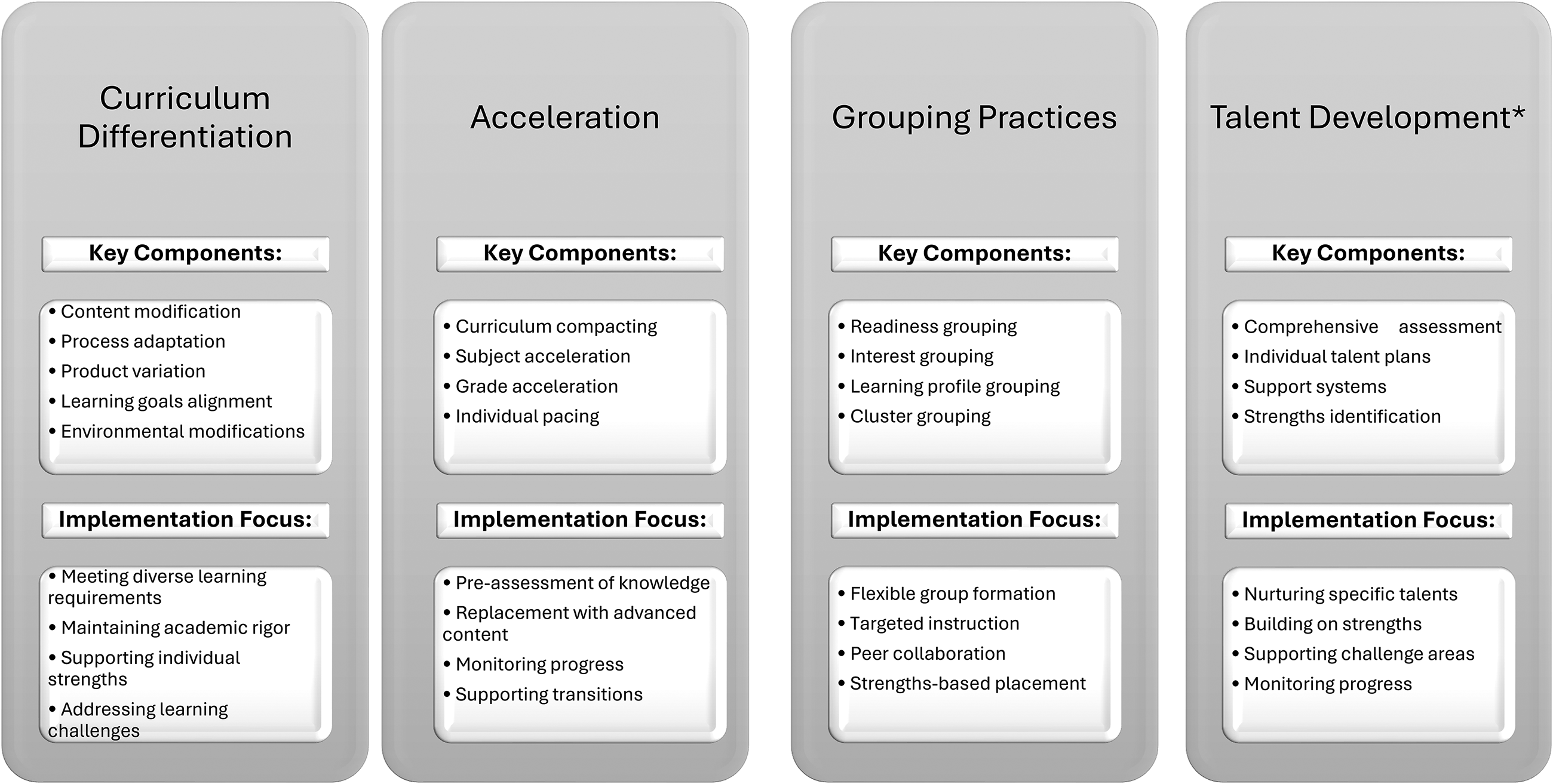
Framework of evidence-informed strengths-based approaches from literature used to analyze GenAI recommendations for Ethan and Ava.
Analysis of Synthetic Twice-Exceptional Learner Profiles
Preliminary analysis commenced once we had created the plausible six profiles—two each from Claude, ChatGPT, and NotebookLM. First, we examined responses generated for these profiles, focusing on how effectively each GenAI platform could generate evidence-based, strengths-based approaches for individual learner profiles. Quality assurance at this stage involved team meetings where we critically examined outputs for oversimplified approaches, we also examined any stereotyping or biases that arose in the GenAI outputs, remaining cognizant of how this might impact the pedagogical recommendations.
Through iterative prompt refinement and careful evaluation of the GenAI responses, we narrowed our focus to four profiles that demonstrated the most authentic representation of twice-exceptional learners. While the NotebookLM-generated profiles showed initial potential, they were less effective in capturing the specific characteristics and learning requirements of twice-exceptional learners, despite being generated from the real-world profiles. The refinement process with the remaining four profiles involved exploring each profile against specific curriculum areas, such as literacy and numeracy, to assess the depth and quality of GenAI responses to pedagogical queries. We evaluated how each GenAI platform responded when asked to generate approaches for the four profiles in these specific learning contexts.
The four retained profiles—two generated through Claude and two through ChatGPT—yielded richer, more nuanced responses that better reflected the paradoxical complexity of twice-exceptional learners. The evaluation process involved analyzing each profile's capacity to elicit detailed, personalized pedagogical responses from the GenAI platforms, with particular attention to how well these responses aligned with approaches identified from our literature review.
The final stage of analysis centered on two profiles that emerged as optimal representations, which we judged to be in-depth, capturing the intricacies of twice-exceptional learners: Ethan Rodriguez (developed through Claude) and Ava Chen (developed through ChatGPT). Using the context of high school history curriculum, we analyzed how each GenAI platform responded to teacher prompts for pedagogical strategies for each profile. History was selected as the curriculum area for testing as it traditionally relies heavily on reading comprehension, writing, and social understanding—areas that can be challenging for many twice-exceptional learners. The first author adopted the role of teacher for interactions with Claude regarding Ethan's profile, while the second author did the same with ChatGPT for Ava's profile. This approach allowed us to explore how different GenAI platforms interpreted and responded to teacher requests for specific approaches within the concrete curriculum context of history, enabling the rehearsing of pedagogy.
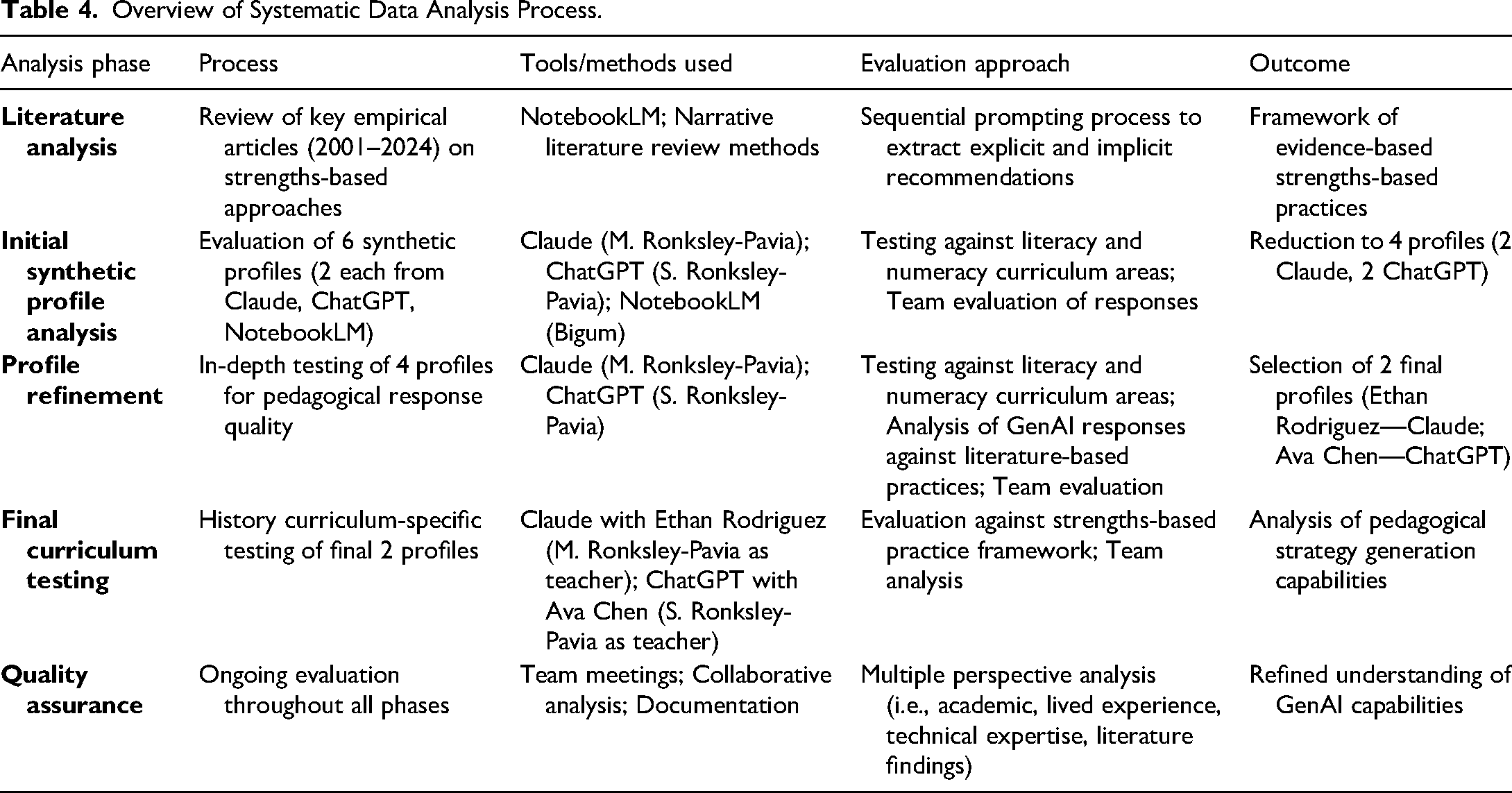
The final analysis phase examined how effectively each platform (Claude or ChatGPT) generated pedagogical strategies that addressed both strengths and challenges (disability) of our synthetic profiles. We evaluated suggestions for acceleration, differentiation, flexible grouping, and talent development against our literature-derived framework. This systematic analysis revealed patterns in how different GenAI platforms interpreted and responded to requests for specialized pedagogical approaches, providing insights into their potential use in supporting teachers of twice-exceptional learners. Table 4 presents the systematic phases of our data analysis. The process demonstrates the iterative nature of our experiments, analysis, and our multiple perspectives for evaluating the GenAI responses.
Overview of Systematic Data Analysis Process.
Findings and Discussion
Here we present the two final synthetic twice-exceptional learner profiles of Ethan Rodriguez (Claude) and Ava Chen (ChatGPT). We provide commentary about their development and the iterative experimenting through prompting the respective GenAI models.
Synthetic Profile Development
The development of Ethan Rodriguez's profile and Ava Chen's profile emerged through an iterative, collaborative process guided by systematic prompting and responsive refinement built on the experiments we had conducted for the initial six profiles (Table 5). The process commenced with requests to create fictional synthetic, composite profiles based on the analysis of de-identified real twice-exceptional learner profiles. These profiles were drawn from data collected for previous unrelated studies. This initial phase involved careful consideration of the real profiles to inform the creation of realistic and comprehensive profiles of twice-exceptional learners (i.e., synthetic research participants). This iterative approach allowed for the creation of robust synthetic profiles that reflected real-world complexities, enhancing their utility in testing pedagogical strategies.
Iterative Development of Synthetic Multi-Exceptional Learner Profiles.
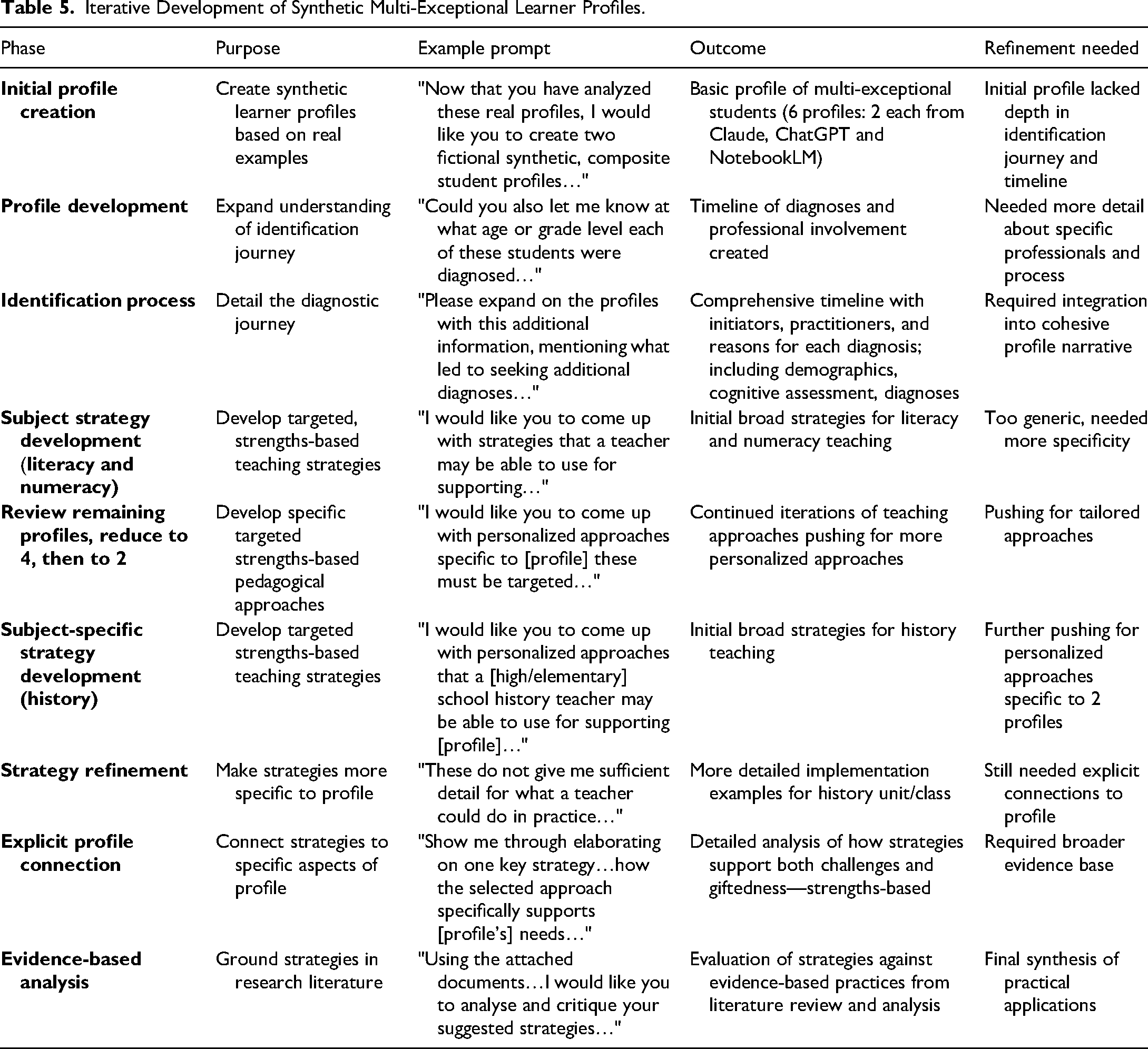
The final phase involved creating detailed summaries and analyses of the strategies developed through this iterative process. Prompts guided the GenAIs to explicitly articulate how each approach balanced supporting challenges while advancing giftedness, leading to a comprehensive understanding of how these strategies could work in practice. This final synthesis helped crystallize the complex interplay between adjustments and addressing strengths that is essential for effectively supporting twice-exceptional learners. Our collaborative process, through its multiple iterations and consistent refinement, led to the development of two robust, practical profiles that could be used to authentically inform educational practice. The back-and-forth nature of the dialogue between human and GenAI tool assisted in ensuring that the final profiles were comprehensive and practically useful for educators working with twice-exceptional learners.
Ethan Rodriguez's Profile From Claude
Ethan Rodriguez is a multi-exceptional boy aged 11 years, currently in the 6th grade. Ethan's profile underscores his exceptional perceptual reasoning abilities and strong verbal skills, contrasted with his challenges in processing speed. Ethan's identification as a multi-exceptional learner evolved from age 4 to 8, beginning with his preschool teacher recognizing both his advanced logical reasoning abilities and sensory processing challenges. He excels in perceptual reasoning (99.9th percentile) alongside areas of challenge evidenced by lower processing speed scores, stemming from diagnoses including Sensory Processing Disorder, ASD (Level 1), and dysgraphia. His dual exceptionalities stress his remarkable academic strengths and unique learning challenges. Ethan's full profile is available in the article's Supplemental material.
Ava Chen's Profile From ChatGTP
Ava Chen is a 14-year-old Chinese-American student with a complex twice-exceptional learner profile. Her exceptional talent lies in mathematics and problem-solving, where she demonstrates advanced abilities in abstract reasoning, pattern identification, and complex problem-solving. However, Ava also faces several learning challenges stemming from her dyslexia, ASD, and Sensory Processing Disorder (SPD). These disabilities impact her ability to read and write fluently, to process sensory input, and to comfortably navigate social situations.
To mitigate the impact of her dyslexia, Ava utilizes assistive technologies like text-to-speech software and audiobooks. She also benefits from visual aids and manipulatives in mathematics. Ava's ASD necessitates structured routines and clear instructions to minimize anxiety and support her learning. To manage her SPD, she uses noise-canceling headphones and adjusts her study environment to minimize sensory overload. These strategies directly mitigate the effects of her dyslexia, ASD, and sensory processing challenges, enabling Ava to capitalize on her mathematical strengths. Ava's WISC-V profile shows a significant split between her verbal and non-verbal abilities, reflecting her giftedness in math and challenges with dyslexia, ASD, and SPD. Overall, Ava's WISC-V profile reveals a significant strength in visual-spatial and fluid reasoning abilities, aligning with her giftedness in mathematics. However, her scores on verbal comprehension, working memory, and processing speed are significantly lower. Ava's full profile is available in the article's Supplemental material.
Profile Creation With GenAI
The twice-exceptional synthetic profile development process highlighted several interesting aspects of using GenAI to create synthetic learner profiles. We noted ChatGPT's initial tendency to default to certain disabilities it deemed more common or relatable (e.g., ADHD). We also noted biases by both Claude and ChatGPT in assigning racial and socioeconomic characteristics, including naming the profiles with culturally ladened names.
When prompted to provide educational support strategies for Ava, after initially providing quite generic ones applicable to all students, ChatGPT was able to generate detailed, practical, and specific recommendations that demonstrated an understanding of the complexities of supporting twice-exceptional learners. Both Ethan's and Ava's complex profiles were valuable for exploring educational support strategies and understanding the potential roles of GenAI in supporting teachers.
The final pedagogical strategies that were generated in response to both profiles showed strong evidence-based approaches for supporting specific combinations of giftedness and disability. However, this came after much experimentation, prompting, and many iterations. For example, the final detailed strategies for Ethan effectively integrated his mathematical strengths with support for his social communication challenges, while Ava's profile generated subsequent approaches that consider both her verbal abilities and processing needs. The iterative process of refining prompts and experimenting with GenAI models may be too time-intensive for busy educators seeking quick, practical solutions for personalized learning. One approach could be to take targeted key elements of specific learner profiles for students in their classroom (while being cognizant of privacy considerations), and then ask the GenAI models to explicitly connect their unique educational requirements to curriculum areas and approaches that the teacher is searching for, rather than necessarily creating synthetic profiles. Another approach to address time constraints could be for educators to leverage pre-built GenAI twice-exceptional learner profiles or streamlined templates tailored to their curriculum needs, reducing the cognitive load and preparation time.
Pedagogical Approaches Recommended for Curriculum Area of History
The literature emphasized four key evidence-informed approaches: acceleration, differentiation, flexible grouping, and talent development. These were all evident to some extent in both Claude and ChatGPTs recommendations for personalized pedagogical approaches for each profile (Table 6). Our analysis of the recommended approaches for supporting both profiles in the subject of history revealed both alignment with and departure from these evidence-based practices. However, these strategies often assumed access to resources, technology, and support systems that may not be universally available, potentially limiting their practical implementation in diverse educational settings.
Comparison of GenAI Recommendations and Alignment With Evidence-Based Practices for Each Profile.
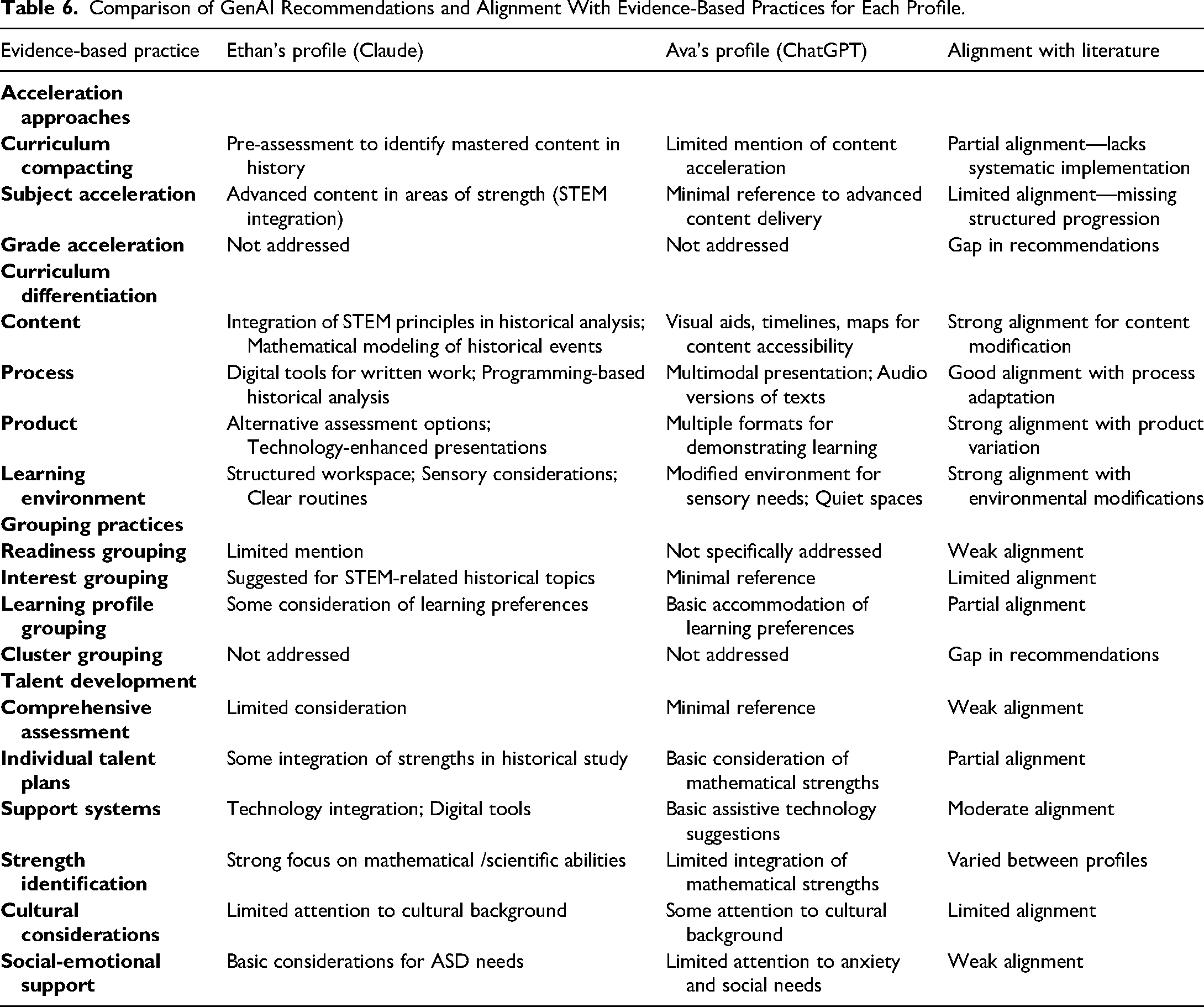
Using a 5-point scale (0 indicating limited alignment to 5 indicating full alignment), we summarized the GenAI recommendations and their alignment with evidence-based practices drawn from the literature Figure 2 shows the strengths and weaknesses of the recommendations made by the GenAI models. Overall, recommendations for curriculum differentiation and the various elements (e.g., content, process) for each profile were strongly aligned with the literature. Whereas acceleration approaches (e.g., curriculum compacting, grade acceleration) and grouping practice (e.g., readiness grouping, interest grouping) recommendations were particularly weak, with limited alignment with the literature.
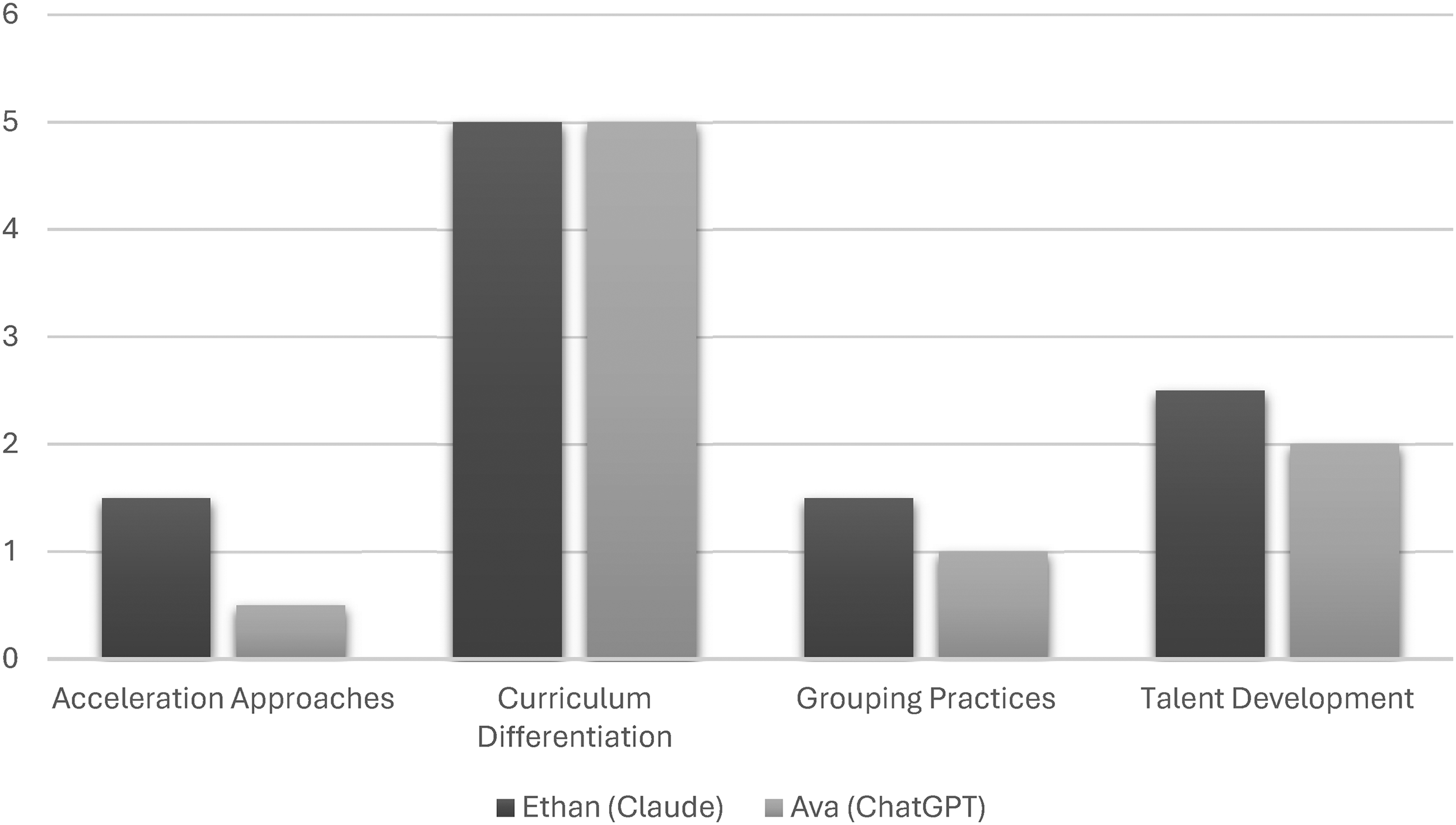
Strengths and weaknesses of the GenAI recommendations for each profile.
Strengths and Weaknesses of Recommended Approaches for Ethan
A primary strength from Claude's recommendations for Ethan emerged in the sophisticated integration of his STEM capabilities within the curriculum area of history. The recommendations show careful attention to leveraging Ethan's exceptional mathematical and scientific abilities (99.9th percentile in perceptual reasoning), through quantitative analysis of historical developments. This integration aligned with evidence-based practices, emphasizing the importance of using cognitive strengths as entry points for learning while maintaining rigorous content standards (Baum & Olenchak, 2021; Foley-Nicpon & Cindy Kim, 2018; Reis et al., 2014). The approach effectively bridged Ethan's advanced STEM capabilities with historical understanding, demonstrating how content-area instruction could be adapted to support twice-exceptional learners’ strengths.
The GenAI-generated recommendations also showed strong alignment with evidence-based practices in their attention to environmental differentiation and technological integration (Piske et al., 2022). The suggested approaches included carefully structured learning environments and digital tools that simultaneously addressed Ethan's dysgraphia while enabling advanced mathematical and scientific analysis. For instance, incorporating graphic organizers leverages Ethan's perceptual reasoning strengths while scaffolding his writing challenges, allowing him to engage with historical content effectively. This dual-purpose approach to accommodation and advancement reflected practices from the literature (e.g., Baum et al., 2014; Baum & Olenchak, 2021) enabling addressing areas of challenge while engaging strengths. However, gaps emerge when comparing these recommendations to evidence-based frameworks for pedagogical approaches. While curriculum compacting was mentioned, the suggestions lacked the systematic acceleration planning that research identified as crucial (e.g., Assouline et al., 2008; Foley-Nicpon & Candler, 2018; Gentry, 2014). The proposed approaches attempted to accelerate content through mathematical and scientific connections but missed opportunities for comprehensive subject-based acceleration that could better serve Ethan's advanced cognitive abilities. Both ChatGPT (for Ava) and Claude's recommendations for addressing acceleration showed broader patterns of incidental rather than systematically applied approaches. This illustrated the gap between suggested approaches and evidence-based practices. The absence of explicit connections to established models, such as Renzulli's Enrichment Triad Model (e.g., Assouline et al., 2008; Gentry, 2014), represented a departure from evidence-based approaches, which is likely a reflection of the training data used for the GenAI models. This gap suggests a need for more understanding of systematic talent development planning that includes clear progression pathways and opportunities for authentic creative production. However, it is likely that even experienced educators would struggle with this in classrooms. The fact that the GenAIs were able to recommend suitable talent development approaches for the multi-exceptional learners is a clear strength of these models.
Curriculum differentiation, though more robustly represented than other approaches in the GenAI recommendations, still fell short of comprehensive implementation. While the recommendations included multiple elements of differentiation, such as content presentation and assessment options, they lacked the systematic approaches to differentiation across content, process, product, and learning environment that research indicates as most effective (e.g., Baum et al., 2001; Gentry, 2014; Reis & Renzulli, 2021; Ronksley-Pavia, 2010). For example, the suggestions addressed surface-level modifications for Ethan's dysgraphia and sensory needs but missed opportunities for deeper differentiation that could support both his disabilities and advanced abilities. Again, this is being hyper critical of the GenAI's responses, in practical classroom situations, the suggested pedagogical approaches would likely meet some of the personalized learning needs of the target students. The full strengths-based, evidence-informed pedagogical approaches for Ethan from Claude are available in the article's Supplemental material.
Perhaps most significantly, all the recommendations, from both Claude and ChatGPT, demonstrated limited consideration of the requirement for social-emotional support within strengths-based frameworks evident in the literature (e.g., King, 2022; Klingner, 2022; Reis & Renzulli, 2021; Ronksley-Pavia, 2024a; Ronksley-Pavia & Pendergast, 2021; van Gerven, 2018). While some consideration is given to Ethan's ASD-related needs, the suggestions lacked the comprehensive integration of social-emotional support that research identifies as essential for twice-exceptional learners (e.g., Aqilah et al., 2019; Assouline et al., 2008; Baum et al., 2001, 2014; Piske et al., 2022; Reis & Renzulli, 2021; Williams King, 2005). These findings suggest that while GenAI's recommendations provide valuable foundational strategies, they require more systematic alignment with evidence-based practices.
Strengths and Weaknesses of Recommended Approaches for Ava
The suggested approaches from ChatGPT showed potential in addressing Ava's dyslexia through multimodal presentation of historical content. The recommendations appropriately emphasized visual aids, timelines, maps, and charts to help organize historical information, reducing reliance on dense text; this aligned with the literature for supporting twice-exceptional learners with reading challenges (e.g., Baum et al., 2001; Coleman et al., 2005; Ireland et al., 2020; Ronksley-Pavia, 2010, 2024a). The integration of audio versions and text-to-speech tools reflected research-supported accommodations while maintaining access to curriculum content. However, the recommendations were quite generic and not specifically personalized for Ava's profile of exceptionalities. The suggested approaches demonstrated limited understanding of how to systematically leverage Ava's exceptional mathematical and problem-solving abilities (her areas of strength) within the study of history. This is a key struggle for teachers in how to apply dual differentiation, or strengths-based approaches (Baum et al., 2001; Department for Children, Schools and Families (UK), 2008; Filmer, 2011). While suggesting the use of data analysis and pattern recognition, the recommendations did not include a systematic, scaffolded approach to talent development that research indicates is essential for such twice-exceptional learners (LeBeau et al., 2023; Reis et al., 2014; Reis & Renzulli, 2021). Evidence-based practices emphasize the need for structured progression in developing advanced abilities—moving from basic applications to increasingly complex analytical tasks while maintaining appropriate support for learning challenges (LeBeau et al., 2023). For Ava, this could involve carefully sequenced development of mathematical thinking in historical contexts, from basic statistical analysis through to complex modeling of historical trends and sophisticated examination of causation patterns, however, this was not evident in ChatGPTs recommendations.
The recommendations for supporting Ava's ASD and sensory processing needs partially aligned with evidence-based practices through emphasis on clear instructions, structured routines, and environmental modifications recommended in the literature (e.g., Aqilah et al., 2019; Baum et al., 2014; National Education Association, 2006; Ronksley-Pavia & Hanley, 2022; Ronksley-Pavia, 2024a), all providing opportunities for teachers to rehearse pedagogy. However, they overlooked opportunities for more comprehensive integration of these supports within talent development. The recommendations could be improved by addressing how her mathematical thinking and problem-solving abilities could be systematically developed, while simultaneously supporting her sensory and social needs.
Another notable weakness in the suggestions was evident in the approach to Ava's cultural context as a Chinese-American student from a high-achieving immigrant family. While the profile acknowledged potential cultural pressures and family dynamics, the recommended approaches did not adequately address how these factors might influence her learning experience and need for personalized learning. This represents a significant departure from evidence-based practices that emphasize the importance of culturally responsive teaching for multi-exceptional learners (e.g., Arnstein, 2022; Baum & Olenchak, 2021; Foley-Nicpon & Candler, 2018; Mayes & Moore, 2016; Mohammed, 2018; Ronksley-Pavia & Townend, 2017).
The recommendations also show shortcomings in addressing the intersection of Ava's multiple exceptionalities. While individual accommodations are suggested for each area of challenge (dyslexia, ASD, sensory processing), the approaches lacked the integrated, holistic framework that research indicates is most effective This is an aspect of supporting multi-exceptionality that teachers continue to struggle with and thus are likely in need of assistance in supporting (Foley-Nicpon et al., 2011; Klingner, 2022; Mayes & Moore, 2016). The findings suggest that while ChatGPT can generate basic accommodations and modifications, its recommendations required substantial improvement to better align with evidence-based practices. The suggestions provided a starting point, but needed more systematic integration of talent development, cultural considerations, and holistic support approaches to fully meet Ava's needs. The complete strengths-based, evidence-informed pedagogical approaches from ChatGPT for Ava are available in the article's Supplemental material.
Alignment With Evidence-Based Approaches
Analysis of GenAI recommended approaches for supporting both Ethan and Ava revealed important patterns in how these systems conceptualize approaches for twice-exceptional learners. While both Claude and ChatGPT demonstrated capability in generating basic accommodations and modifications, their recommendations showed varying alignment with evidence-based practices. Claude's suggestions for Ethan showed more sophisticated integration of STEM capabilities with history subject area content, and stronger attention to environmental modifications, though limited in systematic implementation of acceleration and talent development frameworks. ChatGPT's recommendations for Ava, while addressing basic accommodations for her disabilities, demonstrated limited understanding of structured talent development and missed opportunities for leveraging her mathematical strengths. Significant improvement was needed for systematic acceleration planning, comprehensive differentiation, structured talent development frameworks, and integrated social-emotional support to fully align with evidence-based practices. Moreover, these areas are potentially all aspects of supporting twice-exceptional learners that classroom teachers need explicit support with, in these instances the GenAI models showed limited potential for these aspects of personalizing learning.
In essence, the GenAI platforms were able to support teachers in some aspects of their work to rehearse pedagogy for personalizing learning for the target population, but they were limited in the integration of key aspects of approaches in response to the individual profiles. Arguably, though, the recommendations would likely be sufficient for many general education teachers who may not have expertise in supporting twice-exceptional students.
Theoretical Integration of ANT and GenAI-Supported Pedagogical Rehearsal
Our findings, informed by ANT, reveal insights about the redistribution of capacities between human educators and GenAI models in supporting twice-exceptional learners. The iterative development of the profiles demonstrated how this redistribution operates in practice, with both human and non-human actors contributing distinct but complementary capabilities to the process. The success of pedagogical rehearsal depends on understanding how the human and non-human actors interact and influence each other. While GenAI models could generate sophisticated differentiation approaches, they required human expertise to effectively integrate these with social-emotional support and cultural considerations. Latour's (2005) concept of delegation draws attention to the potential and limitations of using GenAI models for supporting twice-exceptional learners. Our findings suggest certain tasks can be effectively delegated to GenAI, such as generating initial pedagogical strategies and suggesting content modifications. However, other aspects require continued human oversight, particularly in areas of cultural responsiveness, social-emotional support, and systematic talent development.
Representation, Bias, and Cultural Assumptions in Profile Creation
Our analysis of the GenAI-generated profiles revealed complex patterns in how AI systems represent diversity, cultural identity, and educational experiences. Through examination of Ethan Rodriguez and Ava Chen's profiles, we observed the emergence of distinct approaches to cultural representation, with Ethan's Latino background remaining understated despite the detailed profile, whereas Ava's Chinese American identity was explicitly integrated into her profile. Addressing biases in GenAI outputs could involve training datasets with diverse, inclusive profiles. Additionally, integrating GenAI outputs into professional development modules could help educators quickly adapt these models to their classrooms.
Both profiles demonstrated some sophisticated understanding of twice-exceptionality when pressed, yet operated within implicit middle-class American assumptions about access to educational and diagnostic resources. For example, ChatGPT assumed that Ava Chen had access to private tutors to support her. The prominent US-centric perspective and unexamined assumptions about resource and technology accessibility in both profiles underscored important considerations regarding representation in GenAI outputs. This suggests concomitant limitations and opportunities for their use in developing complex learner profiles and addressing the complex individual educational requirements of twice-exceptional learners.
Pedagogical Rehearsal
The concept of pedagogical rehearsal using synthetic learner profiles (rather than actual research participants or real learner profiles), represents a novel approach to both research and to supporting teachers in developing effective strategies for twice-exceptional students. Our approach offers teachers a process to actively experiment with and refine their pedagogical approaches before implementation. Importantly, using synthetic profiles addresses privacy concerns while still maintaining the authenticity needed for meaningful pedagogical practice. Such profiles can serve as the foundation for teachers (and researchers) to engage in pedagogical experimentation. With a synthetic profile, teachers can engage in contextual experimentation across various educational scenarios, curriculum areas, and teaching and learning activities.
Pedagogical rehearsal, using synthetic profiles, holds promise for supporting twice-exceptional students due to the unique complexity of their educational needs. These learners present teachers with the challenging task of simultaneously supporting disability while nurturing exceptional abilities—a pedagogical balancing act that many teachers feel unprepared to perform (Williams King, 2005). The complexity is magnified by the heterogeneous nature of multi-exceptionality. This diversity means that strategies that work for one twice-exceptional student may not be effective for another, making it difficult for teachers to develop expertise through traditional professional development alone (Fraser-Seeto et al., 2014; Lee & Ritchotte, 2019). The pedagogical rehearsal approach addresses this challenge by allowing teachers with varying levels of experience to relatively safely experiment with and refine their teaching strategies using synthetic profiles that reflect this complexity. For teachers new to supporting twice-exceptional learners, it provides a structured way to develop understanding and build confidence without risking student outcomes. For more experienced teachers, it offers opportunities to refine their approaches and experiment with innovative strategies. Importantly, this approach emphasizes the necessity of considering both exceptionalities simultaneously—advocating beyond the common deficit approach of focusing solely on disability support. Through repeated practice with synthetic profiles, teachers can develop the nuanced understanding needed to create integrated approaches that address the whole student, rather than treating giftedness and disability as separate entities requiring separate approaches.
Our approach offers noteworthy advantages in terms of scalability and accessibility because teachers can engage in professional learning at their own pace, efficiently exploring multiple scenarios, and repeating the process as needed for many different student profiles. This flexibility allows for deep learning without requiring constant access to specialized training or expertise. However, it is crucial to understand that pedagogical rehearsal with synthetic profiles is not intended to replace other forms of professional development or diminish the importance of real-world experience. Rather, it enables teachers to build their confidence, develop and refine their pedagogical approaches, practice responding to complex learning requirements, and more effectively prepare for real classroom situations with twice-exceptional students.
Limitations and Future Research
The research described in this article is grounded in models. It begins with large language models (GenAIs), which serve as the foundation for the development of subsequent models (learner profiles), those representing twice-exceptional students, and those of various teaching contexts. The well-known aphorism, “All models are wrong, but some are useful,” (Box, 1976, p. 792), aptly captures the philosophy underlying our approach. Although no model achieves perfect accuracy, complex approaches such as ours, can provide meaningful insights when applied with careful consideration.
We have made a case for the usefulness of pedagogical rehearsal as a model for these twice-exceptional synthetic student profiles in particular pedagogical contexts. Clearly, there are much larger populations of twice-exceptional students that we did not generate profiles for, and much larger sets of educational contexts we did not explore. All of which points to the need for further research where this approach can be tested in the field. Fieldwork will allow adjustments of synthetic twice-exceptional student profiles with detail from an actual twice-exceptional student in a teacher's classroom. In addition, more nuanced and real-world accounts of specific classroom contexts can be used for pedagogical rehearsals. Future iterations of GenAI models could include built-in prompts and evidence-based pedagogical strategies, making these resources more immediately applicable for teachers of twice-exceptional learners. Future research could explore the development of structured prompt frameworks and collaborative repositories of effective prompting strategies to streamline this process for time-constrained educators. The use of synthetic profiles (or synthetic research participants) in educational research has the potential to move the field beyond current ethical barriers applicable to real participants, in ways not yet known, that have the potential to add rich insights into not only supporting twice-exceptional learners, but into the unknown potential applications on GenAI models to this end. Subsequent research could focus on longitudinal studies to evaluate the impact of GenAI-designed strategies on twice-exceptional students’ academic and social outcomes.
Conclusion
This research explored GenAI's potential in supporting pedagogical approaches for twice-exceptional learners through systematic experimentation with Claude, ChatGPT, and NotebookLM platforms. The study's theoretical grounding in ANT illuminated the complex interplay between human expertise and artificial intelligence in educational contexts, particularly through what Latour (2005) conceptualizes as the redistribution of capacities between human and non-human actors. Our findings revealed both capabilities and limitations in GenAI-supported pedagogical rehearsal. While the platforms demonstrated sophistication in generating foundational differentiation strategies and environmental modifications, they exhibited notable gaps in systematic acceleration planning, talent development frameworks, and, importantly, the integration of social-emotional support. The development of synthetic learner profiles underscored GenAI's capacity to support teachers’ understanding of twice-exceptionality's complexity, while simultaneously revealing limitations in cultural responsiveness and comprehensive support frameworks.
Our methodological approach revealed some dimensions of prompt refinement essential for effective pedagogical rehearsal for twice-/multi-exceptional learner profiles. The iterative prompting process demonstrated that generating pedagogically sound, evidence-informed pedagogical recommendations required progressive refinement through several key strategies: (1) establishing explicit connections between suggested approaches and specific learner characteristics, rather than generic categories or disability conditions; (2) requiring concrete examples with classroom-level granularity; (3) consistently redirecting outputs towards strengths-based, rather than deficit-oriented approaches; and (4) systematic evaluation against evidence-based practice frameworks. This refinement process represents a crucial manifestation of Latour's (2005) redistribution of capacities—as educators develop expertise in crafting increasingly targeted prompts, they can effectively enhance the GenAI's capability to generate personalized pedagogical approaches aligned with evidence-based practices. For educators seeking to implement similar approaches, we recommend beginning with specific fictional learner profile elements, instead of attempting to start with comprehensive synthetic profiles. GenAI models are more likely to provide useful, actionable outputs when users employ systematic prompts that explicitly request strengths-based approaches with concrete implementation examples and maintaining critical evaluation of outputs against established frameworks for twice-exceptional education.
This study marks a significant step in our understanding of how human-AI collaboration may be integrated into gifted education, offering innovative solutions that bridge the gap between teacher preparation and the complex requirements of twice-/multi-exceptional learners. Collectively, this work emphasizes the continued centrality of human expertise in pedagogical decision-making.
Supplemental Material
sj-docx-1-joa-10.1177_1932202X251346349 - Supplemental material for Experimenting With Generative AI to Create Personalized Learning Experiences for Twice-Exceptional and Multi-Exceptional Neurodivergent Students
Supplemental material, sj-docx-1-joa-10.1177_1932202X251346349 for Experimenting With Generative AI to Create Personalized Learning Experiences for Twice-Exceptional and Multi-Exceptional Neurodivergent Students by Michelle Ronksley-Pavia, Steven Ronksley-Pavia and Chris Bigum in Journal of Advanced Academics
Supplemental Material
sj-docx-2-joa-10.1177_1932202X251346349 - Supplemental material for Experimenting With Generative AI to Create Personalized Learning Experiences for Twice-Exceptional and Multi-Exceptional Neurodivergent Students
Supplemental material, sj-docx-2-joa-10.1177_1932202X251346349 for Experimenting With Generative AI to Create Personalized Learning Experiences for Twice-Exceptional and Multi-Exceptional Neurodivergent Students by Michelle Ronksley-Pavia, Steven Ronksley-Pavia and Chris Bigum in Journal of Advanced Academics
Supplemental Material
sj-docx-3-joa-10.1177_1932202X251346349 - Supplemental material for Experimenting With Generative AI to Create Personalized Learning Experiences for Twice-Exceptional and Multi-Exceptional Neurodivergent Students
Supplemental material, sj-docx-3-joa-10.1177_1932202X251346349 for Experimenting With Generative AI to Create Personalized Learning Experiences for Twice-Exceptional and Multi-Exceptional Neurodivergent Students by Michelle Ronksley-Pavia, Steven Ronksley-Pavia and Chris Bigum in Journal of Advanced Academics
Supplemental Material
sj-docx-4-joa-10.1177_1932202X251346349 - Supplemental material for Experimenting With Generative AI to Create Personalized Learning Experiences for Twice-Exceptional and Multi-Exceptional Neurodivergent Students
Supplemental material, sj-docx-4-joa-10.1177_1932202X251346349 for Experimenting With Generative AI to Create Personalized Learning Experiences for Twice-Exceptional and Multi-Exceptional Neurodivergent Students by Michelle Ronksley-Pavia, Steven Ronksley-Pavia and Chris Bigum in Journal of Advanced Academics
Supplemental Material
sj-docx-5-joa-10.1177_1932202X251346349 - Supplemental material for Experimenting With Generative AI to Create Personalized Learning Experiences for Twice-Exceptional and Multi-Exceptional Neurodivergent Students
Supplemental material, sj-docx-5-joa-10.1177_1932202X251346349 for Experimenting With Generative AI to Create Personalized Learning Experiences for Twice-Exceptional and Multi-Exceptional Neurodivergent Students by Michelle Ronksley-Pavia, Steven Ronksley-Pavia and Chris Bigum in Journal of Advanced Academics
Footnotes
Declaration of Conflicting Interests
The authors declared no potential conflicts of interest with respect to the research, authorship, and/or publication of this article.
Funding
The authors received no financial support for the research, authorship, and/or publication of this article.

Supplemental Material
Supplemental material for this article is available online.
Correction (July 2025):
The article has been updated to correct the article type from “Special Issue – Approved Authors Only” to “Empirical.”
About the Authors
References
Supplementary Material
Please find the following supplemental material available below.
For Open Access articles published under a Creative Commons License, all supplemental material carries the same license as the article it is associated with.
For non-Open Access articles published, all supplemental material carries a non-exclusive license, and permission requests for re-use of supplemental material or any part of supplemental material shall be sent directly to the copyright owner as specified in the copyright notice associated with the article.
