



Abstract
This study used a mixed-methods design to examine teachers’ responses to professional learning on mathematics differentiation. Grade 3 classroom teachers (N = 28) attended four 2-h professional learning sessions and an additional 2 h individually on differentiation and completed pre- and post-surveys with quantitative and short response items assessing their experiences. Although teachers did not report changes in overall differentiation rates, implementation of less extensive practices (i.e., talk moves and mathematical practices) increased. Changes did not appear to be driven by teachers’ valuation of differentiation, which was high across surveys. Rather, a thematic analysis indicated that teachers simultaneously weighed benefits, challenges, and alignment with existing practices when making decisions about whether to implement differentiation strategies.
Amidst a surge of inclusive educational practices, mathematics teachers must learn to respond to the varied needs of increasingly diverse and complex student populations (Santangelo & Tomlinson, 2012; Tomlinson, 2014). Tomlinson (1999, 2014) described differentiation as a set of strategies to address the needs of various learners, recommending that teachers become aware of how content, process, and products can be adjusted to meet individual students’ abilities (readiness), interests, and levels of prior knowledge (learning profiles). Teachers have reported that it is necessary to differentiate instruction when making accommodations for the diversity in their classrooms (Casey & Gable, 2012), as differentiation practices are inherently aligned with the understanding that not all students are the same (Baecher et al., 2012). Teachers in mathematics classes are thus expected to use a range of methods to address the learning profiles and varied abilities of each student in their classroom (Căprioară & Frunză, 2013).
Educators who have implemented differentiated instruction to the teaching of mathematics have reported positive student outcomes, such as improved academic performance (Konstantinou-Katzi et al., 2013) and a deeper understanding of students’ areas of strengths and struggles (Hackenberg et al., 2021). Given such results, the call for differentiated instruction in the K-12 classroom has become increasingly widespread (Roy et al., 2013). However, teachers report a lack of preparation and training involving differentiation (Goodnough, 2010; Prast et al., 2015), and mathematics teachers demonstrate a lack of understanding about how to appropriately differentiate for learners who exhibit varied abilities (Ritzema et al., 2016; Roy et al., 2013). Thus, there is a need to provide professional learning opportunities to teachers of heterogeneous mathematics classrooms (Hackenberg et al., 2021). Recognizing the need for professional learning on mathematics differentiation, researchers in the present study sought to explore teachers’ reported beliefs and attitudes following professional learning opportunities focused on mathematics differentiation.
Literature Review
Benefits of Differentiation
Konstantinou-Katzi et al. (2013) found that differentiation strategies have a positive effect on students’ motivation, engagement, and academic performance in the mathematics classroom. This may be due in part to teachers’ ability to glean more accurate assessments of students’ mastery (Wormeli, 2018), making it easier for them to identify students’ academic needs. Differentiation practices may also help teachers address problems already occurring in their classrooms through promoting explicit expectations, engaging disengaged students, and enhancing student autonomy (Geelan et al., 2015). To examine the effects of these practices, it is important to consider how teachers’ instructional practices vary as a result of exposure to professional learning on differentiation.
Valiandes and Neophytou (2018) investigated the characteristics of a teachers’ professional development program specifically designed to support teachers in their design and application of differentiated instruction. They observed changes in teachers’ classrooms related to (a) the extent to which the teacher provided students with personalized support; (b) the extent to which opportunities were given to students from all readiness levels to participate in the learning process; and (c) the extent to which the individual work of students was varied based on students’ interests and talents. These changes in teachers’ instructional practices were associated with improved mean achievement scores in their classrooms. The results of this study show that it is necessary to educate teachers about differentiation practices through professional learning opportunities that are tailored to meet teachers’ needs.
Challenges to Implementing Differentiation
Unfortunately, teachers may misunderstand the content that is included in professional learning sessions on differentiation (Dixon et al., 2014), guided by research about differentiated instruction that has too often focused on specific elements of the construct rather than the construct as a whole (Tomlinson, 2014). Such misunderstandings are demonstrated through teacher reports of using “surface level differentiation” (Casey & Gable, 2012) and only using differentiation on an occasional basis (Smit & Humpert, 2012). Santangelo and Tomlinson (2012) contended that when teachers learn about differentiation, they are faced with several competing classroom practices, which may lead them to implement some differentiation practices and ignore others.
Although differentiation is regarded as a key pedagogical focus in mathematics classrooms, mathematics teachers often display a lack of shared understanding about differentiated instruction (Hubbard & Livy, 2021). Homogenous within-class ability grouping seems to be a favorite practice of mathematics teachers in particular. Although this practice is not synonymous with differentiation, primary mathematics teachers reported using this strategy most often in their differentiation efforts (Prast et al., 2018). In other words, teachers may implement basic practices (e.g., flexible grouping, questioning techniques) while neglecting more substantial practices (e.g., tiered lessons, product options).
Neglect of Advanced Learners in Mathematics
It is especially difficult to find evidence of substantial differentiation practices in the mathematics classroom. According to Ritzema et al. (2016), mathematics lessons are more rigidly structured than lessons in other subject areas and mathematics teachers often refrain from providing extended instruction to students who may benefit from it. More often than not, mathematics teachers’ use of differentiated strategies is limited to adjusting the amount of work that is required of students and providing scaffolds to students who are struggling to understand the material (Roy et al., 2013). Consequently, Ritzema and colleagues revealed that advanced students do not regularly receive the additional support that is needed to stimulate and challenge them. Santangelo and Tomlinson (2012) also revealed that teachers typically restrict modifications only to students who struggle with content. Many teachers focus on decreasing complexity for students and consider differentiation as an approach only for learners who are already challenged, demonstrating a belief about student ability is a fixed attribute (Tobin & Tippett, 2014).
Lack of Training
On average, teacher preparation programs provide pre-service teachers with 2 instructional hours about how to address the needs of advanced students (Rinn et al., 2022), which may be insufficient in preparing teachers to differentiate for the advanced learners in their classrooms. This lack of training was apparent in a study by Goodnough (2010), who revealed that, while pre-service teachers were given opportunities to learn about differentiation, there were significant gaps in pre-service teachers’ knowledge about differentiation. Specifically, pre-service teachers often overlooked the role of pre-assessment and the importance of students’ interests, aptitudes, and prior knowledge. Teachers in Prast et al.'s (2015) study also indicated that their initial teacher training did not adequately prepare them to differentiate from advanced learners. Once in the field, teachers may still not receive the training on practices that are beneficial to gifted students, as Rinn et al. (2022) reported that only two states require any professional learning related to gifted and talented students.
Lack of Improvement in Practice
Harper-Hill et al. (2022) reported that undertaking formal and informal learning experiences, though necessary, was not sufficient to induce changes in teachers’ instructional practices. In examining why professional learning sessions do not translate to improved practice, researchers highlight the misalignment between the information presented in professional learning sessions and teachers’ beliefs about their own pedagogical practices. For example, Timperley et al. (2008) explained that when presented with high-quality professional learning sessions teachers require an average of 1 to 2 years to understand how existing beliefs and practices differ from those promoted by experts. Additionally, Prast et al. (2015) found that mathematics teachers reported high self-assessments about their use of differentiation strategies in contrast to other findings in the study that suggested students’ diverse needs were not being met within the classrooms of these teachers.
To understand why some teachers do not effectively implement what they learned in professional learning opportunities, researchers have also explored the characteristics and beliefs of teachers who have shown general improvements in their practice upon participating in professional learning opportunities. According to a report by The New Teacher Project (Jacob & McGovern, 2015), teachers who improved their practices (labeled “improvers”), on average, did not report spending more time on professional learning than non-improvers, were no more satisfied with their professional learning activities than non-improvers, and did not bring a different mindset to their professional learning opportunities than non-improvers. As a result of professional learning opportunities, Russo et al. (2021) claimed that mathematics teachers demonstrated shifts in mindsets about students’ productive struggle in mathematics that were not reflected in their classroom practices. According to Russo and colleagues, a better understanding regarding the “barriers and enablers for supporting the enactment of these beliefs” is needed to address this disconnect (p. 2). Hubbard and Livy (2021) echoed this assertion, suggesting that there is a need for models of planning that support teachers’ effective implementation of differentiation in mathematics classrooms.
Effective Professional Learning and Teacher Agency
Educators’ responses to professional learning opportunities focused on differentiated instruction reveal a receptiveness to differentiation as a principle, with teachers claiming to hold positive attitudes about professional learning for differentiated instruction in mixed-ability classrooms (Valiandes & Neophytou, 2018). Tobin and Tippett (2014) indicated that teachers disclosed their willingness to use the differentiated model, eagerness to learn more about differentiated instruction, and interest in ready-to-implement strategies and further modeling of differentiated instruction in practice. Prast et al. (2018) showed that providing professional learning about differentiation in primary school mathematics was related to differentiation was associated with students’ increased achievement in mathematics. Teachers are becoming more aware of the value of differentiated instruction, with many reporting that they may add differentiation to their existing teaching practices (Casey & Gable, 2012).
However, professional learning facilitators may make false assumptions about how teachers engage in decision-making regarding whether (as well as how) they will implement what they have learned in their practice. There is a prevalent assumption pertaining to professional learning as teachers learn new knowledge, they will go back to their classrooms and implement what they have learned (Opfer, 2016). Allen and Penuel (2015) stated that teachers engage in sensemaking to reconcile conflicting demands and coherent goals when making decisions about practice. Teachers are active agents, making moment-by-moment decisions about lesson content and process based on a variety of factors, including beliefs about what is important to teach, how to manage student behaviors, and how to meet external demands (Timperley et al., 2008). In a study involving mathematics teachers, Mellroth et al. (2021) also found that teachers faced several demands (which they described as “contradictions” and “tensions”) when designing differentiated tasks. Understanding how teachers balance competing demands and goals is an essential component of supporting teachers’ professional learning.
To address discrepancies between professional learning goals and teacher practices, it is important to view professional learning as complex and multifaceted, characterized by dynamically interacting elements (Harper-Hill et al., 2022). These elements include teacher beliefs, such as feelings of preparedness, self-efficacy, constructivist pedagogical beliefs, and satisfaction with performance (Opfer, 2016) as well as external motivators, such as administrative support and professional recognition (Thomson & Turner, 2015). Although some of these elements are addressed in current professional learning models, these models often omit teachers’ agency and their ability to produce change processes (Boylan et al., 2018), which could limit knowledge about how professional learning opportunities can effectively elicit change in the classroom. According to Kennedy (2014), “professional autonomy is only ever transformative if it is translated into agency,” because “it must be enacted in some way to make positive changes” (p. 693).
Differentiation Strategies for Teachers
Teachers, as well as students, differ in terms of readiness, interests, and learning profiles (Smit & Humpert, 2012; Tomlinson, 1999). There is a level of dissonance, called the “Goldilock's Principle” where teachers are successfully prompted to learn and change (McChesney & Aldridge, 2021). At this level, teachers recognize that their current practice is being challenged and take advantage of the supports necessary to make appropriate changes (Timperley et al., 2008). Like their students, teachers require further opportunities to engage in critical thinking within the context of learning environments, which may involve critical debate, discussion, and reflection, to reach deeper levels of understanding regarding the content they are provided in professional learning sessions (Novak et al., 2020). Teachers also require scaffolds to help introduce differentiated instruction in their classrooms (Smets, 2017), and strategic modifications may be necessary to show teachers that differentiation is a manageable and worthwhile endeavor (Baecher et al., 2012).
Hackenberg et al. (2021) outlined teaching practices that facilitated differentiated instruction and utilized research-based knowledge of students’ mathematical thinking such as providing purposeful choices through parallel tasks, where students are given two similar tasks and encouraged to select the task they believe would be the best level of challenge for them. However, these researchers also found that some teaching practices that facilitated differentiated instruction (such as inquiring responsively during group work and attending to small group functioning) impeded the use of differentiated instruction if used incorrectly, indicating that the effectiveness of various teaching practices is dependent on each individual teacher's enactment of these practices. It is thus important to understand which differentiation strategies teachers gravitate toward and which they may struggle to implement.
Teachers demonstrate an openness to differentiation strategies that require less preparation and tailored instruction, especially when teachers perceive that these differentiation strategies can help students to master grade-level content (Roy et al., 2013). Căprioară and Frunză (2013) recommended several easily applicable differentiation strategies, such as using individual worksheets, varying the presentation of messages, and emphasizing students’ individual activities. Showing teachers multiple differentiation strategies may ease teachers’ worries about what Căprioară and Frunză call an “obsessive promotion” (p. 2063) of differentiation, in which teachers fear that their efforts to differentiate may prevent students from reaping the benefits of group learning.
Differentiation Strategies for Students
Differentiation strategies can be used with learners who demonstrate advanced comprehension, as well as with students who are struggling to master specific concepts. Within the Schoolwide Enrichment Model, Renzulli and Reis (1998) explained how curriculum compacting can be used as a differentiation technique to make curricular adjustments for students in any subject and grade level. This can be done through (a) defining learning outcomes, (b) determining which students have demonstrated mastery of the learning outcomes, and (c) providing replacement strategies for students who have already mastered the learning outcomes, allowing students to engage with more challenging instructional options as needed. Kaplan (2017) also focuses on differentiation in her Depth and Complexity model. Using Kaplan's model, teachers can apply questioning strategies that prompt student inquiry as appropriate for each student's present level of performance. As students demonstrate increasing skills, teachers can ask questions designed to inspire more in-depth and complex awareness of the skill-related objective.
A specific differentiation strategy that teachers were exposed to in this study included a series of discussion prompts, labeled “talk moves,” which help teachers facilitate verbal discussions that focus on significant mathematics (Gavin et al., 2007), as well as promote deeper thinking and increased student involvement (Chapin et al., 2009). These talk moves are effective tools of “accountable talk,” which is a term used to describe a set of dialogic classroom practices that recognize teachers and students as members of their learning communities (Cui & Teo, 2021). Conner et al. (2014) claimed that talk moves support collective argumentation and student reasoning in mathematics classrooms. Furthermore, Psycharis et al. (2019) drew a connection between talk moves and differentiating for advanced learners, asserting that appropriately challenging students required specific teacher actions, such as talk moves, to develop students’ skills related to mathematical discourse. Teachers who have participated in professional learning opportunities involving talk moves reveal a dedication to develop stronger practices pertaining to mathematical discourse (Jacobs et al., 2022).
Educative Curriculum and Professional Learning
In the present study, researchers created educative curriculum materials, according to the concept of educative curriculum defined by Davis and Krajcik (2005), in which K-12 curricular materials are designed with the intention to promote teacher learning. In these educative curriculum materials, suggestions for lesson implementation were provided, as well as a clear explanation about why teachers were being asked to implement the lessons in such a way. Teachers were guided to develop and practice differentiation strategies during professional learning experiences and through the provided educative curriculum materials. Prior research has shown that effective professional learning is sustained, content-focused, active, and coherent (Garet et al., 2001), but presenting high-quality professional learning sessions is only a part of the equation. If teachers are not able to practice what they learn in a way that they perceive to be relevant to their teaching and classrooms, they are not as likely to recognize the value of these sessions (Harper-Hill et al., 2022).
For this study, researchers assumed that teachers actively construct their own understanding (Bodner, 1986) of content gleaned from professional learning, couple this understanding with knowledge and experience that they have previously acquired, and then decide whether to act on this new understanding. Our research team then examined whether participating teachers accepted the professional learning they received by asking teachers to reflect on their valuation of differentiation practices and whether they intended to apply what they learned (as demonstrated in McChesney and Aldridge's [2021] model of professional development-to-impact trajectory, in which McChesney and Aldridge describe the various stages of professional learning: [a] intended professional learning; [b] received professional learning; [c] accepted professional learning; [d] applied professional learning; and [e] student impacts). Specifically, the study explored the reported attitudes, characteristics, and practices of teachers who engaged in professional learning opportunities focused on grade 3 mathematics differentiation and what factors contributed to these teachers’ decisions about applying the information they received in professional learning sessions.
Theoretical Framework
This study was informed by a constructivist framework. According to constructivism, it is impossible to separate knowledge from the individual because individuals help to create knowledge (Bodner, 1986). Behaving as a “concept creator” (Cannella & Reiff, 1994, p. 29), individuals actively construct an understanding of knowledge that they perceive to be valuable. Bodner claimed that knowledge is valuable “if and when it works, if and when it allows us to achieve our goals” (p. 874). Researchers used constructivism to frame their understanding of teachers as active participants of knowledge. In this study, researchers assumed that teachers constructed meaning from what they learned in professional learning (PL) sessions in ways they deemed useful to their professional aspirations.
Constructivists in educational research highlight teacher belief systems as the most important factor in cultivating learning environments, insofar as these beliefs inform teachers’ decision-making and willingness to adopt new pedagogical approaches (Anagün, 2018). Using the constructivist approach to learning can help professional learning facilitators to determine ways in which teachers can become empowered learners (Cannella & Reiff, 1994). Mere participation in professional learning opportunities is not sufficient to affect positive change in practice (Kennedy, 2014; McChesney & Aldridge, 2021; Spoon et al., 2020). This may be because, as Thomson and Turner (2015) explained, teachers’ motivation for engaging in professional learning opportunities was strongly connected to their expectations, values, and beliefs. This study sought to explore the attitudes and characteristics associated with teachers’ intentions to implement differentiated practices and how they made decisions about implementation. The findings of this study will inform professional learning facilitators to identify elements of effective professional learning that empower teachers to translate their newly constructed knowledge into practice.
Constructivists believe that knowledge cannot be viewed in isolation from the situations in which it is used and acquired (Prawat, 1992), which is compatible with the practice of differentiation in the way that both practices encourage an understanding about how learner characteristics affect learning outcomes (Tomlinson, 1999). Achieving an optimal learning environment requires consistent monitoring of students’ conceptualization (Colliver, 2002), which educators can use to help promote student mastery (Kaplan, 2017). Teachers are also learners, and knowledge of differentiation and constructivism can also be applied to teacher education (Pui, 2016), where professional learning facilitators must take into account the influence of individual dimensions of learning, such as context and autonomy (Zehetmeier et al., 2015). In this study, researchers assumed that teachers were influenced by these individual characteristics and formed their understanding of the professional learning sessions based on their individual goals and needs.
The purpose of this study was to examine teachers’ experiences with professional learning that focused on mathematics differentiation. Guided by constructivist theory, the research team used both rating scales and open-ended questions to survey teachers’ beliefs about differentiation and their own classroom practices, both before and after engagement in professional learning opportunities. The quantitative analysis was guided by two research questions: (a) What attitudes and characteristics are associated with teachers’ use of differentiation, before and after PL on differentiation? (b) Do teachers’ reported attitudes toward differentiation and use of differentiation strategies improve following PL on differentiation? The qualitative analysis was guided by the following research questions: (c) What are teachers’ perceptions of the benefits and challenges of differentiation prior to attending PL on differentiation? (d) What influences teachers’ decisions about whether to implement the differentiation strategies they encounter during PL differentiation?
Methods
Participants
Invitations were sent to former grant participants, pre-service teachers enrolled in the affiliated university, former graduate students, and the mailing list of the department's annual teaching convention. A total of 28 teachers from across the United States participated in the study in spring 2021 (n = 10), summer 2021 (n = 11), and summer 2022 (n = 7). Teachers were able to submit up to 10 h of continuing education credit through their districts and were also compensated financially for their time. The majority were grade 3 classroom teachers; however, the sample also included a smaller number of individuals serving other professional roles (e.g., gifted and talented program coordinators, classroom teachers of other grades, teacher educators). Teachers had an average of 17.62 years of teaching experience (SD = 9.64), 15.98 years teaching math (SD = 9.64), and 7.54 years teaching grade 3 math (SD = 5.47). Teachers were predominantly female (n = 28) and identified as White (n = 24), Native American (n = 1), Black/African American (n = 1), and other (n = 2).
Procedures
After consenting to participate, teachers completed a Qualtrics pre-survey and attended four 2-h, virtual professional learning sessions on differentiation. The sessions included a blend of content delivery, discussions, and participatory activities. Facilitators of these sessions established a conceptual foundation of differentiation, introduced the Understanding by Design framework (Wiggins & McTighe, 2005), and demonstrated how to anchor lessons in the Common Core State Standards (CCSS) Initiative's (2010) standards and mathematical practices. Additionally, professional learning facilitators showed teachers how to design high-quality tasks, how to use varied assessments (e.g., diagnostic, summative, performance) to support students’ learning, and how to highlight twenty-first century skills (creativity, critical thinking, communication, and collaboration [Partnership for twenty-first Century Learning, 2019]) within the context of differentiated instruction. Throughout the sessions, teachers were assigned tasks culminating in the development of an original tiered lesson on grade 3 fractions, which was designed to reinforce understanding of the core components of differentiation addressed in the professional learning sessions. The lesson development phase that followed the PL sessions lasted up to 18 weeks. During this time, the research team offered ongoing support and formative feedback to teachers. Upon completing the final professional learning session, teachers completed a post-survey on Qualtrics. As exact PL schedules varied slightly and teachers completed pre- and post-surveys independently, the elapsed time between surveys ranged from 5 to 10 weeks. A more detailed description of the study's components, procedures, and timeline is available in Online Appendix A (Table A1).
Measures
Quantitative measures were identical across pre- and post-surveys. Teaching experience was measured with three questions (e.g., “How long have you been teaching math?” α = .86). Relevant experience with differentiated, enriched, and tiered lessons was measured with six questions rated on a 5-point Likert scale (e.g., “How would you rate your experience in writing differentiated math activities?” α = .95). Comfort teaching mathematics was measured with two questions rated on a 5-point Likert scale (e.g., “I am comfortable teaching grade 3 mathematics;” α = .81). Perceived value of differentiated, enriched, and tiered lessons was measured with six questions rated on a 5-point Likert scale (e.g., “Differentiated math activities are essential for students’ learning and understanding;” α = .90). Teachers’ use of talk moves was measured with five items rated on a 5-point Likert scale (e.g., “How often do you use the following talk moves in your mathematics classroom: Reasoning?” α = .78). Students’ use of mathematical practices was measured with eight items rated on a 5-point Likert scale (e.g., “How often do students do the following in your mathematics classroom: Make sense of problems and persevere in solving them?” α = .90). Teachers also indicated what percentage of mathematics classroom time involved teacher led, teacher-guided, and differentiated instruction.
The pre-survey included six open-ended questions prompting teachers to describe (a) previous professional learning on differentiation, (b) types of differentiation used, (c) strategies for supplementing math curriculum, (d) success with differentiation, (e) barriers to differentiation, and (f) an example of a differentiated math lesson used in the past. In the post-survey, four open-ended questions examined teachers’ (a) confidence in developing different lesson elements, (b) implementation of new differentiation strategies, (c) implementation of new talk moves, and (d) intention to develop differentiated, enriched, and tiered lessons in the future. The full wording of open-ended questions is provided in Online Appendix A (Table A2).
Data Analysis
Because this study yielded both quantitative and qualitative data, we employed a convergent mixed methods design to separately analyze data and assess their level of agreement. In later sections, we present a side-by-side analysis in which quantitative findings are reported first, followed by qualitative results. This design allows researchers to report statistical results and subsequently explore whether qualitative themes confirm or disconfirm quantitative findings (see Creswell & Creswell, 2018).
Quantitative Analysis
Simple bivariate correlations assessed relationships between teachers’ attitudes, characteristics, and use of differentiation strategies (research question a). A post-hoc sensitivity analysis for two-tailed bivariate correlations (N = 28, α = .05) indicated that power of .80 was associated with correlations greater than .37 or less than −.37.
To determine the professional learning sessions’ effects on teachers’ attitudes toward differentiation and use of differentiation strategies (research question b), a series of one-tailed, dependent measures t tests analyzed whether teachers reported increases in their (a) experience with differentiated, enriched, and tiered lessons, (b) comfort teaching mathematics, (c) perceived value of differentiated, enriched, and tiered lessons, (d) use of talk moves, (e) students’ use of mathematical practices, and (f) the percentage of mathematics classroom time involving differentiated instruction. The distributions of these variables appeared normal, as measures of skewness (−0.41 to 0.52) and kurtosis (−1.45 to 0.44) fell within acceptable limits. Because multiple comparisons were conducted, Benjamini and Hochberg (1995) corrections were performed to adjust for false discovery rates. Less conservative than Bonferroni corrections (Narum, 2006), the Benjamini-Hochberg approach uses ranked hypotheses to more effectively balance type I and type II error rates (see Ferreira & Zwinderman, 2006). A post-hoc sensitivity analysis for one-tailed, dependent measures t tests (N = 28, α = .05) indicated that power of .80 was associated with effect sizes of 0.48 or greater.
Qualitative Analysis
Thematic Analysis (TA) was the qualitative approach used to analyze teachers’ short responses to the pre- and post-survey questionnaires. In the thematic analysis process, researchers identify patterns or themes within qualitative data (Maguire & Delahunt, 2017) to gain a better understanding of phenomenon through the experiences of those who have directly experienced the phenomenon in question (Castleberry & Nolen, 2018). Through thematic analysis, researchers summarize the various perspectives of research participants as they highlight the similarities and differences in their findings to provide trustworthy and rigorous insights driven by the data (Nowell et al., 2017). For this study, a thematic analysis approach was necessary to understand research questions (c) and (d).
The coding process followed the six steps of the thematic analysis approach as outlined by Braun and Clarke (2006). These include (a) familiarizing yourself with the data; (b) generating initial codes; (c) searching for themes; (d) reviewing themes; (e) defining themes; and (f) producing a written report. To achieve familiarization, Author 1 read through each of the participant's responses three times before beginning the initial coding process. As Author 1 read the responses, Author 1 recorded memos, or fieldnotes, in the margins to ensure the preservation of early observations (Terry et al., 2017). These fieldnotes served to summarize the data, which provided Author 1 with a review of the progression of the analysis and interpretations at later stages of the thematic analysis process (Tuckett, 2005).
After reading and recording memos for the short survey responses, Author 1 engaged in an open coding process to generate the initial codes that would guide the data analysis process. Author 1 did not use any pre-set codes with this data set, but developed and modified the codes as they engaged in an inductive coding process (Maguire & Delahunt, 2017). During open coding, Author 1 marked important sections of the data and added descriptive names or “codes” to these sections. Codes are words or short phrases that symbolically assign “a summative, salient, essence-capturing, and/or evocative attribute for a portion of language-based or visual data” (Saldaña, 2016, p. 4). To generate initial codes, Author 1 read through each participant's responses line-by-line and highlighted certain words and phrases that demonstrated different concepts or ideas. These codes were generated and organized in a codebook that was made accessible to Authors 2 and 3 for accuracy-checking.
The next step in thematic analysis involves searching for themes. To accomplish this, Author 1 grouped codes into code groups with similar meanings. For example, teachers described several feelings associated with their use of differentiation practices. These included “stress,” “confidence,” “excitement,” and “discomfort.” These codes were organized into a code group labeled “description of feelings.” Author 1 also engaged in a frequency count of each code (Guest et al., 2011) to determine how many individual teachers reported similar experiences. In an attempt to re-focus the analysis at the broader level of themes, Author 1 then compared the initial codes and created visual presentations of the potential themes in the form of thematic maps (Braun & Clarke, 2006). At this point, Authors 2 and 3 were invited to review the themes and assess the coherence of the concept maps that had been created.
Author 1 then assessed the refined themes and reviewed the field notes that they had created to compare the labeled themes with the initial analysis of teachers’ responses. Author 1 then reviewed the field notes to determine whether the labeled themes aligned with the initial analysis of the teachers’ responses. Upon assessing the refined themes, Author 1 drafted a report of the thematic analysis and asked Authors 2 and 3 to engage in accuracy checking.
Results
Quantitative Results
Pre-Survey
Given the 5-point Likert scales used, teachers reported moderate-to-high experience with differentiated, enriched, and tiered lessons (M = 2.64, SD = 0.93); comfort teaching mathematics (M = 4.14, SD = 0.62); perceived value of differentiated, enriched, and tiered lessons (M = 4.35, SD = 0.47); use of talk moves (M = 3.65, SD = 0.58); and student use of mathematical practices (M = 3.26, SD = 0.69). The reported percentage of mathematics instructional time was highest for teacher-guided instruction (M = 46.79, SD = 21.09), followed by teacher led instruction (M = 43.57, SD = 17.04) and differentiated instruction (M = 35.19, SD = 22.99).
Before participating in the professional learning sessions, the percentage of time teachers used differentiated instruction in mathematics classes was positively associated with experience with differentiated, enriched, and tiered lessons (r = .52, p = .004); perceived value of differentiated, enriched, and tiered lessons (r = .63, p < .001); students’ use of mathematical practices (r = .40, p = .034); and use of talk moves (r = .53, p = .004). Differentiated instructional time was negatively associated with teacher-led mathematics instructional time (r = −.45, p = .016). Students’ use of mathematical practices was positively associated with teachers’ comfort teaching mathematics (r = .46, p = .013); experience with differentiated, enriched, and tiered lessons (r = .58, p = .001); perceived value of differentiated, enriched, and tiered lessons (r = .46, p = .014); and use of talk moves (r = .67, p < .001). Students’ mathematical practice use was negatively associated with teacher-led mathematics instructional time (r = −.39, p = .039). Teachers’ use of talk moves was positively associated with their experience with differentiated, enriched, and tiered lessons (r = .55, p = .002) and perceived value of differentiated, enriched, and tiered lessons (r = .51, p = .006). All correlations are reported in Table 1.
Pre-Survey Intercorrelations Between Teacher Characteristics, Attitudes, and Practices.
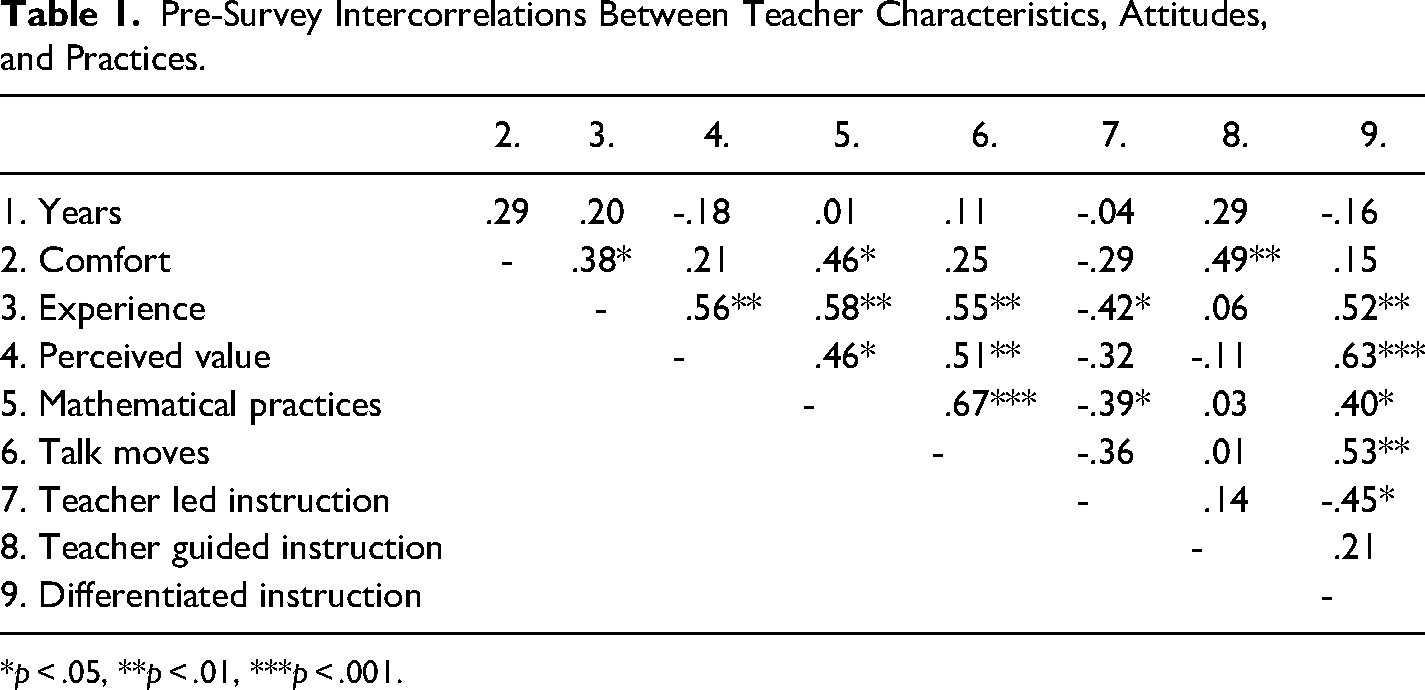
*p < .05, **p < .01, ***p < .001.
Post-Survey
After participating in the professional learning sessions, percentage of differentiated instructional time was positively associated with teacher-guided instruction (r = .38, p = .046) and negatively associated with years of relevant teaching experience (r = −.43, p = .022). Students’ use of mathematical practices was positively associated with teachers’ comfort teaching mathematics (r = .48, p = .010); experience with differentiated, enriched, and tiered lessons (r = .50, p = .006); and talk moves use (r = .49, p = .008). Mathematical practice use was negatively associated with teacher-led instructional time (r = −.44, p = .018). Teachers’ use of talk moves was positively associated with teachers’ comfort teaching mathematics (r = .43, p = .023); experience with differentiated, enriched, and tiered lessons (r = .42, p = .027). Talk moves use was negatively associated with teacher-led instructional time (r = −.41, p = .028). All correlations are reported in Table 2.
Post-Survey Intercorrelations Between Teacher Characteristics, Attitudes, and Practices.
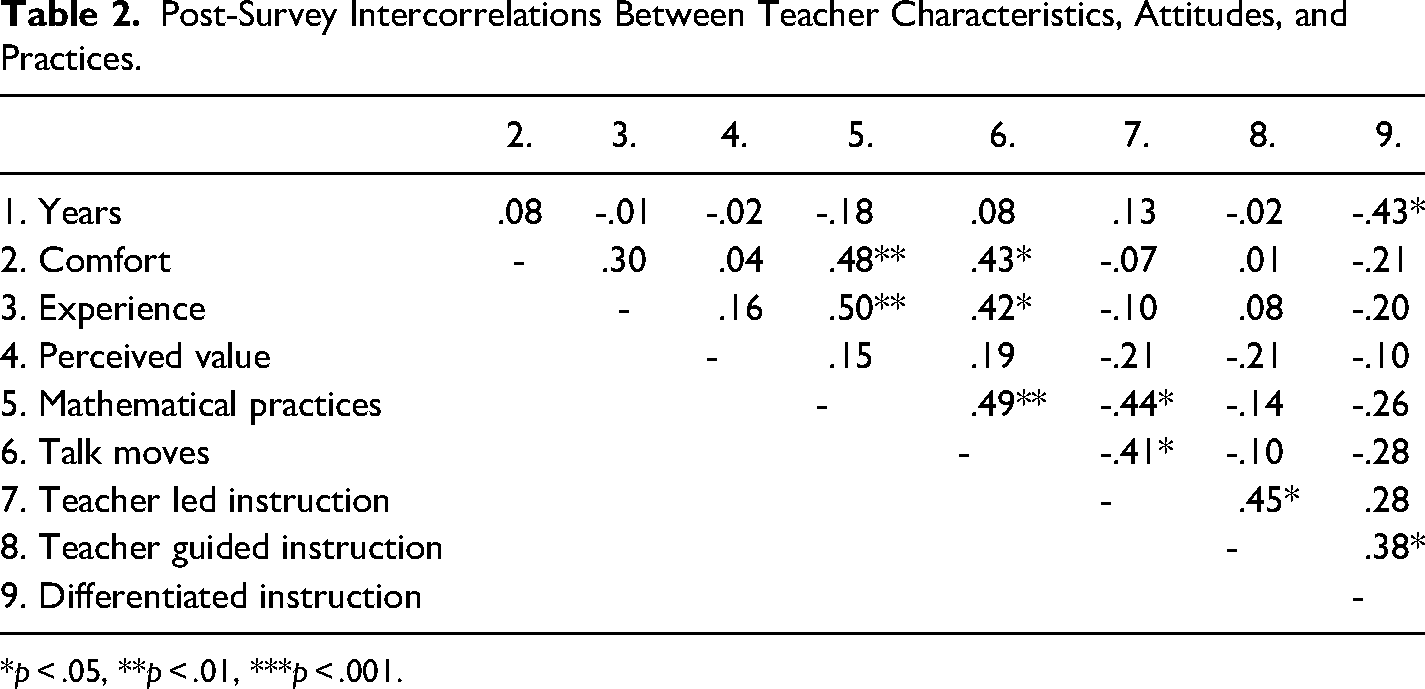
*p < .05, **p < .01, ***p < .001.
The comparison of pre- and post-survey results indicated that teachers’ reported increases in students’ mathematical practice use, t(27) = 5.44, p < .001; experience with differentiated, enriched, and tiered lessons, t(27) = 3.41, p = .001; use of talk moves, t(27) = 2.27, p = .016; and comfort teaching mathematics, t(27) = 2.00, p = .033. These increases remained significant after applying Benjamini-Hochberg corrections. The observed effect sizes indicated that the PL had a large effect on students’ use of mathematical practices, medium effect on teachers’ experience with differentiated, enriched, and tiered lessons and small effects on teachers’ use of talk moves and comfort teaching grade 3 mathematics (see Fritz et al., 2012). Teachers’ perceived value of differentiated, enriched, and tiered lessons, t(27) = 1.13, p = .134, and rates of differentiated instructional time, t(27) = 1.09, p = .285, did not change. Relevant statistics are reported in Table 3.
Pre- and Post-Survey Comparisons.
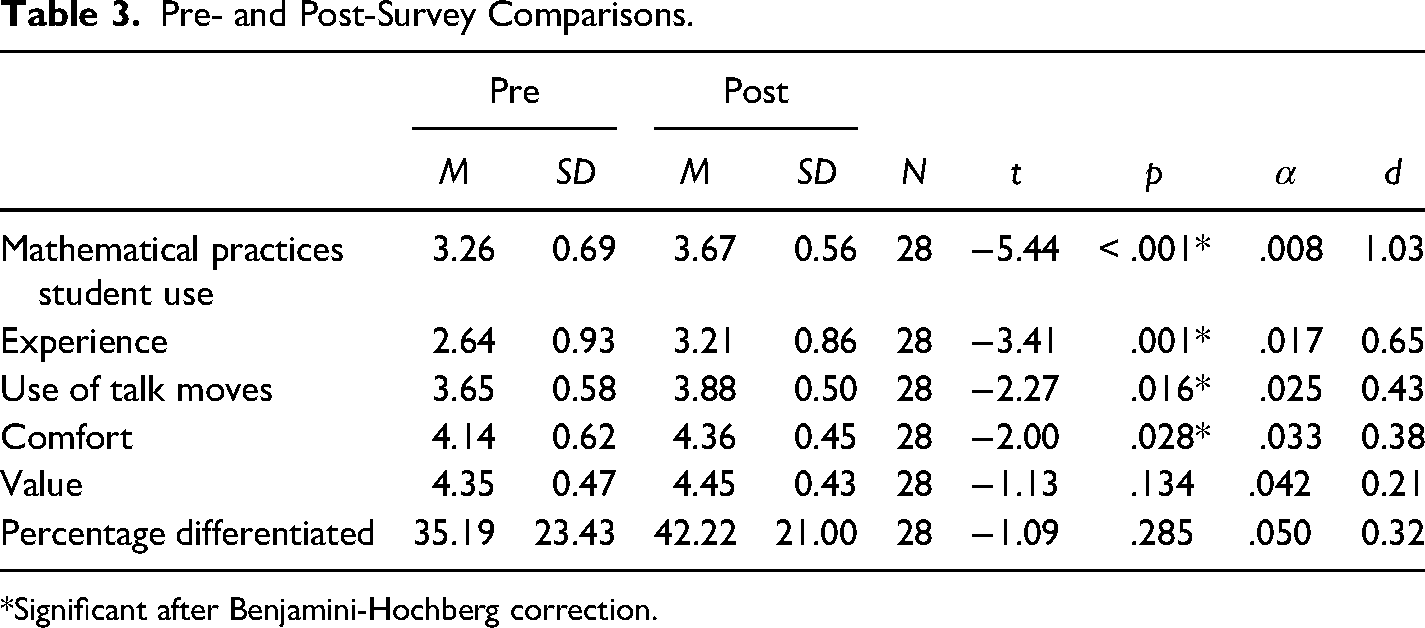
*Significant after Benjamini-Hochberg correction.
Quantitative Summary
Regarding research question (a) What attitudes and characteristics are associated with teachers’ use of differentiation, before and after PL on differentiation, quantitative results indicated that teachers’ initial rates of mathematical practices, talk moves, and differentiation were positively intercorrelated, and these strategies were more common when teachers had greater knowledge of differentiation and enrichment, believed differentiation and enrichment were valuable, and used teacher-led instruction less often during classes. In the post-survey, several different patterns emerged: (a) teachers’ perceived value of differentiated, enriched, and tiered lessons was no longer associated with any target practices, (b) rates of teacher-led instruction and teachers’ experience with differentiated, enriched, and tiered lessons were no longer associated with rates of differentiation, (c) teachers’ comfort teaching mathematics was newly associated with talk move use, and (d) years of teaching experience was newly associated with lower differentiation rates. With respect to research question (b), Do teachers’ reported attitudes toward differentiation and use of differentiation strategies to improve following PL on differentiation? results indicated that teachers reported improvements in their comfort teaching grade 3 mathematics and fractions lessons, use of mathematical practices and talk moves, and experience with differentiated, enriched, and tiered lessons.
Qualitative Findings
Pre-Survey
Through the qualitative analysis of pre-survey short responses (N = 28, researchers found that many teachers expressed familiarity with a variety of differentiation strategies, with the most common approaches including the use of small groups, provision of choice, and inclusion of scaffolds within lessons. Teachers described several benefits and challenges to differentiation in the pre-survey, which can be seen in the Figure 1 concept map. These benefits and challenges are evident in the following themes: (a) revitalizing the classroom through differentiation; (b) idealistic expectations, and (c) reconciling differentiation's benefits and challenges. In presenting findings from the pre-survey short responses regarding teachers’ decisions to implement differentiation strategies, pseudonyms have been given to protect teachers’ confidentiality.
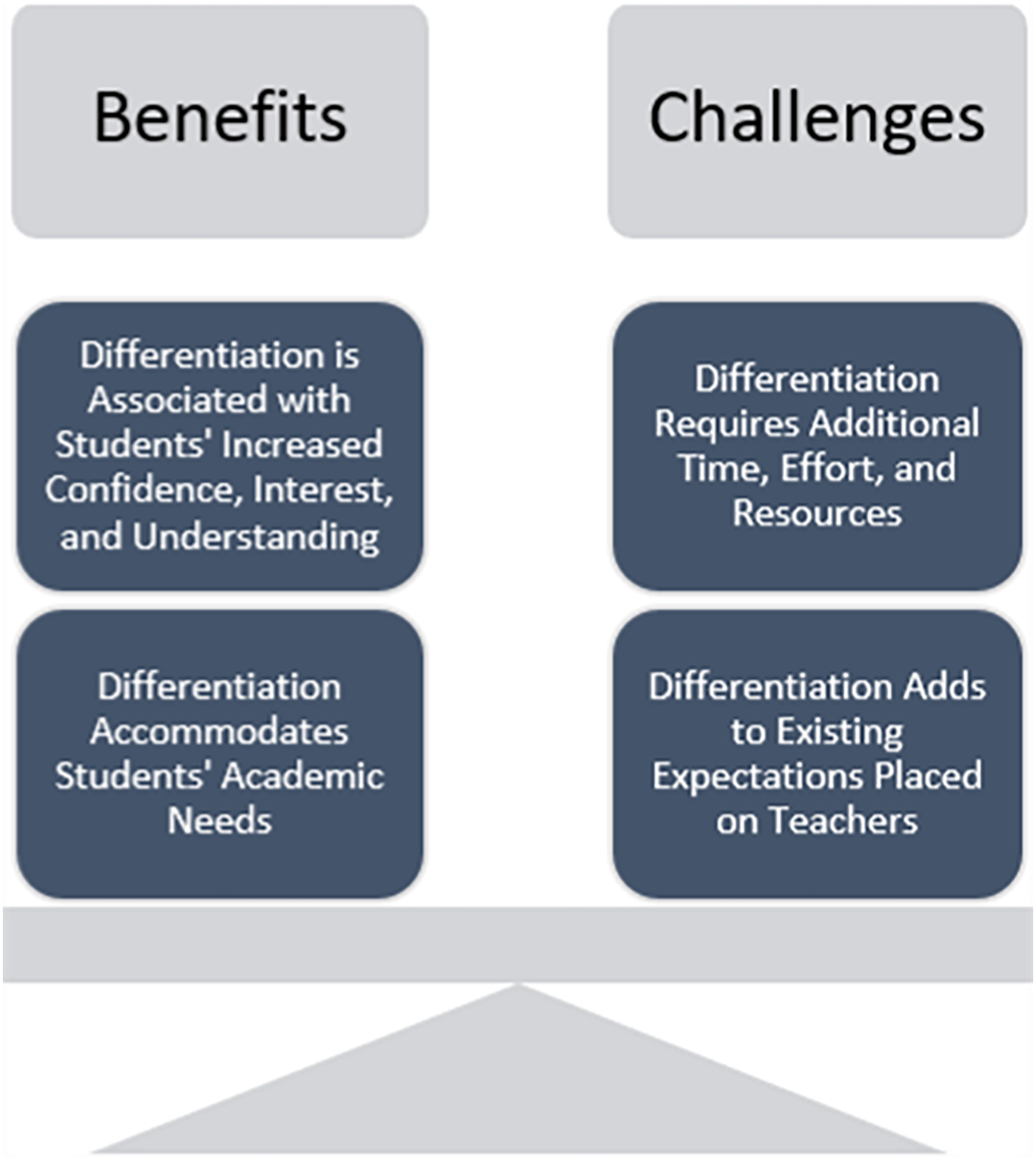
Weighing in on differentiation: Pre-survey results.
Regarding research question (c) “What are teachers’ perceptions of the benefits and challenges of differentiation prior to attending PL on differentiation?”, teachers’ survey responses prior to attending PL on differentiation revealed that teachers’ perceptions of the benefits of differentiation and the challenges of differentiation were evenly emphasized, which can be seen in the balanced scale presented in Figure 1. Teachers believed that differentiated instruction helped them to revitalize their classrooms by accommodating students’ needs, which fostered increased confidence, interest, and understanding for students in their classrooms. However, teachers were also aware that implementing differentiation required them to spend more time, effort, and resources on their instructional practices.
Teachers believed that tailoring lessons to meet students’ individual needs improved students’ ability to understand content. Natalie Lewis said when using differentiation, “students understand concepts and are able to apply it easier independently.” Similarly, Maya Peterson stated that differentiation was instrumental in “meeting the needs of all my students and making sure that everyone understands the concepts that I am teaching.” While Samantha Sullivan suggested that differentiation helped her to be “more successful about reaching all students,” Alice Simpson explained that differentiation “allows for all learners within the classroom to be successful.” These responses demonstrated that, even prior to engagement in professional learning sessions related to differentiation, participating teachers believed differentiation to be essential for some students who were not being given the proper tools to access learning in their classrooms.
I have had numerous successes when differentiating content in my math content. I have had students with high anxiety about math now say they love math, and it is their favorite subject. I have had students who do not understand a topic area for weeks, and then have it click and they are reaching 100% understanding.
While Trix Frost listed high levels of student understanding as one of the benefits of differentiation, she also claimed her students experienced more interest and confidence in math as a subject. Charlotte Daphne supported this perception by commenting, “students feel successful completing appropriate assignments instead of feeling like they can’t do it,” and Abigail Ball reported that differentiation was tied to increased student motivation and engagement. Beata Meskill suggested that differentiation allowed her students more support with concepts they were struggling with, which led to her students being “more comfortable asking questions and putting forth effort.” These teachers recognized that students’ increased comfort, interest, and understanding were connected to a focus on accommodating students’ academic needs, which is fundamental to the practice of differentiation (Tomlinson, 2014).
Teachers found that time was a significant barrier in their attempts to differentiate, both in general, and related to finding resources that aided their differentiation efforts. Isabella Matthews claimed, “the biggest barrier is the time it takes to plan, organize, and implement differentiation in a math class.” Abigail Ball clarified that differentiation requires “your own time.” Charlotte Daphne concurred and expressed her frustration in “finding the time to plan, create and/or find resources. In addition, making sure the resources are valuable and not just extra busy work. Additional resources are purchased using my own funds, not school funds.” Differentiation requires more of teachers’ personal time, effort, and money without the provision of adequate support.
Teachers indicated that they lacked the support necessary to differentiate learning. Tyne Long claimed that “lack of support for the teacher can make differentiation difficult” and Aalijah Lovejoy stated that she did not receive “enough time and help to implement small groups.” Some challenging factors were beyond teachers’ control, including students’ being pulled out according to Beata Meskill, space in their classroom identified by Tammy Spencer, and hybrid classrooms mentioned by Abigail Kingston. Kennedy Glen was the only teacher to report “no barriers” in their attempts to differentiate. This group of teachers shared common experiences regarding the implementation of differentiation, despite their understanding of differentiation as a beneficial practice.
In addition to these curricular challenges, teachers expressed apprehension about how their practice would be affected through the implementation of differentiated instruction. Isabella Matthews said that “being an elementary teacher means I teach all subjects and it is challenging to have enough time to differentiate instruction in all subject areas.” Similarly, Naomi Rain listed her school's focus on reading as a barrier, which suggests that she was expected to prioritize students’ improvements in reading skills over their improvements in math. Samantha Sullivan asserted that she was “not prepared to differentiate every day with every lesson,” She continued by saying, “small types of differentiation are just part of my teaching, but more significant forms of differentiation are not a daily routine.” Such a response suggests that teachers face a myriad of challenges involving differentiation and the expectations surrounding teachers within their school settings.
Post-Survey
Regarding research question (d) “What influences teachers’ decisions about whether to implement the differentiation strategies they encounter during PL on differentiation?” Teachers’ survey responses after attending PL on differentiation indicated that teachers engaged in decision-making to reconcile differentiation's potential to revitalize their classroom and idealistic expectations surrounding differentiation. In their efforts to revitalize their classroom through differentiated instruction, teachers had to reconcile the benefits and challenges that differentiation posed to their regular teaching practices. Their responses indicated that teachers evaluated certain differentiation practices to be worthwhile, while they considered other differentiation practices to be too challenging to warrant implementation.
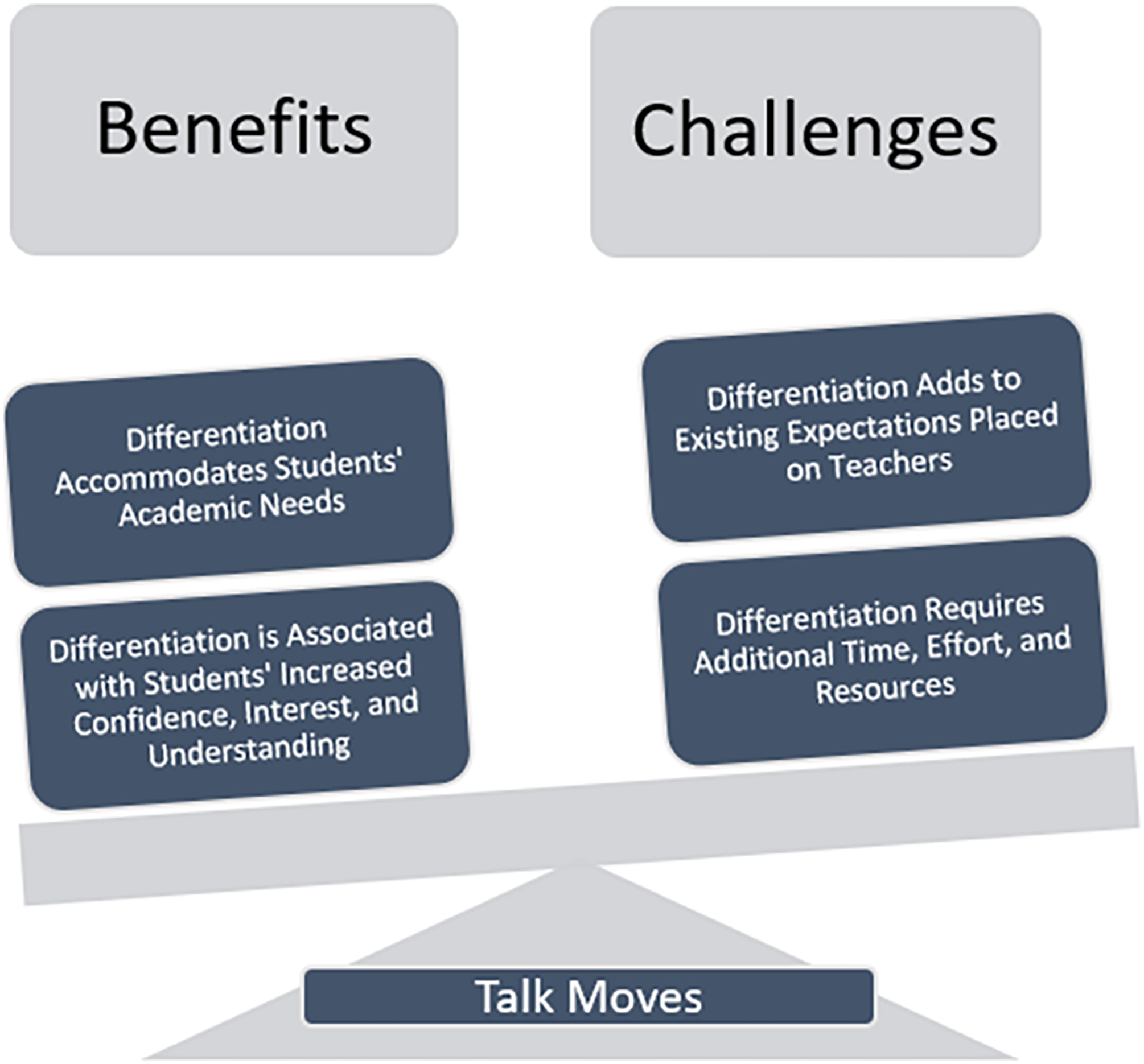
Weighing in on differentiation: Post-survey results (Talk Moves).
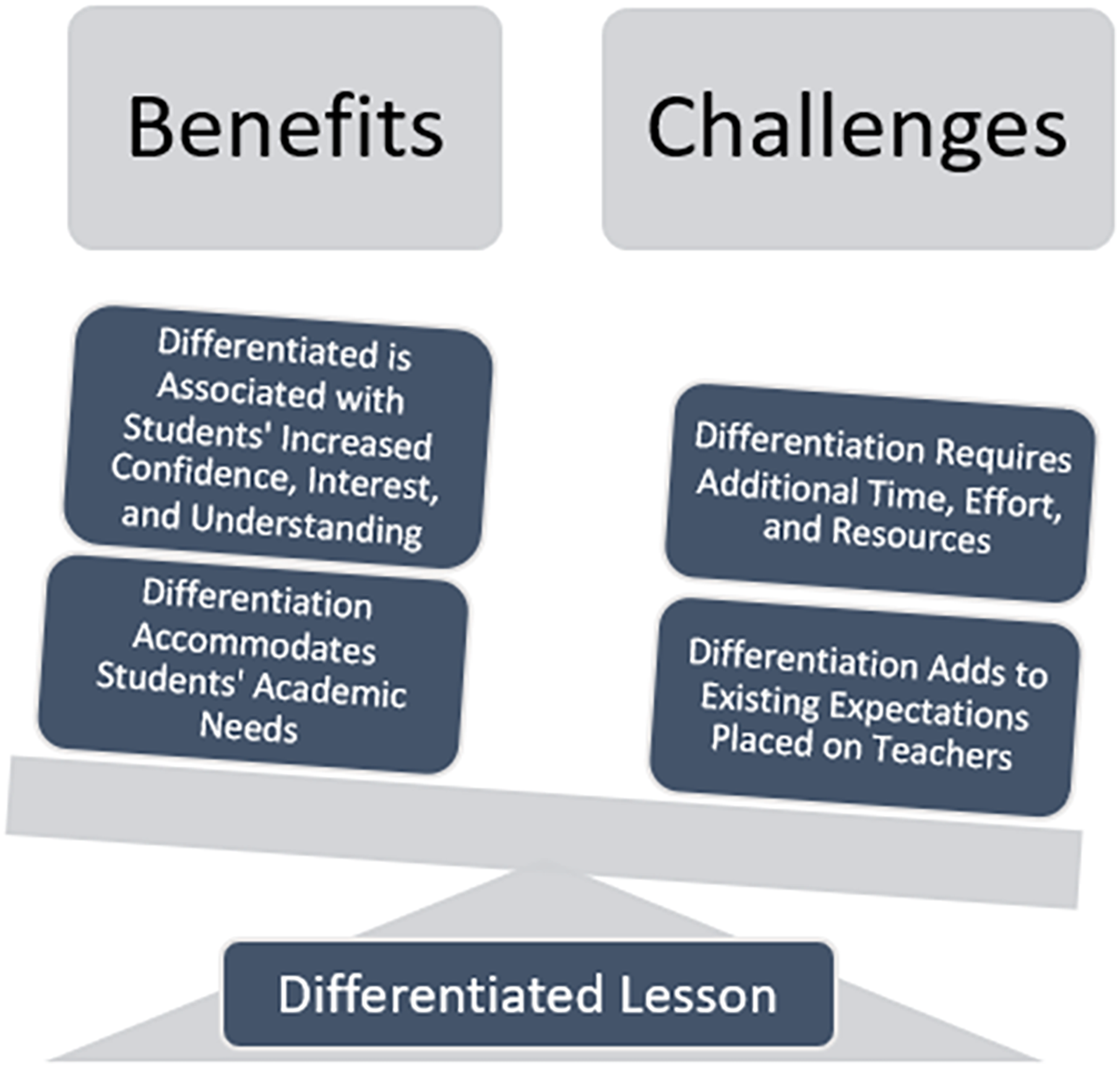
Weighing in on differentiation (Differentiated Lesson).
Teachers’ willingness to use talk moves in their classroom was evident in their responses. Charlotte Daphne will “try to implement [talk moves] more often” and Zera Mitchell plans “to incorporate [talk moves] in daily instruction.” Tammy Spencer, Amelia Little, Maya Peterson, and Charlotte Daphne reported that they were “trying” to implement talk moves in their classroom, but they did not describe their efforts as particularly challenging. Charlotte Daphne explained her intentions to implement talk moves in the following way: I definitely will try to implement talk moves more often during my math instruction this school year. I am hoping to foster an environment of collaboration and communication while allowing students to be creative and find multiple ways to solve problems.
When discussing their intention to implement talk moves in their classroom, teachers also spoke about the positive student outcomes that they had either witnessed or anticipated in connection with this practice. Abigail Kingston explained that students “blossomed with additional wait time and friendly encouragement,” and Regina Jiminez said that “it is very important for students to be comfortable talking about math.” Tammy Spencer, Lorelei Marshall, and Kennedy Glen, respectively, believed that implementing talk moves would help students to “construct arguments,” “communicate mathematically,” and “verbally explain their thought processes.” Natalie Lewis appreciated that talk moves helped students to be a “part of the discussion,” leading to “increased participation.” While Audrey Mascena described talk moves as “enjoyable” and Misty McGee thought that “it just comes natural to me.” Tyne Long described how her prior experience tied to talk moves, stating, “I also think talk moves will be somewhat easy to develop as I have years of actual student conversation that happens in my head to refer to.” These responses demonstrated that teachers believed themselves to be capable of reconciling the benefits of talk moves with the challenges that implementing this practice would entail.
Even teachers who were confident designing differentiated lessons indicated that they would not complete this activity again, given competing expectations. Tammy Spencer, Audrey Mascena, Samantha Sullivan, Charlotte Daphne, Abigail Ball, and Alice Simpson indicated that the task was “time consuming,” while Isabella Matthews, Misty McGee, Trix Frost, and Charlotte Daphne said they had to manage “time constraints’’ that impeded their implementation of this task. Zera Mitchell stated, “I would not likely do this for every lesson as it is very time consuming, and math is not the only academic area I teach.” Charlotte Daphne, said that she would implement the lesson again “if they have the time,” but that “it was a time-consuming task, and I don’t typically have a lot of extra time to spend on just one lesson.” Trix Frost explained that she would potentially create a differentiated lesson, provided that the lesson was “not this detailed,” as this lesson was “not realistic” for the demands placed on them as a teacher. Isabella Matthews voiced her concerns in the following way: I feel confident developing a tiered, differentiated, and [enriched] lesson. However, unless the district provides time for me to develop that or is willing to pay for the additional time, I spend developing a lesson, it is not likely to happen due to time constraints.
As teachers reflected on their intention to implement a differentiated lesson, they continued to profess their beliefs in the positive impacts of differentiation. Abigail Ball said that “unfortunately it's extremely time consuming to create a lesson like this for each day's math lesson; however, it has reminded me of the importance of tiered activities and targeted differentiation.” Naomi Rain stated, “hope to be able to continue to create more tiered activities in the future for my students to meet their needs.” None of the teachers indicated that they valued differentiation less after engaging in the professional learning session. Rather, these teachers seemed to recognize the need for differentiation, but many found the additional work and time necessary to implement differentiation to be incompatible with their current demands. Such results indicate that teachers’ decisions to implement differentiation as an instructional strategy are not based on understanding or valuation alone, but also on whether teachers believe that the benefits of differentiation strategies outweigh the challenges that these strategies pose to them and whether they perceive the implementation of differentiation strategies to align well with their current classroom practices.
Discussion
Overall, qualitative findings suggested that teachers express a willingness to implement differentiation when they perceive the time, effort, and resources associated with a differentiation practice to be manageable. Teachers believed in the benefits of differentiation, often citing ways that they were able to (a) revitalize the classroom through the practice of differentiation. However, they believed that (b) idealistic expectations accompanied certain differentiation practices. They reported an aversion to differentiation practices they believed added too heavily to the expectations they already feel pressured to meet. It is important to note that teachers’ reported intentions of using differentiation in their classrooms were not associated with their valuation of differentiation. According to post-survey results, teachers demonstrated a positive valuation of differentiation practices, regardless of their reported intentions to continue using these practices; merely valuing differentiation did not appear to be sufficient. Teachers demonstrated decision-making processes that involved (c) reconciling differentiation's benefits and challenges.
Quantitative results aligned with these findings, showing that teachers reported increased use of practices such as talk moves, but did not report an overall increase in differentiation rates. Interestingly, more experienced teachers appeared less open to translating these professional learning opportunities into practice, reporting lower implementation of differentiation strategies. This finding is indicative of the “performance plateau” that occurs when teachers’ performance growth wanes following several years of teaching experience (Jacob & McGovern, 2015).
This study's results align with other research investigating how teachers perceive differentiation and the barriers that teachers may face when trying to differentiate. Some barriers to implementing differentiated instruction involve the lack of time, energy, knowledge, support, and supplementary resources that teachers have at their disposal, as well as the need for teacher flexibility in assessment and instruction (Goodnough, 2010). Teachers have expressed that they find it hard to imagine what a differentiated classroom would look like in practice (Smets, 2017) and thus, may find it difficult to imagine how differentiation could practically benefit their students. Professional learning facilitators seeking to address these concerns may help teachers to accurately envision what differentiation might help them to accomplish and what practices can support this process. As Tomlinson (2014) explains, there is no single correct way to implement differentiation, as teachers must craft responsive learning places that match their own personality and approach to learning.
The findings of this study also echo and extend previous research on professional learning and teacher agency (i.e., how teachers engage in decision-making). Ultimately, teachers act as the gatekeepers for the impact of professional learning, as they choose whether to accept the professional learning that they have been provided (McChesney & Aldridge, 2021). It is important to assume that teachers are motivated to grow, learn, and improve (Appova & Arbaugh, 2018), but it is also important to consider what influences teacher buy-in, as this is an essential component of any strategy's regular implementation (Dixon et al., 2014). The present findings suggest that for teachers to buy-in to the practice of differentiation, they must perceive differentiation as addressing current problems rather than an additional burden that they must carry. Given that teachers are more likely to value professional learning when they believe the content could help solve workplace problems (Harper-Hill et al., 2022), experts in professional learning sessions should explicitly highlight how differentiation can help teachers solve pre-existing problems. Otherwise, teachers may be inclined to view differentiation as an additional burden, worrying that “if every student is different, then there's always more to do” (Geelan et al., 2015, p. 14). Additionally, this study looked beyond teachers’ valuation of differentiation as a general practice and examined the specific differentiation strategies teachers were most likely to employ. The strategies that teachers viewed favorably were those that they found both beneficial to students and easy to implement. Future studies should examine how to make differentiation practices more manageable for teachers (e.g., by scaffolding professional learning opportunities to accommodate teachers’ varied readiness levels) and whether teachers demonstrate an increased use of these practices based on these adjustments.
The present results align with the conceptual model of professional development-to-impact trajectory proposed by McChesney and Aldridge (2021). In evaluating teachers’ survey responses, we found that teachers largely accepted the professional development that they received. This was evident in their valuation of the benefits of differentiation strategies, as well as in the descriptions of differentiation that they provided in short responses. However, accepting professional learning is only the third stage in professional development-to-impact trajectory, and McChesney and Aldridge suggest that professional learning must then be applied to teachers’ classroom practice before students are able to reap the rewards of teachers’ engagement in professional learning. In some respects, teachers in this study seemed to stagnate in this third stage (i.e., they were resistant to implementing some practices, despite having accepted them). Ultimately, teachers reported that they would not change their classroom practices by creating differentiated lessons, but they were more willing to integrate mathematical practices and talk moves.
To better understand these discrepancies, McChesney and Aldridge (2021) describe four filters that prevent teachers’ progression along the impact trajectory. Some of these, such as school-related factors (which in this study took the form of strict curricular expectations and lack of resources) and matters related to teacher agency (e.g., time as a constraint placed on teachers) were evident in teachers’ survey responses. However, when some of these barriers were not perceived, as in the talk moves strategy, teachers were more willing to apply professional learning in their classroom practice. Together, the present findings suggest that when making decisions about whether to implement differentiation strategies, teachers simultaneously weigh the benefits of differentiation strategies, their alignment with existing classroom practices, and the time, effort, and resources that they have available.
Limitations and Suggestions for Future Research
Certain limitations of study implementation stemmed from the self-reported nature of the study. Teachers’ reported intentions and practices were not observed alongside classroom behavior, which prevented researchers from determining whether teachers truly increased the use of differentiated practices within their classrooms. Additionally, this study included a relatively small and homogenous sample (27 female teachers completed the survey, with 24 of these teachers identifying as White). Due to these sampling limitations, it is uncertain whether the statistical inferences reported here are replicable and generalizable; however, their alignment with qualitative analyses offers some additional credibility. Further research should include a more diverse sample to enhance the validity of findings. Although the study involved 8 h of PL and ongoing formative feedback throughout the lesson development phase, designs involving more extensive, ongoing PL could yield greater effects. Additionally, quantitative analyses would be better supported in research involving a control group, which was not included in the present study. Finally, because teachers elected to join the study, they reported a high valuation of differentiation prior to their participation, which was indicated in both quantitative and qualitative findings. Further research should seek out teachers with varying perceptions of differentiation at the onset of the study to determine whether similar professional learning opportunities are effective among populations with less experience and interest in differentiation.
Recommendations for Practice
Based on the present findings, we offer the following recommendations to teachers and teacher educators. For teacher educators, it is essential to consider teachers’ readiness to differentiate when offering professional learning opportunities, as the relevance of supports and suggestions will vary according to teachers’ background knowledge and skills. Writing differentiated curriculum was challenging for teachers with less differentiation experience, and in these instances, it appears more helpful to provide teachers with pre-existing differentiated resources. Teachers seeking professional learning on differentiation held favorable attitudes toward differentiation, and highlighting how relevant practices could be integrated with existing practices could be more beneficial than attempts to convince teachers of differentiation's value. Finally, because teachers ultimately decide what, when, and how practices are implemented in their classrooms, respect for their autonomy throughout this decision-making process could increase implementation rates and corresponding effects on student learning.
For teachers, it is important to reflect on your own readiness to differentiate and select strategies that correspond with your background knowledge and skills. For teachers with less experience, accessing pre-differentiated resources and integrating talk moves and mathematical practices appear most beneficial. Conversely, teachers with more experience might benefit from developing and distributing differentiated resources. For all teachers, ongoing professional learning is necessary to develop sophisticated differentiation skills, and purposefully considering how different strategies can be integrated with existing practices could increase their efficiency and effectiveness. For students of differing levels of abilities to receive the benefits of differentiation, researchers, professional learning facilitators, and other educational leaders must ensure that the benefits of differentiation begin to outweigh the challenges that teachers face when implementing this practice.
Supplemental Material
sj-docx-1-joa-10.1177_1932202X231221143 - Supplemental material for How Teachers Make Decisions in Response to Professional Learning: A Study on Grade 3 Differentiation in Mathematics
Supplemental material, sj-docx-1-joa-10.1177_1932202X231221143 for How Teachers Make Decisions in Response to Professional Learning: A Study on Grade 3 Differentiation in Mathematics by Rachael A. Cody, Gregory T. Boldt, and E. Jean Gubbins in Journal of Advanced Academics
Footnotes
Author Contributions
Rachael A. Cody: Methodology; Data curation; Formal analysis; Roles/Writing - original draft; Writing - review & editing.
Gregory T. Boldt: Methodology; Data curation; Formal analysis; Roles/Writing - original draft; Writing - review & editing.
E. Jean Gubbins: Conceptualization; Funding acquisition; Methodology; Project administration; Supervision; Writing - review & editing.
Declaration of Conflicting Interests
The authors declared no potential conflicts of interest with respect to the research, authorship, and/or publication of this article.
Funding
This work was supported by Jacob K. Javits Gifted and Talented Students Education Program, United States Department of Education PR/Award # S206A170023, Thinking Like Mathematicians: Challenging All Grade 3 Students.

Data Availability Statement
In accordance with the corresponding IRB protocol, data from professional learning surveys cannot be made available to external researchers.
Supplemental Material
Supplemental material for this article is available online.
About the Authors
References
Supplementary Material
Please find the following supplemental material available below.
For Open Access articles published under a Creative Commons License, all supplemental material carries the same license as the article it is associated with.
For non-Open Access articles published, all supplemental material carries a non-exclusive license, and permission requests for re-use of supplemental material or any part of supplemental material shall be sent directly to the copyright owner as specified in the copyright notice associated with the article.
