




Abstract
Sexual child homicide is a very high impact event. We report an instance where an 11-year-old boy was noticed by his grandmother hanging from the silver wired drying line which they are using for hanging the clothes in the house. Examination of the crime scene, autopsy findings, toxicological and DNA analysis confirmed the manner of death as sexual child homicide in a chronically abused child. A 28-year-old male perpetrator confessed to raping and murdering the boy, with DNA evidence and the perpetrator's confession providing strong legal proof. This case underscores the importance of post-mortem examinations in determining the exact manner of death and calling for vigilance in cases of suspected abuse.
INTRODUCTION
Sexual homicide in children is an underreported phenomenon, leaving minors exposed to further abuse and violent death (1–2). Sexual homicide is defined as murder committed as a result of an illicit sexual act or motive (3). Although the prevalence of sexual homicide in children is not well-documented, its heinous nature receives considerable societal condemnation. Consequently, law enforcement agencies invest significant resources in apprehending and convicting offenders (4–5).
Globally, approximately 1 billion children aged 2–17 years’ experience some kind of sexual, emotional or physical abuse (1). Homicide represents the end stage of this spectrum (1). Research shows that childhood homicides are often perpetrated by family members or acquaintances. While female children are more frequently victims of sexual abuse and homicide, male children also experience significant rates of sexual violence. Homicide rates in male children increase with age, with a notable rise in cases among 10–14-year-olds in the United States. Between 2008 and 2017, approximately 205,153 children aged 0–14 were homicide victims, 59% of whom were male. About two-thirds of child homicides are due to mechanical asphyxia including suffocation, ligature strangulation, and manual strangulation (6).
In various countries, strangulation accounts for 10–20% of homicides (7–8). The cause of death in homicidal strangulation is cerebral hypoxia due to compression of the blood vessels supplying the brain (7,9). Strangulation can involve a constricting band (cord, rope, belt, shoelace, wire) tightened around the neck and throat (7). Additionally, strangulation may involve a combination of ligature strangulation and manual suffocation of the oral and nasal areas, particularly in children.
A common motive for homicidal strangulation of children is rape, followed by murder to evade detection. Perpetrators of child sexual homicide are often more successful in avoiding police scrutiny compared to those who commit sexual homicide of adults (10). Although child homicide is prevalent, the occurrence of childhood sexual assault combined by asphyxia-induced homicide using ligature is relatively rare in forensic literature (11). Thus, identifying the methods used in such cases is crucial for investigations.
Case Presentation
In this study, we review the case of a 11-year old Motswana boy living with his grandmother in a simple, one-room brick house. He was last seen alive at 8:00PM after visiting a nearby compound where his grandmother was drinking traditional beer. The following morning, his grandmother discovered him partially hanging from a silver wire drying line in their house, suspended by a black shoelace. The police arrived, cut the shoelace and brought the body down. No items were found near the house, the windows were closed, and the main door was partly ajar. There were no signs of struggle, and no pornographic material or sexual paraphernalia was found in the room.
Autopsy Findings
According to the Botswana Inquest Act of 1954, an autopsy is mandatory for all unnatural, suspicious, and sudden unexpected deaths. A post-mortem examination was conducted four days after the decent was last seen alive. External examination revealed hypostasis on the posterior back and lower limbs, mild facial congestion, and conjunctival hemorrhages. Evidence of smothering included pale areas around the mouth, froth in both nostrils, and bluish-gray discoloration of the lips. The tongue was clenched between the teeth, with teeth markings on its tip. Contusions were observed on the inner parts of the lips, particularly on the lower lip and the left lateral sides of both lips (
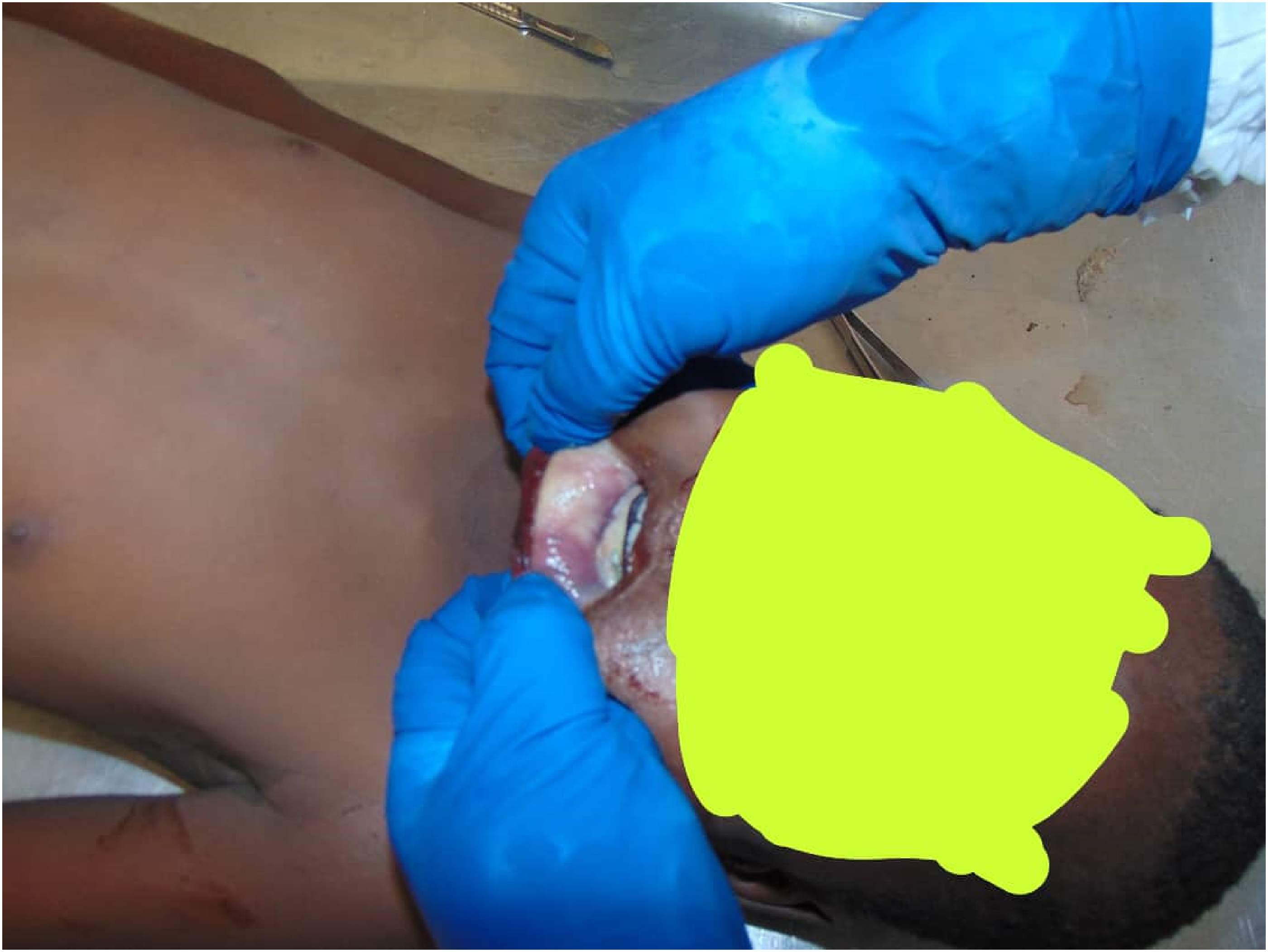
Mouth wide open, with dry lips, bluish/ greyish discoloration of both upper and lower lips suggestive of smothering.
A dark blue shoelace ligature, with an uncomplicated sliding knot, was found around the neck, leaving a horizontal ligature mark. This mark, consistent with the shoelace, was a linear furrow measuring 4 mm wide, directed towards the back of the ears and 40 mm below the pinna, waning off at the temples on both sides (
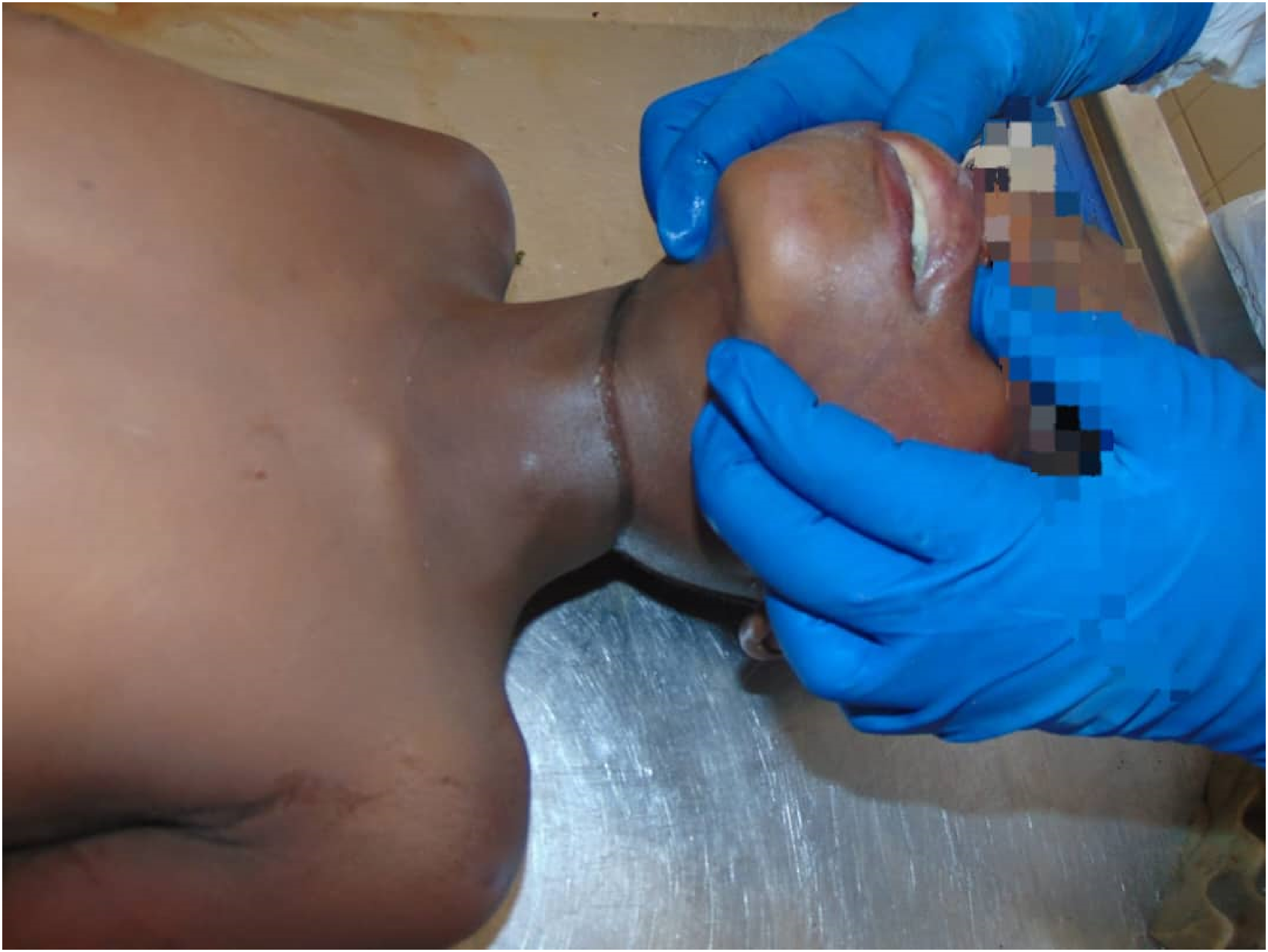
Horizontal ligature mark at the level of the decedent's larynx, depicted as a linear furrow measuring 4 mm wide.
Examination of the extremities revealed bluish-gray discoloration of the all-nail beds and a missing left toenail with ante mortem hemorrhage. A dry, creamy white clear substance (suspected semen) was found on the left mid-thigh. No other external injuries were identified.
A bloodless neck dissection showed diffuse contusions of the neck muscles extending from the upper clavicular border, contusions around the carotid sheath, and hemorrhages in the strap muscles. The ligature mark was located below the larynx, with contusions around the vocal cords and the larynx. The cricothyroid cartilage was intact, but there were contusions on the posterior tracheal mucosa. No fractures of the laryngeal cartilage or hyoid bone were observed. Other findings included moderate pulmonary and heart petechial hemorrhages and edema.
Examination of the anal orifice revealed dilation with clear gel/clear lubricant spread around the external and internal margins. Internal exploration showed hemorrhagic and contused anal mucosa with healing lesions of varying ages. Contusions were also noted in the anterior abdominal muscles and intestines. Blood and sexual assault test kits revealed a mixed DNA profile from the track pants, with a profile from the reference blood sample labeled “deceased” consistent with the mixed DNA profile obtained. Post-mortem toxicology reports were unremarkable. The cause of death was determined to be neck compression due to ligature in a sexually abused child (
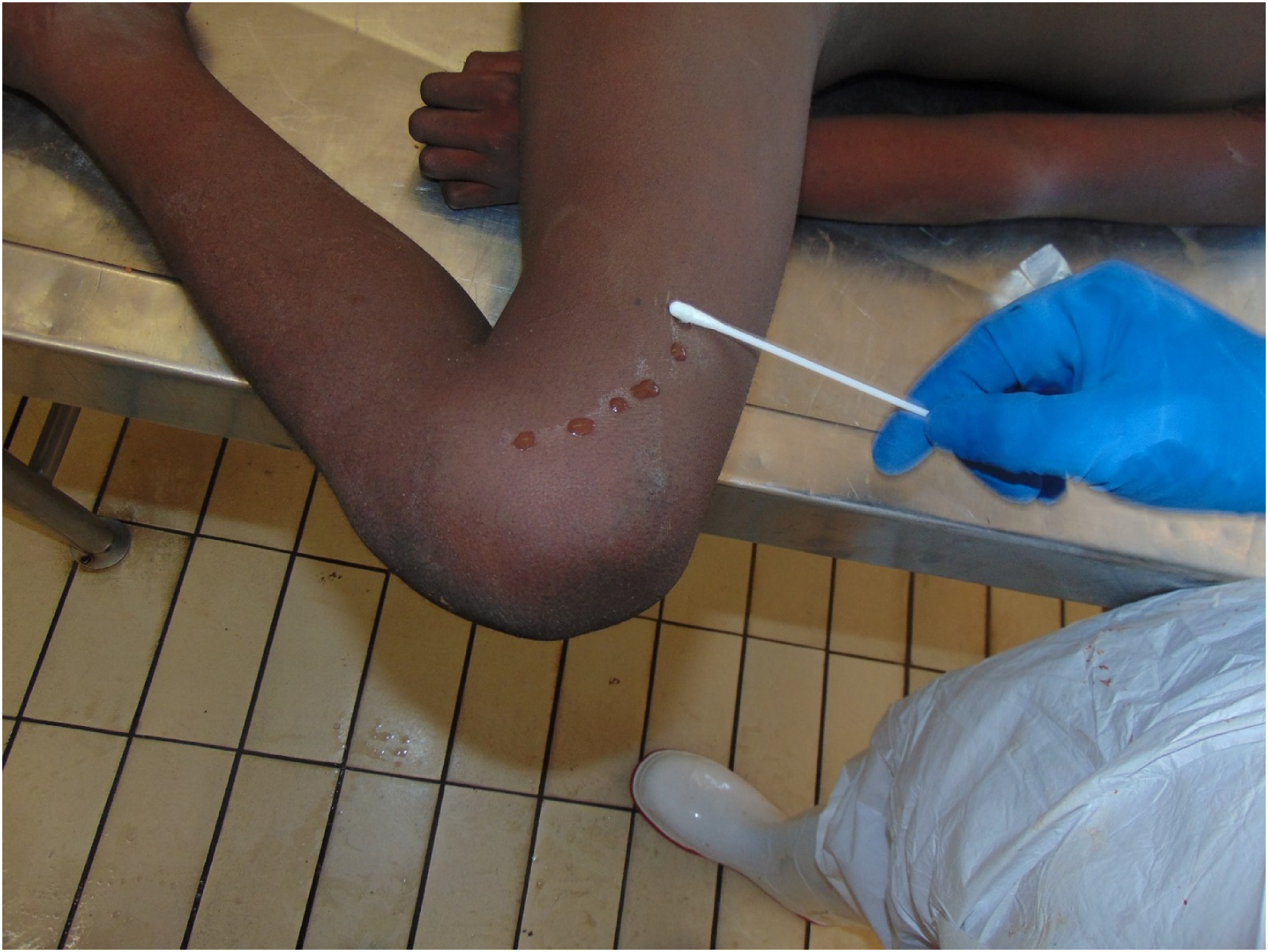
Dry creamy white substance (suspected to be semen) was observed on decedent's left thigh.
DISCUSSION
The findings in this case strongly suggest sexual homicide. Discolouration and contusions on the lips consistent with hypoxia were due to intentional smothering or suffocation. Similar facial markings have been reported in cases of suffocation (11,12). The unusual ligature mark on the neck, lacking the typical “V” or “U” shape associated with suicide, further suggests homicide (13). The creamy white substance on the thigh, identified as semen, along with a mixed DNA profile and evidence of chronic sexual abuse, points to a history of sexual violence. This case study involves a comprehensive forensic investigation into the death of a young boy, uncovering a series of violent events leading to his demise. Inconsistencies in the boy's injury history, circumstance and unexplained physical signs indicated foul play, with the nature of the injuries suggesting deliberate abuse. Smothering was identified through petechiae and the absence of defensive wounds, while hanging was indicated by ligature marks, suspension signs, and autopsy findings of asphyxiation and a struggle. Neck bruising and hemorrhage suggested manual strangulation. The investigation, through meticulous forensic analysis, established the cause and context of death, leading to the arrest and confession of a 28-year-old male perpetrator who admitted to rape, smothering, and hanging. DNA evidence linking the perpetrator to the crime, combined with his confession, provided compelling legal proof of his guilt.
CONCLUSION
The post-mortem findings overall indicated a high likelihood of homicide, which was later confirmed by the 28-year-old male perpetrator's confession to sexually assaulting, smothering, and hanging the boy. The thorough forensic investigation by Botswanan pathologists emphasizes the critical role of post-mortem examinations in determining the exact manner of death. This case highlights the prevalence of sexual homicide, particularly when sexual abuse occurs within familiar environments, often evading police detection.
Footnotes
DISCLOSURES & DECLARATION OF CONFLICTS OF INTEREST
The authors, reviewers, editors, and publication staff do not report any relevant conflicts of interest.
FINANCIAL DISCLOSURE
The authors have indicated that they do not have financial relationships to disclose that are relevant to this manuscript.

AUTHORS