




Abstract
This protocol outlines the development of an evidence and gap map focused on climate change adaptation interventions aimed at improving food security and livelihoods in sub-Saharan Africa. The map will assist users in assessing the size and quality of the existing evidence base, inform strategic program development, and identify gaps for future research. It will include studies published from the year 2000, encompassing systematic reviews, experimental and non-experimental designs, and modelling studies.
Background
Introduction
The Problem, Condition, or Issue
Agriculture is the main source of livelihood in sub-Saharan Africa (SSA), employing over 52% of the workforce and making a substantial economic contribution (ILOSTAT, 2022). However, food security, livelihoods, and overall economic development face significant hurdles as a result of SSA’s agricultural activities being more susceptible to the effects of climate change (Thornton et al., 2008). According to recent IPCC (2014) and, rising temperatures, more frequent and severe extreme weather events, changes in the distribution of pests and diseases, and changing rainfall patterns are all signs of climate change in Sub-Saharan Africa. Since the majority of agricultural methods are susceptible to these changes, it is imperative that SSA nations adopt climate adaptation measures to increase resilience, guarantee food and nutrition security, and enhance livelihoods in the face of climate change (FAO, 2017). Climate change adaptation refers to “the process of adjustment to actual or expected climate and its effects, in order to moderate harm or exploit beneficial opportunities” (IPCC, 2014 p.5). In this sense, adaptation interventions within the agricultural context refers to actions, technologies, or policies designed to help farming systems and agricultural livelihoods to cope with, adjust to, or benefit from climate change impacts. It is important to acknowledge that this is distinct from adaptation strategies which refer to the umbrella of approaches that may include multiple interventions. A significant amount of research on climate adaptation techniques connected to agriculture in SSA has emerged in recent years, indicating the region’s susceptibility to the effects of climate change on livelihoods, food security, and agricultural output. In SSA, studies on adaptation interventions linked to agriculture have been carried out across various agro-ecological zones including but not limited to: agroforestry systems – to improve soil health, reduce erosion and diversify incomes; conservation agriculture – to improve soil moisture retention and yields; water harvesting technologies – to ensure water availability during periods of dry spells; better crop varieties that can strive under stress conditions; and improved livestock management techniques – to reduce vulnerability to various stress conditions. These interventions do not only relate to adaptation but deliver several other benefits to mitigation, improved yields, and household incomes – all of which are consistent with the broader concept of climate-smart agriculture (CSA).
Even though this body of research has produced insightful information about the extent and efficacy of climate adaptation in SSA (Thornton & Lipper, 2018; Tubiello & Fischer, 2007), the available data is still scattered and fragmented across multiple sources. Its usefulness for funders' and practitioners' decision-making is limited by this fragmentation. Such fragmentation limits the ability to draw consistent conclusions about what works, for whom, and under what conditions – especially in vulnerable regions exposed to climate risks. Given the urgency of climate change impacts, there is a need for a thorough synthesis of the available data due to the rapidly changing nature of climate change and the intricate and ever-changing difficulties of climate adaptation in SSA. A methodical and transparent way to find, arrange, and evaluate the body of research on agriculture-related climate adaptation initiatives in SSA is to use an evidence and gap map (EGM) (Gough et al., 2012; Lipper et al., 2014).
We acknowledge that climate change adaptation interventions in agriculture entail a wide range of action-oriented measures intended to reduce vulnerability and strengthen the resilience of farmers and their households. For this EGM, we have grouped these interventions into thematic categories as follows: • Climate-related crop production systems – This includes improving climate-tolerant crop varieties, integrated pest management, and soil and land management practices (e.g., mulching, composting, cover cropping) that enhance resilience to climate stress like drought, floods, heat, and pest and disease outbreaks. • Water and land management systems – such as rainwater harvesting technologies and climate-resilient irrigation systems (e.g., drip irrigation, solar-powered pumps). It also includes other measures that aim to secure water availability during dry spells. • Livestock production systems – such as improving climate-tolerant breeds, feeding practices (e.g., drought-tolerant fodder), and integrated pest and disease management to enhance productivity during climate stress. • Fisheries and aquaculture management systems – This covers sustainable fishing techniques and climate-resilient aquaculture practices. • Natural resource management – examples include practices aimed at maintaining the forest cover, reducing air and water pollution • Energy systems – particularly renewable energy solutions that reduce dependency on traditional fossil fuels and promoting sustainable energy sources • Risk and support systems – such as climate and disaster risk insurance and climate information services (CIS) that provide timely and relevant forecasts and advisories for decision making. • Income diversification – interventions that support rural livelihoods through alternative income-generating activities to cushion households from climate-induced income shocks.
The EGM will inform policymakers, researchers, and funders about the current state of knowledge, highlighting areas requiring further attention and guiding investment toward the design and implementation of effective, context-relevant climate adaption interventions in SSA.
Why It Is Important to Develop the EGM
The proposed EGM will strengthen the adaptation science ecosystem in a sustainable manner by providing useful information relevant to funders, researchers, and practitioners in two main ways. Firstly, the evidence and gap map will guide researchers and practitioners to existing research on thematic areas within climate change adaptation and geographic regions in SSA, highlighting thematic and geographic priorities that warrant further research. The study focuses on SSA since agriculture is the main source of livelihood in SSA and this means of livelihood has become susceptible to the effects of climate change (Thornton et al., 2008). The EGM also provides the degree of certainty regarding the evidence generated, informing the required rigor in future research on climate change adaptation. Hence, studies done from the year 2000s, from the time the definition of climate change by the International Panel on Climate Change (IPCC) became instrumental to 2024 will be included in this EGM.
Secondly, the results will identify existing research that may be used to generate additional research that supports evidence-based decisions supporting evidence-based decision-making. These additional research that supports evidence-based decisions include approach and methodology toolkits in climate change adaptation, network analysis of key authors, and cell-wise summaries. This usage can be supported through a follow-up project that undertakes a critical appraisal of the existing evidence generated by the current project. This positions the project to enhance evidence-based research and policymaking that could engage or improve the adaptive capacities, livelihoods, and lives of small-scale producers in Africa.
There are various existing or ongoing EGMs that also review similar interventions and outcomes but with notable distinctions from our proposed EGM. For example, Evidence gap map and intervention heat map: Climate change mitigation interventions in the private sector in developing countries” by Doswald et al. (2021) focused primarily on mitigation strategies whereas the focus of this current EGM is on adaptation strategies. Another similar ongoing EGM is “Understanding the Effects of Climate Smart Agriculture on Climate Policy Outcomes in Low-and Middle-Income Countries: An Evidence and Gap Map” by Amadu et al. (2024) which notably studies outcomes distinct from our current EGM. Other comparable EGM’s have primarily examined climate change in general rather than adaptation and measured these interventions against set outcomes (Meherali et al., 2024; Parrao et al., 2024; Sparling et al., 2024).
To our knowledge, there are no evidence gap maps (EGMs) that address our specific objectives.
Objectives
This EGM aims to identify, map, and provide an overview of existing evidence and gaps related to climate change adaptation interventions in agriculture, focusing on enhancing food security and livelihoods in sub-Saharan Africa. Farmers are the target population for this study.
Specifically, the EGM will: (1) Identify evidence clusters that present opportunities for synthesis. (2) Highlight evidence gaps that necessitate further studies, research, and evaluations.
The EGM fulfils the aim of the study by answering this question: (1) What evidence exists on the climate change adaptation interventions for enhancing food security and livelihoods in the SSA region?
Methods
Defining the EGM and Purpose
Several definitions of an Evidence and Gap Map (EGM) are presented in the literature (Lum et al., 2011; Saran & White, 2018; Snilstveit et al., 2013). According to White et al. (2020), “EGMs are used to identify gaps requiring filing with new evidence, collections of studies for review, and increase the discoverability and use of studies by decision-makers, research commissioners and researchers. They also highlight reviews which can be used to generate higher-level evidence production such as guidelines. Evidence and gap maps could also be described as “a systematic presentation of all relevant evidence of a specified kind for a particular sector, sub-sector, or geography” (Campbell et al., 2023). EGMs consist of primary dimensions or framework (rows and columns) and secondary dimensions or filters, enabling exploration of the map using a particular focus (e.g. looking at particular populations or study designs). It creates a visual web-based and interactive output.
Saran and White (2018), describes an EGM as a “systematic visual presentation of the availability of relevant evidence of effects within a specific policy area”. The evidence is compiled through a structured search guided by a predefined, published protocol.
Alongside the map, this study will include a descriptive report to summarize the evidence and gaps for stakeholders such as researchers, research commissioners, policymakers, and practitioners. Unlike systematic reviews, we will not synthesize the findings in detail (Potter, 2010). Instead, we will synthesize specific cells in the Evidence and Gap Map (EGM) to provide cell-wise summaries. A cell-wise summary is a summary of the synthesis of the studies within that cell, and this saves one from having to read all the studies in that cell. This summary provides a clear explanation, in everyday language, of what the studies in that cell aimed to achieve and what they discovered.
This EGM aims to offer a comprehensive evidence base on the connections between climate change adaptations, food security, and livelihoods. It will be accessible to all intended users, including researchers, policymakers, and funders.
Framework Development and Scope
We will implement the specified procedures and standards outlined in the Campbell Collaboration’s checklist and guidance for Evidence and Gap Maps (EGMs) (White et al., 2018, 2020). The EGM’s scope is defined by the Population, Intervention, Comparison, Outcomes, and Study Designs (PICOS) framework, but this EGM will not specify the ‘Comparison’. The studies included will concentrate on behavioral changes that support the adoption of climate adaptation and weather variability strategies aimed at enhancing food security and livelihoods 1 , thus it will not consider climate-change-related agricultural interventions without a farmer adoption (i.e., behavioral) component. For instance, technologies developed by institutions for testing on experimental fields without farmer adoption will not be considered for the EGM. This EGM will also consider agricultural infrastructure relevant to climate change and weather variability adaptation (i.e., services emanating from the use of climate-change-related agricultural infrastructure).
This EGM does not explore intersections between the two primary outcomes. It will encompass evaluations and studies on the effects of climate adaptation interventions related to the outcomes of interest, including quantitative methods (e.g., experimental, quasi-experimental, and non-experimental), systematic reviews, and meta-analyses. We will also include studies with qualitative designs. As in prior EGMs (e.g., CGIAR, 2021; Moore et al., 2021; Odei Obeng-Amoako et al., 2023), this EGM will include studies published from 2000 onwards. This is because it aligns with the Intergovernmental Panel on Climate Change’s (IPCC) 2000 definition of climate change adaptation, guiding us to focus on post-2000 studies.
Stakeholder Engagement
We have established a team of subject matter experts and researchers to develop the framework. The researchers, in collaboration with our internal experts, drafted the initial framework, which was subsequently presented during a stakeholder engagement meeting.
The stakeholder engagement meeting took the form of a workshop that brought together about 65 key participants from the agricultural and climate change sector, including representatives from academia, policy makers, development practitioners, researchers, donors, Civil Society Organizations, Government institutions and Non-Governmental Organizations (NGOs) across Africa. The workshop was held at the Institute of Statistical Social and Economic Research (ISSER), University of Ghana on the 2nd of May, 2024 from 8:30 am – 4:00 pm GMT. The objective was to gain deeper understanding of the adaptive interventions, various focus areas, outcomes (either economic or non-economic) and other relevant aspects of the work within the agricultural and climate change sector across sub–Saharan Africa. Insights from this engagement was intended to support ICED researchers to refine the Population, Interventions, Comparison, Outcomes and Study design (PICOS) framework for the project. The workshop adopted a hybrid format with participants joining both in person and online via zoom. Participants were assigned to four groups (i.e., two online and two in-person) with each group focusing on interventions that led to either food security or livelihoods. Various categories of interventions were proposed with recommendations for refining the interventions based on feedback received.
Following the workshop, the ICED research team had further consultations with selected experts from both academia and policy as the framework was being refined. In some instances, experts participated directly in working sessions to elaborate more on aspects of the interventions, outcomes, and study designs. The Funding partner, SFA (Science for Africa Foundation) provided both financial and technical support in shaping the research focus. SFA is a philanthropic institution committed to advancing sustainable development through research and policy engagement. All contributions from SFA were made transparently and in alignment with the research objectives. There were no conflicts of interest identified. With these extensive consultations, the framework has now been finalized.
The results of the EGM are pivotal for donors such as Science for Africa (SFA), as well as for both academic and non-academic audiences. These findings will be shared with SFA, the sole sponsor of the map’s production, and disseminated to internal audiences, the broader development sector, academics, individuals, communities, and organizations familiar with the scope and creation of the EGM.
Stakeholders will be re-engaged during the report finalization and dissemination stages. The stakeholder engagement is designed to ensure effective dissemination of the study’s findings and to evaluate the research products in terms of evidence uptake and utilization by various audiences.
Conceptual Framework
In this EGM, interventions refer to practices aimed at enabling farmers and farming households to adapt to the impacts of climate change and improve food security and livelihoods. These include high-level categories such as crop production systems, soil and land management, water and land management, livestock production, fisheries and aquaculture management, natural resource management, energy systems, risk and support systems, and income diversification, each operationalized through specific practices 2 . Short-term outcomes are the immediate and measurable changes resulting from these interventions, such as increased yields, improved soil fertility, enhanced dietary diversity, or increased seasonal productivity. Intermediate outcomes represent changes that build on these immediate effects such as higher household incomes, greater employment opportunities, improved food availability, or enhanced resilience to climate shocks. Longer-term outcomes/impacts are the sustained benefits achieved over time, including improved food and nutrition security, increased wealth, better access to productive assets, and strengthened livelihood resilience.
This framework assumes that interventions are implemented effectively, are contextually appropriate, and are supported by adequate resources, enabling environments, and stakeholder engagement. It also recognizes that outcomes are influenced by socio-economic, institutional, and environmental conditions, and that enabling factors (e.g. local ownership, access to finance, and policy support) or barriers (e.g. weak institutions, limited technology access) can either enhance or constrain the pathways from intervention to impact.
This EGM’s conceptual framework shows how different types of interventions, including crop production systems related to climate change, soil and land management, water and land management, livestock production, fisheries and aquaculture management, natural resource management, energy systems, risk and support systems, and income diversification, are thought to affect livelihoods and food and nutrition security (Figure 1). Conceptual Framework for the Theory of Change
For example, farmers in Sub-Saharan Africa (SSA) may see an increase in crop yield if climate-related crop production adaptation initiatives are implemented. This enhances household food intake, food availability, and their income in the short run. These advancements eventually lead to increased food security. Furthermore, households may be able to find work as a result of higher crop output, which will boost their income and, eventually, their wealth and access to productive assets.
There are several strategies to achieve desired results from soil and land management interventions. These methods may increase the fertility and health of the soil, which raises household food intake, increases food availability, and increases productivity. Long-term improvements in food and nutritional security result from stronger access to food as household income and food quality rise.
Water and land management systems can be used to adopt a new system of productive adaptation for climate change that provides multiple crops growing seasons and greater seasonal productivity. Also, it may increase yields for augmented income of farmers and farming households and create opportunities for employment. Then, the availability and accessibility of food improve, making households more food secure in the long term due to better adequacy in consumption.
Animal production systems and fisheries/aquaculture management are other influential interventions. Such approaches will generate productivity in livestock and fish, improve the level of employment made available to households, and then foster the incomes of households. Increased income translates to better access to food, thus enhancing food security. Fish productivity, in particular, enriches dietary quality, fostering food and nutritional security over the long term.
The adopting of natural resources conservation practices adds value to conserving biodiversity, improving soil quality, and enhancing agriculture soils. All of these finally lead to improvements in increased production of crop yields, increased household income, and increased employment generation from such investments in agriculture. Such investments will change the availability, access, and consumption of food much as it would do in the short, medium, and long term.
Renewable energy systems are used also in the field. Renewable energy systems, harnessing such emerging technologies as solar and wind, have been powering water systems such as the irrigation system to increase the number of cropping seasons and thus enhance productivity. This brings a lot of food for present and future purposes into the house and thus secures long-term food and nutrition security.
Income diversification is a strategy for climate change adaptation and encourages farmers to engage in other productive off-farm activities or migrate to urban places for economic opportunities. With such activities come alternative livelihoods, making food affordable as well as improving food and nutrition security, and further broadening the income base through such an intervention improves livelihoods. Unfortunately, limited access to technology, poor financing, and lack of knowledge to smallholder communities hamper effective implementation in practice (IPCC, 2022). For instance, even though these practices improve productivity and income, climate-smart agriculture (CSA) has a lower adoption rate due to inadequate policy support and financial constraints (Bryan et al., 2013).
Additionally, the weak institutional framework and inadequate local involvement can result in lack of success because adaptation strategies do not address community-specific needs (Tessema et al., 2013). There is a growing need for well-targeted adaptation interventions to improve food security while promoting livelihoods but overcoming these structural barriers as climate impacts increase. It is essential always to identify effective strategies and understand the conditions under which they work best to build resilient food systems capable of withstanding future climate challenges.
Dimensions
Types of Study Design
This EGM will focus on published and unpublished studies, peer reviewed papers, reports, pre-prints, working papers, conference papers, and reviews that applied mixed methods, quantitative and qualitative methods with the following study design: • Effectiveness studies (impact evaluations studies which make use of Randomized Controlled trials (RCTs) and quasi-experimental studies). • Non-experimental quantitative studies. • Modelling studies. • Qualitative studies. • Process evaluations. • Summative evaluations: are assessment types that “culminates in a report that evaluates the outputs, outcomes, and impacts against these objectives” (Janus & Brinkman, 2010) • Formative evaluations: provide guidance for improvement during the implementation of a program. • Systematic reviews and meta-analysis of eligible studies.
Only studies that clearly state the method they employed in their studies and correctly labelled will be included. Qualitative works that do not name the employed method will be excluded. Studies done from the years 2000 to 2024 on the issue of climate change adaptation will be included. This is because, the Intergovernmental Panel on Climate Change’s (IPCC) 2000 definition of climate change adaptation has been influential in shaping the understanding of adaption to climate change.
The next section provides details of the study’s interventions, the sub-categories and descriptions of the intervention.
Types of Intervention/Problem
Intervention Categories, Subcategories and Definitions

Types of Population
This EGM’s population comprises of two main categories: (1) Farmers: A farmer is an individual who grows crops or raises animals (such as livestock or fish). This person can be a small-holder or small-scale farmer, who holds areas of less than two hectares, or a large-scale farmer, who holds areas of more than two hectares (Food and Agriculture Organization, 2014; Wolfenson, 2013) (2) Farming household: Any household in which at least one household member’s main occupation is farming and where the reference person’s primary occupation is a retired farmer (Kinsella, 2000). These households could be located in rural, peri-urban and urban communities in countries within SSA.
The section below presents the study’s outcome categories, sub-categories and definitions.
Types of Outcome Measures
Outcome Categories, Subcategories, and Definitions

Other Eligibility Criteria
Types of Location/Situations
Our EGM is located in countries within sub-Saharan Africa.
Types of Settings
Studies in the following settings will be included and excluded:
Inclusion Criteria
Type of Studies
This EGM will cover studies using various study designs, such as qualitative, quantitative, and mixed methods. Eligible study designs will include those focused on behavioral changes that support the adoption of climate adaptation and weather variability strategies to enhance food and nutrition security and livelihoods. The following will be included in these designs, however not limited to: effectiveness studies (experimental studies/impact evaluations); modeling studies (provided the model is based on primary data rather than theoretical values); analytical frameworks; process evaluations; summative evaluations; and qualitative analysis.
Given the paucity of research on the subject, incorporating a broad range of study designs into this EGM will enable (i) the inclusion of all potential studies, given the limited literature on this topic, and (ii) an assessment of the extent of evidence across a spectrum of study designs. Qualitative studies that qualify must clearly outline their research methodologies (e.g., grounded theory, exploratory, narrative, deductive, inductive, ethnographic methods) and a thorough explanation of the data collection methods (e.g., key informant interviews, focus group discussions, in-depth interviews, sample size). Systematic reviews of eligible primary studies will also be included in the EGM. We will consider reports, preprints, peer-reviewed papers and other documents (e.g. working papers, discussion papers,), either completed/ongoing or published/unpublished.
Geographical Location
Eligible studies for the EGM must have targeted smallholder and large-scale farmers and farming households in countries within SSA.
Timeframe
This EGM will include studies published or reported between 2000 and the end of 2024.
Language
Studies authored in English will be included in the EGM. This is due to the fact that the majority of the researchers in this study only speak English which means that studies that are not authored in English will require more translation resources (Neimann & Montgomery, 2018; Odei Obeng-Amoako et al., 2023).
Exclusion Criteria
Studies authored in languages other than English and carried out in countries outside SSA will be excluded from this EGM. Research done prior to the 2000 will not be included. Also, studies on climate-change-related agricultural interventions without farmer adoption (i.e., behavioral) component will be excluded. Papers that fail to evaluate the causal relationship between one or more interventions on livelihoods and food and nutrition security will be excluded from the EGM. Additionally, studies in fisheries/aquaculture or energy systems that have no direct and substantial link to farmers or farming households’ adaptation and food security will be excluded. This includes purely sectoral analyses such as industrial fisheries or standalone energy projects with no connection to agricultural contexts.
Search Methods and Sources
The searches will be done systematically following the right protocol for conducting systematic searches. Various sources of literature including academic and grey literature sources will be used for the EGM. A wide range of databases will be used in order to capture all the significant studies related to our work. Bibliography back-referencing will also be conducted by looking at citations, reference lists and included papers of systematic reviews. Key authors will also be contacted, and search within related EGMs to provide further references for consideration in the EGM. Database sources.
Searches will be conducted in the following database: (1) Academic databases • Web of science, • SCOPUS • Cab Abstract • Greenfile • African Journals Online (AJOL) • J-STOR • PubMed (2) Grey literature databases • IDEAS-RePEc • World Bank Group • SSRN (Social Science Research Network) • Eldis database, • AGRIS • IFPRI • Africa Climate Portal • Regional Environmental Change Portal (RECP) • UNEP, • IIPCC, • FAO, • WFP • CGIAR (3) Systematic reviews databases • Campbell collaboration • 3ie Systematic review databases • Cochrane database of systematic reviews
Search Terms
The search terms to be used for the study will be adapted in the various databases, including the filters used. The search will be combined in the format “Population AND Intervention AND Outcomes” to capture relevant papers. For example “Africa” AND “climate change adaptaion” AND “food security”. The study design will not be included in the search terms to prevent the loss of relevant papers. Appendix 1 shows the search terms for Scopus. To ensure that the search terms are accurate, 20 benchmark papers have been identified in various databases. These papers will be crosschecked within the search results from selected databases to ensure comprehensive retrieval and prevent the omission of relevant papers.
Creation of Search Terms
The search terms included in the EGM will be derived in the following manner: • The interventions will be studied, and synonyms found using Google. • Key relevant papers will be reviewed for similar words used by the papers. • Synonym’s function and thesaurus of the various databases e.g. SCOPUS, Cab Abstract will be used to generate variations of the intervention. • The search terms will also be altered slightly by database to reflect the acceptable format of the data base (A summary table will be provided to capture the slight variations in the databases). • As done by Masset et al. (2011); Odei Obeng-Amoako et al. (2023), the outcomes in the PICOS will be used without variation to prevent too many unrelated papers for screening. A preliminary test was conducted using the terms in PICOS and the results were deemed adequate.
Restrictions
In conducting the searches, limiters such as language of publication, publication date, searching the title and abstract only and publication type will be applied before executing the search to refine the searches. In terms of time frame, it will be conducted from 2000-2024. This is the duration of the current research under study as the year climate change adaptation started gaining ground is around the 2000s. The language selected will be English from all the databases, Publication types to be considered are journal articles, books, Pre-prints, reports, conference papers, working paper, discussion paper, dissertation, protocols and book chapters.
Use of Truncation and Wild Cards, Boolean Operators
Wild cards and Boolean operators will be included in the search terms. Boolean operators and wild cards are relevant to searches as they ensure that the search is optimized, and the search terms are refined and concise (Holland et al., 2021). Boolean operators such as “OR” and “AND” will be used to link search terms to optimize search results. Truncation and Wildcards such as asterisks (*) and question mark (?) will be used to account for different characters and different variations of the word (plurals, multiple word endings and spelling variation).
Analysis and Presentation
Report Structure
The EGM report will include the typical sections: executive overview, background, methods, results, and conclusion. Any modifications made between the protocol and the final report will be noted. The executive summary will encapsulate the report’s findings, while the background section will outline climate change adaptation interventions in sub-Saharan Africa (SSA). After outlining the precise parameters of this EGM, we will also offer a theory of change (ToC). Our framework, intervention categories and outcome categories will all be covered in this subsection.
The report will detail our search strategy, how to include or exclude studies, and how to extract data from papers that will be included. Furthermore, there will be a thorough quality assessment plan with a PRISMA flow chart, and an appendix that includes a comprehensive search strategy for all the databases.
In the results section, the number of studies found from the databases will be reported, along with a summary of the different study types grouped by interventions, outcomes and other filters. The conclusion will highlight a comprehensive account of policy implications for researchers and provide a detailed explanation of key topics for future research for decision-makers.
We will include several main figures (including heat maps, network mapping, bar charts), and tables, such as: • Conceptual framework/theory of change • PRISMA flow chart • Number of studies by intervention and outcome subcategories • Number of studies by region
Filters for Presentation
For stakeholders' other factors including (1) country or region, (2) age group, (e.g. 0-2, 3-5, 5-11), (3) delivery channel/place (e.g. community, school, home, health institution). In the hard copy multiple 2 × 2 representations of the EGM may be reported. The other dimensions can be used as a filter in the online interactive map to choose studies shown as bubbles that fit those criteria. .
Dependency
We will combine several reports from a single study (such as secondary analyses or methods/protocols) into a single entry. Systematic reviews may encompass primary studies that are also featured in the map, and there may be multiple systematic reviews that reference the same primary study. Primary studies that fit our eligibility requirement will be featured in the map, regardless of their inclusion in a systematic review.
Data Collection and Analysis
Screening and Study Selection
The screening of studies will be done by the use of EPPI-Reviewer 6, a web-based software program for managing and analyzing data in literature reviews. References/studies identified from database searches, and reference list of systematic reviews will be imported into EPPI-Reviewer, where duplicates will be checked for and deleted before screening. To expedite the screening process, we will employ a machine learning model to prioritize, and order identified papers by relevance based on the eligibility criteria for this EGM.
The study screening process will occur in two stages. Studies will first be screened by title and abstract based on the eligibility criteria (see Figure 2). Full-text screening will then be performed on the studies that passed the title and abstract screening. A team of two independent researchers will conduct the screenings. Any disagreements regarding a particular study will be resolved by a third researcher. Studies included in this second stage of screening will proceed to coding and data extraction. A predefined form in EPPI-Reviewer will be used for coding, data management, and analysis (Odei Obeng-Amoako et al., 2023; Thomas & Brunton, 2010). Pre-test of screen tool will be done prior to full screening. Screening Tool Showing Inclusion and Exclusion Criteria
Inter-Rater Reliability and Reviewer Training
Prior to the main screening, all reviewers will undergo training sessions to ensure a consistent understanding and application of the eligibility criteria. We will conduct a pilot screening exercise on a random subset of studies (10% of retrieved records) at the title and abstract stage. Each record in the pilot set will be screened independently by all reviewers.
Inter-rater reliability (IRR) will be calculated using Cohen’s Kappa statistic for each reviewer against two senior reviewers, in line with recommended practice (Gisev et al., 2013). Screening will proceed only when each reviewer achieves a minimum Kappa score of 0.65, indicating substantial agreement. If a reviewer does not meet this threshold, additional calibration meetings will be conducted, and further pilot testing will be repeated until the target is reached.
To minimize the risk of bias, reviewers will not be assigned to screen, code, or extract data from any studies they have authored or co-authored, or from studies authored by their close collaborators.
Data Extraction and Management
Coding Sheet
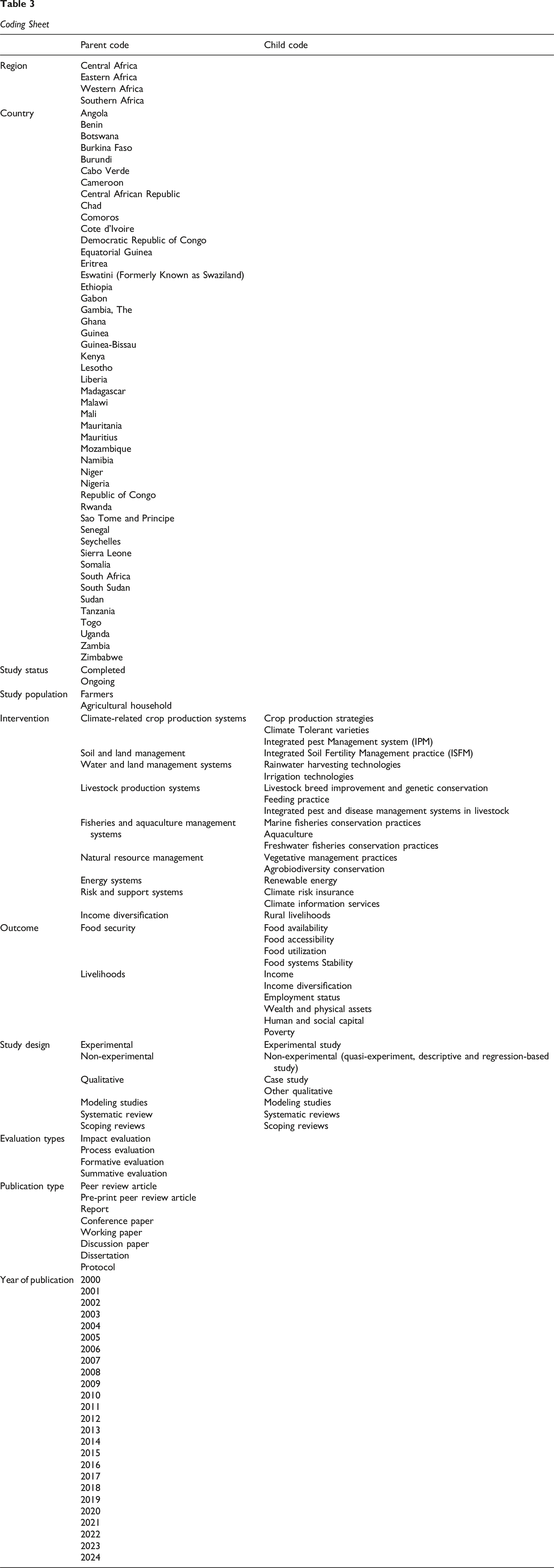
Following the pilot phase, post-pretest coding will be conducted by pairs of reviewers who will reconcile any disagreements through discussion. If consensus cannot be reached, the issue will be referred to a third reviewer to serve as the tiebreaker. In addition to the “interventions” and “outcomes” outlined in the previous section, several other factors will be coded to enable effective filtering of studies in the EGM. Each study will be regarded as the unit of analysis. Studies reporting multiple interventions and outcomes will be coded as one study but assigned different codes for interventions and outcomes.
Tools for Assessing Risk of Bias/Study Quality of Included Systematic Reviews
We will evaluate the methodological quality of included systematic reviews by use of a defined inclusion and exclusion criterion, a well-defined search strategy, a systematic coding and analysis of included research, and, if feasible, a meta-analysis in duplicate for 20% of eligible studies (Hassan et al., 2024). EGMs typically don’t evaluate the methodological quality of primary studies.
Methods for Mapping
We will be using EPPI-Reviewer 6 to perform screening and coding and also use EPPI mapper to develop the map. Aside from the EPPI-Reviewer software, tools like Covidence, DistillerSR, and JBI-SUMARI are used to map EGMs (Schmidt et al., 2025). The EPPI-Reviewer software has several advantages including the opportunity to allocate references for screening as citations can be screened on titles and abstracts by one or more people; the advantage of retrieving full papers for inclusion where the researcher could keep track of which papers still need to be retrieved, which papers are still on order and available on specified libraries; and the advantage of synthesizing the results of the study where for example, categorical data can be summarized using frequencies and cross tabs (Thomas & Brunton, 2007). The EPPI- reviewer software also permits data sharing and re-use across the systematic review community (Park & Thomas, 2018), even though the EPPI-reviewer software requires an end-user informed evaluation for its adoption (Khalil et al., 2025).
Footnotes
Acknowledgements
This evidence and gap map is funded by Science for Africa. We would also like to acknowledge Prof. Howard White, Dr. Solomon Zena Walelign and Dr. Charles Okyere for their valuable feedback and contributions to this EGM. Special appreciation also goes to Campbell Collaboration for providing technical support and training the ICED team on EGM.
Author Contributions
Content: David Sarfo Ameyaw, Kwadwo Danso-Mensah, Joseph Clottey, Clarice Panyin Nyan
EGM methods: Clarice Panyin Nyan, Joseph Clottey
Statistical analysis: Kwadwo Danso-Mensah, Joseph Clottey, Clarice Panyin Nyan, Sheila Agyemang Oppong, Symphorien Agbahoungba.
Information retrieval: Miriam Oppong, Clarice Panyin Nyan, Nana Esi Badu- Ansah, Desmond Kaledzi, Isaac Letsa.
Funding
The authors disclosed receipt of the following financial support for the research, authorship, and/or publication of this article. external source: Science for Africa (SFA) (grant numer: GCA/R14 AGCARS/406). Internal sources: No sources of support provided.
Declaration of Conflicting Interests
The authors declared no potential conflicts of interest with respect to the research, authorship, and/or publication of this article.
Plans for Updating the EGM
This EGM will be updated every two years when resources become available and there are sufficient further studies.
Preprint Notice
An earlier version of this protocol was posted as a preprint on the CABI repository ( ). That version was made publicly available to share the preliminary scope and methods during protocol development. The present submission to Campbell is a substantially revised and updated version, incorporating stakeholder feedback, donor priorities, and peer review comments. Key enhancements include refined scope, operational definitions for interventions and outcomes, updated conceptual framework, expanded grey literature sources, and detailed methodological specifications. This version is the final peer-review-ready protocol intended for publication in Campbell.
Notes
Appendix
Search Terms for SCOPUS
Item
Search terms
Geographical population
(“Angola” OR “Burundi” OR “Central African Republic” OR “Chad” OR “Democratic Republic of Congo” OR “Republic of Congo” OR “Rwanda” OR “Comoros” OR “Eritrea” OR “Ethiopia” OR “Kenya” OR ”Madagascar” OR “Mauritius” OR “Seychelles” OR “Somalia” OR “South Sudan” OR “Sudan” OR “Tanzania” OR “Uganda” OR “Botswana” OR “Eswatini” OR “Swazilandv OR “Lesotho” OR “Malawi” OR “Mozambique” OR “Namibia” OR “South Africa” OR “Zambia” OR “Zimbabwe” OR “Benin” OR “Burkina Faso” OR “Cabo Verde” OR “Cape Verde” OR “Cameroon” OR “Cote d'Ivoire” OR “Ivory Coast” OR “Equatorial Guinea” OR “Gabon” OR “Gambia” OR “Ghana” OR “Guinea” OR “Guinea Bissau” OR “Portuguese Guinea” OR “Liberia” OR “Mali” OR “Mauritania” OR “Niger” OR “Nigeria” OR “Sao Tome and Principe” OR “Senegal” OR “Sierra Leone” OR “Togo” OR “Africa”)
Target population
“Farmer*” OR “Agriculturalist*” OR “Cultivator*” OR “Grower*” OR “Agriculturist*” OR “Farmworker*” OR “producer*” OR “Plantation owner*” OR “farm operator*” OR “agrarian*”
Crop production strategies
(“climate smart agriculture” OR “plant date variability” OR “crop rotation” OR “crop sequence*” OR “crop succession” OR intercropping OR polyculture OR “companion planting” OR “planting date” OR “sowing date” OR “crop calendar” OR “mixed cropping” OR “crop mixing” OR “crop combinations” OR “crop diversi*” OR “tree based farming” OR “sustainable polyculture” OR “ecofriendly cropping systems” OR “sequential cropping” OR “successive cropping” OR “multiple cropping” OR “Planting agenda”) OR (( “indigenous crops”) AND (pest OR disease) )
Climate-tolerant varieties
((Adapt* OR resistan* OR toleran* OR resilien* OR moderate OR buffered) AND (“high temperature” OR heat OR drought OR “low rainfall” OR “rainfall deficit” OR “dry spell” OR “water deficit” OR pest OR parasite OR diseases OR pathogen OR flood OR “heavy rainfall”) AND (variet* OR crops OR plants OR seeds OR breed OR gene OR indigenous)) OR “crop stability” OR “crop adaptability” OR “plant breeding” OR “genetic conservation” OR “climate tolerant variet*”
Integrated pest management systems (IPM)
(“Integrated pest management” OR “IPM” OR “pest control” OR “pest management” OR “pest monitoring” OR “reducing clutter” OR “plant density” OR “weeding” OR “clean fields” OR “field maintenance”) AND (“biological” OR “chemical” OR “physical” OR “crop-specific” OR “resilience”) AND (“climat*”) OR (( “control” OR “manage” OR “trap” OR “barrier” OR “monitoring”) AND (“pest” OR “standing water” OR “entry points” OR “field entry”) ) OR ((“pest life cycle*”) AND (“disrupt*”)) OR ((“reduc*”) AND (“pest populations” OR “pest incidence” OR “pesticide resistan*”))
Integrated soil Fertility management practices (ISFM
(“Soil fertility management”) AND (practice OR technique) ) OR “Soil health” OR “water infiltration” OR “soil structure” OR “Compost*” OR “Biochar” OR “Vermicompost*” OR “leguminous plant*” OR “nitrogen fixation” OR “plant fertiliz*” OR “rhizobacteria” OR “PGPR” OR “earthworms” OR “beneficial fungi” OR “bacteria” OR “protozoan” OR “unicellular organism” OR “mulching” OR “conservation tillage” OR “cover cropping” OR “Strip cropping” OR “Contour farming” OR “Terracing” OR “Ridges” OR “tillage” OR “direct drilling” OR (( “manure”) AND (“animal” OR “plant”) ) OR (( “Fallow” OR “resting” OR “dormant”) AND (“land” OR “ground”) ) OR (( “lime” OR “limestone” OR “dolomite” OR “calcium carbonate”) AND (“application”) ) OR “liming” OR (( “sulfur” OR “sulphur” OR “sulfate” OR “sulphate” OR “wood ash*”) AND (“application” OR “amendment” OR “fertilization” OR “supplementation” OR “incorporation”) ) OR (( “organic”) AND (“acidif*”) ) OR “pH adjustment”
Rainwater harvesting technologies.
(( rainwater) AND (collection OR “capture vmethods” “OR “conservation techniques” OR storage OR “utilization systems” OR “management practices” OR “recovery systems” OR harvesting OR “harvesting tanks” OR “catchment tanks” OR “reservoirs” OR collection OR cisterns OR “filtration systems” OR “purification systems” OR “harvesting infrastructure” OR pits OR ponds OR trenche* OR swale* OR “retention system” OR “Catchment water system*” OR pluvial) )
Irrigation technologies
((“hill” OR “drip” OR “trickle” OR “spray” OR “strip” OR “low volume” OR “low flow” OR “micro*” OR “canopy” OR “aerial” OR “sub*” OR “locali?ed” OR “overhead” OR “sprinkler” OR “micro”) AND (“irrigation*” OR “system” OR “water*” OR “sprinkl*” OR “hosing” OR “sluicing”) ) OR “dam” OR “dams” OR “barrier” OR “barrage” OR “embankment” OR “canal” OR “dikes” OR “dykes” OR “ditches” OR “borehole*” OR “trench” OR “cavern” OR “waterhole” OR “sinkhole” OR “basin” OR “trough” OR “waterwell*” OR “borewell*” OR “canal*” OR “reservoir*”
Livestock breed improvement and genetic conservation
((“Breed*”) AND (“livestock” OR “animal”)) OR ((“Genetic*”) AND (“improvement” OR “livestock” OR “selection in livestock “ OR “animal enhancement” OR “conservation” OR “preservation” OR “safeguarding” OR “diversity maintenance” OR “resource conservation” OR “heritage”)) OR “Selective breeding” OR “livestock genetic optimization” OR “animal husbandry improvement” OR “breed development in livestock” OR “Genetic “ OR “livestock breed advancement” OR “biodiversity conservation” OR “Gene pool preservation” OR “Germplasm conservation” OR “Genome conservation”
Feeding practice
(“Balanced nutrition” OR “Modif* of diet” OR “Regular meal tim*” OR “changing feeding tim*” OR “feeding frequency” OR “Pasture rotation” OR “Forage co”nservation practice*” OR ((“trees”) AND (“diet” OR “feed*”)) OR “Rotational grazing” OR “confinement system*” OR “automated feeding” OR “Nomadic feeding” OR ((“use” OR “usage” OR “practice”) AND (“haymaking” OR “ensilage”)) OR “Feed storage” OR “Feed handling” OR “Supplement* feeding” OR “ concentrate mix*” OR “Mineral* supply” OR “mineral blocks” OR “feed Safety” OR “feed sourcing” OR “feed formulation”)
Integrated pest and disease management systems in livestock
((animal OR livestock) AND (pest* OR disease* OR parasite) AND (management OR control OR practic* OR observation OR behavi* OR faeces OR living AND quarter OR bedding OR surrounding) ) OR (( “livestock monitoring”) AND (“pest detection” OR “disease identification”) ) OR (( pesticide* OR biopesticide*) AND (“animal treatment” OR livestock OR “animal health”) ) OR (( livestock) AND (cultural) )
Marine and freshwater fisheries conservation practices
(( “Marine” OR “freshwater”) AND (“protected areas” OR “ reserves” OR “ parks” OR “habitats” OR “ No-take zones” OR “ species conservation practices” OR “wildlife protection” OR “species protection” OR “biodiversity conservation*” OR “endangered species preservation” OR “aquatic ecosystem management” OR “ocean conservation” OR “sustainable species management” OR “fauna protection” OR “ocean habitat protection” OR “ecosystem preservation” OR “costal” OR “environment conservation” OR “Aquatic habitat protection” OR “rehabilitation” OR “Seafloor habitat protection” OR “sustainable ocean habitat”) ) OR (( “fishing”) AND (“seasonal” OR “bans” OR “moratoriums” OR “restrictions” OR “closed” OR “prohibitions” OR “pauses” OR “shutdowns” OR “regulations” OR “Selective gear”) ) OR (( “targeted” OR “discriminatory” OR “Bycatch-reducing” OR “precision” OR “eco-friendly” OR “low-impact” OR “sustainable catch”) AND (“gear” OR “equipment”) )
Aquaculture”
(( “Integrated multi-trophic” OR “IMTA” OR “Polyculture” OR “Trophic-level” OR “multi-species farming” OR “ecological” OR “multi-trophic” OR “balanced” OR “synergistic” OR “sustainable species integration” OR “sustainable feed” OR “traditional methods” OR “climate tolerant species” OR “divers* species” OR “breeding”) AND (“aquaculture”) ) OR (( “fish*”) AND (“Brush- parks” OR “breeding holes” OR “pond culture” OR “cage culture” OR “Tanks culture” OR “Raceway culture” OR “Floating cage culture”) )
Vegetative management practices
(“forest plantations” OR “ecology restoration” OR “ecosystem restoration” OR “natural regeneration” OR “agroforestry system*” OR “Diverse planting*” OR “Habitat restoration” OR forestation OR “Reforestation” OR “Afforestation” OR “Wetland restoration” OR “Rangeland management” OR “Grasslands management” OR “conservation agriculture” OR “Native species planting” OR “soil organic matter” OR “Agrobiodiversity” OR ( ( “natural regeneration”) AND (forest) ) OR “Artificial regeneration*” OR “beneficial soil organism*” OR “Selective logging” OR “Thinning” OR “Controlled burn*” OR “Native landscaping” OR “Green Roof” OR “Green Wall” OR “Buffer Strip*” OR “Invasive Species control” OR “Alley cropping” OR “Polycultur*” OR “Hydroseeding” OR “artificial regeneration”)
Agrobiodiversity conservation
(( “in-situ” OR “on-site” OR “natural habitat” OR “Ex-situ” OR “artificial setting” OR “offsite” OR “Near-site” OR “Adjacent habitat” OR “proximal” OR “close-to-natural” OR “Neighbo?ring” OR “Circa-situ” OR “plant pollinator” OR “biodiversity” OR “ecosystem” OR “forest”) AND (“conservation” OR “preservation” OR “restoration” OR “regeneration” OR reserve* OR “protected area”) ) OR (“closed season” AND “hunting”) OR “reforestation” OR “revegetation” OR “tree replanting” OR “woodland renewal” OR “forest rehabilitation” OR “cryopreservation” OR “community gene bank” OR “Homegarden*” OR “Ramsar site” OR “natural forest*” OR “national park*” OR “regional park*” OR “Botanical garden*”)
Renewable energy
(“energy”) AND (“sustainable” OR “Green” OR “Clean” OR “Eco-friendly” OR “Environmentally friendly” OR “natural” OR “Geothermal” OR “Biomass” OR “Wave” OR “Tidal” OR “Ocean” OR “renewable” OR “sustainable” OR “Low-carbon” OR “climate-friendly” OR “sustainable power sources” OR “Environmentally sustainable” OR “Carbon-neutral” OR “non-fossil” OR “Regenerative” OR “Emissions-free” OR “next-generation” OR “future-proof” OR “solar” OR “wind”) ) OR “Innovative energy solutions” OR “Hydropower” OR “Bioenergy” OR “Clean power generation” OR “alternative energy systems” OR “Eco-energy technologies”)
Climate and disaster risk insurance
(“insurance”) AND (“weather index” OR “climate index” OR “weather-based” OR “index-based weather” OR “weather risk” OR “parametric weather” OR “micro” OR “low-cost” OR “low-income” OR “affordable” OR “livelihood protection” OR “income protection” OR “livelihood” OR “livelihood security” OR “economic security” OR “parametric” OR “index-based” OR “trigger-based” OR “trigger event”) ) OR “microinsurance”)
Climate Information services (CIS)
“Climate data platforms” OR “climate portals” OR “early warning systems” OR “Meteorological services” OR “hydrological services” OR “Hydrological data” OR “Oceanographic data” OR “climate service providers” OR “climate models” OR (( “Indigenous information systems” OR “Indigenous knowledge” OR “advisories” OR “Alerts” OR “update” OR “information” OR “short-term forecasts” OR “seasonal forecasts” OR “long-term projections” OR “Issuance of warnings”) AND (“climate” OR “water conservation measures”) ) OR “climate Bulletins” OR (“update*” AND “weather condition*”) OR “climate outlook*” OR (( “Information”) AND (“flood risk management” OR “drought management” OR “balance water supply”) ) OR “early warning systems” OR “risk assessment” OR “disease outbreak prediction” OR “Heatwave alerts” OR “climate information systems”
Rural livelihoods
((“diversi*”) AND (“labo?r” OR “income” OR “livestock”) ) OR “mixed farming” OR “labo?r mobility” OR “migration”
Outcomes
“Food security” OR “food availability” OR “food accessibility” “food utili?ation” OR “food stability” OR “food systems stability” OR “nutrition security” OR “livelihood” OR “income” OR “income diversity” OR “employment status” OR “wealth” OR “human capital” OR “social capital” or “poverty”
Combined interventions
All interventions
Climate
Climate
All searches
All population AND all intervention AND all outcomes AND climate