




Abstract
This study applies Putnam’s social capital thesis to an examination of the impact of social capital (social trust, formal networks and norms) on public councils’ performance in Kazakhstan. As public councils aim to express citizens’ opinions on socially significant problems, this inquiry measures their performance by examining their impact on social issues in various policy domains. Drawing on data collected from four regions of Kazakhstan, we found that social trust and cooperation norms have a positive impact on public councils’ effectiveness, while formal networking has no influence. The limited significance of formal networking in the local context is explained by the state-led nature of civil society. This article contributes to the literature on social capital and government performance in authoritarian states.
Introduction
Over the past three decades, Kazakhstan has embraced new governance institutions, among them state-sanctioned public councils (PCs), which were established in 2015 under the Law on Public Councils (No. 383-V) with the aim of monitoring and consulting public organisations through the participation of citizens, civil society and state representatives. PCs have public oversight over central and local executive bodies, and they also serve as a platform for dialogue between the government and its citizens (Knox & Janenova, 2018). To improve this dialogue, President Tokayev introduced the “Hearing State” concept in 2019 (Tokayev’s State of the Nation Address, September 2, 2019), thereby strengthening the role of PCs in Kazakhstan, the reasons for which are twofold. First, Kazakhstan has faced the dual challenges of corruption and declining socio-economic conditions over the last decade, as well as a rising number of protests (Kudaibergenova & Laruelle, 2022). To address these challenges as well as citizens’ grievances, PCs have the potential to monitor state bodies’ service delivery in spheres such as education, healthcare, communal service and the pension system, that is, services that affect citizens’ quality of life and well-being. Indeed, council members have raised social issues in various policy domains and brought about social changes in public transportation, ecology and agriculture (Shaukenova, 2017). PCs also monitor public organisations and ensure the fair and effective allocation of resources, whilst council members can examine corruption cases and join procurement commissions at the local level, thus providing them with additional administrative resources to make a social impact.
Second, local state bodies, that is, local executive (akimat) and representative (maslikhat) bodies, have failed to serve as institutions accountable to the public (Junussova, 2018; Makhmutova, 2001), as citizens cannot influence local decision-making through maslikhats because they are under the informal influence of the akimat (Junussova, 2018). Consequently, the state has established PCs to allow citizens and civil society representatives to express their views on socially significant problems. Effective PCs play the role of advocates for wider society and serve as a mechanism for citizens to articulate their concerns on various social issues. There is therefore an urgent need to examine how they perform on the ground.
Academic literature has raised concerns regarding the performance of PCs, due to their low levels of transparency and autonomy, as well as the way in which they duplicate maslikhat functions (Knox & Janenova, 2018; Muratova & Onuchko, 2021). Previous studies largely explain this performance through endogenous factors, such as resources and the role of local state bodies (Knox & Janenova, 2018; Shaukenova, 2017). This study, however, adds cultural perspectives to our understanding of this factor and uses social capital as a theoretical framework. Specifically, we examine the relationship between social capital and the effectiveness of PCs. Social capital, here, refers to “features of social organisation, such as trust, norms, and networks, that can improve the efficiency of society by facilitating coordinated actions” (Putnam, 1993, p. 167). Putnam (1993) claims that a higher level of social capital (social trust, networks and norms) has a positive impact on institutional performance.
PCs are an appropriate institution through which to examine the social capital thesis in Kazakhstan, as two-thirds of their membership represent civil society (i.e., various NGOs and other grass-roots level organisations). Furthermore, civil society usually has an abundant stock of social capital (Fukuyama, 2000), which in turn allows us to observe how it links with institutional performance. We assume that the available level of networking, cooperation norms and trust should positively influence how PCs resolve social problems; indeed, these elements increase the efficiency of society and are conducive to collective action (Putnam, 1993).
There has been some research on the origins of social capital in Central Asia (Radnitz et al., 2009), negative social capital based on clan networks (Kazantsev, 2015), the role of traditional forms of social capital in community sustainability (Darmenova & Koo, 2021) and the relationship between social capital and subjective well-being (Kudebayeva et al., 2022). No one, however, has looked at the relationship between social capital and institutional performance in the Central Asian context. This study fills this gap in the literature by examining the relationship between social capital and public council performance in the authoritarian context of Kazakhstan by examining how the former influences PCs’ performance.
This case study draws on semi-structured interviews with council and civil society representatives (N = 60), archival work and non-participant observations of council working routines and meetings with state bodies in four regional councils. Our findings reveal that social trust and cooperation norms positively influence public council effectiveness, albeit networking does not do so. This outcome is mainly explained by the state-led nature of formal networking in PCs, which includes membership of horizontal associations (e.g., voluntary organisations) and members’ affiliations with quasi-state organisations.
Literature Review
The term ‘social capital’ relates to individuals’ connectedness and sociability in a community or broader society, as theorised in various forms by Marx, Weber and Durkheim (Quibria, 2003; Tzanakis, 2013). Starting with Bourdieu (1986), Coleman (1988) and Putnam (1993), however, social capital has attracted more academic interest; for example, Putnam’s (1993) seminal work Making Democracy Work examined the link between it and local government performance in Italy, in turn generating great academic interest in the subject. He claimed that social capital positively affects institutions; in other words, “the performance of government and other social institutions is powerfully influenced by citizen engagement in community affairs, or by social capital” (Putnam, 1993, p. 163). In Making Democracy Work, Putnam (1993) advances what is now known as the ‘social capital thesis’, that is, that dense networks of civic engagement in horizontal associations generate trust, reciprocity and cooperation, which subsequently influence democracy and local governments.
Putnam’s social capital thesis has received a substantial amount of scholarly attention and spurred numerous empirical tests in Western contexts (Knack & Keefer, 1997; Rice, 2001; Whiteley, 2000). One group of scholars, for example, researched the link between social capital and public service performance (Andrews, 2012; Andrews & Brewer, 2013), while others have examined the impact of social capital on local government performance (Coffé & Geys, 2005; Cusack, 1999; Rice, 2001), and yet another group has examined the link between social capital and economic development in Western contexts (Działek, 2014; Knack & Keefer, 1997; Raiser et al., 2002). Although there are plenty of empirical findings that support the social capital thesis (Coffé & Geys, 2005; Rice, 2001; Whiteley, 2000), others remain skeptical of its causal mechanism (Brehm & Rahn, 1997; DeFillipis, 2001; Levi, 1996; Lowndes & Wilson, 2001). According to this latter cohort, the thesis neglects external factors that may impact the level of associational life in society and fails to address issues of inequality within civil society (Giffen et al., 2005). Furthermore, they note that it ignores power relations between state institutions and civil society, which are crucial in intergroup relations (DeFillips, 2001). In their view, local government has an influence on the mobilisation of social capital, and Putnam’s “magic” succeeds only if there is demand for social capital from local state bodies (Lowndes & Wilson, 2001). Likewise, Levi (1996) criticises the social capital thesis as overly society-centred, thus neglecting other factors, particularly those in government. All these concerns illustrate existing debates on the relationship between social capital and government performance, and so we acknowledge that the link between the two is not clear-cut. Moreover, by applying the thesis to the local context, we aim to contribute to this debate by referring to Central Asian perspectives.
The body of literature on social capital in post-communist societies primarily encompasses discussions on the reasons for low networking and low social trust in former Soviet countries (Howard, 2004; Sapsford & Abbott, 2006; Uslaner, 2004). For Howard (2004), the reason for not joining voluntary organisations in post-communist societies stems from their Soviet past. Elaborating further, other scholars stress a number of regime differences between the West and the East, which are responsible for variations in social capital (Radnitz et al., 2009; Uslaner, 2004). For example, people who live under oppressive rule tend to distrust their fellow citizens (Uslaner, 2004), in which case the regime is the key factor explaining why post-communist citizens participate less in voluntary organisations – and thus why there is no link between trust and civic engagement in these societies (Uslaner, 2004). Another reason for low networks in post-communist environments may relate to high bonding social capital (Aliyev, 2014; Kazantsev, 2015; Kudebayeva et al., 2022; Sapsford & Abbott, 2006). For instance, in the South Caucasus, kinship-based networks serve as a form of social support and facilitate intra-network relationships, thus making participation in civil society organisations unattractive (Aliyev, 2014). Strong ties based on kinship result in lower demand for extra-formal associational life (ibid) due to the dense networks among extended families. 1 Taking this into account, some scholars highlight the implications of low formal networking and low social trust in government performance and democratic institutions in post-Soviet countries (Hasanov, 2009; Valiyev, 2011). Notably, Putnam (1993) claims that totalitarian rule has undermined even the limited stock of social capital in the former Communist countries. As a result, amoral familism, ineffective government, clientelism, stagnation and lawlessness are unavoidable (ibid). More recent studies also demonstrate that low bridging social capital has an adverse impact on grassroots democracy and voter turnout in elections in Azerbaijan (Valiyey, 2011). Moreover, it also hinders the effectiveness of governance, as well as political stability and economic progress in the country (Hasanov, 2009).
Central Asian scholarship on social capital focuses on its determinants and how it relates to subjective well-being, as well as the impact of European projects on its creation (Kudebayeva et al., 2022; Niyazbekov, 2016; Pierobon, 2019; Radnitz et al., 2009). Radnitz et al. (2009) examine the causes of social capital in Uzbekistan and Kyrgyzstan, claiming that regime type, perceptions of responsiveness and culture have varying effects on social capital, with levels of networking, for example, ranking higher under less repressive regimes. On the other hand, trust and norms are higher under more repressive governments (ibid). Another study recognises the limited effect of European grants on social capital creation at the individual level, as they do not increase the sense of community commitment among ordinary citizens and have a limited impact on networks between civil society organisations, due to the commercially-oriented mentality of NGOs and their dependence on foreign aid, as observed in Kazakhstan (Pierobon, 2019).
Other scholars stress the prevalence of informal networks in Central Asia (Sapsford & Abbott, 2006; Schatz, 2005; Isaacs, 2010; Oka, 2015). Kazantsev (2015), for example, examines the negative side of social capital in Central Asia, labelling it “negative” and largely based on clan networks. In contrast, others emphasise the positive side of the traditional forms of social capital inherent to Central Asia, claiming that they are conducive to the sustainability of local communities (Darmenova & Koo, 2021). Notably, Darmenova and Koo (2021) cite locally derived forms of social capital, such as communal aid and norms of reciprocity, as aiding local community members in overcoming various socio-economic challenges. Notably, these academic debates on the subject revolve around traditional forms of social capital in Central Asia, with a focus on informal networks (clan, community networks, patronage, community aid). Further advancing knowledge on informal networking, other scholars have examined the changing features of informal networking in Kazakhstan (Oka, 2015; Sharipova, 2018). During the Soviet period, individuals maintained as many informal networks as possible in order to accomplish certain tasks, especially given formal institutions’ failure to offer goods and services (Rose, 1998). In the post-Soviet period, people still continue to resort to “access networks” to gain admission to quality health services, education and housing (Sharipova, 2018). In contrast, Oka (2015) argues that individuals now prefer to access services and goods quickly through cash payments rather than by investing time in building the reciprocal relationships that were common during the Soviet period. Finally, another strand of the literature examines the impact of informal networks, such as clans and teams, on political development and public sector reform in Kazakhstan (Oleinik et al., 2015; Schatz, 2005). These debates centre on the features of informal networks and their impact on public organisations in Central Asia. By contrast, Putnam’s (1993) social capital thesis focuses on formal networks, that is, membership of intermediate associations. Thus, although there are debates on the implications of informal networks on the functioning of public organisations in Central Asia, there is an absence of works examining the impact of social capital (formal networks, trust and norms) on institutional performance, which this study addresses.
Methodology
This research employs an explanatory case study research design, examining PCs in depth and seeking to explain how social capital influences their effectiveness. Baxter and Jack (2008) argue that this research design permits the use of multiple data collection methods, including surveys, archival records, interviews and observations within one study, to achieve a holistic understanding of the phenomenon under investigation. Using our case study, we were able to answer our research question and obtain rich information from various sources. Although the data were collected from four PCs, we do not compare them in this study, instead referring to ‘public councils’ as a single unit within one context. In the analysis section, we might refer to specific PCs for clarity and transparency purposes only. Data were collected from the North Kazakhstan, Kyzylorda, Atyrau and Karaganda oblast councils, which were intentionally selected in order to broadly represent the northern, southern, western and central parts of Kazakhstan, respectively. For ethical reasons, the four councils are referred to as ‘PC A’, ‘PC B’, ‘PC C’ and ‘PC D’. Overall, PCs operate under line ministries (executive bodies), regional representative bodies and district representative bodies. We specifically selected PCs under regional representative bodies rather than under line ministries and district representative bodies, as they function alongside various horizontal associations. In contrast, PCs under line ministries are embedded in bureaucratized executive bodies, and professional organisations, media and cultural fields are underrepresented in their membership, making them generally distant from both citizens and civil society (Shaukenova, 2017). On the other hand, in districts where PCs are close to citizens, civil society tends to be very weak. For the proper functioning of PCs, two-thirds of which are composed of civil society representatives, the existence of NGOs, group associations and the media is essential. Scholars criticise the district areas of Kazakhstan for a lack of group associations and civic engagement (ADB, 2005; Nezhina & Ibrayeva, 2013), and because this study employs Putnam’s interpretation of social capital, where horizontal associations and civic engagement are important for institutional effectiveness, district PCs are a less than ideal unit of analysis for examining the social capital thesis in Kazakhstan.
This inquiry employs various data sources, such as semi-structured interviews with PC members and civil society representatives (N = 60), non-participant observations of PC meetings and daily working routines and secondary data extracted from PC websites and archival work (2017–2022). The number of respondents for each region is as follows: PC A – 17 interviewees, PC B – 15 interviewees, PC C – 13 interviewees and PC D – 15 interviewees. These sources of data have been triangulated to avoid bias. The researchers obtained official letters from their home university in order to gain access to public council representatives. Additionally, because one of the authors had previously worked in the civil service, she was able to use her contacts in the Kazakh line ministries. During the fieldwork, it was important to develop a rapport with the PC chair, who usually serves as a gatekeeper. References to his name facilitated interviews with PC members. In some cases, the secretary of the local representative body also served as a gatekeeper, with fieldwork permitted only after her/his permission. In some cases, however, even official letters from the researchers’ home university did not help them gain access to public councils. The regional PC of Eastern Kazakhstan, for instance, rejected our proposal to conduct fieldwork, which is the reason for its exclusion herein. To ensure confidentiality, interview participants were invited to a quiet space, and the authors explained the voluntary nature of their participation before handing them the informed consent form. We assured our respondents of their anonymity and explained that collected data would be used solely for academic purposes.
The sample includes PC members and civil society representatives. Interview respondents were purposefully selected primarily for their knowledge of the public council. In four PCs, a total of 60 interviewees were recruited for the study through snowball sampling. The interview transcripts were analysed through the NVivo program on thematic analysis.
Social capital was measured through semi-structured interviews and employed three components of social capital (trust, networking and norms) as follows. Trust was measured through the following two commonly used questions: “Do you trust people you meet for the first time?” (generalised trust) and “Do you trust people you know personally?” (particularised trust). These questions were taken from the World Values Survey (seventh wave). The next component of social capital – networks – was measured through council members’ membership of professional, voluntary or community organisations. This study measures networking through membership in formal organisations (voluntary, community and professional organisations), as Putnam stresses the “salience of horizontal networking and membership in secondary associations” (1993, p. 173). The third component is the cooperation norm, which was measured by the question “Do council members frequently cooperate and collaborate within council meetings and commissions to address social problems?”
There are various approaches to measuring the performance of advisory bodies such as PCs. In the Western context, scholars measure it through their impact and influence on state bodies (Averchenkova et al., 2021; Fobé et al., 2013) and adopted proposals (Nakrošis & Bortkevičiūtė, 2018). In the local context, consultative bodies’ performance is measured via activities such as meetings with state bodies and the review of draft legal acts (Shaukenova, 2017), as well as successful cases (MISD, 2021), council members’ impact on social issues (Evans, 2010; Owen & Bindman, 2019) and the subjective evaluation of their work (Knox & Janenova, 2018). As the main aim of PCs is to express citizens’ opinions on socially significant issues (Law on Public Councils of, 2016), we measure their effectiveness through their impact on social issues related to various policy domains such as healthcare, agriculture and ecology. During the interviews, we asked respondents about social problems addressed by councils and the impact made by their members, particularly the effect of cooperation norms, social trust and networking. Later, we looked for supporting evidence in the archives and media outlets to cross-check information regarding the contribution of a particular council to resolving a given social issue. Our approach to PC performance measurement is in line with those of previous studies (Evans, 2010; Owen, 2015; Owen & Bindman, 2019). For example, Owen and Bindman (2019) suggest that despite the controlling role of the state, public consultative bodies in Russia offer an opportunity for civic groups to influence policy outcomes, for example, improvements to prison conditions, the conservation of city architecture and the liberalisation of NGO law in 2009. Likewise, this study gauges Kazakh PCs’ effectiveness by focusing on their ability to influence social problems and examining the role of social capital in this process.
Public Council Performance in Kazakhstan
Apart from routine activities, such as reviewing draft legal acts and developing recommendations, council members raised social issues and set out to resolve them accordingly. Councils were particularly effective in issues related to ecology, transportation, corruption and communal services. In this study, we intentionally selected certain problems to illustrate PCs’ effectiveness better. For example, PC A was involved in the construction of a heat and power plant centre in a small city with 45,000 dwellers, bringing attention to issues of corruption. PC A members conducted site visits and sent numerous letters to the regional and national government, the general prosecutor’s office and Parliament. As a result of their efforts, according to the archives and state media resources, the businessmen and state officials responsible for the power plant’s technical supervision received prison sentences, and facility was constructed thanks to the allocation of additional state funding. Another social problem was related to a landfill site in city C, which has since been resolved by the intervention of PC C’s members, who revealed the adverse impact of such landfills on five city districts. The council conducted numerous site visits, involved experts in assessing the landfill’s negative impact on its surroundings and conducted meetings with relevant state bodies. Consequently, the old landfill was closed and a 20-hectare site was allocated for the new landfill and recycling complex. Similarly, PC B rescheduled the watering of trees to evening hours during the summer, in order to cope with hot weather in the city.
The resolution of certain social issues required a relatively long time, as there were many stakeholders, for example, the state, businesses, citizens and council members. Above, we illustrated specific social problems resolved through PC involvement, such as the problems faced by PC A from 2016 to 2022 relating to constructing a heat and plant power. Similarly, during fieldwork in regional PCs, we observed that some continued to work on a variety of social problems. In PC A, for instance, two commissions – on legal affairs and ecology – were active. The legal commission held a meeting on a wholesale distribution logistics centre that was constructed through a private–public partnership but had been abused by the private sector for business purposes. Also, we observed that PC A’s ecological commission conducted a visit to a local contaminated lake and collected data to appeal to the national government on citizens’ behalf.
Each council had its share of either successful or unsuccessful issues. Many factors influenced social problem resolution, most common among which are the council’s inability to reach a consensus on a given issue, individual council members’ inactivity, certain council members’ own agendas and regional/national elites’ economic interests. For example, the gas tariff was a major concern in the PC C region. Regardless of PC C’s involvement and the Supreme Court’s decision to reduce it, the monopoly agency failed to do so. According to the interviews, this agency’s economic interests were well-secured at the national level; nevertheless, in relatively non-political issues such as ecology and transportation, the council effectively addressed social problems on behalf of the broader population, provided that its members had cooperation norms and worked within trustworthy relationships.
Earlier research by Knox and Janenova (2018) claims that the limited effectiveness of national PCs in Kazakhstan stems from their functioning at a general level and ministries’ substantial (ab)use of them for their own benefit. Likewise, Schiek (2022) is also doubtful about the effectiveness of the consultative ideology promoted by the National Council of Public Trust in the country. In contrast, as findings of this study demonstrate, regional PCs do have a certain impact on social problems, except for those linked to the economic and political interests of elites. During our fieldwork, PC recommendations positively influenced regional policies in transportation, urban development, communal services and social welfare. For example, thanks to PC B’s involvement, two additional train cars were successfully added to the train service from the administrative city to a remote area. PC B also proposed recommendations to district state bodies on local cemeteries, following problems related to the maintenance and legal documentation of 17 of the 27 sites in the region, leading the state to eventually legalize and fence district-level cemeteries. Similarly, PC A helped effect the improvement of communal services, social welfare and ecology. For example, the city government added free school lunches upon the recommendations of PC A.
The Impact of Social Capital on Public Council Performance
Social Trust
Non-participant observations and semi-structured interviews revealed the positive impact of social trust on PC effectiveness. Indeed, instances of the erosion of social trust among council members had consequences for PCs’ operation. According to our interview findings, members often did not trust each other, due to their preferred language, institutional background (defined as an affiliation with state bodies, media or business), age, gender and associations with either with ‘old’ Kazakhstan or ‘new’ Kazakhstan (i.e., generalised social trust), thereby delaying common, everyday work in PCs.
2
In public councils B, C and D, there was a noticeable erosion of trust based on council members’ institutional affiliation, which had a negative impact on their joint efforts. Council members representing civil society, for instance, did not trust counterparts representing the civil service, the latter of whom were treated as cadres ‘from old Kazakhstan’. The following interview data offer more details: We have [on the one hand] independent and active members and [on the other hand] members from ‘old Kazakhstan.’ Those members represent the civil service, are ex-civil servants or are just those who are loyal to the state. They usually keep silent during PC meetings and are inactive in the work of the commission whenever we address social problems. As long as we have them in the political system and public council, it is hard to make significant progress. (Quote#1. PC B member, June 2022)
In PC A, there was an erosion of trust based on the institutional background of its members. Some PC A members perceived journalists as having the skills to attract the state’s attention to a particular social problem but were lacking a deep understanding of it. A PC A member, who was a former civil servant, explains this as follows: One of our members, who is a journalist… by the way, we have seven journalists in our council. Well, that member wanted to raise the problem of the renationalisation of the botanic gardens. We did not support his/her initiative in the council, as he/she does not understand the resolution mechanism for this specific issue. I contacted the prosecutor’s office; I know what is happening there. I used to work in the state body, and I know that we should not raise this issue here. (Quote # 2. PC A member, June 2022)
In this case, the former civil servant did not trust the journalist, arguing that journalists only ever raise social issues without knowing how to resolve them. Interestingly, although some council members supported the journalist-council member’s initiative to raise the issue of the botanic gardens, other group of members did not support it. In addition, because PC A did not manage to resolve this social issue, the journalist-council member organised a state-sanctioned rally in the city and attracted the national government’s attention. After the state-sanctioned meeting, the media reported that the Ministry of Education and Science had announced the renationalisation of the Phytochemical Institute, which is part of the botanic gardens. This incident showcases how the resolution of a social problem did not progress within a PC due to an erosion of trust (ex-civil servant and peers did not trust the journalist), only partially succeeding after a state-sanctioned meeting organised outside the PC.
In PC C, the authors observed the erosion of trust between the older and younger generations (Figure 1). According to our interview findings, older cohorts (aged 60+) sometimes refused to give younger members a chance to speak, thus neglecting their voices while addressing social problems and even placing them in physically lower seats in council meetings. This stems from the hierarchical relationship in traditional societies where the older generations hold higher positions than younger ones. This erosion of trust based on age differences had an adverse impact on the resolution of social problems within PCs. Reasons for the Erosion of Trust Among PC Members. Source: NVivo Project by the Authors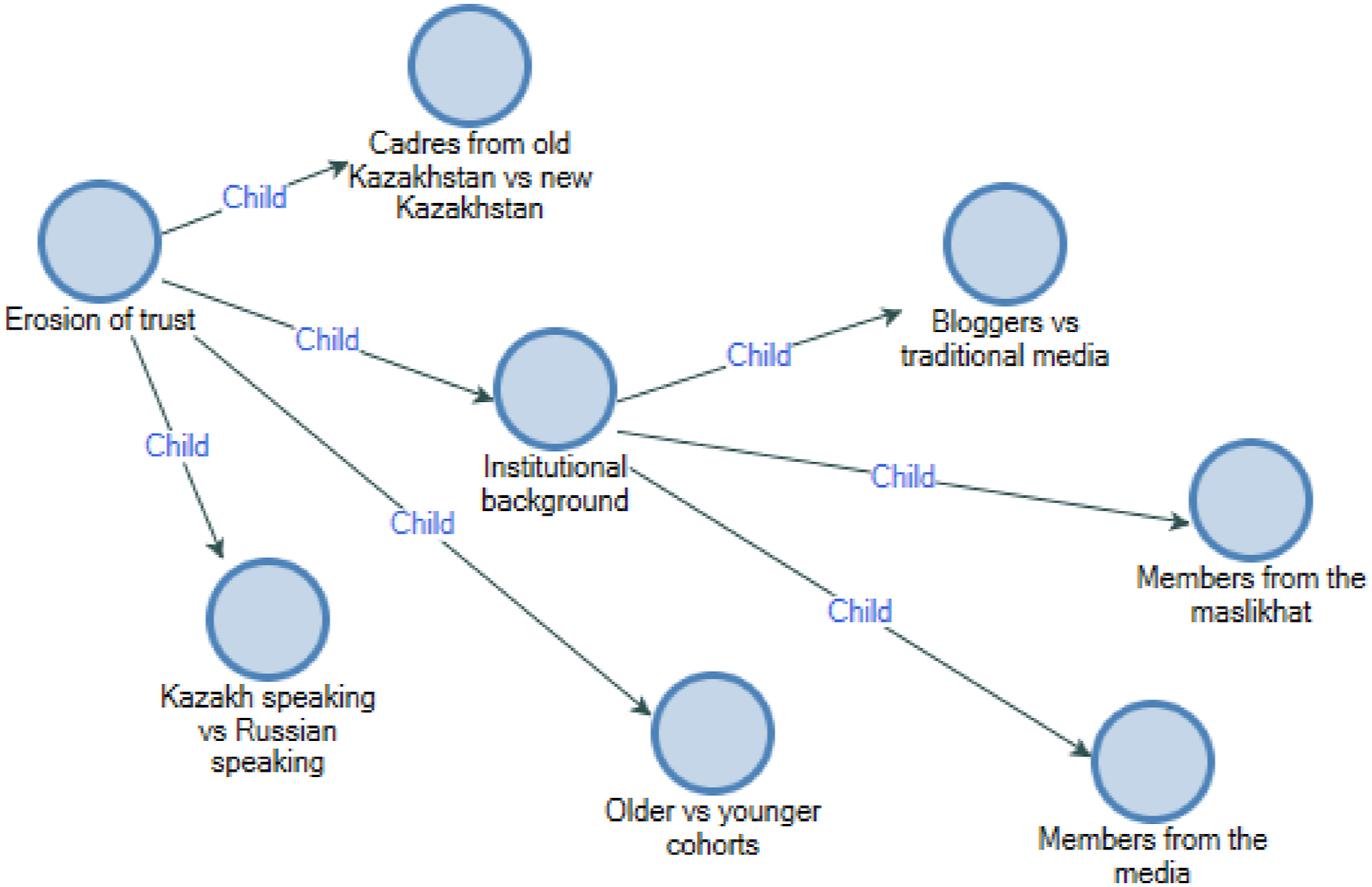
Interview and non-participant observations suggest that PC D members were divided based on their language and institutional affiliation: most members were Kazakhs, but while some spoke Kazakh, others preferred to use the Russian language. Social trust among council members also affected not only how to address a given social problem, but also what type of issue to raise. In PC D, for example, Russian-speaking members focused more on problems relating to ecology and pets, whereas Kazakh-speaking members showed interest in more traditional projects. We noticed the council’s division based on spoken language when one of Kazakh-speaking members showed distrust toward her Russian-speaking counterpart: In our council, some members are not trustworthy. I mean, they do not have a genuine intention of working on social problems. I know their background and interest in making money through state grants. They speak in Russian and teach me how to approach the problem and what problems we should raise in the council. They think they know everything and what the priority issues are. I think those members should quit the council. Otherwise, I am not going to collaborate and work on social problems. (Quote#3 PCA member, June 10, 2022)
The evidence above shows the erosion of generalised trust (i.e., trust irrespective of differences in spoken language) and its consequences in PCs’ capacity to address social problems. Meanwhile, some findings demonstrate the positive role of particularised social trust in pursuing the resolution of social problems, which occurs when members know each other or the chairman prior to entering the council. During this fieldwork, for instance, one of the council members in PC D noted the impact of particularised trust in addressing corruption in water pipeline construction projects in rural areas: I will provide the example [case] of water pipeline construction in rural areas. They were a source of corruption, and private providers installed poor-quality pipelines. Consequently, we forced private providers to reinstall water pipelines of good quality in five districts. Civil servants were subjected to disciplinary sanctions. I think that this happened because the council members trusted our chairman and his skills, intuition and administrative resources. I knew him personally and was already aware of his previously successful projects. When the chairman asked to conduct a site visit and collect evidence of malfunctioning water pipelines, we collected them. When the chairman suggested organising a meeting with all the concerned parties, we did so. In other words, we trusted the chairman that this problem would be resolved, regardless of whether it involved the economic court and anti-corruption agency in the later stages of its progression. (Quote#4 PC D member, May 27, 2022)
Similarly, the technical secretary of one of the councils stressed the role of social trust in pursuing social problems in the council as follows: I have served as a secretary for a long time. I have noticed that trustworthy relationships are vital among members and between convocations [of the council]. Some problems require a much longer time to be resolved, but one convocation only lasts for three years. When the current chairman personally knows and has trustworthy relations with the chairman of the previous convocation, then the current convocation, in most cases, advances [the resolution of] the problem initiated by the previous convocation. (Quote# 5 PC C, July 20, 2022)
As with other research in the Western context, this study finds supporting evidence that social trust has an impact on PC effectiveness (Andrews & Brewer, 2013; Knack & Keefer, 1997). Many scholars acknowledge the salience of social trust in the performance of organisations (Andrews, 2012). For example, Fukuyama (1999, p. 16) argues that “trust acts like a lubricant that makes any group or organization run more effectively.” Likewise, the findings of this inquiry suggest that social trust is essential for joint work, particularly when PCs set out to resolve social problems.
Cooperation Norms
The next component of social capital is cooperation norms (Putnam, 1993). This study shows that, like social trust, it has a positive impact on PC effectiveness. Cooperation norms are particularly reflected in the commission works of PCs, whereby council members raise social issues and collect data for further discussion at meetings. During our fieldwork, we observed that some councils were active and had frequent meetings in small commissions. The general meetings of PCs are short and involve various stakeholders (from the state, quasi-state and business sectors), thus serving as a platform for interaction with third parties. It is the commission’s work that enables council members to identify the causes of social problems and a course of action necessary to address them successfully. Poor cooperation norms are reflected in the work of commissions and council meetings. A council member stressed the role of cooperation as follows: Council members’ teamwork and collaboration had a big influence on the closure of old landfills and the allocation of a 20-hectare territory for a new landfill and recycling complex. We had several meetings with citizens living next to old landfills, organised a meeting of those citizens with state representatives, sent dozens of letters to public organisations and had many discussions amongst ourselves. We resolved this problem because every member of our team was proactive, willing to cooperate and engaged in every meeting, as well as in the actions taken to resolve the problem. (Quote #6. PC C, July 22, 2022)
This quote shows that both cooperation norms and the engagement of all members in meetings and activities, all geared toward addressing social problems, are essential. We observed that cooperation norms were particularly strong in some of PC B and PC A’s commissions, several of which were engaged in issues related to ecology, road construction and wholesale centres in PC A. Likewise, in PC B, members of the commission on legal affairs were very active – as demonstrated by the commission meeting both before and after the general meeting with the regional anti-corruption office. The role of cooperation norms in dealing with social problems was stressed by the technical secretary of PC A: The legal commission of our council is very active, and they meet frequently. They not only cooperate among themselves, but also involve outside legal experts. We are currently resolving several problems in the council, and while examining these problems, we approach state bodies. We may address social, economic or legal aspects of the problem. Currently, because of the active collaboration and frequent interactions of the legal commission, we mainly target the legal aspects of social problems. (Quote #7. PC A, June 15, 2022)
This quote demonstrates the strengths of cooperation norms and how they affect the way in which social problems are examined within the council. For example, a wholesale distribution centre was constructed in this region (PC A) through a public–private partnership, serving mainly to benefit the private sector rather than as a facility for storing and distributing vegetables, as initially agreed. The council could have approached this problem from various perspectives, but during our fieldwork, we noticed that PC A’s legal commission held frequent meetings on this topic and sent numerous official letters to local and national government concerning the legal aspects of the issue. This happened mainly due to legal commission’s internal cooperation and collaboration, as well as the involvement of outside experts.
Networking
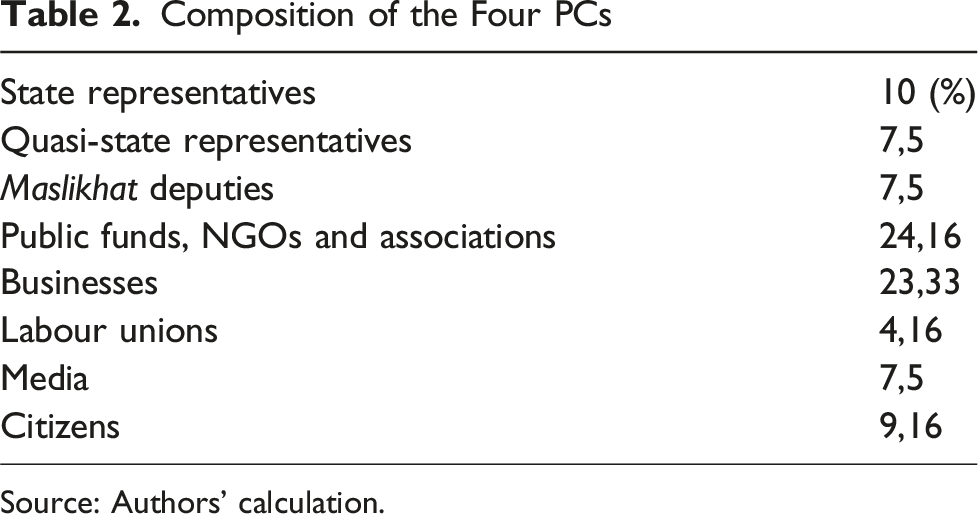
The networking component of social capital indicates members’ affiliation in civil society organisations. According to Putnam (1993), dense networks in intermediate social organisations strengthen community members’ civic skills, such as monitoring and self-organisation, which, in turn, influence local government bodies and democracy. According to available data on PC members’ background, over 80% of council members in all councils represented voluntary, professional and community organisations (Tables 1 and 2). Nevertheless, according to our fieldwork, not all council members were actively involved in commission work. Furthermore, irrespective of their high engagement in formal networking – particularly in voluntary and community organisations – the majority of council members did not get involved in resolving relevant issues. Non-participant observations in PCs indicate that most council members were indeed civil society representatives but showed reluctance to contribute to the resolution of social problems considered within PCs. One of our respondents, that is, a council member and an active civil society representative, noted: More recently, my council peers visited my district on the issue of lake contamination. I also participated in the meeting of the PC members with the local mayor. It was formal; I do not want to waste my time on such events and would rather pursue the resolution of this problem by other means. Although I am a council member, in most cases, I use my monitoring and civic skills in addressing social problems through online blogging or personal meetings. As a PC member, I need this membership card, as state bodies treat my membership in the PC seriously, particularly on the rural and district levels. (Quote#8, PC A member, June 16. 2022) Percentage of Civil Society Members Whose Organisations Received Funding Through State Contracts From 2017–2022 Source: The authors’ calculation is based on data from https://www.goszakup.gov.kz/, https://www.egov.kz/ and https://www.pk.uchet.kz/. Composition of the Four PCs Source: Authors’ calculation.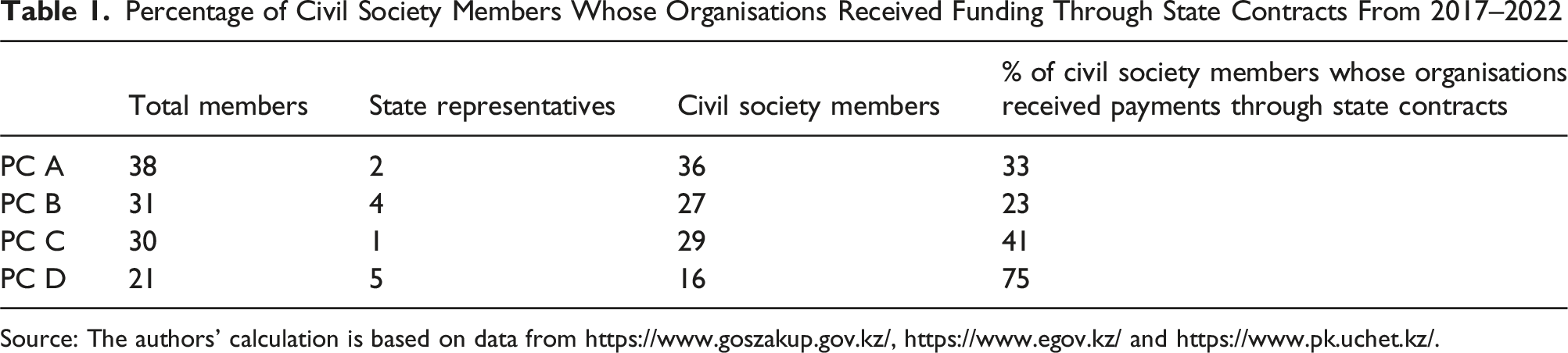
This member saw such meetings as having limited value and therefore had little interest in using his/her monitoring skills in PC meetings with state bodies, instead using other means to resolve social problems. During semi-structured interviews with PC D members, for example, it was noted that they had certain civic skills but lacked the incentives to challenge and monitor state bodies to address a given social problem. Formal networking, however, had only a limited impact on council effectiveness. One of our respondents from an NGO focusing on ecology (not a council member) remarked: A few years ago, I encountered a case related to the construction of a hotel in a protected area this issue was examined in the council. The head of a civil society alliance, who was a council member and who has connections to all the local NGOs, did not share this with us. As she/he has networking connections to social organisations, why did she/he not invite me or ask for my expert opinion on this? Although the council supported the construction of the hotel in a protected area, the society requested to reverse this decision after some time. (Quote #9., Civil society activist 11, July 8, 2021)
This quote clearly illustrates that the head of the civil society alliance, who had networking connections to local NGOs, as well as a good set of civic skills (i.e., they could communicate this issue with local activists and public to gain their opinion), did not employ them in addressing the issue of hotel construction in the protected area. Interview and non-participant observation findings failed to demonstrate that networking contributes to PC effectiveness. Indeed, as demonstrated above, although almost all PC C members were civil society representatives, only a few were active and eager to contribute to PC operations.
According to our interview findings, the main reason for the inability of formal networking to influence PC effectiveness lies in the dependence of civil society organisations on the state and their operation under the state’s constraints in their respective local contexts (Axyonova & Bossuyt, 2016; Giffen et al., 2005; Nezhina & Ibrayeva, 2013). For instance, Giffen et al. (2005) suggest that the state has established some public organisations on various issues, which are known as GONGOs (or government-organised NGOs). Membership in such organisations, however, does not necessarily improve individuals’ civic skills or promote the strength of neo-liberal formal networking. Western scholars’ notion of the network assumes a neo-liberal civil society (Newton, 1999; Putnam, 1993), while formal networking in Kazakhstan, particularly at the regional level, remains mainly state-led and is liberal and communal, albeit only on certain occasions.
3
An NGO member who was not a PC member stated in a semi-structured interview: In our region, civil society predominantly waits for state social orders. Our region has around 1,000 registered NGOs, but only ten work all year round. Other NGOs wake up only during the announcement of the state social order. Another feature is that, in most instances, NGOs do not focus on specific issues such as ecology, education or tourism. [Here], instead, they spread their activities across everything due to [their] dependency on the state social order [gosudarstvennyi sotsial’nyi zakaz]. NGOs participate in all types of social orders (e.g., healthcare, ecology) in order to receive state money. (Quote #10. Civil society activist 5, May 23, 2022)
This quote demonstrates the incentive of NGOs to win social grants from the government in any local-area policy domain. Republican-status cities, such as Astana, Shymkent and Almaty, may have neo-liberal networking, but they are not included in this study. Rather, we focus on regional PCs operating in smaller cities with limited financial resources for civil societies. Thus, networking is mainly state-led, which is different from neo-liberal civil society in the Western context.
Some interviewees stressed some PC members’ affiliations with state bodies through state social grants, thereby demonstrating the state-led nature of civil society. Likewise, Junussova’s (2018) research claims that more than half of maslikhat deputies are affiliated with state bodies and secure their economic interests through partnerships with local executive bodies. Similarly, the affiliation of PC members with local executive bodies through state social grants can be viewed in online databases, revealing that some members’ organisations received money through state social orders (Table 1). 4
Table 1 illustrates that each PC had members from civil society whose organisations received social payments in 2017–2022, with the budget of each contract ranging from 20,000 tenge to 1,696,660,000 tenge (Goszakup, 2023). The highest number of signed contracts belonged to an organisation in which a PC member is involved, with 14 contracts in 2017, 19 in 2018, 40 in 2019, 53 in 2020 and 31 in 2021, all of which involved a large sum of money (ibid).
Apart from council members’ affiliation with the state through state social orders, interviewees raised concerns about the employment status of some PC members representing quasi-state bodies (Table 2). For instance, member A was a public fund representative and an employee of a quasi-state body; nevertheless, he was treated as a civil society representative by the recruitment committee. Some council members worked in quasi-state bodies, which may have constrained their critical attitude in addressing social problems. Moreover, PCs also heard the reports of quasi-state bodies and might have been compromised due to their affiliation with a particular one.
PC members had civic skills, such as articulating civil society’s demands, communicating social problems to civil society and the public and working with large datasets to monitor state bodies. They may, however, have lacked the incentives to influence social problems by challenging and monitoring the state, as some of them depended on its funding. In addition, there was a conflict of interest at PC meetings whereby members from the quasi-state sector were assumed to influence policy outcomes.
Discussion and Conclusion
This study examines the relationship between social capital and PC effectiveness at the sub-national level in Kazakhstan. Our findings suggest that social trust and cooperation norms positively influence PCs’ effectiveness, implying that if there is trust among council members, it is easier to raise common issues and identify resolution mechanisms. Trust positively contributes to the connectedness of members within councils and allows them to collectively overcome social problems. Furthermore, trust has a positive influence on the resolution of social problems, in that it allows council members to focus on narrow and urgent issues despite their various backgrounds and agendas. Likewise, cooperation norms allow them to cooperate in commission work and collaborate through site visits, data collection and interaction with other stakeholders. Frequent meetings and collaboration with council members and external experts all demonstrate the strong norm of cooperation. The Law on Public Councils does not regulate procedures within PC commissions, such as fieldwork, data collection and interviews with citizens, and it does not regulate how social problems should be addressed by council members. Thus, the available stock of cooperation norms is important when contributing to policy outcomes and improving service on the ground. In contrast to social trust and cooperation norms, our findings show that formal networking has a limited influence on the resolution of social problems. Although most council members are affiliated with horizontal organisations, not all of them are equally inclined to take a positive stance in terms of resolving social problems, which is mainly explained by the state-driven feature of regional civil society.
Our findings on formal networking differ from those of the scholarship on informal networking in Central Asia, in that they reveal that informal networks (e.g., kinship and patronage) significantly influence how public organisations function in the local context (Oka, 2015; Oleinik et al., 2015; Schatz, 2005). Their focus is on informal networking based on the kinship, clan and nepotism that inhibit the development of society. In contrast, another study on social capital claims that social capital, such as community aid and norms of reciprocity, is conducive to overcoming socio-economic challenges and highlights the traditional form of social capital inherent to the local context (Darmenova & Koo, 2021). It is worth mentioning here that these traditional forms of social capital remain at the community level while failing to translate into formal state–society relationships and are largely focused on intra-society rather than state–society relationships. This point is highlighted by Bankoff and Oven (2019), who argue that nomadic communitarianism in the form of mutual aid, group solidarity and reciprocity is prioritised at the community level in order to avoid community ‘censure’ (yuat), which is mainly apparent at the local level but is almost absent at the state level.
Furthering this debate, we examine the role of social capital through regional PCs and capture networking as defined by Putnam (1993), that is, through the measurement of formal networking in intermediate social organisations. Consequently, our study focuses on formal networking in state–society relationships, which is distinct from more traditional forms of networking, such as group allegiance, aid and mutual reciprocity at the community level (Bankoff & Oven, 2019; Darmenova & Koo, 2021), or informal forms of networking, such as tribalism and kinship (Kazatsev, 2015; Sharipova, 2018; Schatz, 2005). Our interview findings suggest that the main reason for the inability of formal networking to contribute to PC effectiveness is council members’ affiliations with the state. Nevertheless, they either receive state funding for the sustenance of their social organisations through state social orders or work in quasi-state bodies, both of which hinder any incentives to push state bodies to resolve socially significant problems.
It is also noteworthy that social capital scholars define the norms of honesty, cooperation and reciprocity. Herein, we specifically use norms of cooperation to look for evidence of cooperation among council members, investments of their time in common issues and the frequency of their meetings within their respective commissions. In contrast, Darmenova and Koo (2021) mainly employ norms of reciprocity in applying social capital to the local context. These scholars found evidence of reciprocal aid and labour exchange at the community level in Kazakhstan. Meanwhile, the findings call into question whether the existence of reciprocal relationships translates into cooperation and enables members to pursue common goals equally at the community and state levels. This claim is articulated in Babajanian’s study (2008) of rural Armenia, where citizens displayed mutual support based on reciprocity and trust toward their fellow citizens but lacked norms of cooperation and failed to participate in state affairs (Babajanian, 2008). Thus, further studies on social capital should identify whether scholars are measuring the same concept when approaching norms through honesty, reciprocity and cooperation in the local context. Finally, future studies should differentiate between community-level and state–society relationships in applying social capital to the local context, as this will help reveal the strength of social capital in Central Asia.
We acknowledge that this inquiry has limitations, such as its limited external validity. In 2022, we selected only four regional public councils out of the sixteen total in Kazakhstan. Nevertheless, the results of this study make a particular contribution to knowledge concerning the social capital thesis. Furthermore, the fieldwork was carried out after President Tokayev’s message to the people of Kazakhstan in March 2022, in which he proclaimed a new path towards New Kazakhstan. Consequently, PC members were very optimistic about political changes and their influence on social problems.
This research also has policy implications. Although state authorities claim that two-thirds of PCs consist of civil society representatives, our results demonstrate that most council members are affiliated with the state, either through state social orders or employment in quasi-state bodies such as hospitals and schools. Moreover, business representatives are also financially affiliated with regional executive bodies. Thus, the Law on Public Councils of, 2016 should require applicants for PC positions to disclose their assets and financial/non-financial interests in order to avoid a conflict of interest. Moreover, the Law on PCs focuses largely on civil society representativeness in PCs while neglecting the role of academia and experts. Policymakers should therefore introduce a quota specifically for representatives from academia so that scholars can also share their expertise.
Social trust and cooperation norms positively influence the effectiveness of regional PCs, suggesting that the government should undertake measures to enhance social trust in the state apparatus. Though the Kazakhstani government has introduced Western-style institutions and undertaken new reforms to improve the performance of state bodies, this study demonstrates that social trust and cooperation norms are also essential ingredients of institutional effectiveness. The state, then, should consider measures for the enhancement of social trust and norms within its apparatus and in society more broadly as a part of its institutional reforms.
Footnotes
Declaration of Conflicting Interests
The author(s) declared no potential conflicts of interest with respect to the research, authorship, and/or publication of this article.
Funding
The author(s) received no financial support for the research, authorship, and/or publication of this article.
