




Abstract
This research endeavors to delve into the impact of migration flows on the nation’s economic and productivity growth based on panel data from 80 Russian states for the period of 2015–2021. Our research aims to induce migration policies for the sustainable income and productivity growth of Russia. From the baseline regression analysis with state fixed effects and additional analysis with state random effects and the two-step system GMM, we found a positive impact of migration growth rate on per capita and TFP and the heterogeneity of its effects depending on the Russian regions. It indicates that migration outflows negatively influence the regional economies of Russia and suppress regional economic growth and the positive effects of migration inflows are the strongest shown in less populated states in the Siberian and Far Eastern Federal Districts. This is evidence of the negative effects of migration outflows, which are summarized by the exodus of labor and the loss of tax revenues. The Russian government should implement migration policies both in international and domestic contexts to attract migrants, considering that Russia suffers from outflows of skilled workers to other countries and unbalanced domestic migration flows to west Russia. To reduce migration outflows of workers to other countries, quality jobs should be created (through an increase in R&D), and other incentives and subsidies can be provided to encourage emigrants to return to Russia. For the migration inflows of small regions in Russia, domestic and foreign investment should be promoted to create jobs and establish infrastructure, which can also help slow down immigration from these regions.
Introduction
In the vast landscape of global migration, Russia stands as a nation with a rich tapestry of historical, cultural, and economic complexities. One of the pressing phenomena that has garnered attention in recent years is the issue of brain drain, a term denoting the emigration of skilled and educated individuals seeking opportunities abroad (Docquier & Rapoport, 2012). Russia, with its expansive territory and diverse population, has long been a geopolitical powerhouse. From the dissolution of the Soviet Union in 1991 to the present day, the country has undergone significant transformations. These changes have influenced migration patterns, both within its borders and beyond. The collapse of the Soviet Union saw an era of increased mobility, with people moving across the newly established nations and seeking opportunities in different corners of the globe (Davies et al., 1994). Speaking of modern Russia, one cannot ignore the political and economic upheavals of the past few years. It can be confidently stated that it is the actions of the country’s “leaders” that have pushed or prompted many qualified specialists to relocate. This migration flow has had a significant impact on Russia’s labor market, making it very interesting to assess (Korobkov et al., 2022).
The international migration landscape of Russia is characterized by a complex interplay of push and pull factors. On one hand, the allure of better economic prospects, educational opportunities, and improved living standards in Western countries has drawn a significant number of skilled Russians abroad (Tsygankov, 2019). This migration outflow of skilled workers has impacted various sectors, including science, technology, and academia, as the nation loses some of its brightest minds to overseas opportunities. Simultaneously, Russia has experienced an influx of migrants from neighboring countries, particularly Central Asia, driven by economic disparities and the demand for labor in various industries. This dynamic creates a complex mosaic of migration flows, with Russia serving as both a source and a destination for migrants. Beyond the international stage, domestic migration within Russia plays an important role in understanding its broader context. Disparities in economic development and employment opportunities between urban and rural areas contribute to the migration of skilled individuals from regions with fewer prospects to major urban centers (Subbotin & Aref, 2021). The Russian government has recognized the challenges posed by migration outflows and has implemented policies aimed at mitigating their impact. Initiatives focusing on research and development, education, and the creation of an innovation-friendly environment aim to retain and attract skilled professionals. However, the efficacy of these policies remains a subject of scrutiny, prompting the need for a closer examination of their implementation and outcomes (Brock & Blake, 2014). While migration outflows have become a central issue in Russia, The contemporary geopolitical situation has undergone significant changes in light of President Vladimir Putin’s announcement of a partial mobilization on September 21, 2022. This historic event has become a catalyst for the mass exodus of Russians.
On the other hand, the impact of migration outflows on a nation’s economic growth is quite ambiguous. Some argue that the migration outflows could create a void of skilled human resources and reduce the tax incomes of a source country, which would have a negative impact on the national economy. The others assert multiple positive effects of the migration outflows on the economy of a source country, such as spillover effects from educated nationals, reduction of transaction costs, promotion of trade, increase in financial remittance, and so forth. A plethora of empirical studies are dedicated to this discourse, while the results are different depending on the study period and focus area of research (for instance, Chen, 2006; Ozgen et al., 2010; Docquier & Rapoport, 2012; Manole et al., 2017; Walmsley et al., 2017; Docquier & Iftikhar, 2019; Zhang & Lucey, 2019; Yu, 2021). The goal of the research is to unravel the intricacies of migration flows in Russia, exploring their modern patterns and repercussions on the national economy. This study can bring new insights. Topic-wise, previously, studies in migration flows of Russia were mainly focused on its factors (Wang et al., 2019), patterns, peculiar reasons, and broad/specific descriptions (Iontsev et al., 2017; Kvartiuk et al., 2020; Lanko, 2022; Rostovskaya et al., 2018; Subbotin & Aref, 2021; Ushkalov & Malakha, 2001; Wachs, 2023), but there is no paper that measures the impact of it on the income and productivity level of Russian regions. Methodology-wise, the majority of papers are conducted in a descriptive way, excluding a limited number of quantitative papers, for instance, Gerber (2006) and Wang et al. (2019). We aim to contribute valuable insights that can inform policy decisions and foster a more sustainable and resilient future for the Russian economy in the global landscape by estimating the effects of migration on income and productivity in Russian regions based on econometric analysis.
This study is composed as follows: After the introduction in the second part theoretical analyses are conducted in international and national contexts. The third part is dedicated to describing data, methodology, and regression models. The fourth part presents the results. The fifth part compares our results with the previous studies and induces policy implications. The sixth part is the conclusion.
Literature review
The impact of migration on the economy
The impact of migration on the economy has been a topic of popular discourse among scholars in development theory. A migration includes both international and internal movements of population, and multiple studies have explored its impact on economic growth from both the source country’s and the host country’s point of view.
Above all, multiple studies asserted the positive impact of migration either on the source or host countries’ economies. In terms of the host countries’ point of view, Ozgen et al.’s (2010) meta-analysis transcends specific countries, offering a broader perspective by comparing econometric studies on net internal migration. The precision-weighted estimate of beta convergence suggests a positive association between net migration and per capita income growth, aligning with new endogenous growth theories. The study by Zhang and Lucey (2019) introduces a novel brain drain/gain index to assess skilled worker mobility in 30 European countries. The research identifies economically advanced countries as net recipients of tertiary graduates, contributing positively to their economic growth. This finding suggests that brain gain is a prevalent outcome in countries with robust economies, emphasizing the positive impact of skilled migration on knowledge-based economies. In the EU, Manole et al.’s (2017) study supports the positive effects of migration on economic development. The increase in GDP per capita with a rise in the number of migrants underlines the potential benefits. Walmsley et al.’s (2017) global dynamic economic simulation focusing on East and South-East Asia offers insights into the potential benefits of a well-managed labor migration strategy. The study suggests that such a strategy could mitigate labor shortages and boost real incomes and GDP, acknowledging the dynamic nature of migration patterns. Another econometric estimation of Tipayalai (2020) focusing on Thailand provides a different perspective. The study indicates that immigrants, particularly high-skilled ones, have a statistically significant and positive impact on regional economic growth and labor productivity. The emphasis on regional area-based development policies and the host country’s ability to absorb highly skilled migrant workers adds depth to the discourse.
While other studies demonstrated the positive effect of migration outflows in terms of the source countries’ point of view, focusing on middle-income countries and emerging economies, Yu (2021) suggested that the settlement of talented individuals abroad contributes to productivity growth in their home countries. Cooray’s (2012) growth model centered on South Asia emphasizes the positive effect of migrant remittances on economic growth. The interactive effect observed through education and financial sector development highlights the multifaceted nature of the impact, suggesting policy measures to enhance formal channels for remittance transmission. Santos and Postel-Vinay’s (2003) analysis of migratory flows and growth in a developing economy posits that freely chosen worker mobility can have an expansionary effect. The study suggests that natives may return home after accumulating knowledge abroad, contributing to the dynamics of migratory flows.
On the other hand, the negative impact of migration outflows in terms of the source country has been concerning as well. Docquier and Rapoport (2012) discuss the challenges faced by sending countries. Case studies, including the African medical brain drain, European scientists’ exodus, and the role of the Indian diaspora, underscore potential negative repercussions on the development of source countries. The study of Bhargava and Docquier (2008) on sub-Saharan Africa reveals a negative association between brain drain and lower wages, higher HIV prevalence rates, and an increase in adult deaths from AIDS. It underlines the detrimental impact of brain drain on public health in the source region. Conversely, Sampson’s (2013) theoretical model explores brain drain concerning high-knowledge agents, positing that the North may experience a brain drain due to its comparative advantage in high-knowledge production. The negative impact arises from the potential loss of skilled individuals to economically developed regions, exacerbating the technology and skill gap between developed and developing countries. The study also challenges conventional explanations of low skill and technology transfer from developed to developing nations.
While the impact of migration is rather ambiguous in some studies, Chen’s (2006) stochastic dynamic model emphasizes the intricate dynamics of international migration from a source country perspective. Notably, the study underscores that economic growth is influenced by migration, impacting fertility decisions and school expenditures. The research suggests that relaxing restrictions on the emigration of highly skilled workers may have short-term benefits but harm long-term economic growth. The research by Docquier and Iftikhar (2019) introduces a two-sector model with formal and informal labor markets, providing a nuanced understanding of brain drain’s impact on development and inequality in sub-Saharan Africa. The welfare effects are theoretically ambiguous, with results showing heterogeneous losses for low-skilled populations. The size of welfare losses varies, indicating a mixed impact dependent on specific model parameters, production technologies, and educational policies. Ha, Yi, and Zhang’s (2016) study focuses on China, exploring the impact of permanent and temporary emigration on human capital formation and economic growth. The findings reveal a complex relationship, with permanent emigration positively influencing school enrollment but negatively affecting economic growth. Temporary emigration has mixed effects on education and a detrimental impact on economic growth.
In addition, some studies are dedicated to investigating the impact of internal migration. Borozan’s (2017) panel data analysis focusing on Croatia provides insights into the impact of specifically internal migration on economic divergence. The study reveals that Croatian counties experienced both absolute and conditional economic divergence. Symmetrically, in- and out-migration played a role in accelerating this divergence, with varying effect sizes. The study underscores the significance of migrant characteristics and behavior in shaping outcomes, suggesting that internal migration’s impact on economic dynamics is influenced by individual-level factors. Alvarez et al. (2021) extend the discussion to 18 OECD countries, employing a country-fixed-effect dynamic panel data model. Their findings highlight global variations in internal migration trends, with non-European countries generally exhibiting a downward trend, contrasting Europe’s variation. Factors such as the reduction in young adults, regional inequalities, the rise in information technologies, and net international migration are identified as influencing migration patterns. Additionally, the study emphasizes the role of regional income inequalities in affecting migration intensity over both short and long terms.
To conclude, the comprehensive literature review aims to provide a nuanced understanding of the positive, negative, and mixed impacts of migration on economic growth, technological diffusion, inequality, and development. The studies discussed encompass diverse geographical regions, providing a holistic perspective on the implications of migration.
Studies on the topic of migration in Russia
We further examined how a migration topic has been dealt with in Russia. Multiple studies investigated the motivations, determinants, and reasons for migration outflows in Russia. It is asserted that multiple socio-economic factors (e.g., urbanization level, economic instability, limited career opportunities, and political uncertainty) are considered key factors driving the migration from Russia (Wang et al., 2019). In addition, interestingly, quite multiple studies are focused on a specific migration issue: brain drain, an exodus of highly skilled workers, whose phenomenon is fueled by factors such as economic instability, limited career prospects, and political uncertainty, considering that the departure of talented individuals raises serious concerns about the loss of human capital and its potential impact on Russia’s long-term economic and technological development (Iontsev et al., 2017; Kvartiuk et al., 2020; Lanko, 2022; Rostovskaya et al., 2018; Subbotin & Aref, 2021; Ushkalov & Malakha, 2001; Wachs, 2023). While, in terms of methodology, there was an attempt to investigate a migration issue in a quantitative way (Gerber, 2006; Wang et al., 2019), the majority of studies are conducted in a descriptive way due to the data limitations.
From the two rounds of literature review, it was found that despite the significance of migration outflows on the national economy, no single paper measures the impact of migration on the Russian economy. In addition, there are some attempts to deal with the migration topic in Russia in a qualitative way; previously, such attempts were highly limited. In this sense, our study is original as it touches upon an uninvestigated topic beforehand with new datasets and makes an accurate estimation based on econometric skills.
Data, methodology and model specification
Baseline model
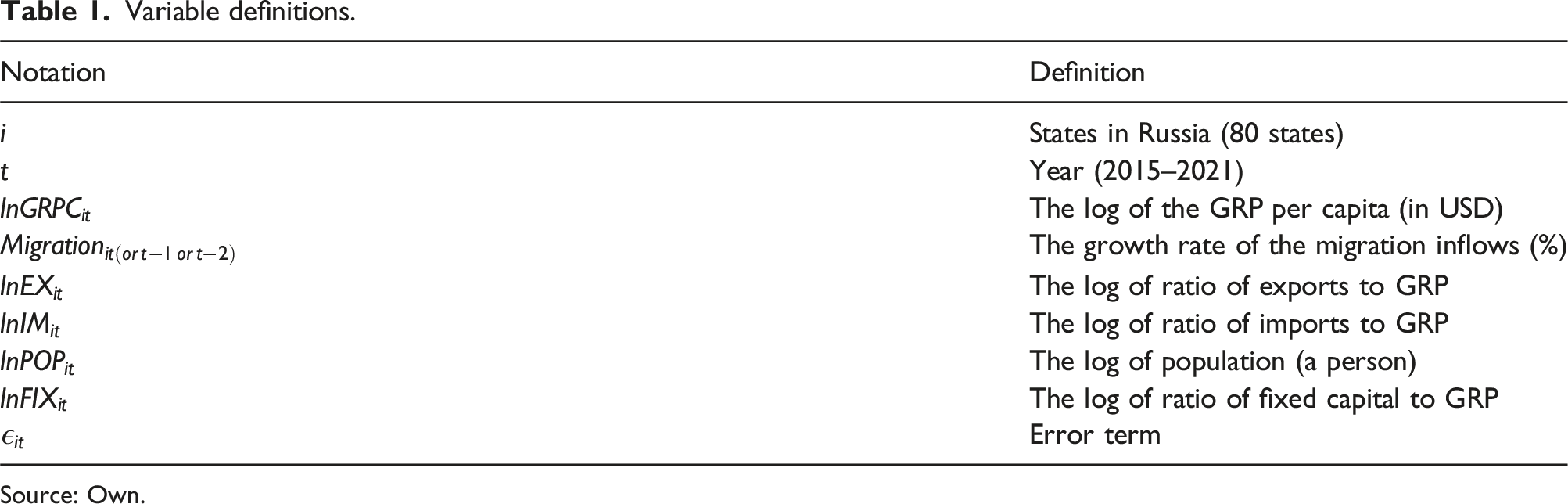
As the purpose of the study is to estimate how population inflows (regardless whether it is internal or external), which are related to labor force (input of the industrial production) and to induce decisions regarding marginal benefits and costs from it to maximize the efficiency of the economy, we adopted the coefficient which includes all types (i.e., internal and external) of migration. For the proxy of migration, migration growth rate (%) per 10,000 is utilized. Considering that migrants to Russia need to adapt to society and that it can be difficult to contribute to the economy during the current year, Thereby, the t-1 and t-2 effects of migration will be measured, as well as the current-year effect. In addition, we can refer to previous economic growth theories (for instance, Balasubramanyam et al., 1996; Iamsiraroj, 2016) and include population and fixed capital as control variables. Further, exports and imports are controlled as well, considering their significant effects on income growth (Awokuse, 2008; Lee & Yu, 2022). The following equation (1) is rendered for the baseline state-fixed effects estimation:

In addition, GRP per capita can be additionally replaced by considering that total factor productivity is a crucial factor to influence the output level according to the Cobb-Duglas function. The formula for the TFP is as follows:

Here

The impact of brain drain on productivity growth is measured based on the equation (4) as follows:

For the sensitivity checks, random effects models under the same mathematical formula but with the state fixed effects are formulated as well.
The two-step system GMM model
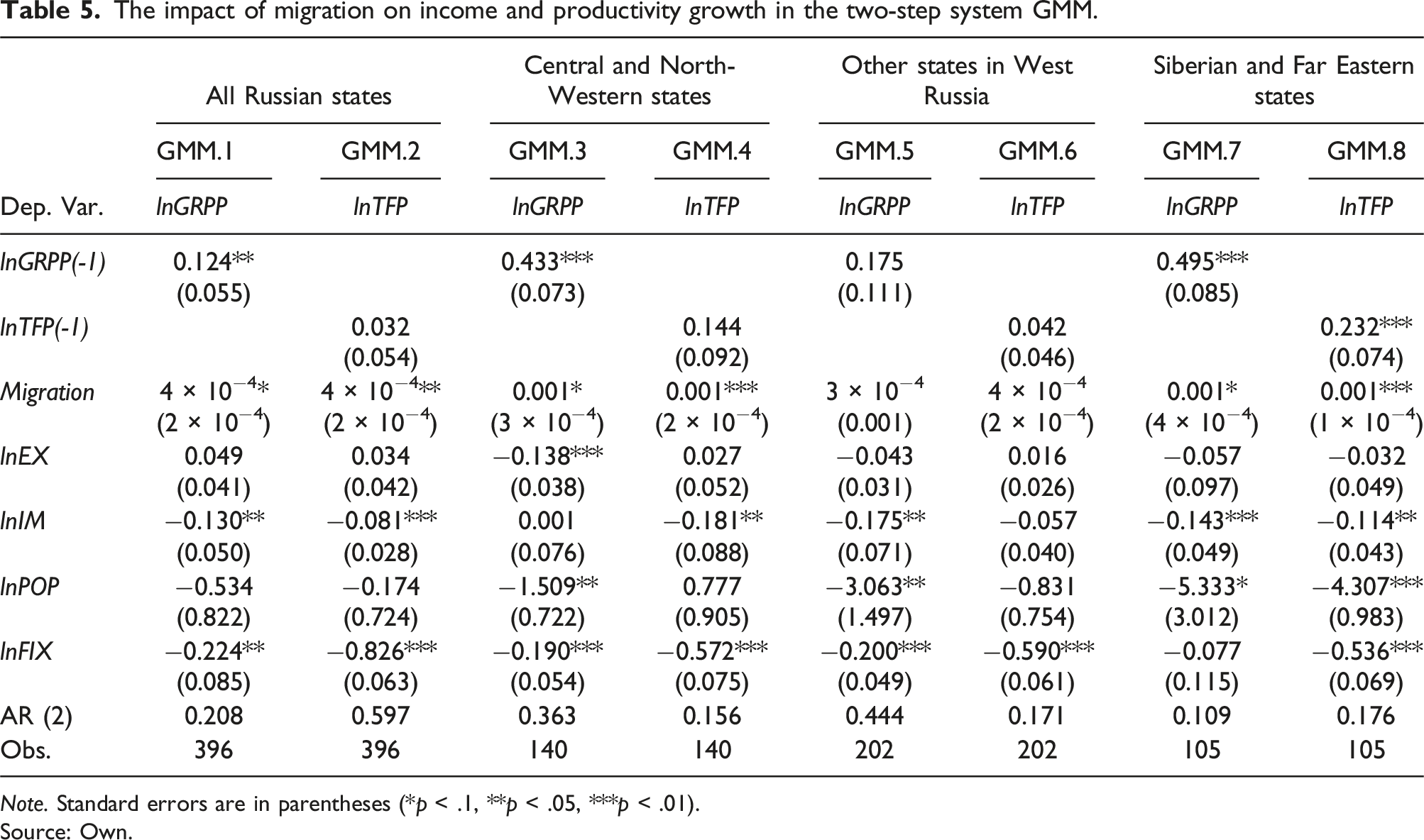
In addition to the baseline line, this study further constructs the two-step system GMM model to deal with the potential endogeneity. This is because a high level of GRP per capita and TFP could lead to migration to the Russian regions. The flourishing regional economy could lead to the movement of people, and the inflow and outflow of population may influence the regional economy. While our study aims to reveal the causality between migration and GRP per capita and TFP, to deal with such a potential endogeneity issue, this study adopted the two-step GMM estimation system. The following dynamic panel equations are rendered for our estimations:


Equation (5) reveals the effect of migration on GRP per capita. Equation (6) reveals the effect of migration on productivity.
Hypothesis development
If marginal benefit of labor is larger than marginal cost of labor, then profits will increase. Marginal benefits are larger till the moment when the capitals are fully utilized. In a case of Russia, the landmass is huge and still many parts of the lands are waiting to be developed as a market. In this case, the inflows of labors will create profits as there are enough empty positions that they can be utilized at. In this sense, we can posit that:
The migration inflows will enhance income (proxied by GRP per capita) in Russian regions.
On the other hand, the distribution of populations among Russian regions is unbalanced as the economy is mainly operated around Moscow and Saint Petersburg. In these regions, which are already quite densely populated, the gap from marginal benefit of labor to marginal cost of labor might be small. While some regions, especially in Siberia and Far East, are suffered from the lack of labors. Thereby, we can expect that the magnitude of positive effects of migrations may differ depending on the regions and that will be larger in less densely populated regions. In this way we can render the following hypothesis:
The positive effects of migration inflows will be largest in the Siberian and Far Eastern states and the least in Central and North-Western states.
Data description
Variable definitions.
Source: Own.
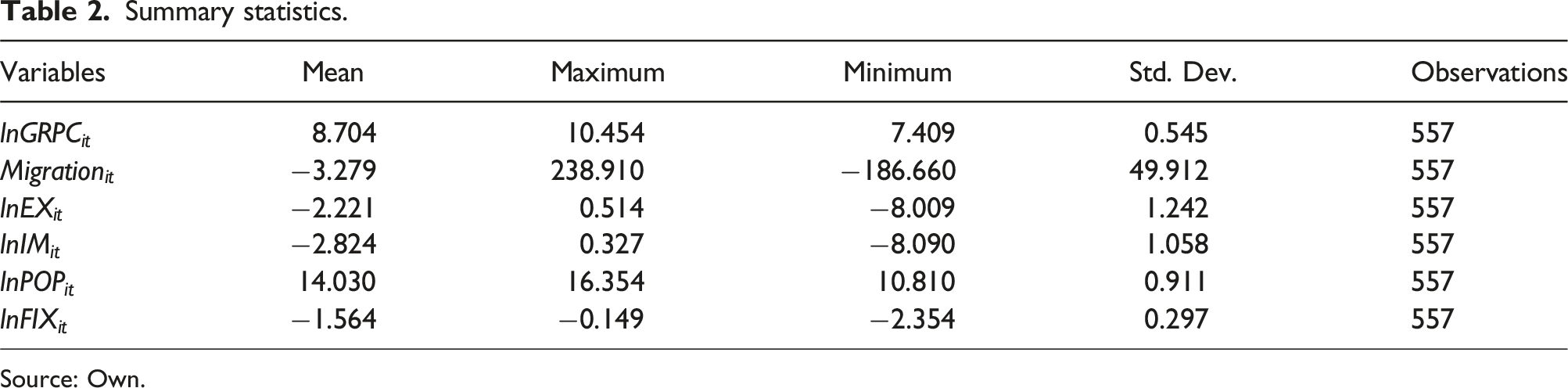
Summary statistics.
Source: Own.
Figure 1 describes the mean migration growth rate (%) per 10,000 people in 80 states in Russia. From 2015 to 2018, there was a continuous migration outflow in most regions of Russia, which reached its maximum in 2018. In 2019, there is an increase in migrants, which may be due to a revision of the methodology for recording migration. However, Rosstat claims that the growth was ensured by migrants who received temporary registration (RGRU, 2019a, 2019b). Migration outflow is observed again in 2020. This can be due to the arrival of the COVID-19 pandemic and the closure of borders and restrictions on movements. In 2021, there will be a strong increase in migrants, which may be associated with the restoration of communications with neighboring countries. Most of the migrants came from the countries of the former USSR. In 2021, the number of persons in respect of whom a decision was made to acquire citizenship of the Russian Federation has increased significantly (Demoscope weekly, 2022). Mean of migration growth rate (%) per 10,000 persons of 80 states in Russia. Source: The Federal State Statistics Service of Russia.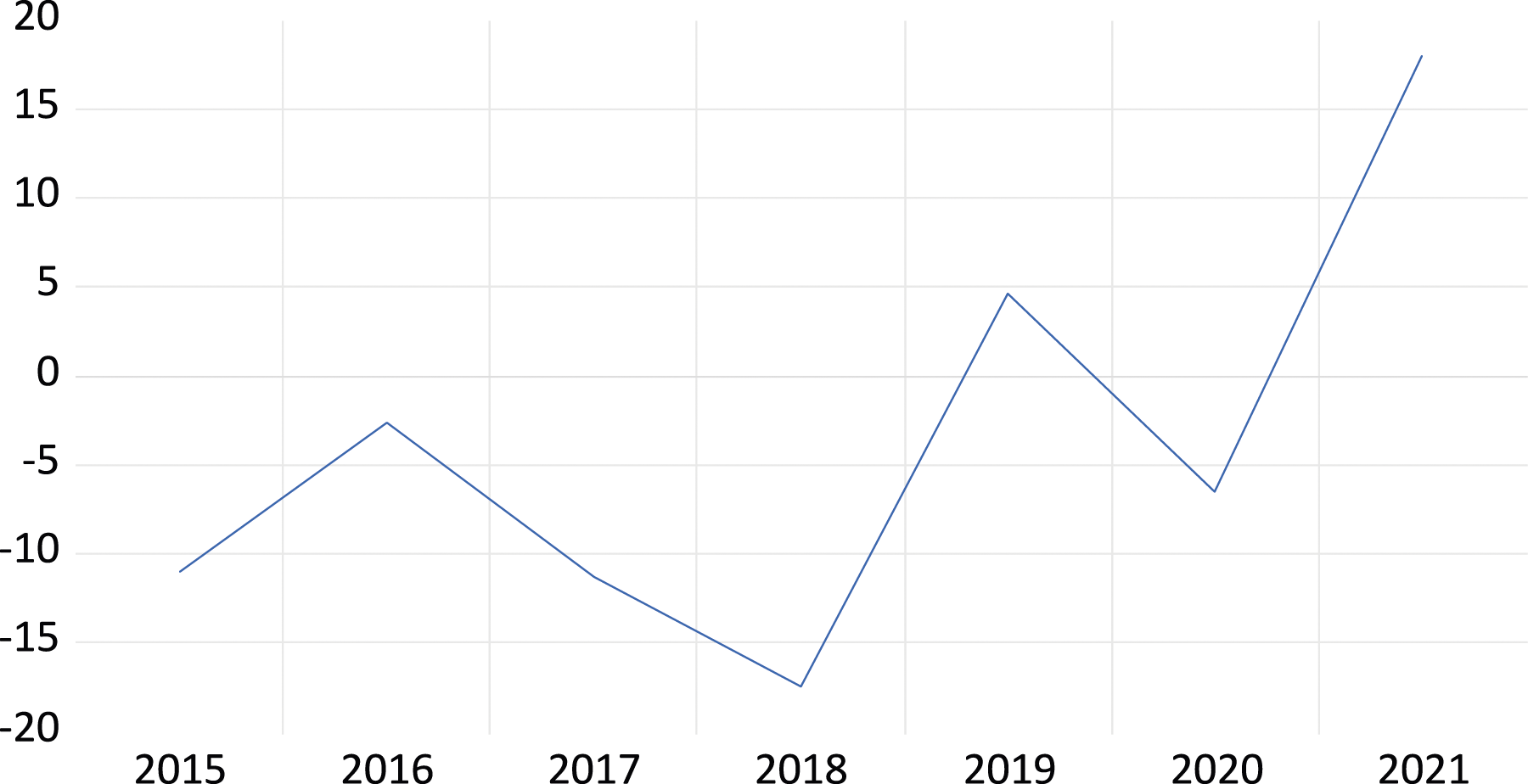
As described in Figure 2, the average rate of migration growth fell seriously in all regions of the Russian Federation in 2020, which is associated with the COVID-19 pandemic. Otherwise, one can observe positive dynamics with grace in the central, northwestern, and southern districts for 6 years (from 2015 to 2021). The greatest outflow is visible in the Far Eastern district, which may be due to the seasonality of work and the large number of shift workers in the region. However, due to the development of infrastructure in the Far Eastern region, migration has become positive in 2021 (Russian Government, 2023). Mean of migration growth rate (%) per 10,000 persons of each federal district. Source: The Federal State Statistics Service of Russia.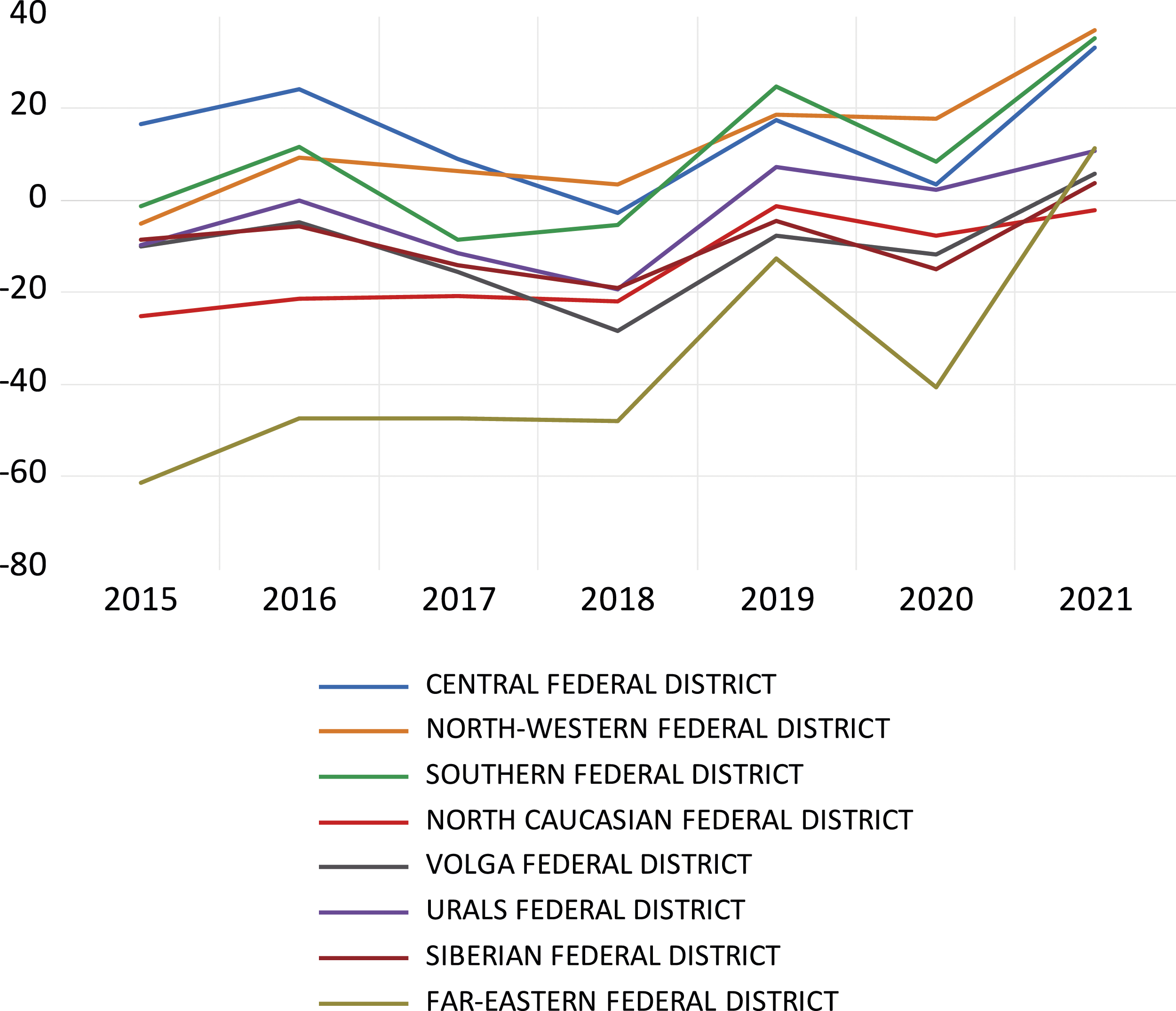
As shown in Figure 3, until 2019, overall labor productivity had smooth growth, which is associated with the development of the economy and production. The fall in labor productivity in 2020 is due to the pandemic. Factories were closed, and most workers were transferred to remote work. And so, work that could not be done remotely was suspended. This is the main criterion for the decline in overall labor productivity in 2020. In 2021, there is an increase in overall labor productivity. This is evidenced by the state’s investments in improving the skills of workers and organizing the rationalization movement (Algorithm: labor productivity, 2021). Mean of TFP of 80 states in Russia. Source: The Federal State Statistics Service of Russia.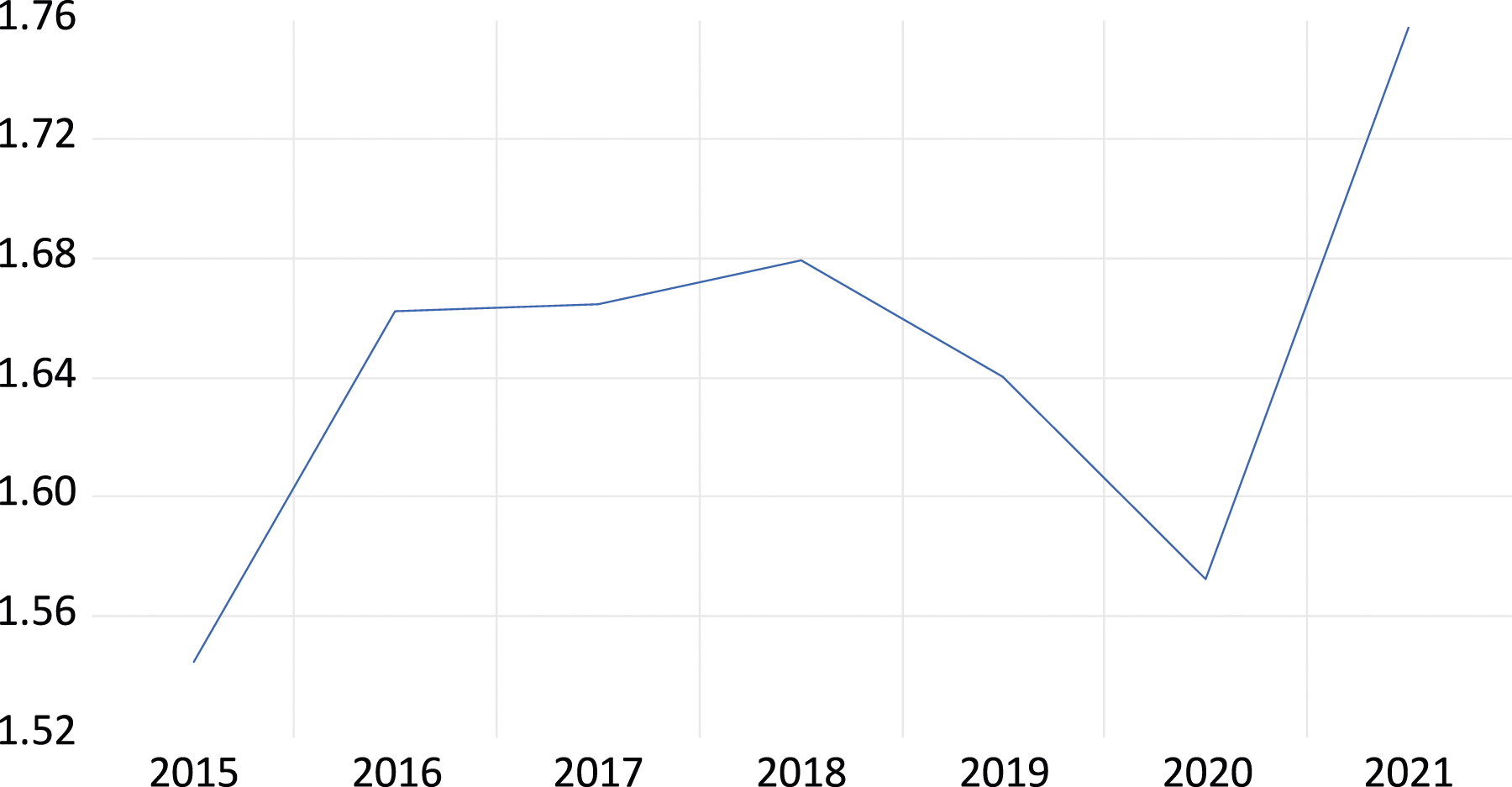
Figure 4 shows that the greatest increase in labor productivity from 2015 to 2018 is noticeable in the Ural region. This area is one of the main areas for increasing productivity and improving the efficiency of work processes. This can be due to the fact that the region is engaged in the extraction of raw materials, metals, mechanical engineering, chemical production, etc. The lowest value of labor productivity is observed in the North Caucasus District. This can be due to the high birth rate in the region and high unemployment. In addition, the region is largely engaged in agriculture, which does not employ as much labor as the extractive industries. The sharp drop in overall labor productivity in all regions of the country in 2020 is associated with the COVID-19 pandemic that came to Russia. Mean of TFP of 80 states for each federal district. Source: The Federal State Statistics Service of Russia.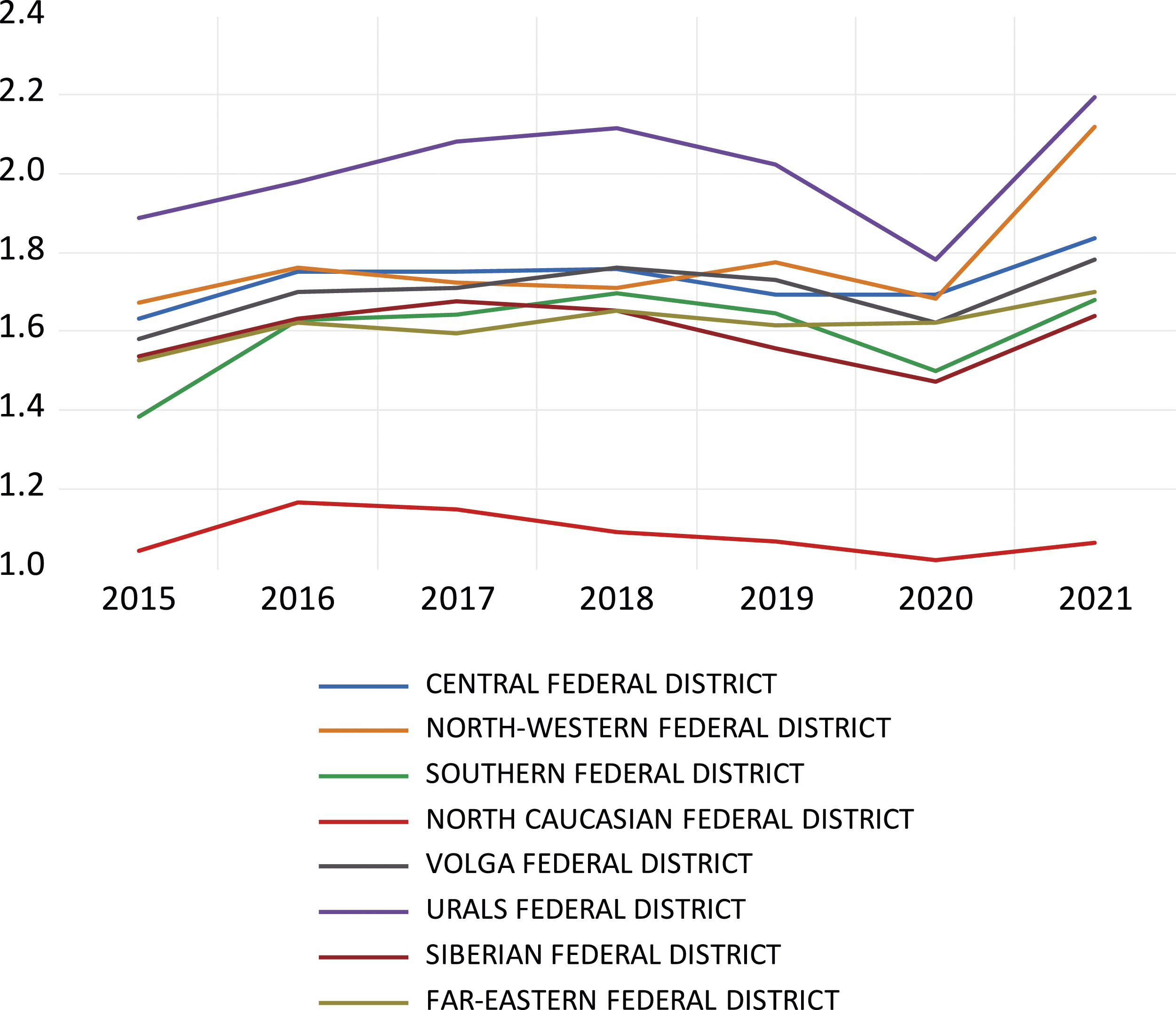
Results
Baseline model with state fixed effects
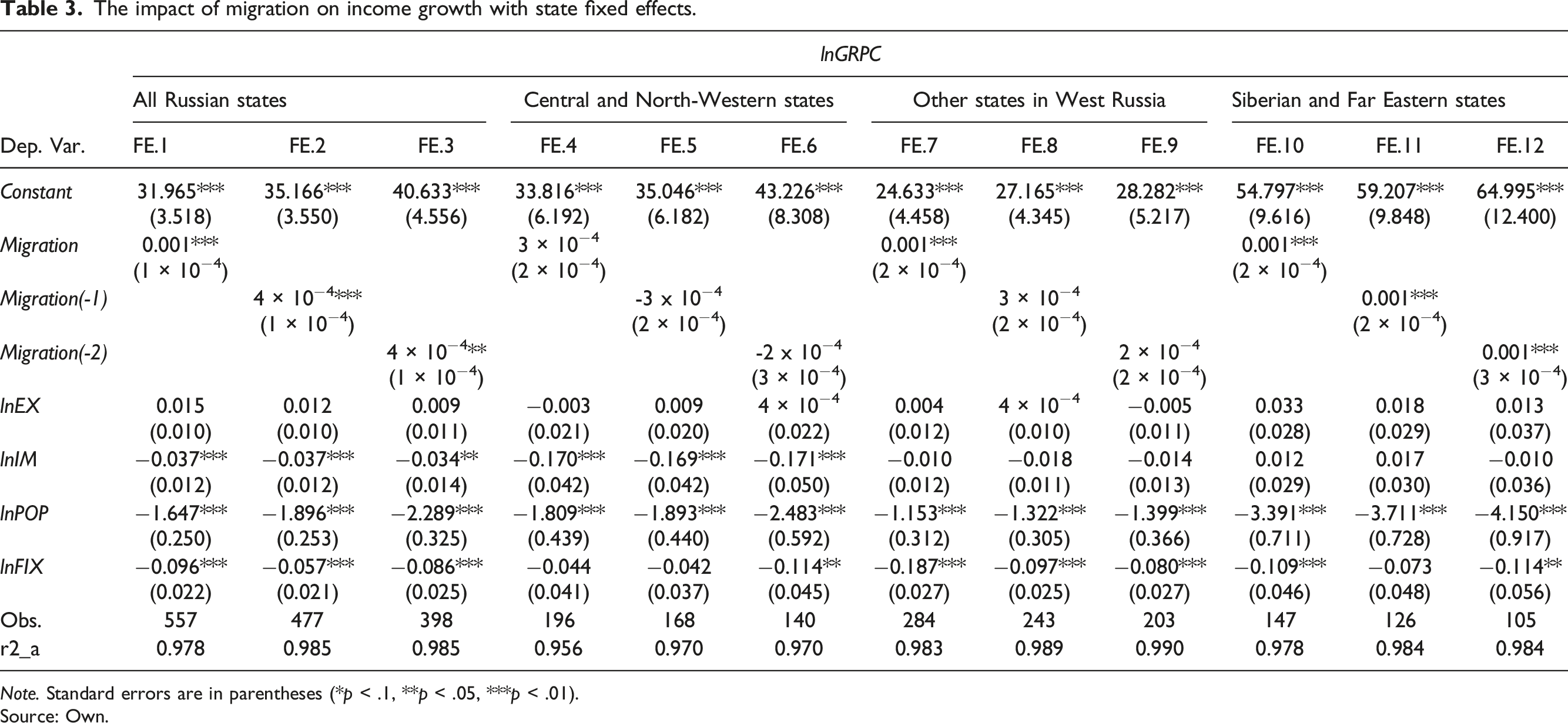
The impact of migration on income growth with state fixed effects.
Note. Standard errors are in parentheses (*p < .1, **p < .05, ***p < .01).
Source: Own.
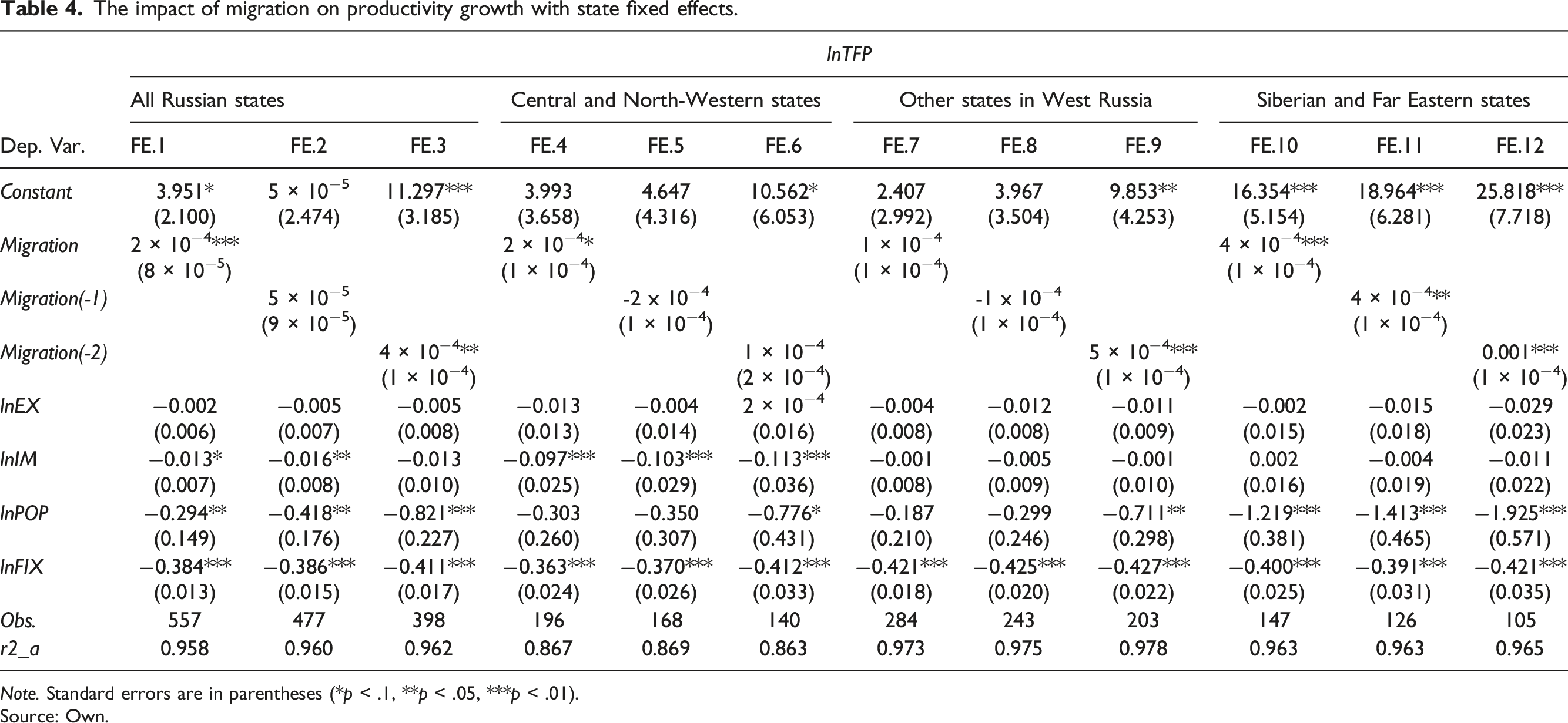
The impact of migration on productivity growth with state fixed effects.
Note. Standard errors are in parentheses (*p < .1, **p < .05, ***p < .01).
Source: Own.
For the sensitivity checks, random effects models are established and presented in Table A1 and A2 (See Appendix). In general, the main findings are consistent with those from the baseline fixed effects.
Endogeneity test (the two-step system GMM)
The impact of migration on income and productivity growth in the two-step system GMM.
Note. Standard errors are in parentheses (*p < .1, **p < .05, ***p < .01).
Source: Own.
Discussion
The study explored the impact of migration on income and productivity growth in the Russian regions. It was observed that migration inflows in the Russian regions promote income and productivity growth. It indicates that migration outflows suppress economic growth, while migration inflows promote economic growth. This finding is also confirmed in previous studies (Bhargava & Docquier, 2008; Docquier & Rapoport, 2012; Manole et al., 2017; Ozgen et al., 2010; Sampson, 2013; Tipayalai, 2020; Walmsley et al., 2017; Zhang & Lucey, 2019). In addition to it, this study newly proved the existence of the heterogeneity of these effects depending on the population density of the Russian states. To put it another words, the positive effects of migration inflows on the regional economy are maximized in areas less densely populated (e.g., Siberia and Far East) than more densely populated (Center and North-West).
The negative impact of migration outflows on the national economy can be explained by a few reasons. In reality, the economic development of small towns in Russia is suspended due to a lack of human resources (Forbes, 2023). Multiple Russian regions are suffering from population outflows to the main cities of west Russia. In addition, it is pointed out in Russia that the international migration of young scientists negatively affects the development of science due to the lack of qualified personnel; it also has a strong impact on economic development because the economy and science follow parallel paths (RBC, 2021). Migration may entail the loss of the most competent specialists, which slows down not only scientific development but also technical development. The state requires large investments in education and advanced training of workers to achieve similar goals without the migration of domestic specialists. However, even investments in education do not always lead to accelerated economic growth in a developing country if a large number of its highly educated people leave the country, and it will be possible to compensate for such an outflow of personnel only over a long distance (Shmeleva, 2019).
In this sense, the Russian government could implement migration policies both in international and domestic contexts. Russia suffers from outflows of skilled workers to other countries and unbalanced domestic migration flows to west Russia. Skilled workers migrate to countries with developed economies. In the meantime, their precious knowledges are diffused and significant intellectual assets of Russia are leaked out in these foreign countries (Ganguli, 2015). On the other hand, there they can realize their greater potential and improve their standard of living by increasing their earnings in a company that is willing to pay higher wages to more qualified employees. Therefore, to prevent international migration outflows of skilled workers, quality jobs should be created, one of the methods to enhance research and development. According to the study of Yang and Huang (2005), an increase in the R&D of Taiwanese electronics firms promoted their number of employees. Kirchhoff et al. (2002, 2007) also revealed a positive correlation between university R&D expenditures and firm creation. Likewise, the government can consider providing R&D subsidies for the private sector, which can lead to the creation of quality jobs. It is worthy to point out that the positive effects of grants on scientific productivity in a market are noticeably enhanced when the alternative funding opportunities are limited. In this case, a small amount of grants can remarkably hinder outflux of skilled labors (Ganguli, 2011). Moreover, in order for the state to attract residents of other countries to its country, some incentives and subsidies can be implemented to compensate for the costs of relocation, such as geographical and linguistic barriers, as well as high emigration costs. However, Borjas and Doran (2012) suggested an interesting finding from the Soviet mathematicians’ inflows in America: Mathematicians whose research overlapped with the Soviets saw a decrease in output, although such a gap was filled by Soviet mathematicians. This indicates that migration attraction policies in highly skilled workers should be focused on sectors that Russia is weak at to maximize positive effects, otherwise, a decrease in output can be larger than an increase in output, in some cases.
However, above all, the fundamental geopolitical instability of the region cannot be ignored to resolve the issue of international migration outflows. Historically, Russian territories have been suffered from social instabilities caused by internal (e.g., 1917 revolution and 1991 collapse of the Soviet Union), external (e.g., ongoing conflicts with Ukraine) and mixed (e.g., 1970s Soviet Union aliyah) factors. It should be admitted that such instabilities, which threaten the security of life, may demotivate migration inflows in Russia (as the migration makes migrants to take high risks), even when the economic compensations are good. On the other hand, geographical location of Russia and Russia’s status in the international relations make the country somewhat inevitable to be often related to international political issues. Even that, it can expect that enhancement of the environmental stability of the country may lead to migration inflows in it.
On the other hand, for migration inflows in small Russian regions, it is recommended to attract domestic and foreign investment to create jobs and establish infrastructure. Investment from outside is considered to be positive in terms of infrastructure development, job creation, an increase in exports, and technology spillovers (Žilinskė, 2010). Excluding west Russia, professions in other Russian regions are not diversified and stabilized. Especially in the Far East, there are many shift workers, which thereby do not consistently contribute to regional economic and productivity growth (Interfax, 2019). Like Moscow, where a seasonality does not significantly influence on migration movement (Fantazzini et al., 2021), multiple stable jobs should be created. Also, to enhance long-term residents in small regions of Russia, the places should become places where people can live by resolving issues of inconvenient infrastructure (e.g., low road density, poor accessibility to other regions of Russia, and high living costs relative to wages) and an absence of companies to work with being paid reasonable salaries.
Conclusions
This research delved into the impact of migration on the nation’s economic and productivity growth based on panel data from 80 Russian states for the period of 2015–2021. First of all, we found patterns of migration patterns in Russian regions. From 2015 to 2018, there was a continuous migration outflow in most regions of Russia; while in 2021, there was a strong increase in migrants due to inflows of migrants from the countries of the former USSR. In addition, an unbalanced migration growth rate between the west and east Russian regions is found as well. Second, from the regression analysis, we found a positive impact of migration growth rate on per capita and TFP. It indicates that migration outflows negatively influence the regional economies of Russia and suppresses regional economic growth. This is evidence of the negative effects of migration outflows, which are summarized by the exodus of skilled labor and the loss of tax revenues. On the other hand, the heterogeneity of its effects is witnessed depending on the Russian states. The positive effects of migration inflows on the regional economy are maximized in areas less densely populated (e.g., Siberia and Far East) than more densely populated (Center and North-West).
To attract migrants, the Russian government should implement population attraction policies in international and domestic contexts to solve the issue of outflows of skilled workers to foreign countries and unbalanced migration flows across domestic regions. To reduce the brain drain of skilled workers to other countries, quality jobs should be created (through an increase in R&D), and other incentives and subsidies can be provided to encourage emigrants to return to Russia. For small regions in Russia, domestic and foreign investment should be promoted to create jobs and establish infrastructure.
On the other hand, the research performed has shortcomings. Due to insufficient data, the diversification of model equations was limited. Depending on the purpose of migration flows, their impact on income and productivity growth in the national economy can vary. However, such data, which categorized the migration flows depending on their purpose, was unavailable. This heterogeneity should be captured by the availability of the data. In addition, Russia is going through dramatic geopolitical changes nowadays. Later on, these unusual migration flows and their peculiar impact on the national economy should be considered as well.
Footnotes
Declaration of conflicting interests
The author(s) declared no potential conflicts of interest with respect to the research, authorship, and/or publication of this article.
Funding
The author(s) received no financial support for the research, authorship, and/or publication of this article.

Note
Appendix
Sensitivity test: The impact of migration on income growth with state random effects. Note. Standard errors are in parentheses (*p < .1, **p < .05, ***p < .01). Source: Own.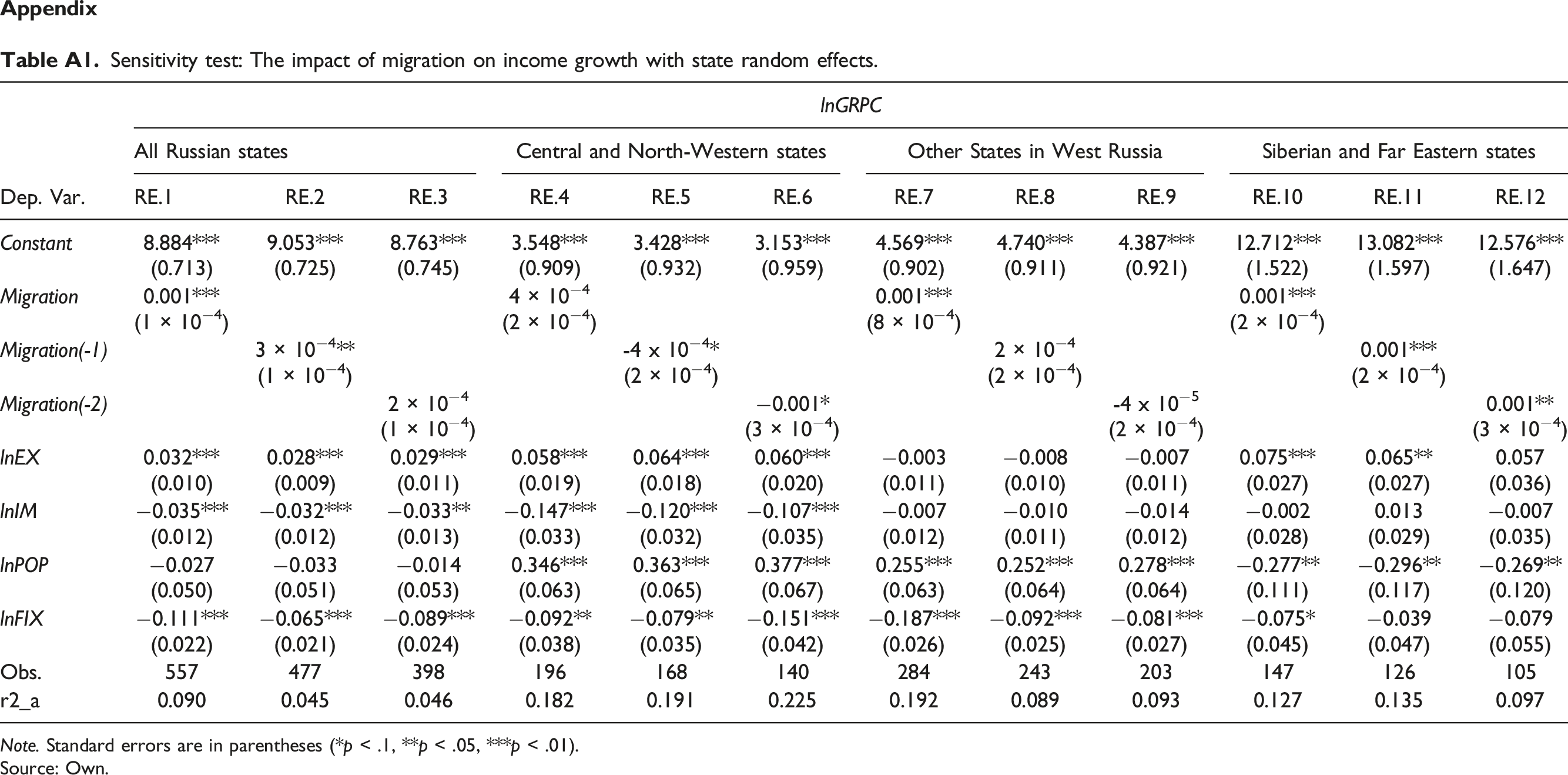
Dep. Var.
lnGRPC
All Russian states
Central and North-Western states
Other States in West Russia
Siberian and Far Eastern states
RE.1
RE.2
RE.3
RE.4
RE.5
RE.6
RE.7
RE.8
RE.9
RE.10
RE.11
RE.12
Constant
8.884***
9.053***
8.763***
3.548***
3.428***
3.153***
4.569***
4.740***
4.387***
12.712***
13.082***
12.576***
(0.713)
(0.725)
(0.745)
(0.909)
(0.932)
(0.959)
(0.902)
(0.911)
(0.921)
(1.522)
(1.597)
(1.647)
Migration
0.001***
4 × 10⁻⁴
0.001***
0.001***
(1 × 10⁻⁴)
(2 × 10⁻⁴)
(8 × 10⁻⁴)
(2 × 10⁻⁴)
Migration(-1)
3 × 10⁻⁴**
-4 x 10−4*
2 × 10−4
0.001***
(1 × 10⁻⁴)
(2 × 10⁻⁴)
(2 × 10⁻⁴)
(2 × 10⁻⁴)
Migration(-2)
2 × 10⁻⁴
−0.001*
-4 x 10⁻⁵
0.001**
(1 × 10⁻⁴)
(3 × 10⁻⁴)
(2 × 10⁻⁴)
(3 × 10−4)
lnEX
0.032***
0.028***
0.029***
0.058***
0.064***
0.060***
−0.003
−0.008
−0.007
0.075***
0.065**
0.057
(0.010)
(0.009)
(0.011)
(0.019)
(0.018)
(0.020)
(0.011)
(0.010)
(0.011)
(0.027)
(0.027)
(0.036)
lnIM
−0.035***
−0.032***
−0.033**
−0.147***
−0.120***
−0.107***
−0.007
−0.010
−0.014
−0.002
0.013
−0.007
(0.012)
(0.012)
(0.013)
(0.033)
(0.032)
(0.035)
(0.012)
(0.011)
(0.012)
(0.028)
(0.029)
(0.035)
lnPOP
−0.027
−0.033
−0.014
0.346***
0.363***
0.377***
0.255***
0.252***
0.278***
−0.277**
−0.296**
−0.269**
(0.050)
(0.051)
(0.053)
(0.063)
(0.065)
(0.067)
(0.063)
(0.064)
(0.064)
(0.111)
(0.117)
(0.120)
lnFIX
−0.111***
−0.065***
−0.089***
−0.092**
−0.079**
−0.151***
−0.187***
−0.092***
−0.081***
−0.075*
−0.039
−0.079
(0.022)
(0.021)
(0.024)
(0.038)
(0.035)
(0.042)
(0.026)
(0.025)
(0.027)
(0.045)
(0.047)
(0.055)
Obs.
557
477
398
196
168
140
284
243
203
147
126
105
r2_a
0.090
0.045
0.046
0.182
0.191
0.225
0.192
0.089
0.093
0.127
0.135
0.097
Sensitivity test: The impact of migration on productivity growth with state random effects. Note. Standard errors are in parentheses (*p < .1, **p < .05, ***p < .01). Source: Own.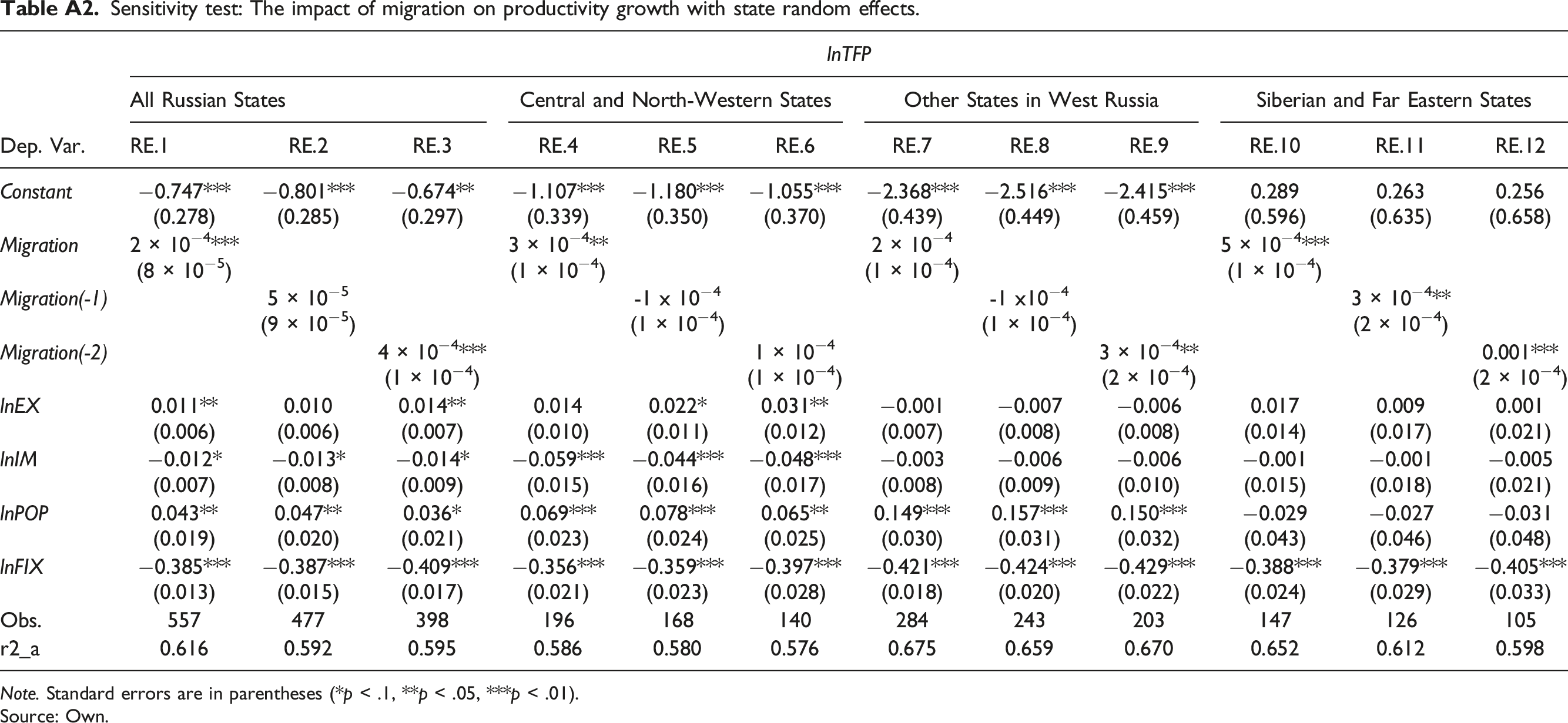
Dep. Var.
lnTFP
All Russian States
Central and North-Western States
Other States in West Russia
Siberian and Far Eastern States
RE.1
RE.2
RE.3
RE.4
RE.5
RE.6
RE.7
RE.8
RE.9
RE.10
RE.11
RE.12
Constant
−0.747***
−0.801***
−0.674**
−1.107***
−1.180***
−1.055***
−2.368***
−2.516***
−2.415***
0.289
0.263
0.256
(0.278)
(0.285)
(0.297)
(0.339)
(0.350)
(0.370)
(0.439)
(0.449)
(0.459)
(0.596)
(0.635)
(0.658)
Migration
2 × 10⁻⁴***
3 × 10⁻⁴**
2 × 10⁻⁴
5 × 10⁻⁴***
(8 × 10⁻⁵)
(1 × 10⁻⁴)
(1 × 10⁻⁴)
(1 × 10⁻⁴)
Migration(-1)
5 × 10⁻⁵
-1 x 10⁻⁴
-1 x10⁻⁴
3 × 10⁻⁴**
(9 × 10⁻⁵)
(1 × 10⁻⁴)
(1 × 10⁻⁴)
(2 × 10⁻⁴)
Migration(-2)
4 × 10⁻⁴***
1 × 10⁻⁴
3 × 10⁻⁴**
0.001***
(1 × 10⁻⁴)
(1 × 10⁻⁴)
(2 × 10⁻⁴)
(2 × 10−4)
lnEX
0.011**
0.010
0.014**
0.014
0.022*
0.031**
−0.001
−0.007
−0.006
0.017
0.009
0.001
(0.006)
(0.006)
(0.007)
(0.010)
(0.011)
(0.012)
(0.007)
(0.008)
(0.008)
(0.014)
(0.017)
(0.021)
lnIM
−0.012*
−0.013*
−0.014*
−0.059***
−0.044***
−0.048***
−0.003
−0.006
−0.006
−0.001
−0.001
−0.005
(0.007)
(0.008)
(0.009)
(0.015)
(0.016)
(0.017)
(0.008)
(0.009)
(0.010)
(0.015)
(0.018)
(0.021)
lnPOP
0.043**
0.047**
0.036*
0.069***
0.078***
0.065**
0.149***
0.157***
0.150***
−0.029
−0.027
−0.031
(0.019)
(0.020)
(0.021)
(0.023)
(0.024)
(0.025)
(0.030)
(0.031)
(0.032)
(0.043)
(0.046)
(0.048)
lnFIX
−0.385***
−0.387***
−0.409***
−0.356***
−0.359***
−0.397***
−0.421***
−0.424***
−0.429***
−0.388***
−0.379***
−0.405***
(0.013)
(0.015)
(0.017)
(0.021)
(0.023)
(0.028)
(0.018)
(0.020)
(0.022)
(0.024)
(0.029)
(0.033)
Obs.
557
477
398
196
168
140
284
243
203
147
126
105
r2_a
0.616
0.592
0.595
0.586
0.580
0.576
0.675
0.659
0.670
0.652
0.612
0.598