




Abstract
The enduring conflict in Ukraine has resonated globally, significantly impacting international security and diplomatic dynamics, particularly in the arena of military and defense cooperation. This study meticulously examines the aftermath of the conflict, focusing on its implications for the established defense partnership between Russia and India. By scrutinizing pertinent literature and primary sources, this study investigates the reverberations of the Ukraine conflict on Russia-India defense cooperation since 2014. It evaluates how India’s defense procurement strategies have adapted, discerning a deliberate shift towards diversification of defense suppliers beyond Russia. This study also emphasizes that Iran should heed the lessons emanating from the India-Russia defense cooperation outlook. It advocates for Iran to diversify its arms suppliers, heavily invest in its domestic defense industry, and significantly reduce its dependency on Russian weapons. By drawing parallels with India’s post-conflict defense evolution, Iran can chart a trajectory towards bolstering its own defense capabilities autonomously. This necessitates fostering a broader spectrum of international partnerships while concurrently enhancing its indigenous technological prowess. The investigation offers Iran a blueprint inspired by India’s recalibration of defense cooperation following the 2014 Russo-Ukraine conflict, aiming to guide Iran towards a more resilient and self-reliant defense posture.
Introduction
The defense cooperation has become a crucial element of world politics and is deeply embedded in the fabric of international affairs. It extends far beyond being merely an economic occurrence, military leadership, or an arms control challenge. The landscape of international arms transfers in 2022 has witnessed a complex evolution. Notably, European states have experienced a significant 47 percent increase in major arms imports between the periods of 2013–2017 and 2018–2022, largely influenced by the ongoing conflict in Ukraine. In contrast, global arms transfers have seen a decrease of 5.1 percent during the same period (Wezeman et al., 2023). Examining the specific countries involved, the top five importers of arms were India, Saudi Arabia, Qatar, Australia, and China, while the five leading arms-exporting countries were the United States, Russia, France, China, and Germany.
The relationship between India and Russia in the fields of politics and defense has a rich and intricate history since Indian’s independence in 1947. The Soviet Union was a major arms supplier to India during the 1960s, and this cooperation continued until the disintegration of the Soviet Union (Thakur, 1993). However, despite the disintegration of the Soviet Union, the unwavering commitment between Russia and India in their defense partnership has endured. In 2007, Russian President Vladimir Putin expressed his confidence in the continued success of this cooperation, stating that it would benefit both countries, as well as regional and global security and stability (Sputnik, 2007). This optimism has been borne out by the subsequent evolution of the Russia-India relationship. In October 2000, the two countries signed the “Declaration on the India-Russia Strategic Partnership,” which further elevated their defense cooperation. This partnership was taken to even greater heights with the enactment of the “Special and Privileged Strategic Partnership” in 2010 (Ministry of External Affairs, 2012). Presently, the strategic defense cooperation between India and Russia has transcended the traditional buyer-seller relationship, as both countries actively engage in collaborative efforts encompassing joint research, design, development, and production of advanced military platforms (Embassy of India, Moscow, 2022). Despite the strength of this partnership, recent events have presented challenges. Russia's annexation of Crimea in 2014 and the Russia-Ukraine conflict have cast a shadow over the relationship between Russia and India. This is reflected in the Stockholm International Peace Research Institute’s report that Russia's arms sales to India fell from 62% to 45% between 2017 and 2022 (Wezeman et al., 2023). Nevertheless, the “Special and Privileged Strategic Partnership” between the two countries remains a testament to the importance of their cooperation, not only for Russia and India but also for regional and global security. Besides, according to a 2020 working paper by the Stimson Center, 70%–85% of India's military platforms are of Russian origin (Jaffrelot & Sud, 2022).
The primary objective of this study is to investigate the implications of the enduring Ukraine war on Russia-India defense cooperation and subsequently examine how these implications may affect Iran-Russia defense cooperation. To accomplish this, the study will adopt a neorealist approach, which is renowned for its focus on power dynamics and state behavior within the international system. This choice of approach is vital as it provides a theoretical framework to analyze how the Ukraine war could have influenced and shaped the defense cooperation between Russia and India. Furthermore, applying this approach to assess the potential implications for Iran-Russia defense cooperation will contribute to a deeper understanding of the broader geopolitical consequences of the Ukraine war. By examining the implications of the Ukraine war on Russia-India defense cooperation, this study aims to provide valuable insights for Iran-Russia defense cooperation. India's status as one of the largest customers of Russian defense equipment makes it a significant case study. Understanding how the Ukraine conflict has influenced India's arms procurement policy from Russia can inform Iran's own defense cooperation with Russia. By learning from India's experiences, Iran can adapt and navigate potential challenges or changes in their defense relations with Russia. This will ensure the effectiveness and sustainability of their partnership. Ultimately, this study seeks to enhance our understanding of the broader geopolitical implications of the Ukraine war for defense cooperation between Russia, India, and Iran.
This study aims to investigate the impact of key outcomes of the Ukraine conflict, such as sanctions on Russia's industries and the underperformance of Russian weaponry, on India’s arms procurement policy from Russia. The research also seeks to draw insights from India’s evolving defense policy to guide Iran in adapting to changes in defense cooperation with Russia. Employing a neorealist framework, the study will analyze the Ukraine conflict's effects on India-Russia defense collaboration. By offering new insights, the study addresses research gaps and enriches the existing academic literature. Through the neorealist lens, this analysis delves into power dynamics and state behavior within the international system. This research not only enhances our understanding of the geopolitical implications of the Ukraine war but also fills the gap in academic literature on lessons learned from defense collaborations involving countries like Russia and India. It strives to contribute valuable insights to defense partnerships between Russia, Iran, and similar status countries, serving as a resource for policymakers and researchers in this region.
Literature review
Numerous studies have focused on the defense cooperation between the Soviet Union, and later Russia, with India: Bakshi (2006) suggests that while Russia and India have a strong defense partnership, India needs to adjust its policies towards Russian arms deals due to the risk of Russian weapons being transferred to Pakistan and China's close relationship with Russia (Bakshi, 2006). Lalwani et al. (2020) argue that Russia’s willingness to share sensitive technology and relaxed transfer standards makes it an essential partner for India in defense cooperation (Lalwani et al., 2020). Kapoor (2019) adds that the Russia-India arms deals and defense cooperation could prevent Russia’s dependence on China, which benefits Russia by diversifying its relations across the region (Kapoor, 2019). However, Menon and Rumer (2022) and Markey and Larsen (2022) caution that the Ukraine conflict and Russia’s relationship with China could impact the Russia-India arms trade and defense cooperation. Two potential scenarios include Russia becoming more dependent on China and losing its share of the Indian arms market to the US and its European allies. This uncertainty may lead India to seek indigenous and alternative foreign sources for its defense requirements, which could sharpen differences between India and China (Markey & Larsen, 2022; Menon & Rumer, 2022). Warren and Ganguly (2022) offer three possible scenarios for the future of the Russia-India arms trade, highlighting the need for careful consideration by policymakers in both countries. Ultimately, the future of Russia-India defense cooperation remains uncertain and may be influenced by a range of factors. The imposition of sanctions presents a pivotal variable; while their impact might ostensibly strain relations, Russia’s adeptness at navigating or mitigating these restrictions could uphold a robust arms alliance with India. Moreover, amidst this dynamic landscape, the foundational aspiration for a multipolar global order remains unwavering for both countries. This enduring shared interest underscores the resilience of their relationship, even amid potential shifts caused by changes in their arms trade dynamics or a potential realignment in the context of Russia-China relations. Additionally, a compelling avenue for further collaboration emerges in the realm of energy ties, particularly in hydrocarbons (Warren & Ganguly, 2022). The aim of this study is to bridge the existing gaps in the defense collaboration between Iran and Russia, drawing insights from India's contemporary defense policy towards Russia. The existing research exhibits significant gaps in its applicability to countries like Iran, particularly those reliant on a limited defense industry and deeply entrenched in substantial defense relations with Russia. Prior studies have predominantly focused on singular factors affecting the India-Russia relationship, neglecting a comprehensive examination of the interplay between various political and military elements. Furthermore, these studies lack a meticulous review of Russia’s defense industry, hindering their ability to offer predictive insights, especially in the post-Russia-Ukraine conflict landscape where Russia held the esteemed position of the world’s second-largest arms trader. Understanding the interplay between political and military elements in the India-Russia relationship, along with a meticulous review of Russia's defense industry, is of paramount importance for Iran’s defense industry and its comprehensive analysis. Given Iran’s reliance on a limited defense industry and its substantial defense relations with Russia, a thorough understanding of the dynamics and trends in Russia’s arms trade can provide invaluable insights for Iran’s defense planning and decision-making processes. Unlike prior research that has explored specific facets of India-Russia defense relations without extending its applicability to Iran, this study seeks to comprehensively address this void. Moreover, previous studies have overlooked the intricate military dimensions inherent in defense cooperation with Russia, an aspect that our research prominently integrates. By weaving together the multifaceted threads of Russia-India and Russia-Iran defense cooperation, this study strives to enhance our holistic understanding of the intricate dynamics governing these partnerships.
Theoretical framework
In this section, we will explore the fundamental concepts of Neorealism and two important approaches related to balancing power: the balance of power theory and considerations of relative gains.
Neorealism and balancing power
Neorealism, also known as structural realism, perceives the international system as inherently anarchic, lacking a central authority to exert dominance over states. In this view, states are driven by the need for self-preservation and engage in balancing strategies to counter potential threats (Mearsheimer & Alterman, 2001). Great powers, in particular, are highly sensitive to geographical and military challenges posed by their rivals. They adopt timely and proportional reactions to these challenges to maintain their security (Christensen, 1996). Balancing, as a concept in international relations, refers to the strategic actions taken by great powers to protect themselves in an anarchic system and against rival competitors. One prominent method employed by great powers is arming, where they establish or diminish their military superiority in relation to their rivals. This approach can demoralize and weaken rival states, contributing to a complex security dynamic, especially in regions where rival states coexist closely (Levy & Thompson, 2010). Also, great powers are unwilling to tolerate a military advantage held by their rivals and actively counter any arming efforts made by their peers within a relatively short timeframe, typically within five years. This approach stems from the understanding that in an anarchic international system, great powers prioritize the preservation of their own security and relative power. Arms trade emerges as one of the most effective approaches for great powers to diminish their rivals’ military advantages. By strategically engaging in arms transfers, great powers can influence the balance of power in their favor, deterring potential threats and defending their alliances (Parent & Rosato, 2015; Yarhi-Milo et al., 2016). For example, The Indian Air Force holds the distinction of being the inaugural customer for the Soviet-made MiG-29A fighter jet. The procurement process for these advanced aircraft commenced in 1982, marking a significant milestone in defense collaboration between India and the Soviet Union. Interestingly, Pakistan acquired the F-16 A/B fighter jets from the United States, which were delivered prior to India’s receipt of the MiG-29s (Military Watch Magazine, 2019).
The competition between states in terms of technology has become a crucial strategic issue, with states attempting to acquire modern weapons systems to maintain parity or gain an edge. For states that cannot afford to purchase modern weapons, the second-hand market serves as a compensation mechanism. The arms trade is seen as a permanent feature of the international system, driven by shared interests between suppliers and buyers in sustaining the trade. States seek to purchase weapons to gain advanced military technology, while suppliers aim to sell weapons to sustain their domestic arms industries and for other economic and political reasons (Buzan, 1987). Defense cooperation between countries is often reflected in the sharing and export of military technologies. When partners engage in collaborative ventures and jointly develop military technologies, it signifies the depth of their defense relationships. Successful collaborative efforts, such as the joint development of the BrahMos supersonic cruise missile by Russia’s NPO Mashinostroyeniya and India’s Defense Research and Development Organization (DRDO), demonstrate the strength of these partnerships (Chaudhry, 2021).
Neorealism and relative gains
Neorealism also emphasizes the concept of relative gains, where states assess the potential impact of cooperative efforts on their power balance. Even when cooperation leads to shared gains, one state may benefit more, creating a relative gain compared to the other state. This shift in power dynamics can destabilize the international system, leading states to carefully consider the implications of cooperation. Concerns about relative gains hindering cooperation are valid; however, game theoretical analyses suggest that the significance of relative gains diminishes as the number of cooperating actors increases (Schieder & Spindler, 2014). The Russia-Ukraine war has the potential to exacerbate India’s existing rivalry with China and Pakistan. As the conflict unfolds, Moscow may increasingly lean towards Beijing, prioritizing its close relationship with China. This shift in Russia’s stance could pose challenges for India-Russia ties (Verma, 2023). With Russia becoming more reliant on China, it might place limitations on transferring military technologies or exporting new weapons to India, considering China’s rivalry with India.
In essence, the core issue lies not in scarcity but in inequality. When states make decisions, they must carefully consider the advantages and disadvantages of both relative and absolute gains. Reactions to cooperative arrangements or interactions will differ based on various factors, such as the presence of allies or adversaries, the specific domain of relations (economic, cultural, military), and initial conditions like national strength, technology, and economic size (Cai, 2011). The complexity of this problem is further magnified by the concept of “issue linkage,” where states engage in bargaining over multiple security and economic issues concurrently. In such negotiations, certain issues may overlap and become functionally linked, while others may be politically linked, leading to expectations of issue trading and quid pro quos. The question arises: under what circumstances would a state willingly accept relative losses on a specific issue in exchange for relative gains on that issue or other interconnected issues? This challenge becomes particularly relevant when examining defense cooperation between India and Russia, considering the advantages and disadvantages it presents, including the impact of international sanctions on India’s purchase of Russian weapons (Simón, 2017). In summary, Neorealism provides insights into how states strive to maintain a balance of power in an anarchic international system. Balancing power through strategies like arming and arms trade plays a vital role in shaping the security dynamics among great powers. Additionally, considerations of relative gains influence cooperative efforts and the potential impact on power balances. Understanding these concepts helps explain the complexities of defense cooperation and the intricacies of international relationships.
Impact of the Ukraine conflict on Russia-India defense cooperation: An evaluation
This section will review the brief history of the Ukraine conflict and will explain the impacts of the Ukraine war on Russia-India defense cooperation.
Russo-Ukrainian war and India’s strategic response
Ukraine has historically played a significant role in global security, but its importance has often been overlooked. Currently, Ukraine is perceived to be at the forefront of a renewed great power rivalry that is predicted to shape international relations for years to come.
It’s fascinating to explore Ukraine’s historical significance within the Soviet Union as the second most populous and influential republic. This country held pivotal roles in agricultural production, defense industries, and housed critical assets like the Black Sea Fleet and segments of the nuclear arsenal. However, following three decades of independence, Kyiv has grappled with the intricate challenge of balancing its foreign relations while navigating profound internal divisions. In the western regions, a nationalist Ukrainian-speaking demographic has championed integration with Europe, while the predominantly Russian-speaking eastern communities have leaned towards closer ties with Russia. Understanding Russia’s interests in Ukraine involves examining both its strategic objectives and the underlying causes of the conflict between Russia and Ukraine. Russia’s interests in Ukraine encompass: 1. The Russian diaspora in Ukraine was substantial, with an estimated eight million ethnic Russians residing primarily in the eastern and southern regions as of 2001. The Russian government had a policy aimed at safeguarding their interests and well-being, a dynamic that held significant implications particularly in the context of the region’s geopolitical tensions and, ultimately, the outbreak of conflict (Masters, 2022). 2. The economic ties between Russia and Ukraine were historically profound, with Russia holding the position of Ukraine’s largest trading partner. Russia aimed to draw Ukraine into the Eurasian Economic Union (EAEU), signaling a significant effort toward deeper economic integration. Additionally, Ukraine served as a crucial hub for the Russian pipeline, facilitating the transportation of gas to customers in Central and Eastern Europe for many years. This arrangement entailed substantial transit fees, amounting to billions of dollars annually paid to Kyiv (Masters, 2022). 3. Ukraine’s strategic placement in Eastern Europe holds immense significance due to its geographical position. It serves as a vital link between the Black Sea and the Mediterranean, establishing a crucial connection to southeastern Europe. This advantageous location provides Ukraine with the potential to play a pivotal role in regional security by acting as a buffer zone, mitigating potential instability stemming from the Middle East (West Asia). Furthermore, understanding Russia’s interests in Ukraine adds another layer of complexity to the situation. Russia’s geopolitical considerations come into play, as it aims to maintain and expand its influence in the region. Protecting its strategic assets and ensuring access to energy resources and warm-water ports are key concerns for Russia. These interests intertwine with Ukraine’s strategic significance, highlighting the intricate dynamics and high stakes involved. By comprehending the multifaceted aspects of Ukraine’s position and integrating Russia’s interests, a more comprehensive understanding of the complexities surrounding the region can be achieved (Lanoszka, 2022).
While some experts attribute Russia’s aggression towards Ukraine to NATO enlargement, a deeper root cause can be found in the concept of the “Russian world.” Both Russia and Ukraine share a historical connection dating back to “Kievan Rus,” and this historical link is significant. Russian President Vladimir Putin has actively promoted a revisionist interpretation of Russian statehood known as “Russkiy mir.” This concept advocates for the unification of all Russians, including Ukrainians and Belarusians, regardless of their geographic location, as part of a unified Russian nation. It is important to note that Russia’s goals and actions extend far beyond imposing neutrality on Ukraine or deterring NATO expansion. Russia’s rhetoric and actions over the past two decades suggest a broader objective: re-establishing political and cultural hegemony. The aggression towards Ukraine, and potentially other NATO members, is rooted in Russia’s desire to regain influence and control. It seeks to assert its perceived historical and cultural dominance over countries that it considers intrinsic parts of a unified Russian identity. By understanding the concept of the “Russian world” and its implications, we gain insight into the underlying motivations behind Russia’s aggression towards Ukraine. This broader perspective allows us to analyze the situation with a more comprehensive and academic focus (Mojzes, 2022; Popova & Shevel, 2022).
The annexation of Crimea by Russia in 2014, followed by its support for separatist movements in the Donbas region, indeed marked a significant turning point in the relations between Russia and the West, particularly in regards to Ukraine. These actions not only took the international community by surprise but also highlighted Russia’s enhanced military capabilities and signaled a shift in the global power dynamics (Renz, 2018). The suddenness and assertiveness of Russia’s actions showcased its willingness to challenge the existing international order and pursue its strategic interests, even at the expense of violating international norms and principles. The annexation of Crimea was widely condemned by the international community, leading to economic sanctions imposed on Russia by Western countries. The conflict in Ukraine, fueled by Russia’s support for separatist groups, has resulted in significant geopolitical tensions. It has also highlighted the complex nature of the regional dynamics and the intricate balance of power between Russia, Ukraine, and the West.
Recently, on February 21, 2022, President Vladimir Putin addressed his nation, delivering a speech that was seen as unhinged and bizarre. He cited a long list of grievances to justify a “special military operation” announced the following day against what he referred to as an “anti-Russia project.” Putin claimed that Ukrainian and Belarusian identities were the result of foreign manipulation, and that the West was using Ukraine and Belarus as part of this project (Mankoff, 2022). Consequently, on February 24, 2022, around two hundred thousand Russian troops poured into Ukraine from the south (Crimea), east (Russia), and north (Belarus), aiming to capture major cities, including Kyiv, and to overthrow the Ukrainian government (Masters, 2022). Despite this, Russia failed to achieve its primary objective of toppling the Ukrainian government in a swift military operation. Its armed forces were unable to seize and hold territory, leading to the dismissal of several senior military officials (Jones, 2022). The main reason for Russia’s failure was the heavy assistance provided by foreign countries, particularly the United States and NATO members. According to data from February 2023, about €150 billion in aid had been sent to Ukraine from January 24, 2022 to February 24, 2023, to defend against Russian forces (Institue for IWF Kiel, 2023). The ongoing invasion of Ukraine continues, with an anticipated rise in casualties for both Russia and Ukraine. Both countries are likely to pursue additional support from allies to minimize losses and deter enemy retaliation. Historical patterns suggest that military casualties and sanctions are unlikely to halt Russia’s invasion, given its potential broader ambitions. The prospect of reviving the Soviet Union or territorial expansion could be driving Russia’s actions. Unless a major power intervenes or Russia annexes the occupied areas, the situation is expected to persist without a clear resolution.
India’s diplomatic response to the Russo-Ukraine war stands out as distinctive among democratic countries and U.S. allies. While India has expressed unease over Russia’s aggression, it has pursued a nuanced approach, maintaining a neutral stance. India’s policy has been evident in its abstention from consecutive votes in the UN Security Council, General Assembly, and Human Rights Council, which condemned Russian aggression in Ukraine. Furthermore, India has refrained from openly identifying Russia as the primary instigator of the crisis (Tellis, 2022). This unique diplomatic position showcases India’s careful balance between its concerns over Russian actions and its desire to maintain stable relationships with both Russia and Ukraine.
Assessing the ramifications of sanctions on Russia’s military industry
The annexation of the Crimean peninsula by Russia in 2014 and their subsequent military actions in Eastern Ukraine have had significant implications for global security. Consequently, Western countries have implemented a series of sanctions against Russia in response to its actions. The primary objective of these sanctions has been to compel Russia to adhere to the Minsk Agreements. The Russian military invasion of Ukraine in February 2022 prompted swift and robust responses from Western countries, manifesting in extensive and decisive sanctions. These sanctions were primarily designed to curtail Russia’s ability to finance the ongoing war and limit the technological capabilities of its military-industrial complex. As the conflict persisted, the export restrictions imposed on Russia were expanded to encompass a broader range of technological and chemical products. Preliminary national accounts data indicates a noticeable decline in Russia’s GDP, with a decrease of 2.1% in 2022 (Simola, 2023). Sanctions against Russia could have a significant impact on its military capabilities, particularly in the areas of research and development and the importation of high-tech equipment from Western countries. As per the data provided by the Stockholm International Peace Research Institute, Russia’s military expenditure has undergone a notable decline, dwindling from $84.6 billion USD in 2014 to $65.9 billion USD in 2021 (SIPRI, 2023b). Research and Development (R&D) is a key component of military budgets worldwide, as it involves the innovation of new weapons and upgrading of existing ones. The R&D section in the Russian Army has been one of the biggest victims of these sanctions. The decrease in military expenditure has consequential implications for the allocation of resources to military research and development. This substantial decline in funding could potentially undermine Russia’s capacity to stay abreast of advancements in modern military technology.
Also, the integration of new technologies into military industries has become a crucial factor in attracting foreign investment, upgrading weapons systems, increasing productivity rates, improving accuracy, and reducing the overall cost of new weapons. These technological advancements have enabled military industries to develop and manufacture more sophisticated and advanced weapons, which can be used to address emerging security challenges. By investing in new technologies, military industries can improve their ability to adapt to changing security environments and maintain their competitive edge in the global arms market. The imposition of technology-related sanctions on Russia has effectively restricted its access to high-tech components crucial for its military equipment. This shortage not only leads to delays in foreign exports but also hampers the exploration of new markets for arms sales. Following the annexation of Crimea by Russian forces in 2014, Western countries imposed sanctions, including restrictions on the export of advanced technology that could be used in Russian military weapons. A prime example of this impact can be seen in Russia’s reliance on Western technology, particularly in the field of night vision equipment. Prior to the conflict in Ukraine, the Russian military heavily depended on French companies Thales and Safan for their night vision devices. However, with the ban on new deals with Western firms following the annexation of Crimea in 2014, Russia is now compelled to rely solely on domestic production. While Russia does possess some capability to manufacture its own night vision equipment, it is widely perceived as inferior to its Western counterparts. The challenges associated with mass-producing high-quality equipment in substantial quantities pose a significant hurdle to Russia’s aspirations of achieving self-sufficiency in this critical area of military technology (Miroshnichenko, 2022). The sanctions imposed by Western countries against Russia escalated significantly after the full-scale invasion of Ukraine in 2022. These sanctions targeted crucial technological exports, resulting in a drastic reduction in the supply of semiconductors, telecommunications equipment, lasers, avionics, and maritime technology to Russia. Reports indicate an astonishing 85 percent decrease in the export volume and a staggering 97 percent decline in their value compared to the same period in 2021. This severe limitation in accessing essential technologies has compelled Russia to either seek these items from alternative markets or resort to using lower-quality substitutes in their weapons systems. In an unprecedented turn, Ukrainian forces reportedly discovered parts salvaged from refrigerators and commercial/industrial machinery, which appeared to replace other unavailable components in Russian tanks (Whalen, 2022). The discernible impacts of sanctions on Russia-India defense cooperation have become increasingly evident in India’s recent collaborative efforts with Russia in the realm of defense. In April 2018, New Delhi withdrew from the co-development deal for the Su-57, which was being worked on by Sukhoi Air Company for both the Russian and Indian air forces. India’s ambitious plan to acquire 144 of these advanced stealth jets was a key factor in driving the development of the Su-57. However, concerns over the quality of the engines, the inadequate radar system, and the poorly constructed airframe, which undermined the jet’s stealth capabilities, led to India’s decision to cancel the deal. India’s withdrawal from this military deal highlights the significant gap between designing a cutting-edge warplane on paper and the practical challenges of building and operating one effectively (Axe, 2022). The impact of sanctions on Russia’s economy and defense industry is evident in India’s recent actions, exemplified by its decision to reconsider a $1 billion helicopter deal with Russia. The agreement, signed in 2015, involved the acquisition and local production of 200 Kamov-226 utility helicopters. The deal faced challenges due to concerns over project cost, technology transfer, and potential U.S. sanctions affecting French helicopter engines for the Russian Ka-226. The concerns surrounding sanctions and their impact escalated notably after the full-scale invasion in 2022. An illustrative example occurred in August 2022 when Russia’s Rubin Design Bureau, responsible for submarine design and construction, withdrew from a proposal to build six submarines for the Indian Navy. The bureau cited the proposal as unrealistic due to several factors. The deputy director highlighted concerns regarding the exorbitant costs associated with building in India, the demands for technology transfer, and the stringent penalties imposed for failing to meet deadlines. Furthermore, India’s capacity to fulfill defense contracts with Russia has been complicated by Western sanctions, affecting financial transactions and potentially disrupting the payment mechanism. This situation underscores the vulnerability of India’s defense procurement strategy, heavily reliant on foreign partnerships and the global arms market. To mitigate risks and ensure long-term strategic autonomy, India should consider diversifying its procurement sources. This highlights the broader implications of sanctions on defense partnerships and prompts a critical examination of India’s defense procurement approach (Ranjan Sen, 2021; Ranjan Sen & Chatterjee, 2023; Stein, 2023).
Revealing the flaws in Russian military hardware and insufficient production capacity in the Russian defense industry
The substantial number of Russian casualties incurred during the Ukrainian conflict provides irrefutable evidence of the profound deficiencies inherent in Russian military hardware. Moreover, the rate of destruction inflicted upon Russian military equipment has surpassed the reparative and restorative capacity of the Russian defense industry. These findings are of utmost importance for evaluating the effectiveness of the Russian military and raise critical inquiries about the appeal of Russian hardware to foreign buyers. Before the Ukraine war erupted, Western military experts were captivated by Russia’s showcased advanced military capabilities, which included cutting-edge soldier gear, sophisticated tank protection systems, revolutionary electronic warfare and air defense systems, and awe-inspiring hypersonic missiles. However, the reality on the ground has proven less impressive. Many of these touted capabilities failed to materialize or proved ineffective in actual combat scenarios, falling short of earlier expectations. By April 2022, over 500 Russian tanks had been confirmed destroyed, accounting for more than half of the total tank losses and approximately 20% of tanks held by Russian or affiliated forces, equivalent to an entire tank army (Dalsjö et al., 2022). Despite Russian propaganda promoting the T-90 tank as invincible, it faced vulnerabilities against Ukrainian and Western anti-tank weapons. The realities of the Ukraine conflict unveiled challenges for Russian armored vehicles, particularly the T-90, with a minimum of 36 tanks lost by December 2022 to Ukrainian and Western anti-tank weaponry (Axe, 2022; Cole, 2023). India, heavily reliant on Russian-made defense equipment, is now confronting a transformed landscape due to Russia’s struggles to replace lost weaponry. Russia’s military setbacks have exposed the inherent vulnerabilities of India’s Russian-sourced battlefield platforms. India’s acquisition of modernized versions of flawed designs, such as the T-90 and T-72 main battle tanks, highlights the shift in India’s understanding of the value of these purchases, revealing that lower costs may come at the expense of inherent flaws and reduced capabilities (Hooper, 2022). The losses suffered by Russia’s arsenals in the Ukrainian battlefields have prompted a cautious approach in deploying strategic and cutting-edge weapons. Russia aims to avoid potential setbacks that could damage its prestige in the arms trade market and undermine morale among its soldiers. For instance, the T-14 Armata tank, renowned for its advanced defense systems capable of countering the anti-tank rockets deployed effectively by Ukraine, boasts sophisticated sensors, data networking capabilities, onboard drones, and a high level of automation. Initially planned for a sizeable fleet by 2020, production setbacks postponed its deployment to 2025 (Ankel, 2023). However, by fall 2023, about a year and a half post-war onset, this advanced tank had not yet entered the Ukrainian battlefields. Russia, in need of new weaponry to break the stalemate at the fronts, faced delays in deploying these cutting-edge tanks, potentially impacting their intended strategic advantage in the ongoing conflict.
The Ukraine war has laid bare a glaring weakness within Russia’s military industry: its insufficient production capacity to replace or repair weaponry destroyed in conflict. This deficiency has compelled Russia to substitute modern weapons with outdated ones, disrupting its foreign exports. Additionally, the destruction of vehicles and urgent need for replacements have led to temporary halts in exports, as resources are redirected to meet domestic military needs. This shift has created shortages for foreign buyers of Russian weapons. Moreover, the departure of foreign companies from Russia and increased export controls have hindered domestic manufacturers’ access to advanced components crucial for producing sophisticated goods and weapons. A substantial portion of Russia’s weapons production has been redirected to the Ukrainian frontlines, indicating the prioritization of domestic military requirements. This situation raises concerns about the long-term implications for Russia’s arms industry and its global competitiveness. Denis Manturov, Russia’s Deputy Prime Minister of Industry and Trade, acknowledged that a significant portion of weapons production is allocated to Ukrainian battlefields. Despite this, Russia aims to maintain its obligations with partner countries. However, as a consequence of the conflict, India has experienced delays in the delivery of Russian weapons systems, including the S-400 Triumf air defense system. Russia’s shift to prioritize its own military needs has left India in a waiting period for crucial supplies. Consequently, India may need to reconsider its defense requirements and explore alternative sources (Brennan & Kuklychev, 2023; Porter, 2023). One notable instance is India’s decision to halt discussions with Moscow regarding the acquisition of 10 Ka-31 early-warning helicopters due to concerns about Russia’s delivery capability and payment-related issues (Waldwyn, 2023).
The growing cohesion between Russia and India’s major rival
China and Russia are not bound by any formal treaty alliance, yet they often refer to each other as “strategic partners” and have been growing increasingly closer in recent times. However, in the context of potential conflicts in regions like Ukraine and Taiwan, it is unlikely that either country would offer military support to the other.
The driving force behind the strategic partnership between China and Russia stems from their shared perception of the United States as a formidable threat to their respective interests. Despite the significant increase in trade volume between China and Russia over the past two decades, reaching a record high of $147 billion in 2021, their economic relationship remains imbalanced. Moscow has expressed concerns about its overdependence on China, which currently stands as Russia’s second-largest trading partner. In contrast, Russia only ranks as China’s fourteenth-largest trading partner. In addition to the growing trade ties, Chinese companies and banks are making critical investments in Russia’s energy and telecommunications infrastructure. This trend becomes more significant considering the European Union’s ban on imports of Russian oil, as it raises the possibility of Russia becoming increasingly reliant on trade with China (Maizland, 2022). As geopolitical tensions and trade sanctions imposed by Western countries escalate, Russia has strategically turned to China as its primary trade partner. In 2022, Russian imports from China surged by 13%, reaching a staggering $76 billion, while its exports to China experienced an even more significant increase of 43%, totaling $114 billion (BBC News, 2023) (Figure 1). Russia’s growing trade with China from 2015 to 2022 (BBC News, 2023).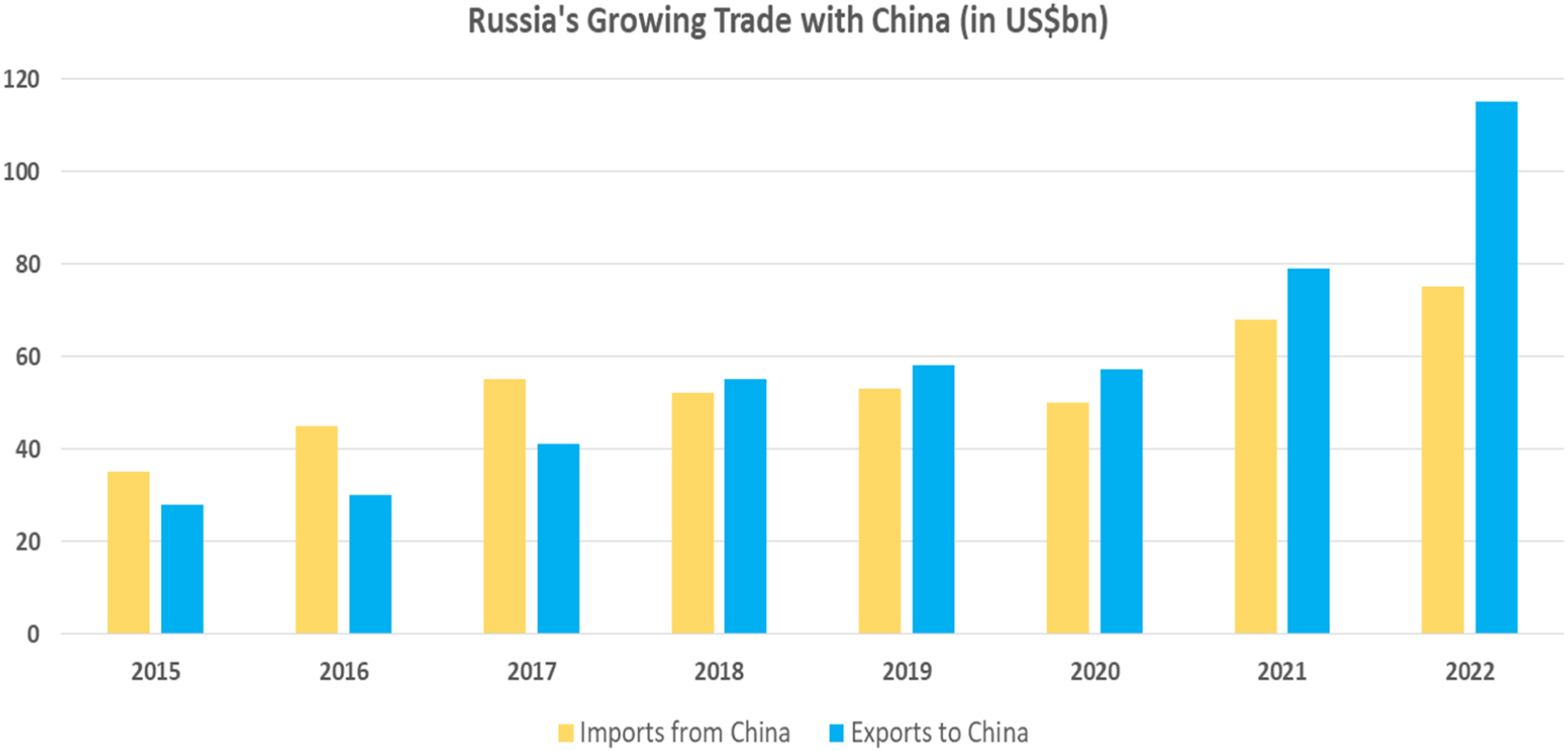
Although these two countries are not bound by a formal military alliance, their military cooperation has increased significantly following annexation of Crimea. They are collaborating on missile warning systems and integrating their satellite-based navigation systems to boost space collaboration. In addition to China’s expanding domestic military industry and Russia’s concerns about technology theft, there are several other factors contributing to the decline in Russian arms sales to China in recent years. One key factor is China’s efforts to diversify its sources of weaponry by seeking alternative suppliers from countries such as France, Switzerland, Ukraine, Belarus, and even developing its own defense technology. This diversification strategy aims to reduce China’s reliance on any single country for its military equipment. Furthermore, Russia has become more cautious about sharing advanced military technologies with China due to concerns about potential competition and the risk of compromising its own military capabilities. Russia, like any arms-exporting nation, must carefully consider the long-term implications of transferring sensitive defense technologies, particularly to a rapidly developing military power like China (Xue, 2021). As shown in Figure 2, China has become a significant player in the global arms industry, with its military production capabilities expanding, making it the fourth-largest arms exporter in the world. Experts suggest that China’s sophisticated drones could be of particular interest to Russia. Although China has not openly provided lethal support to Russia, there is evidence that Chinese companies are secretly selling high-tech electrical products to Russia, including semiconductors that could be used for military purposes. The gray space between civilian and military applications of products such as civilian drones and anti-aircraft missile radars has raised concerns about China’s intentions. The United States has imposed sanctions on a Chinese company for providing satellite imagery to support Russian mercenaries fighting in Ukraine (BBC News, B. N, 2023, SIPRI, 2023). Russian arms sales to China from 2014 to 2022 (SIPRI, 2023a).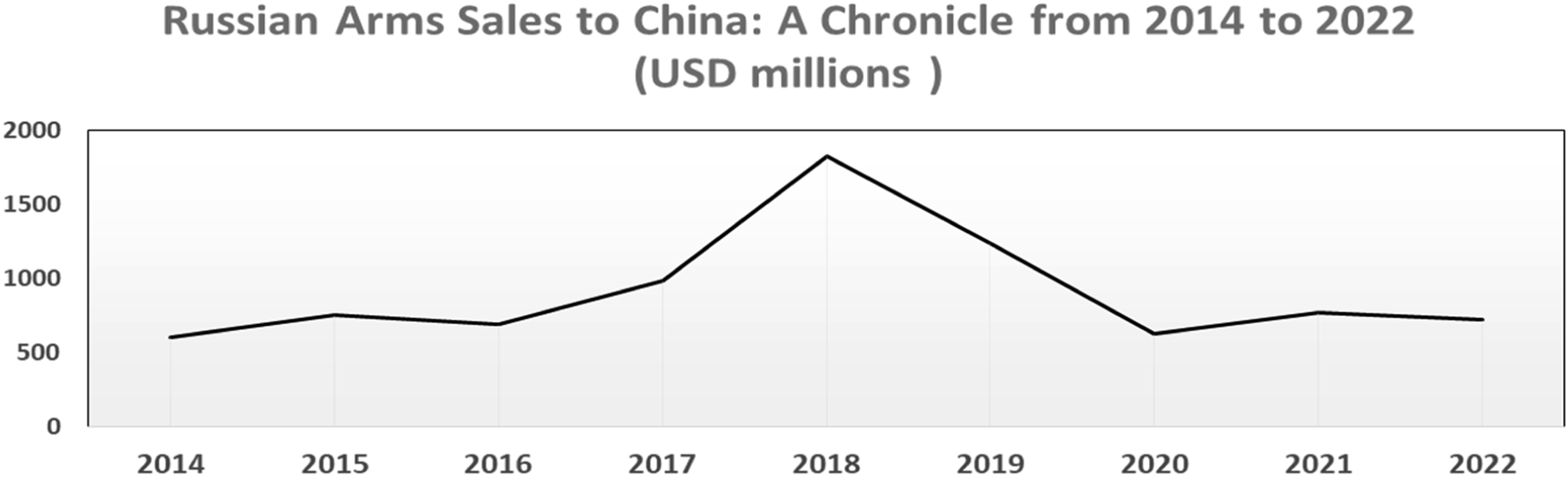
While Beijing denies plans to provide military support to Russia, experts suggest that it is concerned about the potential repercussions of Russia’s failure in Ukraine, which could trigger political instability that would threaten China’s own security. This fear could influence China’s decision on whether to assist Russia in Ukraine, and it may offer greater support if it perceives that the balance of power is shifting against Russia (Ellyatt, 2023). In particular, Russia’s involvement in resolving the Doklam crisis in 2017, which nearly escalated to a full-blown war between India and China, highlights its significant role in diffusing tensions between the two neighboring countries (Lalwani & Sagerstrom, 2021). After the Russian invasion of Ukraine, Russia’s dependence on China has grown. Figure 3 presents a noteworthy shift in Russia’s trade patterns, with a specific emphasis on the import of advanced electric machinery and critical components such as semiconductors. These components hold immense significance for Russia’s automotive, technology, defense, and communication sectors. The data suggests a clear divergence in Russia’s trade relations with the United States and the European Union, while concurrently highlighting a growing reliance on China for vital elements that are crucial to its economy and defense. This shift serves to underscore a strategic realignment in Russia’s trade partnerships, as it increasingly leans towards China to meet its essential technological requirements. This reorientation is occurring against the backdrop of strained relations between Russia and the United States, as well as the European Union, following the Ukraine conflict. The dependence on China for such critical technological needs reflects the evolving dynamics and complexities of Russia’s trade landscape, as it seeks alternative avenues to ensure the sustainability and security of key industries amid geopolitical challenges. As a result, experts predict that China will have a significant influence over Russia, potentially affecting Moscow’s relationships with key allies like India and Vietnam (Gabuev, 2022). The growing cooperation between Russia and China could adversely impact India’s ability to acquire military equipment, as China’s increasing leverage over Russia may prompt Moscow to withhold spare parts, sophisticated arms and equipment, and advanced technology from India. India is also worried that Russian sales of the latest technology and advanced military equipment to China will only serve to widen the military gap between China and India, to India’s disadvantage. This problem could become more acute if, under pressure from China, Russia slows down or completely stops providing spare parts during an India-China conflict or war (Lalwani & Sagerstrom, 2021). This phenomenon is not unprecedented, as the Soviet Union withheld the delivery of Mig-21 aircraft to India in order to secure China’s backing during the Cuban missile crisis (Kalyankar & Schulz, 2023). Moreover, China’s acquisition and knowledge of advanced weapons from Russia could enable it to identify and exploit vulnerabilities in India’s defense capabilities (Lalwani & Sagerstrom, 2021). More crucially, Indian security strategists must grapple with the possible repercussions on national security, as Chinese components may infiltrate the Indian arsenal through Russian weaponry, due to sanctions on Moscow and a dearth of alternative suppliers (Kalyankar & Schulz, 2023). Reducing such risks is highly challenging for India, as Moscow would be alerted even before India attempts to diversify procurement from Russia, with Moscow denying India the necessary spare parts and maintenance services (Verma, 2023). Russia’s imports of electric machinery and parts from China, U.S., and EU (2019–2023) (Bruegel, 2023).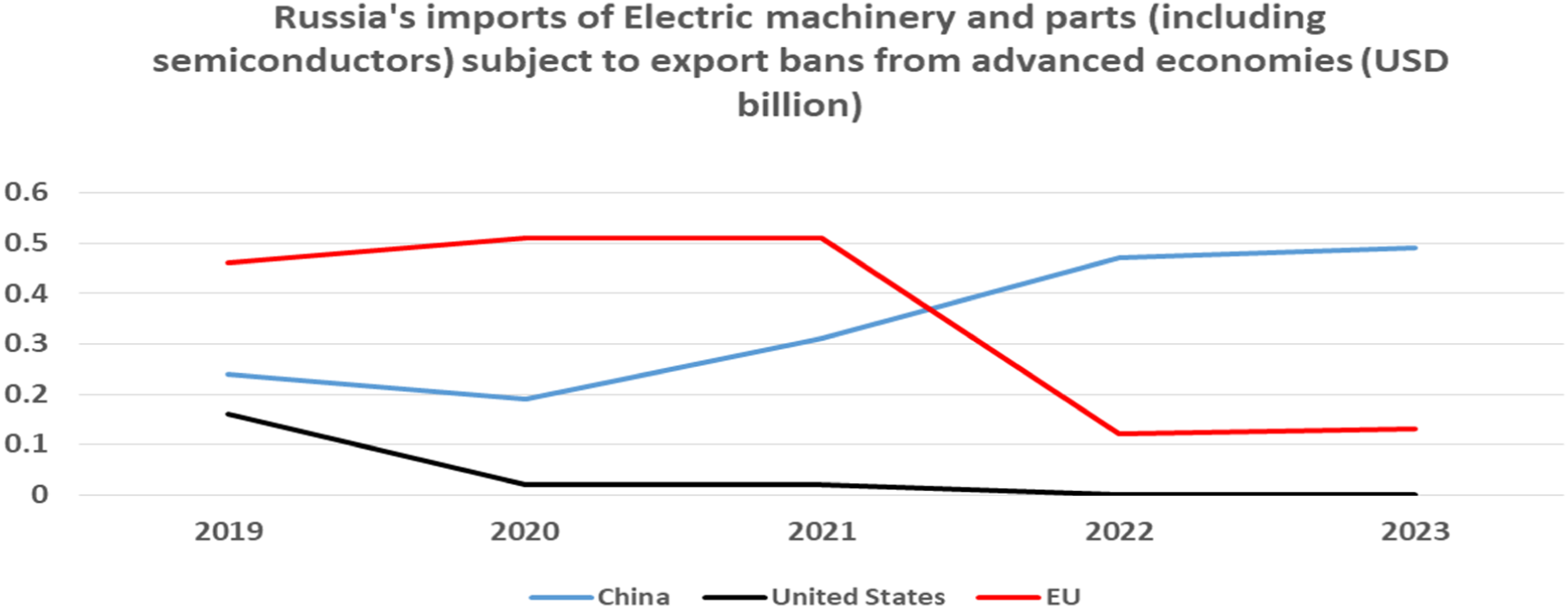
Expanding neorealism approaches in analyzing India’s new strategic defense policy
In light of the current situation surrounding the Russia-Ukraine war and the status of Russia’s military industry, India faces a critical decision on its defense procurement strategy, influenced by neorealism’s balancing power and relative gains approaches.
On one hand, Russia’s intent to independently upgrade, redesign, and escalate military equipment production aims to bolster resilience against Western sanctions. The upgraded Russian weaponry signifies reliability and high effectiveness against Ukrainian forces, potentially challenging Western attempts to hinder Russia’s advancements. This scenario echoes the Soviet experience in World War II when initial Russian forces struggled with subpar armored equipment against the Wehrmacht’s Panzer 4 and anti-tank weapons. However, the introduction of the T-34 tanks indeed marked a pivotal moment, but it wasn’t solely responsible for forcing Russia to retreat from occupied territories. The T-34’s effectiveness did prompt a shift in tactics for the opposition, leading to the development of the Panther tank, which matched the performance of the Soviet T-34. This shift in the conflict dynamics prompted adjustments in anti-tank strategies, contributing to the evolving nature of the war and its impact on the Soviet occupation. It is also likely to concurrently enhance its independent strategic relationship with China. This strengthening of ties between Russia and China would present India with an opportunity to continue purchasing weapons from Russia, enabling India to balance power dynamics with its regional adversaries, China and Pakistan, while still maintaining its defense partnership with Russia. By forging a path of defense supplier diversification, India can strategically manage its interests while navigating the complexities of the evolving security landscape. On the other hand, there is a possibility that Russia may increasingly pivot towards China, seeking to reduce its reliance on the Western economy and technological cooperation. If Western sanctions severely impact Russia’s military industry, India could face challenges in acquiring advanced weaponry and military technology. The potential deterioration of Russia’s military production quality raises concerns for India’s defense preparedness. As a response, India may choose to vary its defense suppliers and place a stronger emphasis on self-reliance and domestic defense production. Reducing dependence on Russia would allow India to have greater control over its defense capabilities and mitigate potential vulnerabilities arising from external geopolitical dynamics. This choice aligns with the relative gains approach, as India prioritizes its long-term security interests over short-term benefits from Russia. India’s strategic assessment of the repercussions of the Russia-Ukraine war on its defense collaboration with Russia indicates a methodical evaluation. Employing a neorealism perspective, India appears to have opted for the relative gains approach, as it seeks to counterbalance potential threats posed by China and Pakistan in the region. The Indian government, motivated by Prime Minister Narendra Modi, is already making significant reforms by restructuring India’s Armed Forces to support a joint and modern fight (Hooper, 2022). In light of the apprehensions, decision-makers in Delhi are attempting to balance themselves between two extreme positions while also hastening three notable and enduring changes: Firstly, they are intensifying their efforts towards expanding their defense portfolio and increasing self-sufficiency by focusing on indigenization; secondly, they are becoming more cautious about the potential risks that may arise due to the relationship between China and Russia; and thirdly, they are forging stronger ties with compatible Western countries such as the United States, France, Israel, and multilateral groupings (Kalyankar & Schulz, 2023). According to Figure 4, Russian defense exports to India have dwindled in recent years while those from Western countries such as France have increased. Furthermore, in the 2022–2023 budget, the Indian government allotted roughly 68% of the capital procurement budget to the domestic defense industry, a significant increase from the previous year’s 58% (Kalyankar & Schulz, 2023; SIPRI, 2023b). India’s army imports from major defense partners 2014–2022 (SIPRI, 2023a).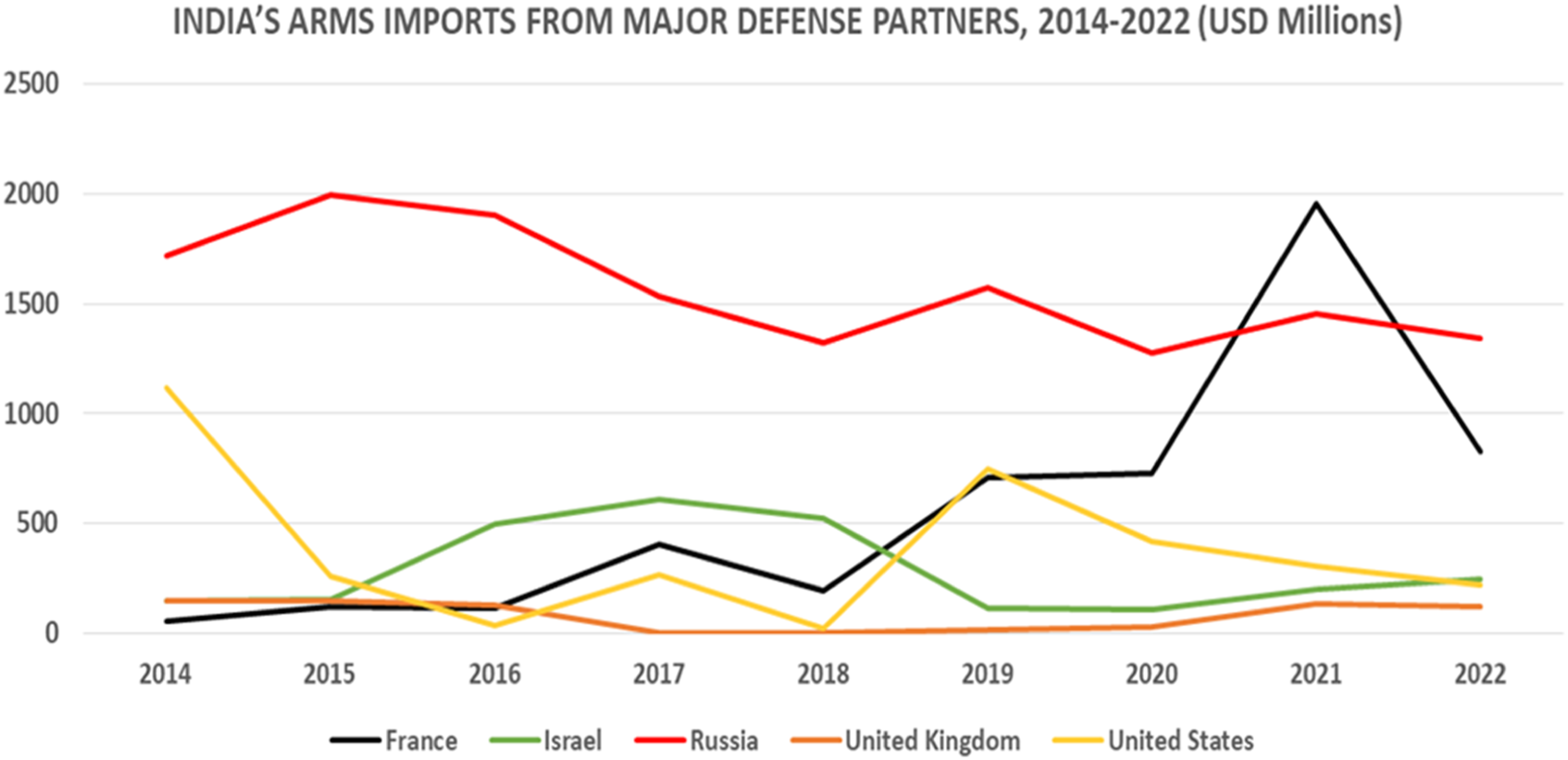
Iran’s lessons learned from India’s new defense policy
Iran’s military arsenal has undergone a notable transformation, transitioning from a reliance on Western weaponry to a mix of Russian and domestically produced arms. Preceding the 1979 Iranian Revolution, Iran’s defense capability predominantly centered on Western-made armaments, solidifying its status as a significant user of American and British equipment such as the F-4 Phantom, F-5 Tiger, F-14 Tomcat, and British Chieftain tanks. Ambitious plans were in motion to further bolster its air fleet with contemporary American weaponry and upgrade its ground forces through the acquisition of British tanks. However, the eruption of the 1979 revolution abruptly curtailed these aspirations. Subsequently, the Iran-Iraq war marked a pivotal juncture, compelling Iran to swiftly acquire new military resources and modernize its armed forces. Yet, this pursuit was met with substantial challenges due to international sanctions and a U.S. embargo against Iran. This compelled Iran to seek alternative avenues, leading it to explore military collaboration with the Soviet Union and subsequently with Russia. Over the past decades, Iran has engaged in a series of defense agreements with Russia, fostering a multifaceted collaboration in the realm of military capabilities. This partnership dates back to 1992 and has continued to evolve, encompassing various defense cooperation initiatives. The trajectory of Iran-Russia defense cooperation holds potential similarities with the India-Russia defense partnership, which finds its footing within the framework of the relative gains approach. Under this approach, states make strategic decisions by meticulously weighing the pros and cons of both relative and absolute gains. The reactions to collaborative undertakings are shaped by multifaceted factors, including the presence of allies or adversaries, the specific dimensions of the relationship (be it economic, cultural, or military), and initial conditions such as national strength, technological prowess, and economic scale. Applying this perspective to the potential outlook of Iran-Russia defense collaboration in the aftermath of the Russia-Ukraine conflict, several dynamics come into play. The influence of Iran’s rivals on Russia, owing to Russia’s established relations with them, could have a bearing on the direction of the cooperation. Russia’s intrinsic drive to pursue its own national interests through these relationships can influence the nature of its partnership with Iran. Moreover, the suboptimal performance of Russian weaponry on the battlefield, as evidenced by recent conflicts, adds an additional layer of complexity to this partnership’s trajectory. This section delves into the rationale behind Iran’s potential alignment with India’s emerging defense policy concerning Russia.
The influence of Iran’s rivals on Russia-Iran defense cooperation
Similar to Russia’s approach in its defense cooperation with India, where Russia has leaned towards China, Russia has also pursued its national interests by engaging with Iran’s regional rivals. Just as India has witnessed a strategic shift in Russia’s actions during times of conflict, Iran has experienced a similar pattern. With the onset of war and Russia’s reliance on China for both military and economic support, Russia has turned its attention towards Iran’s regional adversaries, including Israel and the Persian Gulf countries. Prior to the Russian invasion of Ukraine, Russia’s track record with Iran reveals a series of unsuccessful or delayed defense agreements aimed at providing advanced weaponry with the latest military technology. Notably, the armament supplied by Russia lacked cutting-edge advancements, missing opportunities to enhance Iran’s superiority across air, ground, and naval domains in the region. Furthermore, Russia’s deliberate postponement in exporting advanced weaponry created a strategic void, exploited by Iran’s regional rivals through acquisition of more advanced armaments from other sources. This intricate scenario is shaped by Russia’s focus on its national interests and the pressure from Iran’s rivals. A significant instance emerges from Iran’s pursuit of acquiring 24 MiG-29 fighters from Russia, which could have bolstered its military prowess. However, this endeavor encountered a setback in 1995 due to the Gore-Chernomyrdin agreement, influenced by the US and Moscow’s reconciliation. This deal led Russia to halt fulfilling military supply contracts with Iran, reshaping their defense cooperation. Also, the complexity of Russia-Iran relations is further exemplified by the S-300 missile system issue. The acquisition of the S-300, renowned for its anti-aircraft capabilities, symbolizes Russia’s strategic calculus in utilizing Iran as a counterbalance against the West. Although a 2007 defense agreement included the S-300 purchase, its execution was hindered by international developments, including Iran’s nuclear program. Russia’s dual-role diplomacy of maintaining ties with the West while honoring historical bonds with Iran led to sanctions on the export of military equipment, including the S-300 system. This diplomatic balancing act had far-reaching implications, as Russia secured concessions from the US and revitalized its relationships within NATO. The delayed S-300 delivery offered a strategic window for other countries to explore countermeasures, as demonstrated by Israel’s air drills aimed at thwarting the S-300’s capabilities (Jangaavaran, 2015; Koolaee & Abedi, 2018; Kozhanov, 2015; Omidi, 2022; Williams & Tagaris, 2015).
The strategic maneuvering of Russia, notably intensified post the Ukrainian invasion, underscores a multifaceted motive: to preempt any prospective involvement or support to Ukrainian forces and ensure energy market stability. This calculated approach seeks to avert potential repercussions stemming from energy market disruptions, including the prospect of Russia selling its oil and gas at reduced prices. Simultaneously, this strategy serves to fortify Russia’s standing within energy markets vis-à-vis significant players like China and India. Kremlin spokesperson Dmitry Peskov’s commendation of the robust Russia-Saudi Arabia relationship resonates with Moscow’s close ties to countries in the Persian Gulf. This strategic alignment, inextricably linked to energy markets, is indispensable for Russia’s economic sway and resilience against Western sanctions. Saudi Energy Minister Prince Abdulaziz bin Salman’s affirmation of Russia’s energy transparency and commitment to production cuts further underscores the synergy between the two. Notably, Riyadh’s substantial fuel oil import from Russia, defying EU sanctions, signifies its resolute determination. Saudi Arabia’s synergistic engagement with Turkey in repatriating Ukrainian children from Russia hints at the potential of oil price coordination as a springboard for diplomatic overtures. Additionally, Russia’s collaboration with the UAE is fortified by Moscow’s endorsement of Abu Dhabi’s territorial claims, even as Iran maintains dominion over these islands, accentuating a delicate regional dynamic (Ramani, 2023). Furthermore, Russia’s close relationship with Israel is primarily driven by its aim to prevent any potential military assistance to Ukraine during the conflict, which could hinder Russia’s strategic objectives. Israel’s possession of advanced weapons, such as the Iron Dome and Arrow missile defense systems, places them ahead of Western defense systems and has demonstrated effectiveness in conflicts like the Gaza-Israel situation. Russia is concerned that these formidable systems might be deployed to protect critical targets in Ukraine, thereby impeding Russia’s ability to conduct air or missile strikes on these targets and alter the course of the war. Additionally, Israeli military intelligence could provide support to Ukrainian forces by deciphering the quantity and model of Iran’s Shahed drones that were sent from Iran to Russia. This understanding of the Iranian drone numbers could assist Ukraine in gauging the remaining capacity of Russia’s drones, potentially disrupting Ukrainian industries or causing infrastructure damage.
Hence, viewed through the lens of the relative gain approach, which aptly illuminates the intricate interplay of state relationships, a crucial quandary emerges. This approach underscores a fundamental dilemma: when a state prioritizes its individual gains over collective advantages, it can inadvertently sow the seeds of an imbalanced dynamic, potentially tilting the scales in favor of one party over the other. In this context, Iran’s strategic trajectory intersects with India’s recalibrated defense cooperation policy vis-à-vis Russia. Amid the backdrop of a burgeoning Russia-China alliance, replete with implications for arms and technology transfers, Iran finds value in imbibing lessons from India’s evolving stance. The nexus between Russia and China, fraught with strategic implications, could hamper the export of advanced weaponry and technologies to India. Thus, emulating India’s diversified defense supplier approach and bolstering self-reliance in domestic defense production emerges as a prudent course. This parallel strategy can safeguard Iran from potential setbacks in defense agreements, ensuring resilience in the face of shifting dynamics. The crucible of the Russia-Ukraine conflict accentuates Russia’s resolute commitment to safeguarding its national interests. Despite Iran’s steadfast support, Russia’s steadfastness in charting its own course remains pronounced. The ripple effects of this prioritization, stemming from external pressures exerted by Iran’s regional rivals, echo in Russia’s decision-making process. Even in the face of Iran’s unwavering provision of strategic drones and artillery ammunition, Russia’s singular focus persists. This recalibrated prioritization of Iran’s rivals also finds resonance in Iran’s defense agreement with Russia for the acquisition of Su-35 aircraft. The Su-35, celebrated for its fourth-generation prowess and aerial superiority, beckons as a transformative solution for Iran’s modernization efforts. Prior negotiations, exploring avenues like acquiring Yak-130 training aircraft and co-producing Su-30 multirole fighters, were thwarted by Russia’s hesitance, as evidenced by past endeavors (Iddon, 2023). However, a pivotal moment emerged in January 2023, when Iran publicly announced its intent to procure 24 Sukhoi-35 fighter aircraft, originally destined for the Egyptian Air Force. Egypt’s withdrawal, prompted by apprehensions of U.S. sanctions under CAATSA, paved the way for Iran. Notably, by July 20, 2023, Iran’s Defense Minister revealed a tempered stance on the Su-35 deal, hinting at the possibility of reconsidering this agreement (Tiwari, 2023). Yet, complexities underpin this episode. Russia’s reluctance to transfer critical technology, components, and long-term servicing responsibilities for the Su-35 stands as a formidable obstacle. Iran’s plea for technology transfer, rooted in indigenous manufacturing and maintenance aspirations, encountered resistance. Amidst these negotiations, concerns reverberate about Russia’s burgeoning military ties with Iran, triggering tensions with Israeli counterparts. Israel’s unease about Russia furnishing Iran with advanced weaponry, against the backdrop of the Ukraine conflict, underscores the intricate diplomacy at play. The specter of advanced military systems, including the formidable IRON Dome missile defense system, potentially migrating to Ukraine, reshapes Russia’s role in the conflict (Ravid, 2023).
Iran’s pertinent concerns: Maintenance and battlefield efficacy of Russian weapons
This study underscores a noteworthy recommendation for Iran, aligning with India’s novel defense policy, to diversify its armaments sources and foster investment in domestic defense industries. The context of the Ukraine war has presented Iranian decision-makers with a fresh opportunity to invigorate their military forces. However, prudence dictates a comprehensive evaluation of Russian weapons’ battlefield efficacy and the defense industry’s capacity to supply vital spare parts and ammunition, both for existing systems and potential new acquisitions. The Ukrainian conflict has shed light on Russia’s limitations in promptly delivering necessary components and maintenance tools, exacerbated by Western sanctions and significant casualties incurred on the battlefield. This predicament has led to Russia prioritizing its domestic needs over its foreign clients, impeding their ability to fulfill key defense requirements. The immediate fallout of this dynamic would be the reduced availability of crucial spare parts for Iran’s Russian-origin defense equipment, which in turn would hinder replenishing munition stocks and negatively impact operational readiness (Waldwyn & Solanki, 2023). Iran’s apprehensions about potential disruption in the supply chain for Russian weapons’ spare parts and ammunition due to the ongoing Ukraine crisis are not unfounded, given its historical struggle to secure such provisions from Russia. Instances such as the Iranian Mig-29 and Su-24 planes have highlighted the challenges Iran faces post-delivery, wherein a lack of necessary spare parts and maintenance equipment has left Iran heavily reliant on its own resources for upkeep (Hamzei, 2022). Similar issues have arisen in the context of Iranian T-72 tanks and submarines previously procured from Russia. The absence of adequate spare parts and maintenance equipment has created complex challenges in maintaining Iran’s defense capabilities. Reports indicate that Russian technicians displayed reluctance in repairing and overhauling Iranian submarines, which raises concerns over potential equipment retention for testing and analysis in Russia due to sanctions, thereby hampering Iran’s submarine operations (Tasnim News, 2015).
While the Russian invasion of Ukraine has indeed presented Iran with a distinctive pathway to fortify its military capacities, this study underscores the importance of Iran’s leaders considering India’s new defense policy towards Russia. This consideration should factor in the notable drawbacks of Russian weaponry, evident in both their considerable casualties and subpar performance compared to Western armaments. The ongoing Ukraine war presents Iran with a pivotal opportunity to engage in the exchange of advanced military technology and hardware with Russia. This collaboration holds the potential to encompass a diverse array of elements, spanning from cutting-edge fighter jets and state-of-the-art air defense systems to helicopters and comprehensive naval support. The overarching goal is the comprehensive modernization of Iran’s air force, bolstering air defense capabilities, and enhancing naval prowess. Iran’s aspirations extend to acquiring sophisticated platforms (Dugit-Gros et al., 2023; Madhani, 2023). In light of the significant losses experienced by Russian forces in the Ukrainian conflict and the apparent limitations in the performance of Russian weaponry, Iran should critically reevaluate its decision to expand military cooperation with Russia. Drawing inspiration from India’s strategic maneuvering, Iran would be wise to diversify its sources of arms procurement and concentrate efforts on enhancing its domestic defense industry. The trajectory of other countries provide a precedent for such recalibrations. For instance, several longstanding Russian arms customers, such as Algeria, have found it imperative to seek alternative suppliers due to Russia’s compromised capabilities amidst the Ukrainian conflict. Algeria, traditionally a significant purchaser of Russian weaponry, has now turned towards countries like France and Brazil for its defense needs, increasing its defense budget to accommodate this shift (North Africa Post, 2023). Iran’s long-term potential to rejuvenate its military prowess rests on leveraging its robust defense industry. Embracing defense partnerships with new countries could catalyze Iran’s defense industry capabilities, reducing its reliance on Russian spare parts and weaponry. This strategic approach could also entice neighboring countries to invest in Iran’s burgeoning defense sector. Turkey’s case serves as a compelling example. In response to the United States withholding the export of F-35 fifth-generation multirole fighters to Turkey, the latter chose to channel resources into its own defense industries. This investment has yielded impressive results, evident in Turkey’s advancements in drone technology and the collaborative fifth-generation aircraft project with Azerbaijan and Pakistan (Helou, 2023).
Exploring Iran’s strategic choices: Insights and lessons from the Russia-India defense partnership
As previously highlighted, India stands as a pivotal player, maintaining robust ties with both Western countries and Russia. India continues to foster a robust defense relationship with Russia, capitalizing on access to cutting-edge Russian weaponry proven in battlefield performance. Furthermore, this collaboration extends beyond weaponry, encompassing the acquisition of vital mineral resources, oil, and gas, thereby perpetuating a sustained defense cooperation. From Russia’s perspective, India serves as a crucial ally, bolstering its economy by aiding in circumventing sanctions and actively procuring Russia’s oil and gas reserves, crucial pillars in weathering the storm of stringent Western sanctions. India’s financial support also alleviates the strain on Russia’s Research and Development sector, facilitating the completion of pending military projects amidst financial challenges within Russia’s defense industry. Moreover, this bilateral defense cooperation bolsters Russia’s status as a purveyor of both cost-effective and advanced weaponry, solidifying its influence within the region. However, India’s global stance remains inclusive. While maintaining strong ties with Russia, the country has also strategically engaged in defense collaboration with the United States and Western powers to access superior military technologies surpassing those offered by Russia.
Following the 1979 Islamic Revolution, Iran encountered significant challenges in acquiring advanced weaponry to modernize its military arsenal. Unlike India, which strategically diversified its arms acquisitions from both Russia and Western countries, thereby fostering knowledge transfer and reducing dependence on major players, Iran’s historical reliance on military systems from Western countries like the U.S. and Britain became an impediment. Strained diplomatic ties with these countries obstructed Iran’s pursuit of military upgrades. Iran’s geopolitical rivalries with Western powers have significantly limited its options, compelling a reliance on collaborations primarily with Russia, China, and a select few others for military partnerships and equipment procurement. The recent Ukraine conflict and India’s stance on it underscore the efficacy of multilateralism in contemporary world affairs—a philosophy embraced notably by Turkey and India. Although multifaceted, multilateralism essentially entails coordinated relations among three or more states guided by specific principles. India’s defense policy aligns with this concept, prioritizing a diverse arms trade with multiple suppliers to optimize cost, efficiency, performance, reliability, and technological transfer. This approach emanates from India’s broader global order policy, emphasizing balancing power in diplomatic relations to maximize benefits from this strategic approach. This study advocates for Iran to adopt a multilateral approach in its foreign policy, particularly in defense cooperation, leveraging the balancing power framework. The scarcity of available arms suppliers often compels sellers to impose conditions on buyers, rooted in the relative gains approach. An illustrative example of the success of this approach lies in contrasting Iran’s foreign policy approaches in two distinct periods. In 2007, Iran sought to purchase S-300 anti-air defense systems from Russia to safeguard critical assets. However, the delivery was suspended due to UN sanctions imposed on Iran. At that time, Iran’s foreign policy leaned towards an “Eastward gaze” strategy, attempting to balance Western threats while primarily engaging the West, as documented in prior foreign policy studies. This policy’s impact on Iran’s defense cooperation was hindered significantly by heavy UN sanctions, effectively banning Iran from procuring weaponry from UN member states. Consequently, Russia suspended the delivery of the S-300 systems, leaving Iran with limited options to bolster its anti-air capabilities. Conversely, by 2015, Iran’s foreign policy had shifted toward bilateralism and multilateralism, aimed at alleviating Iran’s sanctions and fostering peace in the Middle East (Bolouky et al., 2023). This strategic pivot led to the lifting or reduction of sanctions and embargoes by the UN and numerous countries, compelling Russia to fulfill the S-300 delivery to Iran.
The strategic shift between “looking to the East and West” fostered by multilateralism significantly mitigated Iran’s economic and defense industry sanctions. This transformation enabled Iran to pursue diverse defense cooperation models. Conversely, singular focuses—either solely on the West or the East—restricted Iran to a limited pool of arms suppliers. This constraint hindered Iran’s efforts to modernize its military and access cutting-edge technologies. Iran’s endeavors to procure Su-30 fighters exemplify this scenario. However, the multilateral approach, inherent in balancing power dynamics, provides leverage. In this framework, the buyer holds the autonomy to explore alternate suppliers should the primary one fail to meet its requirements or impose restrictive terms. The strategic use of multilateral defense cooperation, even in regions under heavy scrutiny, has been evident in various countries. Argentina’s challenge in acquiring first-line fighter aircraft post the retirement of the French-built Mirage III in 2015 during the Falklands War underscores this difficulty. Opposition from Britain against selling modern fighters to Argentina, especially those containing British components, alongside an informal ban endorsed by the U.S., stalled Argentina’s Air Force while neighboring countries upgraded their fighter fleets. During the mid-2000s, Chile procured the Lockheed-Martin F-16 Fighting Falcon, a formidable fourth-generation aircraft, and in 2014, Brazil invested in the Swedish Saab JAS-39 Gripen, models already operational in several countries globally. In 2022, Argentina pivoted to a multilateral approach in defense cooperation, considering Israel, South Korea, Russia, and China as potential partners. However, the prospect of Chinese fighter jets in Latin American airspace raised concerns in Washington, where regional dynamics often intertwine with great power competition. Surprisingly, the U.S. government deviated from its longstanding informal agreement with the UK, permitting Denmark to sell used F-16s to Argentina—an opportune solution given Argentina’s economic constraints and tight military budget (Sanders, 2023). This approach presents Iran with the opportunity to mitigate tensions with Western powers, potentially granting the country more autonomy in its defense procurement. Iran’s foreign policy in 2015 underscored that rivalries between Iran and Western countries need not be permanent, drawing parallels to historical instances like the temporary détente between Nazi Germany and Britain in 1939. This approach could allow Iran to navigate its foreign policy to ease tensions with Western countries while sustaining relationships with China and Russia to fulfill its demands effectively. Moreover, this strategy liberates Iran from being compelled to cooperate with its geopolitical rivals. For instance, in replacing its aging military air fleets, Iran need not necessarily engage in joint programs with rivals like the Turkey TF-X fighter program, given potential rivalries with Turkey and Azerbaijan. This flexibility enables Iran to procure necessary equipment from countries with which it shares better relations, such as South Korea, Germany, South Africa, Brazil, Sweden, and France. The reliability and efficiency of their weaponry, as evidenced in the Ukraine war, could significantly contribute to rebuilding Iran’s military units.
Additionally, this research emphasizes that Iran can strengthen its indigenous defense industry and programs to decrease its reliance on great powers in the short term. Since the 1979 Islamic Revolution and in response to Western sanctions, Iran has strategically invested in its domestic defense capabilities, particularly in Surface-to-Surface Missiles, Drones, and Anti-Air Defense Systems. However, the recent Ukraine war exposed vulnerabilities in Iran’s defense strategy. The conflict highlighted the significance of upgraded armored weapons, military aircraft, helicopters, mobile artillery, and anti-drone systems on modern battlefields. Iran’s heavy reliance on Russian-made T-72 tanks, which have flaws in design and lacking protective systems, showcased vulnerabilities in its armored units. To safeguard its military structure, Iran needs to address these weaknesses urgently. Air superiority and technological advancements also emerged as critical factors in the Ukraine war. Despite Russia’s air force superiority, their inability to establish control over Ukrainian skies resulted in significant ground casualties. Flaws in targeting systems and deficient early-warning systems compromised Russian helicopters, including the highly touted Ka-52 attack helicopter. Iran, with its aging military air fleets dating back to the 1970s, should prioritize comprehensive upgrading projects to enhance its air capabilities and readiness for potential conflicts. To improve its indigenous defense and military capabilities, Iran should focus on enhancing its domestic defense industry and production capabilities. By investing in research and development, technological advancements, and skilled workforce training, Iran can strengthen its self-sufficiency in defense equipment production. Learning from the limitations and vulnerabilities exposed in modern conflicts, such as the Ukraine war and regional dynamics, Iran can tailor its strategies to protect itself and improve the quality and capabilities of its defense forces. In doing so, Iran can reduce its reliance on external suppliers and enhance its autonomy in defense procurement, ensuring a more robust and self-sustaining defense posture.
Conclusion
This study delves into the repercussions of the Ukraine conflict on Russia-India defense cooperation since 2014, with a concentrated exploration of neorealism theory. Its primary objective is to scrutinize why Iran should contemplate adopting India’s contemporary defense policy in its interactions with Russia’s defense collaboration, especially against the backdrop of the aftermath of the 2014 Russo-Ukraine Conflict, from a neorealism vantage point. Neorealism posits an inherently anarchic global system bereft of a central authority governing states. Driven by authentic self-interest, states employ strategies to “balance powers,” with cooperative endeavors yielding shared benefits, albeit with the potential for skewed advantages, leading to a “relative gain.” Amid this anarchic setting, great powers prioritize safeguarding their security and relative power, shaping the dynamics of power balancing. The methods they adopt to counter their rivals’ military dominance can manifest diversely. Cooperative engagements between friendly states or allies may be tempered by concerns of shifting power dynamics, potentially transforming allies into adversaries.
This study addresses a pivotal void within academic discourse by focusing on the unexplored realm of defense collaboration lessons derived from countries like Russia and India during the Russia-Ukraine conflict. With the ongoing Ukrainian crisis holding global attention, it is imperative for vigilant countries to dissect and comprehend the intricate dynamics in play. An effective defense collaboration between Russia and India could serve as a potential blueprint, extending its impact to countries with analogous standings, such as Iran. Invaluable insights in military strategy, diplomatic negotiations, and international relations stand to shape the foundation of future defense partnerships and conflict resolutions. However, the glaring absence of scholarly research and literature on this subject hampers nations’ ability to make judicious decisions concerning defense collaborations. It is the prerogative of scholars and researchers to bridge this gap and mine the potential reservoir of lessons that the Russia-Ukraine conflict holds for other countries. Examining both triumphs and pitfalls in defense collaborations amid such conflict scenarios, countries like Iran could acquire a toolkit of strategies, forewarned pitfalls, and effective tactics. This strategic insight could navigate their course in shaping defense collaborations and reactions during similar scenarios. The takeaways from the India-Russia defense partnership hold the potential to significantly enrich Iran’s strategic approach, deftly navigating the post-2014 Russo-Ukraine challenges and prospects. However, the deficit of academic literature on defense collaboration and lessons hailing from the Russia-Ukraine conflict is an alarming lacuna that warrants immediate scholarly engagement. By analyzing the trajectories of countries like Russia and India, an avenue emerges for other countries to proactively equip themselves for future conflict contingencies and cooperative endeavors. It is thus incumbent upon scholars and researchers to embark on comprehensive studies, essentially mending this void within the academic discourse.
This study’s findings reveal that, in the short term, India is projected to gradually scale back its defense collaboration with Russia, seeking alternative arms suppliers. In the long run, India is poised to invest substantially in its own defense industry, thereby achieving greater command over its defense capabilities and ameliorating vulnerabilities arising from geopolitical complexities. Likewise, Iran has significantly procured Russian weaponry since 1992 to fortify its military. This study suggests that, akin to India, Iran could likewise adopt the principle of relative gains and glean insights from India’s fresh defense approach towards Russia. The study underscores that while Iran supported Russia during its invasion and supplied drones to Russian forces, Russia chiefly pursues its national interests, particularly energy market stability and curbing support for Ukraine from Iran’s regional competitors. Therefore, just as India expresses apprehensions about Russia’s growing alignment with China, Iran should be cautious about Russia’s potential associations with its own adversaries, which might halt advanced weapons exports to Iran. Furthermore, the study accentuates the significance of Iran imbibing India’s lesson about the criticality of supplying spare parts and maintenance tools for the operational readiness of military units. Russia’s restricted capability, both in the short and long term, to provide these indispensable components to its foreign arms customers is noteworthy.
In addition to the previous recommendations, another program that Iran could consider as a follow-up is a proactive approach to procuring defense and military technology from various sources, regardless of their geopolitical alignment. While Iran may not be inclined to directly compromise or engage in deals with Western countries at the moment, it can still explore opportunities to enhance its military capabilities and bolster its research and development efforts. Taking inspiration from India’s experience, particularly its post-1999 Kargil conflict reforms, Iran can identify areas where it’s military and technological capabilities need improvement. Through thorough assessment and analysis, Iran can determine which defense systems and technologies would best suit its national defense and security needs. By actively seeking out partnerships and collaborations with countries and organizations that offer advanced defense technologies, Iran can acquire cutting-edge equipment, knowledge, and expertise. This proactive approach allows Iran to diversify its defense suppliers and access a broader range of options. Moreover, Iran can invest in its domestic research and development capabilities to strengthen its indigenous defense industry. By prioritizing innovation, Iran can develop tailored defense solutions that align with its specific requirements and enhance its self-sufficiency in critical defense technologies. This study emphasizes the importance of a comprehensive approach to procure and develop defense technologies. By leveraging lessons from India’s defense reforms as well as Russia-Ukraine war and focusing on identifying and acquiring the most suitable defense systems and technologies, Iran can significantly improve its military capabilities and effectively protect its nation and regional political clout and influence. In conclusion, Figure 5 portrays the lessons that Iran has gleaned through the lens of neorealism approaches. Reseach conclusion and suggestions.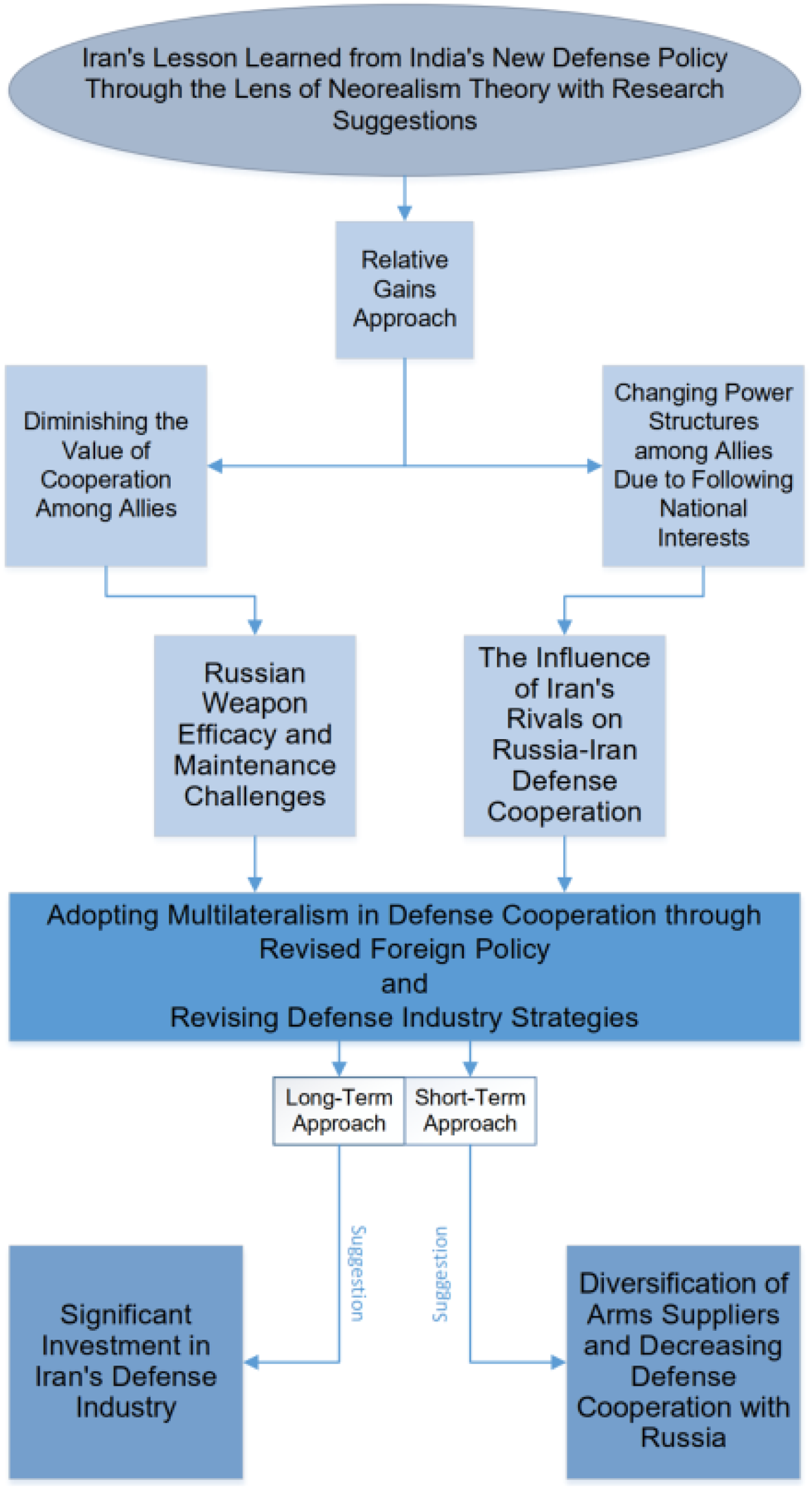
Drawing from these insights, the research advocates for Iran to curtail its defense collaboration with Russia in the short term, diversify its arms procurement from dependable sources like Germany, South Korea, Japan, Brazil, South Africa, and France, and embark on a long-term journey of self-sufficiency by investing in its own defense industry, mirroring India and Turkey. The research findings indicate that the strategic relationship between Iran and Russia cannot be categorized as a definitive strategic alliance or an extensive partnership. Consequently, the study proposes a cautious approach towards assessing the potential for future collaboration between the two nations. This perspective emphasizes the need for a more flexible and nuanced evaluation of possible cooperation with Russia. Considering the ongoing Russia-Ukraine war, it would be prudent for Iran to consider India’s political and economic strategy and prioritization, which proves advantageous in its support towards Russia. This presents Iran with an opportunity to tactfully leverage the diplomatic environment to procure advanced technology in defense and military capabilities from Russia. By capitalizing on this situation, Iran has the potential to reinforce its own military capacities and foster closer ties, prioritizing its specific interests in its relationship with Russia.
Footnotes
Declaration of conflicting interests
The author(s) declared no potential conflicts of interest with respect to the research, authorship, and/or publication of this article.
Funding
The author(s) received no financial support for the research, authorship, and/or publication of this article.
