



Abstract
In an era of climate crises and debt burdens, debt-for-nature swaps offer debt relief in exchange for environmental conservation, holding promise for Caribbean small island developing states (SIDS) facing high debt-to-GDP ratios and vulnerabilities like hurricanes and biodiversity loss. This paper examines the intersection of swaps with environmental justice (EJ) and gender dynamics, arguing that gender-sensitive design is crucial for equitable resilience. Drawing on Schlosberg's EJ framework and gender-sensitive disaster risk financing strategies from the Caribbean Development Bank, the analysis highlights women's disproportionate vulnerabilities in resource-dependent livelihoods, amplified by intersecting factors like poverty and indigeneity. Through a case study of the 2021 Belize Blue Bond, which restructured USD 553 million in debt to fund marine conservation, the paper evaluates mechanisms, challenges (e.g., opaque negotiations, limited gender integration), and opportunities for embedding equity. Findings reveal that while the swap expanded marine protected areas and supported livelihoods, gender-blind metrics risk perpetuating inequities. Policy recommendations include incorporating sex-disaggregated data, participatory processes with women-led groups, and alignment with SDGs 5 and 13. This framework advances just transitions, transforming swaps into tools for systemic justice in debt-constrained, biodiversity-rich regions.
Keywords
Introduction
Small Island Developing States (SIDS) in the Caribbean face a dual crisis of escalating climate impacts and persistent sovereign debt, limiting their capacity to invest in resilience and biodiversity protection. Debt-for-nature swaps have re-emerged as a mechanism that links debt relief with conservation commitments, creating fiscal space while advancing environmental objectives. When designed without equity considerations, however, such swaps risk reproducing existing social and gendered inequalities. Integrating environmental justice (EJ) principles, equity, recognition, and participation, is therefore essential to ensure that conservation benefits reach communities most affected by climate and ecological degradation.
International legal and policy frameworks increasingly recognise the need for gender-responsive and socially just climate action. Instruments such as the Convention on the Elimination of All Forms of Discrimination against Women (CEDAW), the Convention on Biological Diversity (CBD), and decisions under the United Nations Framework Convention on Climate Change (UNFCCC) and Paris Agreement call for inclusive governance, equitable benefit-sharing, and attention to gender-differentiated vulnerabilities. Complementary institutional guidance, from the International Labour Organization's Just Transition Guidelines to the World Bank, IMF, and regional bodies like the Caribbean Development Bank (CDB), emphasises gender-sensitive financing and community-based participation as key elements of sustainable development.
Within this normative landscape, the 2021 Belize Blue Bond stands as a leading example of a contemporary debt-for-nature swap in the Caribbean, generating fiscal savings for marine conservation and supporting national commitments such as the 30 × 30 target. Yet the initiative also exposes gaps in gender integration and local inclusion that reflect broader critiques of swaps globally. This paper examines how gender-sensitive debt-for-nature swaps can advance environmental justice in the Caribbean by drawing on EJ theory, intersectionality, and gender-responsive disaster risk financing (DRF) principles. Using the Belize Blue Bond as a key case study, it assesses opportunities and limitations, and proposes a framework for future swaps that aligns with Sustainable Development Goals (SDGs), particularly SDG 5 (Gender Equality), SDG 13 (Climate Action), and SDG 14 (Life Below Water).
Methods: Theoretical Framework
Environmental Justice
Environmental justice (EJ) is a framework that seeks equitable distribution of environmental benefits and burdens, grounded in the principles of equity, participation, and recognition of marginalised communities. Schlosberg defines EJ as encompassing distributive justice, which ensures fair allocation of environmental goods (e.g., clean air, protected ecosystems) and harms (e.g., pollution, resource depletion); recognitional justice, which acknowledges the experiences of oppressed groups such as Black, Indigenous, or low-income communities; and procedural justice, which promotes inclusive decision-making processes. 1 These principles emerged from community-led movements, notably in Warren County, North Carolina, where protests against toxic waste dumping in the 1980s highlighted environmental racism and systemic inequities. 2
In the context of debt-for-nature swaps, EJ principles ensure that conservation benefits, such as protected marine ecosystems or enhanced livelihoods in biodiversity-rich Caribbean nations, reach vulnerable populations, including women, Indigenous groups, and low-income coastal communities reliant on fisheries and tourism. For example, swaps projects like the Belize Blue Bond can support equitable outcomes by directing funds to community-led conservation initiatives that prioritise local needs, aligning with EJ's focus on distributive and procedural justice. 3
However, challenges arise when global environmental goals, such as biodiversity preservation or carbon sequestration, take precedence over local priorities, risking the exclusion of marginalised groups. Exclusionary policy processes and corporate power often perpetuate such imbalances, as global actors may prioritise international conservation targets over the socioeconomic needs of Caribbean communities. 4 In the Caribbean, where high debt burdens and disaster vulnerability amplify inequities, swaps must integrate EJ to avoid reinforcing structural marginalisation. For instance, without participatory mechanisms, swaps projects may favor large-scale conservation over small-scale livelihoods, undermining women's roles in resource-dependent sectors like agriculture or fish vending. To address these challenges, swaps must incorporate community-based knowledge and inclusive governance, as advocated by EJ scholars, to ensure that conservation efforts enhance resilience and equity for vulnerable populations. 5 By embedding EJ principles, swaps can transform environmental finance into a tool for systemic justice, particularly in biodiversity-rich, debt-constrained regions like the Caribbean.
Gender and Environmental Vulnerability
Gender-differentiated impacts of environmental degradation and disasters disproportionately affect women due to their roles in resource-dependent livelihoods and systemic inequalities. Women in the Caribbean, often primary caregivers and stewards of natural resources like fisheries and agriculture, face heightened vulnerabilities when environmental degradation, such as coral reef loss or hurricanes, disrupts these livelihoods. Yet climate-induced droughts and floods increasingly threaten their food security and economic stability. 6 In the Caribbean, women fish vendors and farmers, reliant on coastal ecosystems, face similar risks, exacerbated by limited access to adaptive resources like training or equipment. 7 Moreover, sovereign debt burdens exacerbate these vulnerabilities by constraining fiscal space for social protections, directly linking debt to increased gender-based violence (GBV). 8 High debt levels force austerity measures that cut funding for GBV prevention and survivor services, while limiting investments in disaster resilience. 9 When disasters occur, intensified by climate change, they amplify GBV through displacement, economic stress, and breakdowns in law enforcement, leading to spikes in intimate partner violence, trafficking, and abuse (e.g., up to 28% increases during extreme events). 10 This debt-GBV nexus perpetuates cycles of inequality, as debt servicing diverts resources from gender equality programs, underscoring the need for debt relief mechanisms like swaps to prioritise GBV mitigation under SDG 5. Disasters also increase women's unpaid care burdens and exposure to gender-based violence, as seen in post-disaster settings where displacement heightens risks of trafficking and abuse. 11
Intersectionality further complicates these vulnerabilities, as gender intersects with poverty, disability, and indigeneity to amplify environmental injustice. The IPCC AR6 emphasises that women in low-income, indigenous, or disabled communities face compounded risks due to restricted access to land, finance, and decision-making. 12 In the Caribbean, indigenous women, such as those in Belize's coastal communities, often lack land ownership, limiting their resilience to climate impacts like sea-level rise. Similarly, women with disabilities face unique barriers, such as inaccessible evacuation routes during hurricanes, while poverty exacerbates resource scarcity, forcing reliance on degraded ecosystems. 13 In the context of debt-for-nature swaps, these insights highlight the need for gender-sensitive design to ensure conservation benefits, such as restored mangroves or fisheries, reach marginalised women. Without addressing intersectional vulnerabilities, swaps risks perpetuating inequities by prioritising global biodiversity goals over local livelihood needs. Integrating gender-transformative strategies, such as participatory planning and targeted financing for women-led initiatives, can enhance resilience and align swaps with environmental justice principles, ensuring equitable outcomes for Caribbean women facing intersecting vulnerabilities. 14
Gender-Sensitive Disaster Risk Financing
Gender-sensitive disaster risk financing (DRF) strategies, as outlined in the Caribbean Development Bank's (CDB) 2022 report, emphasise integrating gender considerations into financial mechanisms to address women's disproportionate vulnerabilities to climate-induced disasters. 15 The CDB report advocates for strategies that prioritise women's needs through participatory processes and targeted interventions. Key approaches include conducting gender-based vulnerability assessments to inform payout priorities, as seen in Malawi's policy dialogue, which allocates 5% of disaster funds to women's economic empowerment. 16 Additionally, trust-building by involving women-led organisations and ministries of gender affairs in policy design shall ensure inclusive coordination, as exemplified by Côte d'Ivoire's Memorandum of Understanding between ministries. 17 Collecting sex-disaggregated data is critical to understanding differential impacts, such as women's unpaid care burdens post-disaster, and tailoring financial products accordingly. Participatory feedback loops, such as examples in the African Risk Capacity's contingency planning, can engage women to shape disaster response priorities. 18 These strategies enhance resilience by addressing structural inequalities, such as limited access to land or credit, which hinder women's recovery.
Integrating Gender Sensitivity for Equitable Swaps
Environmental justice in debt-for-nature swaps should require gender sensitivity to address systemic inequalities and enhance resilience, particularly in the Caribbean, where high debt and disaster vulnerability amplify inequities. EJ ensures that conservation benefits reach vulnerable populations, but risks prioritising global environmental goals over local needs without inclusive design. 19 Women in the Caribbean, heavily reliant on resource-dependent livelihoods, face disproportionate impacts from environmental degradation and disasters, which disrupt income and increase unpaid care burdens and gender-based violence. Intersectional vulnerabilities, compounded by poverty, disability, and indigeneity, further exacerbate these challenges, as indigenous women or those with disabilities often lack access to land or adaptive resources, limiting their resilience.
Gender-sensitive disaster risk financing (DRF) strategies offer a blueprint for swaps by emphasising trust-building with women-led organisations, participatory feedback through contingency planning, and sex-disaggregated data to tailor interventions.
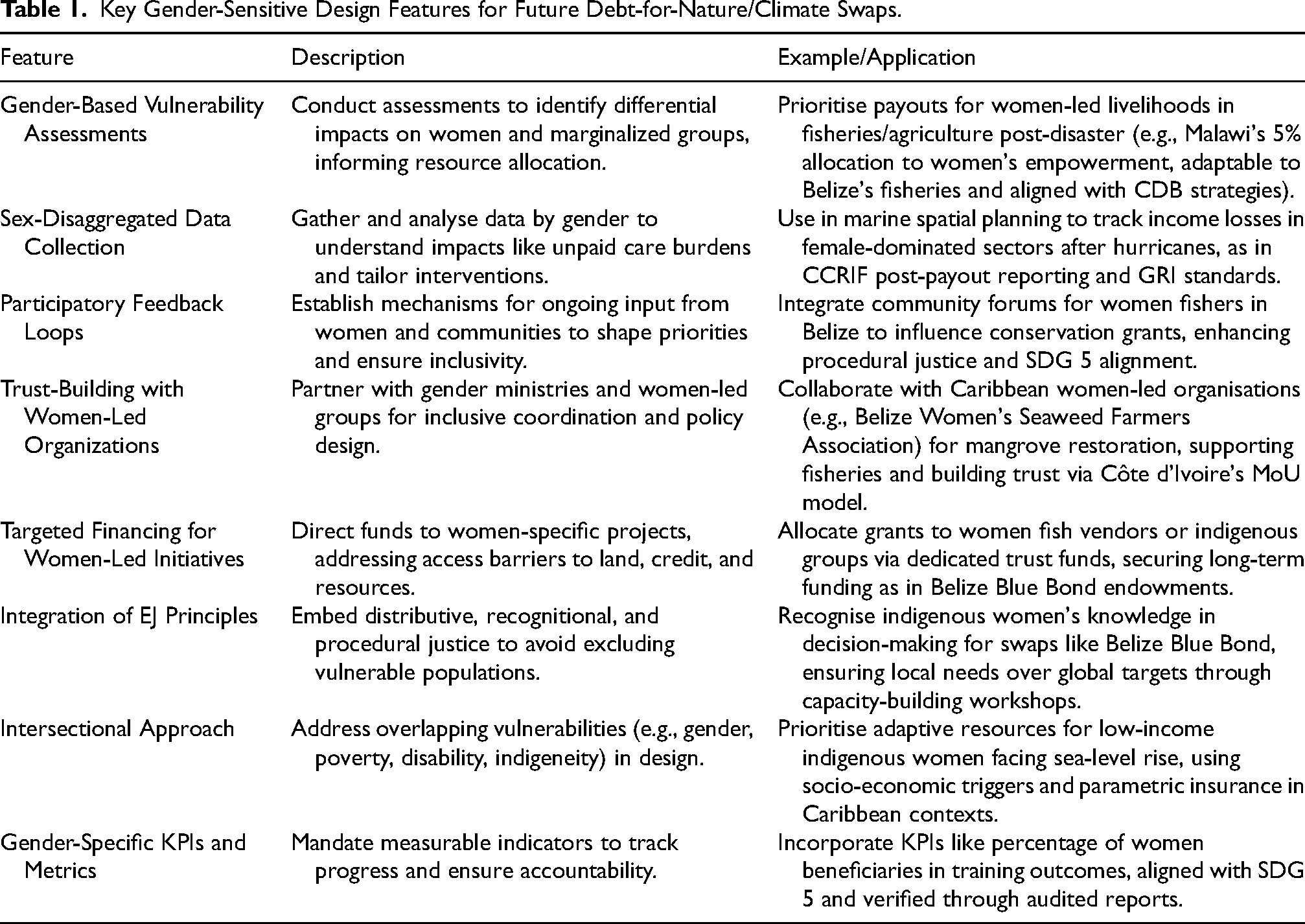
For instance, partnering with Caribbean women-led groups in Belize can prioritise initiatives like mangrove restoration, supporting women's fisheries livelihoods while building trust. Incorporating feedback mechanisms, such as the Caribbean Climate Risk Insurance Facility's post-payout gender impact reporting, ensures benefits reach marginalised communities and advance environmental justice. By leveraging sex-disaggregated data, swaps can address sector-specific vulnerabilities, like income losses in female-dominated industries after hurricanes. This integration not only preserves biodiversity but also promotes equitable socioeconomic outcomes, aligning with Sustainable Development Goal 5 (Gender Equality) and regional priorities. By integrating DRF principles, swaps can align with EJ's core tenets, ensuring equitable distribution of benefits and inclusive governance. Key gender‑sensitive design features are summarised in Table 1.
Key Gender-Sensitive Design Features for Future Debt-for-Nature/Climate Swaps.
However, current analyses reveal empirical gaps in gender sensitivity. The 2023 UNICEF Gender Analysis notes women's disproportionate exposure to marine-related climate risks, such as annual fisheries losses of USD 12.5 million affecting coastal women more due to lower incomes and unemployment rates (17.4% for women vs. 7% for men). 20 Without primary sex-disaggregated beneficiary data from the Belize Fund, critiques remain reliant on secondary reports. IDB's proposed Blue Economy Jobs survey tool, which tracks livelihoods by gender (e.g., women's share in management positions), offers a pathway for future audits to quantify impacts on women fishers and vendors. 21
Debt-for-Nature Swaps: Mechanisms and Performance
Mechanisms
Debt-for-nature swaps (swaps) involve debt forgiveness or restructuring in exchange for environmental commitments, redirecting fiscal savings to conservation. 22 Debtor nations fund projects for building protected areas in local currency, easing debt burdens while preserving ecosystems vital to economies, such as Belize's coral reefs, which generate approximately $1 billion annually through tourism, fisheries, and shoreline protection. 23 Emerging in the 1980s amid Latin America's debt crisis, swaps were pioneered by Thomas Lovejoy's 1984 proposal, with the first swap in Bolivia retiring discounted debt for forest conservation. 24 Second-generation bilateral swaps, like those in Costa Rica, restructured government loans, generating funds for conservation. 25 Third-generation swaps, such as Belize's 2021 Blue Bond, leverage private capital to fund marine protection. 26 Mechanically, creditors (e.g., bondholders, DFC) provide debt relief or credit enhancements, NGOs, such as the Nature Conservancy (TNC), orchestrate deals via special purpose vehicles, and governments commit to conservation actions for projects like Belize's marine protected area expansion. In Belize, TNC negotiated debt buyback at 55 cents on the dollar, saving $200 million for conservation. 27 Governments ensure political will and stakeholder engagement, though high transaction costs and opacity pose challenges. 28 In the Caribbean, SWAPS address debt distress and biodiversity loss, requiring inclusive design to align with local needs.
Outcomes
Debt-for-nature swaps generate significant fiscal space for conservation through debt reduction, as exemplified by the 2021 Belize Blue Bond. This fiscal relief enabled investments in marine protected areas (MPAs) without new borrowing. Environmental outcomes include substantial biodiversity protection and climate adaptation. The Belize Blue Bond expanded MPAs by 14%, targeting 30% of territorial waters by 2030, safeguarding the Mesoamerican Reef, a critical biodiversity hotspot. 29 This enhances climate resilience by protecting mangroves and coral reefs, which mitigate storm surges and sea-level rise, vital for small island states. Socio-economic benefits are evident in strengthened livelihoods, particularly for communities dependent on fisheries and tourism, which contribute substantially to Belize's economy. The participatory marine spatial planning process in Belize, initiated with the Blue Bond agreement in 2021 and officially launched in 2022, involving over 1,500 stakeholders including members from 26 coastal communities, 30 aims to ensure local fishers and coastal communities benefit from conservation grants generated through debt conversion deals, with funding disbursed to projects benefiting 40 coastal communities, 31 though challenges persist in integrating sociocultural values, addressing complexity in stakeholder needs, and ensuring equitable distribution. 32
Environmental justice principles highlight the need for inclusive stakeholder engagement to avoid marginalising vulnerable groups. 33 While the Belize Blue Bond demonstrates swaps’ potential to deliver fiscal, environmental, and socio-economic gains, its success hinges on transparent governance and community involvement to maximise local impact and align with justice goals. 34
Empirical insights from recent field research underscore these benefits while revealing gender-differentiated impacts. A 2024 WWF study conducted focus groups and surveys across eight coastal communities with 46 respondents, disaggregating data by gender, age, and ethnicity. 35 Findings show women comprising 60% of tourism-dependent livelihoods but facing a “double burden” (e.g., 8.7% of girls aged 5–17 engaged in excessive household chores vs. 4.6% of boys), limiting participation in marine conservation. In fisheries, boys experience higher child labor rates (5.1% vs. 1.2% for girls), but women report greater exclusion due to traditional norms and safety concerns. Beneficiary data indicates 85% of respondents impacted by climate change, with women in low-income households more vulnerable to coastal hazards like erosion. This sex-disaggregated evidence supports the Blue Bond's expansion of MPAs but highlights the need for targeted interventions to ensure equitable outcomes.
Limitations
Debt-for-nature swaps face significant challenges that limit their effectiveness in addressing debt distress and conservation goals. First, insufficient debt relief remains a critical issue, as seen in the 2009 US-Indonesia swap, failing to provide substantial fiscal relief. 36 Similarly, even the Belize Blue Bond, despite reducing over $200 million in debt service, only addressed a fraction of Belize's total debt, constraining its transformative potential. 37 Second, swaps can negatively impact credit ratings, deterring participation. 38 Negotiations signal debt distress, as evidenced by Colombia's reluctance to pursue swaps due to rating concerns. 39 In Belize, only one of three agencies improved the country's rating post-swap, highlighting inconsistent outcomes. 40 Third, limited local stakeholder engagement risks gender-blind outcomes, undermining environmental justice. While Belize's marine spatial planning involves over 100 community members, initial negotiations often exclude local voices, particularly women and marginalised groups reliant on marine livelihoods. Gender-blind swaps may overlook women's roles in fisheries or tourism, critical to Belize's economy, exacerbating vulnerabilities like post-disaster income loss. High transaction costs, estimated at $80 million for Belize, further complicate stakeholder inclusion, diverting resources from conservation and community benefit.
Addressing these challenges demands transparent governance, robust performance metrics, and gender-sensitive design to ensure swaps deliver equitable outcomes in the Caribbean.
Regional Applicability
The Caribbean region is uniquely positioned for debt-for-nature swaps (swaps) to address fiscal and environmental challenges. Small island developing states (SIDS) face unsustainable debt levels, exacerbated by post-COVID economic pressures and high inflation, limiting resources for conservation. 41 Simultaneously, the region hosts critical ecosystems, such as the Mesoamerican Reef, which supports over half of Belize's population through fisheries and tourism. These ecosystems are vital for biodiversity and climate resilience, yet face threats from overfishing, coral loss, and climate-induced storms. The 2021 Belize Blue Bond exemplifies swaps’ potential, with $180 million allocated to marine conservation, including a 14% expansion of marine protected areas (MPAs) to meet 30 × 30 goals. This initiative, supported by The Nature Conservancy and the U.S. Development Finance Corporation, demonstrates how swaps can alleviate debt while protecting ecosystems critical to livelihoods. The model's success offers replication potential across Caribbean Development Bank's Borrowing Member Countries (BMCs), such as Barbados or Jamaica, which share similar debt and biodiversity profiles.
Justice Integration
Debt-for-nature swaps can advance environmental justice by prioritising local needs, but require intentional design to ensure equitable inclusion of marginalised groups, particularly in the Caribbean. However, initial negotiations often exclude marginalised groups, risking gender-blind and inequitable outcomes, as seen in earlier swaps like Bolivia, where local protests highlighted sovereignty concerns. 42 In Belize, women and indigenous communities, critical to coastal economies, would be benefited by targeted inclusion to avoid exacerbating disparities.
Intentional design, integrating gender-sensitive policies, sex-disaggregated data, and community-led governance, can align swaps with EJ principles, ensuring benefits reach vulnerable populations. For instance, Blue Bond allocates funds to local grants, but robust monitoring is needed to confirm equitable distribution. Without such measures, swaps may blindly prioritise global conservation over local livelihoods, undermining justice. By embedding participatory processes and addressing structural inequities, swaps can enhance resilience and equity, aligning with Caribbean priorities for sustainable development.
Integrating Gender into Swaps
Gender Rationale
Resources Dependence
Women in the Global South, including the Caribbean, exhibit a profound dependence on natural resources such as fisheries and agriculture, would be largely benefited by gender-sensitive approaches in debt-for-nature swaps (swaps) to ensure equitable conservation outcomes. In regions like South Asia, Africa, and the Caribbean, women constitute a significant portion of the small-scale fisheries workforce, with nearly 40% globally, yet their contributions are often undervalued and undocumented. In India, for instance, women are integral to the fisheries value chain, engaging in post-harvest activities like drying and vending fish, which sustain household food security and economic stability, particularly in women-headed households. 43 Similarly, in Ghana, women dominate fish processing and trading, comprising a majority of the 13,000-member National Fish Processors and Traders Association, directly supporting family nutrition and income. 44 This reliance, however, exposes women to heightened vulnerabilities due to environmental degradation and climate-induced disasters, such as dwindling fish catches from overfishing or flooding that disrupts agricultural yields. 45 In the Caribbean, where ecosystems like the Mesoamerican Reef support over half of Belize's population through fisheries and tourism, women fish vendors and farmers face similar risks, compounded by limited access to land, credit, and adaptive technologies.
Disaster Impacts
Gender-sensitive swaps must address these dependencies to mitigate systemic inequities. Environmental degradation, such as coral reef loss or mangrove destruction, directly threatens women's livelihoods, as seen in Bangladesh, where women's oyster collection from mangroves is hampered by ecosystem degradation due to overexploitation. 46 Climate change exacerbates these challenges, with women in South Africa struggling to access marine resources as fish migrate to deeper waters, requiring longer travel and increasing physical and economic burdens. 47
These impacts are not gender-neutral. Women's restricted mobility, cultural norms, and lack of formal education limit their adaptive capacity, as highlighted by Ghanaian women's reliance on informal savings groups to cope with financial constraints. 48
Swaps can advance environmental justice by channeling conservation funds to restore ecosystems critical to women's livelihoods.
CDB Strategies
The Caribbean Development Bank's report on gender-sensitive disaster risk financing outlines strategies adaptable to debt-for-nature swaps to ensure equitable outcomes for women and vulnerable groups in the Caribbean.
First, building trust involves collaborating with women-led organisations to design swaps projects. The report emphasises partnerships with groups representing women to align conservation initiatives with community needs, enhancing trust and ensuring women's priorities are prioritised. 49
Second, participatory feedback loops incorporate inclusive mechanisms, such as community forums and digital platforms, to capture women's input. The Caribbean Climate Risk Insurance Facility (CCRIF) requires sex-disaggregated data post-payouts, which swaps can emulate through forums engaging women fishers in Belize to shape conservation priorities. 50
Third, tailoring payment triggers accounts for gender-specific vulnerabilities, such as impacts on female-dominated sectors like fisheries. The report suggests using socioeconomic parameters, like market price fluctuations for fish, to activate funding that ensure rapid swaps payouts to women affected by ecosystem degradation. 51
Fourth, effective delivery mechanisms leverage social protection systems to distribute swaps benefits equitably. The CDB highlights Ethiopia's Productive Safety Net Programme, which scaled up payments to women during droughts, 52 suggesting swaps could channel funds through similar systems to support women-led enterprises post-disaster.
Fifth, assessing social protection systems integrates swaps with shock-responsive social protection for rapid post-disaster support. In Kenya, the Hunger Safety Net Programme pre-enrolled women for cash transfers, increasing financial inclusion by 90%. 53 Swaps could similarly integrate with Caribbean social safety nets to target women.
Sixth, pilot projects test gender-sensitive swaps, such as women-led mangrove restoration, to create scalable models. The report cites Haiti's MiCRO program, insuring 60,516 women micro-entrepreneurs, 54 as a scalable example for swaps to fund women-led conservation, enhancing resilience and aligning with Sustainable Development Goal 5.
These strategies, rooted in participatory and gender-responsive approaches, ensure swaps address women's vulnerabilities, fostering equitable conservation and resilience in the Caribbean.
Case Study of Belize Blue Bond
The Belize Blue Bond for Ocean Conservation aims to protect the Mesoamerican Reef, a critical ecosystem supporting fisheries and tourism. The bond enhances fiscal space and resilience for coastal communities. This initiative serves as a prime example of debt-for-nature swaps in action, but its success hinges on integrating gender-sensitive elements to ensure equitable EJ outcomes.
The Blue Bond advances environmental justice by prioritising reef preservation, which supports livelihoods, particularly in fisheries, but faces limitations due to potential misalignment with local needs.
Key benefits include a 14% expansion of marine protected areas (MPAs) to meet 30 × 30 goals, safeguarding the Mesoamerican Reef, a critical ecosystem contributing substantially to Belize's economy through fisheries and tourism.
This preservation directly benefits coastal communities, including women and fishers, by sustaining fish stocks and tourism-related income, aligning with EJ principles of equitable benefit distribution. The participatory marine spatial planning process, engaging over 100 community members, fosters procedural justice by incorporating local voices, particularly fishers, in conservation decisions. Approximately 40% of funds are allocated to local grants, supporting community-led initiatives that enhance economic stability and resilience, especially for fishery-dependent households.
These outcomes address systemic inequities by ensuring conservation benefits reach marginalised groups reliant on marine resources, reinforcing livelihoods critical to over half of Belize's population. In particular, this supports gender-sensitive debt mechanisms by empowering women in female-dominated sectors like fish vending, where they face heightened vulnerabilities to climate disruptions.
However, these benefits are tempered by limitations, as the Blue Bond risks prioritising national and global conservation goals over local needs, 55 potentially undermining EJ's focus on recognition and participation.
The complex, opaque negotiations limit early community involvement. 56 Women, who are fundamental to fish vending and processing in the Caribbean, and indigenous communities face barriers like limited land access, which may not be adequately addressed if global biodiversity targets overshadow local priorities. The focus on national-scale MPA expansion may divert resources from small-scale, community-specific needs, such as targeted support for women-led enterprises, risking gender-blind outcomes. To advance EJ through gender-sensitive swaps, future iterations must prioritise sex-disaggregated data to mitigate these disparities and ensure benefits align with SDG 5.
To mitigate these limitations, the Blue Bond's marine spatial plan must strengthen inclusive governance, incorporating sex-disaggregated data and women's input to ensure equitable benefit distribution, aligning with EJ principles and enhancing resilience for vulnerable coastal populations.
As illustrated in Figure 1, MPA coverage has increased from 13% in 2015 to 20.4% in 2024, on track for 30% by 2026, while female unemployment has declined nationally from 15% to 3.3%. However, without sex-disaggregated Blue Bond metrics, gender impacts remain unclear.
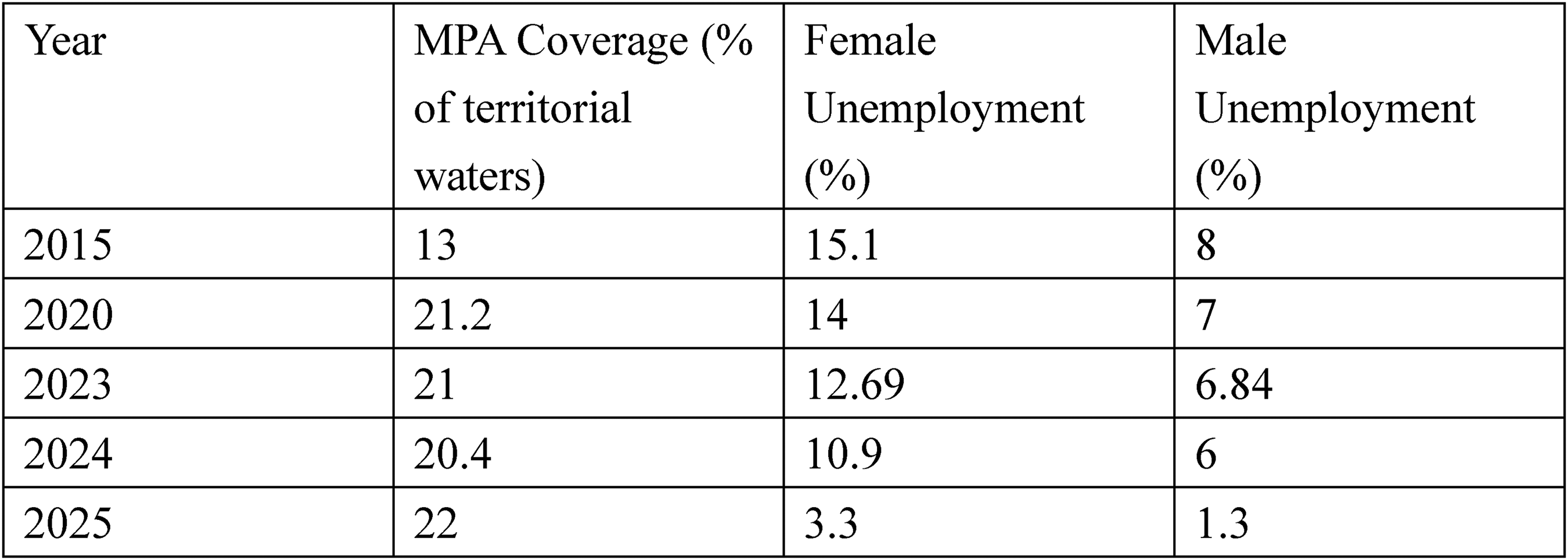
Trends in MPA Coverage and Gender-Disaggregated Unemployment Rates in Belize (2015–2025). Note: MPA expansion driven by Blue Bond (post-2021); unemployment data national-level (sources: World Bank, SIB LFS, UNICEF 2023).
Gender Sensitivity Analysis
The Belize Blue Bond lacks explicit gender focus on its project design, limiting its alignment with environmental justice principles. While the initiative supports the Mesoamerican Reef, critical for over half of Belize's population through fisheries and tourism, it does not systematically address gender-specific vulnerabilities, such as women's roles in fish vending or post-disaster recovery needs.
The absence of sex-disaggregated data or gender-specific Key Performance Indicators (KPIs) mirrors gaps, in the Seychelles’ Blue Grants Fund, where there is no gender KPIs in the framework. This omission risks gender-blind outcomes, overlooking women's disproportionate reliance on marine resources and exposure to climate risks. However, it is worth to note that the Seychelles report includes sex-disaggregated participant data for training and capacity-building activities across at least 8 projects. 57 This current state underscores a missed opportunity for recognitional justice, as defined in Schlosberg's framework, where marginalised women's experiences are not fully acknowledged.
While the current design falls short, integrating gender sensitivity can enhance the Blue Bond's equity and impact. First, engaging women fish vendors in project prioritisation, as recommended by the CDB, leverages their critical role in Belize's fisheries sector, where women dominate post-harvest activities like processing and vending. 58 Community forums could ensure women's input shapes marine spatial planning.
Second, CDB emphasises on socio-economic triggers (e.g., impacts on female-dominated sectors) to address women's heightened vulnerabilities, such as income loss and increased caregiving burdens post-disaster. The Blue Bond could incorporate metrics such as market price fluctuations for fish, bridging the income gap for vulnerable women.
Third, funding training in sustainable aquaculture for women empowers women economically and enhances resilience. These opportunities align with SDG 5 (Gender Equality) and can be supported by partnerships with women's organisations, as advocated by the CDB. By pursuing these, swaps can advance distributive justice, ensuring conservation benefits are equitably shared.
Nevertheless, implementing these opportunities is not without obstacles, as ensuring funds reach women amidst bureaucratic delays poses significant hurdles. High transaction costs and opaque negotiations, as noted in design of Belize debt for nature swap, divert resources from community-level implementation, delaying benefits to women.
Bureaucratic inefficiencies, such as complex approval processes, hinder timely fund delivery, particularly for female-headed households facing urgent post-disaster needs. Also, limited gender expertise in governance structures shall risk marginalising women's priorities.
To overcome these, the Blue Bond must adopt streamlined delivery mechanisms, like Jamaica's post-Hurricane Dean cash transfers, and mandate gender-balanced representation in decision-making bodies to ensure equitable outcomes. These challenges highlight the need for procedural justice to prevent perpetuating inequities in debt relief mechanisms.
Drawing from these challenges, the Belize Blue Bond offers critical lessons for gender-sensitive debt-for-nature swaps (swaps) in the Caribbean. Stakeholder inclusion is vital for equitable outcomes. The Blue Bond's marine spatial planning engaged over 100 community members, including fishers, enhancing procedural justice by incorporating local voices. However, limited early involvement of women, who dominate fisheries post-harvest activities, underscores the need for deliberate inclusion of women's organisations. Engaging women's coalitions ensures conservation aligns with community needs, reducing sovereignty concerns.
Gender-specific metrics are essential to track benefits, for example, the Blue Bond's lack of sex-disaggregated data. Metrics like the percentage of women beneficiaries or jobs created, as recommended by the CDB, are critical to assess equity and align with SDG 5. Such data could reveal whether conservation funds empower women fish vendors, addressing their disproportionate climate vulnerabilities.
Discussion: Policy Recommendations and Future Directions
Incorporate Gender Metrics
To ensure equitable conservation benefits in debt-for-nature swap agreements, it is essential to incorporate gender-specific metrics. This involves requiring agreements to track outcomes such as the percentage of women beneficiaries, their participation in projects, and the economic benefits they receive. 59 Aligning these metrics with Global Reporting Initiative (GRI) standards, and SDG 5 will enhance transparency and promote gender equality. 60
Third-party verification plays a critical role in preventing “impact washing” and maintaining credibility. This can be achieved through audited reports that combine quantitative data, such as allocating 40% of grants to women-led initiatives, with qualitative narratives to provide a comprehensive view of gender impacts.
Looking ahead, efforts should focus on scaling gender-sensitive swaps initiatives in Borrowing Member Countries (BMCs). Regional platforms, drawing inspiration from the East African Community's (EAC) Gender-Based Violence Working Group which strives to implement the EAC Gender Policy, 61 can standardise metrics and facilitate the sharing of best practices across regions.
Technology can streamline data collection by automating the tracking of women's roles in conservation activities. 62 For example, SEB Impact Metric Tool has been applied in sustainable finance to evaluate equity portfolios, measuring ESG factors including gender diversity in companies engaged in environmental conservation and SDG-aligned projects, helping investors identify and support initiatives where women play key leadership or operational roles in conservation efforts. 63
Additionally, engaging women's organisations in project design will help address structural barriers, including limited access to land. 64 Implementing gender-transformative policies will empower women and foster greater resilience and equity, particularly in the Caribbean. 65
Leverage Regional Institutions
Engaging the Caribbean Development Bank (CDB) to support gender-sensitive debt-for-nature swaps (swaps) is pivotal for equitable conservation in the Caribbean. The CDB's Gender Equality Policy and Operational Strategy (2019) provides a framework to integrate gender-sensitive features into development initiatives such as swaps, ensuring women, who face disproportionate socioeconomic challenges, benefit equitably from programs addressing infrastructure, education, and resilience. 66
Past swaps initiatives, such as the Belize Blue Bond, lacked explicit gender focus, risking the exclusion of women. To address this, organisation such as CDB can leverage its technical expertise, as demonstrated in supporting Belize's Development Finance Corporation gender policy, 67 to mandate gender impact assessments and ensure women's participation in swaps project design and implementation.
Strategic partnerships are essential for inclusive stakeholder engagement. Collaborating with women's organisations, such as Belize's Women's Seaweed Farmers Association, 68 aligns with SDG 5 (Gender Equality) and ensures women's voices shape conservation outcomes. 69 Additionally, piloting women-led conservation projects, such as mangrove restoration, can address barriers like land access by leveraging CDB's partnerships with UN Women and 2X Global. 70
To scale gender-sensitive swaps regionally, the CDB's convening power can establish a swaps hub, inspired by the East African Community's GBV Working Group, to standardise gender-responsive practices and share lessons from Belize. By aligning with the UNFCCC Gender Action Plan, swaps credibility can be strengthened. 71 It can also attract climate finance and ensure equitable resilience for Caribbean women. 72
Secure Long-Term Funding for Gender-Focused Conservation through Debt-for-Nature Swaps
Debt-for-nature swaps can transform fiscal constraints into opportunities for environmental justice and gender equity by securing long-term funding for conservation initiatives, particularly those empowering women. In Belize, for instance, the Blue Bond secured substantial amount of funding over 20 years for marine protection. Policymakers should design swaps to channel fiscal savings into dedicated conservation trust funds, managed by independent boards with government, NGO, and community representation to ensure stability and mitigate political risks. These funds are critical for gender-focused efforts, as women in resource-dependent Caribbean communities face disproportionate vulnerabilities from degradation and disasters. Allocating endowments to women-led initiatives, such as mangrove restoration or sustainable fisheries training, enhances biodiversity and resilience.
Integrating credit enhancements, such as political risk insurance (PRI) from institutions like the U.S. Development Finance Corporation (DFC), into gender-sensitive debt-for-nature swaps can effectively de-risk investments, attract private capital which promotes concept of ESG, and reduce borrowing costs for developing countries. 73 This approach combines debt relief with commitments to environmental conservation that explicitly address gender inequalities, such as empowering women in natural resource management, reducing their unpaid labor burdens from environmental degradation, and ensuring equitable access to conservation benefits. 74
Parametric insurance safeguards against climate shocks by providing rapid, pre-agreed payouts triggered by measurable events such as hurricanes or droughts. 75 These instruments deliver funds quickly. This speed and predictability are especially critical for maintaining continuity in gender-responsive programs, 76 and preserving essential services such as healthcare, education, and livelihood support tailored to women's needs.
Build Capacity
To enhance the efficacy of debt-for-nature swaps in promoting environmental justice and gender equity, policymakers must invest in building capacity through targeted training for gender expertise within governments and non-governmental organisations (NGOs).
Capacity gaps persist across regions in the implementation of gender-sensitive debt-for-nature swaps, which aim to alleviate debt burdens while funding nature conservation initiatives that incorporate gender equality measures, such as reducing women's unpaid labor in resource management and enhancing their participation in environmental decision-making. 77 Key challenges include insufficient resources for gender-focused programming, limited training opportunities for policymakers, inadequate staffing with gender expertise, and a lack of accessible, low-threshold manuals and tools, all of which hinder the effective integration of gender considerations into the administrative and fiscal actions underpinning these swaps. 78 The International Institute for Environment and Development (IIED) has noted that gender mainstreaming and budgeting are often not embedded in job profiles within relevant institutions, leading to overreliance on external consultations amid persistent resource constraints, which can delay or dilute gender-responsive outcomes in debt relief mechanisms like debt-for-nature swaps. 79 Similarly, OECD has emphasised the need for methodological guides, standardised manuals, and targeted capacity-building workshops to effectively implement gender impact assessments and gender-responsive budgeting, particularly in ministries such as Finance, Social, and Labor, where gaps in data collection, leadership representation, and internal expertise currently undermine the potential for equitable environmental finance. 80 Addressing these gaps is critical, as evidenced by UN Women's analysis, which highlights how incorporating gender markers into debt swaps can create fiscal space for investments in women's empowerment, yet requires enhanced training and resources to overcome barriers like limited staffing and methodological shortcomings in finance ministries. 81 Furthermore, the World Bank's findings underscore that without dedicated capacity building, such as peer-to-peer learning and gender-balanced workshops, these challenges perpetuate underrepresentation of women in climate finance decision-making, reducing the overall effectiveness of debt-for-nature swaps in promoting resilient, inclusive conservation efforts. 82
To bridge these gaps, governments or NGOs must prioritise diverse training formats, such as peer-to-peer exchanges, 83 awareness-raising seminars, 84 and customised tools, to cultivate a reflex culture of gender-sensitive policy design, as advocated by Mario Nava, Director-General of the European Commission's Directorate-General for Employment, Social Affairs and Inclusion. 85 Regional institutions like CDB should lead pilot programs, including gender mainstreaming platform and statistics database, 86 to create evidence-based curricula. These efforts should address intersectional vulnerabilities to ensure that swaps benefit effectively reach marginalised groups, including women-led cooperatives. 87
Key strategies include mandating gender-specific key performance indicators (KPIs) in training outcomes to measure progress, securing regional and international funding for sustained programs, and partnering with academics.
By addressing systemic inequalities through expertise development, swaps can better align with Sustainable Development Goals (SDGs) 5 (Gender Equality) and 13 (Climate Action), enhancing resilience and equitable conservation.
Align with Global Initiatives: V20 and Global Shield
To advance environmental justice and gender equity through swaps, policymakers should align these mechanisms with global initiatives such as the Vulnerable Twenty Group (V20), a coalition of finance ministers from climate-vulnerable developing nations focused on mobilising resources for climate action, and the Global Shield Against Climate Risks, a collaborative platform launched at COP27 in 2022 by the V20 and G7 to provide pre-arranged financial protection against climate disasters. 88 This alignment enables access to financing for gender-sensitive approaches, 89 mobilising funds for losses and damages, including insurance, adaptive social safety nets, and early warning systems. 90 Initial pledges highlight scalable funding models that prevent cascading impacts like food insecurity and displacement. 91
In the Caribbean, where swaps initiatives address debt and biodiversity loss amid rising sea levels and extreme weather, 92 integration with the Global Shield can subsidise for gender-focused conservation efforts. 93 Women in fisheries and agriculture benefit from tailored packages that align with the Caribbean Development Bank's Comprehensive Diagnostic of Gender-Sensitive Innovative Disaster Risk Finance, which emphasises participatory feedback and shock-responsive systems. 94
Further, engaging V20's Climate Prosperity Plans, such as Bangladesh's Mujib Climate Prosperity Plan, 95 ensures swaps incorporate intersectional vulnerabilities, promoting women's leadership. 96 Key recommendations include mandating gender impact assessments in Global Shield-funded swaps, leveraging UNDP's multi-stakeholder partnerships for capacity building, and advocating for non-ODA resources to prevent cannibalising adaptation finance, as urged by civil society. 97 This strategic alignment with SDGs 5 (Gender Equality) and 13 (Climate Action) transforms swaps into resilient, equitable tools that bridge global commitments with Caribbean needs for systemic change. 98
Lessons from Recent Blue Swaps: Barbados and Gabon
Recent blue swaps in Barbados (2022 and 2024) and Gabon (2023) demonstrate innovative financing for marine conservation but reveal ongoing gaps in addressing gender-equity critiques, such as the need for sex-disaggregated metrics and women-led initiatives. Barbados’ 2022 Blue Bonds, facilitated by The Nature Conservancy (TNC) and the Inter-American Development Bank (IDB), restructured US$150 million in debt to unlock US$50 million for ocean protection, including a Marine Spatial Plan and the Barbados Environmental Sustainability Fund. The 2024 debt-for-climate resilience swap, the world's first of its kind, generated US$165 million in savings for water infrastructure and food security, with guarantees from IDB and the European Investment Bank. While these align with national gender efforts, such as financial literacy programs for low-income women and gender-responsive principles in poverty reduction initiatives like BARSPIP, no explicit sex-disaggregated metrics track impacts on women's livelihoods in marine-dependent sectors, risking perpetuation of inequities noted in broader critiques. 99 Similarly, Gabon's 2023 US$500 million Blue Bond, the first in continental Africa, refinanced debt to fund US$163 million over 15 years for expanding marine protected areas to 30% and combating illegal fishing, supported by TNC and Bank of America. However, critiques highlight increased net debt (US$66 million) and high transaction costs, with no mention of gender integration, such as women-led conservation projects or metrics for female workers’ vulnerabilities. 100
Future Research
As debt-for-nature swaps evolve as innovative tools for debt relief and environmental conservation, particularly in vulnerable regions like the Caribbean, 101 future research must address critical gaps to ensure their alignment with environmental justice and gender equity. The Comprehensive Diagnostic of Gender-Sensitive Innovative DRF for Resilience indicates the need for evidence-based advancements, emphasising intersectional approaches that prioritise women and marginalised communities. 102 Two pivotal areas warrant focused inquiry: the long-term impacts of gender-sensitive swaps on environmental justice, and the role of the private sector in scaling gender-sensitive conservation finance. These explorations can inform scalable models, enhancing swaps efficacy amid escalating climate risks.
First, investigating the long-term impacts of gender-sensitive swaps on environmental justice is essential to evaluate their transformative potential. Current swaps, such as Belize's 2021 Blue Bond, 103 demonstrate short-term gains in biodiversity protection and debt reduction, yet longitudinal studies are scarce. Future research should employ mixed-methods approaches, combining quantitative metrics like biodiversity indices and gender-disaggregated livelihood data with qualitative assessments of community empowerment, to track outcomes over 10–20 years. For instance, how do gender-inclusive designs, incorporating women's roles in resource management (e.g., fisheries cooperatives), 104 mitigate inequities in benefit distribution? Intersectional lenses, accounting for poverty, indigeneity, and disability, are crucial, as women in Borrowing Member Countries (BMCs) often bear disproportionate disaster burdens. 105 Drawing from the V20's Climate Prosperity Plans and Global Shield Against Climate Risks (launched at COP27), 106 studies could analyse resilience indicators, such as reduced displacement from floods or improved food security. Potential methodologies include cohort studies in pilot sites like Belize, assessing metrics aligned with SDGs 5 (Gender Equality) and 13 (Climate Action). Challenges include data scarcity in remote areas, necessitating partnerships with regional bodies like the Caribbean Development Bank (CDB) for satellite monitoring and participatory surveys. Such research could reveal systemic barriers, like bureaucratic delays in fund disbursement, and propose adaptive frameworks to ensure equitable, just transitions.
Second, the role of the private sector in scaling gender-sensitive conservation finance demands rigorous examination to harness market-driven innovations while safeguarding equity. 107 Private actors, including The Nature Conservancy and Credit Suisse in Belize's swap, 108 have mobilised capital through blue bonds, yet their gender integration remains limited. Future studies should explore incentives for private investment in gender-focused swaps, such as tax breaks or impact bonds rewarding women's participation in conservation. Quantitative analyses could model scalability, estimating returns from gender-inclusive projects like women-led mangrove restoration, which enhance carbon sequestration and livelihoods. 109 Case studies from V20 nations 110 could highlight public-private partnerships (PPPs) leveraging tools like the Global Shield's premium subsidies for affordable insurance in female-dominated sectors. Qualitative research, via stakeholder interviews, should probe risks like tokenism or profit prioritisation over justice, ensuring alignment with environmental justice principles. Collaborations with entities like the Insurance Development Forum could yield frameworks for de-risking investments, mobilising trillions needed per IPCC estimates. 111 Ultimately, this research could catalyse hybrid models, blending private capital with CDB oversight for inclusive outcomes.
Conclusion
This paper has demonstrated that debt-for-nature swaps, while potent instruments for alleviating debt distress and advancing conservation, must embed environmental justice and gender sensitivity to achieve truly equitable outcomes. Through an examination of EJ principles and gender-differentiated vulnerabilities, the analysis reveals how women, as primary stewards of natural resources and caregivers, face compounded risks from environmental degradation and disasters, exacerbated by intersecting inequalities. The Belize Blue Bond case study illustrates swaps’ fiscal and ecological successes, yet underscores limitations like opaque negotiations and gender-blind metrics that risk marginalising vulnerable groups. By adapting the Caribbean Development Bank's gender-sensitive disaster risk financing blueprint, emphasising trust-building, participatory mechanisms, and tailored triggers, swaps can prioritise women-led initiatives, ensuring benefits reach those most affected and aligning with SDGs 5 and 13.
The policy recommendations, including incorporating gender metrics, leveraging regional institutions like the CDB, securing long-term funding via endowments and parametric insurance, building capacity through training, and aligning with global initiatives such as the V20 and Global Shield, provide a roadmap for transformative swaps design. These strategies not only mitigate challenges like high transaction costs and credit rating impacts but also foster inclusive governance, enhancing resilience in Borrowing Member Countries. Future research should prioritise longitudinal studies on gender-sensitive swaps impacts and private sector roles in scaling finance, employing mixed-methods to address data gaps and intersectional dynamics.
Footnotes
Acknowledgments
This research received no specific grant from any funding agency in the public, commercial, or not-for-profit sectors.
Ethics Statement
This study is a literature-based analysis and case study review, and did not involve primary data collection from humans, animals, plants, biological material, or protected datasets. Therefore, ethical approval from an institutional review board was not required.
Consent Statement
No primary data involving human participants, patients, or service users was collected for this study, and thus no informed consent was required.
Declaration of conflicting interests
The author reports there are no competing interests to declare.
Data Availability Statement
No new datasets were generated or analyzed in this study. All data referenced are from publicly available sources cited in the references.
