



Abstract
The study aimed to identify the perceptions of university librarians about the effects of electronic learning on innovative sustainable competence development for the delivery of smart library services. A qualitative method was employed to explore significant findings related to the study’s objectives. Interviews were conducted in different moods (interview guide, face to face, and telephonic interviews) with the target subjects. Findings of the study revealed that electronic learning is often a cost-effective option compared to traditional training programs as it saves travel expenses, accommodation charges, and registration fees. Librarians can select from a wide range of topics and formats that align with their professional goals and interests. Face-to-face interaction and hands-on training activities may be challenging in e-learning programs as immediate solutions are required to control technical barriers. This is first study on the effects of electronic learning on innovative sustainable competence development for smart library services through qualitative (interviews) method.
Keywords
Introduction
Electronic learning is usually associated with the internet; however, in actuality it has its origins in the 1920s when radio was the most prominent technology in the field of communication. In the United States of America, radio was used in more than 170 educational institutes to deliver educational programs. After World War I and before the start of World War II, radio was a dominating source of America to provide learning. During World War II in the 1940s, the army of the United States initiated training films through television to develop different skills in the soldiers. Several institutions began to offer continuing education programs through television during the 1950s. Till the 1960s, television remained prominent for educational activities; however, with the passage of time, new technologies emerged including audio and video cassettes. Innovative learning opportunities were limited through these communication technologies. 1
Computing technologies have brought a revolution in e-learning and promoted new methods of teaching. 2 Shahzad and Khan mentioned that electronic learning has increased the utility of lifelong learning and sustainable competence development. 3 They described that electronic learning provided updated knowledge and expertise as required according to the changing situations at the workplace. The COVID-19 pandemic, which emerged in late 2019, proved to be a catalyst for a revolution in online learning environments across the global education sector. It impacted all fields of life including education. Traditional methods of teaching and learning ended due to the happening of different waves of COVID-19. On-campus learning was switched over to electronic learning through Google Meets, Microsoft Teams, Zoom, and other tools. Digital classroom learning was encouraged, and online classes were started to educate the students according to the changing demands of time. Examinations of the students were also conducted virtually. Electronic library services were offered by information managers to satisfy the different needs of the library patrons remotely. Various webinars on several areas of modern librarianship were organized. Online information resources were organized by information managers working in university libraries to facilitate the academic community. 4
In recent years, many advancements in higher education have taken place. Educational activities are being conducted through e-learning platforms. The traditional system of education is being shifted to an electronic learning system. Librarians are also transforming their services to satisfy the information and research needs of the users according to the demands of the modern age.5,6 Electronic learning provides various professional development opportunities to information managers and assists them in the initiation of smart library services to facilitate the library patrons efficiently. It plays a vital role in the continuing professional development (CPD) of librarians and enables them to incorporate emerging tools in academic settings for the provision of smart library services to end users.3,7
Statement of problem
Innovative competence development strengthens the learning and professional expertise that are required for the service orientation of a profession. Innovative sustainable competence development through electronic learning programs assists librarians in enhancing their learning and professional competencies according to the demands of the current age. Information communication technologies (ICTs) have deeply impacted every sphere of life and modernized online activities for developing professional skills in the library workforce.
This study was aimed to understand the perceptions of university librarians in Pakistan regarding the effectiveness of electronic learning for innovative competence development and to identify the preferred electronic learning programs for innovative competence development. Higher Education Commission (HEC), Pakistan is currently focusing on enhancing electronic learning for the competency development of the manpower working in the universities and offering electronic learning opportunities to the academicians and the librarians so that they might turn into skilled assets and produce efficient job output through unique methods of service. In this context, this study is beneficial as it has offered a roadmap based on empirical data for the adoption of electronic learning activities for the innovative competence development of university librarians.
Ever-changing technological advancements have brought revolutionary changes in the educational system and users’ information behaviors. Implementation of emerging technological tools has become indispensable to cater diverse needs of digital users in the present age of electronic learning and to survive in the field. Without the effective competency building of the practicing librarians, innovative library services may not be delivered effectively so electronic learning for innovative competence development is highly significant. In the present era, electronic learning has emerged as a leading phenomenon for personal and professional development so librarians need to grab electronic learning opportunities for their sustainable competence development.
Research objectives
The research objectives of the study are as follows. (1) To understand the perceptions of university librarians in Pakistan about the benefits of electronic learning for innovative sustainable competence development. (2) To identify the preferred e-learning programs relevant to workplace.
Literature review
Importance of adult learning for adults
“Anyone who fails to learn … is regarded as oku eniyan (the living dead),” states an African proverb that reveals the importance of continuing learning in the age of consistent changes. 8 Continuous learning is of great worth during professional life due to the changing environment. To manage new changes and challenges successfully, it is essential to learn new information, emerging technologies, and innovative procedures. Without lifelong learning, professional survival becomes difficult. 9
Adult education is a method in which adults are involved in self-learning procedures to grow their knowledge and skills. Adult education is different from traditional learning methods. It focuses on lifelong learning and sustainable competence development. 10 Adults involve themselves in self-directed learning to respond to changes for sustainable competence development. In the knowledge society, every individual faces challenges due to changes in technologies and social trends. New learning is required to keep pace with the new changes. 11 The syllabus taught in academics becomes outdated soon after the start of professional life. People need to develop a love for lifelong learning to develop the required professional skills. Internet and communication technologies have brought revolutionary changes in the learning methods of adults. Emerging technologies are being applied to deliver continuing professing learning to adults. There is no doubt that technology is impacting not only formal learning but also informal learning; hence, adult learning has become a significant phenomenon to manage changes innovatively at workplace.12,13
Adult learning is a vital factor in implementing emerging technologies according to the changing job requirements for organizational survival through innovative approaches.14,15 Competency development opportunities are highly significant as library users have become digital literate; hence, university librarians need to be more productive and competent enough to meet diverse users’ needs and to keep abreast of the latest happenings in the field.16,17
Essential elements in innovative competence development process
Critical assessment helps in identifying learning needs for sustainable competence development for improving outcomes at the workplace. Comfortable conditions need to be provided to professionals for the delivery of efficient output. Identification of professional development needs is of paramount significance to prioritize sustainable competence development. It is necessary to realize the significance of competence development to grow and excel in professional life. 17 Identification of the changes in the specific field is essential. Emerging changes in the specific job and services should be identified by professionals to serve organizations effectively and efficiently. Psychological ownership of the assigned tasks assists in getting fruitful outcomes.
There are six stages in the sustainable competence development process that may be transferred into professional practice. Step one in the sustainable competence development process includes reflection on the role, specialism, and priorities. The nature of the job should be identified with a deep understanding. Key priorities support in keeping abreast of the latest happenings in the field and improving learning strategies. The second step deals with goals, needs, and appraisals. Feedback from others assists in identifying training needs. The third step is about the analysis to create a professional development plan for the year. Professional development is essential to play a leading role in the field. The fourth step is to carry out planned activities, and reflections on progress. It should be known whether progress is happening as a result of professional development activities or not. The fifth step consists of the creation of a professional development record. It helps in knowing the impact of sustainable competence development on personal grooming. The sixth step is related to the impact of CPD on job performance. 3
Figure 1 shows the stages of the competence development process. Stages of the competence development process.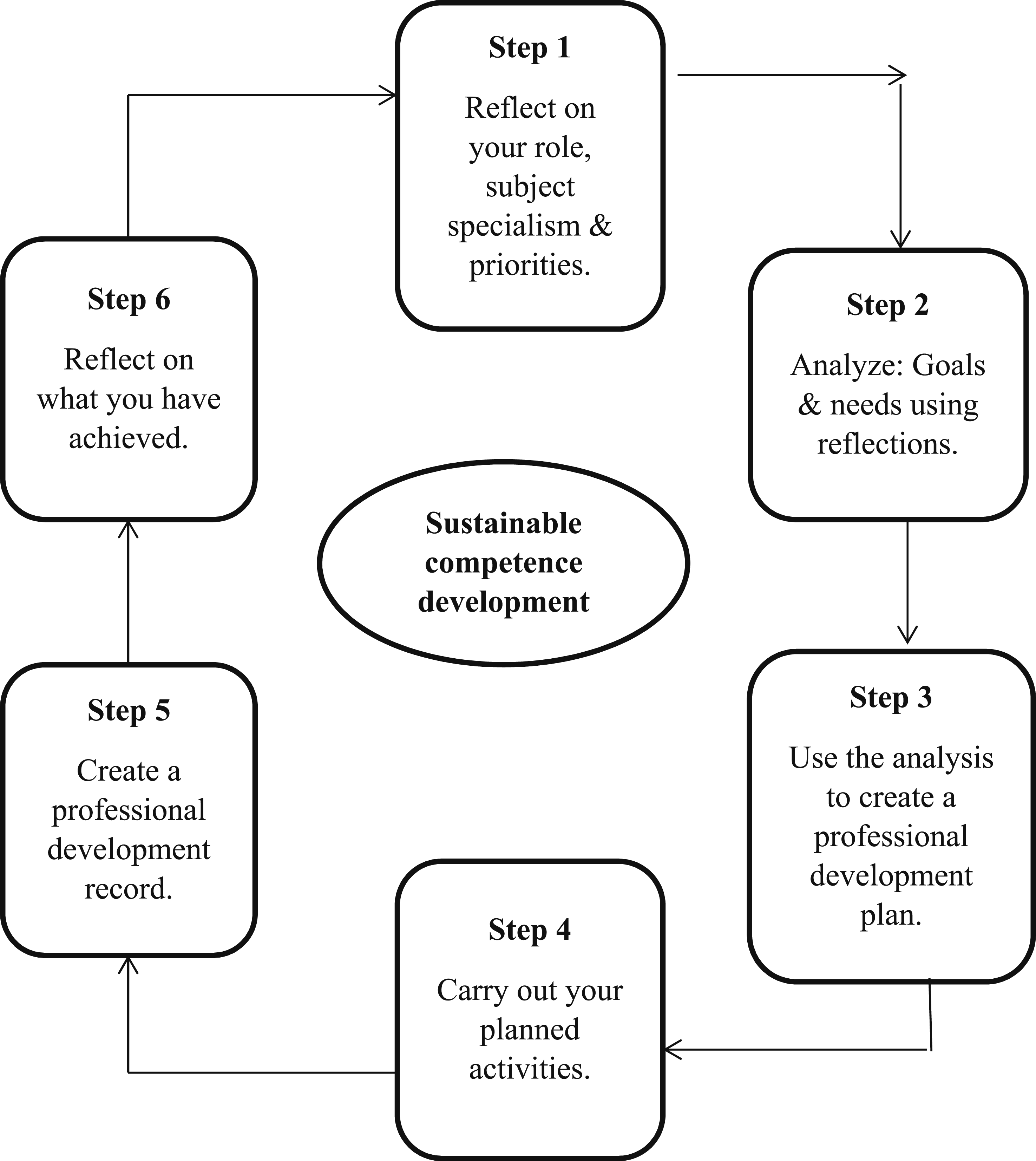
Organizational support and strategic planning are key factors for the effective incorporation of electronic learning in libraries. 18 Technical support is an essential element in implementing electronic learning for librarians’ sustainable competence development and initiation of smart library services. 3 Organizational support is a prominent motivational factor in encouraging librarians to attend electronic learning programs to build the required professional expertise. Effective organizational support assists librarians in enhancing their learning and expertise by attending electronic learning activities. If the university administration has a supportive attitude towards the CPD of working librarians, then customer-centered library services by be implemented efficiently. 14 Availability of a central repository, quality control mechanisms, funding availability, and availability of time for competence development are essential elements to adopt electronic learning to equip manpower with innovative learning and expertise to implement the latest services to facilitate the library patrons. 19
Personal interest of librarians towards continuing professional development
Personal interest is a very influential factor for motivating librarians to e-learning courses for their professional development. The passion for self-development brings positive changes in librarians and turns them into service-oriented professionals so that they may perform efficiently for the organizations. Self-inspiration of the library manpower for professional grooming proves useful in upgrading library services in universities through the implementation of the latest technological tools.20–22
Advancements in librarianship have transformed the moods of library services in the age of social networks; hence, librarians need to develop sound personal traits to serve the different needs of the end users according to the new changes. Librarianship of the modern age is entirely different from the past times; so, library staff needs to possess innovative competencies otherwise they will not play a supportive role in sustaining organizational efficiency. For the incorporation of emerging technologies in library settings, personal interest of librarians towards continuing professional development plays a key role.23–25
In the current age, users’ behaviors are changing due to advancements in technology. Library services need to be refined keeping in view users’ trends because, without a user-centric approach, satisfactory library services may not be offered. Therefore, the personal interest and traits of the librarians are mandatory for the attainment of efficient job output. Librarians having self-interest and digital competencies might efficiently cope with the challenging situations of the field and play a leading role in the organizational success.18,26,27
For the delivery of value-added services, committed library manpower is highly essential. Without dedicated library staff, innovative information services may not be offered and sustainable organizational performance may not be ensured. Personal interest moves librarians towards involvement in e-learning activities for their professional grooming; thus, competence development proves fruitful in implementing library services according to the demands of modern times. Without personal interest, librarians might not play a key role to adopt cutting-edge tools in libraries to satisfy diverse needs of the end users.7,28–30
Figure 2 reveals that personal interest and traits motivate library professionals to attend e-learning courses for their professional development which result in the implementation of innovative smart library services to satisfy the information and research needs of the library patrons. Relationship of personal interest with e-learning for innovative sustainable competence development to implement smart library services.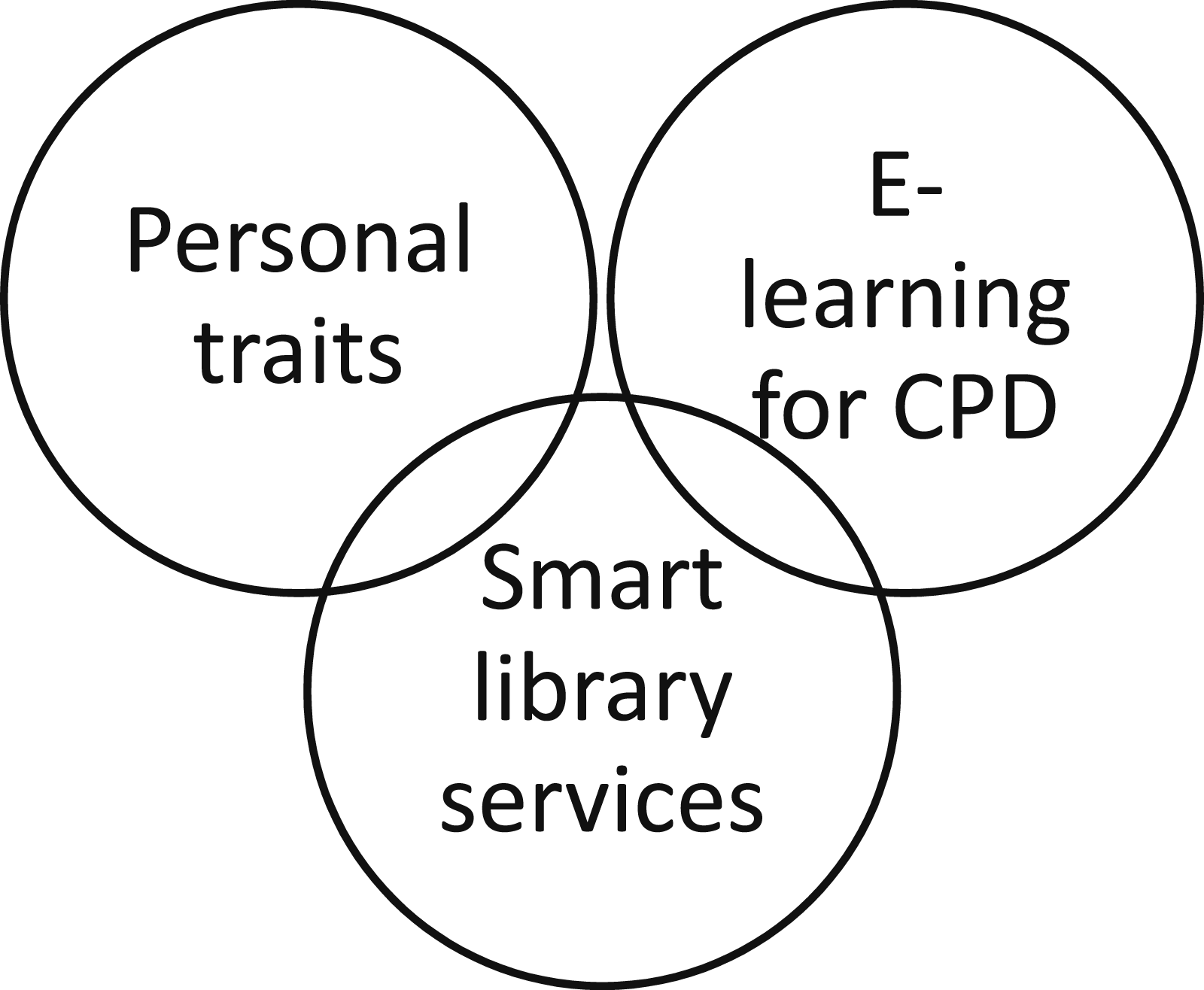
Benefits of electronic learning for innovative sustainable competence development
Electronic learning enhances the self-efficacy level of the working librarians as library professionals gain confidence by learning new ideas and expertise about emerging technologies. Librarians use the latest technologies to address users’ queries effectively and efficiently. They design innovative library services and perform smart library services by initiating different projects on automation, digitization, mobile library services, social media services, etc. They switch from traditional library services to digital library services and provide assistance to remote users by providing them with their required information resources off campus through digital methods. They implement effective digital reference services to satisfy different reference queries of the library patrons. They provide library services to end users through customized mobile apps so that library users may not face any hurdles in accessing required information resources.31–34
Through electronic learning, librarians use the latest technologies to address users’ queries. They design smart library services by initiating different projects on automation, digitization, mobile library services and social media services. They switch from traditional library services to digital library services. They implement effective digital reference services to address different reference queries of the library patrons. Electronic learning technologies provide valuable opportunities for library professionals to enhance their skills, expand their knowledge and stay abreast of the latest developments in the field. The flexibility and convenience provided by electronic learning platforms enable librarians to engage in professional development activities at their own pace and convenience.14,16,35
Methodology
Development of interview guide
The draft of interview guide was developed to attain qualitative data. The interview guide was designed in such a way that might prove useful in enabling the subjects to provide answers to the required questions in a free manner. Through multiple rounds of revisions, the interview guide was formulated. Probes were developed so that the subjects might provide more details about required questions. Questions were developed to receive longer responses from the subjects. Logical flow was ensured in the interview guide. An in-depth analysis of the existing literature was done to construct the interview guide.
Expert review
A panel of experts was sent interview guide for their expert review. There were three key experts who conducted peer-review processes of the interview guide. One expert was the Chief Librarian of a renowned public sector university. The second reviewer was Library In-Charge of a leading private sector university while third reviewer was the Director Training at Punjab Higher Education Commission (PHEC). The panel recommended various modifications to refine the interview guide. The interview guide was improved, keeping in view the changes suggested by experts. Language and structure of the interview questions were also refined. Sub-questions were also added to gain insightful data from the subjects.
Sampling of subjects for interview
Only those subjects were selected for in-depth interviews who had a better understanding and vision about electronic learning for the sustainable competence development of information managers (library professionals). Twenty-seven experts were selected to conduct interviews. These subjects had a versatile experience of conducting electronic learning courses for the competence development of university information managers. They themselves actively participated in electronic learning activities for lifelong learning and sustainable competence development for the delivery of customer-centered services in the university libraries.
The subjects had relevant academic qualifications, such as advanced degrees in library science, or a related field. They also held professional certifications from relevant associations. They had a substantial amount of experience working in the area of electronic learning for CPD. They frequently presented their research at conferences and seminars related to electronic learning and sustainable competence development.
The subjects were selected using purposive sampling. In purposeful sampling, researchers intentionally select individuals and sites to learn or understand the central phenomenon. Using purposeful sampling, homogeneous sampling was applied to gather the required data from the most relevant experts. In homogeneous sampling, researchers select experts on the basis of a similar characteristic or trait. In homogeneous sampling, individuals are selected purposefully based on some defining characteristics. For using this procedure, the researcher needs to identify the characteristics of the individuals carefully.
Protocols were used to ensure quality in all procedures related to qualitative data. The researchers sought ethical permission from the concerned university to conduct interviews from the subjects. Probes were used during face-to-face interviews to seek in-depth opinions on the subjects. Consent of the subjects was sought through e-mails and WhatsApp messages to obtain qualitative data. Formal permission was taken to conduct face-to-face interviews. The experts were given freedom to express their ideas in English or Urdu languages keeping in view their own convenience. They were briefed about the study’s objectives. They were mentioned that their inputs will be treated only for research purposes.
From 27 interviewees, 10 interviewees were PhD. degree holders while 17 experts had the degree of M. Phil. Most of the M. Phil. Degree holders were enrolled in PhD. program in different library schools of Pakistan. 18 key experts worked in public sector universities while nine interviewees worked in private sector universities. Majority of the subjects was males (n = 24). 12 subjects worked on key posts, that is, Chief Librarian/In-Charge/Head/Director. Most of the universities were from the province of Punjab (n = 17), and federal territory (n = 07) while two universities were from KPK and one from Sindh. The subjects worked in 21 different universities of the country.
Subjects of the interviews (n = 27) were contacted through email and telephonic calls to know their confirmation for the participation in interview process. They consented their volunteer participation in the interview process. They became happily willing to record their responses on the topic under investigation. They shared their valuable ideas, thoughts, and experiences related to electronic learning for the sustainable competence development of the university information managers (librarians) of Pakistan.
Interviews process
Schedule of the interviews was delivered to the subjects with a covering letter for getting their confirmation regarding participation in the interviews process. They were sent interview guide. This step facilitated the subjects to prepare in advance for the interview in order to reflect their observations, experiences, and perceptions about the area under investigation. The subjects were also informed in advance about the nature of interviews. They were updated about the structure of the interviews. This practice assisted in conducting interviews in a comfortable environment. Note taking process was also done during the interview sessions.
The subjects were provided liberty to express their responses either in English or Urdu languages. They were not restricted to use only one medium of instruction. They had complete freedom to use Urdu or English language to record their responses efficiently. The subjects were formally informed about the recording of the interviews. As a primary source of data, their responses were recorded. Interviews were conducted face to face and also through and Zoom application. Subjects belonging to other distant localities were interviewed through online mood. The subjects were informed that their recorded responses will be used only for the study purpose. Their responses would not be shared to anyone. They were ensured about research integrity and ethics. They felt comfortable and positive through the sharing of all related matters in a formal and documented way.
Interview guide assisted in conducting the interviews systematically. However, some other questions were also asked when the interviews progressed. The respondents seemed relaxed while responding to the questions. They expressed their thoughts, observations, and experiences fully. They provided valuable reflections about the topic under investigation. They gave interesting responses about certain questions. They offered practicable solutions to improve the scenario of electronic learning for the sustainable competence development of academic librarians. Every interview session continued at least 30 min.
Analysis of qualitative data
The thematic analysis was conducted of the qualitative data. The process of transcribing the interviews was held through recordings. The subjects who gave interviews in Urdu language; their responses were translated in English. After observing each transcript carefully, the process of organizing and summarizing the textual data was held. A list of codes was formulated after observing each transcript and written responses of the subjects several times carefully. Themes and sub-themes emerged from the interviews process were assigned frequency of occurrences for an adequate interpretation. Quotes were also used from transcripts and qualitative responses of the subjects that they submitted through interview guide for strengthening the arguments.
Figure 3 graphically illustrates the process of qualitative data analysis. Process of qualitative data analysis.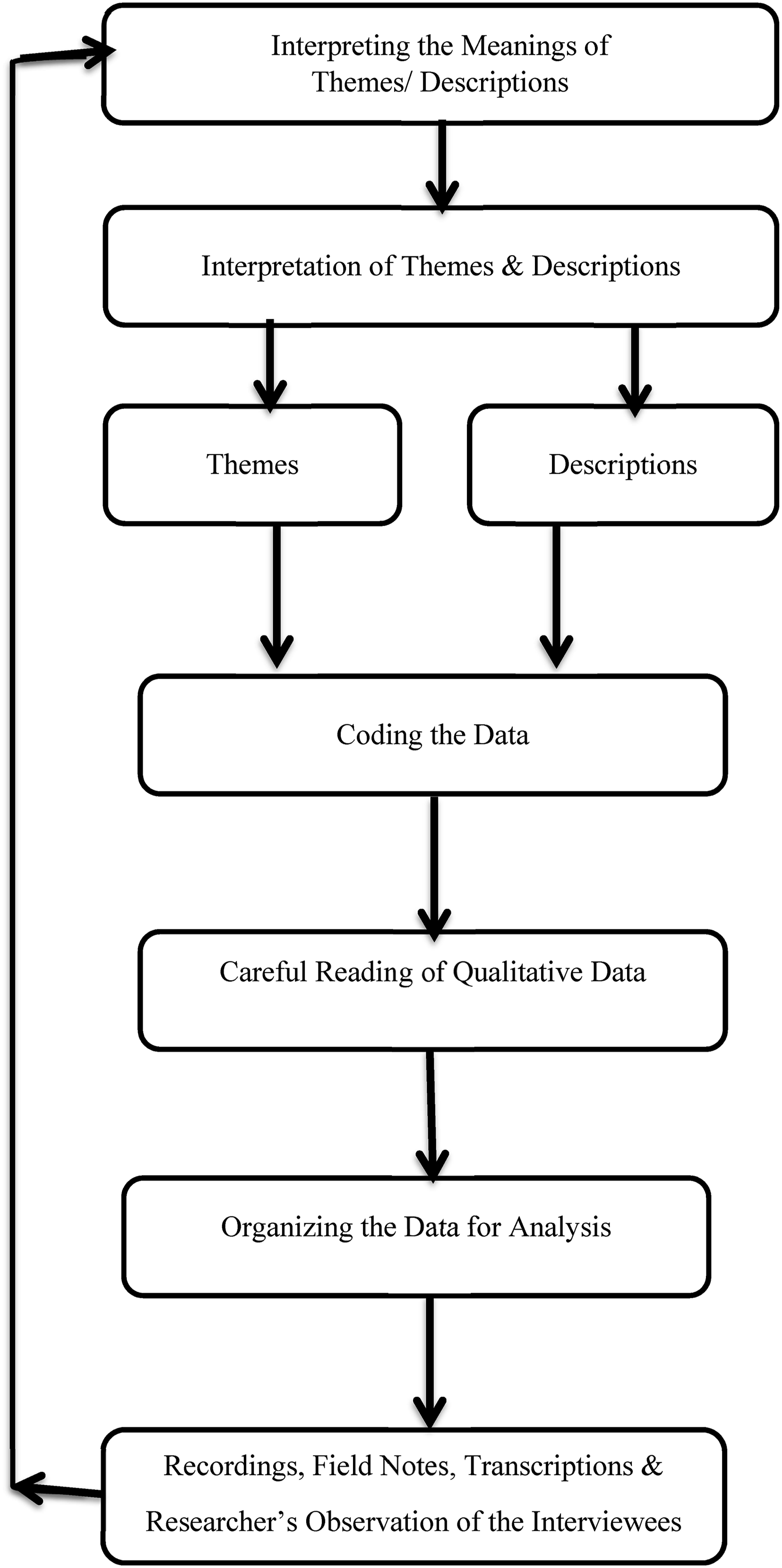
Results
Perceptions from electronic learning programs for innovative sustainable competence development
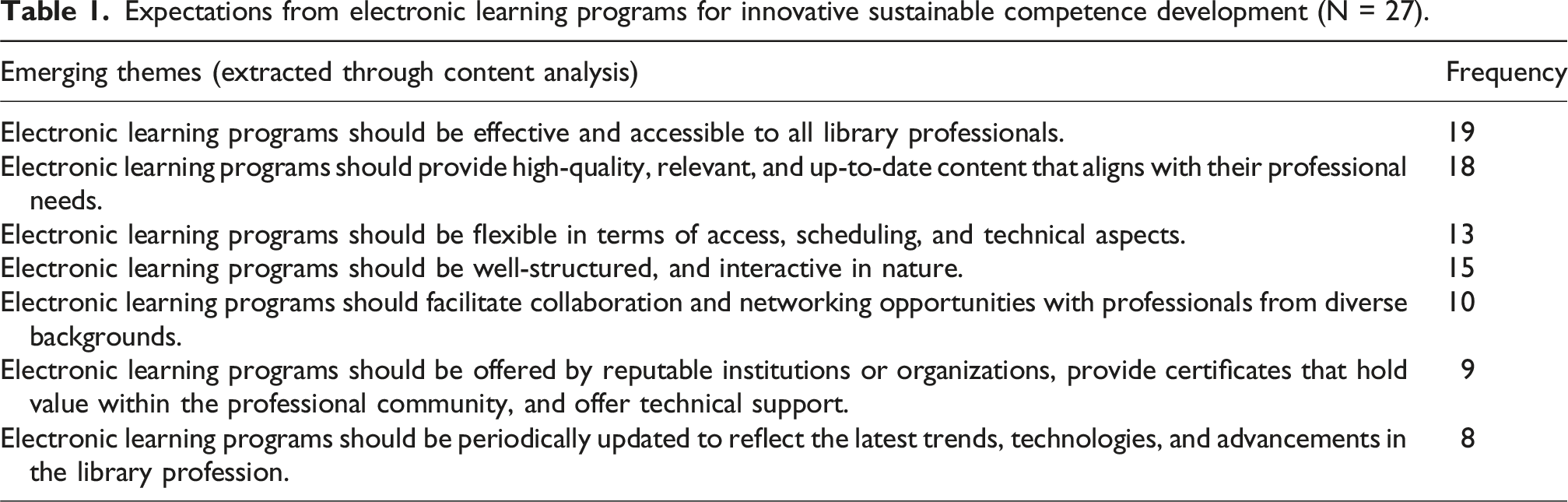
The subjects were requested to reveal their perceptions from electronic learning programs for innovative sustainable competence development. Diversity in subjects’ opinions was found regarding their expectations. They showed mixed opinions related to their expectations. They had different expectations from electronic learning programs for continuing professional development. The majority of the subjects believed that electronic learning programs should be effective and accessible to all information managers (n = 19). Most of the interviewees thought that electronic learning programs should provide high-quality, relevant, and up-to-date content that aligns with their professional needs (n = 18). Many subjects also expected that electronic learning programs should be well-structured, and interactive in nature (n = 15). Several subjects also showed their opinions that electronic learning programs should be flexible in terms of access, scheduling, and technical aspects (n = 13). The subjects also mentioned that electronic learning programs should facilitate collaboration and networking opportunities with professionals from diverse backgrounds (n = 10). They stated that electronic learning programs should be offered by reputable institutions or organizations, and certificates of participation should be provided (n = 9). They expected electronic learning programs to be periodically updated to reflect the latest trends, technologies, and advancements in the library profession (n = 8).
Expectations from electronic learning programs for innovative sustainable competence development (N = 27).
The interviewees expressed different expectations about the electronic learning programs for the innovative sustainable competence development. They stated that there should be a focus on practical learning. New learning should have been provided through electronic learning programs for innovative sustainable competence development. Electronic learning programs remain a vital source of education in innovative sustainable competence development. One expert stated, “I expect electronic learning programs for innovative sustainable competence development to offer interactive and engaging content, opportunities for networking and collaboration with peers, and the ability to customize learning paths based on individual needs and interests.”
Through informal discussions with experts, interesting responses were received too as some experts mentioned that the majority of the librarians miss the learning opportunities that are provided during onsite training activities because they might not meet the financial requirements; however, if electronic learning programs are free, then they can avail learning opportunities conveniently. Electronic learning programs should be relevant to librarians’ professional needs and integrated with the current trends and challenges in librarianship. They look for practical knowledge and skills that can be immediately applied to their work.
Electronic learning programs should clearly state the learning objectives and outcomes. Learners expect electronic learning programs to provide practical skills and knowledge that can be directly applied to their work. Real-life examples, case studies, and practical exercises help learners to bridge the gap between theory and practice. Learning should be provided in such a way that may prove fruitful for information managers in real settings. Electronic learning programs can provide opportunities for learners to collaborate with peers, participate in group projects, or engage in discussions. Librarians expect the programs to facilitate networking and interaction with professionals from diverse backgrounds.
One expert gave a very interesting response, “I expect electronic learning programs for innovative sustainable competence development to offer relevant and up-to-date content that aligns with my professional goals. I anticipate that electronic learning programs will provide a flexible and convenient learning experience that fits my schedule. I hope that e-learning programs will facilitate interaction and collaboration with other professionals in the field for knowledge sharing and networking opportunities.”
Electronic learning programs should focus on the emerging trends in the field. The current age is witnessing so many changes in terms of technologies so electronic learning programs should cover the latest trends in the best interests of library professionals. If electronic learning programs are designed keeping in view the trending happenings of the current age, then librarians may be equipped with effective skills to provide users’ centered services. One subject gave a very useful response, “I expect that the LIS schools, library associations, and institutes should launch electronic learning programs and the opportunities should be provided to all stakeholders to get continued education in this field.” These results are similar to the results reported by many other experts in their studies.8,36–39
Figure 4 displays the expectations of the subjects from electronic learning programs for innovative sustainable competence development. Subjects’ expectations from electronic learning programs for innovative sustainable competence development.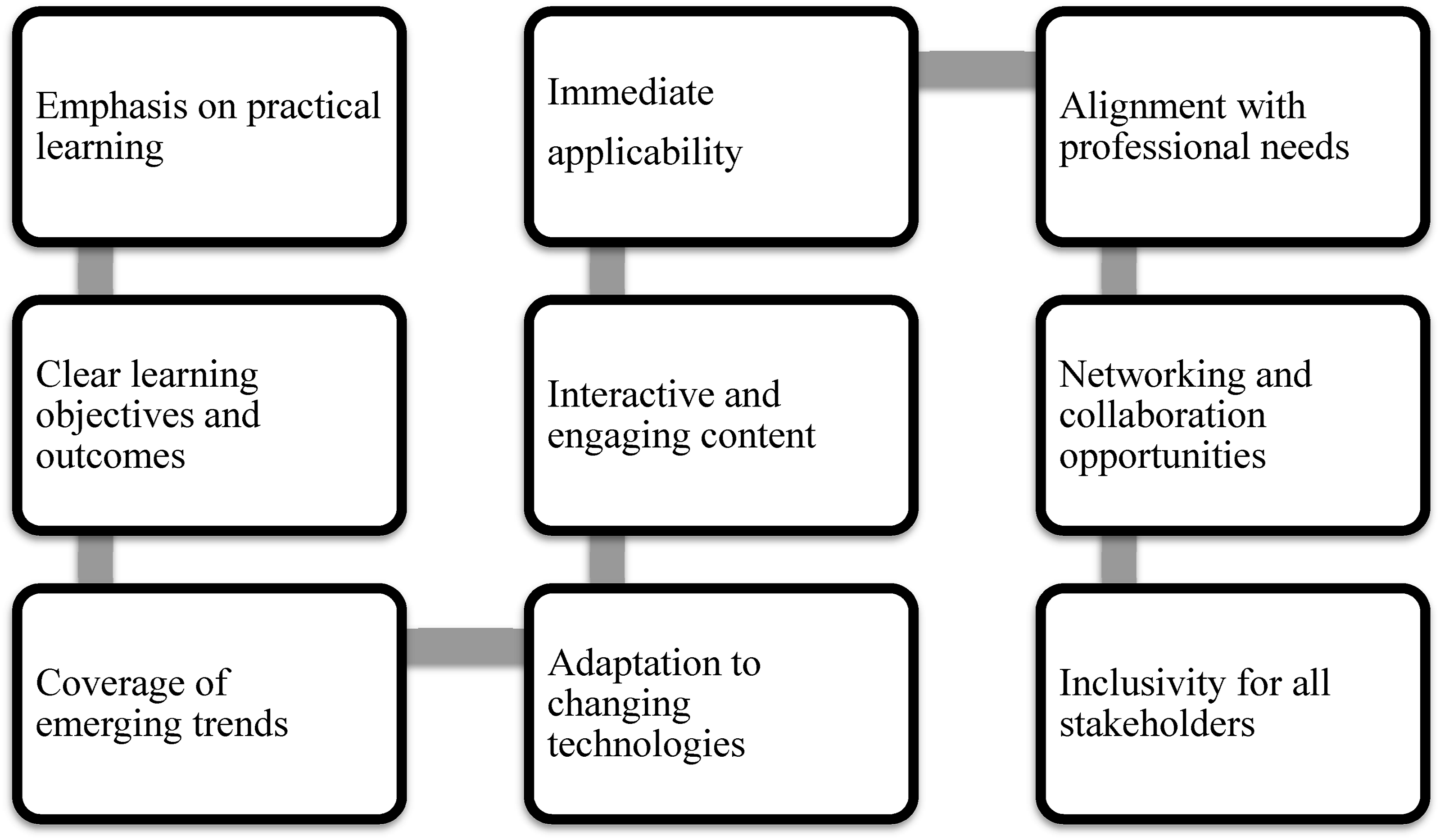
Preferred electronic learning programs relevant to workplace
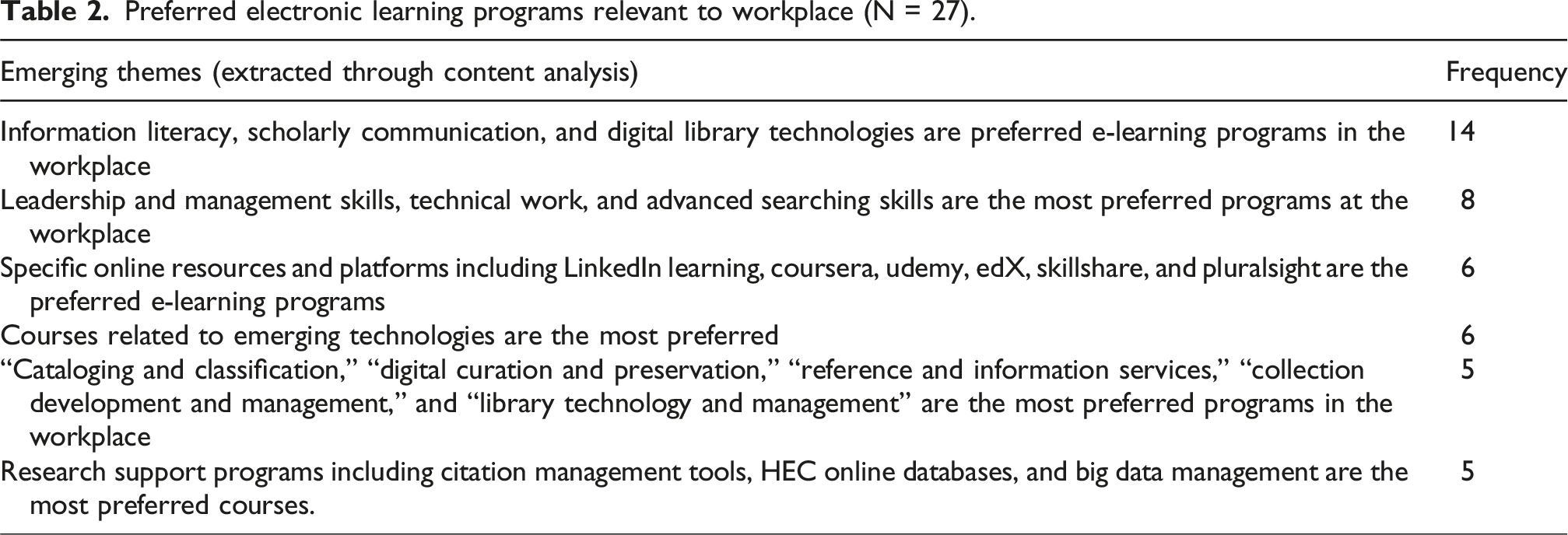
The subjects were requested to mention their preferred electronic learning programs relevant to the workplace. The subjects submitted their valuable inputs. A diversity was observed in the received responses. The majority of the subjects believed that information literacy, scholarly communication, and digital library technologies are their preferred e-learning programs in the workplace (n = 14). They also mentioned that leadership and management skills, technical work, and advanced searching skills are the most preferred programs in the workplace (n = 8). They also stated specific online resources and platforms for electronic learning, including LinkedIn Learning, Coursera, Udemy, edX, Skillshare, and Pluralsight (n = 6). They also recommended the courses related to emerging technologies (n = 6). They preferred “Cataloging and Classification,” “Digital Curation and Preservation,” “Reference and Information Services,” “Collection Development and Management,” and “Library Technology and Management” (n = 5). The subjects also preferred research support programs including citation management tools, HEC online databases, and big data management (n = 5).
Preferred electronic learning programs relevant to workplace (N = 27).
Discussion
An analysis of the qualitative data highlights diversity in experts’ opinions regarding preferred electronic learning programs in the workplace. Many subjects preferred information literacy instruction (IL) programs. IL courses strengthen librarians’ skills and enable them to support information services to satisfy users’ needs efficiently. Information managers may also conduct similar IL courses to build the information-searching skills of their library users. This outcome is similar with outcomes of the studies conducted by Imam et al. 22 and Iskakova 7 who mentioned that information literacy programs prove fruitful for the enhancement of librarians’ learning and expertise. The subjects preferred digital library technologies as the current age is an age of digitization. University libraries need to digitize their collections through different digital library software. Information resources may be digitalized by offering quality courses on digitization to university librarians. One subject expressed, “Electronic learning programs focusing on leadership and management skills are popular in workplaces where individuals aspire to enhance their managerial capabilities. These programs cover topics such as team building, communication, conflict resolution, and strategic planning.”
The subjects preferred technical courses related to librarianship. These courses may include skills in acquisition, classification, cataloging, circulation, automation, etc. The main task of a university information manager is to organize information resources effectively and then disseminate required information resources to the end users. University information managers may better provide information services to library patrons if they are well-versed in the technical tasks of librarianship. This finding aligns with findings of the investigations conducted by Johannessen, 40 and Nasirudeen and Jantan. 13
Through informal discussion with experts, interesting responses were received too as some experts mentioned that university information managers should attend research-relevant courses as these courses are not only fruitful for their professional growth but also impactful for the university’s community. They may assist university students and faculty members in compliance with research-based tasks. They can conduct training workshops on data analysis tools. They can better market library resources if they are well-trained through research-based online programs. One subject expressed, “Workload management, effective delivery of services to users, advanced searching skills, and programs that enhance the working capability of library professionals are mostly preferred.”
Courses on emerging technologies and trends are also preferred due to their effectiveness in the field. Revolutionary changes have happened in librarianship during the past few years. Traditional library services are being switched over to virtual moods. Without getting upgraded learning and expertise, information managers may not lead from the front. The outbreak of COVID-19 also stimulated librarians to adopt the latest trends and techniques to serve their users remotely. University librarians need to embrace changes according to the changing trends to play a vital role in supporting information and research-based services. Similar conclusion was drawn by Kosciejew 5 in his conducted investigation.
One subject gave a very useful response, “Any program that supports the learning, growth, and development of library staff, is preferred. The important part is to engage the library team members in a self-appraisal of where they are in terms of their skills and knowledge and what are the areas of professional growth. Engaging them in this discussion and identification process is important.” The preference for digital library technologies found in this study aligns with the findings of various authors, such as Imam et al., 22 who emphasized the role of self-inspiration in upgrading technological tools. Similar results were reported by other experts.3,40–45
Limitations and future directions
While this study provides valuable qualitative insights, some limitations must be considered. The scope of the study was restricted to university libraries within Pakistan. The findings may not be applicable to the public, medical, college or school libraries. The study applied qualitative research design through the sample of 27 information managers working in the university libraries. Future research should apply large-scale quantitative surveys to validate these findings across a more diverse professional demographic. As the digital landscape evolves, there is also a critical need to explore how emerging technologies, specifically Generative AI, are reshaping the continuing professional development of librarians. In future, a similar study may be conducted on medical and college librarians. Future researchers may also conduct a scoping review to identify the effects of electronic learning on innovative sustainable competence development for the delivery of smart library services to offer a broader outlook.
Conclusion
University information managers have positive perceptions about the utility of electronic learning for innovative sustainable competence development. Electronic learning provides opportunities for librarians to stay updated with the latest trends and technologies in their field by offering them convenient and accessible lifelong learning. Information managers can connect and collaborate with peers from different institutions through online forums, discussion boards, and virtual networking events for their professional growth. Practical implementation of electronic learning and expertise is necessary to effectively serve library patrons, and to develop user-friendly and innovative library services. Organizational support is essential for information managers to enhance their learning and expertise.
Footnotes
Acknowledgments
The author(s) received no financial support for the research, authorship, and/or publication of this article; however, the research team acknowledges and appreciates the provision of all possible assistance of Prince Sultan University; Riyadh, Saudi Arabia to conduct the study.

Funding
The authors received no financial support for the research, authorship, and/or publication of this article.
Declaration of conflicting interests
The authors declared no potential conflicts of interest with respect to the research, authorship, and/or publication of this article.