




Abstract
This manuscript reviews the evolution of science communication research over the past 2 decades, highlighting publication trends and citation patterns. Key areas include public engagement, media influence, and digital tools. The study shows a rise in both the volume and impact of literature, especially after global events like the COVID-19 pandemic. However, it identifies gaps in research on digital tools and outreach strategies, particularly in non-Western contexts. This work aims to improve public understanding and foster informed engagement with scientific issues.
Introduction
In the rapidly evolving landscape of modern society, science communication plays an increasingly crucial role. It bridges the scientific community and the general public, ensuring that complex scientific concepts are made accessible and understandable.1–5 Effective science communication has become more important as technological advancements and scientific breakthroughs shape everyday life, influencing areas ranging from public health and environmental sustainability to innovation in industry and education. The need for scientifically informed citizens is critical, particularly in the context of pressing global challenges such as climate change, the spread of misinformation, and the rapid pace of technological change.6,7 This underscores the importance of communicating scientific knowledge in a manner that is not only accurate but also engaging and relevant to diverse audiences.8,9 Historically, science communication has evolved from the limited reach of academic journals and conferences to a broad spectrum of platforms, including digital media, public outreach programs, and even entertainment mediums like television and film.10–12 The field has expanded beyond the mere dissemination of information; it now encompasses the facilitation of dialogue between scientists and non-experts. This two-way communication is essential for fostering public engagement with science, enhancing public understanding of scientific research, and ensuring that science policy decisions are informed by robust evidence. 13 Science communication has also been recognized as vital for the public’s ability to critically evaluate scientific claims, which is increasingly important in an era where misinformation can spread rapidly through digital channels.14–16 As a result, science communication has become central not only to scientific literacy but also to democratic participation in science-related policy-making.
The importance of science communication is also reflected in its role in promoting trust in science. Trust is foundational for the public’s acceptance of scientific findings, particularly in areas where personal beliefs, cultural values, or political ideologies may come into conflict with scientific consensus. Whether addressing topics like the adoption of new vaccines, climate change, or genetically modified organisms, effective communication is key to navigating these tensions and fostering informed dialogue. Furthermore, science communication serves as a tool for advocacy, raising awareness about important scientific issues and driving public interest in supporting scientific research.17–20 By engaging with diverse audiences, from policymakers to marginalized communities, science communication can contribute to more equitable access to scientific knowledge and encourage a more inclusive approach to scientific discovery.21–23 Given the growing importance of science communication, it is essential to study the dynamics and trends within the field itself. This study aims to analyze the landscape of science communication through a scientometric lens, using a comprehensive set of keywords to map the research output, key contributors, and emerging trends in the field.24–26 The primary objective of this work is to offer a quantitative overview of science communication research, focusing on the most prominent themes and the actors driving the field. By employing scientometric analysis, this study seeks to identify the key authors, institutions, and countries contributing to science communication, as well as the most influential journals and papers. Additionally, this research aims to explore the thematic focus areas within the field, examining which aspects of science communication have garnered the most attention over time and identifying any gaps or under-researched areas.
The relevance of using a scientometric approach to evaluate the field of science communication lies in the ability to quantify research output and impact. Scientometrics, which involves the statistical analysis of scientific publications, allows researchers to systematically assess the productivity and influence of individuals, institutions, and countries within a given field. Scientometrics specifically provides the citation analysis of published works, offering insights into the intellectual structure of a field by identifying highly cited papers, influential authors, and prominent journals. Through the technique, the present study aims to uncover patterns in the growth of science communication research, track the development of key themes over time, and assess the impact of collaboration among scholars and institutions. One of the key advantages of scientometric analysis is its ability to provide an objective overview of research activity. Scientometric tools such as co-authorship networks and keyword co-occurrence maps allow for a deeper understanding of the collaborative nature of science communication research, revealing how different scholars and institutions interact and influence one another. These tools also highlight the most prominent themes within the field, offering a visual representation of how specific topics, such as public engagement or digital tools in science communication, are connected. Moreover, by tracking citation patterns, scientometric analysis can measure the impact of individual papers and identify key works that have shaped the discourse within the field.
The present study also seeks to answer a few research questions through the application of scientometric technique. First, what are the overall trends in science communication research in terms of publication output over time? This question addresses the growth of the field and its evolution in response to societal needs and technological advancements. Second, who are the leading contributors to the field, in terms of both authorship and institutional affiliations? This question aims to identify the most productive and influential individuals and institutions in science communication research. Third, what are the thematic focus areas within the field, and how have they evolved over time? By mapping the most frequently occurring keywords and analyzing their co-occurrence patterns, this question seeks to uncover the dominant topics and emerging trends in science communication. Fourth, what are the most highly cited papers and journals in the field, and what does this reveal about the impact of specific works and outlets on the development of science communication? This question focuses on citation analysis to evaluate the influence of key publications and journals.
In a summary, this work offers a comprehensive scientometric analysis of science communication research, focusing on key contributors, thematic trends, and collaboration networks. By addressing the research questions outlined above, this study aims to provide a quantitative understanding of the field’s intellectual structure and identify opportunities for future research. Through the systematic examination of the literature, this study not only contributes to the growing body of knowledge on science communication but also provides valuable insights for researchers, policymakers, and practitioners interested in enhancing the public’s engagement with science.
Methodology
Data collection
The methodology for this scientometric analysis of science communication research was designed to systematically collect, analyze, and visualize the bibliometric data. By leveraging established data sources and scientometric tools, this study provides a comprehensive overview of the trends, collaborations, and thematic focus areas within the field of science communication from 2004 to 2024. The primary source of data for this analysis was the Web of Science (WoS) database, one of the widely used platforms for accessing scholarly publications.27,28 The WoS platform was chosen due to its comprehensive coverage of peer-reviewed literature across multiple disciplines and its extensive citation tracking capabilities, which are essential for scientometric analysis.
To ensure a comprehensive search and capture of all relevant studies in the field of science communication, a carefully curated set of keywords was employed. These keywords reflect the diverse and interdisciplinary nature of the field and were selected to cover a wide range of topics associated with science communication. The keywords used in the search were as follows:” Science communication” OR “Popularization of science” OR “Science awareness” OR “Technology awareness” OR “Public understanding of science” OR “Knowledge dissemination” OR “Science outreach” OR “Science journalism” OR “Public engagement with science” OR “Science-society interface” OR “Media and science communication” OR “Digital tools in science communication.” These keywords were used in combination with the Boolean operator “OR” to ensure that any study containing at least one of these terms was captured. The search was conducted within the title, abstract, and keyword fields of the WoS database, allowing for the identification of studies where these terms were a central focus.
These keywords—such as “Science communication,” “Popularization of science,” “Science awareness,” “Technology awareness,” “Public understanding of science,” and “Scientific literacy”—capture the diverse dimensions of the field. Each of these terms represents a different aspect of how science is communicated, perceived, and understood by the public. For instance, “Science communication” encompasses the general transmission of scientific knowledge to non-expert audiences, while “Public understanding of science” focuses on the cognitive and effective responses of the public to scientific information. Similarly, “Science awareness” and “Technology awareness” highlight efforts to increase public consciousness about scientific and technological developments, respectively. Other keywords, such as “Science outreach” and “Knowledge dissemination,” underscore the proactive strategies employed by scientists and institutions to engage with broader audiences, including through informal science education and media platforms. By incorporating a wide array of keywords, this study provides a comprehensive mapping of the field and ensures that the analysis captures the full diversity of science communication research.
It is important to note that science communication encompasses a broad spectrum of interactions, ranging from public-oriented efforts—such as science popularization, public understanding of science, and outreach—to intra-professional communication within scientific communities. While both dimensions are significant, the present study primarily emphasizes public-facing science communication. This is reflected in the selection of keywords that focus on science-society interactions, media communication, public engagement, and awareness. Intra-professional aspects of communication, such as peer-to-peer knowledge exchange or technical discourse within disciplines, were not a central focus in the keyword framework and may be underrepresented. The methodology does not explicitly differentiate between intra-professional and public communication; however, by emphasizing terms such as “public understanding,” “science outreach,” and “media and science communication,” the scope of this analysis leans toward the public-facing aspect of science communication. This boundary, while useful, is also fluid, and the authors acknowledge that some overlap across domains may still exist due to the interdisciplinary nature of the field.
The data collection spanned 20 years, from 2004 to 2024, with the final date of data extraction being October 14, 2024. This time frame was chosen to provide a broad view of the evolution of science communication research, capturing both early foundational studies and more recent advancements in the field. By analyzing 2 decades of research, the study can identify long-term trends, shifts in focus, and emerging areas of interest in science communication. 29 The Web of Science (WoS) is a multidisciplinary database that indexes literature from diverse domains such as natural sciences, social sciences, health sciences, communication studies, and education. While this inclusivity supports the capture of interdisciplinary content, the extent to which specific subfields—such as health literacy, health communication, numeracy, or the spread of health misinformation—are represented in this study depends on the presence of relevant keywords in titles, abstracts, or keyword fields. The present study did not explicitly include search terms directly targeting these subdomains. However, overlaps may occur where studies in these fields use broader science communication-related language, such as “public understanding of science” or “knowledge dissemination.” To provide further clarity, Appendix A presents the Web of Science subject categories represented in the retrieved dataset, which helps demonstrate the interdisciplinary scope and potential coverage limitations of the current approach.
Data analysis
Following data collection, the analysis was performed using two primary software tools such as VOSviewer. These tools were selected for their powerful visualization capabilities and ease of use in scientometric analysis. VOSviewer, tool was employed for network analysis and visualization. It is particularly well-suited for creating network diagrams that illustrate relationships between authors, institutions, keywords, and cited references. VOSviewer was used to generate co-authorship networks, keyword co-occurrence maps, and citation networks. 29 Several key scientometric metrics were analyzed to provide a detailed understanding of the field such as citation count, Co-authorship Networks, Keyword Co-occurrence. Several types of visualizations were created to illustrate the data and provide insights into the structure of the field such as Network Diagrams, Citation Maps and Trend Graphs.
Results
Publication trends
Over the past 2 decades, science communication research has experienced consistent growth in publication output, underscoring its rising prominence in the modern era. This trend, depicted in Figure 1, highlights annual publication output from 2004 to 2024, revealing notable patterns and shifts in recent years. The interplay between publication volume and citation impact serves as a key metric of the field’s evolution and influence. Figure 1 illustrates this dynamic through a dual-axis graph: vertical bars represent annual publication counts, while a line graph indicates corresponding citation trends. In 2004, the field was nascent, with only 47 papers published and a modest citation count of three. However, as the importance of science communication gained recognition, publication output rose sharply. Milestones include 278 publications in 2016, 345 in 2017, and 407 in 2018. This growth aligns with global challenges such as combating misinformation and fostering public engagement with complex scientific concepts. The surge continued into 2019, with 422 publications, and peaked between 2020 and 2022, a period marked by the COVID-19 pandemic. The pandemic underscored the critical role of science communication, leading to record-breaking publication numbers—484 in 2020 and 572 in 2021. These years also saw a significant rise in citations, reflecting the field’s heightened academic and societal relevance during global crises. The annual number of publications and citations in the field of science communication from 2004 to 2024.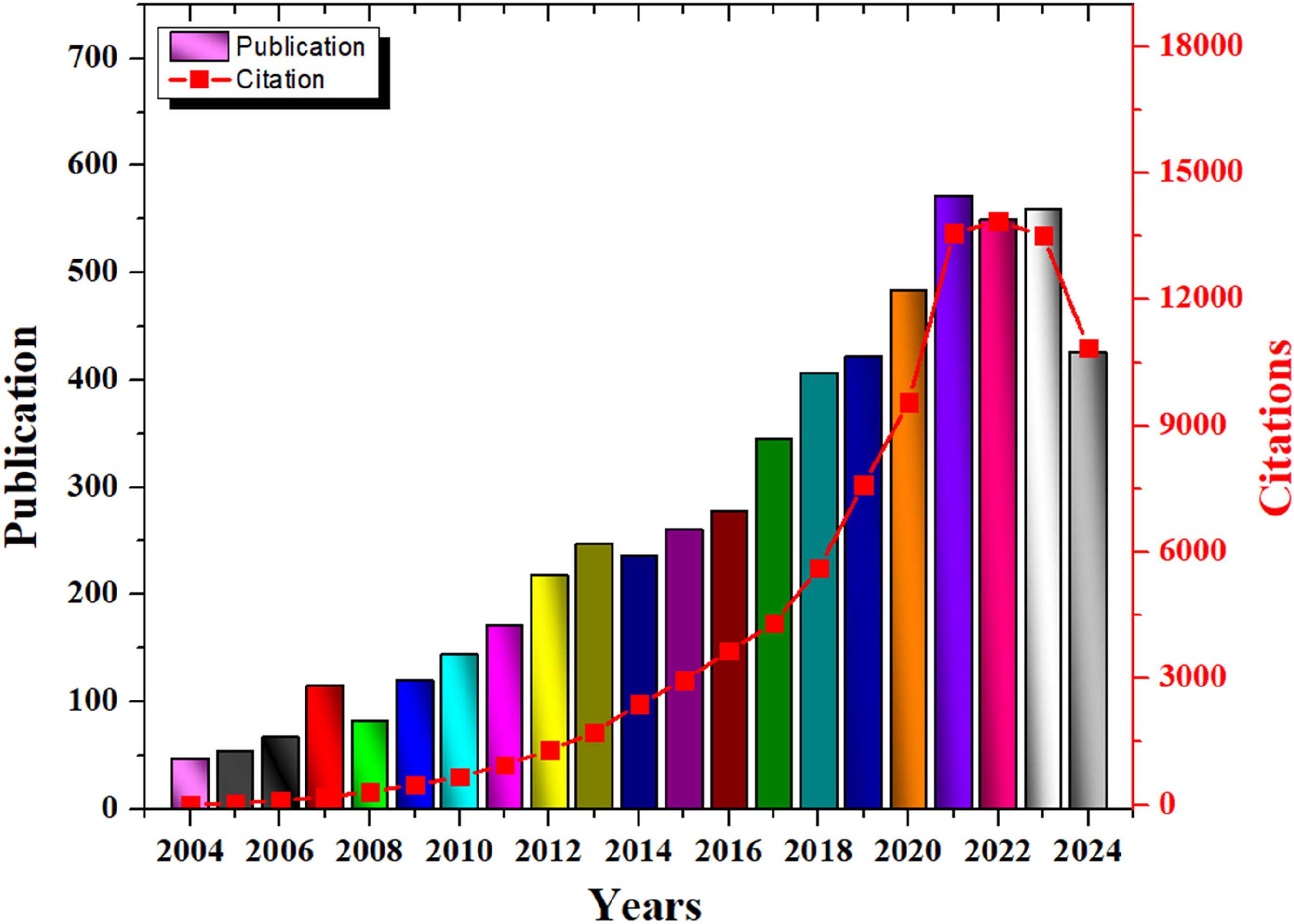
Over the study period, citation growth consistently outpaced publication increases, particularly in recent years. This trend indicates not only the expansion of the field but also its maturation and impact. The peak in both publications and citations during 2021–2022 highlights the field’s response to urgent societal needs, cementing its role as a vital tool in addressing contemporary challenges. The robust upward trajectory in science communication research from 2004 to 2024 emphasizes its expanding influence and relevance. As the field continues to evolve, it is poised to remain a cornerstone for addressing the complexities of modern science and society.
Top authors
Leading authors in science communication research along with citation, h-index and i10-index.
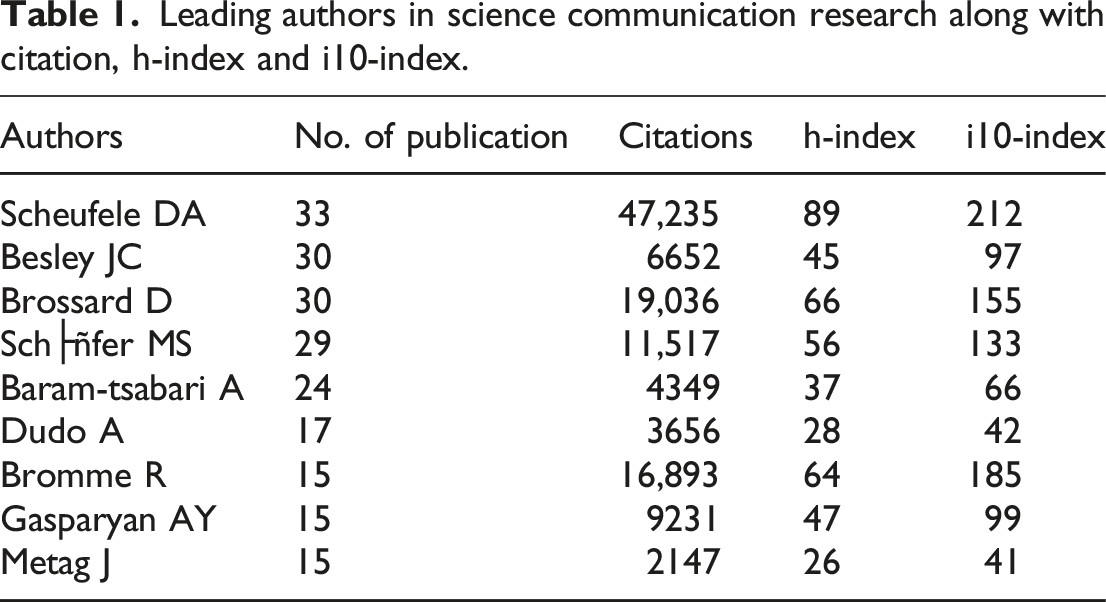
Highly cited research often revolves around public understanding of science, political communication, and the intersection of media and technology in shaping scientific discourse. These factors explain why the author’s work is so frequently cited, as it addresses crucial questions at the heart of modern science communication. 30 Further, the research focused on the role of scientists as communicators, public trust in science, and ethical considerations in science communication got high number of citations. 31 Brossard’s work has been pivotal in exploring the role of digital media in shaping public perceptions of science and understanding how different forms of media affect scientific literacy. Her high citation count and robust h-index suggest that her research has significantly influenced the way science communication is practiced and studied, especially in relation to the evolving digital landscape. 32 Another set of research which frequently addresses the media’s portrayal of climate change and other pressing global issues, making its authors a key figure in the intersection of science, media, and society. 33 Baram-Tsabari’s relatively high h-index and citation count reflect the relevance of her research in shaping how science is communicated beyond academic settings. 34 Dudo’s relatively high citation count and h-index suggest that his work has had a meaningful impact, especially in the context of scientists as communicators. 31
The field of science communication is shaped by a group of highly productive and influential authors whose research addresses a wide range of topics, from the media portrayal of science to the role of scientists as public communicators. These scholars have not only contributed extensively to the literature but have also generated significant citations, indicating their influence on both the academic community and the practice of science communication. Their work continues to guide how science is shared with and understood by the public, policymakers, and other key stakeholders.
Leading journals
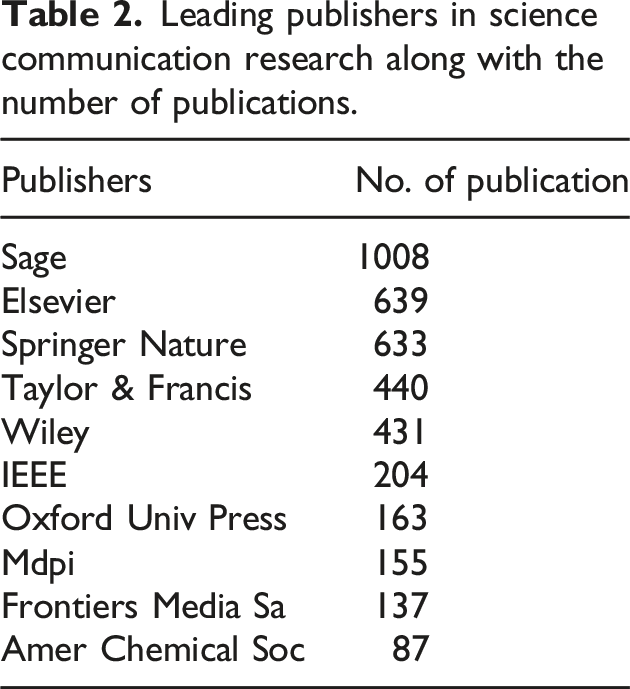
Leading publishers in science communication research along with the number of publications.
Leading institutions and countries
The network visualization in Figure 2 underscores the prominent institutions driving science communication research through co-authorship and collaboration patterns. These interconnected entities significantly influence the global discourse and advancement of the field. At the core of this network are leading institutions such as the University of British Columbia, University of Toronto, University of Michigan, and Cornell University, which emerge as major nodes due to their prolific output and high-impact contributions. The University of British Columbia and University of Toronto stand out for their extensive collaborations across North America, often partnering with institutions like Michigan State University and the University of Wisconsin, thereby enriching the academic ecosystem. Global network of leading institutions in science communication research (2017–2020).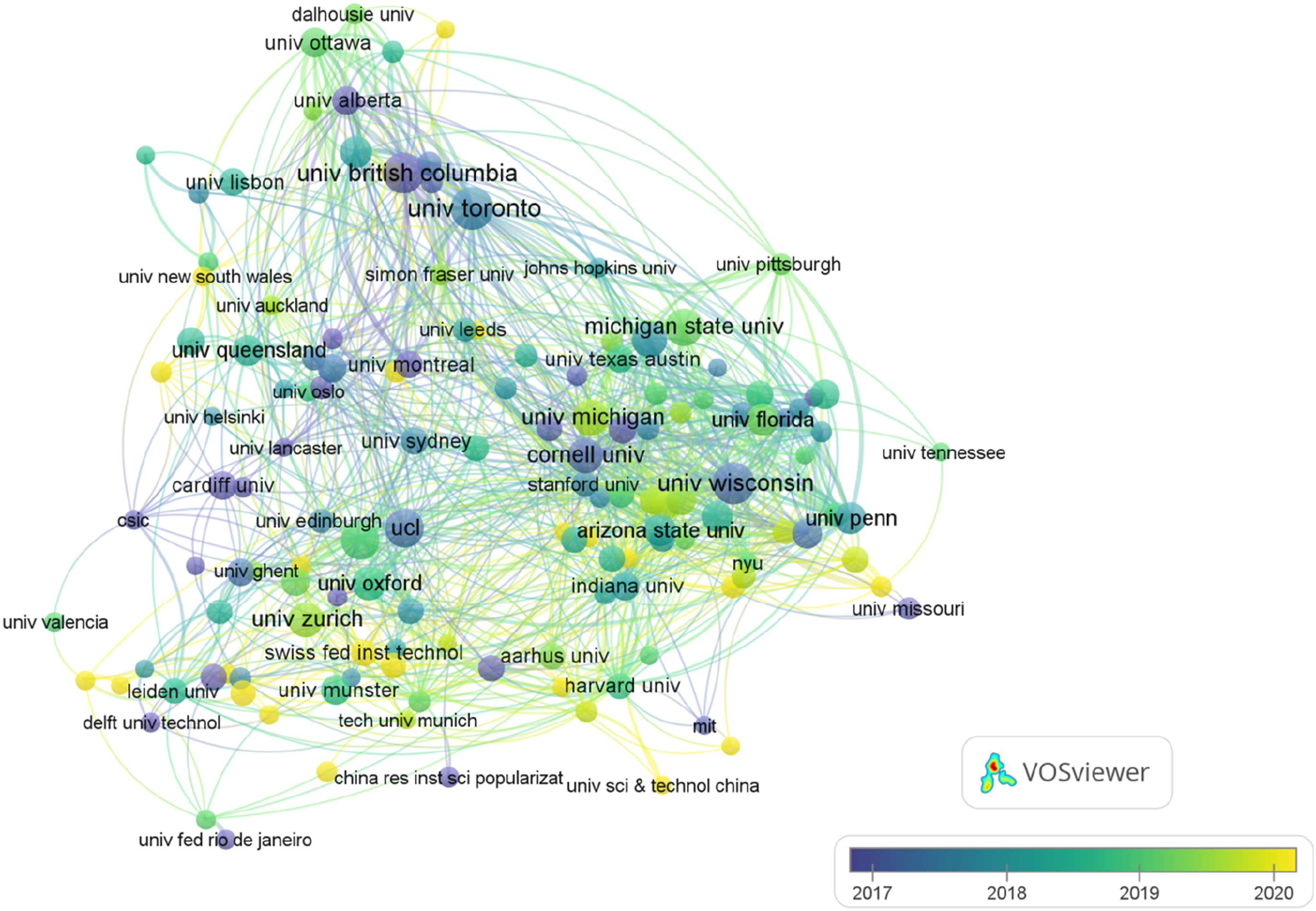
In Europe, institutions such as University College London (UCL), the University of Zurich, and the University of Oxford are pivotal, fostering robust networks through collaborations with peers like Leiden University, Aarhus University, and the University of Edinburgh. Prominent contributors from Germany and Switzerland, including ETH Zurich, further bolster theoretical and practical advancements in science communication. China’s expanding presence is represented by the Chinese Research Institute for Science Popularization and the China University of Science and Technology. Although their connections are fewer compared to North American or European institutions, their growing influence highlights a regional emphasis on tailoring science communication to Chinese audiences, particularly in formal and informal knowledge dissemination. In Australia, the University of Queensland and the University of New South Wales are key contributors, engaging in interdisciplinary research that addresses unique challenges, including climate science and biodiversity awareness. These efforts are shaping science communication strategies specific to the Southern Hemisphere.
The dense interconnectivity within this network reveals the collaborative nature of science communication research. Institutions in North America, Europe, Asia, and Australia dominate the field, forming clusters that facilitate the exchange of methodologies, resources, and insights essential for addressing global challenges. Notable cross-continental collaborations, such as those involving MIT, Harvard University, and Stanford University with European counterparts like the University of Zurich and the University of Edinburgh, exemplify the interdisciplinary and international scope of the field. This network visualization encapsulates the global landscape of science communication research, showcasing how leading institutions drive the field forward. Their interconnected efforts shape public engagement with science, underscoring the critical role of collaboration in advancing this vital area of study.
The visualization in Figure 3 illustrates a comprehensive global network of collaborations in science communication research. Countries are grouped based on co-authorship, with link thickness representing collaboration strength. Larger nodes denote nations with significant publication output and influence, while smaller nodes signify emerging contributors. At the network’s core, the United States (USA) emerges as the dominant force in science communication research. Its large node underscores substantial output, reflecting its longstanding leadership in science and innovation. Robust links with Canada, England, Germany, and Australia highlight its extensive global partnerships. These connections showcase the USA’s pivotal role in fostering international collaborations to advance public science dissemination. Canada, positioned prominently in the network, plays a critical role in promoting science engagement. Known for its focus on public understanding of science, Canada collaborates frequently with the USA, England, Germany, and the Netherlands. Its substantial node underscores its influence in shaping global science communication discourse. Country-wise collaboration network in science communication research (2004–2024), visualized using VOSviewer.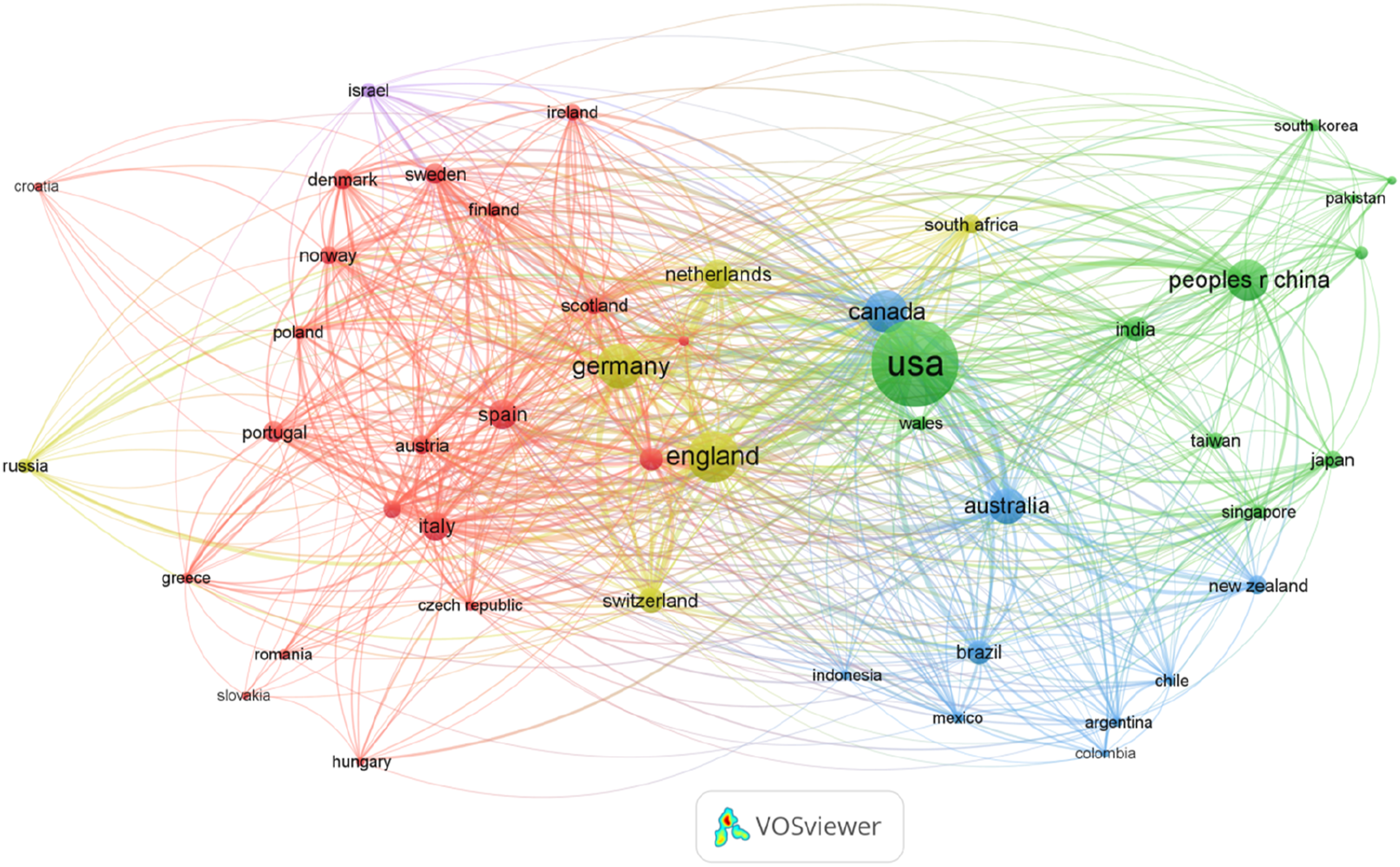
In Europe, England leads with a prominent node, driven by institutions like the University of Oxford and University College London. Strong ties with Germany, Italy, Spain, and the Netherlands reflect Europe’s collaborative research ethos. Additionally, England’s transatlantic connections with the USA and Canada emphasize its global involvement in addressing challenges in communicating complex scientific concepts. Germany also stands out with a major node and significant links to neighboring European nations such as Switzerland and Austria. Renowned for research at the nexus of science, society, and policy, Germany’s collaborations with the USA, England, and emerging players like China and India underscore its integral role in addressing global issues like climate change and public health.
In Asia, China’s large node represents its growing prominence in science communication research, supported by substantial investments in public engagement and international collaboration. Strong ties with the USA, Japan, India, and South Korea highlight China’s commitment to fostering global partnerships and enhancing science accessibility in rapidly developing societies. India is another key player in Asia, with a noteworthy position in the network. Frequent collaborations with China, the USA, England, and Germany underline India’s focus on improving science literacy across its diverse population. Its growing role reflects active contributions to international discussions on effective science communication.
Australia’s flourishing science communication research, led by institutions like the University of Queensland, positions it as a vital contributor, especially on issues like climate change and biodiversity conservation. Strong connections with the USA, Canada, and England reinforce its impact on global discourse. Emerging nations, such as Brazil and South Africa, are expanding their influence, building partnerships with established leaders like the USA, England, and Canada. Their unique perspectives are crucial for addressing the challenges of communicating science in diverse socio-economic and cultural contexts.
Figure 4 provides a holistic view of the global science communication network, highlighting leaders like the USA, Canada, England, Germany, and China, alongside rising contributors such as India, Brazil, and South Africa. The network’s interconnectedness underscores the critical role of international collaboration in advancing science communication research and enhancing public engagement worldwide. Global Distribution of Science Communication Publications by Countries that have contributed at least 50 publications. (*This map is for representation purposes only. It is not intended to depict or endorse any political boundaries or territorial claims. All boundaries and names shown do not imply official endorsement or recognition).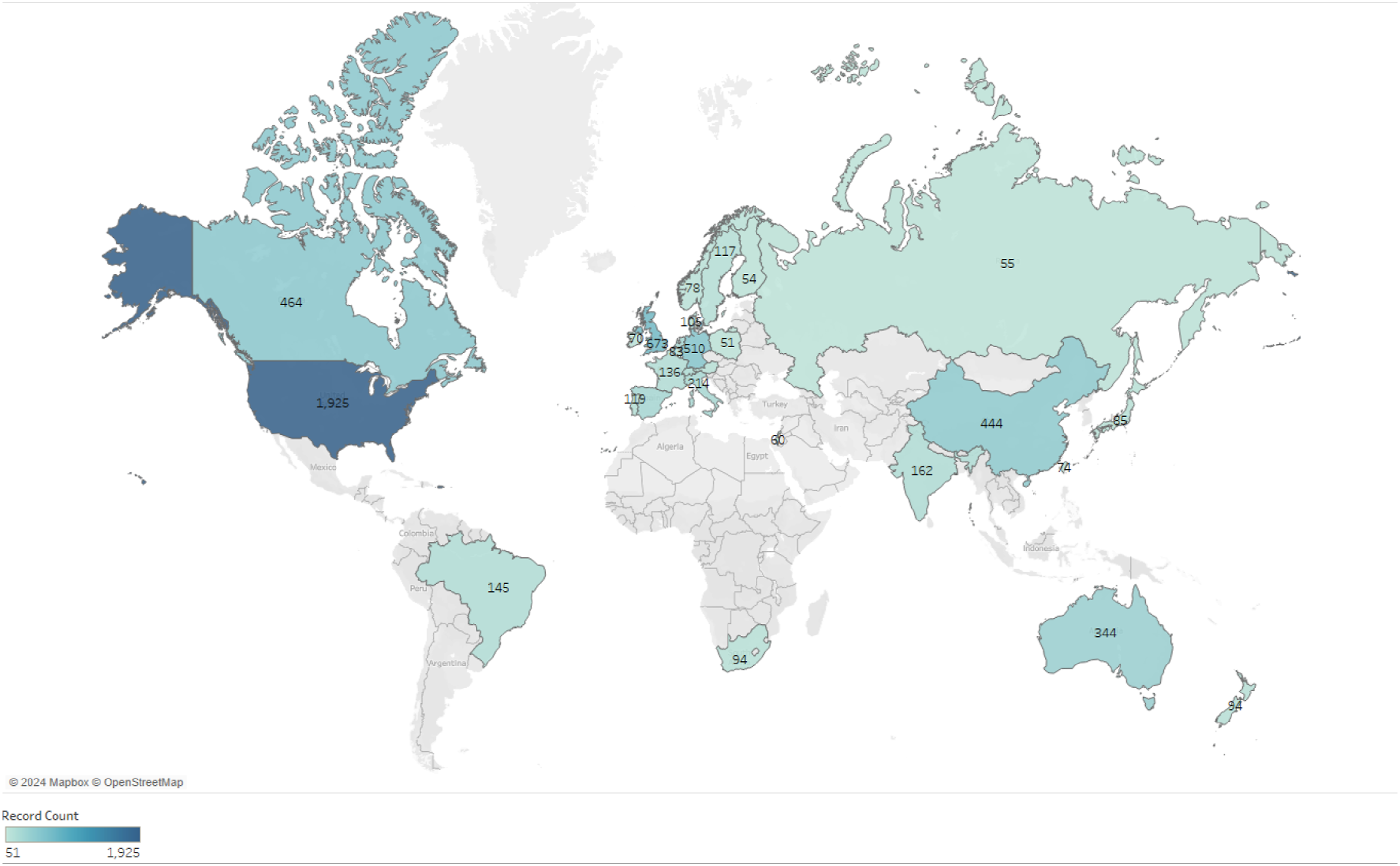
The map in Figure 4 provides a global overview of the number of scientific publications in the field of science communication, illustrating the contributions of various countries. The countries that have contributed at least 50 publications are highlighted in different shades of blue, with darker shades representing higher publication counts. The United States stands out with the highest number of publications, totaling 1,925. This significant contribution reflects the country’s strong academic presence and leadership in science communication research. Canada follows with 464 publications, further demonstrating North America’s active role in this field. In Europe, the United Kingdom leads with 973 publications, followed by Germany with 510 and the Netherlands with 210. Other European countries contributing notable publication counts include France (136), Italy (119), and Spain (115), which emphasize the region’s broad engagement in science communication.
In Asia, China has made a substantial contribution with 444 publications, reflecting its growing influence in global scientific research. Japan, with 85 publications, also contributes significantly to the science communication landscape in the region, followed by India with 162. Australia, a key player in the Asia-Pacific region, has produced 344 publications, highlighting its academic involvement in the field. New Zealand, although smaller in size, has contributed 94 publications. South America is represented by Brazil, with 145 publications, demonstrating its role in the growing scientific communication efforts in the region. In Africa, South Africa has made notable contributions with 94 publications, underscoring its position as a leading African country in science communication. Overall, this map reflects the global distribution of scientific research on science communication, with significant contributions from North America, Europe, and Asia, and growing efforts in regions like South America and Africa. The variations in publication numbers reflect the differing levels of academic infrastructure and focus on science communication across these regions.
Keyword analysis
Figure 5 illustrates a comprehensive co-occurrence map of keywords used in science communication research, generated using VOSviewer. This network provides valuable insights into the thematic structure of the field by showing the relationships between commonly used terms. At the center, the term “science communication” dominates the map, with the largest node representing its central role. Surrounding it are clusters of related terms that reflect the major themes and research trends within the field. Co-occurrence network of all keywords in science communication research.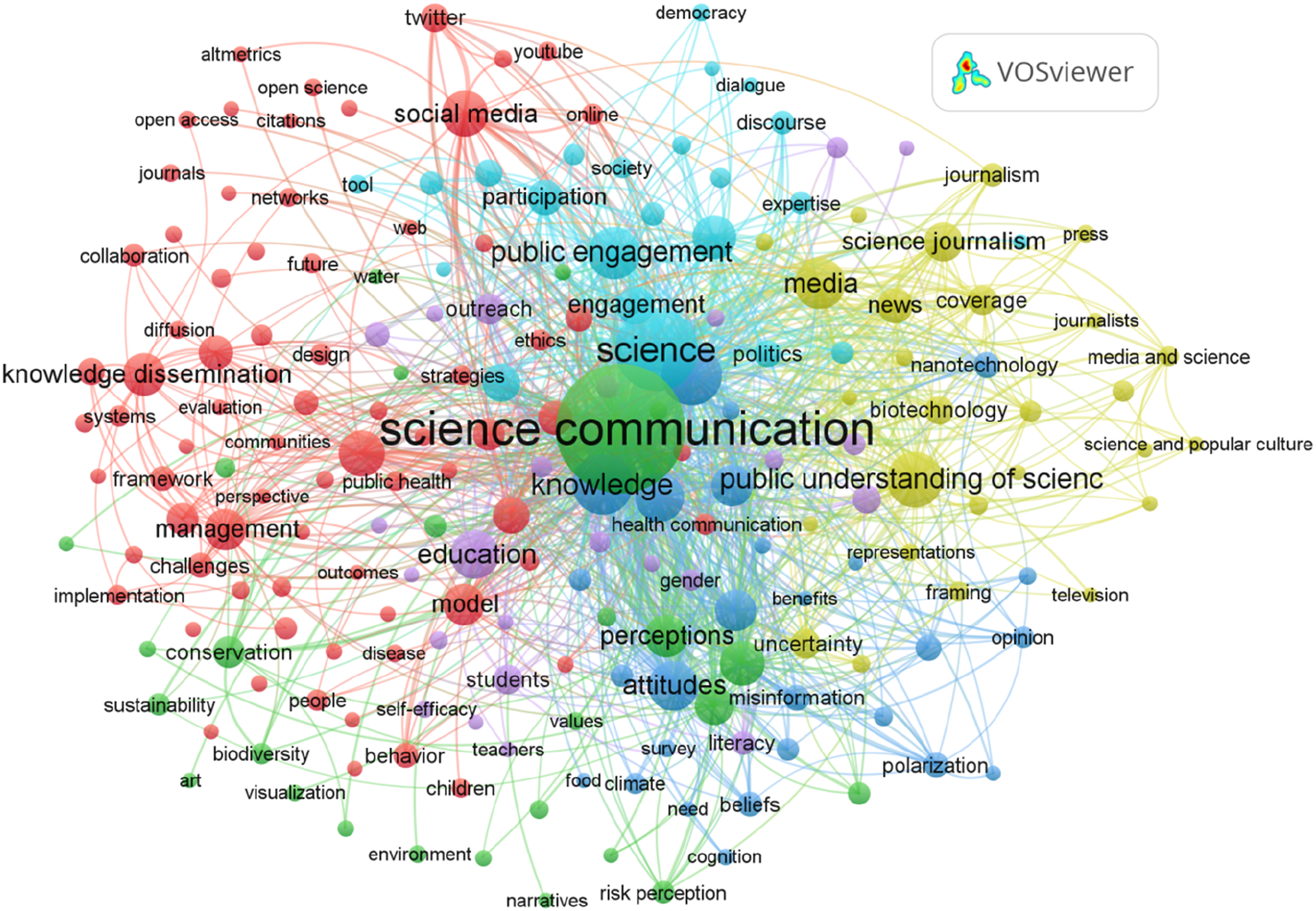
One prominent cluster, colored in blue, is centered around public engagement and participation, emphasizing the role of community involvement in scientific discourse. Keywords such as outreach, ethics, and strategies reflect the growing interest in how science engages with society, particularly through participatory methods. Another key area is the public understanding of science, marked by green and yellow clusters, which include terms like attitudes, perceptions, misinformation, and polarization. These terms are indicative of the ongoing concerns about how the public interprets and interacts with scientific knowledge, especially in the context of societal challenges such as climate change and vaccine skepticism. The social media cluster, depicted in red, underscores the importance of digital platforms like Twitter and YouTube in science communication. This highlights the shift toward more open and accessible communication methods, where citations, open access, and altmetrics play significant roles in how science reaches the public. The cluster around knowledge dissemination and management also reflects the operational side of science communication, focusing on how information is structured and shared. Overall, the map provides a visual representation of the multifaceted nature of science communication, linking key topics such as education, media, health communication, and environmental conservation to broader issues like uncertainty, risk perception, and misinformation. These interconnected themes shape the current and future directions of research in this field.
Figure 6 depicts a network visualization of co-occurring keywords in “Science Communication,” likely generated using VOSviewer, a bibliometric mapping tool. The central node, “science communication,” dominates the network, reflecting its interdisciplinary prominence. Nodes and edges represent related concepts and their relationships, with node size and proximity indicating connection strength. A prominent cluster highlights “social media” as a pivotal theme, emphasizing platforms like YouTube and Twitter as modern tools for disseminating scientific knowledge, especially during the COVID-19 pandemic. This cluster underscores social media’s role in public health communication and engagement. Another cluster centers on “public understanding of science” and “public engagement,” stressing the need for accessible and inclusive scientific discourse. Terms such as “citizen science” reinforce efforts to involve non-experts in science. Co-occurrence network of author keywords in science communication research.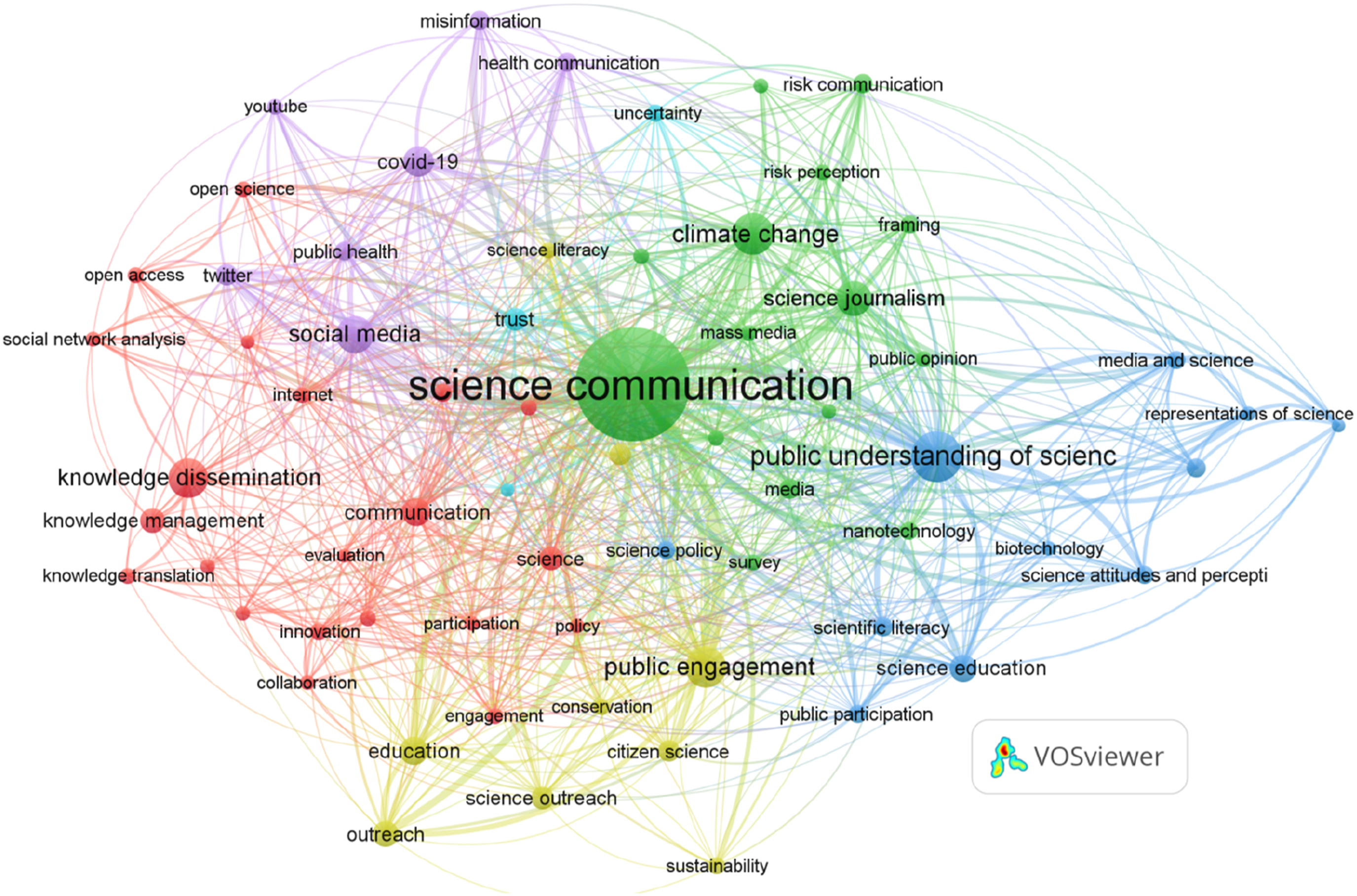
A separate cluster addresses “climate change” and “science journalism,” showcasing the interplay of environmental challenges and media in fostering awareness and risk communication. Concepts like “knowledge dissemination” and “knowledge management” are also integral, highlighting the translation of scientific knowledge into innovation and education. The comparative analysis of Figures 5 and 6 reveals distinct methodological insights. Figure 5 offers a broad overview of thematic trends and emerging topics in science communication by analyzing a wide range of keywords. In contrast, Figure 6 focuses on co-occurrence networks, emphasizing interrelations among specific keywords to uncover deeper thematic connections. For instance, clusters like “social media” and “public health” in Figure 5 underscore contemporary relevance, while Figure 6’s detailed mapping illustrates the dynamic interplay of terms like “public engagement” and “understanding.” This distinction reveals potential research gaps. Sparse connections between clusters, such as “climate change” and “science journalism,” suggest areas needing deeper exploration. Together, Figures 5 and 6 provide complementary perspectives—Figure 5 identifies overarching trends, while Figure 6 facilitates a granular analysis of term relationships. These dual insights enrich understanding of science communication’s evolving landscape, guiding both broad inquiries and focused research into effective knowledge dissemination.
Citation network
Highly cited papers in the fields of science communication, technology diffusion, and innovation.
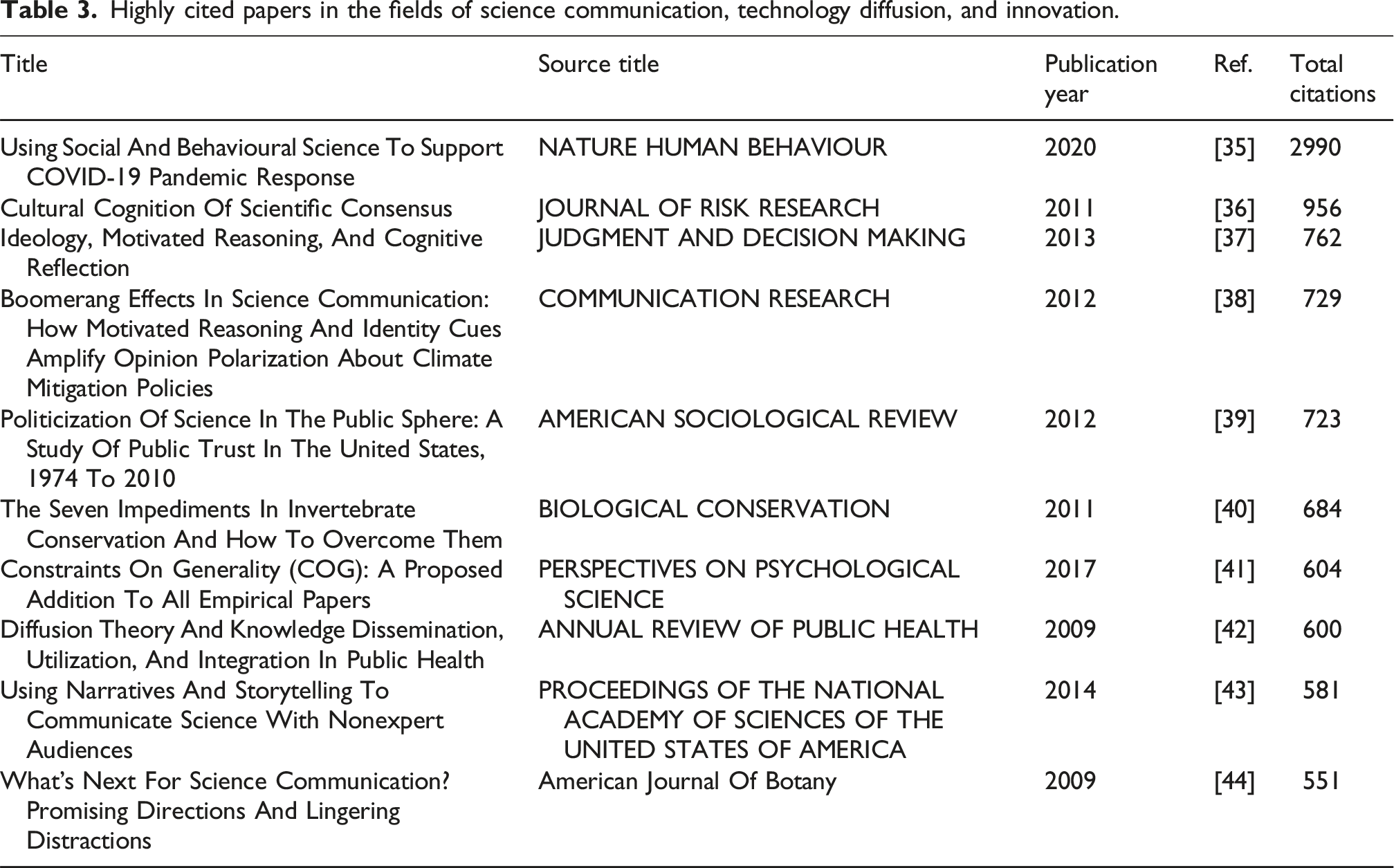
The 2013 study “Ideology, Motivated Reasoning, and Cognitive Reflection” (Judgment and Decision Making, 762 citations) delves into the psychological mechanisms behind motivated reasoning. It explores how ideological beliefs and cognitive reflection impact acceptance of scientific information, offering vital insights into bridging public divides in understanding science. The concept of “boomerang effects” in science communication is addressed in “Boomerang Effects in Science Communication” (Communication Research, 2012; 729 citations). This paper investigates how identity-driven resistance to conflicting information can deepen polarization, particularly in climate policy discussions, presenting a critical hurdle for effective communication. Finally, “Politicization of Science in the Public Sphere” (American Sociological Review, 2012; 723 citations) explores decades of evolving public trust in science in the U.S. It highlights increasing polarization, particularly among conservative groups, and underscores the need for science communicators to rebuild trust amid growing skepticism in areas such as climate and environmental science.
Together, these highly cited works define key challenges and strategies in science communication, from addressing cultural and political barriers to leveraging behavioral insights during crises. Their collective impact continues to guide research and practice in engaging diverse, and often skeptical, audiences effectively.
Discussion
The analysis of publication trends in science communication over the past 2 decades reveals an increasingly dynamic and evolving field. From 2004 to 2024, there has been a noticeable rise in both the number of publications and citations, reflecting growing global interest in science communication and its importance in bridging the gap between scientific knowledge and the public. Initially, the number of publications remained relatively modest, with less than 100 publications annually until 2009.45–47 The nascent phase of science communication reflects its gradual evolution into a pivotal area of research. Post-2010, the field experienced exponential growth, evidenced by a surge in publications and citations, likely driven by the increasing necessity for effective science communication amidst rapid technological advancements and the proliferation of information (and misinformation). This urgency became particularly evident during global crises like the COVID-19 pandemic, with a peak in research output observed around 2021. This period likely marked the zenith of activity, catalyzed by the need for precise and accessible dissemination of scientific knowledge during the pandemic. As the field matured, it embraced interdisciplinary approaches, drawing interest from health, sociology, and information science, alongside communication studies. However, the slight decline in output post-2021 suggests a transition into a more specialized phase, focusing on niche areas and specific applications. Key themes in the field include public engagement, media influence, and digital tools in science communication. Research has delved into public participation through outreach, citizen science, and media framing, alongside the transformative role of digital platforms like social media and blogs. Emerging domains, such as the communication of controversial science, science policy, and ethical considerations, have also gained prominence.
Despite its growth, gaps remain, particularly in non-Western contexts, where science communication’s role in addressing global challenges like climate change and public health is underexplored. Additionally, the intersection of artificial intelligence and science communication represents a burgeoning frontier, with AI-driven tools poised to revolutionize content dissemination. However, their implications for public trust and understanding warrant careful scrutiny. Critical areas, including misinformation and the politicization of science, demand deeper investigation. While progress has been made in countering misinformation in areas like climate change and public health, further studies are needed to uncover the psychological mechanisms underlying misinformation and develop effective counterstrategies. Similarly, the impact of political polarization on science communication, exemplified by debates on climate policy and the pandemic, is an emerging focus. Pioneering scholars such as Dietram Scheufele and John Besley, along with leading institutions like the University of Wisconsin-Madison, Cornell University, and the University of Oxford, have been instrumental in advancing the field. The United States, the United Kingdom, and Germany have emerged as leaders, reflecting robust academic traditions and established programs. International collaborations have further enriched science communication research, facilitating cross-cultural comparisons and addressing global challenges through shared best practices.
Comparative analysis with related fields like public understanding of science and science education reveals parallels and distinctions. While all three have seen growth driven by the demand for effective scientific dissemination, science communication stands out for its interdisciplinary nature, drawing contributions from diverse fields such as media studies, psychology, and sociology. This breadth has fueled its exponential citation growth and solidified its position as a cornerstone for advancing public engagement with science.
Research gaps and future directions
The analysis of publication trends and key focus areas in science communication reveals several notable research gaps and opportunities for future inquiry. One major gap is the insufficient research on the role of digital tools in science communication, especially in the context of rapidly evolving platforms like social media, podcasts, and interactive web technologies. While there has been some exploration of these tools, more studies are needed to assess their effectiveness in different cultural and demographic settings. Additionally, the field of science outreach remains underdeveloped, particularly in non-Western and developing countries, where research on science communication is limited. Understanding how to effectively communicate science in these diverse settings is crucial, as global challenges like climate change and public health require international cooperation and public engagement.
Emerging themes in science communication, such as the use of artificial intelligence (AI) in content generation and the growing concern over misinformation, remain under-researched. As AI tools become more sophisticated, there is a pressing need to examine how they can enhance or undermine science communication efforts. Furthermore, the rise of misinformation and disinformation in the digital age calls for deeper investigation into how science communicators can combat false narratives while maintaining public trust in science.
To address these gaps, future research should focus on the development of new methodologies for assessing the impact of digital tools in science communication across different contexts. Studies could explore the effectiveness of AI-driven tools for translating complex scientific concepts to non-expert audiences or the role of influencers in shaping public perceptions of science. There is also a need for more research into interdisciplinary collaborations, where experts in communication, psychology, and data science work together to develop strategies for improving public understanding of scientific issues.
Looking ahead, digital tools and media will likely play a pivotal role in the future of science communication. As traditional media channels become less dominant, digital platforms will continue to provide accessible and interactive avenues for engaging with science. Research should focus on leveraging these tools to reach diverse audiences, combat misinformation, and promote more inclusive, equitable science communication strategies that transcend cultural and geographical boundaries. By addressing these research gaps, the field can continue to evolve and adapt to the changing media landscape, ensuring that science communication remains effective and relevant in the digital age.
Study limitations
While the present study offers a comprehensive scientometric overview of science communication research from 2004 to 2024, several limitations must be acknowledged. First, the keyword-based search strategy, though carefully curated, may have excluded certain subfields affiliated with the broader public understanding of science. Specifically, areas such as health communication, health literacy, numeracy, and the diffusion of health-related misinformation/disinformation were not explicitly included through targeted search terms. As a result, relevant literature from these adjacent disciplines may be underrepresented in the analysis. Second, the reliance on the Web of Science (WoS) database, despite its wide interdisciplinary coverage, inherently may exclude publications indexed in other major platforms only such as Scopus, PubMed, or Google Scholar. This could lead to the omission of pertinent works, particularly those in emerging or interdisciplinary journals not indexed in WoS.
Third, the selected 20-year time frame (2004–2024), while valuable for identifying long-term trends and thematic shifts, may pose certain limitations. Earlier foundational works in science communication prior to 2004 are not captured, and recent publications from the last few years may not yet have accrued sufficient citations to influence bibliometric patterns. This temporal scope may therefore both overlook seminal older studies and underrepresent the impact of newer research trajectories. Future investigations may consider comparative analyses of shorter or staggered time intervals to capture more dynamic evolutions in the field.
These limitations should be taken into account when interpreting the results and underscore the need for more targeted, integrative, and multi-source bibliometric approaches in future research.
Moreover, the current study did not explicitly evaluate the frequency, distribution, or contextual framing of specific research constructs commonly associated with public understanding of science, such as framing theory, agenda-setting, disinformation and misinformation studies, or plain language initiatives. The absence of these constructs from the keyword list—unless authors included them directly in their metadata—means that they were likely underrepresented in the mapping and co-occurrence visualizations. This methodological constraint stems from the nature of keyword-driven scientometric approaches, which rely heavily on the terms authors select when publishing their work. As such, important theoretical lenses and conceptual frameworks might be overlooked if not intentionally captured during the initial data collection process.
This observation carries significant implications for future research. Further researches on scientometric analyses in science communication should consider expanding their keyword strategies to include not only general descriptors but also central theoretical constructs that shape scholarly discourse. Doing so will enhance the ability to track conceptual developments, assess paradigm shifts, and capture emerging intellectual trends. Future studies may also explore full-text mining approaches or citation network analyses to uncover latent patterns and conceptual overlaps that may not be visible through keyword co-occurrence alone.
Conclusion
The growing body of literature in science communication underscores its critical role in bridging the gap between scientific knowledge and public understanding. Our analysis highlights significant trends in publication and citation patterns, revealing a burgeoning interest in key areas such as public engagement, media, and the use of digital tools. Despite this progress, several research gaps remain, particularly concerning the exploration of emerging technologies and the effectiveness of science outreach in diverse cultural contexts. Future research should prioritize interdisciplinary collaboration and investigate underexplored themes, including the impact of misinformation and the potential of AI in enhancing science communication. As the field evolves, it will be essential to leverage digital platforms to engage a broader audience, combat false narratives, and promote an informed public discourse. Ultimately, addressing these gaps and embracing innovative approaches will ensure that science communication continues to adapt to the changing landscape of information dissemination, thereby fostering a more scientifically literate society.
Footnotes
Acknowledgements
ChatGPT (version 3.5) was used by the writers to polish the language and eliminate grammatical problems when writing this work.

Ethical approval
All the authors have worked in accordance with ethical standard approved by CSIR-NIScPR and Netaji Subhas University of Technology.
Author contributions
Peeyush Phogat: conceptualization, data collection, writing—original draft, and formal analysis. Shanay Rab: writing—review and editing. Meher Wan: supervision and writing—review and editing.
Funding
The author(s) received no financial support for the research, authorship, and/or publication of this article.
Declaration of conflicting interests
The author(s) declared no potential conflicts of interest with respect to the research, authorship, and/or publication of this article.
Data availability statement
All the data is presented in the manuscript.