



Abstract
The Mindanao peace process features civic engagement and participation, emphasizing the importance of civilian support for the process. However, systematic examinations of the natures of Bangsamoro public opinion remain scant. How legitimate do they perceive the process to be? Do people share the same views about it? A survey project using a representative sample in Maguindanao is conducted to address these questions. While the peace process and policies generally receive sufficient support, particularly regarding economic recovery, notable variations exist among Muslims in Maguindanao. Specifically, ethnic Maguindanaoans express greater satisfaction with the process compared to other ethnic groups, implying a potential ethnic cleavage. Furthermore, satisfaction with the process is tightly connected to voting decisions for a political party affiliated with the Moro Islamic Liberation Front, a former rebel group.
Introduction
Long-standing grievances and deep-seated distrust among Moros toward the Government of the Republic of the Philippines (GRP) have fueled the prolonged conflict in Mindanao. This persistence stems not only from grievance against the GRP but also from the contested legitimacy of various Moro militant groups, which face crises of legitimacy and representation in the region (Buendia, 2005, 2012; McWeeney et al., 2023; Podder, 2012). In the postconflict period, these issues of legitimacy have not disappeared but have instead shifted focus. The support base of the Moro Islamic Liberation Front (MILF)-led autonomous government remains fragile and contested, with various factions and local leaders vying for power and influence (Deinla and Engelbrecht, 2019; International Crisis Group, 2023).
Addressing the grievances and distrust among Moros requires multifaceted approaches that transcend elite-level political solutions. The Mindanao peace process has leveraged the strong civil society network in the Philippines, featuring extensive civic engagement and participation (Ferrer, 2013; Rood, 2005). Examples include domestic mediation efforts (Taniguchi, 2022; Trajano, 2020), civilian protection initiatives (Hall, 2023; Julian, 2024; Vyappareddiyar, 2023), gender equality (Japan International Cooperation Agency, 2016), and economic recovery programs (Ferrer, 2013). These initiatives not only address root causes but also build the legitimacy vital for sustainable peace—a principle underscored by both broader peacebuilding literature (Dagher, 2018; Kaplan, 2008; McLoughlin, 2015; Sisk, 2013) and focused studies on the Mindanao conflict (Deinla, 2019). The shortcomings of previous initiatives with the Moro National Liberation Front (MNLF) further reinforce the need to pursue legitimacy for the autonomous government (Rood et al., 2024).
Although some studies have explored Mindanao's public opinion on support or participation in the insurgency (Berman et al., 2011; Deveans et al., 2013; Özerdem and Podder, 2012), systematic observations on postconflict Bangsamoro public opinion related to the peace process are sparse. Key questions remain: How do Bangsamoro people evaluate the peace process? Do they uniformly perceive it? Understanding these perceptions is crucial for assessing the effectiveness of peace initiatives, ensuring policies resonate with diverse communities, and ultimately establishing a legitimate autonomous governance structure.
A few exceptions exist, however. Social Weather Station (2015) examined general support for the Bangsamoro Organic Law (BOL) but lacked detailed respondent data and sample size to explore the relationship between specific individual features and support. The Bangsamoro plebiscite in 2019 provided the latest survey of what people in the Bangsamoro region wanted. Although being the most comprehensive in its coverage, again, this does not provide any insights about individual voters. Hartzell et al. (2024) provide correlates of perceived fairness in the 2014 Comprehensive Agreement on Bangsamoro (CAB). However, this was conducted prior to the actual governance provided by the new autonomous government. To date, no systematic survey has been conducted since the establishment of Bangsamoro Autonomous Region in Muslim Mindanao (BARMM), making it difficult to infer public satisfaction with the implementation of peace.
To address this gap, I conducted a public opinion survey in postconflict Maguindanao. 1 Although regional patterns of public support for CAB are available in Social Weather Station (2015) and Hartzell et al. (2024), this study specifically investigates the pubic opinion of Muslims in Maguindanao province (as of 2025, Maguindanao del Norte and Maguindanao del Sur) and Cotabato City. This venue and target provide an opportunity to elucidate the public opinions of a key group, the core support base of MILF.
This study reveals generally high support for transitional governance and economic recovery efforts. However, satisfaction varies significantly by ethnicity and geography, with ethnic Maguindanaoans showing higher satisfaction, underscoring the MILF's strong local ethnic ties. Additionally, short-range immigrants display strong negative opinions toward the Bangsamoro Transitional Authority (BTA), highlighting a socially significant yet overlooked group. Political dynamics also matter. Those who did not cast vote for the United Bangsamoro Justice Party (UBJP), the MILF's political party, were much less satisfied with the BTA's performance. Economic factors do not predict the support level, indicating that both the poor and the rich have similar levels of satisfaction with the peace process. Therefore, though the peace process has been successful at establishing popular acceptance, or legitimacy, of the new governance structure, political and ethnic divisions are still significant, posing a potential legitimacy issue.
The anonymized survey results, replication code, and Online Appendix to this article are fully available online in Harvard Dataverse (DOI: https://doi.org/10.7910/DVN/DRXPBD).
Legitimacy and Grassroots Opinion in Postconflict Society
After the Cold War, the appeal of military approaches to postconflict peacebuilding waned, giving way to statebuilding strategies that emphasized state capacity and legitimacy as foundations for stability. Central to this shift was the liberal peace approach, which sought to legitimize postconflict governments through democratic procedures such as elections, rule of law, and market-oriented reforms (Doyle and Sambanis, 2006; Paris, 2004; Richmond, 2006). High-profile efforts such as the Dayton Accords in Bosnia and Herzegovina, the Bonn Agreement in Afghanistan, and the Rambouillet Agreement in Kosovo embodied this paradigm. However, liberal peace approaches often faltered, as seen in Afghanistan, where rushed electoral processes and weak institutions fostered corruption, and in South Sudan, where a focus on centralized governance exacerbated ethnic divisions.
A major criticism questions the validity of procedural legitimacy, which interventionists believe to emerge through democratic participation in postconflict governance (Dagher, 2018). Lake (2010) proposes that the provision of social orders should be emphasized as a source of legitimacy in a postconflict context, contrariwise to the classical Weberian concept of legitimacy whose source is existing formal institutions. Dagher (2018) resonates with the aforementioned and argues that performance, instead of procedure, functions better as a source of legitimacy, or people's acceptance of rules. Results of the postconflict rules, or retrospective satisfaction with them, are identified as a crucial source of legitimacy.
Empirically, the concept of legitimacy as a variable, not absolute (Lake, 2010), encourages efforts to measure the extent of legitimacy based on how the ruled perceive the rulers. This focus on perceptions aligns with a broader trend in the literature on peacebuilding that highlights the role of civilians in shaping peace processes. Civilian involvement is increasingly viewed as integral to addressing local grievances and sustaining legitimacy in postconflict governance. For instance, Ditlmann et al. (2017) highlight how external interventions targeted at civilians—such as community policing, public advocacy, and political participation—can significantly reduce violence and contribute to enduring peace. Similarly, the “local turn” in peacebuilding literature emphasizes the emancipatory potential of grassroots involvement, addressing context-specific grievances and leveraging local techniques of conflict resolution (Leonardsson and Rudd, 2018). Although evidence on the influence of grassroots opinion on postconflict politics is still limited (with a notable exception being García-Sánchez et al., 2023), civilian satisfaction and engagement have gained practical importance in peacebuilding (Haass et al., 2022).
A potential issue in discussions of legitimacy in postconflict contexts is their frequent neglect of the heterogeneity among “the ruled” or “legitimizers.” In conflict-ridden countries, societies are often deeply divided along ethnic lines. The dominance of an ethnic majority can establish a form of “social order,” which may serve as a foundation for legitimacy. However, theories of consociational democracy and power sharing suggest that legitimacy should stem from the distribution and sharing of power among different social groups (Hartzell and Hoddie, 2003; Lijphart, 1969). To distinguish between consociationalism and domination, it is crucial to examine not only the extent of legitimacy a regime receives but also who grants that legitimacy.
In Bangsamoro conflict, too, legitimacy—or the lack thereof—has been considered an essential factor for conflict and peace. The failure of the former autonomous body, the Autonomous Region of Muslim Mindanao (ARMM), is often attributed to its lack of legitimacy. Poor performance resulting from corruption along with ethnic nepotism compromised legitimacy (Buendia, 2012; Ferrer, 2013; Lara, 2014). In contrast, the BARMM peace process actively sought to address these challenges through an inclusive approach. Reflecting the broader trend toward grassroots participation in peacebuilding (Haass et al., 2022), civilian involvement has been a defining feature of the Bangsamoro process. For example, the BOL, which underpins BARMM, incorporated civilian aspirations to a significant degree (Haass et al., 2022; Rood et al., 2024). The process involved various civilian engagements, including protection from violence (Hall, 2023; Julian, 2024; Vyappareddiyar, 2023), assistance to forced evacuees (Trajano, 2020), welfare support (Ferrer, 2013), and mediation efforts (Taniguchi, 2022). In particular, civil society organizations played a critical role in these initiatives, demonstrating the value of grassroots participation in fostering legitimacy and trust (Ferrer, 2013).
Consequently, many scholars have examined the legitimacy and trust garnered by the Bangsamoro peace process. However, most of these assessments are primarily based on qualitative observations of selected political elites (Deinla and Engelbrecht, 2019; Ferrer, 2013; Lara, 2014; Rood et al., 2024). Optimism often stems from the perceived cooperation among key actors, including the MILF, MNLF, the military, and certain political clans. This cooperation has remained robust in countering the security threats posed by residual militant groups. Additionally, the development and technical support provided by the international community serve as another source of hope. In contrast, skepticism arises from escalating tensions between the MILF and traditional clans (Rood et al., 2024). These examples predominantly focus on elite dynamics, revealing an intriguing gap: while the Bangsamoro peace process emphasizes grassroots engagement, scholarly analyses largely concentrate on elite political contestation.
Although limited in number, some studies have explored public support and trust before the establishment of BARMM. For example, Özerdem and Podder (2012) offer a systematic analysis of grassroots participation in the Moro insurgency. Based on a nonrandom sample of Maranao and Maguindanao respondents, the study reveals that politico-geographic factors such as remoteness, proximity to army bases, and forced displacement due to conflict, significantly predict willingness to support or join the insurgency. Similarly, Berman et al. (2011) investigate the relationship between unemployment and insurgency levels. However, consistent with their findings in Afghanistan and Iraq, they did not observe a significant relationship in the context of the Mindanao conflict. Meanwhile, Deveans et al. (2013) employs factor analysis on large-scale survey data to examine how perceptions of the MILF insurgency across various dimensions are interconnected. 2
However, we cannot assume that the factors leading to support for the MILF insurgency will have the same effects on legitimacy or support for the peace process endorsed by the MILF. As a result of compromises with the GRP, the CAB and BOL do not fully reflect all the aspirations of the MILF. Some extreme supporters of the MILF have, in fact, shifted their loyalty to more militant organizations during and after the peace process. Additionally, through their experience with the MILF-led BTA, people may update their expectations of what the MILF-GRP peace initiative can achieve. Therefore, those who were supportive of the MILF's insurgency might not necessarily support its peace.
This gap reflects a broader limitation in the literature on peacebuilding, where grassroots opinion and satisfaction are often prioritized in practice but underexplored in research. While inclusivity has become a normative locus (Donais and McCandless, 2017), empirical evidence linking grassroots engagement to postconflict legitimacy remains scarce (García-Sánchez et al., 2023). The Bangsamoro process offers a valuable opportunity to examine this dynamic, particularly given the MILF's dual role as both insurgent group and peacebuilder. As I will discuss in the next section, expert accounts suggest that civilian views on the process and the autonomous government are diverse and controversial. This study characterizes the “public opinion” of the core support base of the MILF by leveraging a provincially representative sample of Muslims in the Maguindanao province.
With the specific theoretical interest in the performance legitimacy in Bangsamoro, the survey goes beyond the simple approval rating of the government, which is common in the literature. It is designed to capture the demand and satisfaction for postconflict governance, which are likely better connected to performance legitimacy than other dimensions of public support.
Bangsamoro Struggle Before and After the Peace Deal
Muslims in Mindanao have long fought for autonomy and independence, dating back to Spanish colonization in the sixteenth century. The modern insurgency, mainly triggered by sociopolitical discrimination and economic marginalization under Marcos’ dictatorship, began in 1972 with the MNLF. A peace deal in 1996 between the MNLF and GRP engendered the ARMM. However, the MNLF leadership, which was dominated by the Tausug ethnic group in Sulu Archipelago, could not provide satisfactory services to the mainland Muslims, such as those in Cotabato, Maguindanao, and Lanao del Sur.
Having this regional divide in Moros as a social background, a splinter group of the MNLF, the MILF, took over the armed struggle. 3 From this historical background, it is well known that the support base of the MILF is stronger in the Mindanao mainland provinces than in the western islands (Buendia, 2012). It is reported that the four among seven major camps of the MILF are located in the Maguindanao province, and at least one-third of its military capacity stations there (International Crisis Group, 2023).
The peace negotiation between the GRP and MILF continued intermittently and ended up with the establishment of CAB in 2014. The agreement legitimizes the Bangsamoros’ aspiration for self-determination and grants them collective autonomy, which will be geographically and institutionally broader than the predecessor, the ARMM. It incorporates 12 previous agreements as essential elements. Notably, the Annexes of the Framework Agreement on the Bangsamoro detail power-sharing, normalization, wealth generation, and transitions. These policies are particularly detailed and concrete, which is exceptional for a peace accord.
For example, the postconflict policies included in the CAB cover several significant areas, such as the expanded jurisdiction of the Islamic Court (Framework Agreement on the Bangsamoro), establishment of a reconciliation committee (Annex on Normalization), decommissioning process (Annex on Normalization), and the revenue sharing of natural resources (Annex on Revenue Generation and Wealth Sharing). The renewed Sharia Court has a wider jurisdiction than that in the ARMM. While the previous system could only cover family matters, the new system can oversee some commercial matters, too, paving the way toward the possibility of Islamic banking. The establishment of the Transitional Justice and Reconciliation Committee is aimed at correcting historical injustices against the Moros and addressing the violation of humanitarian law during the conflict period. Though it is deemed integral to the peace process, its efficacy is questioned because both the MILF and GRP are open to amnesties for war crimes (Jeffery, 2021). The decommissioning process overseen by international experts outlines the procedures for the disarmament, demobilization, and reintegration of former combatants.
Putting up with several crises after 2014, including the Mamasapano incident and Marawi siege, they succeeded in ratifying the BOL in 2018. The Bangsamoro plebiscite was held in early 2019. Except for Sulu, all the provinces in the ARMM approved the BARMM by a landslide. The highest upvote rate of 98% was recorded in Maguindanao. Most of the additional localities that had not been parts of ARMM approved the inclusion into the BARMM. Following the BOL, the BARMM was created, and the BTA was to lead it.
The BTA was tasked with running the new autonomous government until the first parliamentary election, which was initially planned to take place in 2022. As established in the CAB, the majority of seats (41 among 80) in the BTA parliament were reserved for the MILF. Al Haj Murad Ibrahim, the chairman of the MILF, was appointed as the first Chief Minister of the BARMM. Former MILF leaders occupied other important ministries such as education, energy, budget, and social services. Therefore, though there was a plan to transition to democratic elections by the Bangsamoro people, the initial leadership of the BARMM was MILF oriented.
However, the fledgling autonomous body faced the COVID-19 pandemic in 2020, losing “one whole year” (United Nations Institute for Peace, 2022). Unexpectedly, the BTA managed the crisis relatively well. The cooperation between the BTA and the central government was successful, keeping the infection rate lower than in other regions of the Philippines (Ishikawa, 2024). In 2022, the planned parliamentary election was postponed, and the BTA's term was extended due to pandemic-related losses and delays (OPAPRU, 2020; United Nations Institute for Peace, 2022).
Despite the disturbance by the pandemic, the BTA has made progress in various policy areas, whose degree varies significantly. The director general of the Bagnsamoro Planning and Development Agency noted that the best achievements were apparent in the establishment of bureaucracy and entrenchment of poverty alleviation, while the normalization scored the worst (United Nations Institute for Peace, 2022). The implementation of normalization, as outlined in the CAB, remains contentious, with delays, suspected flaws, and funding issues complicating the process (International Crisis Group, 2023). Experts also point to bureaucratic corruption, which plagued the predecessor, ARMM, as a hindrance (International Crisis Group, 2023). These aspects of peace implementation continue to be topics of discussion, evaluation, and criticism among experts.
The 2022 general election demonstrated signs of shaking popular support toward the MILF and BTA. First, the BTA extension was criticized by many local political rivals. The extension prevented the MILF's political rivals from contesting in the regional election, causing grievances among local clans and politicians opposed to the MILF's rule. Furthermore, the MILF decided to challenge the opposing clans in the local elections by running their own candidates (under the UBJP label) in Maguindanao, Lanao del Sur, and Basilan (International Crisis Group, 2024). This decision reignited rivalries between militant leaders and influential clan leaders (International Crisis Group, 2021). 4 Second, the electoral performance of the UBJP was unsatisfactory. Except for Cotabato City, where the UBJP won the city mayor and a large portion of the city council, UBJP candidates largely failed in the local contests. In addition, the MILF could not mobilize sufficient votes for their endorsed presidential candidate, Leni Robredo, even in Maguindanao. These results suggest that even in the stronghold of the MILF, civilian support for the MILF and its BTA is not rock solid. In this respect, it is urgent to update how the MILF-led BTA is perceived, especially as the latest available survey evidence is before 2022.
However, we know little about how local citizens perceive the process. Many emphasize the importance of addressing nonelite grievances (e.g. Ferrer, 2013; Taniguchi, 2022). To be precise, most studies on the Mindanao peace processes cited above rely on their understanding on the characteristics of public opinion. Common (often implicit) assumptions or subjective observations involve the popularity of the MILF-led initiative among Maguindanaoans, grievances among the rural poor and evacuees, generational differences, and antagonism of political clans, among others. A statistical assessment with a large number of people can investigate these insights without being biased toward the opinion of whom the researchers are familiar with or consider as important. This study systematically examines how nonelites in the core area of the BARMM perceive the process. Specifically, it surveys opinion on evaluations of the BTA in various policy areas, selected peace policies from the CAB, and the political issues they believe the BARMM should prioritize. These results will inform us of who perceives how much performance legitimacy is on the BTA.
Survey Design
The survey was conducted over a three-day period, from September 3 to 5, 2023. 5 The study involves 700 randomly selected Muslim subjects from 35 barangays (the smallest administrative unit in the Philippines) in the Maguindanao province, a former stronghold of the rebel organization MILF. The stratified random sampling method is used. The number of barangays surveyed within each municipality is determined using population weights, ensuring that more populous municipalities have a higher probability of selection. 6 Within each municipality, the assigned number of barangays is randomly selected with equal probability, treating each barangay as a stratum to ensure proportional representation. For each of the 35 barangays, 20 households were surveyed using the interval method. 7 Field workers visited households and conducted oral interviews with participants who provided their consent. A hand towel worth 75 Philippine pesos (about 1.35 USD) is offered as a gratitude for participation. This survey specifically targeted adult Muslims in Maguindanao. We used respondents’ age and religious affiliation as qualification questions to ensure the survey included only the intended demographic. The random sampling approach helps ensure that the sample unbiasedly reflects the views and experiences of the Muslim population in the province. 8
However, deviations from a representative sample may occur due to physical limitations associated with interval sampling. In rural barangays, we initiated random sampling of households from central locations, such as an elementary school or the house of the barangay captain. This method may result in less likelihood of sampling distant households within a barangay due to these logistical constraints.
Figure 1 displays the sampled barangays, categorized by locale. Urban barangays are marked in blue (darker), while rural barangays are marked in green (lighter).
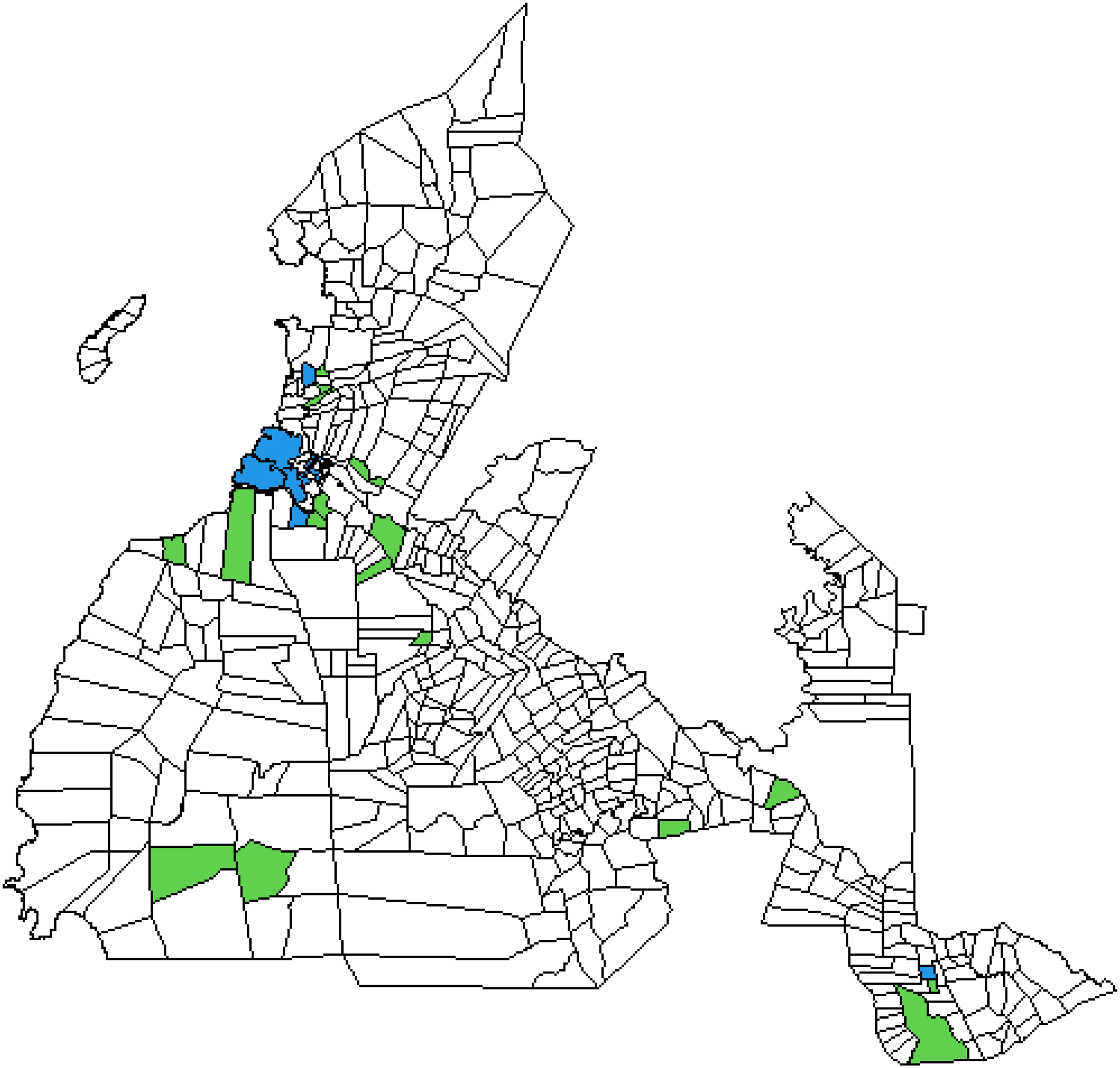
Sampled Barangays.
The survey begins with demographic questions and then asks subjects to rate their support for specific postconflict policies and their satisfaction with the BTA as well as the policy issues they believed important. 9 The postconflict policies from the 2014 CAB include the expanded jurisdiction of the Islamic Court, establishment of a reconciliation committee, and decommissioning process overseen by international bodies. Subjects are also asked about their satisfaction with the BTA in terms of regional stability, civilian participation, economic recovery and development, and corruption-free government, as well as their support for the controversial decision to extend the BTA's term. The satisfaction measures will be interpreted as a basis for the performance legitimacy of the BTA.
Results
This section provides the survey results. First, I describe the general support levels for the measures listed above and the descriptive features of the sample. Then, I present regression analyses connecting the individual characteristics of respondents with their satisfaction with and support for the peace processes.
Figure 2 plots the levels of satisfaction with the performance of the BTA. Consistent with existing observations such as in the BARMM plebiscite and Social Weather Station (2015), popular support for the MILF-led transitional body is quite high in Maguindanao. Negative responses are rare, but the distribution of positive responses varies. Approximately 75% of respondents indicated positive support for the BTA's economic performance, while support for stabilization and BTA extension is significantly lower.
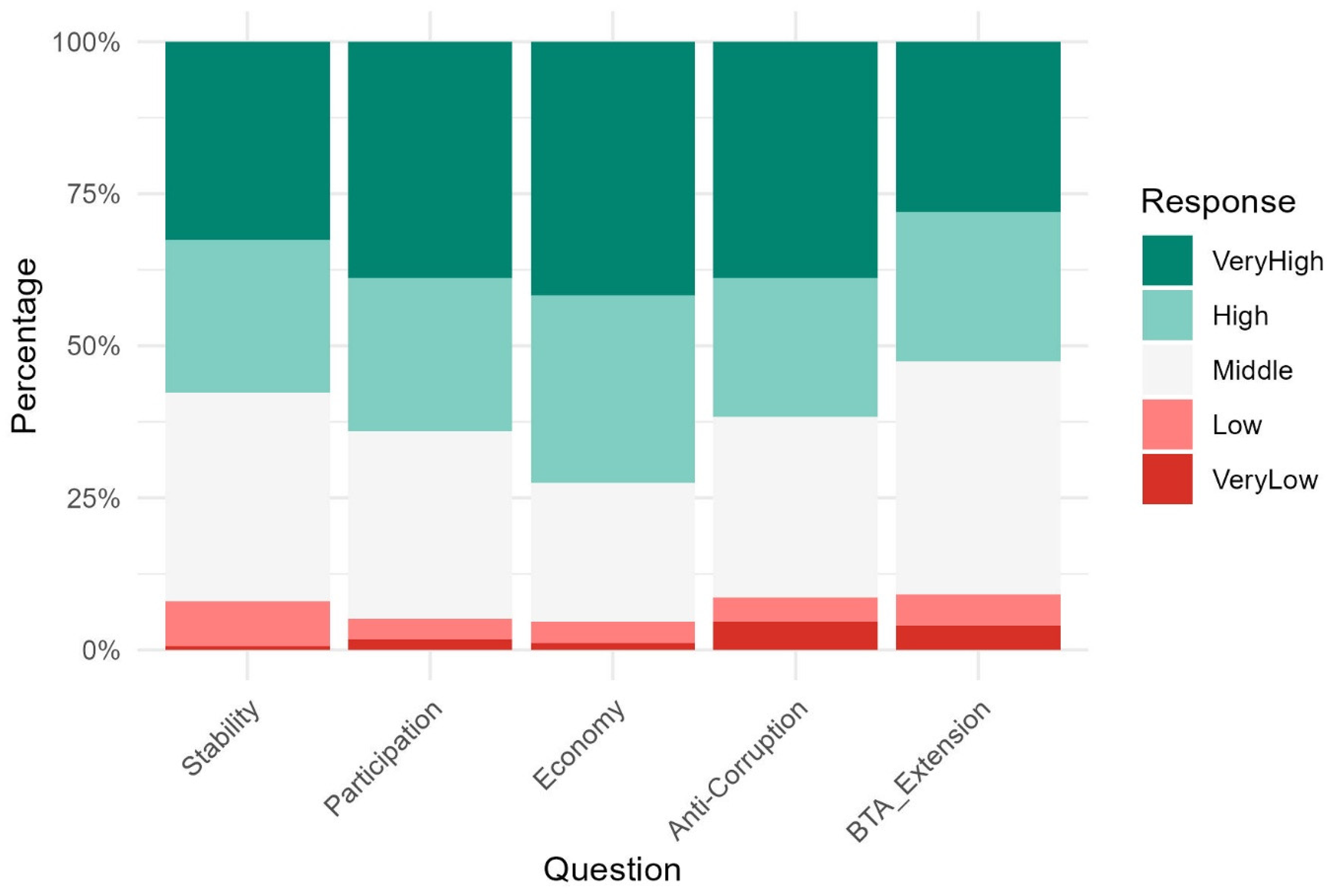
Satisfaction with the Bangsamoro Transitional Authority (BTA) is the Highest for Economic Recovery.
Figure 3 shows the support levels for three key postconflict policies included in the CAB. Negative responses are rare for all policies, with all three receiving similar levels of support. This consistency may stem from respondents’ unfamiliarity with the specific policies, leading them to express their general support for the peace process instead.
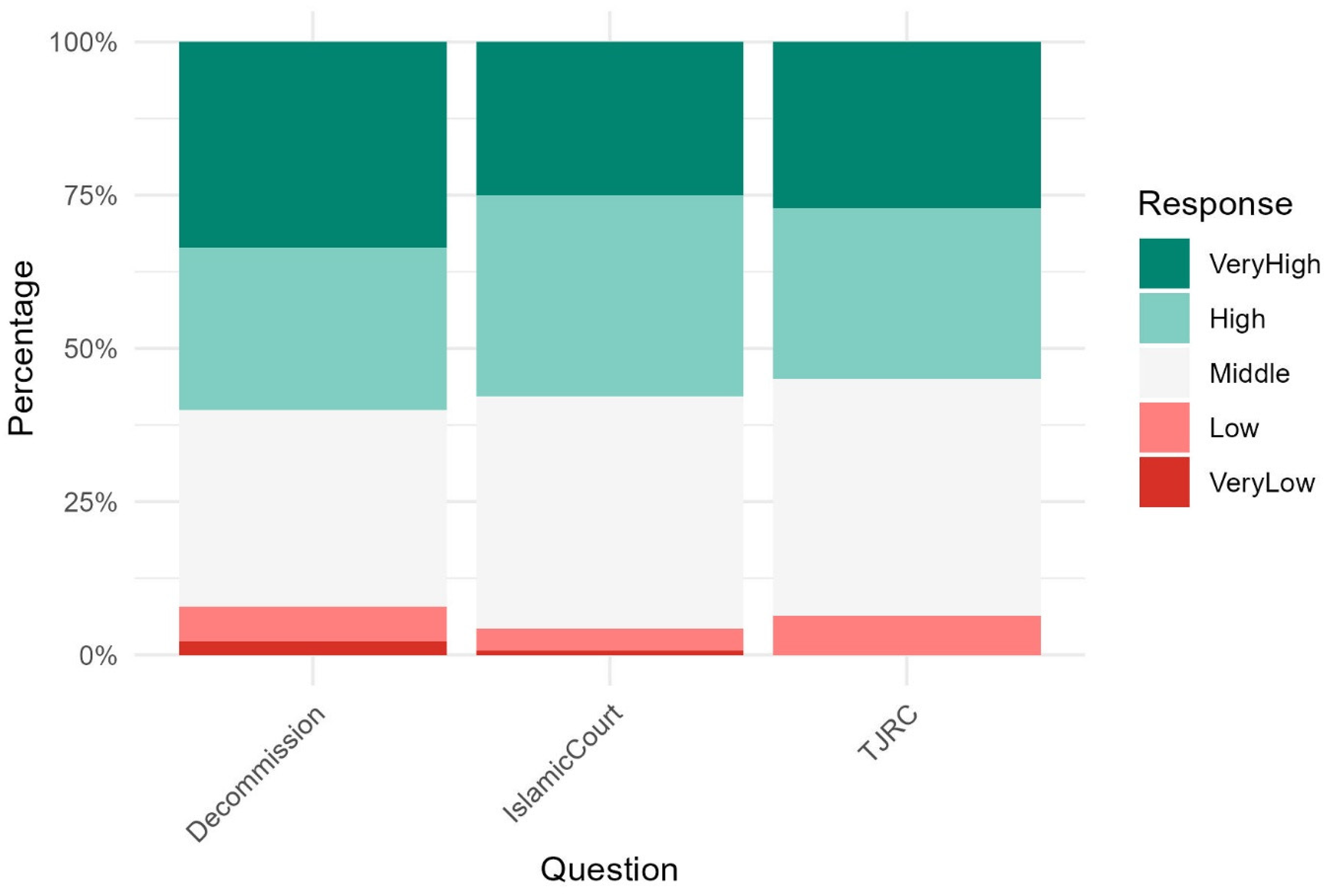
Supports for Three Key Policies Do Not Differ Much.
What do Maguindanao citizens expect the BARMM government to address? This survey also asks respondents to choose a political issue they want the autonomous government to tackle. Figure 4 shows the results. 10
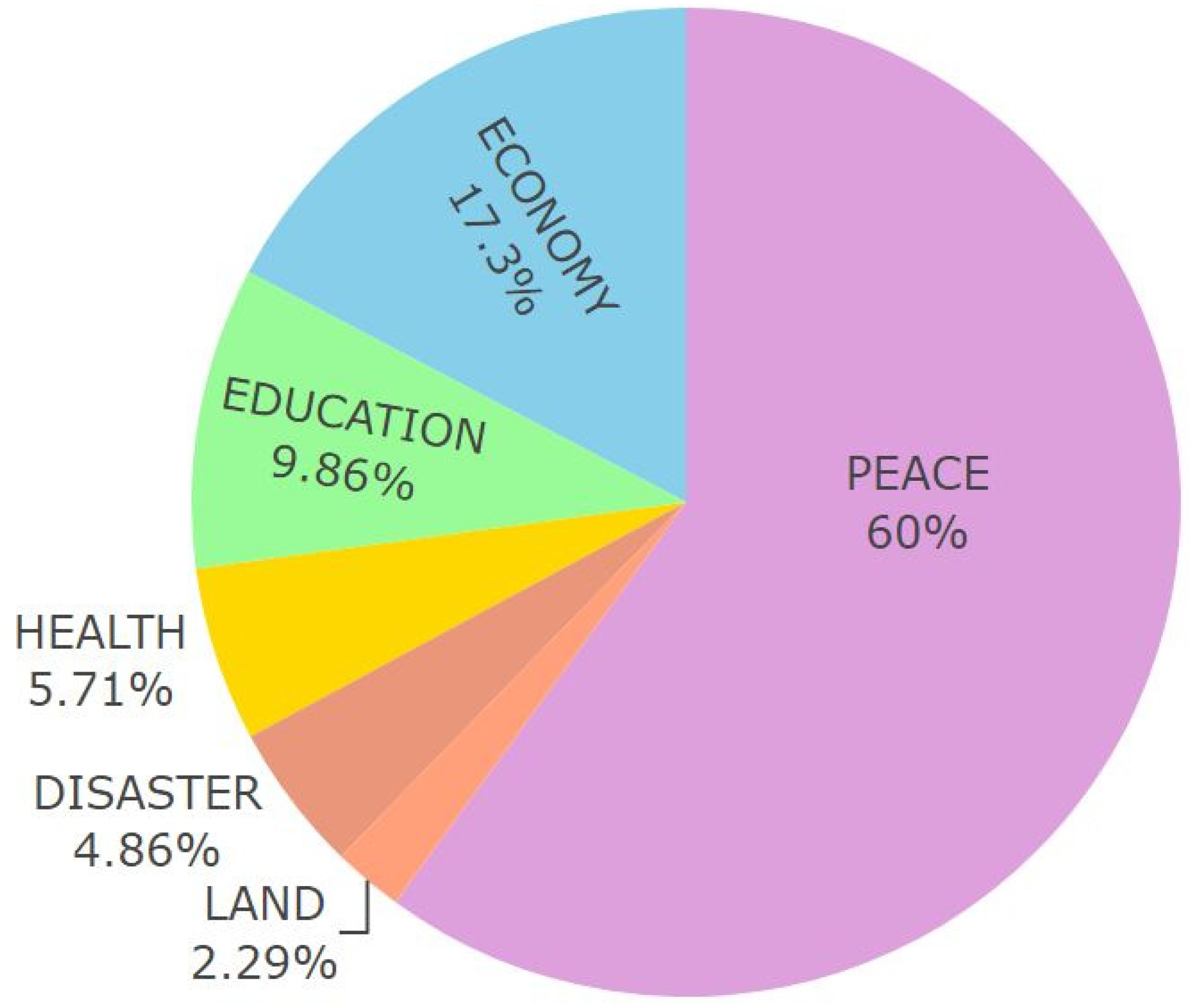
Important Political Issues: Peace/Stability Dominates.
A majority of respondents prioritize the issue of peace, followed by the economy and education. Despite poverty, lack of education, and inadequate medical care being more severe in the BARMM than in the rest of the Philippines, many people place peace above other significant economic issues. This aligns with the earlier anecdote that citizens in Maguindanao are more satisfied with economic issues than with stabilization (United Nations Institute for Peace, 2022). In a later section, I examine the factors influencing citizens’ priorities.
Generally, these results suggest that the peace process and the BTA have garnered high levels of support from citizens in Maguindanao, establishing a fair basis for performance legitimacy. This may not be surprising given that Maguindanao has been a strong support base for the MILF, which runs the BTA. The more intriguing aspect is how support levels vary based on citizens’ individual characteristics. To what kind of people, has the BTA established legitimacy?
Covariates
What types of individuals indicate stronger support for the peace process? Conversely, who is dissatisfied with it? To identify the correlates of support for peace, it is essential to measure substantively important individual features alongside support for peace. My survey questionnaires capture a rich set of variables in addition to support for peace processes. This section leverages the unique set of individual-level covariates to uncover the populations who are satisfied and dissatisfied with the peace process so far.
The measured variables include gender, income, age, job, education, language, barangay rurality, place of birth, perceptions of the level of insurgency, experiences of witnessing insurgency and rido, experience of forced displacement, affiliation with a political clan, recent political participation, and voting decisions in the last election.
As these demographic variables are useful in characterizing the sample, I provide summary statistics for selected demographic variables here. The summary statistics for the complete list of covariates are provided in Tables 1 and 2 in the Online Appendix. Male respondents constitute 51% of the sample. For jobs, homemakers constitute 29%, followed by the self-employed (23%) and farmers (20%). The language groups differ significantly between Cotabato City and Maguindanao. 11 The most frequent language group for Cotabato City was Maguindanao (44%), followed by Tagalog (33%) and Cebuano (13%). For Maguindanao province, Maguindanao (62%), Iranun (15%), and Teduray (13%) were the major groups.
Some variables provide unique information related to violence and politics. Before delving into the analysis of the correlates of support for peace, discussing these variables can help draw a rough picture of the characteristics of Maguindanao citizens.
A large portion of respondents (around 500 out of 700) reported that the level of insurgency-related violence in their neighborhoods had been zero. The questions were asked for two periods: before the signing of the CAB and after the establishment of the BARMM. While the perceived level of violence was low or none in both periods, it clearly decreased, with responses indicating no violence increasing by 12%.
Approximately 20% of respondents have witnessed insurgency-related violence. Interestingly, a similar portion reported witnessing rido-related violence. 12 While there is a substantial overlap, not all who have witnessed rido have also witnessed insurgency-related violence: 36 people only witnessed rido and 44 only witnessed rebellion, while 87 faced both. As often emphasized in area studies of Mindanao (International Crisis Group, 2023; Lara, 2014), ridos are perceived to be as frequent as insurgency-related violence.
As evident from the frequency of rido witnesses, clan politics is a significant aspect of Maguindanao's political landscape. However, survey results show that only 12% of respondents identify themselves as affiliated with political clans. 13 To my knowledge, this survey is the first to investigate clan affiliation with a substantial sample size. Further analysis of clan affiliation is provided in the Online Appendix. The analysis finds that richer, older, and nonfarmer Maguindanaoans outside of Cotabato City are more likely to express their clan affiliation, which in itself is not associated with their support for the MILF.
The turnout rate for the last general election in my sample is 83%. Based on the official record by the Commission on Elections, the estimated turnout rate in the 2022 presidential election in Maguindanao is 66%. Therefore, the sample's turnout rate is higher than what the official result suggests. However, some voters might have only participated in other contests rather than the presidential election, potentially making the presidential turnout smaller. This discrepancy should be noted as a potential deviation of this sample from the general population. Also, the bias for barangay centers noted above might be relevant. As voting stations are likely established in the barangay center, this may result in the sample having a higher turnout rate than that of the general population.
While running the BTA, the MILF fielded their sponsored candidates in the local elections. The UBJP was organized as the MILF's legal political wing in 2014 in preparation for future electoral competitions. It officially participated in the 2022 local elections for the first time. Although their overall electoral performance was mixed, they achieved an iconic landslide victory in Cotabato City. My survey results indicate that 81% of voters cast their votes for the UBJP candidates.
This survey briefly assesses respondents’ political knowledge with three simple questions: the names of the current president of the Philippines, capital of the BARMM, and current prime minister of the BARMM. Almost all respondents could recall the name of the president, but there were variations in their knowledge about the BARMM capital and leader.
Correlates of Support for Peace
When addressing correlates of support, the possibility of spurious correlations should be noted. For example, if a correlation between income and support is found, it cannot be easily concluded that the two variables are directly associated. Other variables correlated with both income and support can generate spurious correlations. For instance, if rural citizens have dissatisfaction over the BTA, this could lead to a spurious correlation between income level and support, as rurality might be negatively correlated with both income and support levels. To address concerns about spurious correlations, associations between variables should be estimated while holding other variables constant (ceteris paribus). A common method for this is regression analysis. In this section, I perform regression analysis on the support levels for the peace process and the individual characteristics of respondents.
Figure 5 displays the results of the regression analysis. For clarity, all independent variables in the model are binary, meaning they take the value of either 0 or 1, and the support level is standardized into an index with a mean of 0 and a standard deviation of 1. Thus, all coefficients in the plot represent the change in the level of support associated with a shift in each binary variable from 0 to 1, holding all other variables constant. The 95% confidence intervals are plotted with the point estimates. Effects significantly different from zero are coloured orange (lighter gray) for positive and blue for negative (darker gray).
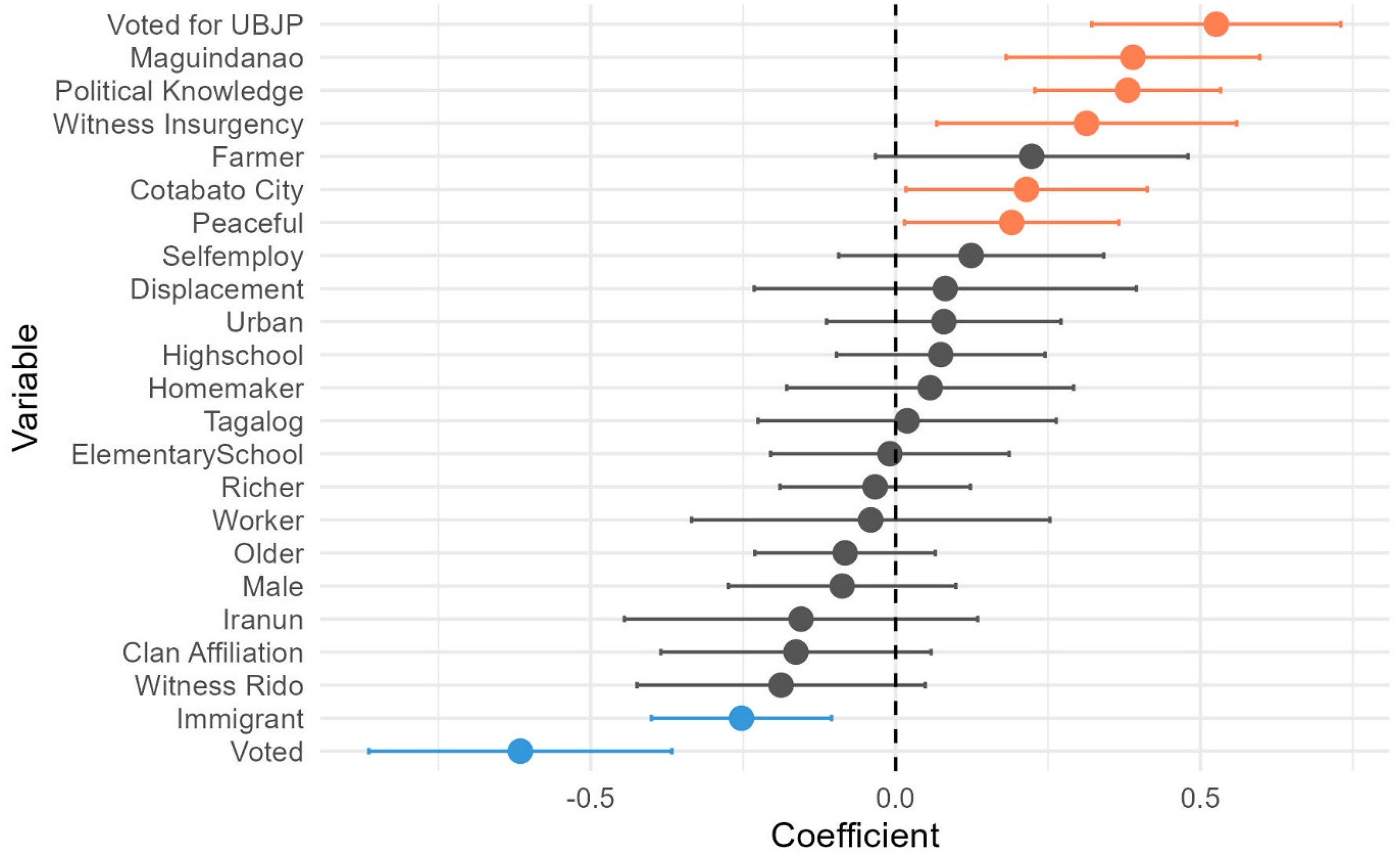
Political, Ethnic, and Conflict-Related Variables are Highly Correlated with Support Levels.
Demographic and economic variables (e.g. gender, education, income, job, etc.) are not strongly associated with satisfaction with the BTA. Combined with the high general support observed in Figure 2, the results suggest that the BTA has provided fair services to citizens regardless of their economic status.
However, the social and political variables indicate varying evaluations of the BTA. Most notably, those who turned out in the 2022 elections gave a very negative assessment of the BTA compared to those who did not vote. Among voters, those who voted for the UBJP expressed high levels of satisfaction. Overall, the satisfaction levels were similar between UBJP voters and nonvoters, while those who did not vote for the UBJP had significantly negative opinions of the BTA. This difference is quite substantive, exceeding half a standard deviation.
Figure 6 further illustrates the relationship by plotting the distribution of the BTA evaluation by voter group. The diamond symbols represent the mean of each group. It might seem obvious that those who did not vote for the UBJP had negative opinions of the BTA because the MILF led it. More intriguing is the similarity in distributions between UBJP voters and nonvoters, implying that the UBJP or MILF failed to mobilize voters effectively, while those opposing the MILF-led BTA succeeded in doing so.
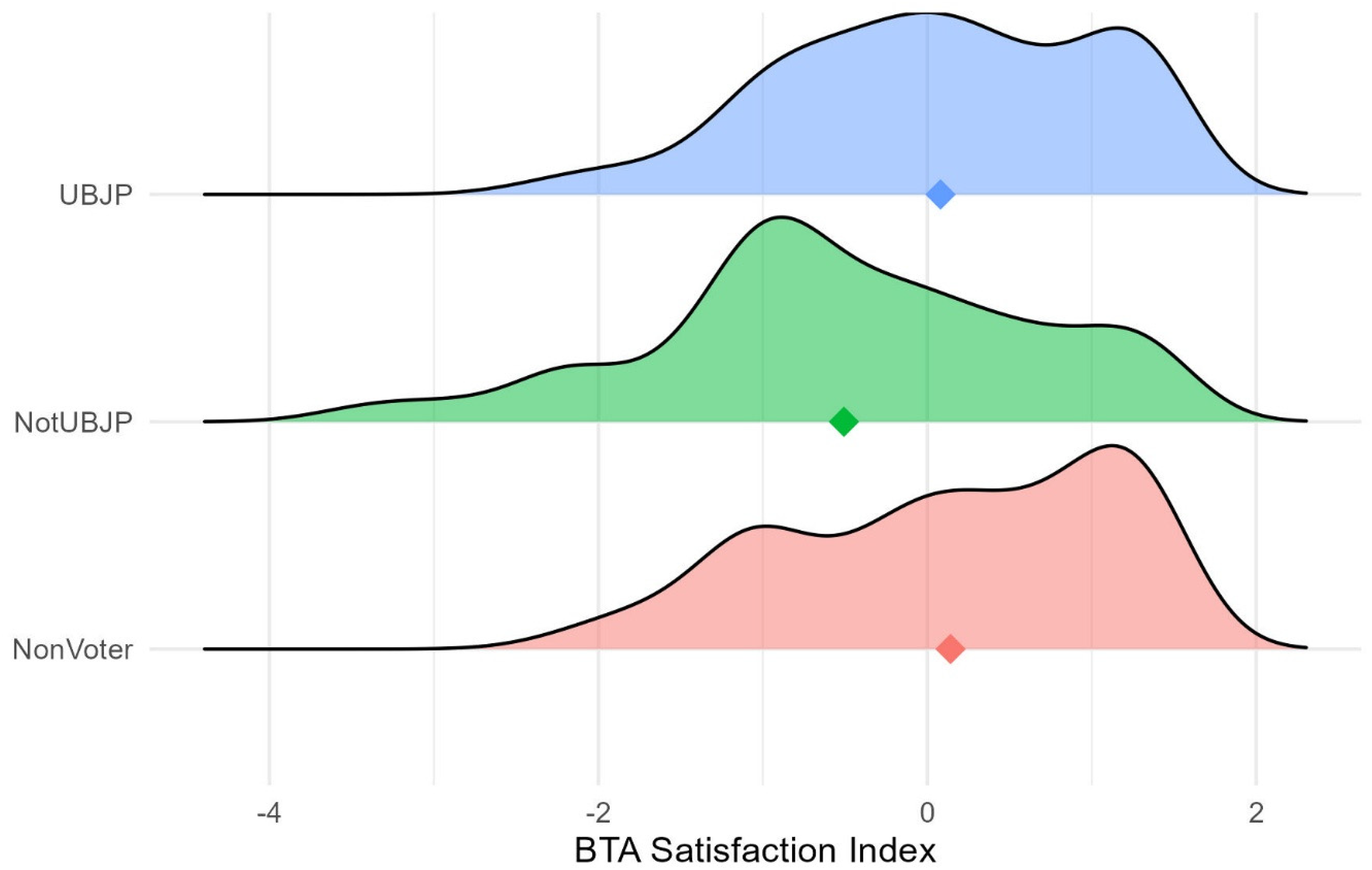
The United Bangsamoro Justice Party (UBJP) Voters and Abstentees were Much Satisfied with the Bangsamoro Transitional Authority (BTA) Performance.
Second, ethnic dimensions should be noted. Maguindanao speakers, expected to be ethnic Maguindanaoans, strongly evaluate the BTA. While regional and ethnic divides among the Moros are well known and partly caused the historical split between the MNLF and MILF, an ethnic division emerges even within the Maguindanao province. Maguindanaoans are largely satisfied with the BTA governance and are its strongest supporters (see Figure 11 in the Online Appendix for the distributions). Satisfaction among other ethnic groups is lower on average and varies considerably.
These results provide a concerning implication for the legitimacy problem in Bangsamoro. While the performance of the BTA has been evaluated high in general, the performance legitimacy is cultivated to a specific ethnic group. This implies that BARMM's legitimacy can be questioned from the perspective of consociationalism.
Encouragingly, those who have directly witnessed insurgency-related violence show stronger support for the BTA. This correlation remains positively significant even after controlling for clan affiliation, locality, and UBJP preference, suggesting that reconciliation efforts in the peace process may have had a positive impact. Additionally, the absence of recent violence (“Peaceful”) correlates with the positive evaluations of the BTA, further indicating that the peace process may be fostering a supportive environment among those affected by past conflicts.
A geographic correlation should also be noted. Respondents in Cotabato City generally express greater satisfaction with the BTA, even after controlling for urban–rural differences. While Özerdem and Podder (2012) suggest that remote, rural areas are more supportive of joining the MILF, the satisfaction with the MILF-led autonomous government in Maguindanao appears to be driven more by a Cotabato-other difference than a simple rural–urban divide. When I compare rural and urban barangays in Cotabato City or those in other municipalities, significant differences are not found. Given that the BARMM government is located in Cotabato City, Cotabato residents might naturally be more exposed to the government’s performance. However, it should be noted that citizens outside of the capital felt less satisfaction with government. An information campaign or the delivery of services outside the capital could help extend the legitimacy of BARMM.
An unexpected but strong correlate is immigration. Those born in different municipalities from where they currently live have strong negative opinions of the BTA. This is tricky to interpret, as forced displacement due to the insurgency (“Displacement” in the figure) does not have a strong effect. While Podder (2012) reports grievances among forced evacuees, she does not explain the correlation found here.
To better understand this unexpected finding, I performed an additional analysis (Figure 7). First, I sorted immigrants by the time of immigration: less than 5 years ago, between 5 and 10 years ago, and more than 10 years ago. All categories showed the same statistically significant effects, suggesting that it is driven by a single recent event. Next, I differentiated immigrants from other municipalities in Maguindanao, other BARMM provinces, and outside BARMM. Interestingly, those who moved within Maguindanao indicated lower satisfaction with the BTA than those from outside the province. Overall, the results suggest that short-range immigrants within Maguindanao have grievances with the BTA regardless of when they immigrated. My tentative interpretation is that these local immigrants may face difficulties accessing services provided by the BARMM. As a newly established government in a region with insufficient state penetration, the BARMM may have relied on existing local networks, such as clan networks, to provide services. This reliance may marginalize immigrants who are not part of these local communities. Future qualitative studies should investigate the specific reasons for these grievances among this social group.
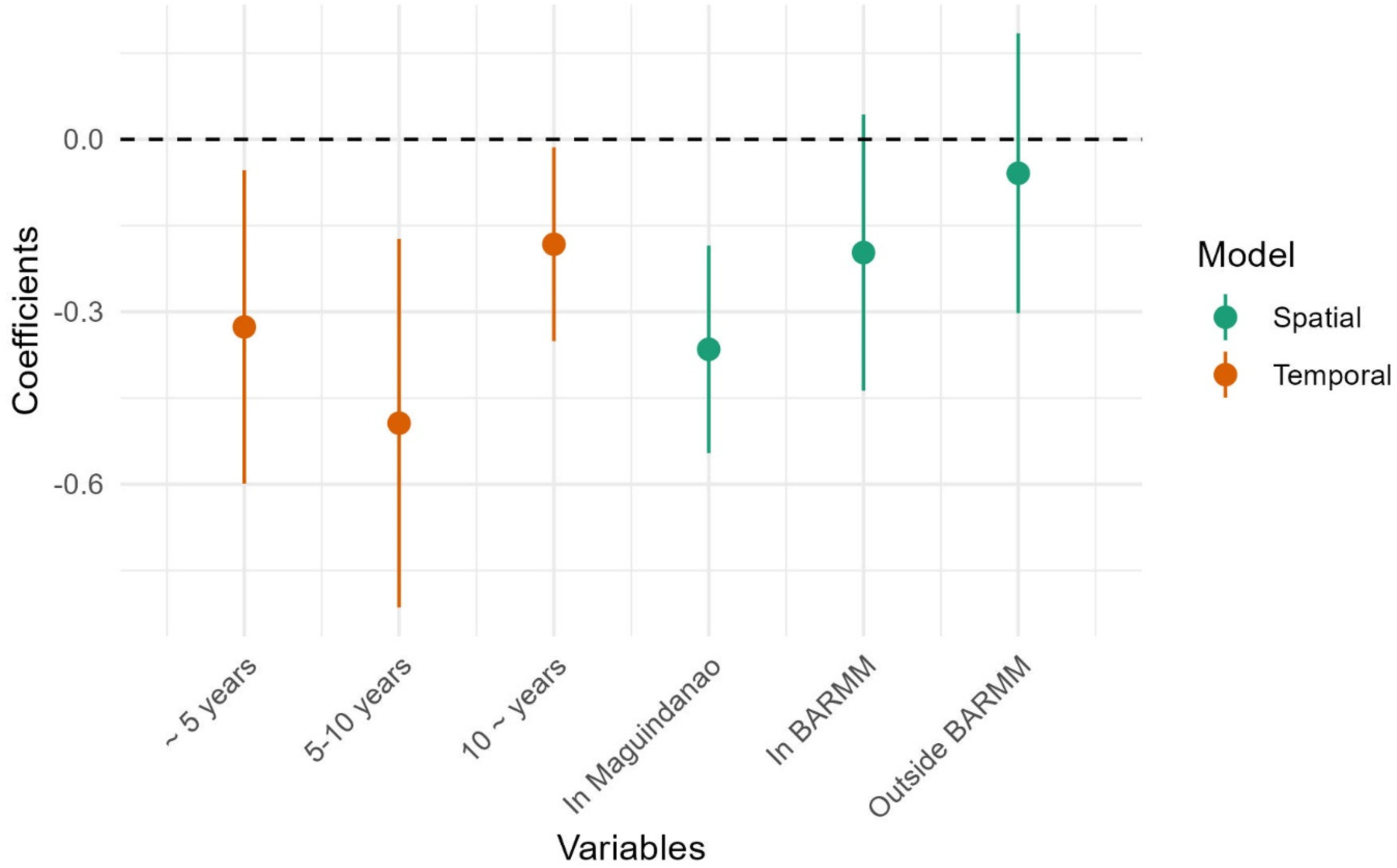
Temporal and Spatial Types of Immigrants and Their Satisfaction.
These patterns are largely consistent across all five fields of the BTA's performance: stabilization, civilian participation, economic recovery and development, anticorruption, and the BTA extension. In the Online Appendix, Figures 12 to 16 show the coefficient plots for each subfield. The most significant predictors in Figure 5 yield consistent results across them.
A few differences are worth discussing, however. First, clan-related variables such as clan affiliation and experience of witnessing rido show a stronger negative correlation with satisfaction with the BTA's anticorruption efforts. Combined with the fact that clan variables are not associated with other evaluation measures, this indicates that clan members have specific grievances over corruption in the BTA. This aligns with the narrative that the rivalry between the MILF-UBJP and political clans is emerging as a serious cleavage in the BARMM, with clans perceiving the MILF-led BTA as corrupt (International Crisis Group, 2023). Second, the performance of the BTA to elicit popular participation got lower points from male respondents. The participation of women's civil society organizations is an outstanding feature in the Mindanao peace process (Ferrer, 2013; Japan International Cooperation Agency, 2016; Trajano, 2020). However, this may have engendered some sense of alienation in the male citizens in Maguindanao. Third, respondents in Cotabato City are more satisfied with the peace process than others for most policy areas. However, their response to the decision to extend the BTA was quite negative.
Figure 8 reports the correlates of support for three key policies in the CAB. Variables significantly correlated with support for the peace agreement largely overlaps with those in Figure 5. Thus, those with positive opinion of the CAB also tend to have positive opinion of the BTA's performance. Contrary to Hartzell et al. (2024), which find that the perceived fairness of the CAB is higher among male respondents, my sample does not indicate a similar pattern. Separate analyses for each of the three policies are provided in the Online Appendix (Figures 17–19).
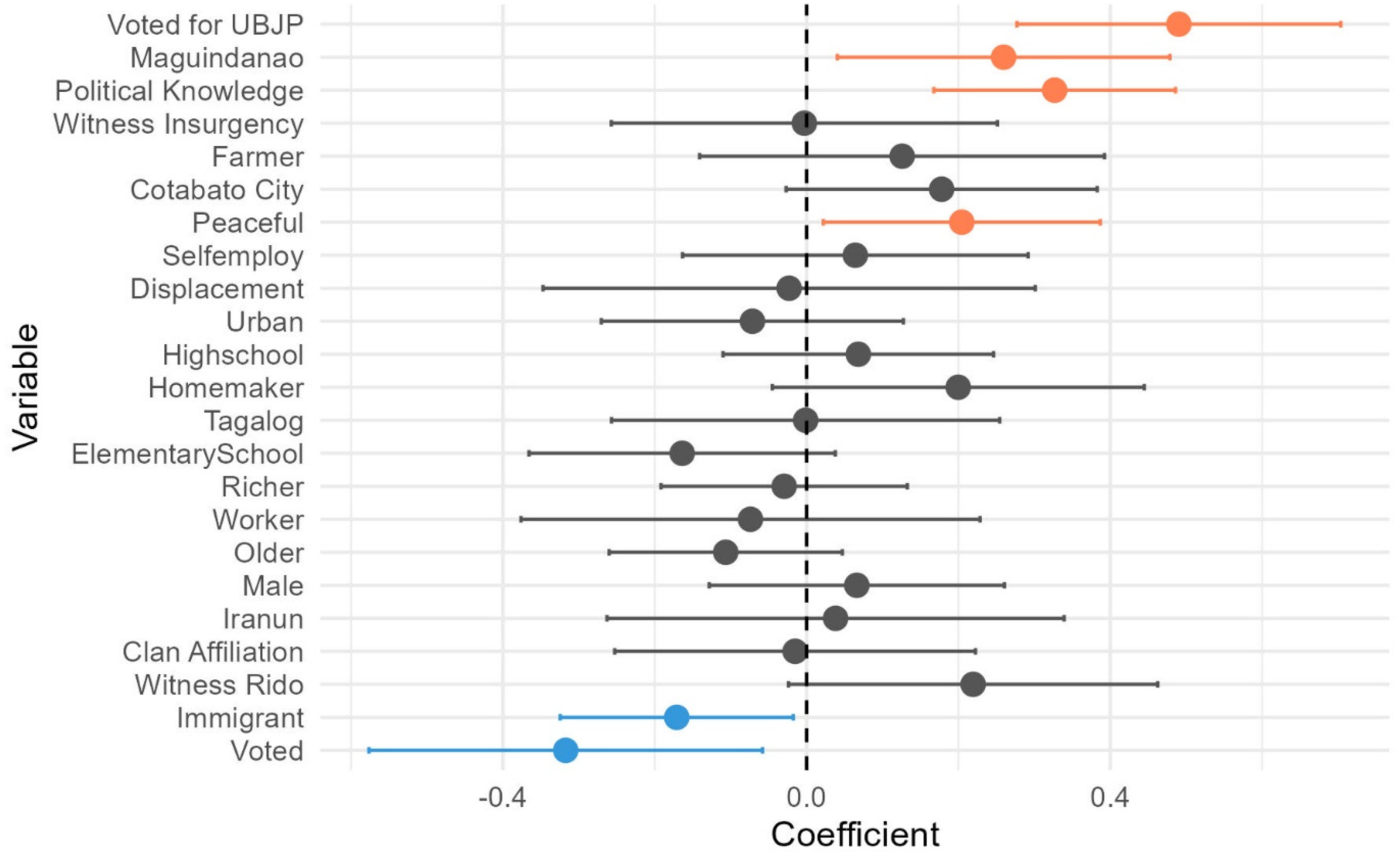
Correlates of Support for Peace Policies.
Lastly, I provide an analysis of how citizens’ priority policy areas vary (the baseline pattern is shown in Figure 4). As some policy areas are chosen by too few respondents, my analysis aggregates education, health, disaster, and land into the “other” category. A multinomial regression model is used to predict whether respondents choose peace, economy, or other as their priority policy area.
Figure 9 demonstrates the results. For each variable, its effects on the likelihood of choosing peace and economy (compared to the “other” category) are reported. The number of significant variables is limited, suggesting that citizens generally share similar views on policy priorities in Maguindanao.
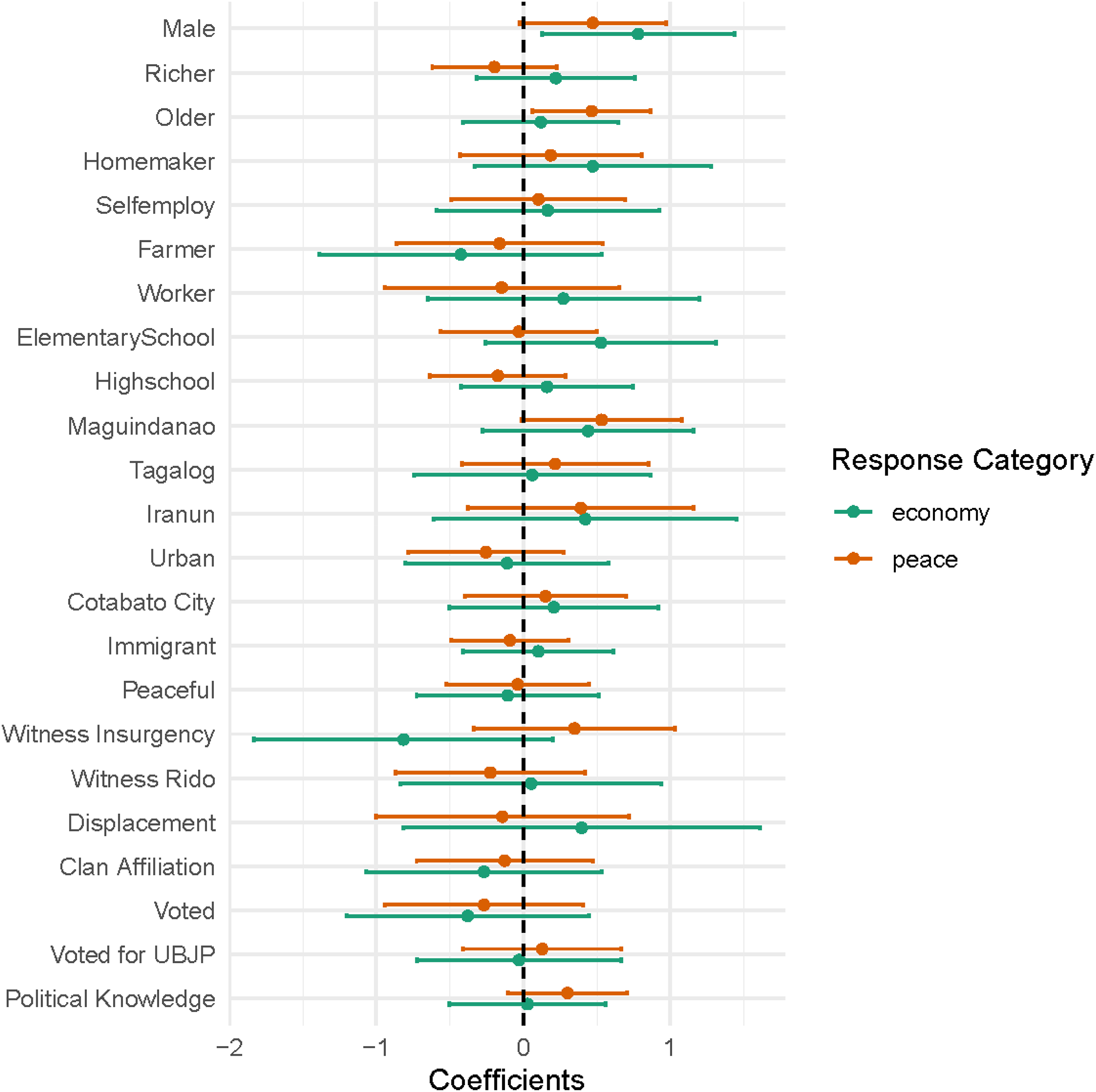
Priority Areas Do Not Vary Much.
A gender difference in policy priority is observed: female respondents prioritize education and healthcare, while male respondents focus more on peace and, especially, the economy. A generational difference is also noted, with older respondents placing more weight on stability than younger ones.
An important finding is the emergence of ethnic differences, with Maguindanao respondents showing a stronger interest in peace-related issues compared to other language groups. This result becomes even more intriguing when considered alongside their levels of satisfaction. While Maguindanaoans prioritize stabilization more than other ethnic groups, the region's stabilization efforts were evaluated lower, and the BARMM performed better in economic recovery. Despite this, Maguindanaoans expressed a more favorable evaluation of the BTA's performance. These findings suggest that the stronger support from Maguindanaoans does not directly result from a match between their needs and the BARMM's policy supply.
Two potential explanations can be proposed. First, programmatic policy categories may not significantly influence citizen satisfaction. Instead, the BTA may have provided patronage benefits to certain ethnic groups, leading to divergent levels of satisfaction. Second, a cognitive bias among Maguindanaoans may have influenced their perception of the BTA's performance, resulting in more favorable evaluations.
The analysis of the correlation between public opinion and respondent characteristics reveals that public perceptions of the BTA's performance are divided along with specific social cleavages. While economic and employment-related variables show no significant differences, political, geographical, and ethnic factors are strongly correlated with evaluations of the BTA. Notably, these differences do not seem to stem from the BTA's policy programs, as the priority issues remain relatively consistent across groups. Instead, ethnic and political patronage may underlie the varying levels of support. These findings raise concerns about the basis on which the BTA's performance legitimacy is being established. It appears that MILF supporters and ethnic Maguindanaoans constitute the primary sources of legitimacy, while other groups are excluded. This points to the existence of a heterogeneous set of “legitimizers” and underscores the uneven distribution of public trust and support.
Conclusion
This study offers a comprehensive examination of public opinion regarding the Bangsamoro peace process among Muslim residents in Maguindanao. The findings reveal a generally high level of support for the BTA and the peace process, especially in areas related to economic recovery. However, significant variations in satisfaction exist, particularly along with ethnic and geographic lines. Ethnic Maguindanaoans express higher satisfaction compared to other groups. Existing studies have already suggested the MILF's strong affiliation with Maguindanaoans (Hartzell et al., 2024; McWeeney et al., 2023). This finding further confirms the similar tendency for postconflict governance. Whether the BTA could expand the support outside of the ethnic Maguindanaoans will be a key for successful transition and consolidated legitimacy. Additionally, short-range immigrants within Maguindanao exhibit strong negative opinion toward the BTA. This finding highlights the social group, which has not attracted sufficient attention, as a potentially important factor. Political dynamics plays a crucial role as well, with those who supported the MILF-affiliated UBJP showing higher satisfaction with the BTA, while those who did not support the UBJP expressed dissatisfaction.
These results underscore the complex sociopolitical landscape in Maguindanao and the importance of addressing the diverse needs and grievances of different groups. However, differences in economic backgrounds are not significantly associated with satisfaction with or support for peace. Furthermore, contrary to the emerging narrative of the rivalry between the MILF and the political clans, clan-affiliations are not systematically associated with support for the BTA and peace policies. While elite-level tensions are clear, grassroots members of political clans do not necessarily have negative opinion in connection to the transition government.
A key takeaway for discussions on postconflict legitimacy is the inherent limitation of performance legitimacy due to social cleavages. In Bangsamoro, needs and levels of satisfaction are divided along with ethnic lines, particularly between the majority Maguindanaoans and other ethnic groups. The relatively high overall satisfaction is largely driven by the strong support of Maguindanaoans, while the lower satisfaction among ethnic minorities is obscured in the aggregated data. This suggests that performance legitimacy may conflict with the principles of consociationalism, which prioritize the representation and satisfaction of minority groups.
A few limitations should be noted, however. First, the geographic coverage of this survey is limited to Maguindanao and Cotabato City. These localities are important because they are the core support base of the MILF and the capital area of the BARMM. However, equally important are the areas where the support is weaker. While the regional differences in the public opinion of the peace process are well-documented (Buendia, 2012; Hartzell et al., 2024), we know little about within-province individual variations. For example, Sulu is known for its skepticism against the BARMM, demonstrated by its nay vote in the Bangsamoro plebiscite. However, it's worth examining exactly what kind of people in Sulu is opposing the peace process to unpack the black box.
Another limitation is that this study focuses on Muslim subjects only, leaving out other religious groups. An interesting event in the 2022 local elections was that the UBJP performed much better in Cotabato City, where the Christian population is much larger than other areas in Maguindanao. This implies that the traditional hostilities between the Moro-MILF and Christian-GRP might be changing. Though this study confirms that the ethnic support from Maguindanaoans for the BTA remains strong, I cannot answer how Christians compare with them. A concerning trend in the BARMM is the intensifying conflict between the non-Muslim indigenous peoples (NMIPs) and Moros (International Crisis Group, 2023). The opinions of NMIPs are worth a separate investigation. 14
Lastly, measurement issues inherent to the survey analysis should be noted. This study highlights performance evaluation as a source of performance legitimacy. However, legitimacy itself is difficult to measure, and performance legitimacy is only an aspect of people's acceptance of rules, though suggested crucial in the literature (Dagher, 2018; Kaplan, 2008). Qualitative studies should supplement the specific logics of why people accept the rule by the new autonomous government. In addition, the lower satisfaction observed in this study should not be conflated with political grievances, which involve a sense of injustice and active efforts for change. Instead, dissatisfaction may result in passive acceptance or disengagement.
Combining these results and the policy-oriented literature, policy implications can be drawn. First, people are quite satisfied with the economic recovery while not so much with the stabilization process. Moreover, many people prioritize stability to economy. These indicate that economic measures, which have been successful and politically less sensitive, may not necessarily mitigate popular concerns over the resurgence of violence or substitute the normalization and decommissioning. Second, Maguindanaoan bias is salient, even in the Maguindanao province. It is imperative to expand the services to the non-Maguindanao population to consolidate an inclusive autonomous region. Third, the dissatisfaction among immigrants should be investigated and addressed. This social group has not enticed scholarly and practical attention but it has indicated a negative attitude toward the BTA at a systematic level.
Supplemental Material
sj-pdf-1-saa-10.1177_18681034251334818 - Supplemental material for Who Supports the Peace? A Survey of Postconflict Public Opinion in Maguindanao, the Philippines
Supplemental material, sj-pdf-1-saa-10.1177_18681034251334818 for Who Supports the Peace? A Survey of Postconflict Public Opinion in Maguindanao, the Philippines by Tatsuya Koyama in Journal of Current Southeast Asian Affairs
Footnotes
Declaration of Conflicting Interests
The author declared no potential conflicts of interest with respect to the research, authorship, and/or publication of this article.
Funding
The author disclosed receipt of the following financial support for the research, authorship, and/or publication of this article: This work was supported by the New York University, (grant number George Downs Summer Research Prize (2022)).

Supplemental Material
Supplemental material for this article is available online.
Notes
Author Biography
References
Supplementary Material
Please find the following supplemental material available below.
For Open Access articles published under a Creative Commons License, all supplemental material carries the same license as the article it is associated with.
For non-Open Access articles published, all supplemental material carries a non-exclusive license, and permission requests for re-use of supplemental material or any part of supplemental material shall be sent directly to the copyright owner as specified in the copyright notice associated with the article.
