




Abstract
Socio-economic development is often linked to efficient infrastructure provision. In China, the government has rolled out ambitious infrastructure projects as part of its national development strategy. There is much to praise about China’s infrastructure provision, such as its remarkable scale and speed of infrastructure delivery. However, based on studying 153 infrastructure cases between 1983 and 2018 and two in-depth case studies, we find that China’s infrastructure performance is not as positive as often assumed. We show that infrastructure projects continuously arrive significantly over budget. We argue that this cost performance depends – similar to Western countries – on inaccurately anticipating technical hindrances and geographical challenges. In addition, however, we identify another important and so far less discussed project performance determinant specifically relevant to the Chinese context: population resettlements and land acquisition.
Introduction
Socio-economic development is often linked to efficient infrastructure provision. However, infrastructure projects around the world often arrive over budget and are often delivered late (Flyvbjerg et al., 2009: 171–172). These common pitfalls in infrastructure delivery exist across most sectors including roads, rail, tunnels, bridges, public information and communications technology (ICT) infrastructure, hydropower dams, electricity projects, public buildings, and wind farms (Ansar et al., 2014; Cantarelli et al., 2012; Flyvbjerg and Budzier, 2011; Flyvbjerg et al., 2003; Kostka and Anzinger, 2016; Rigsrevisionen, 2009; Sovacool et al., 2014; Whitfield, 2007). Prominent examples are the international airport at Denver, USA, overrunning its cost by almost 200 per cent (Flyvbjerg, 2007), and Hamburg’s Elbphilharmonie concert hall in Germany, which was included in a ranking of the most expensive skyscrapers ever built after its costs had escalated from EUR 352 million to EUR 561 million by 2008 (Fiedler and Schuster, 2015).
Reasons as to why final project costs become higher than the initially planned expenses have been widely discussed in academic literature, and research has identified multiple determinants. Most prominently, those reasons include increasing complexity with multiple stakeholders (Sovacool and Cooper, 2013), underestimations of risks (Kahneman and Tversky, 1979), insufficient risk management during project implementation (Rothengatter, 2017), and strategic deception in the form of purposeful cost underestimations to outbid competing offers (Flyvbjerg, 2008). Although much research has already been conducted on project performance determinants, it also becomes clear from examination of this research that the canon of “international best practices” in infrastructure governance and sustainable infrastructure provision is still based on findings from industrialised and democratic Western contexts (Haber, 2016; Mueller et al., 2016).
To the contrary, comparatively little is known on the determinants of performance for infrastructure provision in other contexts, such as China. In China, infrastructure development has repeatedly stood at the core of major policy decisions. For instance, in the aftermath of the 2008 financial crisis, the country’s central government introduced a gigantic infrastructure-centric stimulus package to revamp domestic growth (Heilmann and Shih, 2013). A common perception is that China stands out by providing infrastructure cheaply, within budget and within schedule with infrastructure provision being a core driver of economic growth. For example, research by Shiu et al. (2016) on China’s Western Development Strategy finds that infrastructure investment in the country’s underdeveloped western provinces had contributed to economic growth in the region by removing capacity constraints in energy supply and transportation. Following this line of argument, the effective use of infrastructure resources has often been viewed as crucial not only for maintaining economic growth (Hulten, 1996) but also for preserving social stability and, ultimately, the monopoly of power of the ruling Communist Party.
However, different from such widespread perception, China suffers – similar to Western countries – cost overruns in its infrastructure project delivery with projects arriving significantly over budget at the time of completion. For example, Ansar et al. (2016) have shown that transport projects in China overrun their costs by 31 per cent on average, thereby performing neither better nor worse than transport projects in rich democracies. Given China’s large spending on infrastructure, such cost overruns might incite high economic risks, even leading to economic fragility, with Ansar et al. (2016) contending that overrun costs have equalled as much as one third of China’s enormous USD 28 trillion pile of debt (Ansar et al., 2016). This becomes even more problematic when taking into consideration projects, which are often debt financed by cash-strapped local governments and unlikely to generate revenues (Yu and Mitchell, 2019), such as large and empty “ghost cities,” gigantic wind farms without grid connection, and poorly constructed “tofu projects” (Kostka, 2017; Sorace and Hurst, 2016). Such developments might challenge the view of autocratic systems’ top-down approach being favourable for project implementation (Ansar et al., 2016: 372). On top of that, some scholars have begun calling into question the conventional wisdom regarding the growth-inducing effect of China’s infrastructure boom. Referring to the Western Development Strategy, Shi and Huang (2014) suggest that most of China’s western provinces were already over-invested in infrastructure as early as 2008, and that more recent developments in the region provided no further positive growth effects.
A nuanced understanding of the determining factors of infrastructure cost overruns in China is therefore crucial not only for project management, but in particular also for evaluating socio-economic development impacts of infrastructure provision, with the latter being a debated field amongst scholars (Ansar et al., 2016; Shiu et al., 2016). Contributing to those bodies of literature, our research investigates China’s infrastructure cost performance with comparisons between sectors, as well as the reasons why projects become more expensive at completion compared to the initially planned expenses. Looking at China and the still sparse academic work that exists on this subject helps to advance theoretical assumptions by extending them to infrastructure delivery and economic development in a non-Western context.
Our findings show that factors such as technological difficulties during project implementation, which the literature on infrastructure projects in Western countries has already identified as detrimental, also impact project expenses in China. However, our analysis points towards another, so far less discussed determinant continuously leading to higher than expected expenses in the Chinese case: population resettlements and land acquisition (RLA). We find that RLA cost overruns amount to 21 per cent of China’s total cost overruns in infrastructure provision, and they impact final project costs across sectors, while being especially high for hydropower (100 per cent cost overruns in RLA on average) and railway projects (93 per cent cost overruns in RLA on average). These findings are surprising: given China’s historical experience with even large-scale resettlement projects, one would rather expect that having learnt from previous projects would allow for more accurate planning. Yet, we illustrate that policies related to RLA compensation rates and subsidies have frequently been changed in recent years. While those changes have allowed for increasing compensation rates for the resettled communities, they have, on the other hand, not been sufficiently anticipated during the infrastructure planning phases and have in that way affected project performance negatively.
The persistently higher than expected expenses for RLA components in infrastructure provision distinguishes the Chinese context from other countries and therefore calls for a more thorough investigation. Studying the determinants for cost overruns in China, with a special focus on RLA, allows us to gain a more nuanced understanding of China’s infrastructure provision and to contribute to the theoretical refinement on infrastructure performance, more broadly.
Methodology and Data
To analyse the determinants for infrastructure performance in China, we follow previous research (Ansar et al., 2016; Flyvbjerg, 2007) using cost overruns as a performance indicator. Cost overruns are defined as the difference between estimated costs at project start and actual project costs at completion. Our analysis employs a mixed-methods approach. In our first step, we compiled a dataset of 153 infrastructure project cases in China based on project completion reports published by the Asian Development Bank (ADB) and the World Bank (WB). We used ADB and WB project reports to ensure that project costs are calculated in a similar, coherent and comparable manner to allow for systematic analysis. This is important because project costs are the sum of multiple, individual cost components. We finalised data collection in June 2019 and included into our database only projects which had been completed by that point. The database includes a total of 114 projects in the transport sector (railway, roads, ports and waterways), 38 in the energy sector (hydropower, oil and gas, power transmission, and thermal) and one project in the ICT sector. Construction of our projects commenced between the years 1983 and 2011, with completion of the most recent project having taken place in 2018. Our projects vary from large-sized (planned for >USD 750 million), to medium-sized (USD 250-750 million), and small-sized (<USD 250 million).
We used our database to calculate cost overruns for each project individually as well as across sectors to offer descriptive statistics of cost overrun patterns in China. To determine China’s overall cost overrun percentage, we used weighted average cost overruns as comparisons. This is because projects consist of several individual components, which were funded by different sources, and therefore by a combination of foreign currency in USD (United States Dollars) and local currency in CNY (Chinese Yuan). We weighted cost overruns in a way that the percentage of a cost overrun would account for the amount of both currencies involved related to respective inflation rates. RLA cost overruns are, similar to total cost overruns, the sum of different individual project cost components. These include, for example, compensation rates for land acquisition, temporary land use, houses, and crops as well as costs for relocating infrastructure and buildings. While resettlements and land acquisitions are two different parts, they are, however, closely related. For this reason, we follow the ADB and WB reports, which consider them together. We also used the database to analyse the determinants for cost overruns deductively according to what the literature suggests as determining factors, and we inductively inspected additional factors that were potentially applicable specifically to the Chinese context.
Furthermore, we offer two project-level case studies from two sectors with highest RLA cost overruns, railway and hydropower, and investigate infrastructure delivery performance in the Chongqing–Lichuan Railway Development Project (CLR), and the Nuozhadu Hydropower Dam. We selected those two cases as illustrative examples to present how various factors impact cost overruns in China, and in particular how high RLA cost increases emerge at the individual project level. The CLR and the Nuozhadu Dam are suitable since they are least likely cases for high RLA cost overruns: for the CLR, we would expect experience and learning from the comparatively nearby resettlement projects for the Three Gorges Dam to allow for lower RLA cost overruns. Similar assumptions would apply for the Nuozhadu Dam along the Lancang River in Yunnan Province, given China’s wide experience with large-scale resettlement projects for hydropower dam constructions in Yunnan and beyond. The selection of those two least likely cases helps to offer in-depth accounts on the inherent difficulties in eliminating cost overruns in China related to RLA across different sectors. The case studies draw on primary sources and interviews conducted between 2011 and 2015 with resettled villagers, industry representatives, academics, NGO activists, and government officials at the central, provincial, county, and township levels in China.
The subsequent sections present our results. We introduce our findings on infrastructure cost performance in China compared to the rest of the world. We also discuss the determinants of infrastructure cost overruns comparing the case of China against the broader literature on infrastructure performance. We further present patterns for RLA cost overruns. Subsequently, the two case studies illustrate in detail how the determinants for project cost overruns, in particular with regard to RLA, play out at the project level. The conclusion synthesises our findings and discusses the implications of RLA cost overruns in infrastructure projects for the field’s literature and against a wider context for China’s socio-economic development.
Results
Patterns and Determinants for China’s Infrastructure Performance
The 153 cases in our database collectively overrun costs to an amount of CNY 97 billion, which implies cost overruns of 22 per cent on average. Taking into account sector distribution unveils that transport projects in China have the highest cost increases with 26 per cent. More specifically, cost overruns in rail constructions average 28 per cent compared to 34 per cent in the rest of the world, whereas road projects overrun costs by 29 per cent compared to 20 per cent in other countries (Cantarelli et al., 2012: 12). With 15 per cent cost increases in the energy sector, China performs better than in the transport sector. Hydropower projects overrun costs by only 26 per cent, which is below the global average of 96 per cent (Ansar et al., 2014: 48; Kostka and Fiedler, 2016). Our results confirm previous findings (Ansar et al., 2016: 372) of China experiencing significant cost overruns across sectors and performing similarly or only slightly better compared to Western countries.
Weighted against the literature on infrastructure cost performance, we first find that determinants for cost overruns in China resemble those in Western countries. Similar to Western countries, project cost overruns in China occur as a result of technological difficulties and unforeseen risk. Especially in China’s western and central regions, geographical conditions (such as mountainous areas, karst zones, landslides, and unexpected abundance of natural resources) challenge, in particular, those transport projects that stretch over a wide territory. Additional geological investigations, safety measures and even changes of the whole construction design are often a result, which leads to higher than expected costs. Unexpected natural disasters, such as earthquakes, might require new geotechnical surveys and final project redesign, as was the case for the Southern Gansu Railway Project after the 2008 Wenchuan Earthquake in Sichuan province (ADB, 2018: 2, 5).
Similar to global infrastructure projects, the lack of sufficient foresight to anticipate parallel or future constructions of adjacent infrastructures leads to further additional costs. Given China’s fragmented system of multi-level governance across central, provincial, and municipal layers and branches of government, the lack of co-ordination and conflicts of interests between administrative actors might complicate effective governance (Lieberthal, 1992; Mertha, 2009). Infrastructure projects that cross jurisdictions might therefore in particular suffer from poor co-ordination, leading to design and route changes, and ultimately to higher than anticipated expenses.
However, different to Western contexts, we find that time pressure under which local cadres are required to complete projects to be an additional factor causing higher than expected costs for infrastructure projects. Local cadres are subject to a target and evaluation scheme and are, hence, incentivised to generate local economic growth within a short time frame. This system influences their interests in seeking to complete projects as soon as possible. With cadres sometimes having “no time to wait,” they would invest higher sums into the projects just to complete them on schedule, or even earlier (Eaton and Kostka, 2014: 373, 374; The Beijing News, 2011). Although such time-related factors might lead to projects performing well on schedule, they might, on the other hand, turn out to become more expensive. For example, local officials sought to start the Inner Mongolia Environment Improvement Project as early as possible to meet the discharge reduction requirements, and also in order to finish the district-heating project before the winter period. Since this earlier start led to not being able to make use of the ADB loan for the respective project components, local governments opted to use their own financial resources instead, although they thereby had to pay more (ADB, 2017: 2).
Infrastructure Performance, Resettlements, and Land Acquisition
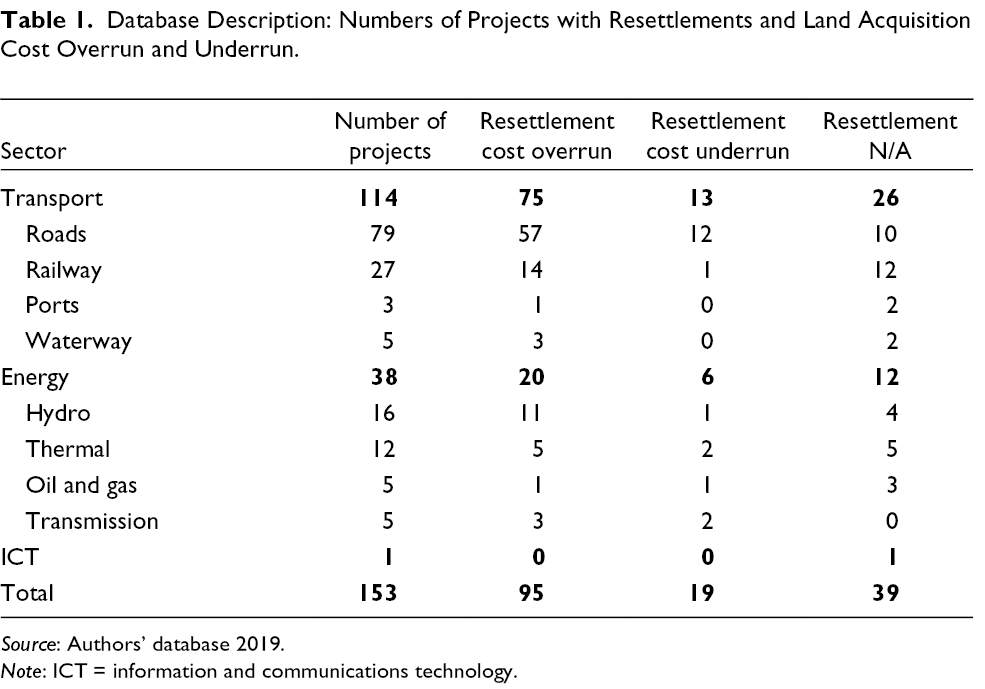
A major factor for infrastructure cost overruns in China that has not been sufficiently discussed in the literature relates to RLA. Table 1 shows that of the 153 projects in our database, ninety-five cases experienced RLA cost overruns. This translates into seventy-five out of 114 transport projects and more than half of the thirty-eight energy projects. On the other hand, only nineteen projects in our database have lower RLA costs than originally planned. Those RLA cost overruns make 21 per cent of China’s total cost overruns, which corresponds to CNY 20 billion. In total, RLA cost overruns of projects in our database average at 66 per cent per project, which is above China’s total average cost overruns of 22 per cent per project.
Database Description: Numbers of Projects with Resettlements and Land Acquisition Cost Overrun and Underrun.
Source: Authors’ database 2019.
Note: ICT = information and communications technology.
Although cost overruns in RLA vary slightly by sector and by region, they are problematic across all these dimensions. Figure 1 illustrates that RLA cost overruns are higher for energy projects (71 per cent) than for transport projects (65 per cent), while the sectors with highest cost overruns include hydropower (100 per cent) and railway sectors (93 per cent). A reason for this is that settlements including villages and towns are most commonly, after all, situated by rivers. Yet, when water levels rise due to the filling of dam reservoirs, large amounts of people and land are affected. Similarly, transport projects such as railways also stretch over vast territory and require more land.
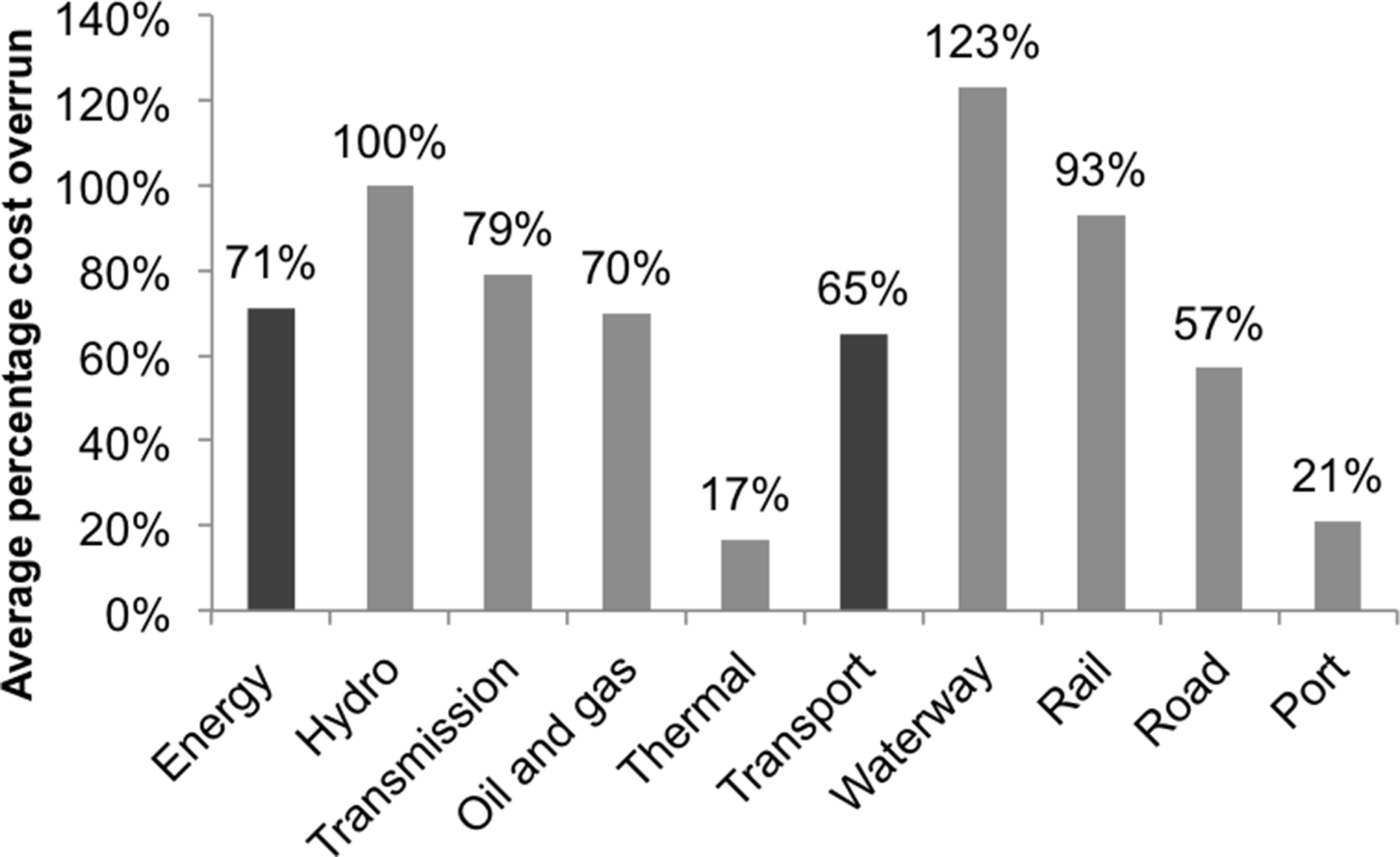
High Resettlements and Land Acquisition Cost Overrun across Sectors and Subsectors.
We also notice that cost overruns are, in particular, high for projects in China’s south and west, as presented in Figure 2. This can be attributed to a majority of hydropower and transport projects being implemented in China’s southern and western provinces in line with poverty alleviation initiatives in economically less developed inland regions. When paired with design changes due to difficult terrain structures, which also exist in those southern and western regions, resettlement procedures may be prolonged, require more land, lead to more protests by the resettled communities, and ultimately cause increased final project costs.
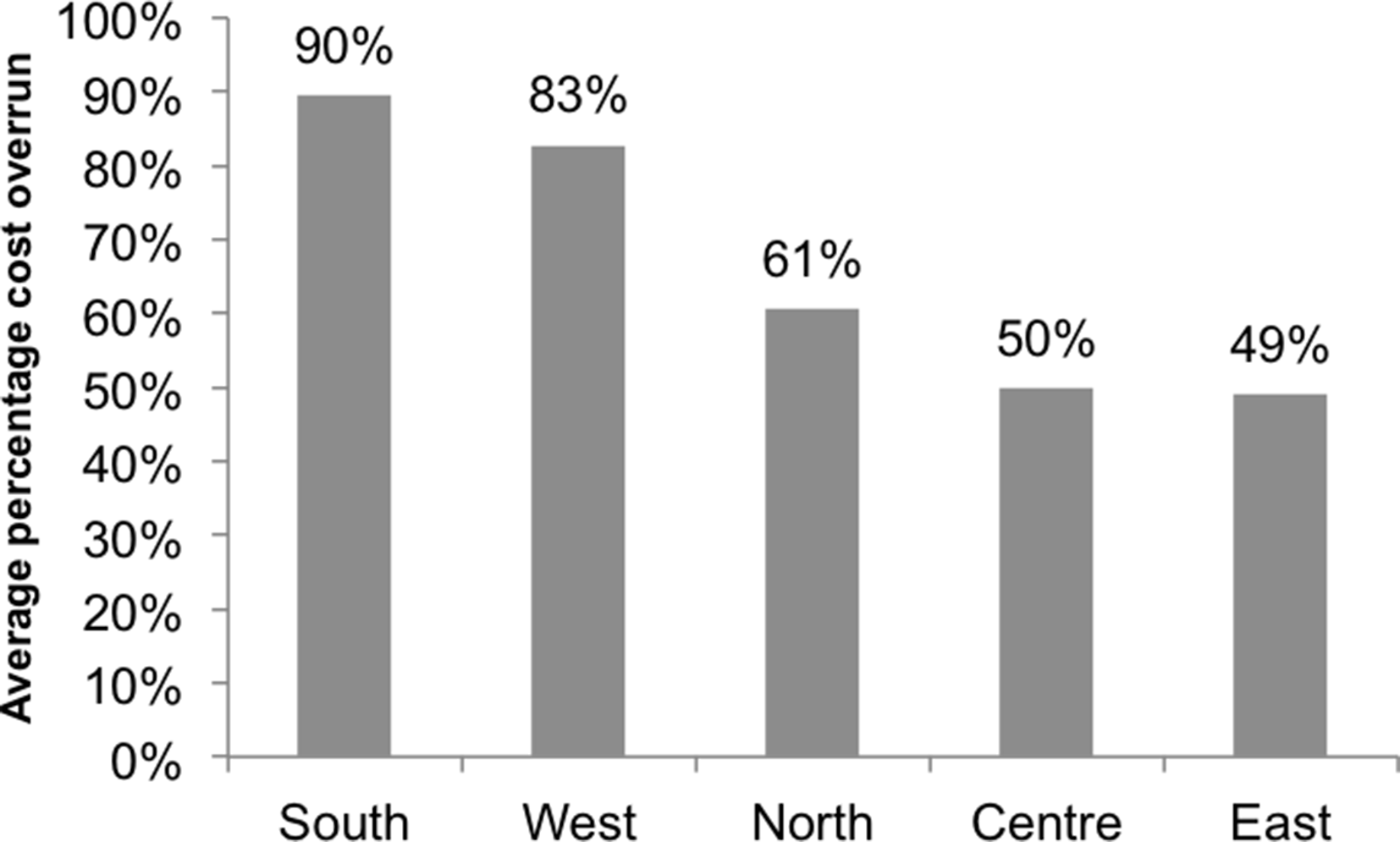
High Resettlements and Land Acquisition Cost Overrun in China’s Southern and Western Regions.
We also observe that RLA continuously affects final project costs negatively, which is shown in Figure 3. Even the comparatively low overrun of 22 per cent for the Jilin Hunchun Railway with its project start in 2011 translates into CNY 1 million. The project outlier with the highest RLA cost overrun of 607 per cent is the Shandong Provincial Highway Project. In this case, however, initial cost estimations of CNY 37 million were comparatively low, so that the final cost of CNY 262 million suggests a steep increase.
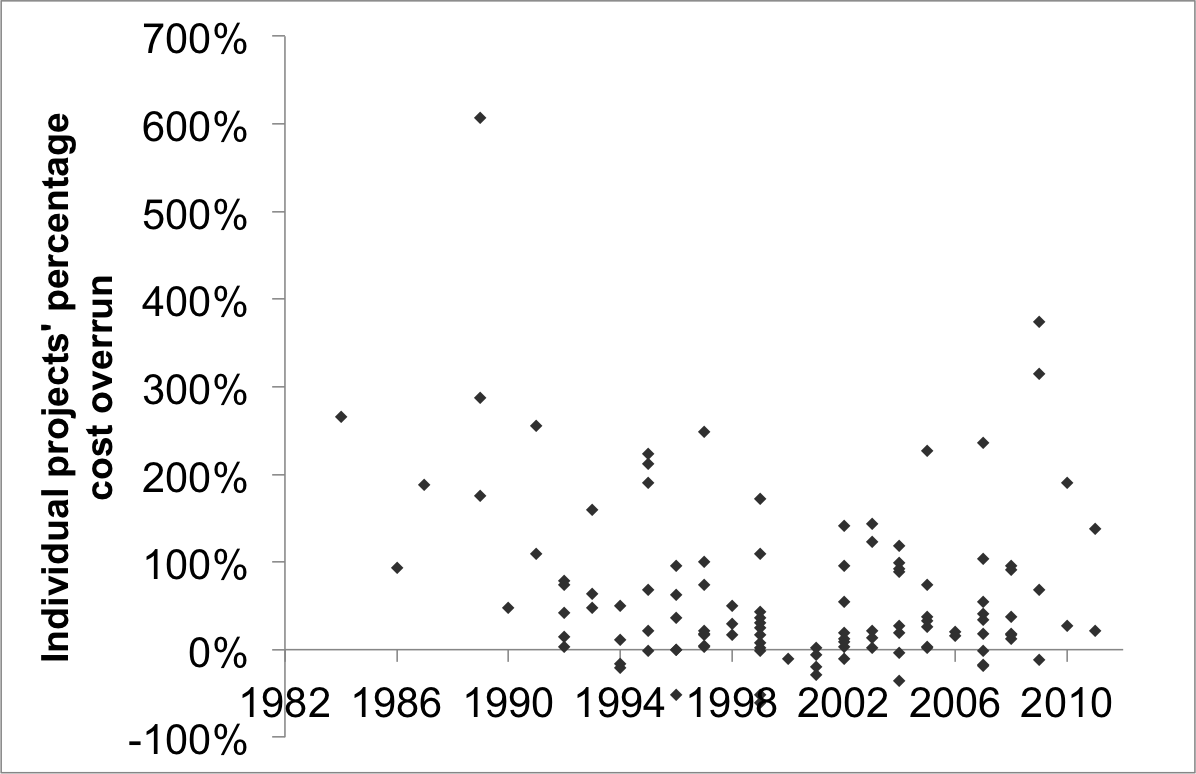
Continuous Resettlements and Land Acquisition Cost Overrun over Time (1983–2011; by Project Start of Individual Project).
Infrastructure provision and population RLA are closely related since affected households and entire villages are resettled away from the infrastructure construction sites (Croll, 1999: 468). RLA is required for large-scale infrastructure projects (Brown and Xu, 2010), but it also occurs due to local governments seeking to increase their fiscal revenues. Local governments convert arable land into construction land (Liu et al., 2014: 7) by leasing and especially selling land to infrastructure developers with the goal of increasing their fiscal revenues through conveyance fees and various taxes (Ding, 2007: 2, 6). Another form of infrastructure-related resettlement occurs in relation to poverty alleviation programmes (Xue et al., 2013). Poverty alleviation initiatives such as the Western Development Strategy (Shiu et al., 2016) and the more recent strategy under Xi Jinping of “Targeted Poverty Alleviation” (Liu et al., 2017) indicate the importance attributed to the nexus between socio-economic development and infrastructure provision.
Individuals occupying the land needed for constructions are eligible for financial compensation rates, for example, for lost land, crops, trees, and houses. Individuals might also be entitled to receiving living subsidies and getting access to other measures such as job trainings aimed at supporting their post-resettlement living standard (Brown and Xu, 2010). However, compensation rate calculations underlie a complex system, which has been reformed and adjusted during previous years at the level of the central government, but also at subnational levels. While the central government provides the overarching compensation guidelines, provincial and local governments make their corresponding adjustments, which results in regionally uneven compensation schemes with locality-specific compensation rates, subsidies, and job training programmes for resettled individuals. Additional differences in compensations also exist amongst project types, such as for commercial and public projects, and for projects which are of national versus subnational interest. Although compensation rates for national-level projects tend to be higher in general, local governments have their individual interests in offering higher rates since local officials directly face the migrants’ discontent about too low compensations (Ding, 2007; Habich, 2016).
Although compensation rates are often found to be inadequate for ensuring the migrants’ new livelihoods (Wilmsen et al., 2011a: 31–32), reforms and policy changes throughout recent years at the level of the central and subnational governments allowed for an overall increase, in particular since the reform of the 1986 version of the Land Administration Law in 1998 (Ding, 2007: 4). While the literature on resettlements has widely discussed the socio-economic impacts of RLA for the resettled individuals and communities (Liu et al., 2018; Rogers and Wang, 2007; Tilt, 2015; Wilmsen et al., 2011a, Wilmsen et al., 2011b; Wilmsen, 2016), little is known on how RLA impacts the performance of infrastructure projects, in particular in light of frequent policy changes and local governments’ openness to grant higher compensations. The subsequent case studies will therefore illustrate how the determinants for cost overruns, in particular with regard to RLA, manifest at the level of the individual infrastructure project.
The Chongqing–Lichuan Railway Development Project
The CLR, located in southwestern China, connects via a 265 km length the municipality Chongqing with Lichuan in neighbouring Hubei province (ADB, 2016a: 54). The CLR was planned to be linked to a wider railway network leading further to Hunan province in the southeast and at a later point in time also to the cities of Lanzhou and Xi’an in the north (ADB, 2016a: 8). The CLR followed the national Western Development Strategy and was therefore part of the central government’s poverty alleviation plan. As a priority project, central and local governments sought to use the CLR to facilitate socio-economic development by offering employment opportunities, and raising incomes and living standards along the railway (ADB, 2007, 2016a), and developing tourism sites, such as the Tenglong Cave (ADB, 2013). The project’s relevance can also be seen by its inclusion into the Eleventh Five Year Plan, and into the State Council’s 2004 Medium-Long Term Railway Network Master Plan. While socio-economic development for the population living along the CLR was relevant, local governments were also interested in the project as they expected the CLR to generate revenues by attracting external investments (ADB, 2010a: 1, 43). As such, completion on time was in the interest of the parties involved. Indeed, civil works started five months earlier, that is in 2008, and finished as early as June 2013, which was one year ahead of schedule (ADB, 2016a: 5).
However, despite the positive time performance, final project costs differed “significantly” from the estimates in that they had amounted to CNY 28.6 billion, which is a cost increase of 36 per cent, or 48 per cent in USD (ADB, 2016a: 4, 13). The CLR lies thereby clearly above China’s total average cost overrun of 22 per cent and is also higher than the 28 per cent average in China’s railway sector. The increased costs were jointly covered by the Ministry of Railways, the Chongqing municipal government, and with funds provided by the China Construction Bank, the China Development Bank, and the China Railway Corporation (ADB, 2016a: 20).
The cost increase was a result of several interrelated factors. At first, technical hindrances during the construction necessitated design adjustments despite the fact that preliminary consulting services and terrain surveys had been carried out before the constructions started (ADB, 2016a: 4, 7; Tielu.cn, 2013). The technical hindrances occurred due to geographical difficulties in the region, since the railway stretches through a karst area, which required the construction of sixty-three tunnels and 197 bridges. For example, large wall rocks were discovered during tunnelling, which made adjustments of the route design necessary (ADB, 2016a: 54). As a consequence, one of the tunnels, the Longchang tunnel of 4,900 metres length, had to be divided into two tunnels of 990 metres and 1,070 metres length, while the tunnels’ height had to be increased at the same time (Tielu.cn, 2013). Further adjustments took place for environmental protection reasons, which became necessary despite an initial environmental impact assessment carried out prior to construction. Slope stabilisation, ecological rehabilitation, noise abatement, and the avoidance of gas explosions were measures that were implemented and not anticipated ahead of time during the preliminary planning phase (ADB, 2016a). Furthermore, the adjacent railway lines that were constructed at the same time to connect the CLR further to the north with Lanzhou and Xi’an, and to Chengdu in the west, required additional adjustments. The originally expected amount of passenger traffic turned out to be inaccurate, thus requiring the constructions of two additional train stations later on to accommodate the increased travel capacities (ADB, 2016a). Those additional measures required significant increases in spending for additional civil and track works, a higher number of facilities and materials, more consulting, and administration and training capacities.
Besides the technical and planning-related challenges, households and villages that were located along the area of the CLR had to be resettled to a large extent. Relatedly, the land acquisitions and building demolitions were originally planned to affect at least eight counties/districts in Chongqing and Hubei province, in total thirty-one townships and ninety-six villages (ADB, 2010b: 4). Altogether, costs for RLAs increased from CNY 541 million to CNY 2.56 billion, which is an escalation of 374 per cent (ADB, 2016a: 44, 12). Furthermore, the CLR required 5 per cent more land than had been anticipated (11,154 mu in total; 1 mu = 666.67 m2), which led to a 52 per cent increase in demolished houses (602.024 m2 in total) and a 13 per cent increase of displaced people (5,982 persons in total; ADB, 2016a: 12). The cost increases took place despite a detailed resettlement plan (ADB, 2007: 1). Past experiences from resettlements during the nearby Three Gorges Dam Project also proved insufficient to allow for better planning and, thus, better cost performance (ADB, 2016a: 53).
One of the problems was that resettlements were carried out based on an early-stage feasibility study instead of the detailed measurement survey, which was conducted after the engineering design (ADB, 2016a: 12). In that way, houses that were built after the feasibility study and before the project implementation were not included in the resettlement plan (ADB, 2016a: 49) but, in line with other houses, had to be demolished later on. This led to a larger number of individuals and households being affected by resettlements compared to what the resettlement plan had forecast. In addition, the design changes to the railway line, which had been caused by technical and environment related challenges, led to some households having to be resettled twice, and individuals sometimes remaining dissatisfied with their compensation rates. Finally, additional safety measures during the construction works of the CLR also required a larger affected area of land acquisitions (ADB, 2016a: 49; Enshi News Online, 2013).
However, the major reasons for RLA cost overruns were higher-than-expected land compensation rates, increasing costs for building relocations, and new housing subsidies (ADB, 2016a: 12). A nationwide resettlement policy reform in 2008 also necessitated higher resettlement compensation rates (ADB, 2016a: 49), so that local compensation rates could be adjusted to the new numbers. Table 2 shows the cost increase between the initial resettlement plan and the actual costs in the affected counties, which sometimes even doubled the original estimates.
Changes in Compensation Rates for the Chongqing–Lichuan Railway Development Project.
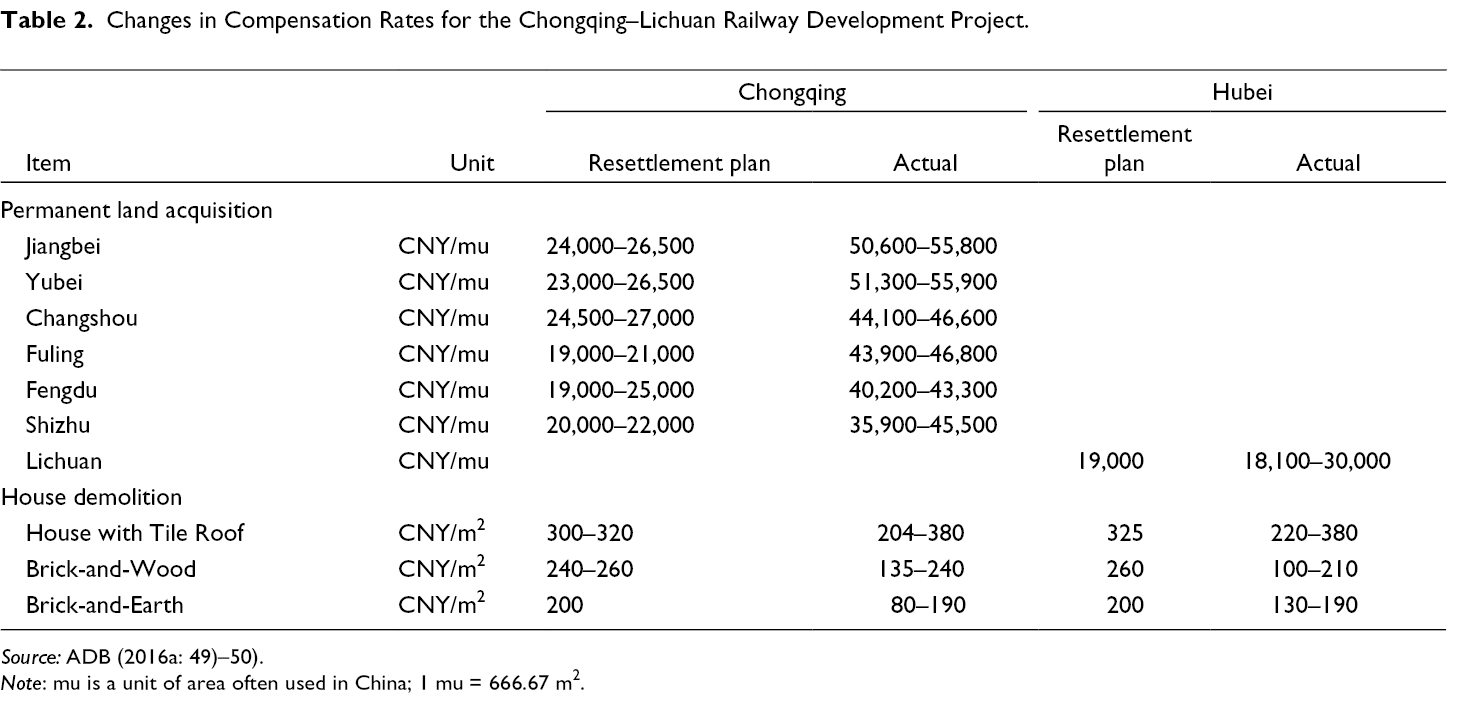
Source: ADB (2016a: 49)–50).
Note: mu is a unit of area often used in China; 1 mu = 666.67 m2.
Furthermore, in Chongqing, local governments in Yubei District and the Jiangbei District implemented a social development project, the “Sunshine Programme,” to train local villagers in acquiring skills beyond farming and supporting them in finding new jobs in local enterprises (ADB, 2016a, 2016b: 26–27). These increasing compensation rates, subsidies and training programmes were designed to improve the living conditions of the affected communities. On the other hand, the lack of adequate anticipation of those policy changes and programmes had a negative impact on the project cost performance of the CLR.
In sum, the CLR illustrates that technological risks and insufficient co-ordination with parallel infrastructure provisions contributed to project cost overruns. In addition, however, the case of the CLR illustrates the importance of RLA for project cost performance, which overruns as a result of design changes, but also in particular due to rising compensation rates and subsidies for the resettled communities.
The Nuozhadu Hydropower Dam
The Nuozhadu Dam is a large hydropower station located along the Lancang River in southern China’s Yunnan province. It is the largest high earth-rockfill dam in Asia, and, with a total installed capacity of 5,850 megawatt, the largest dam in the Lancang River basin. The dam’s main purpose is electricity generation, while also supporting flood prevention and improving irrigation (China Huaneng Group, 2011). The project developer was Hydrolancang, a state-invested subsidiary of Huaneng Group, one of the five large state-owned Chinese energy companies.
The Nuozhadu Dam has been part of an eight-dam cascade that was first planned in 1987 and that has since been supplemented by another eight-dam cascade currently under construction along the upper reaches of the Lancang River (East China Investigation and Design Institute, 2006; Simao Water Resources and Hydropower Bureau, 1997). The Dam is also part of an energy transfer agreement signed in 1991 by the national-level Department of Energy, the National Energy Investment Company, and the provincial governments of Guangdong and Yunnan (Simao Water Resources and Hydropower Bureau, 1997: 243). Rather than simply providing electricity locally, the dam is thus representative of interprovincial energy geographies, including the central government’s strategies of sending electricity from western to eastern China (西电东送, xidian dongsong), and from Yunnan to Southeast Asia (云电外送, yundian waisong) (Habich, 2016).
Inclusion in such national initiatives meant that Hydrolancang and the provincial government were eager to ensure the smooth execution of the project. By 2003, the Kunming Institute, one of Hydrochina’s design and planning institutes for dam projects, had completed both the pre-feasibility and feasibility studies according to the predefined schedule. In late 2003, the National Development and Reform Commission (NDRC), the Ministry of Water Resources, the National Energy Administration (NEA), the project developer, the Yunnan Provincial Government, and other relevant experts approved the feasibility report (Hydrolancang, 2003). Although final project approval was not granted until March 2011, preparatory construction on the dam had already begun in April 2004, when the NDRC, a major proponent of hydropower development in China, approved preliminary construction to commence. The Yunnan government was fully behind this decision as they had been given specific targets for providing electricity to other provinces under the scheme of sending western electricity east. Any delay in the construction process would have meant a failure to achieve these targets (Anonymous 1, 2014; Habich, 2016; Hydrolancang, 2001).
Much to the satisfaction of the project developer and the government, the power station was completed in 2014, two years ahead of schedule. The direct reasons cited for the swift completion of the project was the application of an innovative quality control system that prevented human errors throughout the construction process and reduced the construction period by one year (Anonymous 1, 2014; Kunming Daily, 2011). Developed during the construction of the Nuozhadu Dam, the “digital dam” monitoring system is an information and support platform that uses Global Positioning System (GPS), personal digital assistants (PDA), and information technology, to monitor the construction process and daily operation of the dam after completion (Ma and Chi, 2016). First, installing this system allowed an offsetting of potential delays in the construction process caused by additional safety requirements for hydropower projects introduced after the Wenchuan earthquake of 2008. Just like Sichuan, Yunnan province belongs to a region with great seismic activity, which, according to some scientists, increases due to the presence of large reservoir structures (International Rivers, 2008). An additional advantage of the installation of the digital dam monitoring system is that it allows for more efficient detection of potential damages after earthquakes (CKCEST, 2019).
Despite the early project completion and the promise that digital technologies would reduce construction costs, the final costs of the project were almost twice the original estimates. While in 2006, the total estimated investment was USD 3.2 billion (Sina, 2006), this sum had been adjusted by 2011, when Huaneng expected a total investment of USD 5.1 billion (China Huaneng Group, 2011). The final costs eventually rose to USD 7.6 billion (Powerchina, 2018).
While new safety requirements enacted in the course of the Wenchuan earthquake have caused additional costs, the major reason that interviewees cited for the steep rise in final costs was the amount of resettlement compensation for dam migrants (Anonymous 2, 2014). In 2003, when the feasibility study of the dam was finalised, compensation paid for land lay at three to four times the average production output value of the land during the three years prior to the land being expropriated (State Council, 1991). This standard was, however, raised in 2006, when the State Council published new regulations for dam-induced resettlement, which required project developers to pay land compensation equivalent to sixteen times the average production output value of the land (State Council, 2006a). In addition, as from July 2006, all dam migrants in China would be entitled to USD 59 resettlement support each year, for twenty years (State Council, 2006b). As the Nuozhadu Dam required the resettlement of a total of 46,000 people, the change in resettlement policy significantly impacted the total cost of the dam.
The exact amount of land compensation, however, varies from locality to locality. This is because local governments are responsible for specifying the average annual production output value of land. While provincial governments hope to minimise resettlement compensation so as to provide a positive investment environment for energy companies, grassroots-level governments who have to face dam migrants on a regular basis seek maximum amounts of compensation so as to come to terms with the demands of migrant communities (Anonymous 2, 2014). In the case of large dams that have to be planned and approved for by higher levels of government at and above the provincial level, grassroots-level governments usually lose out, meaning that compensation standards are reduced to the legal minimum. Nevertheless, increasing instances of protest among dam migrants have been putting pressure on the hydropower bureaucracy to increase the benefits given to resettlement villages. Protests were carried out especially by inhabitants of villages with dam migrants who had been resettled both before and after the policy change. These protests have been caused by the fact that migrants resettled before the policy change had received lower amounts of compensation than those resettled afterwards. Encouraged by the new resettlement regulations that not only promised higher compensation but also a more human-oriented resettlement process, dam migrants repeatedly protested in front of local government offices and at the Nuozhadu Dam site, which threatened not only social stability but also delays to the construction process. In at least two instances, this led Hydrolancang and the provincial government to eventually concede and also pay higher amounts of compensation to dam migrants who had been resettled before the policy change in 2006 (Habich, 2016).
Thus, the case of the Nuozhadu Dam illustrates how technical advancements in hydropower construction and the related savings in time and money are largely offset by new resettlement regulations which have increased the amount of compensation to be paid to migrant communities. While local governments partly divert compensation into their own pockets (see also Takeuchi, 2013), preventing funds from reaching migrant households, the total cost for hydropower stations has nevertheless increased significantly.
Discussion and Conclusion
We illustrated the determinants for economic cost performance of infrastructure projects in China. Different than widely perceived, China’s infrastructure provision is not as inexpensive as is often assumed. Instead, we show that, similar to Western countries, China’s infrastructure projects overrun their originally planned costs frequently. Cost overruns in China are often a result of technological challenges during project implementation, but also – in contrast to Western countries – in particular are caused by higher-than-expected costs for RLA. Based on our database of 153 infrastructure project cases, we find that RLA cost overruns are most severe for railway projects and hydropower dams. Yet, such findings are surprising because of China’s historical experience with resettling large populations, which would lead one to expect more accurate planning due to previous experience.
Two case studies, the CLR and the Nuozhadu Dam, further detail that RLA cost components interact with project design changes and thereby increase project expenses. Yet, RLA cost overruns are particularly caused by policy changes at the national and subnational levels, resulting in higher compensation rates and subsidies, as well as by local government initiatives to concede to local protesters’ demands for higher compensations. While compensation rates underlie a complex calculation system leading to variation in compensation depending, for example, on locality and on project type, such additional and late adjustments are sometimes not anticipated during the project planning and are added on top of the originally estimated project budget.
These findings contribute to the literature on the determinants of costly infrastructure performance by, first, showing that traditional factors for cost overruns also apply to the Chinese context. In that regard, we also show that project cost overruns in China exist across various sectors of energy and transport projects. Second, we theoretically extend explanations for cost performance by introducing RLA as an idiosyncratic performance indicator that has up to now been overlooked. One might argue that 21 per cent of total cost overrun is still comparatively low compared to the remaining share attributed to other factors. Yet, we show that given high project costs, 21 per cent accounts for a significant amount of expenses. Investigating the impact of RLA on infrastructure project performance across a larger dataset also shows the wider extent of the existing problem. We thereby also contribute to the overall resettlement literature, which usually investigates the impact of resettlement on migrant communities (Wilmsen, 2018; Yan et al., 2005) instead of on the infrastructure projects themselves.
An interesting issue to note is also the duality of cost overruns carrying inherent risk of causing economic fragility while also often being the result of an aim of alleviating poverty. Compensation rates and subsidies were often found to be too low for sustaining the resettled people’s new lives. Yet, higher rates are obviously advantageous for the resettled individuals and their socio-economic conditions. However, when not forecasted correctly, the higher-than-expected compensation, in turn, might result in increasing local government debt and might contribute to long-term economic development risk associated with poor infrastructure performance. This is in particular the case when infrastructure provision does not take place with the primary aim of alleviating poverty, but when infrastructure projects are show cases for local governments, a means to increase revenues by selling and leasing land to developers or by providing infrastructure in areas that are already considered to be over-invested.
Following these lines, studying the determinants for infrastructure provision in China, in particular RLA, also has practical implications. Policy changes might have short-term socio-economic benefits, but they may, when not correctly anticipated, put long-term economic development at risk (Ansar et al., 2016). In particular, the interrelatedness between technical difficulties, resulting design changes, and further RLA all illustrate the complexity to the problem of more accurately anticipating future project expenses. While published project completion reports by the ADB as a funding agency have already pointed towards the problem of RLA cost overruns and the need for improved anticipation of future costs, our findings suggest that improvement on this front is still remarkably little with cost overruns in the RLA segment continuously remaining a problem.
Our study has several limitations. In some infrastructure sectors, data availability and number of cases was limited. Additional research would hence be necessary to draw more reliably conclusions in six sectors: ports, waterways, oil and gas, thermal, transmission, and ICT. In addition, our findings illustrate that a large number of projects are affected by RLA cost overruns. These findings do not, however, intend to make claims about the relationship between cost overruns and project size, which would be open to further research.
Footnotes
Acknowledgements
We would like to thank Xinhui Jiang and Yaning Zhang for their very valuable comments on this article, and Yan Liu for providing excellent research assistance.
Declaration of Conflicting Interests
The author(s) declared no potential conflicts of interest with respect to the research, authorship, and/or publication of this article.
Funding
The author(s) disclosed receipt of the following financial support for the research, authorship, and/or publication of this article: We are grateful to the Deutsche Forschungsgemeinschaft (DFG) for providing funding for this project (project number 395165932).
Author Biographies
Email:
Email:
Email: