




Abstract
Background:
Paediatric orthopaedic surgery is rarely supported by high-quality evidence, with treatment decisions generally informed by experience or case series. The European Paediatric Orthopaedic Society recognises the need to establish research priorities in the field. This study builds on previous UK research priorities to discover the most important unanswered clinical effectiveness research questions in elective and trauma care and basic science, amongst Paediatric Orthopaedic surgeons across Europe.
Methods:
A modified Delphi technique, including an initial scoping survey and a two-round Delphi process conducted amongst paediatric orthopaedic surgeons in Europe.
Results:
An average of 113 surgeon responses were received in each round, scoring questions from 1 (low priority) to 5 (high priority). The mean score for importance was 3.59 in elective questions, 3.13 in trauma and 3.54 in basic science. The top questions in each group were identified. The top five research priorities for elective care related to the care of – Perthes Disease, Slipped Upper Femoral Epiphysis and Developmental Dysplasia of the Hip. Those in trauma related to the treatment of fractures around the elbow, forearm and femur Basic science priorities related to pharmaceuticals in the management of paediatric orthopaedic conditions and the pathology of Perthes’ Disease and Developmental Dysplasia of the Hip.
Conclusions:
The results will help guide clinicians, researchers and funding bodies to focus research towards important topics and improve the evidence for practice in paediatric orthopaedic surgery. We hope that this study will encourage the development of collaborative international studies to improve care in paediatric orthopaedics.
Level of evidence:
Level V – decision analysis.
Keywords
Introduction
Paediatric orthopaedic surgery is rarely supported by high-quality evidence, with treatment decisions generally informed by experience or case series. Consequently, practice is highly varied. High-quality, well-conducted, studies to understand the clinical effectiveness of interventions are urgently needed.
The European Paediatric Orthopaedic Society (EPOS) is the body promoting Paediatric Orthopaedic Surgery across Europe. The mission statement of EPOS is to improve the quality of care of children with orthopaedic conditions, with a focus on science and evidence-based medicine. 1 EPOS has recognised the need for research and the importance of focusing efforts to address the broader priorities of the membership of the society. Establishing the research priorities of the society identifies important topics to enable researchers to focus their efforts, and funders to be confident about the clinically important questions. A similar effort in research prioritisation was undertaken by the British Society of Children’s Orthopaedic Surgery (BSCOS) in 2018. 2 Through a modified Delphi process, 10 elective and 5 trauma research priorities were identified, with the highest rankings relating to slipped capital femoral epiphysis, Perthes’ disease and bone infection. 2 The BSCOS prioritisation effort had notable success, which is evidenced by a high volume of completed or ongoing nationwide, multicentre, randomised clinical trials. 3
This study builds on the previous research priorities from BSCOS, to discover the most important up-to-date unanswered clinical effectiveness research questions in elective and trauma care amongst Paediatric Orthopaedic surgeons across Europe. In addition, this study will broadly identify basic science areas of importance.
Materials and methods
The study used a modified Delphi process to achieve consensus on research priorities amongst surgeons.
Round 1: Scoping survey
An online survey was composed using ‘SurveyXact’ (Rambøll Management Consulting, Aarhus, Denmark) (Supplemental Material 1). 4 The survey first asked participants to ‘Consider the [previous research priorities of BSCOS] and include any that you think remain important regarding your clinical practice.’ 2 Secondly, the survey asked the question ‘Considering your clinical practice in paediatric orthopaedic surgery, do you think that there are any other important clinical research questions that need addressing?’ and lastly ‘Considering your clinical practice in paediatric orthopaedic surgery, what are the most important basic science research questions relating to paediatric orthopaedic surgery that needs addressing?.’ Responses were encouraged in a PICO (Population, Intervention, Comparator and Outcome) format. Participants were not restricted in their number of responses. The survey was distributed to all members of EPOS through an email list, encompassing 603 members. All responses were collected anonymously.
A list of newly suggested research questions was compiled and grouped according to topic area: elective care, trauma care or basic science. Questions were reviewed by the EPOS Priority Setting Project (EPOS-PSP) steering committee. Where practical, similar questions were merged into a single question. The steering group considered questions about spinal surgery out of scope, as this is not typical practice for paediatric orthopaedic specialists within Europe. Responses that were statements without information to formulate an answerable research question were rejected. Questions for which the steering group were unable to understand the interventions/rationale were sent to subject experts for greater clarity. Responses relating to elective and trauma care were formatted (where necessary) into a consistent PICO (population, intervention, comparator, outcome) statement and were re-reviewed by the steering committee to ensure that any revision accurately reflected the original submission. Most submissions relating to basic science were not formatted as research questions, so these were developed into basic science themes.
Round 2: Scoring and refining of research questions
A survey was sent to all members of EPOS by email (Supplemental Material 2). Proposed questions from Round 1 were amalgamated with the prior BSCOS research priorities and grouped according to elective care, trauma and basic science. Respondents were asked to ‘Consider each question and rate it from 1 (low priority) to 5 (high priority), based on its importance in improving Paediatric Orthopaedics.’ Respondents were also invited to submit any additional research questions or refinements.
The EPOS-PSP steering committee considered all additions and suggested refinements. The steering group’s responsibilities included adding clarity, minimising repetition, ensuring a consistent format and ensuring relevance.
Round 3: Scoring of research questions with prior response outcomes
A final survey (Supplemental Material 3) included all previously scored questions, along with newly submitted research questions. The survey was refined according to previous suggestions, with any refinements indicated in the final survey. Two questions were refined in response to comments from the first Delphi survey. Previously scored questions were displayed with a bar chart indicating the responses of participants from the first survey (Supplemental Material 3). Newly suggested questions were displayed without graphs.
Participants were given the following information: ‘We will now present the research questions from the previous round and ask you to re-score the questions. We will also show you the scores from participants in the last round [Delphi Round 1], which will demonstrate the current state of collective opinion, which may help to inform your choices. The graphs are based on 92 responses from EPOS members in the last round. Consider each question and rate it from 1 (low priority) to 5 (high priority) based on its importance in improving Paediatric Orthopaedics’.
Results
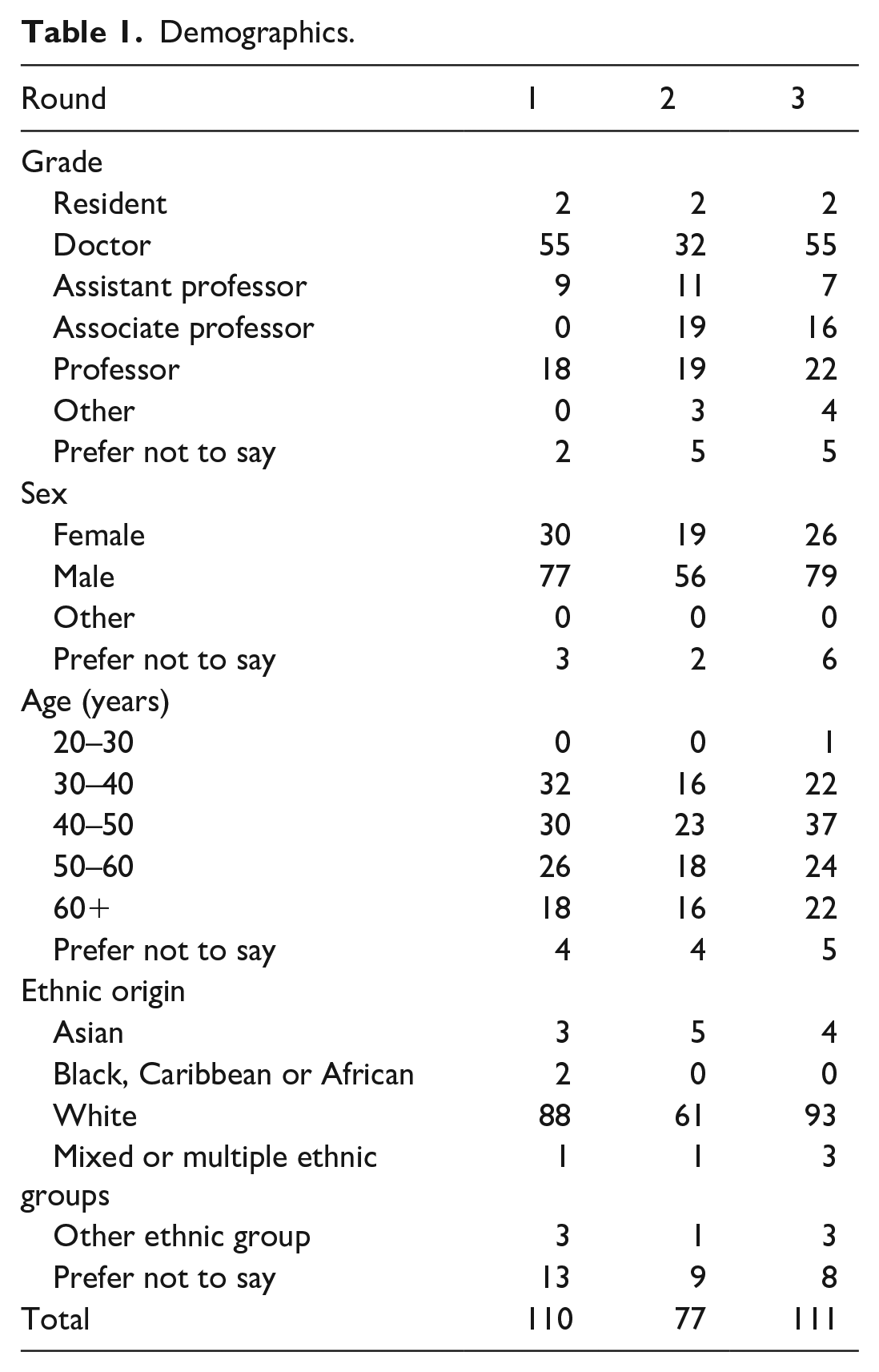
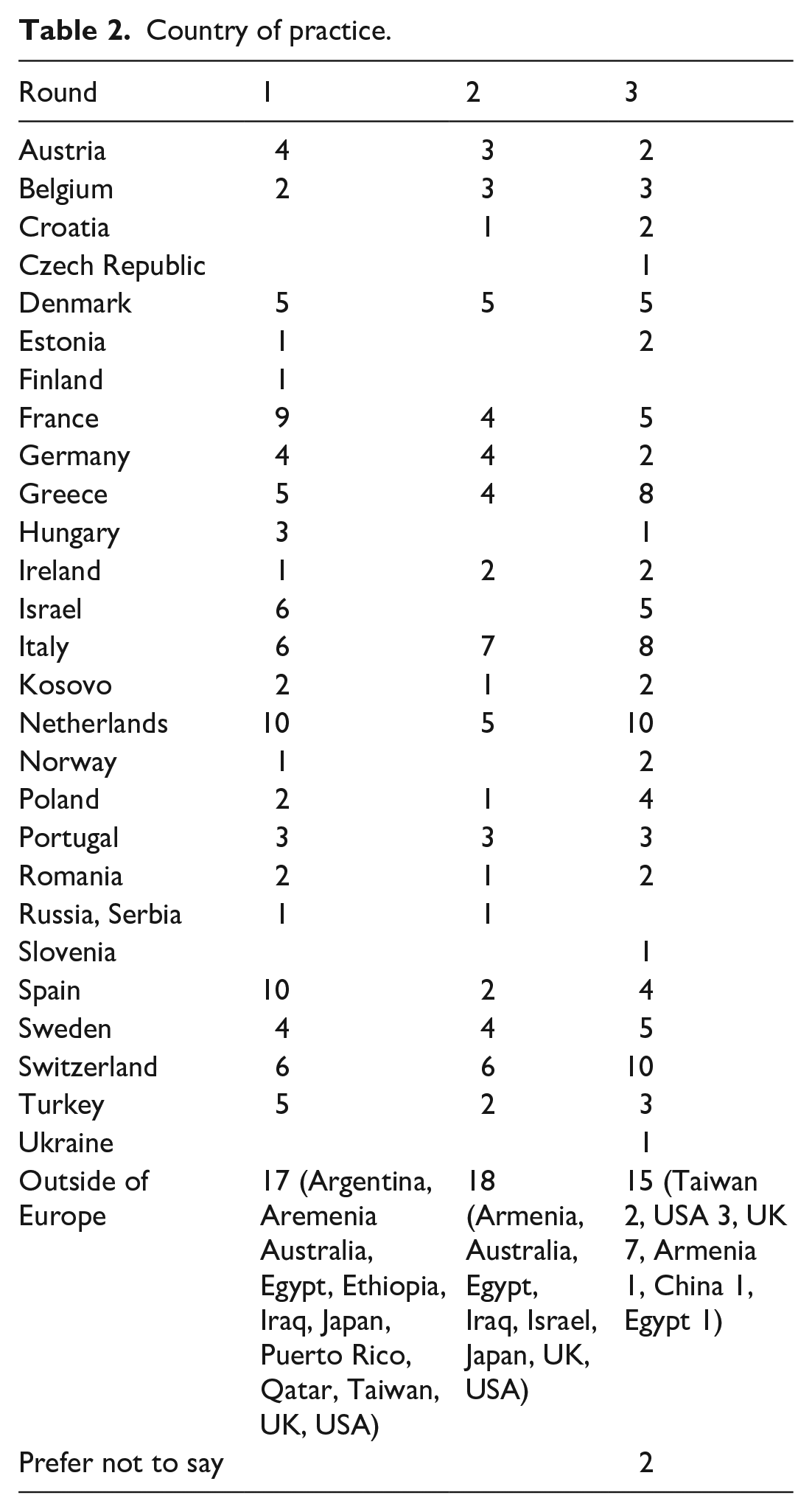
In Round 1, 124 unique responses were received. The mean number of respondents per question was 117 (range 110–124). Demographic data and country of practice of participants across all three rounds are shown in Tables 1 and 2.
Demographics.
Country of practice.
Round 1
In all, 124 research questions were submitted with 59 remaining after amalgamation and refinements by the steering group: 26 relating to elective care, 11 trauma and 22 basic science themes were developed.
All the BSCOS questions presented were taken forward into the next round, with between 42.7% and 68.5% of respondents agreeing that the elective questions remained relevant, and between 34.2% and 56.8% in trauma (Supplemental Material 4). Two of the original BSCOS research priorities were revised to better fit the PICO format adopted in this study. A total of 34 electives, 17 trauma and 22 basic science questions were taken into Round 2 (Figures 1–3).
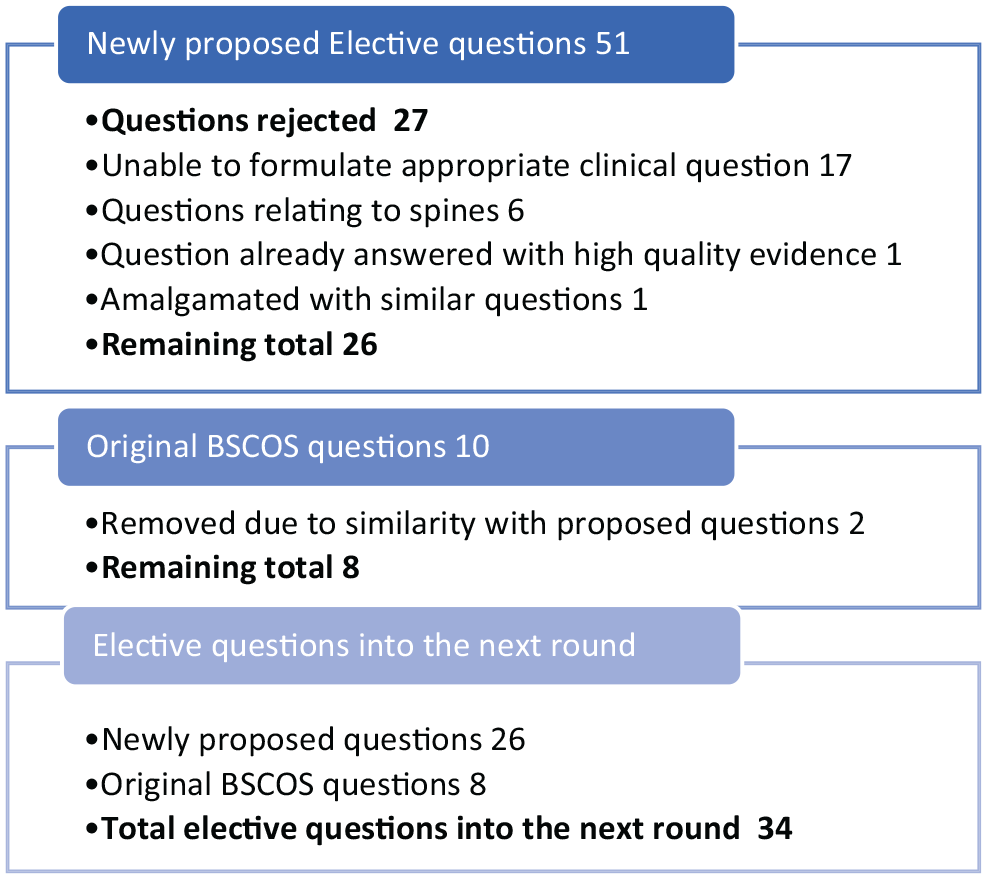
Elective flowchart.
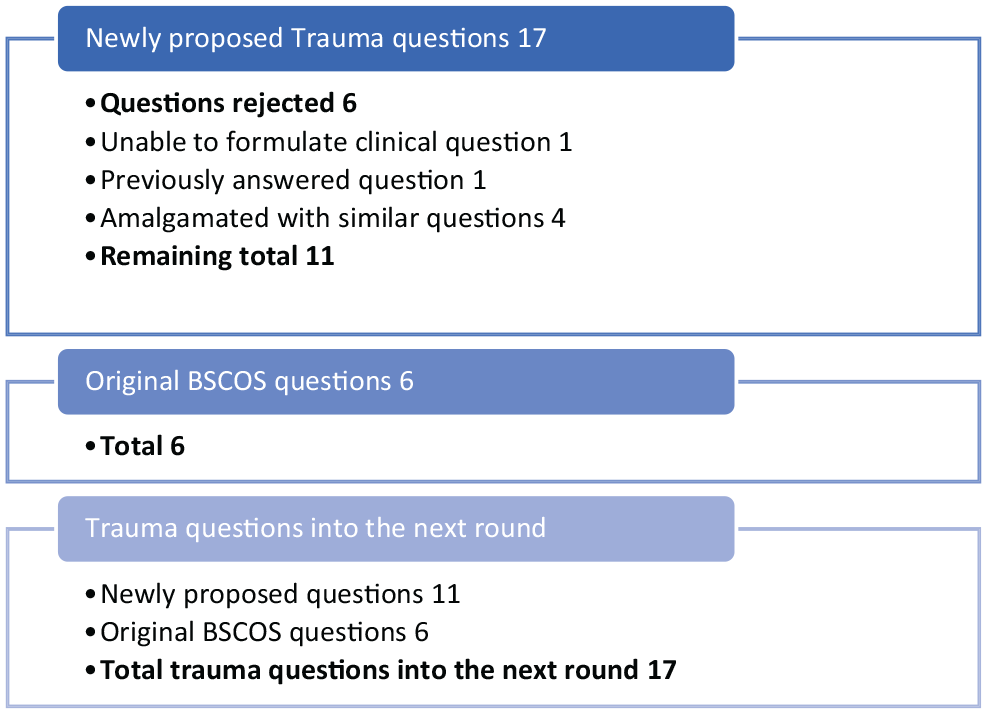
Trauma flowchart.
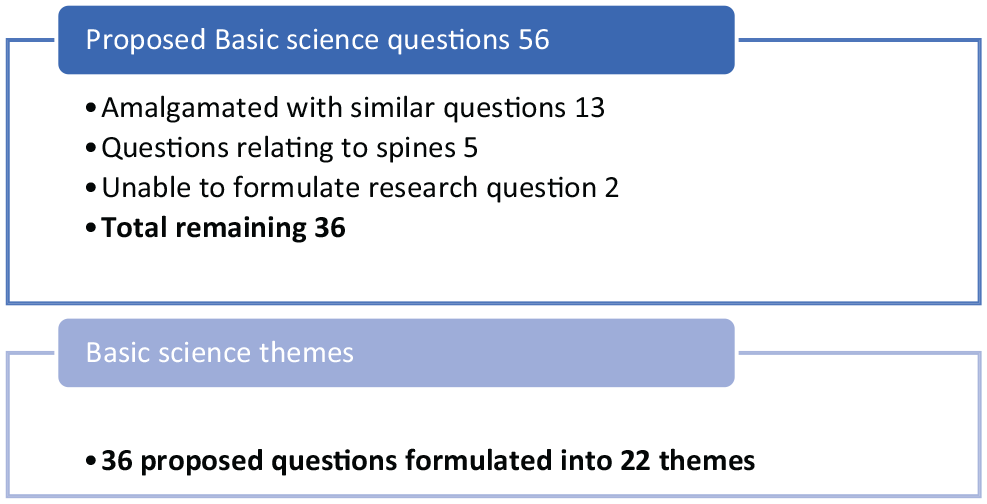
Basic science flowchart.
Round 2
In all, 94 unique respondents completed this round. The mean number of respondents per question was 83 (range 77–94). Bar charts were produced to demonstrate the scores for each question from Round 2 (Supplemental Material 3). In all, 48 new questions were proposed and 17 were added to the next round (Figure 4).
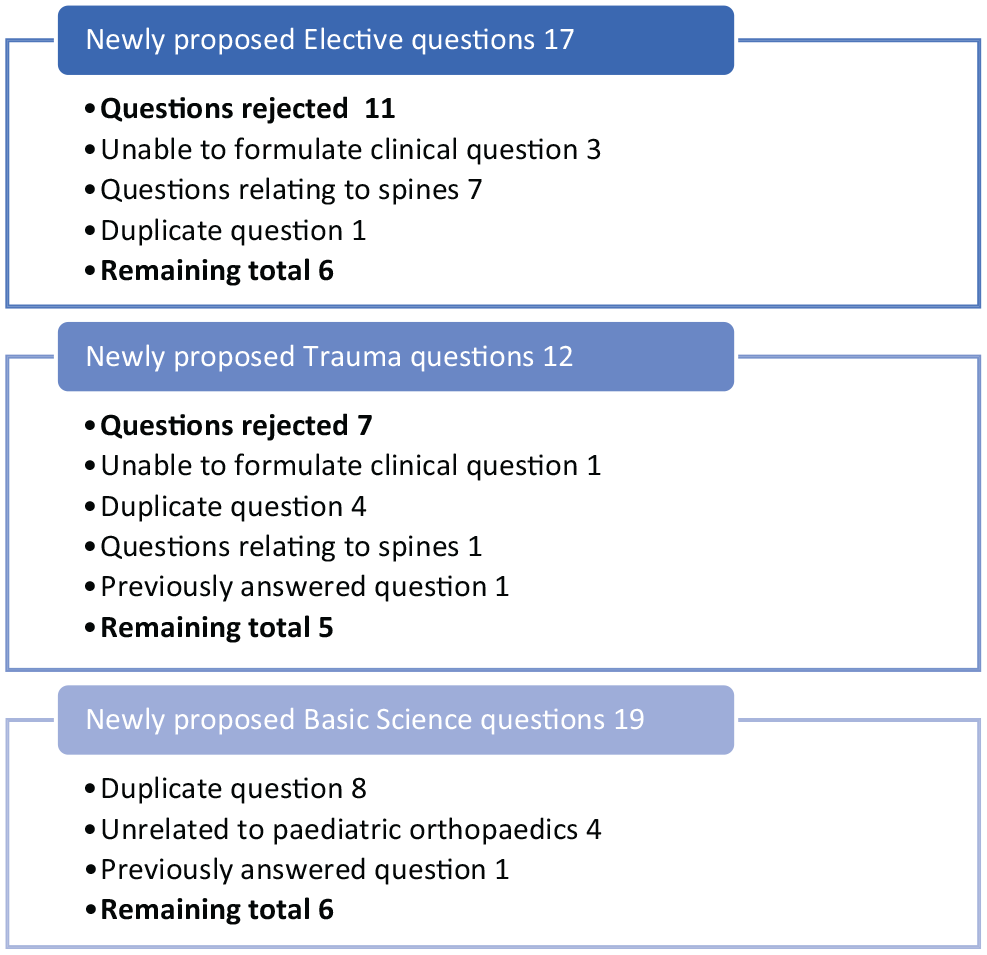
Newly proposed questions flowchart.
Round 3
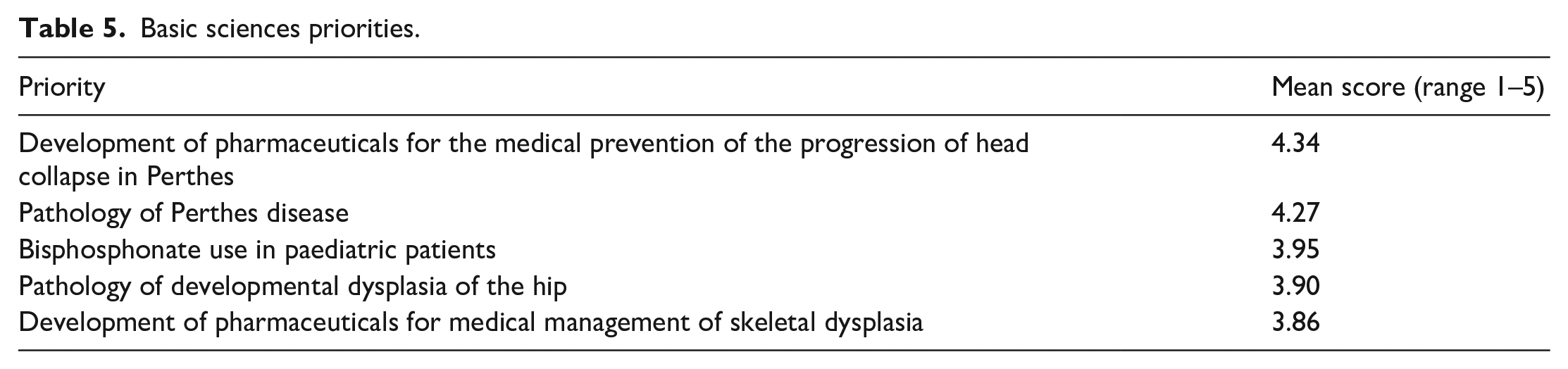
In all, 122 responses were received in Round 3. The mean number of respondents per question was 94 (range 75–122). The mean score for the importance of elective questions was 3.59 (range 2.74–4.57). The mean score for the importance of trauma questions was 3.13 (range 2.43–3.66). The mean score for basic science themes was 3.54 (range 2.67–4.34).
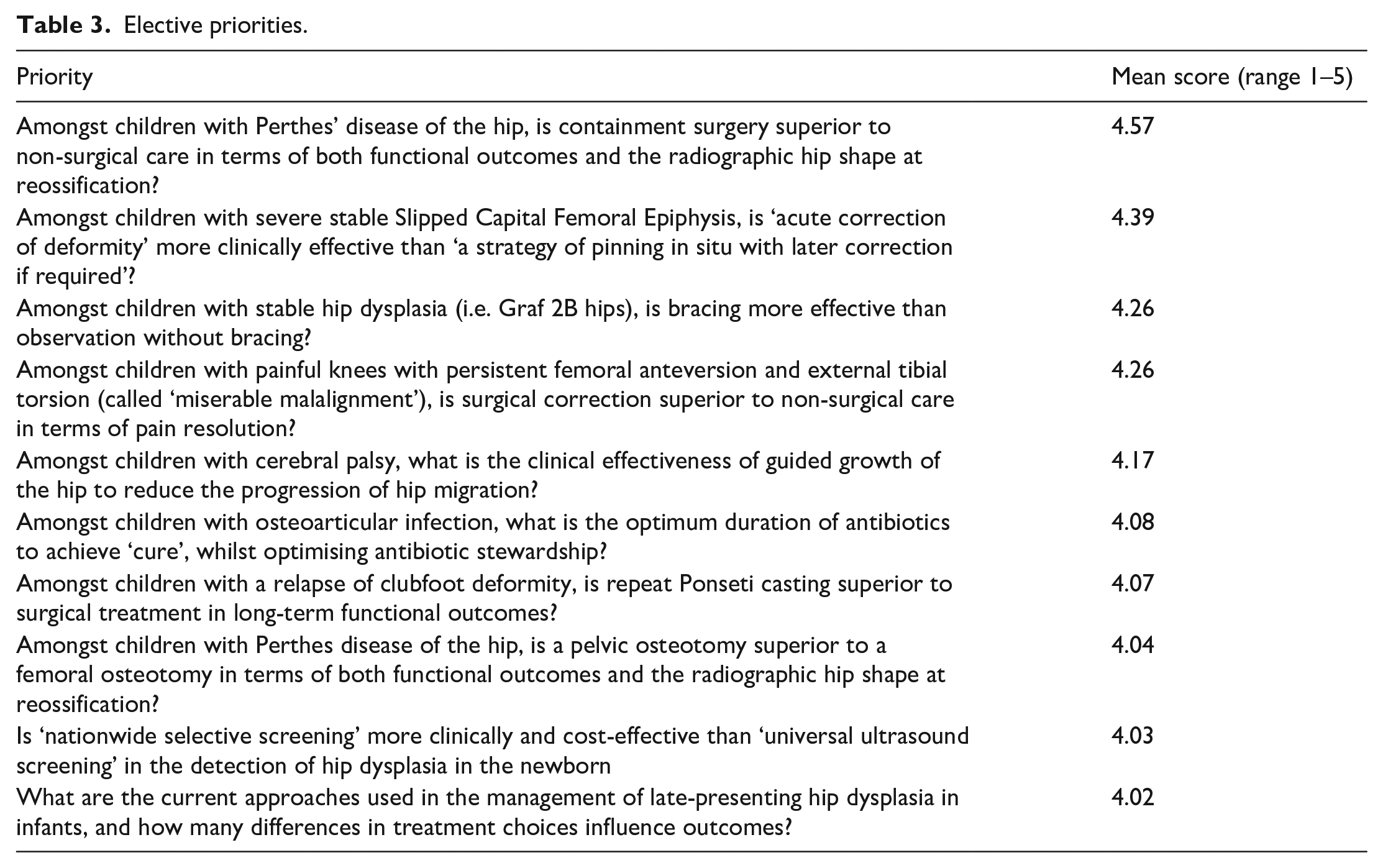
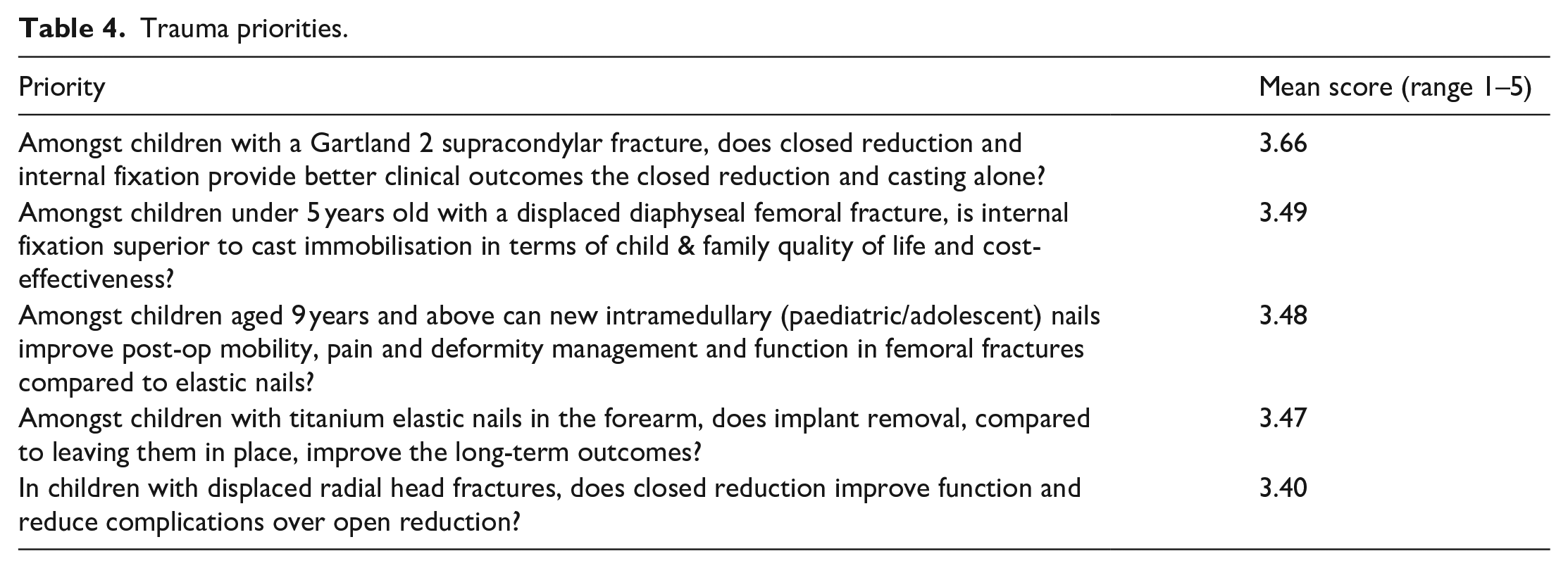
Elective questions were scored higher than trauma questions, with the top 17 elective questions scoring more highly than the top-scoring trauma question. Basic science themes also scored more highly than trauma questions. The steering group decided to prioritise the top 10 elective, top 5 trauma and top 5 basic science questions (Tables 3–5), though the complete list of research questions scored for prioritisation can be found in Supplemental Material 5.
Elective priorities.
Trauma priorities.
Basic sciences priorities.
Discussion
This is the first study to establish research priorities in paediatric orthopaedics across Europe. The top five research priorities related to Perthes Disease, Slipped Upper Femoral Epiphysis and Developmental Dysplasia of the Hip. Concerning the clinical effectiveness of elective orthopaedics, prioritised topics related to the treatment of Perthes disease, Slipped Upper Femoral Epiphysis, Developmental Dysplasia of the Hip, Rotational abnormalities, Cerebral Palsy, Infection and Clubfoot deformity. Priorities in trauma related to clinical management of fractures around the elbow and forearm and femoral fractures. Basic science priorities related to pharmaceuticals in the management of paediatric orthopaedic conditions and the pathology of Perthes’ Disease and Developmental Dysplasia of the Hip.
In 2018, BSCOS identified 10 elective and 5 trauma questions that were prioritised for future research. 2 In this study, more variation was seen in trauma in comparison to previous research priorities, with the UK study prioritising fractures around the elbow, distal radius fractures and management of lower limb fractures. Only one question overlapped with the BSCOS study regarding the management of adolescent femoral fractures. Since its publication, many studies have been funded, and are ongoing or completed, which may account for the variation between the original BSCOS study and these newly developed EPOS research priorities in trauma. 3 The management of medial epicondyle fractures was previously deemed the number one priority for research in paediatric orthopaedic trauma by the IMPACCT (Infrastructure for Musculoskeletal Paediatric Acute Care Clinical Trials) consortium in the USA in 2021 and by the BSCOS research priorities study in 2018. However, this was not reflected in this study, with medial epicondyle fractures deemed the sixth priority for trauma research. Trials relating to medial epicondyle fractures are ongoing in both the UK and the USA, with results expected from the UK study, and the SCIENCE trial, expected in 2025.5,6 Similarly, distal radius fractures were not prioritised in this study but studies related to distal radius fractures are ongoing, with results of the CRAFFT trial also expected in 2025.7,8
Research prioritisation is increasingly critical, not only to highlight important areas for future research to clinicians and researchers but also to funding bodies to allocate appropriate levels of resources. Prioritisation exercises have significantly impacted funding of research in paediatric orthopaedics, with 6 of the top 10 James Lind Alliance priorities in paediatric lower limb surgery and 10 of the BSCOS research priorities receiving funding from national or international bodies.3,9 As a result, multiple large-scale randomised control trials have been established to support evidence-based practice in paediatric orthopaedics. In trauma, a large UK-wide government-funded randomised controlled study relating to the management of distal radius torus fractures has been published, changing practice worldwide. 10 There are also other government-funded nationwide randomised controlled trials in trauma, including DRIFT (North America), COMET (North America), ODDSocks (UK), SCIENCE (UK), and CRAFFT (UK), which directly relate to previous research priorities. 11 In elective practice government-funded nationwide randomised controlled trials have been funded and are recruiting in the treatment of SCFE, Big BOSS; cerebral palsy, SPELL and ROBUST; and the management of Perthes disease, OpNonSTOP. 11 The Trauma and Orthopaedic Trials for Children (www.TOTSresearch.org) has become the home to these large nationwide studies.
This study has several limitations. While invitations were sent to all EPOS members and recruitment was supported via social media, surgeons across Europe do not need to be EPOS members to treat children. As a result, the study may include perspectives from surgeons outside both EPOS and Europe. At the time of the study, 603 members were registered on the EPOS mailing list, yet the average response rate per round was 113, meaning the findings may not fully represent the views of all EPOS members. However, demographic data suggest broad representation of the membership was achieved. Additionally, this study did not include perspectives from key stakeholders such as patients, their families, or allied healthcare professionals.
This study has identified the most important unanswered research questions in paediatric orthopaedics. The questions span elective and trauma care, as well as fundamental sciences, with the results based on the collective insight of paediatric orthopaedic surgeons across Europe. These findings provide a strategic roadmap for clinicians, researchers and funding bodies to prioritise efforts, strengthen the evidence base and drive innovation in paediatric orthopaedic surgery. By sharing these results with key funding organisations, we aim to shape future research investment and establish a structured framework for sustained pan-European funding. We hope this work will catalyse high-quality, multinational studies, reinforcing Europe’s leadership in paediatric orthopaedic research and ultimately improving outcomes for children worldwide.
Supplemental Material
sj-docx-2-cho-10.1177_18632521251333331 – Supplemental material for European Paediatric Orthopaedic Society consensus study to identify research priorities in paediatric orthopaedic surgery
Supplemental material, sj-docx-2-cho-10.1177_18632521251333331 for European Paediatric Orthopaedic Society consensus study to identify research priorities in paediatric orthopaedic surgery by Charlotte VE Carpenter, Christian Wong, Daniel C Perry and Jan Duedal Rölfing in Journal of Children’s Orthopaedics
Supplemental Material
sj-pdf-1-cho-10.1177_18632521251333331 – Supplemental material for European Paediatric Orthopaedic Society consensus study to identify research priorities in paediatric orthopaedic surgery
Supplemental material, sj-pdf-1-cho-10.1177_18632521251333331 for European Paediatric Orthopaedic Society consensus study to identify research priorities in paediatric orthopaedic surgery by Charlotte VE Carpenter, Christian Wong, Daniel C Perry and Jan Duedal Rölfing in Journal of Children’s Orthopaedics
Footnotes
Declaration of conflicting interests
The author(s) declared no potential conflicts of interest with respect to the research, authorship and/or publication of this article.
Funding
The author(s) disclosed receipt of the following financial support for the research, authorship and/or publication of this article: Charlotte Carpenter, Academic Clinical Lecturer is funded by Health Education England (HEE)/NIHR for this research project. Professor Dan Perry, NIHR Research Professor, is funded by the NIHR. The views expressed in this publication are those of the authors and not necessarily those of the NIHR, HEE, NHS or the UK Department of Health and Social Care.
Ethics statement
There are no human participants in this article and informed consent is not required.

Supplemental material
Supplemental material for this article is available online.
References
Supplementary Material
Please find the following supplemental material available below.
For Open Access articles published under a Creative Commons License, all supplemental material carries the same license as the article it is associated with.
For non-Open Access articles published, all supplemental material carries a non-exclusive license, and permission requests for re-use of supplemental material or any part of supplemental material shall be sent directly to the copyright owner as specified in the copyright notice associated with the article.
