




Abstract
Graphene, a two-dimensional monoatomic thick building block of a carbon allotrope, has emerged as nano-inclusions in cementitious materials due to its distinguished mechanical, electrical, thermal, and transport properties. Graphene nanoplatelet and its oxidized derivative graphene oxide were found to be able to reinforce and modify the cementitious materials from atomic scale to macroscale, and thereby endow them with excellent mechanical properties, durability, and multifunctionality. This article reviews the progress of fabrication, properties, mechanisms, and applications of graphene-based cementitious composites.
Introduction
Cementitious materials as the most ubiquitous construction materials are multiphase composites composed of amorphous phase, nanometer- to micrometer-size crystals, and bound water. 1 They possess superior compressive strength and durability, but are generally brittle and have relatively low tensile strength and strain capacity. 2,3 Therefore, many researchers have devoted great efforts to improve the toughness and strength of the cementitious materials by incorporating the composites with reinforcing fillers. The size of the reinforcing fillers has diminished, since macroscopic steel bars were used, from macroscale to microscale even to nanoscale. As the filler becomes smaller, it is surprisingly found that the addition of these tiny fillers can not only improve the mechanical properties and durability of cementitious materials but also endue them with such functionalities as electrical, thermal, and electromagnetic properties. 4 –9 It is reported that the compressive strength of concrete can be increased up to 70% by incorporating nano-silicon dioxide particles. 10 The addition of 5% nano-aluminum oxide can enhance the elasticity modulus of cementitious composites up to 143%. 11 Carbon nanotubes can improve the thermal and electrical conductivity of the concrete. 10,12 Nano-titanium dioxide (TiO2) endows concrete with self-cleaning ability, air pollution reduction ability, and bactericidal capacity. 13
Besides above, graphene has triggered enormous interests since its discovery in 2004 14 and has opened up an exciting brand-new field for nanotechnology application to the cementitious materials. Graphene is the mother of all graphitic forms (as shown in Figure 1) and possesses versatile properties (as listed in Table 1). Graphene is an ideal nano-filler to modify cementitious materials, but hard to synthesize and very expensive. In practical applications, multilayer graphene nanoplatelets (GNP) are more frequently used, because GNP can be more easily produced from graphite or graphene oxide (GO). 21 –25 Speaking of GO, it is a layered material oxidized from graphite and interspersed with oxygen molecules on its basal planes and edges. 26,27 It was firstly prepared by British chemist Brodie in 1895, but the preparation process was rather dangerous and the product had low quality. 28 After Staudenmaier and Hummers proposed safer and more efficient methods to produce high-quality GO, 29 more and more researchers have attempted to incorporate this nanomaterial into cementitious materials and received amazing results. Nowadays, GO has also become a popular nano-filler to cementitious materials. Both GNP and GO are derivatives of graphene, but they have their own merits and demerits. On the one hand, they both have excellent mechanical properties, but GNP is stronger and more stable. On the other hand, the existence of hydrophilic functional groups somehow endues GO with better dispersion ability in composites compared with GNP, but the fracture of conjugated bonds between carbon atoms also compromises its unique thermal conductivity and electrical conductivity. 2,30 –32 Therefore, there is a necessity to make a choice between the two according to specific needs.
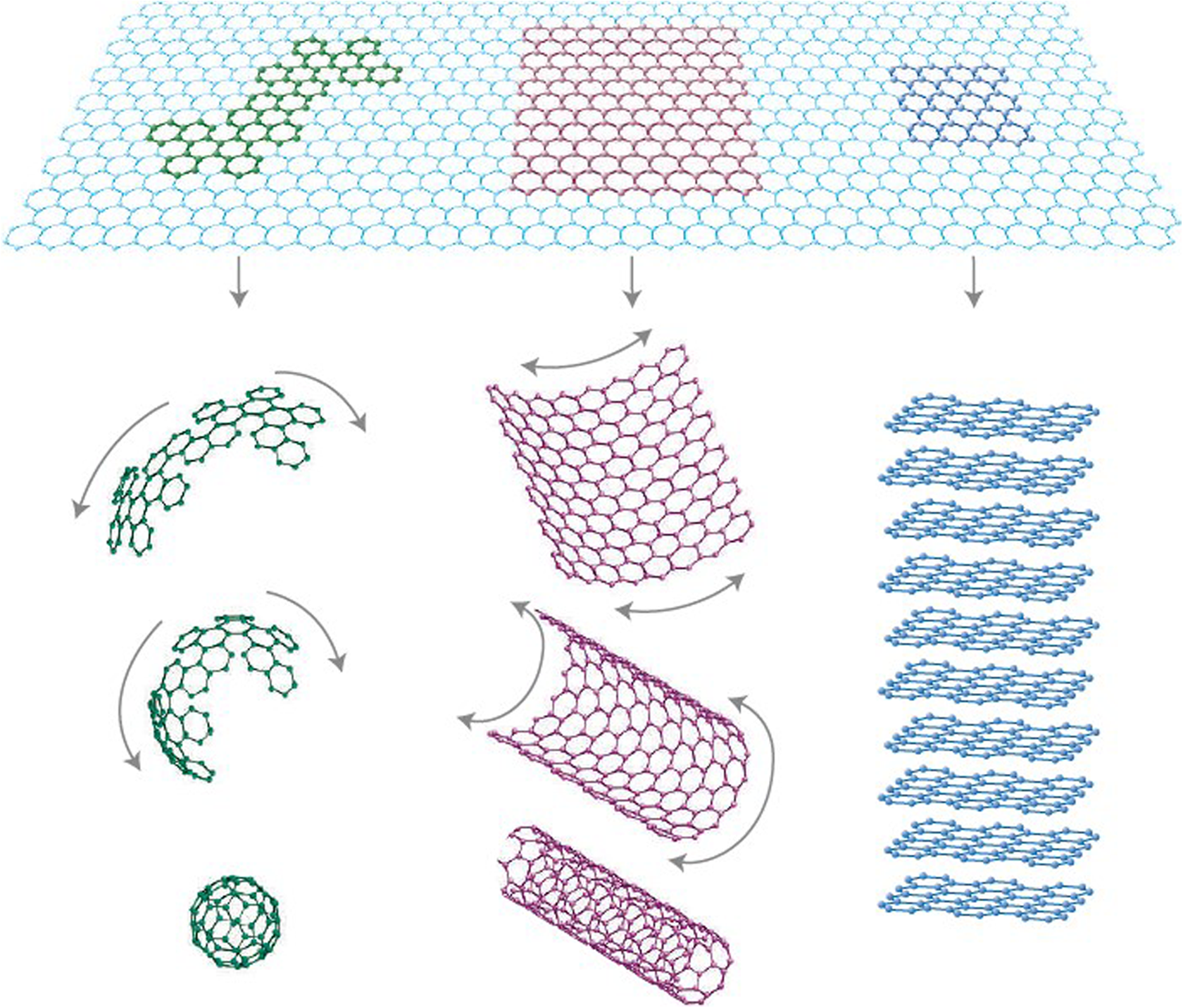
Mother of all graphitic forms. Graphene can be wrapped up into 0-D fullerene, rolled into 1-D CNT or stacked into 3-D graphite. 15 CNT: carbon nanotube.

GO: graphene oxide; GNP: graphene nanoplatelet.
The remarkable mechanical, electrical, and thermal properties, excellent nanoscale effects, and low density, together enable graphene with the possibility to develop a new generation of tailored, high-performance, and multifunctional cementitious composites. 4,33 Amounts of works have been done for the development of graphene-filled cementitious composites (GFCCs) in the past decade. Recent strides in instrumentation for observation and measurement are providing a wealth of new and unprecedented information about cementitious composites and have revealed to us the basic mechanism of graphene in cementitious composites at nanoscale. 11 This article reviews the main developments of GFCC, along with the implications and key findings. The article is divided into (i) dispersion of GNP and GO in cementitious materials; (ii) physical properties of GFCC; (iii) enhancement/modification mechanisms; and (iv) applications.
Dispersion of GNP and GO in cementitious materials
Researchers have made efforts to introduce the excellent properties, especially the mechanical property of GNP into cementitious materials. However, GNP tends to aggregate due to its large specific surface area and van der Waals π–π interactions, which compromises its improvement effect on the composites, and may even lead to a negative hybrid effect in severe conditions. 34 –36 Therefore, there is a necessity to homogeneously disperse GNP in cement matrix. Generally, the agglomeration is irreversible, but the GNP aggregates are not stable under high-shear mixing. So it is feasible to mechanically separate the graphene sheets by ultrasonic, 37,38 intense agitation, 35,39 ball milling, shear mixing, or calendaring. 40 Mechanical methods are time-consuming and less effective. In this sense, GO is more commonly used, thanks to its better dispersibility compared with GNP. Figure 2 shows the morphology of GO. It can be seen that GO sheets contain a large concentration of hydroxyl, epoxide, and carbonyl functional groups which can facilitate the dispersion of GO in water. 42 The insertion of functional groups enlarges the interval between graphene layers and makes GO highly hydrophilic and readily exfoliated in water, yielding stable dispersion consisting mostly of single-layered sheets. 43 It is not difficult to point out that oxygen content has a significant influence on GO dispersion, that is, dispersion improves by the increase of oxygen content. 44 However, it is also shown in Figure 2 that structural defects of GO increase with the increase of oxygen content, which destroys the unique structure of graphene and explains why GO has poor thermal conductivity and electrical conductivity compared with GNP. Therefore, it is necessary to prepare GO with suitable oxygen content. Additionally, GO coagulates after drying, so it is the best to reserve it in deionized water. Before that, GO must be neutralized to low down the pH level and eliminate the impurities from oxidation process. 45

Morphology of GO with (a) 20% oxygen content and (b) 33% oxygen content. Carbon, oxygen, and hydrogen atoms are gray, red, and white, respectively. 41 GO: graphene oxide.
Besides above, using water reducing admixtures (including plasticizers and superplasticizers) as surfactants has proved an effective way for dispersion of GNP and GO. 4 At present, water reducing admixtures have ranked the most commonly used admixtures in GFCC, and amounts of researches indicate that they have an evident effect on improving the dispersibility of GNP and GO, as shown in Table 2. This may be contributed to the higher electrostatic repulsion between graphene layers when surfactant molecules adhere to them. 54 However, this method can only improve dispersion effect to some extent owing to the limit of the capacity of surfactant. In most cases, this method must be combined with some mechanical operations, which is rather time and energy consuming. Silica fume is also introduced to separate individual GO nanosheets. To state this, it should be noted here that although functional groups turn graphene from hydrophobic to hydrophilic to some degree, they also interact with the divalent calcium ions in cementitious materials and become cross-linked. The formed aggregation in this way can reach the micron scale and thus should not be neglected. 45 Silica fume is then adopted to mechanically and chemically separate GO nanosheets from calcium ions by means of reacting with Ca(OH)2. Meanwhile, calcium silicate hydrate, the main product of cementitious materials, has silicate hydroxyl and calcium hydroxyl groups near the surface, which will form stable H-bonds connection with GO. 36 To sum up, there are some feasible methods to disperse GNP and GO in cementitious composites, nevertheless they are either inconvenient or uneconomic. Therefore, it remains a significant issue of GFCC to develop simple, large-scale, and economic dispersion methods.
Mix proportion for GNP and GO in cementitious composites.a

GO: graphene oxide; GNP: graphene nanoplatelet; N.A.: not available.
aThe unit wt% is with respect to the weight of cement powder if not indicated.
Physical properties of GFCC
Amounts of researchers have identified that the physical properties of cementitious materials are greatly improved or modified by incorporating graphene. Additionally, it has been revealed to us that the improvement/modification effects of graphene are, like other materials of nano-carbon family, closely related to the oxygen content, the concentration, the surface condition, and the dispersion quality of GNP/GO, as well as the composition of cementitious materials.
Mechanical properties
GFCC are construction materials, so their most fundamental and crucial properties are mechanical properties. Much efforts have been paid to ascertain these properties under loading or impact, and the results are summarized in Table 3. As exhibited, mechanical properties are improved in the most cases with a proper treatment to GNP/GO and the composites. The observed best performance enhancement includes a 120% increase of hardness with 30 wt% GO, 55 a 197.2% increase of tensile strength with 0.02 wt% of GO, 44 a 160.1% increase of compressive strength with 0.02 wt% of GO, 44 a 184.5% increase of flexural strength with 0.02 wt% of GO, 44 a 175% increase of flexural toughness with 0.6 wt% of GNP, 43 a 73% increase of ductility with 0.1 wt% of GNP, 37 a 51% increase of fracture strength with 1.5 wt% of GO, 70 a 20% increase of damping ratio with 5 vol.% GNP, 72 a 150% increase of hardness with 5 vol.% GNP, 72 a 37.3% increase of shear modulus with 0.5 wt% of GNP, 33 a 500% increase of Young’s modulus with 3 wt% of GO, 71 and a 71% decrease of abrasion loss with 5 vol.% GNP. 72 The mechanical properties of cementitious composites are improved along with the decrease of porosity. Sharma and Kothiyal 48 found that the total porosity of cementitious composites with 1 wt% GO can be reduced from 25.21% to 10.61%. It is believed that GO will help to enhance the packing density of calcium-silica-hydrate (C–S–H), reduce the microstructure porosity, and strengthen the composites. 26 As shown in Figure 3, the constitutive relations of GFCC are modified as well, where compressive strength increases with the increasing dosage of GO and a strain-hardened stage is exhibited, meaning a significant improvement in toughness. It is also indicated from Figure 3(b) that GO can help strengthen the composites when mixed with other nano-carbon materials like carbon nanotube (CNT), and the strengthening effect is better than any admixture alone. Lu et al. 54 believed it was because the dispersion of CNT in GO solution is much better than in an ordinary aqueous solution. This might provide us a new approach to dispersing other nano-carbon materials in cementitious composites.

Constitutive relations of GFCC. (a) Stress–strain curve of GFCC with different dosage of GO (SHCC refers to strain hardening cementitious composites) 56 and (b) flexural–strain curve of GFCC and CNT/GO-filled cementitious composites 54 . GFCC: graphene-filled cementitious composites; CNT: carbon nanotube; GO: graphene oxide.
Enhancement of mechanical properties of GFCC.

GFCC: graphene-filled cementitious composites; GO: graphene oxide; GNP: graphene nanoplatelet.
It should be noted, however, excessive dosages of GNP/GO would lead to a decline in mechanical properties. Hou et al. 73 investigated the strengthening effect of GO to cementitious materials at different dosages and found that 0.16 wt% of GNP would reduce the compressive and flexural strength of the cement paste by 3.36% and 10.59% compared with the control sample. Similar results are obtained in other researches. 36,66 Turning point of GNP/GO strengthening effect on GFCC varies with the differences in dispersion, oxygen content, 69 type of the composite matrix, and other factors. The direct cause of negative effect often lies in the agglomeration of nano-particles.
Electrical properties
Electrical properties of GFCC are enhanced, especially in electrical conductivity and piezoresistivity. Sedaghat et al. 74 reported a reduction of electrical resistivity from more than 1.1 × 10⁸ (Ω·m) to 1.2 × 10⁵ (Ω·m) with only 1 wt% GNP under direct current (DC) condition. Similar results are obtained by other researchers. Muhit 64 found 5 wt% GO could decrease 93% of electrical resistivity of cementitious composites. Le et al. 78 incorporated 3.6 vol.% of GNP into cementitious composites and decreased conductivity more than one order of magnitude. Sun et al. 79 also measured the electrical resistivity of cementitious composites with different contents of GNP and got a negative proportional relationship between electrical resistivity and GNP content, as shown in Figure 4(b). In addition, a secondary percolation phenomenon at high GNP contents was inferred from the figure, which further lowered the electrical resistivity of the composites. As a result, combining with the unstable behavior of electrical resistivity at low GNP contents, Sun suggested a rather high usage of GNP in its applications. Huang 58 studied the conducting mechanism of GNP in cement mortar. He considered three types of conducting paths: (1) the ionic conduction through the free evaporable water in the cement matrix, (2) the electronic conduction and hole conduction through GNP and cement matrix in series by tunneling effect, and (3) the electronic conduction and hole conduction through conductive network formed by GNP particles connecting each other. If GNP fraction is larger than the percolation threshold, the third conducting path is the dominated one. Jin et al. 47 tested the electrochemical impedance spectroscopy of GFCC and found that the electrical resistivity was obviously decreased at high electrical frequencies compared with those at low frequencies, and he attributed it to the significant improvement of conductivity of graphene/cement composites due to the formation of complete conductive network, which caused noticeable influence on the response between the steel electrode and cement materials. In addition, it is stated in introduction that the existence of functional groups along the edges and over the surface of GO sheets will fracture the conjugated bonds between carbon atoms, thereby compromising its natural conducting property. As a matter of fact, when comparing GO with GNP, there is a loss in electrical conductivity as indicated from Figure 4(a). It is also shown in Figure 4(a) that the electrical resistivity gradually increased with the hydration age. It is because the cement matrix containing capillary pores has electrical resistivity that is highly dependent on the moisture content which contains dissolved salts that act as electrolytes, 75 and as the hydration process continuing, the moisture content reduces, leading to the increase of electrical resistivity. Moreover, in order to form a conductive network inside the cementitious composite, the concentration of nano-carbon materials should exceed its percolation threshold. 80 Researches show that the percolation threshold of GFCC generally lies between 1 wt% and 5 wt% (vol.%), 58,67,76 which is higher than CNT (0.5–1.0%) and lower than carbon black (CB; 3–15%), since the aspect ratio of GNP is smaller than CNT and is much larger than CB. 81,82

Electrical properties of GFCC. (a) DC electrical resistivity at different hydration ages (PGO: pristine graphene oxide, GONP: graphene oxide nanoplatelets) 84 and (b) DC electrical resistivity with different dosages of GNP 79 . GFCC: graphene-filled cementitious composites; DC: direct current; GNP: graphene nanoplatelet.
GFCC also possess excellent piezoresistivity effect. Sun et al. 79 investigated the relationship between compressive strain and change in electrical resistance of cementitious composites with GNP. As shown in Figure 5(a), the larger the compression strain is, the more the resistance of GFCC decreases. Du et al. 83 illustrated the mechanism of this piezoresistivity performance as shown in Figure 5(b), that is, the decreased resistivity results from the better electrical contact between adjacent or overlaying GNP particles as well as the contact between GNP and surrounding mortar. At the same time, the shortened distance between GNP particles under compressive strain also possibly contributed to the decrease in resistivity. Pang et al. 76 obtained similar results and reported a linear piezoresistivity for a considerable compressive strain range. But the linear performance appeared only when the GNP concentration exceeded 2.4 vol.%, which Pang et al. pointed out as the percolation threshold value of the composites. Sun et al. 79 tested the repeatability of this piezoresistive behavior and found it repeated stably under lots of times of cyclic quasi-static compressive loading and dynamic cyclic loading within elastic regime. Moreover, the amplitudes of change in the electrical resistivity of the composites showed a little decrease with test time at high loading rate, which means the piezoresistivity is slightly dependent on the dynamic loading rate.

Piezoresistive behavior of GFCC. (a) Typical compressive stress and change in resistance curve with GNP content of 5 wt% 76 and (b) schematically illustration of the decrease in resistance of mortar with GNP under compression 83 . GFCC: graphene-filled cementitious composites; GNP: graphene nanoplatelet.
Electromagnetic property
Another important property of GFCC is electromagnetic property (e.g. electromagnetic interference shielding property and electromagnetic wave absorbing property). With 5 vol.% GNP added into plain cementitious composites, Cui et al. 70 found the electromagnetic wave reflectivity increased by 38%. Singh et al. 55 prepared GO–ferrofluid–cement nanocomposites and its electromagnetic interference shielding effectiveness in the 8.2–12.4 GHz frequency range. The results show that with an incorporation of 30 wt% GO along with an appropriate amount of ferrofluid, the shielding effectiveness reached 46 dB (>99% attenuation). Chen et al. 77 introduced GO together with carbon fiber (CF) into cement composites and found that with 0.4 wt% GO-CF, a shielding effectiveness of 34 dB was attained in the 8.2–12.4 GHz range, which had a 31% increase than that of CF/cement (26 dB) in the same mass fraction. Chen et al. thus stated that GO is a promising nano-filler for high electromagnetic interference shielding. Sun observed that the electromagnetic wave absorbing property of cementitious composites with GNP increase most by nine times. The absorption depletion to electromagnetic wave by the composites is mainly dielectric depletion without magnetic depletion. 85
Other properties
Rheology and workability
Workability may be one of few properties that is compromised in GFCC. Gong et al. 86 reported a reduction in workability about 41.7% via a mini-slump test with the incorporation of 0.05 wt% GO. Further tests using 0.03 wt% GO also show a significant decline in workability by 34.6%. 87 Shang et al. 88 systematically studied the rheological performance of GFCC and found that the shear stress and apparent viscosity increased with the increase of the dosage of GO, as illustrated in Figure 6. Han et al. 53 stated the increase rate of the viscosity of the cement slurry was rather low at first and then became fast with an increase of GNP content. He also tested out the rheological behavior of GFCC was close to the dilatant fluid. Swamy 89 proposed that the interparticle friction of cementitious materials is the root cause for exacerbated workability. Graphene sheets, especially GO with many hydrophilic functional groups, have very large surface area with strong water absorbing capacity. They need a lot of water to wet their surface in cementitious composites, thereby reducing the free water content, increasing the frictional resistance among cement particles and the sheets, consuming additional flowing energy, and reducing the workability of GFCC. 40,53,90 It is stated in section “Dispersion of GNP and GO in cementitious materials” that dispersion issue is significant to improve the properties of GFCC. However, this negative effect on workability will only become more serious if GNP and GO are better dispersed, because better dispersion means more free water will be attached to the sheets and the workability will be further reduced. Since the loss of workability is nearly unavoidable, measurements should be taken to ensure the fresh concrete has enough flowability and can be well molded. For example, water reducing admixtures are usually adopted to improve the workability of GFCC because they can promote the electrostatic repulsions between cement and sand grains and nanosheets. 91 However, the capacity of water reducing admixture has a limit, so it is necessary to set about from somewhere else like the type of cementitious materials, mix proportions, types, and dosages of graphene sheets.
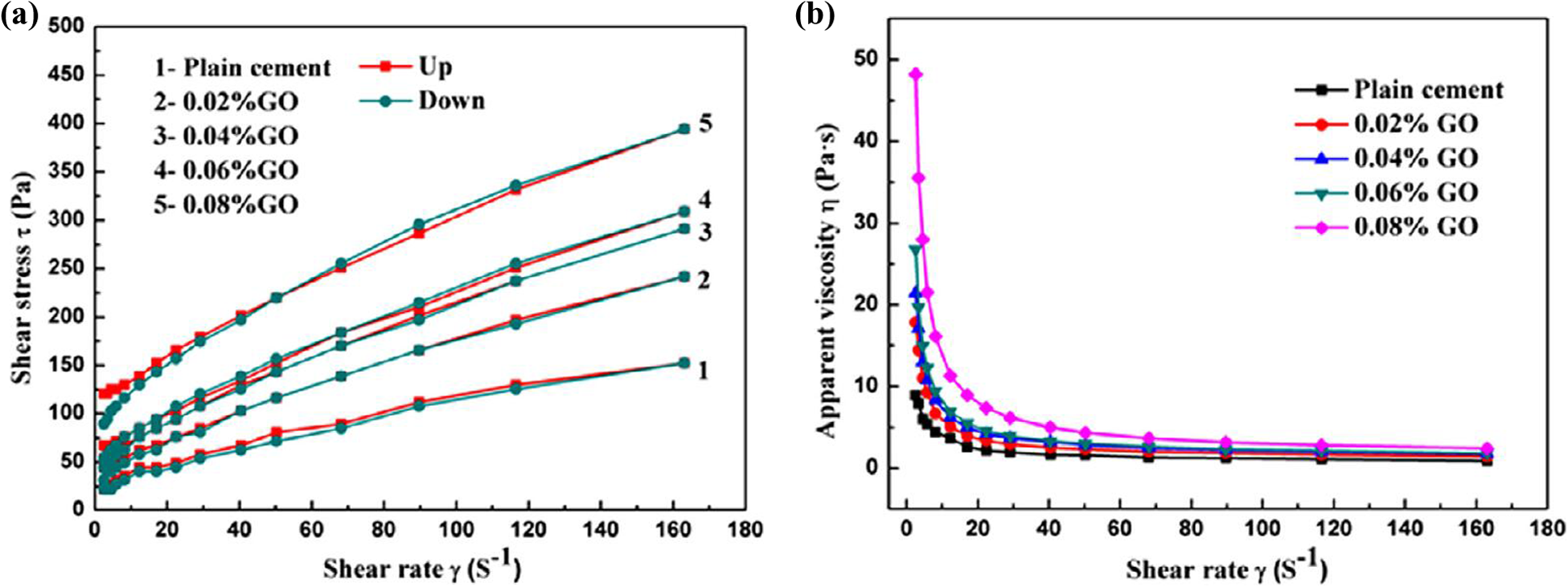
Rheological performance of cement pastes with different dosages of GO. 88 (a) Shear rate–shear stress curves and (b) shear rate–apparent viscosity curves. GO: graphene oxide.
Thermal properties
It is well known the hydration of cementitious materials is an exothermal process, and the thermal gradient inside the composites will lead to thermal stress, so as to cause autogenous shrinkages and early-age cracking. 38,92 Graphene has an intrinsic thermal conductivity as high as 5.30 × 10³ (W/mK; Table 1). Cui et al. 70 incorporated GNP into cement composites and received a 77% increase of thermal conductivity and a 17.7% decline of specific heat with 5 vol.% of GNP. Sedaghat et al. 74 have also investigated the thermal properties of GFCC and found the thermal diffusivity was remarkably improved with 5 wt% and 10 wt% of GNP, as shown in Figure 7. Alessandro et al. 50 studied the spectral solar reflectance of cementitious composites incorporated with different nano-carbon inclusions. It can be seen from results in Figure 8 that the composites with GNP had the lowest solar reflectance compared with other nano-carbon inclusions and showed a singular behavior under all wavelength. At the same, composites with GNP had the largest values in both thermal conductivity and thermal diffusivity, which were 1.1400 ± 0.0702 W/mK and 0.8095 ± 0.0747 mm2/s, respectively. Alessandro et al. stated it could be imputable to the geometry of GNP, allowing a relatively higher mutual interaction producing better thermal conduction and internal diffusion than other nano-carbon inclusions. These improvements in thermal properties mean the hydration heat could be more easily conducted and dissipated, thus reducing the thermal shrinkages and strengthening the composites. 37 However, it should be noted here that GO is thermally unstable. Babak et al. 2 used thermo-gravimetric analysis (TGA) to test the GO and reported that it began to lose mass upon heating even below 100°C, which is believed to be attributed to the removal of water molecules, hydrogen atoms from hydroxyl groups, and hydroxyl groups in the annealed GO. 93 Besides reducing autogenous shrinkages, Sun et al. 85 have attempted to apply the outstanding thermal properties of GFCC to fabricate temperature sensor. The research results showed temperature sensitivity of the material tended to decrease with the increase of GNP content but its linearity increased.

Thermal diffusivity of hydrated graphene-cement composites. 74
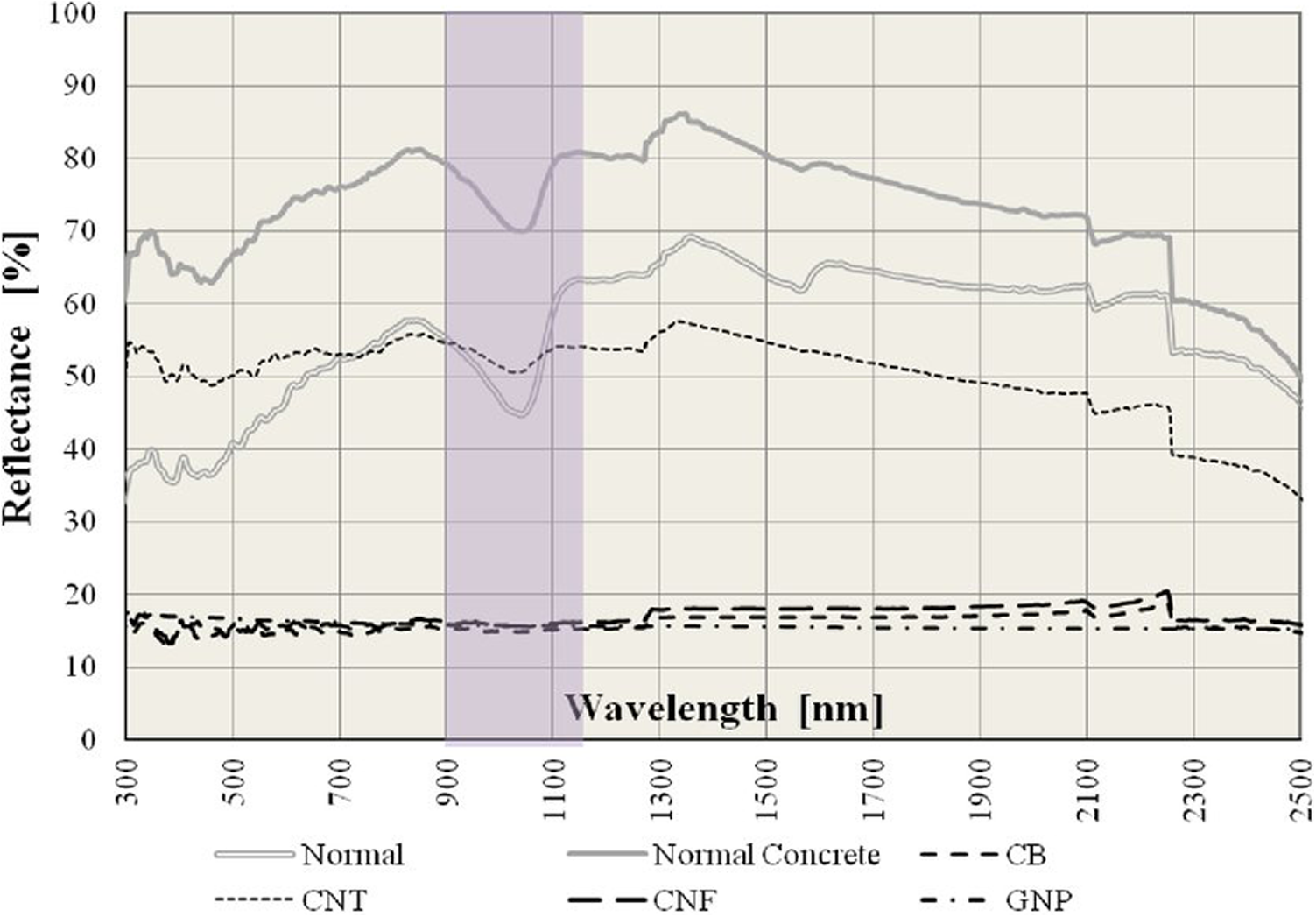
Spectrophotometer solar reflectance profiles of the selected samples. 51
Durability
Durability of GFCC is improved with the addition of GNP/GO by refining the micro-pore structure, hindering the initiation and propagation of microcrack during the outset, improving the transport properties (water permeability, gas permeability, and chloride penetration resistance), and enhancing the resistance to freezing and thawing cycle. 26,37,43,48,51,52,94 Mohammed et al. 52 studied the transport properties of cement composites with 0.00 wt%, 0.01 wt%, 0.03 wt%, and 0.06 wt% GO, respectively, and found the water sorptivity and chloride penetration values were highly sensitive to the dosage of GO, among which the specimens with 0.01 wt% GO showed the best performance. As observed in Figure 9, chloride penetration declined from 26 mm to just 5 mm in 0.01 wt% mix, suggesting a strong barrier was formed to resist the attacking chemicals. Sun 95 has conducted tests to further reveal how graphene platelets help defend chloride ions in GFCC. Since GNP has excellent conductivity, it will definitely improve the electric flux in cement composites, which is a favorable factor for chloride ions. However, tests result from non-steady-state chloride migration experiments (Table 4) shows an evident deduction in chloride ingress that GFCC with 5% GNP has a D RCM value less than 10% of the one of control samples, meaning the positive effects of GNP have countered the negative effects. Sun believed the positive effects mainly come from two aspects. On the one hand, GNP has compacted the cement composites. As exhibited in Table 4, when GNP content rises from 0% to 5%, the density of GFCC increases slightly yet shows a clear tendency, which makes it harder for chloride ions to penetrate in. On the other hand, GNP has extremely large specific surface area, so the GNP inside matrix will absorb chloride ions and act like “filters” (Figure 10), and in this way, these harmful chemicals will be blocked out in the surface area of composites. Moreover, Fan 37 tested the performance of cement composites with GNP and GO under 300 cycles of freezing and thawing (19–32°F). It is revealed that both specimens with GNP and GO showed enhancement in keeping specimen weight and dimensional stability as well as the resistance to spalling. And comparing the performance of GNP with GO, GO with smaller particle size exhibited a better resistance to freezing and thawing cycle.

Chloride front of the control mix (right) comparison to 0.01% GO mix (left). 52 GO: graphene oxide.
Test results of density and chloride migration coefficient of GFCC. 95
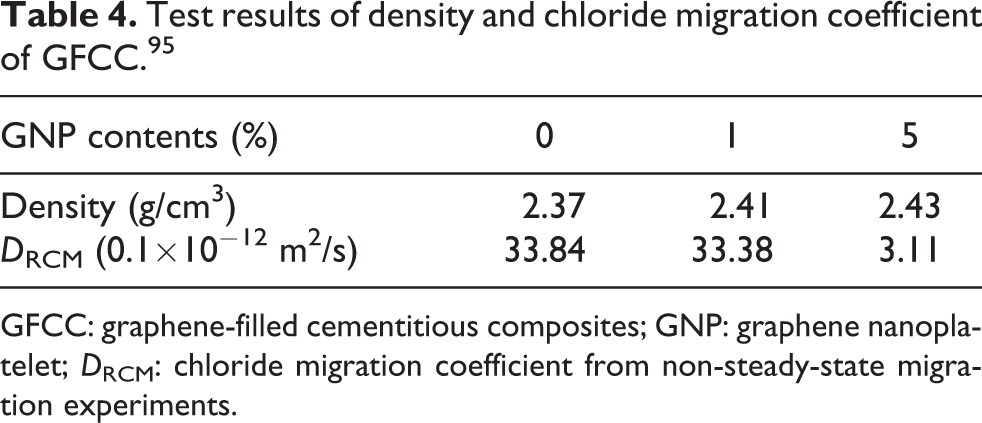
GFCC: graphene-filled cementitious composites; GNP: graphene nanoplatelet; D RCM: chloride migration coefficient from non-steady-state migration experiments.
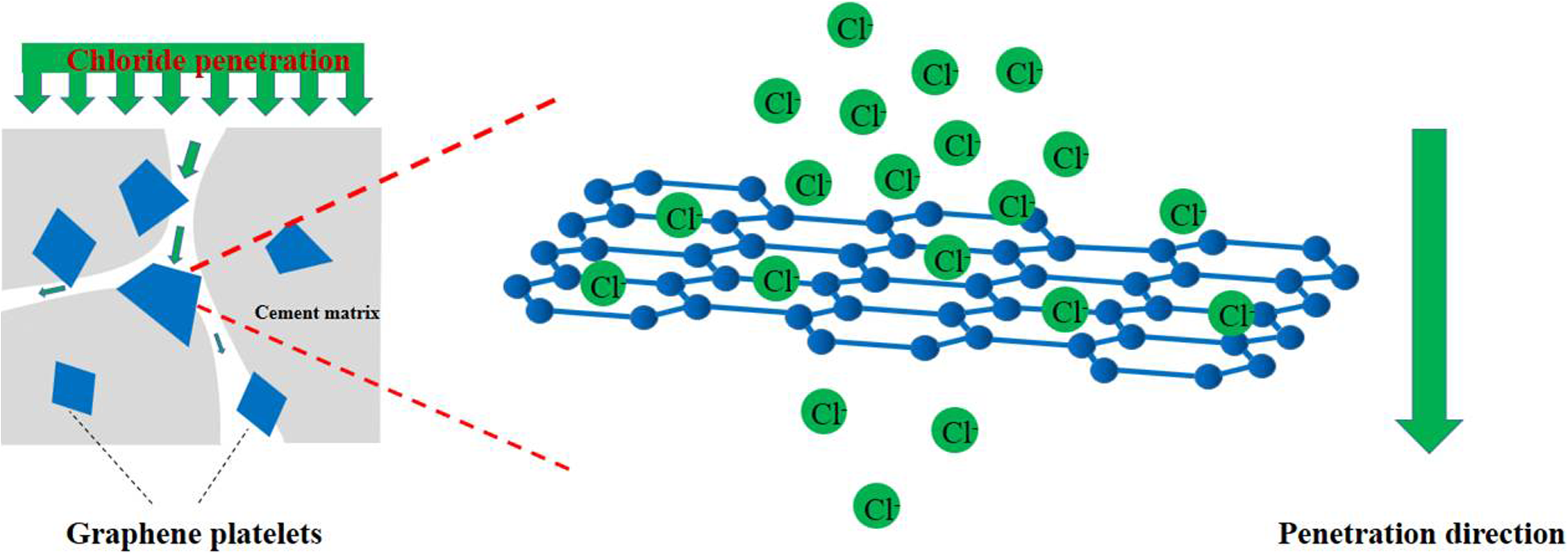
Graphene platelets acting like “filters” for chloride ions.
Enhancement/modification mechanisms of GFCC
Thanks to the rapidly developing material characterization technology and computational science, we are now enabled with tools, such as optical microscopy, field emission scanning electron microscopy (FE-SEM), transmission electron microscopy, X-ray diffraction (XRD), Fourier transform infrared spectroscopy, Raman spectroscopy, molecular dynamics, and TGA, to further explore and understand the underlying enhancement/modification mechanisms of GFCC from nano-microscale to meso-macroscale. 2,27,20,54,56,64 It is ascertained that the enhancement/modification mechanisms of GNP/GO can be ascribed to the “hydrolytic reaction” of GO/C–S–H system and covalent bond with hydration products at atomic scale, the catalytic behavior and self-curing effect of functional groups as a water reservoir and cross-linking interaction between GO sheets at molecular scale, densified microstructure with nano-filler at microscale, reduced shrinkages and cracks due to GNP/GO presence at mesoscale and energy absorption during failure pattern at macroscale, as well as the extensive distribution network of GNP/GO in composites matrix. At atomic scale, it is confirmed by using FE-SEM that hydroxyl, epoxide, and carbonyl functional groups on graphene sheets will form covalent bond with C–S–H and Ca(OH)2, subsequently forming strong interfacial adhesion with each other. 1,38,67 Moreover, Hou et al. 73 set up an atomic model of GO/C–S–H system and simulated its structural transformation under large deformation by ReaxFF force field. Hou proposed that the water molecules would dissociate and associate under tensile load, along with the decrease and increase of Si––OH bond, Ca–OH bond, and C–OH bond (Figure 11). This “hydrolytic reaction” can help withstand more tensile strain and can enhance the plasticity of composites.

Hydroxyl number evolution with tensile strain. 59
At molecular scale, functional groups on graphene have a catalytic behavior, as called nucleation effect, to hydration process. 57 Lin et al. 46 explained that the oxygen-containing functional groups have two main functions: (1) provide heterogeneous nucleation sites for cement hydration and (2) act as a water reservoir and generate water transport channels. More specifically, when graphene is well dispersed in cement, C3A, C4AF, C3S, and C2S will have a strong interaction with oxygen-containing functional groups on it, and easily react with water molecules adsorbed on functional groups, finally forming flower-like crystal of hydrates. What’s more, as shown in Figure 12, water absorption property makes graphene somewhat like self-curing agent by absorbing water at early hydration stage to lower water/cement ratio and releasing water to form self-curing inside in later hydration stage. 53 The whole process accelerates the hydration of cement, especially at early stage, which is quite coincident with the results obtained from the tests of hydration heat (Figure 13). Han et al. 53 also studied the nucleation effect and reported that although the effect speeded up the hydration process, final hydration of the cementitious materials was not improved obviously. In the meanwhile, XRD analysis in Figure 14 shows that the addition of GNP neither brings in nor eliminates any kind of hydration product, but indeed lowers the orientation index of Ca(OH)2 crystals, which might be the root mechanism of nucleation effect in GFCC. Additionally, well-dispersed GO in cementitious composites will be cross-linked with other and form a strong network. There are three types of cross-linking interaction: bridging the edges of the GO sheets, intercalating between the basal planes, and cross-linking of the hydrogen bonds formed among the oxygen functional groups on GO surfaces and the interlamellar water molecules. 36
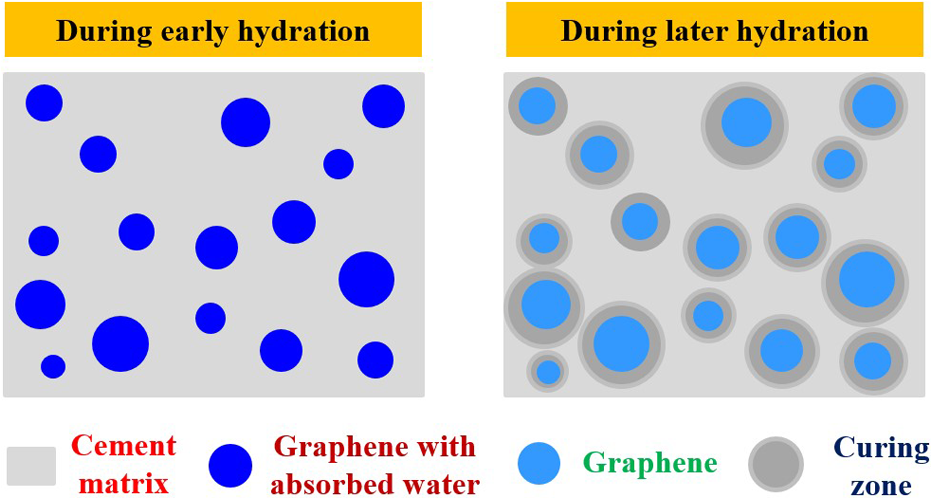
Schematic diagram of self-curing effect of graphene in cementitious materials.

Difference of cumulative heat of cement pastes with GO. 66 GO: graphene oxide.
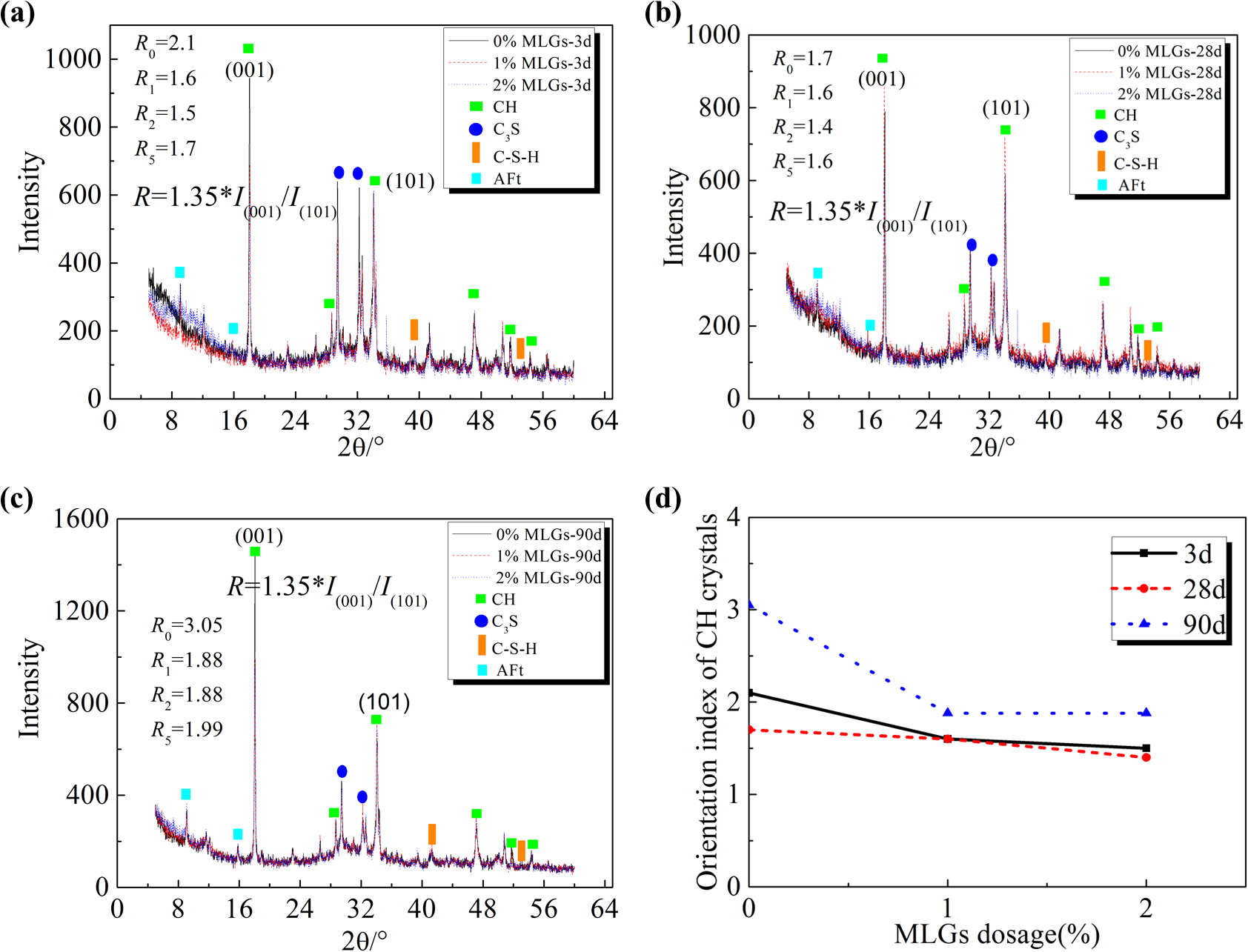
XRD analysis of cementitious composites filled with 0–2 vol.% MLGs (i.e. GNP): (a) curing for 3 days, (b) curing for 28 days, (c) curing for 90 days, and (d) 3 days to 90 days. 53 GNP: graphene nanoplatelet.
From micro- to macroscale, GNP/GO will firstly refine the microstructures of cementitious materials mechanically. As known, if a material is filled with finer particles, it generally demonstrates higher strength, toughness, and hardness. 96 When we look down from these macro-performances to the microstructures of GFCC, it is directly found that the existence of GNP/GO acts as effective nano-fillers to modify the pore condition between cement grains, reduce permeability, and densify the microstructure of cement-based materials (Figure 15). Chemically, hydration products, such as Ca(OH)2, tend to grow around graphene sheets due to the nucleation effect, but the existence of graphene sheets also reduces the growth space of the products, which makes the products become smaller and further densifies the composites (Figure 16). Also shown in Figure 17, as a result of strong bond between GO and cement matrix, including physical interlocking and chemical bond, crack tends to propagate along the weak regions between GO-hydration networks, which consumes a considerable amount of energy. And finally, fracture failure of the material verifies it with a tortuous path of crack propagation. In addition, it should be noted here that the thermal diffusivity of graphene sheets illustrated in section “Thermal properties” is also an essential factor that reduces the autogenous thermal shrinkage and crack.

SEM images of cementitious composites filled with (a) 0 vol.% GNP, (b) 1 vol.% GNP, and (c) 5 vol.% GNP. 70 GNP: graphene nanoplatelet.

Schematic diagram of effect of graphene on the hydration products growth around cement particles.
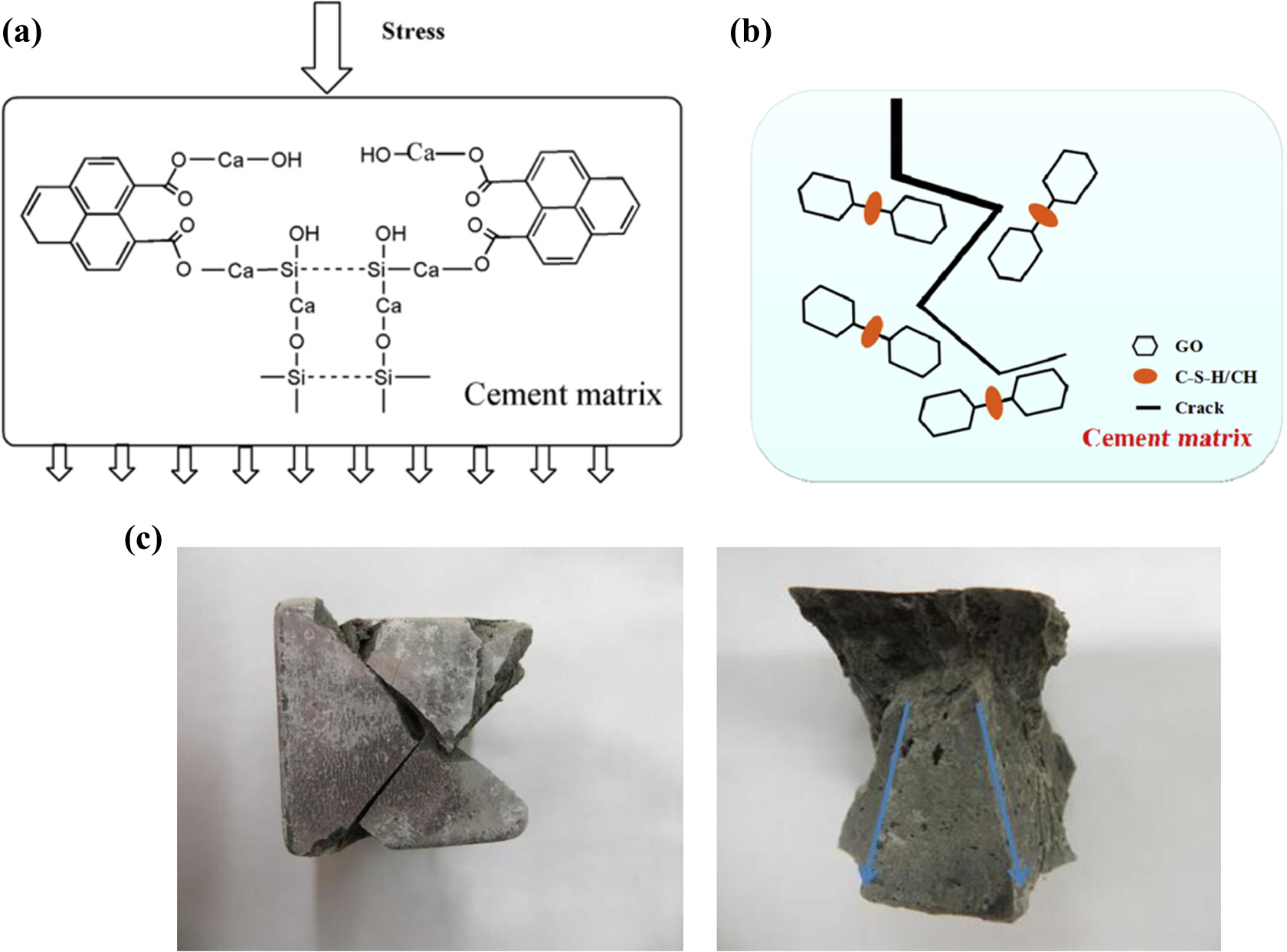
Schematic diagram of resistance to crack propagation and the corresponding failure pattern. 64,68 (a) Schematic drawing of the load-transfer mechanism in GO-cement samples, (b) illustration of the deflection of cracks in GO-cement sample, and (c) fracture pattern of GFCC with 0.05% GO content. GO: graphene oxide.
Besides above, the extensive distribution network of GNP/GO in composites matrix is another important mechanism. As stated above, the nucleation effect and cross-link effect are highly dependent on the dispersion of nano-inclusions. It is because GNP and GO are both at nano-size and light weight, meaning they could be extensively distributed in the matrix if well dispersed. Han et al. 53 calculated and reported the MLGs number per cm3 could reach in the range from 6.4 × 10¹¹ to 3.2 × 10¹² as the MLGs content was 1.0 vol.%. With this extensive distribution network, the reinforcing and modifying effects of GNP/GO also extensively exist in the composites. Mechanically, graphene has very high tensile strength and helps carry tensile stress in the composites. Composites with a low GNP/GO content (0.1 wt%) still have higher strength than the control samples, indicating more nano-inclusions are needed. In this sense, an extensive distribution network would greatly improve the loading bearing capacities of composites. It is more obvious that the extensive distribution network is significant to modify the thermal and electrical properties of cementitious composites. The network itself is a set of numerous microcircuits, transforming cementitious materials from insulator to conductive materials. Meanwhile, the network is also the heat conduction path from inside to outside and from corner to corner, which dramatically enhances the thermal dissipation ability and reduces the autogenous crack of cementitious materials.
Applications of GFCC
The versatile properties of graphene provide cementitious materials tremendous potential in structural application. Considering the enhanced properties of GFCC, one of the major applications is to improve the mechanical behavior and durability of the structural components. For example, Peyvandi et al. 51 added GNP into the concrete pipes used in aggressive sanitary sewer environment to improve its mechanical behavior and durability including the moisture sorptivity and acid resistance, thus increasing their service life in the aggressive environment. GFCC is more applied to the structural health monitoring (SHM), thanks to its excellent piezoresistivity. 47,78,76,93,97,98 For example, Saafi et al. 97 mixed GNP into geopolymeric cement to fabricate superionic conductor for SHM. The sensor was able to measure tensile strains up to 1300 με with extremely high gauge factor, thus making it suitable for measuring very small tensile strains. Sun et al. 79 used GNP-filled cementitious material as compression sensor and reported a high sensitivity of 0.78%/MPa to compressive stress and 156 of gauge factor to compressive strain. Comparing with other smart materials, such as optical fibers, piezoelectric sensors, and so on, cementitious composites are themselves construction materials and have the advantages of low cost, good durability, large sensing volume, good compatibility with concrete structure, and absence of mechanical property degradation due to embedded sensors. 98 Moreover, Singh et al. 55 prepared GO–ferrofluid–cement composites for electromagnetic interference shielding application and attained a prominent shielding effectiveness (>99% attenuation). In addition, Zhang 65 applied the absorption properties of GNP into cementitious materials, in order to remove the heavy metal ions, thereby purifying the sewage and protecting the environment.
The potential application of GFCC covers a wide range of possibilities, such as offshore structures, geothermal piles, radiant systems, smart road pavements, as well as the well-behaved structural components, electromagnetic shielding, SHM, and more. Besides, the application of GFCC is not limited to civil engineering fields. For example, combined with TiO2, GFCC could be applied to the photoinactivation of bacteria in solar light irradiation. 43 Excellent electrical conductivity of GFCC indicates that low additions of GNP/GO, even at 1%, could be sufficient for use in applications where electrostatic dissipation of charge is desirable. 74 With good thermal conductivity, GFCC has potential applications in electronic circuit boards, heat sink, and light-weight high-performance thermal management systems. 2 GFCC has versatile properties and opens up new avenues for many interesting areas.
Conclusions and prospects
Graphene is bringing profound and lasting impacts on the field of construction and once again broaden the horizons of cementitious materials. GNP and GO derived from graphene strengthen the cementitious materials at every aspect from atomic scale to macroscale, consequently endowing GFCC with exceptional properties (physical properties, electrical properties, thermal property, and durability) and making it a multifunctional material compelling for various engineering applications, including well-behaved structural components, electromagnetic shielding, SHM, and so on.
However, GFCC as a new material still faces many challenges and puzzles ranging from reinforcing mechanisms, preparation, and characterization to the final device fabrication. To date, plenty of works have been done to explore the reinforcing mechanisms of GFCC by various characterization methods, and many hypotheses have proposed, among which some are evident and some lack in strong supports. A systematic framework of mechanism should be established to closely relate the micro-phenomena with the macro-performances of the material, and simultaneously models are desired to quantitatively analyze how GNP/GO affects the composite properties. Efficient fabrication of the composites is another main challenge since the researches have revealed the GFCC performances are very sensitive to the dosages and dispersion effect of GNP/GO and the mix proportions of the composites. Besides, most of the present studies are focused on the properties and enhancement/modification mechanisms of GNP/GO in cement paste and mortar matrix, while few investigated their performance in concrete and fewer have applied the exceptional mechanical behaviors and multifunctional properties of GFCC to address the practical engineering problems.
GFCC is bringing a new storm in the field of construction materials and structures with tremendous possibilities. Great expectations are likely to come true in the near future when GFCC helps develop a new generation of construction material and serves its fabulous multifunctionality for safer, smarter, more durable, more economical, and more comfortable infrastructure systems.
Footnotes
Acknowledgment
The authors thank the funding supported from the National Science Foundation of China.
Declaration of conflicting interests
The author(s) declared no potential conflicts of interest with respect to the research, authorship, and/or publication of this article.
Funding
The author(s) disclosed receipt of the following financial support for the research, authorship, and/or publication of this article: The authors received the funding supported from the National Science Foundation of China (51578110 and 51428801).