




Abstract
Commercial electrical and electronic testing laboratories are currently facing significant challenges in enhancing operational efficiency and ensuring consistent reliability. Although various laboratory informatics systems are available, their implementation has often failed to yield substantial improvements. This study adopts both theoretical and methodological approaches to examine the key pain points within the industry and to identify enabling technologies. Based on these findings, a novel LIMS 4.0 model is proposed and subsequently evaluated through both internal and external validations, serving as evidence of its potential to address the prevailing challenges encountered by commercial laboratories.
Keywords
Introduction
The Testing, Inspection, and Certification (TIC) industry faces mounting challenges in workforce competence, operational efficiency, and technological adaptability—especially in electrical and electronic product labs. Skill shortages, high turnover, and rigid ISO-based systems strain operations and impede knowledge retention. Externally, small and medium laboratories struggle against dominant market players, lacking transparency and resources to stay competitive. This study reviews current TIC bottlenecks and explores enabling Industry 4.0 technologies. A novel LIMS 4.0 model is proposed, developed through gap analysis and expert interviews, and validated via prototype implementation. The paper concludes with recommendations for broader adoption and AI-enhanced system evolution.
Literature review
Testing, Inspection and Certification (TIC) industry
The TIC industry is a critical yet often invisible infrastructure that underpins modern society by safeguarding product safety, security, and quality. Building on the study by Cheng et al. (2016), 1 in the electrical and electronics sector, services typically include EMC, RF, safety, and cybersecurity assessments. Commercial TIC laboratories generally operate across three core domains: business development (e.g., quotations, invoicing), lab operations (e.g., scheduling, logistics, test execution), and technical management (e.g., standard interpretation, uncertainty analysis). Together, these functions uphold laboratory service quality and technical reliability.
Laboratory informatics
According to Loh et al. (2019), 2 Laboratory informatics encompasses digital systems such as LIMS, ERP, and automation tools, all aimed at improving operational efficiency. LIMS primarily manage sample tracking, compliance documentation, and data management. As defined by Al-Amin et al. (2023), 3 ERP extends into organizational processes like procurement and HR. Automation, particularly in electronics testing, facilitates efficient, and standardized reporting minimizes manual effort, and enhances repeatability and throughput.
Industry 4.0
As suggested by Li, C. H (2017) 4 and Javaid (2022) 5 that Industry 4.0 introduces transformative technologies—such as CPS, AI, cloud computing, 6 and VR—that enable intelligent, interconnected, and adaptive systems. CPS enables real-time response through integrated sensing and control 7 ; AI supports pattern recognition and decision-making 8 ; cloud computing enhances system scalability and accessibility 9 ; VR facilitates immersive training 10 ; and ecosystem integration promotes cross-stakeholder collaboration. 11 These technologies, when properly implemented, can dramatically enhance lab productivity, knowledge retention, and agility.
Semi-structured interview
As proposed by Adeoye‐Olatunde (2021), 12 Semi-structured interviews allow researchers to combine structured core questions with flexible follow-ups, encouraging deep, contextual insights. This method enables exploration of diverse professional perspectives while maintaining consistency. It also fosters a relaxed environment that improves data richness and reduces pressure on interviewees.
NVivo 15
Among the qualitative analysis tools considered (Atlas.ti, 13 MAXQDA, 14 NVivo), NVivo 15 was selected for its advanced coding, querying, and visualization features. Building on the findings of Dhakal (2022), 15 NVivo supports a wide array of data formats and proved most suitable for thematic analysis in this study, enabling the identification of meaningful patterns within unstructured interview data.
Theorical method
Methodology and model development
This research employed a hybrid approach that integrated both theoretical and empirical methodologies to investigate the prevailing challenges in the Testing, Inspection, and Certification (TIC) industry. A structured research design was adopted, beginning with a gap analysis between current TIC practices and emerging Industry 4.0 (I4.0) technologies. Based on the insights derived from this analysis, a conceptual model—LIMS 4.0—was developed to address the identified pain points. The proposed model was subsequently evaluated through practical implementation and internal and external assessments to validate its applicability and effectiveness in real-world laboratory settings.
Gap analysis
Gap analysis was used to systematically identify discrepancies between the operational challenges in the Testing, Inspection, and Certification (TIC) industry and the capabilities offered by Industry 4.0 (I4.0). This involved semi-structured interviews with senior personnel across business development, laboratory operations, and technical management, triangulated with a literature review on enabling I4.0 technologies.
Three in-depth interviews were conducted with experts to validate the relevance of the proposed LIMS 4.0 model. Interviewees included: (1) a CEO of an independent conformity assessment body with over 30 years’ leadership experience; (2) a senior technical assessor in cybersecurity testing with two decades of laboratory and ISO/IEC 17025 experience; and (3) an IT department head with 30+ years in software engineering, including 12 years in LIMS design and implementation.
All interviews were conducted face-to-face and lasted around 2 h. Participants were chosen for their cross-functional expertise in TIC operations, strategic management, and system deployment, with all having experience with The One Cybersecurity Laboratory, a TAF-accredited facility.
Interview transcripts were coded and analyzed in NVivo 15 using a hybrid strategy combining keyword clustering and emergent themes. The semi-structured format revealed nuanced insights into sector-wide pain points like labor shortages, system rigidity, and scalability barriers. These findings directly shaped the architecture and module design of LIMS 4.0, aligning with frameworks in strategic management and technology adoption.
Conceptual modeling
The LIMS 4.0 model was developed using a conceptual modeling approach, commonly applied in system design and digital transformation to represent and refine complex operational systems. This method ensures alignment between theoretical frameworks and real-world industry requirements.
Inspired by the framework of Li, C. H et al. (2024), 16 the model integrated Industry 4.0 technologies—including IoT, AI, and digital twins—with insights from gap analysis and existing laboratory informatics frameworks, creating an extensible architecture tailored for electrical and electronic testing laboratories.
Key components such as test scheduling, sample tracking, equipment traceability, AI-based document generation, and role segregation were modeled as modular units with defined data flows. This modular design enhanced scalability, interoperability, and ease of maintenance across laboratory functions.
Importantly, the model embedded domain expertise into system logic, supporting knowledge retention amid high staff turnovers. By ensuring traceable knowledge flow and minimizing reliance on individual users, the LIMS 4.0 conceptual model addressed critical operational pain points while enabling long-term sustainability and adaptability.
Evaluation framework
The LIMS 4.0 model was evaluated using a multi-method empirical approach incorporating internal and external validation. Internally, quantitative analysis compared manual workflows with the prototype, revealing improved efficiency. Recognizing the importance of compliance with laboratory quality management systems, as emphasized by Miguel (2021), 17 a quality audit assessed compliance with ISO/IEC 17025:2017, confirming alignment with laboratory quality standards.
Externally, semi-structured interviews with TIC experts provided feedback on the model’s scalability and practical relevance. This triangulated validation approach, aligned with Design Science Research (DSR) methodology, ensured both empirical rigor and iterative refinement, reinforcing the model’s applicability in real-world laboratory settings.
Findings- gap analysis
Finding – pain points of TIC industry
To systematically identify the key pain points within the Testing, Inspection, and Certification (TIC) industry, a semi-structured interview protocol was developed comprising four thematic sections. The first section explored general industry-wide challenges. The second section invited interviewees to elaborate on pain points from the perspective of specific laboratory functions—namely, quality assurance, business operations (sales), and technical/engineering operations. The third section focused on participants’ experiences with existing laboratory information systems, with particular emphasis on challenges related to interoperability, user interface design, and functional limitations. The final section prompted interviewees to describe their ideal LIMS solution, including both essential and advanced functionalities, as well as their broader expectations regarding future system development.
Guiding questions to understand industry pain points.

Interview findings
To support international trade activities, the TIC (Testing, Inspection, and Certification) industry plays a vital role in ensuring safety, compliance, and reliability. However, the integration of modern technologies - particularly new IT systems - into the industry remains a persistent challenge for many stakeholders.
Based on qualitative data analyzed through NVivo (Version 15), five key barriers to the effective adoption of new systems were identified and were shown in Figure 1. Tree map of pain-points identified through semi-structured interviews, generated using NVivo 15.
18
Key findings identified using NVivo 15 evaluation.Figures 15 and 16 was not cited in the text. We have cited it in the sentence “Looking ahead, further research and field validation” Please review our placement of the citation.
18
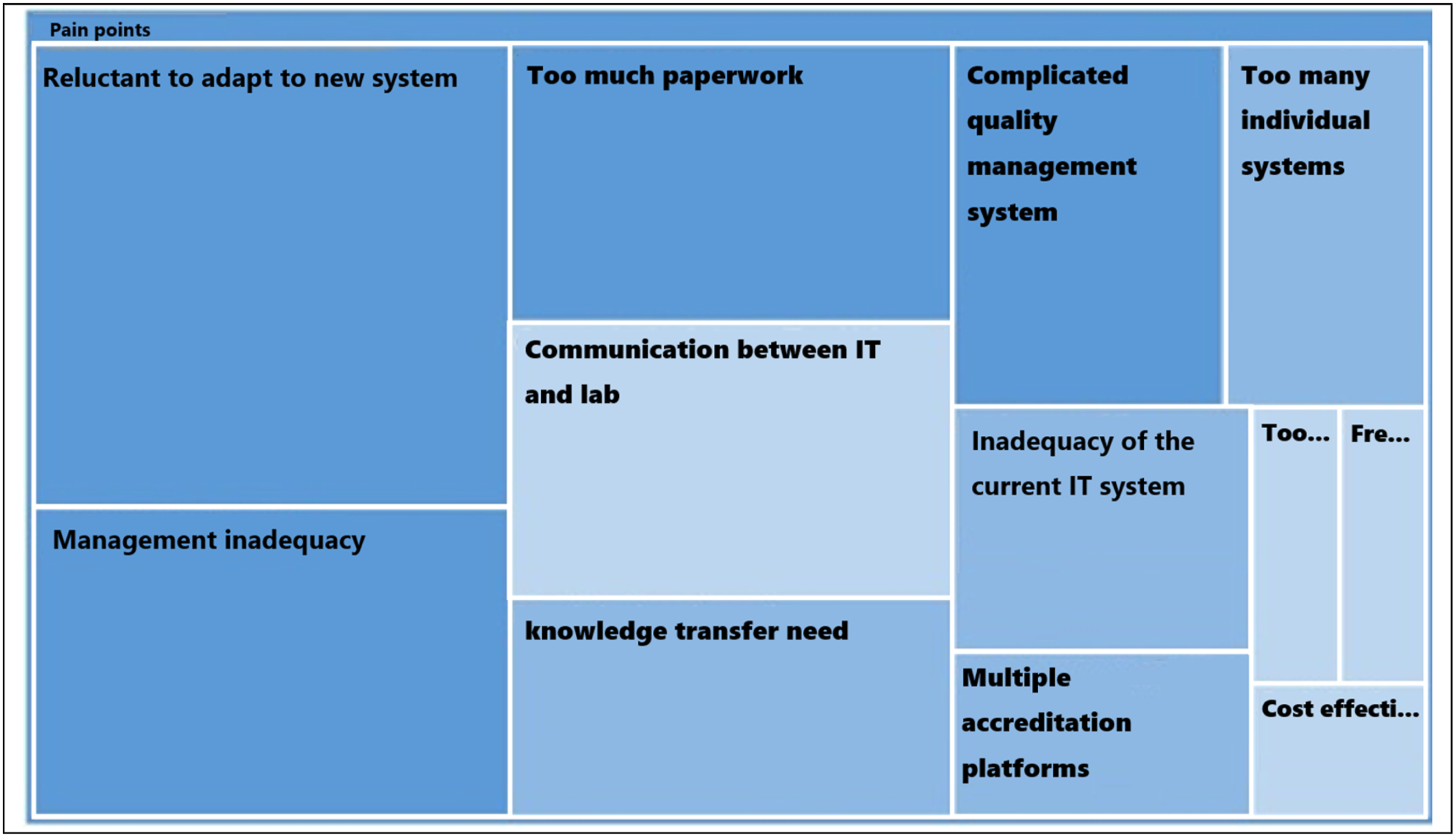
Resistance to change – Many laboratory personnel are reluctant to adopt new systems, often due to familiarity with legacy practices.
Managerial inadequacies – A lack of strategic planning and leadership in digital transformation hinders system integration.
Excessive paperwork – Over-reliance on manual documentation processes reduces efficiency and delays digital transitions.
Poor communication – Misalignment between laboratory users and IT developers leads to unclear requirements and system mismatches.
Knowledge transfer gaps – Insufficient training and handover mechanisms impede effective use of new systems across departments.
Integration of LIMS with Industry 4.0
The concept of Industry 4.0 (I4.0) offers transformative tools that enhance productivity and reliability in the manufacturing sector by integrating systems across multiple stakeholders within the supply chain. In addition to the benefits enabled by mass production in the Second Industrial Revolution and the automation achieved in the Third Industrial Revolution as highlighted by Hassoun, A. (2023), 19 I4.0 introduces a self-evolving, interconnected ecosystem that fosters continuous improvement and real-time collaboration. This characteristic is consistent with the findings of Wu et al. (2023), 20 who emphasized the potential of information system in product customization.
Inspired by this model, the Testing, Inspection, and Certification (TIC) industry can adopt analogous strategies to address its current operational bottlenecks. Through a thorough review of the TIC industry’s historical context and evolving demands, this research seeks to map I4.0 technological enablers to specific pain points within the TIC sector. This alignment forms the foundation for the proposed LIMS 4.0 model, which aims to integrate advanced digital capabilities with practical laboratory needs.
Key TIC industry challenges and corresponding I4.0 technologies as potential solutions.

Time- and effort-intensive accreditation processes and operational procedures
Laboratories are frequently subjected to various evaluation activities mandated by government agencies, technical committees, or international quality standards such as ISO/IEC 17025. While Arican et al. (2025) 21 emphasizes the importance of laboratory quality management, preparing for these evaluations typically entails labor-intensive tasks, such as completing application forms, organizing quality system documentation, and compiling representative test reports. These processes impose considerable demands on both engineering and quality assurance teams.
By leveraging Industry 4.0 technologies, it becomes feasible to establish a cloud-based quality management system that centralizes all quality-related documentation—ranging from quality manuals and operational procedures to standard operating procedures (SOPs) and technical records—into a unified digital platform. With system automation and AI integration, such a platform could enable streamlined statistical analysis, data consolidation, and even the automatic generation of required evaluation documents. Furthermore, it can assist quality managers in performing internal audits, thereby reducing administrative burdens and significantly enhancing overall laboratory efficiency.
Lack of highly customized automation tools for testing
Laboratory testing is encountering increasing challenges as technical standards become more sophisticated and undergo frequent revisions. The workload associated with understanding newly issued standards, establishing corresponding Standard Operating Procedures (SOPs), and conducting staff training has grown substantially. Compounding this issue is the high turnover rate of test engineers, which renders the investment in onboarding and training disproportionately high relative to operational returns. This leads to increased operating costs and diminished competitiveness for laboratories.
The integration of Industry 4.0 technologies offers viable solutions to address these constraints. Specifically, artificial intelligence (AI) can be deployed to automate various aspects of the testing process, from interpreting test standards to defining test methods and generating test reports-a process comparable to machine reading techniques described by Zhang et al. (2021). 22 By embedding these AI-driven methodologies within laboratory workflows, even less-experienced engineers can reduce procedural errors, improve reporting accuracy, and enhance overall test efficiency.
Moreover, the use of cloud-based data storage not only supports compliance with quality system requirements—such as traceability and data integrity—but also minimizes human error and subjective judgment. This contributes to improved repeatability and reproducibility in testing outcomes, aligning with international standards for quality assurance.
Repetitive test patterns and limited support in failure analysis
Laboratory test results contain a wealth of untapped analytical value. During the Failure Analysis Engineering (FAE) phase—particularly following test failures—different product types reveal unique vulnerability patterns across various test parameters, as explored by Dong et al. (2011). 23 However, in most laboratories, these critical datasets remain fragmented, siloed across systems, and underutilized.
By adopting an Industry 4.0-oriented cloud infrastructure and applying big data analytics, laboratories can centralize and process test data to uncover actionable insights. Following the design principles outlined by Li et al. (2019), 24 this model would enable laboratories to provide upstream manufacturers with data-driven recommendations for product design improvements and failure mitigation strategies. Such integration would not only shorten the turnaround time for failure analysis and reduce the frequency of retesting, but also significantly enhance overall operational efficiency.
Demand for remote work, test management, and overnight operations
Similar to findings of R. Leung et al. (2025), 25 The COVID-19 has promoted remote and flexible working behavior, further supported by Industry 4.0 technologies. With advancements in 5G and the Industrial Internet of Things (IIoT), laboratories can now automate and remotely monitor tasks such as long-duration or hazardous testing, thereby enabling off-hour productivity and reducing labor demands. AI-enabled instruments further enhance efficiency by analyzing test data in real time and autonomously adjusting test procedures. When integrated into laboratory informatics, these capabilities minimize human error and improve overall accuracy. This architecture extends beyond laboratories, delivering value to calibration providers, accreditation bodies, and manufacturers across the broader TIC ecosystem.
Comparison with existing LIMS systems
While Laboratory Information Management Systems (LIMS) have become essential in managing test workflows and documentation, most conventional systems fall short in addressing the evolving challenges of the TIC sector. Firstly, existing LIMS are primarily designed for project tracking and basic data management; they lack dedicated modules for Knowledge Management (KM), which is critical for retaining institutional know-how amidst high staff turnovers. Secondly, many systems are not natively aligned with ISO/IEC 17025 operational requirements, creating gaps during audits or quality reviews.
Furthermore, current LIMS platforms are typically developed in isolation for individual labs, lacking interoperability that could enable collaborative scaling among regional laboratories to collectively compete with national-scale institutions. Additionally, while these systems may handle quotations and sample logging, they rarely challenge or improve the fundamental economics or pricing models of the industry. Finally, conventional LIMS offer limited support in keeping pace with rapidly changing testing standards, lacking AI-driven insights that could assist staff in interpreting new technical guidelines. This restricts innovation and makes labs overly dependent on a small number of internal experts.
Proposed LIMS 4.0 model
Technical components of LIMS 4.0 model
The advent of rapid technological advancements has underscored the importance of evolving LIMS to meet the demands of modern laboratories. As commercial laboratories continue to expand their operational scope and embrace new techniques, the LIMS systems supporting them must also progress.
Inspired by the guidance of Fantozzi et al. (2025), 26 the LIMS 4.0 model integrates several Industry 4.0 technologies, each serving a distinct functional purpose within the system framework.
Artificial intelligence (AI)
AI is applied within the Certification Knowledge Management (CKM) subsystem, which acts as a dynamic database for test regulations, certification standards, FAQs, and price tables. The CKM uses multi-layered approval and separation of logic layers (data input, regulation alignment, AI engine) to enhance accuracy, consistency, and traceability. Resources such as regulatory web content, pricing data, and internal FAQs are processed by an AI agent via Retrieval-Augmented Generation (RAG) and then validated by human checkpoints. This allows technical staff to retrieve certification-related information rapidly and reliably, even in complex or evolving standards scenarios. Figure 2 illustrated the proposed structure of AI certification knowledge management system AI (CKM). AI certification knowledge management system structure.
Digital twins (DTs)
Digital twins, as described by Li et al. (2024), 27 are deployed as virtual simulation environments to support high-risk or resource-intensive test procedures. By digitally replicating hazardous laboratory processes—such as explosive or high-voltage scenarios, DT enables safe, repeatable training for new engineers. It also enhances testing efficiency by simulating result pathways without needing to occupy physical test stations.
Virtual reality (VR)
Closely coupled with the digital twin, VR provides immersive interfaces for trainee interaction. This includes procedural guidance, real-time feedback in simulated environments, and virtual device operation, facilitating more intuitive and risk-free training outcomes.
Enterprise resource planning (ERP)
A custom-developed ERP backbone supports the end-to-end operational flow of the laboratory. This encompasses inquiry handling, quotation issuance, client technical communication, project and test scheduling, document control, equipment and calibration management, certification workflow tracking, test plan automation, attendance and HR management, invoicing, dunning, and KPI monitoring. It forms the operational core that interfaces with all other modules in the LIMS 4.0 model. Figures 3–5 shows the design hierarchy of LIMS 4.0 module integrating VR, AI, ERP, DT and quality management system. LIMS 4.0 quotation and invoicing module. LIMS 4.0 project management module. LIMS 4.0 ERP databases.


Large language model (LLM) and its relation with ERP
In addition to AI and digital twin technologies, the LIMS 4.0 model incorporates a Lab-specific Large Language Model (LLM) to automate customer interaction and internal technical support processes. This LLM-based subsystem provides accurate, context-aware responses to client inquiries regarding international certification requirements, such as required documents, whether local testing is needed, applicable regulations, and certification durations. It also assists staff in preparing reply drafts for email communication and automatically recommends testing schemes. Internally, the LLM collects and summarizes frequently encountered technical questions during testing activities, enabling consistent knowledge sharing across engineering teams.
The ERP backbone serves as the system’s operational nucleus. It manages the full life cycle of laboratory operations, including quotation handling, project tracking, equipment maintenance, calibration schedules, HR tracking, invoicing, and KPI analytics. This comprehensive ERP integration enables standardized process control, resource traceability, and performance visibility.
These technologies are not merely add-ons but essential enablers. Without AI and LLM, the system would lack autonomous knowledge discovery and decision support capabilities, leading to inefficiencies in document retrieval, client consultation, and technical standard interpretation. Without ERP integration, critical lab functions would remain fragmented across departments, undermining the end-to-end digital transformation the model aspires to achieve. The combined architecture ensures consistency, scalability, and agility, especially critical for small and medium-sized labs attempting to modernize without bloated overhead.
Design of model
The design of the LIMS 4.0 model followed a bottom-up, practice-driven approach. Rather than beginning with a formal theoretical framework, the architecture was incrementally constructed based on recurring operational pain points identified through expert interviews and hands-on laboratory experience. Each module in the system was developed in response to a specific challenge—for example, the Certification Knowledge Management (CKM) module was designed to address issues in standard interpretation and technical knowledge retention, while the ERP component was formulated to streamline fragmented administrative processes.
While no formal modeling language (e.g., UML or BPMN) was used in the initial concept phase, the modules were later organized using functional flow diagrams and modular interaction maps. Feedback from domain experts helped validate and iteratively refine the model, ensuring alignment with practical workflows and constraints. The system design was also informed by established Industry 4.0 architectural principles, including modularity, decentralization, and data-driven decision-making. Figure 6 showed the module level diagram of a LIMS 4.0 system. LIMS 4.0 module level diagram.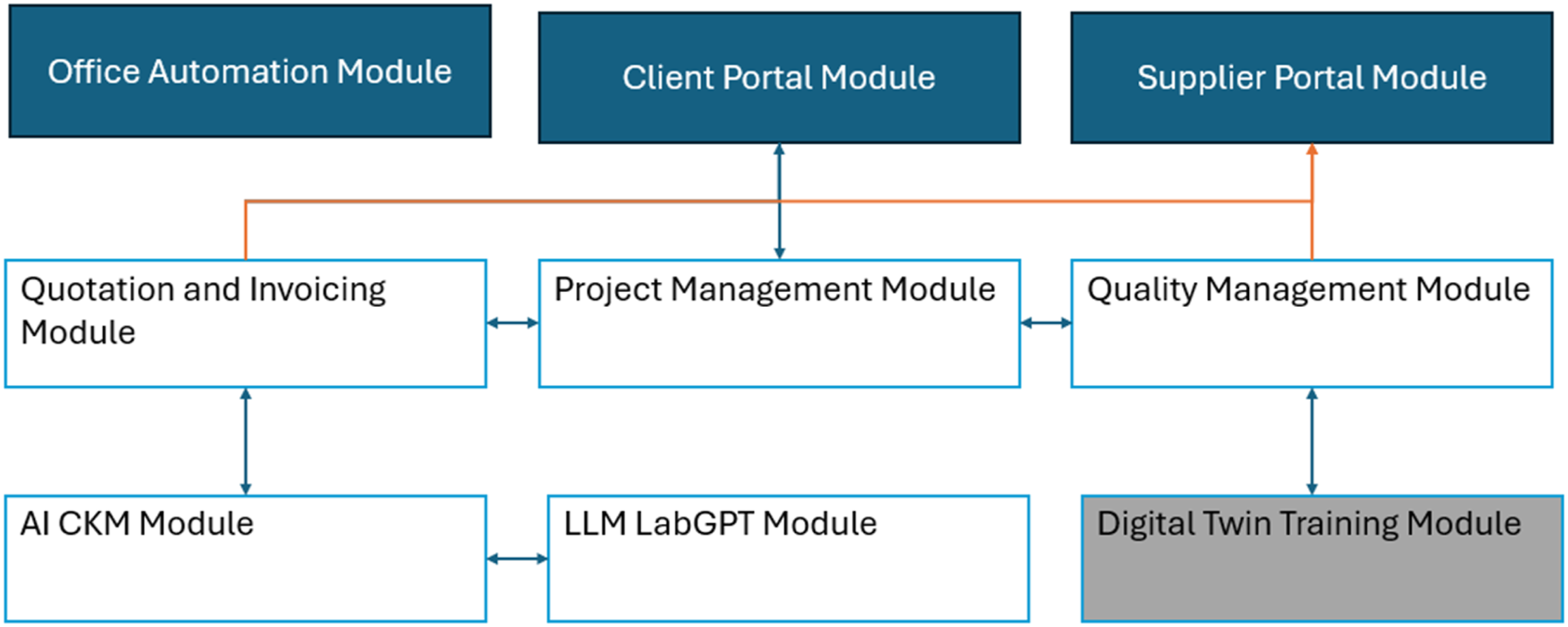
The originality and innovativeness of LIMS 4.0 model
The LIMS 4.0 model is a novel framework proposed to enhance traditional Laboratory Information Management Systems by integrating the core principles of Industry 4.0. While conventional LIMS primarily focuses on data logging, sample tracking, and compliance reporting, LIMS 4.0 introduces three transformative concepts: interconnectivity, modularization, and the application of Industry 4.0 technologies. These elements fundamentally redefine the role of LIMS by evolving them from isolated operational tools into intelligent, interconnected ecosystems. This evolution aims to significantly improve the efficiency, scalability, and automation capabilities of laboratories and the broader Testing, Inspection, and Certification (TIC) industry.
Figure 7 illustrates how the integration of these new concepts enhances conventional laboratory workflows under the LIMS 4.0 framework. Proposed LIMS 4.0 model.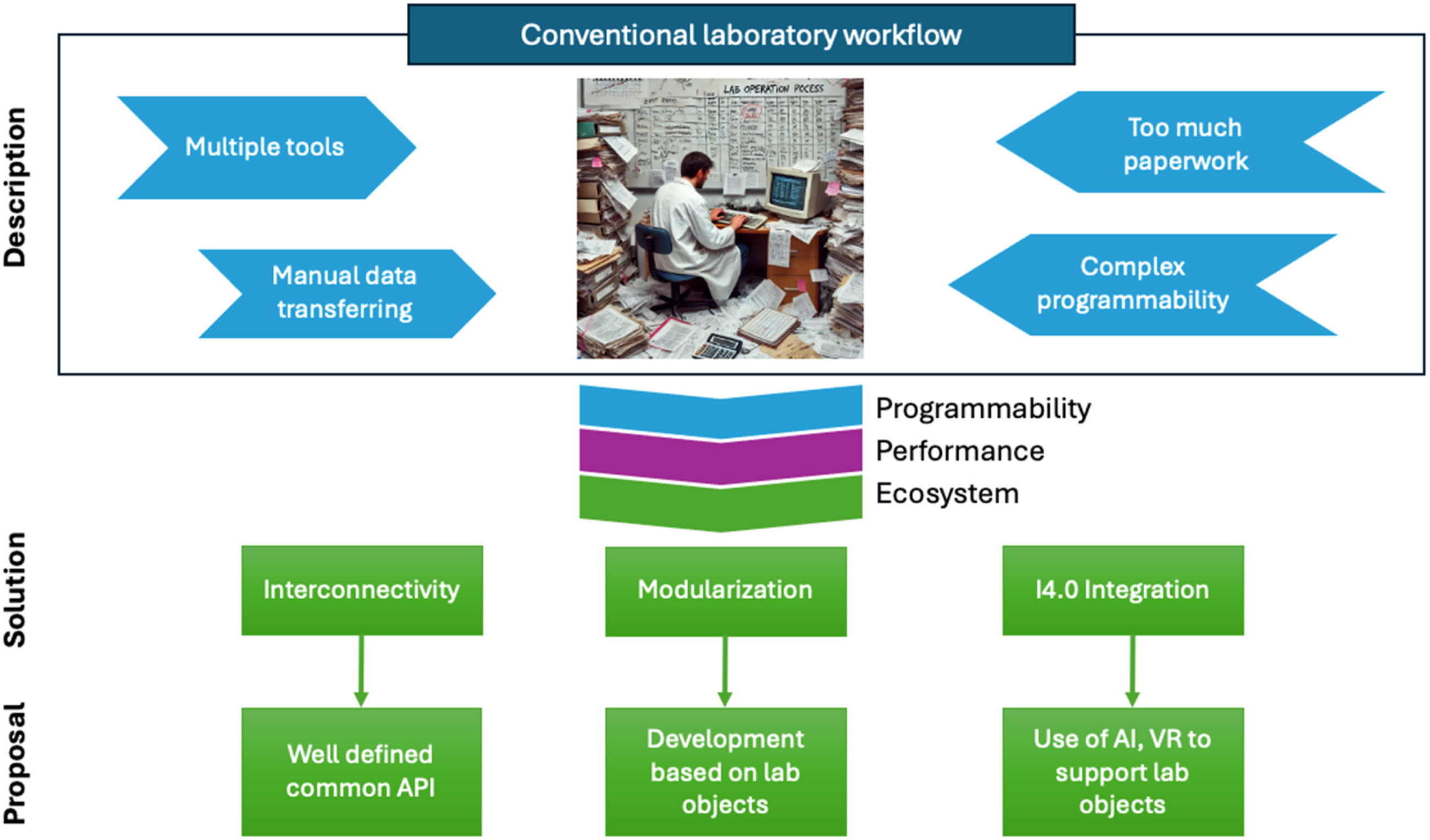
The core of the LIMS 4.0 model lies in its interconnectivity, which enables seamless data exchange between system modules and external stakeholders, including accreditation bodies, calibration laboratories, test engineers, customer service personnel, and manufacturers. Unlike traditional LIMS that often operate as isolated systems or silos of databases, the LIMS 4.0 model is designed as a dynamic, interconnected architecture. It integrates external regulatory databases, equipment management platforms, and test automation interfaces to facilitate real-time data sharing. This connectivity not only reduces manual data transfer but also minimizes the risk of human error and significantly lowers operational workload.
Secondly, modularization enhances the adaptability and scalability of the LIMS 4.0 model. Conventional laboratory IT systems are typically rigid and require bespoke design modifications to fit different laboratory scales or workflows. In contrast, LIMS 4.0 adopts modular architecture, allowing laboratories to add, modify, or remove functional components according to their development stage or operational requirements. For example, an AI-driven knowledge base can be introduced to support customer service, while a VR-based training module can be implemented for engineer onboarding. This modular approach allows laboratories of various sizes and specialties to configure the system based on their specific functional needs without overhauling the entire IT infrastructure.
The integration of Industry 4.0 (I4.0) technologies further elevates the LIMS 4.0 model beyond traditional systems. With the application of AI, machine learning, and the Internet of Things (IoT), laboratories transition from passive data management to predictive analytics and intelligent decision-making. For instance, AI-powered chatbots utilizing large language models (LLMs) can support knowledge management by consolidating fragmented regulatory information and customer queries into an interactive, human-like inquiry platform. Moreover, incorporating a virtual reality (VR) training environment reduces the need for hands-on training with expensive or hazardous equipment, lowering the risk of error during onboarding while improving training efficiency. The use of digital twins allows laboratories to simulate equipment use, freeing up physical devices for actual testing and commercial purposes, thereby optimizing resource utilization.
In response to the specific pain points identified through gap analysis and semi-structured interviews, the following considerations were embedded into the LIMS 4.0 development strategy.
Scalability and system flexibility
One of the key design principles of the LIMS 4.0 model is scalability, which allows the system to be adaptable across laboratories of various sizes, from small independent facilities to large multinational testing organizations. This is achieved through a modular architecture, where functional components can be selectively enabled or disabled based on the laboratory’s operational scope and resource capacity.
To support multilingual deployment and role alignment, the system employs a flexible role-mapping mechanism and localized terminology database. For instance, a project role named “Project Manager (PM)” in one laboratory can be mapped to “Technical Project Officer (TPO)” in another via a dynamic reference dataset. This mapping logic is similarly applied to user interface terminology, allowing for seamless transitions between languages or lab-specific terminologies.
Although LIMS 4.0 operates under a cloud-based logic layer, it allows separation of the data processing system and data storage. In security-sensitive contexts, such as government labs or national labs, the database can be locally hosted while the processing services are cloud-managed. This hybrid architecture addresses data sovereignty concerns and enhances deployment flexibility.
Moreover, the LIMS-as-a-Service model enables consortium-style adoption, wherein smaller labs can form networks using the same system, instance with shared logic and configurations, fostering collaborative competitiveness. Larger laboratories benefit from unified deployment, allowing multiple departments and regions to manage operations under a single digital umbrella. The system is further designed to be extendable toward adjacent sectors—such as calibration providers and certification authorities, thus creating a cross-functional TIC ecosystem.
Specialized development teams for LIMS 4.0
In an ideal implementation, the development of LIMS 4.0 should be led by interdisciplinary teams with both deep technical expertise and contextual knowledge of the TIC industry. These teams must not only possess system development capabilities but also demonstrate an acute understanding of laboratory-specific operational workflows.
For example, recognizing the critical role of sample chain-of-custody in forensic laboratories, or the time-sensitive nature of microbial analyses in bio-testing facilities, can significantly inform system design priorities. Such domain knowledge ensures that the LIMS 4.0 model is not only technologically advanced but also aligned with real-world demands, thereby enhancing its practical relevance and user adoption.
Interoperability with various systems
A modern Laboratory Information Management System (LIMS) must be designed with seamless interoperability in mind, enabling integration with a wide range of digital platforms and devices. This includes direct communication with advanced analytical instruments, financial systems, and user interfaces across multiple endpoints—such as desktop workstations, mobile devices, smartwatches, or even augmented reality (AR) glasses.
For instance, in a pharmaceutical laboratory setting, the ability of a LIMS to interface directly with High-Performance Liquid Chromatography (HPLC) systems, and to transmit analytical results in real time to a remote quality control manager via a smartwatch, can significantly enhance decision-making speed and operational responsiveness. Such cross-platform connectivity exemplifies the responsiveness and scalability expected of next-generation LIMS solutions.
ISO 17025 adaptability
Compliance with quality management standards, such as ISO/IEC 17025:2017 17 should be embedded as a core functional objective of modern LIMS design. Rather than serving solely as a passive repository for data storage and retrieval, LIMS 4.0 should actively contribute to maintaining laboratory compliance through built-in mechanisms. These may include automated audit trails, real-time quality control monitoring, and AI-driven predictive analytics to flag potential non-conformities before they impact operations.
Modulization for comprehensive management
The proposed LIMS should be modular, with each module addressing distinct facets of laboratory operations:
Quality Management: Ensuring consistent quality across all tests, perhaps with real-time dashboards displaying control charts or automated alerts for deviations.
Document Control: Streamlining the storage, retrieval, and updating of SOPs, ensuring that analysts always have the latest protocols at their fingertips.
Equipment Management: From scheduling calibrations to predicting maintenance needs based on usage patterns, ensuring instruments are always in optimal working condition.
Test Facility and Schedule Management: Efficiently allocating resources, be it booking specific instruments or scheduling technicians, to ensure timely processing of samples.
Project Management: Overseeing multi-faceted projects, perhaps tracking the progress of a new product’s testing from inception to report generation.
Report Generation and Process Management: Automating report creation, ensuring standardized formats, and swift dissemination to stakeholders.
Knowledge Management: Creating a knowledge base, capturing insights from past tests, and facilitating quicker decision-making for recurrent issues.
Accreditation Body Management: Streamlining interactions with accrediting bodies, be it for audits, renewals, or compliance checks.
Stakeholder Portals: Dedicated interfaces for clients, suppliers, and accreditation bodies, ensuring transparent and efficient communication.
Embracing modern technologies
The LIMS of the future should not only manage and store data but also glean insights from it.
Data Analytics: Beyond storing results, modern LIMS could use AI to analyze patterns, predicting trends, or even suggesting optimizations in test procedures (Figure 8). Concept of AI assisted TIC business trend prediction.
28

AI-Driven Standard Matching: For a lab testing product standard, AI could instantly match test results to various international standards, suggesting potential markets where the product complies.
3D and Mixed Reality 29 : Imagine a technician wearing AR glasses, overlaying a step-by-step SOP while they conduct a test or even displaying real-time results as they work.
Innovative User Experience: Leveraging technologies to create user interfaces that are not only intuitive but also adaptive to individual user preferences.
Prototype built as an assessment of LIMS 4.0 model
To validate the conceptual framework of the LIMS 4.0 model, a prototype system was developed and deployed within an operational laboratory setting. This prototype served as a trial platform to assess the effectiveness and productivity improvements introduced by the model. The overall structure and module hierarchy of the LIMS 4.0 prototype is illustrated in Figure 9. Structure of LIMS 4.0 prototype.
Realization of interconnectivity
According to the system structure, the conventional LIMS core was designed to support the fundamental operational functions commonly found in testing laboratories. These core functions included quotation and invoicing management, project tracking, and human resource administration. In alignment with the principles outlined in the LIMS 4.0 model, all modules were developed using a standardized interface to ensure interconnectivity across the system.
This unified interface allowed seamless data exchange between different subsystems, eliminating the need for redundant manual input and reducing the risk of data inconsistency. For instance, once a test quotation was confirmed, relevant information such as the test applicant’s company name could be automatically transferred from the quotation module to the project management system, enabling streamlined workflow and improved operational efficiency.
Realization of modularization
To further demonstrate the modularization and interconnectivity principles of the LIMS 4.0 model, several new modules were constructed in the prototype, each connected to specific databases or system interfaces.
An equipment management module was developed and linked to a dedicated database for handling equipment calibration schedules, maintenance records, and usage logs. This module was directly integrated with the test worksheet interface within the project management system. When a test task was created, relevant equipment information—such as calibration validity and recent maintenance status—could be automatically retrieved and verified, ensuring compliance with quality standards and minimizing operational risks.
Similarly, a sample management module was constructed to support comprehensive sample tracking throughout the testing process. This module maintained data on sample receipt, storage conditions, and chain-of-custody, and was seamlessly linked to the test raw data input page in the project management interface. By connecting these modules, the system enabled accurate and real-time sample traceability, which is critical for test integrity and audit readiness.
Realization of I4.0 technology
Another key module integrated into the LIMS 4.0 prototype was the AI-powered Knowledge Management System, designed in alignment with the Industry 4.0 framework. This module focused on consolidating certification and regulatory approval information critical to laboratory operations.
Data inputs were sourced from two primary channels:
Manual entries by the Global Market Access (GMA) team, who routinely monitor certification requirements across different regions.
Automated data scraping from official government and regulatory agency websites that publish real-time updates on compliance requirements.
The collected information was then structured, stored, and analyzed using a Large Language Model (LLM) engine, forming the basis of a Lab-specific intelligent assistant—LabGPT. This system enabled laboratory personnel to interact with the knowledge base through natural language queries, retrieving insights such as certification timelines, required documentation, and country-specific technical standards. AI also helped identify discrepancies, reduce human oversight, and streamline decision-making for certification-related tasks.
Additional design considerations addressing pain points of TIC industry
Building upon the insights gathered from gap analysis and semi-interviews, several critical design considerations were implemented to ensure that the LIMS 4.0 model aligns with real-world laboratory needs. These considerations include.
Increased incentive in development
To encourage greater staff initiative in adopting the new system prototype, the development team collaborated with partner companies—The One Testing Technology Co., Ltd. and Glodacert Co., Ltd.—to implement a KPI-based adaptation scheme.
Under this scheme, an additional performance bonus ratio was introduced, directly linked to each staff member’s level of engagement with the new system. Project records were tracked through the system, and only those properly documented within the platform would count towards the employee’s performance evaluation.
Staff members who failed to record their projects in the system would forfeit the corresponding bonus.
Moreover, active participation and constructive feedback in discussions with the development team were also recognized as positive contributions in the evaluation process.
Modulization for comprehensive management
To facilitate effective laboratory management, the modularization of various laboratory functions is essential. By segmenting operations into distinct modules and ensuring centralized data collection, the laboratory can be managed from a more strategic, system-wide perspective. The proposed LIMS 4.0 was therefore designed with clearly defined modules, each targeting a specific facet of laboratory processes. This modular structure not only enhances system maintainability and scalability but also allows laboratory managers to oversee operations in a more integrated and holistic manner (Figure 10). LIMS 4.0 project management page.
Cloud platform enabling paperless operation
The design of the LIMS 4.0 model incorporates a cloud-based platform that enables users to upload various types of documents in digital format. Materials such as project raw data, test records, test reports, and certificates can be stored securely on the cloud server and retrieved when needed, particularly for accreditation and audit purposes. This centralized documentation system not only enhances traceability and data integrity but also facilitates more efficient quality assurance workflows. In future iterations, the system may be further enhanced to automatically generate quality system information packages to support accreditation applications and external evaluations.
Figure 11 illustrates the document upload and management interface of the LIMS 4.0 system. LIMS 4.0 project report control page.
Specialized development teams for LIMS
To enhance communication between IT developers and laboratory personnel, the LIMS 4.0 prototype was developed by a team with deep familiarity with the operational intricacies of the Testing, Inspection, and Certification (TIC) industry. The development was led by a senior IT architect with over 20 years of experience in the TIC sector. Moreover, all software engineers involved in the project underwent foundational training in ISO/IEC 17025 quality management frameworks before initiating any development tasks. This ensured that the team possessed not only the necessary technical expertise, but also a practical understanding of laboratory workflows, compliance requirements, and user expectations within commercial testing environments.
Embracing modern technologies for knowledge transfer
The design of the LIMS 4.0 model explicitly incorporates the critical need for knowledge transfer within laboratory environments. To address this, LIMS 4.0 proposes a dedicated training module that integrates Virtual Reality (VR) and Digital Twin (DT) technologies. 16 This module enables the simulation of real-world laboratory operations, thereby enhancing both the technical proficiency and domain knowledge of laboratory personnel. The result is a more immersive and practical training experience that not only improves onboarding efficiency but also supports long-term knowledge retention across teams.
In addition, LIMS 4.0 introduces an Artificial Intelligence (AI)-enabled regulatory knowledge module designed to consolidate and analyze Global Market Access (GMA) information collected by the International Approval (IA) team. This module allows users to access up-to-date accreditation requirements, approval procedures, and documentation expectations across multiple jurisdictions. Furthermore, this knowledge base facilitates the creation of training materials and internal references, supporting the systematic and scalable transfer of institutional knowledge.
3D and mixed reality integration 29
To further advance laboratory training and operational efficiency, LIMS 4.0 incorporates 3D and Mixed Reality technologies. For example, augmented reality (AR) glasses worn by technicians can display real-time overlays of step-by-step Standard Operating Procedures (SOPs) during test execution. This hands-free guidance not only reduces errors but also accelerates learning and standardizes procedure compliance. In advanced applications, real-time test data can also be visualized within the technician’s field of view, enabling immediate decision-making and adaptive responses.
Figure 12 illustrates the concept of a Digital Twin applied in a testing scenario, where physical testing environments are mirrored virtually for enhanced simulation and planning. Figures 13 and 14 present screenshots from a prototype training module built using Meta Quest 3, simulating a battery explosion test procedure. This immersive module demonstrates the potential of Mixed Reality to deliver risk-free, repeatable, and engaging training experiences, especially for hazardous testing scenarios. Concept of guided testing and training with mixed-reality.
29
Prototype of training using virtual-reality (gesture simulation).
28
Prototype of training using virtual-reality (explosion simulation).
28


Data analytics and AI-driven insight generation
The next-generation Laboratory Information Management System (LIMS) must move beyond passive data storage and evolve into an intelligent decision-support platform. Rather than merely storing test results, modern LIMS solutions should incorporate data analytics capabilities powered by artificial intelligence (AI). These capabilities enable pattern recognition, trend forecasting, and even the generation of procedural optimization suggestions based on historical performance and operational data.
As part of the prototype validation, a demonstration module, LabGPT was developed using the ChatGPT large language model framework. This module was designed to consolidate and retrieve international approval information, providing users with intelligent, conversational access to regulatory requirements across multiple jurisdictions. By leveraging natural language processing (NLP) and retrieval-augmented generation (RAG), LabGPT serves as a proof of concept for embedding AI-driven knowledge management into the laboratory informatics ecosystem.
ISO 17025 adaptability
To meet the rigorous requirements of ISO/IEC 17025, the LIMS 4.0 prototype was designed with dedicated quality management architecture. Unlike conventional systems that merely store and manage compliance-related data, the LIMS 4.0 model actively supports ongoing adherence to quality standards by embedding quality assurance functionalities into core laboratory workflows.
For example, the equipment management module includes a built-in calibration alert mechanism that automatically notifies relevant personnel when a piece of test equipment is due for calibration. This ensures that all testing activities are conducted using properly calibrated instruments, thus maintaining traceability and technical validity in line with ISO/IEC 17025 requirements.
Evaluation of model
Internal evaluation framework for LIMS 4.0
An internal evaluation framework was developed to systematically assess whether the LIMS 4.0 prototype effectively addressed the key pain points and proposed solutions outlined in the model. The evaluation focused on five core dimensions:
User Engagement and Adoption – The degree of user initiative and willingness to utilize the system was assessed to gauge the impact of incentive mechanisms and the system’s usability.
Managerial Oversight – The extent to which the system enabled high-level, centralized management of laboratory operations was examined, particularly its capacity to support data-driven decision-making.
Paperless Workflow Realization – The effectiveness of the LIMS 4.0 model in reducing manual paperwork and streamlining documentation processes was evaluated.
Knowledge Transfer Capabilities – The ability of the system to support knowledge preservation and dissemination, especially through features such as VR training and AI-based guidance, was reviewed.
Quality Management Compliance – Alignment with ISO/IEC 17025 and support for traceability, calibration scheduling, and quality documentation were assessed.
System Performance – The responsiveness, loading time, and overall operational smoothness of the prototype were also analyzed to ensure real-world applicability.
Each of these aspects was evaluated through internal testing, user feedback, and observation of system usage patterns. The following sections provide detailed results and insights for each evaluation category, based on the model introduced by Li et al. (2018). 30
Usage analysis
Although the LIMS 4.0 system is still under phased development, it has already been deployed in three real-world laboratories under distinct operational contexts. These testbeds provide valuable insights into its preliminary impact and usability.
PTC lab (electrical safety, ∼60 staff)
Serving as the initial pilot site, PTC has adopted the system for over a year. Due to the complexity of safety certification workflows and legacy systems, the deployment followed an incremental co-development model. Despite early-stage limitations, the system is now operationally stable and has been integrated into routine quotation handling, documentation control, and test scheduling.
Glodacert (ICT global certification, ∼10 staff)
This second implementation adopted the system with minimal customization. Over 250 projects have been handled using LIMS 4.0 in a lean team setting. The system’s out-of-the-box features, such as multi-market test plan integration and quotation automation, enabled rapid onboarding with minimal disruption (Figure 15). System usage in the period of Q1-2023 and Q3-2024.
The one cybersecurity lab (15 staff)
As an in-house development site, The One is using the system both as developer and operator. Internal teams are actively using the platform for real-world testing and reporting, with feedback loops directly driving continuous improvement. This “eat your own dog food” approach ensures immediate awareness of usability gaps and promotes real-time system refinement.
While formal KPI benchmarking is ongoing, early observations suggest that quotation lead times have reduced by over 70% in some cases, and project overview transparency has significantly improved across departments. Future plans include structured KPI tracking and longitudinal assessment.
Evaluation on loading speed and smoothness
The performance of the LIMS 4.0 prototype was evaluated by comparing its responsiveness and operational smoothness against traditional manual methods. Specifically, the system’s loading speed was assessed in scenarios such as retrieving sample records, test reports, or equipment calibration logs.
Empirical measurements showed that data retrieval operations within the LIMS 4.0 system were completed within 1.5 s, significantly outperforming manual file searches, which typically required an average of 3 min—assuming documents were properly categorized and stored. This represented a performance gain of over 100 times in terms of retrieval speed alone.
Additionally, the prototype’s user interface adhered to the widely recognized “three-click rule” in web interface design, ensuring that users could access any major function from the landing page within three clicks. This design principle not only streamlined navigation but also contributed to the system’s overall operational smoothness and user satisfaction.
These findings demonstrated that the LIMS 4.0 system was highly responsive, intuitively designed, and capable of significantly reducing latency in daily laboratory operations.
Quantitative evaluation of operational efficiency
To evaluate the practical effectiveness of the LIMS 4.0 model, a time-based quantitative analysis was conducted. A set of core laboratory management and documentation tasks were selected based on their frequency, operational significance, and potential for digital transformation. These tasks included quotation preparation, payment notice issuance, sample registration, document retrieval, status and progress reporting, KPI generation, and global market access (GMA) information collection.
The evaluation was carried out by comparing the time required to complete each task under traditional manual processes versus with the LIMS 4.0 prototype. Task execution times were recorded during real-world operations in two ISO/IEC 17025-accredited laboratories where the prototype had been deployed. These laboratories included one focused on electrical safety testing and another in cybersecurity assurance.
The time savings for each process were calculated as a percentage to quantify the efficiency gains provided by the LIMS 4.0 system. The evaluation provided not only a performance benchmark but also an objective basis for assessing the system’s impact on daily laboratory operations.
System efficiency analysis
Number of clicks needed to access different main functions of the system.

These results validate the LIMS 4.0 model’s ability to significantly streamline operational workflows in commercial testing laboratories. Enhanced efficiency not only reduces manual labor but also improves information accuracy, traceability, and managerial oversight. The system’s adoption demonstrates strong potential for scalability across different laboratory types and lays a solid foundation for future integration of predictive analytics, robotic automation, and compliance modules.
Internal audit for compliance with ISO/IEC 17025: 2017
An internal audit was conducted to assess the LIMS 4.0 prototype’s alignment with the requirements of the ISO/IEC 17025:2017 standard. The audit was performed by the principal researcher, who had received formal internal auditor training under ISO/IEC 17025 guidelines and currently serves as a technical assessor for the Hong Kong Laboratory Accreditation Scheme (HOKLAS).
In this audit, the system was reviewed against all the clauses outlined in ISO/IEC 17025:2017. Different sections of the standard including personnel, equipment, selection, verification and validation of methods, handling of test items, technical records, control of data and information management, management system documentation and control of records were reviewed and found to be compliance to the standard. This assessment served as a check of all-rounded system validation among different aspects of laboratory operations.
It is important to note that the audit was designed as a high-level compliance review. A comprehensive assessment would require evaluating all sub-clauses in detail and ensuring functional coverage across the full spectrum of laboratory operations. Furthermore, the prototype would benefit from the development of additional modules to address domain-specific tasks not yet implemented in the current version.
Despite these limitations, the internal audit results provide strong preliminary evidence that the LIMS 4.0 model was designed with clear alignment to ISO/IEC 17025:2017 principles. This affirms the model’s potential as a compliance-ready digital solution for modern laboratory quality management systems.
Semi-structured interview design of external evaluation
To evaluate the effectiveness of the prototype developed based on the LIMS 4.0 model, a semi-structured interview framework was designed. The interview aimed to gather expert feedback on the system’s functionality, performance, and future development potential, and was structured into three thematic sections.
Functional evaluation by laboratory role
Participants were first invited to assess the prototype’s practical value across key operational functions, including. • Project management • Engineering operations • Quality assurance activities • Key performance indicator (KPI) monitoring
System performance assessment
The second section focused on evaluating the system’s technical performance, with emphasis on. • Interoperability between modules • System response time and user experience • Known limitations or drawbacks observed during usage
Recommendations for future development
The final section encouraged interviewees to share their perspectives on potential enhancements, including new features or modules they believe would improve the system’s applicability and effectiveness in broader laboratory settings.
Interview question evaluating prototype built with the concept of LIMS 4.0 model (Themes).

The responses collected from the external semi-structured interviews were systematically analyzed using NVivo (Version 15). A detailed coding process was applied, involving both thematic categorization and keyword clustering, to identify recurring concerns and opportunities for improvement in the LIMS 4.0 prototype.
Through this analysis, four primary pain points were highlighted by the interviewees.
Ethical implications & role shifts with AI/LLM integration
The integration of AI and large language model (LLM) technologies within the LIMS 4.0 architecture represents a significant shift in laboratory knowledge access, processing, and retention. Traditionally, senior engineers were required for client consultation and technical validation. With the implementation of an AI-powered Certification Knowledge Management (CKM) module and a LabGPT interface, many of these tasks can now be handled through automation or semi-automated assistance.
This enables a redistribution of labor, where trained junior staff can review AI-generated responses and escalate only complex cases for expert review. As a result, laboratories—particularly SMEs—can reduce their reliance on limited senior resources, increase scalability, and lower labor costs. Moreover, the continuous accumulation of technical Q&A and regulatory insights in the system prevents knowledge loss due to staff turnover.
Importantly, the system adheres to a human-in-the-loop design philosophy. AI outputs are reviewed to ensure accuracy and compliance, emphasizing augmentation rather than replacement of expert judgment. This approach supports sustainable knowledge transfer while enabling broader engagement of less experienced staff in technically demanding tasks.
Data security and privacy in hybrid cloud design
As with any digital infrastructure, cloud-based systems inherently carry information security risks. However, equating on-premises data storage with superior security can be misleading. The LIMS 4.0 system architecture embraces a hybrid model that separates the logic layer (cloud-based processing) from the database layer (which can remain on-premises), offering flexibility based on client risk preferences and jurisdictional data regulations.
We recognize that some laboratories—particularly those handling sensitive or confidential client data—may prefer local data hosting to comply with internal or national security standards. To accommodate this, our system allows for a locally deployed encrypted database while leveraging cloud services for logic processing and performance scalability.
From a cybersecurity perspective, cloud components are secured following international best practices such as those outlined in SOG-IS and NIST SP 800-53. This includes. • TLS 1.3 encrypted transmission channels • Input validation to mitigate injection attacks • Password hashing and salting for authentication data • Enforcement of brute-force protection and multi-factor login mechanisms • Use of encryption keys ≥112 bits for stored sensitive data
Ultimately, the system’s data privacy protection depends not only on hosting architecture, but also on rigorous implementation of defense-in-depth strategies, secure deployment practices, and regular vulnerability assessments. The proposed hybrid model allows users to select configurations aligned with their institutional or legal compliance requirements.
Bridging the SME-digital gap
A long-standing challenge in the TIC industry lies in the resource imbalance between large-scale laboratories and small-to-medium enterprises (SMEs). Large laboratories benefit from greater project volumes, larger teams, richer historical datasets, and more capital to invest in custom system development. In contrast, SMEs often struggle with limited manpower, constrained budgets, and insufficient internal IT capabilities, making it difficult for them to build or maintain proprietary digital solutions.
The LIMS 4.0 framework is explicitly designed to address this disparity. Its modular architecture, hybrid deployment options, and shared development model allow multiple laboratories—regardless of size—to co-develop and co-deploy features under a unified infrastructure. Current users of the model include PTC (a 60-person electrical safety lab), Glodacert (a lean global certification provider), and The One Cybersecurity Lab. Through shared configuration resources, cross-lab feedback loops, and pooled system funding, the model reduces the individual development burden on any single SME.
Moreover, the advent of AI-assisted development has further leveled the playing field. The LIMS 4.0 system itself is being developed with the support of multiple AI models—one generating specification drafts, another assisting with UI/UX planning, a third generating source code, and yet another compiling user manuals. This “AI-collaborative development pipeline” minimizes traditional technical barriers, accelerates iteration cycles, and enables even resource-limited labs to deploy high-functionality systems. Rather than being left behind, SMEs now have a viable path to digital competitiveness through shared platforms and AI-augmented design workflows.
Summary of LIMS 4.0 model evaluation
Through both internal testing and external expert interviews, the evaluation of the prototype developed under the LIMS 4.0 framework demonstrated clear potential in addressing the key operational challenges previously identified in this study. The prototype effectively served as a proof of concept, showcasing how an integrated, modular, and intelligent LIMS system could alleviate many of the pain points raised during the initial round of semi-structured interviews—particularly those related to manual workload, data fragmentation, knowledge retention, and system interoperability.
While the prototype remains in a developmental stage and further refinements are necessary—particularly in user interface optimization, cross-module data integration, and advanced analytics—the results provided substantive validation for the core design principles of the LIMS 4.0 model. The evaluation process confirmed that a properly implemented LIMS 4.0 system could serve not only as a technical tool, but also as a strategic enabler for digital transformation within the Testing, Inspection, and Certification (TIC) industry.
Future integration with blockchain and IoT technologies
In future iterations, the LIMS 4.0 framework may be extended to incorporate blockchain technologies to enhance data integrity and traceability across two critical areas: equipment/sample management and certificate/report authenticity.
For equipment and sample workflows, blockchain can be utilized to generate tamper-proof logs for calibration records, sample reception timestamps, and chain-of-custody movements. Each calibration or sample event can be hashed and recorded as a transaction, creating an immutable timeline. Combined with a unique sample or equipment ID (e.g., UUID or NFC-tag linked asset), laboratories can ensure verifiable traceability from reception to disposal, and calibration from source to usage.
In terms of certification and report management, digital certificates and test reports can be issued with blockchain-backed validation hashes. This not only prevents post-issuance tampering or forgery, but also allows clients or certification bodies to independently verify document authenticity through public or permissioned ledgers. Such applications can be integrated into PDF certificates via embedded QR codes or serial-numbered URLs.
These blockchain integrations align with recent trends in trustworthy digital certification and will be explored in future development phases of the LIMS 4.0 architecture.
Research limitations
While this study introduces the foundational concept and prototype implementation of a LIMS 4.0 model, several limitations must be acknowledged.
Domain specificity and generalizability
The current prototype was designed and validated within the context of ICT product testing laboratories, which typically follow a set of structured and digitally traceable workflows. Although the modular design of LIMS 4.0 allows for adaptation, direct applicability to other sectors such as pharmaceutical testing, construction materials, or environmental monitoring may require substantial domain-specific customization. For example, the sample life cycle in a food safety lab or a clinical lab follows stricter chain-of-custody and biohazard control protocols, which are not yet covered in this version. As such, the findings cannot yet be generalized to all TIC sectors without further pilot studies.
Limited data scope and sample size
Quantitative evaluation data were collected from only two accredited laboratories over a relatively short deployment period. This limits the statistical robustness and prevents modeling of long-term performance, user adoption rates, or failure patterns. Broader deployment across various lab types, regions, and operational scales would be required to validate scalability and general impact.
Absence of top-down academic design
The LIMS 4.0 model was developed based on practice-oriented, bottom-up iterations rather than a fully structured academic systems engineering approach. While this ensures high relevance to real-world needs, it may limit theoretical generalizability and calls for future integration with formal modeling techniques such as BPMN, UML, or ISO/IEC 29148 requirements engineering.
User behavior and change management
The model assumes a baseline level of digital literacy and procedural discipline among lab personnel. In practice, the success of such systems depends heavily on human factors such as staff training, resistance to change, and compliance with SOPs. These socio-technical dimensions are not deeply explored in this study.
Security and interoperability challenges
While the system supports modularity and potential external API connections, detailed analysis of data security, interoperability with legacy systems, and compliance with data protection regulations (e.g., GDPR, ISO/IEC 27001) was not within the scope of this pilot study.
Future directions
LIMS 4.0 holds potential for wider ecosystem integration. Upstream, it could automate interactions with regulatory bodies and accreditation agencies for audit preparation and real-time compliance updates. Downstream, it may interface with calibration laboratories and equipment vendors to schedule predictive maintenance and ensure traceability. Horizontally, connections to manufacturers, clients, and certification agents could further enhance value chain transparency and responsiveness.
Several technical enhancements are envisioned for future development. These include: • Integrating large language models (LLMs) to assist with failure diagnosis and remedial guidance; • Employing AI-driven algorithms for technician allocation, workload balancing, and KPI tracking; • Enabling fully automated test cycles through robotic rigs, coupled with auto-generated standardized reports.
Together, these features represent a long-term vision in which LIMS 4.0 evolves from a digital management tool into an intelligent, interconnected infrastructure that supports a collaborative and resilient TIC ecosystem.
Conclusion
In conclusion, this paper introduced the conceptual foundation of the LIMS 4.0 model and demonstrated its practical realization within the Testing, Inspection, and Certification (TIC) industry. Through the design, development, and evaluation of a prototype system implemented by ECTest Company Limited, the research highlighted how strategic system architecture, user-centric modular design, and industry-specific functionality can collectively address long-standing operational bottlenecks in commercial laboratories.
The study illustrated the significance of aligning Industry 4.0 (I4.0) technologies—including AI, cloud computing, digital twins, and modular ERP systems—with the nuanced needs of laboratory operations. Moreover, the collaborative development process involving industry stakeholders underscored the critical role of cross-disciplinary engagement in ensuring system adaptability and long-term adoption.
Looking ahead, further research and field validation are encouraged to refine the model and extend its applicability across other sectors of the TIC ecosystem. As laboratories continue to face increasing complexity, evolving standards, and digital transformation pressures, the LIMS 4.0 model provides a scalable and intelligent framework to drive sustainable innovation, operational resilience, and global competitiveness in the TIC industry (Figure 16). Interactive LIMS 4.0 concept with international certification service.
28

Footnotes

Funding
The authors received no financial support for the research, authorship, and/or publication of this article.
Declaration of conflicting interests
The authors declared no potential conflicts of interest with respect to the research, authorship, and/or publication of this article.