




Abstract
This study presents a comprehensive analysis of the influence of conversational artificial intelligence (AI)—a subset of AI that enables machines to simulate human-like conversations through natural language processing (NLP)—on consumer decision-making within the digital marketing landscape. Through a systematic literature review and advanced clustering techniques, we offer a novel perspective on the evolving research in this field. Our methodology combines TF-IDF vectorization with K-means clustering and silhouette analysis to identify and examine five distinct thematic clusters: Consumer Behavior and Engagement, Sentiment Analysis and NLP in E-Commerce, Artificial Intelligence in Marketing, Trust and Technology Adoption, and Big Data and Predictive Analytics. This clustering approach provides valuable insights into the temporal, disciplinary, and geographical dimensions of the research landscape. By synthesizing findings from 78 scholarly articles, we highlight the transformative potential of conversational AI in shaping marketing strategies and enhancing consumer experiences. Our analysis reveals emerging trends, critical gaps, and future directions for research, offering decision-makers in both academia and industry a structured framework for understanding and leveraging conversational AI in consumer-centric marketing initiatives. The principal contribution of this article lies in its data-driven approach to mapping the research landscape to identify key thematic clusters, emerging trends, and underexplored areas in the field. By integrating computational clustering methods with a systematic literature review, we provide a more structured and granular understanding of the field, identifying key thematic intersections and underexplored areas. This study not only advances theoretical knowledge but also offers practical insights for businesses and researchers seeking to optimize AI-driven consumer engagement strategies.
Keywords
Introduction
The rapid advancement of conversational artificial intelligence (AI) has significantly transformed the landscape of consumer decision-making and digital marketing strategies. As businesses increasingly adopt AI-driven technologies to engage with customers, understand their preferences, and predict their behaviors, the field of decision science faces new challenges and opportunities.
However, despite the growing body of research on AI in marketing and consumer behavior, significant gaps remain in understanding the precise mechanisms through which conversational AI influences decision-making processes and the broader strategic implications for businesses. While studies have explored specific aspects of conversational AI, such as AI-driven personalization, 1 trust in AI interfaces, 2 and chatbot interactions, 3 there is a lack of a structured synthesis that categorizes these findings into a comprehensive framework to better understand how conversational AI is shaping consumer decision-making and marketing strategies. One of the main gaps in the existing literature is the fragmentation of research across disciplines. While various fields—including computer science, marketing, and psychology—have investigated AI-driven consumer interactions, these studies often lack interdisciplinary integration, making it difficult to fully grasp the scope of AI’s impact on decision-making. 4 Additionally, the temporal evolution of research on conversational AI has not been systematically analyzed, despite evidence that academic interest in this topic has grown significantly since 2014, peaking in 2023. This absence of a longitudinal perspective limits the ability of researchers and practitioners to anticipate trends and adapt marketing strategies accordingly.
This paper addresses a critical need in decision science research by providing a comprehensive, data-driven analysis of the current state of conversational AI’s influence on consumer behavior and marketing strategies.
Our study is particularly relevant to decision science for several reasons: (1) Emerging decision-making paradigms: Conversational AI is reshaping how consumers make decisions and how businesses strategize their marketing efforts. Understanding these shifts is crucial for developing new decision-making models and frameworks. (2) Data-driven insights: By employing advanced clustering techniques, our research offers a methodological approach to extracting meaningful patterns from a large corpus of academic literature, demonstrating how decision scientists can leverage big data analytics in their research. (3) Interdisciplinary implications: The intersection of AI, marketing, and consumer behavior highlighted in our study underscores the need for decision scientists to adopt interdisciplinary perspectives in addressing complex, technology-driven challenges. (4) Future research directions: Our analysis identifies key trends and gaps in the current research, providing decision scientists with valuable insights for future studies and practical applications.
This paper is organized as follows: We begin with a comprehensive literature review, detailing our systematic approach to data collection and analysis. We then present a descriptive analysis of the research landscape, followed by an in-depth explanation of our thematic clustering methodology. The core of our paper focuses on a detailed analysis of the five identified thematic clusters, exploring their significance and implications for decision science. We conclude by integrating and summarizing the key insights from our analysis (including the identification of five thematic clusters, emerging trends, and critical gaps) and proposing future research directions, emphasizing the role of conversational AI in shaping decision-making processes in the digital age.
Through this structured approach, we aim to provide decision scientists, marketers, and AI researchers with a robust framework for understanding the current state of conversational AI in consumer decision-making, and to inspire innovative approaches to leveraging these technologies in both research and practice.
Literature review
To develop a current and comprehensive summary of the research landscape regarding conversational AI’s role in consumer decision-making within digital marketing, we conducted a systematic literature review (SLR). SLRs are regarded as the most rigorous approach for methodically reviewing and synthesizing a broad array of literature, offering insights and evaluations that are critical for academic research. 5 They provide a detailed, organized, and critical approach to review literature, making them an indispensable tool for uncovering research voids. 6
Our research data was meticulously compiled from Scopus, renowned for its extensive archive of peer-reviewed academic content, currently indexing over 2.4 billion references 7. This choice was guided by two main considerations: first, Scopus provides broad coverage across relevant journal classification categories, with approximately 38% more publication records than Web of Science (WoS). 8 Second, to maintain consistency and reduce the potential duplication that could arise from using multiple databases, 9 the review focused exclusively on this source.
To navigate this database, we pinpointed a series of keywords pertinent to AI within our designated research domains. The keywords were strategically chosen to cover a wide range of terms directly related to the technology and its application in consumer behavior and digital marketing, arranged in Boolean queries as follows: (1) Technology-focused terms:
These keywords focus on various aspects and advancements in AI technologies that engage with users via natural language. Specifically: – “Conversational AI” covers the broad application of AI technologies capable of simulating conversational human interactions. – “Chatbots” are a practical implementation of conversational AI, commonly used in customer service and engagement. – “ChatGPT” and ”GPT-4” represent the latest in generative conversational models, offering advanced capabilities that are critical to understanding state-of-the-art developments. – “Virtual assistants” are included to capture studies on AI applications that assist users through interactive interfaces. – “Natural language processing (NLP)” is crucial for dissecting the underlying technology that enables machines to understand and process human language. (2) Consumer behavior-focused terms:
These terms aim to capture how conversational AI influences consumer actions and perceptions, crucial for understanding its impact on marketing strategies. – “Consumer decision-making” explores how AI influences choices and preferences in the buying process. – “Consumer behavior” assesses broader patterns and tendencies in how consumers interact with AI-driven marketing efforts. – “Purchase intention” is targeted to understand the direct impact of AI interactions on consumers’ readiness to buy. – “Customer engagement” focuses on the depth and quality of interactions between consumers and AI applications. – “User experience” evaluates the effectiveness and satisfaction of consumers when interacting with AI-enabled interfaces. (3) Marketing context-focused terms:
These keywords help to focus the search on studies that explore the integration of conversational AI within various online marketing platforms and environments. – “Digital marketing” and “Internet marketing” encompass the broad application of digital technologies which include AI tools. – “Online marketing” specifically refers to marketing activities conducted through the internet which use AI capabilities. – “E-commerce” is crucial as many conversational AI tools are implemented to enhance the online shopping experience. – “Social media marketing” focuses on the use of AI in social platforms where customer interaction is key.
By combining these keywords through AND operators, we formulated a comprehensive search query that allowed us to capture relevant research intersections across AI technology, consumer behavior, and digital marketing contexts. These search criteria were applied to the “title,” “abstract,” and “keywords” sections of Scopus, focusing on studies published up to December 31st, 2023. By excluding conference proceedings, book chapters, and non-English publications, we identified 78 articles. We then extracted their metadata, including authorship, titles, the country of the corresponding author, publication count, citation numbers, journal names, keywords, and geographical distribution.
The systematic search conducted within the Scopus database yielded a multifaceted dataset, which provides an informative snapshot of the research landscape concerning conversational AI’s influence on consumer behavior. In this section we present a descriptive analysis divided into temporal, disciplinary, and geographical dimensions.
Analysis by year
The analysis of publication dates shows an increasing trend in research on conversational AI’s impact on consumer behavior. Initially, the topic saw sparse attention, but from 2014, interest began to grow significantly, peaking in 2023 with 27 documents. This surge reflects the field’s expanding academic and practical focus, driven by technological advancements and broader adoption in the market (Figures 1–3). Annual publication trend. Document distribution by subject area. Geographical distribution of publications.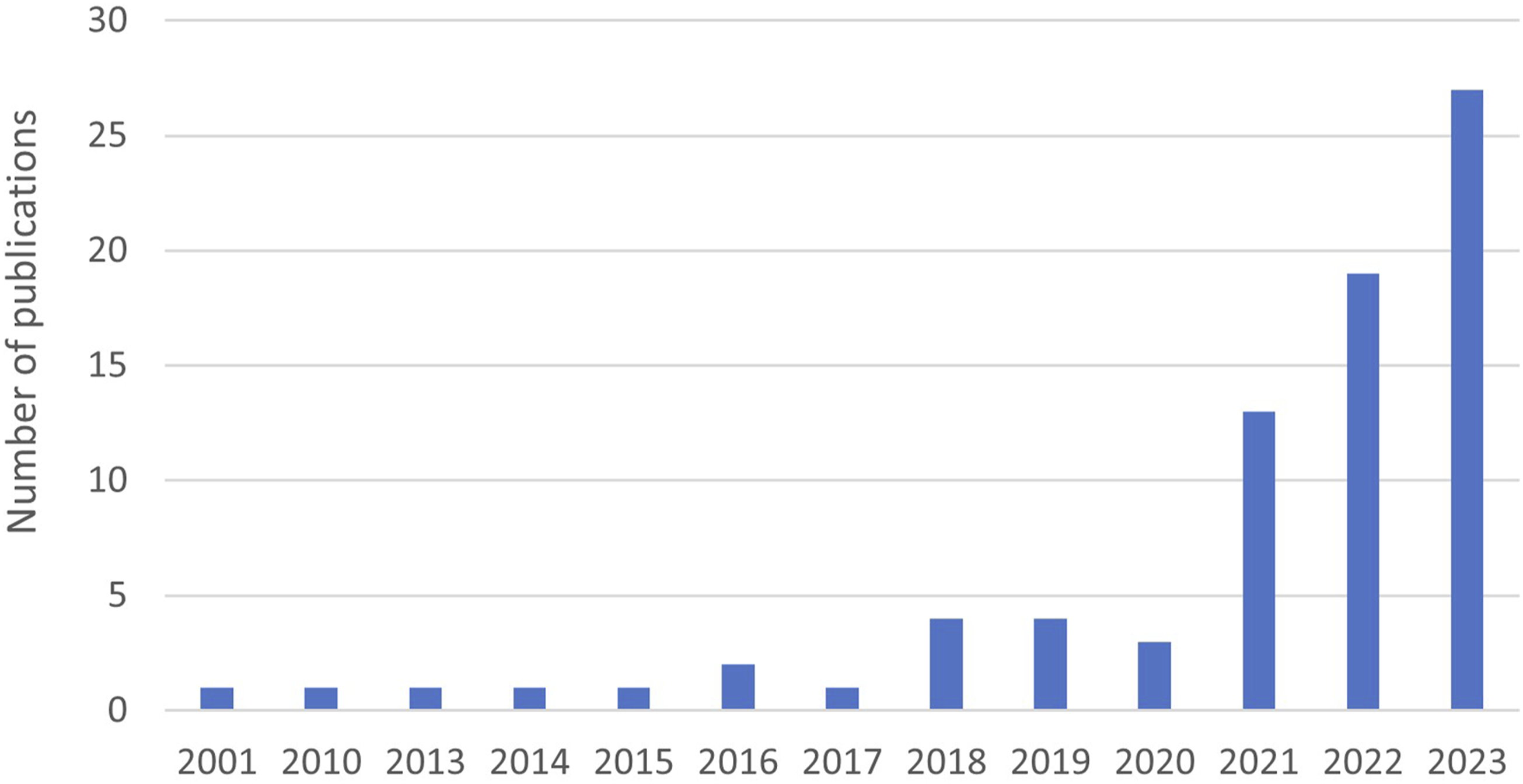


Analysis by thematic classification
The document distribution reflects the thematic classifications assigned by Scopus at the journal level. Notably, the category of Computer Science stands out with 56 documents, highlighting the technical foundations of AI research. Decision Sciences, along with Business, Management and Accounting, are also well-represented with 24 and 22 documents respectively, emphasizing the relevance of AI in strategic and organizational contexts. Contributions in Engineering and Mathematics further illustrate the interdisciplinary nature of the field, integrating both technical development and theoretical inquiry.
Analysis by country
Geographical analysis shows a wide international involvement in conversational AI research, with India, the United States, and China leading in publications. This suggests a concentrated research effort in these nations, crucial to the global AI dialogue. Europe, with Portugal being a notable contributor, and other regions also contribute, highlighting conversational AI’s worldwide impact across diverse markets and cultures.
Identified knowledge and technology gaps
Despite the increasing number of studies on conversational AI and consumer decision-making, key gaps remain in both knowledge and technological development. (1) Lack of a structured synthesis: While many studies explore individual aspects of conversational AI—such as its impact on consumer engagement, trust, and personalization—there is no structured framework that categorizes these findings and provides a holistic view of how AI influences consumer decision-making. This absence makes it difficult to identify overarching trends and knowledge intersections. (2) Limited interdisciplinary integration: The study of conversational AI spans multiple disciplines, including marketing, artificial intelligence, and behavioral sciences. However, research in these areas remains fragmented, with minimal cross-disciplinary insights that could provide a more comprehensive understanding of AI-driven consumer interactions. (3) Gaps in long-term impact analysis: Most studies focus on immediate outcomes of AI-driven consumer interactions, such as engagement rates and purchase intention. There is limited research on how these effects evolve over time and how businesses should adapt their strategies to sustain long-term consumer trust and loyalty in AI-driven environments. (4) Insufficient exploration of AI integration with other technologies: Although AI-powered chatbots and recommendation systems are well studied, there is little research on how conversational AI interacts with emerging technologies such as blockchain, augmented reality, or the metaverse. Understanding these intersections could open new possibilities for consumer engagement. (5) Ethical and transparency challenges: Research on AI in consumer decision-making often overlooks issues related to transparency, bias, and data privacy. With the increasing adoption of AI-driven marketing tools, there is a growing need to establish best practices that ensure ethical and responsible AI use in digital interactions.
This study contributes to addressing these gaps by providing a structured, data-driven analysis of research themes in conversational AI. By mapping the existing literature into key thematic clusters, we identify underexplored areas and propose future directions that can guide researchers and practitioners in advancing the field.
Thematic clustering methodology
The descriptive analysis provides a broad overview of the research landscape, but to delve deeper into the specific themes and connections within the literature, it requires a more detailed approach. Our next step involves thematic clustering, which allows us to identify and analyze key topics and trends in conversational AI research that might not be evident from the descriptive statistics alone. This method helps us move from a general understanding to a more nuanced view of the field, offering insights that are particularly useful for those working with conversational AI in consumer behavior and digital marketing. While clustering techniques have been widely used in knowledge discovery across various domains, including marketing and consumer behavior, 10 this study differentiates itself by integrating systematic literature review methods with an unsupervised text-mining approach to explore emerging themes in conversational AI research. Unlike studies that rely on predefined taxonomies or affective lexicons, our approach extracts thematic clusters directly from the literature corpus, ensuring that identified topics reflect evolving research trends rather than preconceived categories. The following section explains our clustering methodology and how it builds on the initial descriptive analysis.
Silhouette analysis
In this study, we employed a combination of text vectorization, clustering, and evaluation algorithms to identify the optimal number of clusters for our dataset.
Text vectorization was performed using the TF-IDF (Term Frequency-Inverse Document Frequency) method implemented in the scikit-learn library, version 1.6.1. The K-Means clustering algorithm was also executed using scikit-learn 1.6.1, with the optimal number of clusters determined through silhouette analysis. The entire process was conducted in Python 3.12.8, utilizing the
TF-IDF vectorizer (Term Frequency-Inverse Document Frequency)
The abstracts were first transformed into numerical representations using the TF-IDF vectorizer. This method captures the importance of a term within a document relative to the entire corpus, helping to distinguish between commonly used terms and more significant ones.
The TF-IDF value for a term t in a document d is calculated as:

Where: – TF(t, d) represents the term frequency of t in document d, – N is the total number of documents in the corpus, – DF(t) denotes the document frequency of term t across all documents.
This transformation allows the algorithm to treat the text data as numerical vectors, facilitating the clustering process.
K-Means clustering algorithm
To segment the abstracts into distinct thematic clusters, we used the K-Means algorithm. This iterative method seeks to partition the data into k clusters by minimizing the within-cluster variance, ensuring that points within the same cluster are as similar as possible.
The algorithm updates the cluster centroids by calculating the mean of all points assigned to each cluster using the following formula:

Where: – C
j
represents the set of points belonging to cluster j, – μ
j
is the centroid of cluster j, – x
i
are the data points within cluster j.
This iterative process continues until convergence, where no further reassignments of points improve the clustering quality.
Silhouette score
The silhouette score was employed to evaluate the quality of the clustering results. This metric measures how well each point fits within its assigned cluster compared to other clusters, offering insight into how tightly grouped the clusters are.
The silhouette score s(i) for a given point i is calculated as:
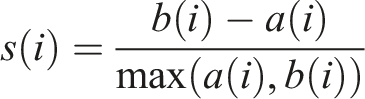
Where: – a(i) is the average intra-cluster distance, i.e., the mean distance between point i and all other points in the same cluster, – b(i) is the average nearest-cluster distance, i.e., the mean distance between point i and the points in the nearest cluster not containing i.
The silhouette score ranges from −1 to 1: – 1 indicates that the point is well clustered and far from neighboring clusters. – 0 means the point lies on or near the boundary between two clusters. – Negative values suggest the point may have been misclassified into the wrong cluster.
Generating the silhouette plot
To determine the optimal number of clusters, we applied the K-Means algorithm with varying values of k (ranging from 2 to 10 clusters). For each k, we calculated the average silhouette score across all points. These scores were then plotted to visualize how the clustering quality evolved with different numbers of clusters.
The steps were as follows: (1) Apply K-Means clustering for each k (from 2 to 10 clusters). (2) Compute the silhouette score for each clustering configuration. (3) Plot the average silhouette score against the number of clusters.
The plot, shown in Figure 4 allowed us to identify the optimal number of clusters based on the highest silhouette score, balancing the trade-off between cohesion within clusters and separation between clusters. Silhouette score versus number of clusters.
Determining the optimal number of clusters
Identifying the optimal number of clusters is a fundamental step in clustering analysis, as it directly influences the interpretability and effectiveness of the results. To determine the most appropriate number of clusters for this dataset, we examined silhouette scores for configurations with 3, 5, 8, and 10 clusters. The silhouette score measures how similar an object is to its own cluster compared to others, providing an indicator of both intra-cluster cohesion and inter-cluster separation. In this context, the selection of the optimal number of clusters must balance simplicity, thematic granularity, and interpretability.
Analysis with 3 clusters
Using 3 clusters provided a broad overview of the dataset, identifying three dominant themes. The average silhouette score for this configuration was reasonable, indicating that the clusters were relatively well-separated. However, while the clusters were distinct, they encompassed a wide range of subtopics, resulting in somewhat heterogeneous groupings. The broad nature of the themes suggested that finer distinctions within the data were being overlooked, leading to a lack of granularity in the interpretation of the clusters.
Analysis with 5 clusters
When the number of clusters was increased to 5, the silhouette score showed a slight improvement, suggesting better-defined groupings. Importantly, this configuration allowed for the emergence of more nuanced subthemes while maintaining the clarity of the broader topics. The division of the data into five clusters struck a balance between overgeneralization (as seen with 3 clusters) and over-segmentation (as seen with higher numbers). This provided a richer, more detailed interpretation of the dataset without sacrificing thematic coherence. The relatively high silhouette score also indicated that the clusters were well-separated, reducing ambiguity in classification.
Analysis with 8 clusters
With 8 clusters, the silhouette score continued to improve, indicating that the clusters were increasingly well-defined. However, a closer examination of the results revealed a downside: several clusters captured highly specific or niche aspects of the data, resulting in overly fine distinctions that may not be thematically significant. This level of segmentation, while metrically justified, introduced complexity that could hinder the practical interpretation and application of the clustering results. The excessive fragmentation of themes diluted the broader insights, making it harder to derive actionable conclusions from the analysis.
Analysis with 10 clusters
At 10 clusters, the silhouette score remained relatively high, reflecting strong inter-cluster separation. However, similar to the 8-cluster configuration, the data became increasingly fragmented. The addition of more clusters created very narrow thematic distinctions, many of which appeared to capture minor or even insignificant variations. This over-segmentation, while mathematically optimal, compromised the interpretability of the results. With such a high number of clusters, the thematic structure became too granular, leading to the risk of overfitting to the specific characteristics of the dataset, thus reducing the overall generalizability of the findings.
Selecting 5 clusters as the optimal solution
After reviewing the configurations with 3, 5, 8, and 10 clusters, we conclude that 5 clusters represents the optimal balance between thematic richness and interpretability. While increasing the number of clusters improves the silhouette score, it introduces diminishing returns in terms of practical usefulness. The 5-cluster solution offers sufficient granularity to uncover meaningful subthemes without overcomplicating the analysis. This configuration allows for a comprehensive yet coherent representation of the dataset, making it the most scientifically and thematically justified choice.
The decision to select 5 clusters is based on its ability to provide detailed yet interpretable insights, achieving a balance between too broad (3 clusters) and too narrow (8 or more clusters) distinctions. The relatively high silhouette score confirms that the clusters are well-separated, while the number of clusters ensures that the analysis remains focused and actionable.
Visualization of clusters using PCA
To better understand the structure of the clusters, we applied Principal Component Analysis (PCA) to reduce the dimensionality of the dataset and project it into a two-dimensional space. Given the high dimensionality of the original data, which was transformed into TF-IDF vectors, PCA allows us to capture the majority of the variance in just two principal components. This approach provides a more interpretable visualization of the five clusters produced by the K-Means algorithm.
Figure 5 presents the scatter plot of the clusters after PCA transformation. Each point in the plot represents a document, and its position is determined by its projection onto the two principal components. The color coding corresponds to the cluster assignments, allowing us to visually assess the separation between clusters. Visualization of the 5 clusters using PCA. Each point represents a document, and the color indicates its cluster assignment.
The plot shows that the clusters are generally well-separated, with some overlap between certain regions. This indicates that the K-Means algorithm has effectively identified meaningful groupings within the data. However, there are a few insights that can be drawn from the visualization:
Cluster overlap
While the majority of the clusters are well-defined, there are regions where clusters overlap slightly, particularly between clusters 2 and 4. This suggests that some documents may share characteristics across themes, making them harder to classify definitively.
Outliers
A few points appear to be outliers, falling farther away from the densest parts of their clusters. These documents may represent unique or niche content that does not fit neatly into the broader themes captured by the rest of the cluster.
Cluster size variation
The variation in the size of the clusters is also notable. Some clusters, such as cluster 1, have a tighter grouping of points, indicating that the documents within this cluster are more homogenous. Other clusters, like cluster 3, display a broader spread, suggesting greater diversity within the documents grouped in that cluster.
Using PCA for visualization offers valuable insights into the distribution of the clusters and allows us to assess the efficacy of the clustering algorithm. While the clusters are generally well-formed, the presence of overlapping points and outliers suggests areas where further refinement of the clustering or preprocessing could enhance the clarity of the results.
Summary of thematic clusters
Summary of thematic clusters, the number of articles in each cluster, and the associated theme.

Cluster 0: Consumer behavior and engagement
This cluster contains 12 articles and focuses on topics related to how consumers interact with digital environments, particularly in the context of engagement with advertisements and content. The studies grouped here explore behavioral drivers in digital contexts, including how advertising strategies affect consumer decision-making and online engagement patterns. These articles primarily address the psychological and behavioral mechanisms that influence how users respond to marketing stimuli in various digital platforms.
Cluster 1: Sentiment analysis and NLP in e-commerce
Comprising 16 articles, this cluster is centered around the application of natural language processing (NLP) techniques, particularly sentiment analysis, in the context of e-commerce. The articles in this cluster investigate how businesses can leverage sentiment analysis to better understand customer feedback, reviews, and social media interactions. These studies demonstrate the increasing role of NLP in extracting actionable insights from large volumes of unstructured textual data, with applications ranging from improving customer service to optimizing marketing strategies.
Cluster 2: Artificial intelligence in marketing
With 15 articles, this cluster explores the integration of artificial intelligence (AI) into marketing strategies. The research grouped here examines how AI tools and machine learning algorithms are being used to personalize customer experiences, optimize ad placements, and automate decision-making processes in marketing. This cluster reflects the growing influence of AI in transforming traditional marketing practices and improving the efficiency of campaign management through predictive analytics and real-time data processing.
Cluster 3: Trust and technology adoption
Cluster 3, which contains 21 articles, addresses the themes of trust, privacy, and consumer adoption of emerging technologies. The studies in this group analyze how trust in digital systems—ranging from chatbots to AI-driven customer service tools—affects consumer behavior and the willingness to adopt new technologies. Articles in this cluster emphasize the importance of transparency, security, and ethical considerations in fostering trust, which are key factors in driving the successful adoption of digital platforms.
Cluster 4: Big data and predictive analytics
This cluster includes 14 articles and focuses on the application of big data —extremely large datasets that are computationally analyzed to reveal patterns, trends, and associations—and predictive analytics— the use of data, statistical algorithms, and machine learning techniques to identify the likelihood of future outcomes based on historical data. The research in this group discusses how companies can leverage large datasets to make informed predictions about customer behavior, market trends, and operational efficiencies. By utilizing data-driven models —approaches that rely on the analysis of data to inform decision-making— the studies in this cluster highlight the role of predictive analytics in improving business outcomes, enhancing customer satisfaction, and optimizing resource allocation.
Cluster analysis and temporal span of research activity
This chapter delves into a detailed examination of the thematic clusters identified through the systematic literature review. The clustering approach provides a structured way to categorize and interpret the diverse body of research surrounding conversational AI and its influence on consumer decision-making processes. Each cluster represents a distinct theme that reflects the focal points of research over time, highlighting the evolution of scholarly inquiry in this rapidly developing field.
The Gantt chart in Figure 6 provides a temporal overview of research activity across the five thematic clusters. Rather than measuring volume, it captures the chronological span of academic output by identifying the earliest and most recent publications within each cluster. This allows us to observe when scholarly interest first emerged in each domain and whether it remains active, helping to distinguish between more mature research clusters and those that are still emerging. Temporal span of research activity by thematic cluster.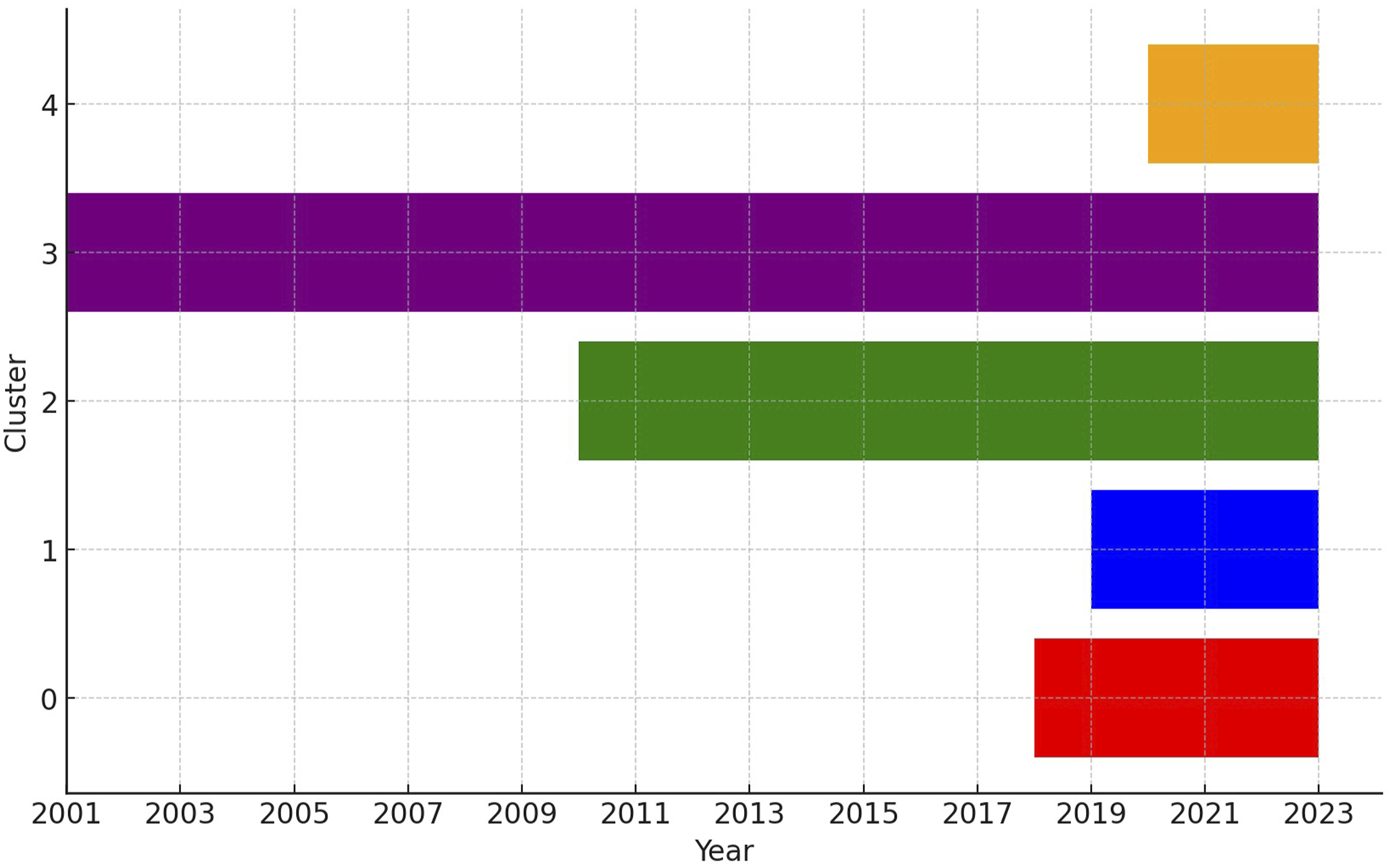
This temporal analysis not only underscores the dynamic nature of research on conversational AI but also provides insight into potential areas for further exploration. As we proceed to analyze each cluster in detail, the Gantt chart serves as a reference point for understanding the historical development of these themes and their respective contributions to the broader discourse.
Each cluster will be discussed in turn, with attention given to the most influential works, the progression of knowledge within the cluster, and the key trends that define the research landscape. This approach offers a comprehensive view of how academic thought has evolved, and how each thematic cluster contributes to a more nuanced understanding of conversational AI’s impact on consumer behavior.
Cluster 0. Consumer behavior and engagement
Cluster 0, which focuses on consumer behavior and engagement, reveals important insights into how digital environments influence customer interactions, particularly through the use of advanced technologies like conversational platforms and AI. The thematic concentration within this cluster highlights a growing body of research dedicated to understanding how consumers respond to digital marketing strategies, especially when these strategies involve personalized and real-time interactions with customers.
The most recent publication in this cluster is from 2023, authored by Klein and Martinez, who examined the role of anthropomorphism in virtual assistants and its impact on customer satisfaction. Their study, which has already garnered 12 citations, underscores the increasing relevance of human-like characteristics in digital tools. By making virtual assistants more relatable and approachable, businesses can significantly enhance customer engagement. This article represents the most cited work within this cluster, reflecting its importance in the ongoing discussions around digital consumer experiences. 2
Conversational platforms, another central theme in this cluster, are explored in depth in the work of Copulsky, 11 who questioned whether these platforms represent the next frontier in digital engagement. With 10 citations, Copulsky’s analysis shows that businesses are beginning to recognize the potential of AI-driven chatbots to personalize interactions at scale, offering real-time responses that improve the customer experience. This growing trend is further supported by Vassinen’s work, which focused on the rise of conversational commerce and its implications for brands. Vassinen’s article, also with 10 citations, provides valuable insights into how direct communication through messaging platforms is influencing purchase decisions, suggesting that real-time engagement is becoming a critical factor in consumer-brand relationships. 12
Another notable study within this cluster is by Fuchs, Roitman, and Mandelbrod, 3 who explored the application of AI in e-commerce environments. Their work on automatic form filling, though more technical in nature, touches on a crucial aspect of consumer behavior: the desire for streamlined, efficient interactions with digital platforms. With five citations, their study illustrates how AI can enhance user satisfaction by reducing friction in processes like form submission, thereby contributing to a more seamless customer journey. 3
The articles in this cluster span a time range from 2018 to 2023, reflecting the rapid evolution of consumer engagement strategies in the digital sphere. The most cited article by Klein and Martinez 2 sets the tone for current trends, particularly in the integration of human-like AI to improve customer interactions. Together, these works underscore the significant shift in consumer behavior toward valuing personalization, real-time communication, and seamless digital experiences, all of which are key to fostering long-term customer engagement and brand loyalty.
Cluster 1. Sentiment analysis and NLP in e-commerce
Cluster 1 focuses on the application of sentiment analysis and natural language processing (NLP) techniques in the e-commerce context. The articles within this cluster explore how businesses utilize these technologies to analyze customer feedback, reviews, and social media interactions in order to gain insights into consumer behavior. A significant number of studies address the practical implementation of predictive algorithms and data analysis tools that help companies enhance customer satisfaction and optimize marketing strategies.
The most recent publication in this cluster, by, 13 examines the impact of predictive algorithms and data visualization tools on customer satisfaction in digital platforms. This work, which has been cited 16 times, highlights the growing relevance of data-driven strategies in e-commerce. The study emphasizes the importance of leveraging AI-powered predictive models to anticipate customer needs, thus improving overall user experience.
Another influential article in this cluster is by, 1 who explored the impact of artificial intelligence on digital advertising strategies. With 9 citations, this work provides an in-depth analysis of how AI is being used to personalize marketing content and improve the effectiveness of digital ads, showcasing the transformative potential of AI in shaping customer interactions.
In addition, 14 studied the influence of advertising content in digital communication, focusing on how the nature of ad messages affects consumer engagement. Though cited less frequently, with 3 citations, this study provides important insights into how content structure influences customer responses and engagement with e-commerce platforms.
Reference 15 contributed to the cluster by discussing data analysis techniques in digital marketing. Their work focuses on the application of machine learning in predicting customer trends, though it has garnered only 2 citations. It adds a technological perspective on how businesses can use data analysis to drive marketing decisions.
The articles in this cluster range from 2019 to 2022, illustrating the rapid evolution of sentiment analysis and NLP in the e-commerce sector. The most cited article, by, 13 demonstrates the importance of predictive technologies in enhancing customer satisfaction, reflecting the growing reliance on AI tools to drive business success in this field. This cluster highlights how businesses are leveraging cutting-edge AI techniques to better understand consumer sentiment, allowing for more targeted and effective digital marketing strategies.
Cluster 2. Artificial intelligence in marketing
Cluster 2 focuses on the application of artificial intelligence (AI) and machine learning in marketing strategies. The articles within this cluster explore how AI technologies are being leveraged to optimize advertising, personalize consumer experiences, and enhance decision-making processes within marketing frameworks. These studies address various aspects of AI’s role in automating tasks, improving efficiency, and providing more targeted marketing solutions.
One of the most significant contributions to this cluster is the article by, 16 which has garnered 265 citations. Their study examines how AI models can be used to estimate aggregate consumer preferences from large datasets. The research demonstrates the power of AI in predicting consumer behavior patterns, offering valuable insights for businesses looking to better understand their customer base. Decker and Trusov’s work is particularly notable for being one of the earlier studies to show the practical applications of AI in marketing, making it a foundational article in this area.
Another important article is by, 17 which focuses on real-time sentiment analysis in e-commerce applications. With 41 citations, this work emphasizes the role of AI-driven sentiment analysis in understanding customer feedback and its impact on sales and product development. The study highlights how businesses can use real-time data to adjust their marketing strategies dynamically, making it a crucial reference for AI’s application in customer experience management.
Reference 18 contributed a study on product recommendation systems using AI, specifically by analyzing customer opinions to recommend products. This research, which has 39 citations, showcases the effectiveness of AI in personalizing marketing efforts by tailoring recommendations based on customer preferences. This is a key area of marketing where AI continues to play an essential role, especially in e-commerce platforms where personalized recommendations drive sales.
Reference 19 contribute to the discussion on the application of artificial intelligence in marketing by utilizing the UTAUT2 model to examine the behavioral intention to adopt AI-generated images in business. Their study highlights how factors such as social influence, performance expectancy, and creativity shape AI adoption in marketing contexts.
Finally, 4 presented a deep learning-based model that uses hybrid features for improved customer segmentation. Their study, with 27 citations, is one of the more recent contributions and represents the cutting-edge development in AI for marketing. The model they developed aims to refine customer segmentation through advanced machine learning techniques, thereby offering more precise targeting and enhancing marketing effectiveness.
The articles in this cluster range from 2010 to 2023, reflecting the evolution and increasing sophistication of AI in marketing over the years. The most cited work by 16 remains a cornerstone in the field, while more recent studies like 4 continue to push the boundaries of what AI can achieve in customer segmentation and targeted marketing strategies. This cluster emphasizes the transformative power of AI in marketing, particularly in areas such as consumer preference prediction, real-time sentiment analysis, and personalized recommendations.
Cluster 3. Trust and technology adoption
Cluster 3 focuses on the themes of trust, privacy, and the adoption of emerging digital technologies. The articles within this cluster explore how consumers perceive and adopt technologies such as AI, chatbots, and other digital tools, especially in contexts where trust and privacy concerns play a critical role in their decision-making processes. The studies in this cluster shed light on how businesses can foster trust to drive the adoption of technology-driven products and services, particularly in the e-commerce and digital service sectors.
One of the most influential articles in this cluster is by, 20 which has amassed 485 citations. Their study explores how advertising content affects consumer engagement on digital platforms, with a particular focus on the role of personalized ads in driving user interaction. This article is highly relevant to the theme of trust, as it examines how transparency and relevance in advertising can influence consumers’ willingness to engage with digital marketing strategies.
Another notable article is by, 21 which focuses on natural language sales assistants and their role in facilitating e-commerce interactions. With 21 citations, this work investigates how AI-based sales assistants can improve customer experiences, thereby fostering trust in online purchasing environments. This early exploration of conversational AI highlights the importance of user-friendly and trustworthy digital interfaces in increasing consumer comfort with automated systems.
Reference 22 contributed a study on the development of e-commerce customer service robots, emphasizing how natural language processing and AI technologies can enhance customer satisfaction. With 12 citations, this research delves into the technical and user experience aspects of AI-driven customer service tools, providing insights into how businesses can build more effective and trusted interactions through automated systems.
Reference 23 offer a more recent perspective on how knowledge graphs can be generated from unstructured data to improve business decision-making. With 7 citations, this study focuses on the application of AI in creating trustworthy and actionable insights from vast amounts of data, highlighting how businesses can leverage AI to enhance transparency and trust in their digital operations.
The articles in this cluster span from 2001 to 2020, reflecting the long-standing and evolving interest in how trust can be established in digital and AI-driven environments. The most cited article by 20 remains highly influential in understanding the role of trust in digital advertising, while the studies by 21 and 22 focus on the importance of trust in AI-driven customer service applications. This cluster underscores the essential role that trust and transparency play in the adoption of new technologies, particularly as businesses strive to enhance user experience and foster long-term customer relationships in digital spaces.
More recent research, such as, 24 continues to emphasize the critical role of trust in AI chatbots. Trust remains a key factor in consumer acceptance, driven by elements such as expertise, anthropomorphism, and responsiveness. However, concerns regarding privacy, perceived risk, and transparency persist, shaping consumer trust in AI-driven interactions and influencing decision-making processes.
Cluster 4. Big data and predictive analytics
Cluster 4 focuses on the use of big data and predictive analytics in business decision-making. The articles in this cluster explore how companies leverage large datasets to gain insights into customer behavior, market trends, and operational efficiencies. The emphasis is on data-driven strategies, sentiment analysis, and the integration of predictive models to enhance business outcomes and improve customer satisfaction.
One of the most influential articles in this cluster is by, 25 which examines the impact of luxury brands’ social media presence on consumer engagement. With 200 citations, this work highlights how businesses can use big data analytics to track and respond to consumer interactions on social media platforms. The study demonstrates the significant role that data analysis plays in understanding consumer sentiment and optimizing brand engagement strategies.
Another notable article is by, 26 which explores the factors that drive customer trust in AI-driven systems. With 96 citations, this research is highly relevant to the theme of big data, as it investigates how businesses can use AI to build customer trust in digital environments. The study provides insights into how predictive models can be used to enhance user experiences, particularly in e-commerce and customer service contexts.
Reference 27 conduct a generational investigation into sentiment analysis and its implications for business. With 24 citations, this study analyzes how different generations respond to sentiment-based marketing and how businesses can use sentiment analysis to better target their marketing strategies. The work underscores the value of predictive analytics in tailoring marketing efforts to specific demographic groups.
Reference 28 present a study on customer acceptance of shopping-assistant chatbots, with a focus on how predictive models can improve customer service experiences. With 21 citations, this article provides important insights into how AI-driven tools can enhance customer satisfaction and streamline business operations. The integration of predictive analytics in customer service is a key theme in this research, highlighting how businesses can optimize their customer interactions through data-driven strategies.
The articles in this cluster span from 2020 to 2021, reflecting the rapid adoption of big data and predictive analytics technologies in recent years. The most cited article by 25 provides a comprehensive analysis of how luxury brands can leverage social media data, while the works by 26 and 27 focus on the broader implications of AI-driven predictive analytics in building customer trust and targeting marketing strategies. This cluster emphasizes the importance of data-driven decision-making in business, particularly in enhancing customer engagement and operational efficiency through predictive analytics.
Conclusion
The integration of conversational artificial intelligence (AI) into consumer-facing technologies has revolutionized how businesses interact with customers, profoundly impacting decision-making processes both at the organizational and consumer levels. This study provides a systematic analysis of the current research landscape through cluster analysis, revealing key themes such as trust and technology adoption, sentiment analysis, and the role of big data in shaping predictive models. Through the identification of five thematic clusters, we have demonstrated the diversity and depth of the research on conversational AI, while highlighting the varying degrees of maturity across different areas of study.
Using cluster analysis, this study has revealed key themes such as trust and technology adoption, sentiment analysis, and the role of big data in shaping predictive models. By categorizing the academic inquiry into five thematic clusters, we have demonstrated the diversity and depth of the research on conversational AI, while highlighting the varying degrees of maturity across different areas of study. This study also addresses key gaps in the literature by providing a structured synthesis of research on conversational AI and consumer decision-making. Through a data-driven clustering approach, we identify underexplored areas such as interdisciplinary integration, long-term impact analysis, AI’s interaction with emerging technologies, and ethical concerns. By mapping these gaps, our findings offer a clearer research agenda for advancing knowledge in this field.
From the perspective of decision science, these findings underscore the increasing reliance on AI-driven tools to inform strategic business decisions. As businesses adopt conversational AI to enhance customer engagement and streamline operations, they must navigate complex ethical considerations, particularly regarding consumer trust, privacy, and data security. The growing sophistication of AI algorithms —combined with the vast amounts of data being generated— offers unparalleled opportunities to improve decision-making through real-time insights and predictive analytics. However, the variability in research focus, as seen in the clusters, suggests that not all areas of decision-making are equally developed, with some themes requiring further empirical exploration and validation.
One critical implication for decision science is the transformative potential of AI in optimizing marketing strategies and customer experiences. AI-driven insights enable businesses to move from reactive decision-making to a more proactive, data-informed approach, enhancing their ability to anticipate consumer needs and behaviors. The use of predictive models, especially in areas like sentiment analysis and consumer segmentation, allows for personalized interactions that foster deeper customer loyalty and engagement. As a result, decision-makers must become increasingly adept at interpreting and integrating AI-generated insights into their strategic frameworks, ensuring that their decisions align with both business objectives and consumer expectations.
Looking ahead, the findings of this study set the stage for further empirical research into how conversational AI continues to evolve and integrate with other digital marketing and decision-support technologies. As AI algorithms become more sophisticated, future research should explore their long-term implications for business strategies, consumer trust, and regulatory frameworks. This study provides a foundation for understanding these dynamics and encourages future investigations into the intersection of AI, consumer decision-making, and digital transformation.
In practical terms, the findings of this study can support decision-makers in developing more effective and coherent applications of conversational systems in digital marketing contexts. Clusters such as Consumer Behavior and Engagement (Cluster 0) and Artificial Intelligence in Marketing (Cluster 2) emphasize the importance of designing interactions that are not only efficient but also perceived as relevant and trustworthy by users. These insights are useful for organizations aiming to integrate conversational tools into broader strategies focused on customer experience and relationship management.
Big Data and Predictive Analytics (Cluster 4) highlights the potential of advanced data processing techniques to refine audience segmentation, anticipate needs, and improve the timing and content of communications. However, these opportunities require careful alignment with internal capabilities and ethical standards.
From a regulatory perspective, the prominence of Trust and Technology Adoption (Cluster 3) reinforces the importance of clear rules regarding transparency, data usage, and consumer protection. In parallel, findings from Sentiment Analysis and NLP in E-Commerce (Cluster 1) point to the growing relevance of understanding consumers’ emotional responses in digital environments. These patterns suggest that future policies should not only address technical compliance but also consider the psychological and social impact of automated interactions in commerce and services.
Looking across the thematic clusters, the results reflect a complex and evolving research field that intersects technical development, managerial priorities, and public interest. This layered view offers a basis for coordinated efforts across research, practice, and governance.
Future research directions
While this study has provided a comprehensive overview of the existing research landscape, several areas remain underexplored. Future research should focus on addressing the ethical and societal implications of widespread conversational AI adoption, particularly in relation to privacy concerns and the transparency of AI algorithms.
Understanding how different regulatory frameworks across regions influence AI adoption and consumer trust will be essential for ensuring responsible implementation.
Additionally, more empirical work is needed to understand how consumers perceive and engage with AI systems across different cultural and geographic contexts, as the current research is heavily concentrated in specific regions, limiting the generalizability of findings. Investigating how cultural perceptions shape consumer trust and engagement with conversational AI can offer valuable insights for global marketing strategies.
A promising direction for future inquiry is the development of more advanced decision-support systems that integrate conversational AI with other emerging technologies, such as blockchain or augmented reality. These integrations have the potential to further enhance the decision-making capabilities of businesses, allowing for more complex and multi-dimensional strategies. Exploring the synergies between these technologies could open new possibilities for personalized marketing —a strategy that uses data analysis and AI to deliver tailored messages and product offerings to individual consumers based on their preferences and behaviors— customer service automation, and intelligent business analytics.
Furthermore, research into the long-term impacts of AI-driven decision-making on organizational structures and workforce dynamics would offer valuable insights into how businesses can adapt to the increasingly AI-centric business environment. As AI continues to automate various aspects of consumer engagement, understanding its implications for employment, skill development, and corporate structures will be crucial in shaping sustainable AI adoption strategies.
While conversational AI is reshaping the landscape of decision science, it remains a tool that must be carefully managed. The evolving nature of AI requires continuous adaptation from decision-makers, who must stay informed about both the capabilities and limitations of these technologies. By focusing on the ethical, practical, and strategic dimensions of AI, future research can help guide businesses toward more effective and responsible decision-making in the digital age. Related to this, other topics to explore include privacy, security, and resilience in AI-driven consumer decision-making. As AI technologies become more integrated into digital marketing and customer engagement, concerns regarding data protection, algorithmic transparency, and user control over personal information gain increasing relevance. Prior research 29 has highlighted the importance of these factors in mobile healthcare applications, emphasizing the need for robust security frameworks and resilience mechanisms. A similar perspective could be applied to conversational AI, where ensuring consumer trust requires balancing personalization with strict privacy safeguards. Investigating these challenges would be essential for businesses seeking to implement AI-driven strategies while maintaining ethical and responsible data practices. Future research should also explore how social and cultural factors influence consumer interactions with AI, particularly in diverse and globalized markets. Prior work in enterprise systems, 30 has highlighted the significance of these factors in shaping technological adoption. While our study focuses on conversational AI in consumer decision-making, similar considerations may apply in understanding how AI-driven interactions vary across cultural contexts and how businesses can optimize AI-based engagement strategies accordingly.
Finally, another potential enhancement to the current methodology is the incorporation of expert-driven validation in the clustering process. While this study employs an unsupervised machine learning approach, combining computational techniques with expert domain knowledge could refine the thematic categorization and improve interpretability. Future research may explore hybrid approaches where human expertise is leveraged to validate and contextualize machine-generated clusters, ensuring that the identified themes align with industry and academic perspectives.
Footnotes

Funding
The authors disclosed receipt of the following financial support for the research, authorship, and/or publication of this article: This research was partially supported by the Spanish Ministry of Science, Innovation and Universities under the national R&D project AIDigitalPrefer (Grant No. BS-INV/GRC-24008_01 PID2023), led by A. Valenzuela and V. Schoenmueller.
Declaration of conflicting interests
The authors declared no potential conflicts of interest with respect to the research, authorship, and/or publication of this article.