



Abstract
This paper aims to present the analysis results on the feasibility and assessment of Special Economic Zone (SEZ) implementation across the seven Federal States of Somalia. Specifically, the research leads to defining the most important criteria used to evaluate different locations to establish SEZs, understanding the priorities and perceptions of different groups of stakeholders. Moreover, it allows quantitatively assess States’ conditions to reduce the risk of wasted investment or unsuccessful development. Finally, it ranks alternatives based on the stakeholder perspectives and territorial realities. The analysis is based on a multi-criteria decision-making methodology, specifically on the Analytic Hierarchy Process and Technique for Order of Preference by Similarity to Ideal Solution. On a national basis, the most relevant criteria, in the view of stakeholders, are the availability of a skilled workforce. The “economic prosperity” and “financial investments and external aid” are the most critical gaps commonly perceived in all the States. The most applicable State to locate a Special Economic Zone is Banadir Regional Administration, which is perceived to be relatively better off concerning Environmental Conditions, Workforce Skills, Finance and External Aid, and Government Policies and Security. Moreover, the discrepancy between Banadir Regional Administration, but also Somaliland, and the other States is alarming, showing that the more advanced States are the ones that have a higher level of security, population, and also more reliable infrastructure. This information is vital for government and policymakers to support less developed countries' economic and social growth.
Introduction
The African population will reach nearly 2.5 billion people by 2050, 1 requiring new effort from public and private sectors to improve life quality and reduce economic and social disparities across the region. One way to create more significant economic opportunities and stimulate a better distribution of wealth is to boost regional economic growth, mainly relying on industrial development. One of the most acknowledged initiatives is the establishment of special economic zones (SEZs), which aim to attract investments, create employment, and diversify economies, usually expanding the manufacturing sector. 2 Moreover, SEZs play a crucial role in supporting structural transformations 3 and integrating emerging markets in global trade. 4 Since tax incentives are critical drivers of investments, SEZs are often used as a tax instrument. 5 In addition, SEZs alleviate poverty both in rural and urban zones. 6 SEZs have been elevated from national to global economic development, and they are increasing worldwide. Indeed, SEZs grew from 500 in 1995 to 4300 in 2015 and almost 5400 in 2018. 7 Recent research has investigated the main factors that affect the success of SEZs worldwide, and Frick et al. investigated the factors influencing SEZ performance in emerging countries. Their study highlighted that the proximity to large markets and preexisting industrialization increase SEZ performance. 8 Following this, Devendra and Sanjeev have categorized the main factors that affect SEZ’s success or survival, highlighting location selection as one of the most influential drivers. 9 As a matter of fact, SEZs’ location selection depends on many factors, such as the cost of firms’ operation, the availability of high-quality inputs, and proximity to high-speed transport infrastructure and outlet markets. 10 It is worth noting that there is a strong relationship between firm location and its effect on competitiveness. 11 Numerous studies have provided comparative and assessment analysis to evaluate the most suitable place to develop SEZs. For instance, Srisawat & Wirojanagud have recently identified the most suitable sites for SEZ using spatial planning approach and multi-criteria analysis. 12 At the same time, Joshi and Bhatia assessed the effectiveness of SEZs in different areas through a SWOT analysis to set benchmark and performance standards. 13
Moreover, Chou & Ding used qualitative methods to compare different zone for future developments of SEZs. 14 In addition, to select the most suitable location, Pakdeenurit et al., used a combination of regressions model with Ordinary Least Square method and Delphi approach, providing a selection of different types of SEZ in Thailand. 15 Among all the techniques, the multi-criteria decision-making models are the most commonly used in the location selection process. 16 Yousefi et al. have recently investigated the optimal and proper disposal sites in the Salafchegan special economic zone using the Analytical Hierarchy Process (AHP) and an index overlay model. 17 Moreover, Arabsheibani et al., proposed in 2016 an integration of hybrid multi-criteria decision-making (MCDM) theories and Geographical Information System process to assess the suitability of an industrial parks location. 18 Also, Cauba & Coniato have selected multi-Criteria Decision-Making Approach (MCDMA) and the Geographic Information System techniques to identify the most suitable locations for economic zones. Their recent work identified nine criteria for SEZ optimal location, including roads, transport hubs, commercial areas, police stations, electric posts, water bodies, slope, land use, and labor force. 19 In addition, Ahmed et al., have proposed a multi-criteria decision analysis approach to evaluate the most suitable SEZs, in the perspectives of green industrial zone planning and development in Pakistan under the flagship project of the China-Pakistan Economic Corridor of China’s Belt and Road Initiative (BRI). 20
The United Nations Industrial Development Organization (UNIDO) plays a crucial role in supporting the stabilization and development of emerging countries. Above all, UNIDO in Somalia plays a crucial role in supporting the resilience and fostering the development of the Somali economy. UNIDO is working with the Federal Government of Somalia Ministry of Commerce & Industry, within the United Nations Cooperation Framework 2021–2025 and in response to the ninth National Development Plan for Somalia 2020–2024. The main aim of the collaboration is to implement a series of technical cooperation interventions to establish and strengthen the overall country’s economic governance. Indeed, they aim to enable new environments to sustain inclusive and broad-based economic growth, driven by the emerging small and medium-sized- enterprises. Among various initiatives recently started by UNIDO in Somalia, within the framework of the Productive Sectors Development joint Programme, implemented by UNIDO, jointly with Food and Agriculture Organization (FAO) and International Labour Organization (ILO) and founded by Italy through the United Nations Multi Partners Trust Fund, the company is assessing the prospects for establishing SEZs in the Federal States of Somalia in partnership with the Federal and State level Ministries of Commerce & Industry (MoCI), the private sector, and other stakeholders.
The present analysis supports UNIDO and MoCI in providing a clear understanding of the different constraints to private sector-led growth among the Federal States. The study ranks the relative importance attached, by various actors and Federal Member States, to specific constraints and thereby specifies the priority issues that SEZs would need to address in their location and design. The study also highlights gaps and weaknesses in the individual Member States to support future SEZ initiatives. The analysis is based on experts’ criteria that would govern SEZ location choices among the States. The research is based on a consolidated approach of MCDM methodologies. The paper aims at investigating the potentialities of MCDM methodologies to support international organizations when analyzing locations priorities in developing countries. Moreover, the objective is to validate the usability of these methodologies to keep the risk assessment plan.
As explained in the methodology section, the adopted approach is a hybrid method, which relies on two primary tools. First, AHP aims at structuring complex problems in a hierarchical form by evaluating all relevant criteria. Second, the Technique for Order of Preference by Similarity to Ideal Solution (TOPSIS) technique ranks the alternatives based on the distances between the “ideal best” and the “worst” solution. The paper is structured as follows: The next section describes the social and economic conditions of Somalia with a specific focus on Special Economic Zones; in the third section the methodology used to perform the analysis is briefly sum-up; the fourth section presents all the data collected by the survey; the fifth section discusses the main results; finally, last section explains conclusions and future work/research needed.
Economic and social development in Somalia
Context
Commanding on the Northern and Eastern stretches of the Horn of Africa, Somalia could exercise strategically vital political and economic roles in its sub-region. However, its history since 1990 has subjected the country and its people to prolonged internal territorial, civil and religious conflict, with its attendant violence and political fragmentation. In addition to the political conflict, Somalia suffers from ecological fragilities. The effects of drought and desertification have exacted a harsh toll on livelihoods and poverty. 21 The recent COVID-19 pandemic has adversely affected the health and welfare of an already vulnerable population. Somalia is amongst the most socially vulnerable people because of the political, economic, and ecological adversities. 22 Continuous armed conflict, lack of security, and recurring humanitarian crises exposed Somali civilians to severe abuse. It has been estimated that there are at least 2.6 million internally displaced people, many living unassisted and vulnerable to abuse. 23
The economy reflects the social situation. In 2018, Somalia’s per capita GDP was USD315/annum, placing it 158th among 196 countries. GDP growth has been around 2.5% in 2017 and 2018. The economy is heavily dependent on remittances from the Somali diaspora and international development assistance. It is highly reliant on imports, which consist primarily of consumption goods (mainly food) and building materials. It exports some agricultural commodities and livestock on the hoof. Imports amount to 67%, while exports amount to 14% of GDP. The threat of a crippling trade deficit is fended off by the flows mentioned above of remittances and external humanitarian and development assistance. In 2019 the GDP grew by 2.9%, but it shanked by 1.5% in 2020. The Somali diaspora, usually industrious and educated, offers an external source of capital formation and economic sustenance. In brief, there is a basis for the Federal Government of Somalia and its development partners to expand their horizons from human survival, humanitarian, and relief efforts to economic development in its broader context. 24
Manufacturing and service sector
There is no comprehensive data or studies on manufacturing activity in the country, but it is estimated to contribute less than 10% of the GDP. Somalia had a flourishing small-scale manufacturing sector before 1991. Around 53 manufacturing industries located in Mogadishu produced sugar, pasta, bottled water, cigarettes and assembled small tractors. However, these industries closed or were destroyed due to decades of conflict. A few light manufacturing industries are concentrated in Mogadishu, Hargeisa, and Bossaso, in sectors such as fish canning, beverage processing, mineral water production, meat processing, and soap production. According to the ninth NDP, foreign investments, particularly from the Somali diaspora, have contributed to the development of these medium-sized industries. The FGS, through the MoPIED, has established the Somalia Investment Promotion Agency (SOMINVEST), whose role is to design and implement sector-wide investment attraction strategies. The National Investment Promotion Strategy and Investor Guide drafted and released by SOMINVEST in 2020 emphasize the need to promote the ‘Made in Somalia’ brand and attract investment in fisheries, agriculture, livestock, light, and manufacturing industries. The strategy also notes the requirement of SEZs, industrial parks, logistics, and warehouse facilities to offer secure long-term infrastructure and a business regulatory environment to foreign investors. The MoCI is drafting an Industrial Policy of Somalia, which will supplement NDP9 and lay the foundations, or set of interventions, required for deepening value chains and moving from an agrarian to a manufacturing-based economy.
The service sector has gained significant momentum in the last decade. Financial and banking, telecommunications, construction, informal retail trade, import distribution, and freight forwarding services are the key sectors that have created jobs in urban Somalia. The immediate structural jump from a low-value agricultural economy to a service sector economy poses several risks: youth are now more susceptible to quick cash-based income fueling consumption of imported household products. Increasingly, young Somalis are taking up jobs as mobile money agents, airtime sellers, traders, informal retailers, and transporters, leading to self-employment or informal SMEs rather than creating sustainable formal jobs and established firms. While statistics on sector and geography (State-wise) specific investments in Somalia in the last decade are not available, data from World Bank shows that FDI inflows have increased from USD 248 million in 2013 to USD 447 million in 2020, growing annually at over eight percent. Most of the FDI has been in the services sector, mainly through transnational companies such as Golis Telecom Somalia, Puntland Post, Somafone, and Dahabshiil. 25
Economic challenges
The dialogue between the Federal Government of Somalia and its development partners specifies several priorities that require long-term sustained and consistent effort. Specifically, the main priorities are
26
: • create employment for a growing labor force; • support the development of Somali entrepreneurship. Young Somali should be supported in becoming job creators rather than mere job seekers; • enhance income-earning opportunities for women and youth; • deepen value chains based on domestic agricultural commodities, livestock, and fisheries; • stimulate local food processing capability to reduce dependence on imports; • improve the quality of infrastructure, whether ports, transportation, or energy services; • enhance investment in the Somali economy, from domestic as well as Somali diaspora and other foreign sources; • Improve the security environment for business capital formation; • improve the business and economic growth climate in Somalia; • stimulate equitable growth among the Federal Member States; • Address the lack of government incentives for businesses to shift towards more long term technology-intensive manufacturing activities; • Support the domestic financial sector diversifies from mere trade financing to build up a lending investment portfolio in long-term productive activity and productive sectors. • Develop tools to reduce the high collaterals demands for credit to SMEs accessing credit lines. • Reform and streamlining the processes for business registrations and licensing Special Economic Zones can become the policy tool for attaining these critical economic development objectives.
Special economic zones
SEZs have been used as development tools for over 60 years, and several thousand zones have been established in the developed and developing countries around the world.
SEZs include a range of facilities such as: • Industry Parks/Cities • Technology Parks • Business Incubation facilities • Geographical Business Clusters • Export Processing Zones • Trade logistics zones, such as dry ports • Investment Zones • Free ports • Etc.
The common feature of all these facilities is the provision of land, infrastructure, utilities, and business-related services designed to establish or expand economic activity in a particular location and in a specific financial sector. In the simplest terms, Special Economic Zones are pieces of real estate with dedicated infrastructure and services that allow businesses the long-term assurance to undertake investment and conduct business in a relatively stable operating environment. Sometimes SEZs offer fiscal incentives, eased business licensing/facilitation, and other operating advantages to encourage development along a particular path. SEZs have been created by the public sector, by public-private partnerships, or by the private sector. SEZs are particularly impactful for the local population, generating economic and social advantages. Experience shows that when established with clear policy objectives and on carefully considered strategy and economic feasibility, SEZs can be practical tools for influencing the direction of economic and social development and reducing the environmental impact of economic activity. The importance of strategy, policy, and economic feasibility cannot be overemphasized. As much as there have been successes, the experience is replete with misplaced investments and failed attempts to prompt economic growth due to poorly planned or hastily constructed Special Economic Zones. 26
The role of the private sector
Experience with Special Economic Zones is rich and has evolved considerably from the initial days when such zones were considered publicly funded and developed infrastructure merely. In current practice, the private sector is a partner in the endeavor, starting from the very conception of the zone.
Nowadays, it is common to see that private capital and management are involved in zone development and operations. There are several advantages to such private sector involvement, whether in sharing investment risks or having a more business-oriented development and management of the facility. Once it is decided to go ahead with zone development, it would be advisable to identify potential private sector stakeholders and associate them with the managing body of the zone. Ideally, such private sector involvement should be from potential investors in the zone, giving both the government and the investor community the assurance that the zone is being developed according to sound business principles. In addition, such involvement will demarcate the roles, responsibilities, and investments to be made by the two respective partners, the government and the private sector, over the life cycle of the zone. Also, some basic issues would need a resolution from the very outset. For example, most zones involve some public subsidy to their client business investors and tenants, whether below-market real estate prices, subsidized services, or utilities. The zone developer has to recover investments through sale, rental, and service to client investors. There are several modalities where business risks can be spread between the State and private investor. Those modalities need to be explored and defined at the outset to make the zone a viable proposition. Therefore, the involvement of potential investors in the zones should be a built-in feature of the process from the very outset. 26
Methodology
The methodology used to perform the case study is taken from a recent work proposed by Bait et al.
27
and synthesized in Figure 1. In the following, all the steps are detailed. Methodology.
Criteria definition
First, all the relevant criteria considered when evaluating the suitability of SEZs in a specific location have been defined. A group of experts within the UNIDO have identified six main macro-categories: 1. Government policies and security 2. Economic prosperity 3. Local infrastructure and public services 4. Environmental conditions 5. Skilled workforce 6. Financial investments and external aid
Criteria.

Criteria evaluation
After defining all the criteria, a survey was conducted to collect decision makers’ evaluations through the AHP approach. As mentioned before, the AHP is one of the most commonly used approaches among the MCDM methods. It aims to structure complex problems in a hierarchical form by evaluating all relevant criteria in decision-making. Indeed, the main objective of the AHP is to determine criteria weights through a pairwise comparison among criteria. An ad hoc survey has been prepared for the analysis. All the respondents were asked to compare two criteria, assessing the criticality of criterion A compared to criterion B. The decision-maker could express the judgment by sliding the selector to the left or the right.
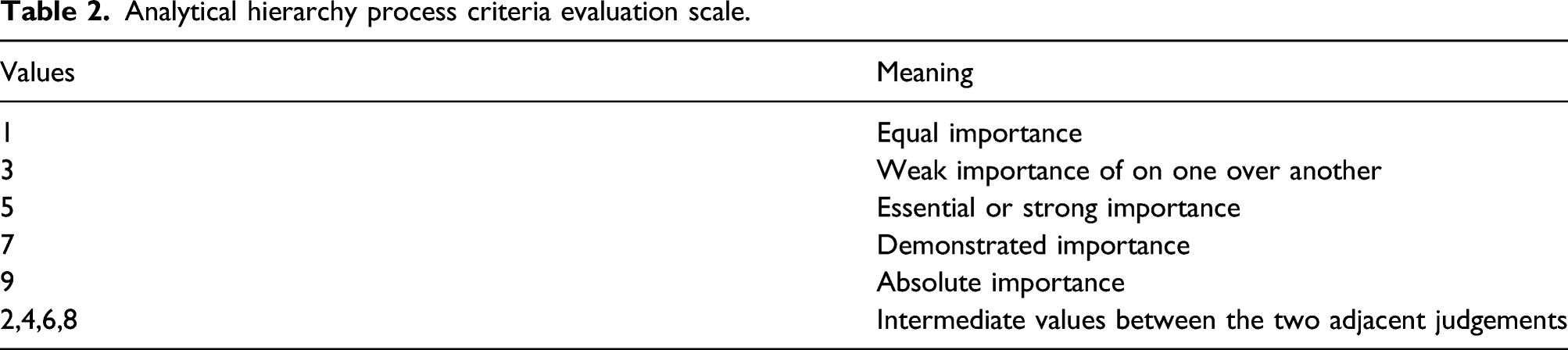
In the following, the main steps of the AHP are listed: 1. Pairwise comparison among criteria is performed; 2. At this point, a matrix based on the expert’s pairwise comparisons is created, using Saaty’s scale from 1 to 9, where (Table 2): 3. The obtained matrix is 4. After that, a normalized pairwise comparison matrix has been computed, with the following procedure: a. Compute the sum of every column; b. Divide every member of the matrix respectively by its related column sum; c. Take the average of the rows to obtain relative weights. 5. At this point, the Consistency Index (CI) is computed as follows: 6. Finally, the Consistency Ratio (C.R.) is calculated as follows: Analytical hierarchy process criteria evaluation scale.



Random consistency index.
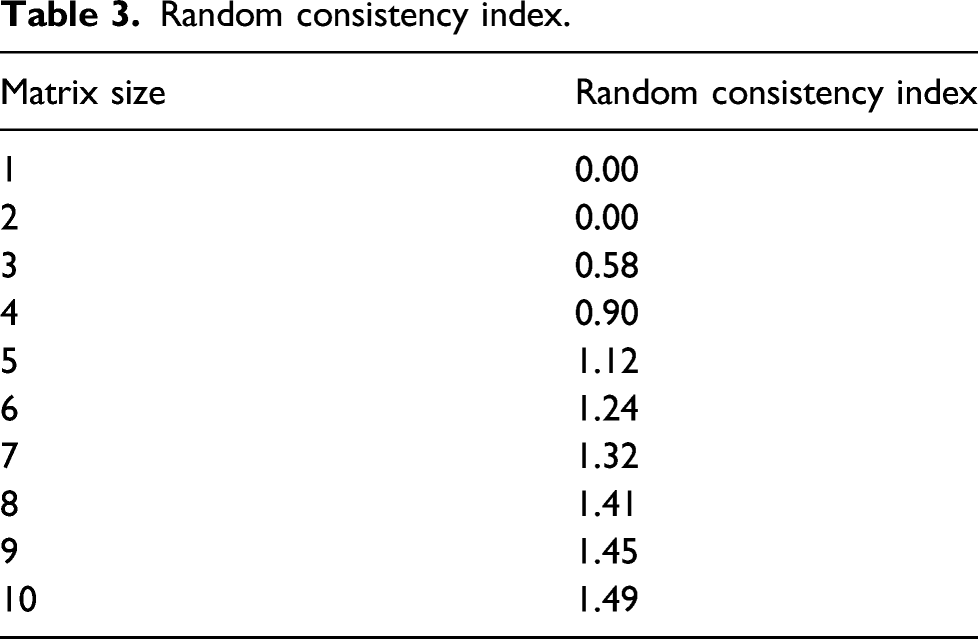
The acceptable range of C.R. value strictly depends on the matrix size, e.g. according to Saaty (1980), C.R. value for a 3 × 3 matrix is 0.05, for a 4 × 4 matrix is 0.08, and 0.1 for all the matrices having size ≥5. Therefore, this indicator is helpful to understand the consistency of the respondent’s evaluation.
In the analysis, all the inconsistent evaluations have been excluded.
Data collection
Data collection.
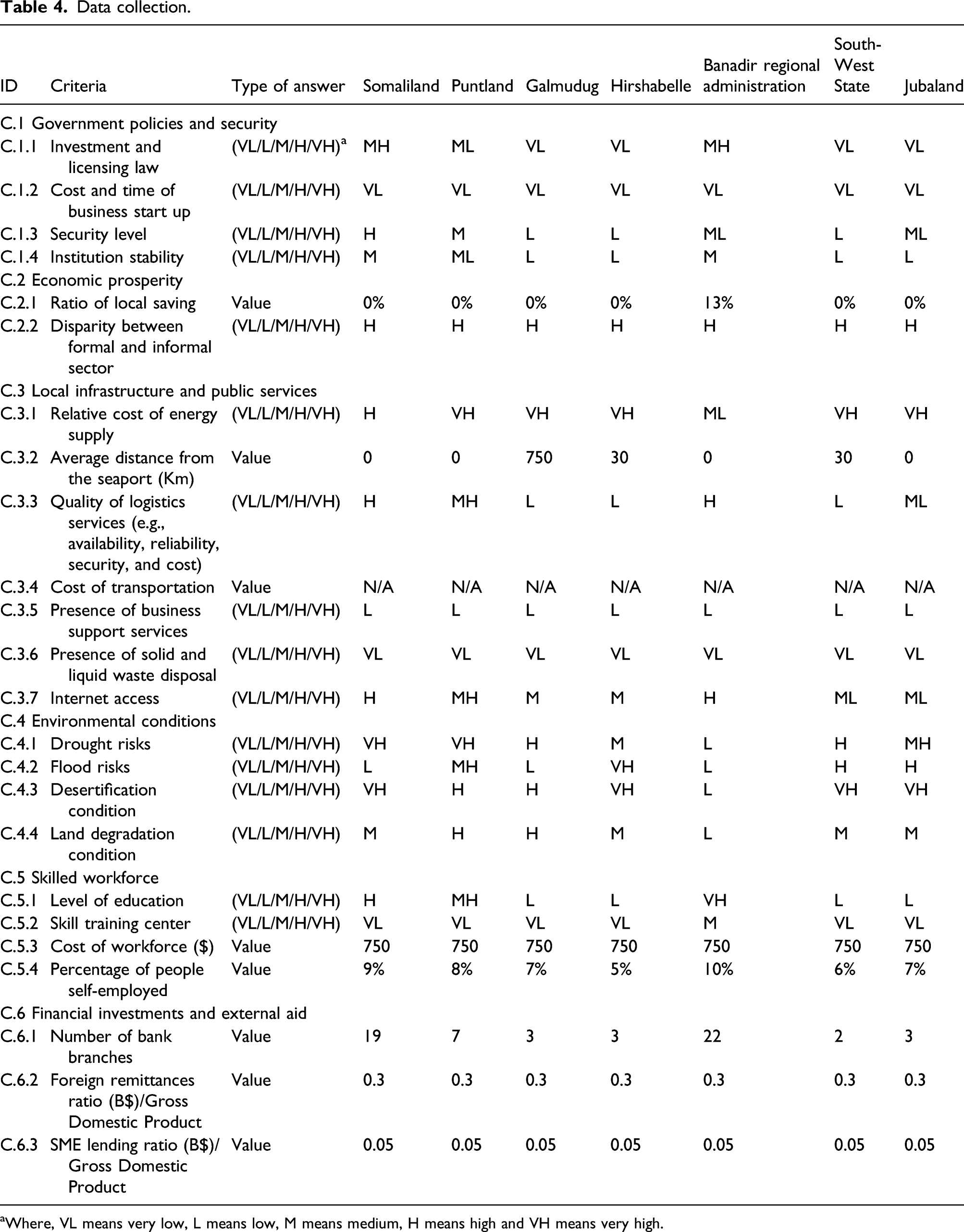
aWhere, VL means very low, L means low, M means medium, H means high and VH means very high.
Technique for order preference by similarity to ideal solutions
After collecting all the criteria weights and data related to the seven states, the Technique for Order of Preference by Similarity to Ideal Solution (TOPSIS) has been applied.
The TOPSIS methodology aims at ranking the alternatives based on the distances between the ideal best and the ideal worst solution. In addition, many researchers use hybrid approaches to face facility location problems, combining AHP and TOPSIS.
The main steps of the TOPSIS are summarized in the following: 1. A 2. The weighted matrix is calculated, multiplying each value 3. The ideal best 4. The Euclidean distance (
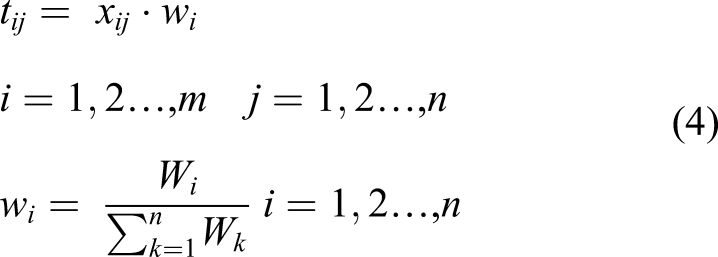


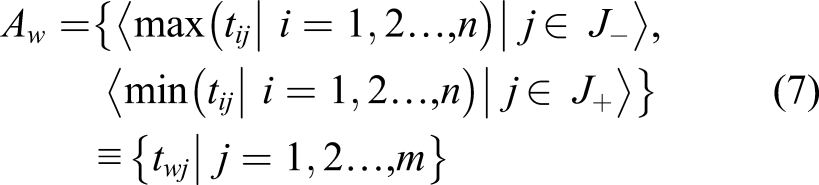


The same procedure is followed for the ideal worst solution (11): 5. The similarity to the worst condition is calculated (14): 6. The alternatives are ranked accordingly to 

Target value collection
Target value.
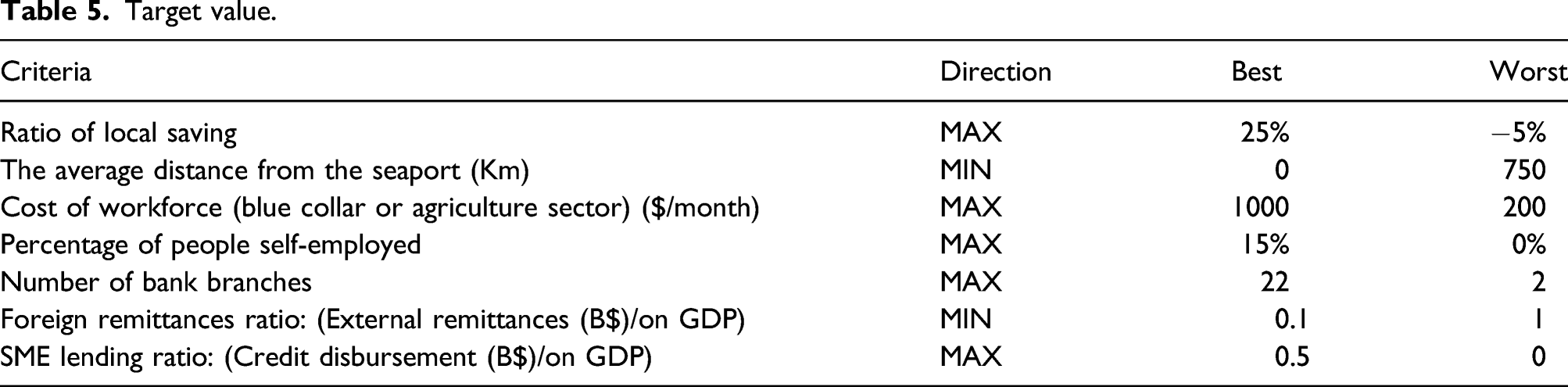
Based on these values, a gap assessment has been performed.
Survey results
The survey was distributed to as many people as possible to collect the criteria evaluations. Indeed, it was vital to have a broad view of the criteria’ importance and criticality. Through the survey, 55 answers were collected. Specifically, the survey has been submitted by UNIDO managers to all the partners that are working on Somalia projects, such as other international organizations, government, private sector, academia, NGOs, and banks.
The following section presents a brief profile of the respondents. As shown in Figure 2, 36% of the respondents represent the government, and 35% come from the private sector. Respondents by type of organization.
The other 29% of respondents are distributed among donors, financial institutions, Accademia, NGOs, international organizations, etc. Moreover, the great majority (69%) of respondents (Figure 3) come from Banadir Regional Administration. Respondents by location.
Surprisingly enough, no respondents are from Somaliland. Finally, a significant number of respondents are directors and managers (Figure 4). All the others are distributed among CEO, Consultant, Minister, Advisor, etc. Respondents by role.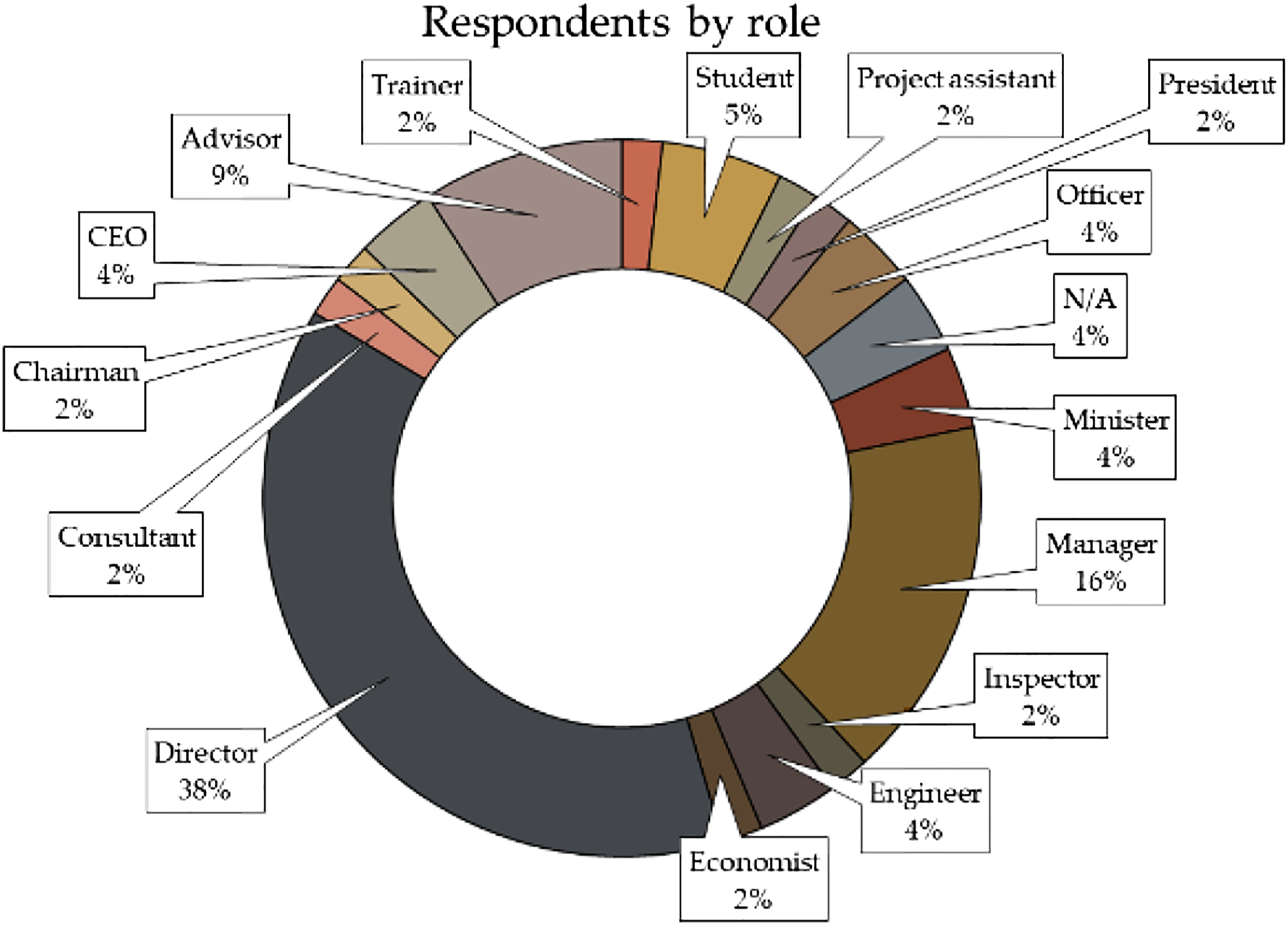
Results and discussion
The discussion around the results is divided into three main parts: 1. Evaluation of the criteria from a global perspective and all the other groups point of view; 2. Ranking of the most suitable alternatives provided by the TOPSIS approach and comparison of the order among all the groups; 3. Evaluation of the discrepancy between each State and ideal target to reach.
Criteria evaluation
As mentioned above, all the respondents provided an evaluation of the importance of the selected criteria. Specifically, all the respondents try to assess the most critical criteria when establishing SEZs in the country. Therefore, in the following, all the evaluations provided are discussed.
Considering all the evaluation and applying the geometric average, the most important criteria are the following (Figure 5): 1. Skilled workforce: 19.79% 2. Financial investments and external aid: 18.91% 3. Environmental conditions: 18.08% 4. Local infrastructure and public services: 16.92% 5. Government policies and security: 13.52% 6. Economic prosperity: 12.78% Criteria evaluation.
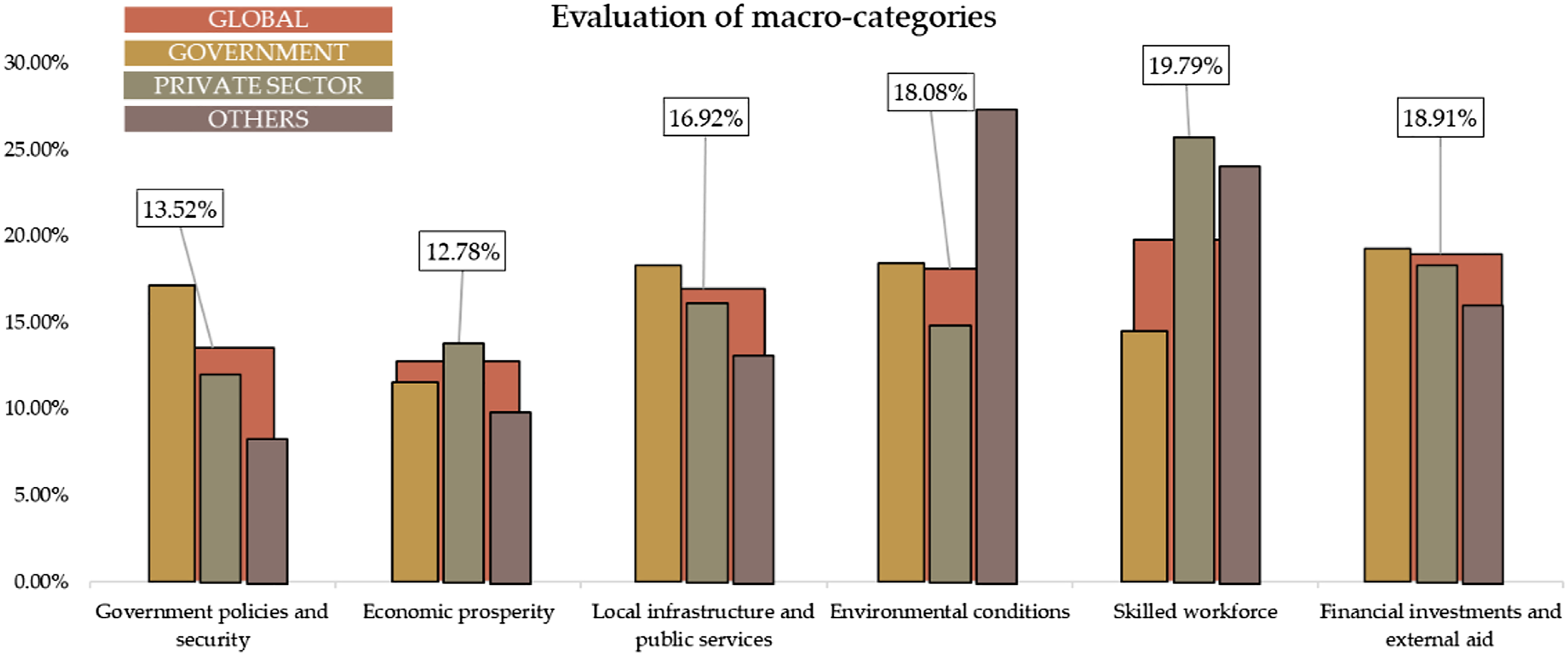
From the government’s point of view, the most important criteria are environmental conditions (18.56%) and local infrastructure and public services (18.43%). Economic prosperity (11.66%) and skilled workforce (14.63%) are less important. Indeed, it is commonly known that environmental issues are covering growing importance, especially after the COVID-19 pandemic.
From the private sector point of view, the most important criteria are skilled workforce (25.49%) and financial investments and external aid (18.17%). The less important are government policies and security (11.90%) and economic prosperity (13.69%). From all the other perspectives (donors, financial institutions, NGOs, and international organizations), the most important criteria are environmental conditions (27.76%) and skilled workforce (24.28%). Also, in this case, the less important are government and security (8.44%) and economic prosperity (9.97%). It is interesting to notice that, from a governmental perspective, there is a high homogeneity among criteria weights (standard deviation 0.02). The uniformity could be related to several roots, like the complexity in understanding the context. On the other hand, there is less homogeneity from the private sector and others' points of view (SD 0.04 and 0.07). As a result, from the government’s point of view, there are no criteria strongly more critical than the other, while there are from the other groups.
Indeed, the environmental conditions for donors, financial institutions, NGO and International organizations, and the skilled workforce for the private sector are much more critical than the other. Moreover, there are some discrepancies among all the groups. Indeed, there are some macro-categories where all the groups agree about the general importance (financial investment and external aid), and others do not. For instance, the skilled workforce category seems to be very important for the private sector and the other (donors, financial institutions, NGOs, and international organizations), while it is not for the government. The same comment should be provided for the environmental and the government policies and security categories.
Moreover, the respondents provided both the evaluation of macro-categories and sub-criteria within each category. It is essential to point out that the assessment of each criterion presented is the multiplication of the sub-criterion weights and the belonging macro-category weight. Credit disbursement, the disparity between the formal and informal sector, and skill training centers are critical from a global perspective. From the government’s point of view, the external remittances, the disparity between the formal and informal sector, and the ratio of local savings are the most critical. From the private sector perspective, the most crucial criteria are disparity between formal and informal sector, skill training center, and percentage of people self-employed. Finally, for NGOs, international organizations, donors, and financial institutions' perspectives, the most important are the percentage of self-employed people, desertification conditions, and drought risks.
Prioritization of Somalia federal states
In this section, the results of the application are discussed. Specifically, in Figure 6, the priority list of the most suitable region where to start establishing SEZs. Moreover, the global score for each area is presented. Technique for order of preference by similarity to ideal solution results.
Prioritization list.
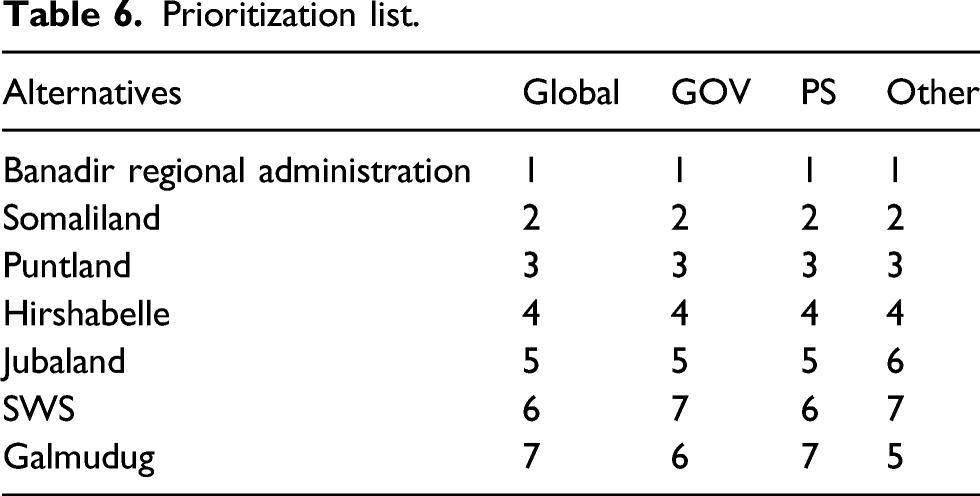
On the other hand, there are different prioritizations for Jubaland, Southwest State, and Galmund when considering different points of view. It is worth noting that the presented ranking highlights the divide between the Member States. Predictably the more advanced States are the ones that have a higher level of security, population, and also more reliable infrastructure.
Gap assessment
In this section, the central gap of each State is discussed in detail. It is worth noticing that the gap assessment has been provided in three forms: based on the global evaluation, government evaluation, and private sector evaluations.
Banadir regional administration
The Banadir Regional Administration is the most advantageous State where to establish SEZs. Still, some gaps should be analyzed (Figure 7). First, the environmental conditions are close to the expectation, while the skilled workforce and government policies and security have a lower performance but are still positive. On the other hand, local infrastructure and public services present a critical gap, especially from the private sector’s point of view. Notably, business support services and solid and liquid waste disposal are deficient globally. Finally, economic prosperity, financial investments, and external aid are the most critical factors. It is worth noticing that these two categories are crucial for all the regions and that Banadir Regional Administration has the lowest gap compared to the others. Gap assessment Banadir regional administration.
Somaliland
Interestingly enough, Somaliland has different gaps from Banadir Regional Administration (Figure 8). Indeed, Somaliland has the lowest gap related to Government policies and security, mainly because of the high level of protection. On the contrary, the Environmental conditions are worst compared to Banadir Regional Administration. As a matter of fact, Somaliland presents a higher risk of droughts and desertification. Moreover, the skilled workforce category presents a wide gap, primarily because of the low presence of skill training centers. It is worth noticing that despite the level of education in Somaliland being high, the percentage of people self-employed is quite good, and the cost of the workforce is on average -compared to the other - there is a medium-high gap. The reason is related to the skills training center, which is crucial from the government perspective. Gap assessment Somaliland.
Puntland
It is worth noticing that only Somaliland and Banadir Regional Administration have little gap compared to the target and that all the other regions have essential gaps (Figure 9). Also, Putland has a medium gap in local and infrastructure and public services, financial investments, external aid, and economic prosperity. In contrast, it has higher gaps in Environmental conditions, skilled workforce, and economic prosperity. Gap assessment Puntland.
The main criticalities in Puntland are related to: 1. The medium-high level risk of the flood; 2. The disparity between the formal and informal sector, together with the low ratio of local savings; 3. The low number of bank branches compare to Banadir Regional Administration and Somaliland.
On the other hand, the security level is medium, and the cost and time of business start-ups are very low.
Galmudug, Hirshabelle, South West State and Jubaland
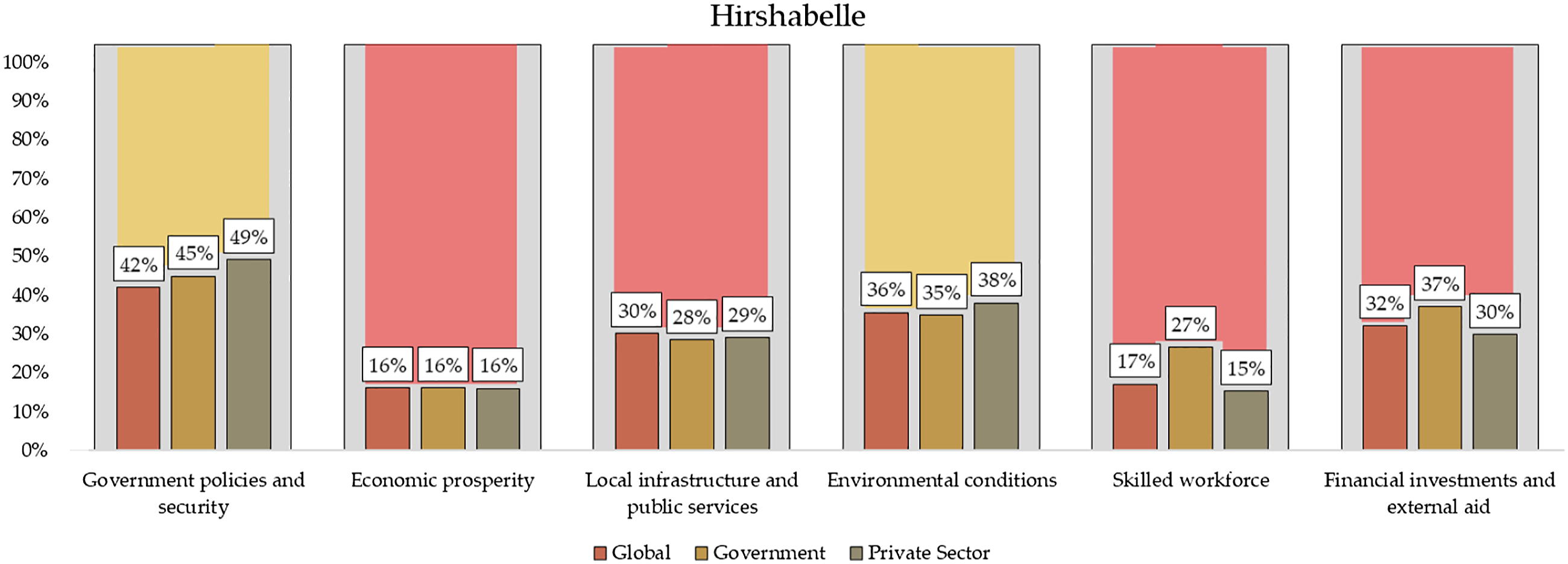
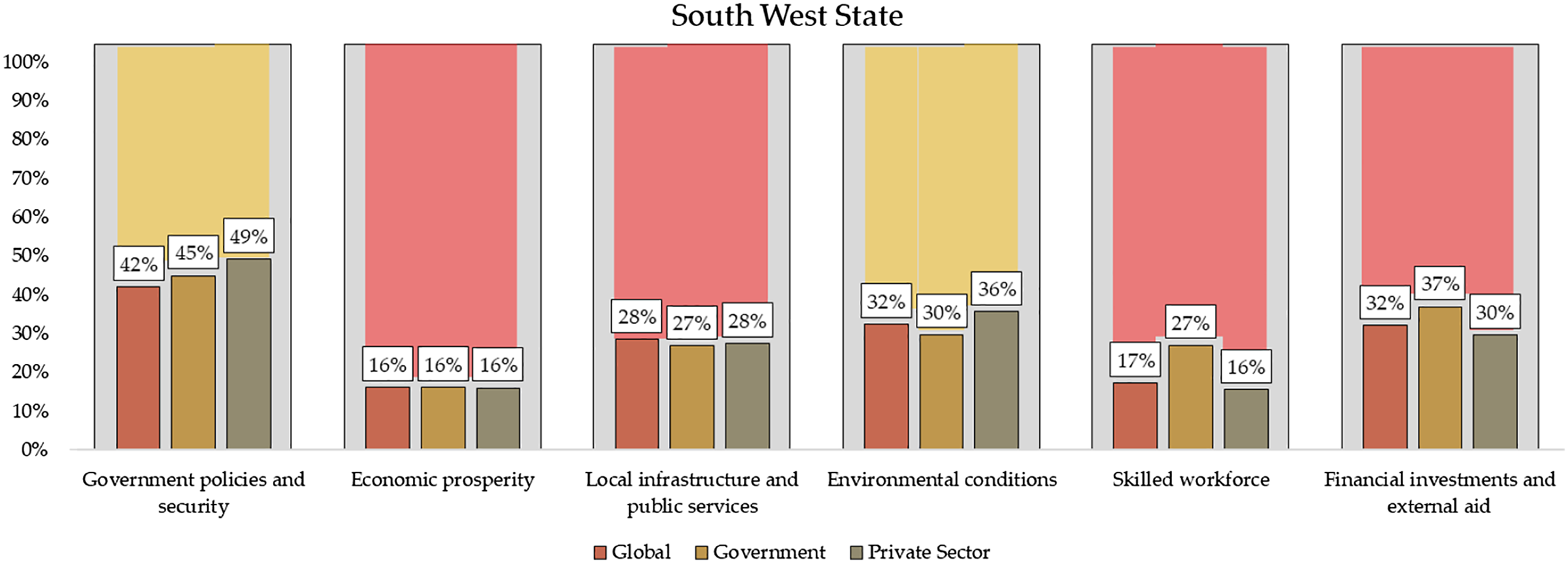
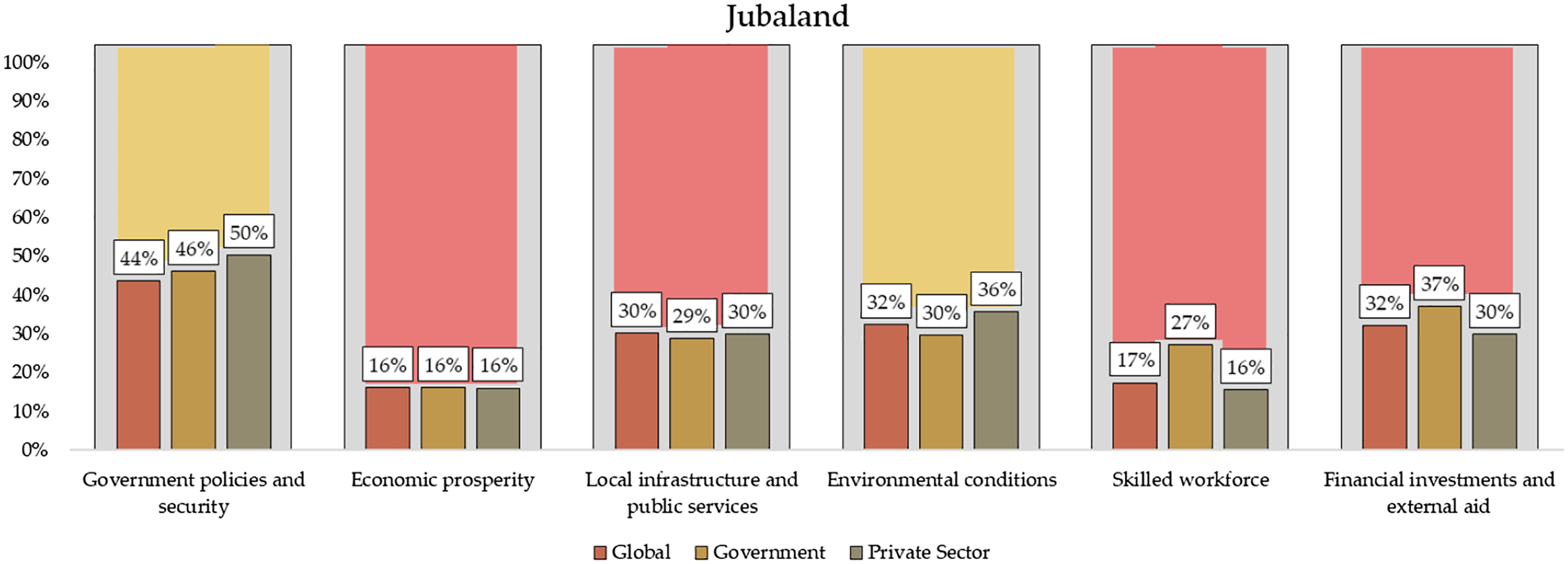
Galmudug (Figure 10), Hirshabelle (Figure 11), South West State (Figure 12), and Jubaland (Figure 13) have all similar gaps. The most urgent ones are related to economic prosperity, the local infrastructure, public services, and the skilled workforce. As mentioned before, the economic prosperity conditions are the same in all the States apart from Banadir Regional Administration. Indeed, the ratio of local savings is 0%, and the disparity between formal and informal sector “High”. The Local infrastructure and public services are particularly critical in Galmudug and South West State. Indeed, Galmudug is penalized by the high distance from the seaport. While South West by the medium-low access to the internet. The skilled workforce is critical in all the States, especially from the Private sector point of view. Gamudug and Jubaland are in very similar conditions, and the main criticalities are related to the low level of education and the very low presence of a skills training center. Also, Hirshbelle and The South West States have the same conditions, but with an even lower level of people self-employed around the region. Gap assessment Galmudug. Gap assessment Hirshabelle. Gap assessment South West State. Gap assessment Jubaland.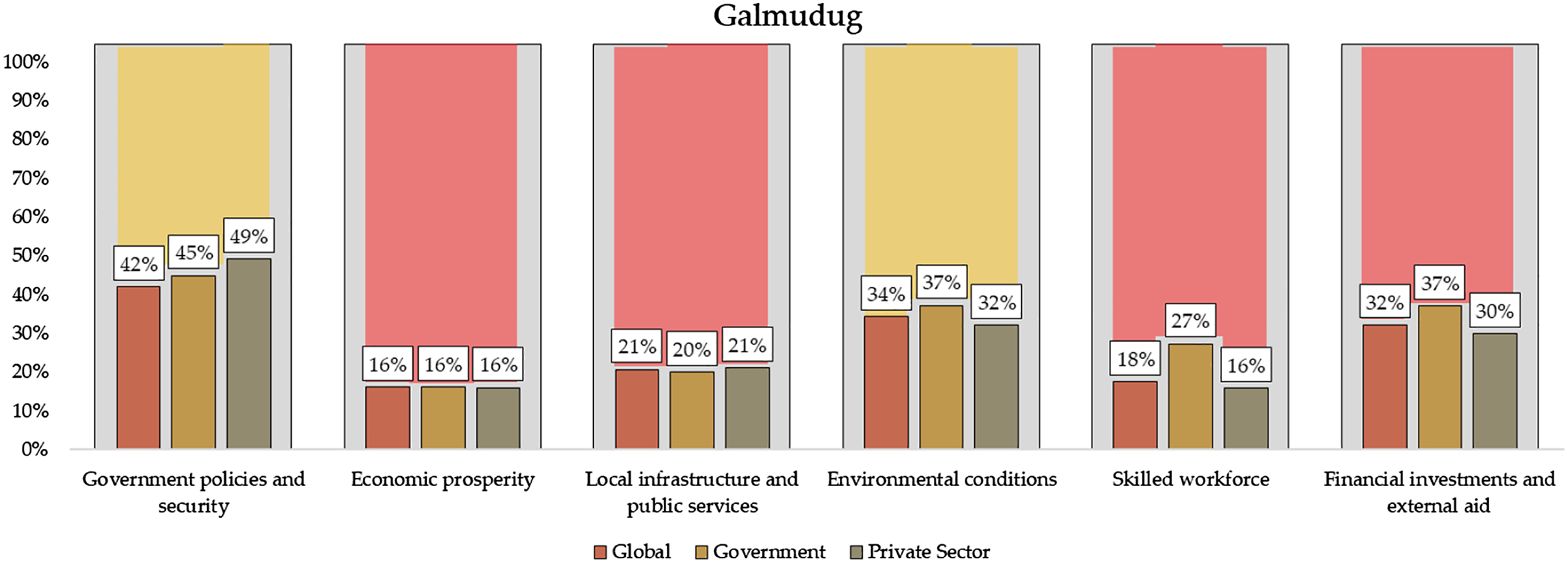
Conclusion
Special Economic Zones (SEZs) are considered one of the most efficient tools to face all the challenges related to economic and social development objectives. Therefore, UNIDO and the Ministry of Commerce & Industry (MoCI) are evaluating establishing new SEZs in the Somalia Federal Member States.
This report aims at providing a clear understanding on: • The most relevant criteria that guide decision-makers from different perspectives; • The most suitable States where to locate a Special Economic Zone; • The most critical gaps of each State within all the macro criteria.
To reach this goal, the authors decide to rely on MCDM approaches, which have been widely used in literature. Accordingly, the survey to collect information has been distributed, and 55 answers have been collected. Specifically, the respondents are mainly from the government and private sector and geographically from Banadir Regional Administration.
The most relevant results are summarized in the following: 1. The most relevant criteria when evaluating where to settle a Special Economic Zone is the skilled workforce. a. From the government’s point of view but also for donors, financial institutions, NGOs, and international organizations, the most important criteria is environmental conditions, opening the discussion around the vital role of environmental issues in the global debate; b. From the private sector point of view, the most important criteria are skilled workforce, corroborating the central role of skills in the emerging markets developing and stressing the need to reduce the skills divide globally; 2. The most suitable States, among the Somalia Federal Member States, where to locate a Special Economic Zone is Banadir Regional Administration, followed by Somaliland and Putland; 3. The discrepancy between Banadir Regional Administration, but also Somaliland, and the other States is alarming, showing that the more advanced States are the ones that have a higher level of security, population, and also more reliable infrastructure; 4. The “economic prosperity and the financial investments”, and “external aid” are the most critical gaps around all the States; 5. The only two Member States with low gaps are Banadir Regional Administration in the “Environmental conditions” and Somaliland in “Government policies and security”.
Based on results, there are three main policy implications: • First, interestingly enough, the infrastructure issue does not seem the main preoccupation. The creation of well-managed Industrial Zones might be effective in helping the graduation from low value-added, informal, and atomized economic activity to a more robust economic structure. • The importance of Human Resource Development is universally expressed. Therefore, the development assistance effort should be redoubled to improve workforce education and skills. • Imbalances and differences between the Member States are pronounced. There would be a tendency for Development Assistance and Private Investment to concentrate on the more advanced States. It would exacerbate internal regional imbalances and political strains. Sustained efforts to redress regional differences and spread investments to lesser developed regions would be critical to achieving national economic and political cohesion.
Future works will focus on the different locations within each state to further analyze each country’s main opportunities and gaps. Moreover, since the presented analysis provides a picture of the situation “as is,” future works will replace actual data with growth rate to capture trends and opportunities.
Footnotes
Declaration of conflicting interests
The author(s) declared no potential conflicts of interest with respect to the research, authorship, and/or publication of this article.
Funding
The author(s) received no financial support for the research, authorship, and/or publication of this article.
