



Abstract
The COVID-19 emergency is affecting manufacturing industries all over the world. Notably, it has generated several issues in the products’ supply and the global value chain in African countries. Besides this, Africa’s manufacturing value-added rate grew only 1.5 since 2018, and the foreign direct investment (FDI) from multinational enterprises (MNEs) remains very low due to high-risk factors. Most of these factors are linked to a non-optimized location selection that can adversely affect plant performance. For these reasons, supporting decision-makers in selecting the suitable country location in Africa is crucial, both for contributing to countries’ growth and companies’ performance. This research aims at presenting a comprehensive multi-criteria decision-making model (MCDM) to be used by MNEs to evaluate the best countries to develop new manufacturing settlements, highlighting the criteria that COVID-19 has impacted. Thus, it has affected countries’ performance, impacting the plant location selection choices. A combination of the Analytic Hierarchy Process (AHP) and the Technique for Order of Preference by Similarity to Ideal Solution (TOPSIS) methods have also been used for comparative analysis. The criteria used in the proposed approach have been validated with a panel of MNEs experts.
Keywords
Highlights
Facility location is a key stage in industrial development; several criteria need to be identified, weighed, and evaluated, and this is especially complex when analyzing developing countries; COVID-19 pandemic has drastically changed the work and environmental conditions worldwide, affecting parameters which may or may not be included in the identified criteria; The analysis reports a complete view of criteria and parameters to be evaluated for facility location in African countries, also highlighting the changes as a consequence of the pandemic; Among the criteria impacted by the pandemic, “Supply and sales logistics” and “Technology and logistic supplier” result to be impacted the most in African countries; The pandemic drastically upset the ranking of African countries as target territories to locate manufacturing facilities. A territory performance index is proposed, and an example for the textile industry is shown; The methodology, along with its results for African countries, are useful either for policy makers, for private investors, and for researchers focused on industrial development.
Introduction
The COVID-19 pandemic has highlighted the current challenges in industrial development, which has always had a key role in the country’s growth, leading both to structural change and socio-economic development. 1 Particularly, it has enlightened the needs for a global, rather than a narrow, effort toward sustainable development. 2 According to the Sustainable Development Goals (SDGs), 3 the challenges became more urgent after COVID-19 due to its strong impact on the less industrialized nations. Therefore, new projects oriented to supporting manufacturing growth in developing countries will help achieve the Agenda 2030 goals. 4 In Africa, the pandemic will undercut the precarious progress, affecting manufacturing industries and generating several issues in the supply of products and the global value chains. The situation was already unstable before COVID-19: in 2019, manufacturing value-added grew only 1.5 percent since 2018, the slowest year-on-year growth rate since 2012, influenced primarily by tariff and trade tensions. 4 Further, foreign direct investment (FDI) remains low, and three-quarters of total greenfield investments are still located in industries based on natural resources. 5 Despite significant obstacles, such as political instabilities, conflicts, inadequate infrastructures, low education levels, and geographical diversities, 2 investors are looking at African regions with growing attention. African population will reach 2 billion people by 2050, becoming one of the fastest-growing consumer markets in the world. 6 In this context, supporting investments from Multinational enterprises (MNEs) is crucial to generate employment, promoting decent work conditions and economic growth. To facilitate investments in manufacturing industries, companies need proper support, especially in the location selection phase. Indeed, it would reduce the risk of investment and would help to achieve the country’s opportunities. In the depicted scenario, the ability to match the industrial process requirements with the territory features, promoting sustainable industrial development, is crucial for a successful investment. 7
The aim of this paper is twofold: first, to define the criteria used by manufacturing companies to evaluate where to efficiently establish their production site in developing countries through a multi-criteria decision-making model (MCDM); secondly, to identify which of those criteria have been most impacted by the pandemic. Both objectives can contribute to the country’s economic and social growth. Moreover, it can help governments understand which macro area invest to increase the country’s resilience, especially after the pandemic.
To reach these objectives, after a deep analysis of the literature, a quali-quantitative research methodology approach, based on a focus group, was followed to build and validate the multi-criteria model. The selection of the most suitable method to use is not easy and it is strictly linked to different factors, like the objective of the decision-maker, the available data, and the specific structure of the problem. 8 Here, a hybrid approach based on the Analytic Hierarchy Process (AHP) and the Technique for Order of Preference by Similarity to Ideal Solution (TOPSIS) is applied to achieve the paper aim. Through the proposed approach, it is possible to demonstrate how a health emergency can differently affect an African country’s performance based on the experience of COVID-19. To assess the pandemic’s most impacted criteria, an important Italian Textile company, already settled in Africa, provided its evaluations.
The paper is organized as follows: after the literature review, the multi-criteria model is presented. Afterward, the methodology is validated on a case study on a manufacturing plant in Ethiopia, showing the target values of each criterion and the most impacted metrics by the pandemic. Finally, comparative analysis in Mauritius and Ghana is provided.
Literature review
The literature review is organized in three main areas of interest: the first has the purpose of providing a review on the main approaches used for the plant selection location; the second aims at investigating various initiatives that support developing countries industrial growth and the relative identification of industry requirements for an optimal location selection choice; the latter has the objective to review the main contributions on the African manufacturing impact provided by the pandemic. The plant location selection, commonly known as “the facility location problem,” is a widely investigated issue, affecting both costs and company performance. 9 It involves the location determination of new facilities in the potential area, based on various criteria, such as investment cost, availability of resources—both human and material—environmental conditions, etc. 10 –12 The facility location problem has been faced with various approaches in the literature, mainly divided between qualitative and quantitative methods. 13 Quantitative methods mainly rely on statistical approaches, which are complex to manage mainly because of the large amount of data required. 14 In the last years, the multi-criteria decision-making (MCDM) models are the most used due to their high level of applicability. 13 Ray et al. show in their review all the MCDM methods that have been used in the facility location selection problem, assessing the extended use of AHP 15 and TOPSIS, 16 which authors have selected because of their ease of applicability and adaptation. Among the various applications of the AHP, Gothwal and Saha applied it on a real case to select the plant location for a manufacturing industry. 17 Besides, several authors have recently used hybrid approaches to face the problem, also combining AHP and TOPSIS. 10,18 –22 The efficiency of the model application strictly depends on the accuracy of the criteria definition, which is a complex step when tackling real contexts. 23 Rikalovic et al. define in their work the most important factors that should be considered from investors’ perspective. 24 Even if some research compares enablers and barriers for different countries, very few studies do this for developing ones. 25 Moreover, there are no papers that focus on location selection concerning industrial investments at the country level to the authors’ knowledge. For those reasons, the proposed contribution constitutes an original starting point for further studies on plant location selection in developing countries.
As a matter of fact, growing opportunities are arising from the productive settlements’ establishment in Africa 2,26 creating added value both for companies and the country’s economy. 27 For this reason, Africa Union, in collaboration with the OECD Development Centre, promotes private investment simplification to drive Africa development strategies. 28 Also, the “Policy framework for investment,” 29 encourages infrastructure, access to resources, and education development to make countries more investment friendly. Moreover, the “Trade and industry Department” of South Africa identifies the required scopes to be achieved for successful industrialization, i.e. stable regulatory environment, education, traditional infrastructure, and technology innovation. 30,31 It is known that private investments are crucial for country growth and finding information on the availability and quality of local suppliers is one of the main challenges to their spreading. 32 Several studies have focused on the key elements for sustainable development, highlighting that the ease of goods delivery, infrastructures, the level of human capital education and training, political stability, and finance access are the most important ones. 33 –35 Even if those criteria are crucial for all nations, significant differences regarding specific resource opportunities still exist across countries. 36 Skill availability, generally developed through professional education or training, is still one of the main issues that MNEs find in African countries. Indeed, the educational sector is extremely complex, and initiatives that aim at overcoming the skills gap should be supported by researchers through multiple frameworks that match the demand and supply of competency. 37
Moreover, other studies, which focused on further aspects, have been carried out, analyzing the lack of policy coherence, the high private sector input costs, the low water supply availability, or the inappropriate location and provision of housing. Nevertheless, there is a lack of adequate guidelines that support companies in developing industrial settlements in African countries, based on specific sector requirements and countries’ features.
Besides, the pandemic compounded the weak growth in developing countries, where the progress is still precarious, 38 attracting a great deal of attention from researchers. 39 Several practitioners have been calling to show how the pandemic has affected manufacturing industries, 40 demonstrating the need for enhanced supply chain management. 41 Nevertheless, the effects of the crisis greatly vary depending on the sub-sector and the level of dependence on China as a global supply chain partner. 42 The impact of the Covid-19 pandemic on the manufacturing industry has been analyzed by qualitative virtual interviews with several manufacturing companies, 43 showing that the influence of the COVID-19 pandemic will greatly affect the sustainability of the entire sector. Numerous studies 44,45 identified the impacts of Covid-19 on industry performance, detailing the decreasing trends in raw material import, sales, production capacity, order demand, and sales turnover. This is even more true for the small and medium-sized enterprises (SMEs), which already had a heavy situation before the pandemic, mainly due to the lack of resources. 46
Moreover, COVID-19 has strongly impacted the workforce’s professional condition, which is currently receiving 70%–80% of salary due to new scheduling. Here, a clear understanding of the pandemic’s short- and long-term implications is highly recommended to perform a reasonable risk assessment. 47 This would help both companies and governments to provide a valid response and suitable strategies. 48 Notably, a recent OECD study 49 discusses how policies on trade, manufacturing, and intellectual property can speed up Africa’s response. The note identifies five priority actions for Africa to respond effectively to COVID-19 and accelerate structural transformation and development across the continent. One of these priorities is to scale up local manufacturing capacities. Moreover, in a report of McKinsey on African countries, 50 authors assert the need to find smart approaches to reopen economies in a calibrated way that brings key industries back into operation. Also, the authors forecast that, after a difficult recovery, the crisis could also lead to a reshaped and more resilient manufacturing sector. Indeed, in the longer run, African manufacturing can take advantage of opportunities in intra-African trade and global supply-chain realignments spurred by the crisis. 50 Besides, Lopes and Willem te Velde had identified three main issues on which direct more effort after the pandemic to accelerate the recovery: repurposing, accelerated pharma production and joint procurement, increased attention to agro-processing; and use of technological advances. 51
Methodology
To date, it is difficult to find quantitative approaches that aim at supporting manufacturing companies on location selection choices in foreign countries. For this reason, defining the key criteria that guide investors in evaluating the location of an industrial settlement is crucial, both contributing to countries’ growth and reducing investment risks. This paper aims at defining the most important criteria used by companies in the foreign location selection—especially in developing countries—highlighting which ones have been most affected during the COVID-19 emergency. The contribution can promptly support local governments and organizations to understand which strategies establish to mitigate risks after COVID-19.
A deep analysis of the literature has been carried out to achieve the first objective: defining key criteria. A qualitative research methodology approach based on a focus group was followed to build the multi-criteria decision-making model. Specifically, the criteria have been discussed with a panel of experts within an Operations Excellence Think Tank. It was founded in 2019 to provide a platform for information sharing, exchanging ideas, creating knowledge, and disseminating Operations Excellence best practices in industries. Currently, it is composed of 12 experts at managerial or executive positions in various multinational companies operating in different industries: production of robotics and automation technologies, consumer goods, food, beverage, pharmaceutical, and textile manufacturing. All the experts have from 10 to 30+ years of proven qualification in Operations Excellence themes. A group discussion has been arranged to brainstorm on the main criteria that guide the industrial development in developing countries, as African ones. The focus group has been managed as a delayed-response online group with email interaction due to COVID-19 emergency restrictions limiting face-to-face meetings and moderated by the Think Tank Director. The relative homogeneity of the experts’ background combined with the heterogeneity of the represented industries ensured both a sharp focus on the topic and a wide range of perspectives. After collecting all the information provided by experts, a multi-criteria model has been presented and validated. Subsequently, two experts of a primary multinational textile company that has already established an industrial plant in Ethiopia provided their target values for each sub-criterion. Then, to achieve the second paper’s objective—identify the aspects that mostly affected Africa manufacturing industries during the COVID-19—the textile company provided information about the specific impact on criteria generated by the pandemic. Moreover, to show how a health emergency can differently affect the level of performance of a country, a comparison between pre and post COVID-19 situations is discussed. To sum up, in Figure 1, the methodology is synthesized.

Methodology.
MCDM model for plant location selection
This section shows the fundamental criteria that a company should consider when evaluating its settlement capabilities in developing countries. The multi-criteria decision-making model has a tree structure. Specifically, in Figure 2, only the first two levels of the model are shown.
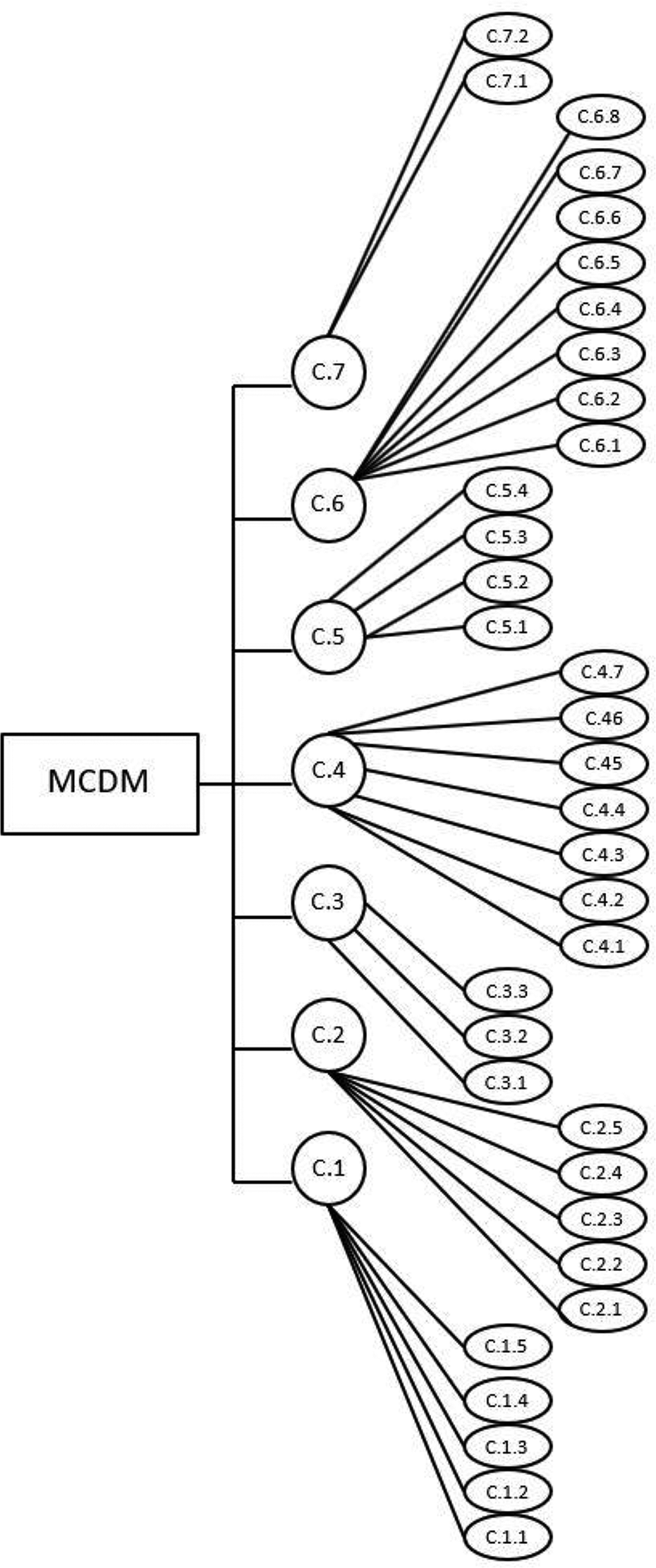
Multi-criteria decision-making model structure.
Specifically, the model has three main levels:
Macro-criteria. Sub-criteria. Metrics.
The first level corresponds to 7 macro-categories, divided by 2 to 8 sub-criteria, for a total of 34 second-level sub-categories. The third level corresponds to the metrics related to each sub-criterion, for a total of 41 metrics. Indeed, for each sub-criterion, several requirements on which the compiling company should provide desirable target data are defined. In Table 1 the 7 macro-categories are shown.
Model categories.

In the following sub-paragraphs, each model section is detailed.
Supply and sales logistics category
The macro-category “Supply and sales logistics,” detailed in Table 2, includes all the costs and timing information relating to the way the finished products, raw material, and spare parts are sourced and marketed. This category is divided into 5 sub-criteria, i.e. “Costs to export finish products,” “Costs to import raw materials and spare parts,” “Lead-time to export finish products,” “Lead-time to import raw materials and spare parts,” “Goods transport infrastructure access.” More in detail, the costs to export finish products depend on the company targeted market, while the costs to import raw materials and spare parts depend on the company supplier location. It is worth noticing, that those costs are a fundamental parameter to be considered when a company decide to locate its settlements in a foreign country, due to their high impact on the general costs. The lead time is another crucial aspect since it is related to the ease of reaching the targeted market. It can be divided into two terms: the time required to transport finish goods from the plant to the main distribution center or end customer and the time needed to transport the finish goods from the plant to the nearest distribution/logistic network node. The lead time is also involved in the import of raw materials and spare parts. Finally, goods transport infrastructure access indicates the desired goods transport preferred modality, i.e. sea, road, air, or rail. This aspect is fundamental when selecting the most suitable country due to its high impact on both time and cost.
Supply and sales logistics metrics unit of measurement (UM).

Qualification and cost of workforce category
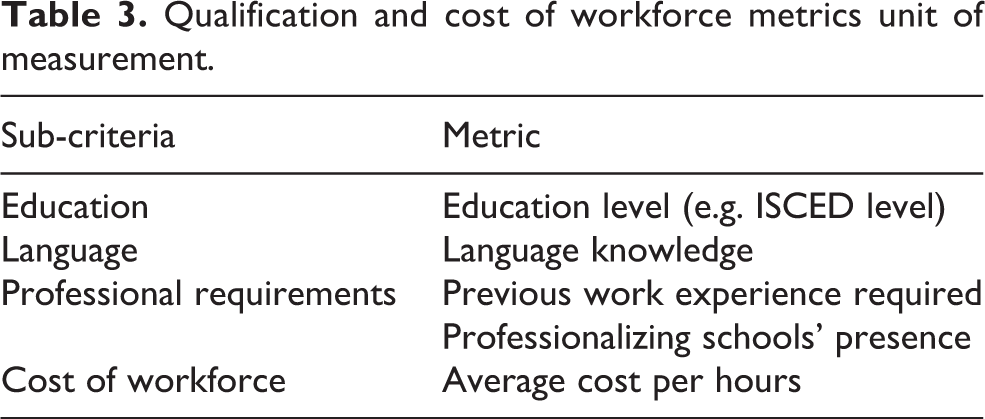
The macro-category “Qualification and cost of the workforce,” shown in Table 3, includes all the information regarding the required level of qualification of the workforce. Specifically, the workforce is referred to direct and indirect production workforce. The category is divided into 5 sub-criteria, i.e. “education,” “language,” “professional requirements,” “Cost of the specialized workforce,” “Cost of the non-specialized workforce.” The education category is referred to the education level required by the company to perform the job, highly depending on the type of tasks that should be performed. The second “sub-criteria” is linked to the language that the employee should know. Usually, the choice is between the English language and the local one. The third “sub-criterium” is referred to the professional requirements. It is known that the evaluation of the professional level required strictly depends on the industrial sector, and it is a key driver when evaluating the most suitable background on which to locate a new manufacturing plant. The fourth and fifth “sub-criterium” includes information regarding the cost of the workforce. Specifically, on the one hand, there is the cost related to a specialized workforce, on the other hand, there is the cost related to a non-specialized workforce. The cost of the labor force remains one of the main drivers that strategically guides the company to invest in developing countries, and it should be considered in the model with a high level of attention.
Qualification and cost of workforce metrics unit of measurement.
Demographic features category
The macro-category “Demographic features,” detailed in Table 4, includes all the information regarding the required workforce features. The category is divided into 3 sub-criteria, i.e. “age,” “family unit composition” and “gender.” Each company, depending on the industrial sectors, has different requirements in terms of workforce age or gender composition. In addition, being some sector more female workforce oriented than other, also the average number of daughters/sons for a single-family unit should be considered. Indeed, the number of children per family average affects the motherhood needed time and the time needed for parents to care for their children. All those indications are useful to analyze if the workforce requirements march with the availability of the country.
Demographic features metrics unit of measurement.

Environmental and territory conditions category
The macro-category “Environmental and territory conditions,” shown in Table 5, includes the climatic characteristics of the territory that could considerably influence the work and finished product costs and quality, i.e. temperature, humidity, precipitation, air quality, water resources quality, water resources accessibility, and natural raw material resources accessibility. Specifically, temperature and humidity can affect both the quality of the finished product, during the process and the storage phases, both the quality of the employees’ work. Settling in a territory characterized by thermo-hygrometric conditions far from targeted value can significantly impact the air conditioning-related costs affecting the industry economic performance. The frequency of precipitation can be both a direct and indirect industrial process requirement. In fact, for example, a food company that produces rice may require high-frequency rainfall, while other industries may prefer low-frequency rainfall due to its impacts on ease of transport and time required to reach the workplace. Air quality is a requirement that may be necessary for industries that have to guarantee finished product high quality, as for example, for food or pharmaceutical industries. As for air quality, water purity is a factor that impacts many industrial types, especially those that use water to produce goods in close contact with the human body (e.g. food company, a pharmaceutical company, etc.). Most industrial sectors are neither able nor interested in providing chemical requirements for the water quality, but simple information such as potability or the possibility of receiving filtered water is required. The water natural sources accessibility is important for those companies that decide to settle in areas not well served by aqueducts. In this case, it may be necessary to rely on natural sources of water, whose distance must be known.
Environmental conditions metrics unit of measurement.

The territory altitude metric also affects the accessibility of water resources. Indeed, the height of the territory can have an impact on the facility and cost of water extraction. Finally, as highlighted from the literature analysis, a private company decides to establish its production site in a certain territory mainly based on the resources availability. Resources can come from both natural raw materials and suppliers that are already operating in the territory. Among the natural raw material resources, a company may require the presence of solid hydrocarbons, gaseous hydrocarbons, liquid hydrocarbons, metallic, non-natural chemicals, natural chemicals, plastics, ceramics, textile fibers, wood, glass, agricultural, animals, and others.
Technology and logistic supplier category
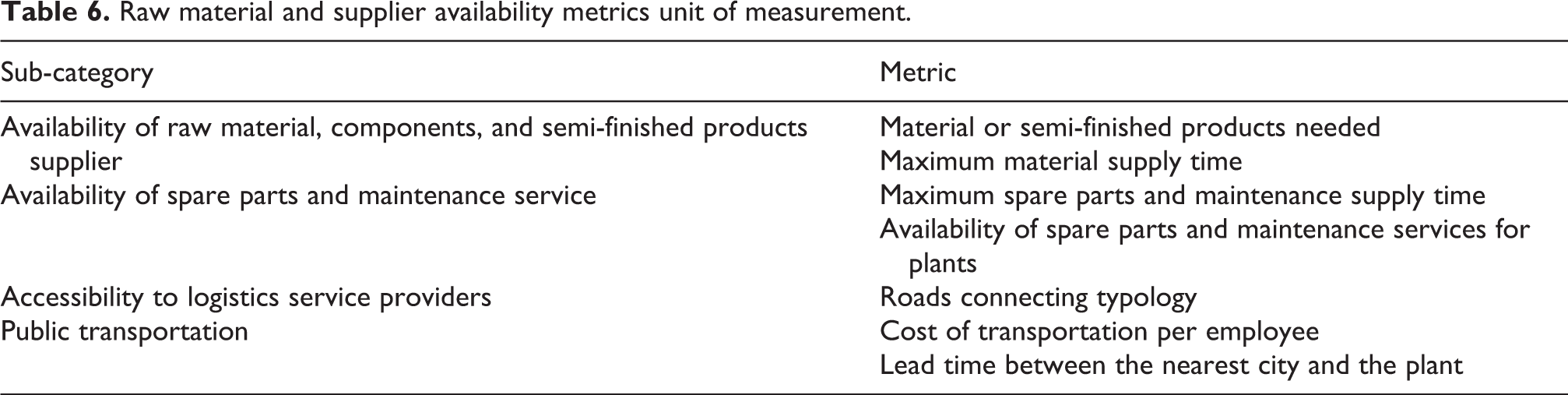
Another crucial aspect that should be considered when a company decides to establish its production site in a foreign country is the “technology and logistic suppliers” availability, completely detailed in Table 6. Regarding the availability of raw material, components, and semi-finished products supplier, the material or semi-finished products supplier needed, besides the maximum material supply time to receive them, should be investigated. Moreover, the logistic area concerns two sub-categories that include all the information related to the transport, both of goods, before arrival at the main distribution/logistic network node, and of people. The logistics service access is related to the road typology, which can be high-speed roads, asphalted roads, or not asphalted local roads. The roads can be used to transport raw materials from the supplier to the plant, to reach the outlet market, or to allow employees to reach the workplace. Also, the quality and reliability of the public transport should be considered, affecting both time and costs spent by employee to reach the plant.
Raw material and supplier availability metrics unit of measurement.
Local infrastructure category
The macro-category “Local infrastructure” includes 8 sub-categories, all referring to the presence of infrastructures in the territory and shown in Table 7. Energy networks, gas distribution plants, water networks (e.g. aqueducts), hospitals, other industries presence, waste disposals, sewerage systems, and telecommunication services are the 8 “sub-categories.”
Local plant metrics unit of measurement.
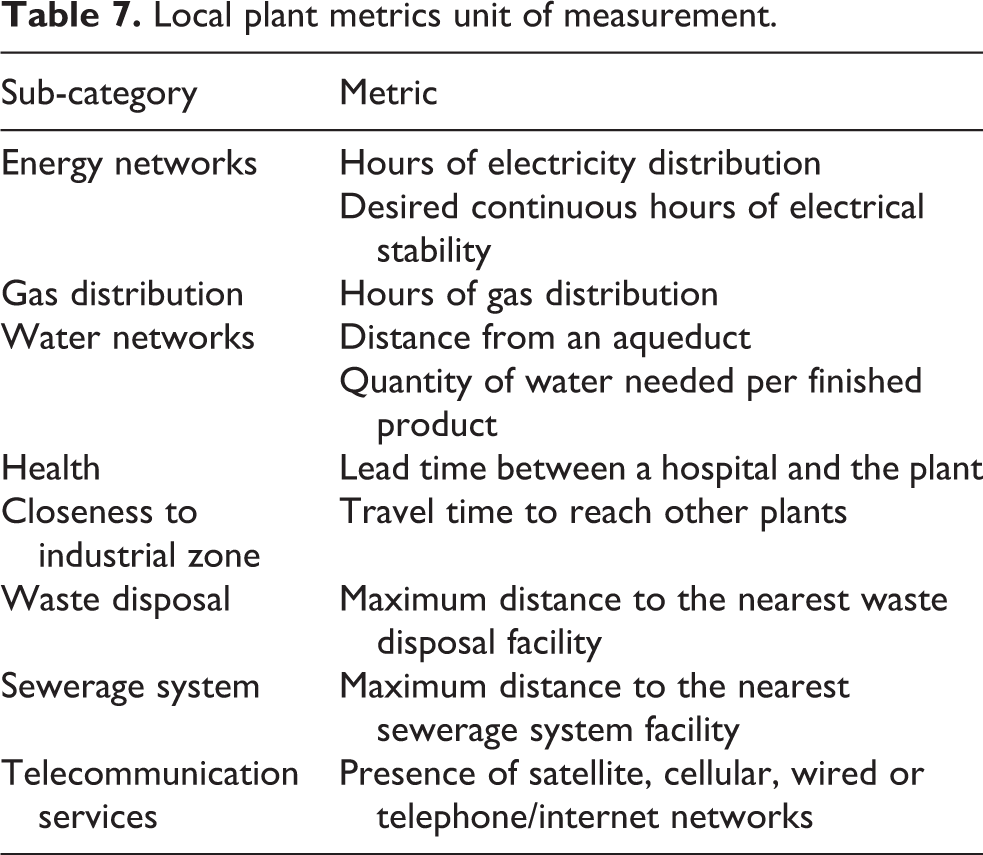
Within the sub-category “Energy networks,” both the level of services and the reliability of the system should be considered. It is recognized that a critical issue in some African countries is the lack of electricity stability, which could have a major impact on industrial extra-costs. For the same reason, the gas distribution network should be analyzed, in order to provide to the plant the required continuous hours of gas furniture. Moreover, also the sub-category “Water networks” should be considered in the analysis. Indeed, based on the industrial sector, this parameter could be more critical, impacting the location decision. The sub-category “Health” is related to the average distance between residential area and health building. This aspect, as better specified in the next section, has become more critical in a period of a health emergency. In addition, another criterion that should be considered in the MCDM is the “Closeness to the industrial zone.” This parameter highlights the presence of other companies in the area. The evaluation of these criteria strictly depends on the company strategy. Indeed, if some prefer to settle near other industries, achieving several advantages, such as the possibility to have an estimate of the future economic growth or to take advance of local infrastructures, other prefer to avoid high density industrial area, avoiding the competition on workers. Finally, waste disposal and sewerage system and the telematic network availability should be considered to support the performance level of the company.
Political aspects category
The last macro-criterion is related to “political aspects,” which concerns the political instability and the level of corruption. It is evident that the more those levels are low the more investors are attracted by the country.
Criteria assessment and evaluation
As mentioned above, the model has been discussed and validated by a primary multinational company that operates in the textile sector that recently settled a production site in Ethiopia. Through several interviews with two company representatives and other managers of a Think Tank, the model categories have been shared, refined, and integrated. Moreover, after validating the model structure, the textile company provided for each criterion and sub-criteria three types of information: the first is related to evaluating the category importance to understand which criteria should be considered necessary, preferable, and which or not required. All the details related to the category importance evaluation is shown in Table 8. Specifically, “N” stands for necessary, “P” stands for preferable, and “/” stands for not required. Among all the selected criteria for the interviewed company, 15 categories were preferred, 10 necessary, and 14 not required. More in detail, a criterion is necessary if the territories that do not meet it are excluded from the analysis; while a preferable one just represents an obstacle that can be overcome. Lastly, a criterion is not required if the characteristic value or presence is not relevant to the company. It is worth noting that some requirements can be unimportant for a company, while they can be necessary for another (e.g. the air quality criteria may not be fundamental for a textile company, but fundamental for a food or pharmaceutical company). The second information is related to the target values of the metrics. In this study, the target values of the cited textile company have been collected. It is worth noticing that all the information related to the target values that a company based in an African country requires can be useful for governments or other companies, to understand where they need to improve. Additionally, metrics values are crucial information for developing gap analysis. Future research may focus on developing a map of African territories, highlighting the gap between the target and the actual value. The third and the last information concerns those parameters that changed due to the COVID-19 health emergency. Specifically, above the 34 sub-criteria that authors have analyzed, 17 of them have been impacted during the COVID-19 emergency. The details of the 17 categories that COVID-19 has impacted will be highlighted inside the discussion paragraph and in Figure 3. Table 8 shows all the macro-criteria, sub-criteria with the related importance, and the metrics with the associated target values collected through interviews with a company already operating in Ethiopia.
Importance and target value for the analyzed textile company.

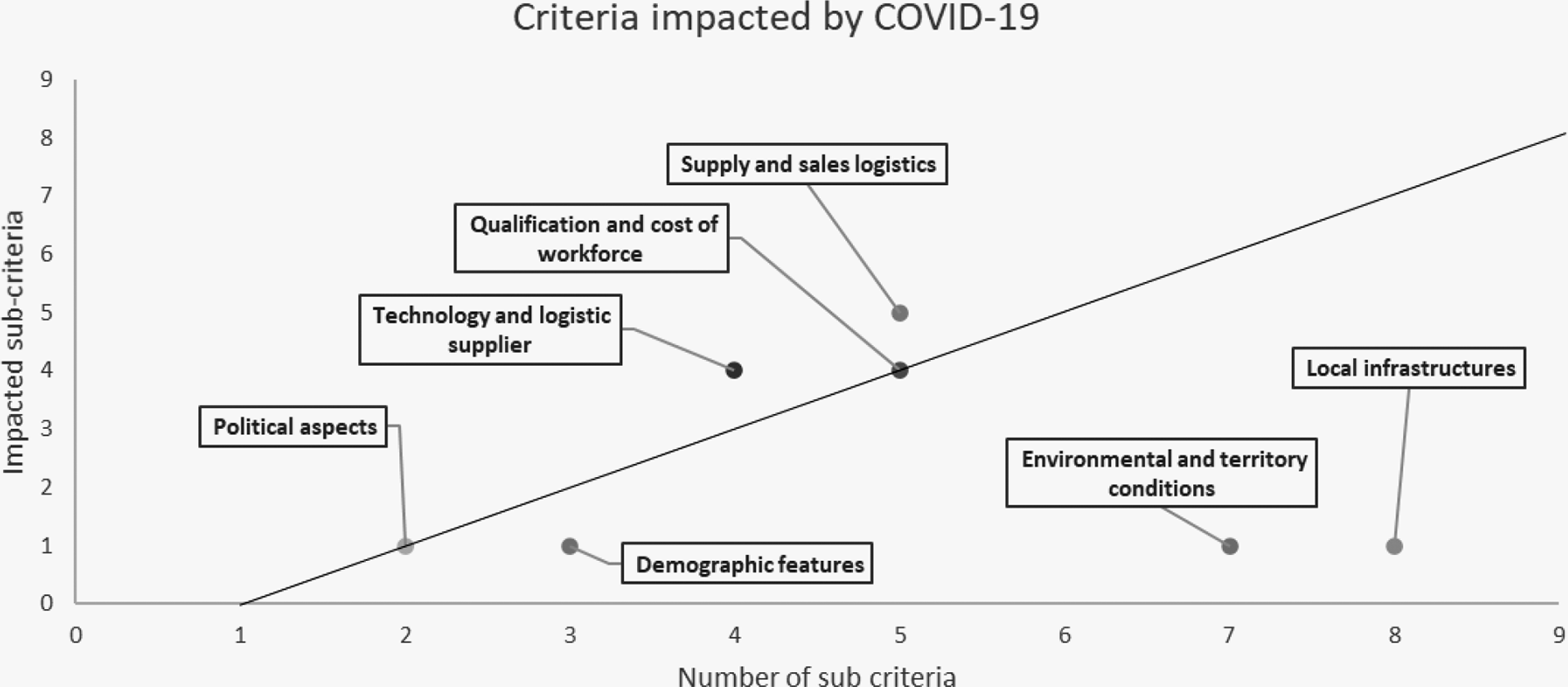
Most impacted criteria by COVID-19.
It is interesting to consider why the company assessed some criteria necessary, others preferable, and others not required. First, the textile company mentioned to strictly consider only those countries duty-free, specifying that the cost of exporting and importing would have a high and uncontrollable impact on costs. The cost of a non-specialized workforce and the availability of raw material, components, and semi-finished products suppliers are also considered necessary as the benefits and strengths the company looks for in a developing country. In addition, access to good infrastructure and access to electricity for at least 8–10 hours a day is also necessary. Another interesting aspect is related to the proximity to industrial areas: in fact, the strategic choices of the interviewed company force it to settle far from industrial areas to avoid that its employees easily increase turnover looking for higher salaries in nearby industries. It is also interesting to specify that the company has no interest in water networks. In fact, it prefers to dig a well, which can be used by the whole community and for the production process. In this way, the company is not dependent on the water usage limits, and it can settle away from industrial areas as specified above. Hence the preference for flat land to extract water more efficiently and at a lower cost. In the next section, a discussion about the results will be provided.
The general impact of COVID-19 on macro-criteria
In this section, all the criteria that the pandemic has negatively impacted are reported. More in detail, the experts have highlighted the factors that have changed during the pandemic in Africa based on their production experience in Ethiopia. It is worth specifying that the evaluation of the criteria for the company did not change during the pandemic. This analysis only highlights the territory criteria that have been impacted during the pandemic. As a result, fewer countries met the company’s requirements during the pandemic. Specifically, in the following chart, the 7 macro-categories are represented. The horizontal axis represents the total number of sub-criteria of each macro-category, and the vertical one shows the corresponding number of sub-criteria that the COVID-19 has impacted. As a result, the top left triangle contains the mainly impacted criteria. As it is possible to see in Figure 3 the most impacted macro-criteria are “Supply and sales logistics” and “Technology and logistic supplier.”
The sub-criteria impacted by COVID-19 are reported in Table 9:
List of the most impacted criteria by COVID-19.

More in detail, the “Supply and sales logistics” area has been highly impacted because of the shipment transportation block that increases the lead time. Moreover, the taxes increased, influencing the commercialization costs. As a result, access to transport infrastructure also becomes limited under a global pandemic. Also, the “Technology and logistic supplier” has been impacted by the COVID-19. Particularly, the supplier’s availability represents one of the main problems in developing countries. During the pandemic, the situation has deteriorated even more. Indeed, the limitation or block of trade has reduced the material availability, both in terms of raw materials, components, spare parts, maintenance services, and logistics services. Also, public transportation has been affected due to lockdowns and limitations in the number of people in public transport. The cost of the specialized and non-specialized workforce has been negatively impacted. Indeed, operators have been entirely paid during all the lockdown period, despite the fact that they were not allowed to go to work. Education and professional requirements were impacted as people were prevented from attending schools and courses.
On the other hand, the other criteria have been less impacted by COVID-19. Indeed, “Demographic features” have been impacted just for the family unit composition. Many families being confined to their homes without access to medical care that prevents pregnancies have seen their family numbers increase. Moreover, “Environmental and territory conditions” have been impacted by air quality, which undoubtedly, as a virus is circulating, forces more attention. Besides, “Local infrastructure” has been impacted by the lacking healthcare system. Finally, “Political aspects” have been impacted because of political instability that has been affected by a worldwide pandemic.
COVID-19 impact on “Supply and sales logistic” in Mauritius and Ghana
The purpose of this section is to show how, based on the application of an MCDM methodology, it is possible to evaluate the variations of countries’ performance after the pandemic. Indeed, the considered criteria related to the “Supply and sales logistic” have been negatively impacted by the pandemic and the forecast impacts have been evaluated by World Bank and UNCTAD (Figure 4). Those variations have worsened the countries features, increasing both cost and time of commerce and reducing the level of access to big infrastructures. Those criteria have specific weights, which the above-mentioned TC company has assigned.

Level of COVID-19 impact.
More in detail, the performance index has been evaluated with a hybrid approach of AHP-TOPSIS. Not being the core of this paper, the used methodology is discussed in Appendix 1.
It should be noted that the performance indicator takes into considerations all the above-presented sub-criteria and evaluate a country based on specific indicators provided by influential database. As a result, it outlines the level of performance of a country, also based on decision-maker evaluations of criteria weights.
As discussed in the previous section, the most impacted criteria by COVID-19 are the “Supply and sales logistic.” After a literature review, in Figure 4 a quantification of the impact is shown:
Although the method is given in Appendix 1, to fully understand the results, it is relevant to know that the following steps were followed: The textile company, by filling an AHP questionnaire, provided the weights of each criterion. Databases on the characteristics of the criteria in Ghana and Mauritius were extracted.
Using the TOPSIS methodology, a matching between the company requirements and the country characteristics was carried out to provide a performance index as output.
The methodology has been used with both pre-pandemic and actual country values, considering the level of COVID-19 impact shown in Figure 4.
Starting from these assumptions, a comparison between the situation in Ghana and Mauritius is presented. As it is possible to see in Table 10, the two countries had different values before the pandemic situation. Specifically, the cost and time of export and import in Ghana were consistently higher than in Mauritius.
“Supply and sales logistic” data for Ghana and Mauritius.
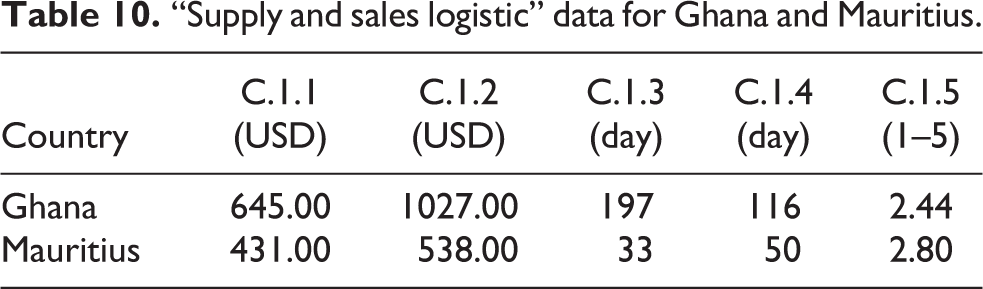
Before COVID-19, Ghana had a performance index related to the “Supply and sales logistic” of 69%, while Mauritius of 87%. Increasing the cost and time and reducing the accessibility level to local infrastructure shows that the Ghana index decreases by 13% while for Mauritius, it decreases only by 9%, as shown in Figure 5.

Comparison between Ghana and Mauritius.
Based on these data, it seems clear that the impact is higher in Ghana, which has a worst situation before the COVID-19 pandemic.
Conclusion and future works
In Africa, the manufacturing value-added grows slowly, and FDI in the so-called light manufacturing remains low. The COVID-19 crisis has worsened the situation, negatively affecting the slow progress in developing countries. Beyond all the variables, which have always discouraged manufacturing development in those countries, the high risk of investments is one of the main points on which researchers and practitioners are paying attention. Here, the choice of location is one of the most crucial and complex decisions, which highly affect the cost and benefits of corporate operations. This research aims to propose a multi-criteria decision-making (MCDM) model for supporting investors who aspire to expand their business in a foreign country in the location selection. In this field, academic research should strongly support decision-makers, investigating organization requirements and countries’ features. These approaches underlie the promotion of private investment in the manufacturing sector, which substantially impacts countries’ economic and social growth. This paper moves a further step in this direction, providing key information on the impact of COVID-19 on the presented criteria.
It seems clear, therefore, that the research presents several benefits. Firstly, it provides a clear guide on the main criteria used for choosing the adequate territory for developing an industrial settlement. This guide could be extremely useful for investors to quantitatively evaluate the most suitable location by comparing different countries. Indeed, the process could help excluding regions where the conditions are too far from the specific sector requirements, reducing the investment risk. Secondly, this work provides a methodology to identify those territories that have been mainly impacted by the COVID-19, under the cited industrial point of view, to help local governments identify the most appropriate mitigation strategies to be implemented.
Although this paper positively contributes to the literature in this field, this study has several limitations that provide opportunities for future works. First, the presented analysis is based on general evaluations of the pandemic impacts that could significantly change based on region and sector. Moreover, results are based on the criteria weights evaluation provided by a textile expert. In future studies, the analysis will also be applied considering other sectors. Secondly, the country performance variation is shown only on the “Supply and sales logistic,” not providing a general overview of the pandemic’s global effects. In conclusion, future research will address the following point: an evaluation of the pandemic effects on each considered criterion, an assessment of the performance variation before and after COVID-19 for each African country, and a comparison of results for a set of different sectors.
Footnotes
Declaration of conflicting interests
The author(s) declared no potential conflicts of interest with respect to the research, authorship, and/or publication of this article.
Funding
The author(s) received no financial support for the research, authorship, and/or publication of this article.

Appendix 1: Methodology to evaluate the country performance index
The methodology used to evaluate Ghana and Mauritius performance index is presented in the Figure 1A.
The approach is divided in main steps:
After the definition of all the criteria involved in the location selection choice, a key indicator has been chosen for each sub-criteria; All data related to each indicator have been extracted by official database (World Bank). Only data related to African countries have been selected and standardize; The Analytical Hierarchy Process (AHP) has been used to collect criteria weights; A nxm matrix has been defined, where n is the number of criteria and m the considered African countries; The k-means technique has been used for alternatives which have missing data, evaluating the optimal number of clusters with the Silhouette method; The TOPSIS methodology has been applied to evaluate and rank the alternatives; Only alternatives with a coverage data higher than 75% have been considered for the analysis.