



Abstract
Social and emotional learning (SEL) research has largely prioritised Western approaches, leaving gaps in understanding Indigenous practices. This mixed-methods study surveyed 310 early childhood teachers across Aotearoa New Zealand to examine how they support SEL, particularly through drawing on the richness of Māori cultural values and approaches. Data were collected via Likert-scale items and open-ended questions, analysed using Braun and Clarke’s thematic analysis and the He Awa Whiria framework. Findings reveal a movement toward bicultural SEL practices grounded in Māori and Western knowledge streams. Teachers demonstrate this shift through tuākana-tēina relationships, pūrākau (traditional narratives), and Māori language to foster SEL. While confidence is still developing, teachers increasingly view Māori approaches as fundamental rather than supplementary. These insights highlight teacher practices that support children’s SEL and promote the bicultural vision of Te Whāriki, providing encouragement for teachers and guidance for professional development that fosters culturally grounded SEL.
Introduction
The intricate root structure of the kahikatea tree provides a powerful metaphor for social and emotional learning (SEL) for the youngest tamariki (children) in Aotearoa (New Zealand). As one early childhood (EC) teacher explained: Te tū o te uru kahikatea (the way the kahikatea grows and supports itself)... valuing each other’s contributions... valuing, encouraging and uplifting the mana and tapu of each child so that they can then see that mana and tapu in others. Bringing tamariki in to help and support others as a way of making amends. Wānaka (bringing tamariki in to discuss what has happened or what could happen, and find ways to move forward) [R86].
This rich Māori (Indigenous people of Aotearoa) wisdom captures what has long been missing from our approach to SEL in early learning: braiding the interconnection of knowledge and culture. While Western approaches continue to dominate our educational landscape (Williams et al., 2023), the metaphor of the kahikatea tree reminds us that strong SEL foundations draw strength from the Māori culture to build our collective knowledge.
Research and practice in early childhood education (ECE) have tended to privilege Western pedagogical approaches, positioning Indigenous methods as additional or ‘nice to do’ rather than foundational (Ritchie & Rau, 2008). This tendency has contributed to a persistent gap in research and practice regarding Indigenous approaches to SEL. (Barnes & McCallops, 2019; Macfarlane et al., 2017). Although there is growing exploration of Māori approaches to assessment (Rameka, 2013; Tamati, 2021), the subsequent practice of explicitly supporting SEL within EC has received limited attention. These gaps highlight the need to support teachers in intentionally embedding bicultural approaches to foster SEL in early childhood education.
This article intentionally flips this narrative by reporting on a study that examines how ECE teachers in Aotearoa support SEL and draw on the richness of the Māori culture as a foundation for promoting young children’s SEL. It challenges prevailing narratives by providing examples of how teachers honour the dual cultural heritage and traditions foregrounded in Te Tiriti o Waitangi (Treaty of Waitangi) for all children. It also exposes implementation gaps in bicultural SEL practices, indicating where further development is needed. It explores the perspectives and practices of n = 310 EC teachers throughout Aotearoa, capturing both quantitative and qualitative insights into bicultural practices. Exploring their practices and insights enhances understanding of the opportunities and challenges in applying authentic bicultural experiences and practices in accordance with the New Zealand Teaching Standards and Te Whāriki that support SEL. It also highlights how teachers intentionally draw on Māori traditions and pedagogy alongside Western approaches.
Context
Te Tiriti o Waitangi and Te Whāriki
In Aotearoa, Te Tiriti o Waitangi is the foundational partnership agreement between the indigenous Māori and the Crown. The New Zealand teaching standards require teachers to uphold this partnership by designing culturally responsive learning and curricula that reflect its principles and bicultural foundations, including te reo Māori and tikanga Māori. These standards have currently been revised for implementation across 2026 and 2027, with Standard 1: Te Tiriti o Waitangi now placed at the centre, forming the foundation upon which all other standards are built. Honouring Te Tiriti o Waitangi in early learning requires positioning Māori knowledge systems as unique and self-determining, rather than as derivatives of Western approaches.
Te Whāriki, New Zealand’s national EC curriculum framework (Ministry of Education, 2017), is recognised for its bicultural framing. It emphasises teachers recognising children’s identity, language, and culture, and envisions that “all children should be given the opportunity to develop knowledge and understanding of the cultural heritages of both partners to te Tiriti o Waitangi,” (Ministry of Education, 2017, p. 69). Although internationally recognised as the first bicultural EC curriculum in the 1990s, Te Whāriki still encounters implementation challenges, with Western pedagogical approaches continuing to dominate (Williams et al., 2023). This persistent dissonance between curriculum aspirations and teacher practice widens the gap between the bicultural vision and enduring monocultural realities.
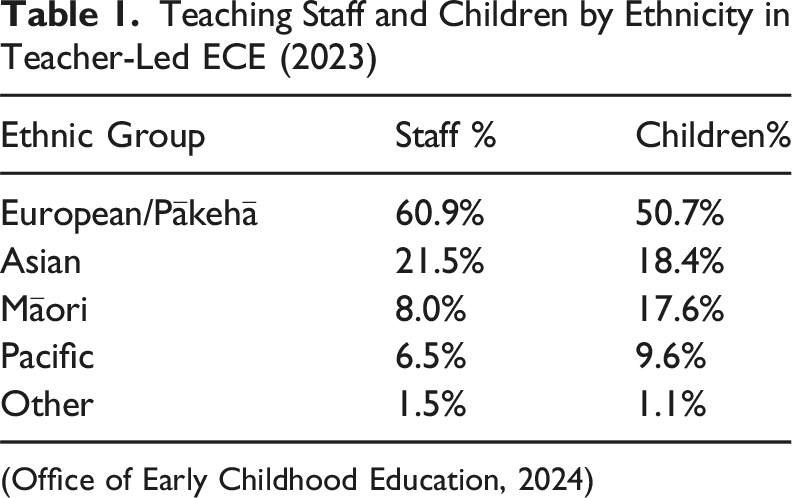
Diverse Populations
Teaching Staff and Children by Ethnicity in Teacher-Led ECE (2023)
Literature
Research consistently demonstrates the importance of SEL in establishing essential foundations in children’s lives, highlighting strong connections between well-developed social and emotional skills and positive life outcomes (Goodman et al., 2015; Poulton et al., 2015). It substantiates that young children's ability to manage and communicate emotions specifically contributes to their success in forming and sustaining positive social relationships (Blewitt et al., 2021; Denham, 2023).
While global frameworks such as CASEL outline competencies for SEL, this study does not adopt these models. Instead, it focuses on bicultural approaches grounded in Te Whāriki and Māori epistemologies, recognising that Western frameworks often overlook Indigenous perspectives.
SEL encompasses numerous interconnected concepts that influence each other (Palaiologou, 2021). Social competence and emotional competence represent two distinct yet inseparable concepts; effective interactions with others (Fabes et al., 2006) and understanding and regulating emotions (Denham, 2023). Social competence serves as the “behavioural manifestation” (Campbell et al., 2016, p. 20) of emotional and regulatory competencies, meaning that effective social interaction depends on emotional skills. Emotions serve as valuable social signals that facilitate interactions; for instance, smiling at a child who approaches to play can signal a warm invitation.
SEL encompasses children’s developing ability to build relationships, manage emotions appropriately within their cultural context, and participate confidently in their learning environment (Yates et al., 2008). However, SEL approaches are often missing this central cultural dimension (Barnes & McCallops, 2019; Macfarlane et al., 2017). Culture is the lifeblood of people, shaped through the earliest experiences and defining how children learn, understand, and interact in the world. Te Whāriki emphasises teachers’ recognition of children’s identity, language, and culture, building on what children bring with them (Ministry of Education, 2017). For Māori, this includes whakapapa (genealogy), whānau (extended family) and iwi (tribe). Understanding whakapapa and the inherent mana (status, authority) of children is crucial to Māori understandings of well-being and development (Rameka et al., 2022; Webber & Macfarlane, 2022).
Kaupapa Māori approaches, grounded in Māori epistemology and ontology, respect Māori values, understandings, and behaviours as normative (Rameka, 2013; G. Smith, 1992). This perspective affirms the foundation of Māori cultural knowledge and approaches in teaching and learning. Applied to SEL, these principles strengthen whanaungatanga (relationships), manaakitanga (care), and holistic wellbeing (Macfarlane et al., 2017). Te Whāriki reinforces this through its bicultural framework, which conceptualises human development across tinana, hinengaro, wairua, and whatumanawa, highlighting the interconnectedness of physical, cognitive, spiritual, and emotional growth.
Research highlights culture’s significant influence on child development and SEL, emphasising the crucial role that ECE environments play in fostering and applying culturally responsive SEL practices (Blewitt et al., 2020; Mahoney et al., 2021). Children’s SEL is shaped by their cultural identity and context, influencing how they draw upon social and emotional knowledge and skills (Barnes & McCallops, 2019). When ECE authentically reflect children’s cultural identities, they feel seen and supported, nurturing SEL, cultural confidence and belonging. For Māori children, culturally responsive SEL affirms identity and honours whakapapa and traditions (Macfarlane et al., 2017). Conversely, when SEL lacks cultural responsiveness, it can stress children from non-dominant cultures who feel pressured to adopt conflicting values (Cressey, 2019).
Teachers play a vital role in nurturing children’s social and emotional skills during the critical first five years, when foundations are laid for how children relate to the social world, developing their self-identity, sense of belonging, and capacity for learning (Blewitt et al., 2020; Epstein, 2014). Through intentional pedagogical approaches and nurturing relationships in warm, emotionally supportive environments, teachers can apply specific strategies that help children develop skills for forming friendships, understanding emotions, regulating responses, and engaging in social problem-solving (Blewitt et al., 2020; Denham, 2023; Epstein, 2014; McLaughlin et al., 2017).
Similarly, the important role of teachers in understanding their learners’ cultural backgrounds and valuing the knowledge and strengths they bring, as expressed in Ka Hikitia (Māori Education Strategy of New Zealand) (Ministry of Education, 2013), emphasises the centrality of identity, language, and culture in education. Considering the interconnected and holistic approach to teaching and learning in EC development, it is essential for teachers to recognise the importance of incorporating a bicultural perspective throughout all areas of the curriculum, integrating te reo Māori (Māori language) and tikanga Māori (Māori approaches) into all aspects of their SEL programme and practice (Chaffey et al., 2017; Macfarlane et al., 2017). Finally, “children are considered to be social beings located or embedded within cultural communities” (Williams et al., 2012, p. 25), highlighting the critical role of teachers in supporting SEL through warm, culturally responsive environments and experiences for the benefit of all children in Aotearoa, particularly Māori children.
Recent evidence from the Early Childhood Education Workforce report (NZEI Te Riu Roa, 2025) indicates a growing need for SEL support, with 96.1% of teachers reporting increased demand, up from 89% in 2023. In response, the New Zealand government has introduced initiatives such as the Positive Behaviour for Learning (PB4L) Incredible Years Teacher Programme and the ENGAGE programme, which aim to strengthen emotional and behavioural regulation, with funding expansion planned by 2027 (Luxton, 2023). However, these programmes are grounded in Western paradigms. Exploring how teachers draw upon mātauranga Māori (Māori knowledge) and kaupapa Māori (Māori philosophy) into SEL practices could enhance bicultural approaches locally and extend the scope of culturally responsive SEL research both locally and internationally.
Method
This study forms the foundation of a larger research project that explored three key areas of early childhood education: SEL, bicultural practices, and the critical role of teachers. This survey specifically examined how New Zealand early childhood teachers understand SEL and how they incorporate bicultural practices to support this learning, particularly drawing on Māori values, culture, and approaches.
Data Collection
An online survey was developed in Qualtrics and piloted with a university early childhood research team that included Māori and non-Māori participants. The final survey comprised two sections: (1) 15 Likert-scale items assessing teachers’ values, practices, confidence, intentionality, and frequency in supporting SEL from Western and Māori paradigms; and (2) 10 open-ended questions providing examples and contextual insights on SEL and bicultural approaches.
Ethical Considerations
This study received ethical approval from the Massey University Ethics Committee. It adhered to standard ethical protocols for voluntary participation, clear information, informed consent, confidentiality of responses, and protection of participants’ identities. Completing the questionnaire was voluntary and anonymous.
Participants
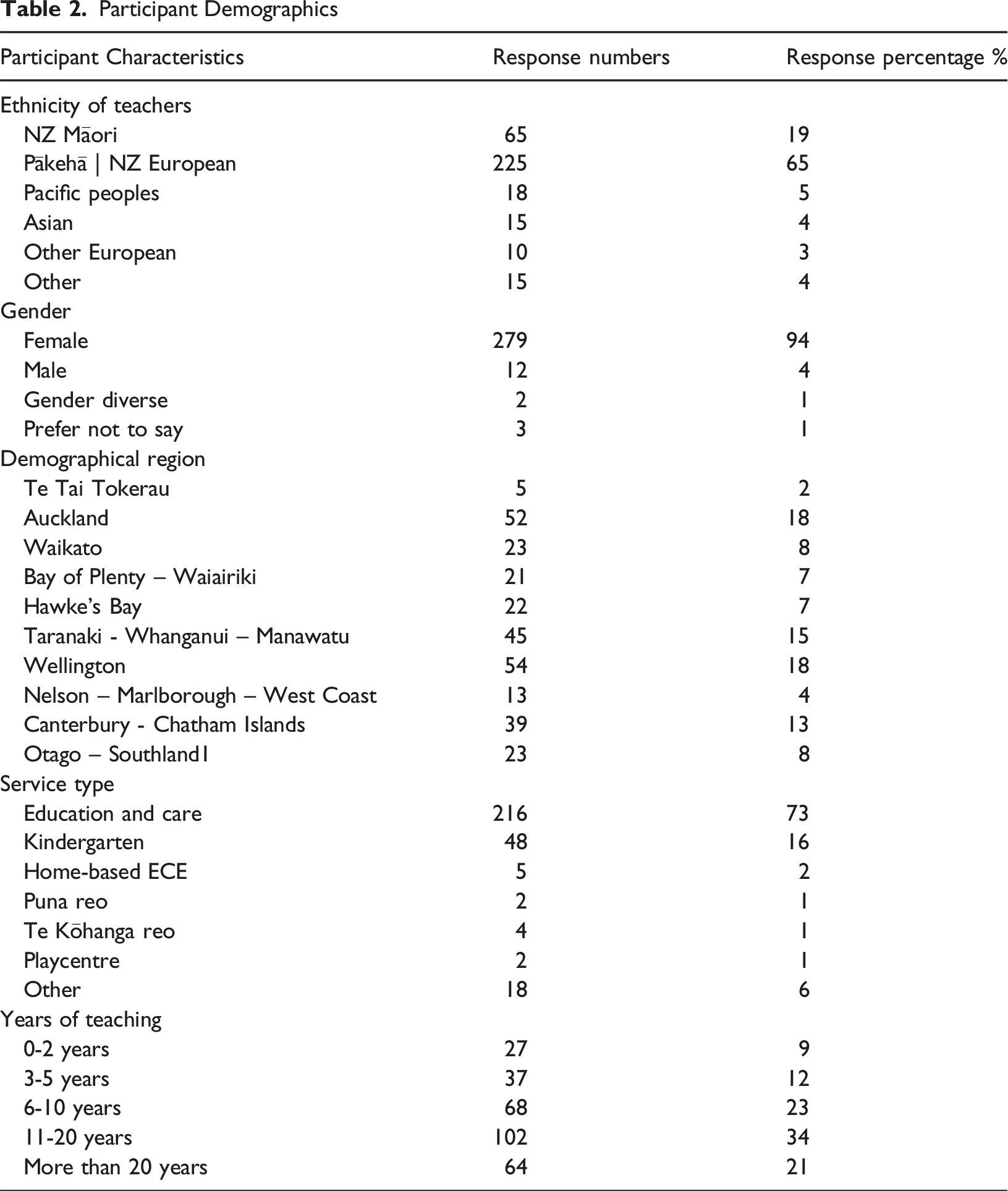
EC teachers were invited via a survey link distributed nationally through the Education Counts publicly available email list, the Education Gazette, and an approved education administration Facebook page. The link remained open for three weeks. (Education Counts, New Zealand’s official education statistics and research portal, and Education Gazette, the sector’s professional publication for news and resources).
Participant Demographics
Data Analysis
Descriptive statistics summarised Likert-scale responses on teachers’ values, priorities, and confidence in supporting SEL from a bicultural perspective. Qualitative data were analysed using Braun and Clarke (2006) six-phase inductive thematic analysis: familiarisation, coding, theme development, review, definition and naming, and reporting.
He Awa Whiria (braided rivers), a comprehensive Indigenous framework (Figure 1), provided an additional analytical lens. This Māori metaphor reflects biculturalism by braiding two distinct streams, te ao Māori knowledge, approaches, and understandings and Western streams, while maintaining their unique integrity (Macfarlane et al., 2015). The framework guided theme refinement to identify teachers’ SEL knowledge and practices through a bicultural lens. Quotations that best and most strongly represent the themes and people’s perspectives were selected for this publication. He awa whiria framework (Macfarlane et al., 2015)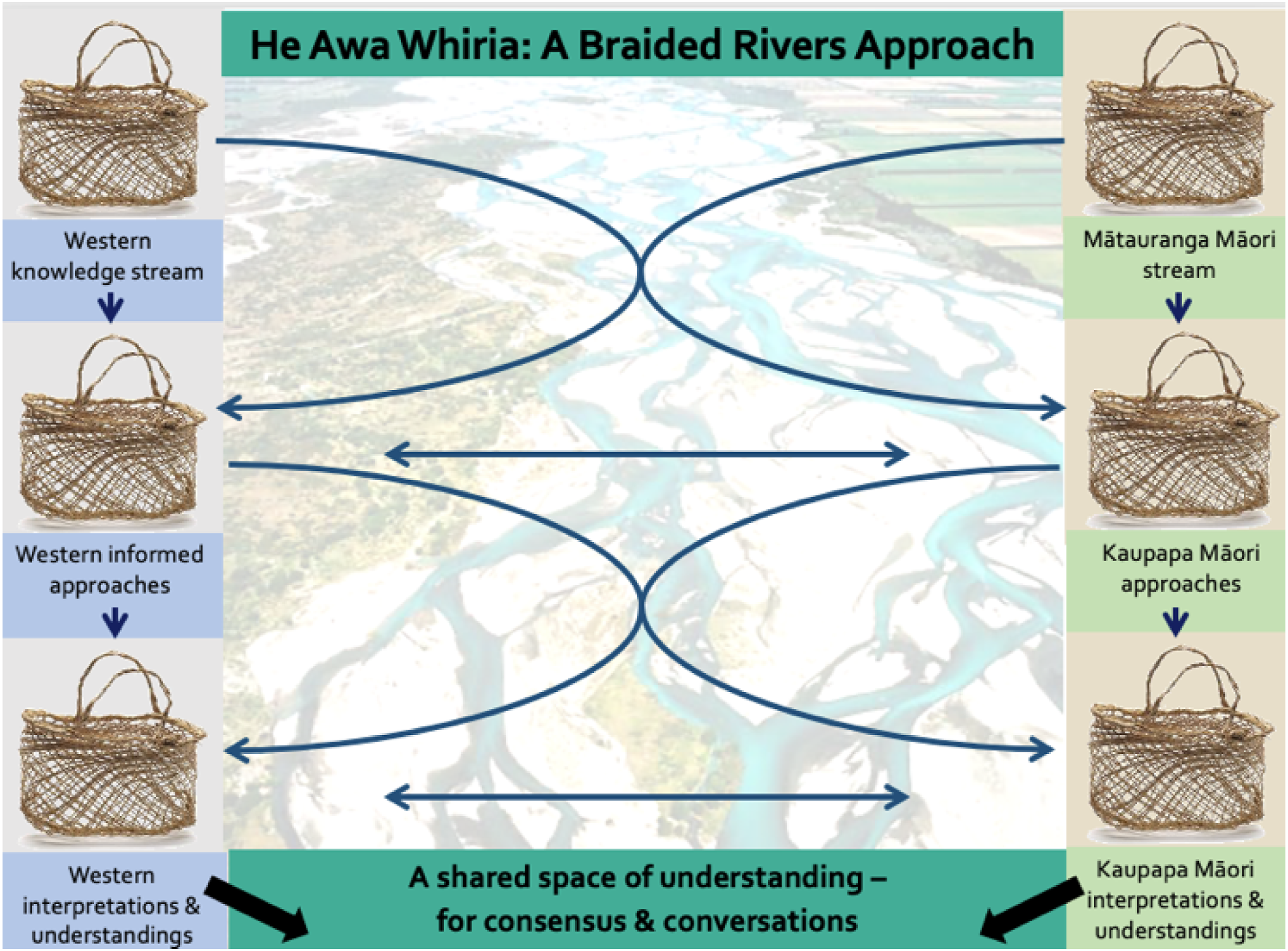
Findings
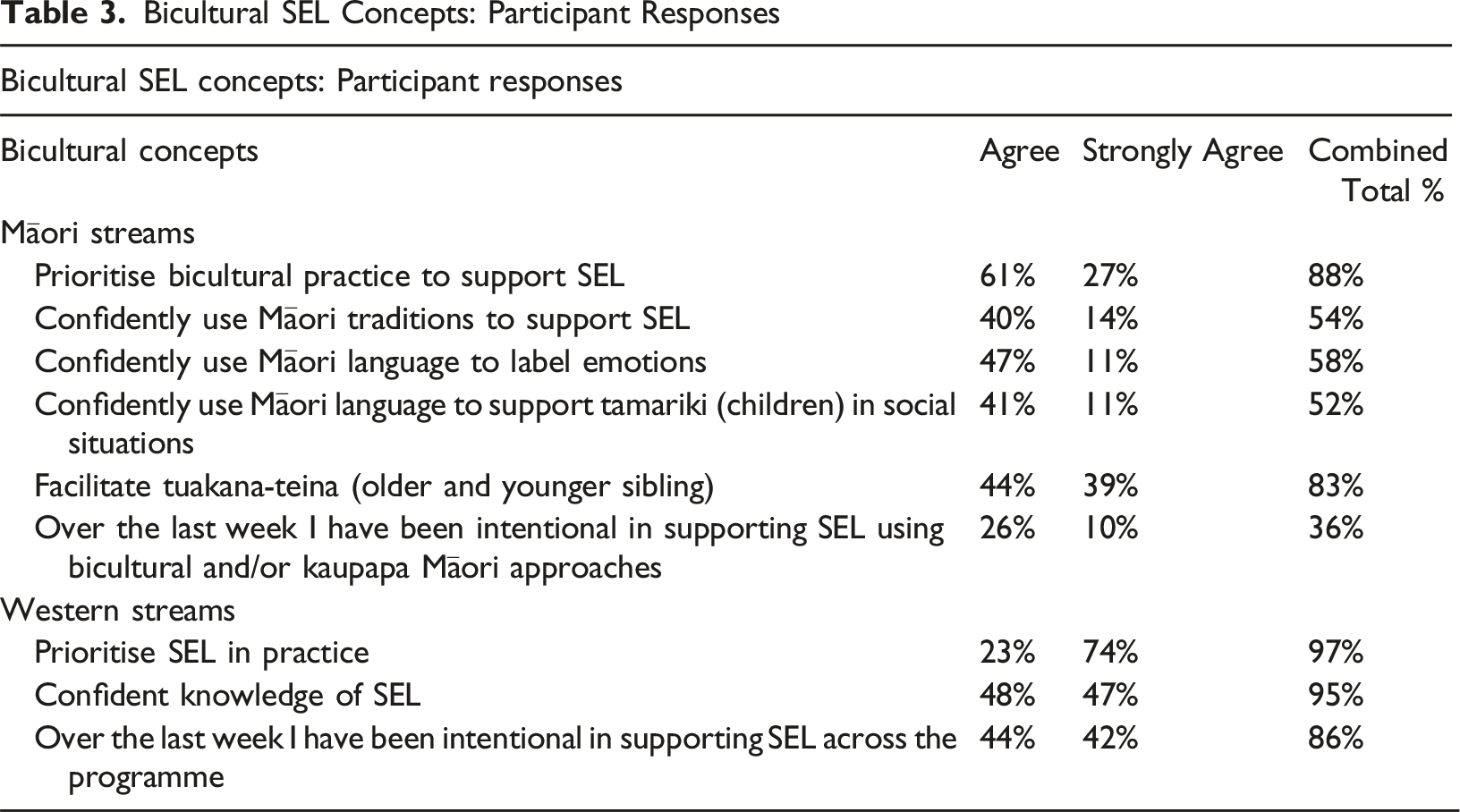
Bicultural SEL Concepts: Participant Responses
Teachers’ Value of SEL
Participants valued SEL from a bicultural perspective, strongly agreeing on prioritising SEL from both Western (97%) and kaupapa Māori (88%) paradigms. One participant expressed: “Using bicultural or kaupapa Māori practices are good for everyone, so when you start using them they become embedded in your practice” [R21].
Recognition of Māori language and practices to support SEL for all children in Aotearoa was emphasised. Another participant expressed commitment to equitable learning outcomes: “Te Tiriti of Waitangi underpins everything I do, including my approach to promoting social and emotional literacy learning” [R91].
Te reo Māori and SEL
Confidence in using te reo Māori to support SEL varied: 58% felt confident labelling emotions, and 52% felt confident supporting social situations. Teachers shared examples of Māori words for emotions, such as pōuri (sad) and pai (good/well), though the range was smaller than in English. Over 10% reported feeling ‘very confident’ using te reo Māori for SEL.
Examples show how te reo Māori and culturally grounded practices are seamlessly woven into teaching. One participant stated: “I will say calm your tinana and use the self-regulating karakia: hā ki roto, hā ki waho” [R30]. Here, the teacher incorporated Māori language and karakia (prayer), specifically hā ki roto, hā ki waho (‘breathing in and out’), to support regulation. A number of participants reported wanting to improve their general level of te reo Māori and their confidence to use it throughout the programme.
Māori Themes (Streams)
The key themes of effective kaupapa and tikanga Māori practices, for SEL: (1) Māori principles, beliefs and philosophy. (2) Connecting learning to Māori knowledge and place. (3) Tuākana-tēina as pedagogy.
Māori Principles, Beliefs, and Philosophy
Māori principles provided a strong foundation for supporting SEL, emphasising relationships and ways of being. One participant noted: “Whanaungatanga is central to our philosophy” [R23]. Other principles such as manaakitanga (hospitality, kindness)
Connecting Learning to Māori Knowledge and Place
SEL practices were holistic, reflected in Māori approaches that emphasise interconnectedness. Teachers incorporated pūrākau (traditional narratives), local stories, and waiata (songs) to support learning about emotions and problem-solving. Stories of Māui, a cultural hero, were popular for exploring dispositions related to knowing, being, and doing.
Participants highlighted that Māori concepts work best as connected practices rather than isolated activities. One explained: I use pūrākau to connect to situations, like how Māui is a problem solver, finding new ways of doing things. I use Papatūānuku [earth mother] to support regulation and grounding. We lie on the grass and talk about connecting to her for strength. When a tamaiti [child] is angry, I talk about Tāwhirimātea [god of wind/storms], how his anger created storms, then move to the gentle breeze [R106].
Others used Atua to unpack emotions, asking questions like: “Are you angry and want to stamp your feet like Rūaumoko [god of earthquakes/volcanoes]? Or do you need to make lots of noise like Tāwhirimātea does with wind?” [R104]
These approaches show how SEL becomes culturally relevant through everyday experiences, linking stories, Atua Māori (gods), and the natural environment to emotions and identity.
Tuākana-Tēina as Pedagogy
Tuākana-tēina, the traditional Māori concept where older or more experienced learners guide younger or less experienced ones, was widely implemented (83%). One participant shared: “We promote a Tuākana/Teina approach to learning, our older tamariki who are at home in the centre help teach our younger/new children” [R56]. This reciprocal approach reflects ako, where both tuākana and tēina learn together, with, from and about one another.
Western Themes (Streams)
Three Key Western Practices Supported SEL: (1) Relationship-based teaching. (2) Social and emotional literacy. (3) Interactive child-led teaching.
Relationship-Based Teaching
Teachers emphasised respectful teaching, building relational trust, and getting to know the learner and their whānau well as a foundation for SEL. One participant expressed: “The relationship is all! Loving, nurturing relationships with the tamariki are essential” [R46].
Interactive Child-Led Teaching
Teachers scaffolded SEL through play and child-led interactions: “Role modelling, providing the language to facilitate or scaffold positive and proactive interactions” [R36]. It involved teachers focusing on children’s interests and abilities, partnering with them in their learning, and using approaches that matched their situation and learning style, “treating children with respect, believing they have the skills” [R61], which are also strongly linked.
Social and Emotional Literacy
Teachers supported SEL by naming and discussing emotions: “Language - naming emotions, talking through problems/issues when they arrive” [R42].
Within this theme, books were frequently used to scaffold understanding and problem-solving as one participant explained: Using storybooks with a social and emotional theme to support open conversations and scaffold their understanding about perspective taking, understanding different emotions and how they might make our body feel as well as working out ways we can problem solve/work through social and emotional issues and circumstances in constructive ways [R164].
Implementation Challenges
While teachers valued SEL within both Western and Māori paradigms, a clear gap appeared in the reported use of Māori strategies. Although 86% of participants prioritised bicultural practices, only 36% reported using them regularly and intentionally. Confidence varied widely, with some teachers expressing uncertainty about the accuracy of te reo Māori and kaupapa Māori practices.
One participant noted, “I am not confident leading kaupapa Māori responses” [R104], while another shared, “I would definitely like to do better in this area, but not having the reo and studying by myself is challenging; not enough time, could definitely do with PD around this” [R7].
Concerns about cultural uncertainty also surfaced, including the pronunciation of te reo Māori and the correct use of tikanga concepts. This sense of ‘not knowing,’ combined with a desire to learn, was reflected in comments such as: “undertaking of Māori culture, and customs. What is ‘right’ and ‘wrong’” [R70]. This tension between wanting to incorporate bicultural elements and fearing cultural insensitivity emerged as a key factor influencing teachers’ confidence and practice.
Discussion
The Promise and Challenges of Bicultural SEL
This study revealed the promise and challenges of implementing bicultural SEL in early childhood. With 88% of participants prioritising bicultural practice, teachers are moving beyond superficial inclusion toward genuine valuing and appreciation, an encouraging contrast to US research where teachers “appeared to lack a conception of culturally relevant SEL” (Mahfouz et al., 2025, p. 410). These findings suggest teachers are evolving beyond superficial bicultural practice toward genuine valuing and appreciation, representing a fundamental shift.
Participants’ reflective responses showed growing critical consciousness about bicultural practice. One teacher emphasised the deeper purpose: “I think kaiako (teachers) should always aim to improve in this area as it is so important to our Māori children to know that their culture is valued at the centre” [R38]. This aligns with work arguing that bicultural SEL must underpin the programme so Māori children see their identities authentically reflected (Campbell & Gordon-Burns, 2017; Chaffey et al., 2017; Rameka, 2018; Skerrett & Ritchie, 2021). Sergiovanni’s (2005) ‘heart – head - hand’ framework captures this transformation: cognitive understanding (head) must be coupled with values and emotional connection (heart) to enable authentic practice (hand). As he notes, “change begins with us with our heart, head, and hands that drive our … practice” (p. 21).
A gap remains between values and confident implementation. Only 36% of participants reported frequently using Māori approaches intentionally, and many expressed uncertainty about Māori language pronunciation and using Māori tikanga correctly. This desire to know what is ‘right’ and ‘wrong’ suggests attitudinal commitment alone does not overcome historical complexities, an ongoing challenge in teacher education (Broadley et al., 2015; Williams et al., 2023).
Where confidence exists, braiding shows transformative potential. The teacher guiding children to “calm your tīnana” through the karakia “hā ki roto, hā ki waho” demonstrates how language and practices flow together, creating culturally grounded SEL where both streams keep their integrity while strengthening each other (Derby & Macfarlane, 2024; Gillon et al., 2024).
He Awa Whiria- Braiding Māori and Western SEL
To situate and make sense of these findings, this discussion draws on He Awa Whiria as a framework, a foundation that enables themes (streams) to be braided rather than merged, preserving the integrity of each knowledge system while exploring how they coexist. Using this framework, Māori and Western findings are braided with relevant literature to explore intersections, synergies, and differences. This fosters a mutually beneficial relationship that leverages the strengths of both Indigenous and Western SEL ideas (Derby & Macfarlane, 2024; Macfarlane et al., 2015). Three Māori themes: (1) Māori principles, beliefs, and philosophy; (2) connecting learning to Māori knowledge and place; (3) tuakana-tēina pedagogy, are considered alongside three Western themes: (1) relationship-based teaching; (2) social and emotional literacy; (3) interactive, child-led teaching, to identify what is working well, where gaps remain, and implications for enhancing SEL in ECE (see Figure 2). He Awa Whiria braiding Māori and Western SEL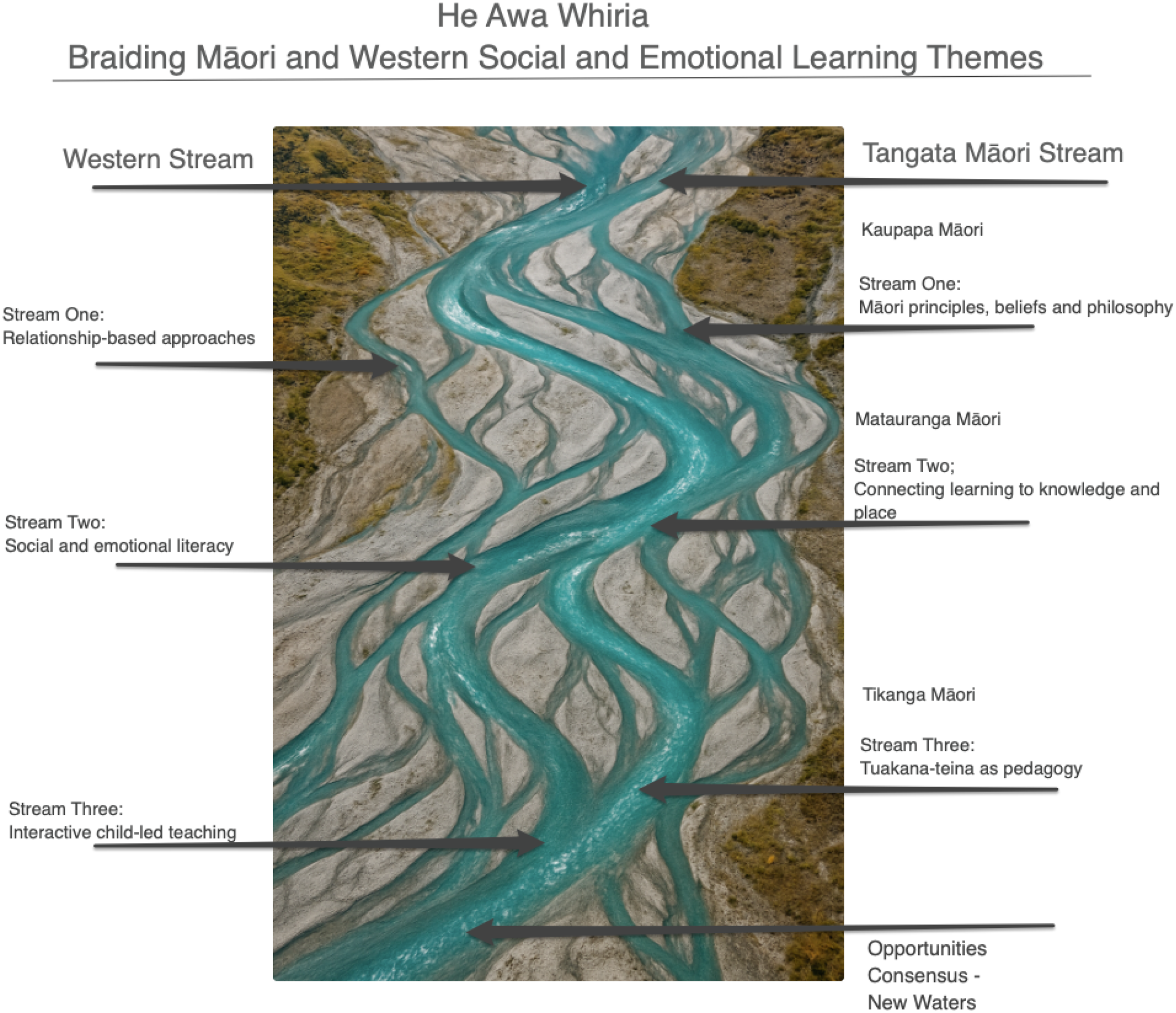
Braided Themes
Māori Principles, Beliefs and Philosophy and Relationship-Based Teaching
Participants affirmed that relationships are the foundation of effective SEL. As one teacher put it: “The relationship is all! Loving, nurturing relationships with the tamariki are essential” [R46]. This commitment is evident in Western relational pedagogy, respectful practice, trust, and knowing learners and their whānau (Blewitt et al., 2021; McLaughlin et al., 2017), and in kaupapa Māori principles of whanaungatanga, manaakitanga, kaitiakitanga, and ako (Ministry of Education, 2011). Teachers described enacting these principles in everyday practice, such as greeting children and whānau with warmth, sharing kai, and ensuring care for the environment as part of learning.
Braiding reveals an important distinction: Western SEL often focuses on relationships as a means to individual learner success, while whanaungatanga operates from a fundamentally different worldview, grounded in whakapapa and connecting people, place, and spiritual worlds through collective, ongoing responsibility (Rameka, 2015). L. Smith (1992) positions kaupapa Māori as rooted in Māori epistemological worldviews, where Māori values, understandings, and behaviours are centred as natural and foundational rather than alternative perspectives. This expansive framing embeds learning within whānau and community networks and, as Macfarlane et al. (2017) noted, has “the potential to make positive gains for Indigenous students, and indeed all students” (p. 285). When teachers embrace this braided approach, relationships become both the means and the context for SEL, where connection itself is the learning, grounded in care, guardianship, and collective flourishing.
Connecting Learning to Māori Knowledge and Place with Social and Emotional Literacy
Teachers demonstrated emotional literacy practices, naming feelings, discussing perspectives, and problem-solving through play and stories. One teacher explained: “Language—naming emotions, talking through problems/issues when they arise” [R42]. Another noted how stories “support open conversations and scaffold understanding about perspective taking, understanding different emotions… and working out ways we can problem solve” [R164].
Braiding becomes transformative when teachers move beyond translation to cultural grounding. While Western approaches often use picture books for SEL, pūrākau, particularly Māui narratives, offer culturally embedded ways of understanding emotions within traditional and ancestral (whakapapa) knowledge systems. Pūrākau, as storytelling, remains a cornerstone of Māori culture, shaping worldviews and identities (Cliffe-Tautari, 2020). As one participant shared: “I use pūrākau to connect to situations, like how Māui is a problem solver… I use Papatūānuku to support regulation and grounding… When a tamaiti is angry, I talk about Tāwhirimātea, how his anger created storms, then move to the gentle breeze” [R106]. Others similarly asked: “Are you angry and want to stamp your feet like Rūaumoko? Or do you need to make lots of noise like Tāwhirimātea does with wind?” [R104].
These practices link emotions to Atua Māori and the natural environment, integrating regulation with spiritual and place-based relationships (Derby, 2023; Rameka, 2013; Rogoff, 2003). Here, the Western focus on emotional regulation expands through Māori understandings of spiritual connection and environmental relationships, creating SEL practices that honour both individual growth and collective responsibility to people, place, and whakapapa.
Reciprocal Learning Partnerships, Child-Led Teaching and Tuakana-Teina Pedagogy
Bicultural SEL was most evident when teachers embraced learning as a reciprocal partnership, with 83% reporting implementation of tuakana-teina relationships—the highest rate across all measured practices. This finding highlights genuine braiding, where tuakana-teina intersects meaningfully with Western pedagogy such as Vygotskian scaffolding (Royal-Tangaere, 1997; Vygotsky, 1978).
Western child-centred teaching involves following children’s lead through “role modelling, providing the language to facilitate or scaffold positive and proactive interactions” [R36] and “treating children with respect, believing they have skills” [R61]. When authentically braided with tuakana-teina pedagogy, these approaches shift from individual support strategies to what Royal-Tangaere (1997) identifies as a fundamental dynamic within whanaungatanga. One teacher explained: “We promote a tuakana-teina approach to learning; our older tamariki who are at home in the centre help teach our younger/new children” [R56]. Teachers described older tamariki (children) guiding peers during routines, sharing cultural knowledge, and supporting problem-solving, positioning tuakana-teina as core pedagogy rather than a cultural add-on.
This braiding recognises children’s inherent capacity for reciprocal learning while connecting tuakana-teina with broader Māori principles of collective responsibility and manaakitanga. Unlike Western models that often compartmentalise learning relationships, this approach creates what Rameka and Glasgow (2017) describe as a socialisation process requiring teachers to “step back” as facilitators, trusting “in children’s abilities, and to learn to care, support and be responsible through direct experiences” (p.31). While participants demonstrated confident implementation of tuakana-teina principles, future research could explore how scaffolding, modelling, and support are woven into these relationships, examining who takes leadership, when interactions occur, and how teachers facilitate authentic partnerships.
Limitations
Because data were self-reported, findings may reflect aspirations rather than practice. While the survey offered broad insights into bicultural SEL, teachers’ understanding and application of key concepts were unclear. Future research should purposively sample teachers with bicultural expertise to explore authentic interpretations of mātauranga Māori concepts (e.g., tuakana-teina, whanaungatanga, manaaki) and avoid Western appropriation. Observational and interview methods could reveal how and when strategies, such as pūrākau, books, coaching, and modelling are used. Examining practices by ethnic subgroup and tracking braided approaches over time would clarify cultural alignment and impacts on children’s SEL outcomes.
Implications for Strengthening Bicultural SEL
This study highlights positive attitudes and pedagogy, with teachers increasingly considering SEL from a bicultural perspective and drawing on practices that honour Māori culture. However, confidence and capability, particularly in te reo (Māori language) and tikanga (Māori approaches), remain areas for growth. Strengthening teacher education, access to reo, and place-based approaches, alongside strong community partnerships, will support authentic bicultural SEL and effective enactment of Te Whāriki.
Drawing on He Awa Whiria as a reflective tool has the potential to strengthen bicultural SEL as an intentional, embedded practice honouring both cultural streams. For example, teachers might ask: • In this SEL moment, how are both knowledge streams maintaining their integrity while strengthening each other? • What would authentic braiding look like here, rather than a cultural addition? • How am I enacting Te Whāriki as a truly bicultural curriculum that supports all children’s SEL?
These reflective questions position He Awa Whiria as a practical approach for embedding bicultural SEL in everyday teaching.
Conclusion
While Western knowledge remains dominant, shining a light on teachers’ intentional and authentic braiding of Māori language and approaches to support SEL offers hope for honouring Te Whāriki as a bicultural curriculum. This study demonstrates an emerging shift in ECE, with teachers’ dedication and commitment to move from a Western monocultural hierarchy towards braiding SEL with Māori ways of knowing, doing, and being. Despite implementation challenges, participants showed genuine commitment to transformation, prioritising Māori values as foundational rather than supplementary to SEL practice. This fundamental shift is evident with 36% of participants beginning to ground their practice in tikanga and kaupapa Māori principles, demonstrating authentic bicultural SEL through tuākana-tēina relationships, pūrākau, and social and emotional literacy.
Returning to the initial metaphor, the kahikatea tree’s roots symbolise resilience through interconnection. These trees grow together to strengthen the grove while maintaining unique identities. These findings demonstrate how Indigenous and Western knowledge streams can be supported by deep, interconnected foundations that emerge in bicultural practices that enhance SEL in ECE. The interwoven roots offer wisdom to embrace a truly braided approach to supporting children’s SEL in ways that could help realise the bicultural vision of Te Whāriki.
Footnotes

Funding
The authors received no financial support for the research, authorship, and/or publication of this article.
Declaration of Conflicting Interests
The authors declared no potential conflicts of interest with respect to the research, authorship, and/or publication of this article.