




Abstract
Oceans have significant renewable energy options to provide environmental friendly and clean energy. Technology for ocean energy systems and the feasibility for extraction of the same is an important area on which research is being focused worldwide. This article covers a detailed review of available tidal energy conversion technologies and case studies, with specific focus on tidal power potential in India. The proven option for tidal energy conversion is barraging. Recently, open-type turbine (usually known as tidal stream turbines) has been studied by several researchers and pilot demonstrations have been made. While conventional turbines of 10–20 MW rating are used in barrages, the application of tidal stream turbines of 0.5–2.0 MW has been demonstrated in water depths between 40 and 60 m. A new scale is proposed for categorizing the tidal energy potential in terms of tidal velocity and tidal range which could be used to categorize the potential sites and their ranking. A new systematic approach proposed for the assessment of tidal energy conversion potential can facilitate the suitability of either tidal stream energy or tidal barrage for a location. Within this, one could also decide the site could be developed as a major project or minor project. Therefore, the present work will be useful for engineers and decision makers in technology selection investment potential identification.
Keywords
Introduction
Renewable energy technologies are the need of the hour so as to serve as clean energy and thereby minimize the vast environmental impacts due to conventional energy technologies. On the other hand, several countries are committed to moving away from carbon emission. The World Energy Outlook (WEO, IEA-OES, 2008) has three main scenarios: “The Current Policies Scenario” (CPS), “The New Policies Scenario” (NPS), and the “450 parts per million of carbon dioxide equivalent” (ppm CO2 eq.). The NPS states the impact of existing policy commitments and the implementation of recently announced on the key energy demand, supply, trade, investment, and emissions trends in the period up to 2035. Figure 1 shows the shares of primary energy sources in global energy demand from the year 2010 to 2035. These shall be taken to be the immediate targets for energy regulation in terms of cutting the CO2 levels. As per these targets, the share of fossil fuels shall decrease from 81% to 63%. Thus, coal, oil, and gas will remain to serve as the major energy sources to cater to the world energy demand. However, renewable energy sources continue to increase from 13% to 27%, while nuclear energy will almost remain constant.
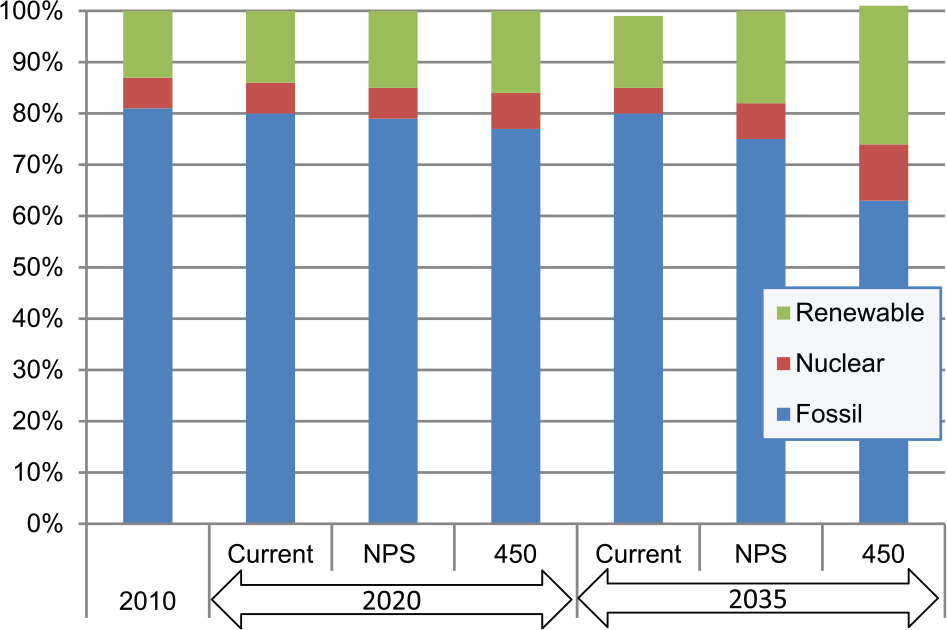
World Energy Outlook—key global projections of share of primary energy resources as per NPS scenario.
Oceans have significant renewable energy options to provide environmental friendly and clean energy. The ocean energy is a good replacement for conventional energy resources like fossil fuels which are on the verge of diminishing and are not environmental friendly. The technology for any ocean energy systems and its feasibility is an important area of active research over the last few years. In Asia and Africa, the need for development of marine renewable energy is even more important given the population and lengths of coastline. India has a long coastline of about 7000 km with abundance of natural, clean ocean energy that depends on technology for harvesting and efforts are put in since 1980s. The wave energy pilot plant in Vizhinjam, Kerala remains the only pilot study in India without significant breakthroughs in terms of structural optimization and power take-off (PTO) arrangements. A comprehensive picture on the efforts in India over the past few decades is captured in Figure 2. Among the different forms of energy from the oceans, tidal energy is one of the most promising that is considered herein. Conventionally, a barrage (dam) is used to convert tidal energy into electricity by storing and controlling the release of water to pass through the turbine generators (Andre, 1978). Alternatively, tide-induced water currents could be utilized to drive tidal stream turbines (TSTs) similar to wind turbines (Webb, 1982). A snapshot of tidal power availability worldwide projected in Figure 3 shows the existence of large potential.
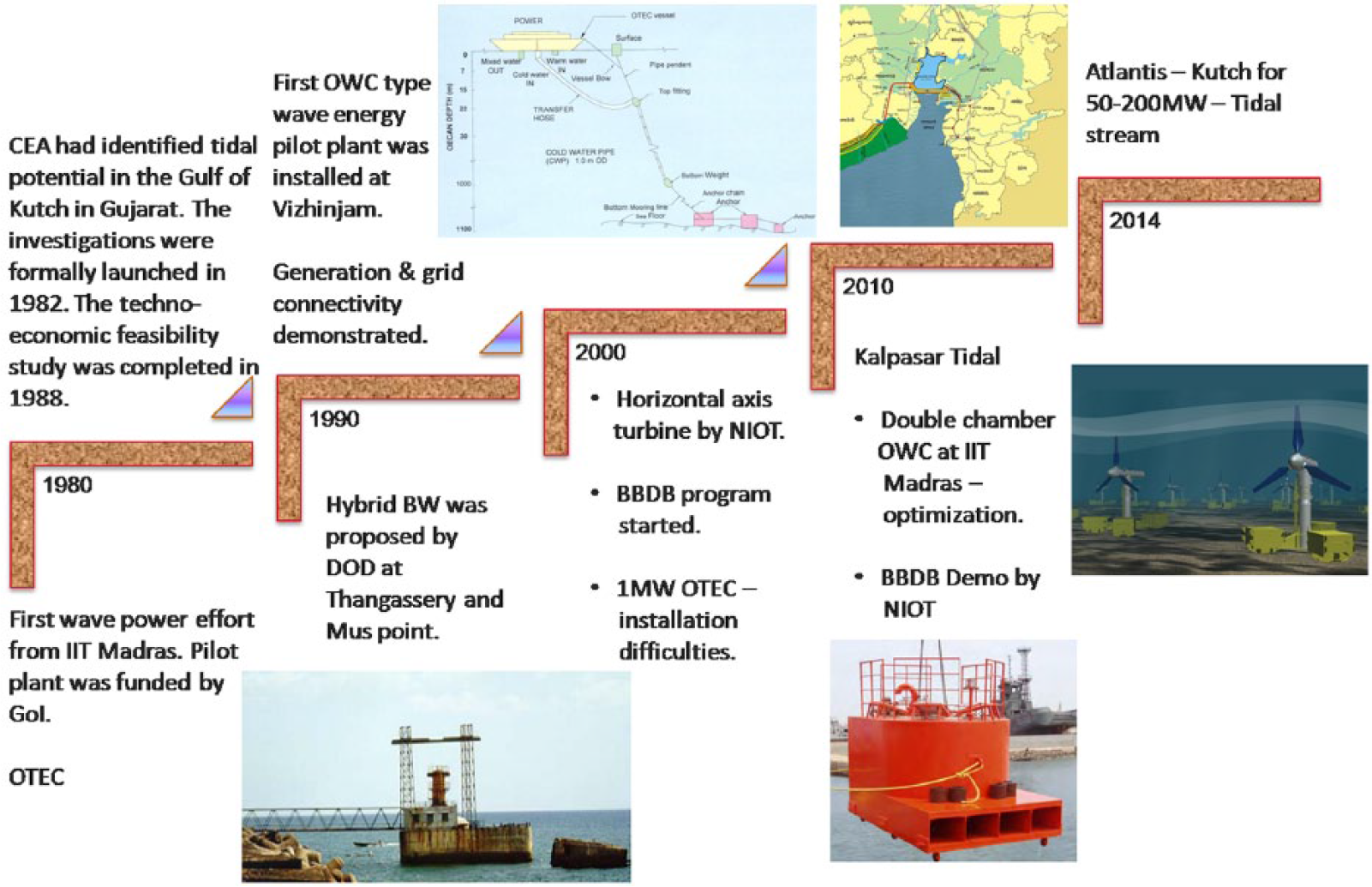
Historical efforts in India on marine renewable energy.
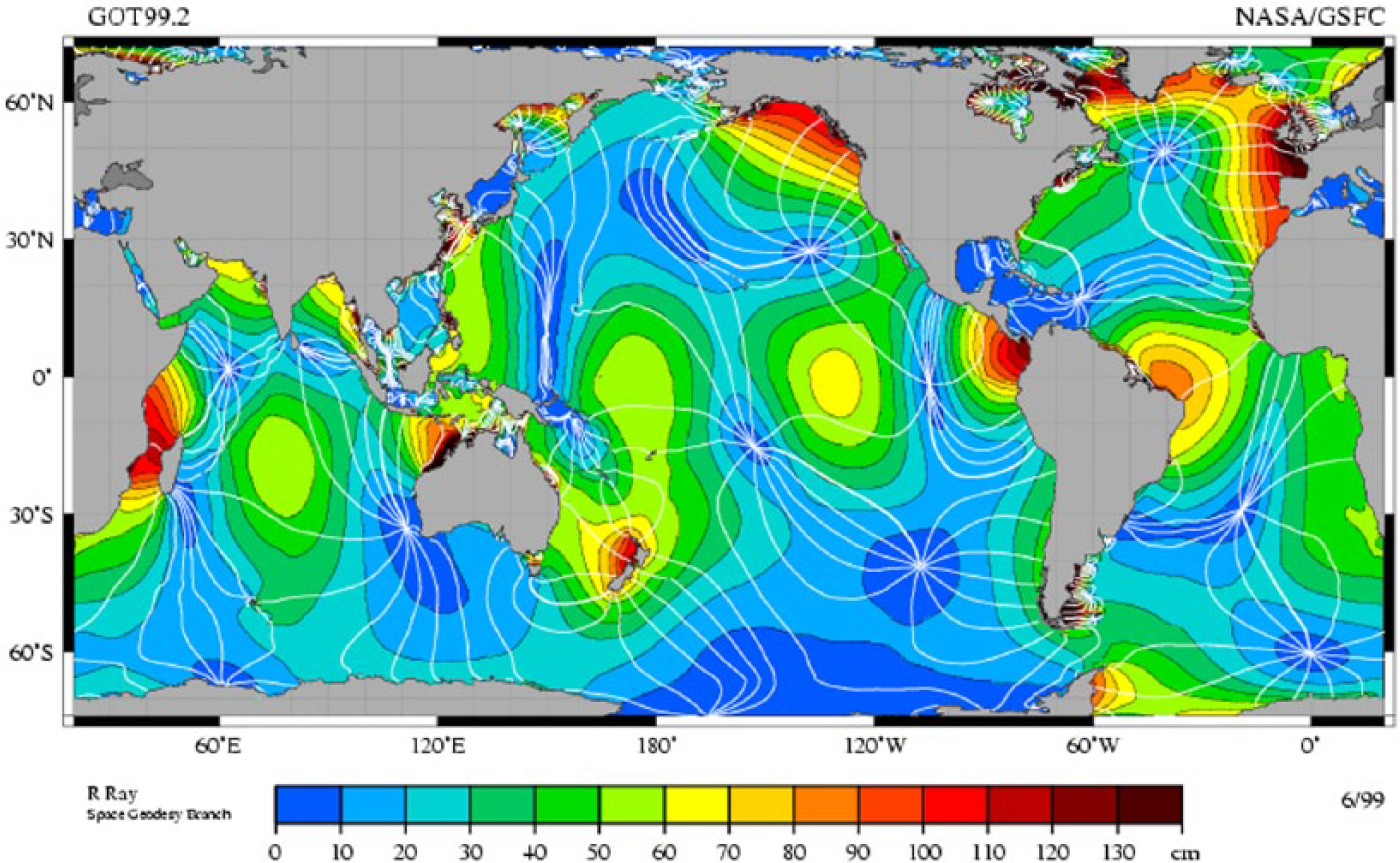
Global tidal ranges (© 2015 NASA—Goddard Space Flight Center; NASA—Jet Propulsion Laboratory; Scientific Visualization Studio; Television Production NASA-TV/GSFC).
A detailed review of available tidal energy conversion technologies and case studies are reported in this article followed by a discussion on it application along in India. A new scale is proposed for categorizing the tidal energy potential in terms of tidal velocity and tidal range. This information could be used to identify potential sites and classify them according to priority. The approach adopted also provides a methodology for assigning a suitable option for a given location in terms of tidal stream energy or tidal barrage (TB) as well as on its size. Therefore, the present work will be useful for engineers and decision makers in technology selection investment potential identification.
Tidal power plants
General
Tidal energy is one of the oldest forms of energy harnessed from naturally occurring phenomena of rise and fall of ocean water level due to gravitational attraction between sun, moon, and the earth. It is non-polluting, reliable, and predictable. TBs, TSTs, and a variety of other machines for harnessing undersea currents are under development (Figure 4). The quality of tidal flow is good as its current is mostly constant over the water depth. Hence, tides provide a great opportunity to harness a part of energy from the oceans.
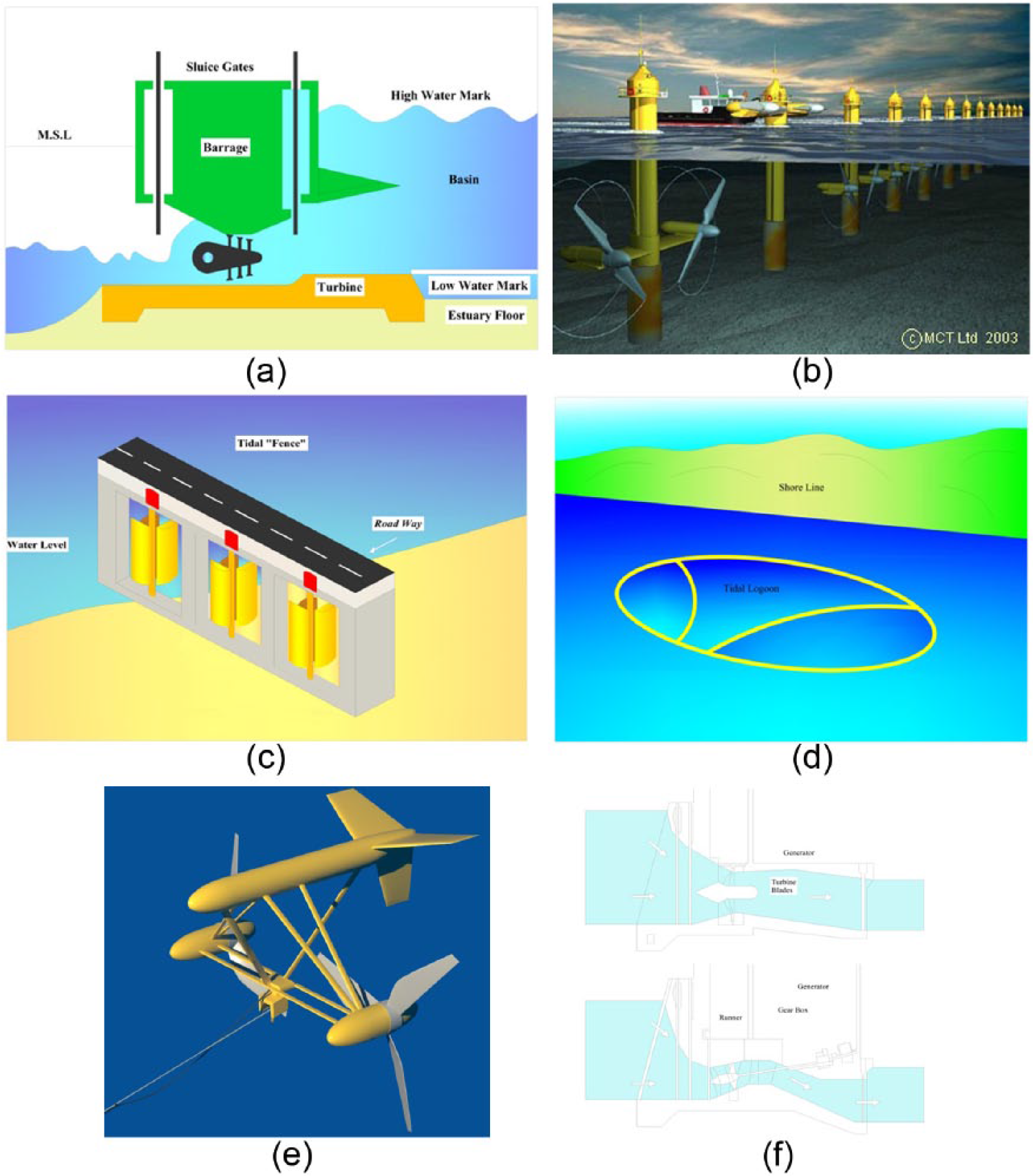
Common concepts of tidal energy conversion and turbine alternatives: (a) concept of tidal barrage, (b) tidal stream turbine (Westwood, 2007), (c) tidal fence, (d) tidal lagoon, (e) gulf stream turbine (Goly and Ananthakrishnan, 2010), and (f) rim and tubular turbines.
There are chiefly two forms of practical tidal energy harvesting methodology, as follows
TB. This is by building semi-permeable barrages across estuaries experiencing a high tidal range. The concepts that are used in this case are flood generation, ebb generation, and flood and ebb generation.
TST. This is harnessing tidal streams by means of TSTs.
Barrages allow tidal waters to fill an estuary via sluices and to empty through turbines. Tidal streams can be harnessed using offshore underwater devices similar to wind turbines. However, all commercial implementations of tidal energy concepts employ a dam approach with hydraulic turbines. Among them, it is also usual to find only the ebb generation concept. There are other concepts available for tidal energy conversion as shown in the above figure. In addition, tidal fences and lagoons exist. However, they are less popular and never tried on commercial scale. The PTO arrangement for tidal power is commonly bulb turbine in the case of barrages. There are alternatives to this in the form of rim, tubular, and Davies turbines.
Conversion of energy from tidal stream could employ a variety of stream turbines as proposed in Figure 5. There are open and rim type turbines. They vary in size ranging between 16 and 18 m for rated capacity of 1–2 MW. They need water depths of at least 35 m to install and operate. Their capacity and efficiency depend on the water depth. Recently, Florida Atlantic University has demonstrated an efficient Gulf stream turbine which can operate in floating condition (Goly and Ananthakrishnan, 2010).
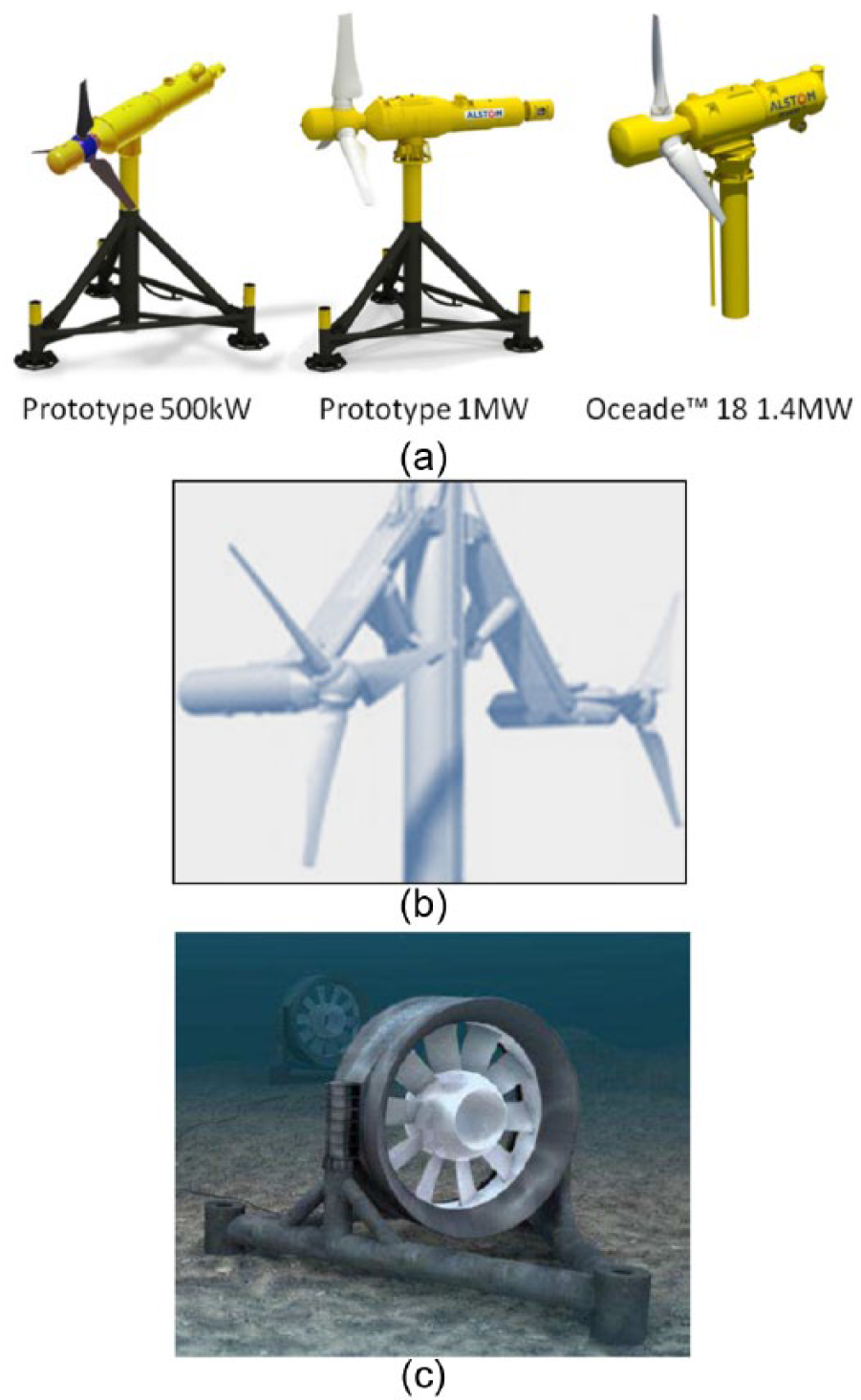
Some variations of tidal stream turbines with 16–18 m diameter, rated over 1 MW: (a) ALSTOM tidal stream turbines (http://www.alstom.com/products-services/product-catalogue/power-generation/renewable-energy/ocean-energy/tidal-energy/tidal-power/, dated 18 October 2015), (b) NEPTUNE Stream Device of Acquamarine 2.4 MW (Rourke et al., 2010), and (c) DCNS-OPENHYDRO 2 MW 16 m diameter rim type turbine (http://www.edf.com/html/biodiversite2011/uk/concilier/paimpol.html).
Tides and tidal datum
Tidal range is the most important parameter for tidal energy feasibility. The tidal range varies depending on the shape and depth of the coastline. Canada’s Bay of Fundy experiences a huge tidal range of about 20 m that serves as the driving force for the existing tidal power plant. Convergence of tidal energy toward and its propagation through converging coastline will result in currents of high magnitude. In India, the Gulf of Kutch, Gulf of Khambhat, and Sundarbans regions are a few locations that experiences huge tidal range.
Major operational tidal plants worldwide
General
There are about seven tidal power plants in operation with capacity varying from 1 to 254 MW. As per the present study, five out of the seven have constructed TB to harness the tidal energy.
The oldest operating plant La Rance Tidal Barrage in France has a capacity of 240 MW and was commissioned in 1966. The Sihwa Lake Tidal Power Plant, South Korea has a slightly higher capacity of 254 MW and was commissioned in 2011. The details of these two tidal power plants are discussed briefly in the following.
La Rance Tidal power plant (La Rance, (n.d))
The power plant is located on the estuary of the Rance River in Brittany, France. Tidal energy is harnessed using a barrage of length 750 m that extends from Brebis point in the west to Briantais point in the east. The basin area is an estuary with an area of 22.5 km2. The maximum tidal range available in this location is 13.5 m with mean range of 8 m. Power is generated by 24 turbines with a capacity of 10 MW and the maximum capacity of the power station is 240 MW. Ebb generation is used as the means of generating power. The annual generation is approximately 600 GWh. The plant is currently operated by Électricité de France. The barrage construction has led to frequent siltation which has to be removed by dredging. It also had minor amounts of environmental impacts. A view of La Rance Tidal Barrage is shown in Figure 6.
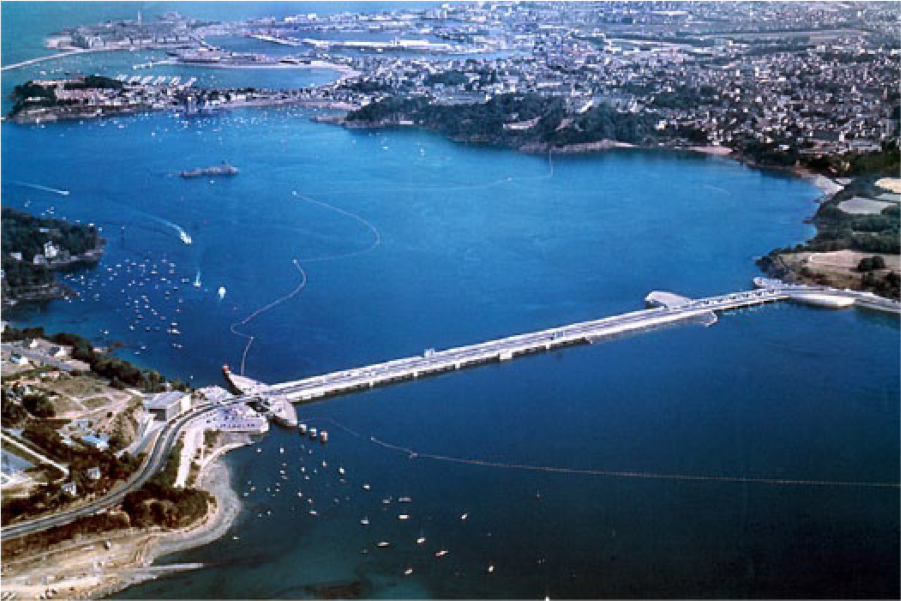
A view of La Rance Tidal Barrage (Takenouchi et al., 2006).
Sihwa Lake Tidal power station
Sihwa Lake Tidal power station is the largest tidal power plant in operation till date, as shown in Figure 7. The sea wall constructed for flood mitigation and agricultural purposes is used as a TB. The original basin area was 43 km2 that has been reduced to 30 km2 due to land reclamation. The plant has 10 submerged bulb turbines with a capacity of 25.4 MW and the maximum capacity of the power station is 254 MW. The annual production of the plant is approximately 552.7 GWh. The power is generated only during ebb tide and sluiced during flood tide. The mean operating tidal range is 5.6 m with a spring tidal range of 7.8 m. The plant is operated by Korean water resource department.
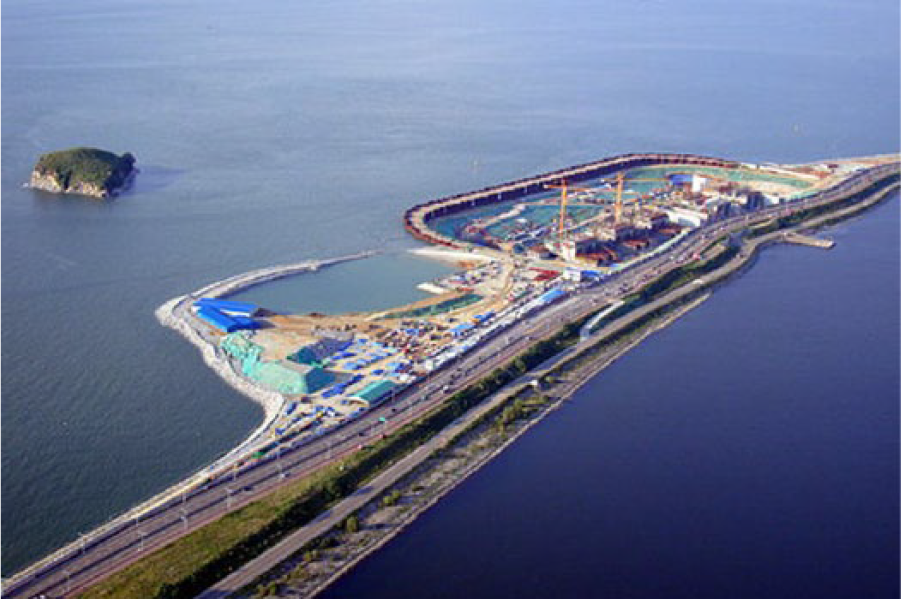
A view of Sihwa Lake Tidal Barrage (Bae et al., 2010).
Tidal energy potential along the Indian Coastline
General
The tidal level at various locations along the Indian coastline is obtained from the tide table of National Institute of Oceanography (NIO) through a harmonic analysis. The predictions are valid for long term as tidal magnitudes are estimated using 37 species. In several locations along the coastline, the first few components only determine tidal levels. The details of spring and neap tidal range for 46 locations along the coast of India are shown in Figures 8 and 9. There is a gradual increase of tidal range toward northern parts of Bay of Bengal and Arabian Sea due to convergence of coastline toward the north. Hence, the tidal energy potential is generally good over the northern parts of India.
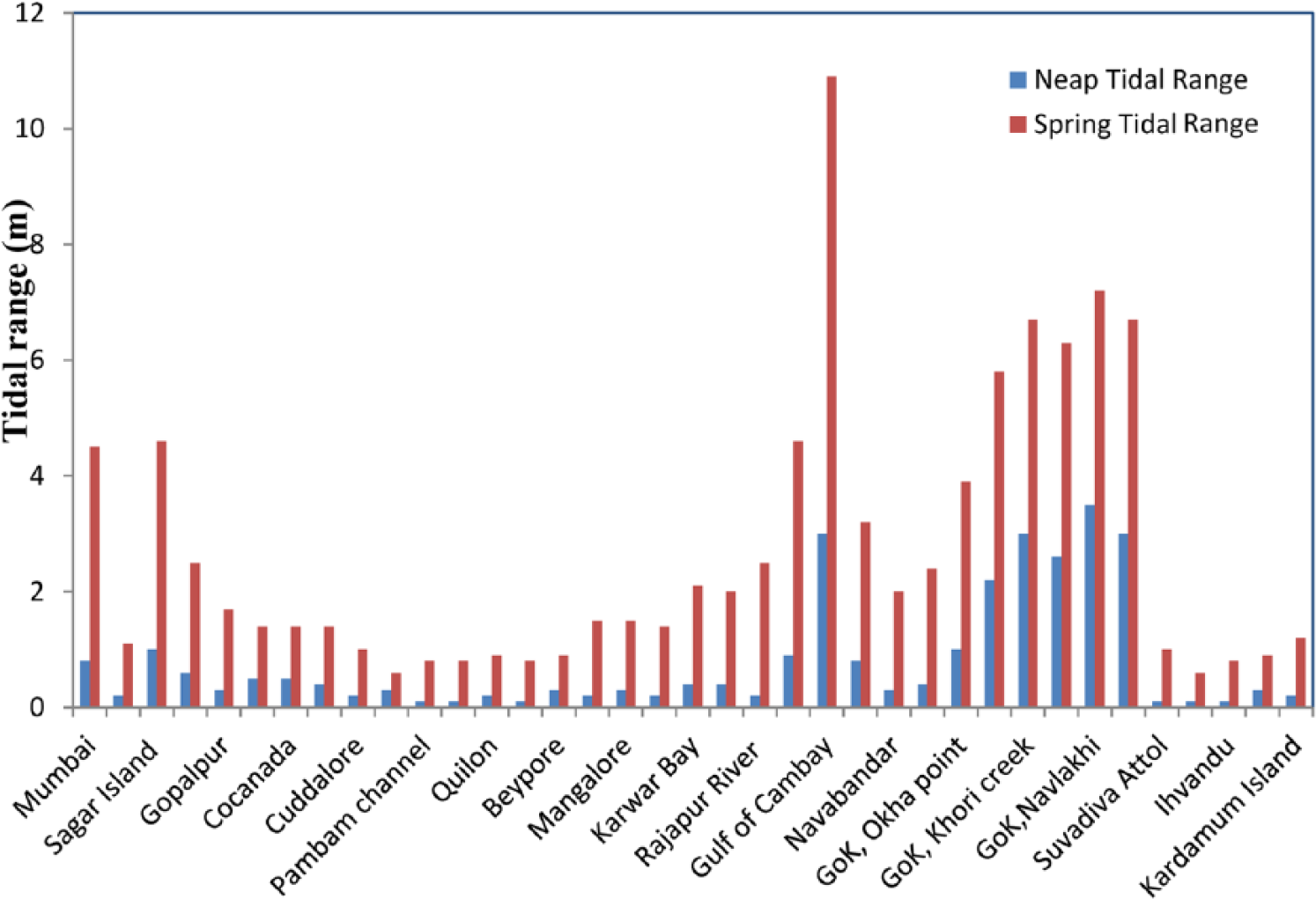
Tidal ranges along the Indian coast at important locations.
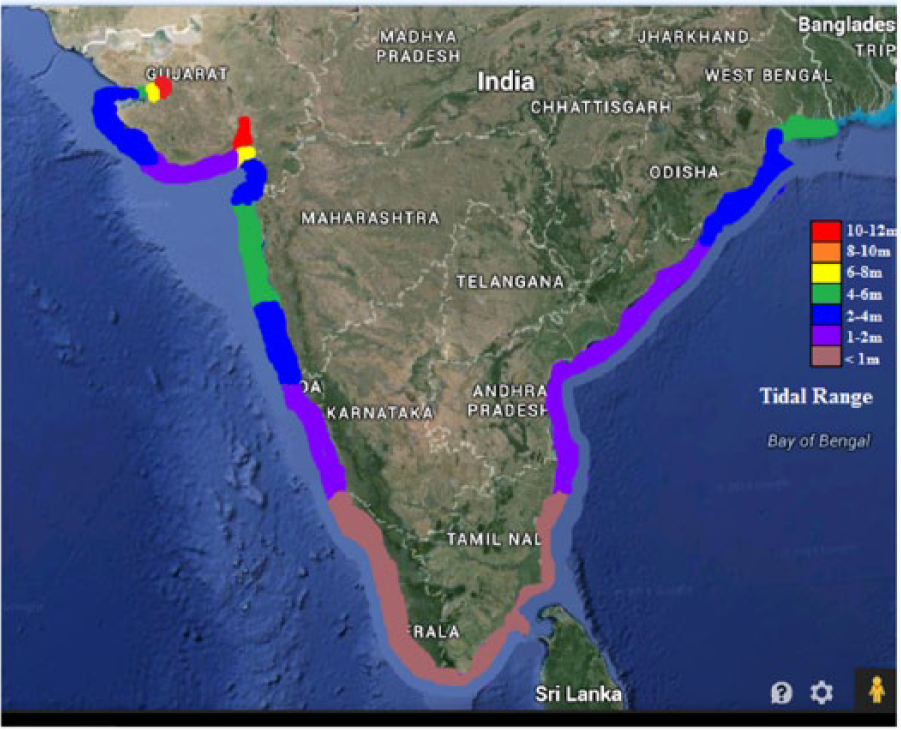
Spring tidal range along the Indian coast.
Classification of tidal potential in terms of range
The analysis clearly indicates that the maximum tidal range is observed in the Gulf of Kutch and Gulf of Khambhat regions with a range of 10–11 m. The next higher tidal range observed along the Sundarbans area is about 5.5 m, a magnitude of which is experienced at several other locations. The regions may be categorized as Class-I-Tidal-range. In addition, the regions south of Gujarat and West Bengal experiencing a moderate tidal range of 3–5 m may be categorized as Class-II-Tidal-range. Creating a tidal reservoir and generating during ebb cycle could be a good option for these regions.
In the south, the tidal range is less. However, the 1 m tide that is available can be stored in large backwater areas and micro tidal plants which need a critical evaluation. There are some significant backwater areas that are available in all the southern states. These regions may be categorized as Class-III-Tidal-range.
The Pamban channel area also has a good potential with Palk Bay on the north and Gulf of Mannar on the south experiencing a tidal phase difference of about 6 hours as shown in Figure 10. A channel could be developed in this region to make use of this naturally available advantage. The hydrodynamic design of the channel could be such that an assured velocity for operating tidal turbines is available for up to about 20 hours in a day.
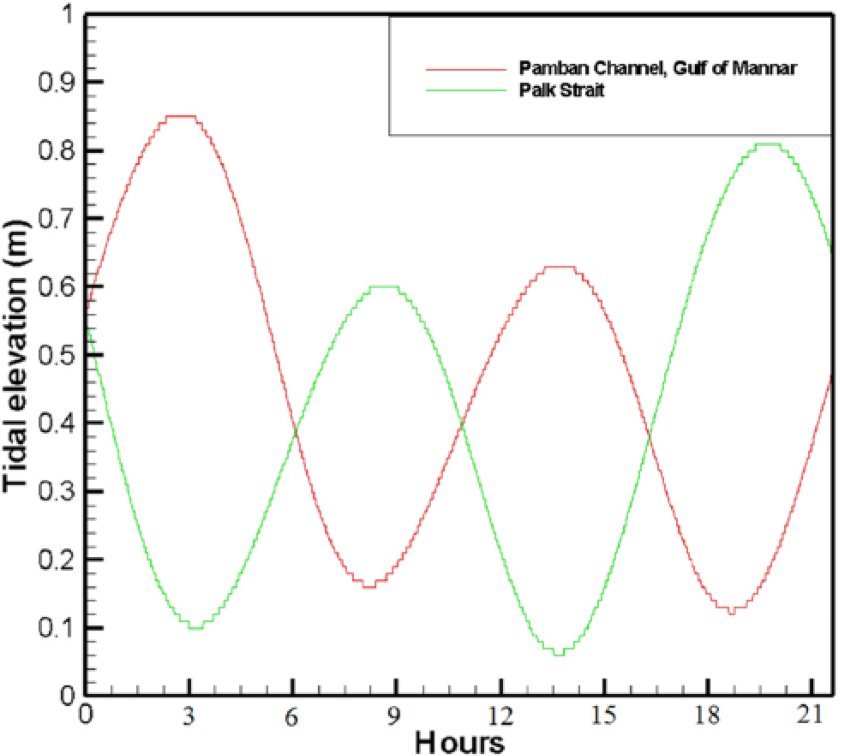
Typical time history of tides in Palk Bay and Gulf of Mannar.
Tide-induced coastal currents
Tidal currents along the Indian coastline
Currents are the mass of water moving from one location to another. Tidal currents are driven by several factors. The rise and fall of the tide is a main factor for generation of tidal currents. These rise and fall cause the movement of a mass of water from high potential to low potential. The change in tidal currents over the day follows a regular and predictable pattern. Wind, if very strong, has some contribution to the coastal currents. Wind-driven currents exist near the ocean surface. These currents are generally measured in meters per second or in knots (1 knot = 1.15 mi/h or 1.85 kmph).
A detailed discussion on tidal current warrants extensive hydrodynamics modeling. Hence, general information on the tide-induced currents is brought out herein for the benefit of getting an idea of tidal power that could be extracted from various regions. When a tidal current moves toward the land or an estuary and away from the sea, it “floods.” When it moves toward the sea away from the land or an estuary, it “ebbs.” The order of tidal currents has a strong correlation with the tidal range. The maximum tidal current is usually observed in locations of higher tidal range.
Classification of tidal potential in terms of velocity
The Gulf of Kutch, Gulf of Khambhat, and Sundarbans regions usually experience highest tidal currents. It is common that currents exceed 2 m/s at most times of the day. This is generated by tidal gradients in the Kutch and Khambhat regions. In the Sundarbans areas, even though the range of tide is lesser, the fresh water flow and narrowing of channels in Hooghly can produce currents up to 3 m/s. As for as tidal currents are concerned, these stretches could be categorized as Class-I-Tidal-stream.
The currents generally exceed 2 m/s in South of West Bengal and Khambhat regions. As tides enter Bay of Bengal and Arabian Sea, a general convergence is seen in the above regions, experiencing high currents in these regions which can be categorized as Class-II-Tidal-stream.
Moderate currents ranging between 1.5 and 2.0 m/s exist in north of Tamil Nadu and Kerala. These are locations along Karnataka/Maharashtra coast on the west and along the Coromandel coast on the east. These regions may be categorized as Class-III-Tidal-stream.
The regions with currents less than 1 m/s may be classified as Class-IV-Tidal-stream. These are the regions with weak tidal velocities.
Potential sites for tidal energy in India
Theoretical estimation of energy from TB
The tide contains both potential energy (PE) and kinetic energy (KE). The PE is the energy stored or available when water is available at an elevation higher than normal. This is possible during flooding tides and energy will be available during the ebbing phase. The energy available from a barrage depends on the area of the water surface impounded by the barrage and the corresponding magnitude of the tidal range. The PE contained in the water volume impounded in a basin can be expressed as

where Ep is the PE over a tide cycle, ρ is the density of sea water (ton/m3), g is the acceleration due to the earth’s gravity (9.807 m/s2), Ab is the horizontal area of the enclosed basin (km2), and Δhb is the mean tidal range in the basin (m). The density of sea water varies from 1.021 to 1.030 ton/m3 and is typically assumed to be 1.025 ton/m3. The coefficient of 0.5 in equation (1) is due to the fact that as the water in the basin is released through the turbines, the water head across the dam will be reduced accordingly. The maximum available head occurs only at the moment of low water assuming that high water level is still present in the basin. It can be seen from equation (1) that the tidal range influences greatly the value of the PE, the magnitude of the mean tidal range, and the value of the impounded area, which are the most important factors that determine the feasibility of a TB in terms of the annual energy output.
Theoretical estimation of energy from tidal currents
The tidal generators make use of KE of water stream which in turn will spin the turbine and drive the generator and hence produce electricity. The power that can be generated by the tidal turbine is given by equation (2)

where Ek is the KE (GW); Cp is the turbine power coefficient; g is the acceleration due to the earth’s gravity (9.807 m/s2); As is the swept area by turbine blades (m2), and V is the velocity of the tidal current (m/s).
Tidal energy density along various states of India
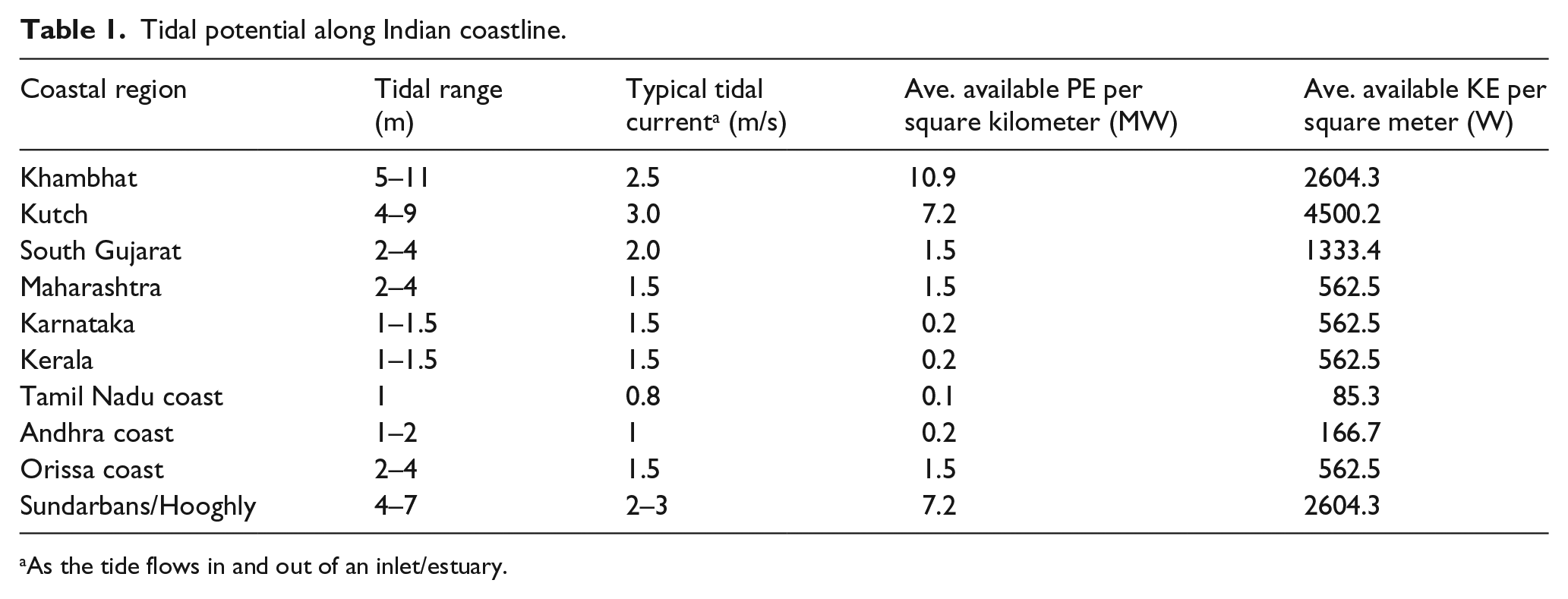
A detailed discussion on tidal ranges and currents along Indian coastline has been brought out. In order to have a real meaning of these data in terms of energy, the estimates of PE and KE are provided in Table 1.
Tidal potential along Indian coastline.
As the tide flows in and out of an inlet/estuary.
Table 1 presents the fact that only three regions along India are bestowed with largest concentration of energies. These are namely Khambhat, Kutch, and Sundarbans regions, because of their large tidal ranges. However, the table also brings out the fact that when flow velocities are enhanced at the openings on the coastline, it is possible to realize reasonably good amount of energy in terms of KE. Hence, for regions with low tidal range, the obvious choice will be to modify the flow pattern of the tidal flooding and ebbing so that reasonably good currents are generated. We shall recall the above parameter while discussing feasible options.
Harnessing energy from tides
New technologies in the horizon—state of the art of tidal power generation
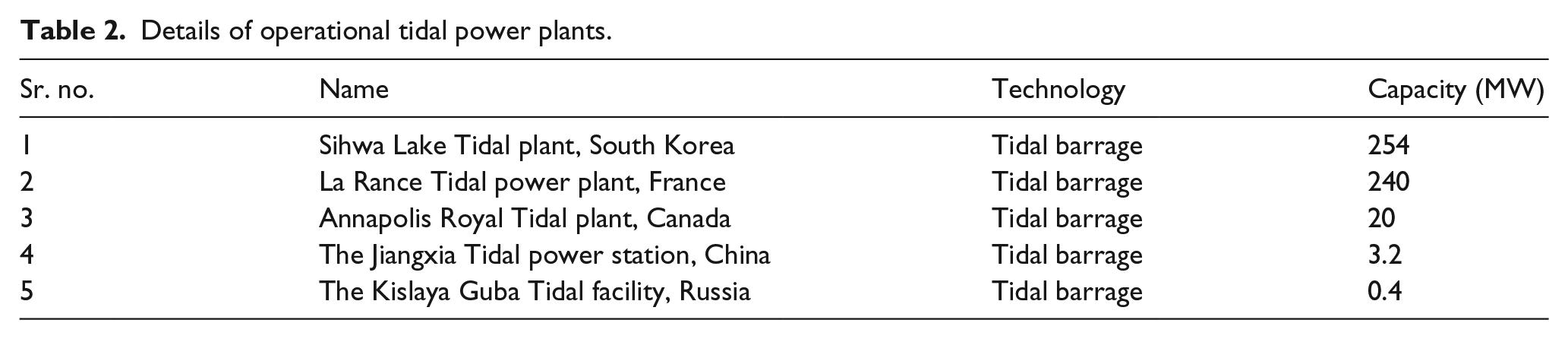
The tidal energy can be harnessed using tidal range by constructing barrage or lagoons to capture the tide. Turbines in the barrier or lagoon generate electricity as the tide floods into the reservoir; water thus retained can then be released through turbines, again generating electricity once the tide outside the barrier has receded. This well-proven concept was implemented in La Rance Tidal Barrage and Sihwa Tidal Power Station. There are turbines available up to 10 MW rating. The details of these projects are provided in section “Major operational tidal plants worldwide” and Table 2. The major disadvantage of this concept is the impact on the environment due to possible submergence of large regions. However, these effects could be considered at the time of feasibility and environmental impact assessment (EIA) studies and suitable via media could be found.
Details of operational tidal power plants.
There has been a great interest in developing new technologies worldwide. United Kingdom, United States, and France have made significant investments for technologies that could be used at locations with large currents. They are summarized earlier. An alternate way is the harnessing energy from tidal currents using TSTs. The kinetic movement of water can drive the turbine just as wind turbines extract energy from movement of air. The sea currents created by movement of the tides are often magnified where water is forced to flow through narrow channels or around headlands.
The classification of the TSTs is usually done on the basis of principle of operation, such as axial-flow, cross-flow, and reciprocating devices. Axial-flow turbines operate about a horizontal axis whereas cross-flow turbine operates about a vertical axis. Many of these turbines resemble a wind turbine generator. There have been many pilot projects taken up by various manufacturers/owners. The details of the projects are provided in Table 3.
Pilot projects worldwide using tidal stream turbines.
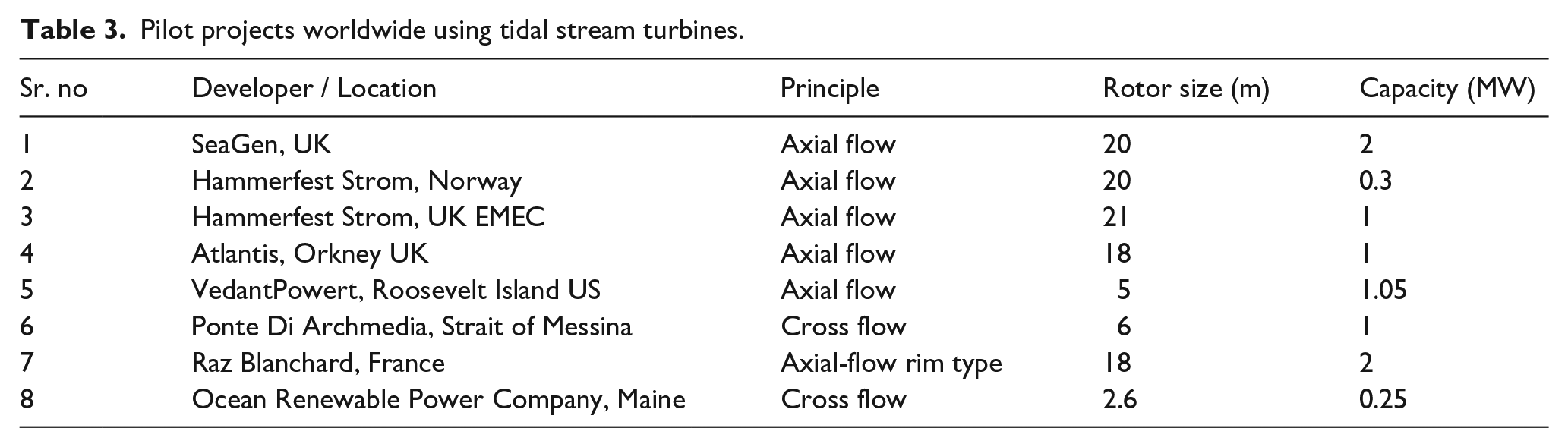
In addition to these projects, Pulse Tidal Limited demonstrated a reciprocating device off the Humber Estuary in the UK in 2009. Several models have emerged for tidal power in recent years, including tidal lagoons, tidal fences, and underwater tidal turbines. These are in experimental stage. Among these, perhaps the most promising one is the TST. These turbines could be placed offshore or in estuaries in strong tidal currents where the tidal flow spins the turbines, which then generate electricity. Tidal turbines have been demonstrated in waters of 30–40 m deep with currents exceeding 3 m/s. Sea water is much denser than air; hence, tidal turbines can be smaller than wind turbines and can produce more electricity in a given area.
As of today, TSTs remain at the demonstration level. No commercial implementation has been made. There are several issues to be sorted out before this technology could be used in commercial scale, which are listed as follows:
Site characteristics. These include water depths over 35 m, water currents over 3 m/s, and a wide channel. If wider channel is not available, TSTs cannot be installed as the channel will be blocked for vessel traffic.
Cost of construction and maintenance. TSTs need a specific industry for taking up construction. This industry is currently unavailable. Oftentimes, technologies from offshore industry will be borrowed which will result in cost escalation.
Environmental impacts. Since the TSTs are directly operated in open waters, they are likely to adversely affect the environment. These must be addressed site wise for implementation of TSTs can be considered.
Due to the above aspects, TSTs remain a technology to be developed. No market exists as of now and no clear idea of cost and maintenance aspects is available. Hence, whenever we think of this option, all the above questions should be answered comprehensively.
Tidal power status in India—earlier assessment
The ministry of new and renewable energy (MNRE) made an assessment of the potential of tidal energy in the country. These are summarized in Table 4 which indicates an estimated potential of about 8000 MW with 7000 MW in Gulf of Khambhat, 1200 MW in Gulf of Kutch in Gujarat, and about 100 MW in Ganges delta in Sundarbans in West Bengal. However, this assessment depends largely on the technology and methodology to be used. Thus, these figures could be updated continuously based on the technology used.
Earlier assessment of tidal power potential in India by ministry of new and renewable energy (MNRE).
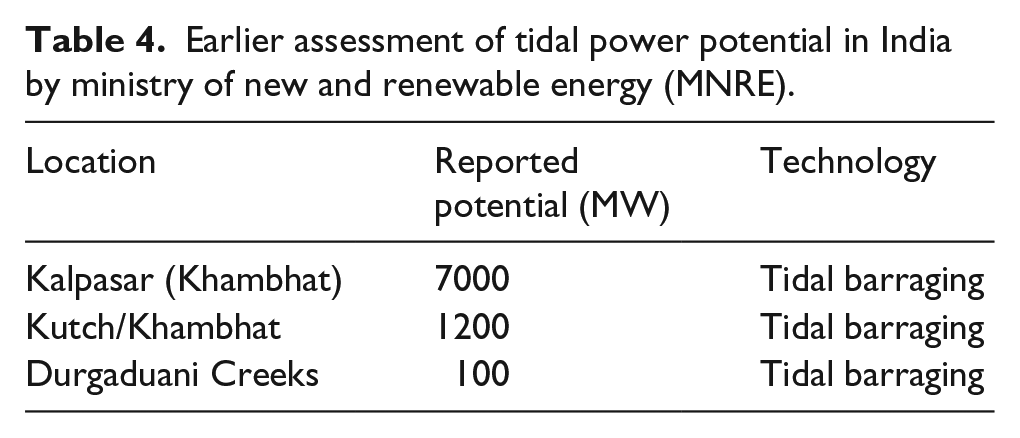
It is reported that MNRE also sanctioned a project for setting up a pilot tidal power plant with capacity of 3.75 MW at Durgaduani Creeks in Sundarbans, West Bengal, to the West Bengal Renewable Energy Development Agency (WBREDA), Kolkata. The National Hydro Power Corporation Ltd. (NHPC) has been identified as the agency executing the project on a turnkey basis. There are recent reports that the project is likely to be shelved due to huge capital cost. Simultaneously, a special purpose vehicle (SPV) was developed by the State Government of Gujarat with public–private partnership and sponsored a study for large-scale exploitation of tidal energy across the coastline of Gujarat. It has also proposed Kalpasar project in the Gulf of Khambhat for exploiting about 5880 MW. There is also another proposal to implement TSTs in Gulf of Kutch. These projects also appear to have been stalled due to capital inflow and environmental issues. These are summarized in Table 5.
Status of tidal power activities in India.

Reassessment of tidal power potential in India
The foregoing discussions suggest that the tidal power potential in India needs a reassessment in terms of scientific evaluation and strategic planning. The following discussion brings out in clear terms the potential of tidal energy in India. The potential sites to be considered for immediate pilot projects are pointed out in Figure 11:
Where Class-I-Tidal-range and Class-I-Tidal-stream exist, either options of developing a barrage or tidal stream farms could be chosen. The large space is available at Khambhat and Kutch, and it is possible that both barrages and TSTs could be developed.
In Sundarbans region, the average depth of water is only about 5–6 m. Hence, it is impractical to think about TSTs. Hence, the options of barrages could be considered.
In other regions, currents are very weak. Thus, where there is Class-II-Tidal-range is available, it highly likely that the barrage option could be considered for medium-scale power generation.
Where Class-III-Tidal-range is available, micro power stations could be developed based on the local needs.
The tidal energy is found to be concentrated in several regions of India. No formal study or pilot project has been reported. There is also a lack of strategic investment in this area in terms of research and development. Tidal stream conversion may be suitable for the deeper regions of Kutch and Khambhat, while the shallower regions of these gulfs are suitable for barrage technology. Other regions of India including Hooghly river/Sundarbans areas may be considered for development of medium to smaller plants.
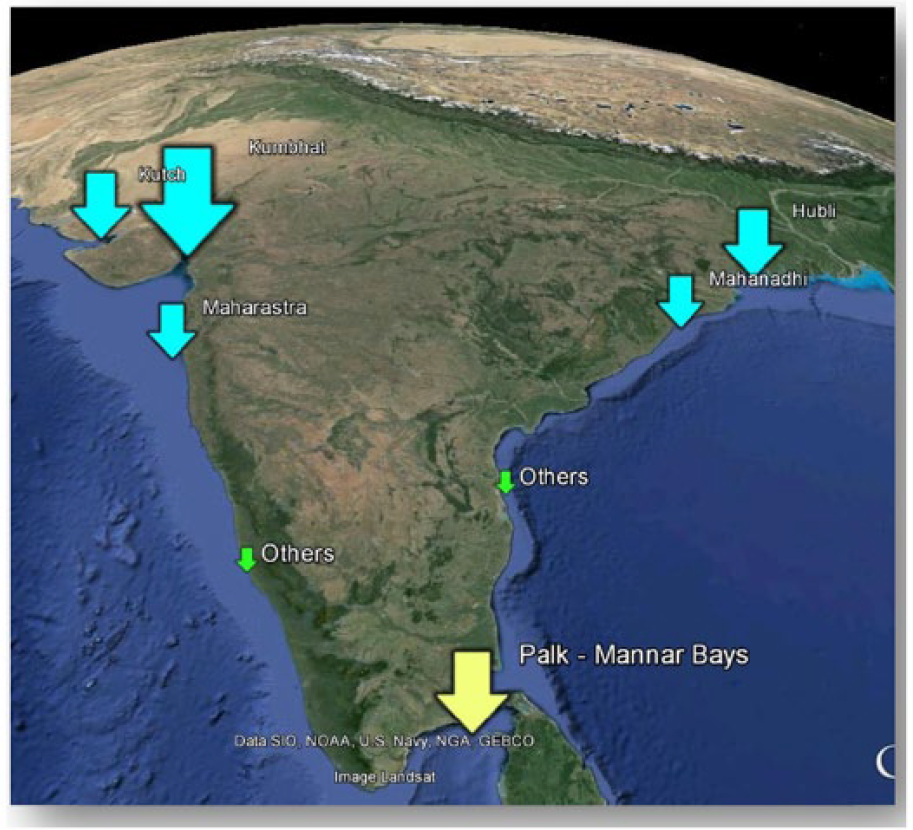
Potential areas to be considered for immediate pilot studies.
Feasible sites for tidal energy
Site and technology selection
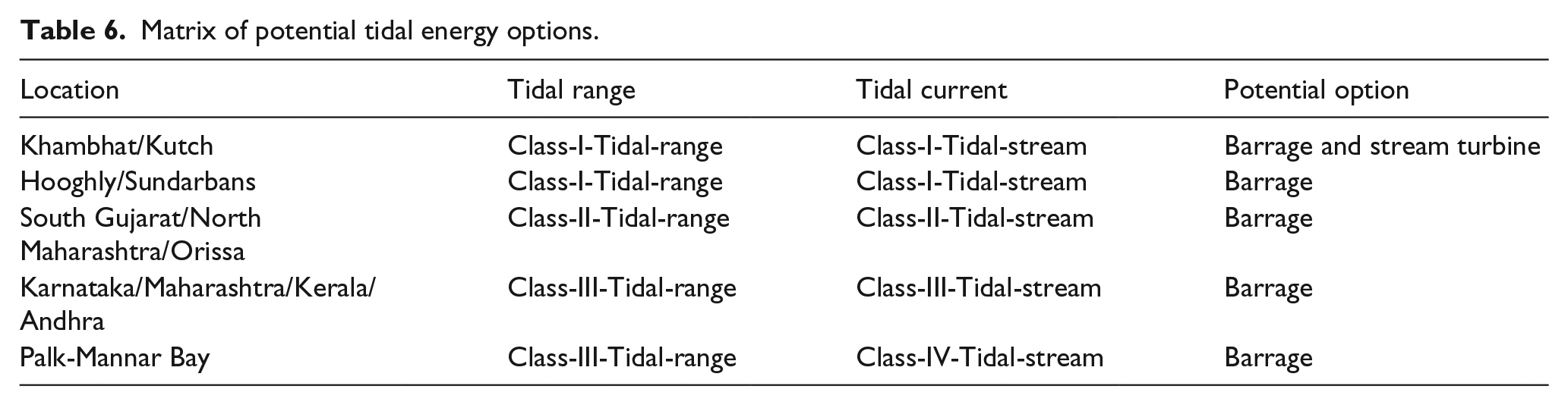
The critical parameters for assessing suitability of a certain technology depend on the two critical parameters, namely, tidal range and tidal stream velocity. Then one could follow a systematic approach to arrive at the suitable technological option (TB or TST). Such an approach is outlined in Figure 12. On this basis, the feasible sites that are identified are summarized in Table 6. These options are discussed individually in the following sections.
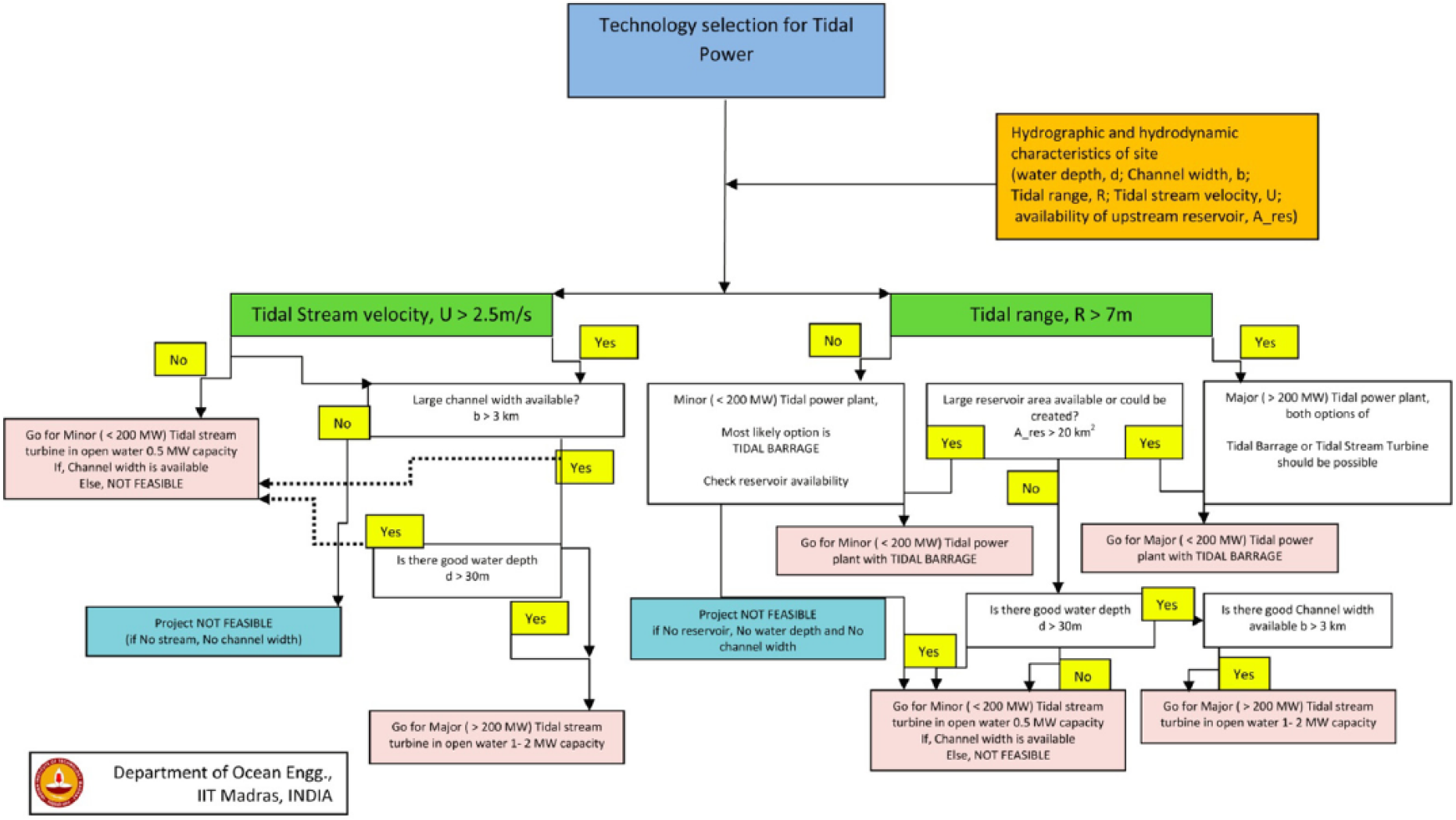
Technology selection process for tidal energy.
Matrix of potential tidal energy options.
Gulf of Khambhat
The Gulf of Khambhat has a tidal range of 11 m with 7 m mean tidal range as discussed earlier. There is proposal for mega power project of 8000 MW at Kalpasar. If this is realized, which is the barrage option; there would still be scope for stream turbines as several areas in the regions have large currents over 3 m/s. However, the water depths are only reasonable. Hence, new technologies like smaller and efficient turbines must be designed for these areas. The two regions that are identified are shown in Figure 13. The locations identified for tidal stream farm are approximately 60 km2 (on the west) and 35 km2 (on the east) with average water depth of 12.5 m. Hence, it appears that for the present water depth, turbine diameters of up to 7 m could be considered with a power rating of 0.25–0.5 MW. With a configuration of 40 turbines/km2, a total of 3800 turbines could be proposed with a capacity production of 950–1900 MW.
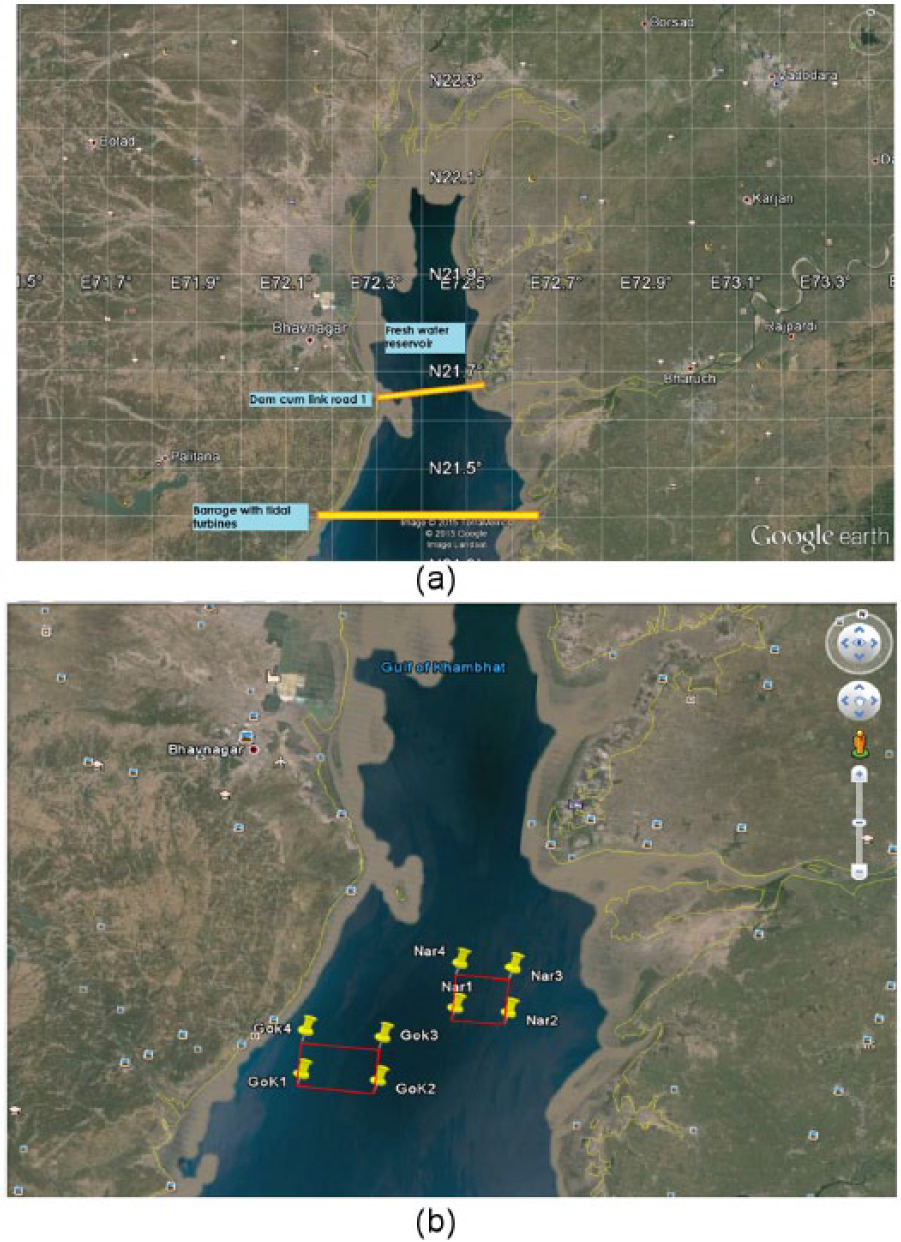
Proposed options for Khambhat: (a) concept sketch of proposed Kalpasar development in Gulf of Khambhat, India (http://www.kalpasar.gujarat.gov.in/pdf-files/KalpasarPresentationE22910.pps) and (b) possible locations for tidal stream farm with tidal stream turbines of 7 m diameter.
Gulf of Kutch
The Gulf of Kutch has features similar to Gulf of Khambhat with mean tidal range of 7 m. The bathymetry details, as shown in Figure 14, and the current patterns show the possible regions for TSTs. The tide-induced current magnitudes at Kutch could be up to 3 m/s. The average water depth in these regions is around 15–20 m. Using a similar notion to that of Khambhat, the amount of energy that could be harnessed from Gulf of Kutch using 0.5 MW TSTs can be around 2000 MW, taking into account the lower mean velocities in these regions.
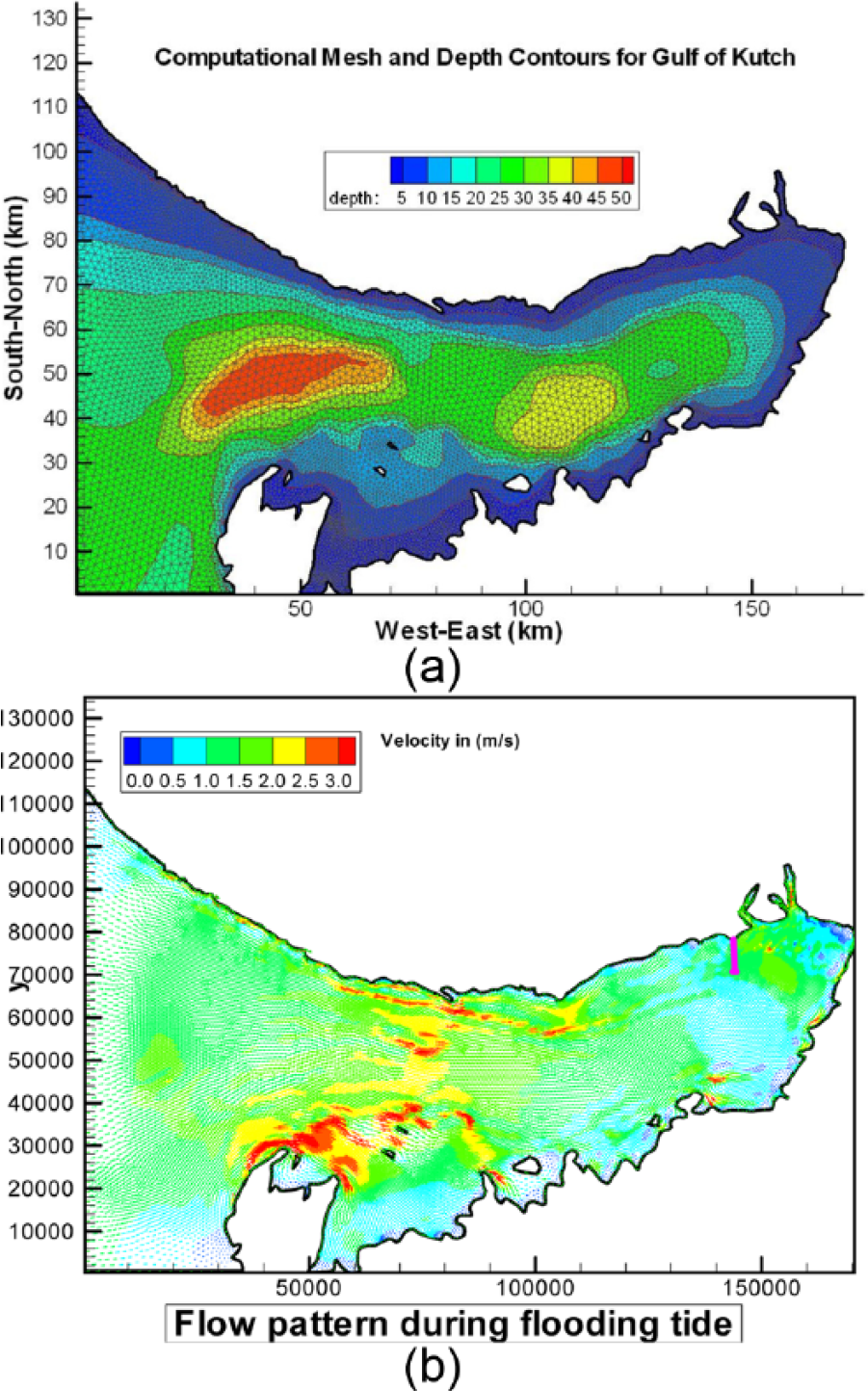
Proposed options for Kutch: (a) Bathymetry details of Kutch and (b) typical velocity patterns in Kutch.
Gulf of Mannar and Palk Bay
The present study considers the channel between Gulf of Mannar and Palk Bay regions for development of medium- to small-scale tidal power regions in the regions of low tidal range and low tidal streams. The phase lag of 6 hours makes this region one of the most promising site for tidal energy extraction as discussed earlier. The maximum PE available will be of about 0.8–1 m. This potential difference with the very large area available on Palk Bay and Gulf of Mannar could be used to create a tidal channel with velocities at barrage up to 10 m/s. The average water depth available in this region is 6 m. A TB trapping this tidal range can be constructed for a length of approximately 3 km between Mandapam and Pamban channel. This arrangement is shown in Figure 15.
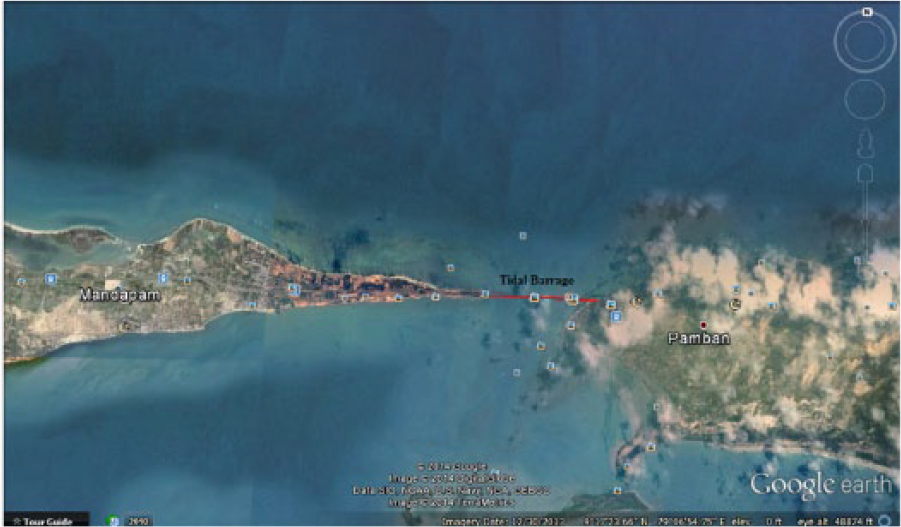
Location of tidal barrage between Mandapam and Pamban channel.
This barrage of 2–3 km length could house up to 1000 bulb turbines of 1.5 m diameter. The power rating of each turbine could be 0.23 MW. Thus, the estimated power that could be harnessed from this location is of the order of 230 MW. However, this estimate could change based on the hydrodynamics study and mechanical design. A pilot study could be considered here followed by detailed hydraulics, hydrodynamics, and EIA study.
TB in Hooghly River in the south of Haldia
A TB could be proposed in Hooghly River in the south of Haldia. This area is shown in Figure 16. The width of the barrage could be about 3 km. However, the tide and fresh water flow could reach up to 3 m/s. The water depth available in this region is 6 m. This configuration could accommodate up to 300 × 3 MW turbines. Thus, the estimated power that can be harnessed from this location is 900 MW.
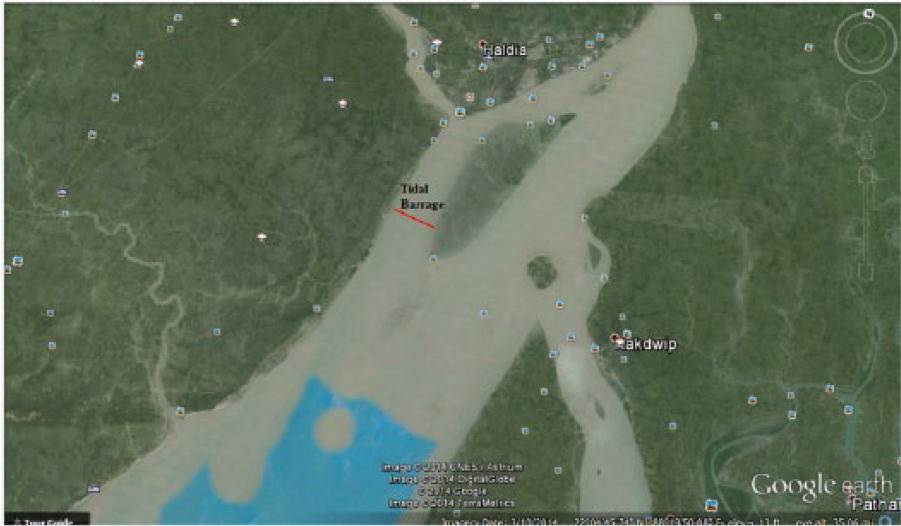
Location of tidal barrage at the Hooghly estuary.
Summary and conclusion
This work focuses on a review of tidal energy conversion and the technologies. We proposed a systematic approach to identification of suitable site and technology for a given potential site. This has been applied to typical locations along India. The most potential regions for development of tidal energy farms is identified and prioritized. The total estimated power that could be harvested in these regions is about 9200 MW, with the lowest capacity factor indicated above. This is equivalent to about six major nuclear power plants and eight major thermal power plants. This is also the energy demand of several states in India. Furthermore, there are several sites with large backwaters where barrage technology could be used.
However, the tidal stream technology could be adopted in Khambhat and Kutch regions only, after suitable scoping and careful technology demonstration. However, the technology is not matured enough as brought out in Figure 17 in the rating curve based on available data. There is no clear trend emerging as for the selection of turbine is concerned. This points to several uncertainties in design and performance of TSTs. This will be a major stumbling block in implementing this technology in India, as against the barrage technology which is matured enough. In the backdrop of above discussions, there is an urgent need to
Create pilot project using the barrage and stream concepts. Such studies should consider hybridization of the PTO arrangement with the option of combined wind/solar arrangements.
Understand environmental and other issues pertaining to this energy form.
Create a clear roadmap for promotion of tidal energy as individual and hybrid technologies.
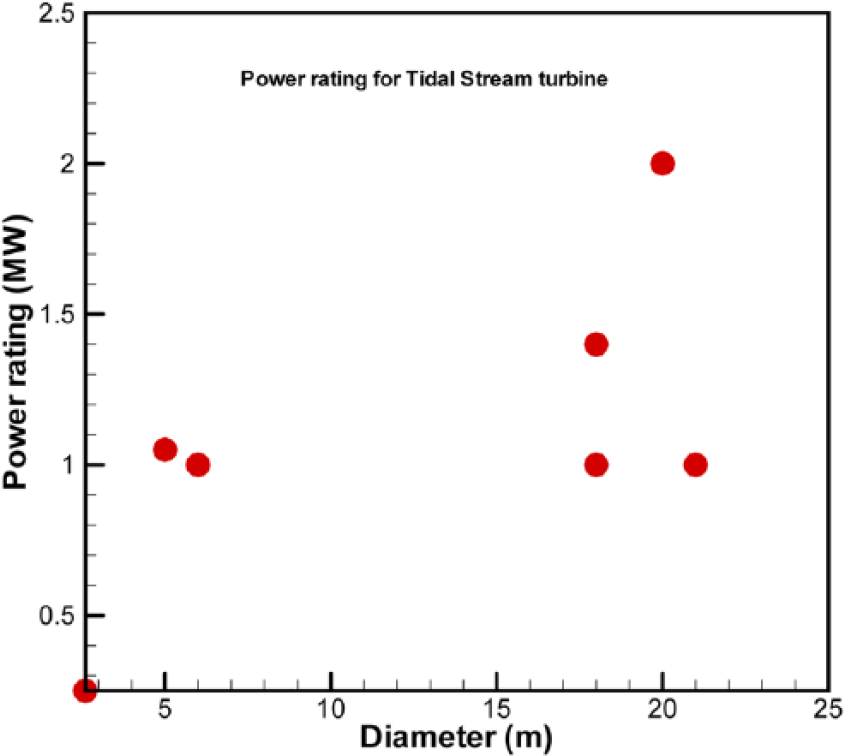
Power rating of tidal stream turbines.
Footnotes
Declaration of conflicting interests
The author(s) declared no potential conflicts of interest with respect to the research, authorship, and/or publication of this article.
Funding
The author(s) received no financial support for the research, authorship, and/or publication of this article.