



Abstract
Background:
The highest alcohol consumption in South Korea, which has a strong cultural and social meaning, is reflected in Korean dramas (K-dramas) that have gained large global audiences in recent years. Media depictions of alcohol can shape public health perceptions and influence behavior, therefore, the present study examined attitudes toward alcohol risk and harm reduction messages in K-dramas and their association with alcohol consumption in audiences from Indonesia and Israel.
Methods:
A questionnaire was administered to 638 K-drama viewers aged 18+ years, including 383 (60%) from Indonesia and 255 (40%) from Israel.
Results:
Viewers had relatively strong negative attitudes toward alcohol consumption messages and strong positive attitudes toward alcohol harm reduction messages in K-dramas. Significant correlations were found, with higher negative attitudes toward alcohol consumption messages being associated with more positive attitudes toward alcohol harm reduction. Significant group differences were revealed, with Indonesians displaying higher negative attitudes toward alcohol consumption messages and higher positive attitudes toward alcohol harm reduction messages than Israelis. Three logistic regression models were found to be significant, with 23–45% of the variance being explained by alcohol consumption. Being an Israeli participant, having visited South Korea, and holding more positive attitudes toward alcohol consumption in K-dramas were related to higher odds of drinking Soju (the traditional Korean drink), drinking in the preceding three months, and binge drinking in the preceding 12 months.
Conclusion:
K-dramas reflect and shape societal drinking attitudes and behaviors. Findings highlight the need for responsible media representation to support alcohol harm reduction and promote public health.
Introduction
Alcohol consumption, particularly heavy drinking, is a significant public health issue worldwide (1). The World Health Organization identified alcohol-related problems as a critical global health concern, their consequences harming both individuals and societies (2). Heavy or frequent drinking increases the likelihood of developing physical and mental health problems, including liver and heart disease, certain cancers, depression, and alcohol dependence. It also exposes users to a higher risk of accidents and injuries (3). Research shows that drinking behavior is shaped by social and demographic factors such as gender, age, education, and work or family circumstances, which help determine who is more likely to drink and who is more vulnerable to alcohol-related harm (4). Drinking behaviors vary significantly across societies, depending on religious norms, social expectations, availability of alcohol, and policy environments (3).
South Korea is one of the countries with the highest levels of alcohol consumption, high-risk drinking, and alcohol-related problems (5). Alcohol plays a central role in both social and business settings in South Korea (6,7), where collective drinking is a fundamental aspect of social bonding between family members, friends, and colleagues (8,9). The traditional practice of ‘Hweshik,’ a group drinking session where colleagues or friends gather at multiple venues, exemplifies how alcohol is interwoven with social life (9). The normalization of extreme intoxication, particularly in corporate settings, demonstrates the perception of alcohol as a social lubricant in South Korean society (10,11). One of the most popular alcoholic beverages in South Korea is a traditional drink called Soju. It typically contains 16–25% alcohol and is commonly consumed in both casual and formal settings (12,13). Although it is readily available in South Korea, Soju is not popular or easy to get in other countries (14). Despite regulations like blood alcohol limits for drivers, alcohol use remains widespread in South Korea, with ongoing issues such as domestic violence and traffic accidents (15,16).
Alcohol consumption is deeply embedded in South Korean culture, and it is frequently depicted in Korean dramas (K-dramas), the most popular form of entertainment in the country. As part of the broader Korean Wave (Hallyu), K-dramas have grown exponentially in popularity and have become a significant global cultural export (17). They typically combine elements of romance, family drama, comedy, and action, offering an immersive and engaging viewing experience. The dramas include depictions of contemporary South Korean life, showcasing the social norms, values, and everyday experiences of the country. As a medium, K-dramas are not only a source of entertainment but also a platform for cultural exchange, introducing audiences worldwide to South Korean customs, societal issues, and behaviors (18,19). K-dramas portray alcohol consumption as a common and socially accepted part of daily life, reflecting the cultural norms surrounding drinking in South Korea. Scenes involving drinking, especially those in social settings like bars or restaurants, are often framed as a way to facilitate communication, strengthen friendships, and build professional relationships. These portrayals of alcohol consumption, appearing on average once every 12 min in K-dramas, are typically normalized and rarely shown as problematic (5). The frequent depiction of excessive drinking or intoxication, often in humorous or lighthearted situations, reinforces the idea that heavy drinking is an integral part of social interaction in South Korea (20). K-dramas often feature alcohol consumption as an integral part of character development and social dynamics, with drinking scenes appearing regularly throughout the episodes (5).
The portrayal of alcohol consumption in K-dramas often reflects the more problematic aspects of drinking, particularly binge drinking and the social pressures that accompany it. The dramas frequently depict characters engaging in excessive drinking, at times as a way of dealing with stress, personal issues, or relationship problems. Intoxication is often shown in a humorous or light-hearted way, the characters’ embarrassing or over-the-top behavior after drinking being played for comedic effect (5). This portrayal downplays the serious health risks associated with binge drinking (20). In addition to the frequent depiction of alcohol consumption and the social aspects of drinking, K-dramas include messages related to alcohol harm reduction or responsible drinking, such as addressing the risks of drunk driving or promoting designated driver services (21). Driving under the influence of alcohol is a public health concern in South Korea. In December 2018, new drunk-driving laws were enacted to impose stricter penalties and standards. After the enactment of these laws, alcohol-related road accidents and traffic injuries decreased in South Korea (22).
Media depictions of alcohol consumption are particularly significant in shaping public perceptions and, potentially, behavior. Media portrayal of behaviors, particularly alcohol consumption, increases the likelihood of individuals, primarily adolescents, engaging in these behaviors (23). A systematic review of longitudinal studies suggests that exposure to media and commercial communications on alcohol is associated with the likelihood that adolescents will start to drink alcohol and with increased drinking by baseline drinkers (24).
Some studies addressed the portrayals of alcohol consumption and its influence on the attitudes and behaviors of local audiences. A survey by the Korean Health Promotion Institute found that 47% of viewers felt compelled to drink after watching these dramas, attesting to the potential influence that such portrayals can have on viewers’ drinking behaviors (20). Yet, almost no studies were conducted on global audiences of K-dramas. One study published recently presented significant associations between global audiences who scored higher on problematic K-drama series watching and the likelihood of drinking alcohol, including Soju (14). Some of the global audiences have been in Indonesia, where the alcohol consumption level is relatively low (25), among others, because Indonesia is considered a conservative country where Islam, the principal religion, forbids the drinking of alcohol.
Objectives
As noted, alcohol consumption, especially heavy drinking, is a significant public health concern worldwide (1,2). Although media portrayals of alcohol use play an important role in shaping social norms and individual attitudes toward drinking, research examining how audiences interpret and respond to media representations of alcohol is still limited.
K-dramas, which frequently portray alcohol consumption (5,20), have become a significant global cultural phenomenon, reaching diverse audiences worldwide. Despite their wide spread, few studies have examined how international viewers interpret alcohol-related messages in K-dramas or how these portrayals shape their attitudes and drinking behaviors. The limited research on media and alcohol has focused primarily on risk behaviors, and, to our knowledge, no study has yet investigated viewers’ attitudes toward alcohol harm reduction messages, as reflected in K-drama episodes. Comparative research in different cultural settings remains notably scarce. To address this gap, the present study examined alcohol consumption and attitudes toward risk and harm reduction messages in K-dramas in audiences from Indonesia and Israel, and proposed a model to predict alcohol consumption by these audiences. The specific objectives of the study were: (a) to examine attitudes toward risk and harm reduction messages in K-dramas and alcohol consumption by audiences in Indonesia and Israel; (b) to compare differences in attitudes toward risk and harm reduction messages in K-dramas and alcohol consumption between Israeli and Indonesian audiences; and (c) to propose a predictive model for alcohol consumption based on attitudes toward risk and harm reduction messages in K-drama.
Method
Participants
This study used a cross-sectional research design and convenience sampling. Participants were recruited based on their availability and willingness to participate. The study included 638 K-drama viewers, aged 18 years and above, of whom 383 (60%) were from Indonesia and 255 (40%) from Israel. Eighty-eight percent of the total sample (n = 587) were women. Almost all Israeli participants identified as Jewish (96.9%), while Indonesians identified predominantly as Muslim (68.1%), followed by Protestant (14.6%) and Catholic (8.4%) affiliations.
The socio-demographic characteristics and K-drama-watching background of the participants are presented in Table 1.
Socio-demographic data and K-drama watching by group (Israel/Indonesia) (N = 638).
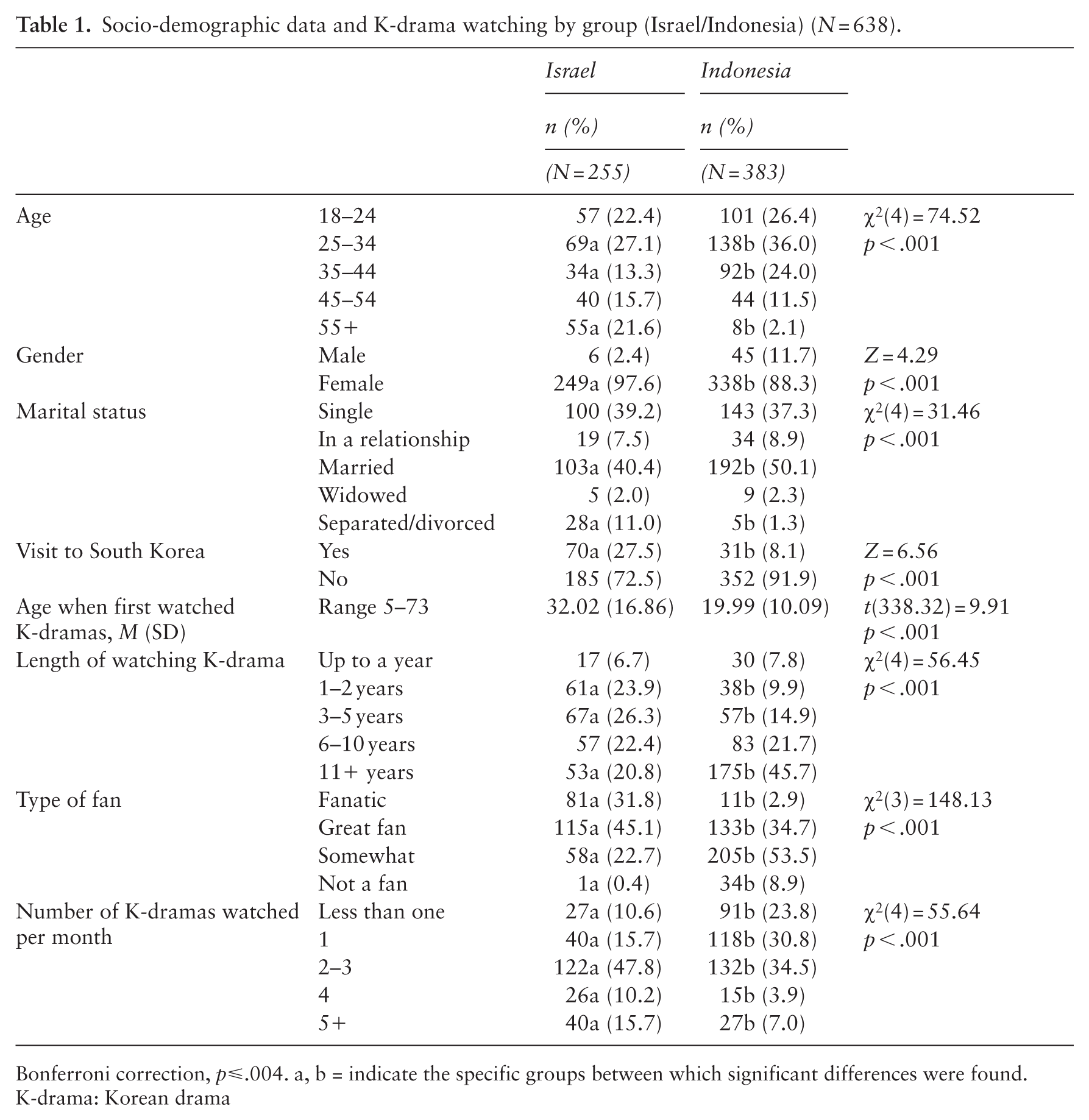
Bonferroni correction, p⩽.004. a, b = indicate the specific groups between which significant differences were found.
K-drama: Korean drama
As shown in Table 1, the Israeli K-drama audience started watching K-dramas at an older age than the Indonesian audience. The Israeli audience defined itself as being more fanatic than the Indonesian one. Accordingly, Israeli participants watched more K-dramas per month and spent more hours per week watching K-dramas than the Indonesian participants, but Indonesians had been watching K-dramas for longer than Israelis. Most of the sample, especially the Indonesians, have not visited South Korea.
Research tools
The following questionnaires were used in this study.
Socio-demographic and K-drama-watching background questionnaire
This section included standard demographic questions (e.g. gender, age, religion, marital status) and items developed for this study regarding K-drama viewing habits: age of first exposure, years of viewing, weekly hours watched, level of fandom, monthly viewing frequency, and whether the participant had visited South Korea.
Attitudes toward alcohol risk messages reflected in K-dramas
A 14-item scale was developed for this study, drawing on concepts from prior alcohol attitude surveys (26), assessing agreement with statements about alcohol-related risks depicted in K-dramas (e.g. ‘Scenes of alcohol consumption in K-dramas should be banned because they can encourage this type of behavior’ or ‘I like to watch scenes of K-dramas where the characters get drunk’). Responses were rated on a five-point Likert scale (1 = Strongly disagree to 5 = Strongly agree), with higher scores indicating more negative attitudes. Reliability was acceptable (α =0 .75; Israel = 0.78, Indonesia = 0.71). For full item lists, see Table 1 in the Supplemental material file online.
Harm reduction attitudes toward alcohol reflected in K-drama
An eight-item scale developed for this study assessed perceptions of harm reduction behaviors in K-dramas (e.g. ‘In K-dramas, there is great awareness of hiring a replacement driver to drive home people who got drunk’ or ‘In K-dramas, people are always looking out for their drunken friends’). Responses were rated on a five-point Likert scale (1 = Strongly disagree to 5 = Strongly agree), with higher scores indicating more positive attitudes. Cronbach’s alpha was 0.76 (Israel = 0.67, Indonesia = 0.82). For full item lists, see Table 2 in the Supplemental material.
Logistic regressions for alcohol consumption for the total sample and by group (N = 414).
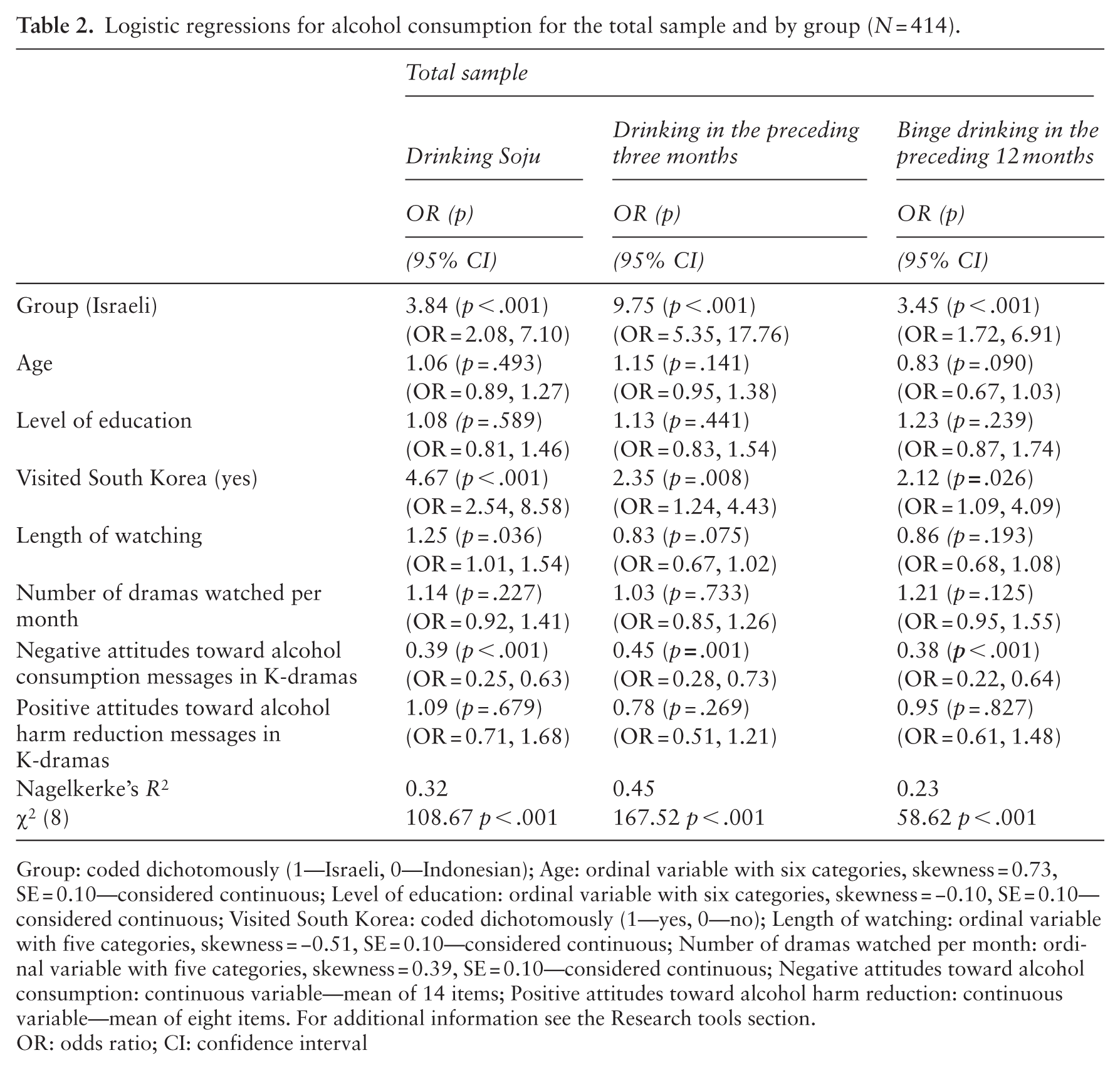
Group: coded dichotomously (1—Israeli, 0—Indonesian); Age: ordinal variable with six categories, skewness = 0.73, SE = 0.10—considered continuous; Level of education: ordinal variable with six categories, skewness = −0.10, SE = 0.10—considered continuous; Visited South Korea: coded dichotomously (1—yes, 0—no); Length of watching: ordinal variable with five categories, skewness = −0.51, SE = 0.10—considered continuous; Number of dramas watched per month: ordinal variable with five categories, skewness = 0.39, SE = 0.10—considered continuous; Negative attitudes toward alcohol consumption: continuous variable—mean of 14 items; Positive attitudes toward alcohol harm reduction: continuous variable—mean of eight items. For additional information see the Research tools section.
OR: odds ratio; CI: confidence interval
Alcohol consumption questionnaire
Alcohol use was assessed using five items from Parts 1 and 2 of the TAPS tool (NIDA Clinical Trials Network) (27,28). Questions addressed past three-month alcohol use, binge drinking (4+ drinks for women, 5+ for men) in the past three and 12 months, difficulty controlling drinking, and others’ concern about drinking. An additional question asked whether participants had ever consumed Soju, the traditional Korean alcohol.
Procedure
The study was approved by Institutional Review Boards in Israel and Indonesia. Questionnaires were translated into Hebrew and Bahasa Indonesia and distributed online via social media platforms popular among K-drama audiences (e.g. Facebook, WhatsApp, Instagram, Twitter). Participation was voluntary, anonymous, and without compensation. Informed consent was obtained prior to completion.
Data analysis
Data were analyzed using SPSS v.28. Frequencies and percentages were used for categorical variables, and means with standard deviations for continuous ones. Group differences were tested using χ2, t-tests, and Z ratios. Cronbach’s α assessed internal consistency, and mean scores were computed. Spearman and Pearson correlations were examined for the full sample and by group. Three logistic regression models were run with alcohol consumption outcomes (Soju use, past three-month use, and past-year binge drinking), controlling for demographics. Attitudes toward alcohol risks and harm reduction messages in K-dramas were the independent variables.
Results
Attitudes toward alcohol consumption risk and alcohol harm reduction messages
The categories involving attitudes toward alcohol consumption risk and alcohol harm reduction messages in K-drama were created from ordinal variables ranging between 1 and 5, higher mean scores indicating higher levels of positive attitudes: Disagree/Strongly disagree includes a percentage of 1–2; Neither agree nor disagree includes a percentage of 3; and Agree/Strongly agree includes a percentage of 4–5 (as presented in the supplementary tables).
The negative attitudes toward alcohol risk messages in K-drama of the entire sample were higher than mid-scale (M = 3.37, SD = 0.52). Significant group differences were found in the attitudes toward alcohol risk messages in K-drama between Israeli (M = 3.22, SD = 0.56) and Indonesian (M = 3.47, SD = 0.47) audiences (t(482.19) = −5.85, p < .001). Indonesian participants had higher negative and critical attitudes toward alcohol risk messages in K-drama than Israeli participants. Table 1 in the Supplemental material presents the descriptive results of the attitudes toward alcohol consumption messages in K-drama.
The positive supporting attitudes toward alcohol harm reduction messages in K-drama were higher than mid-scale (M = 3.82, SD = 0.59). Significant group differences were found concerning the alcohol harm reduction messages in K-drama between Israeli (M = 3.59, SD = 0.57) and Indonesian (M = 3.97, SD = 0.55) audiences (t(636) = −8.47, p < .001). Indonesian participants perceived higher efforts of alcohol harm reduction in K-drama and had higher supportive and positive attitudes toward alcohol harm reduction messages in K-drama than Israeli participants. Table 2 in the Supplemental material presents the descriptive results of the attitudes toward alcohol harm reduction messages in K-drama.
Significant correlations were found for the whole sample, as higher negative attitudes toward alcohol consumption messages were related to more positive attitudes toward alcohol harm reduction messages in K-drama (r = .11, p < .005) (Bonferroni correction, p ⩽ .005).
Alcohol consumption
Only 414 participants of the entire sample answered the last alcohol consumption questionnaire (208 Israelis, 81.6% of the Israeli sample, and 206 Indonesians, 53.8% of the Indonesian sample). Although Soju is not widely recognized or easily available in other countries, 36% of study participants reported having tried it. Significant group differences were found, with a greater percentage of Israeli participants (52.4%) having tried Soju compared with Indonesians (19.4%) (Z = 6.99, p < .001). Overall, 41.1% reported drinking alcohol in the preceding three months, showing significant group differences, with a greater percentage of Israeli participants (68.8%) than Indonesians (13.1%) (Z = 11.51, p < .001). Moreover, 18.6% of the 167 participants who answered the question reported binge drinking in the preceding three months, with no significant differences between Israeli participants (19.1%) and Indonesian ones (15.4%) (Z = 0.45, p = .650). Overall, 23.9% of the 355 participants who answered this question reported binge drinking in the preceding 12 months, and 3% reported binge drinking weekly, 6.5% monthly, and 14.4% less than monthly in the preceding 12 months. Significant group differences were found between the groups in the percentage of weekly binge drinkers (5.9% of Israelis and 0.5% of Indonesians) and the less than monthly binge drinkers (23% of the Israelis and 6.5% of Indonesians), binge drinking being more frequent among Israeli participants than among Indonesian ones (χ2(3) = 34.47, p < .001).
Of 372 participants who answered the failure question, 1.3% reported alcohol control failure, and of the 380 participants who answered the concerns question, 5% reported other alcohol concerns.
Logistic regressions for alcohol consumption
Logistic regressions were conducted for the full sample and by group, with alcohol consumption as the dependent variable. Predictors included attitudes toward alcohol risk and harm reduction messages in K-dramas. For the total sample, group was coded as 1 = Israeli, 0 = Indonesian.
Control variables included age, education level, visit to South Korea, years of watching K-dramas, and number of K-dramas watched monthly. Because of high correlations, age represented both age and age at first K-drama exposure, and the number of dramas watched per month represented fandom level. All control variables were treated as continuous, given their normal distributions.
Table 2 presents the logistic regressions for alcohol consumption for the entire sample.
All three models were significant, explaining 23–45% of the variance. Factors associated with higher odds of Soju use included being Israeli, visiting South Korea, longer K-drama exposure, and more favorable attitudes toward alcohol depictions. Similar patterns were found for recent alcohol use and binge drinking.
Model assumptions
The basic assumptions of the logistic regression models were met. First, we examined the over- and underdispersion in the logistic models. Overdispersion exists if the observed variability exceeds the expected variability; underdispersion occurs if it is lower than expected (29). To this end, we examined the ratio of deviance to the degrees of freedom. Values close to 1 suggest that the model fit is good and there is no significant over- or underdispersion. Values much larger than 1 indicate overdispersion, and values much lower than 1 indicate underdispersion, both of which suggest poor model fit (30). In the present study, all ratios of deviance to the degrees of freedom were at about 1 (Drinking Soju: 1.06, Drinking in the preceding 3 months: 0.97, Binge drinking in the preceding 12 months: 0.96), suggesting no over- or underdispersion.
Second, the Hosmer–Lemeshow test, which compares a model without the independent variables with a model that includes them, assesses how well the predicted values of the model match the observed values. Goodness-of-fit is found when the test provides non-significant values, showing that the model adequately represents the data. We found it to be non-significant in all three models shown in Table 2 (Drinking Soju: p = .426, Drinking in the preceding three months: p = .596, Binge drinking in the preceding 12 months: p = .855).
Third, collinearity between the independent variables was examined with the variance inflation factor (VIF), which should be lower than 2 (31). The highest VIF value in these regressions was 1.66, reflecting no collinearity.
Fourth, we examined standardized residuals to detect outliers. Cases with an absolute value greater than 3 are considered to be outliers (32). In the present study, we found very few outliers (Drinking Soju: n = 6, 1.4%, Drinking in the preceding three months: n = 4, 1%, Binge drinking in the preceding 12 months: n = 4, 1%).
Finally, we examined the assumption of linearity between the independent variables and the log odds of the dependent variable, using the interactions between each independent variable and its natural logarithm (33). All interactions were non-significant (Drinking Soju: p = .146 to p = .922, Drinking in the preceding three months: p = .064 to p = .961, Binge drinking in the preceding 12 months: p = .062 to p = .828), suggesting a linear relationship between the independent variables and the log odds of each dependent variable.
Discussion
The study explored attitudes toward alcohol risk and harm reduction messages in K-dramas and their link to alcohol use among viewers in Indonesia and Israel. Overall, participants held critical views of alcohol portrayals, with average scores above the scale midpoint, likely influenced by frequent binge drinking scenes in K-dramas, despite South Korea’s drinking culture (6,7). Indonesian participants were more strongly opposed to alcohol depictions and more supportive of harm reduction messages than Israelis, reflecting stricter cultural and legal norms around alcohol in Indonesia. Future studies should explore how South Korean audiences perceive these portrayals.
Significant differences emerged between Indonesian and Israeli participants, the Indonesians expressing stronger opposition to portrayals of alcohol use. This divergence likely reflects stricter alcohol regulations and cultural prohibitions in Indonesia (25), in contrast to the more liberal drinking culture in Israel. These cultural differences also influenced attitudes toward harm reduction messages, with Indonesian participants showing stronger support for them.
Attitudes regarding alcohol harm reduction messages in K-dramas were predominantly positive, with a mean score above the mid-scale. The widespread appreciation of harm reduction depictions, such as designated driver scenes, suggests their effectiveness in shaping audience perceptions. Viewers in both countries generally recognized harm reduction efforts portrayed in K-dramas, although Indonesian participants demonstrated significantly stronger support. This may reflect the heightened sensitivity to alcohol-related consequences in societies with stricter regulations and cultural stigmas surrounding drinking. Given the significant role media plays in shaping public perceptions and behaviors (20,23,24), further research is needed to explore the relationship between alcohol prevention messaging and audience attitudes, particularly those of global K-drama viewers.
The results indicate that the Indonesian audience held more negative attitudes toward alcohol consumption messages in K-dramas than the Israeli audience and expressed stronger support for harm reduction messages. These differences align with cultural and religious norms, as Indonesia’s predominantly Muslim population enforces stricter alcohol regulations (34), whereas Israel has a more permissive drinking culture, which may explain the relatively lower levels of criticism toward alcohol portrayals in K-dramas.
Significant differences were also observed in alcohol consumption behaviors between Israeli and Indonesian participants. Israelis reported significantly higher rates of alcohol use, including in the three months preceding the study, lifetime Soju consumption, and binge drinking in the preceding year. These findings are consistent with epidemiological studies showing that alcohol use is more prevalent in societies with greater cultural acceptance and accessibility (35). By contrast, the lower rates of alcohol consumption of Indonesian participants align with national reports indicating restrictive alcohol policies and lower overall alcohol consumption (3).
The strong correlation between negative attitudes toward alcohol consumption messages and positive attitudes toward harm reduction messages suggests that audiences critical of alcohol portrayals in the media also value harm reduction efforts. This aligns with previous research indicating that media literacy and awareness of alcohol-related risks influence audience perceptions (36).
The logistic regression analyses indicated that being an Israeli participant, visiting South Korea, and holding positive attitudes toward alcohol consumption messages in K-dramas were associated with higher odds of drinking Soju, consuming alcohol in the preceding three months, and binge drinking in the preceding year. These findings align with existing studies showing that direct exposure to drinking cultures through travel or cultural immersion can influence drinking behaviors. Additionally, the association between positive attitudes toward alcohol consumption in K-dramas and increased drinking behaviors suggests that media representations shape alcohol-related norms and behaviors (24).
Fans of K-dramas may be introduced to Soju, a popular Korean distilled beverage, by scenes of drinking in these dramas. Soju is not widely consumed in countries like Indonesia and Israel, therefore participants who reported drinking Soju were likely to have visited South Korea (14).
These findings indicate the need for responsible portrayals of alcohol use in globally popular entertainment, such as K-dramas. Given the cultural variations in alcohol-related attitudes and behaviors, media producers should consider the potential public health implications of portrayals of alcohol use (37). Future research should further explore causal relationships between media exposure and drinking behaviors using longitudinal and experimental designs to assess the long-term effect of alcohol-related messaging in K-dramas. Research should also examine how individual and societal factors, such as personality traits, peer influences, and policy interventions, moderate the effects of media portrayals of alcohol use (38). Understanding these dynamics can help inform public health strategies and media guidelines to promote responsible drinking behaviors.
Although harm reduction messages in K-dramas are limited, they present an opportunity to promote responsible drinking. Some scholars suggest that incorporating more positive health messages related to alcohol consumption could help mitigate the public health harm of excessive drinking in South Korea and globally. Nevertheless, K-dramas generally emphasize the entertainment value of drinking, with harm reduction portrayals remaining relatively infrequent.
Limitations
This study has several limitations. First, its cross-sectional design prevents causal inferences; future research should use longitudinal methods. Second, self-reported data may be affected by social desirability bias (39). Third, the sample was predominantly female (88%), limiting generalizability to male audiences. Future studies should aim for more balanced gender representation.
Conclusion
The study offers new insights into how global K-drama audiences perceive alcohol-related risk and harm reduction messages and their link to drinking behaviors. Findings highlight the media’s role in shaping alcohol attitudes and the need for media literacy and responsible portrayals. Significant differences between Indonesian and Israeli participants underscore the impact of cultural context on media effects. The results indicate that alcohol scenes in K-dramas may normalize drinking and downplay risks, attesting to the importance of encouraging responsible media portrayals and harm reduction messaging. Media producers could integrate clearer visual or narrative cues related to moderation and health risks, and public health organizations may consider developing media literacy training programs that help viewers critically interpret alcohol-related content rather than passively absorb it.
Media producers and policymakers should consider the public health implications of alcohol portrayals and explore harm reduction strategies. Future research should examine the long-term effects of alcohol-related media exposure and its relevance to public health interventions. Future research should explore the long-term harm of repeated exposure to alcohol portrayals in K-dramas, including potential cumulative effects on drinking initiation and consumption patterns. Moreover, expanding research to other cultural settings and media genres could improve understanding of how global entertainment influences alcohol norms internationally. Collaborative efforts between researchers, public health practitioners, and media creators could help develop evidence-based guidelines for healthier and more balanced alcohol representation in popular media.
Supplemental Material
sj-docx-1-ped-10.1177_17579759261432176 – Supplemental material for Alcohol portrayals in Korean dramas: associations with global viewer attitudes and drinking behaviors
Supplemental material, sj-docx-1-ped-10.1177_17579759261432176 for Alcohol portrayals in Korean dramas: associations with global viewer attitudes and drinking behaviors by Hagit Bonny-Noach, Yenny Sinambela, Enjeline Hanafi, Chen Shina and Kristiana Siste in Global Health Promotion
Footnotes
Acknowledgements
The authors would like to thank all participants who generously shared their time and insights for this study.
Author contributions
Declaration of conflicting interests
The authors declared no potential conflicts of interest with respect to the research, authorship, and/or publication of this article.
Funding
The authors received no financial support for the research, authorship, and/or publication of this article.
Ethical considerations
The study was approved by the ethical standards of the Institutional Review Board at the authors’ institution in Israel and Indonesia. All participants were informed about the purpose of the study, assured of their anonymity, and gave their informed consent prior to completing the questionnaire.
Data availability statement
The dataset generated and analyzed during the current study is not publicly available but may be obtained from the corresponding author upon reasonable request.

Supplemental material
Supplemental material for this article is available online.