



Abstract
Aim:
This article provides a comprehensive exploration of the varied Corporate Social Responsibility (CSR) actions in relation to supporting communities reported by the UK’s leading food retailers. Findings are discussed against a backdrop of enduring inequalities, exacerbated by the on-going global Coronavirus pandemic, with actions considered for their potential contribution to community-based approaches to addressing local wellbeing and inequalities.
Method:
This article presents the structure and key characteristics of community-oriented CSR in food retailing in the UK. A thematic analysis of comprehensive documentary evidence from the 11 principle UK food retailers was conducted, drawing on asset-based frameworks of community-centred actions towards wellbeing.
Findings:
The findings suggest an increasing acknowledgement in food retail that local community is of key importance. Initiatives were categorised according to a typology, comprising national partnerships, local store-based funding and support actions, targeted programmes on healthy lifestyles or employability, and changes to store operations, in the favour of priority groups, prompted by the pandemic.
Conclusion:
The article combines an up to date overview of community-focused CSR agendas and support by food retailers at a time of significant economic and social challenge for the UK. It highlights the potential of the sector to contribute more strategically to reducing inequalities and supporting community wellbeing, alongside statutory and voluntary sector partners.
Keywords
Introduction
Grocery retailing is a central part of the UK’s economy accounting for ~44p in every pound spent in 2021. 1 The four biggest retailers in the UK are all supermarkets, with the sector employing nearly 1 million people 2 who, since the COVID-19 pandemic ‘lockdown’, are now widely considered ‘key workers’, vital to the nation’s daily life and wellbeing. As one of the few places to remain open, and with other food outlets closed and upward pressure on food prices, 3 supermarkets saw growth in sales both in-store and on-line. 4
Many business operations have the potential to affect wellbeing, not only as providers of employment, education and training but also as indirect influences on community connections, physical and mental health and health behaviours. Yet, the ‘commercial determinants of health’ can also be negative. Indeed, there is strong critique both of: unhealthy commodity industries (UCIs) (such as alcohol, fast food and gambling) and the role of ‘obesogenic environments’ (e.g. fast food, cheap alcohol, lack of green space and health-promoting environments) in exacerbating health inequalities; and of public–private partnerships as a cynical manipulation of corporate social responsibility (CSR) to limit the reputational damage associated with harmful products.5,6 Retail and food retailers are therefore rightly scrutinised and challenged over business and CSR practices.
CSR crystallised as a field of enquiry post-1950.7,8 One of the longest established explanatory models and formative on business operations, is that of Carroll’s ‘pyramid (Figure 1). 9
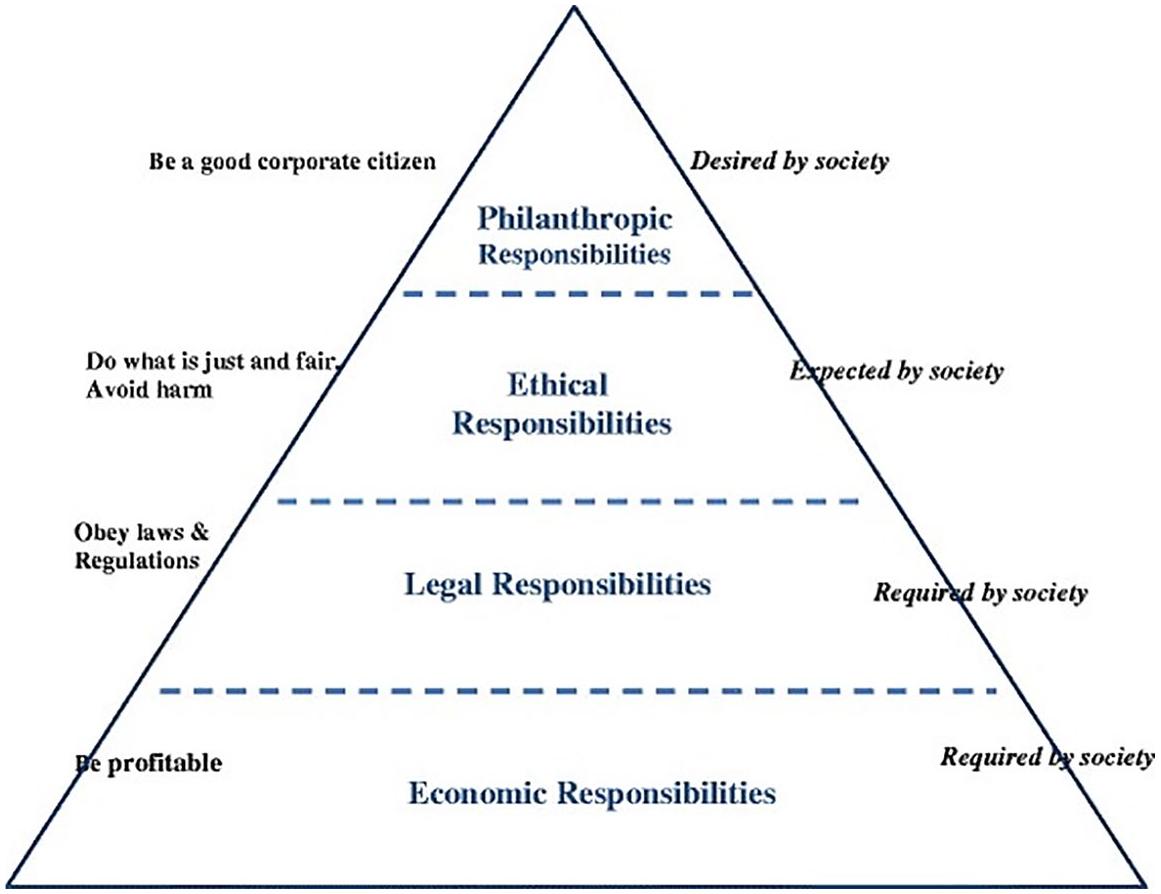
Carroll’s CSR pyramid 10
The base of the pyramid represents the company’s economic responsibility to be financially sustainable, followed by statutory and legally required activity, ethical behaviour responding to societal expectations and discretionary actions (originally described as philanthropic responsibilities) at the top of the pyramid. 10 Supermarkets’ community engagement and support is traditionally situated within the ‘ethical’ and ‘discretionary’ tiers. However, stakeholder pressure (investors, peers and communities) and consciousness of reputational risk may be driving a shift from largely philanthropic donations to integrating social responsibility into core business functions with increasing attention being paid to companies [whose actions] ‘add value to the communities within which they operate’ (p. 134). 11
‘Uniquely’ positioned?
Located in the communities from which they draw both consumers and employees, supermarket retailers have many opportunities daily to interact face-to-face with the public. CSR is considered to be context-specific, 12 and the proximity of supermarkets to their customers, and related vulnerability to public opinion, means they are more likely to focus on charitable giving and education efforts than other less public-facing industries.13,14 As far back as 2012, the BIS retail strategy pointed out that retail, ‘underpins local economies and plays a vital role in delivering public policy (and providing social value) in areas such as public health, employment and skills, environmental sustainability and community cohesion’ (p. 3). 15
Alongside the challenge of responding to high levels of competition and changes to production and distribution, food retailers also need to consolidate economic and social value for customers and their communities. Supermarkets ‘anchor positioning’ in thousands of localities, integral to the communities in which they operate, creates pressure to generate ‘shared value’ by aligning the concerns of local stakeholders (including community members) with corporate goals and competencies.11,16 This lynchpin status has been highlighted over the past year in the emergency response to the Coronavirus pandemic such as rapid mobilisation of support, including deliveries for those shielding and dedicated shopping times for NHS workers.
Inequalities and the role of community assets
The devastation of the pandemic served to highlight as well as exacerbate some of the inequalities in UK society, where clear discrepancies in experience and impact reflected the distribution of income, wealth and health, and associations with ethnicity, gender and geography. 17 Investment in understanding factors driving inequality and effective approaches to closing the gap between rich and poor and improving individual and community health and wellbeing often highlight the importance of ‘wider determinants’, including structural drivers such as education and employment. 18 Furthermore, there is greater recognition of the influence of community conditions on determining outcomes for wellbeing and resilience, and on place-based strategies as the most appropriate response,19,20
Public health practice is increasingly interested in the potential of community-centred approaches in addressing health inequalities.21,22 This has led to an emphasis on identifying and understanding local resources, or ‘assets’, in terms of what exists, where gaps are, and what can be mobilised in favour of improving outcomes for the population. Assets can be categorised according to: formal services (such as provided by statutory or voluntary sectors), the presence or absence of organisational infrastructure (e.g. voluntary and community sector organisations, businesses, support groups, social networks), the built environment (buildings and community spaces), and human resources (community members, volunteers). 19 The impact of these aspects on wellbeing (and indeed resilience during the COVID-19 pandemic) has become a focus both of study and of theory development.23–25
Aim and Methods
Despite this increasingly acknowledged importance of community assets in supporting community wellbeing, related research and evaluation has nevertheless almost entirely focused on the statutory, voluntary and community sectors. Yet, there is a rationale for looking at food retailers as potentially more strategic contributors to the wellbeing of their catchment communities. As such, the aim of this review is to undertake a thematic documentary analysis of the approach and actions undertaken by UK supermarkets under the auspices of CSR, and to consider intended direct and indirect impacts on community wellbeing.26–28 Eleven supermarkets, accounting for 96% of the grocery market share in the UK were included. Independent retailers, including franchise convenience shops were excluded for pragmatic reasons, as were companies offering delivery only. i Community-oriented initiatives were identified by examining the most recent information available on public-facing websites. Sources included: supermarket websites (including corporate sites); sustainability and CSR web pages (and separate websites where signposted); press releases; and on-line reports, including those on CSR, annual accounts and topic-specific documents. The information gathered relates to the last reporting period (most often 2019–2020), while the website and media information was that available on-line at any period between October 2020 to January 2021. Any on-site health-related services, such as in-store pharmacies, opticians or other clinics, have been excluded from the analysis as these are deemed to be business decisions made independently of the CSR strategy.
Details of any action or initiative described separately by the supermarket as a strand or sub-strand of their ‘community strategy’ were extracted to a Microsoft Excel spreadsheet template based on one adapted from the TiDier Checklist including: activity/initiative, locus of action, inputs and partnerships and any record of impact. 29 In addition to the pre-pandemic community-oriented CSR initiatives, we also extracted data on the supermarkets’ response to COVID-19. In neither case was any distinction made regarding the size or the resourcing of the activity. If separately reported, actions were recorded as a stand-alone initiative. Two researchers extracted and coded data, with a minimum of 20% double extraction and subject to cross-comparison, with any disparities or disagreement resolved by discussion.
Thematic analysis was carried out to identify similarities and differences in the detailed inputs, approach, means of organisation and locus of action described. Finally, a typology of the broad approaches and range of resources associated with the community actions was produced.
Findings
CSR activity appears to be well embedded in all supermarket operations, described variously as ‘sustainability’ (five supermarkets), ‘corporate responsibility’ (three), ‘operating responsibly’ (one) and ‘ethics’ (one). Irrespective of differences in terminology, the range of activities reported were broadly similar, focusing on: the
A total of 172 individual ‘initiatives’ related to local community were recorded, with roughly a 50–50 split between pre-pandemic operations and response to the COVID-19 pandemic (see Table 1 for an example of data extraction).
Extraction table example.
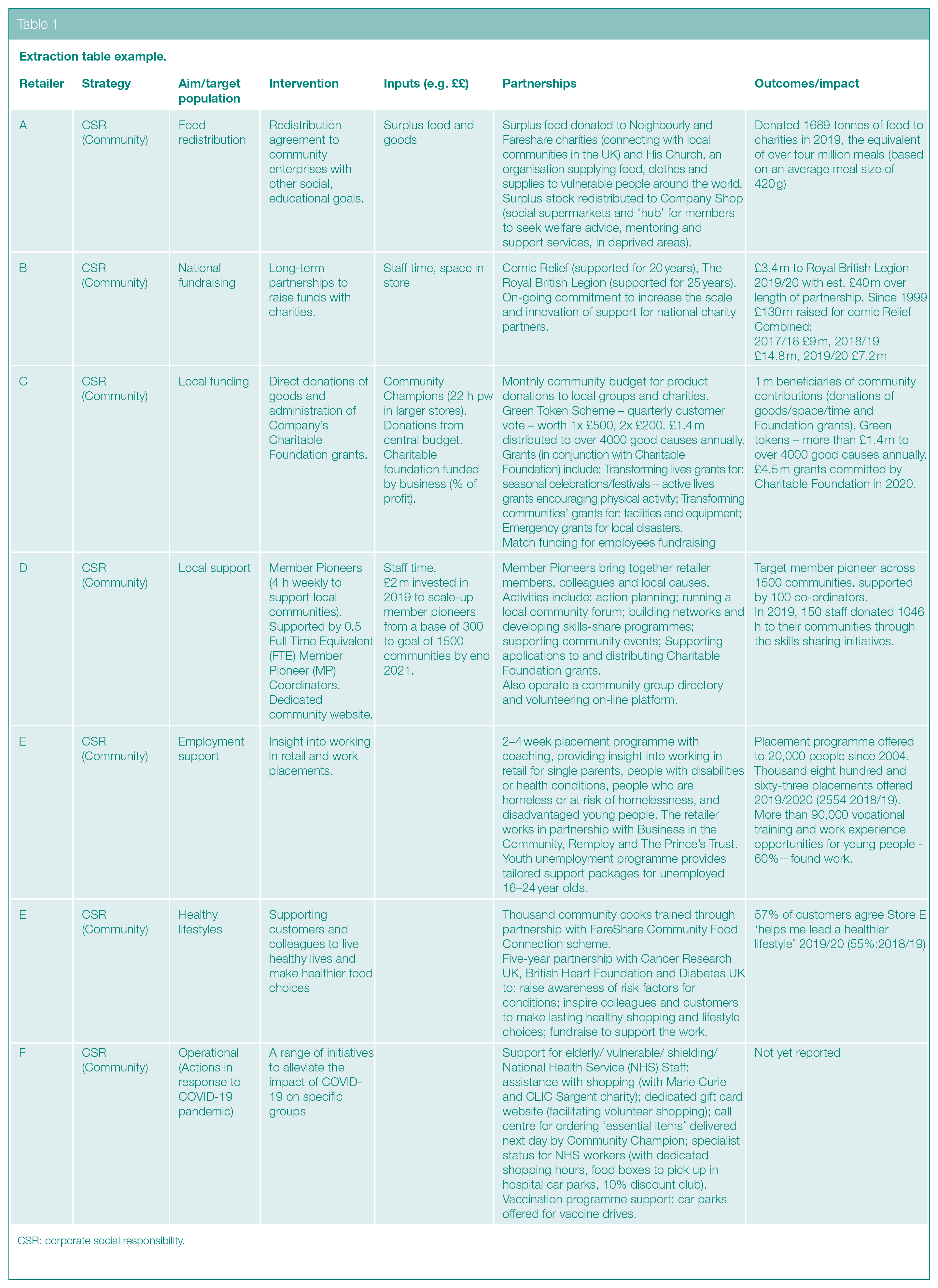
CSR: corporate social responsibility.
Eight main types of community action were identified, grouped in three overarching fields which relate to where and how community engagement is organised (Tables 2 and 3).
Themes and fields of supermarket community actions.
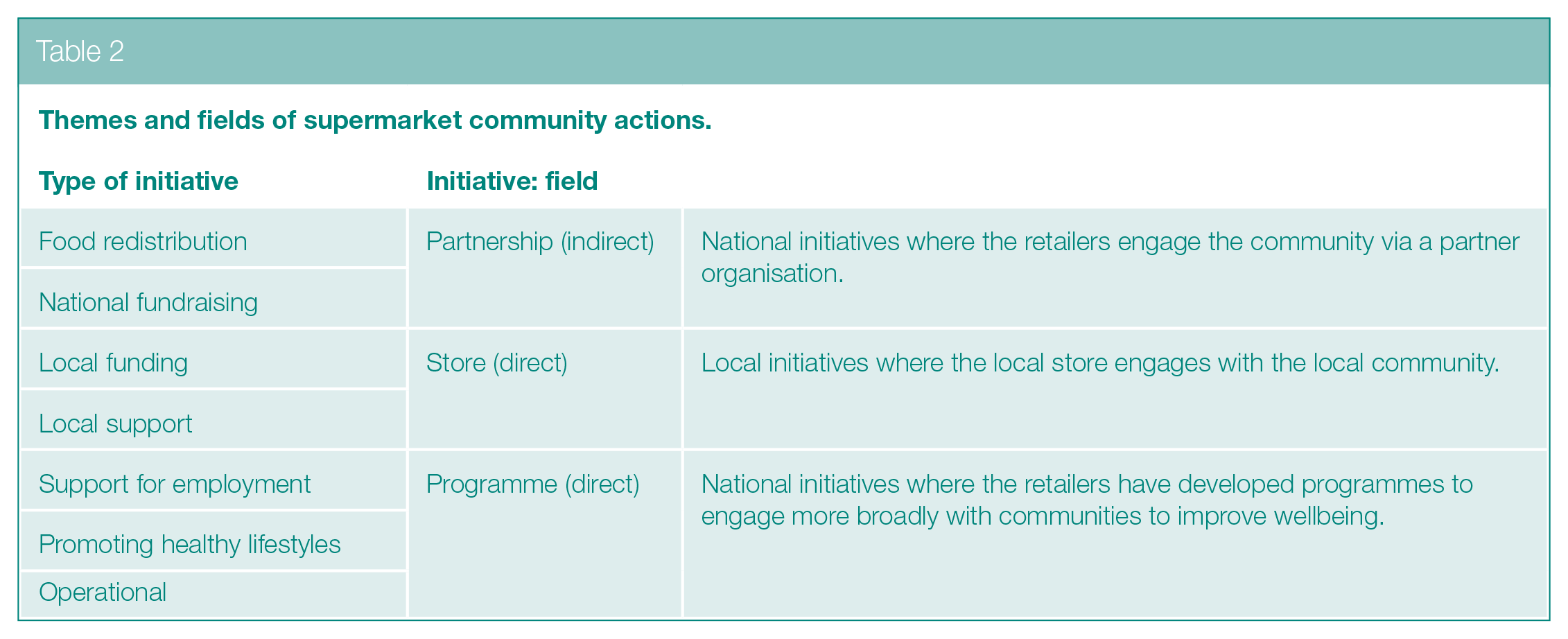
Summary of supermarket community actions.
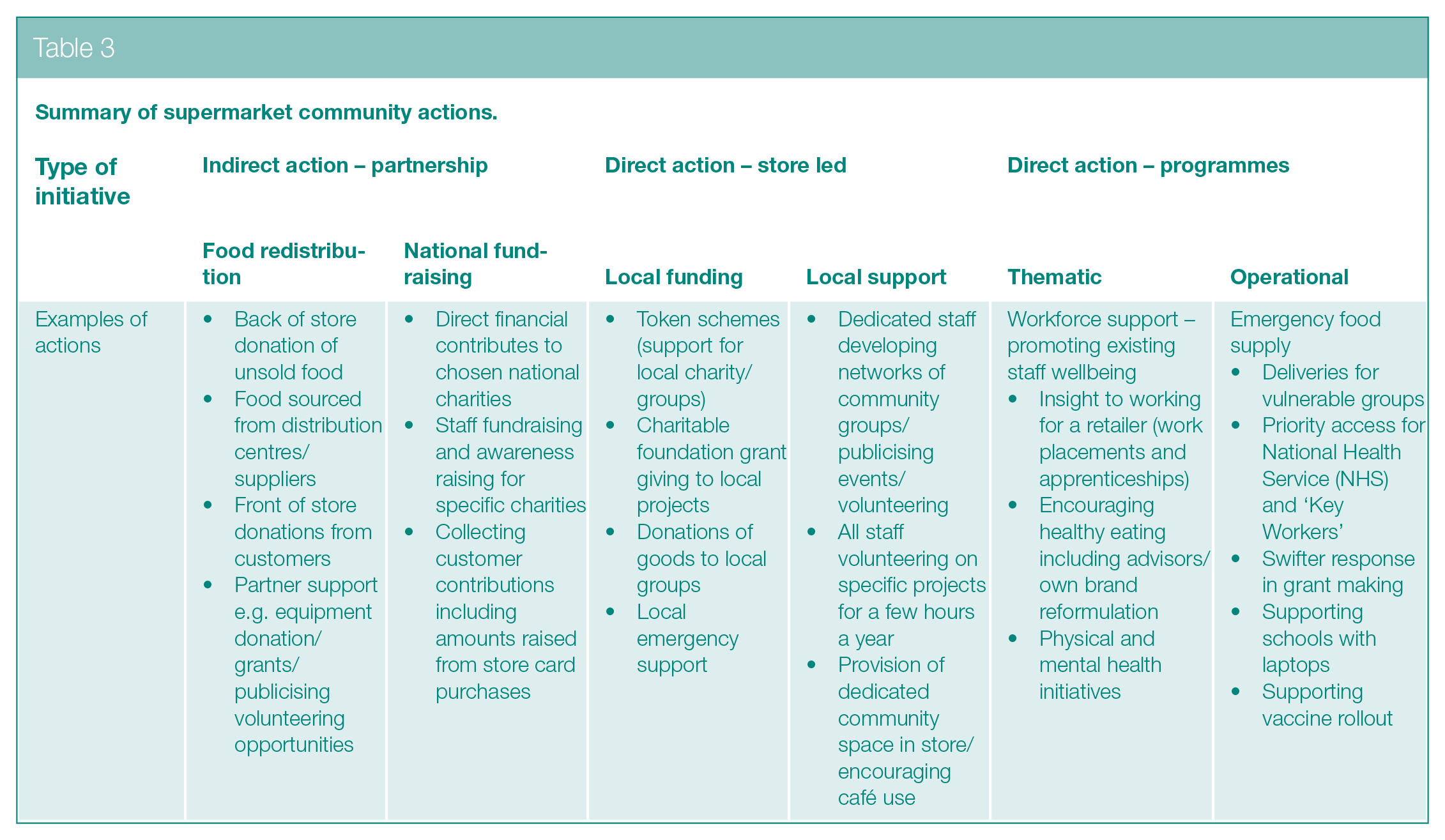
In the pre-pandemic context, the themes and fields are linked and activities grouped according to whether the action is indirect, through partnerships, or direct, with decision making primarily at local store or head office level (Figure 2). National partnerships (food redistribution, national fundraising) were the field where the greatest numbers of retailers take action, followed by local store-based activity (local funding, local support) thematic programmes (employment, lifestyle) and finally, of operational change prompted by the pandemic.
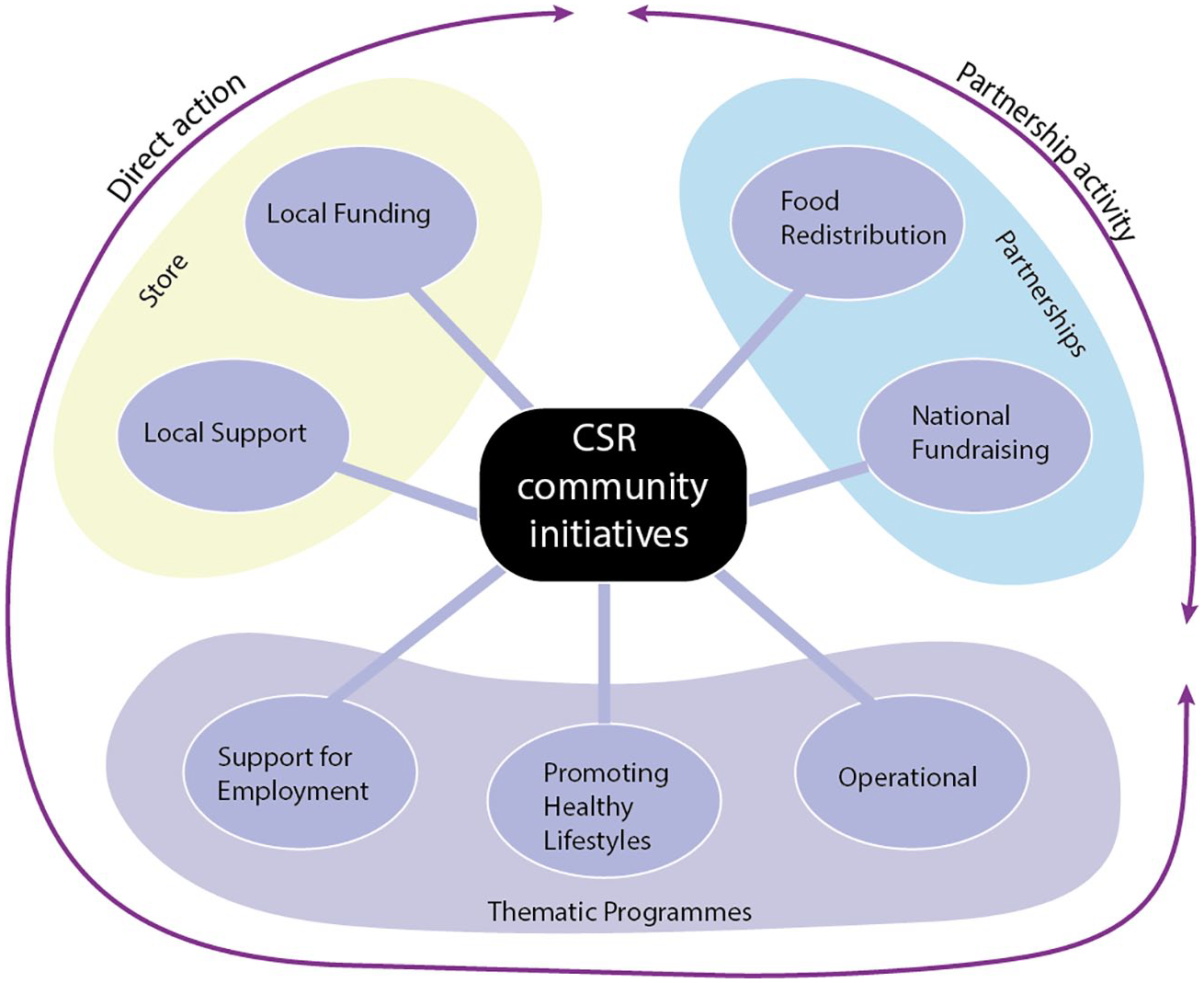
Typology of supermarkets’ CSR community-oriented actions
National Partnership Initiatives
National engagement via partnerships is split into two charitable endeavours, both key to the retailers’ CSR reporting.
Food donation
All supermarkets aim to assist communities with food insecurity/poverty and reduce food waste through redistribution schemes. Sources of donations include: food which is unsold, generally direct from each store (back of store donation); food sourced from distribution centres and supplier surplus items; and items directly donated by customers, facilitated by the supermarket (front of store donation). The majority of this activity is in partnership with voluntary sector organisations who distribute food to community groups and charities in need.
Six retailers partner with Fareshare, a charity distributing surplus food to a network of 10,962 community-based organisations, and three works with ‘Neighbourly’, which helps businesses donate surplus products to local good causes. Four have arrangements with The Trussell Trust, a charity which supports the UK’s largest network of food banks. In addition, two supermarkets work through ‘The Company Shop’, who buy surplus stock and sell at heavy discount to restricted membership, including NHS workers and people in receipt of means-tested benefits. Individual stores also make local arrangements with food banks and other charities, though this is less common, and one retailer has developed an on-line portal to facilitate direct assistance to local groups.
Other efforts towards mediating food poverty include donating fridges and freezers to community groups and charities; improvements to charity partners’ infrastructure, such as warehouses, delivery vehicles, passing on bulk-buyer advantages (e.g. lower cost equipment); commissioned research into drivers of food bank demand; charity staff training; grants to individual food banks; and in-store volunteer recruitment drives.
Charity fundraising
A central pillar in the majority of retailers’ community CSR is fundraising for charitable causes. Money is raised for national charities through direct financial donations by the supermarkets, customer contributions through percentage value of store card purchases, store events and fundraising activities. The list of the charitable organisations supported is extensive, although health-related issues and children’s causes feature widely. Some supermarkets have developed long-term partnerships, while others choose a new cause to support every year.
Direct Actions
Direct actions cover both store-based activities and the wider thematic programmes run by supermarkets. Local initiatives where the store engages directly with the local community include the provision of funding and other support for local organisations.
Local funding
This type of community engagement was the most frequently reported type of activity (21 across eight retailers). Money or goods are distributed by supermarkets in similar ways: four retailers run a ‘token’ scheme where communities nominate and vote for local causes in store–votes determining the size of donation received. Usually several groups are supported over the course of a year, although customers of one food retailer vote to support a single organisation annually. Funding for these schemes generally comes from the retailer’s profits or from the carrier bag levy, although one retailer also donates a small percentage of spend on own-branded products to local causes. The retailers own charitable foundations offer grants, and five retailers run specific programmes via their charities for a wide range of potential projects, such as grants for community celebrations, support for sport and facilities and equipment to improve community facilities. Finally, donations of goods, rather than money, at the request of community groups or local schools for projects is also a common type of action. The retailers’ dedicated ‘Community Champions’ (or equivalent, see below) are key in distributing funds and goods, including taking an active role in distributing aid and practical support during local emergencies.
Local support initiatives
These can be broadly divided into activities supported by staff time (both through dedicated community roles and staff volunteering their time), and those where the store’s physical assets (e.g. community rooms, cafes, shop floor) are made available to the community. First, in terms of activities supported by staff resources, a role commonly described as ‘Community Champion’ by three retailers and ‘Member Pioneer’ by another is key. These could be employees splitting their time between community engagement and another role in store, though increasingly are dedicated part-time or full-time roles. The ‘Champions’ act as conduits between the store, the local community and community groups, supporting them and developing networks through publicity and events, while also facilitating access to stores’ charitable foundation grant funding. The role often includes: volunteering in and making links between community groups; delivering educational/information sessions on healthy eating; and can extend to organising campaigns to support and develop local spaces. Some are charged with developing action plans focused on health and wellbeing, and one supermarket’s staff curate an on-line directory highlighting local needs and resources. Community champions also tend to coordinate donations of ‘space’ to community groups, for example, dedicated rooms or store cafés, frequently without charge.
In addition to the Champion role, staff volunteering in the community appears to be encouraged. Community projects receive a few hours a year of staff time across a wide range of activities including supporting older adults or people with disabilities, undertaking environmental improvements or revamping community spaces. There are also examples of longer-term commitments, such as senior management secondments to Business in the Community, for example.
‘Thematic’ programmes
Initiatives driven through head office activity were aligned to three main themes: employability; mental health/wellbeing and healthy lifestyles. Six of the retailers documented specific workforce-related actions for both current and potential future employees. Two retailers recorded activities to promote existing staff wellbeing, with five promoting schemes to gain insight into working in a retail environment, through short- or longer-term work placements, or full-time apprenticeships. One retailer provides wider support for young people, including wellbeing support for pupils at the key point of school transition. These activities are run in conjunction with organisations dedicated to skills and employability as well charity partners dedicated to mental health and wellbeing.
A number of programmes focus on promoting healthy lifestyles, with six supermarkets active in this area. A particular goal is encouraging healthy eating through supporting people to make healthy choices by offering specialist in-store advisers, promoting healthier products and developing healthier versions of own-brand products. Initiatives focusing on promoting physical and mental wellbeing were also recorded.
Responses to the COVID-19 pandemic
Eighty-seven community-based initiatives were identified as responses to the COVID-19 pandemic (March 2020 and January 2021). Actions were predominantly focused on new or enhanced vulnerabilities in communities. National funding continued with new partners such as the National Emergencies Trust or those supporting frail older adults. New actions were launched on loneliness, such as befriending programmes for ‘shielding’ older adults, and some funded laptops for disadvantaged children at local schools. Others simplified the distribution of small local grants, with swifter decision making, responding to increased existing demand, and demand for new or adapted services resulting from the pandemic. Four supermarkets have supported the vaccine roll-out by offering facilities (e.g. car parks) for vaccinations, and some increased in-store pharmacy support to those shielding.
New initiatives consistent with ‘operational change’ also emerged to ease the impact of ‘lockdown’ restrictions on local people, employees and, in some cases, small businesses. Common actions included: extending opening hours and priority access (on-line and in-store) for groups such as NHS employees and people shielding; employing additional staff to meet new security and delivery demands; improved flexibility and terms for suppliers; rent adjustments for tenants (within-store shops); and bonuses for staff to compensate for increased demand and personal risk of being on the ‘front-line’ during the pandemic. Some launched limited next day and emergency package delivery services.
As well as honouring free school meal vouchers to children in low income families while schools were closed, three supermarkets offered small top-up sums to eligible families to spend on fruit and vegetables. Several also offered Volunteer Shopping Cards, providing a secure way for community volunteers to shop for vulnerable customers, and the community website mentioned above began to put volunteers in touch with customers who needed groceries.
Outcomes and Impact
Several CSR reports included statements to the effect that their engagement goal was to make a positive difference to communities and the people that live there, and a few retailers identified Key Performance Indicators. However, the reports and other communications mainly focused on listing activity rather than impact, with indicators generally tracking outputs rather than outcomes, for example, the amount donated to national charities, number of ‘meals’ donated through food redistribution channels, number of small community grants distributed. Five mentioned the UN Sustainable Development Goals and selected examples where activities related to the goals, and all provided case studies which brought to life the activities that they were undertaking. While no real evaluation of impact on wellbeing was found at this time in the documentary review, there were two examples of investment in research partnerships which have a bearing on assessment of impact and outcomes. One was the creation of a Community Wellbeing Index to underpin understanding of factors influencing wellbeing in communities and enable local groups to better effect change; 30 and the other an effort to identify social and economic value derived from local community initiatives. 31
Discussion and Conclusion
This documentary review has presented the broad approaches and resources associated with the community actions of UK food retailers. The typology illustrates a range of community actions by food retailers which align to a degree both with certain public health goals and with asset-based approaches to supporting community wellbeing. Actions can be seen to support community groups and ‘priority’ subgroups through transfer of financial assets or goods, which in turn enable direct support to vulnerable populations. Hence, supermarkets play a role in building civic capacity 32 both through partnerships, and via their organisational assets providing spaces and human resource to raise funds. The support provided by those in ‘Community Champion’ roles is of particular interest (as it is for similarly titled individuals working in the voluntary and statutory sector), and merits greater attention regarding both current and potential contribution. As well as brokering access to organisational assets (funding, goods, spaces), these staff members represent a community resource (and asset), whose role is potentially to grow social infrastructure for wellbeing – through networking, enabling and facilitating links between community partners and influencing social capital and community capacity.
Reflecting on Caroll’s pyramid of CSR actions, it does seem that actions are still strongly aligned to the ethical/philanthropic domain, now reinforced by elements that signal movement towards social sustainability and added value, (e.g. supporting community and voluntary sector infrastructure), direct support to public health, for example, support to mass vaccination and enhanced pharmacy. Some ‘shared value’ actions are also apparent, for example, training and apprenticeships targeting disadvantaged young people, and flexibility to suppliers and local small businesses offered during the pandemic.
Tensions no doubt exist between the aspirations and reality of what CSR delivers for communities, but (as in other sectors) the impact of an emergency situation such as the pandemic, appears to facilitate a more agile response to local need in food retailer CSR actions and their charitable foundation priorities. A focus on ‘vulnerable’ groups is apparent, perhaps revealing heightened awareness of local inequalities. The ‘pandemic response’ may well continue to influence transitional and perhaps longer-term community strategies as focus turns to ‘building back’.
These findings indicate a potential for supermarkets to contribute more strategically to supporting communities alongside other stakeholders in local systems. We believe it would be a missed opportunity not to consider how to integrate these actions into mobilising, growing and transforming community assets alongside other stakeholders, such as local government and Integrated Care Systems, particularly in places with weaker social infrastructure on which to build more resilient communities.
Limitations
This documentary review was reliant on the accessibility and transparency of information provided in publicly available information. The typology produced reflects the researchers’ prior reading and interests and interpretations of what should be included. Any potential bias or subjectivity was minimised through the application of dual coding, and third-party mediation of conflicting opinions.
Footnotes
Acknowledgements
The authors thank Ellen Bassam for her administrative support in preparation of this manuscript.
Conflict of Interest
The author(s) declared no potential conflicts of interest with respect to the research, authorship, and/or publication of this article.
Ethics
The research is conducted under strict standards of governance of research conducted at the University of Cambridge and the wider study has received ethical approval from the Cambridge School of Technology Research Ethics Committee.
Funding
The author(s) disclosed receipt of the following financial support for the research, authorship, and/or publication of this article: The research, of which this documentary review is a part, is carried out under the Prince of Wales Global Sustainability Fellowship programme and is supported by a philanthropic donation by ASDA. The authors do not work, consult for, or own shares in any company or organisation that would benefit from this article, and disclose no relevant affiliations beyond their academic appointment.
