




Abstract
Managing and leading under challenging conditions is one of the hallmarks of effective leadership. In today’s educational environment, educational leaders and managers must be swift-thinking and fast-acting in their approach. This demands building resilience. In this mixed-methods study, the researchers explored educational leadership and resilience during crises. The study sought to answer two overarching questions: What lessons did educational leaders learn from the COVID-19 experience, and How do the lessons learned prepare educational leaders to be resilient in times of crises? Data for this study were collected via survey and interviews. Survey data were analysed using descriptive statistics, and interview data were analysed using Taylor-Powell and Renner’s (2003) five-step approach. The major findings revealed a necessity for proactive planning, effective communication, and a team approach. Leaders highlighted the importance of resilience training, preparation, and emotional intelligence in navigating crises. The findings provide valuable information that could be used to equip educational leaders and managers to build resilience and augment the practice of educational leadership, particularly during times of crises. Therefore, the recommendations emphasise the need for comprehensive crisis leadership training, the development of contingency plans, and continuous professional development to enhance leaders’ capacity to manage future disruptions effectively.
Introduction
Steering the course through turbulent waters
The education sector is not immune to the ever-present reality of crises. From natural disasters and pandemics to social unrest and economic downturns, educational institutions face a multitude of challenges that disrupt the balance of teaching, learning, and leadership. In these turbulent times, the subject of educational leadership takes centre stage. Effective leadership transcends day-to-day operations; it thrives under pressure. Managing and leading under challenging conditions is one of the hallmarks of effective leadership (Balasubramanian and Fernandes, 2022; Devitt and Borodzicz, 2008; Gigliotti and Fortunato, 2021).
In today’s educational environment, educational leaders and managers must be swift-thinking and fast-acting in their approach. They must be equipped and ready to respond to needs and situations prone to arise in these turbulent times. On March 12th, 2020, the Jamaican government mandated the immediate closure of all educational institutions in response to the burgeoning COVID-19 pandemic. This abrupt decision significantly impacted higher education institutions (HEIs), traditionally reliant on face-to-face instruction. Educators scrambled to adapt their courses for online delivery, grappling with unfamiliar technologies and needing to maintain pedagogical effectiveness in a virtual environment. Considering the rapid changes triggered by the COVID-19 pandemic, it behooves educational leaders and managers to arm themselves to practise and engage in effective crisis leadership. However, since resilient individuals are less affected by challenging situations, effective crisis leadership also demands consistently building resilience. Consequently, this mixed-methods study was designed to explore educational leadership and resilience during crises.
Aim and objectives
The aim of this study was to undertake a detailed investigation of educational leadership and resilience during times of crises. In tandem with this aim, the study’s objectives were to describe the lessons educational leaders learned from the COVID-19 experience and discover how these lessons have prepared educational leaders to be resilient in crises.
Research questions
The following questions guided the study: 1. What leadership lessons did educational leaders learn from the COVID-19 experience? 2. What strategies could educational leaders and managers employ to build resilience for similar times of crises? 3. What were the main lessons educational leaders learned about crisis leadership and preparedness for future disruptions? 4. How could educational leaders benefit from training in crisis leadership?
Literature review
Educational leadership is a specific process that requires critical thinking, strategic thinking, problem-solving, and responding to various situations to ensure an educational organisation’s success. Therefore, educational leadership is a vital part of the operations of such organisations that seek to improve efficiency and effectiveness and transform their institutions towards achieving their goals and contributing to national, social, and economic development (Miller, 2018). As described by Mazurkiewicz (2021), educational leadership is a process built by a group of stakeholders in an educational organisation, the goal of which is dependent on various factors, such as the context within which such leadership is practised and the related complexities. Educational leadership involves being aware of how to manoeuvre in complex contexts with a particular focus on the possible outcomes of their decisions and actions.
Educational leadership and COVID-19: A crucible for resilience
Across the world, the sudden onset of COVID-19 brought unmatched challenges to all organisations creating incomparable crises for them, and organisational leaders were left with no choice but to assume flexible approaches to respond to the related crises (Sarkar and Clegg, 2021). In the midst of this turbulence, educational leadership was severely challenged in their efforts to respond to varying demands and rapid changes to keep their institutions under control. The COVID-19 crisis disrupted most, if not all, educational processes, as educational leaders were forced to reorganise, reframe, and re-strategize to meet the rapidly changing needs. Educational leaders also had to adapt to new technologies and pursue training for new technical skills to facilitate the teaching and learning processes in the virtual space (Bagwell-Gray and Bartholmey, 2020).
The COVID-19 pandemic highlights the critical role of leadership during periods of uncertainty. Gurr and Drysdale’s (2020) framework of leadership domains and capabilities offers a valuable lens through which to examine the challenges and opportunities faced by Jamaican higher education leaders during this time (Figure 1). Leadership in uncertain times domains and capabilities framework. Source: Gurr and Drysdale (2020).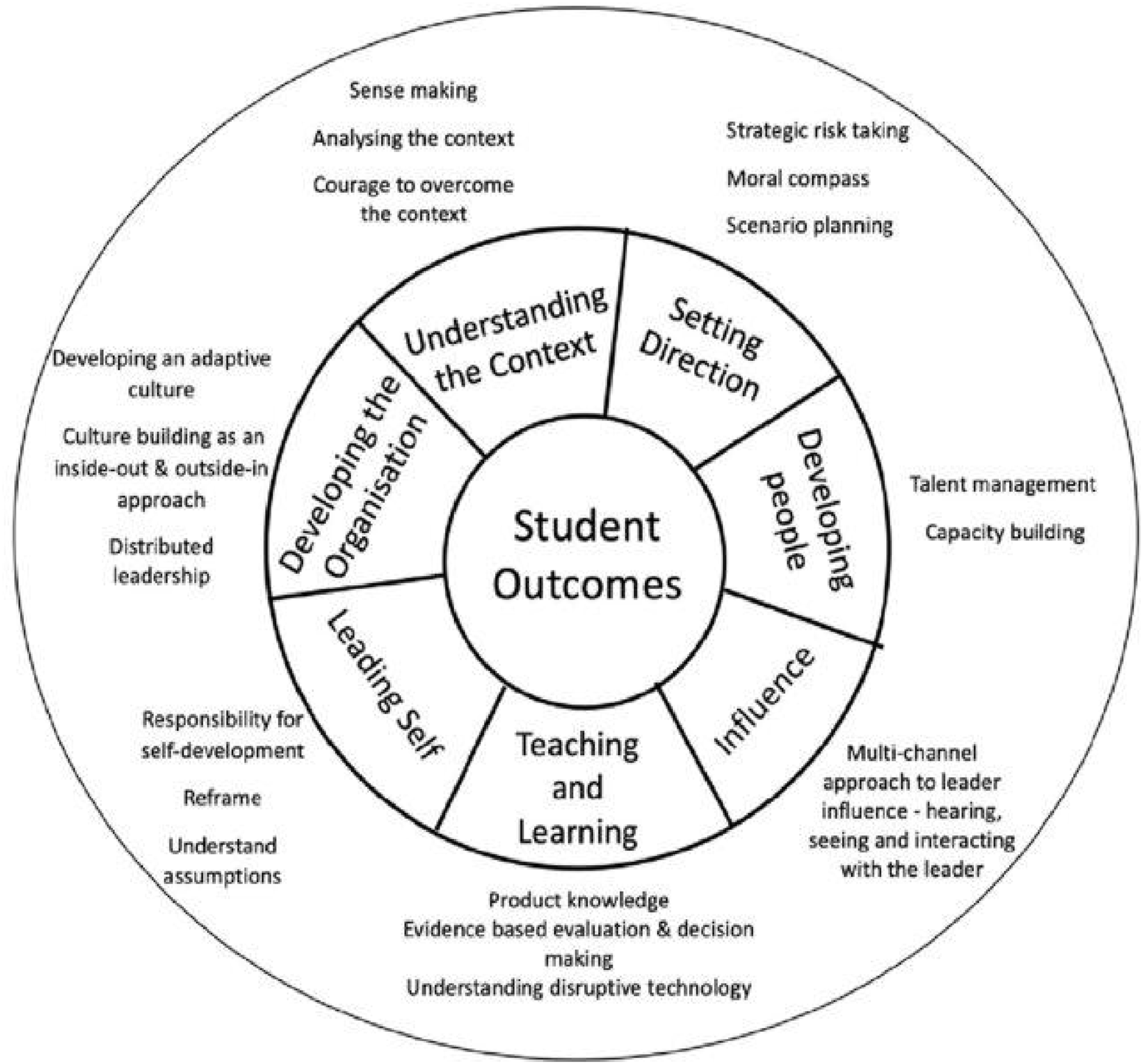
Gurr and Drysdale (2020) argued that the model reflects the capabilities educational leaders need to develop as well as gain a deeper understanding of the essential role leaders play in navigating their team during turbulence and uncertainty.
Educational leadership and resilience
Today’s educational leadership demands resilience. According to Beltman and Mansfield (2018), there is growing interest in the subject of resilience in diverse educational contexts on the international scene. The term resilience cannot assume a one-size-fits-all definition, as different authors see resilience through different lenses (Onyefulu, 2023). As proposed by Walker (2020), resilience is the ‘ability to cope with shocks and to keep functioning’ in a similar way as the organisation would have done in the absence of any form of turmoil (p. 1). Stated differently, resilience is reorganising and reworking operations while handling disruptions. Further, as expanded by Hill-Berry et al. (2023), resilience is a dynamic enabling power of an individual to manage and adapt under stressful situations because of their personal stamina to employ various strategies that will allow them to pull through; and not yield under pressure. In other words, ‘resilience is active, personal and progressive’ (Hill-Berry et al., 2023: 131). The challenges confronting educational institutions are increasingly complex. Consequently, educational leaders must demonstrate resilience, resourcefulness, and creativity, especially during extended and prolonged crises (Osman, 2022).
Crisis leadership
Crises are inevitable in organisational life and can be triggered by internal and external variables (Wu et al., 2021). Crises are said to be prominent conditions, especially for HEIs, and these growing challenges continue to disrupt educational spaces. Therefore, organisations must be aware of the possibility of crises and be ready to act quickly when necessary (Gigliotti, 2019). During crises, leadership characteristics, attitudes, and actions can impact an organisation’s processes and its stakeholders (Wu et al., 2021). During these times, organisational stakeholders’ demands for leadership are varied, requiring immediate attention and action (Gigliotti, 2019; Gurr and Drysdale, 2020). Gigliotti (2019) further noted that crisis leadership is extensive in higher education. Along with leadership values, crisis leadership incorporates the application of crisis prevention and crisis management initiatives, public relations strategies, networking skills, and a wide array of other skills and competencies (Gigliotti, 2019). Crisis leadership also requires integrity and credibility to ensure frequent and transparent communication with all stakeholders to ensure that they understand the position of the organisation and are kept abreast of its direction (Menon and Motala, 2021). In times of crises, leading an academic institution becomes more taxing because, in such challenging times, the roles of academic leaders multiply, and their capacities are stretched (Thompson and Wilmot, 2022). Additionally, even while organisational leaders are experiencing crucibles, they are most desired during crises. Hence, they must be most visible in crises (Gigliotti, 2019). Further, the intersection between emotions and critical decision-making makes crisis leadership challenging (Yeomans and Bowman, 2021). This underscores the need to share the educational leadership burden (Smith, 2013) and employ resilience to navigate these challenges.
Taxonomy of crises in higher education
Crisis taxonomies.
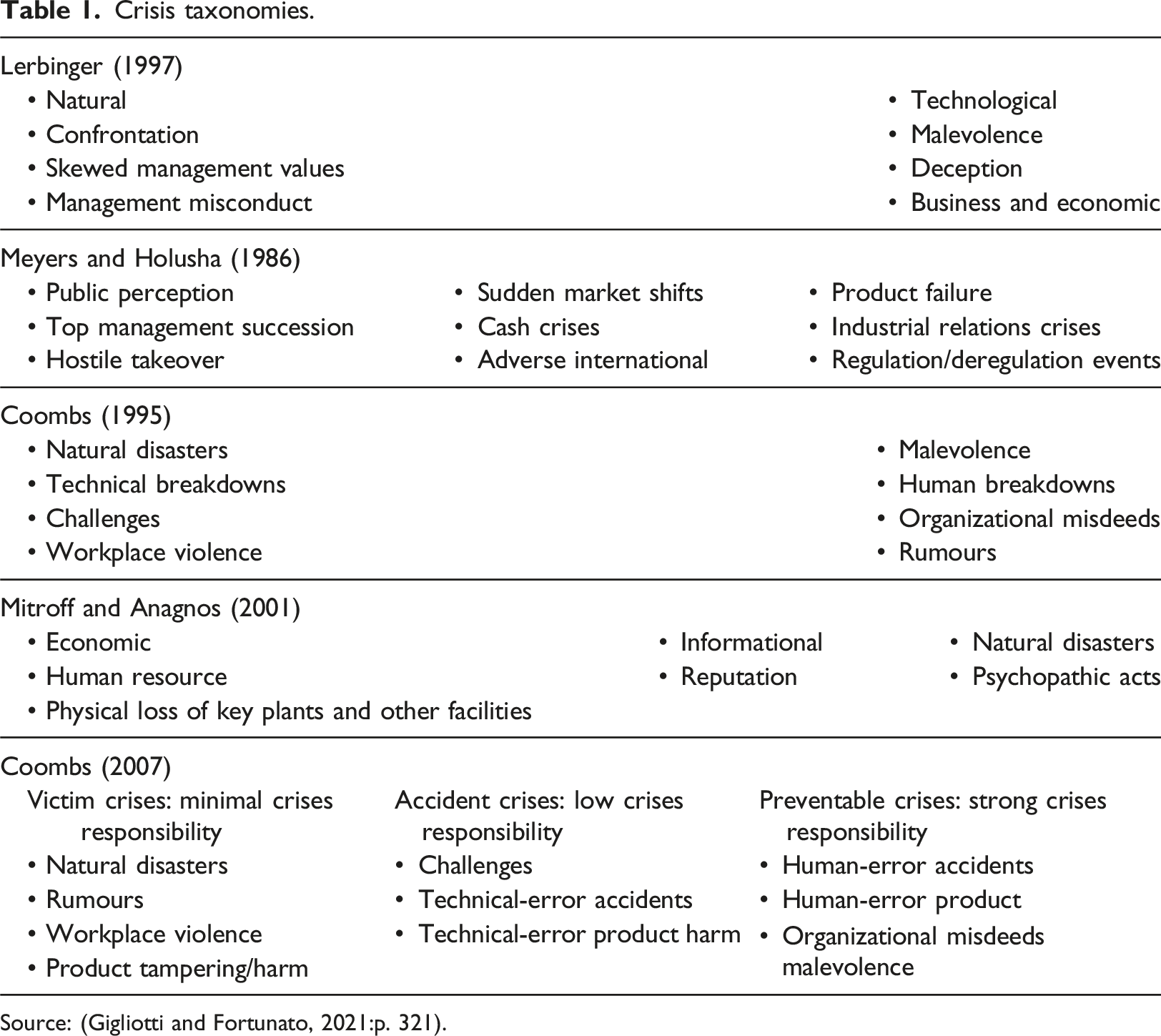
Source: (Gigliotti and Fortunato, 2021:p. 321).
Types of crisis in higher education.
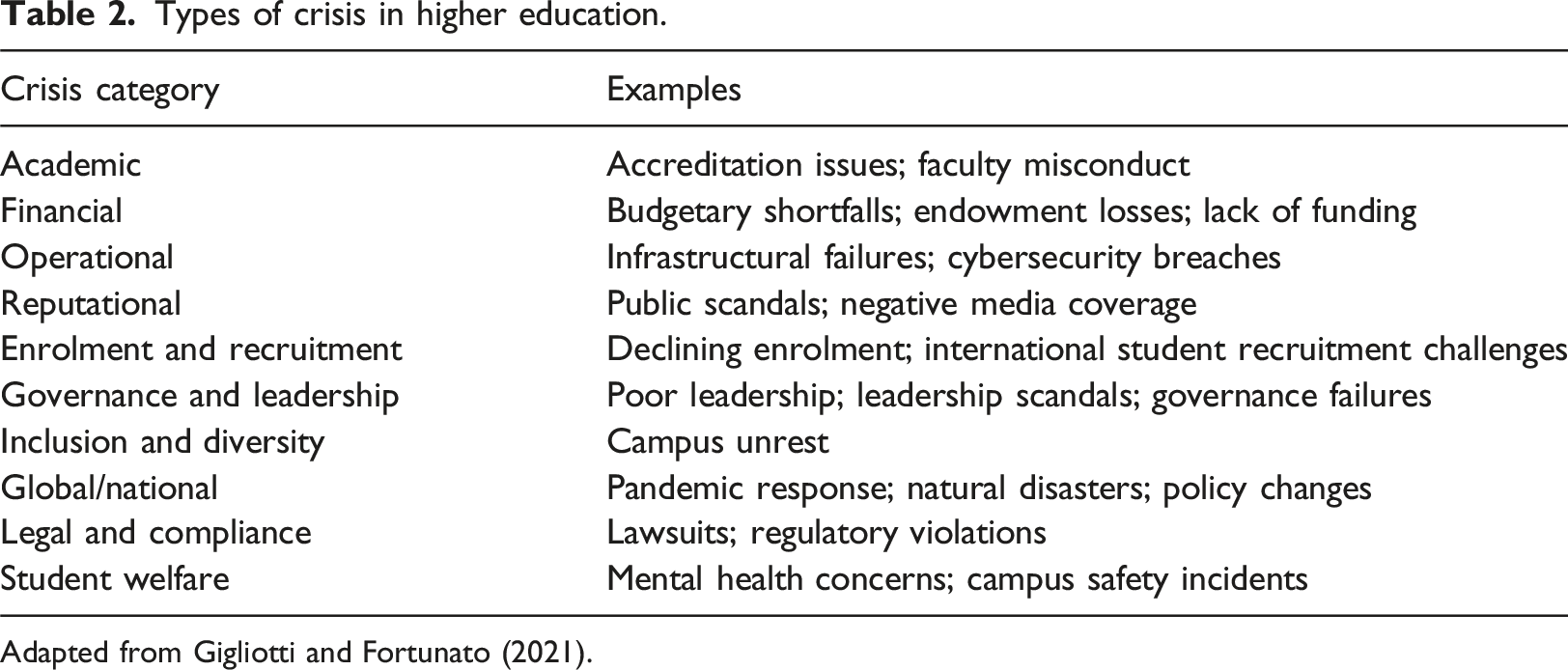
Adapted from Gigliotti and Fortunato (2021).
Educational leadership, resilience, and times of crises
Resilience is a fitting tool to cultivate the type of leadership that is required for educational organisations in times of crises. This is so because resilience ‘nurtures peace of mind, improves mental capacity, and increases professional performance’ (Hill-Berry et al., 2023: 131). These fruits of resilience are qualities that are required to lead educational organisations generally, and even more specifically, in turbulent times. Every organisation will be affected by crises; thus, every organisation needs resilience to thrive. Additionally, employees are dependent on leadership to prepare them to respond in times of crises. However, it is important to note that, in any organisation, the existing leadership culture, behaviour, and capabilities can boost or wear out resilience (Seville, 2018). Therefore, educational leadership demands resilience and preparedness to deal with crises. Rightly equipped and having an awareness of the needs and challenges faced by stakeholders during crises, they can employ appropriate resilience strategies to cope with such crises and to overcome the related challenges (Strehmel et al., 2023).
Strategies for building resilience
Cultivating resilience, this mental fortitude is vitally important for effective educational leadership, particularly in harsh conditions (Hill-Berry et al., 2023). In addition, as Dohaney et al. (2020) proposed, building resilience by preparing for crises can return short-term and long-term benefits, and they put forward several strategies for building resilience. Among the strategies they suggested are leadership support towards resilience initiatives and providing resources required for these initiatives, having an institutional resilience plan, appropriate sharing of resilience information, and training to deal with crises. Other authors reported that building and promoting resilience has been done through equity-focused initiatives that are based on social justice and related principles (Bryan et al., 2020). In their 2018 article, Tabibnia and Radecki (2018) focused on resilience training that can change the brain. They noted several behavioural strategies to enhance resilience, including diet, physical exercise, and sleeping, as well as social behavioural strategies, such as making social connections and expressing gratitude. They also focused on learnable mental strategies such as re-evaluating thoughts and vocally expressing emotions. These are similar to the findings of Hill-Berry et al. (2023), which highlighted that engaging in mental and emotional activities such as coping seminars, positive thinking, and stress management were positive strategies for building resilience.
Benefits of crisis leadership training
Crisis preparedness is a critical element of any organisation’s success. Training in crisis leadership is not a luxury, but a necessity. In higher education, a new type of leader is needed to handle the constantly changing environment. This leader must be equipped to navigate not only the day-to-day complexities but also the unforeseen crises that can threaten the well-being of students, faculty, and the institution itself. Crisis leadership training specifically tailored for school leaders in higher education will aid in safeguarding the institution and fostering a sense of security within its community. Therefore, by equipping leaders with the necessary skills, organisations can ensure a more robust and resilient future. According to the literature, along with building resilience for times of crises, myriad benefits can be realised from crisis leadership training. However, this type of training is not always done. Very often, although with good intent, school leaders take the wrong step towards crisis response and worsen the situation because they had not gone through crisis leadership training. However, with crisis leadership training, they could have averted the complications and shorted the recovery period (Morrison, 2017).
Crisis leadership training should include varied exercises such as drills and simulations. From these real-life scenarios, participants in the crisis leadership training benefit from better understanding of the complexities that they will likely confront in actual crises, they identify personal and organisational strengths and weaknesses, and they are able to assess the outcomes of their performance and learn from those experiences to equip themselves for better response in future crises. They also learn questions and behaviours that they can anticipate in future crises (McNulty et al., 2019). Crisis leadership training also equips participants with the required skills and competencies to effectively lead during turbulent times. Crisis leadership training builds their resilience, enhances their communication, quickens their cognitive abilities so they can make quick yet accurate decisions even while under pressure, and boosts their ability to lead an organisation through other crises (Strawser, 2023).
Research methods
This study utilised a mixed-methods approach to obtain responses to the four research questions. The target population was approximately 140 academic leaders – Deans (8), Vice Deans (8), Heads of Schools (19), and Programme Directors/Programme Leaders (105) – in a selected tertiary institution in Jamaica. To obtain answers to the research questions, an author-developed questionnaire and a semi-structured interview protocol were developed and used for data collection.
This study utilised an explanatory sequential mixed-methods design to obtain responses to the four research questions. According to Creswell and Plano Clark (2018), quantitative data are collected and analysed first in this design, while qualitative data are collected and analysed in the second phase. This research paradigm allows researchers to elaborate and probe further the results gathered in phase one.
The study was conducted at a higher education institution in Jamaica. The participants involved academic leaders, including Deans, Vice Deans, Heads of Schools, and Programme Directors and Leaders. The population size (n = 140) is inclusive of Deans (8), Vice Deans (8), Heads of Schools (19), and Programme Directors/Programme Leaders (105).
A five-section author-developed questionnaire was designed to gather essential information on participants’ experiences during times of crises. The questionnaire comprised 24 questions in total. Section one gathered demographic information. In section two, participants were required to answer questions about their leadership during the COVID-19 pandemic. The questions in section three were designed to ascertain their level of resilience during times of crises, while section four sought to gather insights into the lessons participants learned from the COVID-19 pandemic. The final section, section five, was focused on learning more about how participants’ reflective practices will guide future planning in educational leadership. The instrument used predominantly Likert-type questions with a few multiple-choice items.
Reliability table for educational leadership in times of crisis.

Note. The lower and upper bounds of Cronbach’s α were calculated using a 95.00% confidence interval.
For the interviews, emails were sent to these academic leaders explaining the study and requesting their participation. The relevant interview sessions were scheduled among those who expressed willingness to participate. Except for one, the interviews were conducted via telephone or ZOOM and each lasted 10–20 min. For the other, after missing three appointments, the interviewee asked that the researchers send her the questions, and she provided the responses using voice recording. Despite efforts to increase the response rate such as repeated requests via different media, and extending the data collection period thrice, this only resulted in a prolonged data collection period as the response rate remained low.
No incentive was offered for participation in the study. Data for this study were collected over a five-month period. The survey data were validated and coded, and then analysed using SPSS. The interview data were transcribed and analysed using Taylor-Powell and Renner’s (2003) five-step approach.
Before embarking on the study, the required steps were taken to ensure ethical soundness. Participants were informed of the nature and purpose of the study and that voluntary participation was being sought. They were also informed that even if they started and decided to discontinue, they were free to do so without providing any reason. The researchers sought and obtained ethical clearance from the institution’s Research Ethics Committee.
Findings
Quantitative data
Age range of respondents.
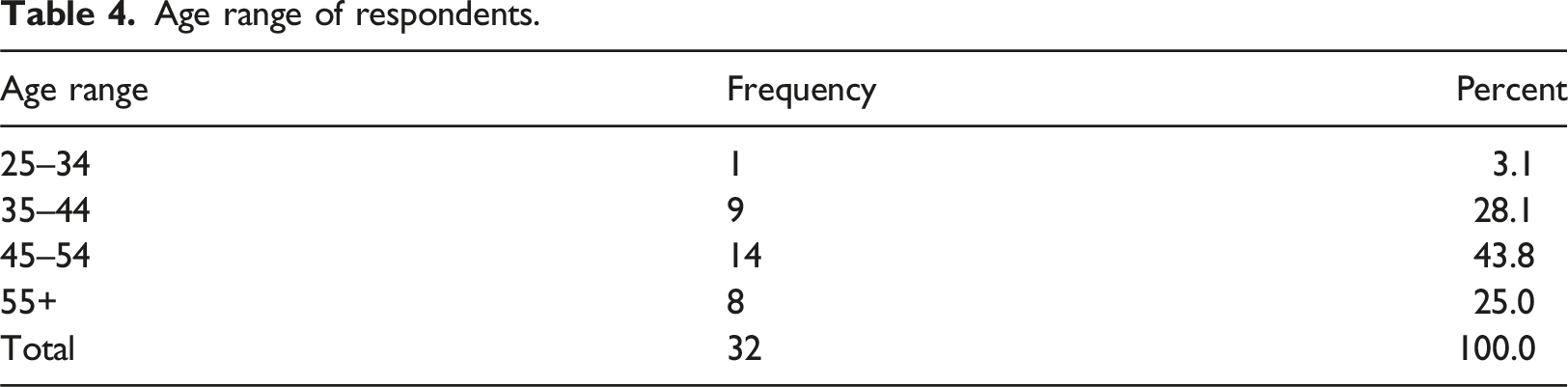
Regarding the educational level of participants, 41% had education at the master’s level, while 59% had education at the doctoral level.
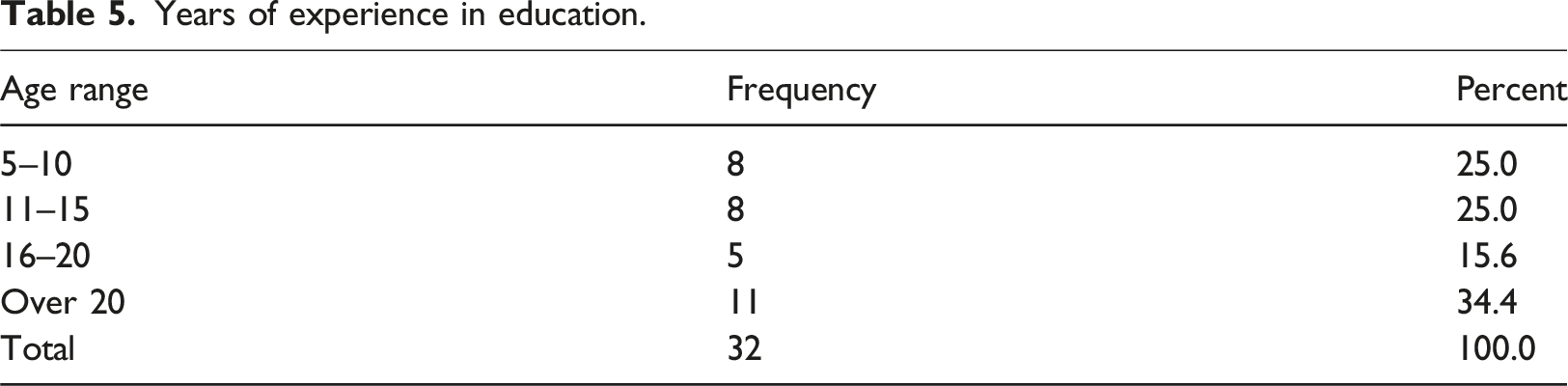
Years of experience in education.
Of the eight academic units, there was no participation from one. The distribution below shows the proportion of respondents from the seven participating academic units (Figure 2). Academic unit to which participants were aligned.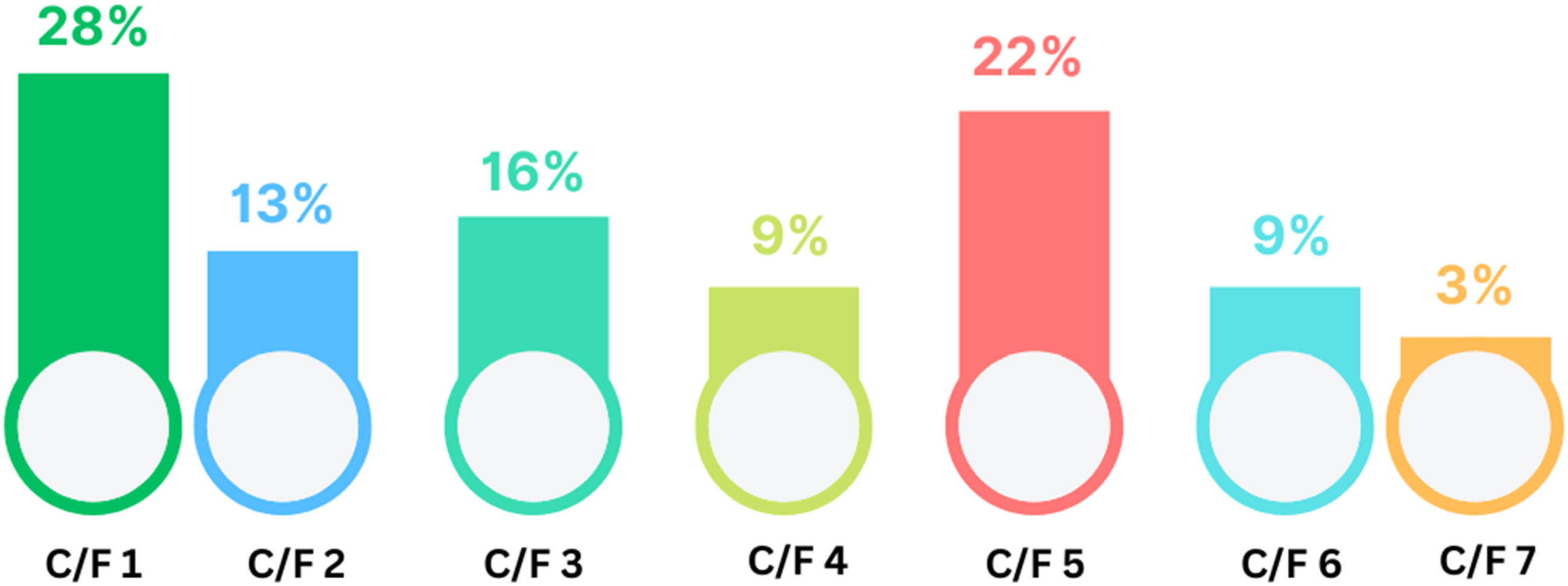
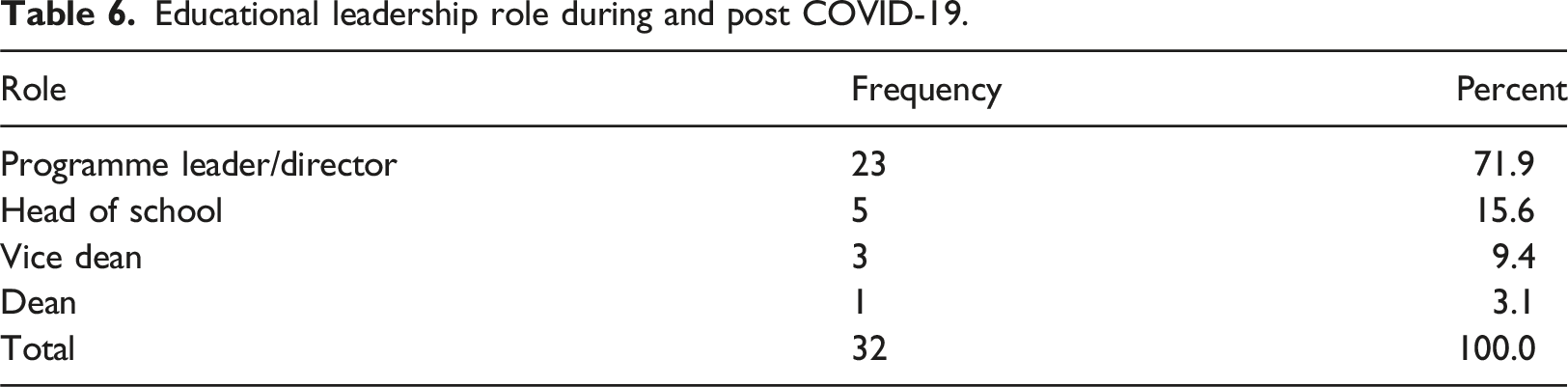
Educational leadership role during and post COVID-19.
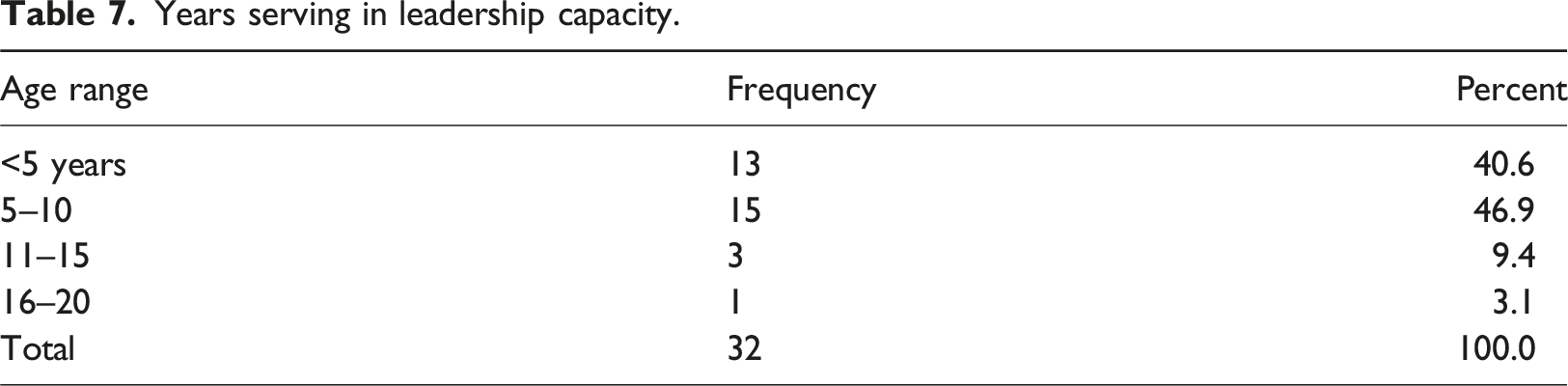
Years serving in leadership capacity.
The researchers targeted academic leaders from all academic units to obtain qualitative responses to the research questions. However, those who positively responded were from five of the eight academic units. A total of seven interviews were conducted with academic leaders – one Dean, two Vice Deans, two Heads of Schools, and two Programme Directors. Interviewees were all females. The results are herein presented according to the research questions with the quantitative responses followed by the qualitative responses which provided deeper meaning into the research questions.
RQ1: What leadership lessons did educational leaders learn from the COVID-19 experience?
Respondents described their leadership during the COVID-19 crisis and lessons learned, then answered the question about the most important leadership lesson that they learned from the COVID-19 experience. Most respondents (68.8%) reported that during the recent crisis, their communication with staff and stakeholders was effective. Others reported that their communication was very effective 18.7%, neither effective nor ineffective 6.3%, and very ineffective 6.3%. In the meantime, regarding how much they involved their staff in decision-making processes during the COVID-19 crisis, 53.1% said they did well in engaging staff in decision-making processes. The responses of 15.6% were neutral, while 31.3% reported that their engagement of staff was very well. Concerning the extent to which academic leaders felt responsible for the well-being of their staff during the crisis, 50% said they felt responsible to a large extent, 18.8% to a moderate extent, 18% to a very large extent, and 12.5% said to a minimal extent.
In relation to the frequency at which respondents provided opportunities for professional development and support to their staff during the COVID-19 period, 50% of respondents reported that sometimes they provided this sort of support, 28% provided support often, 9.4% rarely, 6.3% always, and 6.3% never provided this sort of support during the crisis. Regarding how confident respondents were in their ability to successfully lead their educational institution through a crisis, their responses varied but were quite informative (Figure 3). Respondents’ level of confidence in their ability to successfully lead their educational institution through a crisis.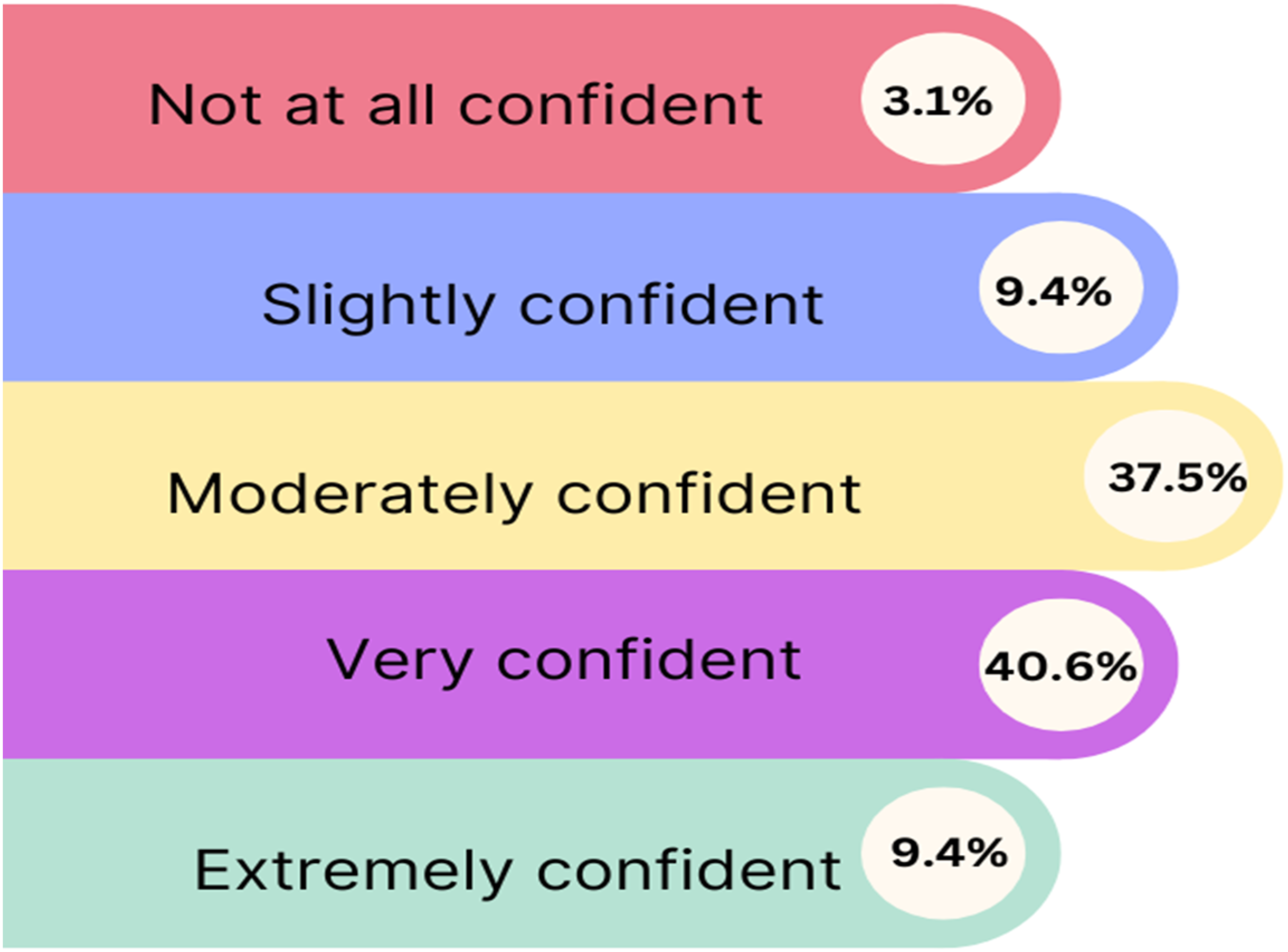
The qualitative responses to this first research question were categorised under three main themes: preparation, communication, and team approach.
Preparation
The following statements demonstrate educational leaders’ clear consensus that preparation is paramount during crises: The most important leadership lesson learned during the crisis is preparedness. (Respondent 2) Preparation is everything. With the onset of COVID, we were able to prepare. That prior preparation assisted us to be ready during the time of COVID and … then once [COVID] hit, we were able to implement those plans. (Respondent 4) Different emergencies and crises will require case-specific responses. … all require preparedness and a plan for the safest responses. (Respondent 7)
Communication
Effective communication is critical during crisis situations. Some respondents also noted that crises naturally evoke fear and uncertainty; that they realised the importance of acknowledging anxieties, and that expressing empathy can help create a safe space. They learned that: Proper communication was essential in rallying the team who were anxious and afraid. (Respondent 2) Stakeholders need swift, reliable, and accurate information concerning the nature of the threat or crisis and the means of counteracting, mitigating, and adapting to the circumstances, as needed. There needs to be coherent and direct guidance to [all stakeholders]. (Respondent 7)
In the COVID-19 crises, there was a need for: Empathy because people were frightened … and even myself. I was seeking empathy from my leaders. So, I believe [there was need for] empathy – giving and receiving empathy, because the situation was new and frightening, and no one knew what to expect. (Respondent 6)
Team approach
Respondents agreed that involving and engaging team members during crises is integral. They stated that: Involving all my team members in the decision-making processes during this period was critical to achieving buy-in. Coaching and mentoring my staff during the turbulent times served as a vital support system. (Respondent 2) Survival was the name of the game and so everything you did pointed to how you were going to do this. Your team would give ideas and so you realise that no man is an island and so your leadership was about listening to your team, was about how the resource people on your team showed up, how to navigate this situation as a team, and how to get past there, and you had to be so convincing. So you didn't even realise how strong a leader you were that your team would follow you. (Respondent 3)
Some of the lessons educational leaders garnered from the COVID-19 crisis were personal. They emphasised the importance of being willing to embrace change, the importance of being decisive and adaptable, and the importance of reflecting on their own leadership capabilities. They stated that: You have to know who you are, and you have to be very decisive. You must know that if you take a position, you just have to stand by that position. There was a situation where I had to take a position and inform upper management about the decision. … If I were to wait for upper management to make a decision, I think the students would have been negatively impacted. (Respondent 1) I questioned my leadership skills during this period of testing. (Respondent 2) The most important leadership lesson I learned was that you have to be willing to pivot and embrace change even amidst uncertainty. (Respondent 5)
RQ2: What strategies could educational leaders and managers employ to build resilience for similar times of crises?
Respondents described their strategies used and their resilience during the crisis by rating their performance. In relation to their ability to remain calm and composed during times of crisis, their responses were 43.8% good, 37.5% excellent, 15.6% average, and 3.3% very poor.
Concerning the frequency with which they sought support from colleagues or mentors during challenging situations, respondents reported 37.5% sometimes, 37.5% often, 15.6% always, and 9.4% reported that they rarely sought support from colleagues or mentors.
Resilience during crises involves embracing change and adapting to changes. Regarding how well respondents adapt to changing circumstances during a crisis, 54.9% said well, 34.4% said very well, and 6.3% were neutral.
An important part of building resilience is self-care. Respondents shared the frequency with which they engaged in self-care practices to maintain their well-being. Their responses are displayed below (Figure 4). The frequency with which respondents engaged in self-care.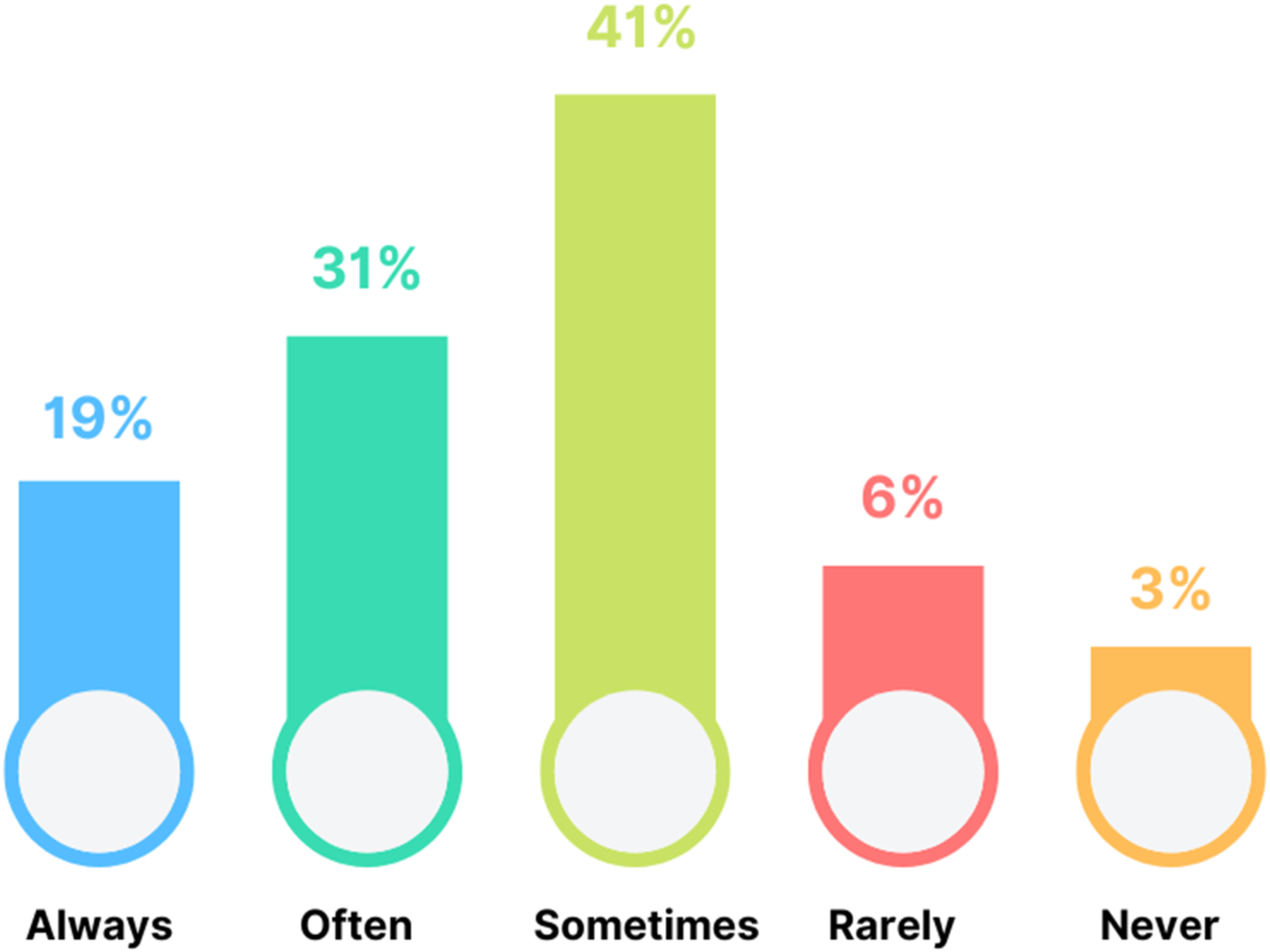
Resilience is often shaped and cultivated by experiences. As educational leaders, respondents shared the extent to which they believe that their past experiences with crises have positively influenced their resilience (Figure 5). The extent to which respondents’ experiences with crises positively influenced their resilience.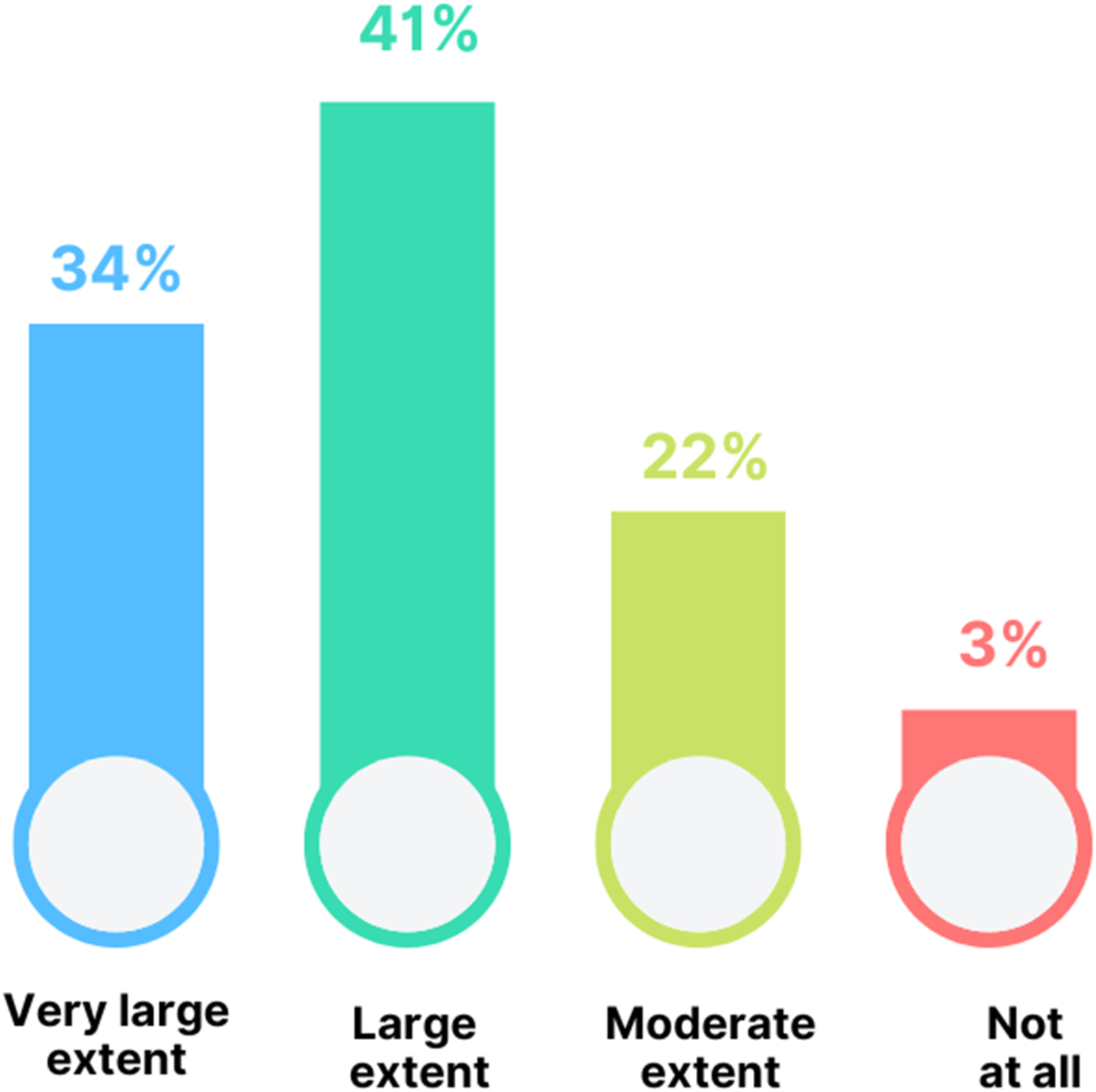
In their qualitative responses to this second research question, respondents suggested several other strategies that educational leaders and managers could employ to build resilience for similar times of crises. They suggested that educational leaders and managers should be proactive and have a wellness focus. These strategies were similar to the suggestions made by the survey participants.
Preparation
The first strategy that respondents suggested was preparation and having contingency plans in place: Forward planning is important. There must be something in place to manage crises when they occur. (Respondent 2) Be prepared for eventualities – you can’t be prepared for all of them, but certainly you can have two areas in mind or two strategies going forward so preparation is very key. (Respondent 4) Be prepared to make hard decisions. (Respondent 5) As part of this preparation, educational leaders should also put in place contingency plans. (Respondent 1)
Communication
Another strategy echoed by most respondents was proper communication in terms of content and method, and communicating in a timely manner. While, as with Respondent 3, communication as a means of preparation was stated without any expansion, some respondents provided expansion: Proper communication as well as being more proactive … timely communication is important. (Respondent 1) More communication, especially on a personal level, is required. (Respondent 2) Communication. (Respondent 3) Constant and open communication with the staff so that they know how to prevent burnout, and to share the strategies. I found that just talking with somebody else during the crisis was a way of getting over the crisis and seeing another viewpoint. (Respondent 4)
Team approach
A shared strategy for building resilience was that educational leaders should involve their team: It goes back to your team. You must invest in your team as educational leaders so you will have the support of your team. (Respondent 3) Make an attempt to understand and address the issue at hand. Acknowledge that you won't always get it right, but that does not mean you should not try. Engage your team. Create opportunities for fears to be shared, suggestions for solutions to be collected, to be discussed as a team and for decisions to be made. (Respondent 5) Prioritise team members' health and wellness. Have five-minute sessions to address staff or have a comfort day. Do temperature checks of team members. (Respondent 2)
Respondents also suggested that educational leaders provide the necessary training to build resilience: Training and skills go a long way. Training in all aspects but definitely training if the staff is gonna perform, they have to perform at their optimum so they will definitely need the skills. (Respondent 3) Mandatory training in hazard mitigation and disaster management along with regular safety drills and ensuring that all infrastructure meets safety codes and standards. (Respondent 7) There must be documented procedures for all the constituents – staff, academic, administrative, and students – so that guidelines can be followed. (Respondent 6)
Another suggested strategy for building resilience is to: Use the lessons learned from the COVID-19 experience to build resilience. (Respondent 6)
RQ3: What were the main lessons educational leaders learned about crisis leadership and preparedness for future disruptions?
Respondents described the leadership lessons and challenges from the COVID-19 experience and then shared the main lessons learned and their level of preparedness for future disruptions. More than half (53.1%) of respondents stated that, as educational leaders, they were somewhat prepared to handle the challenges posed by the COVID-19 crisis while 12.5% were not at all prepared (Figure 6). Respondents’ level of preparedness for future disruptions.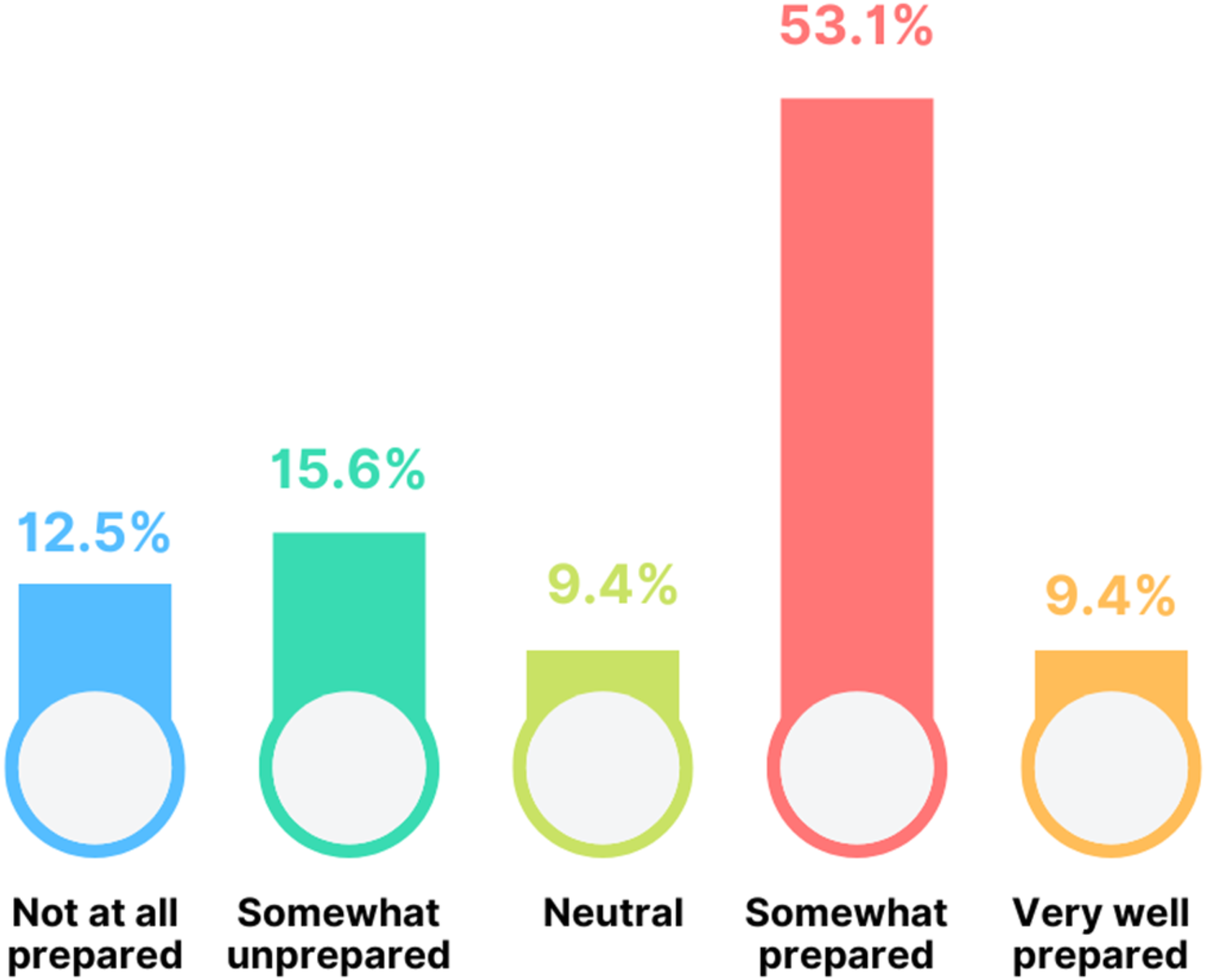
In relation to how the COVID-19 crisis impacted leadership in their educational institution, 31.3% of respondents perceived that it negatively impacted leadership, while a similar percentage felt that this crisis positively transformed leadership (Figure 7). The impact of COVID-19 crisis on leadership.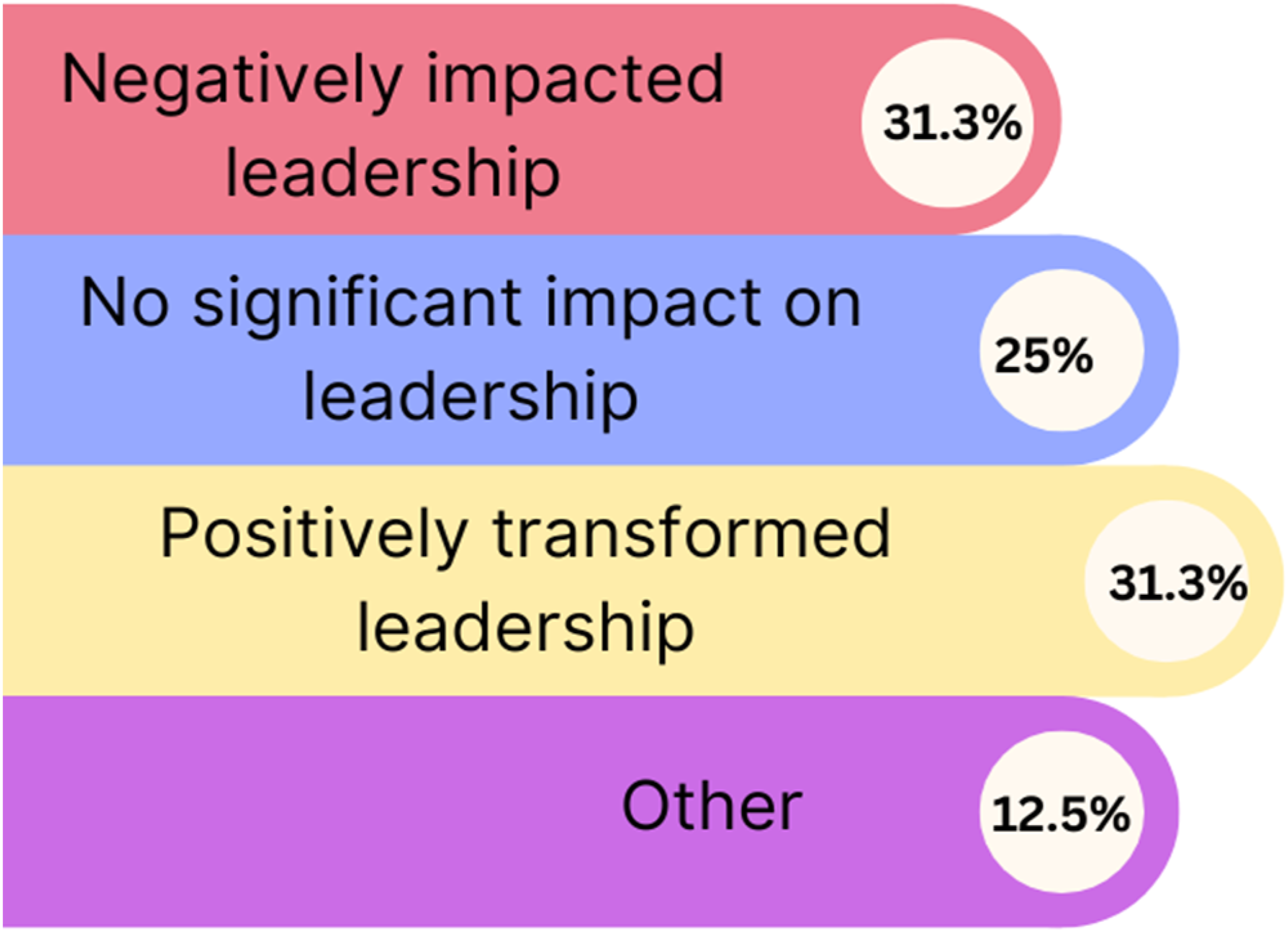
Leadership challenges the institution faced during the COVID-19 crisis.
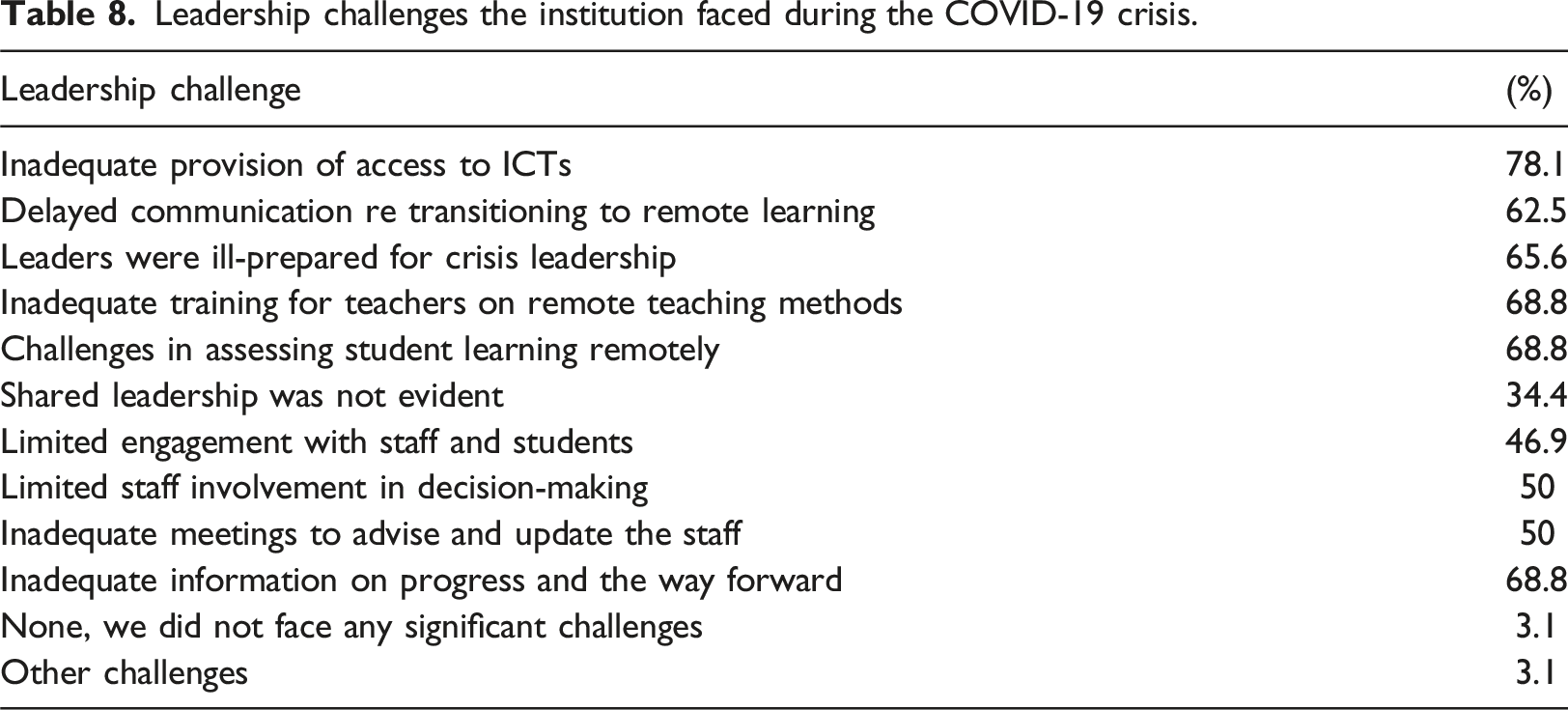
Considering the magnitude of the crisis, some of these challenges are particularly important to note such as leadership was not evident, there was limited engagement with staff and students, limited staff involvement in decision-making, inadequate meetings to advise and update the staff, and inadequate information on progress and the way forward.
Strategies used by the institution to address leadership challenges faced during COVID-19 crisis.
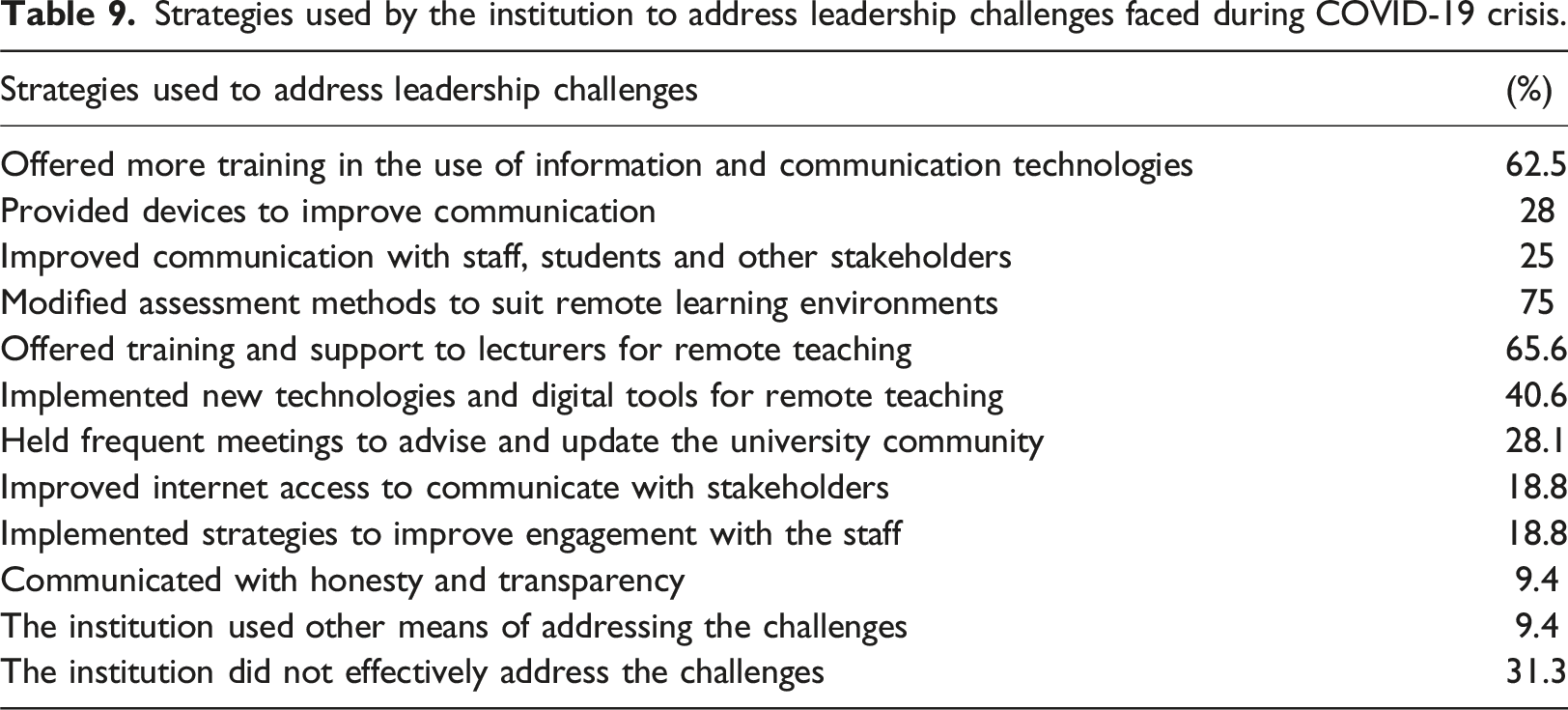
Based on these responses, the main strategy used to address the reported leadership challenges was to modify assessment methods to suit remote learning environments. While using this strategy to address a leadership challenge is unclear, the low percentage of respondents that communicated with honesty and transparency is concerning and highlights an area that academic leaders need to investigate. The 31.3% that reported that the institution did not effectively address the challenges is also concerning.
Key leadership lessons learned from the COVID-19 experience.
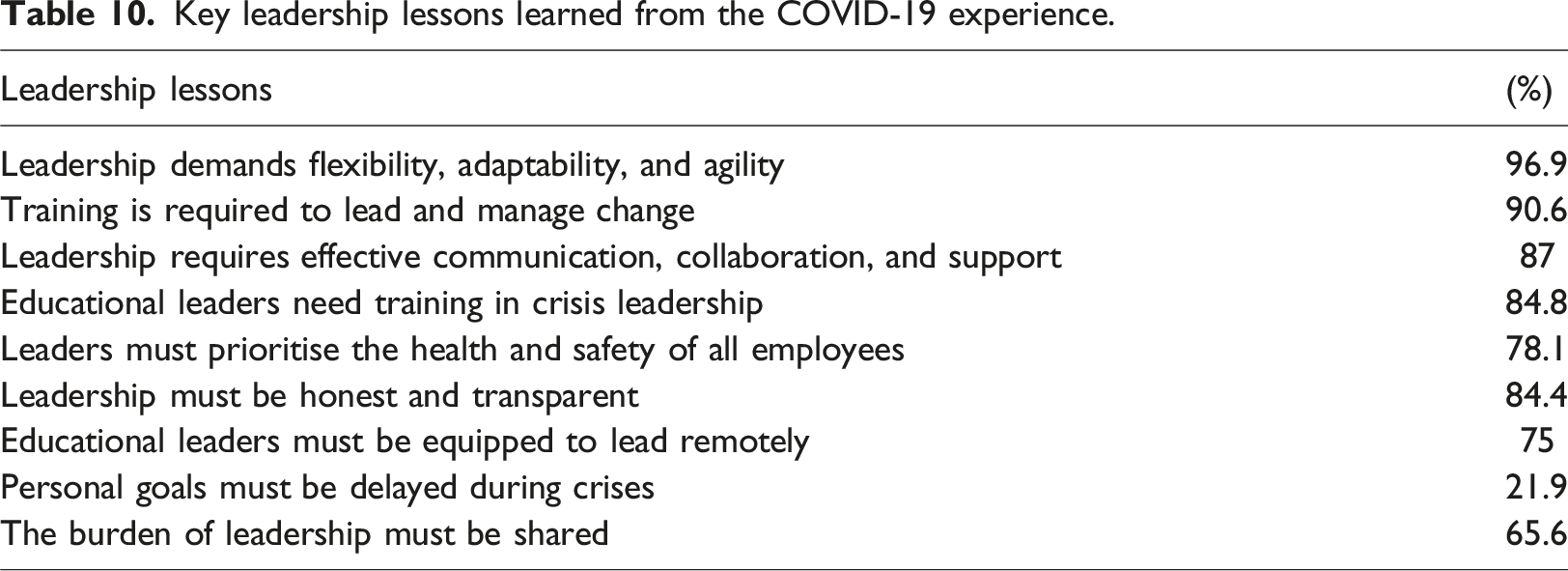
Respondents also noted that resilience can be developed through leadership capacity building, communication and engagement strategies, and involving staff in decision-making processes.
Responding to this third research question about lesson learned and preparedness for future disruptions via interviews, respondents reportedly learned that crisis leadership and preparedness for future disruptions demand that educational leaders be forward-thinking, plan ahead, be prepared, be decisive, and be innovative/creative. Preparedness for future disruptions also requires coaching and mentoring, team involvement, and appropriate use of emotional intelligence. A key lesson shared is that educational leadership demands flexibility. Specifically, respondents shared that: Leadership can be a lonely place, and so in crises, you have to know who you are… So, you have to be decisive, and then you have to be flexible, and then you have to work with your team to ensure that those persons whom you supervise buy into your vision. You have to manage or take care of a situation with time and in time because there are times when you have to take an executive position and decide because time is of the essence. (Respondent 1)
For another respondent, three pointed lessons were learnt: Forward-thinking – always be ahead of the game. We have to look at crisis as a good thing. Forward planning – be prepared. (Respondent 3)
For other respondents, the lessons learnt were similar: I think the main lesson is that you must have a committed team. You have to build on your commitment to get them on board. You have to communicate with them so that they understand how to move forward, listen to them, and learn from them too, so it becomes a team approach. For the second component, preparedness for future disruptions, … team building is important. Proper communication channels, and the whole aspect of empathy. You have to consider peoples’ emotions and situations. (Respondent 6) Exercising emotional intelligence during crises is important. I became more socially aware of my leadership capabilities. I was also willing to step back as a leader and put my followers in the front. (Respondent 2)
Another respondent shared that reliance on the capabilities of external agencies and collaboration with other relevant ministries of government could help to build resilience and prepare for future crises. Accepting their reality and practising flexibility were some of the lessons learned by one respondent: We can't control everything. Just be open-minded so even when things don’t go the way you want them to, look at them for the opportunities because out of every situation, there is an opportunity. Always have a Plan B -if the situation goes another way you have another plan for that, and preparation is the key. (Respondent 4)
In the meantime, the other respondent learned that in crises situations: The answer may not be handed to you. Help may not come. But you have to be creative, innovative, and maintain a positive outlook. Things left unattended and unresolved can cripple progress during a crisis. This means, as leaders, issues should be handled as they arise so that they do not compound matters in a crisis. I also learned that when deliberating the challenges, confusion persists in the absence of a spirit of inclusiveness. (Respondent 5)
Reflection and future planning
Areas/aspects of educational leadership that respondents plan to improve.
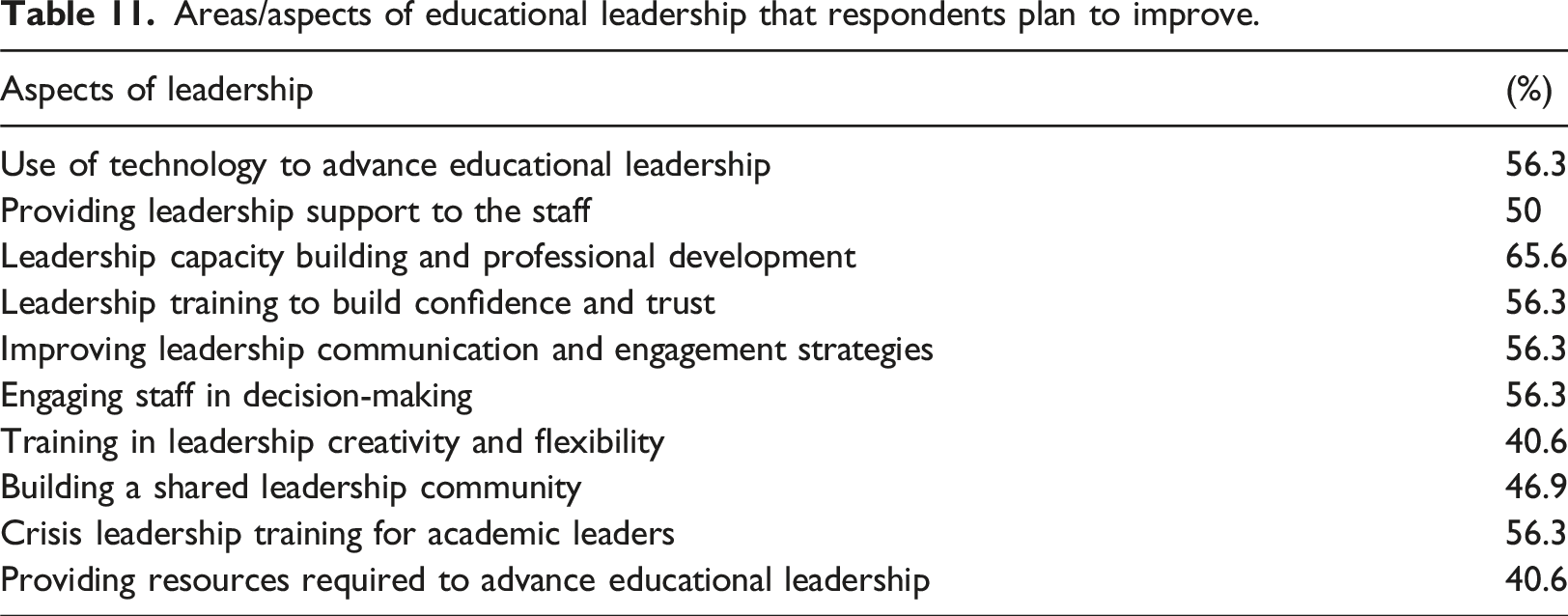
The responses provided here overlap among respondents. However, the percentage aligned to each provides a fair indication of where respondents’ foci lie in relation to their intent to improve educational leadership within the institution.
RQ4: How could educational leaders benefit from training in crisis leadership?
The responses to the final research question were all qualitative. In their responses Certainly! I think as a leader you do not always have it together and therefore if the opportunity should arise for training, then that would enhance leadership acumen, enhance leadership style, I think that training would certainly enhance my personal ability to function in a crisis because …I certainly don’'t know all the strategies to use or employ in a crisis so training definitely would assist that process. (Respondent 1)
Another respondent was of the view that: Whatever I learn I could pass on to the staff. So definitely I would appreciate something like that. I am not limiting it to COVID. I am open … (Respondent 3)
Other respondents expressed interest in new training and the perceived benefits of training in crisis leadership stating: I could benefit tremendously because … I don’t think we have had any since, during, or after, …so I’d definitely benefit from that training – for leadership purposes and other purposes. 100% benefit. It is new. It has never been done. (Respondent 6)
Another respondent indicated readiness to access/participate in new training. I'm always open to new ideas, new thinking, so I would be interested in crisis leadership training. I’ve never been to one and ,,, the only thing I've done is situational leadership and being able to pivot in every situation. (Respondent 4)
Another respondent would embrace training in crisis leadership to mitigate panic and learn how to manage challenges during times of crises. I believe this type of training can remove some of the panic, and stress brought on by crisis as one would be better prepared to be proactive and not reactive. One would know strategies to engage to tackle challenges and perhaps how to manage staff during this time. (Respondent 5)
To summarise the responses, some of the key lessons learned were that educational leadership demands flexibility, training, and effective communication to appropriately deal with crises. Also, educational leadership requires resilience. Resilience can be developed through leadership capacity building, effective communication and engagement strategies, inclusive decision-making processes, and crisis leadership training. All respondents would be willing to engage in crisis leadership training and resilience-building initiatives.
Discussion and conclusion
Crises test every fibre in organisational leadership; disrupt organisational processes; and threaten organisational reputation. Contemporary educational institutions face varied crises and situations where operations are disrupted, and challenges arise that stretch leadership and affect different groups of stakeholders. Yet, crises are viewed through different lenses. This study investigated the lessons learned by educational leaders at a Jamaican HEI during the COVID-19 pandemic. As stated earlier, efforts to increase the response rate, for both the survey and the interviews, only resulted in a prolonged data collection period. This as the survey response rate remained low (23%); and only one respondent at the level of Dean participated in the study. After analysing the data, preparation, communication, and taking a team approach emerged as the main themes.
Preparation
Did the going really get tough?
Crisis leadership requires new capabilities and adaptation of skills. Educational leaders must be agile, adaptable, and empathetic (Osman, 2022). While comprehensive planning is not always feasible, crises serve as catalysts for valuable lessons that can inform future approaches (Riggio and Newstead, 2023). Respondents shared varied lessons that they learned about preparedness for future disruptions. Educational leaders intimated that they should think ahead, plan, be prepared, be decisive, and be innovative and creative. They also noted that preparedness for future disruptions requires coaching and mentoring, team involvement, and appropriate use of emotional intelligence. The emphasis on preparation as a key takeaway aligns with Gurr and Drysdale’s (2020) framework of leadership domains and capabilities. The leaders who thrived in this situation were those who had already fostered a culture of adaptability. This reinforces the importance of setting direction and building the organisation by anticipating future challenges and investing in resources and faculty development (Gurr and Drysdale, 2020).
Communication
Most of the respondents in the survey reported that during the recent time of crisis, their communication with staff and stakeholders was effective. However, it appears that the listed challenges posed some hindrance in this regard. Hence, some of the suggestions for dealing with those challenges, such as effective communication, collaboration, and support, should be explored. From the responses garnered in this study, respondents learned varied lessons about crisis leadership, including ensuring effectiveness in communication, involving and listening to your team, leadership flexibility and adaptability, being decisive, embracing change, having the willingness to navigate challenges, and preparing to take and stand by tough decisions. These responses are akin to what Menon and Motala (2021) put forward in the literature that crisis leadership requires frequent and transparent communication with all stakeholders to ensure they understand what is happening in the organisation, how the crisis is being addressed by the organisation’s leaders, and that stakeholders are kept abreast of the organisation’s direction.
Team approach
Over 84% of respondents in the survey said they did well or very well at involving their staff in decision-making processes during the COVID-19 crisis. However, it would also be interesting to find out why the other 16% was neutral on this point, or the possible reason for their non-engagement, and how leadership may bridge that gap. Similarly, the interview respondents noted taking a team approach to dealing with the crisis by engaging their teams, involving their team members in the decision-making processes, mentoring and coaching their teams, and listening to their team by allowing them to share ideas. These strategies were necessary to navigate their teams through the turbulences, uncertainties, and complexities (Gigliotti and Fortunato, 2021; Gurr and Drysdale, 2020).
Other emerging themes
The 94% of respondents who reported that they provided opportunities for professional development and support to their staff during the COVID-19 period was substantial. While only 6% reported no such support, it would be mutually benefiting to have all on board in this regard. The institution’s leadership will need to give this some attention to ensure equity of opportunities and that no one is denied. The literature also supports these equity-focused initiatives for building and promoting resilience (Bryan et al., 2020).
Respondents’ expressions of how they are poised to benefit from training in crisis leadership were evidence that such training is needed. Respondents would welcome training in crisis leadership to mitigate panic and stress; to be better prepared and proactive; and to learn how to manage challenges during times of crises. They believe crisis leadership training could enhance their leadership acumen, enhance their leadership style, and enhance their ability to function better during crises. Such training could help them to know what strategies they could appropriately employ during crises, to tackle challenges, and to manage their staff during crises. In addition, they could impart whatever they learn to their staff. The literature supports crisis leadership training to equip individuals to respond to future crises (McNulty et al., 2019); and to build their resilience, augment their communication, sharpen their critical thinking skills, and increase their ability to lead an organisation through turbulent times or other crises (Strawser, 2023).
Resilience during crisis
Could it be that the tough is always going? Or is it that in times of crises, the tough gets going? The survey responses revealed leaders with resilience. Majority of the respondents (97%) felt they had the ability to remain calm and composed during times of crisis. Although the interviewees shared that they had never had training in crisis leadership, they stated that they were able to beat the odds. It appeared that they were somewhat equipped – that they were aware of the needs and challenges that could arise during crises, and that they employed appropriate resilience strategies to overcome those challenges (Strehmel et al., 2023). Resilience during crises was evident for the 93% of participants who reportedly adapted well during the crisis and kept the organisational processes afloat. This is akin to what Walker (2020) described in the literature as reorganising and modifying operations while handling disruptions. This approach was necessary as respondents had no alternative but to undertake flexible approaches to respond to the crisis (Sarkar and Clegg, 2021).
As means of building resilience for similar times of crises, respondents suggested that educational leaders and managers should continue to think and plan ahead, be proactive, communicate in a timely manner, have contingency plans in place, adopt and maintain a team approach, empathise with staff and show concern for their well-being, and provide training to build resilience. These responses were comparable to the literature where Dohaney et al. (2020), and Hill-Berry et al. (2023), proposed a mix of initiatives for building resilience and providing the required resources for those initiatives, appropriate sharing of resilience information, having an institutional resilience plan, coping and stress management seminars, and training to deal with crises. Additionally, as the literature supports, the educational leaders should be prepared to respond in times of crises so that these challenging situations do not wear out their resilience (Seville, 2018). Further, building resilience by preparing for major disruptions or crises has both immediate and long-term benefits for an organisation (Dohaney et al., 2020).
Reflection and future planning
In this study, notwithstanding the negative views about crises, two respondents (Respondent 3 and Respondent 4) believed that crises are not necessarily bad as they present varied opportunities. These views parallel the views of some researchers in that while some see crises as disorienting, dark, and dismal, others see crises as opportunities for leadership analysis and development, along with organisational transformation (Gigliotti, 2019; Kane et al., 2021). Effective educational leadership in times of crises should therefore be concentrated on sharing the burden of leadership (Smith, 2013); and since crises disrupt organisational processes, there is always the need for educational leaders to effectively lead organisations to lessen the occurrence of crises, to manage crises whenever they occur, and to effectively lead their organisations through such crises (Thompson and Wilmot, 2022).
The COVID-19 experience highlighted the need for educational leaders to be proactive and prepared. Although the educational leaders who participated in this study reported that they were never trained in crisis leadership, through the strategies adopted and employed during the COVID-19 crises, they have learnt valuable lessons that they could apply to navigate through future crises and lead others through them. Additionally, although educational leaders are responsible for steering their teams in times of crises, these educational leaders are not fully equipped to function during times of crises. Hence, crisis leadership training could help to equip them (Strawser, 2023). In addition, since crisis leadership demands resilience, strategies should also be employed to build resilience.
Recommendations
Notwithstanding the fact that the tough gets going in turbulent times, the institution of focus needs to pursue a multifaceted approach to build resilience among educational leaders and equip them to deal with crises. The findings revealed key implications for this HEI’s leadership and management team to address in preparing educational leaders for crisis situations. The researchers firmly recommend that crisis leadership training be provided for all educational leaders, and since they have never had such training, the researchers suggest crisis leadership training as a critical part of this preparation. Integral in this process is a crisis management preparedness and response plan, and familiarity with this plan including the steps towards its execution in times of crisis.
Footnotes
Declaration of conflicting interests
The author(s) declared no potential conflicts of interest with respect to the research, authorship, and/or publication of this article.
Funding
The author(s) received no financial support for the research, authorship, and/or publication of this article.
