




Abstract
Gifted pre-school children are often identified as those who read words, interpret signs, and demonstrate interests of children older than them, and are considered an exceptional group of children compared to other normal children. Therefore, early identification of gifted children helps to provide educational opportunities and a rich environment for the development of their talents. The main purpose of the current study is to examine the teachers’ attitudes in pre-school toward the education of gifted children in Palestine and identify the educational strategies and programs for teaching gifted children. The mixed-methods approach was adopted; it is an approach that mixes qualitative and quantitative methods to gain a deep understanding and confirm outcomes. In this study, the researchers adopted an explanatory sequential design, which is a sequential approach, and it began with quantitative data collection and analysis, followed by qualitative data collection and analysis. The quantitative data were collected by the “Scale for Attitudes towards Gifted Education.” The pre-school teachers in the sample were randomly selected, consisting of 330 female pre-school teachers from public schools. Additionally, the qualitative data were collected by semi-structured interview, which 15 female pre-school teachers from public schools took part in. The quantitative findings indicated that teachers had positive attitudes regarding the education of gifted children. This was consistent with the findings of qualitative data, which also demonstrated the variety of educational strategies and programs that were used to teach gifted children in Palestine.
Introduction
Education is a fundamental Palestinian principle, and the Palestinian government shares with its citizens this perception and considers education a tool for resilience and empowerment. As a result, it passed the “Education Law 2017,” which mandates ten years of free education for all citizens (State of Palestine, 2018).
Pre-school is a sensitive educational stage and is significant in the formation of a child’s intelligence, personality development, desire, curiosity, and social behaviors throughout their growth stages, from birth until the age of 6 years. Moreover, early childhood education is a great responsibility that requires educators and teachers to be able to respond to children’s interests, understand their age requirements, and provide an appropriate learning environment (Jawabreh et al., 2020).
Giftedness appears in early childhood, and gifted children are considered an exceptional group of children compared to other normal children (Jawabreh et al., 2022).
Therefore, early identification of gifted children helps to provide appropriate educational opportunities and a rich environment for the development of their talents (Karabuluta and Ömeroğlu, 2021).
The identification of gifted children is critical as it helps provide children with many opportunities for exploring, learning, and developing their abilities and skills. On the other hand, pre-school teachers must be aware of their responsibilities to promote the characteristics of gifted children in order to ensure a high-quality level of education (Konrad and Gabrijelcic, 2015).
In general, gifted children differ from their peers, necessitating greater skills and effort on the part of their teachers in conventional schools. In addition, teachers in general education play an important role in the identification of gifted students. Therefore, their attitudes about these gifted children and their education in general will help teachers gain a better grasp of their own requirements in terms of gifted education quality (Akgül, 2021).
The curriculum should be designed to meet the requirements and needs of educational institutions, including students, teachers, and society (Jawabreh et al., 2019). On the whole, the education of gifted children necessitates specific educational, advanced curriculum, academic acceleration, supplemental classes, and highly qualified teachers to work with the gifted, as well as other aspects related to supplementary funds that should be invested in gifted children’s education (Kelemen, 2010).
In addition, gifted children require a curriculum that is aligned with their advanced talents in intensity and depth, particularly in order to meet their emotional and social development (Stephens and Karnes, 2016).
According to Callahan et al. (2017), they investigated trends and future directions in gifted curriculum development, advocated reshaping gifted education for the twenty-first century, and proposed developing a new or adapting an existing curriculum to better address the abilities and interests of gifted children. In addition, Hu (2019 presented the best strategies and practices for supporting and improving gifted programs.
Children represent at this age period a large and important segment of Palestinian society, which calls for extensive efforts to improve the conditions of this age period in Palestinian society in order to prepare the basic pillars of the human base that qualifies for development and progress (Khales, 2021).
In general, the related literature review reveals that there are few studies that address and explore the attitudes of pre-school teachers towards the education of gifted children.
The children under the age of five make up a sizable proportion of the Palestinian population (UNICEF, 1989), and there are quite a few gifted children. Therefore, it is important to study the education of gifted children according to the attitudes of pre-school teachers in Palestine. In addition to that, the studies reveal that pre-school teachers had difficulty in teaching gifted children, which was attributed to teachers’ weak awareness of the characteristics of gifted children and their education (Baykoç et al., 2014).
An examination of the related literature apparent that there is a scarcity of studies conducted in Palestine regarding gifted children in pre-school education and the attitudes of pre-school teachers towards them. Consequently, there is a pressing demand for such investigations. Given the aforementioned context, the present research will be used to clarify the attitudes of pre-school teachers towards the education of gifted children in Palestine. Moreover, this research may improve the learning strategies used in early childhood kindergartens and to enable pre-school teachers to diagnose the gifted children properly.
The main purpose of the current study is to examine the attitudes of pre-school teachers towards the education of gifted children in Palestine according to their academic qualifications and their years of experience, as well as to identify whether gifted children need a particular curriculum or not. In addition, identifying the educational strategies and programs for teaching gifted children in order to meet their needs is also important.
The current study derives its importance as it’s directed to gifted children. Besides that, this study will draw attention to an important issue, which are the education of gifted children and the development of their own specific curriculum in Palestine. When the attitudes of pre-school teachers towards the education of gifted children are considered, then pre-school teachers will provide preliminary information in the field of gifted children’s needs and educational strategies that will be employed to teach them. This study presents the teachers’ attitudes of education of gifted children in order to have a better understanding and assessment of where Palestine stands in the world. In addition, teachers’ attitudes of gifted children inform those responsible for pre-school teacher preparation programs regarding the educational strategies that are used in the education of gifted children and how to meet their needs.
In short, this study addresses the following research questions: (1) What are pre-school teachers’ attitudes towards gifted children’s education? (2) Is there a significant difference in the pre-school teachers’ attitudes towards gifted children’s education regarding their academic qualifications? (3) Is there a significant difference in the pre-school teachers’ attitudes towards gifted children’s education based on the years of experience of the teachers? (4) Is there a significant difference in the pre-school teachers’ attitudes towards gifted children’s education based on whether gifted children need a specific curriculum or not?
Theoretical framework
The Convention on the Rights of the Child states that education should aim at the “development of the child’s personality, talents, and mental and physical abilities to their fullest potential” (UNICEF, 1989). The gifted children are defined as individuals who are capable of great achievement intellectually as well as artistically, creatively, and academically, and they need activities and services to develop their gifts. They also play a significant role in the development of society (London, 2020).
From this point on, the aim of education is not only to provide students with information but also to help them understand, recognize, and apply it when necessary. Therefore, the gifted children must be educated in accordance with their abilities and educational needs by using a pre-planned educational program and activities that correspond to the gifted children’s levels of intelligence (Kunt and Tortop, 2017).
Palestinian children living in the West Bank and Gaza encounter daily hardships as a result of several factors such as the occupation, poor infrastructure, and poverty (Arar et al., 2023). These hardships encompass a range of obstacles, including limitations on their freedom to move around and difficulties accessing fundamental resources and services like water, healthcare, and education. Trapped in their circumstances, these children become innocent casualties of the political, economic, health, and social challenges surrounding them. According to the World Health Organization (WHO), numerous issues faced by adults, such as health problems and low literacy and numeracy rates, can be linked back to deficiencies in their early childhood experiences (ANERA Reports, 2014).
Moreover, children face inadequate access to early learning and cognitive development opportunities. Shockingly, only 34% of children aged 3 to 4 have the opportunity to attend early childhood care and education (ECCE), limiting their exposure to crucial educational experiences (El-Kogali and Krafft, 2015).
In 2017, the “National Strategy for Early Childhood Development and Intervention” was officially approved. This strategy aims to foster the all-encompassing development of young children, starting from pregnancy until the age of 5. Within this framework, which is supported by legal regulations and genuine national cooperation, every child receives comprehensive and integrated care. This care ensures their protection and survival and nurtures their growth and development in all aspects (State of Palestine, 2017).
The gifted education in early childhood focuses on the encouragement of intellectual engagement and challenge in purposeful activities for children. Therefore, a high-quality early childhood learning environment must be designed to develop children’s talents and abilities and also be based on activities that help children explore the world around them (Darga and Ataman, 2021).
Additionally, teachers must employ adaptable strategies to teach students appropriately according to the level of knowledge and skills they seek to acquire, encourage children’s interests and monitor their progress through the use of a personalized educational programs (Rotigel, 2003). There are numerous gifted education models. However, they all may serve the same purpose of focusing on the characteristics and needs of gifted learners while also ensuring that they receive the appropriate method of education (Scot et al., 2009). One of these models is a Differentiated Model of Giftedness and Talent (DMGT), which defined giftedness as the possession and use of untrained and spontaneously expressed superior natural abilities (Gagne, 2000). The DMGT consists of four domains: intellectual, creative, socioaffective, and sensorimotor and these abilities can be observed and measured in children daily activities at their kindergartens (Subotnik et al., 2011). For instance, the intellectual abilities needed to learn to read, speak a foreign language, or understand new mathematical ideas, the creative abilities needed to solve many different types of problems and create original work in science and art, the physical abilities involved in sport, music or woodwork, or the social skills (Gagne, 2000).
Another relevant model is Schoolwide enrichment model, where children abilities could be developed along with their strengths to provide them with advanced learning opportunities. Enrichment falls into three categories: Type I includes general exploratory experiences that present learners with new interests and areas of investigation. Type II includes six categories of training activities: character development skills, cognitive thinking skills, meta-cognitive technology skills, advanced research and reference skills, written, oral, communication skills, and learning how to learn skills. Type III includes the investigation of real-world problems individually and in small groups (Reis and Renzulli, 2021).
The authors believes DMGT and Schoolwide models suit the current research as their domains, abilities and categories could be noticed by pre-school teachers as children practice multiple activities, high thinking skills, and learning opportunities through learning languages, math, science, and other related subjects. Therefore, teachers could modify their attitudes toward gifted children.
Segregation, acceleration, and inclusion are the three basic educational policies for gifted students. Segregation and acceleration are two terms that refer to the process of identifying gifted individuals and placing them in segregated or accelerated classes. Acceleration can also take the form of a student skipping grades or attending school before their peers. Furthermore, the inclusive strategies for gifted students are approaches that utilize differentiation and enrichment strategies within the same-age classroom. Differentiation may include the inclusion of advanced content from higher grade levels, the development of critical thinking skills, projects, and problem-based learning, as well as problem-solving skills. Gifted children enjoy challenging work and accelerated content with older students, as well as enrichment activities that are dynamic, open-ended, inquisitive, and varied, as well as customized to different learning styles (Lenvik et al., 2021).
Differentiated teaching is the most popular and widely used teaching method for teachers. It refers to the methodical and coordinated pre-planning of the entire teaching process, which involves both the syllabus and students in an interactive relationship. It is determined by the students’ readiness for learning, their preferred learning strategies, and their motivation for learning. All of these factors influence the context of the teaching process (Tomlinson, 2001).
Gifted children have numerous opportunities to participate effectively in a classroom while also making use of their unique abilities and talents. At this point, it’s worth noting the importance of teachers’ identifying gifted children and having the appropriate attitude toward them. This necessitates on-going teacher training and motivation. Further, they should be objective when evaluating gifted children, taking their educational, emotional, as well as social needs into account. Additionally, teachers must employ adaptable strategies to teach students appropriately according to the level of knowledge and skills they seek to acquire, encourage children’s interests, and monitor their progress through the use of a personalized educational programs (Rotigel, 2003).
Program enrichment is one of the strategies that are applied, which allows gifted students to obtain education alongside their normally developing peers, while also receiving depth learning (Darga and Ataman, 2021). The term “Enriching the Curriculum” implies to the creation of more content than the curriculum provides, with the goal of broadening and deepening learning experiences. In this manner, the gifted children’s abilities are utilized to the fullest extent feasible, both inside and outside of the school classroom (Argyrios et al., 2020).
In addition to that, the acceleration is a strategy frequently recommended for gifted children. Boredom is often relieved through acceleration, which allows students to progress through an educational program at a faster rate or at a younger age than is customary. Acceleration is defined as “matching the level, complexity, and pace of the curriculum to the readiness and motivation of the child” (Colangelo et al., 2004: 1).
Acceleration allows children to study at a higher level than they are currently following. In order to complete the educational levels at a younger age than the rest of the children, the child can attend an older-level class (Argyrios et al., 2020).
Acceleration can take the form of grade skipping, which is the process of passing the next grade and enrolling in the next higher grade (Dare et al., 2019). Therefore, acceleration, particularly grade skipping, is a compelling and successful approach to enhance academic achievement among gifted students (Gronostaj et al., 2016).
Pre-school teachers’ attitudes are affected especially toward gifted children in the regular classroom. Drain (2008) found these attitudes ranged from negative to very positive as teachers used strategies that were not been identified as a gifted-friendly practice.
Related studies
Darga and Ataman’s study (2021) aimed to examine the impact of an enrichment program on the performance of gifted children and their peers. The study was carried out using an experimental design. There were 477 students in the study sample. The data collection tool was the enrichment program pre-test and post-test. The data was analyzed using SPSS. The results of the enrichment program differed from the existing school program in favor of enrichment. All of the children have benefited from the enrichment program, particularly gifted children.
The study by VanTassel-Baska’s (2021) sought to examine the curriculum of gifted learners. The findings said that the curriculum and teaching methods that are designed for all learners have a lot of real promise for the gifted. There are many teachers who think that everything designed for gifted learners should be available for all learners. According to research, one of the best ways to work with gifted learners is to use inquiry.
Akgül’s study (2021) sought to investigate teachers’ perceptions of gifted children using metaphors and attitudes about gifted education. Two open-ended questions were used to collect qualitative data from 136 teachers. Teachers employed metaphors based on three categories: social value; gifted education; and giftedness characteristics. The findings revealed the teachers’ training needs, practical implications, educational strategies for gifted learners, and the difficulties inherent in the identification procedure.
Kaya and Tortop’s study (2020) sought to examine counselor attitudes and opinions towards gifted students in Turkey. A descriptive survey model is employed. Within the mixed method, both qualitative and quantitative data were collected. The Attitude Scale towards Gifted Education was conducted on 250 counselors. The qualitative data was acquired using a semi-structured interview form that included four questions about the education of the gifted and was conducted on 40 counselors. The findings showed that there are no significant differences in the dimensions of need for support and resistance to objections according to gender. However, there is a significant difference in the dimensions of grouping abilities between males and females. There are no significant differences in the dimensions of need for support and resistance to objections according to seniority, but there is a significant difference in the abilities grouping dimension in favor of those with 11–19. In general, counselors have a positive attitude towards gifted education, although there are problems in the education and diagnosis of gifted students.
Ninkov’s study (2020) sought to offer recommendations for an adequate educational system that would allow learners to expand their knowledge and creativity while maintaining their normal living and educational environment. The comparative method was used, with a focus on the Eastern European group (Bosnia and Herzegovina, Croatia, Hungary, and Serbia) and Western European and other group countries (Austria, Germany, Netherlands, UK, Turkey, and the USA). The findings revealed that inclusive education, as a possible alternative framework, may be the optimal educational system for gifted learners. There is no logical reason why inclusive education should not be applied to gifted learners as well. Such an inclusive education system would necessitate significant changes to current educational systems and programs, as well as the hiring of a diverse professional team of social workers and educators capable of meeting the needs of gifted students in any community. It is necessary to enhance existing educational policies in order to provide gifted students with an inclusive educational environment.
A literature review in Argyrios et al.’s study (2020) aimed to determine the gifted children’s characteristics, the challenges they face and their causes, and the type of education these children should get. Differentiated teaching practices and flexible curricula are critiqued for their difficulty in examining their impact on gifted children throughout the educational process. In conclusion, gifted children with exceptional abilities deserve to be treated with respect, not as a minority or with an elitist mentality. Consequently, it is preferable to find out how many children need adapted education, whether they have a high level of perceptiveness or not. If children can acquire knowledge through a customized, interdisciplinary, material-rich education combined with an appropriate curriculum adaptation, the education will be effective since it will meet their needs.
Methodology
This study is framed to examine gifted children’s education through the attitudes of pre-school teachers in Palestine. Thus, the researchers adopted a mixed approach to explore the attitudes of pre-school teachers. A mixed-methods approach is one that mixes quantitative and qualitative methods. Utilizing a mixed-methods approach allows for a better understanding of the problem of study and yields more comprehensive evidence compared to relying solely on quantitative or qualitative approaches, as it combines the advantages of both methodologies, enabling the researcher to acquire both extensive and in-depth knowledge, thereby providing a more holistic perspective (Strijker et al., 2020).
In this study, the researchers adopted an explanatory sequential design, which is a method in which quantitative research is conducted first, in which quantitative data is collected and analyzed, followed by qualitative research to explain the quantitative findings. The purpose of an explanatory sequential design is often to use qualitative data to explain or interpret quantitative findings, where the researcher draws conclusions based on the advantages of combining quantitative and qualitative research (Koç and Baştaş, 2019).
Participants
In numerous countries, the Ministries of Education have dedicated efforts to formulating educational policies aimed at fostering the advancement of their educational systems, and one notable policy they have pursued is the encouragement of the policy of partial feminization of education (Yousef, 2021).
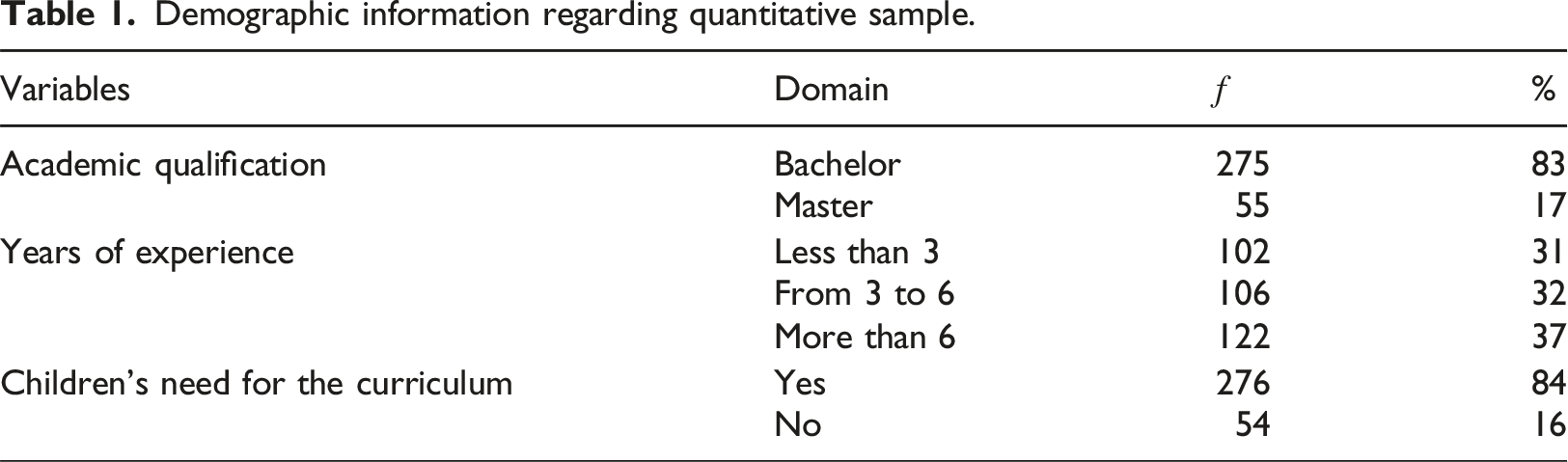
Demographic information regarding quantitative sample.
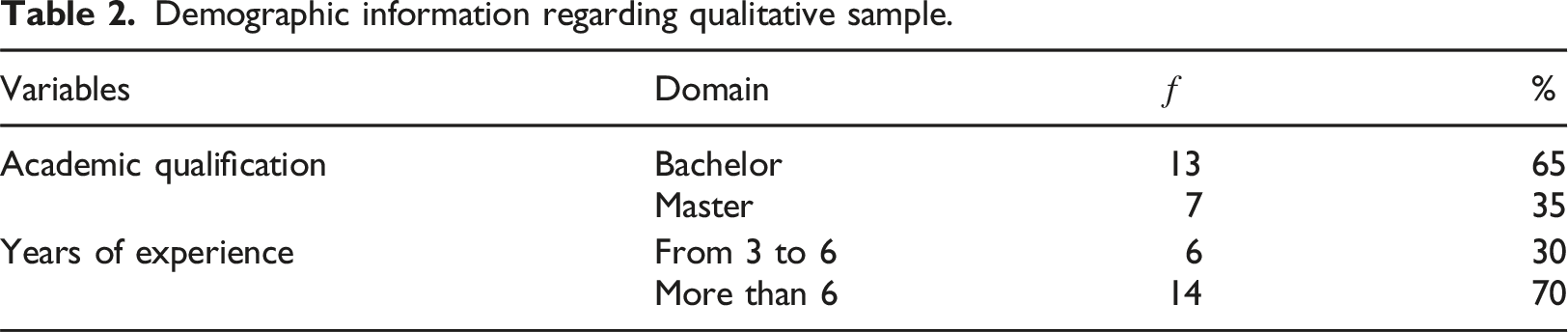
Demographic information regarding qualitative sample.
Data tools
The dimensions that were assessed in the scale.

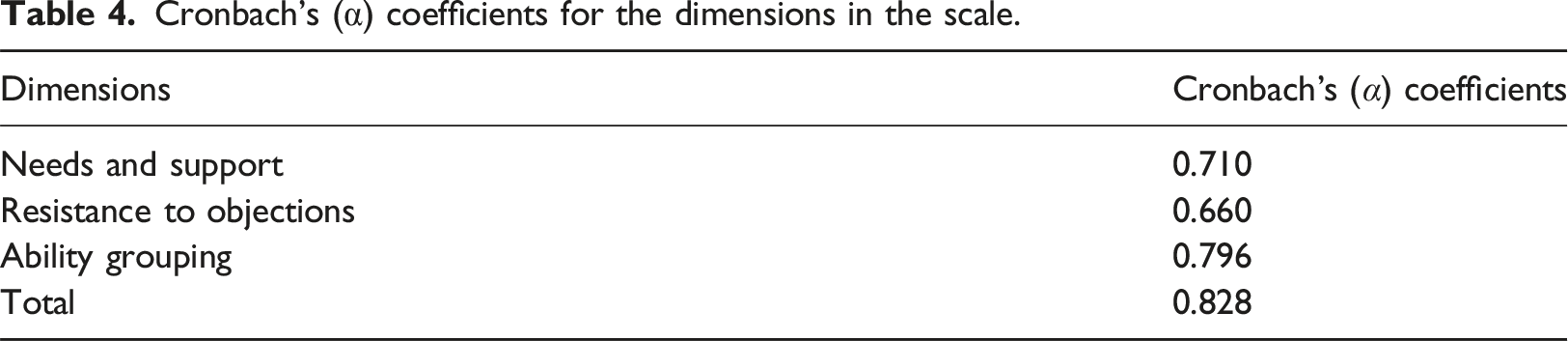
Cronbach’s (α) coefficients for the dimensions in the scale.
The scale’s validity was verified by calculating the correlation coefficient (r) (Pearson) between the score of each item and the overall score of the domain to which it belonged.
The correlation coefficient for each item in the scale.
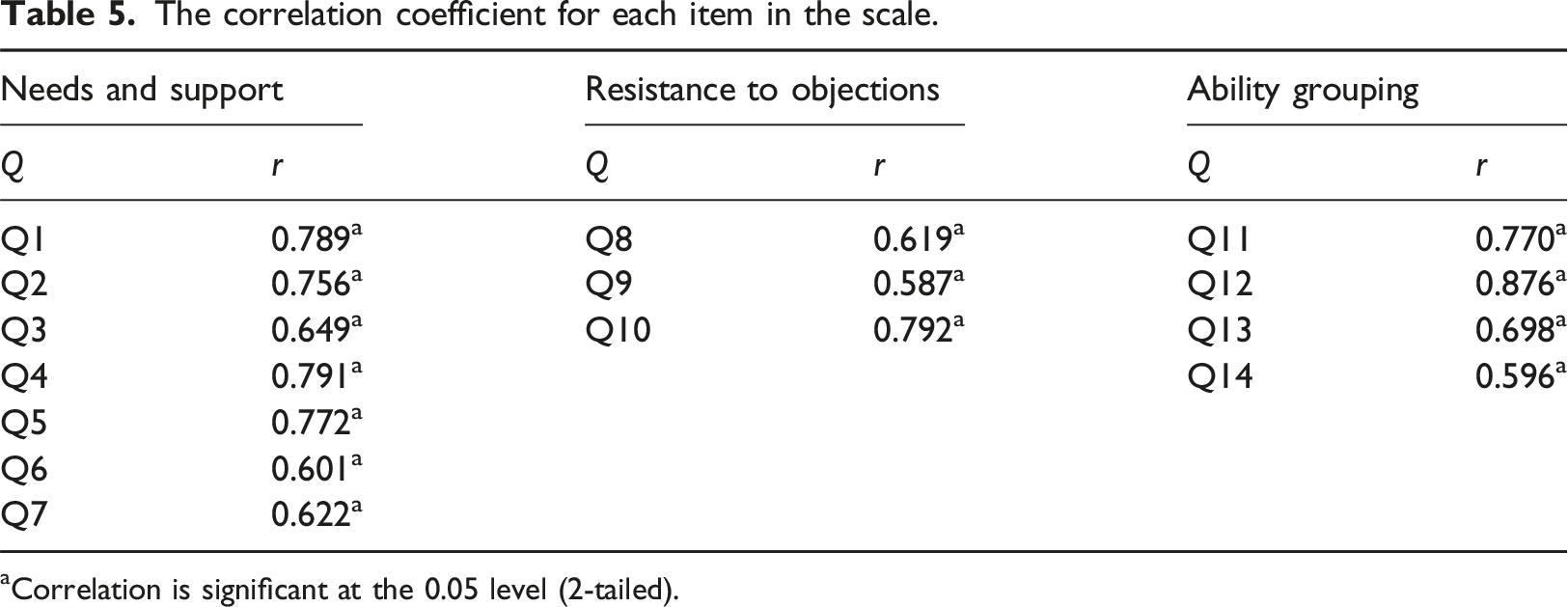
aCorrelation is significant at the 0.05 level (2-tailed).
The second tool consisted of semi-structured interview questions that were personally designed and developed, based on literature reviews and quantitative results. The interview questions consisted of 4 questions that related to the study and discussed the education of gifted children, and they were reviewed by early childhood specialists. The interview questions were as follows: (1) What is the definition of a gifted child? (2) What do you think? Should gifted children be educated in special classes or in their normal classes? (Explain more). (3) What do you think? Is our curriculum adequate to meet the needs of gifted children? (Explain more). (4) What strategies and programs do you prefer to use in teaching gifted children?
Data collection
Approval was obtained from both the Ethics Committee at the Near East University and the Director-General of the Center for Educational Research and Development (CERD) in the Ministry of Education in Palestine. Subsequently, the quantitative data was collected, with the sample being randomly selected. The questionnaire was electronically designed using Google Forms. Responses were received on the Google Form from October 28 to December 21, 2022, resulting in a final sample size of 330 female pre-school teachers.
Following that, the qualitative data was gathered through the implementation of semi-structured interviews with a group of 15 female pre-school teachers. Prior to the interviews, participants were invited and provided with comprehensive details regarding the study's purpose, as well as an assurance of strict confidentiality for their personal information. Upon receiving this information, the participants approved. To ensure the comprehensive capture of information, all interviews were recorded in audio format. The interviews proceeded smoothly, with durations ranging from 15 to 20 min.
Data analysis
The quantitative data was analyzed using SPSS version 24 using means, standard deviations, an independent sample t test, and a one-way ANOVA. Reliability and validity analyses were conducted (please see Tables 4 and 5). By using reliability analysis, the properties of the scale items were examined using Cronbach's internal consistency coefficients. Validity analysis enables the utilization of statistical techniques, including Pearson correlation coefficients, to ascertain the appropriateness and significance of the questions. Teachers' attitudes were assessed using descriptive statistics, specifically by analyzing the responses in terms of frequency and percentages.
For qualitative data analysis, the responses provided by the teachers were thoroughly reviewed in order to identify key terms. These terms were subsequently highlighted using various colors as potential codes. Through this process, emergent codes were identified and further organized into themes and sub-themes.
For the credibility of the study, two rounds of peer review were conducted: the first round resulted in the identification of 4 themes and 16 sub-themes (categories), while the second round of peer review included the closely related themes as well as the sub-themes (categories). This round revealed consensus on 2 themes and 13 sub-themes (categories). The themes were organized, and the findings were identified and discussed. Furthermore, the teachers’ responses (quotations) that related to the education of gifted children were taken verbatim to enhance credibility.
Ethical consideration
Having obtained approval from the Scientific Research Ethics Committee at Near East University in Northern Cyprus (reference number NEU/ES/2021/712), as well as from the Director-General of the Centre for Educational Research and Development (CERD) at the Ministry of Education in Palestine, the researchers commenced the collection of both quantitative and qualitative data. Prior to the interviews, participants were extended invitations and provided with a clear understanding of the study's objectives and the assurance of strict confidentiality regarding their personal information. Subsequently, the participants granted their consent. It is important to note that this study is solely intended for research purposes and no conflicts of interest are present.
Findings
RQ #1: 1. What are pre-school teachers’ attitudes towards gifted children’s education?
The means and standard deviations for the Scale’s items.
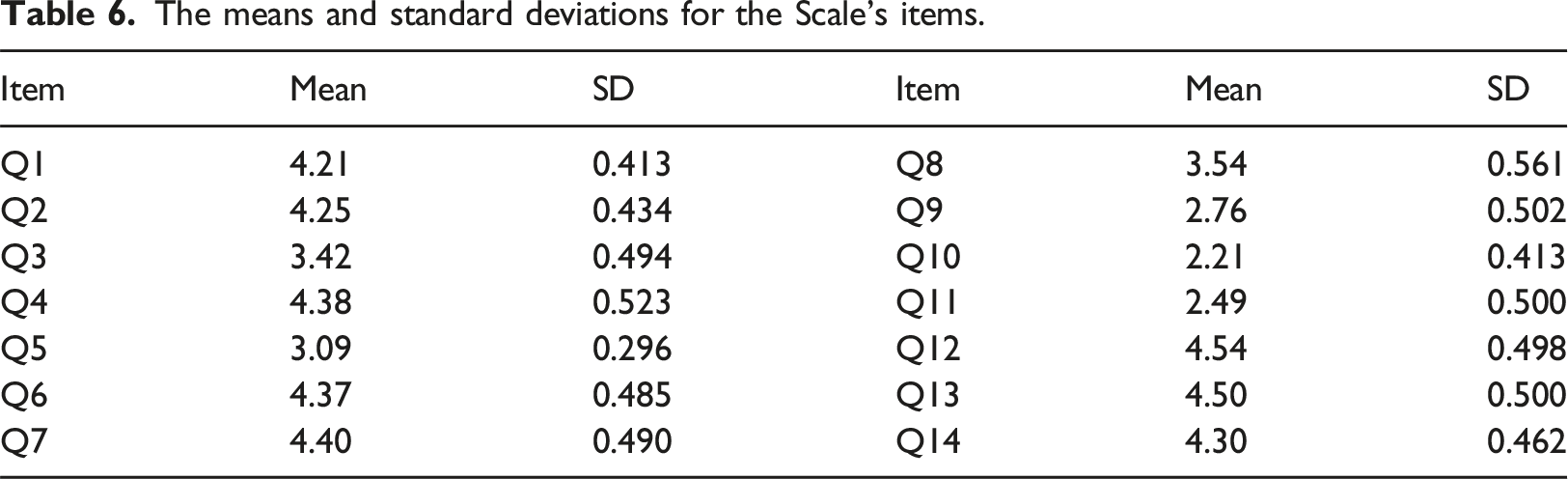
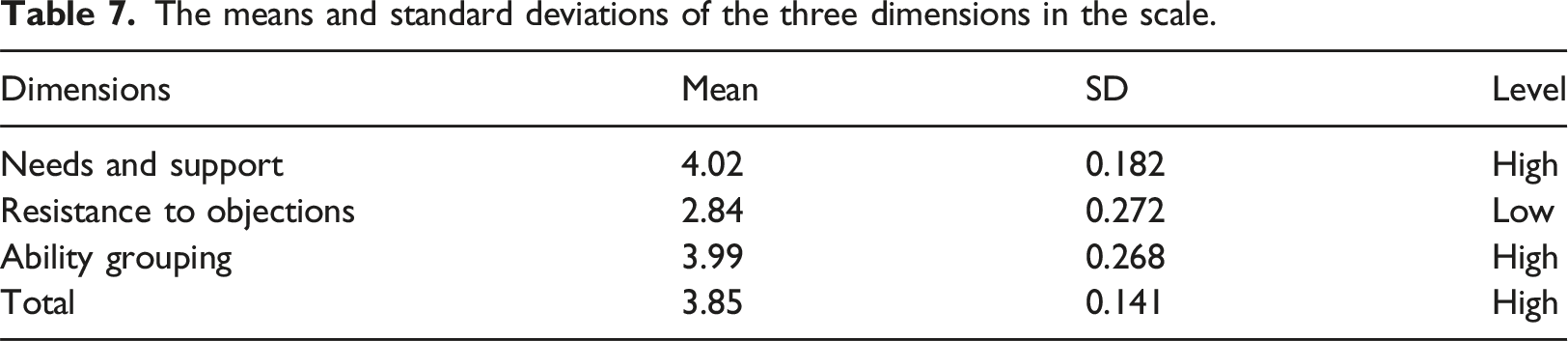
According to the findings of the analysis, the means of teachers’ attitudes toward gifted children’s education in the three dimensions are as follows: needs and support (M = 4.02; SD = 0.182), resistance to objections (M = 2.84; SD = 0.272), and ability grouping (M = 3.96; SD = 0.268).
The means and standard deviations of the three dimensions in the scale.
To further have more insights regarding the teachers’ attitudes in pre-school towards gifted children’s education, the findings of the in-depth semi-structured interview reveal the variety of educational strategies and programs that teach for gifted children, and they revealed the preferred strategies and programs for teaching gifted children to meet their needs.
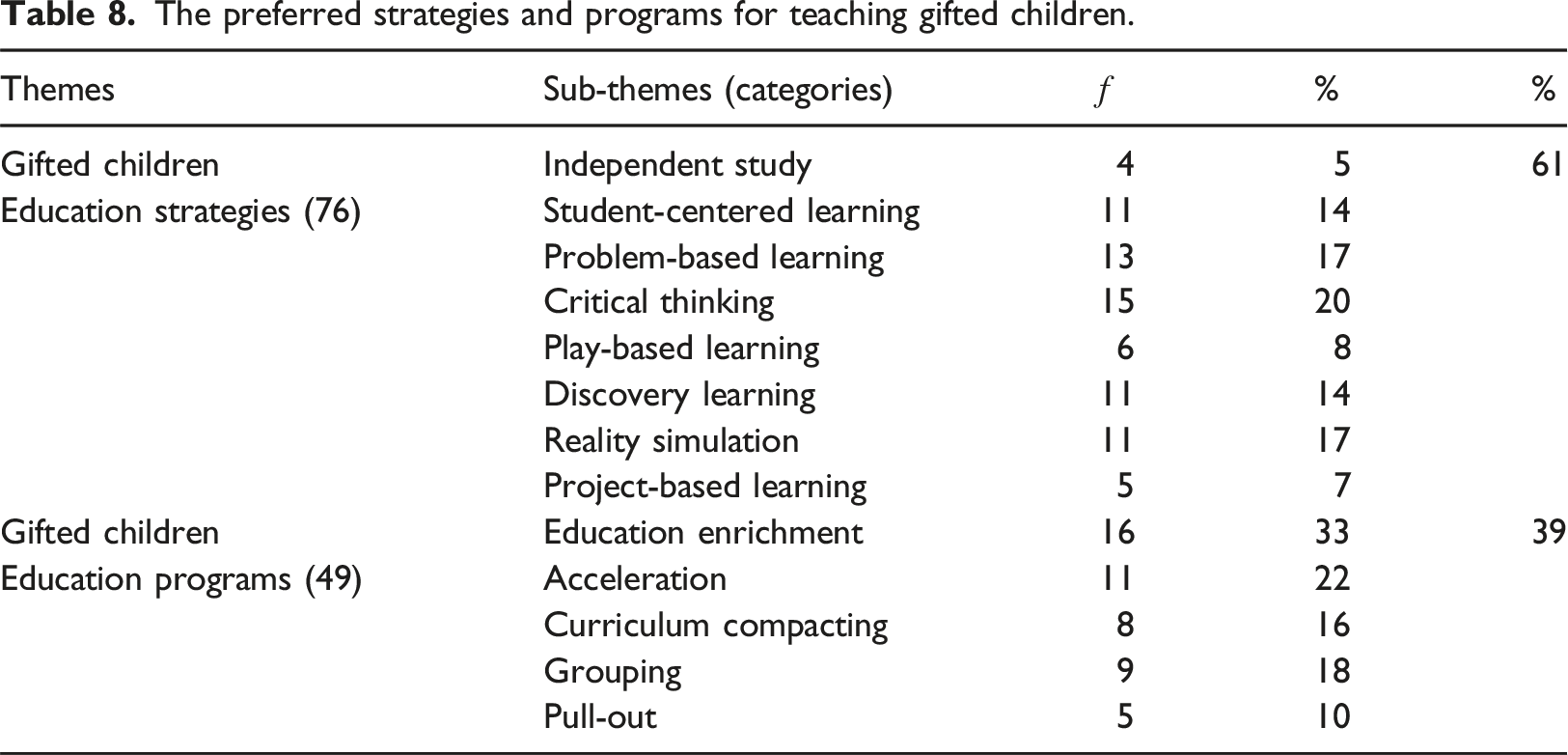
Two rounds of peer review are conducted: the first round, which focuses on the preferred strategies and programs for teaching gifted children, results in the identification of 4 themes and 16 sub-themes (categories), while the second round of peer review includes the closely related themes as well as the sub-themes (categories).
This round reveals consensus on 2 main themes and 13 sub-themes (categories), and the two main themes are gifted children education strategies 61% and gifted children education programs 39%.
The interviewers’ responses about the preferred strategies and programs for teaching gifted children are summarized as follows:
The preferred strategies and programs for teaching gifted children.
Here are some teachers’ responses based on the preferred strategies and programs for teaching gifted children.
Gifted children’s education strategies
Several pre-school teachers agreed with Schoolwide Enrichment model. T14 said “Gifted children do learn differently from their peers; they have an ability to think abstractly and exceptional problem-finding abilities. Therefore, critical thinking is an important strategy for gifted children. When children become better critical thinkers, they are more prepared to make better decisions in their professional or personal lives later on.” While T5 said: “If the children have shown that they do not understand abstract concepts, it is preferable to follow the simulation of reality, and look for a real-life problem in the school, to embodiment of abstract concepts, and allow children to apply their talents. Consequently, a simple concept will be a real-world experience.”
It is clear that the pre-school teachers’ thoughts match with their positive attitudes towards gifted children. Another teacher (T4) supports DMGT model by saying “presenting the most challenging concepts first to allow gifted children the chance to move on to deeper content. Therefore, if the children understand the most difficult part of a lesson, there is no need for them to study the simpler and easier concepts that lead up to it.”
Other pre-school teachers express their feelings toward gifted children as T7: “Creating gifted children’s sense of belongingness through daily class meetings, which breaks down the idea that “I am better or smarter,” and this will decrease the labeling of children as strong-weak, good-less-good, etc. Therefore, the children will be comfortable and have an interactive relationship with their peers.” While T9 presents her strategy of teaching: “Allow gifted children to give suggestions and solutions to solve the problems that they face in their learning, and the children will feel appreciated and that they are at the centered of the educational process.”
Different teachers have various approaches in teaching gifted children. T10: “Gifted children thrive with activities and assignments that let them explore topics of interest in new ways. For this reason, the children need to think in more abstract, sophisticated ways and be challenged to feel valued.” While T16: “Playing can be used to develop children’s skills and engage them in activities for enjoyment and learning. In addition, the reality simulation helps children develop skills; it provides a safe playing field for children to try new roles, skills, and responsibilities; and it motivates children through real-world, relevant events.” T17 explains the nature of childhood: “A school garden is a fantastic opportunity for children to gain hands-on knowledge about growing, playing, and discovering.” T18 realizes the characteristics of gifted children: “Gifted children have a strong sense of curiosity and they are enthusiastic about unique interests and topics. Therefore, the student-centered learning strategy enhances their skills and moves them from passive receivers of information to active participants in their own discovery process.”
Gifted children’s education programs
Pre-school teachers are partially aware of children differentiation such as T8: “To meet the individual needs of gifted children, it should not be just given them more of the same, but should be provided lessons that have more enrichment, and the purpose of enrichment is to provide extended learning opportunities and challenges. Enrichment gives the children more time to study concepts with greater depth, breadth, and complexity.” Another teacher approaches the concept of acceleration, T1: “Gifted children need gifted education programs, enrichment, and accelerated programs in order to achieve continuous success, progress in school, and help them develop gradually.” A pre-school teacher relates acceleration and mental ability, T19: “Gifted children have a good memory and an ability to save a wide amount of information. They also learn quickly and early. Therefore, acceleration is a strategy to match the curriculum to children’s abilities.”
The case of segregation and inclusion needs more clarification and it could be a crucial factor in forming pre-school teacher attitudes toward gifted children. T2 explains her view by saying “Grouping gifted children together according to their skills and talents, and they are put in special classes to meet their educational needs; therefore, it is preferable to adopt the grouping strategy.” Another teacher said T3: “Some children may be gifted with advanced language skills, and others may excel in mathematics, and after checking the characteristics of gifted children, they are sorted and grouped. It may take a long time, but the results can be more positive and meaningful.” A third view was stated by T20: “Grouping gifted children with similarly motivated and intelligent peers will enable them to advance more quickly than children of a similar age.”
In a different description of gifted children programs, T11 clarifies by saying: “Teachers can let gifted children research a new interest in a classroom topic, and that is done through engaging gifted to pull-out programs for one to 4 hours each week.” Another quotation set by T12: “Gifted children may do basic calculations like the addition or subtraction of numbers with sums of less than 99 at pre-school and, therefore, earn credit at primary school. In this form of acceleration, it is beneficial. But, for some children, skipping a grade can be harmful to their emotional and social development. Therefore, this leads to being away from age-group peers.” T13 connects gifted children and learning mathematics: “If gifted children have a complete understanding of the mathematics curriculum being taught, a curriculum compacting strategy should be used to enable gifted children to skip normal content and substitute for the challenging content. Therefore, curriculum compacting enables gifted children to skip normal content that can be substituted for the challenging content and provides opportunities to learn advanced concepts.”
Some of the interviewers combine both strategies and programs for teaching gifted children:
T6: “Gifted children should take responsibility for their own learning. By using information gathered from the last lessons, the curriculum can be compacted for gifted learners, which will offer related extension activities and more independence.”
T15: “There are activities that allow students to design, create, and learn without limits, and there are after-school enrichment activities that give the children a chance to learn a new skill. Therefore, the children’s learning should be extended by having them explore or research a topic in greater detail, in addition the problem-solving skill and discovery learning strategy are critical for all children and they feel comfortable using throughout their lives.”
RQ #2: Is there a significant difference in the pre-school teachers’ attitudes towards gifted children’s education regarding their academic qualifications?
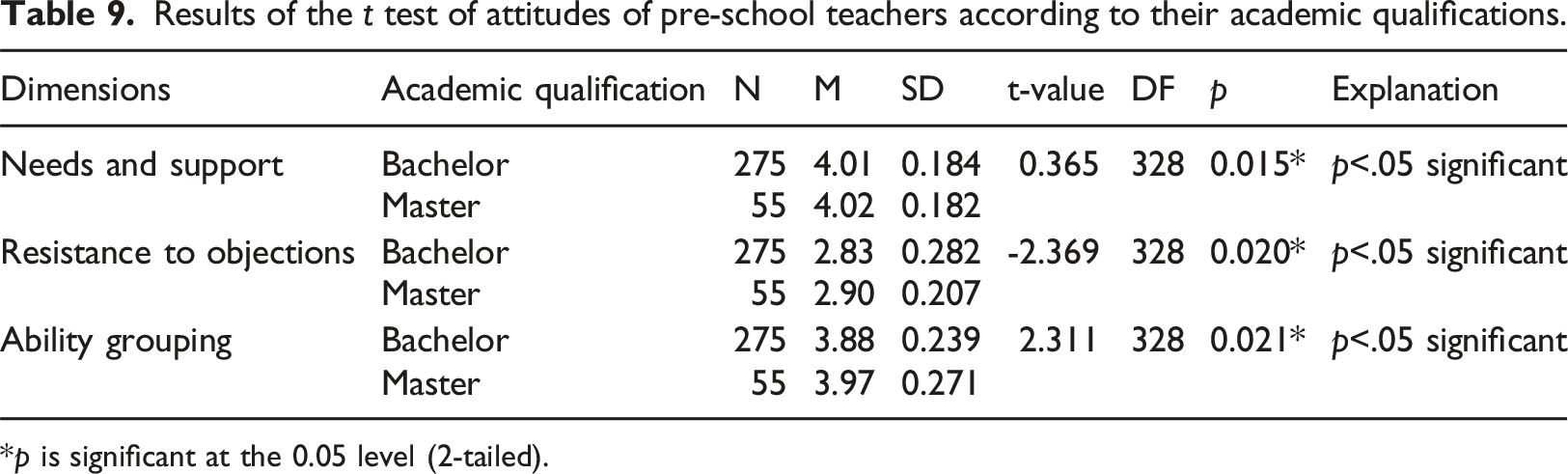
The Independent Samples t test was used by the researchers to answer this question in order to examine the teachers’ attitudes towards gifted children’s education based on the teachers’ academic qualifications.
Results of the t test of attitudes of pre-school teachers according to their academic qualifications.
*p is significant at the 0.05 level (2-tailed).
In addition, the mean of attitudes of teachers who have a bachelor’s degree concerning the gifted children’s education, which is related to resistance to objections, is (M = 2.83; SD = 0.282), which is lower than the mean of attitudes of teachers who have a master’s degree (M = 2.90; SD = 0.207). Finally, the mean of attitudes of teachers who have a bachelor’s degree regarding ability grouping is (M = 3.88; SD = 0.239), which is lower than the mean of attitudes of teachers who have a master’s degree (M = 3.97; SD = 0.271).
These findings indicate that there are significant differences in teachers’ attitudes towards gifted children’s education based on the teachers’ academic qualifications in the three dimensions of needs and support, resistance to objections, and ability grouping in favor of master’s degree holders. In general, gifted children’s education requires teachers who have a master’s degree to provide children with advanced development, creative and academic challenges, and a stimulating learning environment.
RQ #3: Is there a significant difference in the pre-school teachers’ attitudes towards gifted children’s education based on the years of experience of the teachers?
The researchers used a one-way ANOVA to determine if there are significant differences in the teachers’ attitudes towards gifted children’s education based on their years of experience.
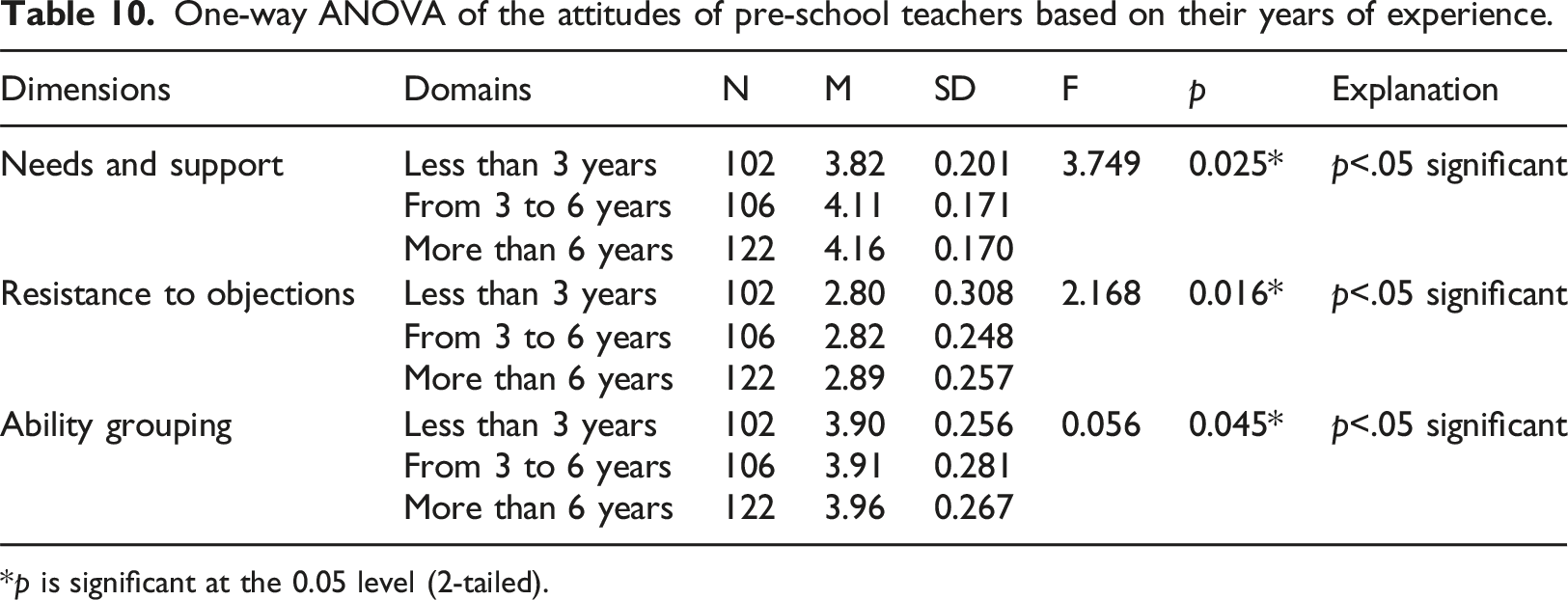
One-way ANOVA of the attitudes of pre-school teachers based on their years of experience.
*p is significant at the 0.05 level (2-tailed).
There are significant differences between the teachers’ attitudes towards gifted children’s education and the number of years of teachers’ experience regarding needs and support, F (2; 327) = 3.749, (p < .05), resistance to objections, F (2; 327) = 2.168, (p < .05), and ability grouping, F (2; 327) = 0.056, (p < .05).
In light of the above findings, these results reveal that there are significant differences in teachers’ attitudes according to their years of experience in gifted children’s education in the three dimensions of needs and support, resistance to objections, and ability grouping, in favor of those with more than 6 years of experience. Overall, the findings confirmed that the number of years of a teacher’s experience significantly affects the teachers’ attitudes towards gifted children. That is, the more years of experience the teachers have, the more positive their attitudes are towards the education of gifted children.
RQ #4: Is there a significant difference in the pre-school teachers’ attitudes towards gifted children’s education based on whether gifted children need a specific curriculum or not?
The Independent Samples t test was used by the researcher to identify if there are significant differences in teachers’ attitudes towards gifted children’s education regarding whether gifted children require a specific curriculum or not.
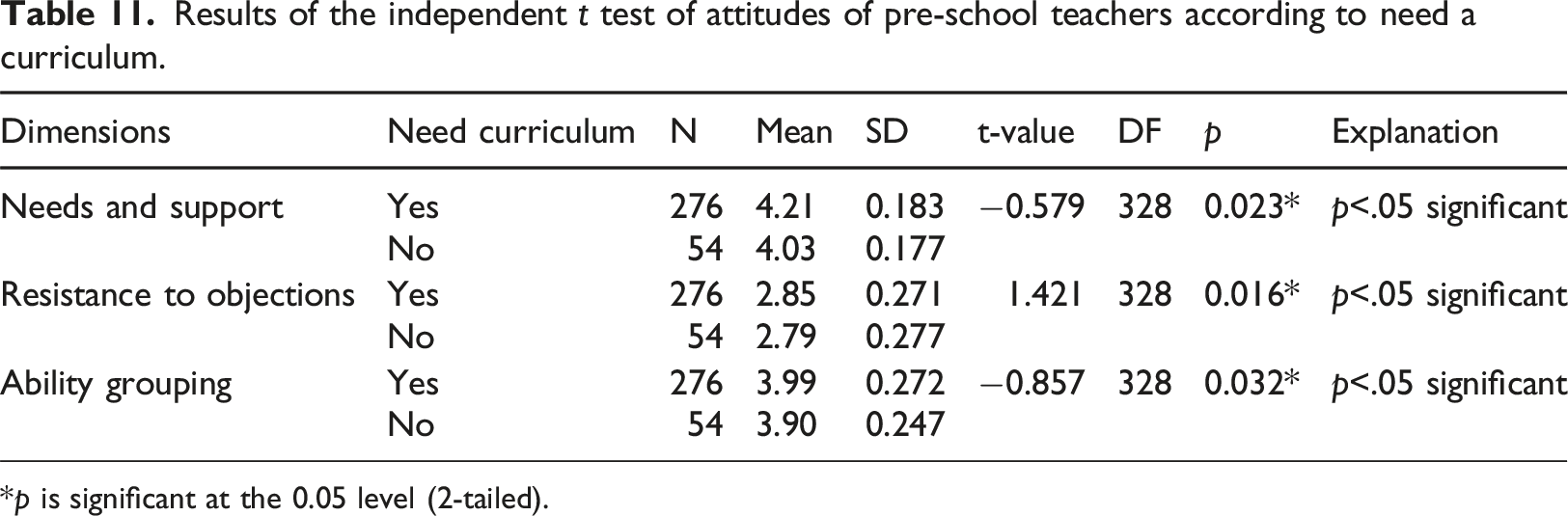
Results of the independent t test of attitudes of pre-school teachers according to need a curriculum.
*p is significant at the 0.05 level (2-tailed).
Additionally, the mean of attitudes of teachers who said (yes), which is related to the dimension of resistance to objections, is (M = 2.85, SD = 0.271), which is higher than the mean of attitudes of teachers who said (no) (M = 2.79, SD = 0.0.277).
Lastly, the mean of attitudes of teachers who said (yes), which is related to the dimension of ability grouping, is (M = 3.99, SD = 0.272), which is higher than the mean of attitudes of teachers who said (no) (M = 3.90, SD = 0.247).
The findings indicate that there are significant differences in teachers’ attitudes toward gifted children’s education concerning whether gifted children require a specific curriculum or not, in all dimensions, according to the needs and support, resistance to objections, and ability grouping in favor of those who said that gifted children need a special curriculum. Gifted children require a specific curriculum, such as the differentiated curriculum that enables teachers to discover children’s giftedness.
Discussions
The purpose of this study is to examine the teachers’ attitudes in pre-school towards the education of gifted children in Palestine and identify the educational strategies and programs for teaching gifted children.
The findings indicated that the mean of teachers’ attitudes in all dimensions of the scale was 3.85. Therefore, pre-school teachers in Palestine have a high level of awareness and positive attitudes toward gifted children’s education, that is, they are knowledgeable about gifted children’s education.
This result ties well with Sayı’s study (2018), which indicated that the teachers had positive attitudes towards all parts of the training program for gifted education.
Moreover, these findings are in accordance with Polyzopoulou et al.’s study findings (Polyzopoulou et al., 2014) that found teachers’ attitudes towards gifted children’s education were positive.
Overall, gifted education is a broad term that refers to a set of strategies, procedures, and theories that are employed in the education of gifted children. Therefore, gifted children need a public school with a self-contained gifted program, or a school specifically for gifted learners.
In contrast with the above findings, Kaya’s study (2019) revealed that classroom teachers lack understanding of diagnosing and educating gifted children and need training in this area.
These findings indicate that there are significant differences in teachers’ attitudes towards gifted children’s education. In general, to appropriately identify and develop gifted children, teachers must be aware of the educational strategies, practices, and instruments that are related to gifted children’s education. In addition, they should at least have a bachelor’s degree.
In line with previous findings, Sayı’s study (2018) also found the teachers have a positive opinion of the training program for gifted education, and there is a significant difference in their opinions according to the pedagogical qualifications of the teachers.
This is consistent with what has been found in findings by Uğraş et al.’s study (2016) that confirmed that pre-school teachers reported that gifted children differed significantly from normal children in their characteristics. Pre-school teachers proposed that a new curriculum should be created to develop the skills of these children, and that the teachers who would teach that curriculum should have academic qualifications in gifted children’s education, be trained in specialized education, and have enough information about gifted children.
Contrary to the findings of Mills’s study (2003), which demonstrated that certification and formal training in gifted education may not be sufficient factors to consider when selecting teachers of gifted students, it may be equally important to select teachers with a strong background in the academic discipline and those who have a passion for the subject matter.
Overall, the findings confirmed that the number of years of a teacher’s experience significantly affects their attitudes towards gifted children education. That is, the more years of experience the teachers have, the more positive their attitudes are towards the education of gifted children. However, teachers’ experience plays a crucial role in enhancing creative and inventive achievements in gifted children. On the other hand, gifted children are positively influenced by their teachers when they are aware of their educational needs and have experience in gifted children’s education.
This is congruent with the findings of Sanchez-Escobedo’s study (2020) which found there is a positive relation between teachers’ experience and training and their knowledge of gifted students. This is because teachers’ experience and knowledge of gifted children is essential for enhancing teacher-training programs concerning gifted education.
The findings indicate that there are significant differences in teachers’ attitudes toward gifted children’s education according to whether gifted children need a special curriculum or not. A similar conclusion was reached by Uğraş et al.’s study (2016), which demonstrated that the pre-school teachers proposed that a new curriculum should be created to develop the skills of gifted children, and that the teachers who would teach that curriculum should be trained in specialized education and have enough information about gifted children.
In addition, the findings are directly in line with Papadopoulos’s study (2021) findings that revealed that gifted children need to implement a social-emotional learning curriculum in their schools.
The in-depth semi-structured interview findings demonstrate the variety of educational programs that are used to teach gifted children, and they reveal the preferred strategies for teaching gifted children to meet their needs. In order to provide an educational context for gifted children, teachers must be able to recognize gifted children using adequate educational strategies and programs be knowledgeable about several aspects of gifted children’s education, such as identification and be aware of the social value of their education.
Overall these findings are in accordance with findings reported by Watters and Diezmann’s study (2003) that demonstrated that there are gifted learners with exceptional abilities, and there are many broad strategies for gifted children’s support.
A similar conclusion was reached by Altıntas and Ilgun’s study (2016) indicated that it is necessary to create an appropriate educational environment for gifted children and to employ appropriate strategies to meet their educational needs.
Conclusions
The main conclusion that can be drawn is that pre-school teachers have a high level of awareness and positive attitudes toward gifted children’s education.
Overall, the more years of experience the teachers have, the more positive their attitudes are towards the education of gifted children. However, teachers’ experience plays a crucial role in enhancing creative and inventive achievements in gifted children. On the other hand, gifted children are positively influenced by their teachers when they are aware of their educational needs and have experience in gifted children’s education. In order to do that, it is preferable to create a specialized curriculum to develop the skills of gifted children.
There are a variety of educational programs and strategies that are used to teach gifted children and meet their needs. In order to provide an educational context for gifted children, therefore, the teachers must be able to recognize gifted children, be knowledgeable about several aspects of gifted children’s education, such as identification, and be aware of the social value of their education.
The Palestinian Government declared its intention to continue its efforts to achieve its goal of guaranteeing quality and inclusive education for all (State of Palestine, 2018). As a result, attention will be given to an important issue, that of gifted children in pre-school, emphasizing the necessity and importance of understanding the characteristics of gifted children and how to teach them through adequate educational practices, strategies, and programs to meet their needs.
Recommendations
The following recommendations are made to policymakers, practitioners, and Ministries of Education: (1) It is proposed to create an international cooperation platform with professionals who work with gifted children to share their experiences and best practices for teaching gifted children, and it might be an inspiration for all other countries. (2) It is suggested that Palestinian universities adopt bachelor’s and master’s programs related to gifted children at the pre-school stage. (3) It is recommended that the kindergarten or pre-school stage should be available in public primary schools, and for all children. (4) It will be important that teachers are trained in methods of early identification of gifted children and adequate educational strategies for teaching these children. In addition to a comprehensive guide for gifted children’s teachers, this will help teachers become more aware of and understand the needs of gifted children better. (5) Providing financial support in order to provide seminars and workshops for teachers of gifted children.
Footnotes
Acknowledgments
The authors wish to acknowledge teachers who kindly agreed to participate in this study, whether through questionnaires or interviews. They really offered an insight into the education of gifted children in Palestine. Authors also acknowledge the role played by the Palestinian Ministry of Education and the Scientific Research Ethics Committee for facilitating this research mission and encouraging to keep working.
Author contributions
All the authors contributed to this work.
Declaration of conflicting interests
The author(s) declared no potential conflicts of interest with respect to the research, authorship, and/or publication of this article.
Funding
The author(s) received no financial support for the research, authorship, and/or publication of this article.
Disclaimer
The views and opinions expressed in this article are those of the authors and do not necessarily reflect the official policy or position of any affiliated agency of the authors and the publishers.
