




Abstract
This study is a qualitative investigation of education policies and decision making during COVID-19 pandemic in five Middle East and North Africa Region (MENA) countries: Kuwait, Lebanon, Morocco, Palestine, and Qatar. It aims at scrutinizing how these countries responded to the education disruption caused by the pandemic between February 2020 and July 2021 and how they managed the resulting turbulence. We also investigate the extent to which these decisions were equitable and innovative. Data were collected from Ministerial notes, media content, and international organizations reports about the situation of education in the region. Walt and Gilson’s (1994) policy analysis triangle and the Cynefin framework (Kurtz & Snowden, 2003) guided the objectives and the analysis of the data. Findings revealed that these countries muddled through the education policy at the beginning of the pandemic, centralized decision making, and faced difficulties to implement online and distance learning. In the second phase, most of these countries tried to save education, but were halted by structural challenges. Some differences were witnessed among these countries in how they have dealt with the evolving crisis. However, some similarities have also been noticed at the levels of context, process and actors. The decisions taken often lacked innovation and led to less equitable outcomes. The discussion of the findings has some implications for education policy and education management in turbulent times in the MENA region.
Keywords
Introduction
The year 2020 was marked by the outbreak of COVID-19 worldwide, disrupting normality at all levels (United Nations, 2020). More than 188 countries and about 1.7 billion students and their families were affected (OECD, 2020; Reimers and Schleicher, 2020). To ensure the continuity of learning, many governments implemented alternative solutions, which ranged from full to partial to no school closure leading to various effects on students’ learning. In less equitable systems, the gaps between students have been entrenched. The World Bank has estimated a 5 months school shutdown loss at $10 trillion, which amounts to 16% of the investments on basic education (World Bank, 2020).
Notwithstanding the fact that the situation was still evolving when this study was launched, we deemed it important to analyze and assess the decisions made by MENA countries during these two periods. The five countries used as case studies in this research are Kuwait, Lebanon, Morocco, Palestine, and Qatar. These MENA countries were mainly selected because they are the authors’ home countries and therefore, it was easier to access data and provide interpretations for information on each country. However, these countries can also be seen as adequately representative of all MENA countries with Morocco standing in North Africa, Lebanon, and Palestine from the Mediterranean Asian side and Kuwait and Qatar from the Gulf Asian Side. While these countries have a lot of things in common in terms of language, culture, and history, they also display a number of differences in terms of natural resources, social stability and economic growth. For example, while Kuwait and Qatar are an important source of global economic and energy resources and have a very high GDP per capita ($66 838,36 for Qatar and $24 300,33 for Kuwait) according to World Bank Statistics in 2021 (The World Bank, 2021); Morocco, Lebanon and Palestine import most of their energy resources and have some of the lowest GDPs per capita in the region ($4136.1 for Lebanon, $3795,38 for Morocco, and $3 663,97 for Palestine). In addition, countries like the Kingdom of Morocco, Qatar, and Kuwait have for years experienced important levels of social and political stability, whereas Lebanon and Palestine have for years been faced with social and political unrest due to conflicts and wars either inside these two countries or in countries bordering them. These five countries also show some stark disparities in their education expenditure with Morocco who spent the most in 2020 (6.8% of its total GDP) followed by Kuwait (6.6%) and Palestine (5.3% in 2018, we could not find data for Palestine in 2020). Qatar, on the other hand, spent about 3.2% of its total GDP in 2020, and finally Lebanon who spent 1.7% of its total GDP on education in 2020.
Interest in scrutinizing the impact of the pandemic on Education in the MENA region also arises from a deep concern about the poor state of education in this region and how it has been jeopardized by the decisions to close schools in 2020. In the last two decades, most of these countries have faced either social and political tensions or economic crises (or both) that have wrenched their stability and thwarted their development in a way or another. More importantly, education, which is a major requirement for countries seeking growth and development, have been beset with myriad obstacles making it a problem and, sometimes, these countries biggest challenge rather than the solution to other woes. (Rizk and Hawash, 2020). Worse still, education in the MENA region has often contributed to enhancing inequality and inequity instead of being the “the great equalizer” (Horace Mann, 1848; cited in Growe and Montgomery, 2003: p. 23). The region has also witnessed huge disparities in terms of education expenditure, but overall the regional average of education spending which is 3.8% of GDP, ironically falls below the global average of 4.5%. Besides, even those countries that devote important funding to education have not been spending effectively and adequately and have not been able to implement and sustain serious school reforms. In a report about education quality, UNICEF indicated that “in international assessments of learning outcomes, such as PIRLS and TIMSS, most participating countries from the MENA region perform at the bottom and all MENA countries below the centrepoint of 500.”
Hence, before COVID-19, education in MENA countries was already in an alarming state. For example, according to a report that was jointly prepared by the United Nations Educational, Scientific and Cultural Organisation (UNESCO), the United Nations Children’s Fund (UNICEF), and the World Bank (WB) “15 million children in the region between the ages of 5–14 were out of school and nearly two-thirds of children in the region were unable to read with proficiency” (Yoshimoto et al., 2021: p. 7). Therefore, decisions to close schools came to exacerbate the declining levels of learning among those children and increase losses in their skills. Since the average age of populations in these countries is between 10 and 21, the learning loss during COVID-19 era is expected to negatively affect future generations global competitiveness.
In addition, a few years before COVID-19 outbreak, some of these countries launched ambitious reforms to overhaul their education systems and allotted interesting funding for this cause. Morocco, for instance, launched its 2015–2030 Education Sector Vision under the slogan “New Moroccan School”. Similarly, Kuwait also started implementing the largest education reform program in the Gulf, targeting many aspects in the field. Not only were these reforms ground to a halt for more than a year but also the school closure and the economic impact of the pandemic came to multiply and compound the challenges facing the execution of such reforms.
It is within this context that this study set out to investigate how MENA policy makers have managed education and schooling during the pandemic through analyzing the processes of their decision making and researching how these decisions have impacted schools and learning in this region. Ensrink et al. (2013) emphasized the elusive nature of “public policymaking” and how it is ambiguous and hard to perceive by humans. Therefore, using frameworks to analyze policy can help us decipher its codes. For this reason, this study opted for the health policy triangle to make sense of the decisions taken by the five Mena countries. This conceptual model will help us “make sense” of ambiguity and superimpose structure and logic onto chaos” as Ensrink stated (Enserink et al., 2013). We are also aware of two factors here. The first one pertains to the nature of policy making which has never been and never will be rational; and the second is tied to the era which we are studying and which is very peculiar and characterized by chaos which superimposes layers of difficulty and confusion in front of decision makers. Thus, our critical analysis of these decisions will not be guided by conditions of rationality but will seek to understand and evaluate the underlying mechanisms by which policy makers in these five countries have selected and executed their education policies during the pandemic and how these decisions have evolved and changed as the uncertainty levels began to shrink.
Review of literature
Public policy analysis
Public policy analysis raises questions about what decisions have been taken by a government, analyzes why they have been taken and examines their outcomes. It is the “study of the action of public authorities within society” (Mény and Thoenig, 1989. p. 9). This field of study is traced back to the work of Harold Lasswell in the 1940s and 1950s (Dye, 2013; Lasswell, 1950). Walt and Gilson (1994) explain that policy analysis draws from disciplines such as economics, political science, sociology, public administration, organizational theory and history.
The various frameworks that have been developed to grasp policy making are divided into two types: policy process theories and policy output theories. The former focuses on the “how” of the policy making process and analyzes factors such as institutions, actors and the external environment (Baumgartner et al., 2009). Output theories highlight the variables that influence political choices. (Ansell et al., 2017; Birkland, 2010).
Research in education policy draws from the field of policy analysis using theories in educational research and political science. However, little interest have been given to the development of education policy frameworks, mainly because most research in the field has been focused on the macro level of policy. (Cheong Cheng and Ming Cheung, 1995).
Education policy analysis
Educational policy refers to “the actions taken by governments in relation with educational practices, and how governments address the production and delivery of education in a given system” (Viennet and Pont, 2017). For many years, researchers addressed issues in policy through a positivist perspective that viewed policy as a linear process. The last four decades, however, witnessed deep changes in how researchers approached policy making and policy analysis. This led to the emergence of critical education policy analysis.
Critical education policy analysis
The 1980s marked a paradigm shift in education policy research from traditional approaches that view the policy process as linear (including identifying problems, finding solutions, implementing them and evaluating the outcomes), to critical approaches that consider policy as “inherently political” and as an “extremely complex, often contradictory process that defies the commonly held image of singular purpose and open, effective planning” (Weaver-Hightower, 2008: p. 153).
Hence, critical education policy analysis emerged as a reaction to traditional approaches whereby change and reform were viewed as deliberate results of planning, adopting and implementing policies with disregard to who is involved or what agendas drive them. Discontent with this paradigm pushed researchers to pose critical questions about the relationships between power dynamics, control and the types of policies adopted, how policy rhetoric compares to practiced reality, and how these policies have been developed, what problems they tend to solve and how they have evolved (Young and Diem, 2017). This shift directed attention to new issues in education policy such as: 1. The difference between policy rhetoric and practiced reality; 2. The gap between policy development and policy implementation; 3. The origins of these education policies, how they have been developed and how they enhance the dominant culture; 4. How power, resources and knowledge are distributed via these policies; and how that creates winners, who dominate, and losers, who are subjugated; 5. And how some non-dominant groups resist the status quo and employ agency and activism in fighting against oppression and domination (Diem et al., 2014).
This research attempts to analyze education policy making in five Mena countries during COVID-19. Besides our conviction that policy making is inherently complex, we are also aware that the period we have focused on has been characterized by turbulence. Therefore, the theoretical framework we opted for is grounded within this context. Our aim is to critically analyze the policy making process of the five countries under study within this turbulent context of COVID-19 and to question the dynamics and outcomes of these policies.
Education policy making in VUCA times
The situation created by COVID-19 can be analyzed using the VUCA concept (Volatile, Uncertain, Complex, and Ambiguous), The acronym VUCA was first deployed by the US Army War College in 1987 and was used to explain the political, economic, and military challenges that faced our world during the cold war period (Van der Wal, 2020). COVID-19 has confronted world governments and leaders to volatility as the numbers of contaminated cases and deaths kept surging (World Health Organization, 2020). Besides, lack of clarity about the situation clouded predictions. This uncertainty is paralyzing because “unfamiliar, high stakes decisions” or “big-bets” need to be taken (Alexander et al., 2020). In education, the decisions to close, initially open or fully reopen schools were all evaluated as good alternatives by world governments. In a similar environment fraught with risks and unknowns, political leaders need specific skills to respond to pressing challenges. Muddling through which works in routine environments can be detrimental and may incur irreversible consequences.
In the same vein, Minciu et al. (2020) describe how in a VUCA environment intuition becomes the best way to solve problems as it is very difficult to identify all the decision making variants and as time elapses very fast. So, “the best solution is to adopt a wrong answer at the right time, despite the correct one after the time has elapsed.” The main question we are asking in this paper is not whether these questions were right or wrong. Rather, we will try to understand the process and mechanisms by which these countries have come to their decisions and how these decisions impacted education and learning in the MENA region.
In this research, we will investigate how the five countries have dealt with this issue. The methodology we used in approaching this topic and answering the related questions will be outlined in the following sections.
Methodology
Research objectives and questions
This study set out to qualitatively investigate the education policies of Kuwait, Lebanon, Morocco, Palestine, and Qatar, during COVID-19 through two periods stretching from February 2020 to July 2021. It attempted to compare and analyze how these MENA countries responded to the crisis, how they managed education and change as the health crisis evolved in time, and how their decisions impacted children’s learning. The main objective is to understand the policy making process of these five countries during the disruption and scrutinize its impact on the learning practices. Therefore, the paper focuses on answering the following questions: 1. How did education policy makers in Kuwait, Lebanon, Morocco, Palestine, Qatar respond to the turbulence caused by COVID-19 pandemic and managed education during the crisis in terms of context, content, actors, and process? 2. How have the decisions and policies of each of these countries shifted/or not as the pandemic situation and uncertainty levels evolved through the period under study? 3. To what extent was the management process of this education crisis in these MENA countries innovative and equitable?
Conceptual framework
The analysis of the findings will be conducted on the basis of the policy triangle framework and the Cynefin framework. These two frameworks are described in details below.
The policy triangle framework
The objectives of this study are grounded in the policy triangle framework (Figure 1) developed by Walt and Gilson’s (1994). It was first devised as a “simple model” for both retrospective and prospective policy analysis, but has widely been used in the health sector and beyond (O’Brien et al., 2020) as it provides the basis of a detailed analysis of public policy making. It comprises four concepts that interact to shape policies, reforms, and decisions. These are context, content, policy process, and actors. Context is about systemic factors such as the social, political, economic and cultural environment of a given policy. Content analysis focuses on “what policy objectives, policy choices, decisions, legislations and regulations have been made and implemented?” Analysis of actors focuses on answering the question “who makes policy in a given country?” (Walt and Gilson, 1994) and what interests, variables, and values characterize the individuals and/or groups who are involved in policy making. Process refers to “the way in which policies are initiated, developed or formulated, negotiated, communicated, implemented and evaluated” (O’Brien et al., 2020: p. 2). The policy analysis triangle (Walt and Gilson, 1994).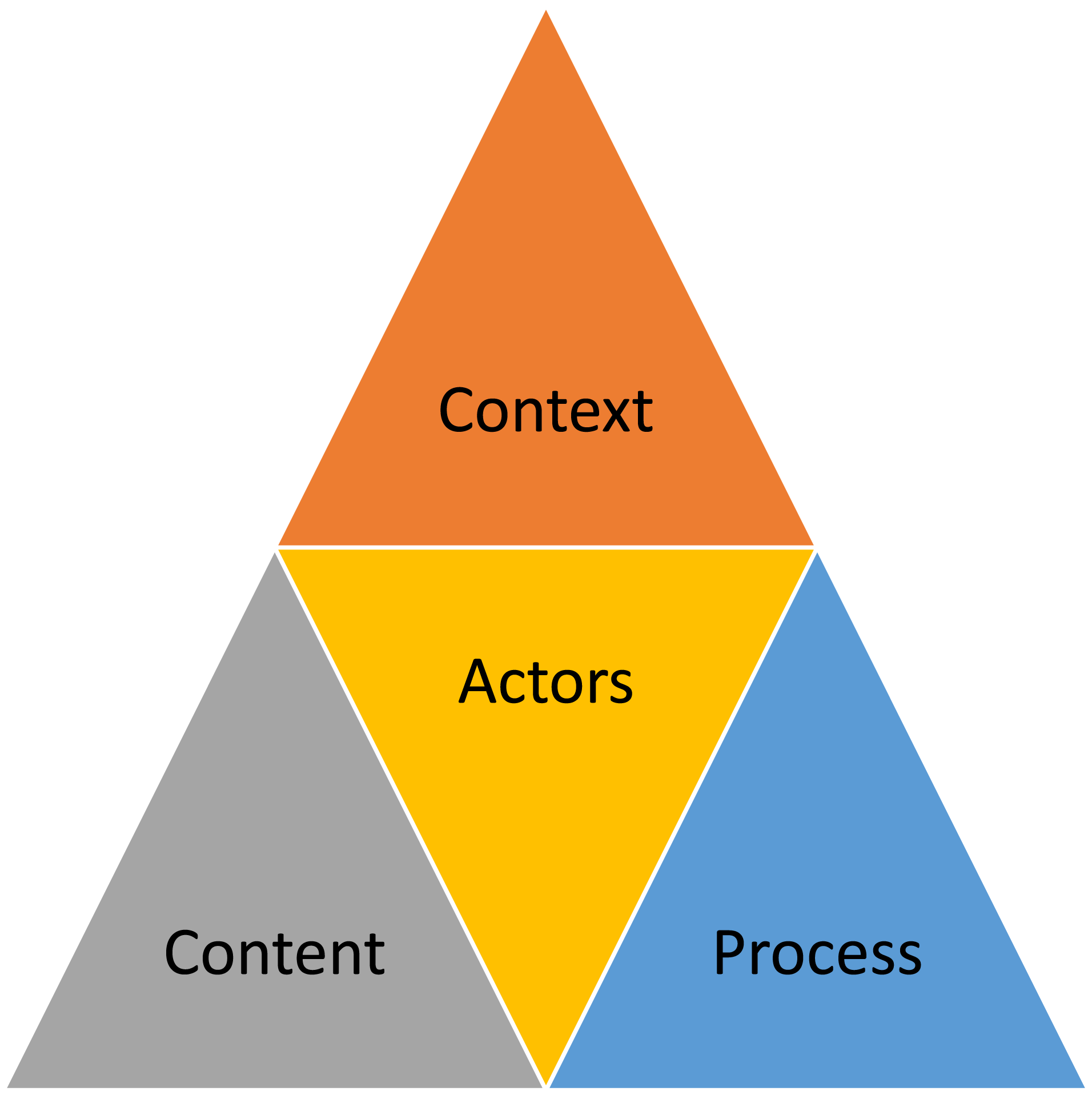
The cynefin framework
The Cynefin framework (Figure 2) was developed by Kurtz and Snowden (2003) in an attempt to make sense of decision making and crisis management. It is basically a phenomenological framework that explains decision making on the basis of how human-beings perceive different situations that occur to them. The way situations are perceived differs from ordered to un-ordered contexts. Ordered problems are easily sensed because the relationships between cause-effect are either linear (in the known domain) and, hence, can immediately be categorized and dealt with efficiently; or are stable but separated over time and space (in the knowable domain). Availability of time and resources can help move from knowable to known but this is generally very unlikely. Consequently, the normal course would be to resort to expert advice and build a relationship of trust between decision makers and advisors who hold the resources and the information needed to make optimal decisions. The Cynefin framework (Kurtz and Snowden, 2003).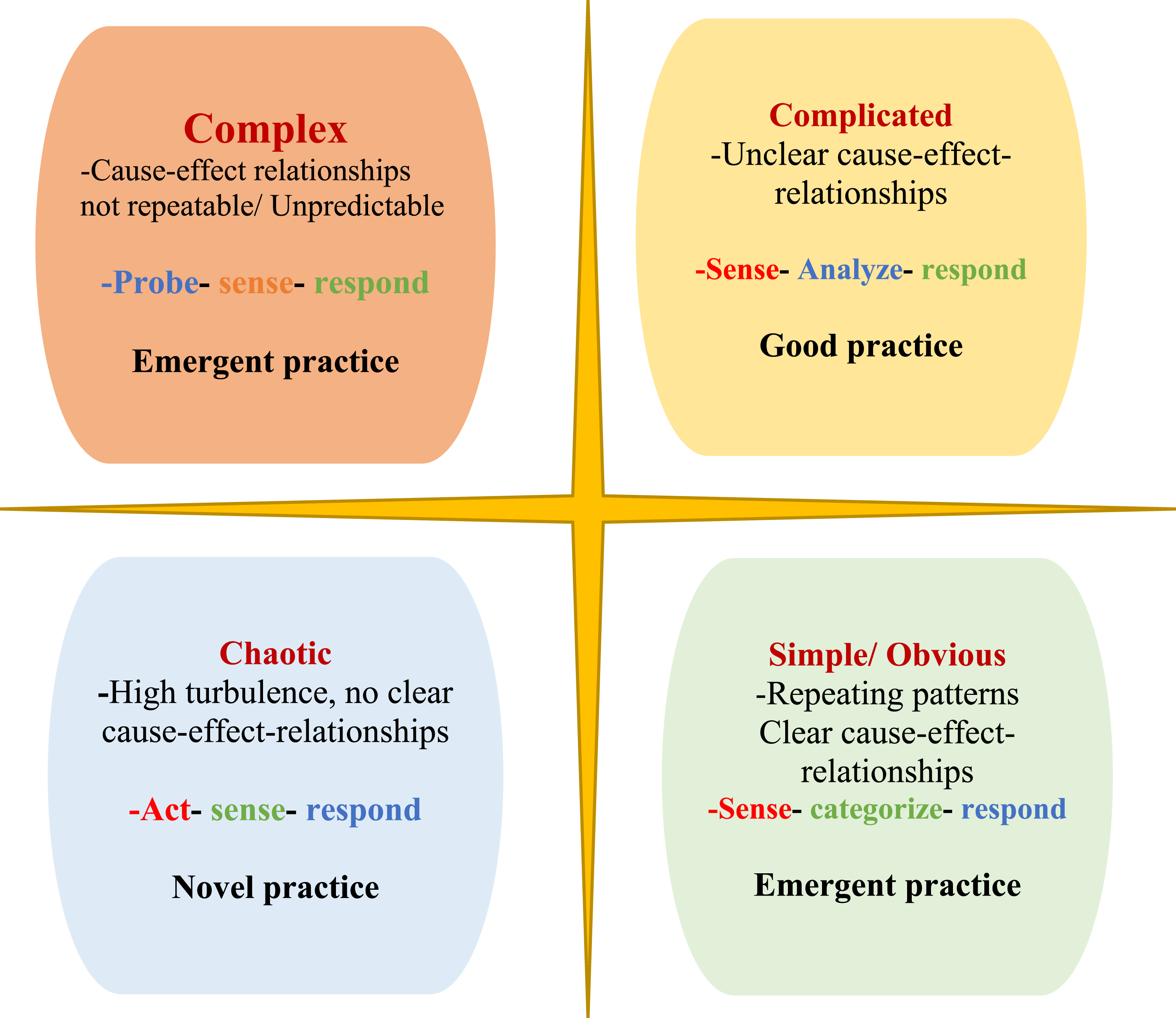
The second domain in un-ordered contexts is characterized by chaos. Here, relationships between cause and effect are not visible due to turbulence. Applying best practices in these situations can only bring more chaos. Therefore, the first thing to do in similar contexts is to act immediately and try to reduce turbulence and sense reactions to the interventions taken so as to respond accordingly. Different strategies are possible in this model of decision making to either bring the situation into the knowable domain, by controlling the space via applying authoritarian decision making for instance, or by moving the situation into the complex space through multiplying perspectives and creating expected patterns. More importantly, Kurtz and Snowden (2003) believe that this chaotic domain provides room for innovating and discovering new possibilities.
Design and method
This is a multiple case study with a qualitative research design. Qualitative research can provide researchers with deep access to social realities (Creswell, 2013; Punch, 2013). It enables researchers to closely investigate and interpret people’s experiences and social processes (Leedy and Ormrod, 2001). This design was chosen because our major concern was to understand the processes of the decisions and policies made by MOEs and policy makers in the five countries.
Sampling
The five countries (Kuwait, Lebanon, Morocco, Palestine, and Qatar) were chosen using a convenience sampling technique because each researcher belongs to one of these five countries and, hence, the ease of access and the knowledge of context that they have about each country facilitated the process of designing the study, collecting the data, and analyzing the findings. These five countries are representative of MENA countries with Morocco from North Africa, Palestine and Lebanon from the Middle East, and Qatar and Kuwait from the Gulf. Therefore, while these five countries have a lot in common with many countries in the MENA region at the linguistic, socio-cultural and political levels, they also have differences that enriched the diversity of data.
Data collection and analysis
The researchers conducted a systematic review of all policy documents and policy decisions in relation to schooling during COVID-19 in the five countries targeted in this study. During that period of time, governments announced their policies and decisions through their official websites and via press conferences and press releases, which was a great resource to the researchers to collect the relevant data. Thus, three main sources were used to collect data. The first one consisted of notes released by these countries’ MoEs, through their official websites or from the media, as well as interviews the MOEs in the five countries gave to journalists on national and international TVs. The second source was written media content collected from online newspapers’ articles and news bulletins. Third, more data was gleaned from multiple reports by international organizations such as the World Bank, UNICEF, and The UNRWA and others as well as a review of literature of studies conducted on COVID-19 and education from each of these countries.
First, the authors selected content that was appropriate to the objectives of this research paper with focus on the political decisions that were taken in every country across the period of the study which stretched from February 2020 to July 2021. Then, a checklist was created on the basis of Walt and Gilson’s, (1994) policy analysis triangle and which helped sort out data into four categories: context, content, process, and actors. For reliability and validity purposes, the five researchers worked collectively in cross-checking and analyzing the data, constantly comparing content from different sources and selecting information that fit the objectives. Each researcher in each country collected the relevant data in relation to the process of decision making during this turbulent time. Then, the data was analyzed by the same researcher using the policy analysis triangle checklist. Finally, the five researchers met and discussed the findings of each country for reliability purposes.
The content from media platforms was validated through cross-checking using various sources and comparing it with information shared by the ministers and officials in the targeted countries through their MoE’s websites and via the interviews these officials gave on TV channels and visual media. Using different sources to collect data helped reach diverse and rich content and increased the reliability of the results reported in this study. Thematic analysis was conducted and concepts pertinent to the research questions were extracted from the checklist created for this end.
Findings
Results for Q1 and Q2 will be combined by reporting findings on the policies and decisions made by the five countries and comparing them simultaneously. Q3 is dealt with briefly towards the end of this section but data on this question is deeply interpreted in the discussion section.
Context, content, process, and actors
The first and the second research questions in this study enquired about the underlying mechanisms of the education policies implemented by Lebanon, Morocco, Palestine, Qatar, and Kuwait during COVID-19, in terms of context, content, actors, and process, and how the management of this education crisis compares across these MENA countries. The results will be reported using the policy analysis triangle by Walt and Gilson (1994).
Context
According to Walt and Gilson (1994), a number of factors influence the context of a policy like stability and certainty, past experiences, culture, and political ideologies. The findings indicate that during the first phase, Kuwait decided to close all schools on February 26th after confirming 26 cases of COVID-19. The fear that more cases might emerge drove the government to close all schools, hoping to control the spread of the virus. Two days later, Lebanon followed suit based on a strong belief that early containment can thwart the spread of COVID-19. The Lebanese MEHE believed the decision to be a quick response to the wide calls on social media to close schools due to concerns over the spread of the pandemic even if Lebanon recorded only 13 cases on February 28th, 2020.
Comparatively, in Morocco, the MOE decided to close all schools on March the 6th for an undetermined period of time (MNEPS, 2020) despite the low number of COVID cases (2 cases), based on the worrisome situation in neighboring European countries and uncertainty about the virus. In a media interview, the Moroccan minister of health also attributed the decision to the fact that the WHO declared COVID-19 a pandemic and this appealed to decision makers to declare a state of emergency, as he argued. He also mentioned in the same interview that kids at school constituted a high risk of contamination to their families as they can easily contract the virus. Hence, safety was a priority at this phase.
Likewise, the high level of uncertainty over the evolution of the virus pushed the Palestinian government to close all schools on March 5th 2020, after recording only 7 Covid-19 cases. The Qatari government decided to close schools on March the 10th as an urgent measure to contain the spread of the pandemic, with only 18 cases, despite the fact that the director of public health at the ministry explained that the low rate of contaminations does not require closing school. Therefore, the context factors in all these countries were marked by high levels of uncertainty, fear, and pressure from social media.
During the second phase, uncertainty levels decreased despite the higher numbers of cases. Thus, the context shifted from completely unknown to somehow known as countries started having a clear idea about the virus. However, in Kuwait, keeping students away from schools remained at the top of the list. The four other countries all shuffled their priorities and pushed in-person education to the top of the agenda. However, the situation did not remain stable for all, as spikes of contaminations hit Lebanon and Palestine and new variants of COVID-19 emerged in Qatar, increasing the number of positive cases and pushing these governments to prioritize safety and health over in-person education.
Content
At the outbreak of the pandemic, all five countries opted for school closure at different intervals. Kuwait suspended all classes for 2 weeks, and then extended the decision to two more weeks and later to 4 months. Initially, Kuwait prohibited online learning despite attempts from teachers to connect online with their students (Alhouti, 2020). Meanwhile, Kuwait’s MOE kept working on plans to move to online learning but in vain. There were various attempts to create and launch new online platforms but these plans were not put into practice despite announcing a learning platform (https://ekwti.com) on June 14th. Eventually, all these plans came to a halt when a full lockdown was implemented (Alhouti, 2020). Schools’ and Universities closures were extended until August 4th, and the MOE decided to start the following school year in December 2020 as it was planned that starting from October, grade 12 students were to sit for courses for 5 weeks to complete the 2019–2020 school year. Later on, these plans were reviewed anew and it was decided that the following school year would start in October the 4th.
By contrast, Lebanon and Morocco provided scenarios for distance education in public schools via TV broadcasting and Non-ICT modes, whereas private schools were given freedom to make their own choices. In Morocco, the minister announced the updating of an online platform created in 2018 TilmideTice, which was not operational during the first period of the lockdown. Lebanon decided to cancel all official exams while Morocco rescheduled high school exams and canceled middle school and primary school exams. Palestine shifted to online learning and launched a program called “Thanawiya Online” to provide digital resources for students in the high school graduate year. The MOE updated the e-learning platform (https://i2.elearn.edu.ps) created in 2011. A decision was made to liaise with Palestine TV and radio stations to share learning resources with learners. On May 23rd, the minister announced the conclusion of the school year.
As of March 21st, 2020, Qatar took a number of decisions to ensure school continuity. Based on a strong belief that distance, online learning is an effective alternative, the MOE and Higher Education (MEHE) decided to use Microsoft Teams with first to third grade students and Learning Management Systems “LMS” for students from grades four to twelve. In April 2020, Qatar launched an online learning platform “Mzeed” offering free digital interactive courses. Students were offered computers, tablets, laptops, and hundreds of broadband devices.
During the second period of the crisis, Lebanon, Morocco, Qatar and Palestine decided to reopen schools. The Kuwaiti MoE submitted a comprehensive proposal to the government to reopen schools in April 2020, but health authorities rejected the plan allegedly due to the spike in cases and low percentage of vaccinated people.
On October the 12th, 2020, Lebanon decided to reopen schools and used blended learning by dividing classes into two, and by alternating online and in-person learning. However, by January the 7th, 2021, authorities imposed a nationwide lockdown upon a surge in COVID-19 cases, forcing schools to go back to online learning for 3 months. However, in April 21st, 2021, the MEHE decided to reopen schools again and provided a gradual reopening plan by which Baccalaureate students in Year 12 would go back to school first, followed by Year 9 on May 5th, and finally, the rest of the classes would return on May 17th, 2021.
Likewise, Morocco decided to return to in-person education on September 7th, 2021; using an alternating cohort mode. The cohort who was not having classes in-person was supposed to alternate using TV broadcasts and e-learning platforms. The MOE updated its e-learning website https://soutiensco.men.gov.ma/and worked with partners to launch a mobile application called TelmidTice to support digital learning.
Similarly, Palestine reopened schools on September the 6th and started blended learning. To support distance learning, the ministry launched the online platform https://i2.elearn.edu.ps/c6/. Qatar implemented a three-stages-return plan on September 6th, 2021 which was interrupted in April 4th as the government imposed a total lockdown and moved education online over the circulation of the UK variant.
Process and actors
Process refers to “how the policy was brought forward and implemented” or “how issues get on to the policy agenda and how they fare once there” (Walt and Gilson, 1994: p. 355). Process also “refers to the way in which policies are initiated, developed or formulated, negotiated, communicated, implemented and evaluated” (O’Brien et al., 2020: p. 2). Actors refer to the stakeholders, individuals and organizations that influence policy and decision making.
As the first cases of COVID-19 started to appear, governments in the five MENA countries declared a state of emergency, imposing total lockdowns and disruption of all fields, including education. They centralized decision making in the hands of the government and a few ministers who directed the policy with irrevocable decisions.
In Kuwait, the Government Council of Ministers made decisions based on recommendations from the minister of Health. The MOE had to execute the recommendations of the minister of health who considered the situation critical and ordered that schools remain closed.
At the onset of the pandemic, Lebanon declared a state of emergency and formed “The committee for the Follow-Up of Anti-Coronavirus Preventive Measures and Actions in Lebanon.” This committee studied the recommendations of the Lebanese Ministry of Health’s Scientific Committee who saw that taking severe, urgent measures against the virus would help contain it. A crisis cell composed of different ministries advised the MOE and the home secretary to issue decisions to close schools. Thus, the MOE mobilized the national TV to broadcast lessons, especially to graduate years.
Likewise, Qatar formed “The Supreme Committee for Crisis Management” chaired by the prime minister and the minister of Interior with other ministers and State Officials. The agenda focused on imposing a global safety curfew. The MOE abided by the decisions of the committee and implemented an online learning mode.
Morocco, by contrast, managed the crisis by setting three priorities: stable economy, health, and social stability. The decision to close schools was taken by the MOE upon recommendation from the minister of health and the minister of the Interior.
In Palestine, the ministers gathered to discuss ways to face the pandemic and issued a lockdown decision disrupting, hence, in-person education, and moving to distance learning with no clear vision.
During the second phase, the process of decision making shifted a little bit in Morocco, Qatar, Lebanon, and Palestine. Returning to schools was on the top of their policy agenda. In Lebanon, Morocco and Palestine, the problem was triggered by the outcomes of the evaluation of online learning expressed in reports from international organizations such as UNICEF and UNESCO about the negative impacts of the disruption (Save The Children, 2021).
Similarly, Qatar decided to implement blended learning at the beginning of the school year. Yet, in April as the number of COVID-19 contaminations increased. The MEHE in coordination with the minister of Health decided to return to online and distance learning to protect students from potential contaminations. However, the decision making process remained centralized at the level of the government.
Similarly, in July 2020, the Moroccan MEHE held meetings with teachers’ Unions. Dissatisfaction over the outcomes of distance education was the main problem and the agenda focused on moving education on top of the list of the priorities while taking precautionary measures to ensure people’s health and safety.
Likewise, the Palestinian government decided to reopen schools on September the 6th in the West Bank (The local authorities in Gaza strip decided to reopen schools in August 2020). The agenda focused on providing all learners with equal access to quality education and considering the right to education equal to the right to health. The difficulties faced by schools during the 5 months closure and the weaknesses of distance learning convinced the government to go back to in-person teaching. Figure 3. Timeline of the education decisions taken by Kuwait, Lebanon, Morocco, Palestine, and Qatar during COVID-19.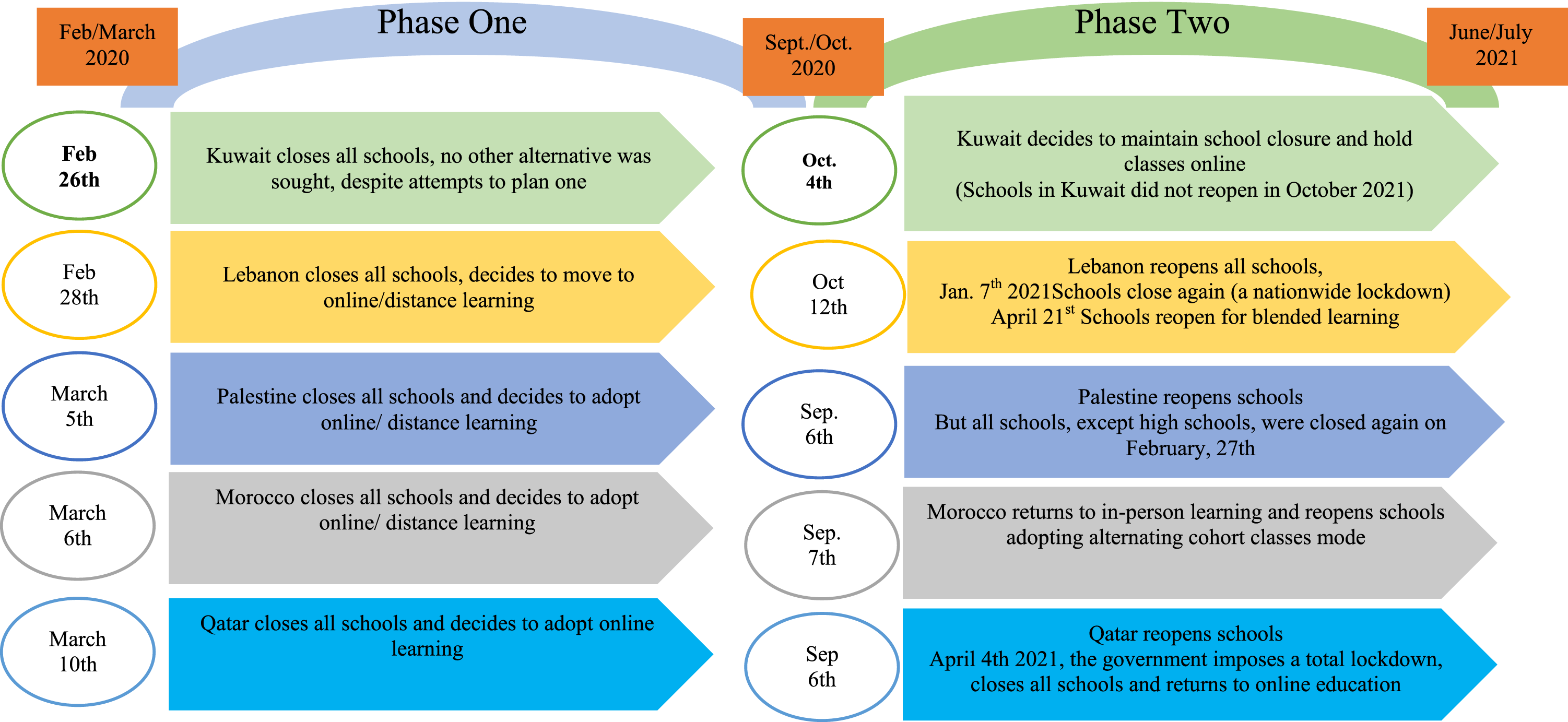
Education crisis management: Equity and effectiveness
With the exception of Qatar, the four other countries reported a wide dissatisfaction with the outcomes of distance education. The worst effect was felt in Kuwait as more than 500,000 students from Grade 1 to Grade 12 remained without any kind of education for more than 8 months (Alhouti, 2020). In Lebanon, Morocco and Palestine, the gaps between students in public schools and those in private schools grew wider as the former lacked the infrastructures; the technologies and the connectivity required to learn online.
Thus, more than 1.2 million children in Lebanon in public, private and UNRWA schools have seen their education disrupted (UNRWA, 2020). Many schools have not been able to ensure continuity because of lack of technological abilities, absence of online platforms and shortage in online resources and weak internet connectivity. A survey conducted by Save the Children in Lebanon and Palestine revealed that more than three quarters of students could not cope with online learning and that closing schools affected their social and mental wellbeing (Save The Children, 2021).
In Morocco, the gap between advantaged backgrounds students and poor backgrounds’ students has grown bigger as the latter have suffered from numerous environmental and technological constraints that have prevented them from connecting with their schools and teachers (OECD, 2021).
Limited access to digital tools in Kuwait, Lebanon, Morocco, and Palestine, due to poverty, poor infrastructure, and inadequate policies has exacerbated the risk of learning losses and undermined public schools’ capacities to cope with the pandemic (Pataud, 2020; UNICEF & ITU, 2020).
Discussion
The findings of this study indicate that the education policy in these five countries gave priority to health and focused on reducing uncertainty and maintaining safety. All these countries put the continuity of learning on the agenda as well, but dealt with it differently. The decisions about education were focused in the hands of governments and centralized within a limited circle of ministers and political elites. The decisions of returning to school at later stages showed some similarities but also some differences across the five countries. Generally speaking, ambiguity and uncertainty continued to prevail during the first and the second phase of the pandemic; hence, decisions to reopen schools have not been easy all the time.
During the first period, the five countries showed large similarities at the levels of context, content, actors and process. At the context level, COVID-19’s sudden outbreak imposed a chaotic situation on all five countries. Even when the number of cases was not very high, they all decided to disrupt education and move to online and/or distant learning. Lebanon, Morocco, Palestine, and Qatar implemented plans to ensure this continuity. Kuwait MOE, on the other hand, kept changing plans without implementing any of them (Alhouti, 2020). The imposed curfews at different intervals of the crisis thwarted some of the plans of the MOE, but the Kuwaiti community and deputies accused the minister of mismanagement (Kuna, 2020). Based on the Cynefin framework (2003), in such highly turbulent times, waiting for decisions and trying to make sense of the situation is not an appropriate course of action. The best thing to do is to act and not seek patterns as there are none. Waiting and doing nothing at all is a decision in itself (Alexander et al., 2020), but it is a decision that turned a health crisis into a learning crisis. One Kuwaiti student commented on this crisis by saying: We students have fallen back immensely due to this. But, having a plethora of high-risk spreader areas such as restaurant dining halls open at some point has even allowed some to improve their businesses. Everyone had a choice. You can go to the office, or work from home. You can have your hair done at a salon, or at home. You can go to the gym, or work out at home. You can eat at a restaurant, or at home. All but us-our only choice is to attend school at home (Kuwait Times, 2021).
Except for Qatar where the MEHE took necessary measures to establish online learning as a major alternative (Al Nuaimi et al., 2022), the other three countries chose the easy way out using traditional ways of conveying distance education either through TV, radios, or leaving teachers clueless, with limited resources and no sense of direction.
One way Qatar built capacity for education before the pandemic was through the work of Qatar Foundation. For example, Al Nuaimi et al. (2022) showed how Qatar Foundation’s role in ensuring education continuity in elementary and secondary school in Qatar was key through creating synergies between Higher Education and Pre-University Education to design online programs, provide training for teachers and disseminate research-based recommendations to inform policy makers and educators in Qatar and globally. The institutional leadership of QF also expressed the intention to implement a continuation transition not only in regular programs but also in those initiatives supporting other levels of education. (Al Nuaimi et al., 2022: p. 229, p. 229)
Similar accounts have been reported in a study by Alshaboul et al. (2022) who investigated the students’ attitudes toward distance learning during the COVID-19 pandemic in Qatar. Their findings showed that governmental efforts hugely contributed to mitigating the negative attitudes of students towards distance education.
The context in Qatar was also different because of the higher levels of resiliency of its economic and education systems. Building resilience and capacity before the pandemic enabled Qatar to weather the challenges of the pandemic and navigate the pressures put on in-person education. The country has been able to anticipate these challenges through its handling of the 2017 blockade that was imposed by neighboring Gulf countries (Al Nuaimi et al., 2022). Unlike Qatar, the other four countries failed to build capacity and prepare ‘initial contextual factors’ like trained and well informed-teachers, well-prepared students and a conducive infrastructure that enables the use of technology and hybrid education in schools. Therefore, they showed less resilience in front of the complexities that beset their educational systems and their chances to safely navigate the pandemic were already jeopardized by their paralysis to do so from the beginning. (Gouëdard et al., 2020a) highlighted the importance of these initial contextual factors by stating that: In times of crisis, initial contextual factors are determining, and can only be adjusted on the medium-term: this implies that an emergency strategy should rely on immediately available resources and existing capacity of schools and their staff, providing space for later adjustments. (Gouëdard et al., 2020b: p. 6)
It is these same contextual factors that enabled Turkey to navigate the challenges of the pandemic and its impact on education. According to Yilzzid and Baltaci (2020), Turkish leaders managed the crisis successfully owing to their organizational readiness, their humanistic approach and their initial contextual factors. Yilzzid and Baltaci (2020) explained how the Turkish government was determined to maintain continued education and made decisions to act swiftly. Immediately after closing schools, the minister connected with the students and parents via national education and gave a short speech to reassure them that ‘there is no need to be anxious’. Then, the same minister appeared many times to explain the design and content of the education program. 4 years prior to the pandemic outbreak, Turkey launched a project called the Education Informatics Network (EIN). The minister of national education used the same platform to provide all Turkish students with distance education beginning March, 23; just 1 week after the schools closed. Besides, networks of counselors and volunteer teachers helped support the students and monitor their learning. The counselors made phone calls to the students and their families to provide psycho-social support; whereas the teachers offered help with questions on the subjects taught. Disadvantaged students who did not have access to computers and Internet were reached through TV broadcasting as an alternative to internet but not as a direct alternative. Students with special needs were not excluded as they were offered a learning platform specially designed to their diverse needs. The authorities of the country set call centers in each city to answer all questions and provide guidance.
It is worth noting though that the contexts of countries like Lebanon and Palestine were already turbulent prior to the pandemic which paralyzed these countries’ efforts to navigate the crisis and compounded the challenges for education. The situation in Lebanon was very turbulent both before and during the pandemic due to multiple crises that stalled its economy, jeopardized its security and undermined its health sector. The devastating blast at the port of Beirut on August 4th 2020, which killed hundreds and displaced more than 300,000 people, compelled the government to resign and caused a state of disarray at the social and political levels. Commenting on the complex situation facing the Lebanese government, Xu et al. (2022) wrote: In these circumstances, the government did not and could not prioritize the needs of the education sector. Although the Lebanese Ministry of Education and Higher Education made a request to move to online teaching and learning in March 2020, infrastructure limitations and lack of preparation at all levels had created challenges for schools and educators to suddenly switch to online teaching and learning. (Xu et al., 2022: p. 5)
This dire situation deprived Lebanese students of education for almost 2 years. When the new government was formed, greater emphasis was placed on returning kids to school, with the new MOE, Mr Halabi, who was determined to put in-person education on top of the political agenda. However, a slew of challenges thwarted this ambition. On Alhurra TV channel, in September 20th, 2021 the minister commented on the critical state of education in Lebanon by saying “Lebanese students must return to schools. They cannot stay away for the third year, otherwise, this will lead to the collapse of the whole education system in Lebanon” (Al-Hurra, 2021). However, in a reply to the predicaments facing Lebanese families to return to school, the minister asked for financial aid from the international community and Arab countries-friend to Lebanon to support those families but did not mention any strategies or political decisions to solve the problems.
The Cynefin framework (Kurtz and Snowden, 2003) can account for the decision to close schools and prioritize safety as the situation seemed chaotic and the levels of uncertainty were extremely very high. Chaotic situations similar to COVID-19 can be placed under the “Domain of Rapid Response” requiring action first. Yet, we may question the effectiveness of the actions that have been taken and the level of innovation and creativity involved. First, at the beginning of the crisis, the five countries chose a one-size-fits-all solution by closing all schools without considering the local constraints and circumstances (World Bank, 2021), even in regions that were not touched with COVID-19. This raises questions about the practicality of this choice, especially that some regions lacked the infrastructure necessary for distant, online modes, such as internet connectivity, mobile technology, and TV broadcasting. This left behind more than 40% of students in the MENA region without education (UNICEF, 2020a).
With the exception of Kuwait where online education was chosen as a mode of education for the school year 2020–2021, the four other countries decided to reopen schools mainly to make up for the shortcomings of the distant/online learning mode. The context was generally similar in Kuwait, Lebanon, Morocco, Palestine, and Qatar with COVID-19 cases spiking and the rate of deaths rising. The situation in Lebanon was exacerbated with the blast of August, 4th (Hatch, 2020) and the context in Palestine became more compound as the imposed restrictions and limited access to services weakened the state’s capacity to handle the crisis appropriately (UNICEF, 2020b).
The context in these five countries was also marked by calls from different stakeholders and political groups for a reconsideration of the education policies implemented during the first wave. The solutions implemented during the second phase also included hybrid education and the creation of online learning platforms by all five countries. These choices certainly contributed to maintaining continuity; however, they were not as inclusive as they should be because they benefited the high and middle income populations but left behind the poverty-stricken pupils (UNICEF, 2020a).
In addition, the aftermaths of online learning on students’ competences and emotional wellbeing has also been vastly reported across these countries and beyond. In an article on how COVID-19 and online learning affected children, Kuwait Times (2022) wrote the following Christiane Maalouf, a counselor at a bilingual academy, has observed a loss of social and developmental skills, as well as slowed academic growth among students after the end of online schooling. “Students lost a lot of learning and skills that they should have, let alone their emotional development. They are not where they should be,” she told Kuwait Times. “My middle-schoolers do not behave like middle-schoolers. They behave like 4th grade children at the emotional level because they lost two years,” she said. Many students are also struggling with their mental health, with increased reports of anxiety, depression, social isolation and irrational fears (Kuwait Times, 2022).
The policies taken, therefore, focused more on favoring health and safety at the expense of education. These countries could have ensured their citizens’ safety while implementing new strategies to stem learning loss and mitigate the impact of the pandemic on children’s education. The actions taken, however, showcase a lack of creativity and flexibility. Snowden and (Snowden and Boone, 2007) argue that “the chaotic domain is nearly always the best place for leaders to impel innovation. People are more open to novelty and directive leadership in these situations than they would be in other contexts.” Besides, the policy makers in these five countries centralized power in the hands of a few elite during this pandemic, which might be the course to follow in similar situations, they failed to act quickly and implement creative and innovative solutions (probably with the exception of Qatar) to provide an equitable and effective solution for their students. Thus, instead of focusing on capacity building through training teachers, providing open access e-learning sources to all learners and reinventing pedagogies and assessment, these countries opted for quick fixes like broadcasting lessons on TV, Radio and social media, showcasing a lack of agile, flexible management. In this context, Conklin, 2005: (p. 5) states that governments are not expected to just solve the problem but to help stakeholders share understanding and meaning about the problem and work toward coherent action. Even returning to schools has proven very difficult for most of these countries as they have struggled with hybrid teaching and blended learning due to lack of appropriate infrastructure in schools and convenient spaces in low-income students’ homes (Jawhar, 2020)
The long time these policy makers took to respond is also a strong indicator of their failure to quickly implement strategies to mitigate the impact of a crisis. Wicked times demand speed in the execution of responses and the more time policy makers take in understanding or designing strategies before implementing appropriate responses the worse the impact.
While handling the disruption might have been daunting for all governments (Weick and Sutcliffe, 2008; Cohen et al., 2012), the fact that these five countries did not mobilize other participants and did not give agency to the major stakeholders-teachers and school principals-, particularly during the first phase of the pandemic, might be considered a strategic failure on their part to properly deal with such a situation. As Kettl (2009) has explained, governments are less capable of handling wicked problems than they are in dealing with routine issues. This may be due to the fact that the present and former governments of these five countries, have never prepared similar challenges. Highlighting this very fact for many other countries around the globe, (Bozkurt et al., 2020) stated that: These are all issues that have been simmering for some time, which have become even more obvious with Covid-19. If we could invest to reduce inequality and build educator and institutional capacity, we would clearly be in a far better position to weather pandemics and all future crises. (Bozkurt et al., 2020: p. 12, p. 12)
Hence, the challenges that these countries have faced during COVID-19 and the shortcomings of their educational policies are not merely due to the turbulent nature of the pandemic, but they are systemic in nature showcasing a structural dysfunction.
In addition, the difficulties faced by Mena countries such as the ones studied here also reflect a crisis of leadership exemplified by the ministers’ inability to manage this crisis. These ministers focused on controlling the situation instead of managing it through informed decision making and risk taking. As Ayyildiz and Baltaci (2020) put it, …effective crisis management entails careful planning, data-driven decision making, and taking calculated risks. Being capable of accomplishing these is related to owning salient skills that belong to differing leadership styles. (Ayyildiz and Baltaci, 2020: p. 81, p. 81)
We are not capable of saying whether the ministers and leaders in these countries possessed those skills or did not have them, but we can certainly see that they have missed a chance to seize an enormous opportunity to shape the new normal in the education system in their countries. The inequities and damage caused to underprivileged communities and learners in these countries is a conspicuous evidence that these ministers did not practice equity-based leadership. It is this transformative type of leadership that countries need most to identify, understand and build equity, especially in times of crisis which hit the poor and the underprivileged the hardest.
Implications and conclusion
This study investigated education policy making in Kuwait, Lebanon, Morocco, Palestine, and Qatar. The qualitative analysis revealed that these policies were designed in almost the same context with slight differences at the level of content and process. At the outbreak of the pandemic, the chaotic situation pushed these countries to opt for lockdowns, disrupting normality at all levels including schools. Acting accordingly, even when the situation was much less critical than in some European countries, raises questions about the relevance of this decision making but it can be justified by the fear of the quick spread of the virus among students and stuff especially that very little was known about the nature of COVID-19. In a VUCA environment, the decision making process becomes more complex as the environment becomes uncertain and full of ambiguity. The health challenges imposed by the pandemic and lack of clarity have crippled policy makers to coherently assess the pros and cons of school closures. Lack of readiness due to the unprecedented nature of this crisis has amplified complexity and accentuated turbulence. Since the decision making process happens through the interaction between the decision makers’ and the environment, the volatility at which this environment was changing and the multiplication of the unknown has puzzled decision makers and pushed them to muddle through.
Within this VUCA framework, Mack and Khare (2016) consider complexity as the core concept and the other three elements as the results of this complexity (Mack and Khare, 2016). However, it seems that the turbulence that education systems had to deal with during COVID-19 was mainly caused by uncertainty which made decision making very complex and made the future of education ambiguous. Governments and ministers of education were clueless about the pandemic and knew almost nothing about its evolution and how it might impact students’ health and wellbeing. Therefore, early decisions were based on solutions sought to avoid the complexity of the pandemic altogether and to close schools as a shortcut to stemming the consequences of the virus on students’ health.
However, sometimes quick decisions that are not appropriately weighed against the circumstances may incur more damage than solve a problem (Janssen and Van der Voort, 2020). Besides, the long time it took these countries, especially Kuwait, to sense the crisis and develop novel practices raises many questions about their capacity to handle emerging crises. As more information became available, these Mena countries could have disrupted the disruption either by building schools and teachers’ capacity through training, facilitating access to broad-band connection and digital technologies, or redesigning schools’ spaces to allow them to accommodate students safely.
This policy analysis also brings implications for the irrelevance of exclusive centralized decision making and the need for a more inclusive approach in handling complex situations. As ideas from adaptive governance research indicate, the need for agile and adaptive decision making that mixes both centralized and decentralized approaches is crucial because in similar times it becomes critical to generate flexible and innovative solutions.
In general, the comparison of the policies in the five countries point to a need for all of them to start working hard toward strengthening the capacity of educational institutions and stuff by anticipating future challenges that may cause a similar disruption. While the second phase of the pandemic shows that the five countries have learnt some lessons and shifted their decisions, much more is needed to break the silo structures of decision making and policy making in education for more responsive, more adaptive and more innovative approaches that are relevant to the challenges of the 21st century.
It is worth noting that the findings of this study also hold implications for education management in turbulence worldwide. The critical analysis emphasizes the need for four main strategies that countries can use to face similar crisis and shield sensitive fields like education. The first one revolves around anticipation. In order to adapt to such wicked times and mitigate their impact on education, countries should prepare the infrastructure by providing wide internet access, invest in technologies, build platforms, and redesign schools to cater for safety needs and distancing insides classrooms. Besides, governments should think about training and preparing teachers and stakeholders including students for similar crises through simulations and creating scenarios to build their readiness to act in alignment with the chosen policies. The second strategy is about adopting equity-based leadership in designing policies for education both in turbulent and non-turbulent times. Bridging inequalities and serving disadvantaged communities in normal periods can help mitigate the impact of turbulent crises such as COVID-19. Finally, encouraging creativity and innovation in designing novel approaches to learning and schooling and involving all stakeholders in thinking about these innovative approaches, designing them and implementing them can build the countries capacity to respond adequately and effectively to such crises.
Footnotes
Declaration of conflicting interests
The author(s) declared no potential conflicts of interest with respect to the research, authorship, and/or publication of this article.
Funding
The author(s) received no financial support for the research, authorship, and/or publication of this article.
