




Abstract
Due to its advantages of low critical pressure and temperature, stability, non-toxic, abundant reserves and low cost, supercritical CO2 becomes one of the most common supercritical fluids in modern researches and industries. This paper presents an overview focusing on the researches of supercritical CO2 in nuclear engineering and prospects its applications in the field of nuclear industry. This review includes the recent progresses of supercritical CO2 research as: (1) energy conversion material in both recompression cycle and Brayton cycle and its applicability in Generation IV reactors; (2) reactor core coolant in the Echogen power system and reactors at MIT, Kaist and Japan, and other applications, e.g. hydrogen production. Based on the rapid progress of research, the supercritical CO2 is considered to be the most promising material in nuclear industries.
Keywords
Supercritical CO2 used as energy conversion material
After reaching the critical temperature of 30.98°C at 73.78 bar, carbon dioxide will become a kind of supercritical fluid, called supercritical carbon dioxide (supercritical CO2, SCO2). Supercritical CO2 is an intermediate state between gas and liquid phase which shows many unusual properties, as well as many dramatic changes in specific enthalpy, viscosity and density, etc. 1
Supercritical CO2 is an ideal cycling fluid, which is considered as an ambitious competitor for moderate temperature heat utilization due to its density in nuclear reactor operation parameter range being larger and no phase change. So it can reduce the cycle temperature and provide a better thermal efficiency. 2 The high fluid density of supercritical CO2 enables compact turbo machinery designs. It behaves more like liquid through the main compressor, resulting in reduced volume of compressor and realizes the modular construction, which achieve a good efficiency and high safety.3–6 So the supercritical CO2 power conversion system has been widely studied in various fields, 7 and it is an attractive candidate for Generation-IV reactor designs. 8
Supercritical CO2 cycles
There are two primary types of supercritical CO2 cycles. One is called recompression cycle, which is designed by Massachusetts Institute of Technology for Generation IV reactors. The other is a simplicity cycle with attractive efficiency, called simple SCO2 Brayton cycle.3,9,10
Supercritical CO2 shows excellent properties in thermal aspects. Its low compressibility allows a smaller compressor and a higher thermodynamic efficiency at lower temperatures. 11 The most basic system of SCO2 Brayton cycle in nuclear reactor consists of compressor, regenerator, turbine, cooler and heat source; the layout is shown in Figure 1. 12
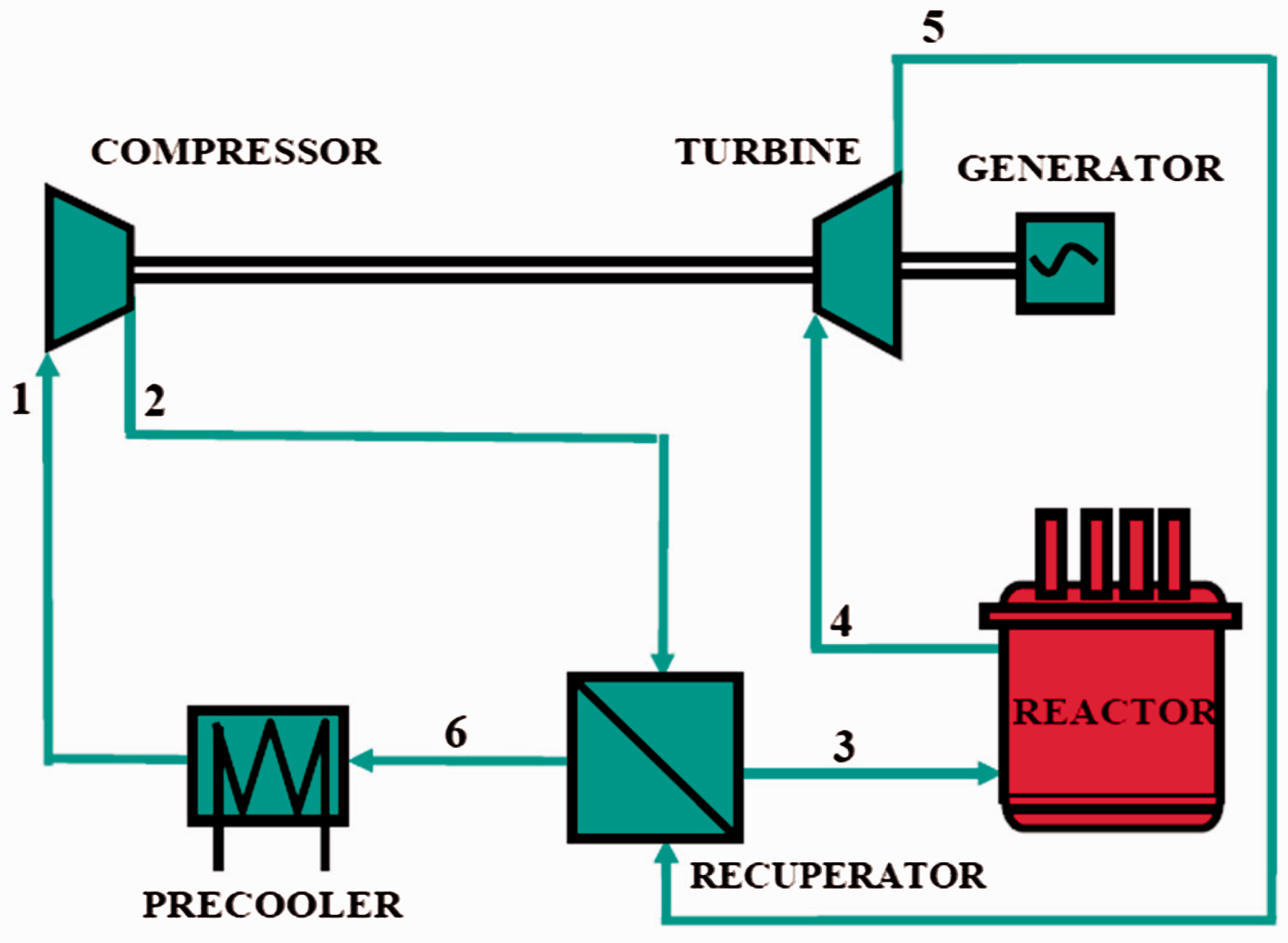
Simple SCO2 Brayton cycle layout. SCO2: supercritical carbon dioxide.
According to the layout, there are two cycles. The core is the heat source of direct cycle, while the heat exchanger is the heat source of indirect cycle. The compressor inlet temperature can be controlled near fluid’s critical temperature and reduce the compression power consumption to improve the thermal system efficiency. 13 Petr et al. 14 proved that the best outlet temperature for SCO2 Brayton cycle in nuclear reactor core is between 450°C and 650°C, while the best temperature difference for reactor core inlet and outlet is between 150°C and 200°C. 13 Dostal et al. 12 made thermodynamic analysis of SCO2 Brayton cycle, optimized and compound the cycle efficiency of supercritical CO2 cycle layouts. They evaluated that the highest thermal efficiency is achievable with the reheated supercritical CO2 cycle at 550°C.6,14
The supercritical CO2 recompression cycle consists of one turbine, two compressors (recompressing and main), two recuperators (high and low temperature), and one precooler. The layout is shown in Figure 2. 1
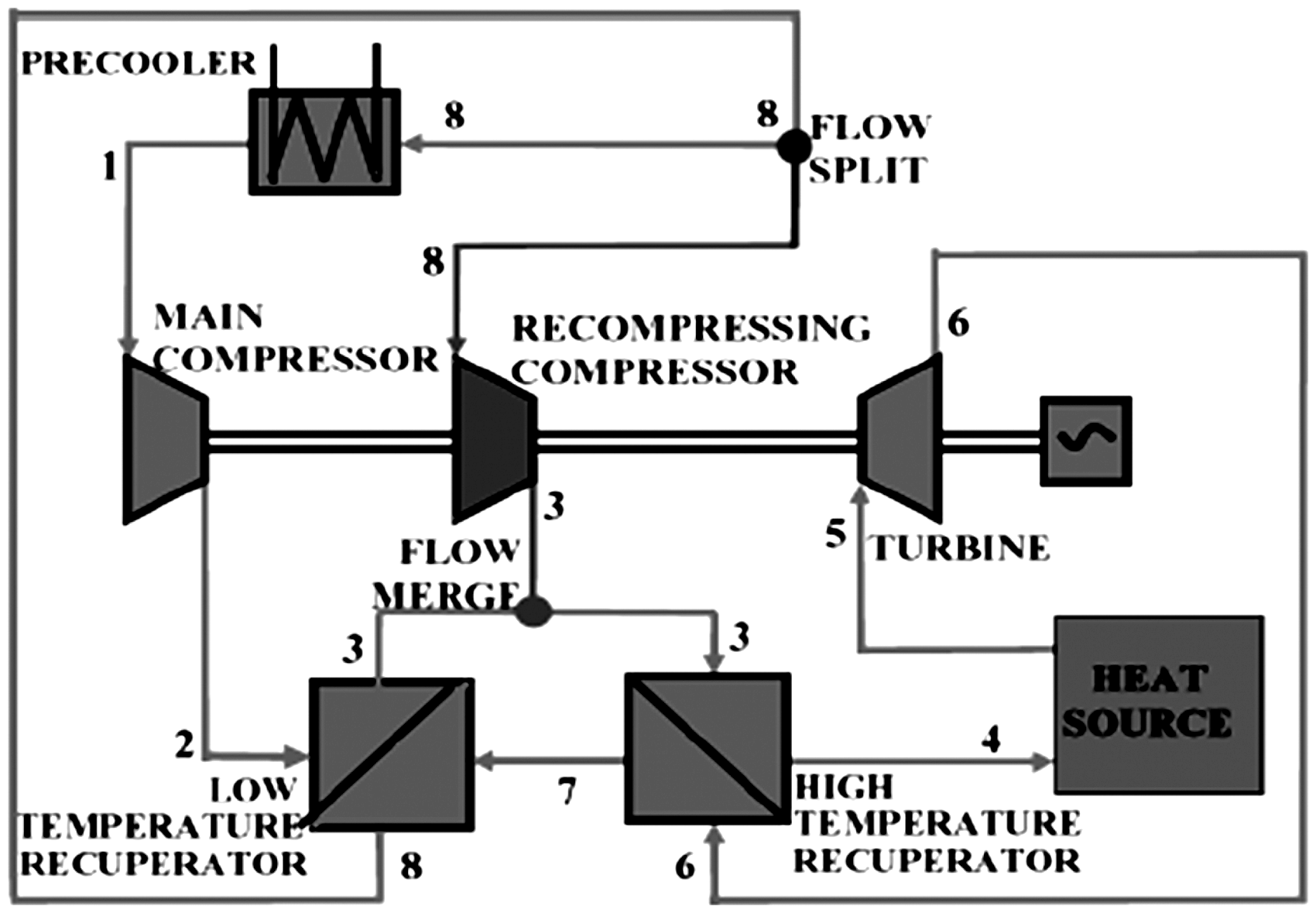
Recompression cycle layout.
Comparison of SCO2 recompression cycle and SCO2 Brayton cycle
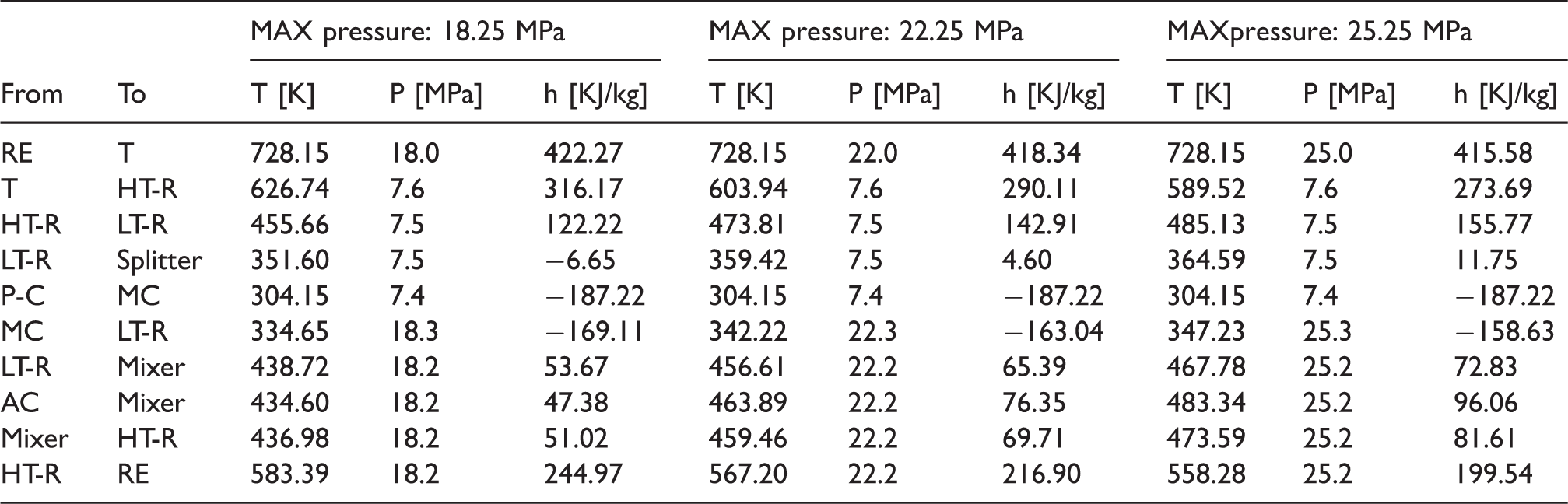
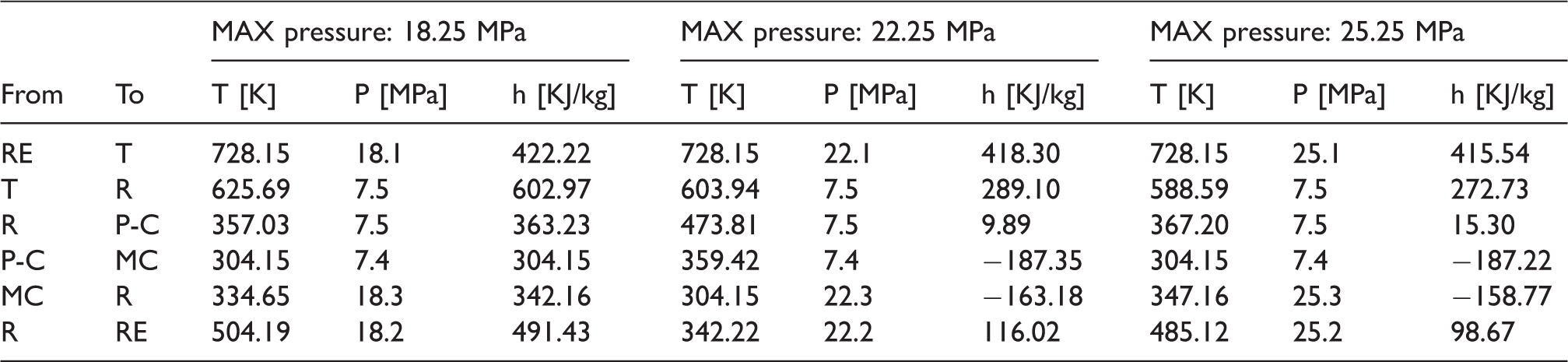
Maio et al.15 compared two different SCO2 thermal cycles applied in the conversion system of a nuclear power plant. They analyzed and predicted the design and off-design performance of power plants by General Electric software (GateCycle™ v. 6.1.1). They took ALFRED (Advanced Lead Fast Reactor European Demonstrator) as research object. ALFRED is a fast spectrum nuclear reactor which is characterized by a thermal power of 300 MW, with a coolant of liquid lead. As for thermodynamic analysis, they took both SCO2 recompression cycle and SCO2 Brayton cycle into account. The comparison results under different pressure levels are shown in Tables 1 and 2.15
SCO2 Recompression cycle parameters at different pressure levels.
SCO2: supercritical carbon dioxide.
SCO2 Brayton cycle parameters at different pressure levels.
SCO2: supercritical carbon dioxide.
The conclusions proved that efficiencies of SCO2 recompression cycle are higher than those obtained from the Brayton’s one at different pressure levels.
Applicability of SCO2 cycles to generation IV reactors
Among several different fluids, supercritical CO2 was selected as the most promising candidate for Generation IV reactors because of its advantages on low cost, sufficient reserves, security and stability. It can be used in a direct cycle of air cooled fast reactor system to simplify the system circuit and provide higher cycle heat efficiency.13,16 As for an indirect cycle, the supercritical CO2 can also be adapted to a wide variety of reactor types. Representative types are shown in Table 3. 10
Applicability of SCO2 indirect cycle to GEN-IV reactors.
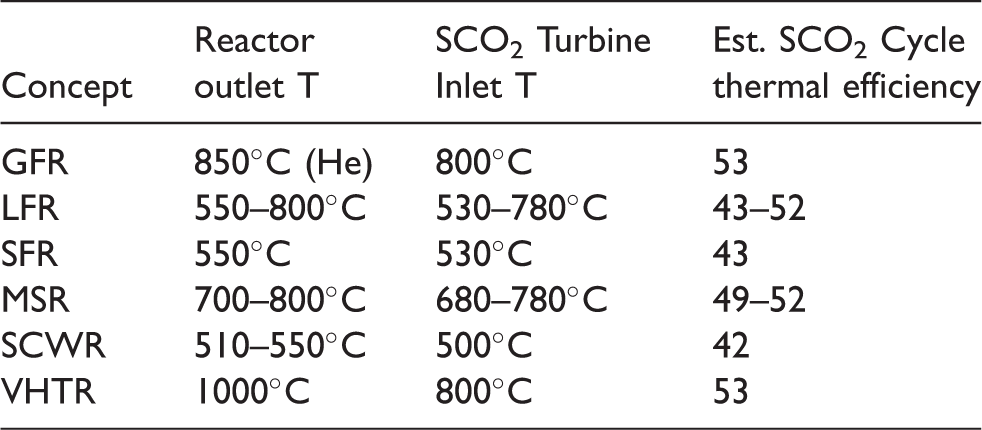
SCO2: supercritical carbon dioxide; GEN-IV: generation IV.
Notes: 1. Nuclear News, November 2002.
2. Limited by corrosion, and to a lesser extent by dissociation.
3. IHX ΔT is 50°C for gas/gas, 20°C for liquid/gas.
4. For net plant efficiency subtract approx. 4% for gas/gas house loads and 2% for liquid/gas combinations.
Sandia National Laboratories has conducted extensive experiments concerning the supercritical CO2 in advanced nuclear concepts and explored its effect on turbo machinery, bearings and seals.13,17 Compared with a steam turbine, SCO2 turbines are more efficient with simpler and single casing body.8,17 The Sandia National Laboratories Supercritical CO2 Brayton cycle test loops are trying to achieve commercial power levels, just like 10 MW. With their further study on SCO2 Brayton cycle, well-developed industrial turbo machinery may establish a more efficient power conversion cycle.
Hejzlar et al. 1 assessed gas cooled fast reactor with indirect supercritical CO2 cycle and proved that the indirect SCO2 recompression cycle can greatly reduce the core outlet temperature, simplify the primary system and achieve a well efficiency. The researchers demonstrated that SCO2 power conversion system allows an achievement of well plant efficiencies at moderate core outlet temperatures and makes it easier to eliminate contamination if fission product leakage. 1
Sienicki et al. 18 concentrated on the SCO2 Brayton cycle power conversion for a sodium-cooled fast reactor (SFR) and stated that recompression closed Brayton cycle can offer a reasonable temperature and significant benefits to the SFR. Moreover, they demonstrated that the SCO2 Brayton cycle power converter can eliminate sodium–water reactions as well as can reduce the space requirements and cost.18,19 Compared with normal shutdown heat removal system, they came up with a new heat removal system and a new design of exchanger based on a combination of a sodium Loop and a CO2 cycle, called sodium-to-CO2 exchanger. An overall view of the reactor, intermediate sodium, S-CO2 Brayton cycle power converter, and SCO2 normal shutdown heat removal components is shown in Figure 3. 19 The conceptual design of an optimized SCO2 Brayton cycle power converter and supporting systems has been developed for the Advanced Fast Reactor-100 SFR small modular reactor (SMR) which is under ongoing development at Argonne National Laboratory (ANL). 19
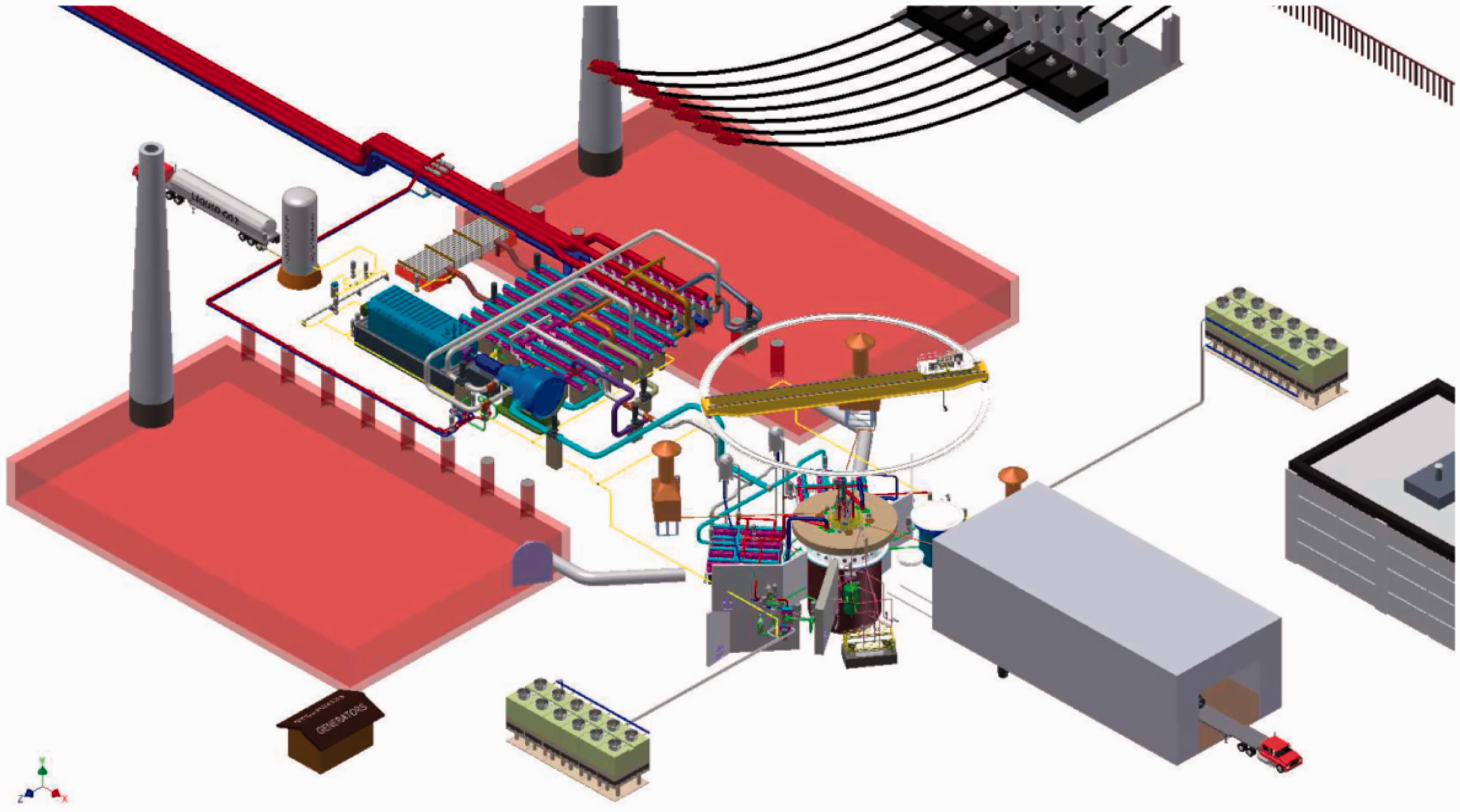
Overall view of AFR-100 reactor, S-CO2 Brayton cycle and S-CO2 normal shutdown heat removal components and systems.
Supercritical CO2 as core coolant
As shown in Figure 4, the development of gas-cooled power plants has a long history. As for the fourth generation of nuclear power system, gas cooling agent has many advantages. Helium gas is the most common gas coolant in reactors, but Helium cooled reactor requires high core outlet temperature (general requirements at 800°C–1000°C) to ensure its economy. 20 Supercritical CO2 is a good choice to solve this problem. It can reduce the compression power consumption and achieve high efficiency under a medium core outlet temperature. Present research has confirmed that the SCO2-cooled GFR concept was promising to be a safe and competitive coolant in the future. 21
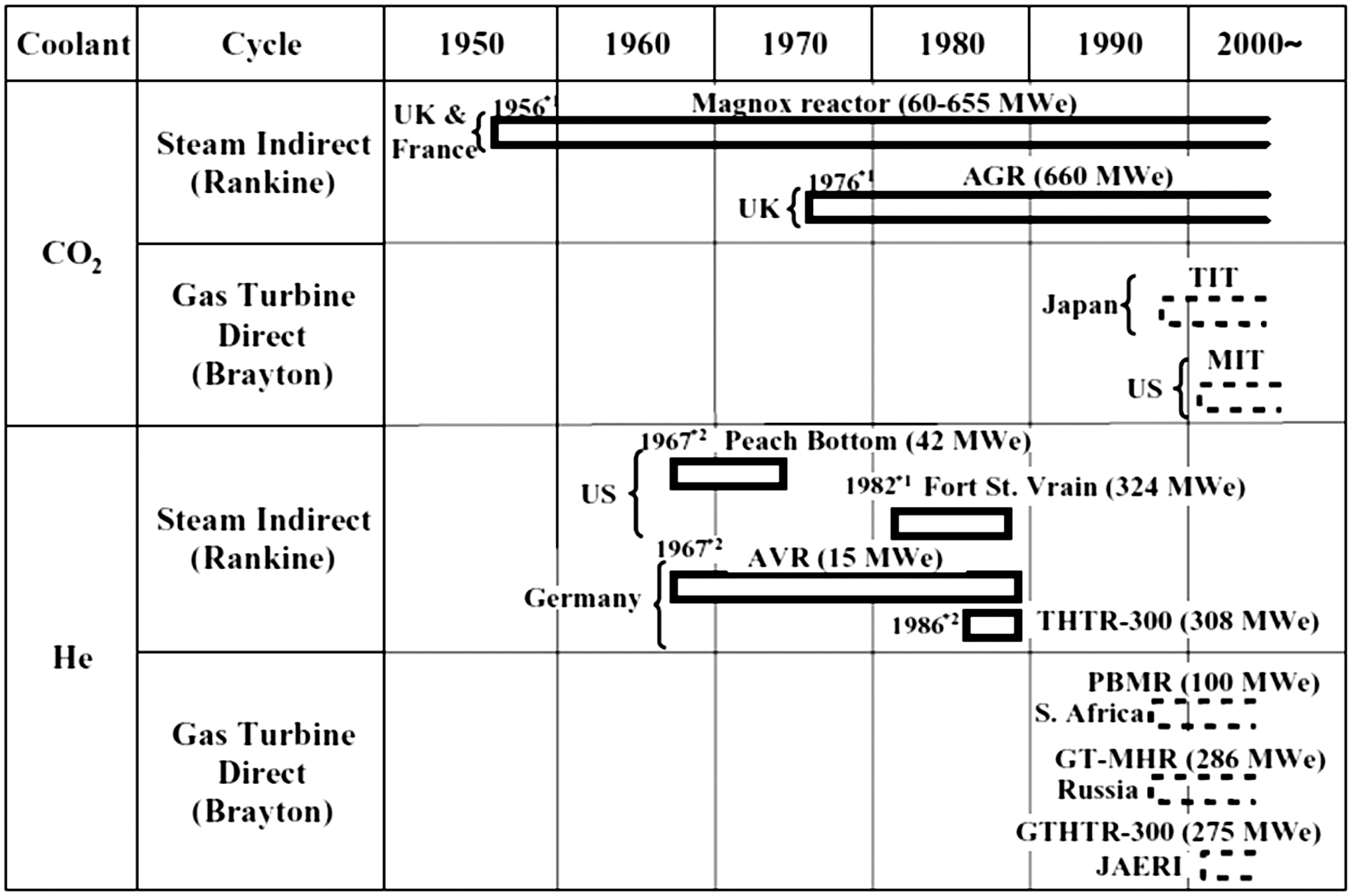
The development of gas-cooled power plants.
Achievement of Echogen power systems and dresser-rand
Echogen Power Systems cooperated with Dresser-Rand making a study of special power generation technologies that not only can transform heat from waste, but also renewable energy sources into electricity and process heat. Supercritical CO2 fluid was used in a closed loop to constitute a waste heat of power cycle, which is the basis of this special thermal engine technology. Compared with organic steam-based waste heat recovery systems, supercritical CO2 can achieve high efficiencies over a wide temperature range of heat sources with compact components resulting in a smaller system. The comparison of waste heat exchanger operation under the same thermal source and different working fluids is shown as Figure 5. 11
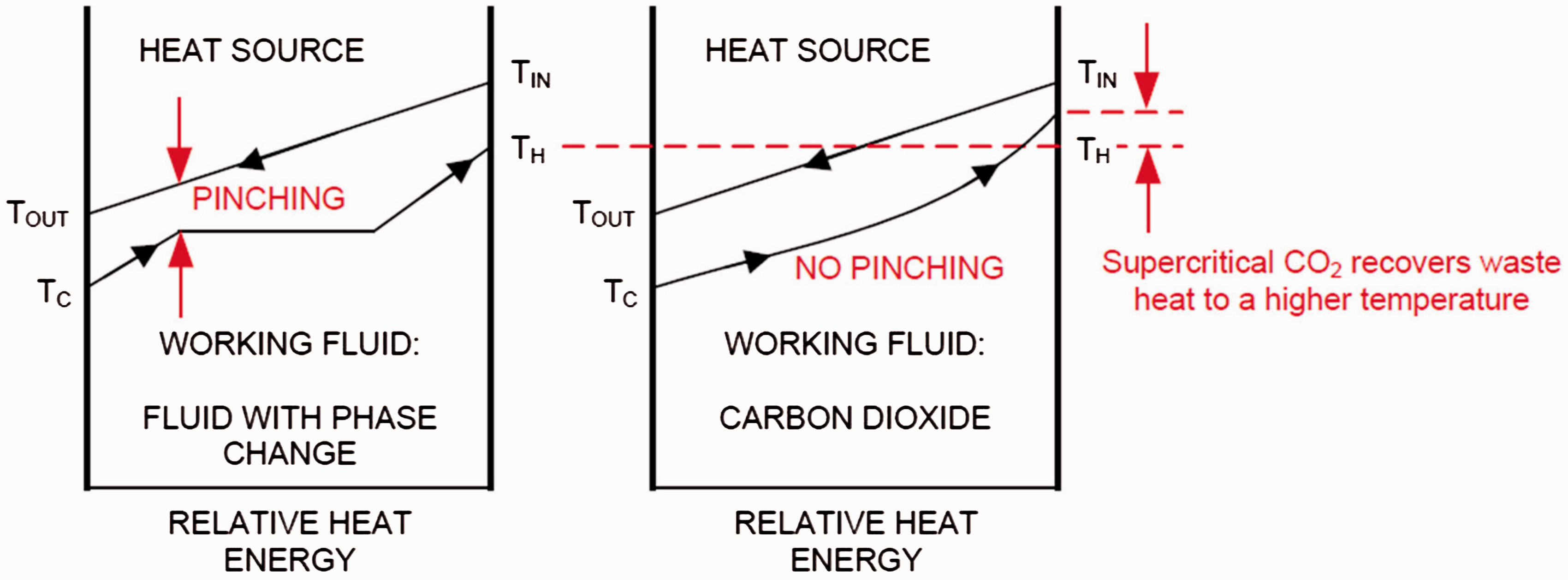
Comparison of waste heat exchanger operation under the same thermal source and different working fluids.
Moreover, researchers made field testing of the Echogen 250 kW demonstration system and proved that the Echogen SCO2 cycle holds great promise in providing a flexible, efficient, low cost system with waste heat recovery from a wide variety of applications. The results of this program can be used to guide the initial design of a multi-megawatt scale system in large industrial and nuclear power generation. 11
Supercritical CO2-cooled reactor of MIT
The Massachusetts Institute of Technology (MIT) has investigated a large size (2400 MW) SCO2-cooled fast reactor concept combined to direct SCO2 Brayton cycle. 22 MIT formed an SCO2 recompression circulation pattern based on the early Feher cycle by removing CO2 condensation process and replacing the pump with the compressor and other improvements. In order to improve cycle efficiency, they proposed a general scheme of SCO2 cooling fast reactor (GFR) and set up a recompression compressor and two regenerators.23,24 According to the design, the core inlet and outlet temperature are 485.5°C and 650°C, the system thermal efficiency can achieve 51%. MIT adopted columnar core structure and proposed a method of using high pressure SCO2 as a radial reflector to solve the problem of cavitation in fast reactor design. What’s more, they compared the volume of SCO2 gas turbine, steam turbine and helium turbine, and confirmed the advantages of SCO2 gas turbine system in reducing volume. 25
Supercritical CO2-cooled micro modular reactor of KAIST concepts
An SCO2-cooled micro modular reactor (MMR) is a particularly compact and truck-transportable nuclear reactor which was designed by the Korea Advanced Institute of Science and Technology (KAIST). The thermal power of MMR is 36.2 MW with a designed lifetime of 20 years without refueling. 22 The first design goal for the KAIST MMR required it to be a fully integrated system in a single reactor vessel. The other goal is achieving a super-compact and truck-loadable structure. To satisfy these two goals, MMR was directly cooled by SCO2 coolant with a fast spectrum core adopted in it. 26 In order to analyze the power conversion efficiency and material compatibility, researchers analyzed system pressure and coolant temperatures. The design parameters of KAIST MMR are shown in Table 4. 22
Design parameters of KAIST micro modular reactor (MMR).
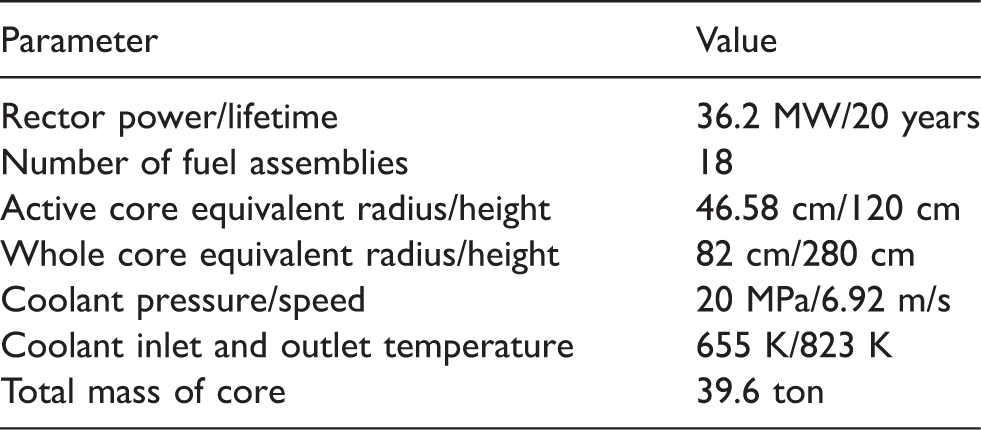
KAIST: Korea Advanced Institute of Science and Technology.
In the KAIST MMR, the SCO2 power conversion system driven by the coolant is a direct process without intermediate heat exchanger. Due to the design of compact modular, the SCO2 power conversion module and the reactor core can be integrated into a single reactor vessel. 22
Supercritical CO2-cooled reactor concept of Japan
Tokyo Institute of Technology (TIT) came up with a new view based on thermodynamic cycle analysis, which is called partial pre-cooling direct cycle. The new cycle is built from the simple Brayton cycle. It added shunting intermediate compression and intermediate cooling process to improve cycle efficiency and allowed an operation at a lower pressure. The process is shown in Figure 6. 23
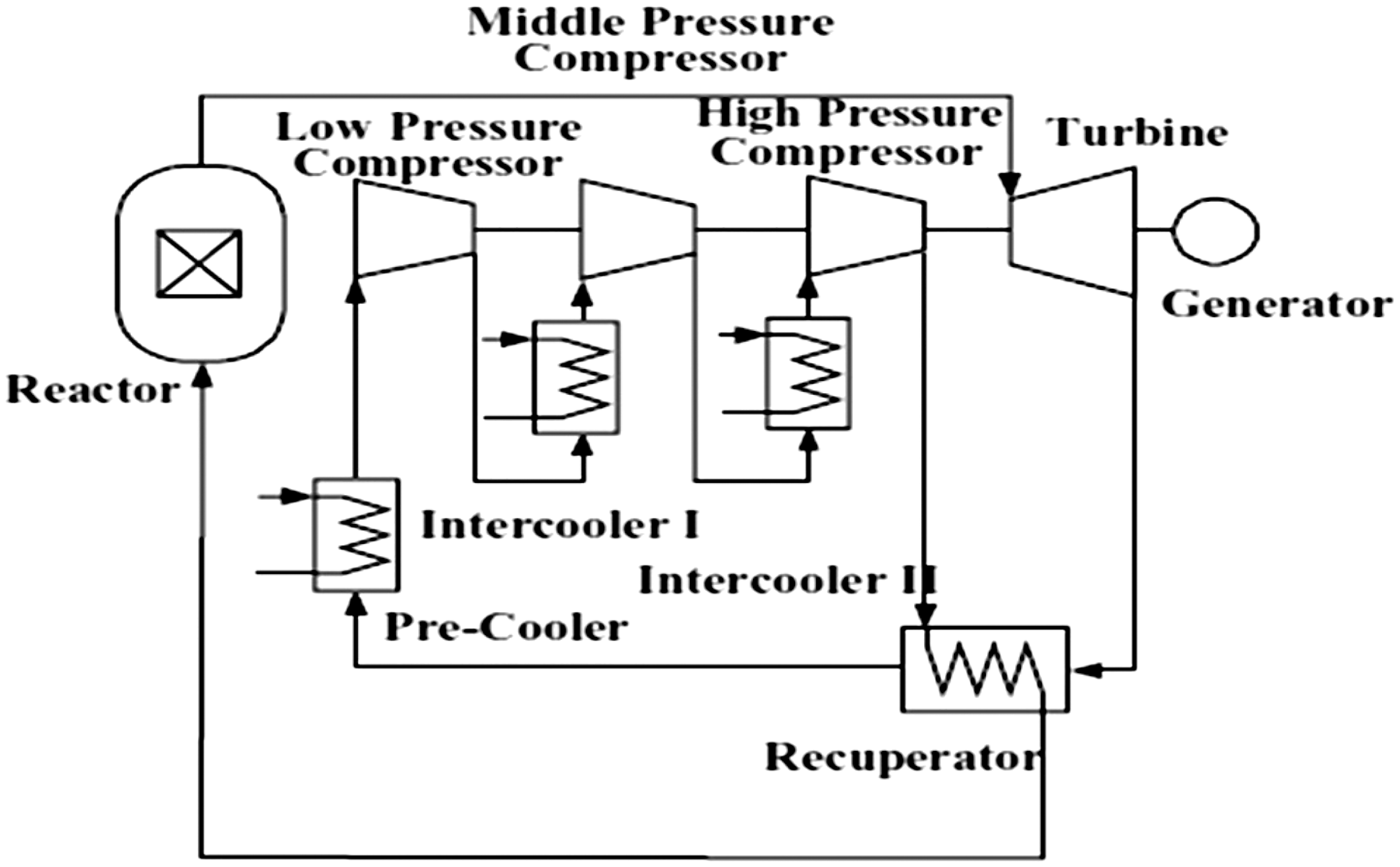
The new cycle layout of TIT. TIT: Tokyo Institute of Technology.
Researchers analyzed that usual spherical fuel and block fuel can still be used in this new SCO2-cooled reactor. Moreover, TIT also completed an SCO2 corrosion test loop to find reasonable in-pile material. 27 The new SCO2-cooled reactor designed by TIT was a medium temperature gas turbine reactor, which has a partial precooling cycle with an efficiency of 45.8%. Lower temperature provides more flexibility in choosing materials. The Bird’s-eye view of the new reactor is shown in Figure 7. 23
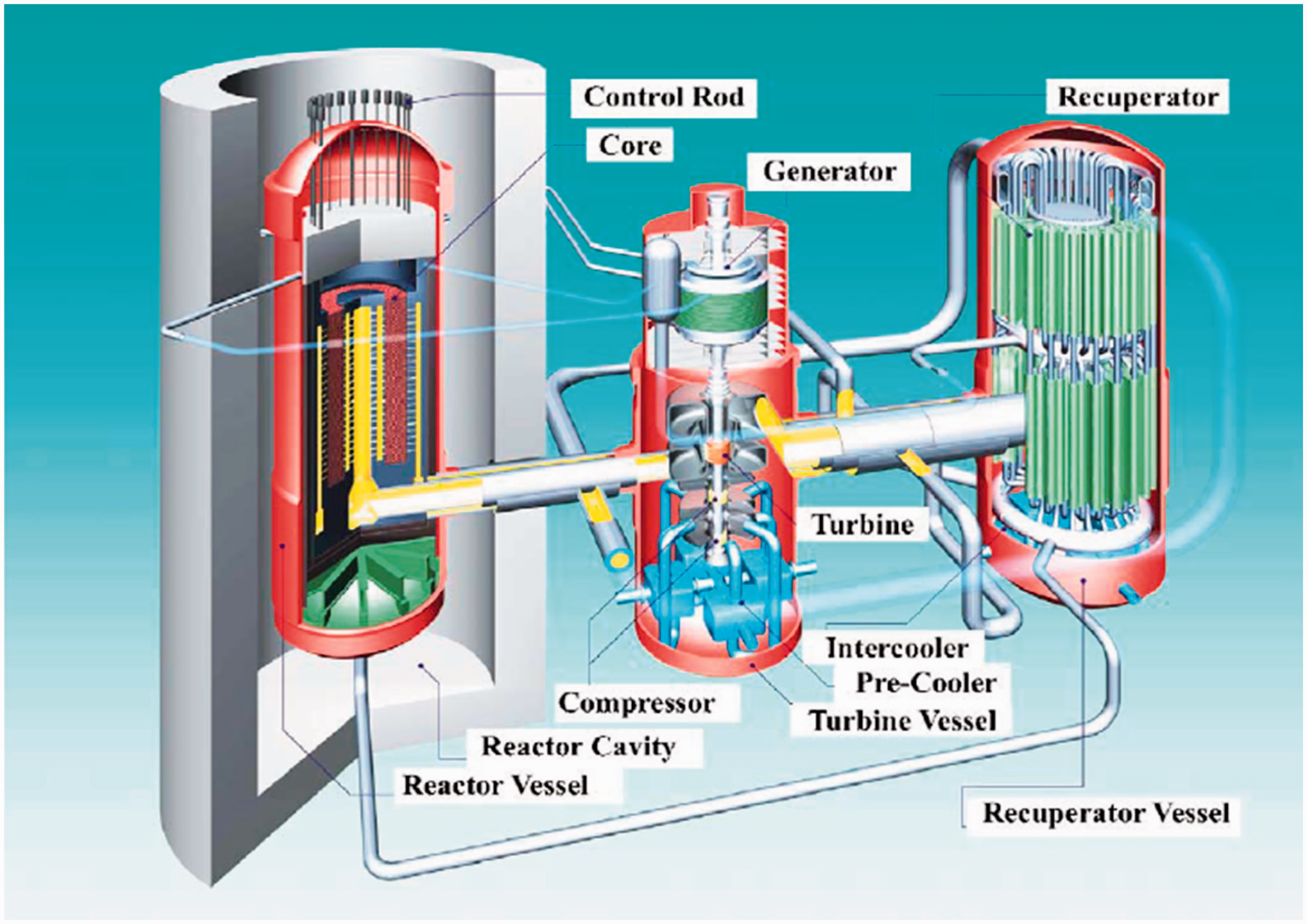
The Bird’s-eye view of the new reactor designed by TIT. TIT: Tokyo Institute of Technology.
Supercritical CO2 for hydrogen producing
Nuclear energy is a kind of power for hydrogen production industry. High-temperature reactors especially gas-cooled reactor have great potential. Yildiz and Kazimi 28 stated that high-temperature steam electrolysis (HTSE) combined to a supercritical CO2 cooled reactor which equipped with a supercritical CO2 power conversion cycle may be a good alternative to provide higher energy efficiency at a lower temperature. Hydrogen can be produced by using the high-temperature heat and electricity from the nuclear plant through HTSE processes. The advanced gas reactor (AGR) is a commercial thermal reactor; if it increases the operating pressure of it and combined it to a direct cycle supercritical CO2 power conversion system, the temperature of the reactor coolant may be driven up to 750°C. This new group will be a more efficient and economical way to produce hydrogen under a medium temperature. 28
Researchers have demonstrated that the combination system of AGR–SCO2 and HTSE is better than the integration of gas turbine modular helium reactor (GT-MHR) and HTSE; AGR–SCO2-HTSE will provide higher efficiency due to its both relatively high operating temperature and the higher thermal power cycle efficiency. The comparisons are shown in Figure 8. 29
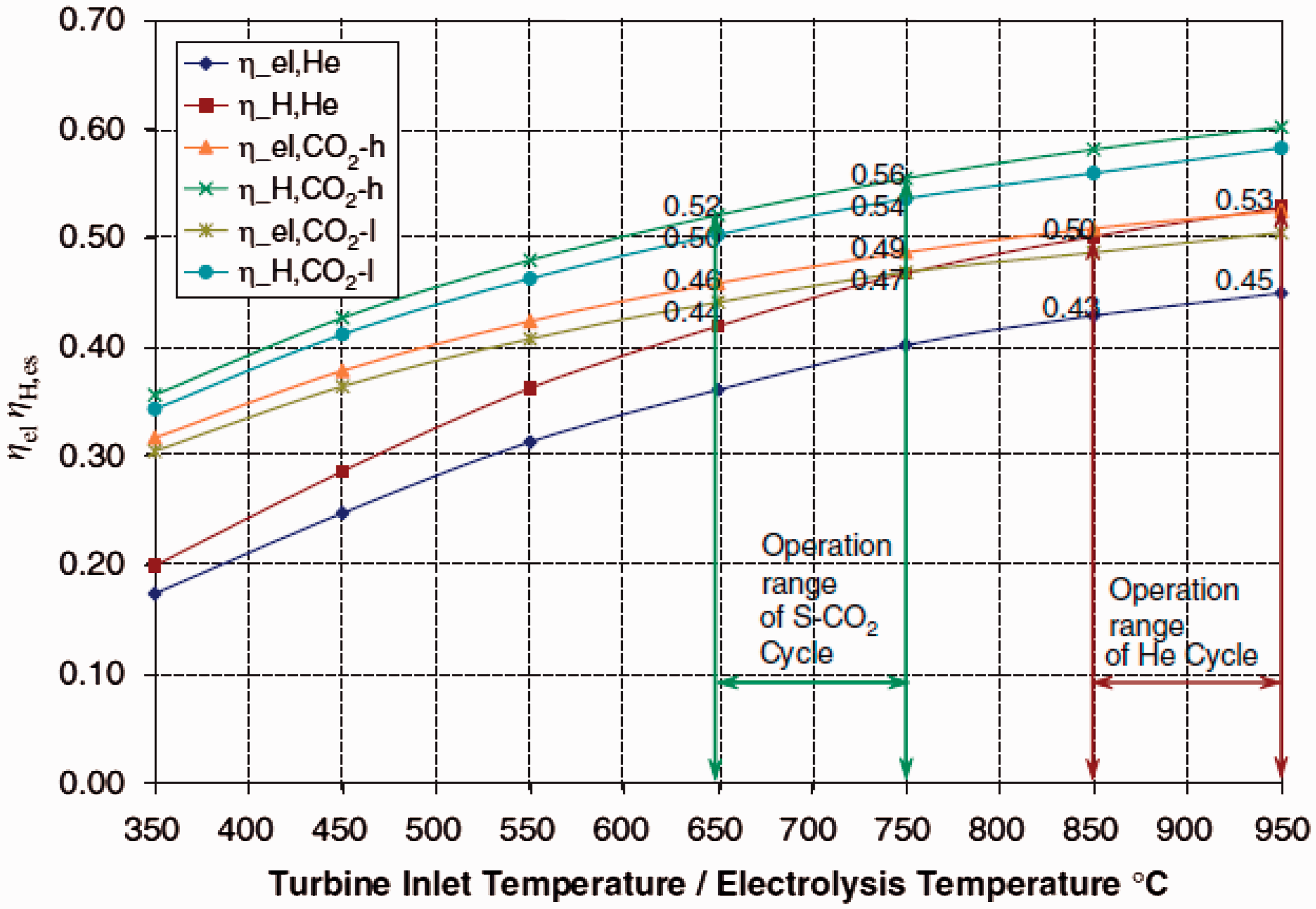
Comparisons of the GT-MHR-HTSE and AGR-S-CO2-HTSE efficiencies. GT-MHR-HTSE: gas turbine modular helium reactor-high-temperature steam electrolysis.
Other research progress
Supercritical CO2 has great value because of its special characters. In addition to the applications above, many other institutions made researches on the supercritical CO2 for its applications in nuclear industry.
Linares et al. 30 proved that supercritical CO2 cycles may be suitable converters of thermal energy to power in fusion reactors. They presented an analysis of supercritical CO2 Brayton cycle for low-temperature diverter fusion reactors which can be cooled by helium. Czech Technical University demonstrated the turbine systems in SCO2 cycles. 11 Korea Atomic Energy Research Institute analyzed the feasibility of the combination of SCO2 cycle and sodium cold fast reactor optimized the PCHE that used in the SCO2 cycle. 31
SCO2 cycle has a higher efficiency and more beneficial than other cycles because of its higher efficiency, tiny machineries, simple configuration, and strong heat transfer capability. 5 Nami et al. 32 and Wang and Dai 33 elaborated advantages of SCO2 by the researches made on exergy, economic and environmental impact assessment of gas turbine. They compared the economy of waste heat recovery between the SCO2 cycle and the organic Rankine cycle. Besides, other advantages of SCO2 have been stated by Angelino, including compact, stable and economy.34,35
Issues for the application of SCO2 in nuclear engineering
As the working fluid in thermodynamic cycle, SCO2 has many advantages and potential for various applications, but there are also challenges for its application. For example, due to the special characteristics of SCO2, the design of the fired heater and other structures will be a new issue. 36 Near the critical point, CO2 has many thermodynamic characteristics, its highly non-linear properties also create new challenges for the heat exchangers, and the near critical point operation usually causes technical challenges, so it still need many improvement.31,37–40 Jahn and Iverson have done researches on SCO2 Brayton cycles for solar-thermal energy; they quantified the cooling requirements and associated cooling issues created by a small-scale solar thermal SCO2 power plant. They proved that cooling and condensing the fluid from the supercritical region to the liquid region are difficult.38,41 We can predict that the issue will also arise in Nuclear Engineering. According to the research of Kim et al., 42 SCO2 compressor performance prediction tool will be constructed with test data of high pressure ratio compressor test facility in the future.
Moreover, according to the process of the data post-processing, Lee et al.43,44 found out that the SCO2 compressor performance experiment has an issue of uncertainty on the performance measurement. They believed performance measurement uncertainty issues in a low pressure ratio compressor should be appreciated.43,44 The same issues have also been discussed by Pham et al. 45 Sandia National Laboratories provided an overview of corrosion mechanisms in SCO2, as well as in molten salts for nuclear applications. 46 They found that the uncertainty in the long-term reliability of various components has become more visible, when more hours of operation applied to the Recompression Closed Loop Brayton Cycle power loop. Besides, the reasonable materials are also issues for the application of SCO2 in Nuclear Engineering. 47 Because of its special characteristic, SCO2 can transport little, dissolved particles throughout the loop, the combination may cause erosion at some high gas-velocity locations. 48 Though some strategies have been come up to solve the erosion in SCO2 power cycles, the erosion resistant materials and coatings for the turbines and nozzles are still in need of more researches. 49
Conclusions
Supercritical CO2 is an emerging working medium for the nuclear power industry, it has the potential of improving the power efficiency, simplify the system volume and optimize the system structure. Using supercritical CO2 as core coolant, power conversion working medium and the replacement of helium for hydrogen producing are important contents for international nuclear reactor researches.
Supercritical CO2 Brayton cycle is important for supercritical CO2 applications in the field of nuclear power industry. When the export temperature of nuclear reactor systems is between 450 and 650°C, supercritical CO2 cycles can reduce the requirements of core outlet temperature and improve the economic benefit. Supercritical CO2 will show its advantages of efficiency and low costs when used in power conversion system for air cooled reactor and liquid metal cooling reactor. Moreover, it will greatly improve hydrogen production efficiency if it is used in the temperature hydrogen production industry as a replacement of helium. Besides, supercritical CO2 cycle can solve many nuclear power system issues, such as metal-water reaction in the sodium cooled fast reactor, the harmful effects for material under excessive temperature and difficulties for high power compressor manufacturing in the helium cooled reactor.
In general, supercritical CO2 has important significance for the optimization of nuclear power systems, and it may accelerate the process of nuclear power industry. At the same time, it still has many issues to be solved before its application in nuclear engineering, and more testing and analysis are needed to complete a rigorous assessment.
Footnotes
Declaration of conflicting interests
The author(s) declared no potential conflicts of interest with respect to the research, authorship, and/or publication of this article.
Funding
The author(s) disclosed receipt of the following financial support for the research, authorship, and/or publication of this article: The authors are grateful for the support of this research by the National Natural Science Foundations of China (Grant No. 51576211), the National High Technology Research and Development Program of China (863) (2014AA052701), and the Foundation for the Author of National Excellent Doctoral Dissertation of P.R. China (FANEDD, Grant No. 201438).