




Abstract
The multiphase flow mechanism in miscible displacement through porous media is an important topic in various applications, such as petroleum engineering, low Reynolds number suspension flows, dusty gas dynamics, and fluidized beds. To simulate such flows, volume averaging spatial operators are considered to incorporate pressure drag and skin friction experienced by a porous medium. In this work, a streamline-based Lagrangian methodology is extended for an efficient numerical approach to handle dispersion and diffusion of solvent saturation during a miscible flow. Overall pressure drag on the diffusion and dispersion of solvent saturation is investigated. Numerical results show excellent agreement with the results obtained from asymptotic analysis. The present numerical simulations indicate that the nonlinear effects due to skin friction and pressure drag cannot be accurately captured by Darcy’s method if the contribution of the skin friction dominates over that of the pressure drag. Moreover, mass conservation law is investigated, which is an important feature for enhanced oil recovery, and the results help to guide a good agreement with theory. This investigation examines how the flow regime may be optimized for enhanced oil recovery methods.
Keywords
Introduction
The study of multiphase flow mechanism in porous media is an important topic in both academia and industry.1–3 Examples include enhanced oil recovery techniques in petroleum engineering, which may be used at the tertiary stage of oil production to extract the remaining oil that is 50%–80% of the original oil in the reservoir. 4 In such techniques, if carbon dioxide is injected into deep oil reservoirs, it becomes supercritical and miscible with oil, leading to a reduction in the oil viscosity and in the tension force between the oil and the surrounding rock. Clearly, a numerical study of multiphase flow is useful to complement costly experimental approaches for enhanced oil recovery techniques.
In computational studies of miscible two-phase flow, e.g. Peaceman and Rachford, 5 the momentum equation may be expressed in the form of Darcy’s equation, 6 or in the form of a volume-averaged Navier–Stokes equation.7,8 Derived empirically (see Whitaker 6 ), the former relates the flow rate linearly with the pressure gradient. The latter is robust and nonlinear; it incorporates Darcy’s results and provides a complete description of the nonlinear interaction between the fluid and the porous medium.7–10 In this article, we report a numerical simulation of the miscible displacement in a confined reservoir using the volume-averaged Navier–Stokes equation. One objective of this work is to demonstrate a numerical model for dispersion of the displacing fluid (i.e., solvent), particularly when the inertial force strengthens because of miscibility. We also investigate how dispersion is influenced by the nonlinear drag (skin friction and pressure drag) of a porous medium, and by the viscous stress adjacent to impermeable regions. We present a methodology for modeling the nonlinear interaction between the porous medium, fluid motion, and reservoir boundary. Our numerical model introduces an algorithm for solving the governing equations, which is an extension of the classical IMPES method (IMplicit Pressure and Explicit Saturation). 11 To improve numerical modeling of the nonlinear effects of dispersion, we have studied a Lagrangian method to compute the saturation of the displacing fluid efficiently. Based on our simulations, the Lagrangian method appears robust with respect to an equivalent Eulerian method.
Following is a brief review of related work that highlights the contribution of the current research and motivates the numerical modeling techniques presented in this article.
Motivation and related work
Peaceman and Rachford 5 used the theory of Fick’s law to model miscible two-phase flow of carbon dioxide and oil in a porous medium. In their model, 5 carbon dioxide and oil remain distinct and occupy their own volumes, where miscibility diminishes the tension force at the interface. The numerical implementation considers the two-phase flow in terms of the saturation of one of the phases, and the interface condition is derived from the assumption that the surface tension force vanishes. The comparison between the experimental results of Blackwell et al. 12 and the corresponding numerical results of Peaceman and Rachford 5 supports the use of Fick’s law to model miscible two-phase flow accurately in porous media. A similar approach was also adopted by other researchers to study pore-scale viscous fingering.13,14
In contrast, Koval 15 considered the theory of immiscible two-phase flow based on the Buckley–Leverett equations because for a miscible two-phase flow the time to sweep out oil by solvent is much smaller than the characteristic time scale of molecular diffusion.16,17 An excellent review of the use of Fick’s law versus immiscible theory for simulating miscible flow in porous media is given by Udey and Spanos.17 In the present work, we have considered the model used by Peaceman and Rachford 5 ; however, we have also considered the volume-averaged Navier–Stokes equation because the Reynolds number of the flow may be increased during the enhanced oil recovery process. A detailed derivation of the volume-averaged Navier–Stokes equations in porous media is given by Breugem and Rees 9 (see the methodology section).
To solve the volume-averaged Navier–Stokes equation, there are two commonly used computational fluid dynamics approaches. One is the fully coupled solver, which resolves the dependence between the pressure and the saturation accurately at each iterative step by simultaneously discretizing all variables into one nonlinear system.11,18–20 However, the computational cost and memory requirement may restrict the application of the fully coupled approach, particularly when the number of degrees of freedom is large. The coupled solver is often robust if an appropriate pre-conditioner is available. 20 The other approach is the segregated solver, which treats the entire problem as a collection of sub-problems, each of which may be solved independently by individual schemes. The segregated solver is often flexible with respect to the fully coupled solver. In the petroleum industry, a very popular and powerful segregated algorithm for solving a two-phase flow is the IMPES method. 21 The IMPES algorithm is simpler and more efficient than some fully coupled solvers. 11 However, for it to be stable, the classical IMPES requires extremely small time steps for the saturation, which is prohibitive, particularly for long time integration problems with small grid-blocks. The IMPES method can be improved by optimizing the pressure and saturation calculation because this is where most of the computational time is spent by the classical IMPES method. This article aims at advancing our knowledge in this direction.
Present work
The objectives of the present study are twofold: capturing the physics of the flow (i.e. flow in the reservoir scale), and optimizing the computational cost. We use the Darcy–Forchheimer equation to model the pressure drag and skin friction. We have combined the benefits of the multigrid method with that of the Lagrangian method to optimize the computational cost, which is in contrast with the model of Peaceman and Rachford. 5 We have demonstrated the performance of a Lagrangian method for transport in porous media. The present results indicate that the influence of skin friction on the overall transport mechanism is better resolved with the Darcy–Forchheimer equation when the flow rate is enhanced by miscibility. It is worth mentioning that the present idealized simulations help understand the development of optimal computational techniques for multiphase flows using the Lagrangian and the multigrid methods.
The article is organized as follows. The next section outlines the volume-averaged Navier–Stokes equation, and demonstrates the calculation of the drag force and its incorporation into the volume-averaged Navier–Stokes equation. After this, the segregated solver based on multigrid and Lagrangian methodologies is summarized. Then the results of numerical simulation are presented. Finally, the findings of the research, as well as further extensions of this development, are discussed.
Methodology
The use of multiphase flow in enhanced oil recovery is illustrated schematically in Figure 1(a). A region of homogeneous isotropic porous medium and a representative elementary volume of that medium are illustrated in Figure 1(b) and 1(c), respectively. A similar idealized model was also considered by Bottero et al.
22
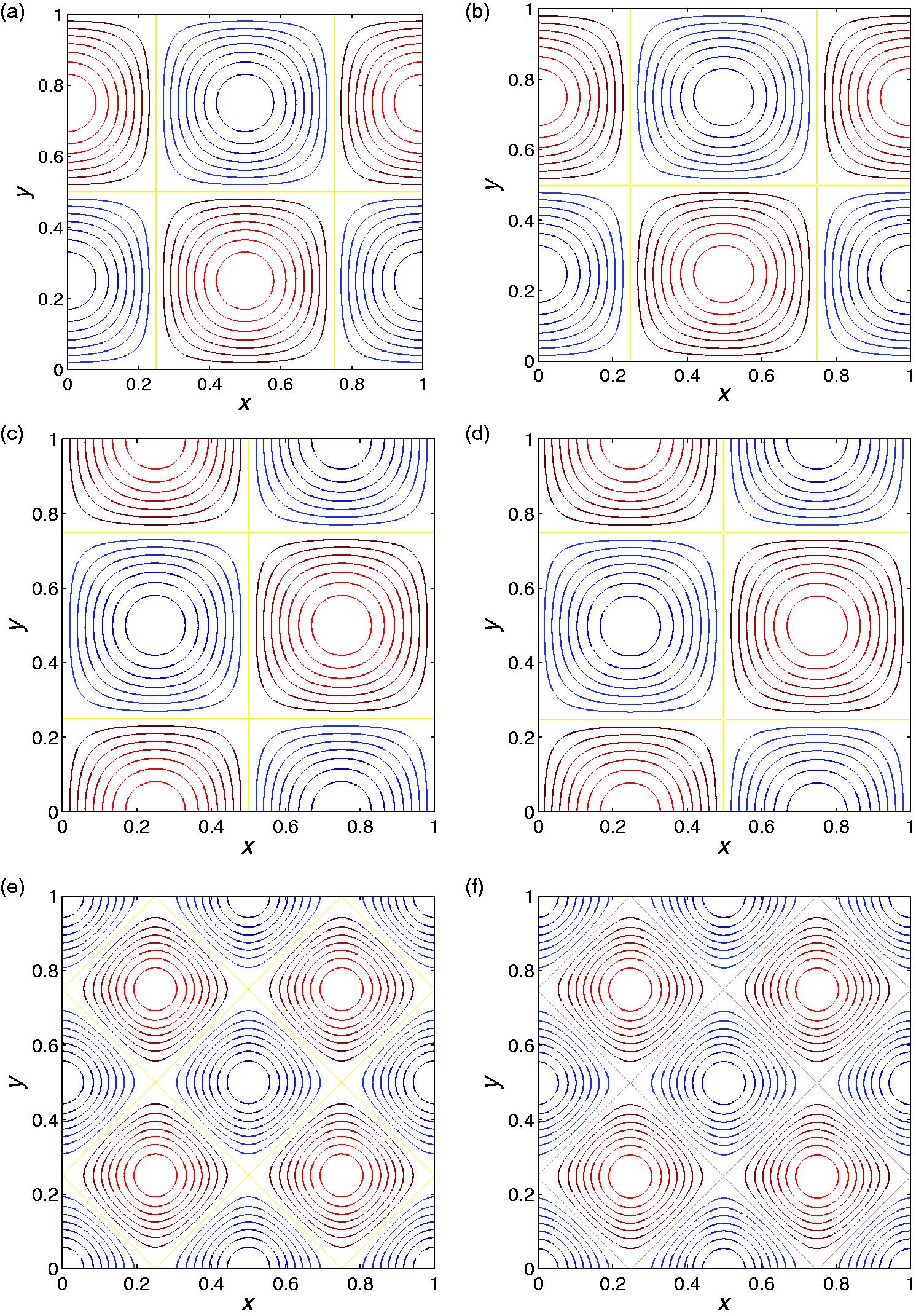
(see Figure 2 therein). Consider now a porous matrix with pores completely filled with oil that is to be displaced by a solvent. Throughout the displacement process, the interface between the solvent and the oil is represented by a continuous phase indicator function c( (a) Schematic description of the oil recovery method by injecting a second fluid such as carbon dioxide or water. The flow direction in a porous medium is shown by red arrows. (The drawing is obtained from Google image repository; http://www.kgs.ku.edu/CO2/evaluation/slide03.html.) (b) The porous medium is represented by a collection of uniformly distributed solid bodies. (c) Representative elementary volume that contains both the solid and the fluid. A validation of the procedure, where the numerical solution u(x, y, 1), v(x, y, 1) and P(x, y, 1) (left column) is compared with the exact solution (right column). Here, (a) and (b) are the u velocity component, (c) and (d) are the v velocity component, and (e) and (f) are the pressure.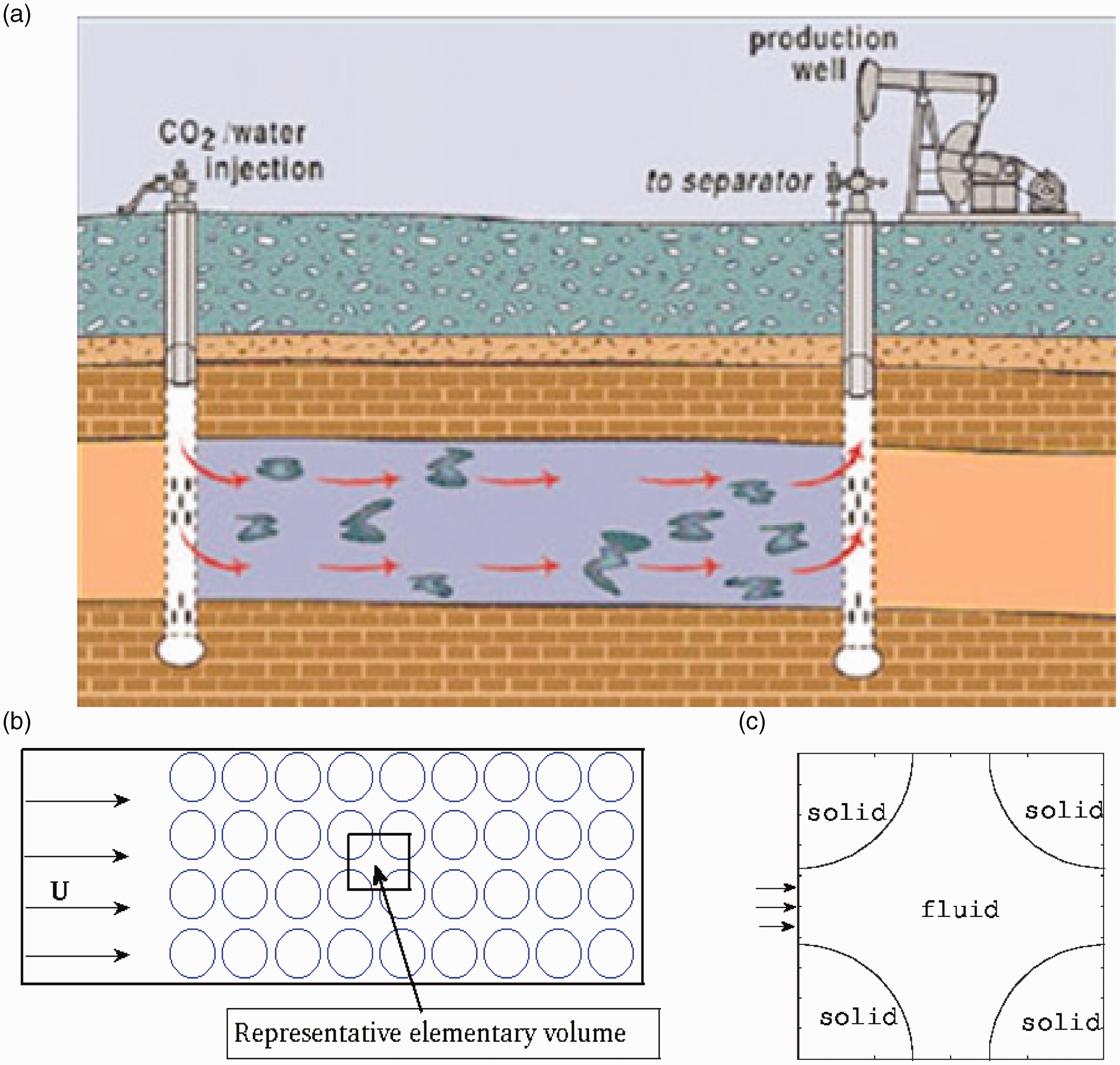
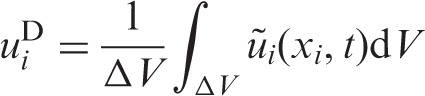
The volume averaging technique
Defining the porosity as

Let us assume the following.
9
All pores in the medium are connected and the porosity is constant in space and time. The volume-averaged quantities are well-behaved; i.e. if The system is in local thermal equilibrium and the geothermal effects are compensated by the geo-pressure gradient. The production and dissipation of The dispersion and transport of each of the fluid phases are balanced locally by the rate of change of mass within a given volume.
Calculation of the drag force
Based on assumptions (1) to (4), an average drag per unit volume is9,10
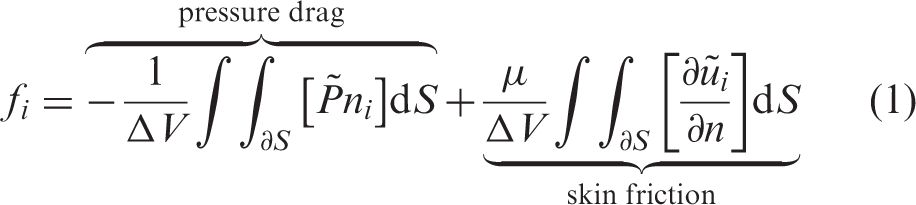
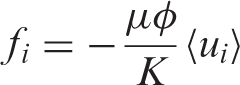
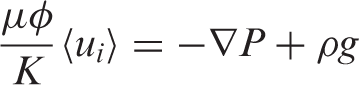
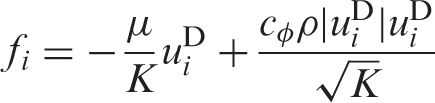
In a confined reservoir, the Forchheimer drag term may be modified to account for the rate of shear and dispersion in a flow. For sediment transport applications, the shear velocity (uτ) is typically evaluated at the lower boundary by


Computational modeling of miscible displacement
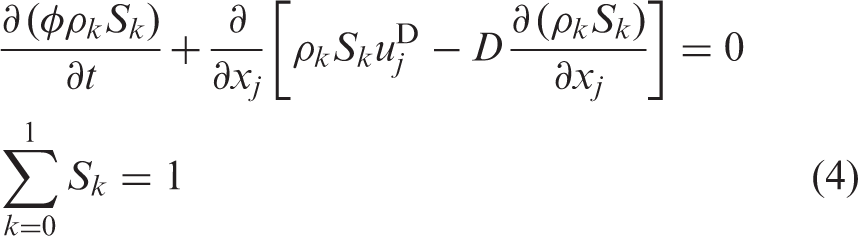
As derived by Peaceman and Rachford,
5
the mass balance equation for a two-phase flow in porous media is


The Darcy–Forchheimer Navier–Stokes model of miscible flow
Following the work of Peaceman and Rachford,
5
we have combined equations (5) and (6) into a single equation that models the dynamics of solvent and oil. We have used the convective terms in the rotational form in the volume-averaged Navier–Stokes equation to calculate the velocity pressure coupling effectively,
25
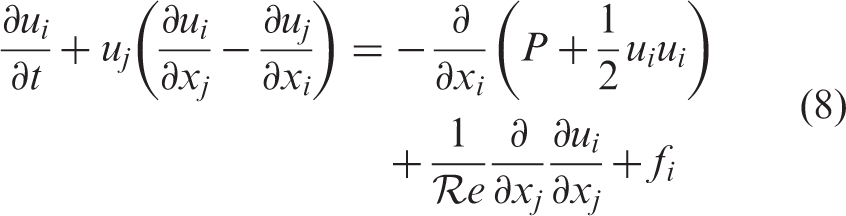
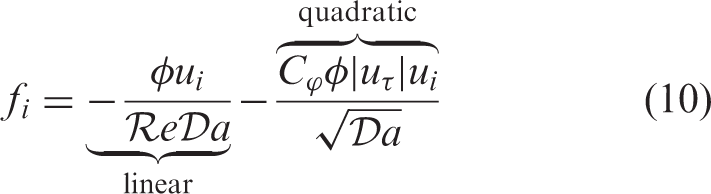
where the drag force is obtained according to equations (2) and (3). With respect to a length scale H and a velocity scale U, it is convenient to express all variables in the dimensionless form. Since φ is assumed constant in this work, the equations governing a miscible two-phase flow in porous media can be simplified in terms of the intrinsic velocity (using ui for 〈ui〉) and the saturation


The segregated algorithm
Calculation of pressure and velocity
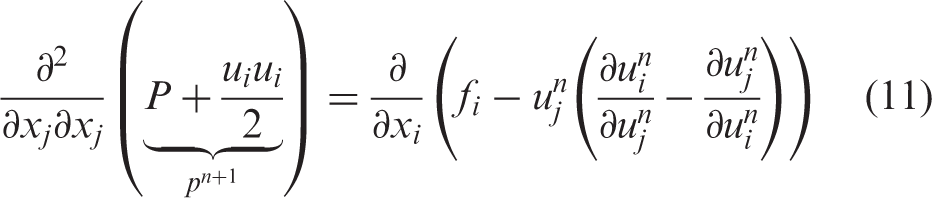
The velocity pressure coupling can be described by a pressure Poisson equation, which is derived by taking the divergence of equation (8) and requiring that equation (7) is satisfied at each time, step such that
Calculation of the saturation
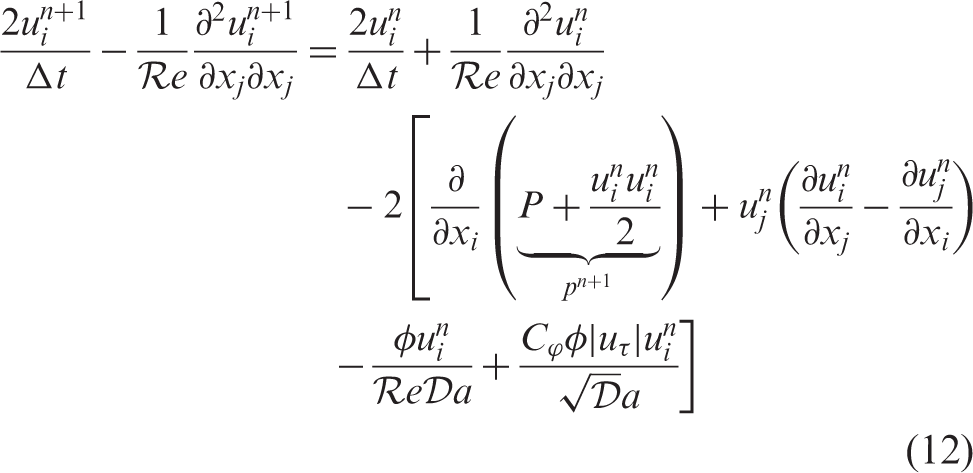
Let us now outline the streamline-based Lagrangian model. Like the treatment of the momentum equation (12), the linear dispersion term in equation (9) is treated implicitly (convenient for large values of
Given the saturation cn and the velocity

In such a splitting method, as discussed in detail by Chen et al., 11 the saturation c* could be calculated using a time step smaller than Δt in order to satisfy the stability condition. The approach is still good because the costly pressure equation is not solved for every smaller time step. However, the convective derivatives of saturation must be discretized with an upwind biased method. An artifact of such discretization is the damping of high-frequency modes of the numerical solution. In contrast, we have calculated c* with a Lagrangian method that overcomes the artificial damping of high-frequency modes by modeling the convective transport using the streamlines. As a result, the only restriction on the time step comes from the consideration of accuracy in contrast with stability.
The Lagrangian method for saturation
The streamlines associated with a given velocity field are curves at which the velocity field is tangential. Such streamlines can be parametrized, and traced by solving the differential equation

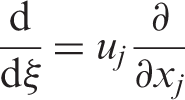
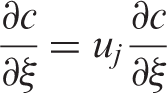
The directional derivative is beneficial because the advective evolution of saturation in equation (9) takes the form

It is clear from this discussion that the costly computational task for the multidimensional advection of saturation is replaced with the analytical solution of a simple one-dimensional problem. However, we only need to trace a portion of the streamline passing through each grid point at each time step. Starting a streamline from a grid point, its terminal position may be traced within a grid-block that is not a grid point. As a result, the evaluation of the right hand side of equation (13) requires interpolation of c* between grid points and streamlines. Alam and Penney 26 developed an interpolation technique that conserves mass. Since only the saturation is interpolated, satisfying conservation of mass by the interpolation method is important to simulate a two-phase flow problem.
Implementation of the methodology
The proposed segregated algorithm has been implemented with the object-oriented C++ programming paradigm. We have extended an existing C++ code that implements the multigrid solver presented by Alam and Bowman
25
to solve equations (11) to (13). The implementation of the proposed Lagrangian solver (e.g. equations (14) and (15)) takes advantage of the
Numerical simulation, results, and discussion
In this section, we analyze the current methodology for simulating miscible displacement in a fluid saturated porous channel.5,22 The first set of simulations aims to understand the computation of forces between the fluid and the porous medium. The second set of simulations aims to understand how accurately the proposed Lagrangian method captures an interface between two nearly immiscible fluids; how this interface moves and deforms in porous media. More specifically, conserving the mass of an individual phase of miscible fluids is investigated by the Lagrangian method and the results are compared with numerical experiments for the fluid flows in porous media. Finally, we discuss a potential application of the methodology in reservoir engineering, where flow paths in heterogeneous reservoirs are analyzed using methods called pressure tests and tracer tests.
Parameters and numerical verification
The accuracy of our method for modeling the velocity pressure coupling is validated using a common test case: an incompressible flow in a cavity for which the exact solutions of equations (7) and (8) are given by
(a) Numerical solution u(0.5, y, 1), compared with exact solution. (b) Numerical solution u(x, 0.5, 1), compared with exact solution.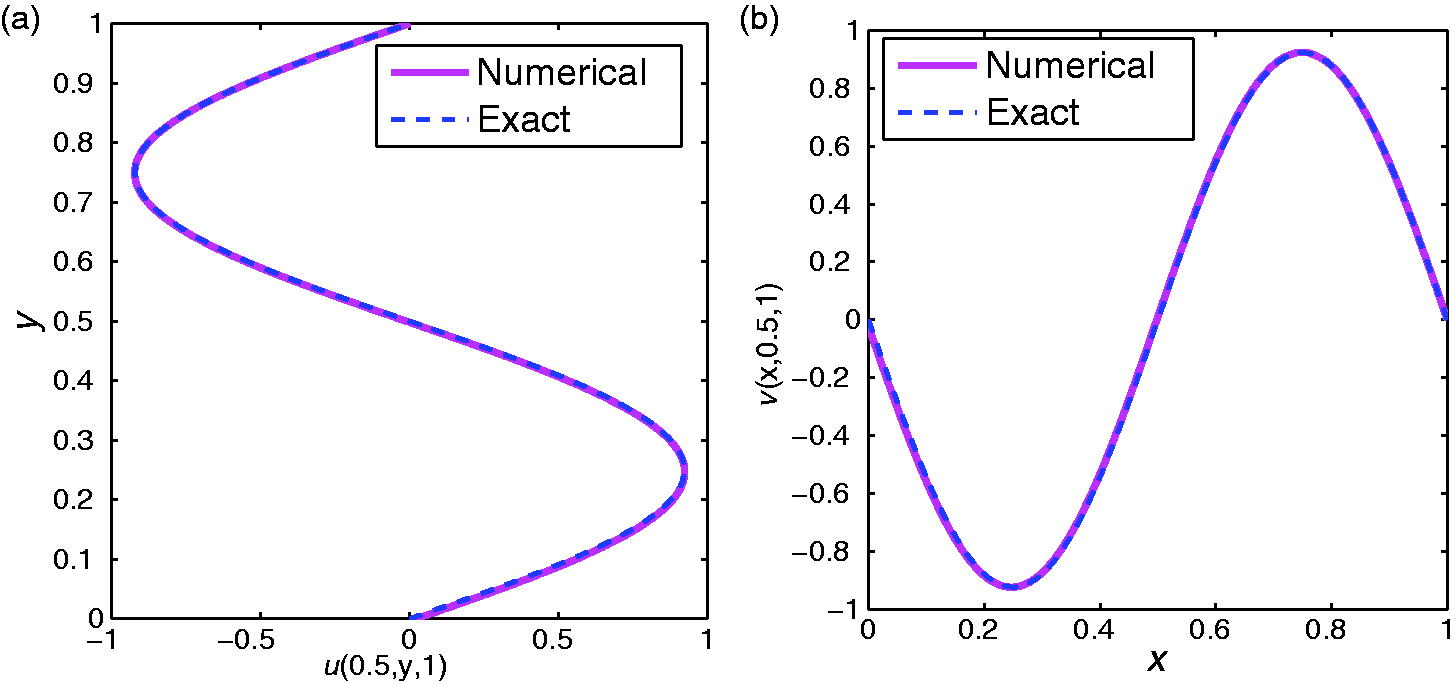
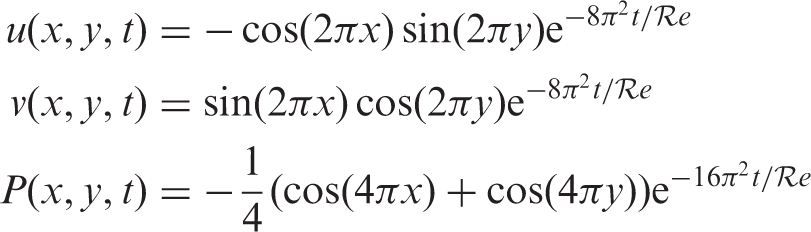
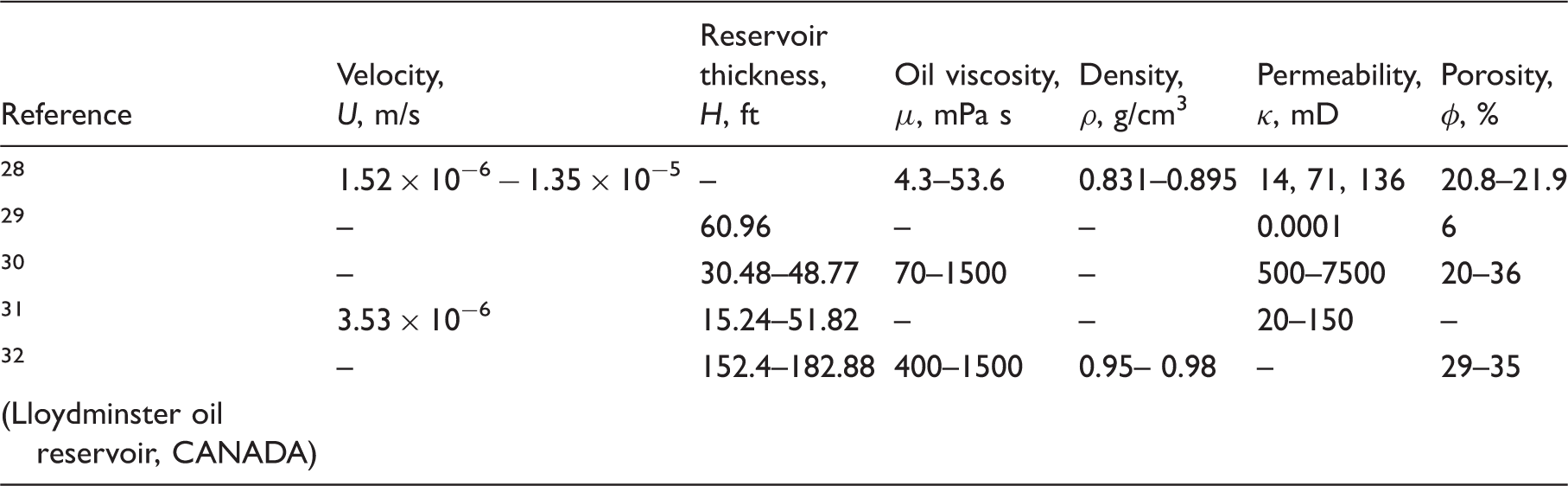
Characteristic parameters collected from relevant references.
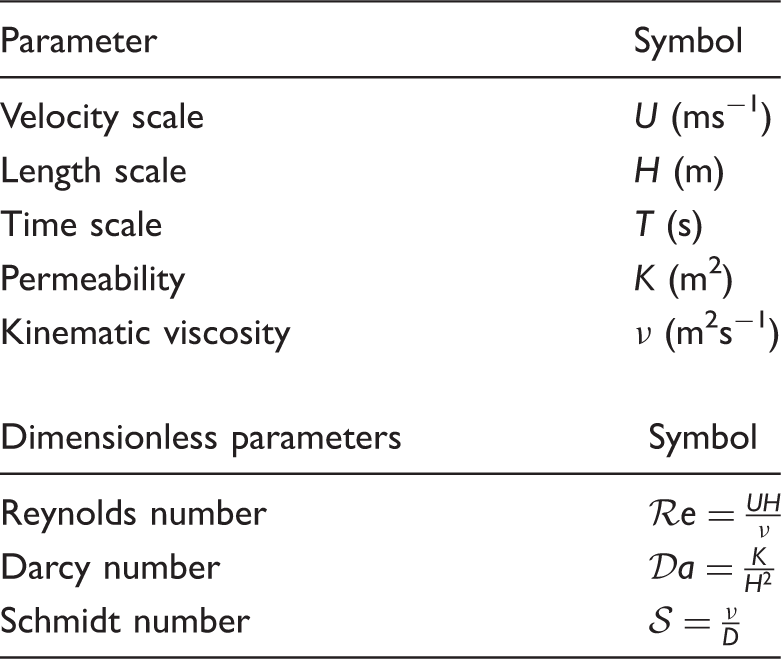
Parameters and dimensionless numbers.
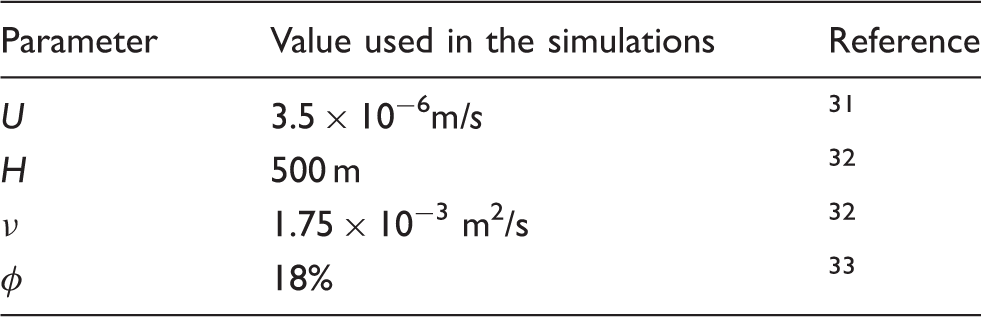
Parameters (available in the literature) used in the simulations for an idealized reservoir model.
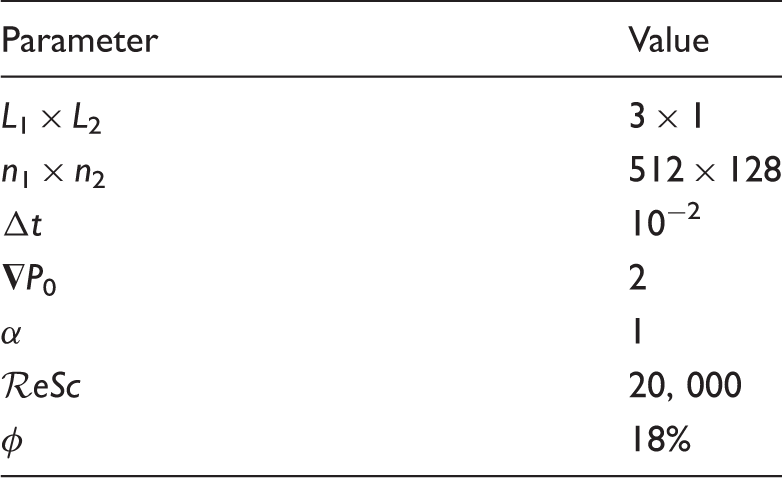
Parameters for simulations with Reynolds number,
Effect of shear stress and permeability on miscible displacement
Peaceman and Rachford
34
carried out experiments to investigate the overall flow rate in a porous channel. Accordingly, in a confined reservoir or aquifer, the flow rate is dependent on the shear stress and permeability of the medium, which may also be characterized by the Darcy friction factor, 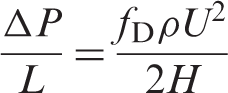
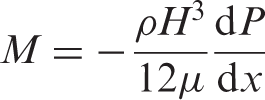
To demonstrate these phenomena, two sets of simulations have been considered here: one is for Velocity profiles u1(1.5, y, T) and u2(1.5, y) for 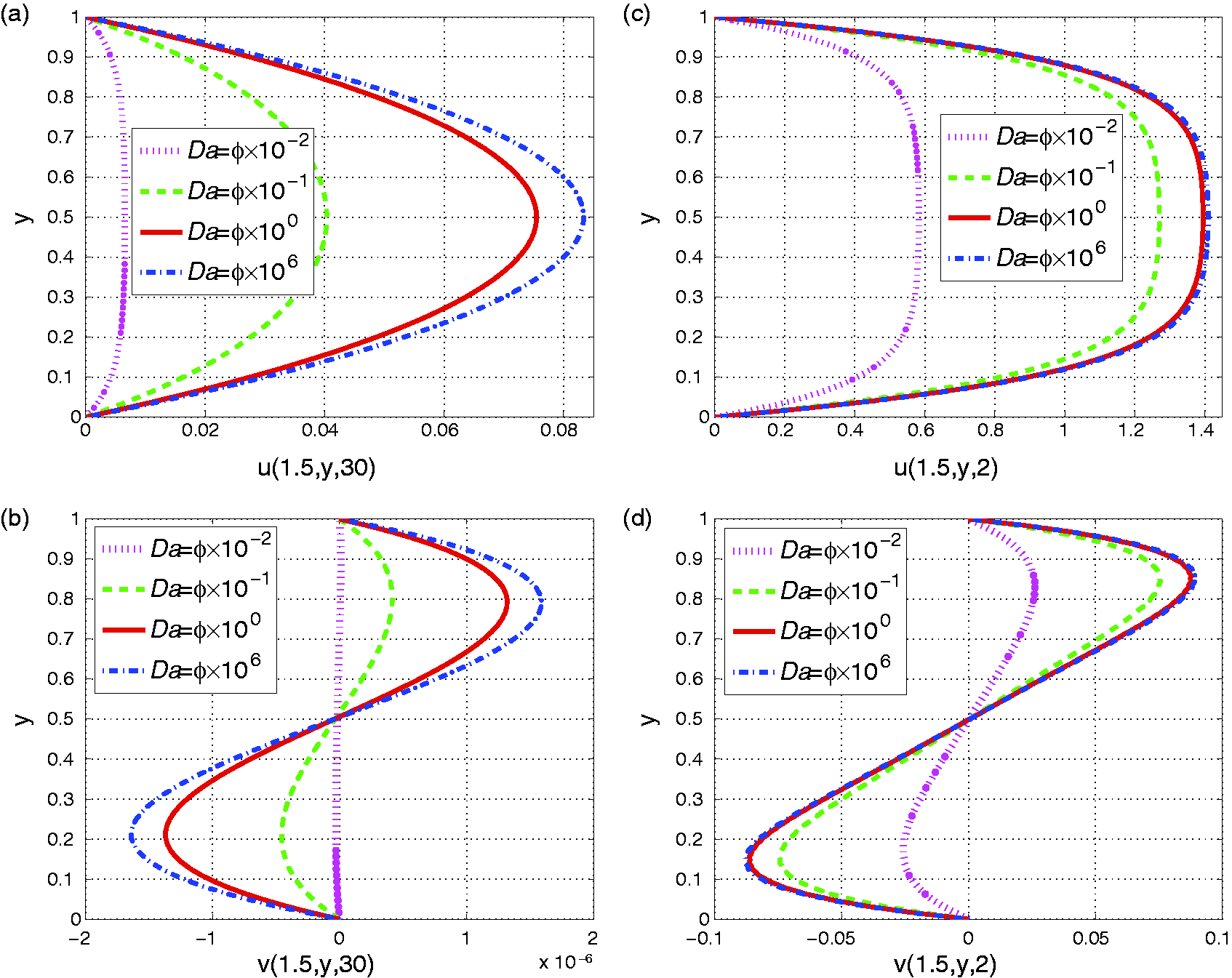
Parabolic shape of the dispersed solvent phase
Corresponding to the velocity field presented in Figure 4, let us now present the simulated moving front of the solvent at Miscible flow of carbon dioxide and oil; red and yellow represent nonzero and zero concentrations of carbon dioxide, respectively. (a) Initial concentration, where carbon dioxide has been emplaced in the region of area A. (b) Displacement of oil by carbon dioxide at 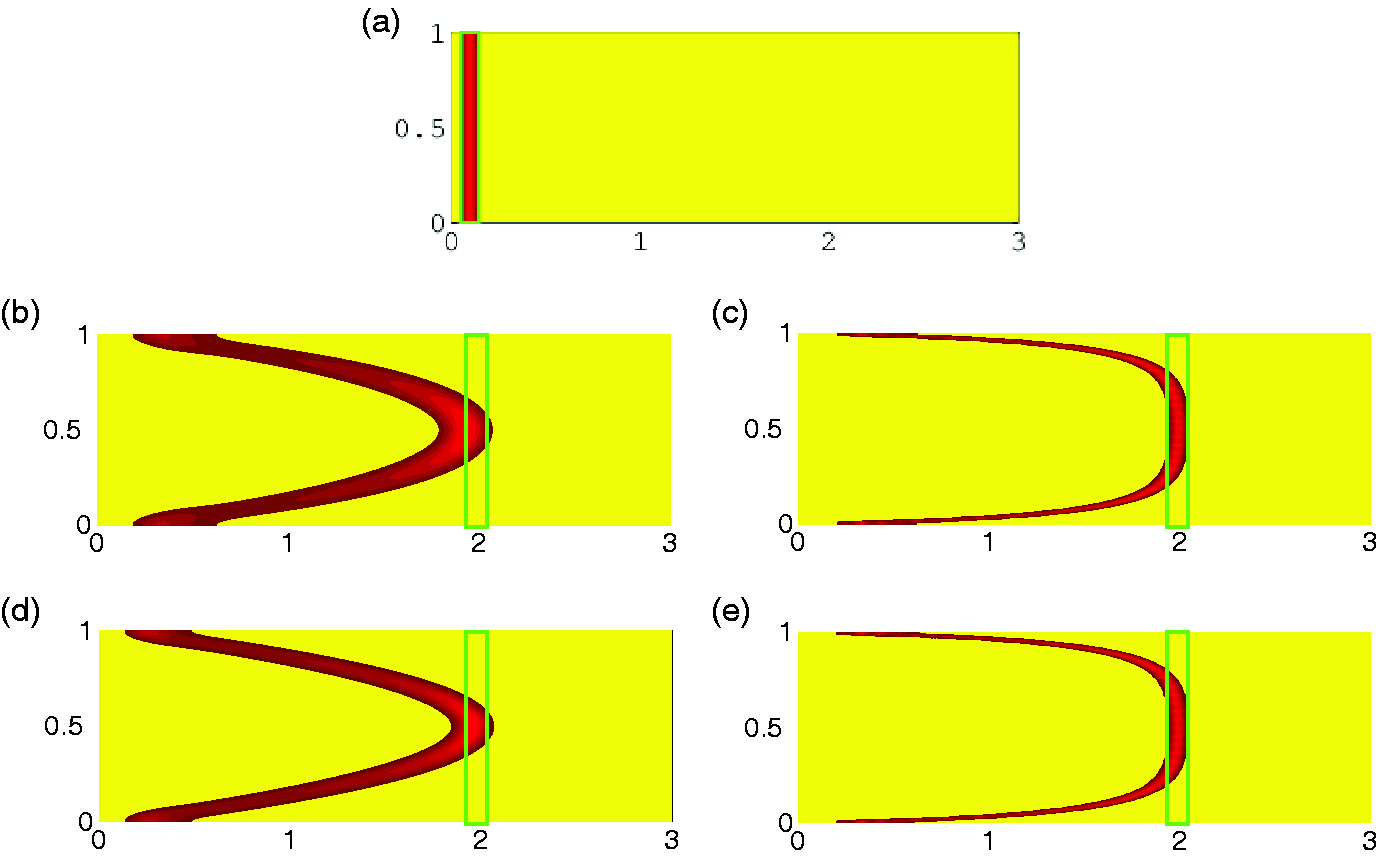
Note that the time for Figure 5(b) and (d) is t = 22.5H/U, while that for Figure 5(c) and (e) is t = 2.3H/U. It is the individual time when the solvent phase has traveled a distance of approximately 2H. At
To provide further insight into the effect of the Darcy friction factor, two sets of results are displayed in Figure 6 for three values of the Darcy number, Temporal evolution of flow with respect to variations of 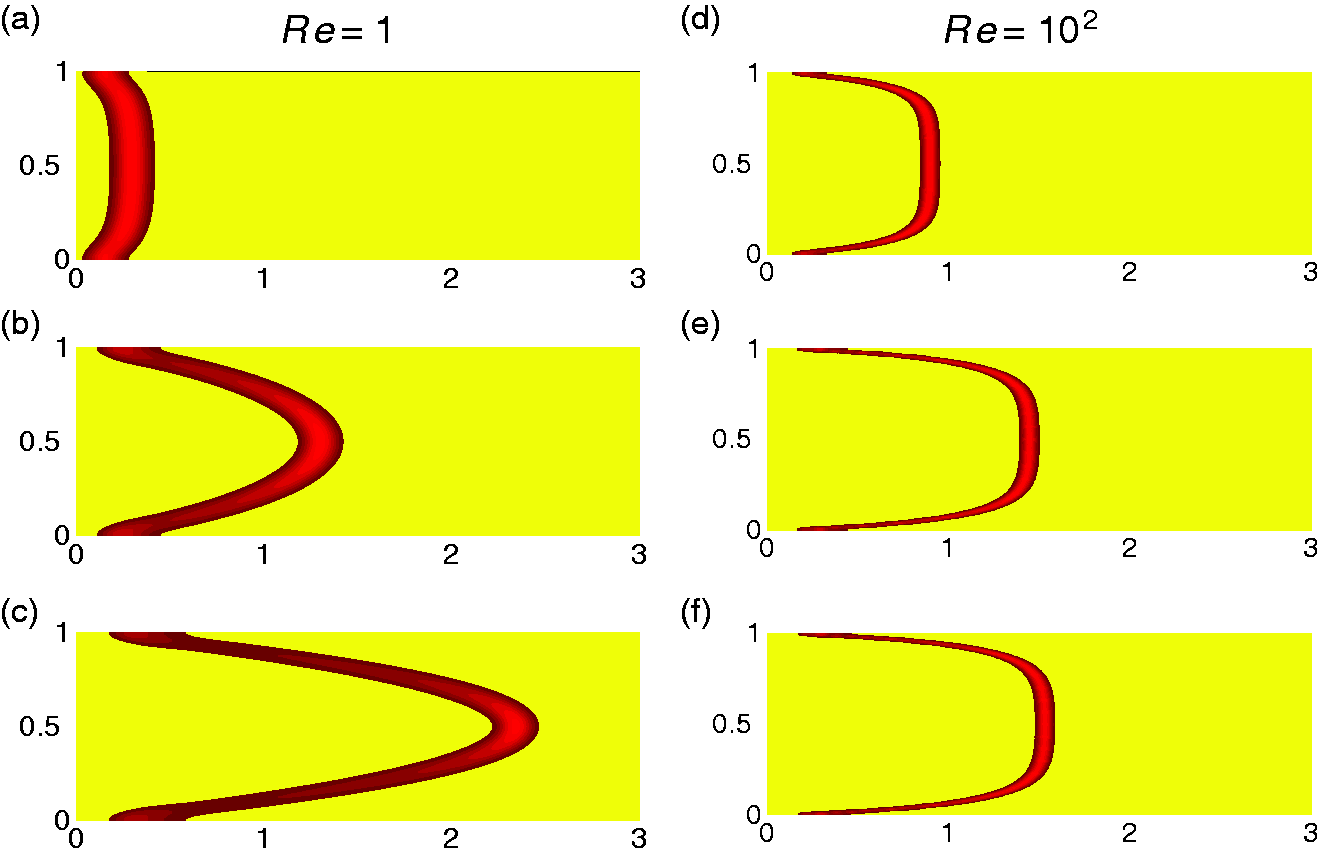
Dispersion and diffusion during miscible displacement
As a miscible flow progresses, we would like to investigate the nature of the dispersion experienced by the flow. We compare this dispersion and diffusion with the theoretical prediction of convection–diffusion theory.
17
A key feature of miscible flow is that the dispersion can be described in analogy with Fick’s law of diffusion.
5
Such an analogy between theoretical prediction and experimental data is given in Figure 1 of Udey and Spanos.
17
We have solved equations (7) to (9) to predict the dispersion of saturation for several values of
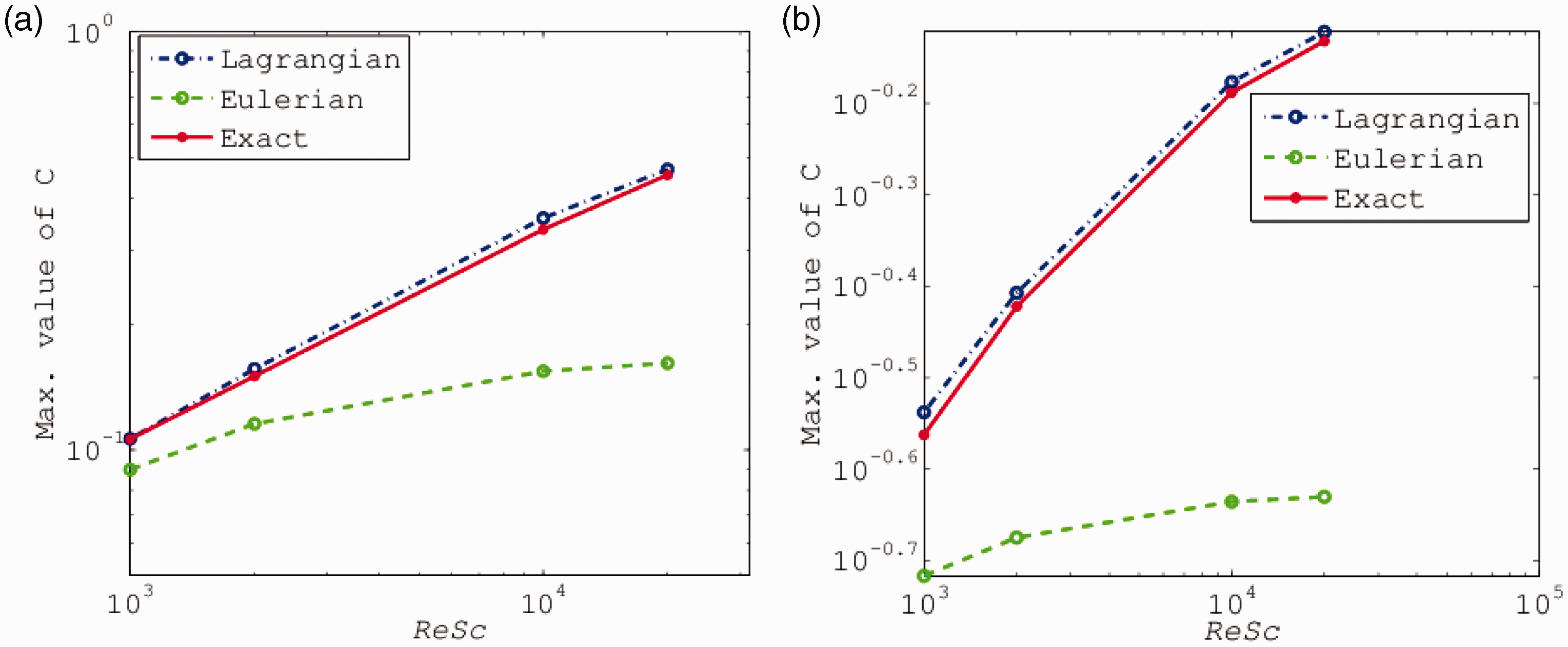
In Figure 7(a), saturation c(x, 0.5, 24.5) is predicted by the Eulerian method and the Lagrangian method, and compared with the exact solution for Comparison of the prediction of saturation between the Lagrangian method, the Eulerian method, and the theory for Domain-averaged maximum saturation as a function of Comparison of saturation between Eulerian and the Lagrangian calculations: (a) 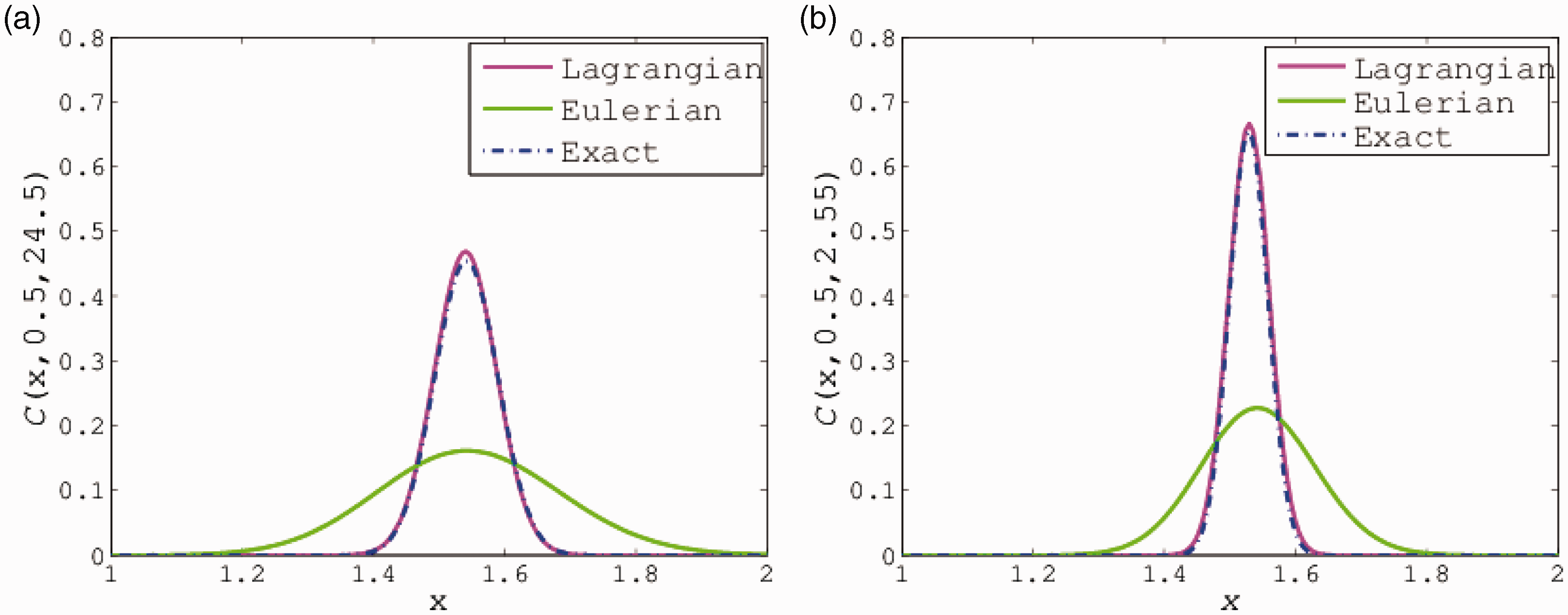
Forchheimer effect on dispersion and diffusion
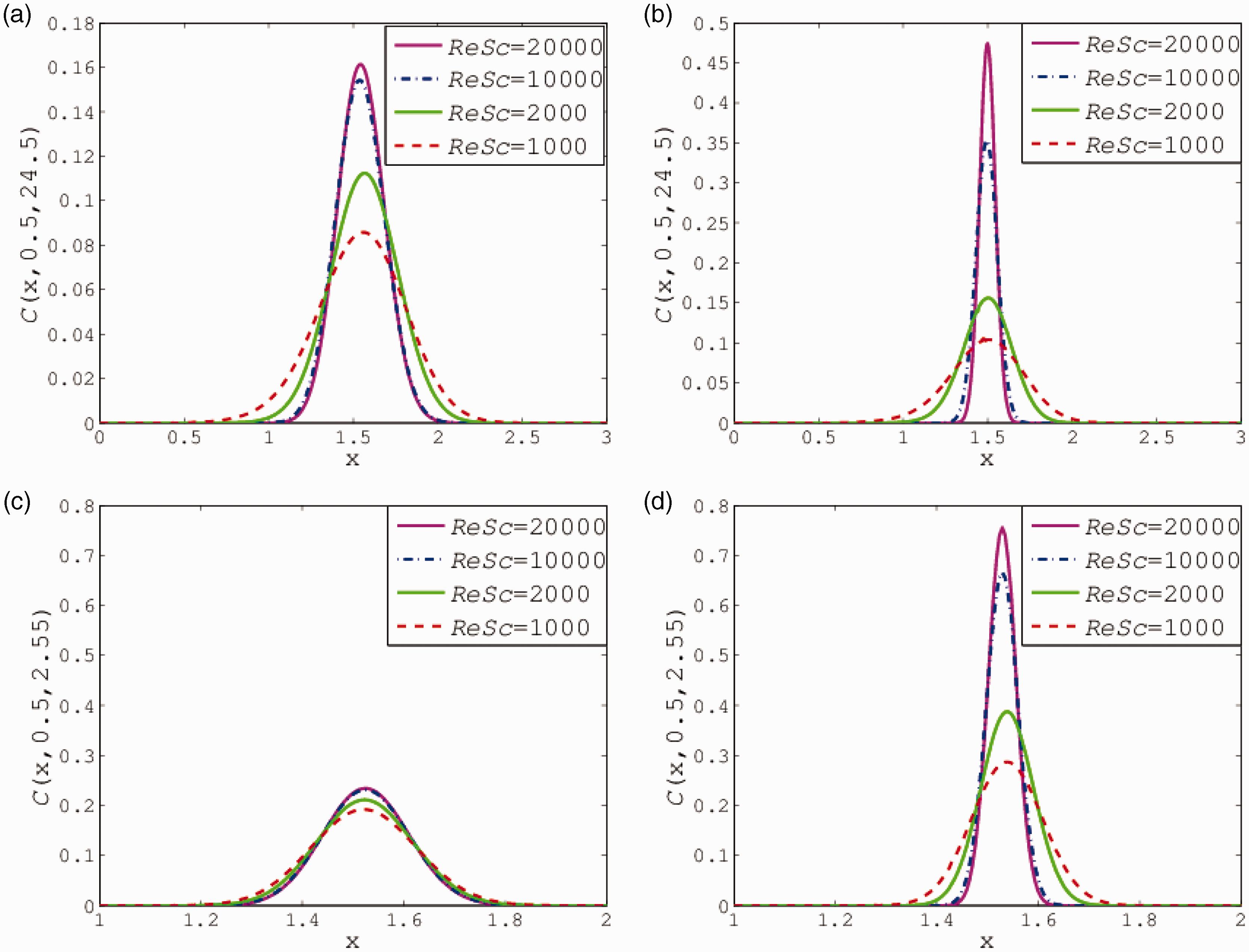
Let us now demonstrate the Forchheimer effect on the dispersion of saturation. The simulation is similar except that we now switch on the Forchheimer term by setting Cϕ = 1. For the plots in Figure 10, a small Darcy number is used ( Comparison between the Darcy friction factor and nonlinear Forchheimer drag. (a) 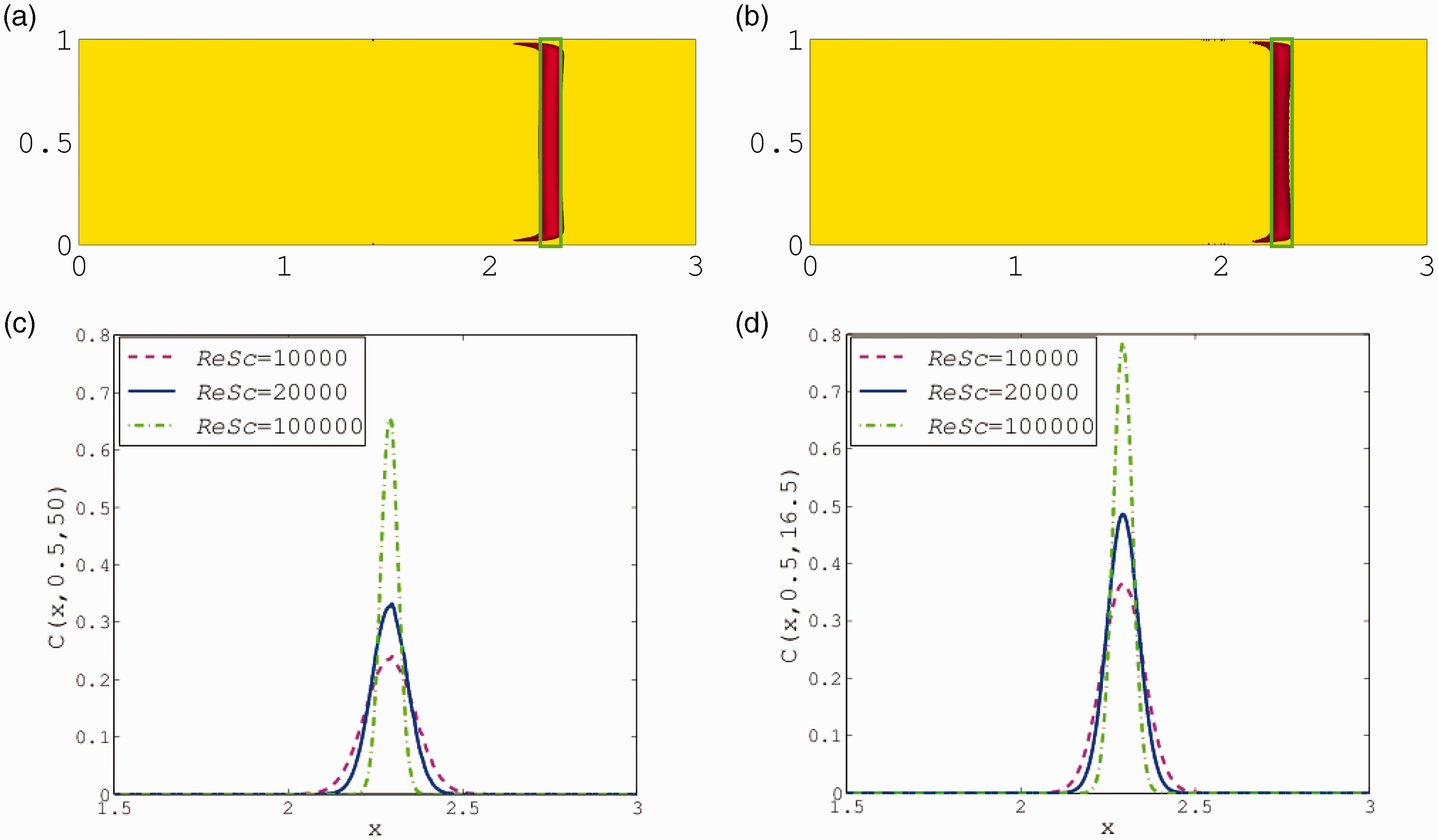
The simulations have been repeated for various values of
In Figure 11(a) to (c), the saturation is compared for a few values of (a) to (c) Migration of solvent as a flat band with reducing Darcy friction factor near the reservoir boundaries (Forchheimer drag is applied). (d) Maximum values of the saturation show agreement with asymptotic convection–diffusion theory. For clarity, the maximum value of the saturation predicted by the Eulerian method is also compared. The Eulerian simulation does not converge to the present Lagrangian simulation. (a) 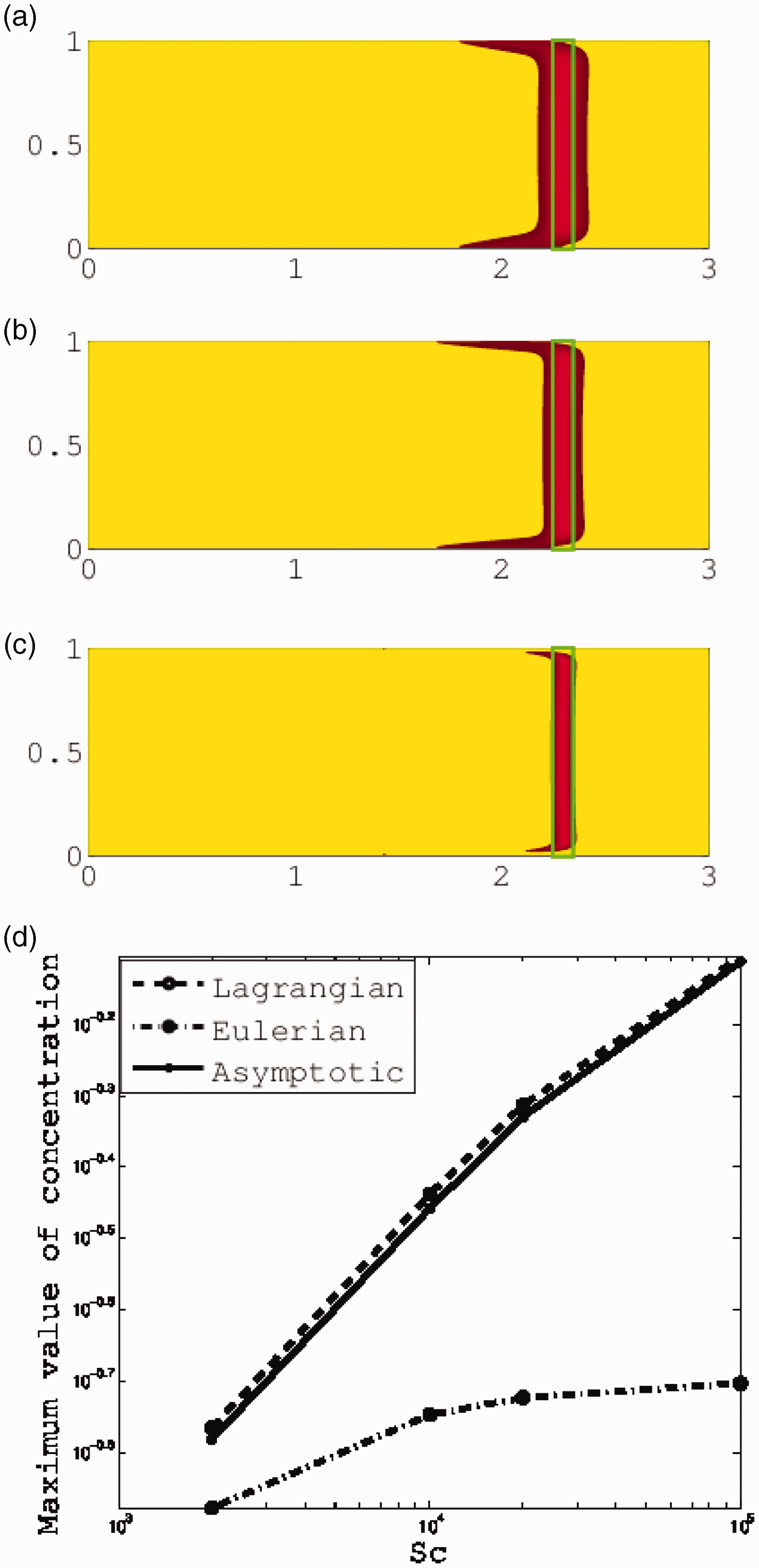
Conclusions and future direction
There has been great interest in miscible displacement of oil by a solvent in the field of petroleum engineering, and the topic of carbon dioxide injection for the enhanced oil recovery process has received increased attention. Recently, there is a growing propensity for employing high-performance computational fluid dynamics reservoir simulation techniques with the hope that this may lead to the discovery of substantial currently unrecognized opportunities for increasing the economic recovery of hydrocarbons. 39 Intrinsic volume-averaged techniques are used for the development of a mathematical model to capture the flow at the field scale. A detailed computational fluid dynamics investigation helps to understand how injected solvent displaces oil during a multiphase flow system through porous materials in an oil reservoir, and provides further insight when field results fall short of laboratory performance. Diffusion and dispersion of the interface during miscible displacement have been studied extensively with a streamline-based Lagrangian technique. The numerical model was examined by two test cases to investigate its efficiency, and numerical predictions are in good agreement with theoretical data. 36 Many researchers have investigated non-Darcy flow in oil reservoir.40,41 We extensively discuss the Darcy effect and the Forchheimer effect (non-Darcy) on the flow, i.e. non-Darcy drag force on the flow. During the miscible displacement, it is found that flow rate is dependent on shear stress along the boundary layer and the permeability of the medium. Phase behavior phenomena of the solvent dissolution during miscible displacement are identified as well. Moreover, the mass conservative law is studied and explained, and a good agreement is seen with the analytical solution. The field-scale sweep efficiency is one of the most important factors affecting the economic recovery of hydrocarbons, for which an improved upscaling model may be beneficial to industries instead of studying the details of pore-scale flow. This article reiterates such a growing trend, and outlines some significant developments in this direction.
To analyze the sweep efficiency for a miscible displacement, overall flow characteristics can be studied through an upscaling model. In particular, the idealized influence of an isolated impermeable region partially embedded in a porous matrix has been studied. Note that the averaging process employed in this article is commonly used to model turbulent flow in porous media. We have outlined how to extend and redesign an intrinsic space–time average operator to model small-scale transient variability in a laminar miscible flow, which is a distinct fundamental development of this work. This research has clearly explained the regime of the viscous shearing stress, which plays a negligible role on large-scale reservoir flow but is important for accurate upscaling of small-scale physics.
Some important future developments include the following. An extension to a three-dimensional multilevel mesh employing a massively parallel algorithm would add potential benefits toward the needs of petroleum industries. We are currently developing data structures using the object-oriented C++ programming paradigm. The current results clearly provide hintsfor using adaptive mesh approaches.42,43 However, a full understanding of the efficiency of multilevel and Lagrangian approaches is essential before a study of the efficiency of parallel adaptive mesh methods for such a miscible flow problem can be undertaken.
Footnotes
Acknowledgements
The authors would like to thank the reviewers and editor for their valuable suggestions and comments for the improvement of the quality of the paper. For this research, partial computational facilities are provided by ACENET, the regional high performance computing consortium for universities in Atlantic Canada.
Declaration of conflicting interests
The author(s) declared no potential conflicts of interest with respect to the research, authorship, or publication of this article.
Funding
The author(s) disclosed receipt of the following financial support for the research, authorship, and/or publication of this article: JMA acknowledges financial support from the National Science and Research Council, Canada. MJA acknowledges SGS, Memorial University of Newfoundland for scholarship and the University of Chittagong, Bangladesh, for sanctioning leave with salary.