




Abstract
Multi-phase flows, particularly two-phase flows, are widely used in the industries, hence in order to predict flow regime, pressure drop, heat transfer, and phase change, two-phase flows should be studied more precisely. In the petroleum industry, separation of phases such as water from petroleum is done using rotational flow and vortices; thus, the evolution of the vortex in two-phase flow should be considered. One method of separation requires the flow to enter a long tube in a free vortex. Investigating this requires sufficient knowledge of free vortex flow in a tube. The present study examined the evolution of tube-constrained two-phase free vortex using computational fluid dynamics. The discretized equations were solved using the SIMPLE method. It was determined that as the liquid flows down the length of the pipe, the free vortex evolves into combined forced and free vortices. The tangential velocity of the free and forced vortices also decreases in response to viscosity. It is shown that the concentration of the second discrete phase (oil) is greatest at the center of the pipe in the core of the vortex. This concentration is at a maximum at the outlet of the pipe.
Introduction
Vortices have been studied in different fields of fluid mechanics. They have been effectively used to explain the physics of turbulence.1,2 Vortex dynamics are vital to comprehending the nature of turbulence, including entrainment and mixing, heat and mass transfer, combustion, chemical reactions, and noise generation in the aerodynamics.
3
A vortex is a tube with a surface consisting of vortex lines;
4
thus, the existence of a vortex tube does not confirm the existence of a vortex. A vortex tube exists in the laminar pipe flow, but no vortex exists. A more specific definition of a vortex was proposed by Lugt
5
as a “multitude of material particles rotating around a common center”. Chon et al.
6
defined a vortex as a region of complex eigenvalues of the velocity gradient tensor. Hunt et al.
7
called vortex a region, which contains both a positive second invariant of the velocity gradient tensor and low pressure. Jeong and Hussain
8
conducted a more thorough study of the nature of vortices and have proposed a definition for a vortex in an incompressible flow in terms of the eigenvalues of symmetric tensor
Besides research that presents a physically admissible and acceptable definition of a vortex, studies have also examined the application of vortex flow to different applied, functional, and industrial problems. One such problem is the vortex interaction with a rigid wall, which has been studied using the computational simulation. 9 Instances of this include the behavior of small vortices in a boundary layer or the interaction between trailing aircraft vortices and the ground. Zheng 10 investigated the aircraft wake vortices near airports using the numerical simulation and derived mathematically and physically consistent boundary conditions.
A free surface vortex is important in the vortex hydrodynamics because it occurs in front of the hydraulic structures. If a free surface vortex extends to the intake, it will decrease the functionality and performance of the hydraulic unit. It will also increase the flow fluctuation and cause cavitation. 11 Li et al. 11 experimentally and numerically investigated the structure of a free surface vortex. In the experimental model, particle image velocimetry (PIV) was used to study the formation and evolution of free surface vortices. The results were compared with the numerical simulation results and showed satisfactory agreement.
Li et al. 12 also conducted a numerical study on flow field in a barrel with an outlet at the center of the bottom to investigate the effect of Coriolis force on the formation of a free surface vortex. The numerical simulation showed good agreement with the experimental results on the shape and position of the vortex and confirmed that the Coriolis force is a major factor in the formation of a vortex. Chen et al. 13 and Hite and Mih. 14 derived expressions for describing velocity in a free surface vortex. Kabiri-Samani and Borghei 15 used a comprehensive set of experiments to weaken the intensity and strength of a vortex to decrease air entrainment at vertical pipe intakes. The vortex was weakened using rectangular anti-vortex plates, which resulted in increased water discharge.
A vertical vortex occurs at the intake of a hydraulic unit. If it extends to the surface and forms a free surface vortex, it can cause air entrainment, which ultimately decreases discharge and can cause energy loss and mechanical damage.16–18 Lu and Guo 19 experimentally studied the flow upstream of an intake and showed that unfavorable approach-flow conditions could lead to formation of a vertical vortex. Vertical vortex formation was investigated at hydraulic intakes in an experimental study by Chen et al. 13 It was shown that the trace of the vertical vortex at a hydraulic intake is spiral in shape and particle movement in this flow is similar to the movement of a screw. They derived an improved analytical formulation and compared the results with the measurements to analyze the causes of error.
The investigation of multiphase flows, especially separation of phases, is important in industry and applied problems. In many applications, separation using density difference can be effectively used. Hederson et al. 20 studied paths of small particles in a steady Taylor vortex background flow. El-Naggar and Kholeif 21 studied a small spherical particle that rotates in a fluid vortex. Domon and Watanabe 22 used a vortex ring to study the mass transport. Uchiama and Yagami23,24 studied the interaction and collision between solid particles and a vortex ring. Candelier et al. 25 investigated the trajectory of an isolated solid particle dropped into a vertical vortex core theoretically and experimentally. They analyzed the influences of history forces on the radial migration of the inclusion. Salari et al. 26 analytically studied the motion of a single solid particle in both free and forced vortices and showed that the most important factor governing the motion of the particle is the pressure gradient force.
The present study used a three-dimensional numerical approach to study the evolution and stability of two-phase flow in a free vortex constrained in a pipe. The behavior of the free vortex in a circular tube, particularly its stability and evolution as it traverses the sides of the tube, has not been previously addressed.
Model
Governing equations
The Lagrangian and the Eulerian approaches are available to model multiphase flows. Lagrangian models simplify the modeling and numerical process by making assumptions such as ignoring the interaction between particles and droplets of the solute phase. This means that the volume fraction of the solvent phase should not be so high that this assumption remains valid. The Eulerian approach is more complex and can be used to simulate multiphase flows with a wider range of volume fractions. In this approach, all phases are treated as a continuum, have a domain in common, and can penetrate each other while moving. A set of conservation equations is written for each phase and coupling the equations of different phases should represent the flow field throughout the domain.
The present study investigated turbulent two-phase flow, so the turbulence model should be properly chosen to capture high gradients exactly. Some researchers have studied different turbulence models and compared the results with experimental data for rotating pumps;27,28 they concluded that k-ɛ models showed satisfactory agreement. Orszag et al.
29
showed that an RNG k-ɛ can predict fluid behavior in flows with swirl more exactly than other k-ɛ turbulent models. The Eulerian multiphase approach in combination with the RNG k-ɛ turbulence model was used in the present study for the numerical simulation. The conservation equations for the qth phases are provided below. The continuity equation for the mixture is



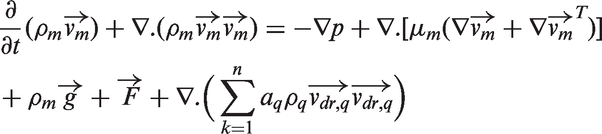
The momentum equation for the mixture can be obtained by summing the individual momentum equations for all phases as


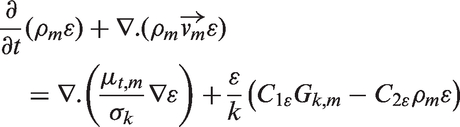
The k and ɛ equations describing the mixture turbulence model are

The turbulent viscosity,


Model geometry and boundary conditions
The model geometry consisted of a pipe 1.5 m in length with a constant diameter of 5 cm that has one input and one output. Figure 1 is a schematic of the model geometry.
Schematic of model geometry.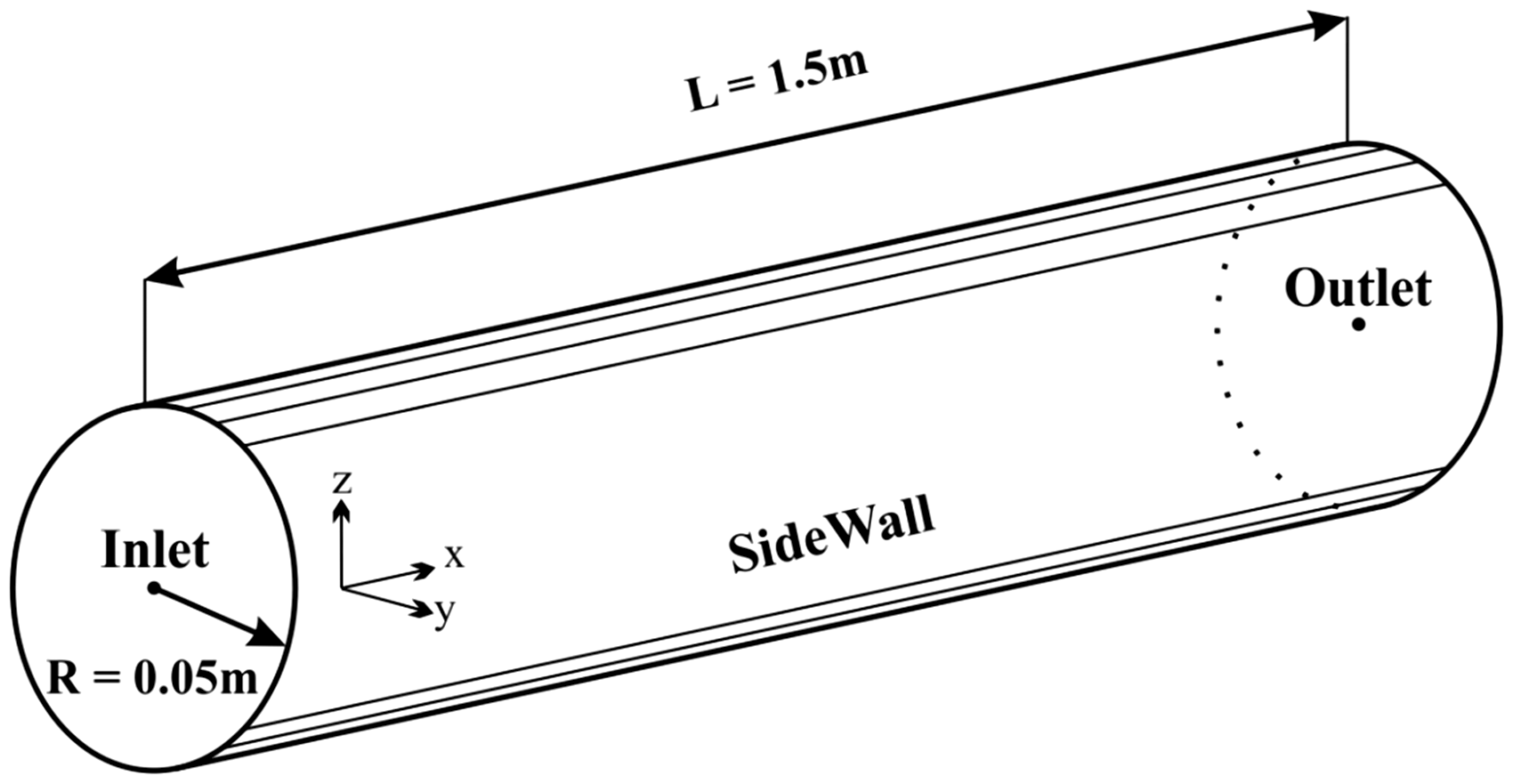
Properties of model boundary conditions.
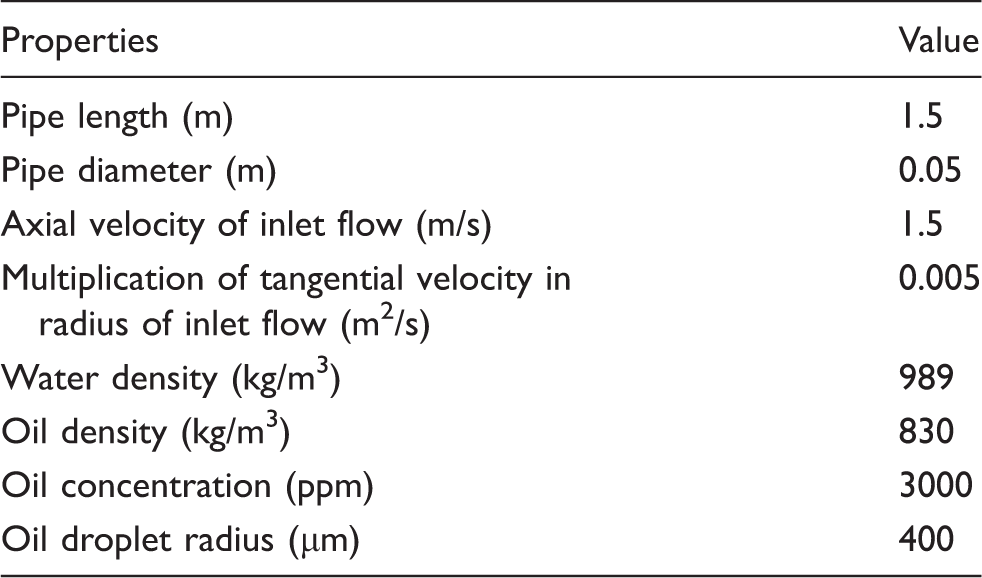
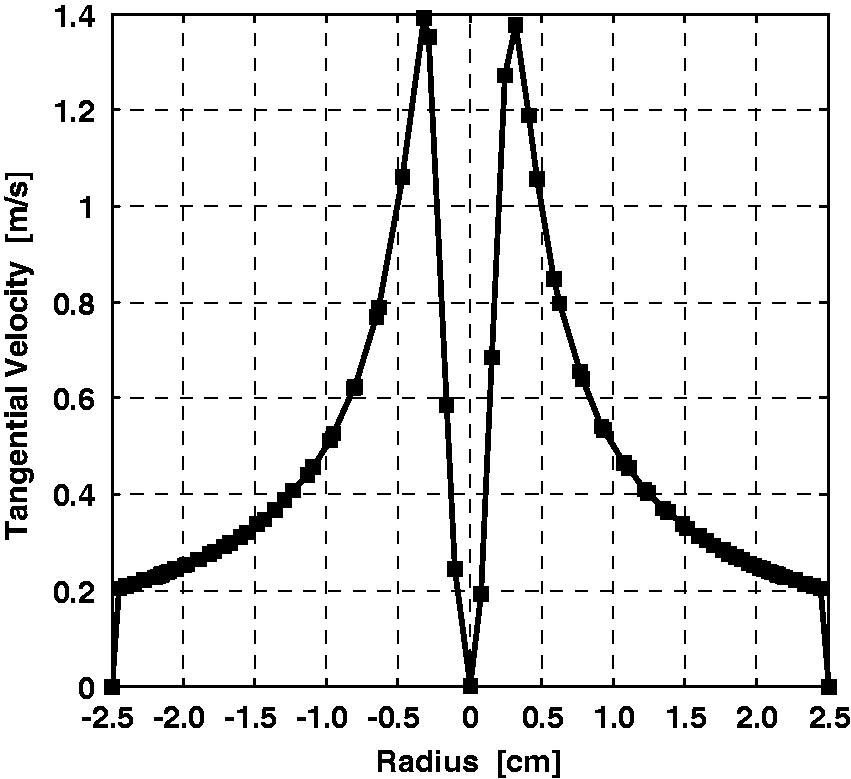
Inlet boundary conditions.
Numerical description
The finite volume method based on the Navier–Stokes equations was employed to discretize the governing equations. Second-order upwind scheme was used for spatial discretization. SIMPLE method was used to solve the discretized equations. The Eulerian multiphase approach combined with a RNG k-ɛ turbulence model was used to model the two-phase flow and turbulence. All the simulations were carried out using OpenFOAM version 4.0.
Validation
Axial turbulent flow in a pipe was simulated to validate the proposed model. A power law relation was used to calculate the velocity profile at the pipe section in the region in which turbulent flow is fully developed
30


In a turbulent flow in a pipe, the length for the developed flow can be predicted as

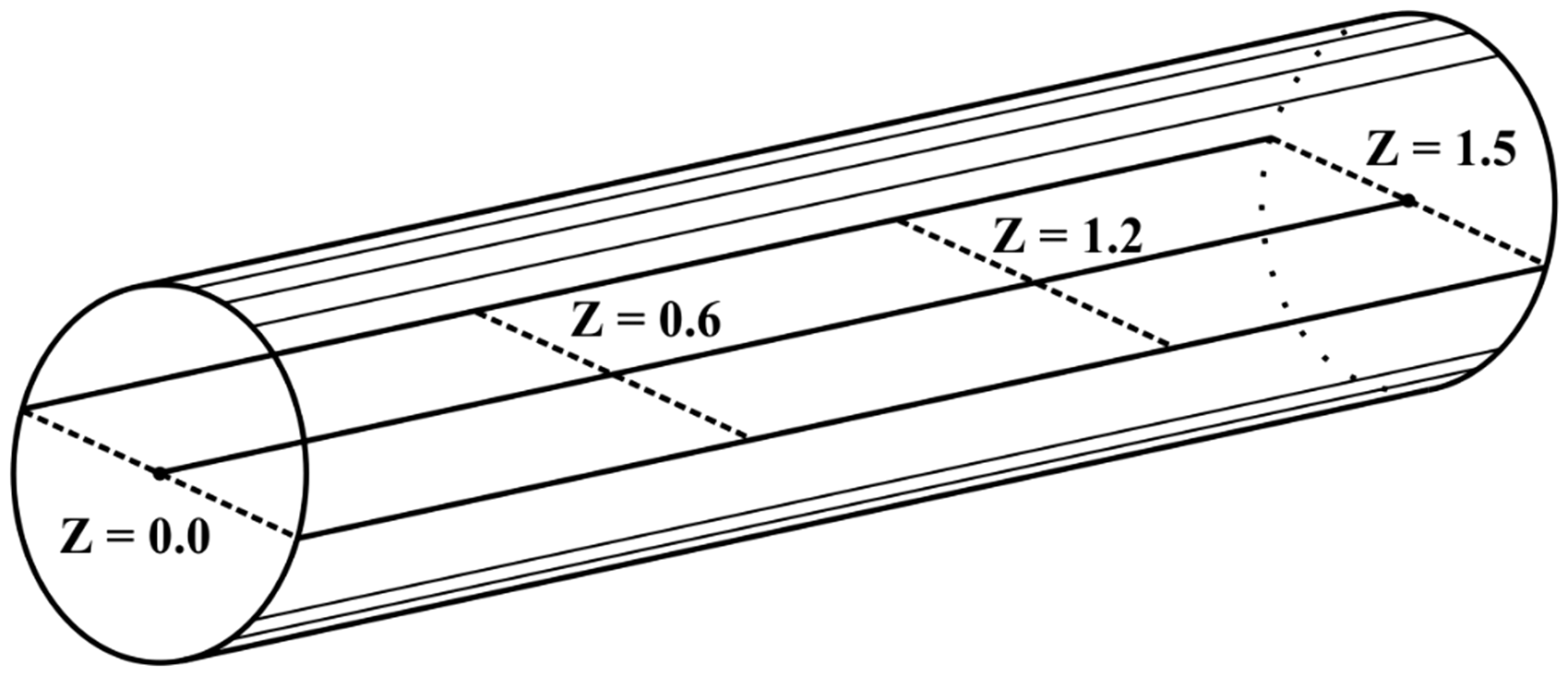
A pipe 1.5 m in length and 5 cm in diameter was chosen and the axial velocity at the inlet was 2 m/s. Comparison of the results of power law relation (11) and the numerical model is shown in Figure 3. Figure 4 shows the velocity distribution in the pipe sections. Figure 5 shows the axes of calculation of velocity at the pipe section.
Comparison of results of power-law relation and numerical model. Velocity distribution in the pipe sections: (a) section z = 0.2 m, (b) section z = 0.6 m, (c) section z = 1.2 m, (d) section z = 1.5 m. Axes for calculation of velocity in pipe section.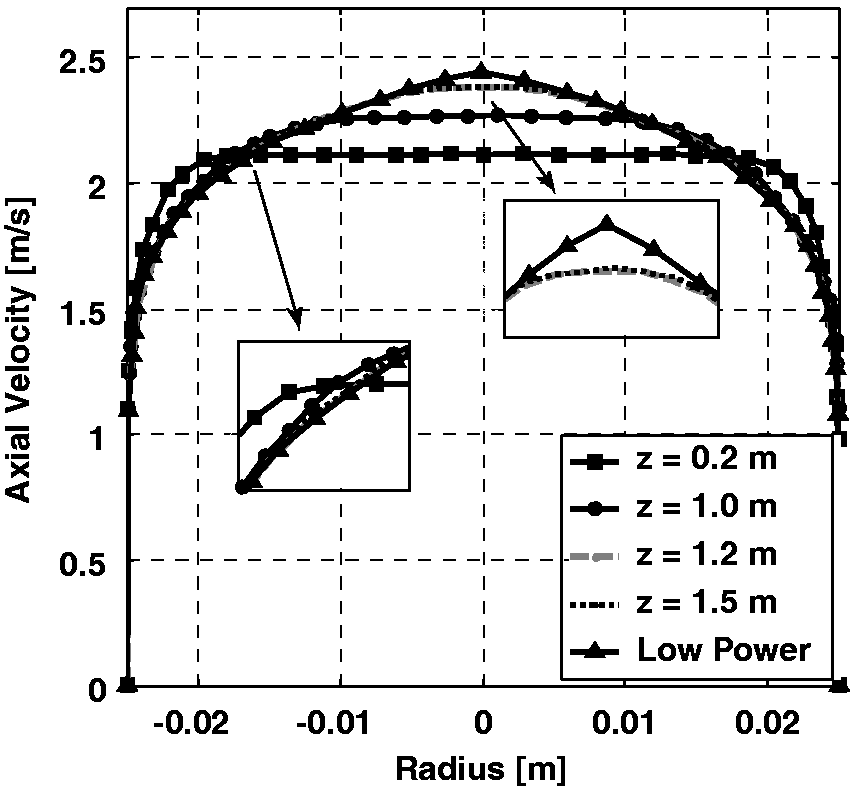
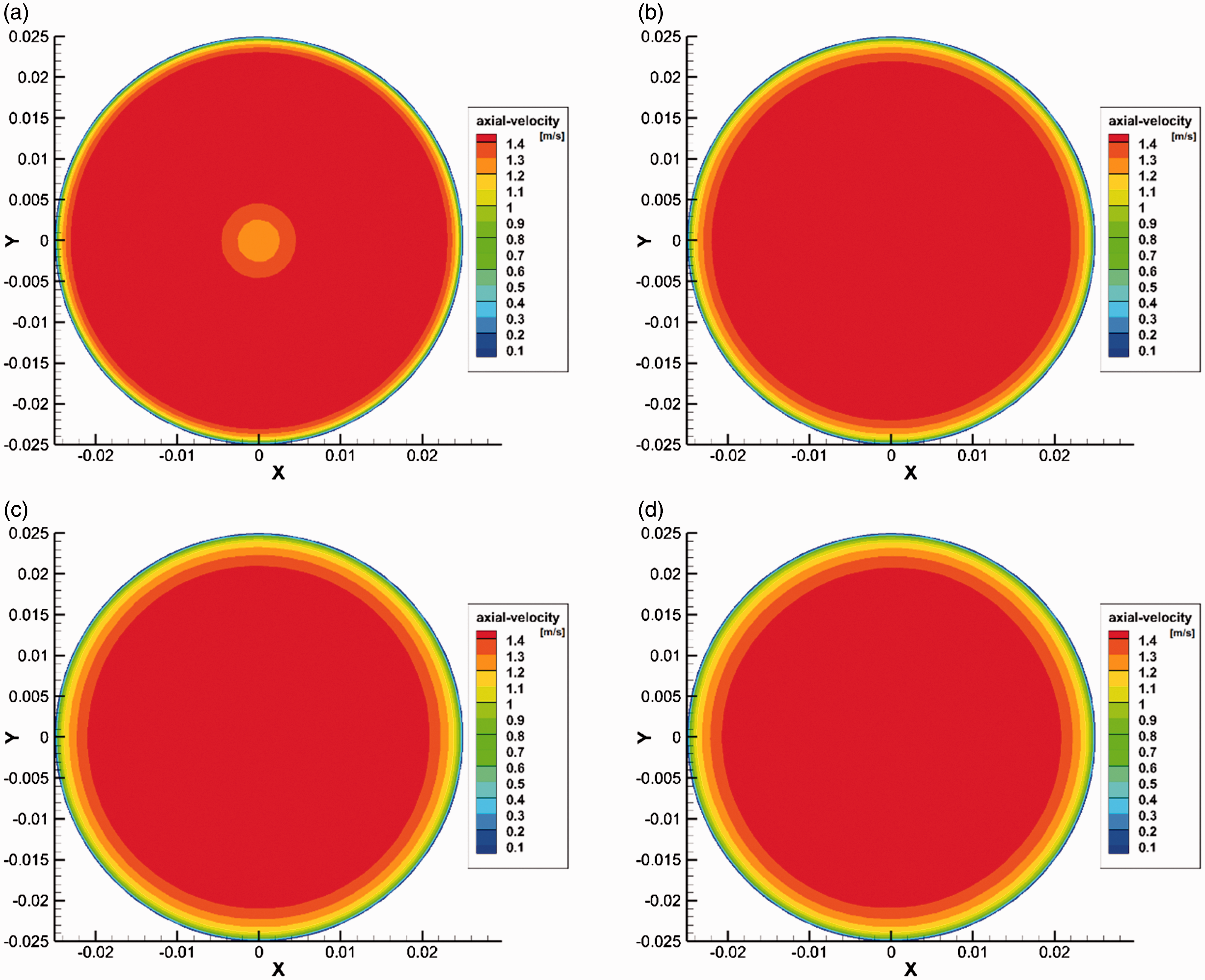
Relation (13) calculates the developed flow length to be about 1.2 m for the pipe and flow condition used for validation. Figure 4 shows the velocity profiles for z = 1.2; at larger values of z they do not change and become constant. There is good agreement between the results of the present model and the power law results, which validates the model.
Grid independence study
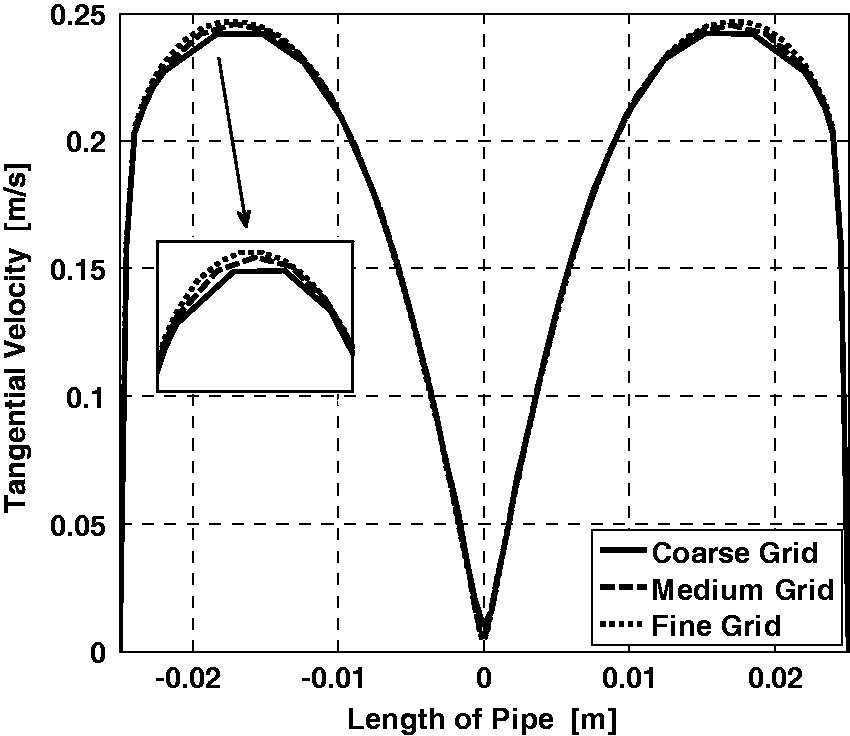
An organized mesh was created over the geometry and three mesh densities were used to study the grid independence. A total of 571,095, 1,175,000, and 1,524,500 cells were used. Figures 6 and 7 show the simulated axial and tangential velocity profiles, respectively, of a single-phase axial vortex flow with an inlet velocity of 1.5 m/s at the outlet of the pipe. In a compromise between high accuracy and low computational cost, the mesh with 1,175,000 cells was selected as having the most acceptable accuracy for the simulations.
Grid independence at different mesh resolutions for axial velocity. Tangential velocity at different mesh resolutions.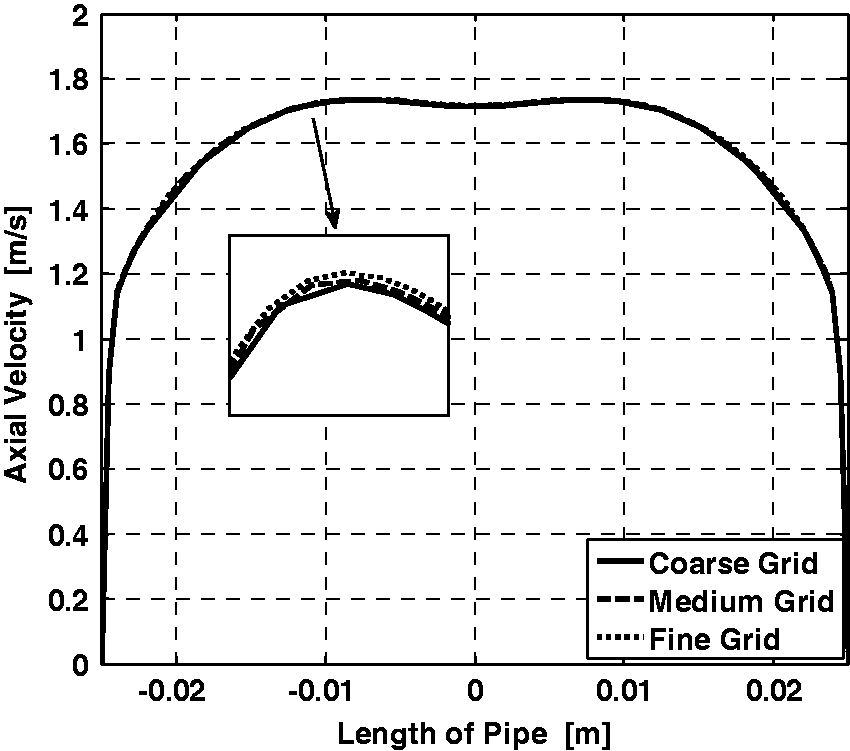
Results and discussion
Tangential velocity distribution
Figure 8 shows the tangential velocity profiles at different sections along the sides of the pipe. At z = 0.2 m section, the free vortex at the inlet evolves into a combination of free and forced vortices with the forced vortex existing at the core. Tangential velocity distribution in a free vortex is proportional to the inverse of the radius; however, in a forced vortex, it is proportional to the radius. Figure 8 indicates that, at z = 0.2 m section, a forced vortex with a radius of 0.01 m from the center of the pipe clearly forms, but in the vicinity of the pipe wall, there exists a free vortex. As the flow continues along the pipe, the radius of the core of the forced vortex increases. The strength of both the forced vortex at the core and the neighboring free vortex weakens from the effect of viscosity. It can be inferred that the development of a free vortex as a stable and independent phenomenon is not possible in a pipe. It can also be concluded that the free and forced vortices in combination produce stable behavior in tube-constrained free vortex flow.
Tangential velocity profiles for: (a) z = 0 to 1.5 m; and (b) z = 0.2 to 1.5 m.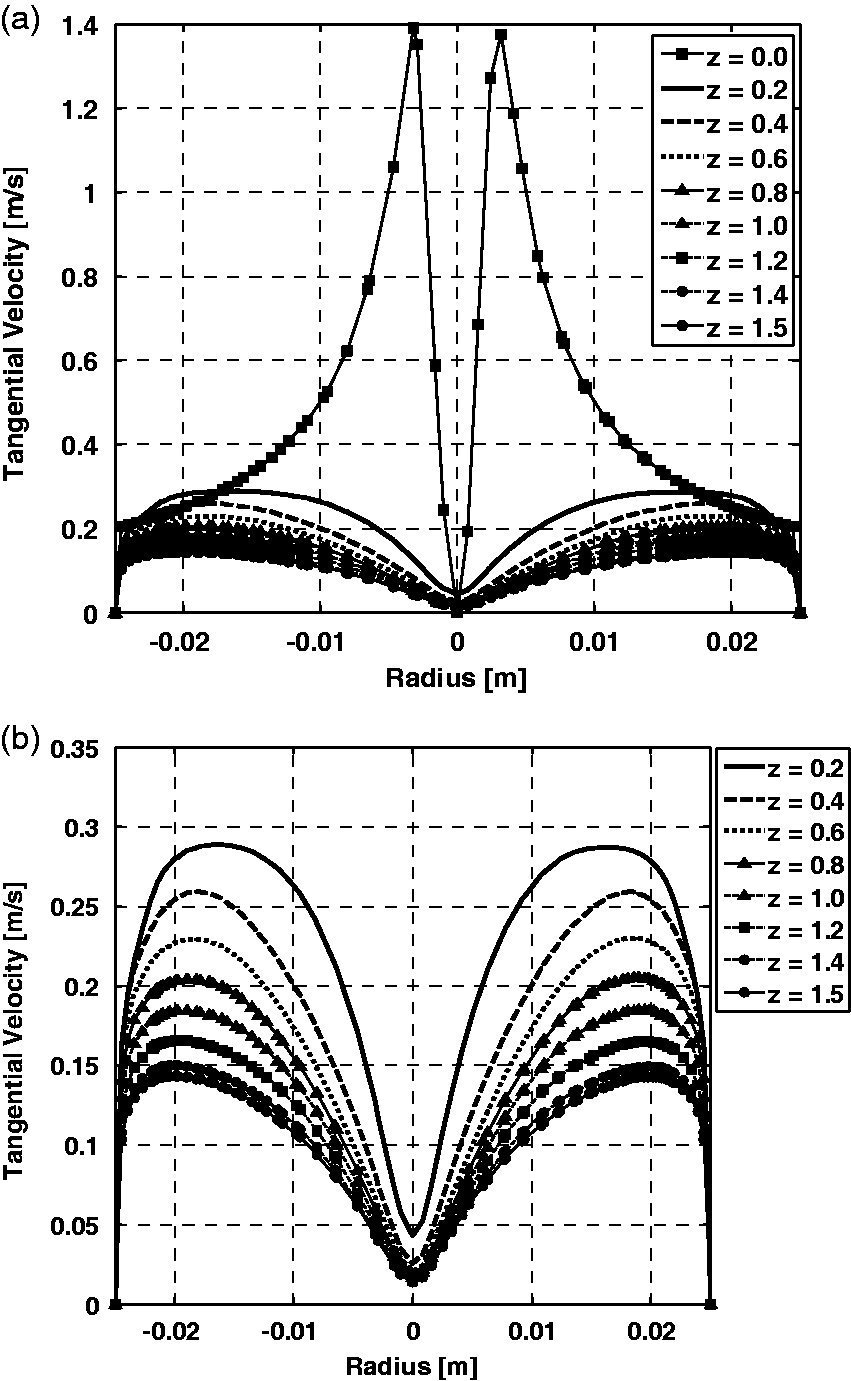
Maximum tangential velocity at different pipe sections.
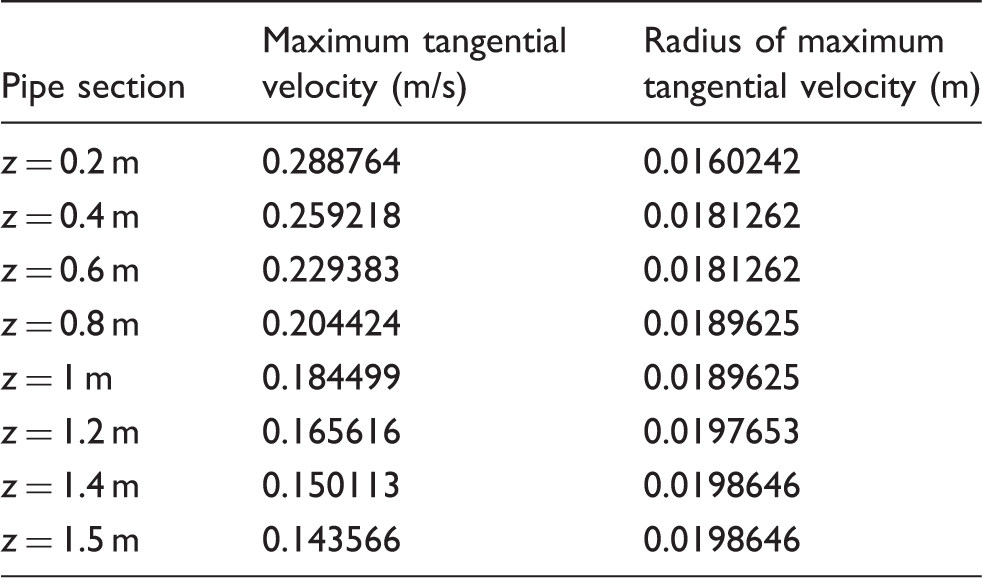
The results show a decrease of 10.23%, 20.56%, 29.21%, 36.11%, 42.65%, 48.02%, and 50.28% at maximum tangential velocities at z = 0.4, 0.6, 0.8, 1, 1.2, 1.4, and 1.5 m, respectively, compared with the maximum tangential velocity at z = 0.2 m. The maximum tangential velocity decreased from z = 0.2 m to z = 1.5 m by 50.28% and the radius at which it occurred increased.
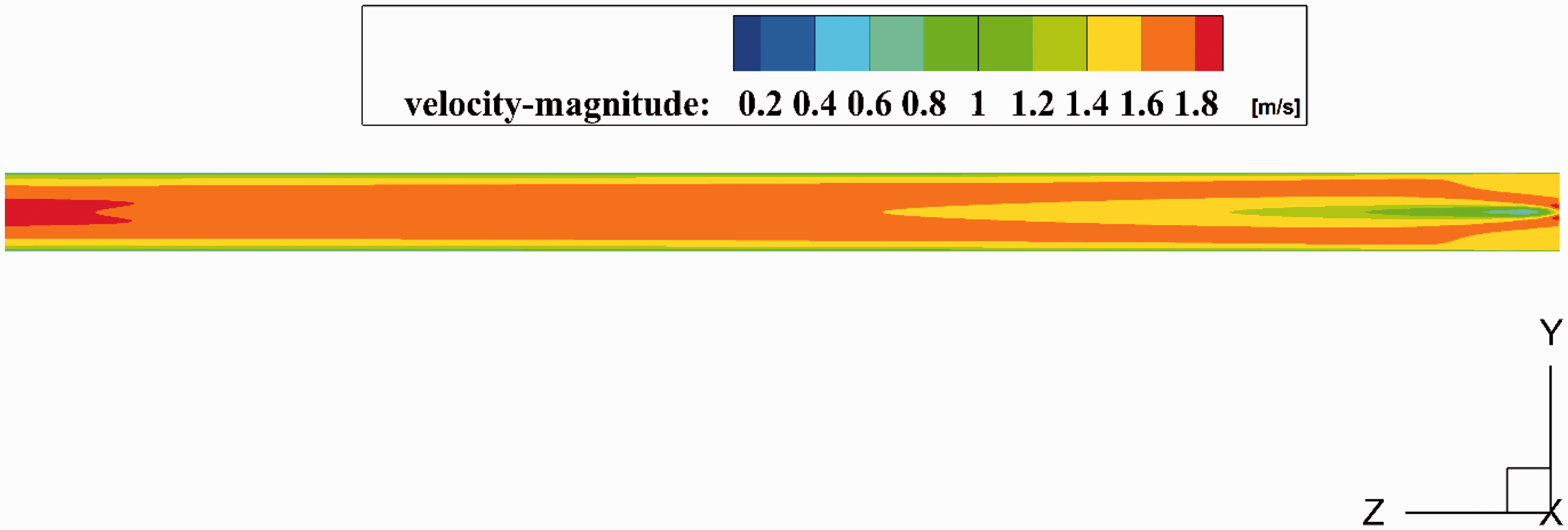
The contour of the tangential velocity in the longitudinal sections and the magnitude of mixture velocity are shown in Figures 9 and 10, respectively. It was observed that, as the flow passes down the length of the pipe, the structure of the free vortex at the point at which the velocity around the core is greater than the velocity at larger diameters forms combined forced and free vortices. This is clearly shown at the outlet section; the tangential velocity increases as the diameter increases (forced vortex structure) up to a specific diameter, above which the velocity decreases as the diameter increases (free vortex structure).
Contour of tangential velocity at longitudinal section. Contour of mixture velocity magnitude.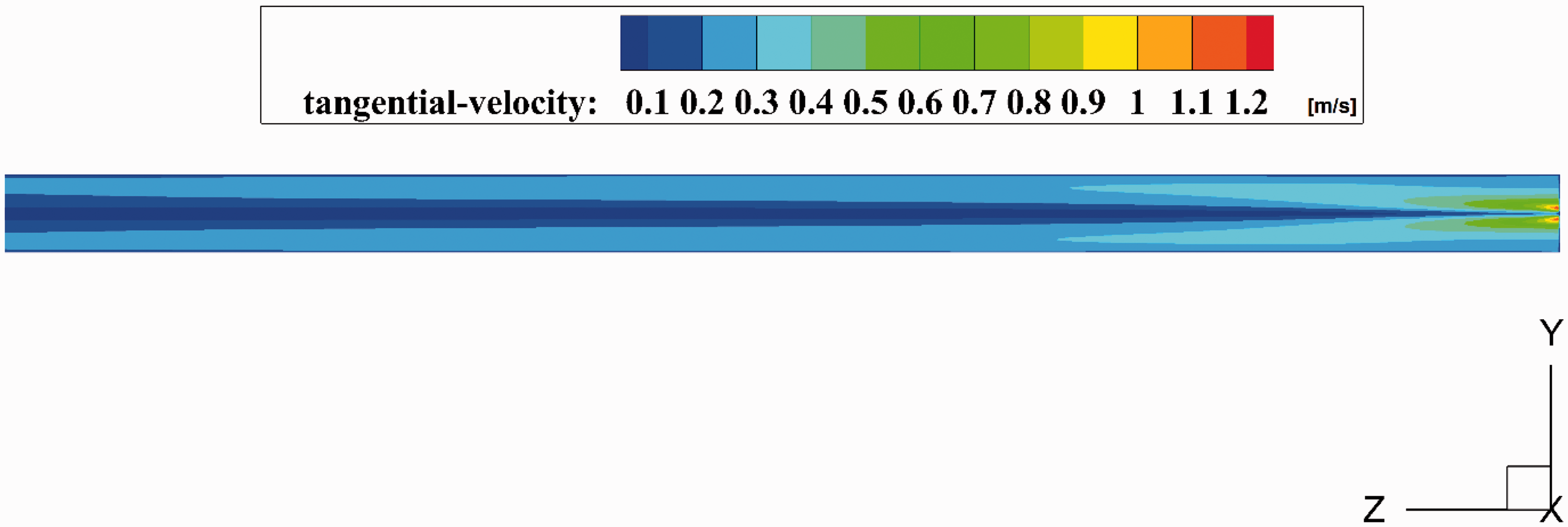
Discrete phase concentration
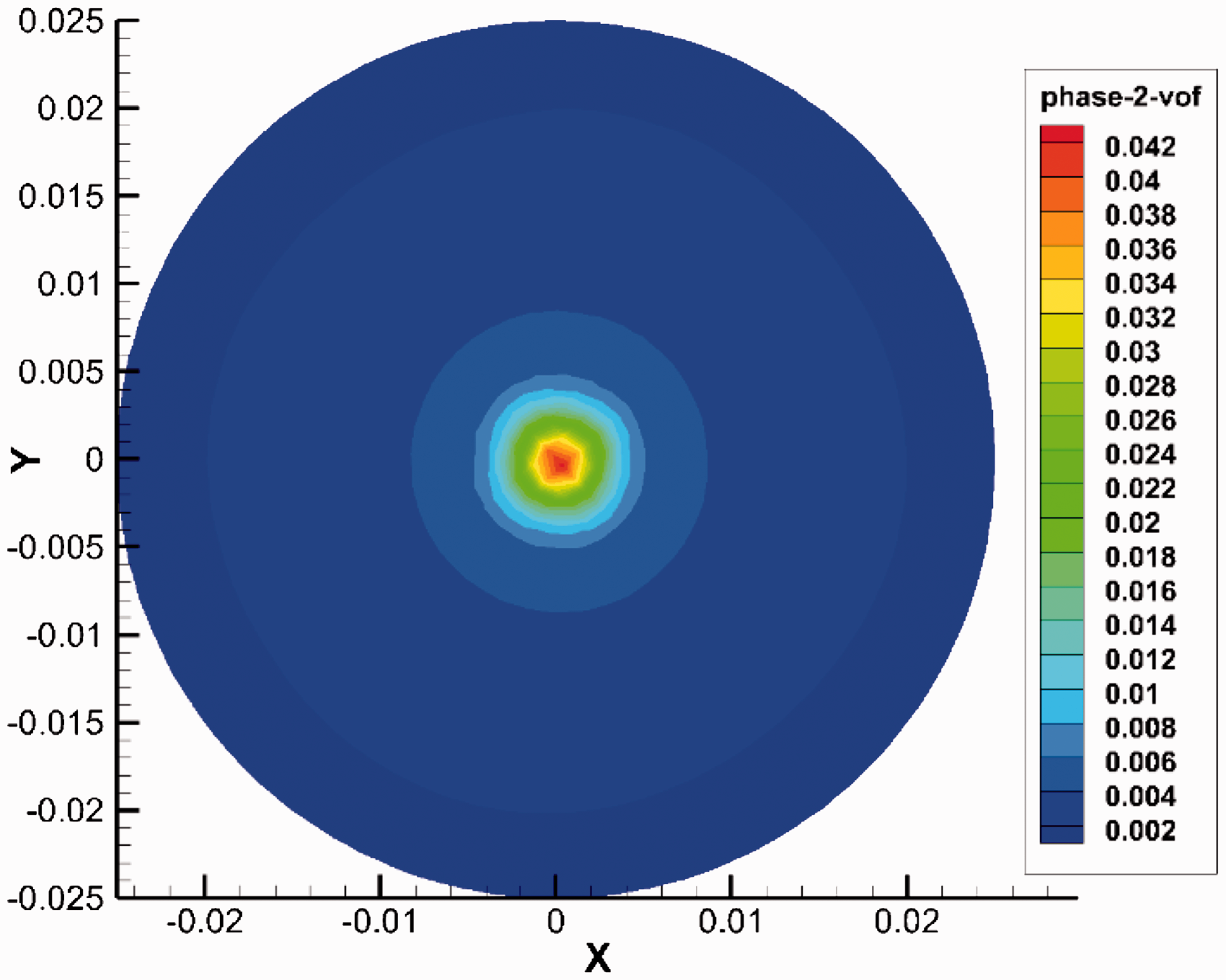
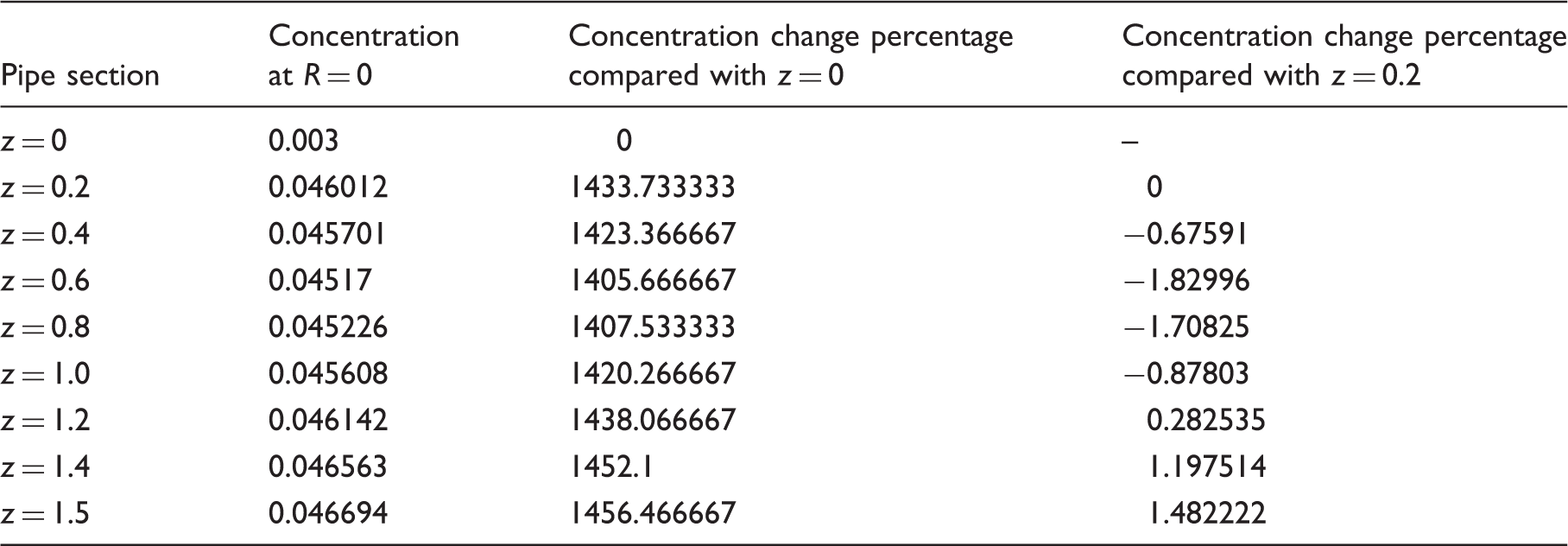
Figure 11 shows the concentration of the discrete phase at different sections along the pipe. Figure 12 shows the concentration contour at the outlet section of the pipe. Figure 13 shows the contour in the longitudinal section for the discrete phase concentration. The concentration of the second (discrete) phase is highest at the center of the pipe at the vortex core. Table 3 shows the discrete phase concentration at the center of the pipe in different sections. The maximum concentration of discrete oil in the center of the diagram is a sign of the power of the vortex. At the beginning, the vortex has higher tangential velocity, so maximum separation occurs at the center.
Volume fraction of discrete phase in different sections. Second phase volume fraction contour for z = 1.5 m. Contour of second phase concentration. Discrete phase concentration at pipe center in different sections.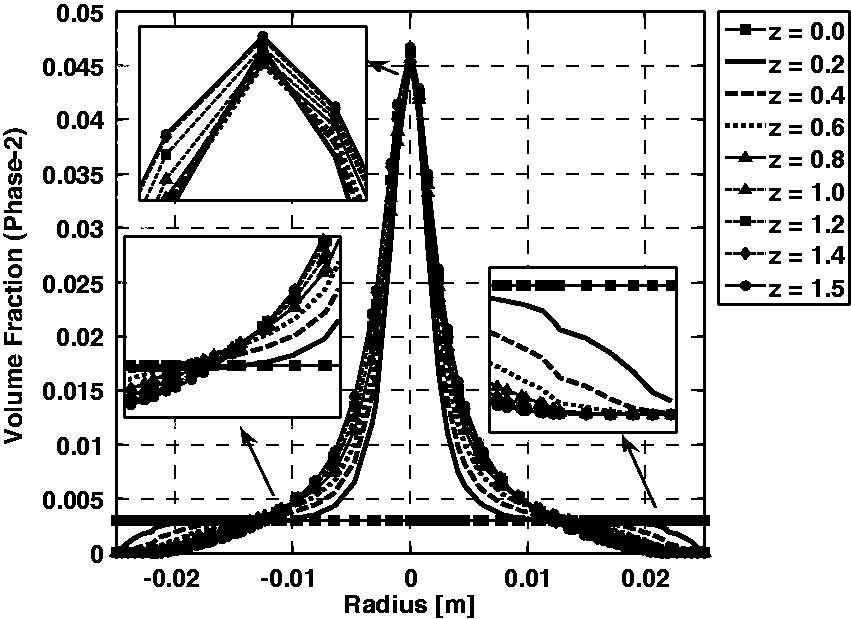
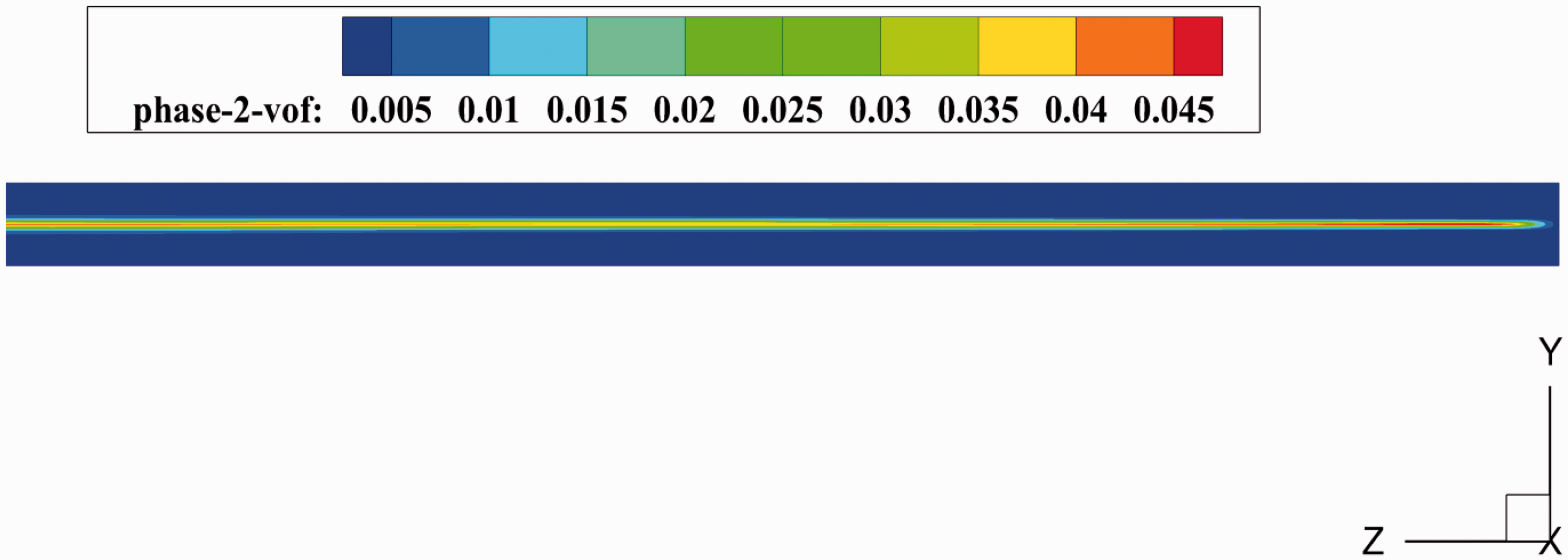
To separate the discrete phases, the flow was exposed to an axial vortex. Continuation of the vortex stabilizes the axial vortex and it moves from a transitional to a stable state (at which the rate of variation is not intense). This occurs as the stream continues, where it can be observed that the concentration of the discrete oil phase near the pipe wall decreases and it moves toward the vortex core. This behavior increases the concentration near the core.
As the axial vortex continues, the power and strength of the vortex decrease compared with the transitional state. Continuation of the vortex as time passes influences the stream and causes the discrete phase to accumulate, resulting in further separation and an increase in concentration at the vortex core. The continuation and separation of the discrete phase in the streamwise direction increases the maximum concentration of the discrete phase at the vortex core at the pipe outlet. If a smaller pipe with a diameter that approximately equals the vortex core diameter is used, the second phase can be segregated from the base phase. This could be an effective method of segregation in multi-phase flows because the combined free and forced vortices become stable in tube-constrained free vortex flow.
In a free vortex flow, particles are scattered in a way that particles with lower density (as compared to dominant phase of the flow) are collected in vortex core and heavier particles are observed near pipe walls. For the reason that oil phase has smaller density than dominant phase, and due to the force which is implemented on the oil phase droplets (centrifugal effect of the vortex flow on the fluid particles), they are gathered in vortex core. That is why the concentration of the second (discrete) phase is highest at the center of the pipe at the vortex core. At the beginning, the vortex has higher tangential velocity, so maximum separation occurs at the center. To separate the discrete phases, the flow was exposed to an axial vortex. Continuation of the vortex stabilizes the axial vortex. This occurs as the stream continues, where it can be observed that the concentration of the discrete oil phase near the pipe wall decreases and it moves toward the vortex core. This behavior increases the concentration near the core. As the axial vortex continues, the power and strength of the vortex decreases compared with the transitional state. Continuation of the vortex influences the stream and causes the discrete phase to accumulate, resulting in further separation and an increase in the concentration at the vortex core.
Conclusion
Numerical simulation was used to model the evolution of a free vortex structure in a two-phase flow in tube-constrained geometry. The model was validated using an empirical relation for turbulent flows. Assigning a Rankine vortex to the inlet boundary allowed investigation of the evolution of an oil–water two-phase flow in a free vortex structure.
It was shown that at 0.2 m from the inlet, a forced vortex core clearly forms and extends. As it extends to larger radiuses, the strength of both the free and forced vortices, the tangential velocity, decreases in response to the effects of viscosity. The core of the forced vortex also extends and the velocity at higher radiuses decreases as the fluid flows down the side of the pipe.
The results also show that the concentration of the discrete phase is at a maximum at the center of the pipe at the core of the vortex. This concentration increases as the flow continues down the length of the pipe after the vortex reaches a stable state. The concentration at the core is at a maximum at the outlet.
It can be inferred that the production of a free vortex as a stable and independent phenomenon is not possible. It can also be concluded that the combined free and forced vortices can produce stable behavior in the tube-constrained free-vortex flow. It was shown that this combination is a useful and effective method for separation of two-phase flows that are typical of the petroleum industry.
Footnotes
Declaration of conflicting interests
The author(s) declared no potential conflicts of interest with respect to the research, authorship, and/or publication of this article.
Funding
The author(s) received no financial support for the research, authorship, and/or publication of this article.