




Abstract
Jet fuel-fired combustors in aero gas turbine engines have switched to lean burn to decrease nitric oxide emissions in recent years as a result of strict emission regulations. Lean operating conditions, however, exhibit a heightened sensitivity to thermoacoustic instabilities and such burners require careful consideration in design and operation. Similar to natural gas-fired combustors, they exhibit thermoacoustic instabilities, but the characteristics are more complex and less well-studied. This paper presents a numerical investigation of an airblast jet fuel swirl burner operating with preheated air at lean pressurized conditions. In order to understand the acoustic characteristics of the in-house designed burner (Magister UT burner), detached eddy simulations are performed at relevant aero engine conditions. Simulation results are then analyzed by means of our internally developed parallel modal analysis package, PARAMOUNT, to perform proper orthogonal decomposition (POD) on large datasets. The resulting modes are inspected to highlight flow features of interest and their associated acoustic frequencies at unforced conditions. Single frequency acoustic forcing is employed to study the acoustic response of the burner to perturbations at similar frequencies to its precessing vortex core. We show that parallel computation of POD modes is a viable tool to investigate the main flow features of swirl burners and is suitable for highlighting the important acoustic frequencies without the need to employ fully compressible computational fluid dynamics solvers. Additionally, the analysis method reveals the ways in which various flow structures correlate with each other and how external perturbations modify them.
Keywords
Introduction
The ever more relevant concerns surrounding global climate change and pollutant emissions have long been the driving force in the design of gas turbine engines. 1 Major advances in the field of aero gas turbine engine design including aerodynamics, combustion, cooling, and materials have been shaped by these concerns as well. 2 These engines have to meet a long list of operational safety standards as well as environmental requirements which can bring about conflicting design goals and further complicate the design process.
An important hallmark of modern jet engine design has been the focus on combustion emissions such as unburnt hydrocarbons, carbon monoxide (CO), soot formation, and nitrogen oxides (NOx). Rich Quench Lean (RQL) operation mode has been a well-understood and widely used combustion technology that has successfully improved jet engine emissions.3,4 As manufacturers continue to improve fuel efficiency and emission levels, low-emission combustion schemes become more desirable. Lean premixed pre-vaporized combustion (LPP) is one such combustion approach that is fundamentally different from the established RQL technology but comes with its own set of concerns and design challenges. 5
One of the major concerns in employing LPP technology in aero engines is the susceptibility of this combustion mode to thermoacoustic instabilities.6,7 These instabilities arise as a feedback loop between oscillatory flow and perturbations in the heat release rate (HRR) of the flame. Provided that the HRR and acoustic pressures are sufficiently in-phase in order to satisfy the Rayleigh criterion, the instabilities can grow stronger and compromise the engine. 8
Thermoacoustic instabilities are challenging to resolve as they often occur having reached higher technology readiness levels where making design modification is more costly and prohibitive. 9 Aero engines often utilize swirling flows which can improve fuel-oxidizer mixing, enhance flame anchoring within the combustion chamber 10 and provide the basis for pre-filming airblast fuel atomization commonly studied and used in aero engines. 11 The acoustically compact nature of the flame, however, can further complicate the concerns regarding thermoacoustic instabilities in such burners. The challenge is to predict this at an early design stage by means of computational fluid dynamics (CFD) simulations. 12
Large eddy simulation (LES) remains one of the most effective and popular numerical methodologies to investigate swirl-stabilized burners. Performing reliable LES of turbulent combustion phenomena, however, remains a significant undertaking that demands considerable computational resources and generates large amounts of data. The analysis of LES results has garnered significant attention in recent years with emphasis on investigating flow patterns within similar swirl burners in a variety of configurations using proper orthogonal decomposition (POD).13–15 These exemplary investigations, however, typically focus on premixed combustion and highlight some difficulties and limitations of this approach. Firstly, performing POD on such LES results requires significant computational resources and manual intervention to consider many variables within the flow field that might be relevant to the investigation. Secondly, the interpretation of POD mode shapes requires expert domain knowledge and is largely a qualitative and subjective process. Finally, the secondary interplay between POD modes and across multiple variables and operating conditions is normally not considered.
Motivated by the challenges of thermoacoustic instabilities in LPP aero engine designs, this paper focuses on the analysis of combustion dynamics using POD inside an aero engine representative swirl burner under partially premixed conditions. To this end, the Magister UT Burner is an airblast pre-filming swirl burner designed at the University of Twente. It utilizes liquid jet fuel and operates with preheated air to 473 K at pressurized conditions. Coupled with its compact flame, it has been designed to study thermoacoustic instabilities at conditions characteristic of aero engines. We shall discuss this further in section “Burner Design.”
In order to analyze the combustion dynamics, detached eddy simulations (DESs) have been conducted by means of a weakly compressible flow solver to obtain a highly resolute simulation of the combustion phenomena in both space and time. In this approach, a Reynolds averaged Navier–Stokes (RANS) model is employed in regions of the flow with lower turbulence, while a LES model is used in regions with significant turbulence which in turn, enables an accurate prediction of the flow field while maintaining computational efficiency.
Preliminary cold flow experimental analysis of the burner conducted in our laboratory at the University of Twente hinted at the presence of a precessing vortex core (PVC) which is a coherent vortical structure that rotates around the burner axis and has a single or double helical structure. The PVC has been observed in both reacting and non-reacting or cold flows in swirl-stabilized combustors16–18 and it has great implications on their performance due to having an effect on turbulent mixing and thermoacoustic characteristics. The precession frequency of the PVC in similar swirl-stabilized combustors has been shown to be highly sensitive to inlet air velocity and the gradient of rotational velocity and located in the inner shear layer of the vortex breakdown region.19,20 While in most cases, the combustion phenomena have been shown to suppress the PVC, 21 it has been demonstrated that in some cases, the PVC frequency does not change between hot and cold flows. 22
The experimentally observed PVC frequency was compared to the numerically predicted value to assess the validity of cold flow simulations. Additionally, liquid droplet injection experiments were conducted at Karlsruhe Institute of Technology (KIT) and used to further validate the cold flow simulation results as well as to find a suitable droplet distribution for the combustion simulations. The setup for numerical simulation of liquid fuel combustion and comparison with measurements are discussed in section “Liquid fuel measurements.”
The combustion simulation results were then analyzed by means of our in-house modal analysis software package called PARAMOUNT. This package was developed with the aim of facilitating modal analysis of large datasets such as DES and provide tools to inspect the relationship between POD modes and other variables of interest. The analysis employs a parallel computation approach to obtain a decomposition for flow variables of interest. We discuss this in section “POD formulation in PARAMOUNT.”
In our analysis, the POD results were inspected to infer combustion dynamics using the power spectral density (PSD) of POD mode coefficients as well as the associated POD mode shapes. The frequencies of interest were analyzed to understand their origin and provide insight into the burner combustion instabilities. A correlation methodology is introduced to cast light on how the multitude of modes across all considered variables correlate with each other and with other volume-integrated variables. Furthermore, the same methodology was applied to the result of a separate DES computation subject to acoustic forcing at the air inlet. A comparison between the POD analysis of the two simulations reveals the ways in which forcing modifies certain mode shapes and how external forcing manifests itself in terms of a change in various mode shapes. These findings are detailed in section “Results and Discussion,” followed by our concluding remarks.
Burner design
Magister UT Burner was designed with the aim of studying thermoacoustic instabilities in aero engines. It provides a relatively compact flame in a lean partially premixed setup within the combustion chamber while keeping the pressure drop across the burner at a minimum. The burner consists of three main components that fit together to form the flow passages as seen in Figure 1.
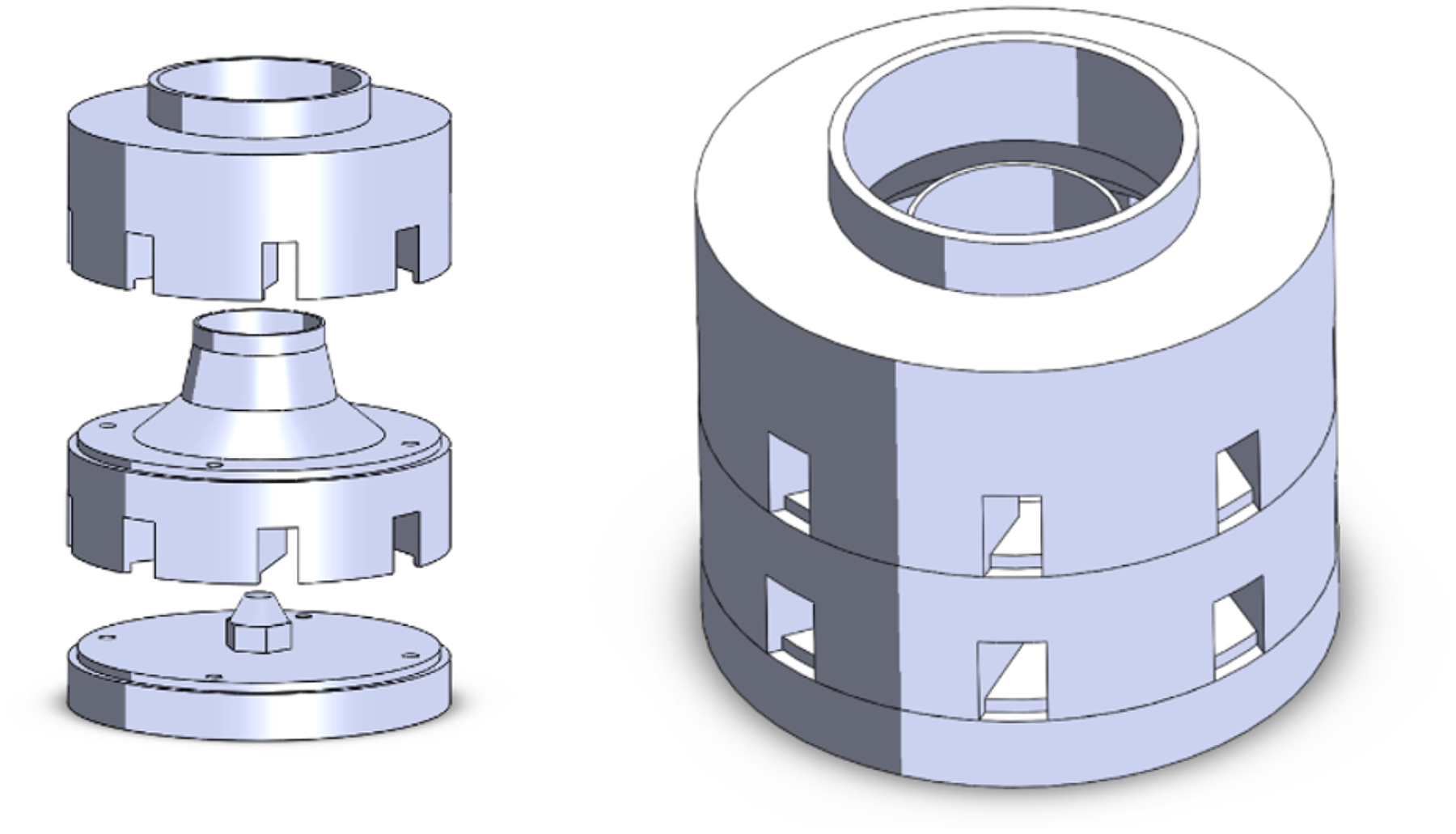
Overview of the Magister UT Burner components and geometry.
The burner directs the combustion air into two distinct sets of entry channels that each consists of eight ducts. The primary and secondary airflow through the two channels and meet each other further inside the burner to create a region of high shear force due to the significant velocity difference between the two. The design schematic can be seen in Figure 2 depicting primary air entry ducts labeled “A” and the secondary entry ducts labeled “B.” Liquid fuel is injected at the base of the burner by means of a hollow cone nozzle. Here the smaller droplets get entrained in the primary air flow but the bulk of the combustion fuel forms a thin wall on the inside of the burner. The fuel film travels further downstream into the shear region where it is further atomized in an airblast fashion.
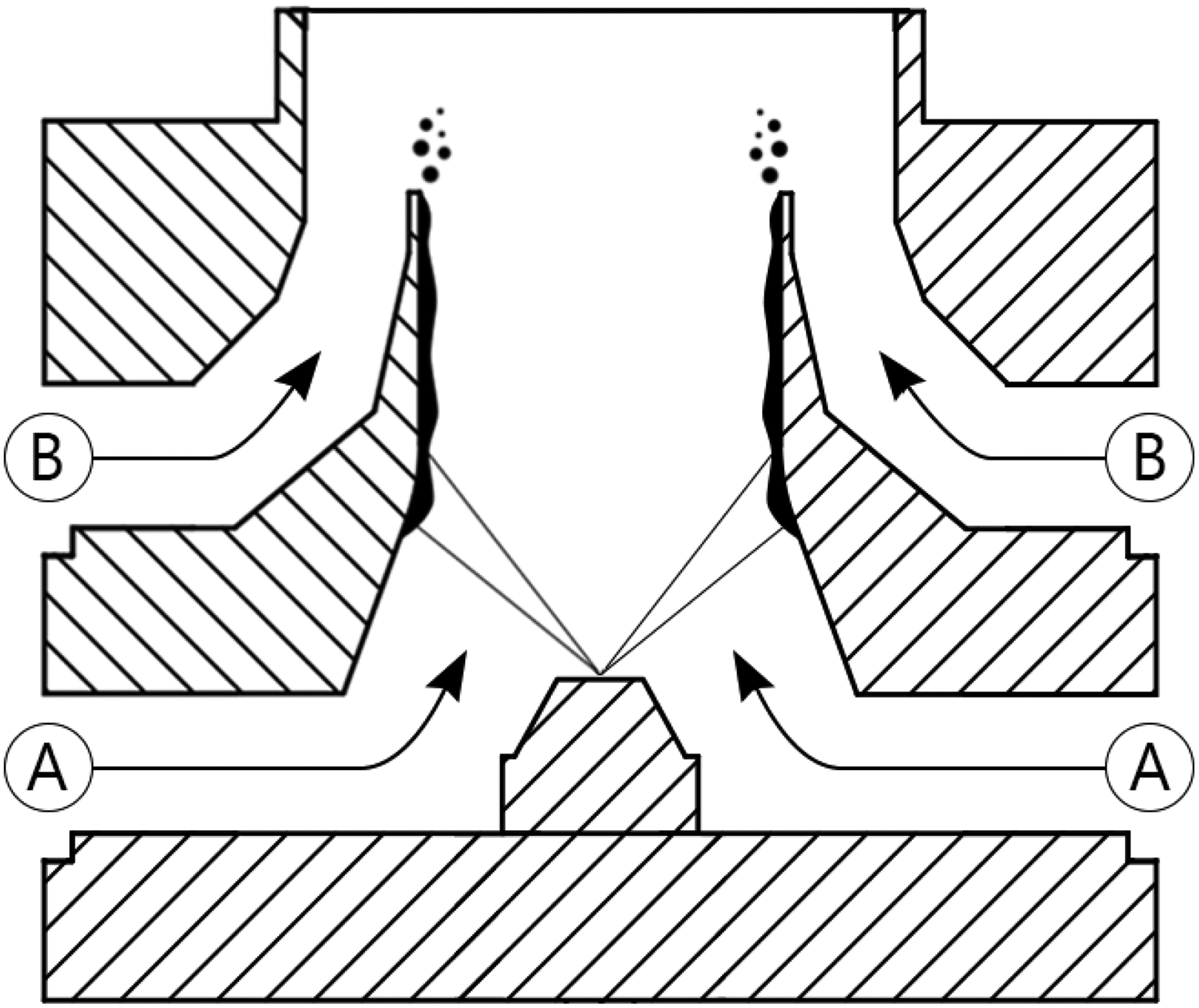
Magister UT Burner schematic.
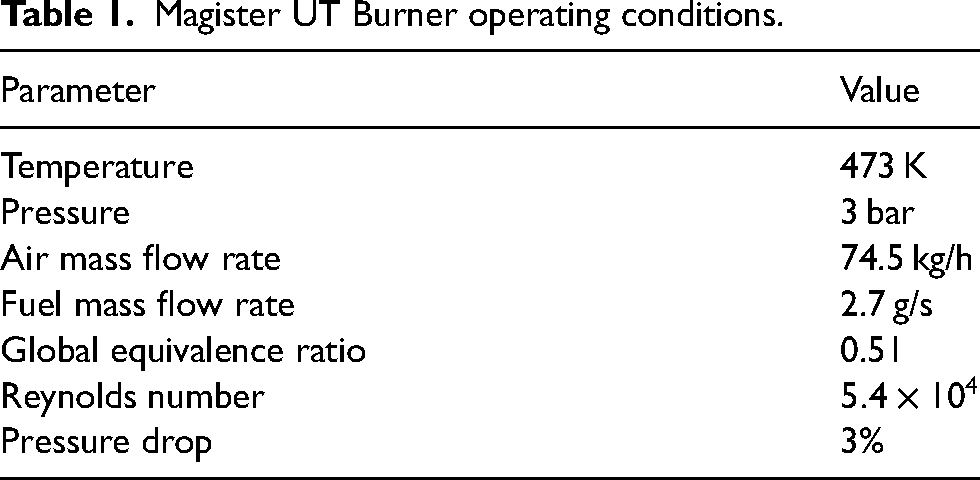
The operating conditions of the burner are summarized in Table 1. These conditions induce a swirl number of 1.2 in the flow and result in an exhaust temperature of around 1700 K and a power delivery of around 82 kW per bar (250 kW in total) while maintaining a low-pressure drop of around 3% suitable for thermoacoustic studies and representative for aero-engine combustors. The fuel selection is interchangeable between diesel and Jet-A fuel. For the purposes of this study, diesel is used as a liquid fuel.
Magister UT Burner operating conditions.
Numerical setup
The CFD approach employs Lagrangian tracking of the fuel droplets while the turbulent combusting flow is described in an Eulerian manner. To that end, the numerical grid is prepared by means of a semi-structured voxel methodology better suited for particle tracking. 23 The three-dimensional (3D) mesh consists of roughly 20 million elements and includes the combustion chamber as well as an upstream casing in which the swirler is situated. The cross-section view of the burner mesh near the dump plane can be seen in Figure 3. Special attention has been paid to the shear region of droplet breakup and near-wall inflation layers to ensure proper resolution for the wall-bounded LES analysis. Orthogonal advancing-front surface meshing algorithm with an inflation layer growth rate of 1.2 results in a higher quality mesh with better boundary features. 24 Stream-wise element elongation coupled with a slight chamber contraction is employed near the outlet boundary to prevent unwanted reflections and recirculation zones. 25
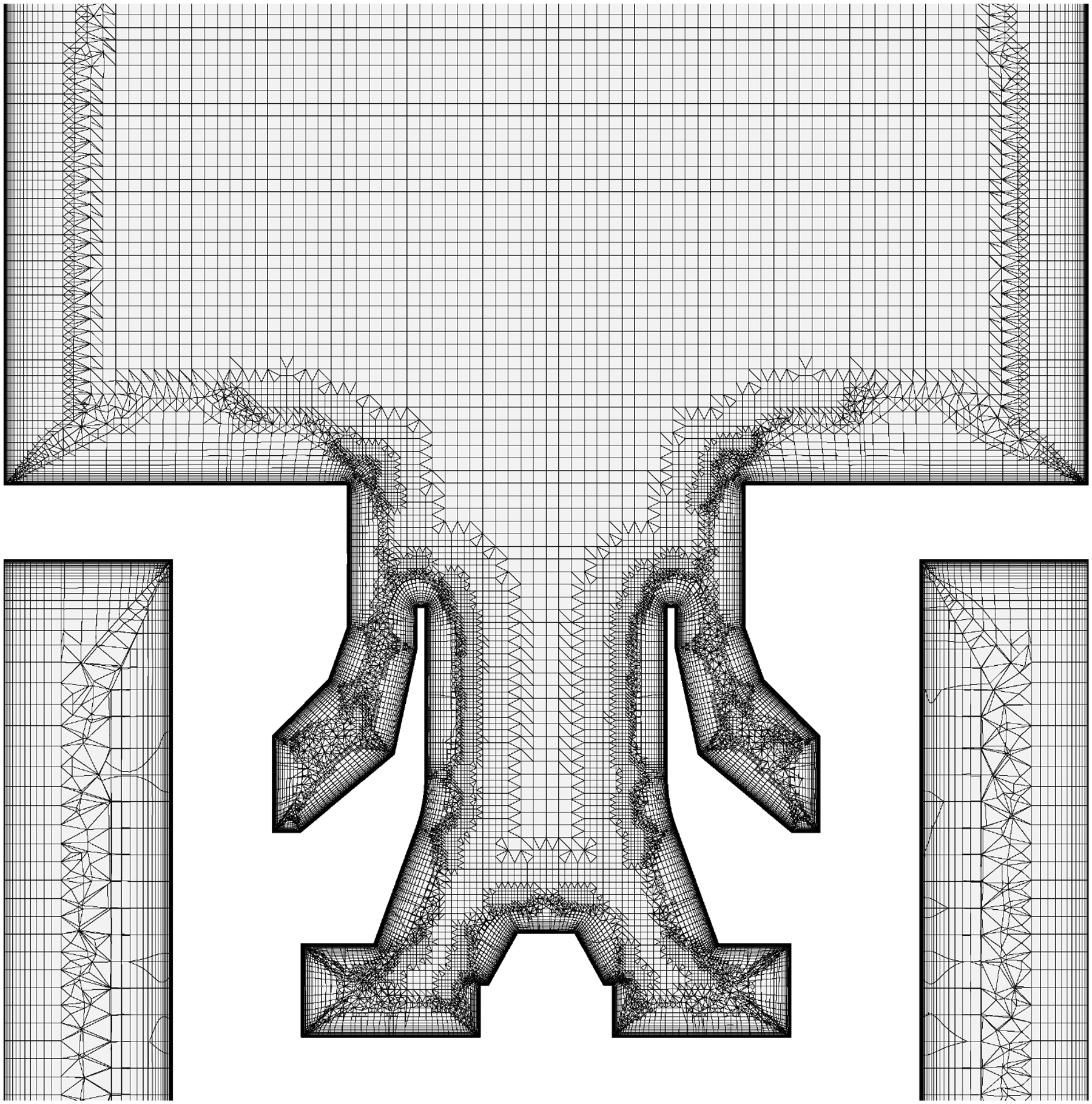
Cross-section view of the adopted voxel meshing scheme.
DES is then performed using flow analysis software Ansys CFX v19.2. In this framework, the wall boundary layer region is computed by the RANS model and the free shear flows away from walls are computed in LES mode. The handover between the two models is determined by means of a blending function limiter that compares the maximum edge length of the computational cell to the characteristic length computed based on local turbulence levels. The relevant equations for all the models used in this study are available in CFX documentations.
26
Here we highlight the governing equations for the LES model that is used to compute the bulk of the reactive flow.



In view of the demanding computational resources needed to describe the combustion processes in detail, a simplified approach is adopted to describe the evolution of the turbulent reactive mixture using a reaction progress variable (RPV) as defined in equation (5) with 











Compressibility effects in CFX are taken into account by means of implicit linearized formulation that relates the newly computed density value 
Liquid fuel combustion
Fuel droplets are introduced into the computational domain within the shear region to closely match the hybrid atomization process. The droplet diameters are defined by means of a Rosin Rammler size distribution according to equation (18) that defines the mass fraction 



Liquid fuel measurements
In order to characterize the liquid fuel atomization, experimental analysis was conducted to study the droplet size distribution downstream of the burner using phase Doppler anemometry (PDA). The burner operates under pressurized conditions and has poor optical accessibility in the atomization region, which prohibits the use of the PDA system on-site at UT. The experimental spray test facility at KIT aimed to make the measurements possible at a recreated setup with improved optical accessibility. This setup included a compressor, which supplied the system with air at atmospheric conditions, while water was fed by means of pressurized vessels. A hollow cone nozzle was used for the injection of water inside the airblast atomizer. The water was collected in a tank after being sprayed, while a vacuum pump was used to ensure that no droplet recirculation occurs in the surrounding air that might affect the data acquisition process. In a pre-filming airblast atomizer, the liquid accumulation acts as a buffer that decouples the film flow and the breakup process and diminishes the importance of liquid injection prior to pre-filming. 34 It should be noted, however, that the smaller droplets are expected to be slightly underrepresented due to our atmospheric measurement setup.
The produced spray was characterized by a commercial PDA system, involving a receiver with three detectors at an off-axis angle of 30
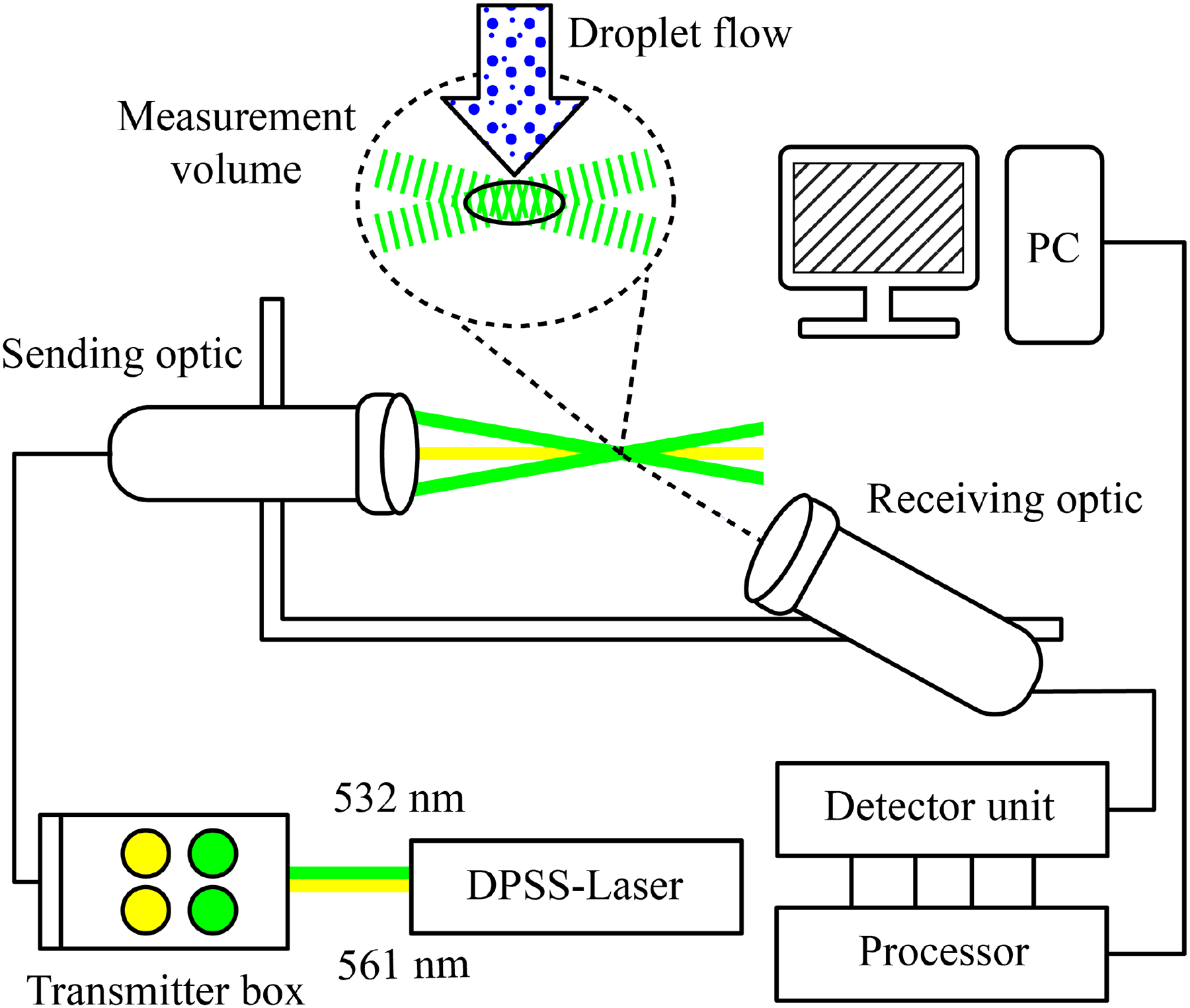
Phase Doppler anemometry (PDA) measurement configuration schematic.
The experimental measurement points are situated in a Cartesian grid downstream of the dump plane and cover a radial distance
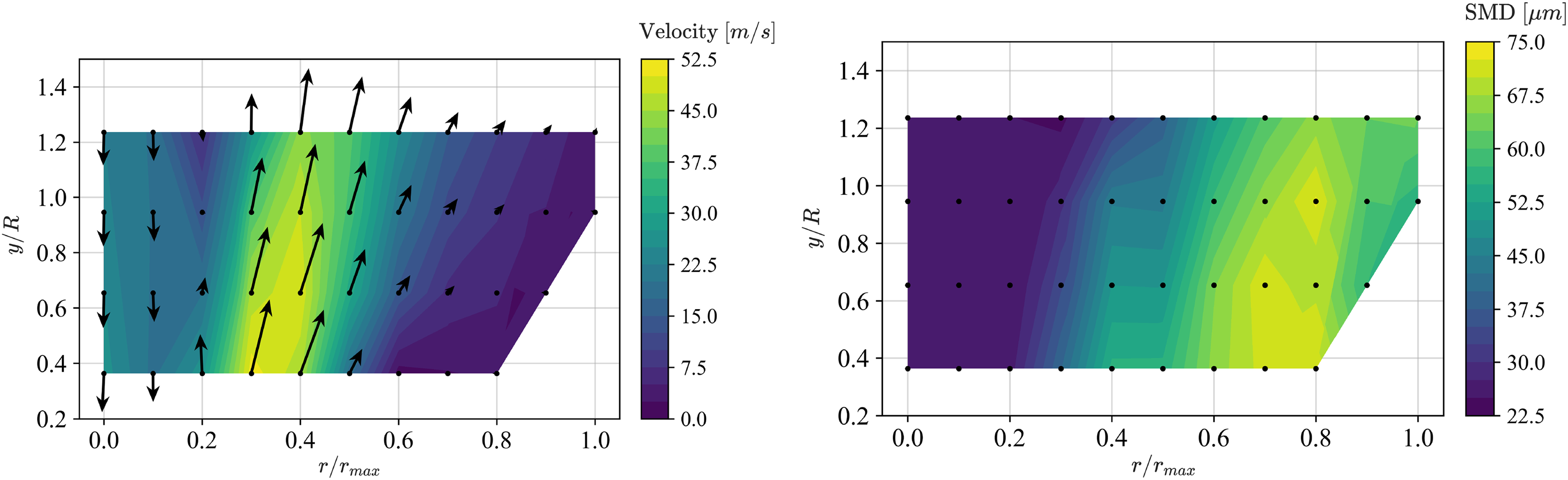
Experimental measurement results downstream of the burner plotted over normalized radial and axial distance from dump plane. Droplet velocity contour and vector plots (left) and droplet Sauter mean diameter (SMD) (right).
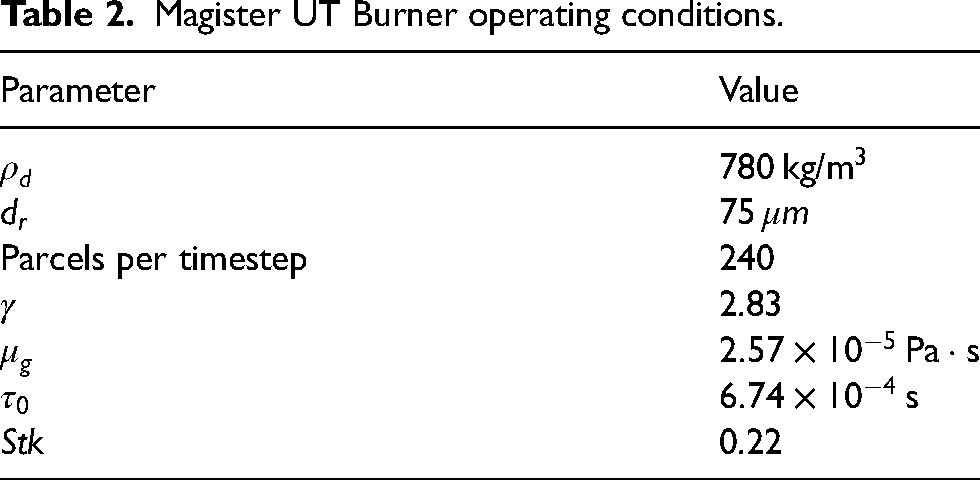
Based on the droplet density
Magister UT Burner operating conditions.
In order to compare the experimental measurements to simulated results, we consider two different numerical simulations to account for the discrepancy between the UT and KIT setups. The first and last axial locations are selected and the mean value of measured droplet axial velocity is compared to time-averaged simulated axial flow velocity as presented in Figure 6. The blue line shows the simulation results for an enlarged combustion chamber by a factor of two in all directions to relax the effect of chamber walls. The combustion chamber walls affect the shape of the vortex breakdown region and the expansion of the flow downstream of the burner and their absence contributes to differences between measured and simulated values shown. The black line retains the actual operating geometry of the burner. The error bars display one standard deviation for each measurement position. It should be mentioned that the standard error of the mean measurement is negligible due to the large sample sizes of around 50,000 measurements for each location. The simulation methodology appears to be adequate in capturing the correct flow pattern when geometry discrepancies are accounted for. It can be seen that the time-averaged DES results in the UT setup (black line) is able to reproduce the prominent reverse flow closest to the dump plane at
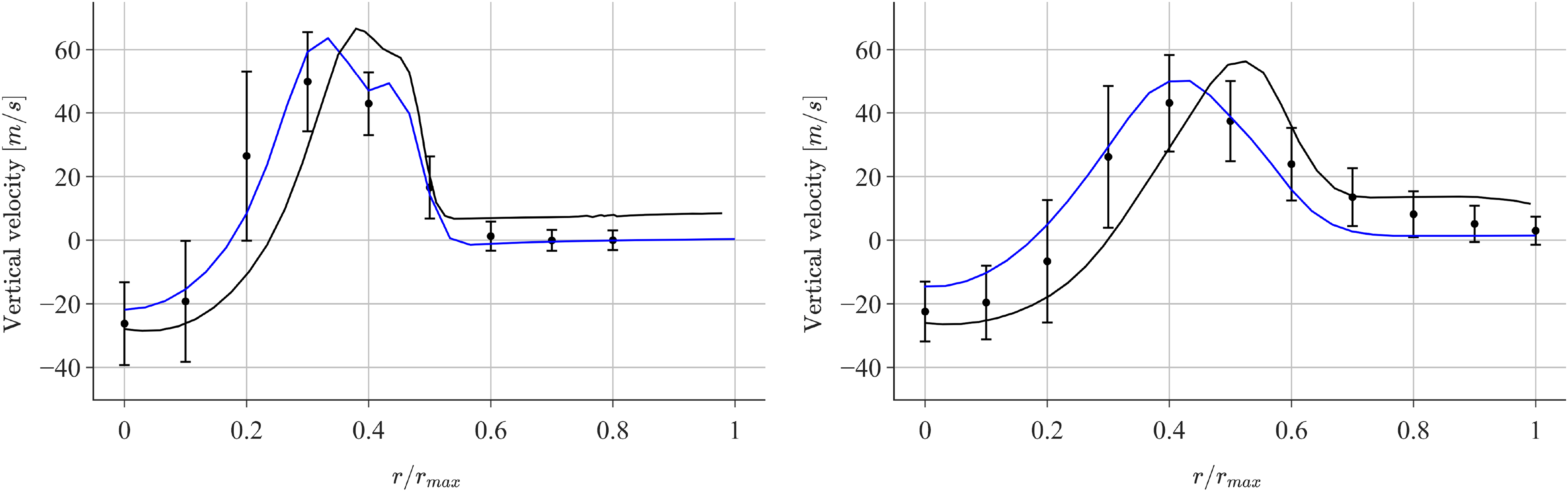
Comparison between axial velocity of time-averaged detached eddy simulation (DES) (burner combustion chamber geometry in black and enlarged chamber in blue) and experimental measurements (dots) at axial locations of
Inferring a suitable droplet size distribution based on downstream measurements is a challenging task. Similar airblast swirl burners have been investigated in the literature suggesting the suitability of the Rosin Rammler distribution function.35–37 Considering the low Stokes number of the droplets, measurement locations that are situated within the high-speed flow near
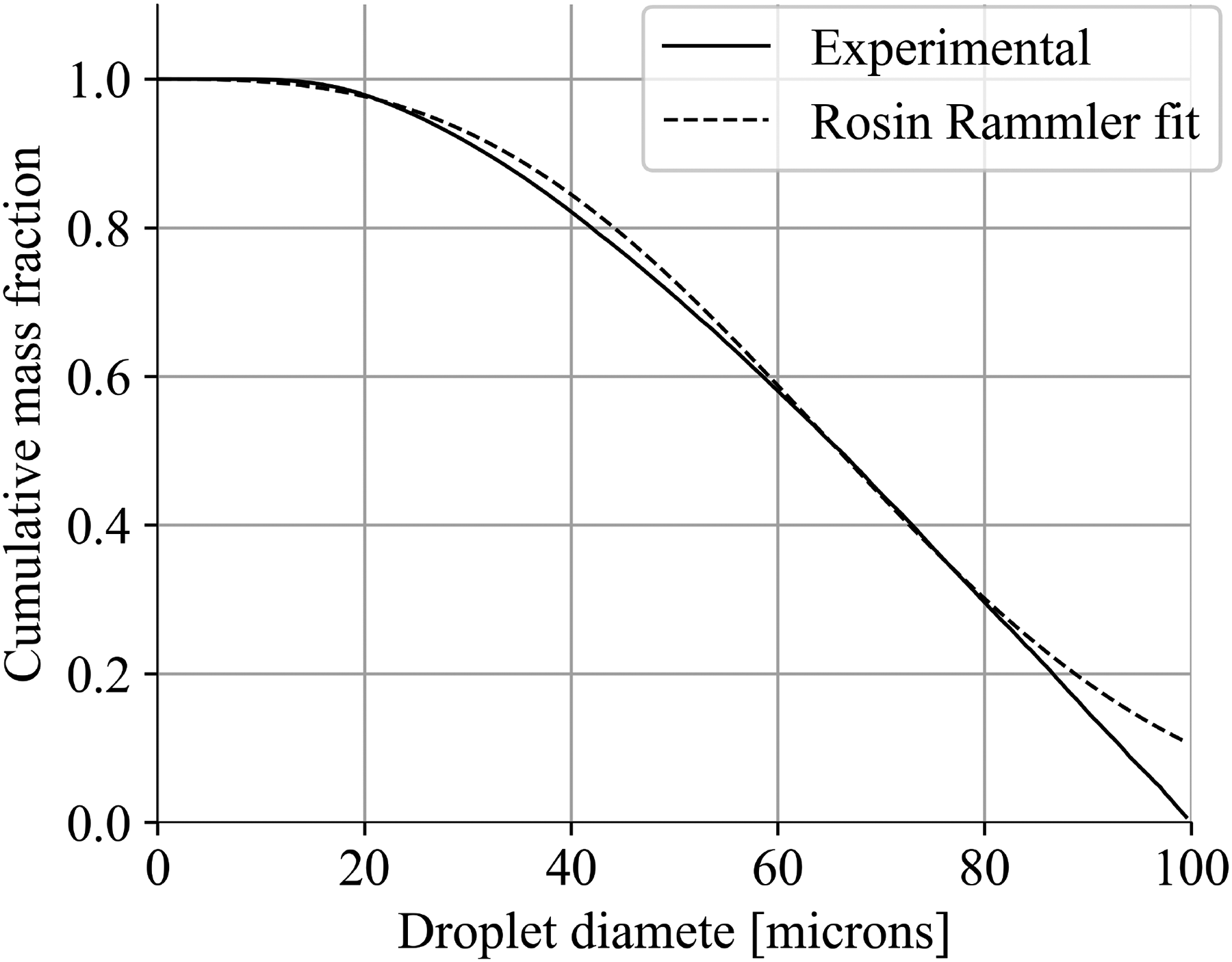
Cumulative mass fraction for measured droplets compared to the Rosin Rammler fitted curve.
POD formulation in PARAMOUNT
A generic time-variant parametric dynamical system is represented by means of a separation of variables method to distinguish between the spatial (
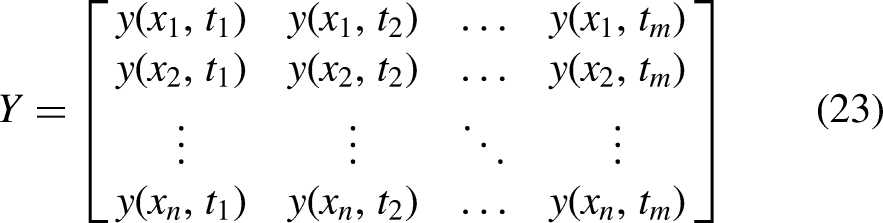


In order to address these challenges, we have developed the open-source software package PARAMOUNT. It utilizes Dask, which is a flexible library for parallel computing in Python and allows for dynamic task scheduling for optimizing computational workloads as well as handling large datasets.43,44 Furthermore, it uses Apache Parquet file format, which is an efficient, structured, and column-oriented binary format capable of file size reduction and efficient reading of the desired stored values without the need to load the entire file into memory. 45
More concretely, to address the above-mentioned challenges, PARAMOUNT has been developed with the capability of assembling the data matrix
For 2D visualizations, a diverging color map is employed to highlight the flow structures. Additionally, a
In order to establish correlations between modes, a correlation index is formulated based on the Pearson product–moment correlation as shown in equation (26). This is done due to this correlation being invariant under separate changes in location and scale between two variables.
46
The implemented correlation algorithm accounts for possible time lag present between the variables which in the context of a fluid dynamics system can be of a convective nature or simply due to non-synchronized data acquisition.
The spectral content of mode coefficients is further analyzed by applying Welch’s overlapped segment averaging periodogram with a Hann window to the detrended coefficient values. The resulting PSD figures represent the dominant frequencies at which each mode is mainly active.
Results and discussion
Detached eddy simulation
Figure 8 shows the snapshot contour plots for temperature, velocity, and pressure. The velocity contour plot shows the region of high shear between the two sets of air entry ducts present in the swirl burner. The V-shaped regions of high velocity in the 2D cross-section plane form the aerodynamic body that defines the central recirculation zones (CRZs). The flow reversal reaches all the way back inside the burner where the liquid fuel injector is located. The temperature contour plot shows the region at which liquid fuel is injected with the combustion in the gaseous phase producing the pockets of high temperature downstream of the burner. The heat release continues as the droplets evaporate and combust farther away from their injection location. The regions of high temperature are also observed to be convected back inside the burner within the CRZ. The pressure contour plot shows a region of lower pressure in the core of the swirler which is formed as the flow leaves the swirler and enters the combustion chamber. This causes a flow reversal in the vortex breakdown region. Multiple regions of lower pressure shedding can be identified that originate at the base of the swirler and convect downstream in a specific pattern. The domain of flow reversal is outlined using a zero axial velocity contour overlaid on the pressure contour.
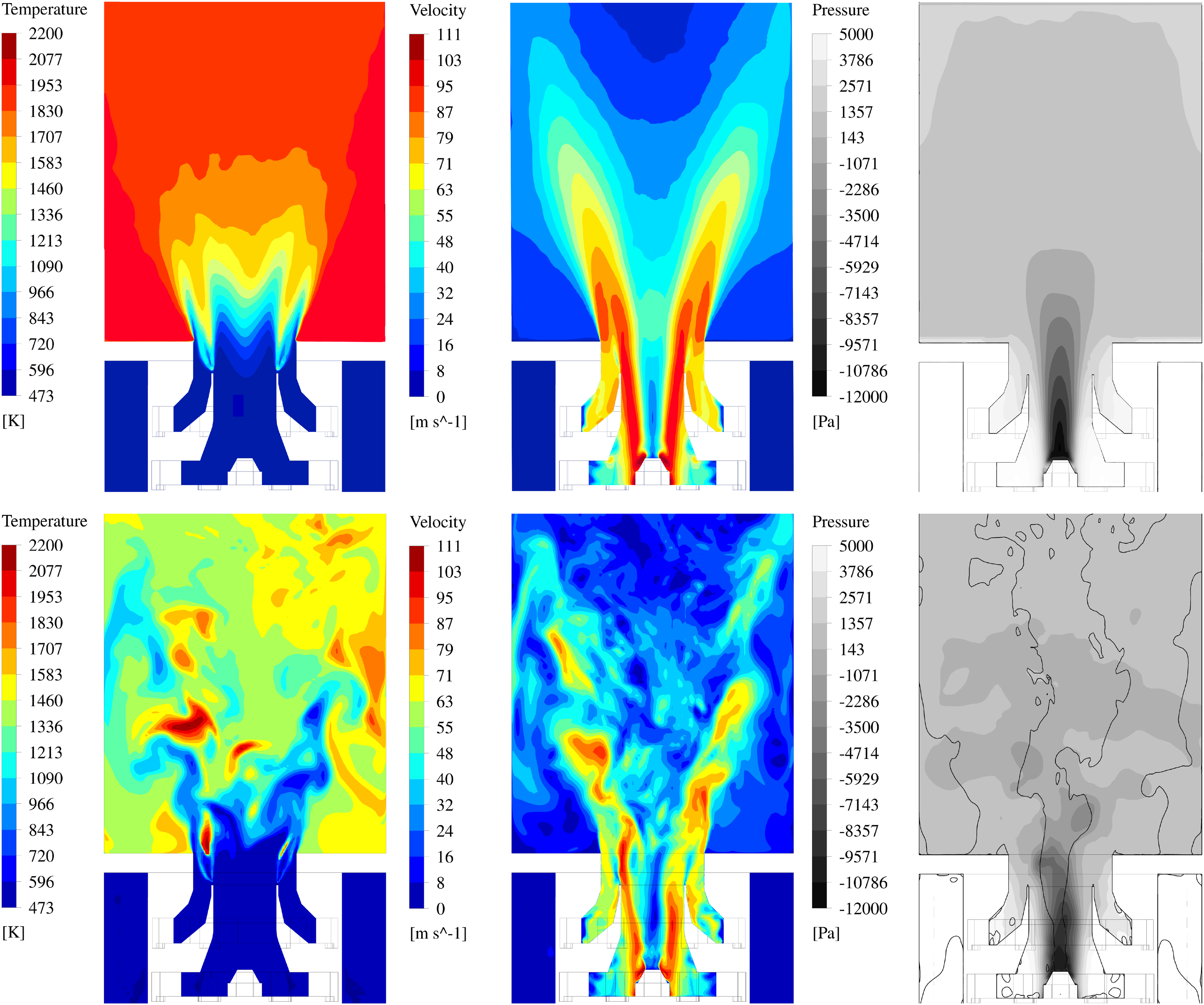
Top row: two-dimensional (2D) contours of time-averaged values for temperature (left), velocity (center), and pressure (right). Bottom row: instantaneous values overlaid with zero axial velocity for pressure contour.
The flow exhibits a high degree of periodicity and certain flow structures can be visually identified. As an example, extracted pressure time series from a point located near the negative gauge pressure region exhibits the spectral content shown in Figure 9 with a distinctive peak at around 879 Hz, which we identify as the presence of a PVC at the base of the swirler. This method of numerical analysis appears to be highly sensitive to the data extraction point and also sensitive to transient phenomena in order to ensure the identification of such flow structures and their associated dominant frequency a careful analysis of flow evolution is required together with multiple points of data extraction in the near swirler region. It is noteworthy that the frequency of the PVC in similar studied burners varies greatly between 400 and 2000 Hz and depends greatly on the inlet velocity and the velocity gradients in the inner swirling region.21,19,20,22 Figure 10 depicts the instantaneous Lambda-2 criterion visualization of the vortex core region colored by axial velocity. The PVC can be identified as the dominant swirling vortical structure that originates at the base of the burner and spirals downstream in a helical fashion.
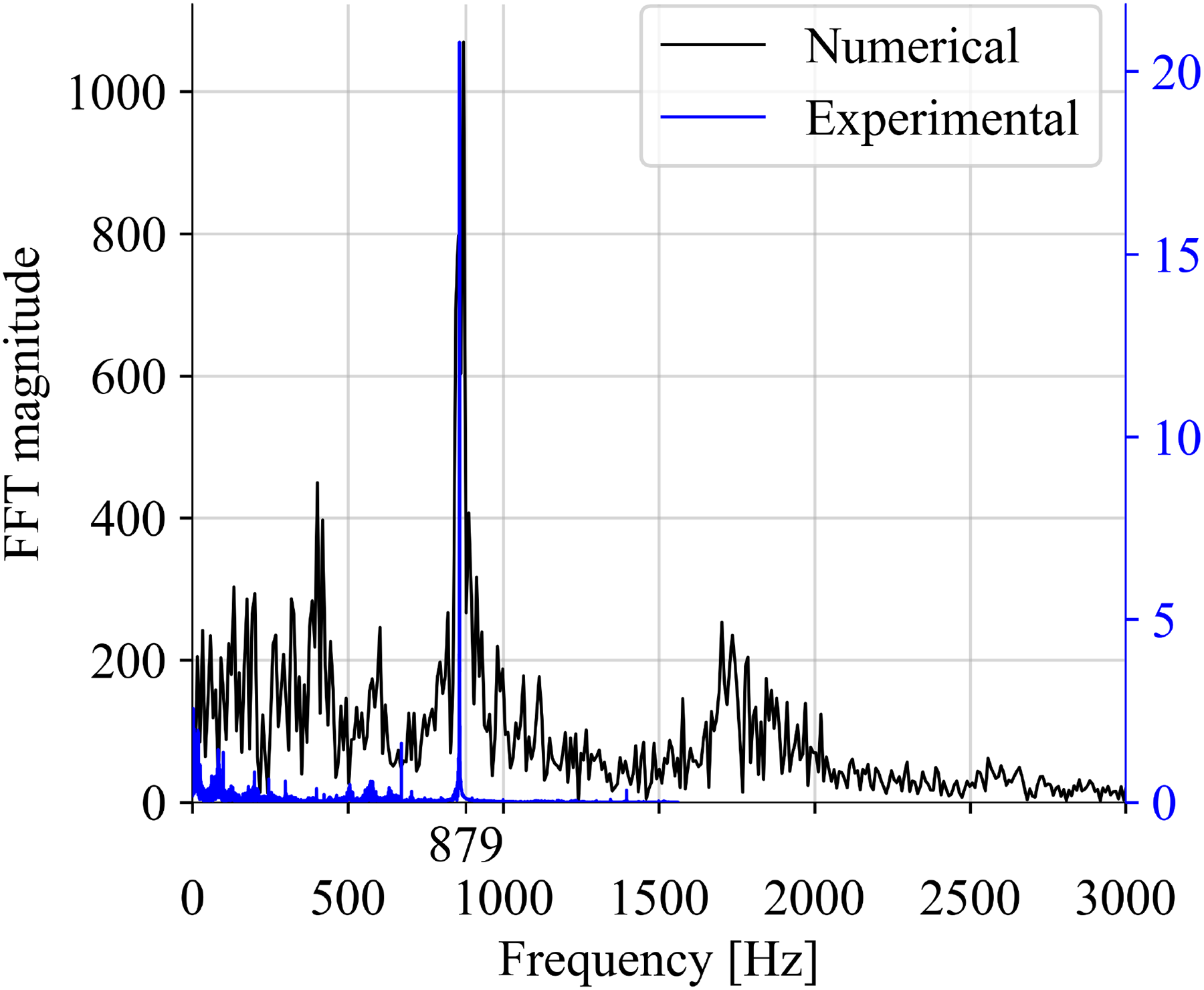
Fast Fourier transform of simulated extracted pressure time series located inside the swirler compared to cold flow experimental pressure transducer measurements located in the combustion chamber.
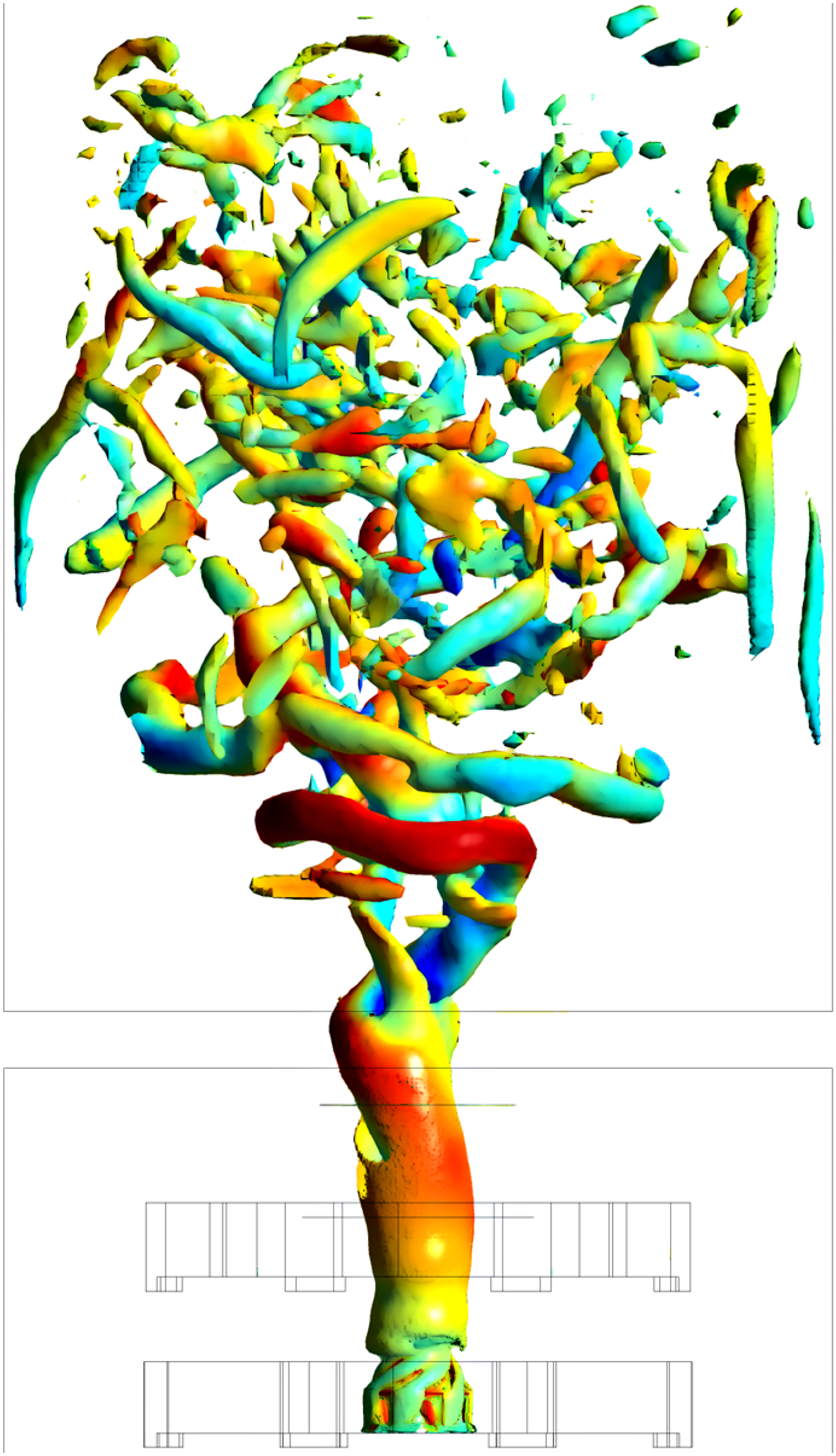
Lambda-2 criterion visualization of the precessing vortex core (PVC) and the vortex breakdown region colored by axial velocity.
Figure 9 also includes preliminary cold flow experimental measurements from our pressurized test facility at the University of Twente taken from a pressure transducer located on the combustion liner further downstream in the combustion chamber. The cold flow experimental data appears to be in perfect agreement with DES results in terms of significant spectral content at the PVC frequency. It should be noted that this peak is much less prevalent in preliminary combustion experiments as the turbulent reacting flow caused spectral change in pressure at the measurement location.
Proper orthogonal decomposition
The variables of interest in this study include pressure
Figure 11 shows the first five POD analysis mode shapes for the variables of interest. 3D mode shapes are presented where they could convey the mode shape better, otherwise, the 2D mode shapes are presented. The first mode is indexed “0” to reflect the fact that it is simply the time-averaged DES data and thus different from other modes in nature.
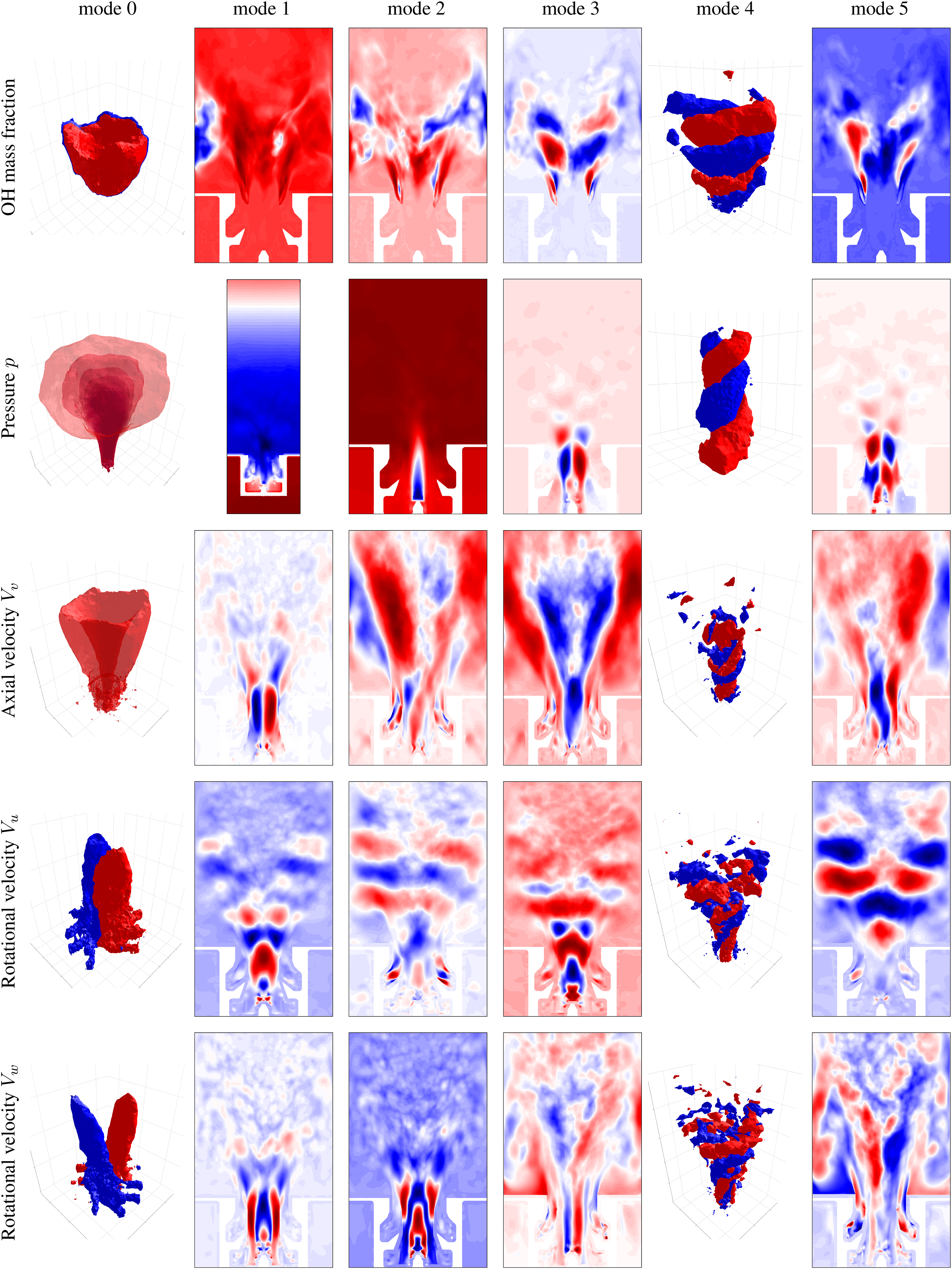
First five POD mode shapes for the mass fraction of OH radicals in the first row, pressure
The heat release indicator in this analysis is the OH mass fraction as presented in the top row. The release of the liquid fuel droplets is randomized in time and their time-averaged 3D mode shows a hollow cone 3D structure for mode “0” that reflects where the flame is sitting in the simulation. Randomized entry of droplets can be seen to have an effect on the symmetricity of this mode, causing the downstream edges of the isosurface to appear at different axial distances. The first POD mode for OH mass fractions does highlight the two wings of the flame represented in 2D, but also demonstrates the wall interaction that the flame has had for the duration of the simulation. Modes 3 to 5 represent the coherent flow structures as it relates to the swirl present in the flow with mode 4 showing the spiral nature of the two isosurfaces in 3D. Other possible choices for the heat release rate indicator are CH radicals, RPV, or temperature. These mode shapes appeared to be highly similar to those of the OH mass fractions and therefore omitted for brevity.
Pressure mode shapes are of high interest because the flow solver is weakly compressible in nature and thus pressure plays an important role in shaping the velocity field. The first pressure mode indexed “0” represents the time-averaged DES results with a low-pressure core sitting at the base of the burner just above the liquid injector. Multiple isosurfaces are drawn to show the progressive opening of the flow outside the burner. The degree of the opening of this mode is shaped by the primary and secondary air entry ducts and the degree of induced swirl in each of them. The first POD mode is best shown as a zoomed-out view of the computation domain since it relates to the axial pressure gradient presented by various flat isobaric planes which are formed more prominently just outside the burner and continue in the axial direction toward the flow outlet. The second and third pressure modes represent a monopole and a dipole situated at the base of the burner. The monopole appears to be driving the axial spectral content and the dipole appears to be the main generator for the swirl present in the burner. As an example, the fourth mode is shown in 3D to highlight how the 3D helical structure of PVC contributes to the swirl present in the flow.
The three velocity components are presented in the bottom rows of Figure 11. The time-averaged vertical velocity highlights the region of high velocity created both by the swirler geometry and bolstered by the extreme expansions caused by combustion. This mode is shown with a lower opacity scale to demonstrate the hollow cone nature of this structure. CRZ is enveloped by this mode and creates the main dynamic body that stabilizes the flame. The time-averaged modes for the other two velocity components are similar in shape and appear to be rotated by
Mode shapes are able to convey how various flow features are shaped in space and their corresponding mode coefficients show how they have behaved in time. The nature of POD mode coefficients lacks a certain degree of time dynamics that could show how these modes could further evolve in time similar to other spectral methods such as dynamic mode decomposition, yet a spectral approach to mode coefficient analysis reveals the main frequencies associated with each coefficient. Here, we have used Welch’s overlapped segment averaging periodogram to identify the main spectral content for each mode. The notable peaks in the PSD chart are highlighted for ease of reference. As an example, Figure 12 shows the PSD analysis results for a number of axial velocity modes with significant spectral content at around 879 Hz which is associated with the PVC. It is important to note that this is not sensitive to any specific point extraction of the data and comes as the result of data-driven spectral POD analysis and is thus suited to flows for which a prior intuition or knowledge about their dynamics does not exist.
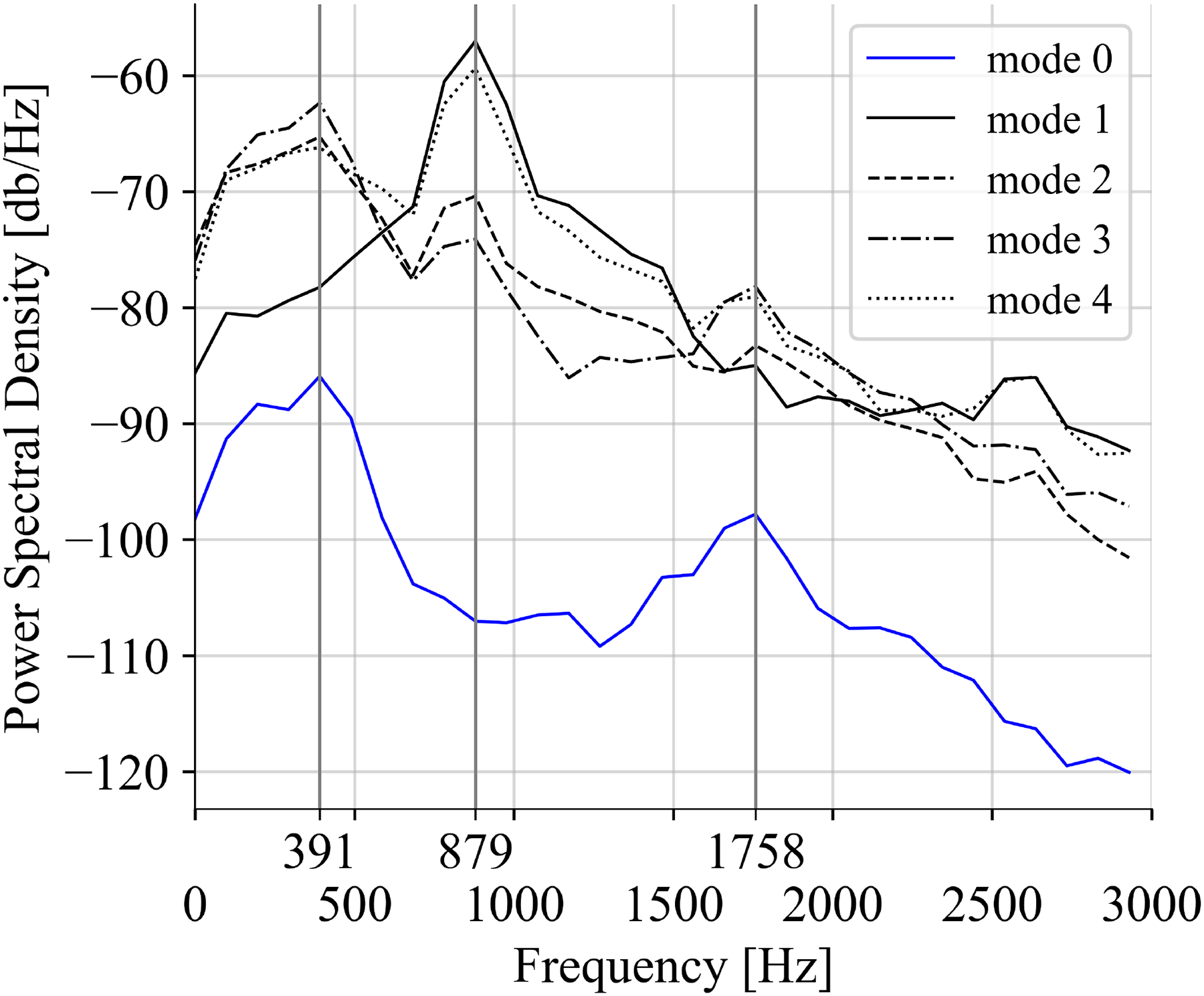
PSD for the first five POD mode coefficients of axial velocity. PSD: power spectral density; POD: proper orthogonal decomposition.
The spectral content is analyzed for all considered mode coefficients and certain frequencies are observed to be predominantly present for a variety of modes. For example, 98 Hz and 195 Hz are identified in the first and second modes for pressure and OH mass fraction variables in the lower frequency range. At higher frequencies, 391 Hz and 879 Hz are identified in the third and fourth velocity modes as presented in Figure 12. These examples appear to be identifying certain harmonics with almost doubling of values for each frequency range and associated with different flow structures, for example, 195 Hz representing a dominant axial acoustic mode present in the domain and 879 Hz representing the dominant swirling motion present in the PVC.
Another important aspect of the POD analysis is the eigenvalues of the singular decomposition as formulated in equation (25). The POD modes are ranked according to their total Frobenius norm
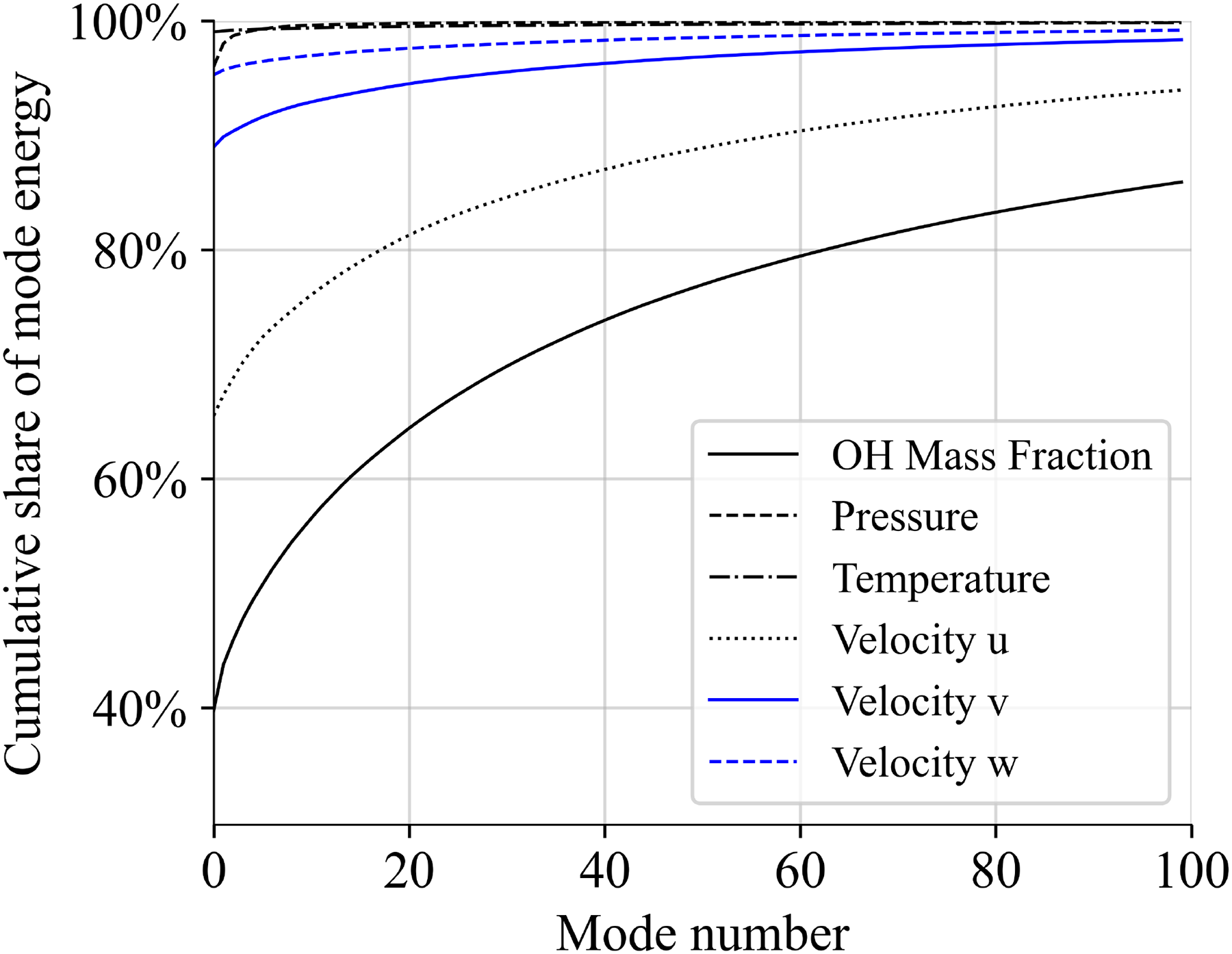
Mode energy content for all considered variables.
When the very first mode already contains the majority of energy content, for example, temperature and velocity component, it can be concluded that the first mode and its associated frequency is significant in the behavior of the dynamic system, and a high level of periodicity is observed in those variables. This is in contrast to a variable such as OH mass fractions, which are chosen as a representation of where the flame front exists. The dominance of the first mode in terms of its energy content is much lower at around 40%, which demonstrates a lower degree of periodicity. This can be explained by the random nature of the release of liquid droplets in time and space which also makes for lower coherence in OH mass fraction mode shapes.
With the multitude of mode shapes and coefficients for each considered variable, it can be challenging to establish how the modes are related to each other which is largely left to pairwise inspection and subject to interpretation. We introduce a methodology to study mode coefficients and objectively establish their relationship with each other and their evolution when subject to external modifications and perturbations. To this end, heatmaps are used to identify a linear correlation between pairs of mode coefficients once using a standard Pearson’s correlation formulation and once as described in the adjusted correlation methodology introduced in equation (26). Figure 14 shows the results of this analysis. The lower triangular matrix represents Pearson’s correlation index for each mode pair with the diagonal self-correlation showing the maximum value of 1. The upper triangle shows the adjusted correlation index accounting for the possible time lag present between the corresponding mode pair. It can be observed that accounting for the time lag between coefficients of different modes (upper triangle), can identify correlated mode pairs more clearly, for example, non-axial components of velocity which are associated with the swirl present in the flow appear to be highly correlated with the third and fifth mode of pressure as well as significantly uncorrelated to the temperature modes. Other weak correlations can be noted such as the third mode of OH mass fractions with a dominant associated frequency of 879 Hz associated with the PVC. It should be noted that the third OH mass fraction mode is the only mode for that variable that exhibits that specific spectral content. Some correlations can only be observed after time lag adjustments such as the correlations for the first three pressure modes with other variables.
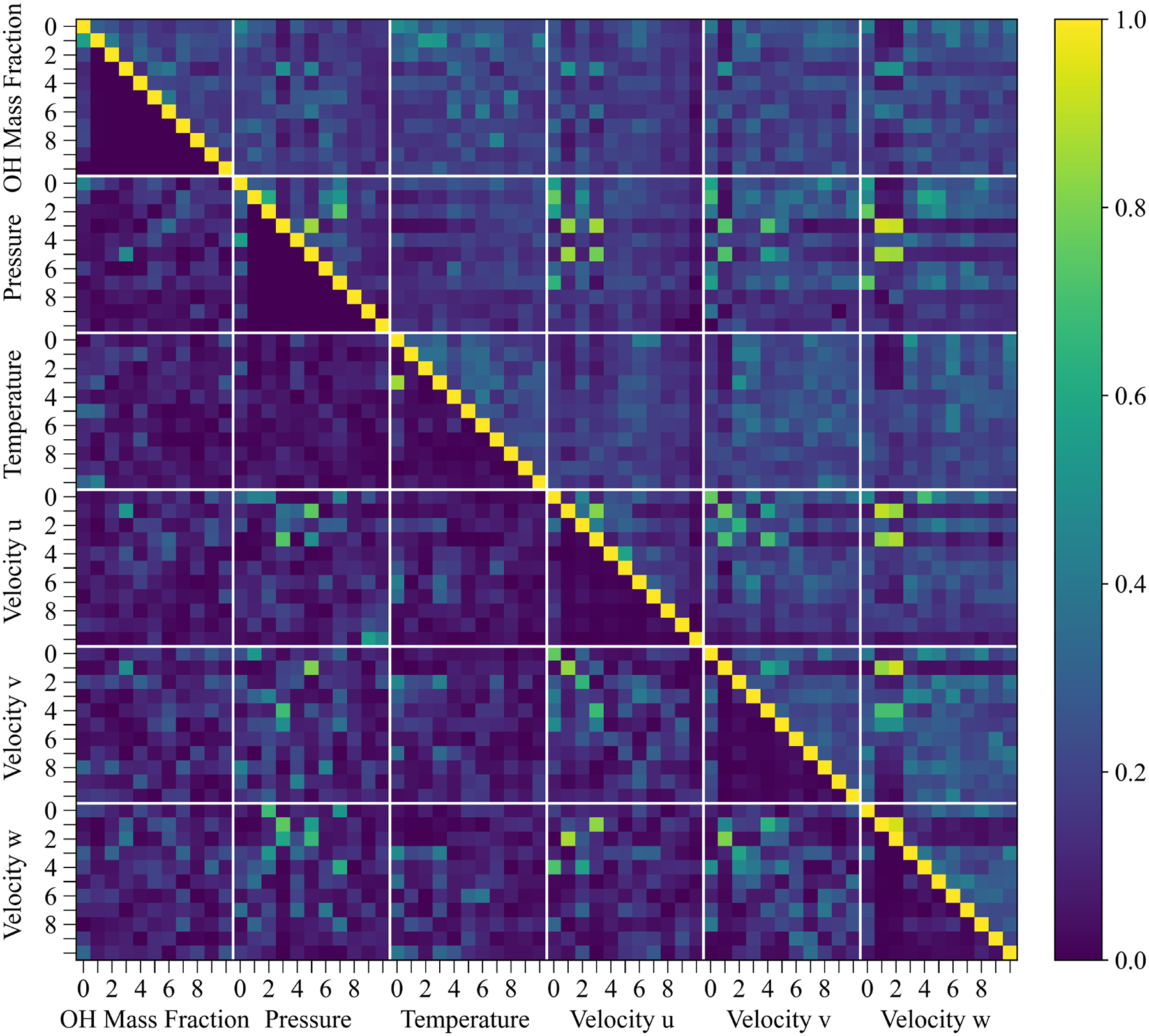
Correlation heatmap between first 10 POD mode coefficients of the unforced DES results. Pearson’s index in the lower triangle and adjusted value in the upper triangle. POD: proper orthogonal decomposition; DES: detached eddy simulation.
Effects of external forcing
In order to study the evolution of POD modes subject to external perturbations of the dynamical system, we subjected the air inlet mass flow rate to acoustic forcing in a separate DES simulation. The forcing is implemented as an inlet velocity modulation
48
with the following formulation:
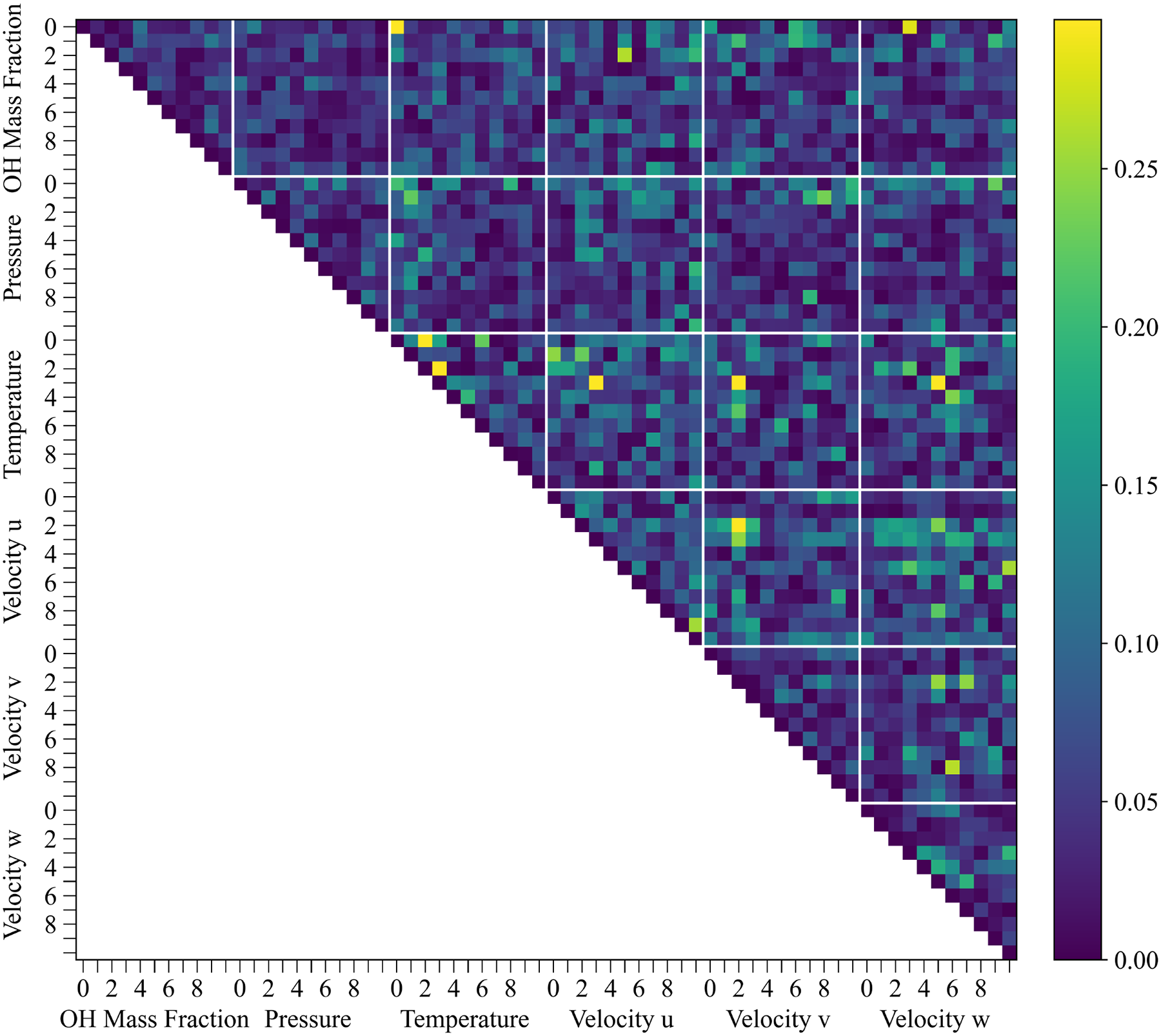
Heatmap of change in pairwise correlations between the first 10 POD modes of unforced DES simulation (vertical axis) and the forced DES simulation (horizontal axis). POD: proper orthogonal decomposition; DES: detached eddy simulation.
This heatmap can be interpreted as the correlation gained or lost for each mode coefficient pair due to acoustic forcing. Notice the amount of correlation index changed in absolute terms is around 0.3 in the upper bound. The most prominent changes are observed for mode coefficients of temperature, for example, the third temperature mode has gained significant correlation with the three velocity components. This is also observed for OH mass fraction modes which had poor correlation with other modes prior to forcing. This hints at the forcing having established a correlation between the heat release phenomena and the forced velocity domain and could be explained by enhanced entrainment of liquid droplets and more synchronicity between the heat release patterns and the velocity field.
The same methodology was applied to the volume-integrated variables such as the reaction progress variable, OH mass fraction, and mixture fraction. The correlation between volume-integrated OH mass fraction and every POD coefficient for all considered variables is calculated once for the non-forced simulation and once for the simulation subject to forcing. The change in correlation between the two scenarios is presented in Figure 16. This approach easily identifies some distinct modes that reacted the most to the external forcing, for example, second mode of the axial velocity
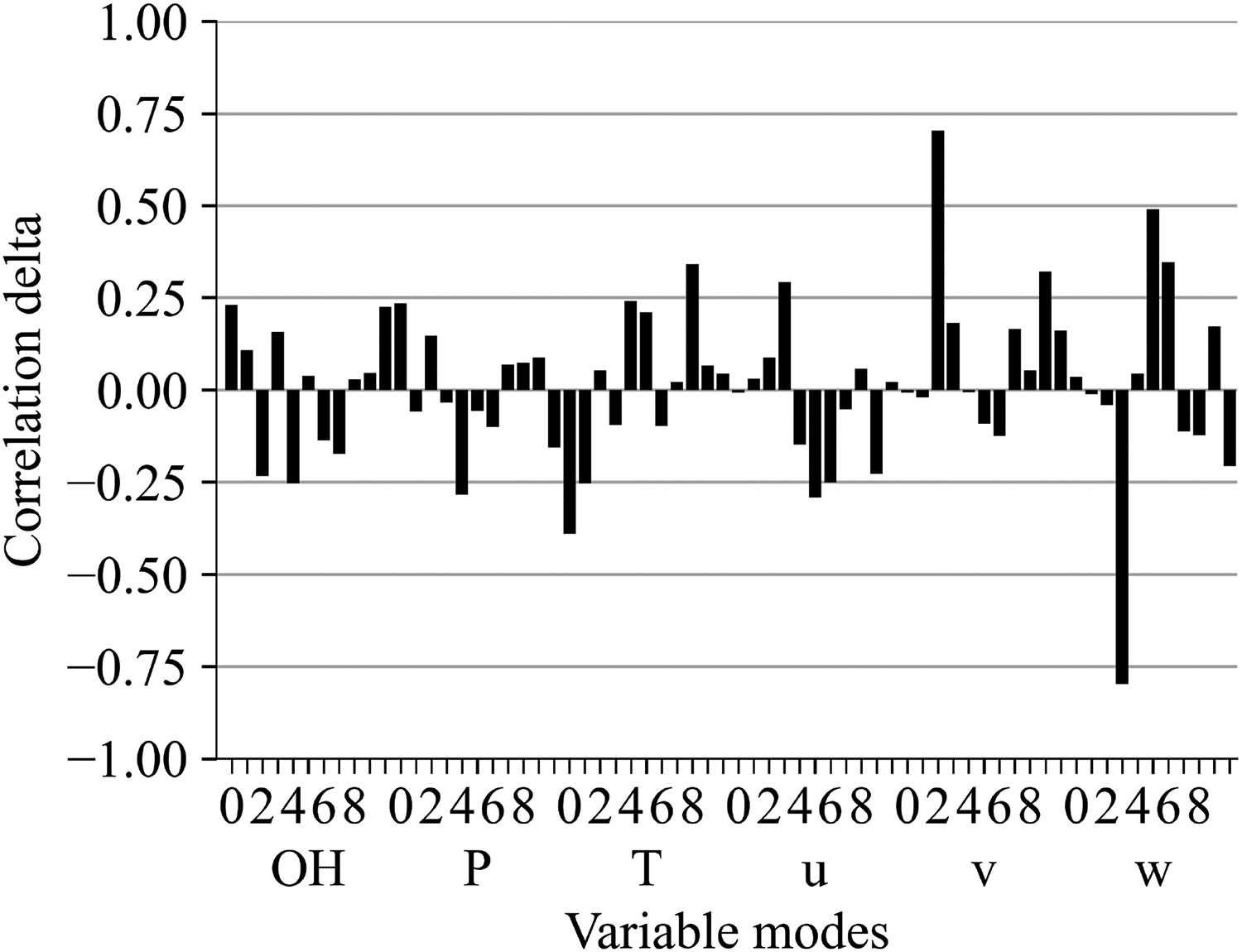
Change in the correlation of mode coefficients to volume-integrated OH mass fractions as a result of forcing.
The absolute change in this correlation delta ranks the order in which modes have reacted to the external forcing. 3D mode shapes for these two modes of interest are depicted in Figure 17. It can be observed that as a result of acoustic forcing, the central coherent structure for the second mode of axial velocity
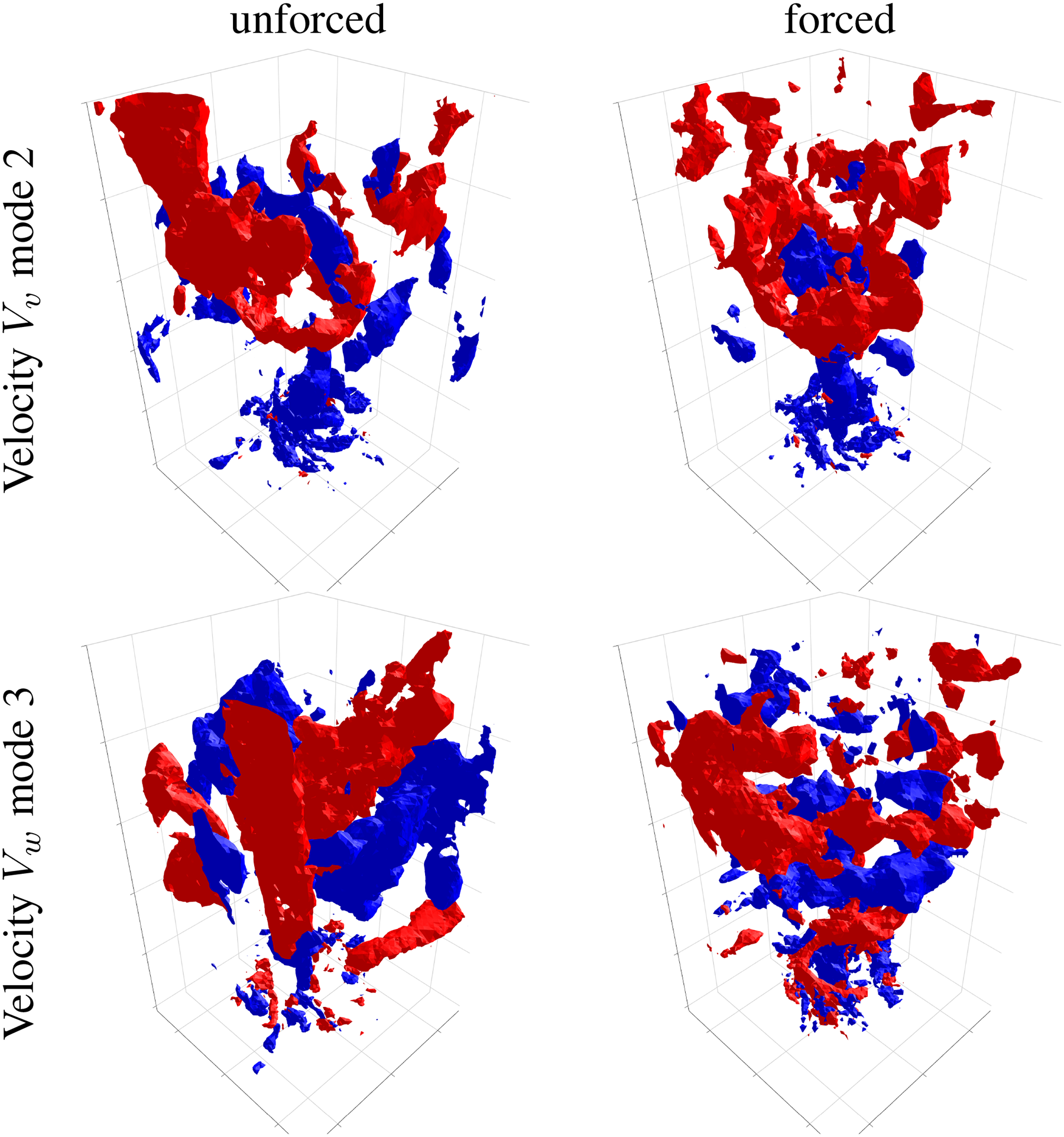
Change in mode shape as a result of forcing for the second mode of axial velocity
Conclusions
The study of aero engine representative burners is of great interest considering their environmental impact and their heightened sensitivity to thermoacoustic instability in lean conditions. LES remains an effective tool in the analysis of swirl stabilized burners resulting in large datasets that are suited to unsupervised modal analysis such as POD. The prohibitive computational requirements of both LES and POD make it challenging to consider non-premixed combustion regimes and investigate POD results not only across multiple flow variables, but also across various operating conditions. To that end, the in-house designed Magister UT burner was studied.
Non-premixed combustion is simulated at elevated pressure under two different inlet boundary conditions in a DES framework that shows to be in agreement with experimental observations and greatly reduces the computational requirements compared to a detailed LES approach. Combustion simulation results were analyzed using our modal analysis software package PARAMOUNT. This analysis addresses some fundamental difficulties associated with POD analysis by reducing computational requirements, providing cross-modal correlation analysis, and comparison of the results under different inlet operating conditions. The proposed correlation methodology was able to identify the specific ways in which the flow structures change subject to external forcing. As an example, specific velocity modes were observed to have gained coherence as a result of forcing, or in other words, the forcing manifests itself in terms of reshaping certain modes as identified by the correlation methodology.
The proposed acoustic characterization methodology appears effective in identifying the frequencies to which the burner might be most sensitive even while employing weakly compressible flow solvers. Additionally, this approach is effective in identifying influential modes that are otherwise insignificant in the context of a new operating condition. This information could be used to create improved reduced order models of the flow and provide insight into the pathways through which the external forcing manifests itself in the combustion process.
Footnotes
Declaration of conflicting interests
The authors declare no potential conflicts of interest with respect to the research, authorship, and/or publication of this article.
Funding
The authors disclosed receipt of the following financial support for the research, authorship, and/or publication of this article: This project has received funding from the European Union’s Horizon 2020 research and innovation program under the Marie Skłodowska-Curie grant agreement no. 766264.
