




Abstract
The effects of 4 months of weather exposure on the ageing of dynamic climbing ropes made of polyamide 6 were studied and differences between ropes with and without hydrophobic coating were examined. The polyamide degradation of the rope yarns was studied using infrared spectroscopy and a quasi-static tensile test. The number of falls to failure and the maximum force on the climber in a fall were evaluated with a drop test according to the UIAA 101 standard. Moreover, changes in the length of the ropes due to weathering were measured. The following results were found. After 4 months of weathering, sheath yarns of the coated rope showed a greater decrease in breaking force than those of the uncoated rope, which might be due to reactions of polyamide with radicals formed during the photo-induced oxidation of the coating. In contrast, the core yarns from the uncoated rope showed a greater decrease in breaking force than those from the coated rope, probably due to prolonged exposure of the uncoated core to water with possibly dissolved atmospheric acids. Furthermore, the decrease in the number of falls to failure was greater in the uncoated than in the coated rope. This difference was explained by a mechanism of changes in radial pressure of the sheath on the core. Regarding the maximum force on the climber, no significant changes due to ageing were observed during the drop test. Thus, it was concluded that 4 months of weather exposure do not pose a safety risk for climbing ropes, but the negative effect of coating on the ageing of polyamide might be detrimental when it comes to static personal safety equipment, such as slings or accessory cords.
Introduction
Dynamic ropes are essential pieces of equipment in alpine sport, as they can prevent injuries or even death by absorbing energy in the event of a climber’s fall. However, there are cases of serious rope damages and even breakages 1 with severe consequences for climbers, including death. Even though ropes never break based solely on overloading,2–4 ageing may affect the mechanical properties of ropes, such as the maximum force on the climber in a fall. This could result in higher loads on the body or self-placed protection, like friends, nuts or ice screws, thus leading to adverse effects on climbers’ safety. The failure of self-placed protection in falls leads to longer falls with a high risk of severe injuries.5,6
The dynamic climbing ropes have a kernmantle construction, which consists of a core (kern) that is protected by a sheath (mantle). The core and sheath have a multi-level construction consisting of individual fibres that are spun into yarns with several yarns spun together to form a ply yarn. These ply yarns are then used to form a sheath by braiding around the core. To form the core, the ply yarns are further twisted together by so-called s- and z-twisting (clockwise and counter-clockwise), forming a strand. Finally, several strands are laid parallel to each other, forming a core (Figure 1). This multi-level twisted construction of the core gives the rope its ability to absorb energy. The primary function of the sheath is to protect the core against abrasion, although it also plays an important role in the overall performance of the rope. 7 Under static load, the sheath contributes to the breaking load by approximately 30%, which is approximately proportional to the sheath content in the rope structure. During the dynamic loading (drop test), the sheath and core act synergistically. Tests have shown that the number of falls after cutting the sheath decreases from approximately 8–9 to just 1. 8
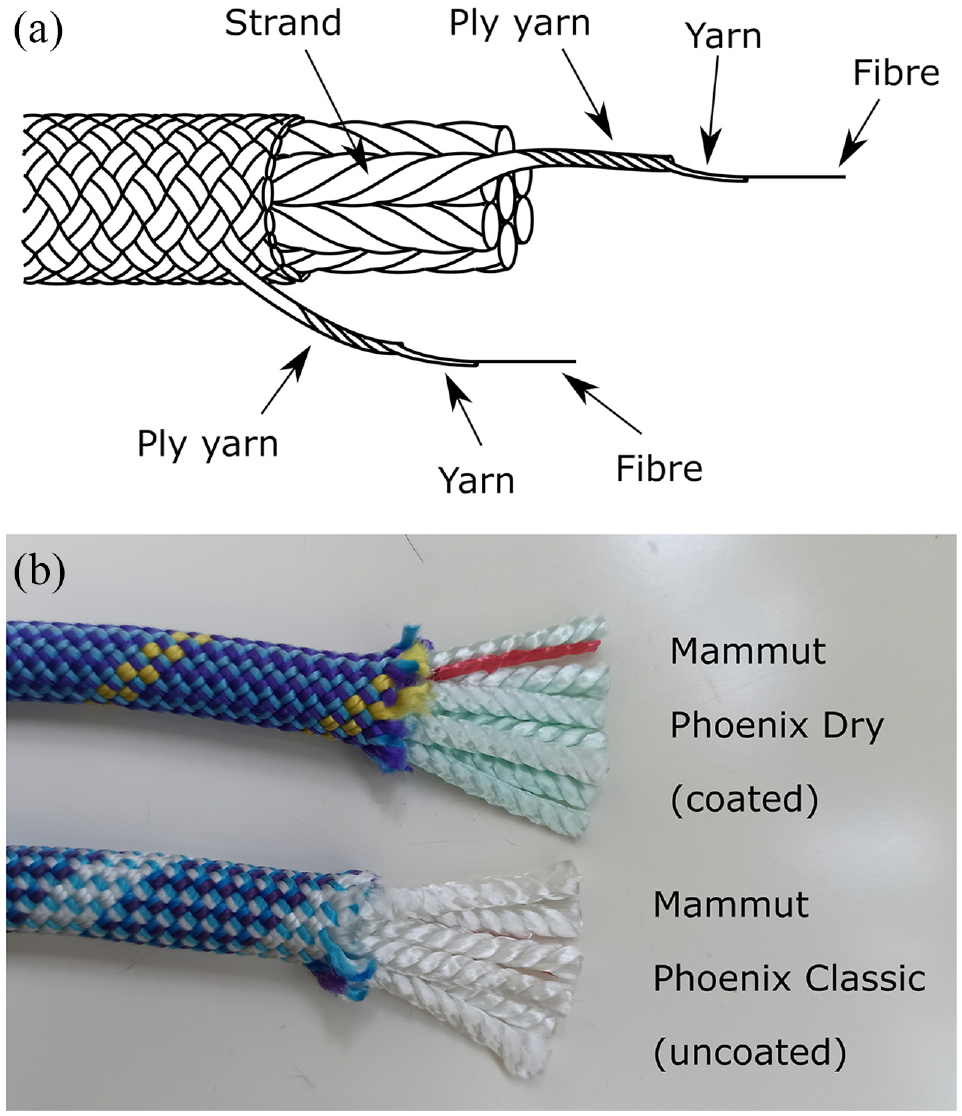
(a) Construction of kernmantle ropes and (b) revealed construction of tested ropes.
Deterioration of mechanical properties of ropes when wet9–11 or after usage 12 have previously been documented, however, the fact that ropes are often exposed to the sun for longer periods of time is still a safety concern of the climbing community. Using the standard drop test, Signoretti 11 found a reduction in the number of falls to failure of up to 50% in dynamic ropes that were exposed to weather at approximately 2500 m above sea level for 3 months. This decrease in the number of falls to failure was correlated to only 10% reduction in static strength of the rope fibres. However, no decrease in maximum force was found during the standard drop test. In line with that, Smith 13 found almost no reduction in static strength in ropes that were exposed to weather for 3 months, whereas Arrieta et al. 14 proved a decrease in tensile strength and an increase in strain after 6 months of weathering. However, the drop test was not conducted in the latter two studies, thus it is not possible to get a strong conclusion about the safety of ropes that were subjected to the weathering. In the case of nylon mooring ropes aged in the marine environment, a reduction in axial stiffness and an increase in the damping rate under harmonic cyclic loading were found. 15
Synthetic polyamides, such as polyamide 6 and 6.6, are used for the production of dynamic climbing ropes due to their tenacity, elongation characteristics, impact absorption, relatively low weight and cost.16–18 It is known that polyamides change their chemical and physical properties when they are exposed to meteorological effects due to UV-induced photo-oxidative degradation, which leads to chain scission, crosslinking and change in morphology through a free radical process.19–25 The degradation of polyamides leads to the formation of N-acylamides (imides), N-formamides (formimides) and aldehydes (Figure 2). 26 Carbonyl groups represented in the above-mentioned degradation products can be detected by using the Fourier transform infrared spectroscopy technique in the carbonyl region between 1770 and 1705 cm−1. Even though polyamide fibres are UV-stabilised during production,27–29 either by the inclusion of antioxidant products or the incorporation of UV protection agents, some degree of deterioration of physical and chemical properties is inevitable.

Principal overall reactions of the oxidation of polyamides. 19
Manufacturers have begun to improve the water repellency of ropes, as well as resistance to dirt and abrasion by coating. 30 In this context, coating is meant to be the treatment of the fibres with a hydrophobic polymer, often polyacrylate with perfluoroalkyl side chains based on C6 technology (so-called ‘Teflon™ Fabric Protector’), or other chemicals protected by trade secrets. Although higher fatigue resistance was reported for coated nylon mooring ropes,31,32 these polymers can themselves undergo a UV-induced degradation process and their degradation products may accelerate the degradation of nylon fibres.
Since scientific knowledge about the ageing of dynamic ropes and its effect on climbers’ safety is still minimal and the role of hydrophobic treatment in the ageing process has not yet been studied, the present study tried to fill this research gap. Thus, this study aimed at investigating the ageing of dynamic climbing ropes with and without hydrophobic coating in an outdoor environment.
Materials and methods
Ropes
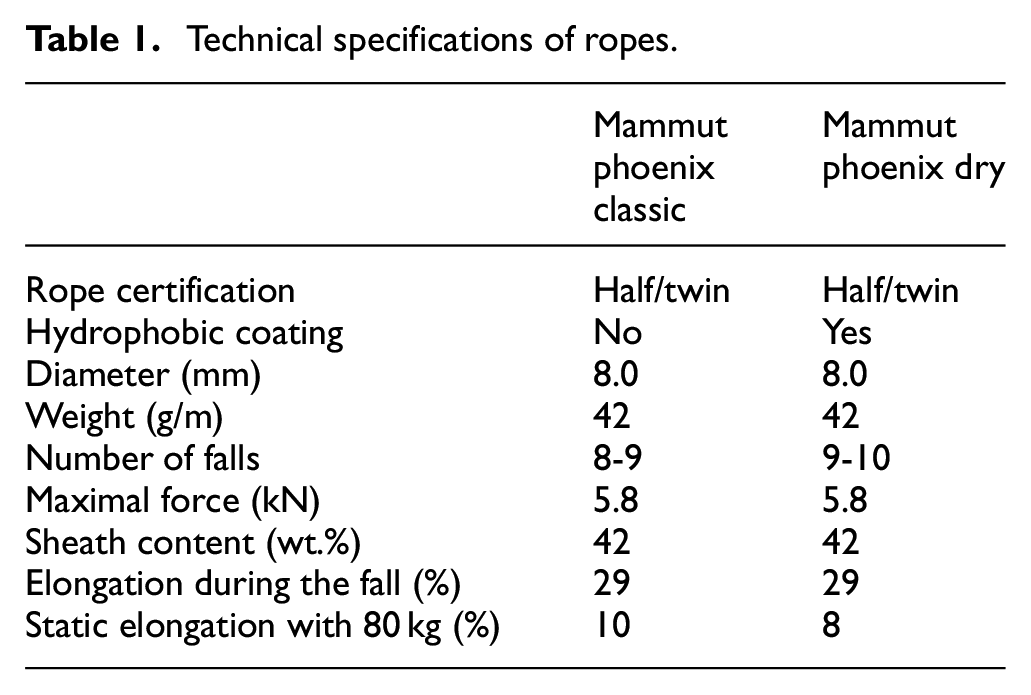
Four 60 m long dynamic ropes made of polyamide 6 18 were used in this study. Two ropes had a hydrophobic Teflon coating called COATINGfinish™ on the core and sheath and the other two ropes were uncoated. One coated and one uncoated rope were exposed to weathering, the other two ropes served as reference. The ropes were from Mammut Sports Group AG, Switzerland, namely Mammut Phoenix Dry (coated) and Mammut Phoenix Classic (uncoated). The technical specifications of the ropes presented by the manufacturer are shown in Table 1.
Technical specifications of ropes.
To define the rope construction, pieces of rope 1 m long were analysed. The number of strands, ply yarns, yarns and fibres was counted manually. The fibre diameter was measured with a Keyence VHX-5000 optical microscope (Keyence Corporation, Osaka, Japan). The twists per metre of strands was determined by counting the number of ‘bumps’ in the strand in 1 m and dividing it by the number of ply yarns in the strand. The twists per metre of ply yarns was determined by counting the number of revolutions required to unwind the 20 cm long yarn and multiplying the result by five. The twists per metre of sheath ply yarns were not determined due to the inability to decompose the sheath structure without partially untwisting the yarns. The results of the rope construction analysis are shown in Table 2.
Construction properties of ropes.
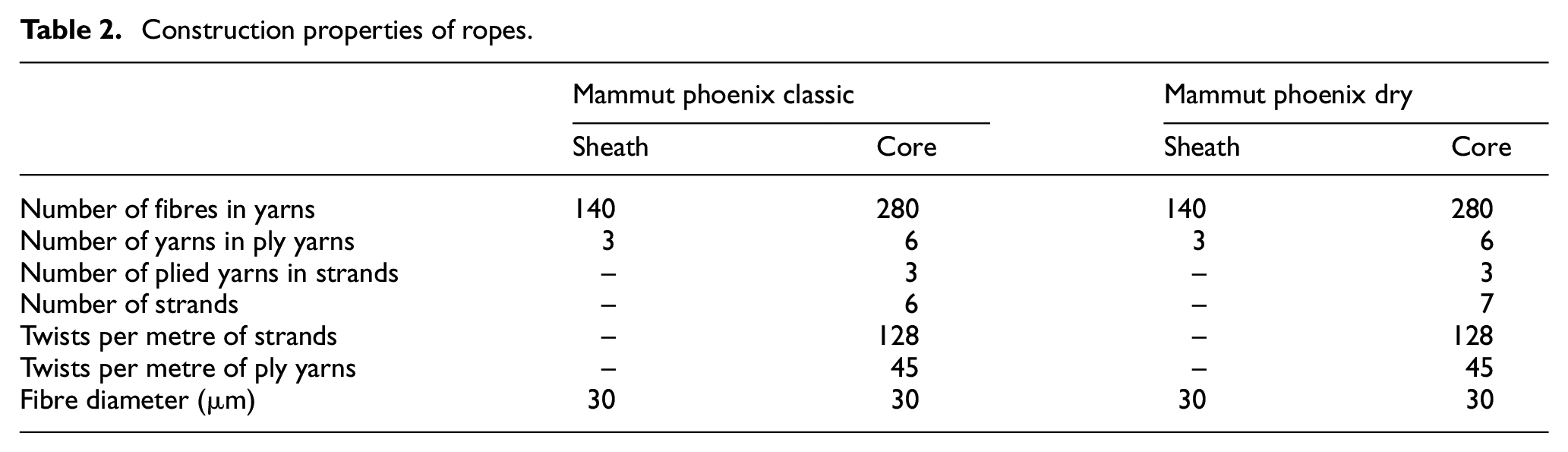
Although the same model of ropes was used, their construction was slightly different. The uncoated rope used six strands in the core, while the coated rope used seven strands. Differences were also observed in the sheath. For the uncoated ropes, the colours of the sheath yarns were white, dark blue, light blue and purple, while for the coated ropes, the colours were yellow, light blue and purple. The core yarns were not dyed.
Weathering
One coated and one uncoated rope were placed at the Hafelekar cable car station in Innsbruck, Austria at an altitude of 2269 m (coordinates: 47.3122719N, 11.3831894E), facing south-southeast at a vertical angle of 45°. The ropes were attached without pre-tension to the weathering construction, which consisted of several aluminium profiles and rods (Figure 3). The horizontal position of the ropes was fixed using spacer screws around which the ropes were wound. The thread of the spacer screws was encapsulated in a thin aluminium tube, which eliminated the risk of unwanted friction between the thread and the ropes. The ropes remained in this position for the duration of the weathering lasting 4 months from June to September 2018. Temperature, relative humidity and global solar radiation (the sum of direct and diffuse solar radiation reaching the Earth’s surface) data were measured in 10-min intervals from the Avalanche Warning Service Tyrol. The temperature was measured at the Hafelekar cable car station, while the relative humidity and global solar radiation were measured at the Seegrube cable car station, which is located at an altitude of 1905 m, approximately 364 m below the ropes’ placement. The precipitation data, which was measured in daily intervals at the Innsbruck Airport, was provided by the Central Institute for Meteorology and Geodynamics. A summary of the meteorological data is presented in Figure 4. The total energy load of the UV part of the solar spectrum (below 400 nm) with respect to the orientation of the sample placement was 137 MJ/m2 and calculated from global solar radiation data.
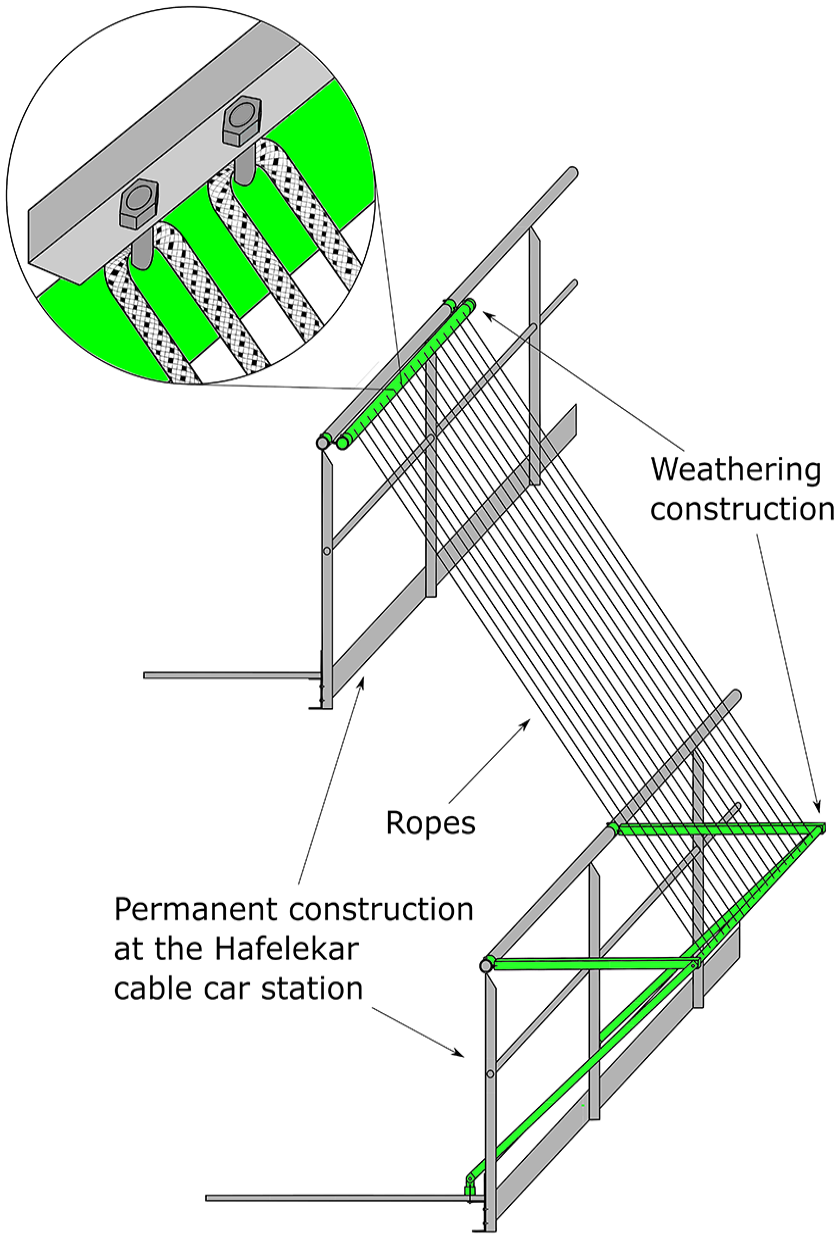
Weathering construction and rope placement at the Hafelekar cable car station.
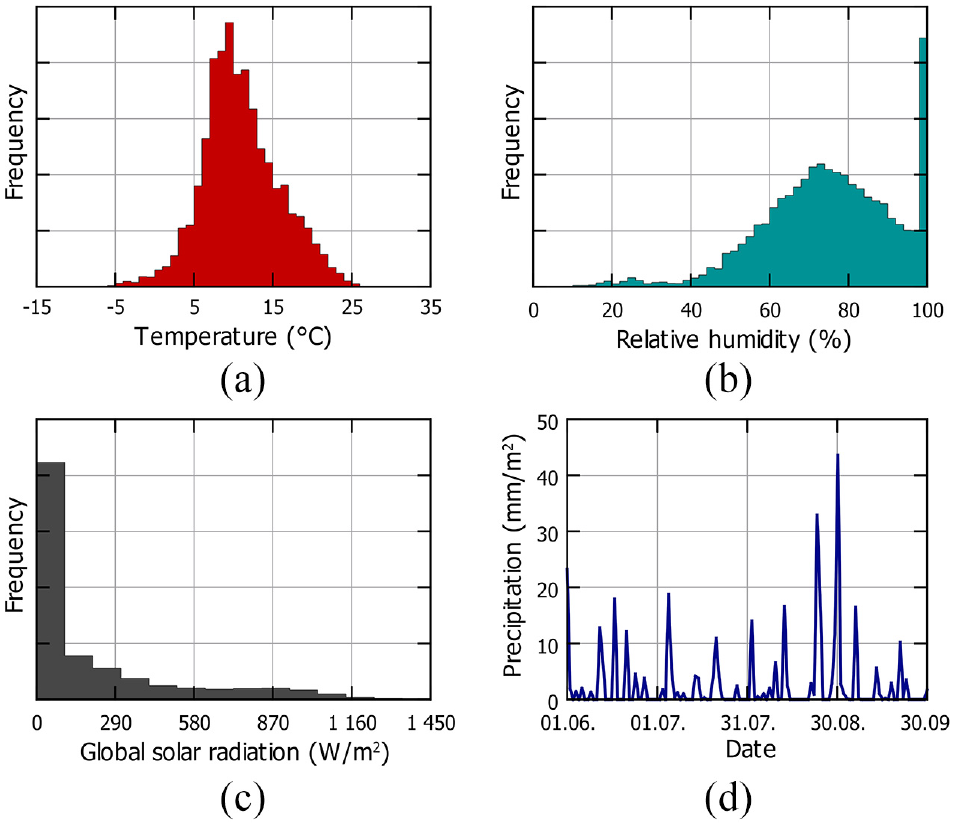
Summary of meteorological data during weathering between 1st of June and 30th of September 2018: (a) temperature, (b) relative humidity, (c) global solar radiation and (d) precipitation. For clarity, the first three quantities are displayed in the form of a histogram with bin ranges of 1°C, 2% and 100 W/m2.
UIAA drop test
The drop test was conducted on the Dodero testing machine according to the UIAA 101 33 standard of the International Climbing and Mountaineering Federation (adopted as EN 892 in the EU) at DolomitiCert (Longarone, Italy). The ropes were cut into 5 m pieces. Three drop tests per rope in a half rope configuration were conducted for the non-weathered rope pieces, as well as for the rope pieces exposed to weathering for 2 and 4 months. The maximum force in the first fall and the number of falls to failure were determined. The results are presented as mean values and standard deviations.
Quasi-static tensile test of yarns
Quasi-static tensile test of the yarns was performed using the universal test machine Shimadzu AG-X Plus (Shimadzu Corporation, Kyoto, Japan). Several 20 cm long pieces were cut out from the ropes. Yarns were carefully extracted from the sheath and core with tweezers and scissors. All yarn colours, from both the non-weathered ropes and the ropes exposed to weathering for one, 2, 3 and 4 months, were tested with a gauge length of 115 mm, pretension of 1.5 N and crosshead speed of 115 mm/min. The breaking force and elongation at break were obtained from the force – displacement curves. Ten measurements for the core yarns, as well as 40 measurements for the uncoated sheath yearns and 30 measurements for the coated sheath yarns (ten measurements per colour), were performed. The results are presented as mean values and standard deviations.
Infrared spectroscopy of sheath
To analyse the sheath, a Fourier-transform infrared spectroscopy with attenuated total reflection attachment (ATR-FTIR) was performed using a Bruker Alpha spectrometer (Bruker Corporation, Billerica, MA, US) at the NanoLab at the University of Innsbruck. The non-weathered ropes and the ropes exposed to weathering for 2 and 4 months were tested. This provided important parameters for the near surface characterisation of the oxidative processes in the sheath. The focus was on the carbonyl region between 1770 and 1705 cm−1, where formation of N-acylamides (imides), N-formamides (formimides) and aldehydes (Figure 2) can be observed. Spectra were obtained with a resolution of 4 cm−1 and 64 scans per measurement were obtained from five places along the rope pieces with each place containing four measurements distributed around the rope’s circumference. All spectra were baselined and equalised by standard normal variate (SNV) using the Spectragryph software. 34 The resulting 20 spectra per rope piece were averaged. Finally, fingerprint regions of the averaged spectra are presented.
Length changes of ropes
In order to examine changes in the length of the ropes due to weathering, the number of weaves of the sheath yarns per 1 m of the non-weathered ropes were counted and compared to the lengths of the same number of weaves of the weathered ropes. The weave misalignment due to changes in length is visible in Figure 5. The length changes between the non-weathered and weathered ropes were expressed in mm/m. The measurements were repeated at five places along the ropes. Mean values and standard deviations are presented.
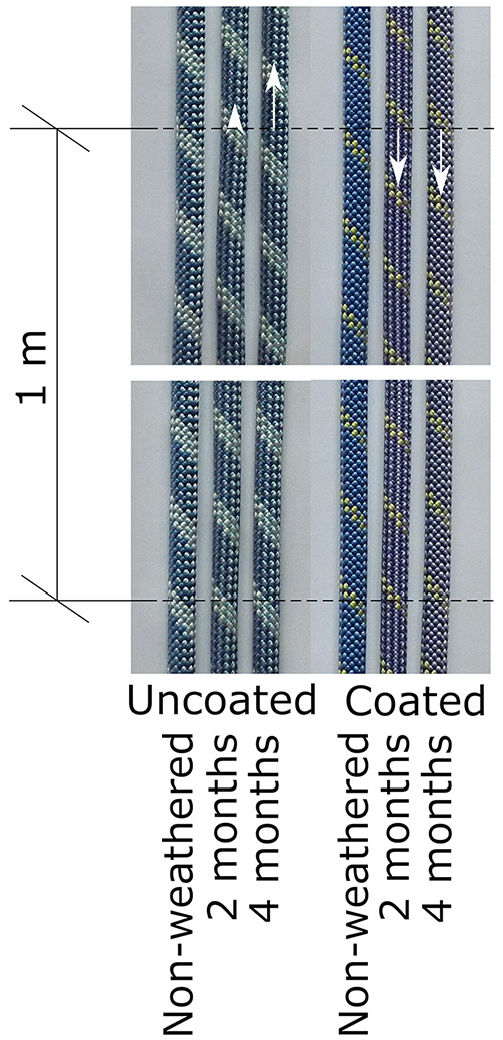
Changes in length visible as misalignment of the weave pattern after 1 m.
Results
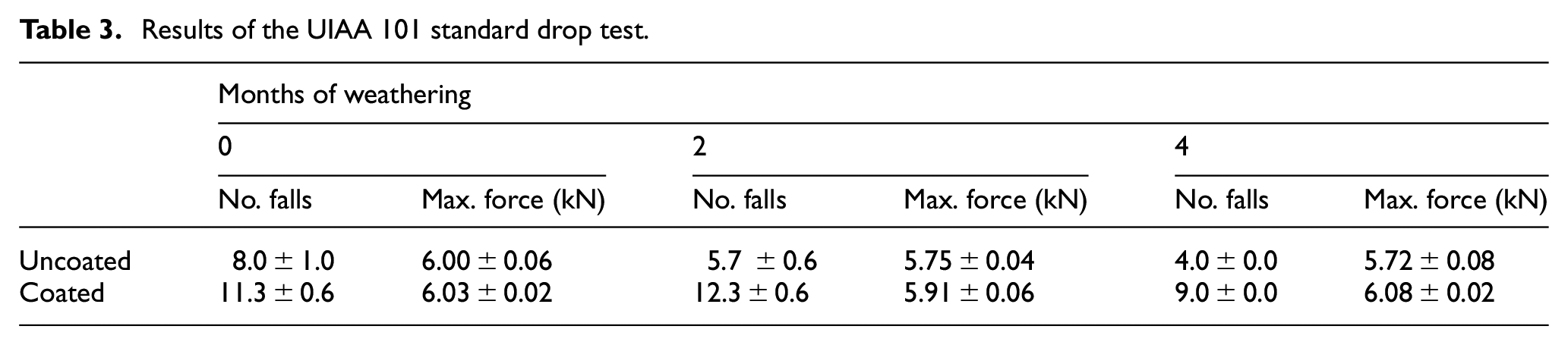
First, the mean number of falls to failure and the maximum force in the first fall during the drop test were examined (Table 3). In the uncoated rope, the mean number of falls to failure decreased from 8.0 to 5.7 after 2 months and to 4.0 after 4 months of weathering. In the coated rope, the mean number of falls increased from 11.3 to 12.3 after 2 months, but decreased to 9.0 after 4 months of weathering (Figure 6(a)). In the uncoated rope, the mean maximum force in the first fall decreased from 6.00 to 5.75 kN after 2 months and decreased to 5.72 kN after 4 months of weathering, whereas in the coated rope, the mean maximum force in the first fall decreased from 6.03 to 5.91 kN after 2 months and increased to 6.08 kN after 4 months of weathering (Figure 6(b)).
Results of the UIAA 101 standard drop test.
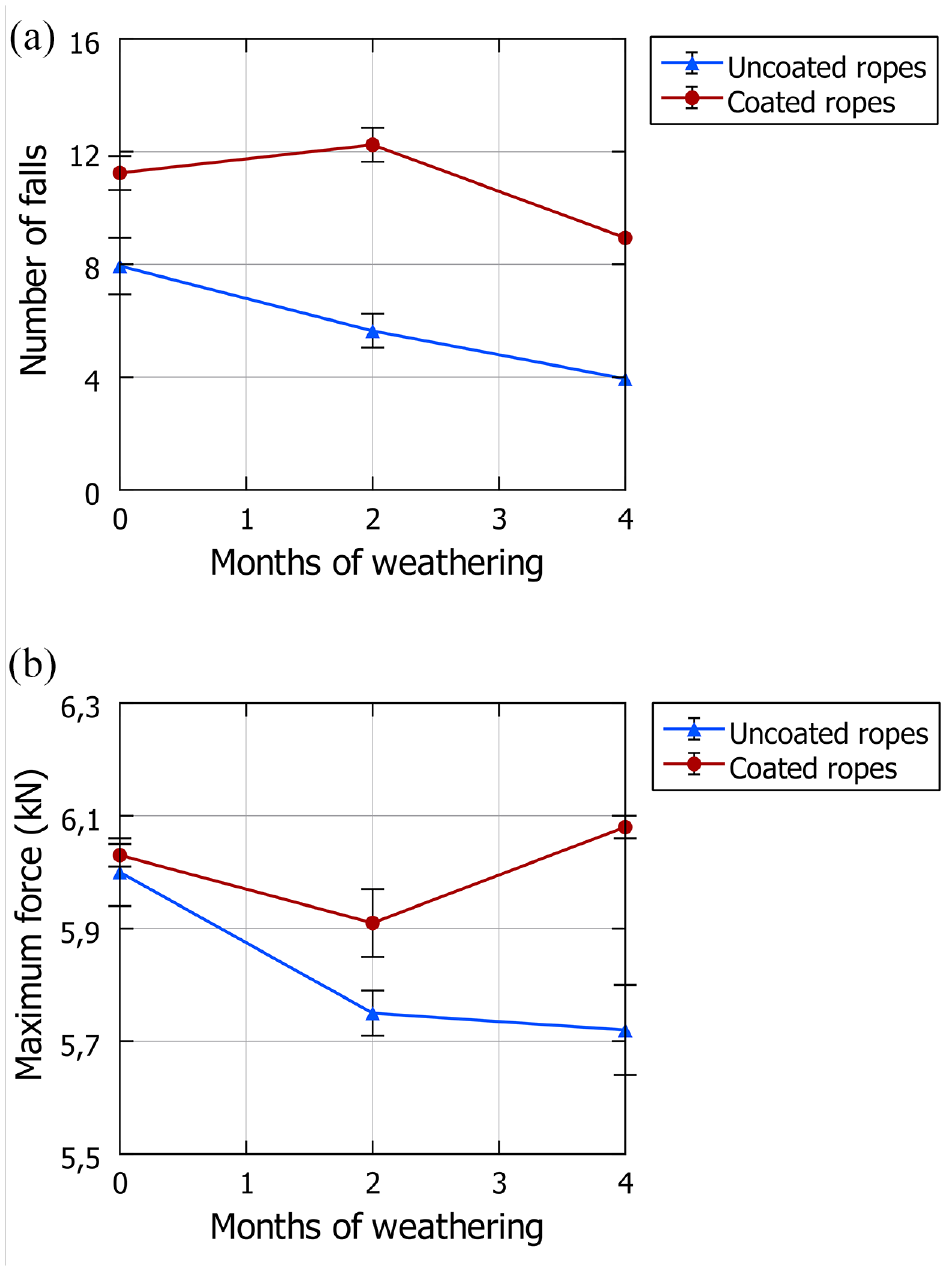
Results of the UIAA 101 standard drop test: (a) number of falls to failure and (b) maximum force in the first fall.
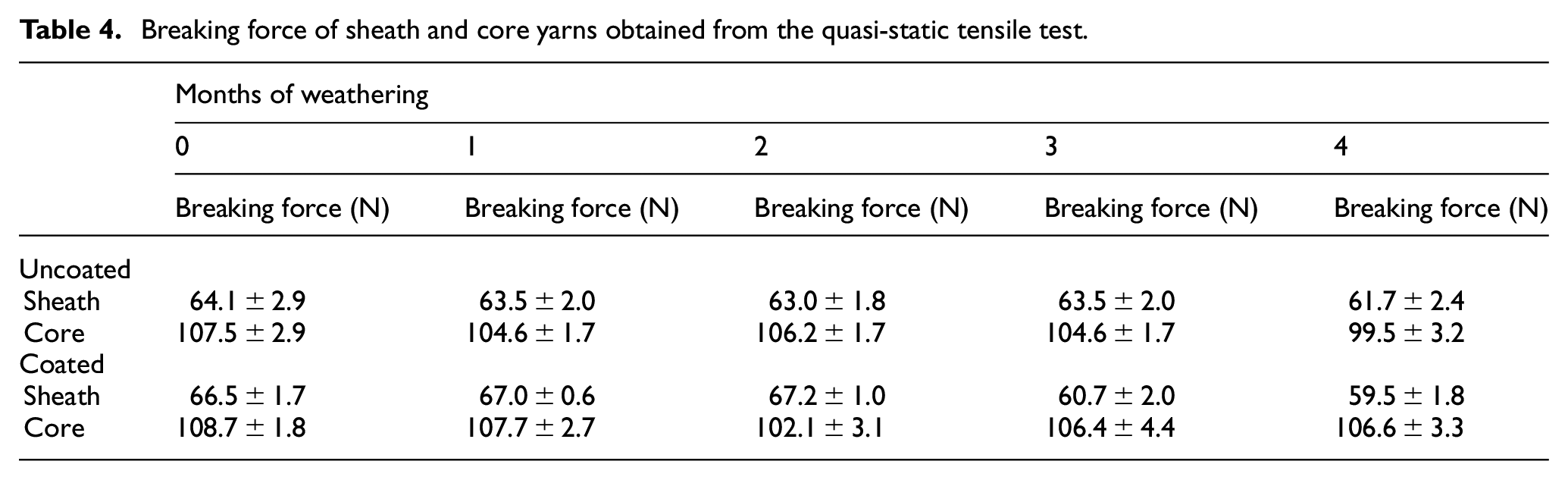
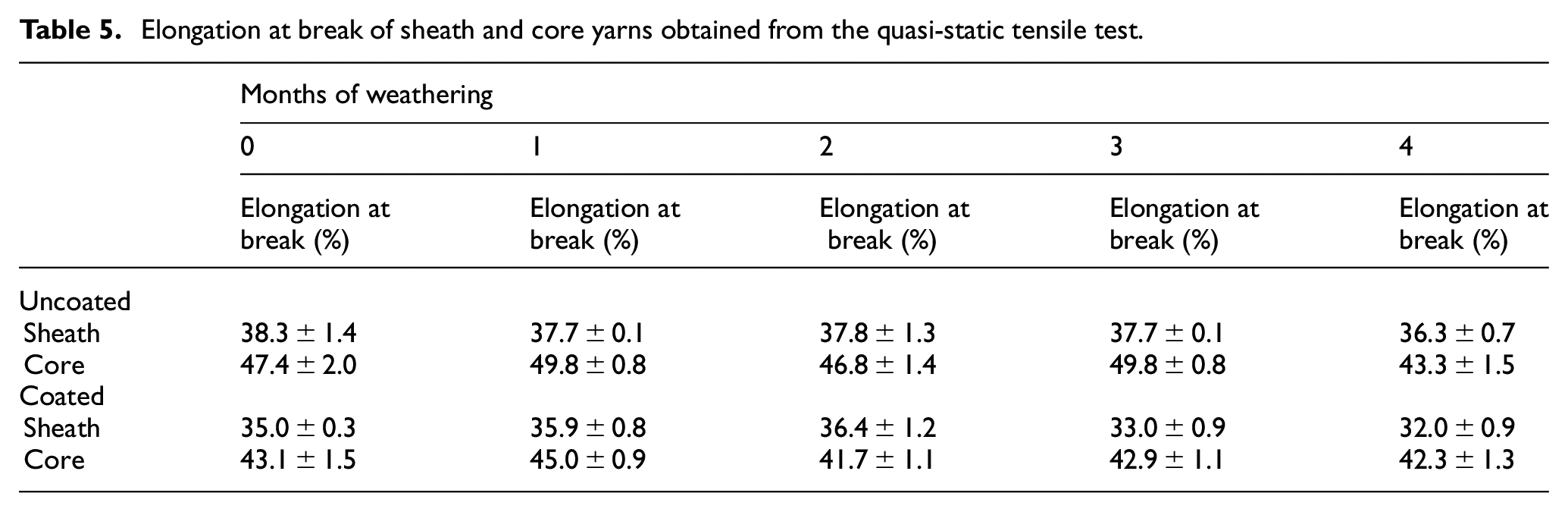
The second field of interest was the quasi-static tensile test of the ropes’ sheath and core yarns. The breaking force of the sheath yarns decreased from 64.1 to 61.7 N in the uncoated rope and 66.5–59.5 N in the coated rope. Also, the breaking force of the core yarns decreased from 107.5 to 99.5 N in the uncoated rope and 108.7–106.6 N in the coated rope (Table 4, relative values in Figure 7(a)). The elongation at break of the sheath yarns decreased from 38.3% to 36.3% in the uncoated rope and 35.0%–32.0% in the coated rope, similar to the elongation at break of the core yarns, which decreased from 47.4% to 43.3% in the uncoated rope and 43.1%–42.3% in the coated rope (Table 5 and Figure 7(b)).
Breaking force of sheath and core yarns obtained from the quasi-static tensile test.
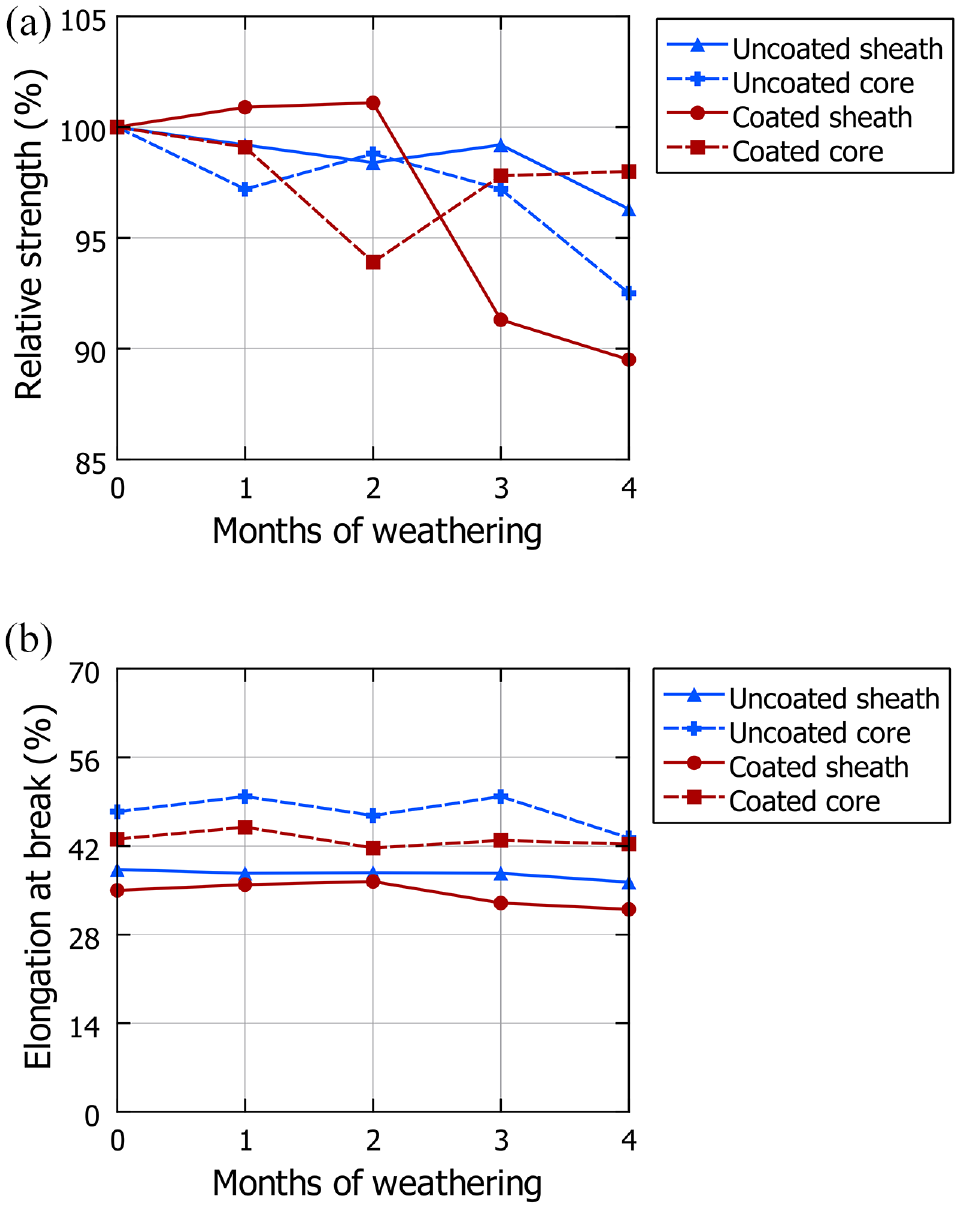
Elongation at break of sheath and core yarns obtained from the quasi-static tensile test.
Third, the intensity of the carbonyl region between 1770 and 1705 cm−1 of the infrared spectra in both the uncoated and coated ropes was examined. However, neither changes in the carbonyl region, nor any other significant differences in spectra were found (Figures 8 and 9).
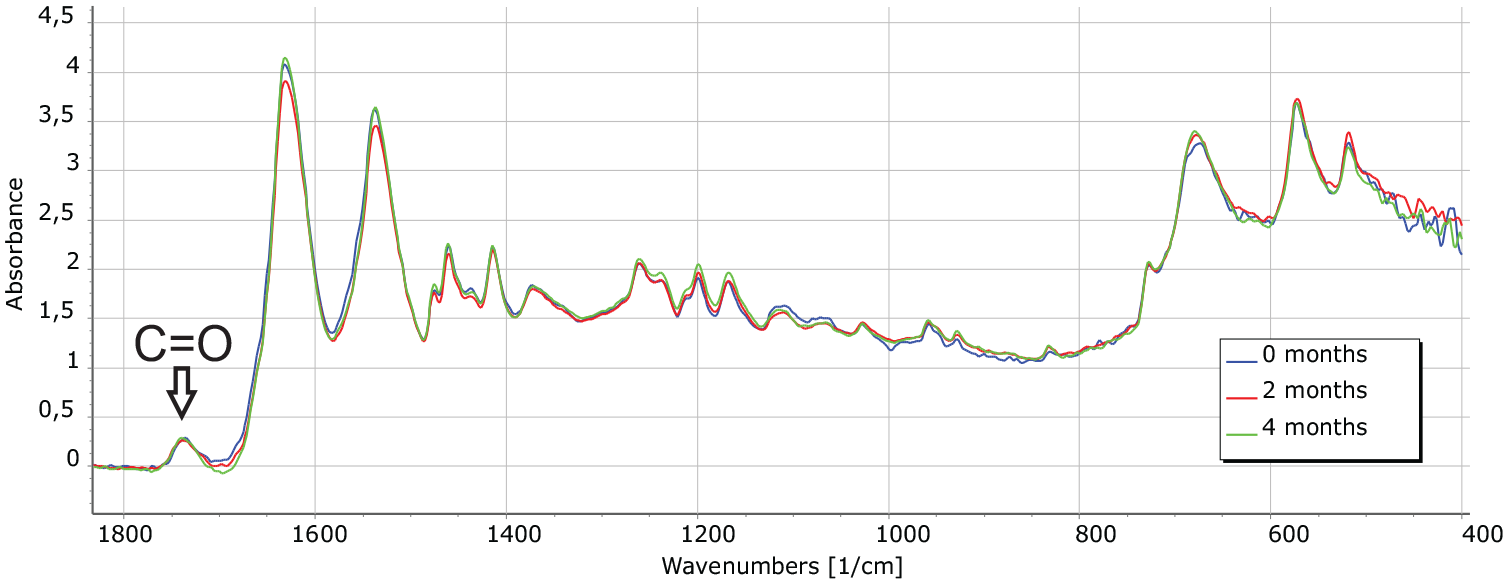
Fingerprint region from the FTIR spectra of the uncoated rope.
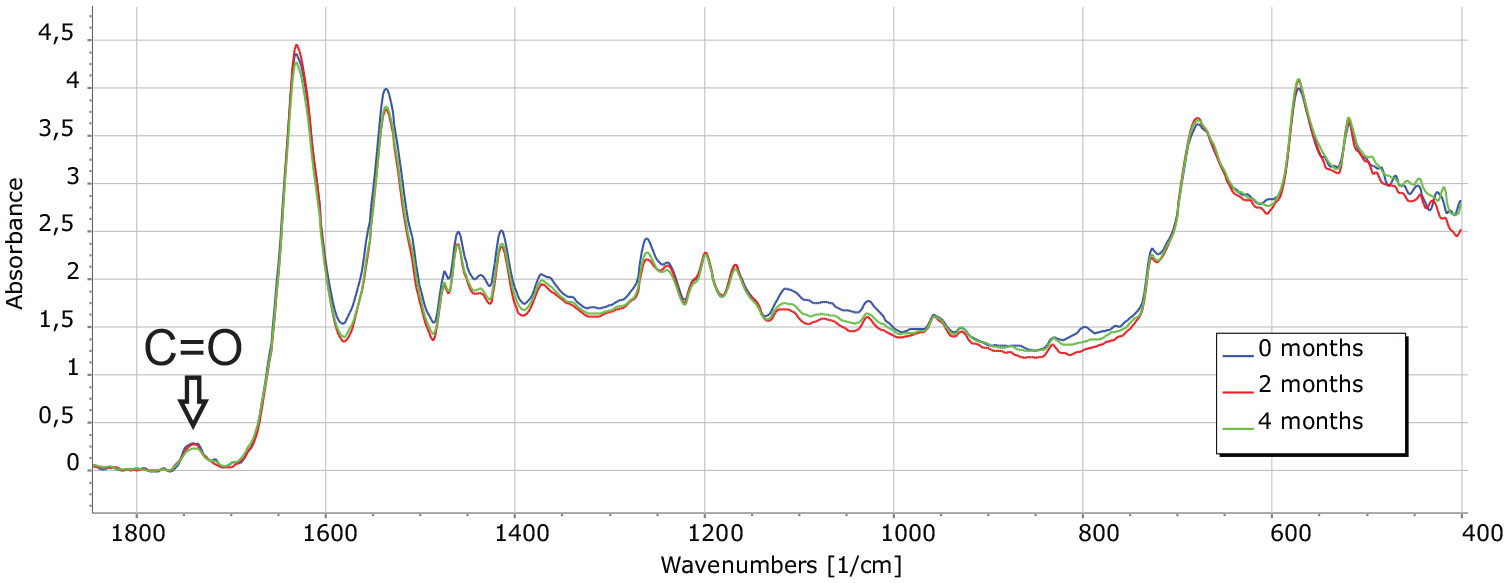
Fingerprint region from the FTIR spectra of the coated rope.
Fourth, changes in the length of ropes due to weathering were investigated. It was found that the uncoated rope stretched by 4.4 mm/m after 2 months and 21.6 mm/m after 4 months of weathering, whereas the coated rope shortened by 19.2 and 23.8 mm/m in the same time periods (Figure 10). Changes in length are visible as misalignment of the weave pattern (Figure 5).
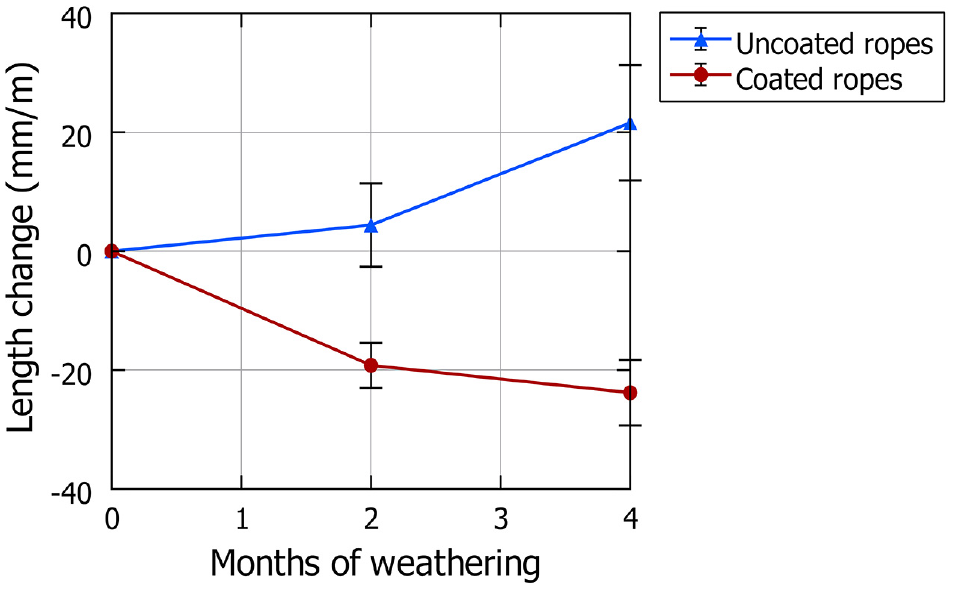
Changes in the length of the coated and uncoated ropes due to weathering.
Discussion
The quasi-static tensile test showed different ageing kinetics for the sheath yarns of the coated and uncoated ropes. After 3 and 4 months of weathering, the breaking force and elongation at break of the coated sheath yarns had decreased significantly more than that of the uncoated sheath yarns. The effect could be caused by products of decomposition of the coating. One of the most widely used impregnating chemicals in the textile industry, Teflon™ Fabric Protector, decomposes in a similar way to polymethacrylate 35 by the following process. After the initial photolysis of the ester side group, fluorinated side chains are released to form perfluoroalkyl substances (PFAS), which can further degrade to perfluorinated carboxylic acids. 36 Hydroxy, peroxy and alkyl radicals are formed in a chain reaction from the polymethacrylate molecular backbone. If another polymer-based chemical was used for hydrophobisation, the decomposition intermediates are also radicals. 35 Those radicals have the potential to abstract hydrogen atoms from neighbouring polyamide molecules and initiate a degradation chain reaction. This process could not be monitored with the FTIR spectrometer due to the very low concentrations of the coating, which is approximately 0.2–0.5 wt.%. The intermediate step in polyamide degradation is the formation of hydroperoxy groups. Hydroperoxy groups degrade further, either through photolysis to imide groups, which can be further hydrolysed causing a molecular chain scission, or through decomposition to polymer oxy radicals, which then abstract hydrogen from the same or neighbouring macromolecules and produce hydroxyl groups. Most products involve the formation of the C=O bond, however, an increase in the carbonyl peak in the FTIR spectra was not observed. Subramanian and Talele 23 stated that the photodegradation of polyamide 6 produces an appreciable decrease in the tensile strength and viscosity average molecular weight, but found no changes in the FTIR spectra. Also, other studies on polyamide degradation37,38 found no changes in the FTIR spectra, even though physicochemical changes were found using methods such as viscosity measurements, differential scanning calorimetry (DSC) or the tensile test. The results from the present study agree with the abovementioned studies. It seems that FTIR used alone is not an optimal technique to monitor the ageing of polyamides to the extent intended by this study. Instead, other methods such as molecular weight analysis, DSC, X-ray diffraction (XRD), electron spin resonance (ESR) or UV-Vis spectroscopy should be used.25,39 Some studies37,40,41 on polyamide degradation have attributed a reduction in elongation at break along with constant or increasing strength to the crosslinking of the polymer structure. Other studies38,41–44 showed a decrease in maximum tensile strength, along with a decrease in elongation at break, which was explained by the chain scission reactions as the main process leading to degradation. In the present study, a decrease in breaking force along with a small reduction in elongation at break were observed, which suggest that chain scission is the main degradation process.
Examining the uncoated rope before and after 4 months of weathering, a noticeable decrease in breaking force and elongation at break of the core yarns were observed. A decrease in breaking force of core filaments after 3 months of weathering was already reported, 11 but without further explanation. It is known that uncoated ropes absorb water into their structure more easily than coated ropes and take more time to dry. As can be seen in Figure 4(b) and (d), the ropes were exposed to a considerable amount of 100% moisture and regular precipitation, respectively. This water, if it contains dissolved atmospheric acids, can degrade polyamide. 45 To test this assumption, methods other than FTIR must be used.
The UIAA drop test revealed two main findings:
Weathering has only a minimal effect on the maximum force in the rope during a fall. The standard UIAA drop test showed no relevant changes in the maximum force in the coated rope and even decreased by 4.7% in the uncoated rope. This is a positive finding since the load on a climber’s body or self-placed protection (particularly vulnerable to be ripped off from a rock) in a fall is not elevated, and thus safety is maintained. Additionally, such small differences might only be due to the local variations in the ropes. The findings of the present study correspond with Signoretti, 11 who found no changes in maximum force after 3 months of weathering. To put the present results (maximum force approximately 6 kN) in context, for the half ropes, the maximum force in the first UIAA standard drop must be lower than 8 kN. Other studies showed an increase of approximately 11%–23% during the second drop after the first drop was conducted46–48 and an increase of approximately 5%–11% in the case of wet ropes,9,11 depending on the rope.
Weathering has a negative effect on the number of falls to failure. The decrease in the number of falls to failure observed in the present study was similar to Signoretti’s results, 11 who found a 10%–50% reduction after 3 months of weathering, depending on the rope and location of weathering. He stated that the decrease in the number of falls correlated with the decrease in the breaking force of the rope fibres, although the data are relatively scattered for such a conclusion. This correlation was not observed in the results from the present study. It should be mentioned that this decrease in the number of falls does not elevate the danger for climbers, because as previously stated, ropes never break due to overloading.2,4 One of the reasons is that in the standard UIAA drop test, the rope is subjected to a fall with a fall factor of 1.77 (ratio of fall length to rope length) with a solid rope attachment and a rigid weight. 33 During this extremely hard fall, a permanent plastic deformation occurs, causing the rope to stiffen, which then leads to lower stored energy capacity and higher maximum forces after each subsequent fall. 46 In fact, such hard falls do not occur when climbing. Furthermore, most of the damage to the rope takes place at a very localised area, namely where the carabine is simulated with a bending angle of 150° and a 5 mm radius. Since this small part of the rope remains in the same place when it is bended during the UIAA drop test, the cumulative damage of each successive drop leads to rope breakage, as described by Leuthäusser. 46 However, in real fall situations, this bending usually occurs at random places, therefore distributing the localised damage along the length of rope. The present study showed a decrease in the number of falls to failure of 20% in the coated rope and 50% in the uncoated rope, whereas in previous studies, the number of falls decreased 55%–73% in wet ropes,9,11 25%–64% in frozen ropes, 11 28%–36% after simulated mechanical usage, 9 and 50% after only 80 cycles of top rope climbing, which can be reached after a few days of climbing. 12
The following questions arise from the results of the tensile and drop tests. Why does the number of drops between the coated and uncoated rope decrease differently and why is this decrease disproportional to the decrease in breaking force and elongation at break of yarns? The authors would like to propose a mechanism that may explain this behaviour. In the literature,2,14 rope length reduction due to weathering or use was reported. Arrieta et al. 14 attributed it to the change in crystallinity of polyamide, which is due to the higher mobility of polymer molecules after photo-induced chain scission. They stated that higher density brought about by the larger crystalline fraction found in aged polyamide 6 fibres was the phenomenon most likely to account for the significant reduction in length of the polyamide 6 ropes observed after ageing. In the present study, the coated rope shortened by 24 mm/m and the uncoated rope elongated by 22 mm/m after 4 months of weathering. Based on Arrieta et al.’s findings of increased crystallinity in weathered ropes, the authors of the present study propose the following explanation of a mechanism, which can potentially lead to improved resistance against the decrease in the number of UIAA falls. Most of the change in crystallinity must occur in the sheath of the rope because it is exposed to direct sunlight, while the core is protected from sunlight by a sheath. Therefore, the sheath shrinks due to the change in crystallinity and increases its radial pressure on the core. Pan and Brookstein 49 stated that during the fracture process of yarns in twisted structures, fibres break repeatedly along their length, increasing the strain of the structure before overall material failure. This phenomenon indicates that, contrary to common assumption, a broken fibre can again build up tension, carry load, break into even shorter segments and contribute towards overall system strength. Moreover, fibre breaks will not stop as long as the whole structure does not collapse (i.e. until the length of the breaking segments reaches a minimum value at which its load can no longer build up to its segment breaking strength). This length is well known as the critical length lc as shown in equation (1) 49 :

where σb is the breaking strength, r is the fibre radius, µ is the coefficient of friction between fibres, and g is the local lateral pressure. It can therefore be seen from the equation that if an increased lateral pressure is induced in the rope structure due to the shrinkage of the sheath, this allows the yarn to withstand greater damage until the whole rope breaks. This mechanism can contribute to improving the resistance to reducing the number of falls to failure, in the present case with a coated rope, or, on the other hand, contribute to reducing the falls to failure in the case of an uncoated rope when the lateral pressure is reduced. If the proposal was implemented into Leuthäusser’s 46 model of the climbing rope fracture, the damage parameter µ would need to be modified. This parameter describes the local damage to the rope structure at the anchor point during the drop test (where the rope breaks), in which several other parameters are merged. These parameters depend mainly on the anchor radius, but also, for example, on the different rope coatings and sheath/core ratio.
Conclusion
This study presents the effects of 4 months of weather exposure on the physico-chemical changes of climbing ropes and examines the role of hydrophobic coating on the ageing process. The results suggest that the hydrophobic coating can accelerate the degradation of polyamide yarns in the sheath by radicals formed during photo-induced degradation, while also prevent potential hydrolytic reactions in the core by preventing water penetration.
A reduction in the number of falls to failure was found with the decrease more pronounced in the uncoated rope. This reduction was not proportional to the reduction in the breaking force of the yarns, indicating that another process may be the cause. Therefore, a mechanism was proposed to explain the difference in the number of falls between coated and uncoated ropes due to changes in the radial pressure of the sheath on the core through changes in the crystallinity of the sheath yarns.
The maximum force in a fall did not significantly change due to weathering. Thus, the loads on a climber’s body or climbing protection would not be elevated.
If 4 months of exposure to weather is considered to be a relevant time span for simulating the life of a commonly used rope, then it can be concluded that weathering has no negative impact on the safety of climbers. However, photo-induced degradation processes of the coated polyamides should be studied in more detail, since the higher rate of photo-induced degradation of their mechanical properties could be detrimental in static personal safety equipment, such as accessory cords or slings.
Footnotes
Appendix
Acknowledgements
The authors would like to thank Innsbrucker Nordkettenbahnen for providing the space for installing the weathering construction on the Hafelekar cable car station. The authors would also like to thank the Avalanche Warning Service Tyrol (Lawinen Warndienst Tirol) and Central Institute for Meteorology and Geodynamics (Zentralanstalt für Meterologie und Geodynamik)) for kindly providing the meteorological data.
Declaration of conflicting interests
The author(s) declared no potential conflicts of interest with respect to the research, authorship, and/or publication of this article.
Funding
The author(s) disclosed receipt of the following financial support for the research, authorship, and/or publication of this article: This work is part of the Interreg V – AlpSporTec project and was supported by the European Regional Development Fund [project ITAT1027].
