




Abstract
Matrix metalloproteinase-9 (MMP-9) has been shown to participate in the pathogenesis of sepsis. In this study, we recruited 312 sepsis patients and 413 controls to explore the relationship between sepsis risk and the MMP-9 -1562 C/T polymorphism in Han Chinese. The PCR restriction fragment length polymorphism method was used for genotyping. Our data indicated that the MMP-9 -1562 C/T polymorphism was related with the risk of sepsis (CT vs. CC: P = 0.033, odds ratio (OR) = 1.45, 95% confidence interval (CI) 1.03–2.05; TT+CT vs. CC: P = 0.019, OR = 1.49, 95% CI 1.07–2.07). Stratified analyses demonstrated that this effect was more evident in smokers, drinkers, females and overweight individuals. Furthermore, cross-over analyses suggested that the combined effect of smoking and CT genotype of -1562 C/T polymorphism contributed to the risk of sepsis. In addition, MMP-9 serum levels were significantly lower in sepsis patients than in controls. The MMP-9 -1562 C/T polymorphism was significantly associated with decreased MMP-9 serum levels. Lastly, we observed that this polymorphism was connected to the mortality of sepsis. In conclusion, the interaction between the MMP-9 -1562 C/T polymorphism and smoking correlated with the risk of sepsis in Han Chinese. This polymorphism may serve as a diagnostic marker for sepsis patients.
Introduction
Sepsis is a severe syndrome, which is defined as an infection with an imbalance of immune response. 1 In high-income countries, data have shown that approximately 19.4 million severe sepsis and 31.5 million sepsis patients occur worldwide annually. 1 Pneumonia and urinary tract and intraperitoneal infections are the main causes of sepsis.2–5 Increasing evidence indicates single-nucleotide polymorphisms (SNPs) of certain genes are involved in the pathogenesis of infection and sepsis.6–9
Matrix metalloproteinase-9 (MMP-9) is an important zinc-dependent proteinase, which is predominantly produced by neutrophils and macrophages. MMP-9 is shown to regulate inflammation in different diseases.10–12 Meanwhile, MMP-9 also remodels the extracellular matrix and controls the activity of numerous growth factors, cytokines, cell adhesion molecules and chemokines, which are essential in inflammation.13,14 In sepsis, MMP-9 is associated with increased vascular permeability, which promotes inflammatory cell migration and regulates the crucial inflammatory response. 15 Previous studies have indicated that plasma MMP-9 levels are increased in severe sepsis patients, with MMP-9 negatively associated with the severity of sepsis. 16
The gene encoding MMP-9 has been shown to be located on chromosome 20q11.2–13.1. The levels of MMP-9 were shown to be related to the development of sepsis. 17 Several studies have addressed the connection between sepsis susceptibility and the MMP-9 -1562 C/T polymorphism.17–19 However, they did not find an association between this polymorphism and sepsis risk. Thus, we determined to explore the link between this polymorphism and the risk of sepsis in Chinese subjects.
Methods
Subjects
At total of 312 sepsis cases and 413 matched controls were recruited from our hospital in this study. The diagnosis of sepsis patients followed the criteria of Dellinger et al. 20 The controls, who underwent a health check-up at our hospital during the study period, were included during the same period. Controls with autoimmune or infectious diseases were excluded. Demographic and risk factor information were collected by use of a written questionnaire. Individuals consuming more than an average of one alcoholic beverage per day were considered as drinkers. All enrolled participants provided informed consent. The hospital Ethics Committee approved this study, which met the standards of the Declaration of Helsinki.
Polymorphism genotyping
Using a TIANamp Blood DNA kit from Tiangen Biotech (Beijing, PR China), genomic DNA was obtained from peripheral blood leucocyte samples of all participants. The PCR restriction fragment length polymorphism method was utilised to genotype the MMP-9 gene polymorphism. The relevant primers were utilised for genotyping this polymorphism using the primers 5′-GCCTGGTGGCACATAGTAGGCCC-3′ (sense) and 5′-CTTCCTAGCCAGCCGGCATC-3′ (antisense). Approximately 10% of the samples were re-genotyped to replicate previous results, and the uniformity was 100%.
MMP-9 level measurement
Blood samples were obtained within 24 h after admission. These blood samples were stored at –80°C before use. MMP-9 levels were determined using an ELISA kit (R&D Systems, Minneapolis, MN) according to the manufacturer’s instructions.
Statistical analysis
IBM SPSS Statistics for Windows v22.0 (IBM Corp., Armonk, NY) was utilised for all statistical analyses, with a significance level of P < 0.05. Continuous variables were analysed by Student’s t-test; categorical variables were addressed with the chi-square (χ2) test. A goodness-of-fit χ2 test was utilised to evaluate the Hardy–Weinberg equilibrium (HWE) test among the controls. Odds ratios (ORs) and relevant 95% confidence intervals (CIs) were determined using logistic regression analysis. Cross-over analysis was used to investigate gene–environmental interactions (such as gene×smoking and gene×drinking).
Results
Clinical features of the studied population
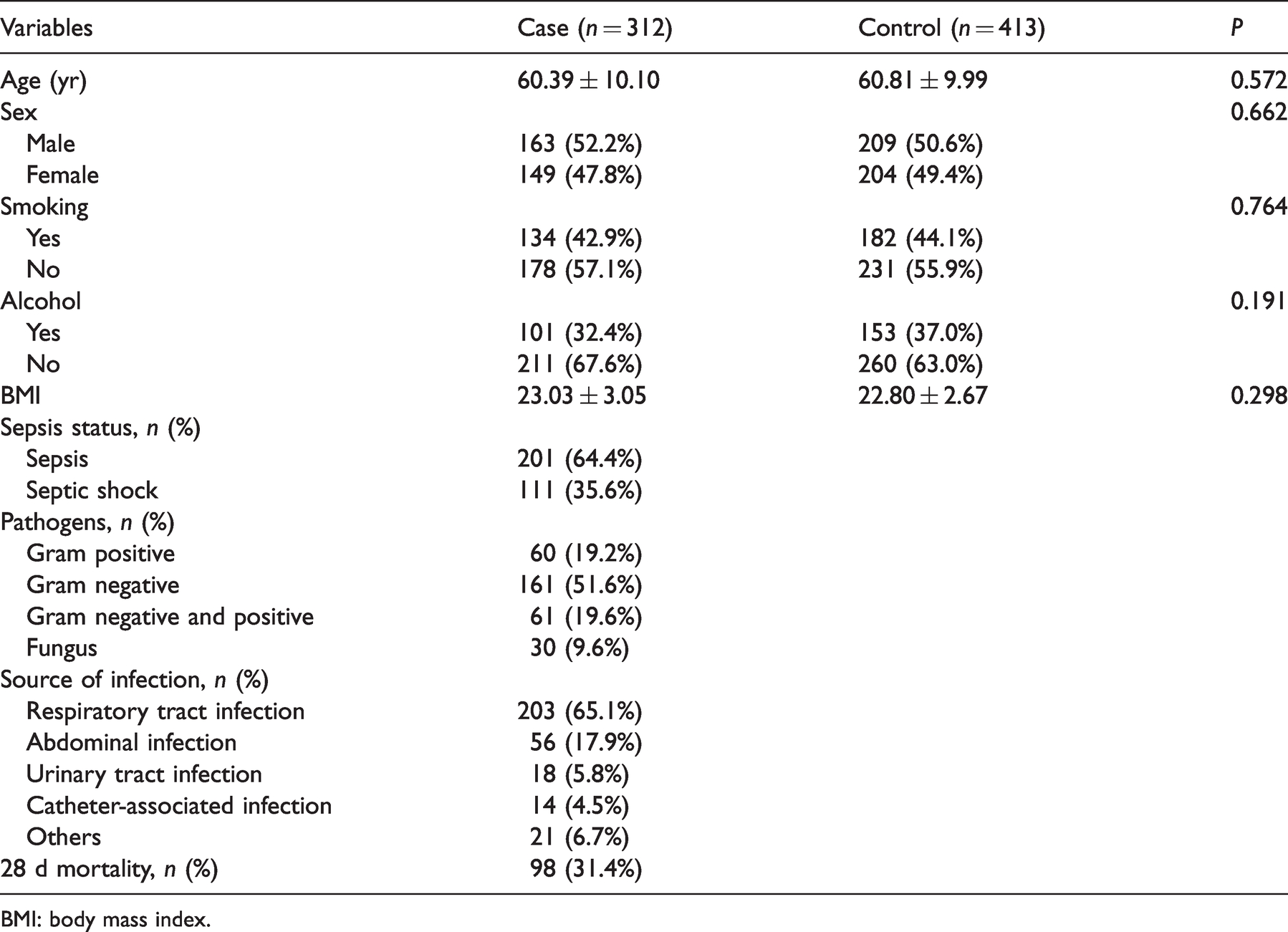
Table 1 presents the clinical features and demographic information of all subjects. There were no evident differences regarding the sex and age distribution or the percentages of smokers and drinkers between the cases and controls. The sepsis group consisted of 111 septic shock and 201 sepsis patients. Other characteristics of sepsis are also shown in Table 1.
Variables for sepsis patients and controls.
BMI: body mass index.
MMP-9 -1562 C/T polymorphism conferred increased susceptibility to sepsis
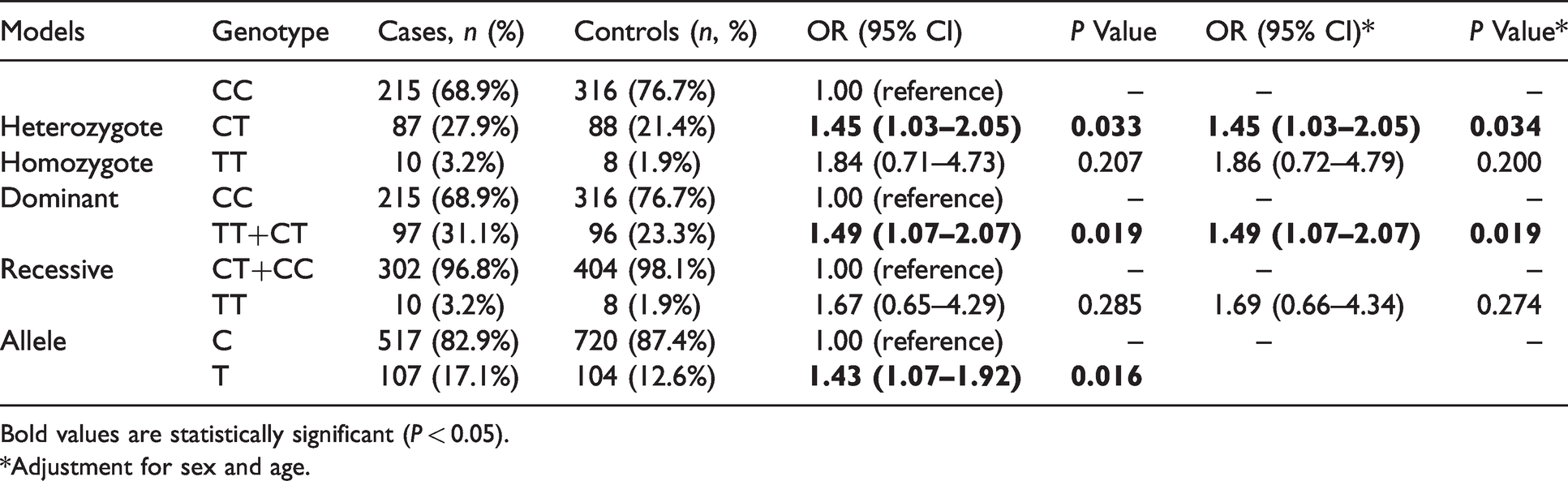
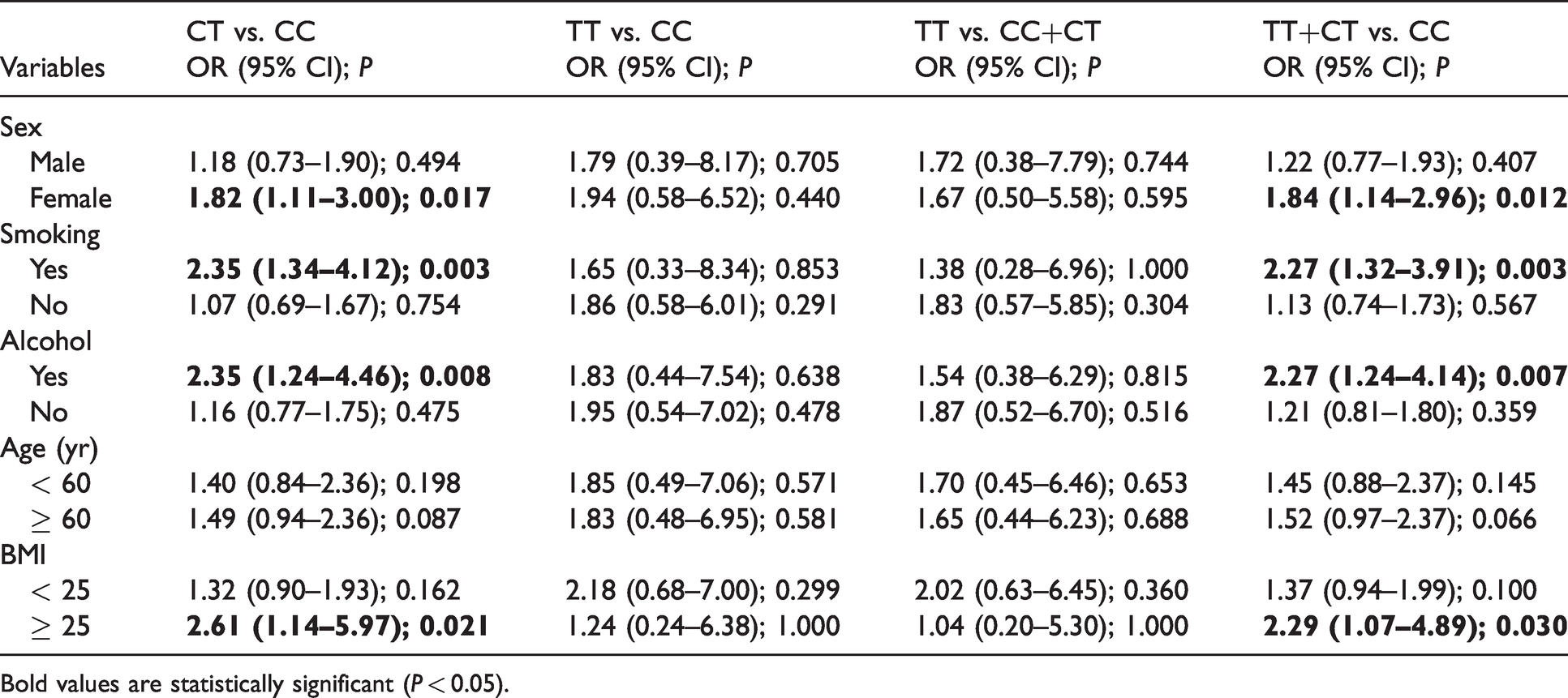
Table 2 summarises the allele and genotype frequencies of this polymorphism. The data showed that the TT+CT and CT genotypes were linked with the risk of sepsis (CT vs. CC: P = 0.033, OR = 1.45, 95% CI 1.03–2.05; TT + CT vs. CC: P = 0.019, OR = 1.49, 95% CI 1.07–2.07). After adjusting for sex and age, these significant findings still held. Similarly, the T allele was also correlated with the risk of sepsis. Subgroup analyses observed that this effect for sepsis was also present in females, smokers, drinkers and overweight subjects (body mass index (BMI) ≥ 25 kg/m2; Table 3). Next, we measured MMP-9 serum levels in 312 sepsis patients and 413 controls. MMP-9 serum levels were 640.1 ± 127.2 ng/ml in sepsis patients and 659.3 ± 131.1 ng/ml in controls, respectively. For sepsis patients, MMP-9 serum levels were 649.2 ± 123.9 ng/ml in CC genotype carriers (215 individuals), 616.8 ± 133.6 ng/ml in CT genotype carriers (87 individuals) and 647.6 ± 129.0 ng/ml in TT genotype carriers (10 individuals). We found that MMP-9 levels were significantly lower in sepsis patients than in controls (Supplemental Figure S1). In addition, we found that the MMP-9 -1562 C/T polymorphism was significantly linked with decreased MMP-9 serum levels (Supplemental Figure S2).
Correlation between the MMP-9 -1562 C/T polymorphism and sepsis risk.
Bold values are statistically significant (P < 0.05).
*Adjustment for sex and age.
Stratified analyses between the MMP-9 -1562 C/T polymorphism and risk of sepsis.
Bold values are statistically significant (P < 0.05).
Then, we interpreted the link between this polymorphism and clinical features of sepsis. We found that the CT or CT+TT genotype was connected to the mortality of sepsis (Supplemental Table S1). However, we observed that the MMP-9 -1562 C/T polymorphism was not associated with the type of microorganisms isolated from blood cultures and from other sources.
Cross-over analysis
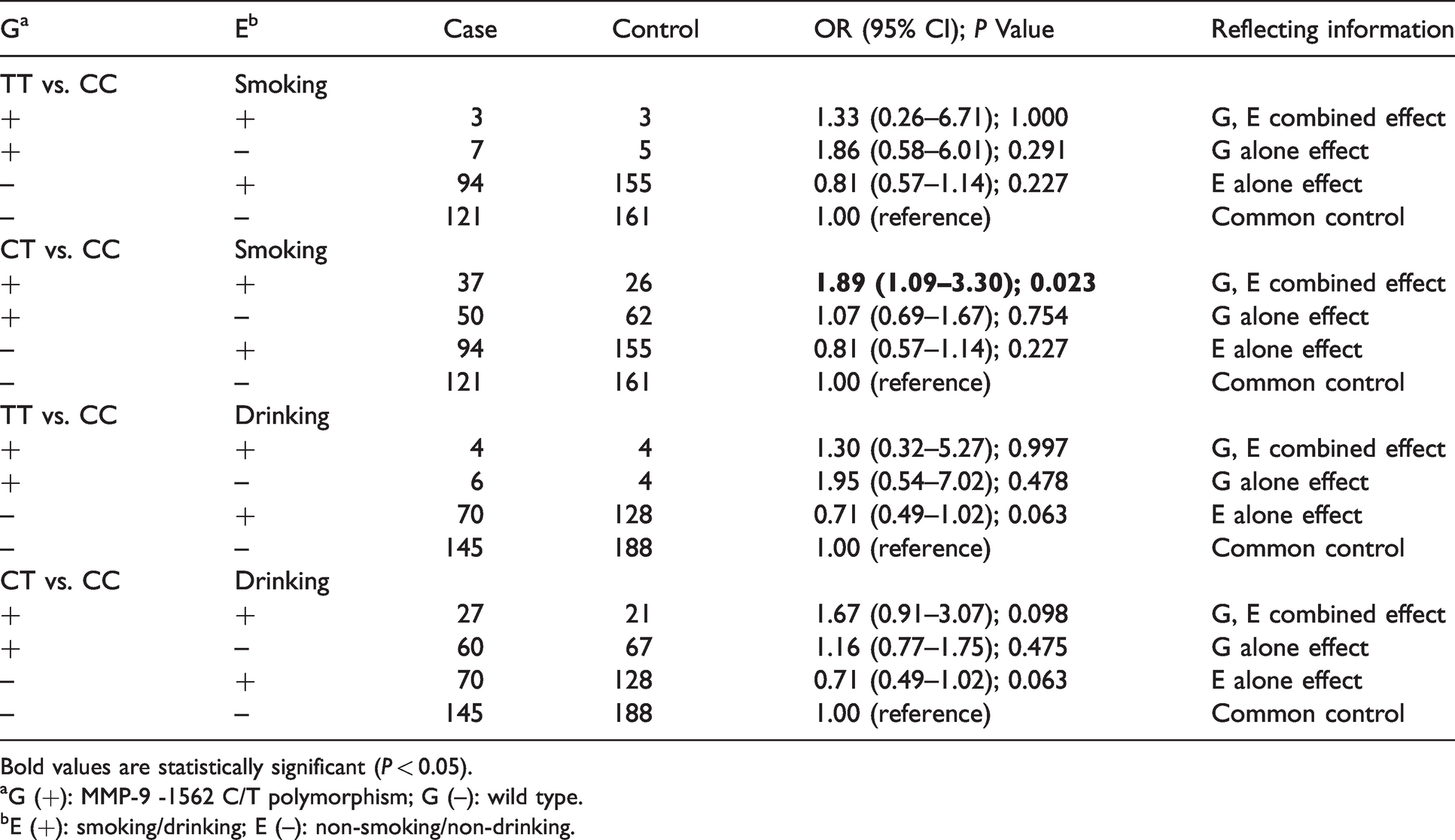
Finally, we estimated the combined effects of this SNP with either alcohol consumption or smoking on sepsis risk. We found that smokers carrying the CT genotype were related to the risk of sepsis when comparing to non-smokers carrying the CC genotype (OR = 1.89, 95% CI 1.09–3.30; P = 0.023; Table 4). However, no interaction was obtained between drinking and the risk of sepsis. The data suggested an evident interaction between the CT genotype and smoking, which was relevant with the risk of sepsis.
Genetic (G) and environmental (E) factors for 2 × 4 fork analysis.
Bold values are statistically significant (P < 0.05).
aG (+): MMP-9 -1562 C/T polymorphism; G (–): wild type.
bE (+): smoking/drinking; E (–): non-smoking/non-drinking.
Discussion
Herein, the MMP-9 -1562 C/T polymorphism had a relationship with the risk of sepsis in this study. Subgroup analyses suggested that this risk was more evident in smokers, drinkers, females and overweight individuals (BMI ≥25 kg/m2). Furthermore, the combination of smoking and CT genotype produced a significantly higher risk of sepsis.
Several recent studies have explored the connection between sepsis risk and the MMP-9 -1562 C/T polymorphism. However, they obtained negative findings. Martin et al. from Spain first explored the link between this SNP and sepsis risk, and no significant association was observed. 17 However, an association of MMP-9 levels with sepsis was shown in their study. 17 A subsequent Spanish study also showed that the -1562 C/T polymorphism did not correlate with a risk of sepsis among another Spanish population. 18 In addition, Bermúdez-Mejía et al. from Colombia indicated that this SNP did not confer increased susceptibility to sepsis. 19 In addition, they found that this polymorphism was not related to MMP-9 levels or sepsis mortality. 19 On the one hand, although these studies found similar results to some extent, the findings of some studies may be false-positives due to limited sample sizes. On the other hand, no Chinese studies have investigated this issue before. Therefore, we performed this retrospective study to explore the connection between the MMP-9 -1562 C/T polymorphism and sepsis risk in Chinese individuals. We found that the CT or TT+CT genotype or T allele showed an association with the risk of sepsis. To be clear, this is the first Chinese case-control study to find such an association. Our findings differed significantly from those of other studies. Some factors may account for these paradoxical results. First, clinical heterogeneity may be a potential factor. Second, the varied sample sizes may contribute to it. Third, a racial difference is possible. Fourth, exposure factors for sepsis patients differed among these studies.
In addition, stratified analyses suggested that the increased risk of sepsis was also seen in smokers, females, drinkers and overweight individuals (BMI ≥ 25 kg/m2). Obviously, this effect of the MMP-9 −1562 C/T polymorphism on sepsis risk was more evident in obese patients, drinkers, smokers and female patients. We speculated that these populations were more susceptible to sepsis because of greater interactions between genetic factors and these factors. Therefore, we postulated that the interactions between the −1562 C/T polymorphism and these factors may be associated with an increased risk of sepsis. To evaluate further the interactions between environmental (smoking or drinking) and genetic factors to sepsis susceptibility, we used cross-over analysis. The data showed that the combination effect of smoking and CT genotype of this SNP accounted for an elevated risk of sepsis.
There are a number of potential limitations to this study. First, the sample size of this hospital-based study was not large enough, which may yield false-positive results. Second, this study investigated only one SNP. Whether other MMP-9 gene variants contributed to the risk of sepsis should be examined. Third, due to our use of a hospital-based case-control design, selection bias was unavoidable. Last, potential mechanisms whereby this polymorphism affected the incidence of sepsis should be investigated.
In conclusion, the interaction between the MMP-9 -1562 C/T polymorphism and smoking is related with the risk of sepsis among Chinese Han individuals. Other Chinese studies should also be conducted to verify these findings.
Supplemental Material
sj-pdf-1-ini-10.1177_1753425921992414 - Supplemental material for Matrix metalloproteinase-9 -1562 C/T polymorphism is associated with the risk of sepsis in a Chinese population: A retrospective study
Supplemental material, sj-pdf-1-ini-10.1177_1753425921992414 for Matrix metalloproteinase-9 -1562 C/T polymorphism is associated with the risk of sepsis in a Chinese population: A retrospective study by Cuijuan Zheng, Jiayu Wang and Shouxiang Xie in Innate Immunity
Supplemental Material
sj-pdf-2-ini-10.1177_1753425921992414 - Supplemental material for Matrix metalloproteinase-9 -1562 C/T polymorphism is associated with the risk of sepsis in a Chinese population: A retrospective study
Supplemental material, sj-pdf-2-ini-10.1177_1753425921992414 for Matrix metalloproteinase-9 -1562 C/T polymorphism is associated with the risk of sepsis in a Chinese population: A retrospective study by Cuijuan Zheng, Jiayu Wang and Shouxiang Xie in Innate Immunity
Footnotes
Declaration of conflicting interests
The author(s) declared no potential conflicts of interest with respect to the research, authorship and/or publication of this article.
Funding
The author(s) received no financial support for the research, authorship and/or publication of this article.

Supplemental material
Supplemental material for this article is available online.
References
Supplementary Material
Please find the following supplemental material available below.
For Open Access articles published under a Creative Commons License, all supplemental material carries the same license as the article it is associated with.
For non-Open Access articles published, all supplemental material carries a non-exclusive license, and permission requests for re-use of supplemental material or any part of supplemental material shall be sent directly to the copyright owner as specified in the copyright notice associated with the article.
