




Abstract
The observations on the protective effect of bacterial endotoxin in farm-derived cow’s milk on childhood asthma and allergy are contradictory. The aim of this study was to determine the endotoxin levels in ‘farm-derived whole raw’ and ‘processed shop’ sources of cow’s milk, and to test how the temperature and storing conditions might alter their endotoxin concentrations. Milk was collected from farms and shops. The level of endotoxin was measured by micro (gel-clot) Limulus amebocyte lysate test expressed as EU/ml. The concentration ranges of endotoxin were much higher and more widely scattered in the samples of whole raw farm milk than in the processed shop milk. Cold storage or heating increased the endotoxin concentrations in all samples of farm milk, but not in the processed shop milk. These results show that elevated levels of endotoxin in raw farm milk samples can occur from the cowshed or be formed during storage. In processed shop milk, storage does not cause any changes in the amount of endotoxin. Therefore, it is consistent that the handling and storage of raw milk alters the endotoxin concentrations, which may explain previous contradictory findings regarding the beneficial modulating effects on innate immunity toward allergy prevention in early childhood.
Introduction
The GABRIEL Advanced Studies and an earlier study show the protective effects of Alpine farm environments on childhood asthma and allergy,1,2 and suggest that the daily consumption of farm milk is one of the protective factors. Increased endotoxin concentrations were found in the house dust of farms compared with urban environments, suggesting a possible protective effect against the development of atopy.3–6 Other microbial products also have been associated with a reduced risk of allergy and asthma.7,8 In the PASTURE study, endotoxin concentrations were found to be significantly higher in milk samples from non-farming families compared with farming families, but no significant difference was detected in the endotoxin levels of shop milk and farm milk samples. 9 After publication of this article, a new series of analysis (GABRIELA study) concluded that the beneficial, asthma and allergy protecting constituents of milk could be related to the whey fraction of unprocessed cow’s milk,10,11 and not to the microbial contamination of milk samples. Recently, increased regulatory T cell numbers were found to be associated with farm milk exposure and lower atopic sensitization and asthma in childhood. 12
The aim of our study was to compare the endotoxin concentration in samples of ‘farm-derived whole raw’ and ‘processed shop’ sources of cow’s milk under strict pre-analytical conditions. Further, the effects of storing, freezing, heating and boiling were tested to determine if they affected endotoxin concentrations.
Methods
The measurement of endotoxin concentration in various cow’s milk samples
Cow’s milk samples: (a) whole raw milk collected from cowsheds and farm tanks fat level >3.5% (n = 15); (b) processed shop milk, fat level 2.8–1.5% (n = 8). All processed milk samples were previously homogenized and heat-treated by their manufacturers using a combination of three methods: (1) pasteurization; (2) extended shelf life (ESL) technique; (3) micro-filtration. All milk samples were collected and maintained at 4℃ until the special heat/cold treatments and the measurements were carried out; all samples were collected in endotoxin-free glass bottles. Endotoxin levels measured within 24 h represented the ‘fresh’ values. In all samples, just prior to heat or cold treatments the endotoxin concentrations were again determined (basal concentrations; basal I, II, III).The changes in the endotoxin concentrations caused by the treatments were compared to these basal concentrations.
The temperature treatments for the 500 ml milk samples were as follows: (1) freezing at −16℃ for 72 h; (2) cold storage (cooling) at 4℃ for 72 h (3) heating at 98℃ for 10 min in a water bath; (4) boiling for 10 min at 100℃. Measurement of endotoxin in milk samples took place by gel-clot micro Limulus amebocyte lysate (LAL) (Pyrotell; Associates of Cape Cod Inc., East Falmouth, MA, USA.) using LAL Reconstitution Buffer (Pyrosol; Associates of Cape Cod Inc.) and concentration standards (Control Standard Endotoxin; Associates of Cape Cod Inc.) at pH 7.2–7.8, always in the presence of both positive and negative controls. The range of pH in the various milk samples without LAL buffer was 6.1–6.7. The validity of bacterial endotoxin micro-LAL test was pH 6.0–8.0. All samples reached room temperature before they were treated or diluted by endotoxin-free LAL water (PCDL, Debrecen, Hungary). The dilutions were prepared after the samples and LAL water reached 38℃. Thus, there was no temperature and difference between the milk and water diluted milk samples throughout the measurements carried out in comparable homogeneous solutions. The minimum dilution was 1:10, the maximum dilution was 1:100,000. At first, a 10-fold dilution series was prepared, followed by a two-fold dilution series. The amount of endotoxin was expressed in endotoxin units EU/ml. The losses in the volumes during heating and boiling were corrected in concentration calculations. The detection limit of the assay was 0.03 EU/ml.
Statistical analysis
For statistical analysis the non-parametric Mann–Whitney test was used in the two sources of milk. A P-value < 0.05 was regarded as significant. In addition, ‘median’, ‘minimum’ and ‘maximum’ values also were calculated. In Figure 1, the thick lines in the box-plots show medians, whereas the boxes reflect the 50 percentiles. The calculations were carried out using the statistical software SPSS 20.0 (IBM, Armonk, NY, USA).
Box-plots of endotoxin concentrations (EU/ml) in the samples of whole raw farm-derived and processed shop milks. The thick lines in the box-plots show medians, whereas the boxes reflect the 50 percentiles of data.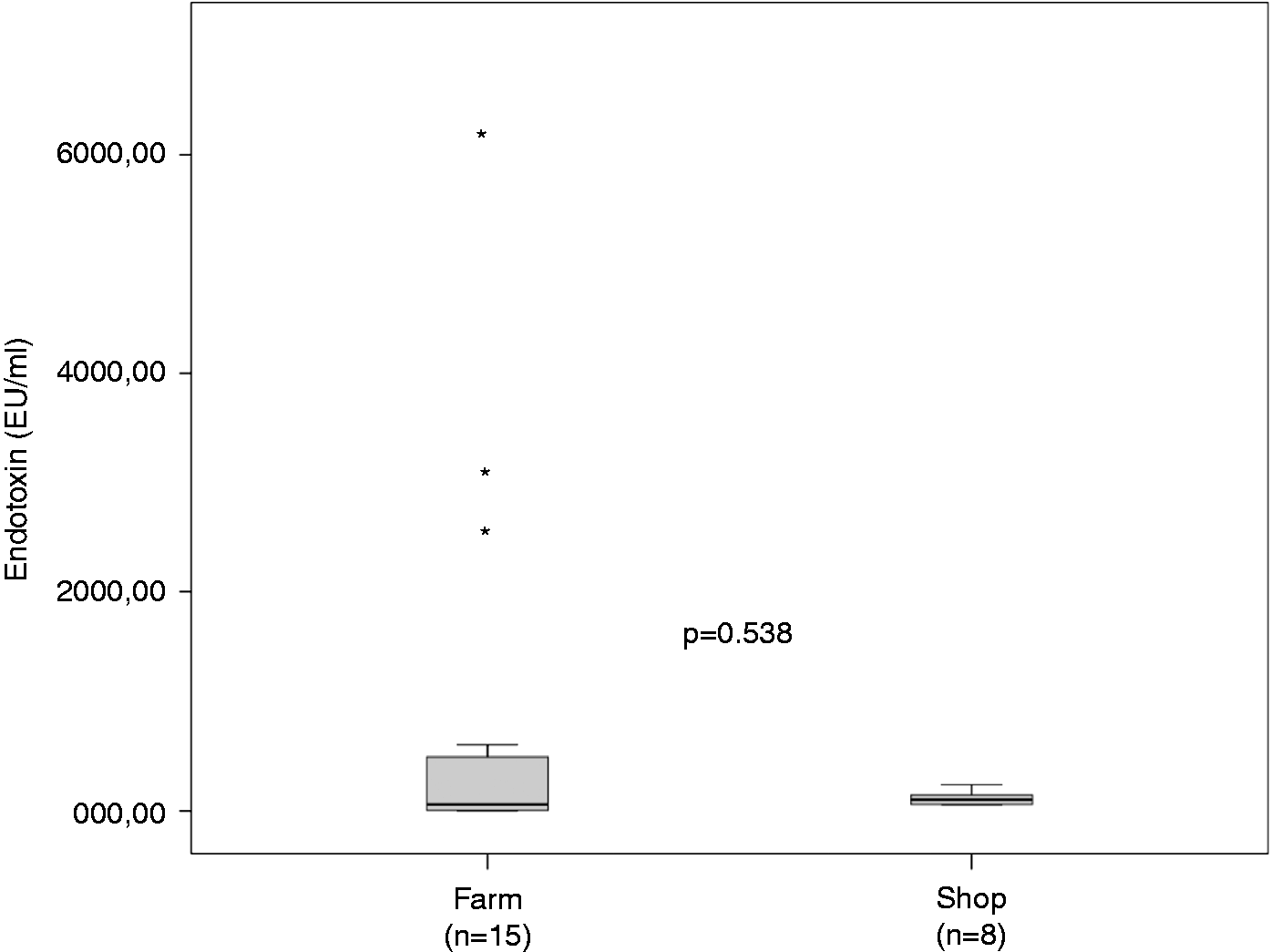
Results
Box-plots of endotoxin concentrations (EU/ml) in the samples of whole raw farm-derived and processed shop milks
The peak concentration of endotoxin was much higher in the whole raw farm milk (6144 EU/ml) than in the processed shop milk samples (240 EU/ml); however, the difference was not significant between the two groups (P = 0.538) owing to the large variance, whereas the median value of farm milk was 60.0 and the median value of shop milk was 102.5 EU/ml in this series of samples.
The ‘fresh’ endotoxin levels, fat percentages, origin, forms of processing and types of various cow’s milk samples derived from farms and shops stored at 4℃ for 24 h.
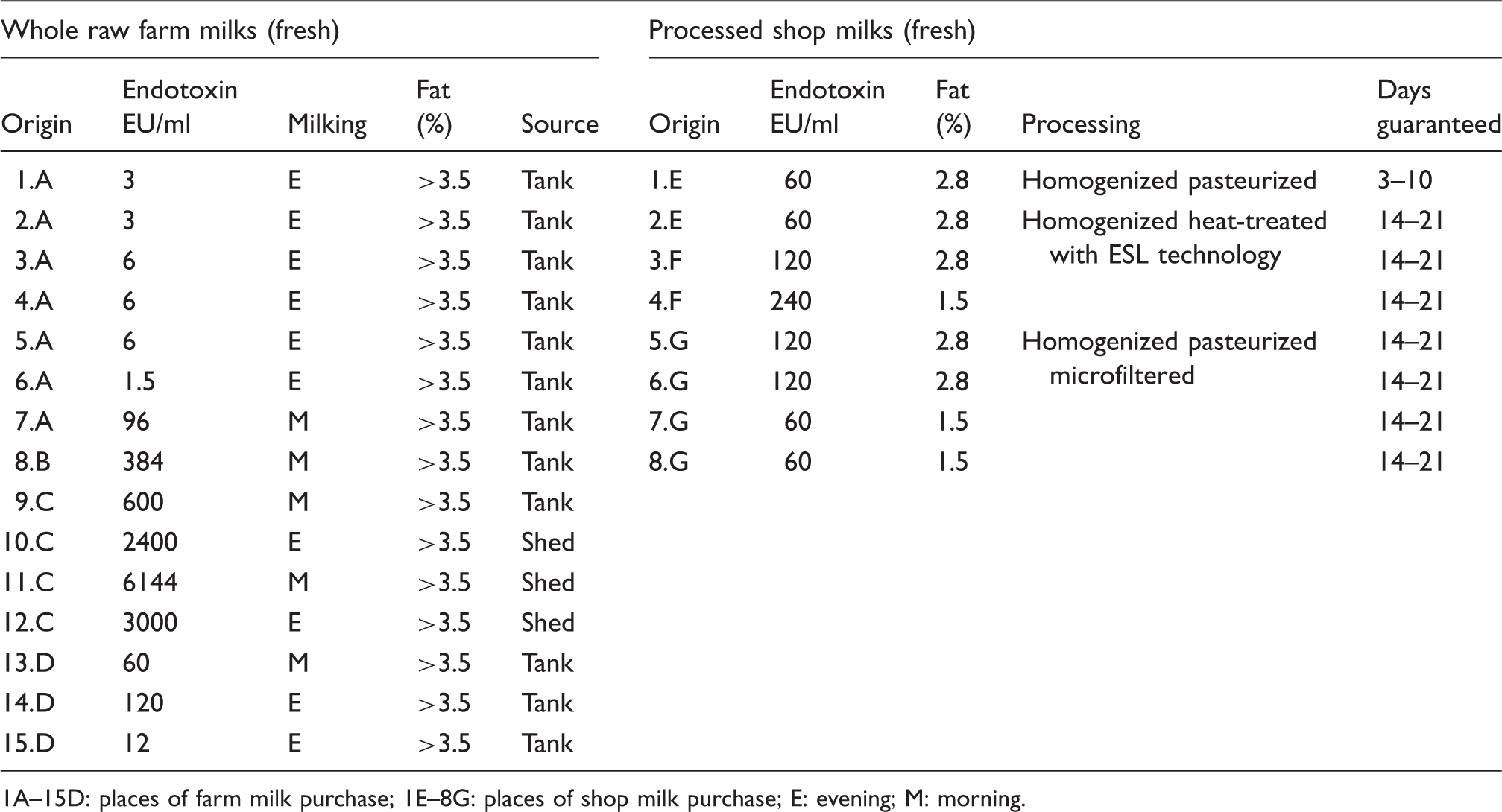
1A–15D: places of farm milk purchase; 1E–8G: places of shop milk purchase; E: evening; M: morning.
The effects of storing, cooling, freezing, heating and boiling on the results of the measurements of endotoxin levels in cow’s milk samples derived from farms and shops compared to the basal concentrations (basal I, II, III) measured just before the treatments.
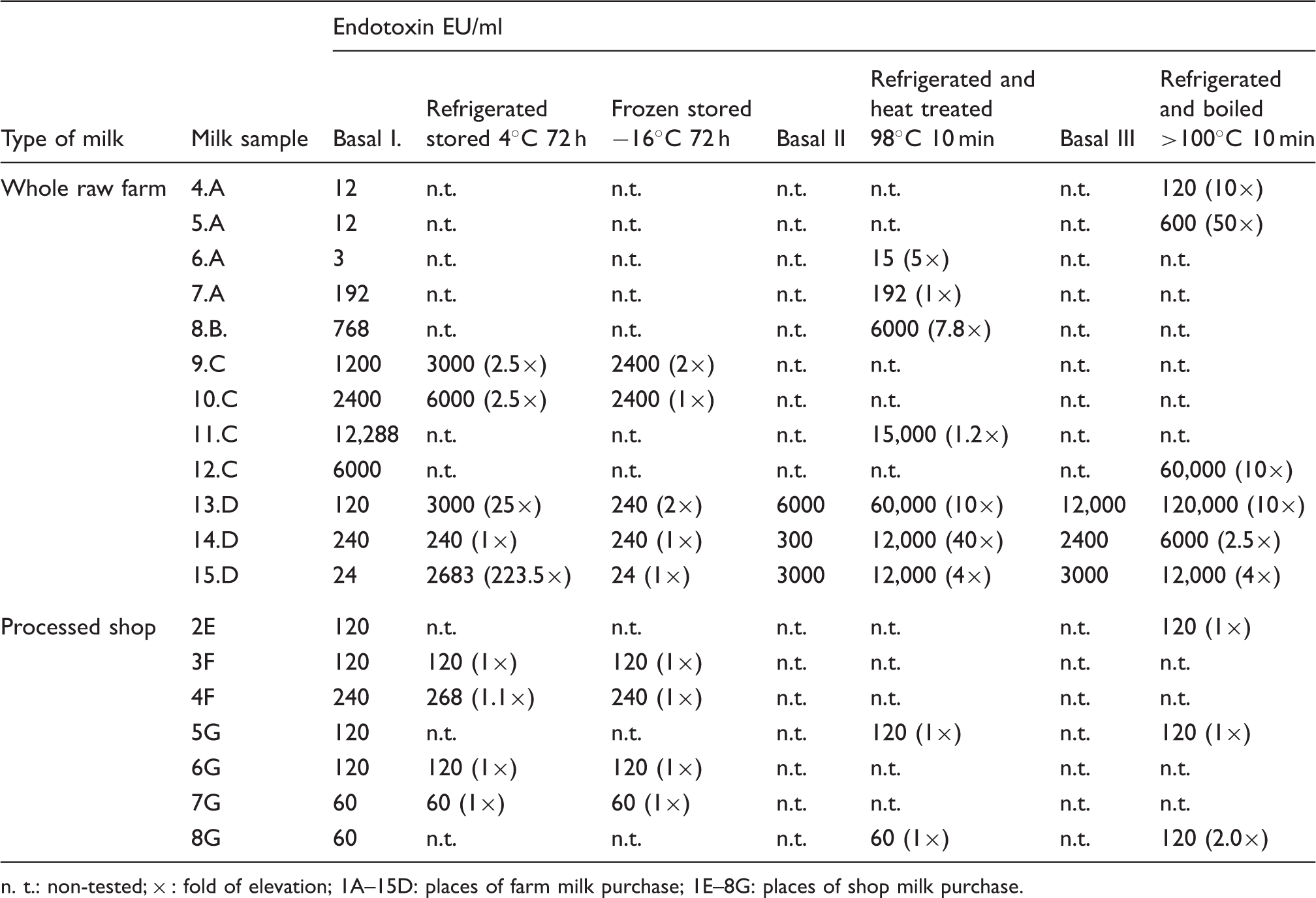
n. t.: non-tested; × : fold of elevation; 1A–15D: places of farm milk purchase; 1E–8G: places of shop milk purchase.
Discussion
The data indicate that by using controlled individual sample collections, storage and treatment for various sources of cow’s milk, marked differences occur in the concentrations of endotoxin. In contrast to the processed shop milk, whole raw farm milk can contain much higher concentrations of endotoxin likely derived from contamination in the sheds. It appears that longer storage time, even at 4℃, and heating boiling procedures increase the level of endotoxin, but only in the unprocessed farm milk. The change may be correlated with the milk fat content or that the shop milk has been processed. In milk with higher fat content, the higher concentration of endotoxin may be due to the farm milieu because even the house dust contains more endotoxin than in a non-farm environment;3–6 therefore, endotoxin may enter via the airways by inhalation, 13 and thus may be transferred from the blood into the fat fraction of milk. The partly lipid character of endotoxin and its sequestration in lipid, protein and aqueous colloid components may contribute to the temperature sensitivity observed. The farm milk with higher fat content appeared to have higher endotoxin concentrations than the processed shop milks with lower fat levels. The farm milk samples stored at 4℃ and/or heated showed increased endotoxin values compared with basal concentrations; this trend did not occur in the shop milk, possibly owing to the lower fat content or to the absence of a ‘microbial load’ (bacterial counts were not determined). The elevated endotoxin concentration in farm milk may explain the asthma and atopy protective effect of farm milk noted in the GABRIELA study.1,2 However, our results are only in a partial agreement with the PASTURE study, which showed a trend for shop milk having higher endotoxin concentrations than the farm milk; this is contrary to our findings. 9 Our data clearly show that the concentration of endotoxin in farm cow’s milk samples depended on the temperature treatments (cooling, freezing, heating, boiling). It was of a special interest that during prolonged storage at 4℃ great increases (223.5-fold) were noted, which could occur in raw farm milk. We speculate that the reason for these changes are due to increased destruction of the persisting Gram-negative bacteria at this temperature; however, a significant part of the raw farm milk samples stored and cooled at 4℃ for 72 h had an increased endotoxin concentration. However, freezing at −16℃ prevented the increase of endotoxin level during the 72-h storage.
Two important observations in the GABRIELA study were: (1) raw milk consumption was inversely associated with childhood asthma; (2) boiled farm milk did not show a protective effect. 10 Our findings indicate that heating of the raw farm milk samples can increase endotoxin concentrations and therefore should have offered more and not less protection. An explanation for this phenomenon might be related to endotoxin being bound in milk by a great variety of proteins, some being required for its biological activity, for example LPS binding protein,14,15 immunoglobulins, complement factors,16,17 lysozyme18,19 and high mobility group box 1 protein (HMBG1).20,21 However, a part of these proteins, for example certain complement factors, as well as lysozyme and HMBG1, are heat-labile molecules. Their biological activity and endotoxin binding capacity may be altered by heating and boiling thus altering their activity.
We speculate that the controversy related to endotoxin’s role in asthma and allergy prevention in whole raw farmer cow’s milk may be due to the protein/lipid/endotoxin interactions, which are heat and storage sensitive, and/or differences in the microbial load. The whey protein fraction of unprocessed bovine milk, which has been implicated in allergy prevention, may also be affected with regard to temperature sensitivity. 11
Of note, bile acids have been shown to block the intestinal absorption of endotoxin.22–24 This pathway plays a crucial role in the regulation of innate immunity in early childhood (< 4 yr) when the bile acid production is still low. 25 Thus, the endotoxin molecules derived either from fresh or cold stored (cooled at 4℃) raw farm milk can attain higher blood concentration in this age group than from processed shop milk resulting in a driving developing immune system toward Th1 responses causing allergy protection,4,26 as bacterial isolates from cowsheds also had strong allergy protective properties imparted to the lipopolysaccharide moiety.27,28
The very recent article, on the increased T regulatory cell (Treg) numbers associated with farm milk exposure has two important observations: 12 (1) the stronger LPS reaction of children drinking farm milk (possibly stored at 4℃) but not living on the farm vs. farm children drinking fresh farm milk may be explained by our data that very often the endotoxin content (and biological effect) of cooled stored raw farm milk can contain higher LPS concentrations than that found in fresh raw milk; (2) IL-1β induced by farm milk endotoxin from the monocytes can stimulate the expansion and differentiation of peripheral Treg (immunosuppressive) cells.14,29
In conclusion, our data suggest that elevated concentrations of endotoxin can occur rather often in farm-derived (especially cold-stored, cooled) cow’s milk and its potential protective effect on asthma and allergy prevention cannot be neglected. However, both the concentration and the bioactivity of endotoxin, found in farm milk can be influenced by storage time and temperature treatment, which may alter protein/lipid/endotoxin interactions. 30 In addition, the consumption of raw farm milk might have all the risks and health hazards associated with the unpasteurized, unprocessed state.
Footnotes
Funding
This study was supported by the “Hungarian Research Fund” (OTKA No. 71883), and the “Foundation for Immunology XXI” from Debrecen.
Conflict of interest
The authors do not have any potential conflicts of interest to declare.
Acknowledgements
We acknowledge the laboratory work of all members of the Department of Toxicology in the Pharmaceutical Control and Development Laboratory in Budapest, but especially the contribution of Dr. Éva Kiss. We are grateful for the very useful help given by Professor Dr. Erika von Mutius (München) during the preparation of the manuscript.