



Abstract

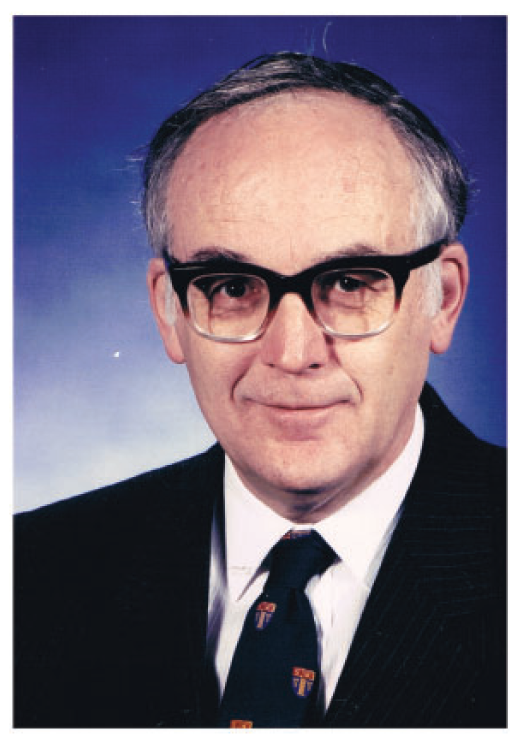
All those involved with the Journal of Hand Surgery, European volume, and those in the wider world of hand surgery, were deeply saddened to learn of the passing of Nicholas Barton, who was the distinguished editor of this Journal between 1987 and 1991. He was a dominant figure in British hand surgery, with an international reputation.
He was born in 1935 in London. His father was a Shakespearean actor. He attended Westminster School, where he developed his love for cricket and was cox for the Westminster rowing eight. Decades later, when he was President of the British Society of Surgery of the Hand in 1989, he held the society dinner at Westminster School and made sure that the menu reflected school fare, right down to mushy peas. He studied medicine at Cambridge and the Middlesex Hospital in London from 1953. He was a devout Christian. It was as a young doctor in London that he met Margaret when she was looking for a speaker for a Christian Union meeting. She described him later as ‘…a walking encyclopaedia, with boundless curiosity, who reads constantly’. They were married in 1960. His curiosity about the places he visited or lived in was evident: while still a medical student he investigated and wrote a book called The Lost Rivers of London, which remains the definitive study of London’s hidden rivers. There have been subsequent editions, the most recent in collaboration with Stephen Myers (Barton and Myers, 2016). In a review of the book, he was described as ‘… a retired hand surgeon and quiet London legend …’ (Bolton, 2016).
After surgical training at the Robert Jones and Agnes Hunt Hospital in Oswestry, UK, and the Rancho Los Amigos Hospital in California, USA, in 1971 he became a consultant in Nottingham, where he and Margaret brought up their five children. Joseph Dias writes: ‘A role model, he was able to continuously question his own positions on clinical topics. There are countless examples of this. He wrote the classic paper raising the 20 things we did not really know about scaphoid fractures (Barton, 1992). In doing this, he helped all patients with this injury, as doctors became more aware of the assumptions we make when making treatment decisions. He was able to stimulate curiosity in his countless students and medical trainees, many of whom owe the way they have led their clinical lives to him.’ He published many other papers on scaphoid fractures, which were his particular interest and were the topic of his Hunterian Lecture, given at a meeting of the British Orthopaedic Association (BOA). He was an excellent senior colleague who warmly welcomed and supported others. Tim Davis recalls: ‘He was always willing to give advice, when asked. When he saw I was going down the wrong path with a clinical problem he would not tell me I was wrong. Instead, he would ask questions which made me rethink the problem and work out for myself that I needed to revise my treatment plan.’
His written output was prodigious: over 100 publications, including 50 peer-reviewed papers and seminal books and chapters on fractures of the hand and scaphoid bone. One of his first papers was a study of the annular pulleys of the flexor tendon sheath and their relative importance in preventing bowstringing (Barton, 1969). This was written before other papers that stressed the importance of what were subsequently designated as the A2 and A4 pulleys; he was particularly proud of this paper and perhaps aggrieved it did not gain more widespread recognition. Although his main focus was on scaphoid fractures, his versatility was demonstrated in his comments about the misinterpretation of the hand markings on the Shroud of Turin (Barton, 1980) and a study of the neglected topic of undiagnosed wrist pain in young women (Ryley et al., 1992). All his writing was notable for its clarity and fluency. These attributes were invaluable when he succeeded Graham Stack as Editor of this Journal. His editorial expertise was helpful for his successors who tried to follow the standards that he set. David Evans recalls: ‘I came to know him well when he handed the Journal on to me, and I was very grateful to the guidance that he gave me at that time’.
Apart from being the President of the British Society for Surgery of the Hand, Editor of this Journal and being designated a Pioneer of Hand Surgery by the International Federation of Societies for Surgery of the Hand in 2007, Nicholas Barton received many other recognitions (British Society for Surgery of the Hand). At the height of the ‘Repetitive Strain Injury’ scare in the UK, he chaired an expert committee that was established at the request of the BOA to look at the associations, if any, between occupational activities and common upper limb conditions (Barton et al., 1992).
Outside hand surgery, he was an avid cricket fan and could create at least one world class, well balanced, team of batsmen, bowlers and all-rounders from those he had treated for hand injuries (Belliappa and Barton, 1991). He had many other interests, such as history and medical history, and was always an entertaining and interesting companion.
In a eulogy for his father, Neil Barton mentioned that to be successful in life requires winning the respect of intelligent persons, earning the praise of honest critics, the appreciation of beauty, finding the best in others and leaving the world a better place. Nicholas Barton’s life was a clear success.