




Abstract

Dear Editor,
We wish to highlight the difficulty in discerning optimum tidal volumes in mechanically ventilated patients and offer a solution.
Mechanically ventilated patients should have tidal volumes (TV) between 6 and 8 mL/kg of predicted body weight (PBW) to minimise ventilator-induced lung injury (VILI). 1 The measured height of the patient is often converted into PBW by one of several formulae, such as the Devine formula 2 :
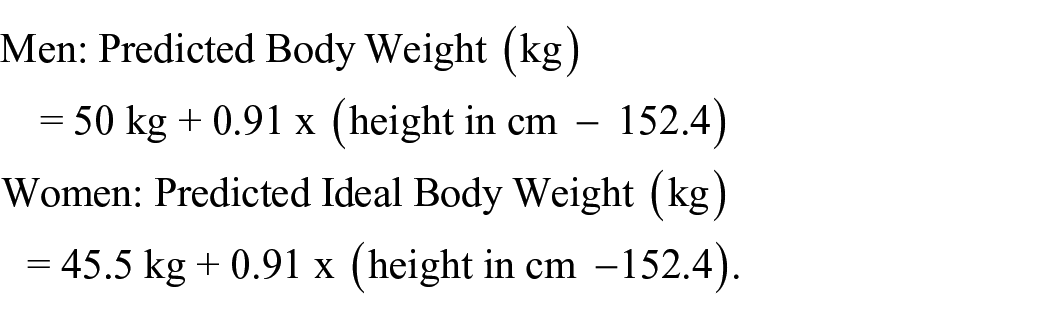
However, accurate height measurement is difficult in critically ill patients. Firstly, the measurement should be taken standing, but a supine measurement is often used instead. Potential sources of error include a tendency to measure the contours of the patient, difficulty due to body distortion, inability to lie completely supine, attachment of tubes, lines and other equipment, lack of appropriate measuring equipment, and lack of patient cooperation. 3
Because of these difficulties, the height of the patient is often estimated visually. This may also be inaccurate: up to 19% of height estimates made by healthcare workers for critically ill patients were inaccurate by more than 5% of the measured standing height, 4 and 10% of estimates were inaccurate by more than 15%. 5
This difficulty of measuring height and therefore estimating PBW and ideal TV is important – the risk of VILI has been shown to increase by 130% for every mL above 6 mL/kg PBW. 6
We believe there is a solution.
The length of the ulna is measured from the olecranon to the mid-point of the styloid process on the left arm and is used to calculate the height of the patient. Using the Malnutrition Screening Tool, 7 height can be estimated from ulna length, age and gender, as follows:
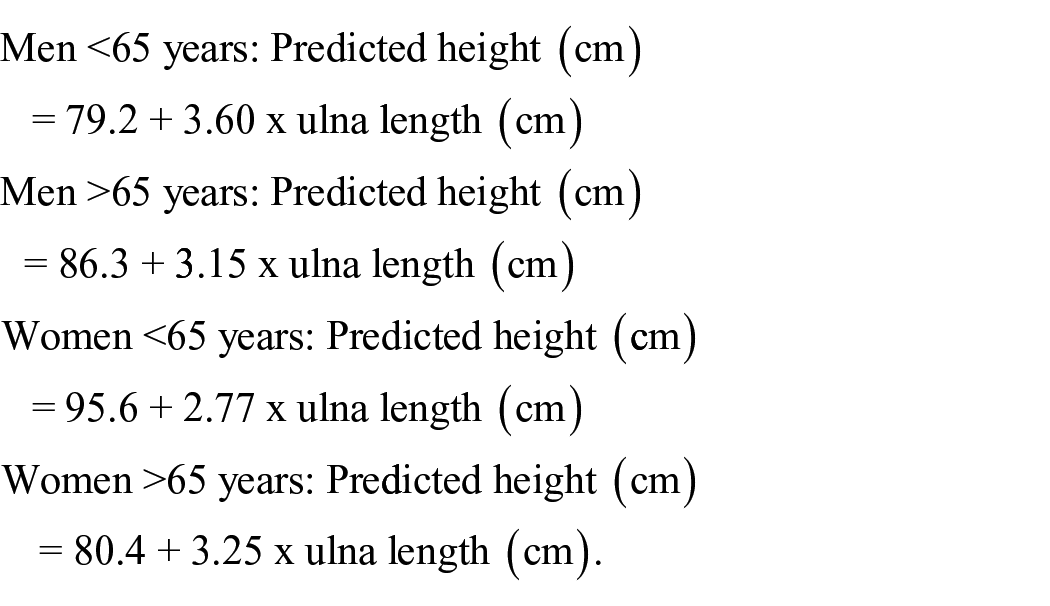
Combining the Devine and MUST formulae gives easy-to-use equations, as follows. Knowing the patient’s age and gender defines the equation used. Then entering the ulna length (u, in cm) and desired mL/kg of tidal volume (x) would calculate the optimum tidal volume (TV, mL):
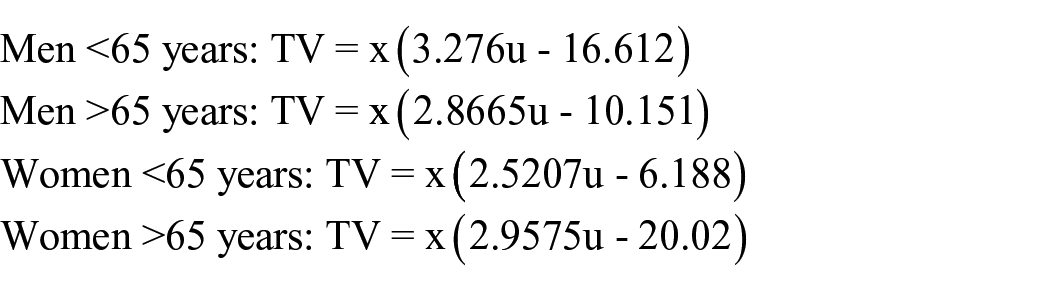
For example, a 70-year-old male patient with an ulna length of 28 cm and a desired TV of 6 mL/kg would require a TV of 421 mL.
Utilising these formulas, whether manually, or through a smartphone app, can help standardise care, improve estimation of PBW and reduce the risk of VILI.
Kind regards
