Abstract
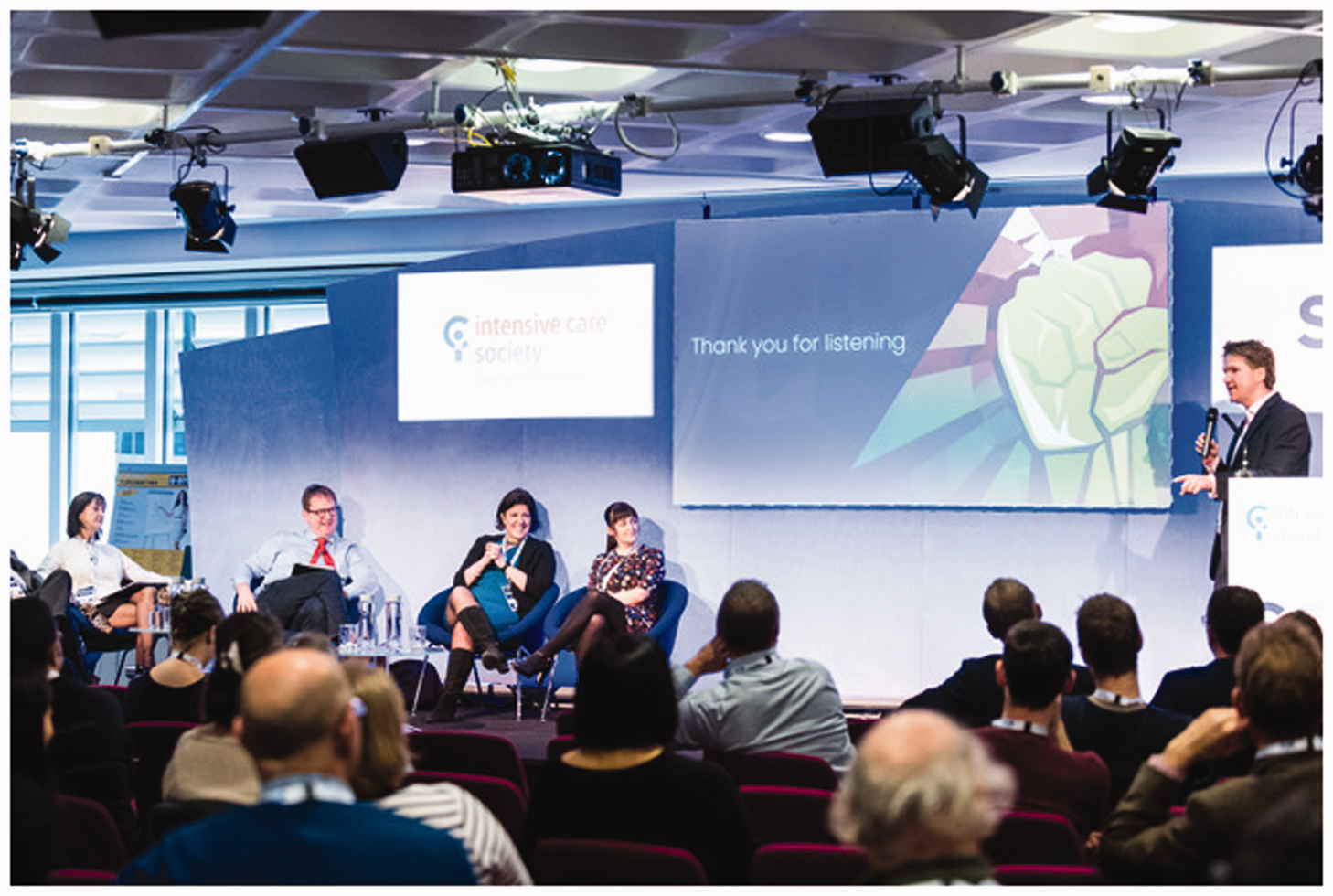
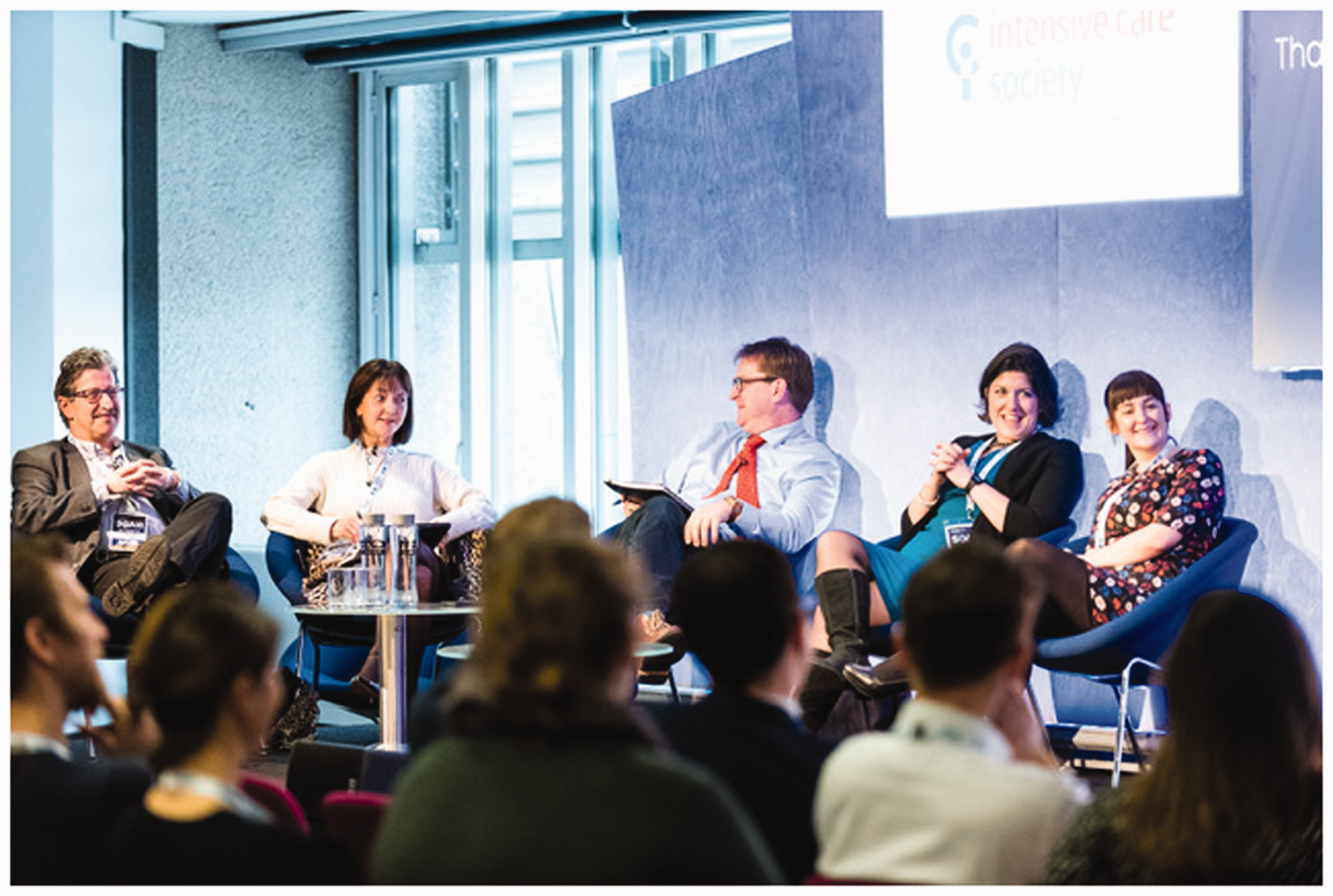
‘The Cauldron’ is an Intensive Care Society tradition unique to the State of the Art Conference. It is an opportunity for trainees to receive well-deserved national exposure and to pit ideas, wit and verbal dexterity against each other, and a panel of old (not necessarily wise) judges. The presentations are deliberately provocative, eternally popular and always insightful. This year debates took place in Westminster, London, on 12th December.
The Cauldron was ably chaired by Dr Laura Vincent and Dr Aoife Abbey. The judges, who assumed the persona of fire breathing Dragon’s Den judges, were Professors Mervyn Singer, Kathy Rowan and Peter Brindley. The following abstracts were prepared by the presenters with assistance from Professor Brindley and Dr Vincent. We are grateful to the Journal of the Intensive Care Society for the opportunity to share the work of such talented young healthcare professionals.
The next critical care game changer: Dealing with our bias
Royal Berkshire NHS Foundation Trust Reading, UK
Andrew Chadwick, Royal Berkshire NHS Foundation Trust, Reading,
RG1 5AN, UK.
Email:
The next game changer for intensive care medicine (ICU) is to be honest and face an endemic problem: bias. By accepting and tackling bias, we will be able to better mitigate future challenges, improve clinical acumen and combat our great foe, burnout.
ICU staff face daunting challenges: including pan-resistant microorganisms, an increasingly frail population and increasing societal expectations. However, innate biases mean we typically fail to fully engage female healthcare professionals. In other words, we are playing with only ‘half a deck’.
The Berlin Acute Respiratory Distress Syndrome (ARDS) definition1 included 18 authors, but only one woman; Sepsis 3.02 included 18 authors, 0 women. These initiatives are central to our specialty’s advancement and our patient’s outcomes but only 1/36 decision leaders were female. We need the best minds from the widest talent pool, yet bias entrenches and perpetuates the same individuals and the same opinions. Bias means we exclude 50% of the population and 20% of our specialty’s consultants.3 The game changer is facing up to this exclusion bias.
Bias not only diminishes our talent pool, it handicaps decision making. In a study of chronic obstructive pulmonary disease (COPD) patients (>90 ICUs, >800 patients)4 intensivists were asked to predict survival. Two-thirds survived whereas physicians predicted 50% mortality. Even though 40% of survivors suffered poor sleep due to dyspnoea, 75% had limited mobility and over 50% have anxiety, 96% said they would request a return to ICU.5 In contrast, we are biased to believe we know what is best for patients. The game changer is facing up to this superiority bias.
Psychological burnout is consistently identified in approximately 50% of ICU staff.6 The solution is not likely to be found by scaling Maslow’s Hierarchy or mandating yoga. Instead, it is dealing with bias about what makes a good ICU healthcare professional. ICU staff are often personality type A++, and we bias towards assuming anyone who is otherwise is inferior. Accordingly, many who prioritize family or hobbies – or who do not spend £10,000 on a bicycle – are driven out of ICU. This leaves a biased, self-selecting population who ever increase their own propensity to burnout. Our game changer is facing up to this perfection bias.
We cannot remove all bias, and nor should we. In fact, pattern recognition (a form of bias) is needed to make rapid clinical assessments and to negotiate interactions with colleagues and patients. Perhaps we need better biases, or merely to acknowledge where biases morph from ally into foe. Overall, our game changer is to acknowledge and mitigate, not remove human bias.
Declaration of conflicting interests
The author(s) declared no potential conflicts of interest with respect to the research, authorship, and/or publication of this article.
Funding
The author(s) received no financial support for the research, authorship, and/or publication of this article.
References
The next critical care game changer: We need a new ethical and legal paradigm for organ donation
Great Western Hospitals NHS Foundation Trust, Cheltenham, UK
Liam Scott, Great Western Hospitals NHS Foundation Trust, Cheltenham, UK. Email:
Annually in the UK, thousands of patients languish on the Transplant Waiting List – the burden of mortality and morbidity is enormous. Transplantation rates have increased, yet there remains a massive unmet need. There are over 6000 patients currently on the active waiting list, yet during the financial year 2017–2018, there were just 1574 deceased organ donors.1 Compare this to approximately 7300 people who died during that time in circumstances that would have permitted them to become donors. We have a moral imperative to maximise this potential resource. The vast majority of the population support organ donation (and would accept an organ transplant), yet only 38% have signed the Organ Donor Register. Following the example set by Wales, England and Scotland are soon to adopt ‘soft’ Deemed Consent policies. But this is not enough. There is compelling ethical justification to strengthen the presumption in favour of donation. This could be done by removing the largest remaining obstacle to donation rates: family overrides.
The Potential Donor Audit reveals that during 2017–2018, 1148 patients were stopped from becoming donors by their families. This included 101 where the patient had a known wish to donate.2 This regrettable situation means that we have missed an opportunity to help patients on the waiting list, and have allowed the deceased’s wishes to be violated. I therefore propose to disallow any family overrides of an opt-in decision to donate, without indisputable contradictory evidence. A freely-given, documented, unrevoked intention-to-donate should be legally and ethically insurmountable following death. We could go further. The prohibition of family overrides could equally apply to new policies of ‘Presumed Consent’ – in effect, the UK would move to a ‘hard’ opt-out system.
This unapologetically utilitarian approach maximises benefit from a scarce organ supply, offering the greatest possible benefit to the greatest number of patients. Naturally, the public remains free to opt-out, but with a comprehensive programme of education, failure to opt-out will signal tacit agreement to expected donation. The overall net welfare to society would outweigh putative but less morally relevant concerns. These include concern for the deceased’s interests (being dead, their interests cannot be harmed); religious objections (in principle, all the major faiths support donation)3; exacerbating the family’s grief (yet less overall harm is created than by widespread denial of transplantation); mistrust of the medical profession (a surmountable problem of perception?); or consideration of the general public’s moral intuitions (but these are typically heterogeneous and illogical, with dubious provenance, compared to persuasive normative justifications). We are the specialists who coordinate and manage the deceased donation process in practice – it’s incumbent on us to drive change. Ultimately, the public should be steered towards radically reconsidering their attitudes to organ donation; the overall benefit to the nation could be profound.
Declaration of conflicting interests
The author(s) declared no potential conflicts of interest with respect to the research, authorship, and/or publication of this article.
Funding
The author(s) received no financial support for the research, authorship, and/or publication of this article.
References
The next critical care game changer: The game changer is dead; long live the game changers!
Hywel Garrard
Anaesthesia and Intensive Care Medicine, Salford Royal Hospital, Manchester, UK
Hywel Garrard, Anaesthesia and Intensive Care Medicine, Salford Royal Hospital, Manchester, UK. Email:
I hate game changers, so am delighted to announce their timely demise. The death of the elusive silver bullet drug cure, the death of the brand-new cardiac output monitor, the death of the new whizz-bag ventilator that will optimise everything.
The history of critical care is littered with the burnt-out shells of the next one big thing that will change the game. The clamour for the ‘new thing’ tarnishes critical care and feeds our specialty’s narcissism. It does us a disservice. It distracts us from accepting that we already have the tools to make massive improvements.
ARDS-associated mortality has decreased from 90% to less than 20% in four decades. That is a game changing, but mortality did not decrease because of a single genius intervention. It has happened because we have better critical care ventilators, staffing, devices and pathways. It happened because we use less fluids and pulmonary artery catheters, and lower pressures and tidal volumes. It happened because we use earlier proning, individualized positive end-expiratory pressure and more judicious diuretics and evidence-based extracorporeal support. Mortality has decreased from trauma because there are fewer housefires, car accidents and shorter delays to treatment. Progress (and its converse) does not happen because of a single game changer; but because of doing many things right (or wrong).
I welcome the death of THE ‘game changer’ in order to announce the birth of better game changers. Not a drug, device or treatment, but an idea: doing all the little unglamorous things right. This cognitive switch is the real game changer: an idea that can saves lives. An idea is hidden in plain sight. Fortunately, doing the little things right is relatively easy. Doing the little things right should be evidence-based, process-driven and part of unit culture. Eventually, we do the little things right without even realising.
This change requires leadership but is worth the investment: and that is a challenge. Once ingrained in your unit, it frees up so much cognitive bandwidth. Think what you can do with that bandwidth; educate, inspire, communicate, research and tackle the difficult decisions. You can do that because ‘the little things’ that work now taking care of themselves. Doing the little thing right is easy; the hard thing is changing our mindset. We are not traditional heroes, but we can become the kind of heroes that our patients need and deserve.
In conclusion, this game changer is free of charge, no copyright, no ownership, no expensive consumables, no ethics committee, no business case to write. Take it back to your units and become a game changer yourself. Doing the little things right every time: now that is a game changer whose time has come.
Declaration of conflicting interests
The author(s) declared no potential conflicts of interest with respect to the research, authorship, and/or publication of this article.
Funding
The author(s) received no financial support for the research, authorship, and/or publication of this article.
The next critical care game changer: Artificial intelligence, adapt or face extinction
Anaesthesia and Intensive Care Medicine, Southmead Hospital, Bristol, UK
Matt Rowe, Anaesthesia and Intensive Care Medicine, Southmead Hospital, Bristol, UK. Email:
Artificial intelligence (AI) has advanced dramatically in recent years with computer programmes performing increasingly complex tasks without the need for human supervision. Recent learning algorithms have demonstrated an ability for computer systems to match and even exceed human performance in various task-specific applications.1 Deep Learning, a form of AI based on a neural network structure and inspired by the human brain, has given computers the ability to interpret vast amounts of discriminative data and approximate complex non-linear relationships without the need for explicit programming.2 If a computer can integrate and interpret enough real-time sensory information to drive a car in a way that exceeds human performance, without fatigue or bias, what else will they be capable of? In short, understanding and managing AI will be the next critical care game changer.
Modern medicine requires a careful multistage process. This includes gathering information, interpreting complex and subtle sensory inputs, performing investigations and integrating this information with previous experience and expertise in order to arrive at a diagnostic and treatment plan. This coupled with continual reassessment and patient individualisation is central to critical care medicine. With a near infinite ability to process and cross-reference against every previously documented experience in healthcare, AI could improve patient care delivery and costs in a way not previously imagined.3
Currently, in intensive care, information is typically gathered and painstakingly recorded by overburdened nurses. We then rely upon tired and intermittent human observers to predict patient care needs. Furthermore, plenty of relevant information is neither captured nor interpreted. This could lead to mistakes and delays which, in turn, contribute to adverse outcomes. Our interventions are therefore, unacceptably retrospective. AI offers an opportunity to bridge the gap between information, interpretation and action and far exceeds human capabilities. For example, mechanical ventilators are able to offer ‘intelligent’ strategies, thereby tailoring ventilator settings to that individual’s real-time needs, whilst other computer programmes can integrate a patient’s monitoring with their medical records, thereby predicting deterioration. AI has the ability to store and track a patient’s information 24 hours a day, 365 days a year tailoring every decision to that individual. Moreover, AI is becoming more portable and less expensive.
We live in an era of wearable technology with watches that detect a fall, perform an ECG and alert emergency services. We accept automatic face recognition, and are on the cusp of driverless cars. Accordingly, within our careers, it is likely that human physicians will increasingly be learning from the machines rather than the machines learning from us.
Will the ICU become self-aware? Will the future of ICU see doctors as technicians enacting the whims of an AI decision maker? As with all technological evolution, we must adapt as clinicians to survive. The goal is to understand and embrace AI, both its possibilities and perils. Otherwise, the days of human-led healthcare will come to an end.
Declaration of conflicting interests
The author(s) declared no potential conflicts of interest with respect to the research, authorship, and/or publication of this article.
Funding
The author(s) received no financial support for the research, authorship, and/or publication of this article.
References
The next critical care game changer: The critical care multidisciplinary team should include geriatrics
Intensive Care Medicine, Kings College Hospital, London, UK
Rebecca Lewis, Intensive Care Medicine, Kings College Hospital, London, UK. Email:
My critical care game changer is not more technology or a novel device, even though both are still important. Instead, I want to help the largest number of patients in the intensive care unit (ICU), and our fastest growing patient cohort. I also want to do this without breaking the budget. Accordingly, I wish to focus on elderly patients (defined by the World Health Organization as 65 years or older), and to recommend that the next ‘game changer’ be that we include Geriatricians in the ICU multidisciplinary team (MDT).
As intensivists, we work closely with other specialities. Elderly patients can be considered a specialist group of patients themselves. Therefore, when considering the management of a critically unwell elderly patient, it makes intuitive sense to include Geriatricians in the same way as we currently include nephrologists or surgeons. Elderly patients have unique needs, which necessitate a unique approach. Geriatrics is an expanding adapting specialty. They are already regarded as valuable team members in specialities such as oncology. We should be the next speciality to benefit.
Geriatric doctors and nurses can impact every stage of a patient’s critical care journey. Starting with admission, they can assess the patient’s suitability and their level of frailty. They can also inform potentially difficult decisions regarding limits of intervention and the appropriateness of Do Not Attempt Resuscitation decisions.
Dementia and delirium are also increasingly more prevalent in ICU. Geriatricians have managed this for years! We could adopt their more holistic approach. Geriatric specialists also have an important role in follow-up clinics, in order to regarding optimize ongoing issues, aid advanced care planning and avoid inappropriate critical care readmission.
In conclusion, the next game changer of critical care should be geriatricians as the next member of the MDT. Let’s also plan for the future and the so-called grey tsunami of older patients. By working in collaboration with geriatricians we may be able to provide better value-based care for patients.
Declaration of conflicting interests
The author(s) declared no potential conflicts of interest with respect to the research, authorship, and/or publication of this article.
Funding
The author(s) received no financial support for the research, authorship, and/or publication of this article.