




Abstract
Introduction
Known as ‘le pere de la neurologie’, Professor Jean-Martin Charcot (Figure 1) is probably one of the most influential physicians in the history of modern medicine, leaving behind at least 13 eponymous diseases, one eponymous island, and students including Freud, Babinski, Janet, Tourette and Bouchard in his wake.
Professor Jean-Martin Charcot.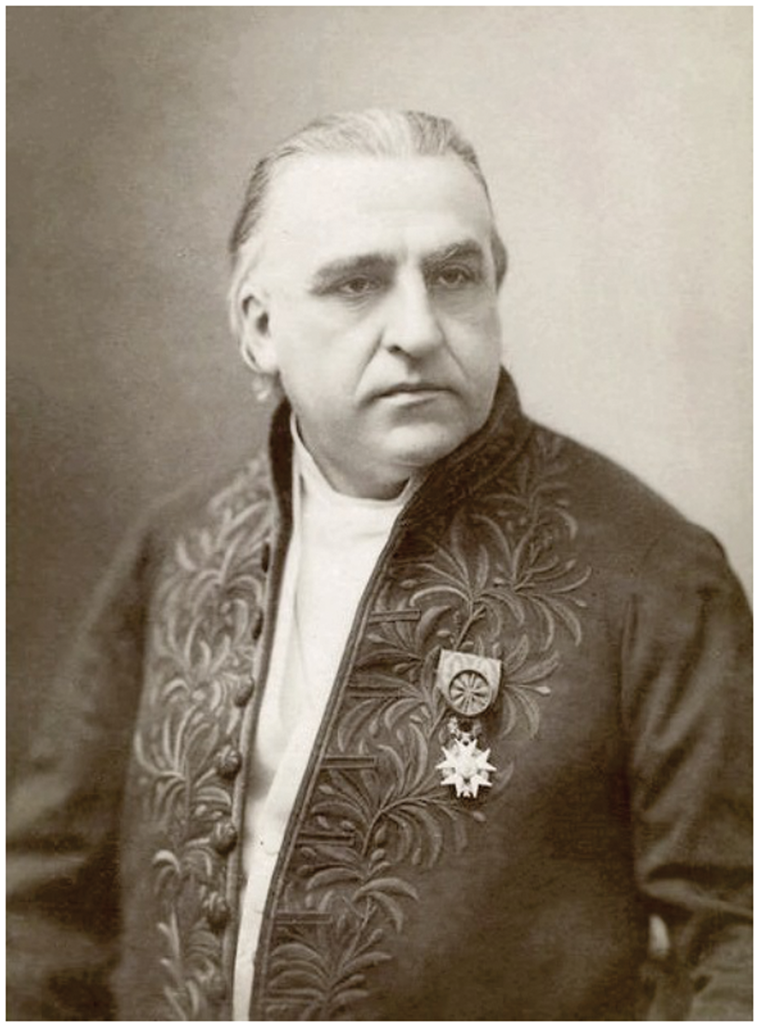
Early life
Charcot was born in post-revolution Paris, in austere surroundings. He was the son and grandson of Parisian carriage makers. His father, due to financial limitations, decided that the son who performed best at school would go on to higher education. Charcot naturally beat his three siblings and completed his undergraduate medical training at the University of Paris in 1848. He then took up an internship at the L’Hôpital Salpêtrière in Paris, or the ‘grand asylum of human misery’, as he so fondly called it. He married a rich widow in 1862 and had two children. His son Jean-Baptise went on to follow, reluctantly in his father’s footsteps as a physician but is more famously remembered as being a maritime explorer. It is said that Jean-Baptise felt that if he succeeded, that would be the best way to honour the memory of his father, since ‘the name of Charcot would be honoured twice’. 1 Charcot Island in Antarctica was named in homage to his father.
Charcot was Professor of Pathological Anatomy at the University of Paris in 1872 and Professor of Neurology in 1882.
Le grand asile de la misère humaine
L’Hôpital Salpêtrière, Charcot’s clinical workhouse, had about 5000 patients of whom more than half suffered from a form of neurological disorder. A former gunpowder warehouse, it was refashioned into accommodation for prostitutes, the mentally ill and criminally insane, alongside the unwell destitute of Parisian society, serving as a prison, hospital and asylum. It was through this cohort of inflicted individuals that Charcot was able to distinguish clinical features, group his patients and perform autopsies allowing further understanding and novel classification of their neurological disorders. The Salpêtrière’s reputation as a prolific centre for neurological care grew with Charcot’s leadership, following in the footsteps of his ‘maître en neurologie’, Duchenne. A trip to London in 1881 for the International Medical Congress bought international recognition to Charcot and the Salpêtrière. He was subsequently appointed Chair of Clinic for Diseases of the Nervous System in 1882.
Medical discoveries
Charcot, originally a pathologist, recognised the relationship between clinical and anatomical findings. The use of this method led to the correlation between the clinical features of multiple sclerosis (MS) and the pathological changes he had noted at autopsy. As a gifted artist, Charcot’s detailed description of MS included illustrations of the sclerosis plaques. 2 He was the first physician to diagnose MS in a living patient, using the triad of nystagmus, intention tremor and scanning speech to separate it from similar diseases. The Charcot award is still presented every two years for research into MS.
He also described several cases of isolated progressive motor symptoms, with fasciculation, rigidity, contractures, bulbar involvement and death from respiratory failure. Charcot called this disease primary amyotrophic lateral sclerosis (ALS) and correctly identified the dysfunction of anterior horn cells as the pathology underlying the clinical features.
Along with his student Pierre Marie, Charcot reviewed patients whose pathology did not fit with ALS, correctly labelling them with a neuropathy rather than a myopathy. Therefore, came about Charcot-Marie-Tooth, the peroneal form of the muscular dystrophy.
Hysteria and psychotherapy
What Charcot is less known for is his demonstration between psychology and physiology. Charcot had thought he had discovered a new disease called ‘hystero-epilepsy’ where female patients exhibited convulsions, contortions, fainting and impairment of consciousness. Babinski, Charcot’s favourite student at that time, persuaded him that doctors can induce a variety of physical and mental disorders, especially in troubled young women.
Charcot also argued against the medical opinion of his peers, that hysteria was rarely found in men. He believed that hysteria was an organic condition which could be caused by trauma and occur as such in ‘models of masculinity as railway engineers or soldiers’, thus leading the way in understanding neurological symptoms arising from trauma. 1
A theatrical teacher
Charcot replaced traditional ward rounds with theatrical clinical demonstrations and patient interviews on a floodlit stage in the amphitheatre of the Salpêtrière. His experiments in hypnosis and clinical demonstrations were open to the public. These ‘hysteria shows’ aroused the curiosity of the intellectuals and aristocracy of Paris, to such an extent that hysteria become vogue. This novel teaching method was thought to have influenced Sigmund Freud, one of Charcot’s students in neurology, to become interested in the psychological origins of neuroses. Such a great influence was Charcot on Freud, that Freud named his first son after his teacher.
Other interests
Despite his prolific clinical work, Thursday evenings for Charcot were always set aside for his love of music. All talk of medicine was banned on these evenings. He was a great animal lover, and, unlike many of his contemporaries, refused to experiment on animals. On his door was the inscription ‘Vous ne trouverez pas une clinique des chiens chez moi’ (You find no dog clinic with me). It is said that his dislike of the English was at least partly from their enjoyment of fox-hunting.
Later years
Charcot suffered in his later years from angina. He had led an unhealthy life, taking little or no physical exercise and smoking an excessive number of cigars. 2 He died suddenly from heart failure in 1893. His funeral service was held in the chapel of his alma mater, the Salpêtrière and buried in the Montmartre churchyard. In 1895, a bronze statue of Charcot was erected outside the entrance of the Salpêtrière, paid for by contributions from his pupils. It was to be regrettably removed during the German occupation of Paris during the Second World War and sent to feed the furnaces for munitions.
Charcot is the founder of modern neurology. Babinski said of his mentor ‘that to take away from neurology all the discoveries made by Charcot would be to render it unrecognisable’. 2
Footnotes
Declaration of conflicting interests
The author(s) declared no potential conflicts of interest with respect to the research, authorship, and/or publication of this article.
Funding
The author(s) received no financial support for the research, authorship, and/or publication of this article.